このページについて
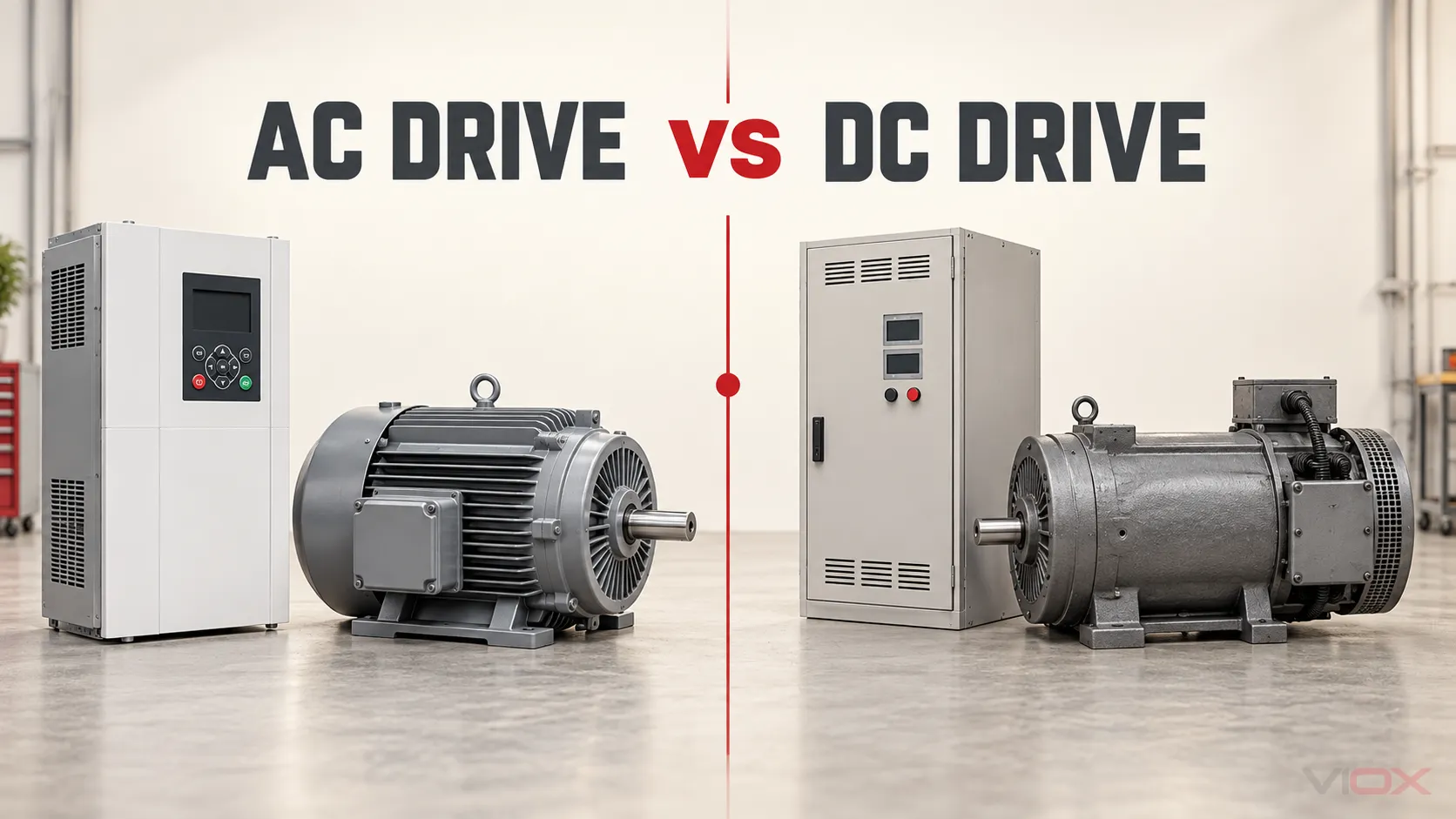
ほとんどの新規汎用産業設備では、ACドライブと互換性のあるACモーターの組み合わせが一般的な出発点となります。DCドライブは、使用可能なDCモーターと機械が既に存在し、プロセスが確立されたトルク・速度特性に依存しており、システムを維持する方が機械全体を更新するよりもライフサイクルリスクが低い場合に、依然として妥当な選択肢となります。.
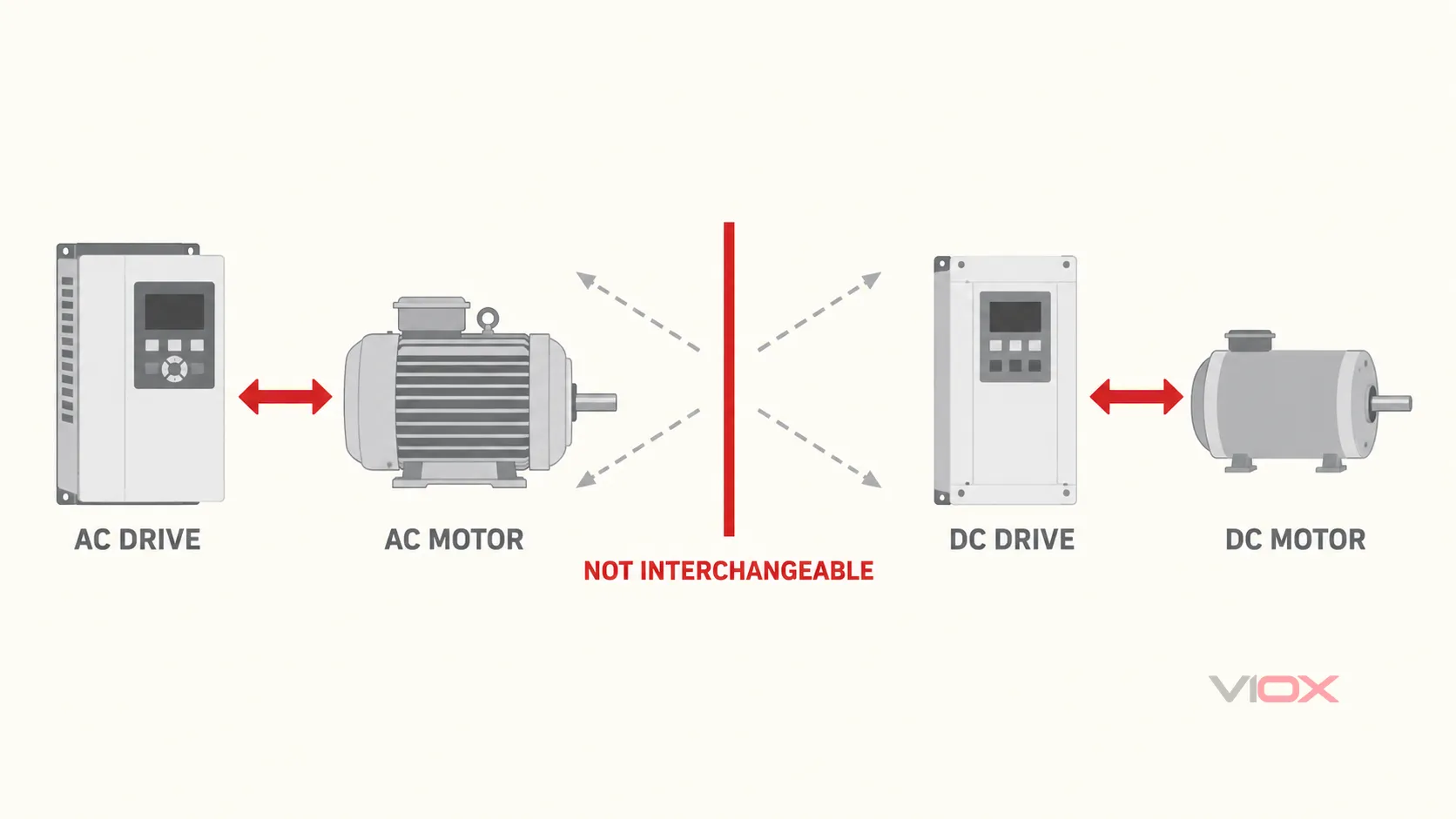
最初の選定ルールは絶対的です: ドライブをモータータイプに適合させること. 。ACドライブは、互換性のあるACモーターのために制御されたACを生成します。DCドライブは、互換性のあるDCモーターのために制御されたDCを生成します。いずれも互換性のある代替品ではなく、ドライブのファミリーを変更することは、通常、モーター、フィードバック、配線、保護、制御、試運転作業、および場合によっては機械的設置の変更を伴います。.
ACドライブとDCドライブの比較概要
| 判断要素 | ACドライブシステム | DC駆動システム | 選定の影響 |
|---|---|---|---|
| 制御対象モーター | 互換性のあるACモーター。一般的には誘導電動機ですが、ドライブが対応するように設計されている場合に限り、他のモータータイプもサポートされます。 | 互換性のあるDCモーター。ドライブに応じて、一般的にはブラシ付きモーター、永久磁石モーター、または他励式/巻線界磁式モーターが使用されます。 | 定格を比較する前に、正確なモーター技術を確認してください。 |
| 一般的な電力経路 | 多くの場合、整流器 → DCリンク → インバータ → 可変周波数AC出力 | 多くの場合、制御整流器またはDCコンバータ → 制御された電機子電源(必要に応じて個別の界磁制御を伴う) | これらは一般的な構成であり、普遍的なトポロジーではありません。 |
| 主要な速度制御変数 | 出力周波数、電圧、および制御アルゴリズム | 電機子電圧/電流、および該当する場合は界磁電流 | モーターモデルとフィードバック構成はドライブと一致している必要があります |
| モーターのメンテナンス | 多くの産業用ACモーターはブラシや整流子を使用しません | ブラシ付きDCモーターはブラシと整流子の点検が必要です | メンテナンス能力がライフサイクルを左右する場合があります |
| 新規の汎用設置 | 通常、最初に評価すべき製品群 | 用途または既設の設備が対応している場合にのみ選択すること | 過去の評判だけで選定しないこと |
| 既存のDC機 | 完全な変換検討が必要 | 使用可能なモーターと既知の機械動作を維持できる可能性がある | ドライブの価格だけでなく、変換の総範囲を比較すること |
| 低速および動的制御 | 適切なドライブ、モーター、フィードバック、冷却、および制御方法を用いれば強力な性能を発揮できる | 従来から強力であり、制御が比較的直接的である | どちらのファミリーにも普遍的な性能上の優位性はない |
| 回生および制動 | 適切な回生トポロジー、共通DC構成、または制動ソリューションが必要である | 互換性のあるシステム向けに4象限構成が利用可能である | 動作象限とエネルギーフローを明示的に指定すること |
| 代表的なアプリケーション | ポンプ、ファン、コンベア、コンプレッサー、ミキサー、HVAC、および最新の生産機械 | レガシーなミル、ワインダー、ホイスト、クレーン、印刷ライン、およびDCモーターを保持するその他の機械 | アプリケーションラベルは出発点であり、最終的な仕様ではありません |
したがって、正しい問いは「どちらのドライブが優れているか?」ではなく、「どの完全なモータードライブシステムがこの負荷を満たし、技術的およびライフサイクルリスクを最小限に抑えるか?」です。“
ドライブを比較する前の境界条件の設定
産業の実務において、「 ドライブ 」という言葉は、電子コンバーターのみを指す場合もあれば、より広範なパワードライブシステムを指す場合もあります。モーター、フィードバックデバイス、電源、保護、冷却、配線、機械制御、および駆動負荷のすべてが結果に影響を与えるため、この区別は重要です。.
IEC 61800-2:2021 半導体変換、制御、保護、監視、測定、およびACモーターを含む、可変速AC電力駆動システムを対象としています。. IEC 61800-1:2021 可変速DC電力駆動システムおよびDCモーターの対応する適用範囲を規定しています。.
本稿では、従来の産業用可変速ACおよびDCモーター駆動システムを比較します。サーボ軸、ステッピングドライブ、電気自動車用トラクションドライブ、またはブラシレスDC整流システムは対象外です。これらの用途には、それぞれ独自の制御、安全性、および性能分析が必要です。.
AC駆動システムの詳細な概要については、以下を参照してください。 VFDとは何か?. です。 VFD用語ガイド また、VFD、可変速ドライブ(VSD)、可変速駆動装置(ASD)、およびインバーターの用語を区別しています。.
動作原理の違い
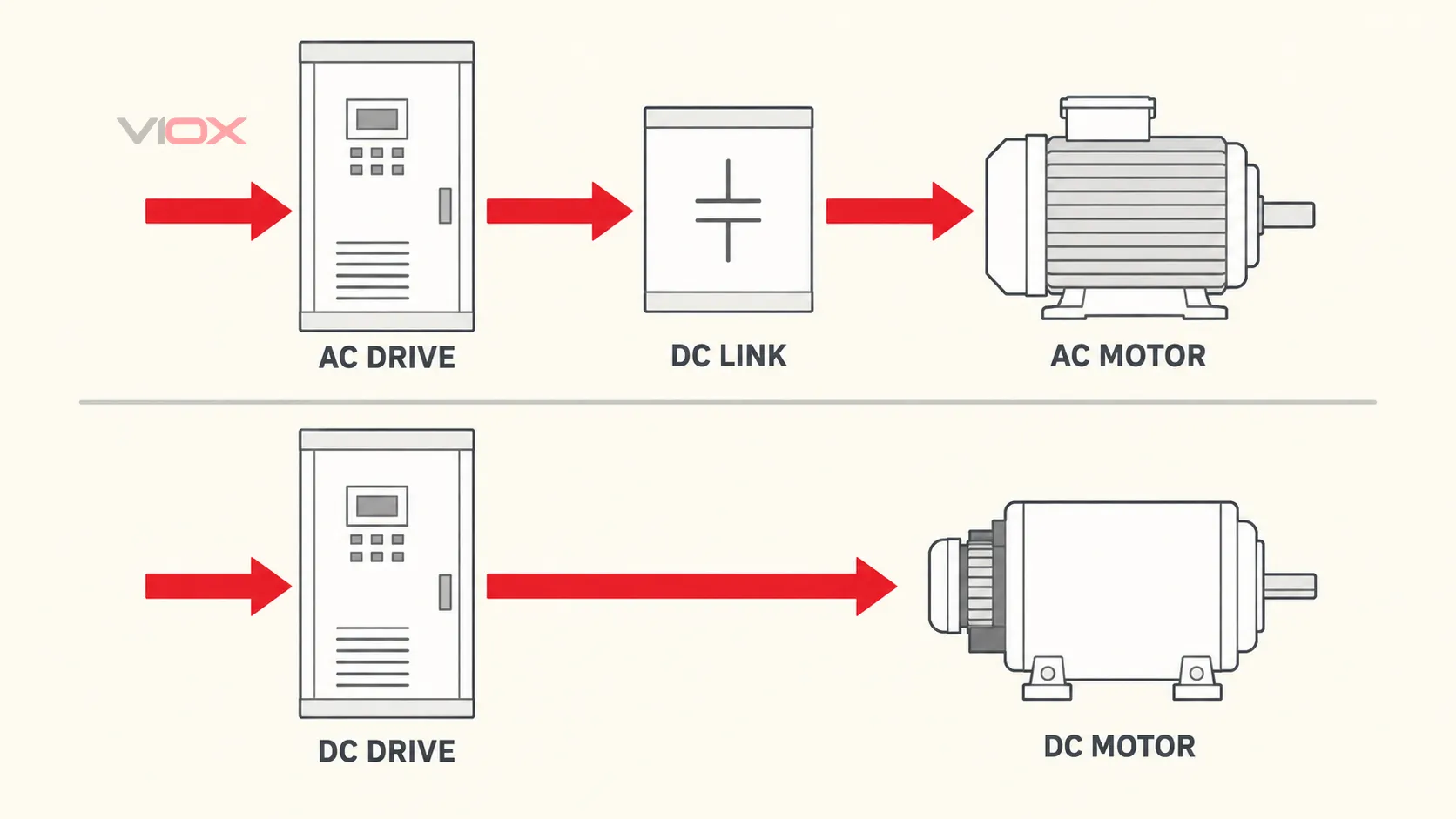
ACドライブ:制御された周波数のACを生成
一般的な低電圧AC可変周波数駆動装置は、以下の3つの電力変換ステージに従います。
固定周波数AC入力 → 整流器 → DCリンク → インバータ → 制御されたAC出力
インバータはDCリンク電圧をスイッチングし、モータ制御戦略に必要な電圧と基本周波数を持つパルス幅変調(PWM)出力を生成します。誘導電動機の場合、電気周波数が同期速度を決定し、モータはトルクを発生させるために必要なすべりで動作します。より高度な制御では、モータ変数を推定または測定することで、磁束とトルクをより精密に調整できます。.
この3ステージの経路は一般的なVFDを理解する上で有用ですが、すべてのAC駆動装置に共通する図式ではありません。回生フロントエンド、電流形インバータ、直接変換器、中電圧トポロジー、および用途特化型システムでは、異なる電力構造が使用される場合があります。.
DC駆動装置:電機子および界磁の状態を調整
従来の産業用DC駆動装置は、DCモータに印加される電気的条件を制御します。電源およびトポロジーに応じて、コンバータは制御整流器または別のDC変換ステージを使用する場合があります。電機子電圧と電流を調整することで、速度とトルクを制御します。巻線界磁形モータの場合、別途制御された界磁電源が必要になることもあります。.
基底速度以下では、必要な界磁を維持しながら電機子電圧制御を行うのが一般的です。基底速度以上では、一部のシステムで界磁束を低減して速度範囲を拡大しますが、これにより利用可能なトルクと出力領域が変化します。これらの動作限界は特定のモータおよび駆動装置のデータに依存します。界磁弱め制御は、機械的または熱的な定格を超えて運転することを許可するものではありません。.
電機子電流、界磁束、トルクの間のより単純な概念的関係は、DCシステムが要求の厳しい可変速機械において確立された理由の一つです。現代のACベクトル制御システムも強力な動特性と低速性能を提供できるため、歴史的な評判だけで選定を行うことはもはや十分な基準とは言えません。.
モーターの互換性を最優先する
| モータータイプ | ACドライブ適合 | DCドライブ適合 | 必要な検証 |
|---|---|---|---|
| 三相誘導電動機 | 共通:ドライブがモーターの電圧、電流、デューティ、および制御方式に対応している場合 | No | 銘板データ、デューティ、絶縁、冷却、速度範囲、ケーブル条件 |
| 永久磁石同期モーター | そのモーター専用のドライブおよび制御アルゴリズムを使用する場合のみ可能 | No | モーター定数、フィードバックまたはセンサーレス方式、過速度および逆起電力の制限 |
| 同期リラクタンスモータ | 専用の互換性のあるACドライブで可能 | No | 承認済みのモータ・ドライブの組み合わせおよび制御データ |
| 他励式または分巻式DCモータ | No | 互換性のある電機子・界磁ドライブで一般的 | 電機子および界磁の定格、フィードバック、速度範囲、整流状態 |
| 永久磁石ブラシ付きDCモータ | No | 互換性のあるDCコントローラで可能 | 電圧、電流、デューティ、方向、フィードバック、熱的制限 |
| ブラシレスDCモータ | 単純なブラシ付きDC駆動装置との比較では網羅されない | 従来のブラシ付きDC駆動装置との互換性はない | 電子整流方式、回転子位置情報、コントローラの互換性 |
“「ACモータ」および「DCモータ」という表記だけでは完全な仕様とは言えません。特定の製品群向けに宣伝されている駆動装置であっても、特定のモータ構造、フィードバック方式、スイッチング周波数、制御モードにしか対応していない場合があります。供給ラベルを鵜呑みにせず、駆動装置とモータの正確なドキュメントを参照して互換性を確認してください。.
ドライブの名称ではなく負荷で性能を比較する
速度範囲および低速時のデューティ
どちらの技術も実用的な範囲で速度を調整できますが、その制限メカニズムは異なります。低速時、自己冷却型モータは駆動装置がトルクを指令できる状態であっても冷却能力が低下する可能性があります。DCモータの場合は強制換気や整流への配慮が必要となることがあります。ACモータの場合は独立した冷却、フィードバック、または異なる制御方式が必要となることがあります。したがって、連続的な低速運転ポイントについては、電気的な観点だけでなく熱的な観点からも確認する必要があります。.
始動トルクおよび過負荷トルク
DCシステムは、高い始動トルクと単純なトルク調整が重要視される場所で長年使用されてきました。適切に設計されたACベクトルドライブシステムでも、トルクを効果的に制御することが可能です。妥当な比較を行うには、負荷の始動トルク、加速トルク、過負荷持続時間、慣性、デューティサイクル、および冷却を考慮する必要があり、特定のドライブファミリーが「より高いトルク」を持つといった一括した主張は適切ではありません。“
制動および回生
負荷は、減速、下降、オーバーホール、または巻き戻しの際にエネルギーを回生することがあります。設計においては、システムが以下を必要とするかどうかを明記しなければなりません:
- 一方向または両方向の力行;
- 一方向または両方向の制動;
- 制動要素で消費されるエネルギー、または
- 共通のDCシステムまたはAC電源に回生されるエネルギー.
ACシステムとDCシステムのいずれも、電力トポロジーがそのように設計されていれば回生運転に対応可能です。標準的な非回生ドライブは、モーターが発電機として機能できるという理由だけで4象限運転能力を得るわけではありません。.
精度と動的応答
性能は、駆動アルゴリズム、電流ループ帯域幅、速度フィードバック、モーターパラメータ、センサー分解能、機械的コンプライアンス、プロセス制御装置、試運転の品質といった、制御ループ全体に依存します。張力制御、位置決め、または軸同期といった要求の厳しいアプリケーションでは、汎用的なAC対DCの比較だけでは不十分な場合があり、モーションコントロールに関する検討が必要になることがあります。.
メンテナンスとライフサイクルの違い
最も永続的な違いは、多くの場合、駆動用電子機器の内部ではなく、モーター側にあります。.
多くの産業用AC誘導モーターおよび永久磁石モーターには、ブラシや機械的な整流子がありません。これにより定期的な摩耗箇所が排除されますが、ベアリング、冷却経路、絶縁、接続部、フィードバックデバイス、および駆動用電子機器については、依然として適切な点検と保守が必要です。.
ブラシ付きDCモーターは、回転する電機子に電流を供給するために、意図的にブラシと整流子を使用します。そのため、ブラシの摩耗、整流子の状態、カーボン粉塵、スプリング圧、換気、およびアクセス性がライフサイクル上の検討事項となります。これは、すべてのDC設備が不経済であることを意味するわけではありません。大型のDCモーターは、機械的に健全であり、保守チームがその特性を理解し、予備部品が確保され、機械に深く統合されている場合には、依然として価値を維持できます。.
米国エネルギー省の モーターおよび駆動システム・ソースブック では、効果的な速度制御のためのDCモーターの歴史的な使用と、現代の産業界におけるVFD制御ACモーターへの移行について言及しています。また、VFDがすべてのモーター駆動アプリケーションに適しているわけではないことにも注意を促しています。これこそが適切なライフサイクルの考え方であり、ACは新規システムの出発点としては一般的ですが、自動的にレトロフィットの回答になるわけではありません。.
アプリケーションへの適合性:新規設置か既存機械か
| プロジェクト条件 | AC駆動方向 | DC駆動方向 | 証明すべき事項 |
|---|---|---|---|
| 新しいポンプ、ファン、またはコンプレッサーシステム | 通常、最初に評価すべき事項 | 最初の選択肢となることは稀 | プロセス範囲、モータ電流、可変トルク特性、最低速度、高調波およびEMC |
| 新しいコンベア、ミキサー、または生産機械 | 多くの場合に適している | 正当なモーターシステムの要件がある場合にのみ可能 | 始動トルク、過負荷、制動、速度調整、機械安全 |
| 既存のDCミル、ワインダー、ホイスト、クレーン、または印刷セクション | 変換が実行可能な場合がある | DCの維持または最新のDCへの交換により、中断を最小限に抑えられる可能性がある | モーターの状態、回生、フィードバック、制御、予備部品、シャットダウンの範囲 |
| DCモーターは健全だがDCコンバーターが故障している場合 | AC変換には、モーターおよび電気システムの検討が必要です | 互換性のあるDC代替品であれば、より少ない変更で運転を復旧できる可能性があります | モーターの残存寿命、ドライブの可用性、制御装置、およびライフサイクルサポート |
| 整流子の状態が悪く、予備部品も限られている旧式のDCモーター | AC変換の魅力が高まります | 現状維持を続けると、ライフサイクルリスクが増大する可能性があります | 機械的適合性、同等のトルク・速度特性、冷却、ダウンタイム、および試運転 |
| 高ダイナミックな協調動作または安全関連軸 | 汎用VFDでは不十分な場合があります | 汎用DCドライブでは不十分な場合があります | サーボまたは専用のモーションアーキテクチャ、フィードバック、安全機能、およびバリデーション |
通常の運転を通じて速度制御が必要なACモーターについては、最終的な選択肢を別途比較してください VFDとソフトスタータのガイド. 。ソフトスタータは通常、連続的な可変速運転ではなく、始動および停止に対応するものです。.
8入力DC-ACレトロフィット試験
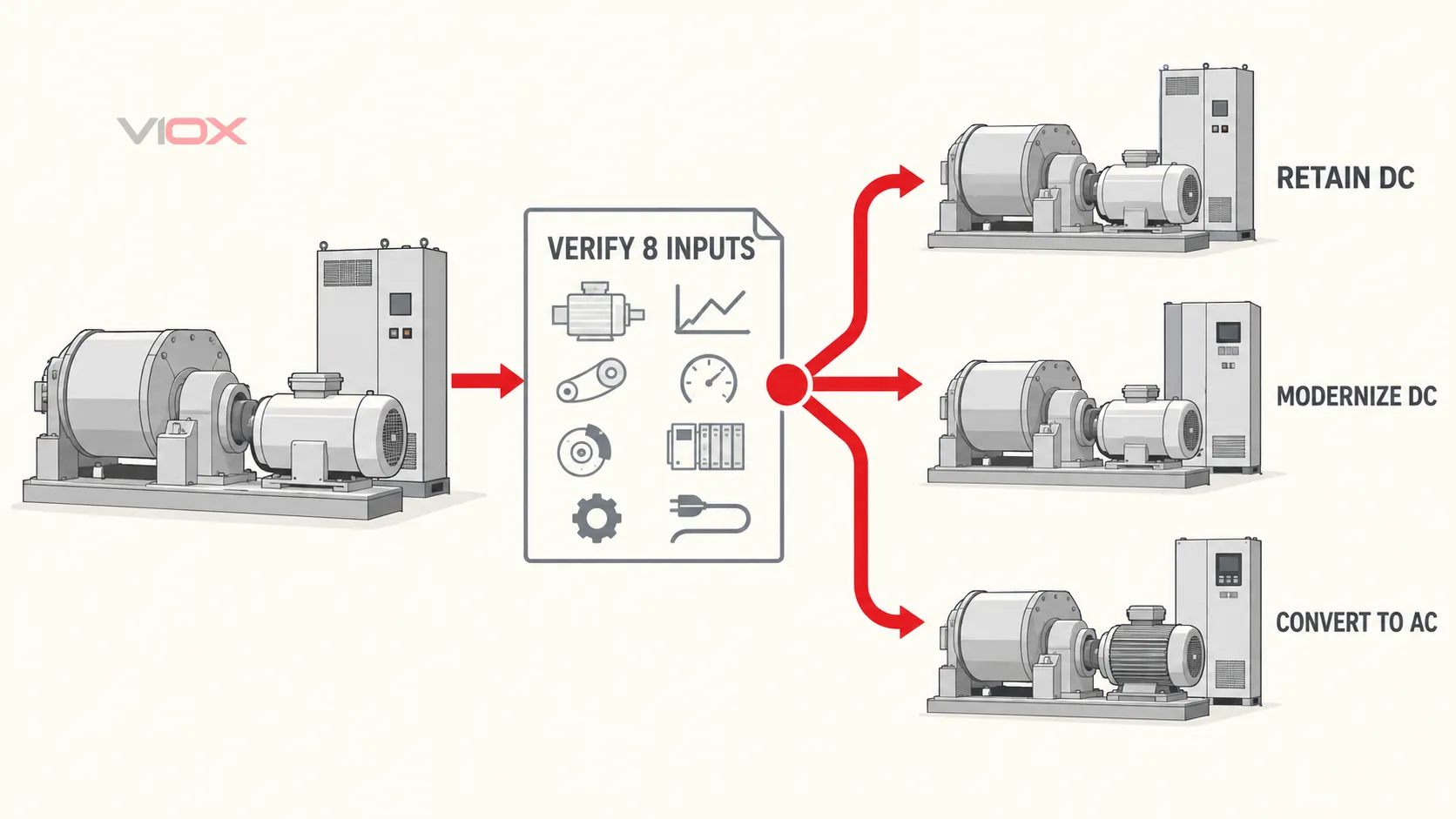
レトロフィットの決定は、故障したコンバータ単体ではなく、機械全体に基づいて行う必要があります。保持、DC交換、またはAC変換を選択する前に、これら8つの入力項目を記録してください。.
| 入力 | 回答すべき質問 | 停止条件 |
|---|---|---|
| 1. 設置済みモーター | モーターの構造、電圧、電流、速度、界磁定格、絶縁状態、整流子の状態、冷却方式、および残りの機械的寿命はどのようになっていますか? | モーターのデータまたは状態が不明です |
| 2. 負荷デューティ | トルク・速度曲線、慣性、デューティサイクル、過負荷、動作期間あたりの始動回数、および連続低速要件はどうなっていますか? | 交換品がkWまたはhpのみで選定されています |
| 3. 動作範囲 | 最小速度、基本速度、最大速度として何が必要であり、各ポイントでどのくらいの時間動作しますか? | 冷却、整流、過速度、または弱め界磁の制限が確認されていません |
| 4. 制動およびエネルギーフロー | 負荷はオーバーホール状態ですか?急速減速、4象限運転、または回生エネルギーの処理が必要ですか? | 提案されたドライブには、回生エネルギーのための文書化された経路がありません |
| 5. フィードバックおよび制御 | その機械はタコジェネレータ、エンコーダ、レゾルバ、アナログリファレンス、PLCネットワーク、インターロック、または協調ライン制御を使用していますか? | フィードバックまたは制御インターフェースのマッピングおよびテストができません |
| 6. 機械的変換 | 新しいモーターは、軸高さ、カップリング、設置面積、慣性、エンクロージャ、冷却、および被駆動機器の制限に適合できますか? | 機械的な変更がスケジュールまたは予算から除外されています |
| 7. 電気的統合 | 供給容量、保護、絶縁、接地、配線、EMC、高調波、モーターケーブル長、および筐体の熱対策は検討されていますか? | 提案書では、ドライブを独立したボックスとして扱っています |
| 8. ライフサイクル実行 | 予備品、保守スキル、ドキュメント、サポート期間、シャットダウン期間、試運転計画、およびロールバック戦略はどうなっていますか? | この決定は購入価格のみを比較しており、切り替え時のダウンタイムやサポートリスクを考慮していません |
結果として、以下の3つの正当な経路のいずれかを選択できます:
- DCシステムを維持し、サポートを継続する モーターおよび機械が健全な状態を維持し、メンテナンスおよび予備品戦略が持続可能である場合。.
- DCドライブの交換または近代化 モーターおよび機械を維持することで技術的な変更を最小限に抑えつつ、サポート対象の制御を復旧できる場合。.
- ACモータードライブシステムへの変換 DCモーターまたはサポートエコシステムが耐用年数を迎えており、全トルク・速度デューティを再現可能であり、かつプロジェクトが機械的、電気的、制御、安全、および試運転の変更を吸収できる場合。.
8つの入力項目で明確な道筋が特定できない場合、正しい結果は推測で導き出すものではありません。測定された負荷データと、正確なモーター、ドライブ、および機械のドキュメントを使用したアプリケーションスタディが必要です。.
要件:ドライブの互換性なし
ドライブファミリーの選定だけでは、電気設計や機械設計は完了しません。完成したシステムには、適切に選定された絶縁、短絡および過負荷保護、開閉またはバイパス機器、保護ボンディング、筐体の冷却、ケーブルおよびモーター絶縁の規定、電磁両立性(EMC)対策、および機械安全機能が依然として必要となる場合があります。.
IEC 61800-3:2022 可変速電力駆動システムのEMC要件に対処する一方、 IEC 61800-5-1:2022 は、規定の範囲内における電気的、熱的、火災、機械的、エネルギー的、および関連する安全上の危険を網羅しています。いずれの規格も、ドライブのデータシートを完全な機械リスク評価や設置設計に代用できるものではありません。.
隣接するモーター制御コンポーネントが必要な場合は、実際のシステム負荷を評価してください。 ACコンタクター, モーター保護用遮断器あるいは サーマル過負荷リレー は、ドライブ内部の保護および制御機能と自動的に互換性があるわけではありません。協調動作は、ドライブのドキュメント、適用される設置規則、および機械の安全アーキテクチャに従う必要があります。.
最終選定ルール
次のものを選択してください ACドライブシステム 提案されたモーターに互換性があり、可変周波数AC制御が負荷要件を満たし、かつ設置全体がモーター、フィードバック、冷却、EMC、ブレーキ、保護、および安全要件をサポートできる場合です。これは通常、新しい汎用産業機械において最初に評価すべき手法です。.
を選択または維持してください。 DC駆動システム 互換性のあるDCモーターが必要な場合、または既に設置されており、その状態およびトルク・速度特性が適切であり、かつメンテナンス、スペアパーツ、制御、およびサポート計画を考慮した上で、完全な変換を行うよりも維持する方がリスクが低いと判断される場合。.
選ぶ 汎用的な回答としてではなく 用途において、特殊なサーボ位置決め、トラクション制御、安全関連のモーション、あるいは本比較の範囲外のアーキテクチャが実際に必要とされる場合。.
技術ラベルは最初の関門に過ぎません。正当な決定とは、ドライブをモーターに、モーターを負荷に、そしてシステム全体をその運用およびライフサイクル上の義務に適合させることです。.