

Σε αυτή τη σελίδα
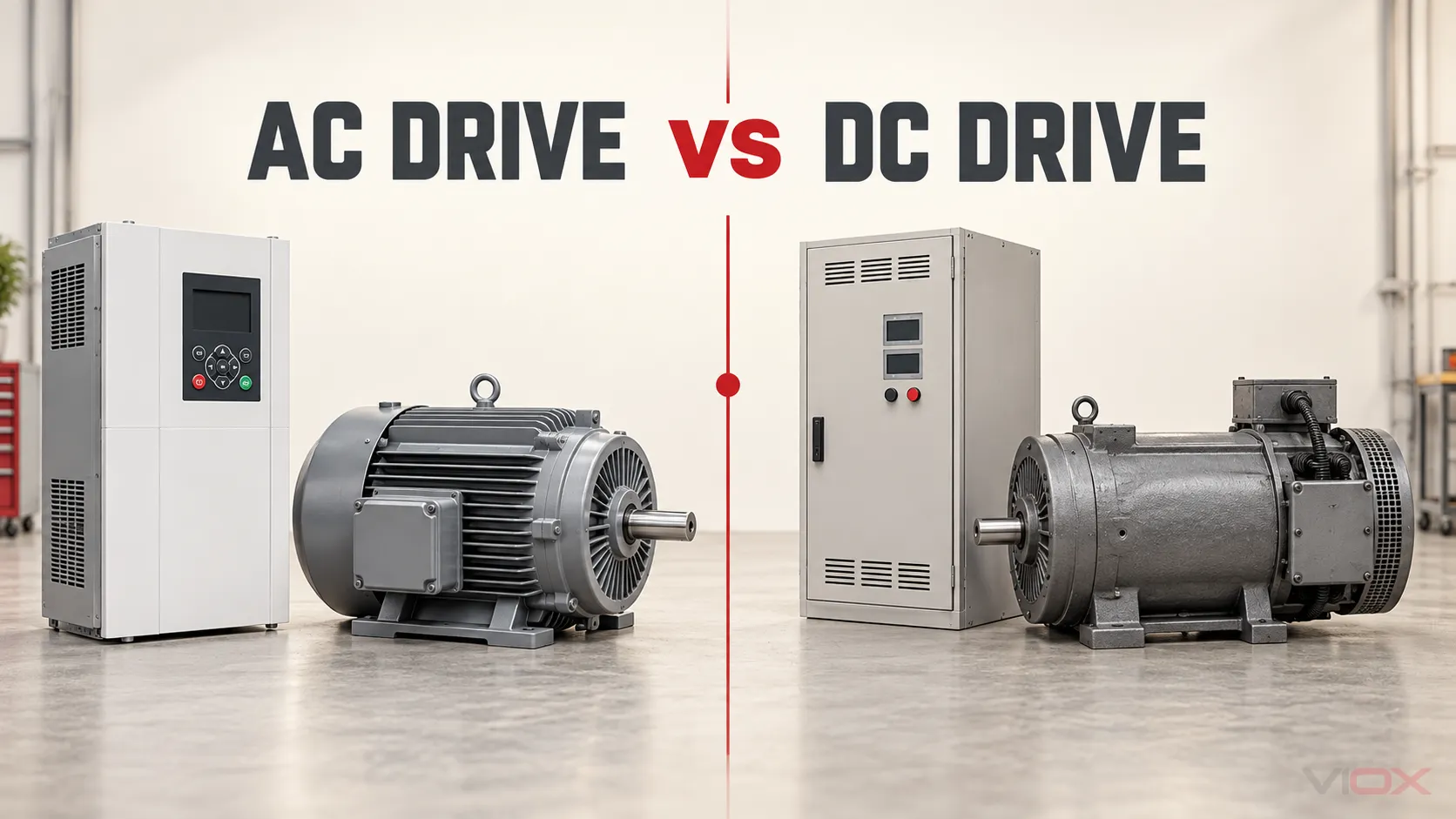
Για τις περισσότερες νέες βιομηχανικές εγκαταστάσεις γενικής χρήσης, ένας ρυθμιστής στροφών AC με συμβατό κινητήρα AC αποτελεί το σύνηθες σημείο εκκίνησης. Ένας ρυθμιστής στροφών DC παραμένει μια ορθή επιλογή όταν υπάρχει ήδη ένας λειτουργικός κινητήρας DC και μηχάνημα, η διαδικασία εξαρτάται από την καθιερωμένη συμπεριφορά ροπής-ταχύτητας και η διατήρηση του συστήματος ενέχει μικρότερο κίνδυνο κύκλου ζωής από τη μετατροπή ολόκληρου του μηχανήματος.
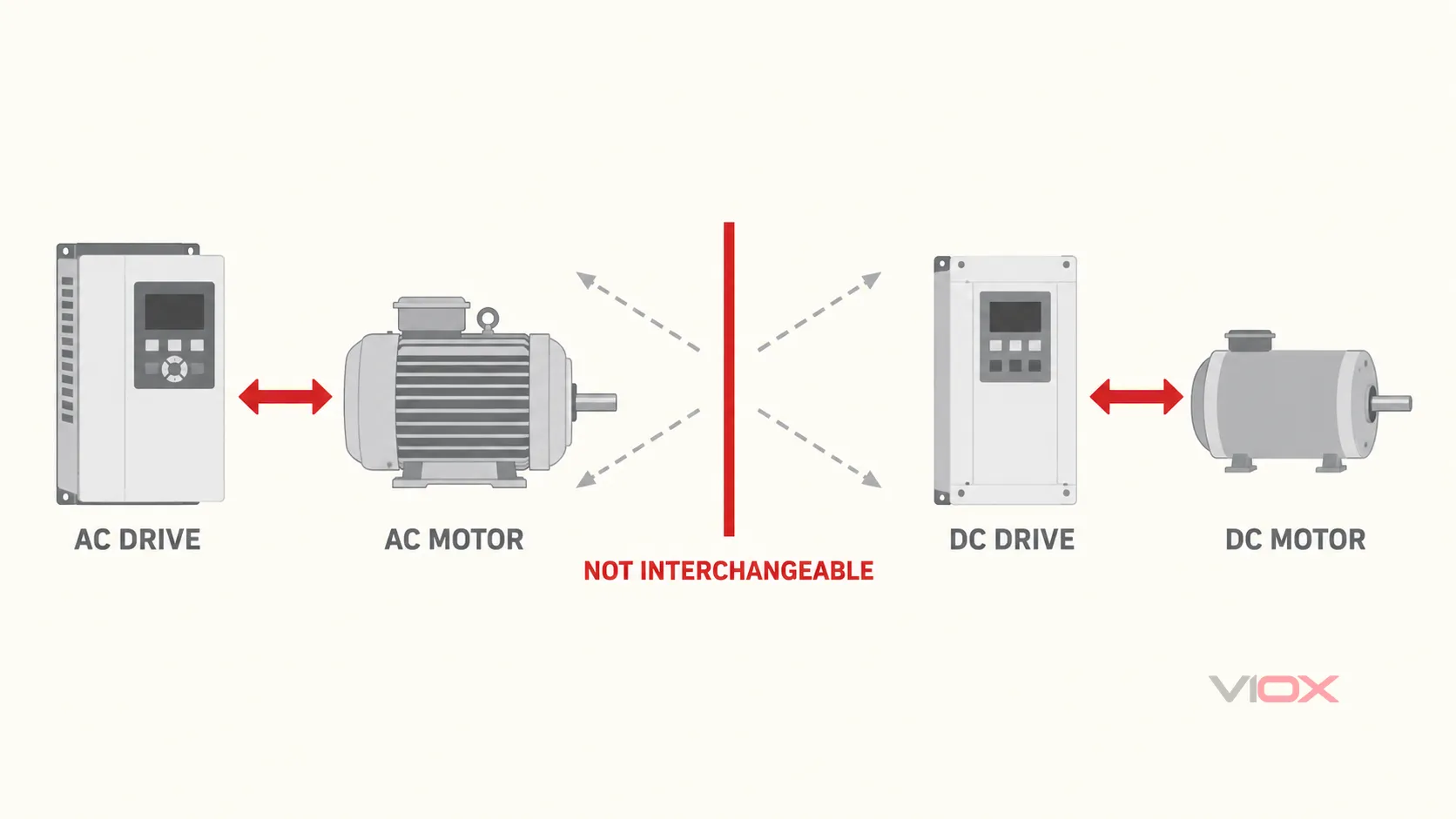
Ο πρώτος κανόνας επιλογής είναι απόλυτος: αντιστοιχίστε τον ρυθμιστής στροφών στον τύπο του κινητήρα. Ένας ρυθμιστής στροφών AC παράγει ελεγχόμενο AC για έναν συμβατό κινητήρα AC. Ένας ρυθμιστής στροφών DC παράγει ελεγχόμενο DC για έναν συμβατό κινητήρα DC. Κανένας δεν αποτελεί άμεση υποκατάσταση του άλλου, και η αλλαγή οικογενειών ρυθμιστών στροφών συνήθως συνεπάγεται αλλαγή του κινητήρα, της ανάδρασης, της καλωδίωσης, της προστασίας, των ελέγχων, των εργασιών θέσης σε λειτουργία και μερικές φορές της μηχανικής εγκατάστασης.
AC Drive έναντι DC Drive με μια ματιά
| Παράγοντας απόφασης | Ηλεκτρικό σύστημα ρυθμιστή στροφών AC | Σύστημα κίνησης συνεχούς ρεύματος (DC drive) | Επίπτωση της επιλογής |
|---|---|---|---|
| Ελεγχόμενος κινητήρας | Συμβατός κινητήρας AC· συνήθως επαγωγικός κινητήρας, με υποστήριξη άλλων τύπων κινητήρων μόνο όταν ο ρυθμιστής στροφών (drive) έχει σχεδιαστεί για αυτούς | Συμβατός κινητήρας DC· συνήθως μηχανή με ψήκτρες, μόνιμου μαγνήτη ή ξεχωριστής διέγερσης/περιελιγμένου πεδίου, ανάλογα με τον ρυθμιστή στροφών (drive) | Επιβεβαιώστε την ακριβή τεχνολογία του κινητήρα πριν από τη σύγκριση των ονομαστικών τιμών |
| Τυπική διαδρομή ισχύος | Συχνά ανορθωτής → ενδιάμεσο κύκλωμα DC → αντιστροφέας → έξοδος AC μεταβλητής συχνότητας | Συχνά ελεγχόμενος ανορθωτής ή μετατροπέας DC → ελεγχόμενη τροφοδοσία οπλισμού, με ξεχωριστό έλεγχο πεδίου όπου απαιτείται | Αυτές είναι κοινές διατάξεις, όχι καθολικές τοπολογίες |
| Κύρια μεταβλητή ελέγχου ταχύτητας | Συχνότητα εξόδου, τάση και αλγόριθμος ελέγχου | Τάση/ρεύμα οπλισμού και, όπου εφαρμόζεται, ρεύμα πεδίου | Το μοντέλο του κινητήρα και η διάταξη ανάδρασης πρέπει να αντιστοιχούν στον ρυθμιστή στροφών |
| Συντήρηση κινητήρα | Πολλοί βιομηχανικοί κινητήρες AC αποφεύγουν τις ψήκτρες και τους συλλέκτες | Οι κινητήρες DC με ψήκτρες απαιτούν προσοχή στις ψήκτρες και τον συλλέκτη | Η ικανότητα συντήρησης μπορεί να καθορίσει την περίπτωση του κύκλου ζωής |
| Νέα εγκατάσταση γενικής χρήσης | Συνήθως η πρώτη οικογένεια προς αξιολόγηση | Επιλέγεται κανονικά μόνο όταν η εφαρμογή ή η εγκατεστημένη βάση το υποστηρίζει | Μην επιλέγετε μόνο βάσει της ιστορικής φήμης |
| Υπάρχουσα μηχανή DC | Απαιτεί μια πλήρη μελέτη μετατροπής | Μπορεί να διατηρήσει έναν λειτουργικό κινητήρα και τη γνωστή συμπεριφορά της μηχανής | Συγκρίνετε το συνολικό εύρος της μετατροπής, όχι μόνο την τιμή του ρυθμιστή στροφών |
| Έλεγχος χαμηλής ταχύτητας και δυναμικός έλεγχος | Μπορεί να είναι ισχυρός με την κατάλληλη μονάδα κίνησης, κινητήρα, ανάδραση, ψύξη και μέθοδο ελέγχου | Παραδοσιακά ισχυρός και συγκριτικά άμεσος στον έλεγχο | Καμία οικογένεια δεν έχει καθολικό πλεονέκτημα απόδοσης |
| Ανάκτηση ενέργειας και πέδηση | Απαιτεί κατάλληλη τοπολογία ανάκτησης, κοινή διάταξη DC ή λύση πέδησης | Διατίθενται διατάξεις τεσσάρων τεταρτημορίων για συμβατά συστήματα | Καθορίστε ρητά τα τεταρτημόρια λειτουργίας και τη ροή ενέργειας |
| Οι πιο γνωστές εφαρμογές | Αντλίες, ανεμιστήρες, μεταφορικές ταινίες, συμπιεστές, αναμικτήρες, συστήματα HVAC και σύγχρονα μηχανήματα παραγωγής | Παλαιού τύπου μύλοι, περιελικτικά μηχανήματα, ανυψωτικά, γερανοί, γραμμές εκτύπωσης και άλλα μηχανήματα που διατηρούν κινητήρες DC | Οι ετικέτες εφαρμογών αποτελούν αφετηρίες και όχι τελικές προδιαγραφές |
Το σωστό ερώτημα επομένως δεν είναι “Ποιος ρυθμιστής στροφών είναι καλύτερος;” αλλά “Ποιο ολοκληρωμένο σύστημα κινητήρα-ρυθμιστή ικανοποιεί αυτό το φορτίο και δημιουργεί τον χαμηλότερο τεχνικό κίνδυνο και κίνδυνο κύκλου ζωής;”
Καθορίστε το πλαίσιο πριν τη σύγκριση των Drive
Στη βιομηχανική πρακτική, η λέξη ρυθμιστής στροφών μπορεί να περιγράφει μόνο τον ηλεκτρονικό μετατροπέα ή το ευρύτερο σύστημα κίνησης ισχύος. Αυτή η διάκριση έχει σημασία επειδή ο κινητήρας, η συσκευή ανάδρασης, η τροφοδοσία, η προστασία, η ψύξη, η καλωδίωση, τα χειριστήρια του μηχανήματος και το οδηγούμενο φορτίο επηρεάζουν όλα το αποτέλεσμα.
IEC 61800-2:2021 καλύπτει συστήματα κίνησης ισχύος AC ρυθμιζόμενης ταχύτητας, συμπεριλαμβανομένης της μετατροπής ημιαγωγών, του ελέγχου, της προστασίας, της παρακολούθησης, της μέτρησης και των κινητήρων AC. IEC 61800-1:2021 παρέχει το αντίστοιχο πεδίο εφαρμογής για συστήματα κίνησης ισχύος DC ρυθμιζόμενης ταχύτητας και κινητήρες DC.
Αυτό το άρθρο συγκρίνει συμβατικά βιομηχανικά συστήματα κίνησης κινητήρων AC και DC ρυθμιζόμενης ταχύτητας. Δεν επιλέγει άξονες servo, βηματικούς κινητήρες, συστήματα έλξης ηλεκτρικών οχημάτων ή συστήματα μεταγωγής DC χωρίς ψήκτρες. Αυτές οι εφαρμογές απαιτούν τη δική τους ανάλυση ελέγχου, ασφάλειας και απόδοσης.
Για μια βαθύτερη επισκόπηση του συστήματος κίνησης AC, δείτε Τι είναι ένας VFD;. αγγελιοφόρος. Το οδηγό ορολογίας VFD διαχωρίζει επίσης την ορολογία VFD, συστήματος κίνησης μεταβλητής ταχύτητας (VSD), συστήματος κίνησης ρυθμιζόμενης ταχύτητας (ASD) και μετατροπέα.
Πώς διαφέρουν οι αρχές λειτουργίας
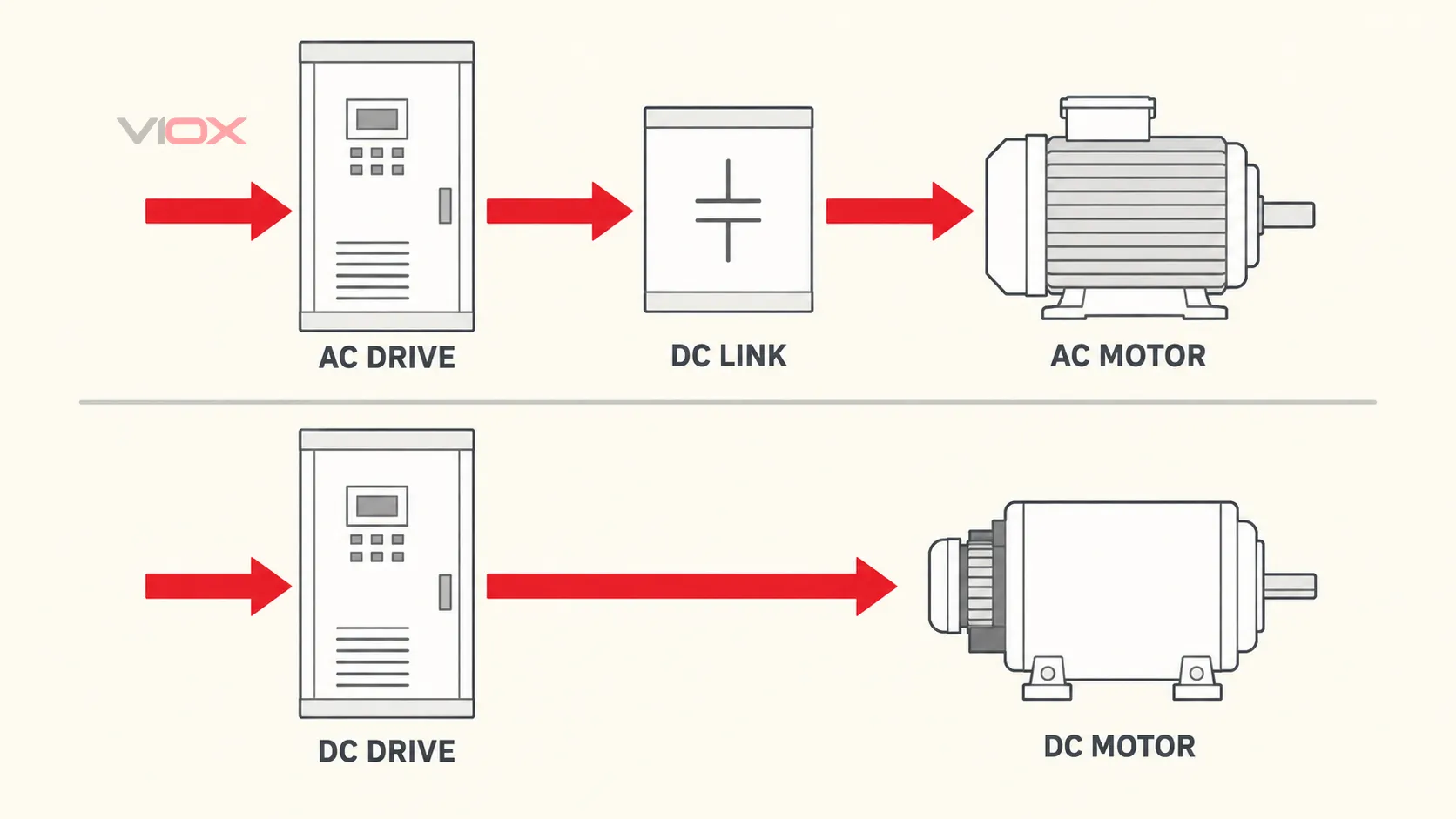
AC drive: δημιουργία AC ελεγχόμενης συχνότητας
Ένας κοινός ρυθμιστής στροφών AC χαμηλής τάσης ακολουθεί τρία στάδια μετατροπής ισχύος:
είσοδος AC σταθερής συχνότητας → ανορθωτής → ενδιάμεσο κύκλωμα DC → μετατροπέας (inverter) → ελεγχόμενη έξοδος AC
Ο μετατροπέας μεταγωγίζει την τάση του ενδιάμεσου κυκλώματος DC για να παράγει μια έξοδο διαμόρφωσης εύρους παλμών (PWM) με την τάση και τη θεμελιώδη συχνότητα που απαιτούνται από τη στρατηγική ελέγχου του κινητήρα. Για έναν επαγωγικό κινητήρα, η ηλεκτρική συχνότητα καθορίζει τη σύγχρονη ταχύτητα, ενώ ο κινητήρας λειτουργεί με την ολίσθηση που απαιτείται για την ανάπτυξη ροπής. Ο πιο προηγμένος έλεγχος μπορεί να εκτιμήσει ή να μετρήσει μεταβλητές του κινητήρα για να ρυθμίσει τη ροή και τη ροπή με μεγαλύτερη ακρίβεια.
Αυτή η διαδρομή τριών σταδίων είναι χρήσιμη για την κατανόηση ενός τυπικού VFD, αλλά δεν αποτελεί καθολικό διάγραμμα για κάθε AC drive. Αναγεννητικά τροφοδοτικά, ρυθμιστές ρεύματος, άμεσοι μετατροπείς, τοπολογίες μέσης τάσης και συστήματα ειδικών εφαρμογών μπορούν να χρησιμοποιούν διαφορετικές δομές ισχύος.
DC drive: ρύθμιση συνθηκών οπλισμού και πεδίου
Ένας συμβατικός βιομηχανικός DC drive ελέγχει τις ηλεκτρικές συνθήκες που εφαρμόζονται σε έναν κινητήρα DC. Ανάλογα με την τροφοδοσία και την τοπολογία του, ο μετατροπέας μπορεί να χρησιμοποιεί έναν ελεγχόμενο ανορθωτή ή άλλο στάδιο μετατροπής DC. Ρυθμίζει την τάση και το ρεύμα οπλισμού για τον έλεγχο της ταχύτητας και της ροπής. Ένας κινητήρας με περιελίξεις πεδίου μπορεί επίσης να απαιτεί ξεχωριστή ελεγχόμενη τροφοδοσία πεδίου.
Κάτω από τη βασική ταχύτητα, χρησιμοποιείται συνήθως έλεγχος τάσης οπλισμού διατηρώντας παράλληλα το απαιτούμενο πεδίο. Πάνω από τη βασική ταχύτητα, ορισμένα συστήματα μειώνουν τη ροή πεδίου για να αυξήσουν την ταχύτητα, γεγονός που αλλάζει τη διαθέσιμη περιοχή ροπής και ισχύος. Αυτά τα όρια λειτουργίας ανήκουν στα δεδομένα του συγκεκριμένου κινητήρα και drive· η αποδυνάμωση πεδίου δεν αποτελεί άδεια υπέρβασης των μηχανικών ή θερμικών ονομαστικών τιμών του μηχανήματος.
Η απλούστερη εννοιολογική σχέση μεταξύ του ρεύματος οπλισμού, της μαγνητικής ροής πεδίου και της ροπής είναι ένας λόγος για τον οποίο τα συστήματα DC καθιερώθηκαν σε απαιτητικά μηχανήματα μεταβλητής ταχύτητας. Τα σύγχρονα συστήματα διανυσματικού ελέγχου AC μπορούν επίσης να παρέχουν ισχυρή δυναμική απόδοση και απόδοση σε χαμηλές ταχύτητες, επομένως η ιστορική φήμη από μόνη της δεν αποτελεί πλέον επαρκή κανόνα επιλογής.
Η συμβατότητα του κινητήρα προηγείται
| Τύπος κινητήρα | Καταλληλότητα κίνησης AC | Καταλληλότητα κίνησης DC | Απαιτούμενη επαλήθευση |
|---|---|---|---|
| Τριφασικός επαγωγικός κινητήρας | Συνηθισμένο, όταν η κίνηση υποστηρίζει την τάση, το ρεύμα, το κύκλο λειτουργίας και τη μέθοδο ελέγχου του κινητήρα | Όχι | Δεδομένα πινακίδας, κύκλος λειτουργίας, μόνωση, ψύξη, εύρος ταχύτητας, συνθήκες καλωδίωσης |
| Σύγχρονος κινητήρας μόνιμου μαγνήτη | Δυνατό μόνο με κίνηση και αλγόριθμο ελέγχου που προορίζεται για τον συγκεκριμένο κινητήρα | Όχι | Σταθερές κινητήρα, μέθοδος ανάδρασης ή χωρίς αισθητήρα, όρια υπερταχύτητας και αντι-ηλεκτρεγερτικής δύναμης (back-EMF) |
| Σύγχρονος κινητήρας μεταβλητής μαγνητικής αντίστασης (reluctance motor) | Εφικτό με έναν ειδικά συμβατό ρυθμιστή στροφών AC | Όχι | Εγκεκριμένος συνδυασμός κινητήρα-ρυθμιστή και δεδομένα ελέγχου |
| Κινητήρας DC με ανεξάρτητη διέγερση ή παράλληλης διέγερσης (shunt-wound) | Όχι | Συνηθισμένο για έναν συμβατό ρυθμιστή οπλισμού και πεδίου | Ονομαστικά μεγέθη οπλισμού και πεδίου, ανάδραση, εύρος ταχύτητας, κατάσταση μεταγωγής |
| Κινητήρας DC με μόνιμους μαγνήτες και ψήκτρες | Όχι | Εφικτό με συμβατό ελεγκτή DC | Τάση, ρεύμα, κύκλος λειτουργίας, κατεύθυνση, ανάδραση, θερμικά όρια |
| Κινητήρας DC χωρίς ψήκτρες | Δεν καλύπτεται από την απλή σύγκριση οδηγών DC με ψήκτρες | Δεν είναι εναλλάξιμο με έναν συμβατικό οδηγό DC με ψήκτρες | Μέθοδος ηλεκτρονικής μεταγωγής, πληροφορίες θέσης ρότορα, συμβατότητα ελεγκτή |
“Οι όροι ”κινητήρας AC“ και ”κινητήρας DC» δεν αποτελούν πλήρεις προδιαγραφές. Ένας οδηγός που διαφημίζεται για μια οικογένεια μπορεί να υποστηρίζει μόνο συγκεκριμένες κατασκευές κινητήρων, μεθόδους ανάδρασης, συχνότητες μεταγωγής και τρόπους ελέγχου. Επαληθεύστε τη συμβατότητα με βάση την ακριβή τεκμηρίωση του οδηγού και του κινητήρα, αντί να βασίζεστε στην ετικέτα τροφοδοσίας.
Συγκρίνετε την απόδοση βάσει του φορτίου, όχι βάσει της ονομασίας του Drive
Εύρος ταχύτητας και λειτουργία χαμηλής ταχύτητας
Και οι δύο τεχνολογίες μπορούν να ρυθμίσουν την ταχύτητα σε ένα χρήσιμο εύρος, αλλά οι περιοριστικοί μηχανισμοί διαφέρουν. Σε χαμηλή ταχύτητα, ένας αυτοψυχόμενος κινητήρας μπορεί να χάσει την ψύξη του ακόμη και όταν ο ρυθμιστής στροφών μπορεί ακόμα να δώσει εντολή για ροπή. Ένας κινητήρας DC μπορεί να χρειάζεται εξαναγκασμένο αερισμό και προσοχή στη μεταγωγή. Ένας κινητήρας AC μπορεί να χρειάζεται ανεξάρτητη ψύξη, ανάδραση ή διαφορετική μέθοδο ελέγχου. Επομένως, το συνεχές σημείο λειτουργίας χαμηλής ταχύτητας πρέπει να ελέγχεται θερμικά καθώς και ηλεκτρικά.
Ροπή εκκίνησης και υπερφόρτισης
Τα συστήματα DC χρησιμοποιούνται εδώ και καιρό όπου η υψηλή ροπή εκκίνησης και η απλή ρύθμιση της ροπής ήταν σημαντικές. Ένα σωστά σχεδιασμένο σύστημα διανυσματικού ελέγχου AC μπορεί επίσης να ελέγξει αποτελεσματικά τη ροπή. Η τεκμηριωμένη σύγκριση χρησιμοποιεί τη ροπή εκκίνησης του φορτίου, τη ροπή επιτάχυνσης, τη διάρκεια υπερφόρτισης, την αδράνεια, τον κύκλο λειτουργίας και την ψύξη — όχι μια γενική δήλωση ότι μια οικογένεια ρυθμιστών στροφών έχει “υψηλότερη ροπή”.”
Πέδηση και ανάκτηση ενέργειας
Ένα φορτίο μπορεί να επιστρέψει ενέργεια κατά την επιβράδυνση, την κάθοδο, την υπερπήδηση ή το ξετύλιγμα. Ο σχεδιασμός πρέπει να δηλώνει εάν το σύστημα χρειάζεται:
- λειτουργία κινητήρα προς μία ή και προς τις δύο κατευθύνσεις;
- πέδηση προς μία ή και προς τις δύο κατευθύνσεις;
- ενέργεια που διαχέεται σε ένα στοιχείο πέδησης· ή
- ενέργεια που επιστρέφεται σε ένα κοινό σύστημα DC ή στην παροχή AC.
Τόσο τα συστήματα AC όσο και τα συστήματα DC μπορούν να υποστηρίξουν αναγεννητική λειτουργία όταν η τοπολογία ισχύος έχει σχεδιαστεί για αυτό. Ένας τυπικός μη αναγεννητικός ρυθμιστής στροφών δεν αποκτά δυνατότητα τεσσάρων τεταρτημορίων απλώς και μόνο επειδή ο κινητήρας μπορεί να λειτουργήσει ως γεννήτρια.
Ακρίβεια και δυναμική απόκριση
Η απόδοση εξαρτάται από τον πλήρη βρόχο ελέγχου: αλγόριθμος ρυθμιστή, εύρος ζώνης βρόχου ρεύματος, ανάδραση ταχύτητας, παράμετροι κινητήρα, ανάλυση αισθητήρα, μηχανική συμμόρφωση, ελεγκτής διεργασίας και ποιότητα θέσης σε λειτουργία. Για μια απαιτητική εφαρμογή τάσης, τοποθέτησης ή συντονισμένων αξόνων, μια σύγκριση γενικής χρήσης AC έναντι DC μπορεί να μην επαρκεί· ενδέχεται να απαιτείται μελέτη ελέγχου κίνησης.
Διαφορές στη συντήρηση και τον κύκλο ζωής
Η πιο διαρκής διάκριση βρίσκεται συχνά στον κινητήρα και όχι στα ηλεκτρονικά του ρυθμιστή.
Πολλοί βιομηχανικοί επαγωγικοί κινητήρες AC και κινητήρες μόνιμου μαγνήτη δεν διαθέτουν ψήκτρες ή μηχανικό συλλέκτη. Αυτό εξαλείφει μια διεπαφή τακτικής φθοράς, αν και τα έδρανα, οι δίοδοι ψύξης, η μόνωση, οι συνδέσεις, οι συσκευές ανάδρασης και τα ηλεκτρονικά του ρυθμιστή εξακολουθούν να απαιτούν κατάλληλη επιθεώρηση και συντήρηση.
Ένας κινητήρας DC με ψήκτρες χρησιμοποιεί σκόπιμα ψήκτρες και συλλέκτη για τη μεταφορά ρεύματος στον περιστρεφόμενο οπλισμό. Η φθορά των ψηκτρών, η κατάσταση του συλλέκτη, η σκόνη άνθρακα, η πίεση των ελατηρίων, ο εξαερισμός και η πρόσβαση καθίστανται επομένως ζητήματα του κύκλου ζωής. Αυτό δεν καθιστά κάθε εγκατάσταση DC ασύμφορη. Ένας μεγάλος κινητήρας DC μπορεί να παραμείνει πολύτιμος όταν είναι μηχανικά υγιής, κατανοητός από την ομάδα συντήρησης, υποστηρίζεται με ανταλλακτικά και είναι βαθιά ενσωματωμένος στο μηχάνημα.
Του Υπουργείου Ενέργειας των ΗΠΑ πηγές και τεχνικές αναφορές συστημάτων κινητήρων και ρυθμιστών σημειώνει την ιστορική χρήση κινητήρων DC για αποτελεσματικό έλεγχο ταχύτητας και τη σύγχρονη βιομηχανική στροφή προς κινητήρες AC ελεγχόμενους από VFD. Προειδοποιεί επίσης ότι τα VFD δεν είναι κατάλληλα για κάθε εφαρμογή κίνησης κινητήρα. Αυτό είναι το σωστό πλαίσιο κύκλου ζωής: το AC είναι το σύνηθες σημείο εκκίνησης για ένα νέο ηλεκτρικό σύστημα, όχι μια αυτόματη λύση αναβάθμισης.
Καταλληλότητα εφαρμογής: Νέα εγκατάσταση ή υφιστάμενο μηχάνημα;
| Συνθήκες έργου | Κατεύθυνση κίνησης AC | Κατεύθυνση κίνησης DC | Τι πρέπει να αποδειχθεί |
|---|---|---|---|
| Νέο σύστημα αντλίας, ανεμιστήρα ή συμπιεστή | Συνήθως αξιολογείται πρώτο | Σπάνια η πρώτη επιλογή | Εύρος διεργασίας, ρεύμα κινητήρα, συμπεριφορά μεταβλητής ροπής, ελάχιστη ταχύτητα, αρμονικές και EMC |
| Νέος μεταφορέας, αναμικτήρας ή μηχανή παραγωγής | Συχνά κατάλληλο | Δυνατό μόνο με αιτιολογημένη απαίτηση συστήματος κινητήρα | Ροπή εκκίνησης, υπερφόρτιση, πέδηση, ρύθμιση ταχύτητας, ασφάλεια μηχανής |
| Υφιστάμενο ελασματουργείο DC, τυλικτικό, ανυψωτικό, γερανός ή τμήμα εκτύπωσης | Η μετατροπή ενδέχεται να είναι βιώσιμη | Η διατήρηση ή η σύγχρονη αντικατάσταση DC μπορεί να ελαχιστοποιήσει τη διακοπή λειτουργίας | Κατάσταση κινητήρα, ανάκτηση ενέργειας, ανάδραση, έλεγχοι, ανταλλακτικά, εύρος διακοπής λειτουργίας |
| Αστοχία μετατροπέα DC με υγιή κινητήρα DC | Η μετατροπή σε AC απαιτεί μελέτη κινητήρα και ηλεκτρικού συστήματος | Η συμβατή αντικατάσταση DC ενδέχεται να αποκαταστήσει τη λειτουργία με λιγότερες αλλαγές | Υπολειπόμενη διάρκεια ζωής κινητήρα, διαθεσιμότητα ρυθμιστή στροφών, συστήματα ελέγχου και υποστήριξη κύκλου ζωής |
| Παρωχημένος κινητήρας DC με κακή κατάσταση συλλέκτη και περιορισμένα ανταλλακτικά | Η μετατροπή σε AC καθίσταται πιο ελκυστική | Η συνεχιζόμενη διατήρηση ενδέχεται να αυξήσει τον κίνδυνο του κύκλου ζωής | Μηχανική προσαρμογή, ισοδύναμο διάγραμμα ροπής-ταχύτητας, ψύξη, χρόνος διακοπής λειτουργίας και θέση σε λειτουργία |
| Κίνηση υψηλής δυναμικής συντονισμού ή άξονας σχετικός με την ασφάλεια | Ένας VFD γενικής χρήσης ενδέχεται να μην επαρκεί | Ένας DC drive γενικής χρήσης ενδέχεται να μην επαρκεί | Servo ή εξειδικευμένη αρχιτεκτονική κίνησης, ανάδραση, λειτουργίες ασφαλείας και επικύρωση |
Για έναν AC κινητήρα που απαιτεί ελεγχόμενη ταχύτητα κατά την κανονική λειτουργία, συγκρίνετε την τελική επιλογή με το ξεχωριστό οδηγό VFD έναντι soft starter. Ένας ομαλός εκκινητής (soft starter) συνήθως αντιμετωπίζει την εκκίνηση και τη διακοπή λειτουργίας παρά τη συνεχή λειτουργία μεταβλητής ταχύτητας.
Δοκιμή αναβάθμισης DC-to-AC οκτώ εισόδων
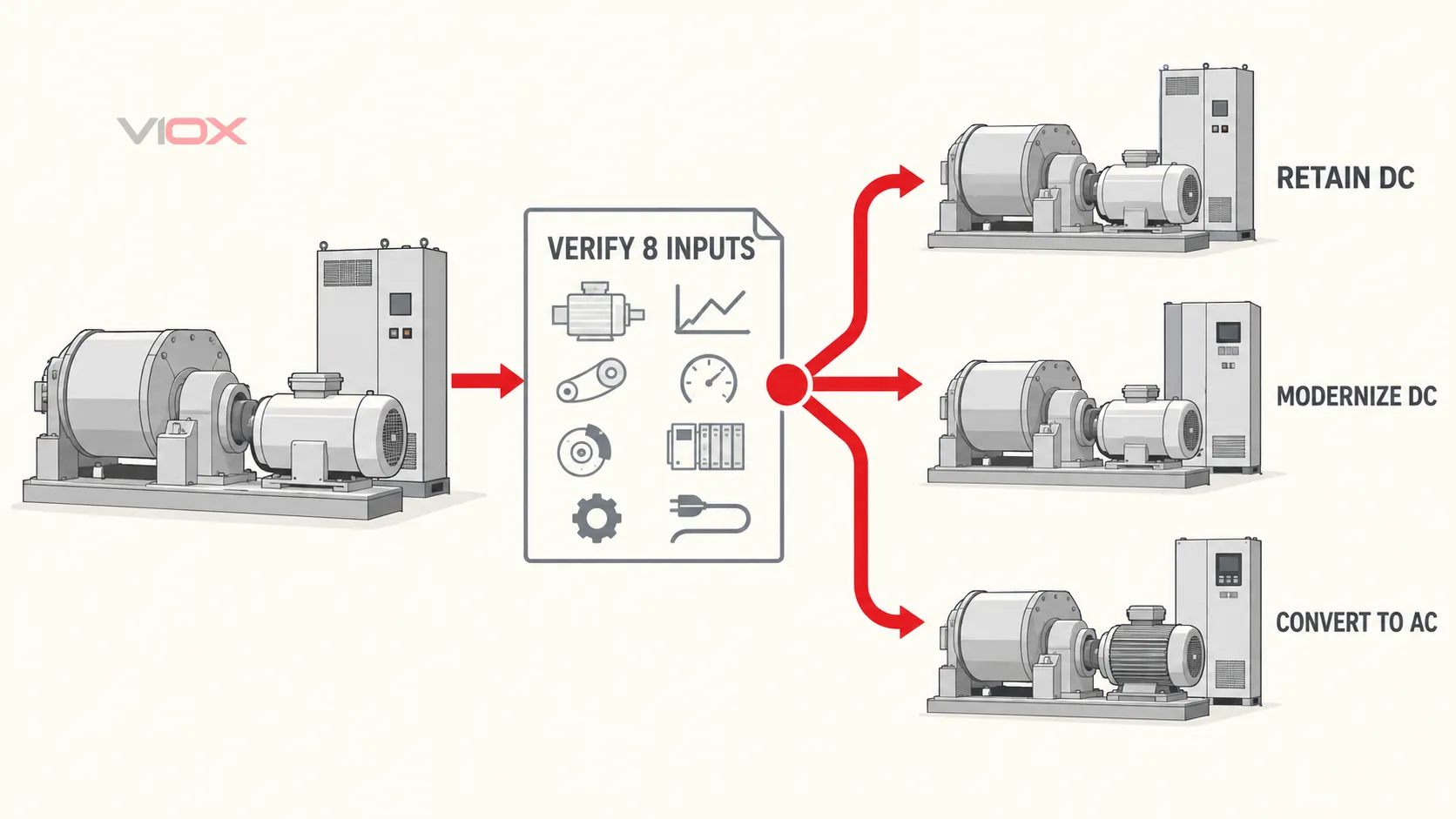
Μια απόφαση εκσυγχρονισμού (retrofit) πρέπει να βασίζεται στο πλήρες μηχάνημα και όχι μόνο στον αστοχήσαντα μετατροπέα. Καταγράψτε αυτές τις οκτώ εισόδους πριν επιλέξετε τη διατήρηση, την αντικατάσταση DC ή τη μετατροπή AC.
| Είσοδος | Ερωτήματα προς απάντηση | Συνθήκη διακοπής |
|---|---|---|
| 1. Εγκατεστημένος κινητήρας | Ποια είναι η κατασκευή του κινητήρα, η τάση, το ρεύμα, η ταχύτητα, η ονομαστική τιμή πεδίου, η κατάσταση μόνωσης, η κατάσταση του συλλέκτη, η μέθοδος ψύξης και η υπολειπόμενη μηχανική διάρκεια ζωής; | Τα δεδομένα ή η κατάσταση του κινητήρα είναι άγνωστα |
| 2. Λειτουργία φορτίου | Ποια είναι η καμπύλη ροπής-ταχύτητας, η αδράνεια, ο κύκλος λειτουργίας, οι υπερφορτίσεις, οι εκκινήσεις ανά περίοδο λειτουργίας και οι απαιτήσεις συνεχούς χαμηλής ταχύτητας; | Η αντικατάσταση επιλέγεται μόνο βάσει kW ή hp |
| 3. Εύρος λειτουργίας | Ποιες ελάχιστες, βασικές και μέγιστες ταχύτητες απαιτούνται και για πόσο χρονικό διάστημα σε κάθε σημείο; | Τα όρια ψύξης, μεταγωγής, υπερταχύτητας ή αποδυνάμωσης πεδίου δεν έχουν επαληθευτεί |
| 4. Πέδηση και ροή ενέργειας | Το φορτίο προκαλεί υπερστροφία; Απαιτείται ταχεία επιβράδυνση, λειτουργία τεσσάρων τεταρτημορίων ή επιστροφή ενέργειας; | Ο προτεινόμενος ρυθμιστής στροφών δεν διαθέτει τεκμηριωμένη διαδρομή για την παραγόμενη ενέργεια |
| 5. Ανάδραση και έλεγχοι | Χρησιμοποιεί το μηχάνημα ταχογεννήτρια, κωδικοποιητή (encoder), επιλύτη (resolver), αναλογική αναφορά, δίκτυο PLC, διατάξεις αλληλομανδάλωσης ή συντονισμένο έλεγχο γραμμής; | Οι διεπαφές ανάδρασης ή ελέγχου δεν μπορούν να αντιστοιχιστούν και να ελεγχθούν |
| 6. Μηχανική μετατροπή | Μπορεί ο νέος κινητήρας να ανταποκριθεί στα όρια ύψους άξονα, σύζευξης, αποτυπώματος, αδράνειας, περιβλήματος, ψύξης και του οδηγούμενου εξοπλισμού; | Οι μηχανικές αλλαγές παραλείπονται από το χρονοδιάγραμμα ή τον προϋπολογισμό |
| 7. Ηλεκτρική ενσωμάτωση | Έχουν αντιμετωπιστεί η χωρητικότητα τροφοδοσίας, η προστασία, η απομόνωση, η γείωση, η καλωδίωση, η EMC, οι αρμονικές, το μήκος του καλωδίου κινητήρα και η θερμότητα του περιβλήματος; | Η πρόταση αντιμετωπίζει τον ρυθμιστή στροφών ως μεμονωμένο κουτί |
| 8. Εκτέλεση κύκλου ζωής | Ποια είναι τα ανταλλακτικά, οι δεξιότητες συντήρησης, η τεκμηρίωση, ο ορίζοντας υποστήριξης, το παράθυρο διακοπής λειτουργίας, το σχέδιο θέσης σε λειτουργία και η στρατηγική επαναφοράς; | Η απόφαση συγκρίνει την τιμή αγοράς αλλά όχι τον χρόνο διακοπής μετατροπής και τον κίνδυνο υποστήριξης |
Το αποτέλεσμα μπορεί να είναι μία από τις τρεις τεκμηριωμένες διαδρομές:
- Διατηρήστε και υποστηρίξτε το DC σύστημα όταν ο κινητήρας και το μηχάνημα παραμένουν σε καλή κατάσταση και η στρατηγική συντήρησης και ανταλλακτικών είναι βιώσιμη.
- Αντικαταστήστε ή εκσυγχρονίστε τον DC ρυθμιστή στροφών όταν η διατήρηση του κινητήρα και του μηχανήματος ελαχιστοποιεί τις τεχνικές αλλαγές, αποκαθιστώντας παράλληλα τους υποστηριζόμενους ελέγχους.
- Μετατρέψτε σε ένα AC σύστημα κινητήρα-ρυθμιστή στροφών όταν ο DC κινητήρας ή το οικοσύστημα υποστήριξης βρίσκεται στο τέλος του κύκλου ζωής του, η πλήρης λειτουργία ροπής-ταχύτητας μπορεί να αναπαραχθεί και το έργο μπορεί να απορροφήσει μηχανικές, ηλεκτρικές, ελέγχου, ασφάλειας και θέσης σε λειτουργία αλλαγές.
Εάν οι οκτώ είσοδοι δεν προσδιορίζουν μια σαφή πορεία, το σωστό αποτέλεσμα δεν είναι μια εικασία. Πρόκειται για μια μελέτη εφαρμογής που χρησιμοποιεί μετρημένα δεδομένα φορτίου και την ακριβή τεκμηρίωση του κινητήρα, του ρυθμιστή στροφών και του μηχανήματος.
Απαιτήσεις που δεν αντικαθιστά κανένας ρυθμιστής στροφών
Η επιλογή της οικογένειας ρυθμιστών στροφών δεν ολοκληρώνει τον ηλεκτρικό ή μηχανολογικό σχεδιασμό. Το ολοκληρωμένο σύστημα ενδέχεται να απαιτεί ακόμη σωστά επιλεγμένη απομόνωση, προστασία από βραχυκύκλωμα και υπερφόρτιση, εξοπλισμό μεταγωγής ή παράκαμψης, προστατευτική ισοδυναμική σύνδεση, ψύξη περιβλήματος, διατάξεις καλωδίων και μόνωσης κινητήρα, μέτρα ηλεκτρομαγνητικής συμβατότητας (EMC) και λειτουργίες ασφαλείας μηχανήματος.
IEC 61800-3:2022 καλύπτει τις απαιτήσεις EMC για συστήματα κίνησης ισχύος ρυθμιζόμενης ταχύτητας, ενώ IEC 61800-5-1:2022 καλύπτει ηλεκτρικούς, θερμικούς, πυρκαγιάς, μηχανικούς, ενεργειακούς και σχετικούς κινδύνους ασφαλείας εντός του δηλωμένου πεδίου εφαρμογής του. Κανένα πρότυπο δεν μετατρέπει ένα φύλλο δεδομένων ρυθμιστή στροφών σε μια πλήρη εκτίμηση κινδύνου μηχανήματος ή μελέτη εγκατάστασης.
Όπου απαιτούνται γειτονικά εξαρτήματα ελέγχου κινητήρα, αξιολογήστε την πραγματική τους λειτουργία στο ηλεκτρικό σύστημα. Ένας Επαφέας εναλλασσόμενου ρεύματος, αυτόματος διακόπτης προστασίας κινητήρα, ή θερμικό ρελέ υπερφόρτωσης δεν είναι αυτόματα εναλλάξιμος με τις λειτουργίες προστασίας και ελέγχου εντός ενός ρυθμιστή στροφών. Ο συντονισμός πρέπει να ακολουθεί την τεκμηρίωση του ρυθμιστή στροφών, τους ισχύοντες κανόνες εγκατάστασης και την αρχιτεκτονική ασφαλείας του μηχανήματος.
Κανόνας Τελικής Επιλογής
Επιλέξτε έναν Ηλεκτρικό σύστημα ρυθμιστή στροφών AC όταν ο προτεινόμενος κινητήρας είναι συμβατός, ο έλεγχος AC μεταβλητής συχνότητας καλύπτει το φορτίο λειτουργίας και η πλήρης εγκατάσταση μπορεί να υποστηρίξει τις απαιτήσεις κινητήρα, ανάδρασης, ψύξης, EMC, πέδησης, προστασίας και ασφαλείας. Αυτή είναι συνήθως η πρώτη διαδρομή προς αξιολόγηση για ένα νέο βιομηχανικό μηχάνημα γενικής χρήσης.
Επιλέξτε ή διατηρήστε έναν Σύστημα κίνησης συνεχούς ρεύματος (DC drive) όταν απαιτείται ή είναι ήδη εγκατεστημένος ένας συμβατός κινητήρας DC, η κατάστασή του και η συμπεριφορά ροπής-ταχύτητας παραμένουν κατάλληλες, και το σχέδιο συντήρησης, ανταλλακτικών, ελέγχων και υποστήριξης καθιστά τη διατήρησή του λιγότερο ριψοκίνδυνη από την πλήρη μετατροπή.
Επιλέγω ούτε ως απάντηση γενικής χρήσης όταν η εφαρμογή απαιτεί πράγματι εξειδικευμένη τοποθέτηση servo, έλεγχο πρόσφυσης, κίνηση σχετική με την ασφάλεια ή άλλη αρχιτεκτονική εκτός αυτής της σύγκρισης.
Η ετικέτα της τεχνολογίας είναι μόνο το πρώτο στάδιο. Μια τεκμηριωμένη απόφαση αντιστοιχίζει τον ρυθμιστή στον κινητήρα, τον κινητήρα στο φορτίο και το πλήρες σύστημα στις υποχρεώσεις λειτουργίας και κύκλου ζωής του.
Βιβλιογραφικές αναφορές
- IEC 61800-1:2021 — Συστήματα ηλεκτρικής κίνησης DC ρυθμιζόμενης ταχύτητας
- IEC 61800-2:2021 — Συστήματα ηλεκτρικής κίνησης AC ρυθμιζόμενης ταχύτητας
- IEC 61800-3:2022 — Απαιτήσεις EMC για συστήματα ηλεκτρικής κίνησης
- IEC 61800-5-1:2022 — Απαιτήσεις ηλεκτρικής, θερμικής και ενεργειακής ασφάλειας
- Υπουργείο Ενέργειας των ΗΠΑ — Βελτίωση της απόδοσης συστημάτων κινητήρων και κίνησης