



Miniature Circuit Breakers (MCB)
Compare VOB3-63, VOB3-63H and VOE3-63. Choose VOB3-63 for standard 6kA applications, VOB3-63H when 10kA breaking capacity is required, and VOE3-63 for economy C/D-curve configurations.
Three focused seriesEconomy, standard and high breaking
1P–4P optionsConfirm the required isolation arrangement
4–10kA rangeMatch the prospective fault current
B, C and D curvesVerify the selected series and load
Which MCB series should you choose?
Start with the required breaking capacity and curve range, then verify the final circuit parameters.
Choose VOE3-63
Economy model for C/D-curve distribution applications where its declared breaking capacity matches the circuit.
View this seriesChoose VOB3-63
Standard 6kA model with the widest B/C/D curve and 1–63A configuration range.
View this seriesChoose VOB3-63H
10kA high-breaking model for installations with higher prospective short-circuit current.
View this seriesCompare VOB3-63, VOB3-63H and VOE3-63
Compare the published electrical ratings, application scope and technical documents for the three series.
| Selection factor |  VOE3-63View this series VOE3-63View this series |  VOB3-63View this series VOB3-63View this series |  VOB3-63HView this series VOB3-63HView this series |
|---|---|---|---|
| Product positioning | Economy | Standard | High breaking |
| Rated current | 6–63A | 1–63A | 1–63A |
| Number of poles | 1P, 2P, 3P, 4P | 1P, 2P, 3P, 4P | 1P, 2P, 3P, 4P |
| Trip curves | C / D | B / C / D | B / C / D |
| Breaking capacity | 4–6kA by curve and currentC curve 6–32A: 6kA · C curve 50–63A: 4kA · D curve: 4kA | 6kA | 10kA |
| Rated voltage | 230V AC (1P); 400V AC (2P–4P) | 240/400V (1P, 2P); 400V (2P–4P) | 240/400V (1P, 2P); 400V (2P–4P) |
| Applicable standard | IEC 60898 | GB/T 10963.1, IEC 60898-1 | GB/T 10963.1, IEC 60898-1 |
| Recommended use | Cost-sensitive C/D-curve distribution where the exact breaking-capacity band is verified. | General residential, commercial and light-industrial distribution. | Distribution circuits requiring a declared 10kA breaking capacity. |
| Datasheet | Open PDF | Open PDF | Open PDF |
| Product page | View details | View details | View details |
Inspect each series and pole configuration
Compare product images, pole configurations and published specifications for VOE3-63, VOB3-63 and VOB3-63H.
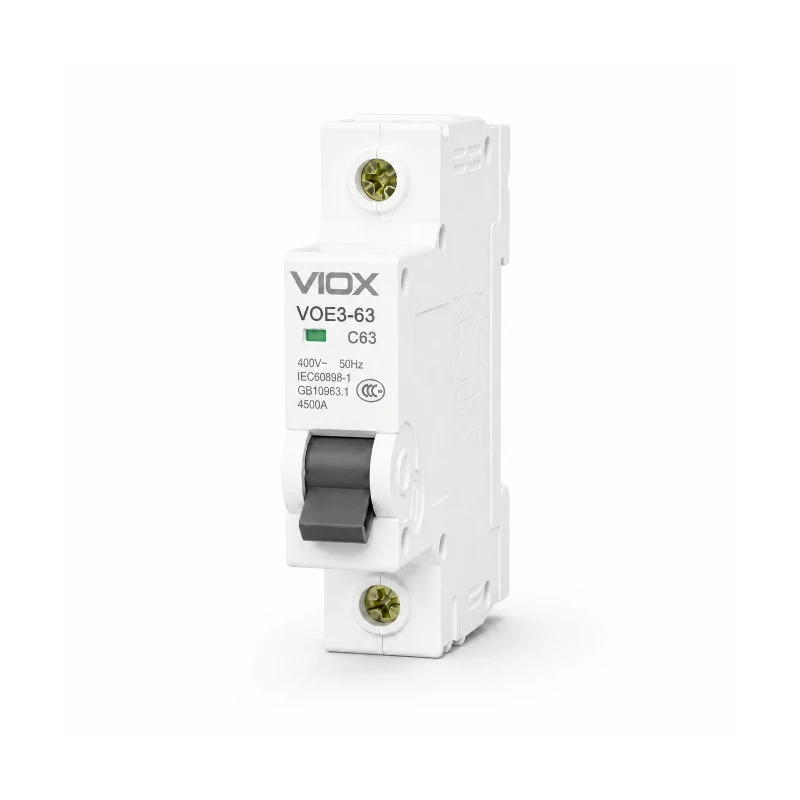
VOE3-63
Economy model for C/D-curve distribution applications where its declared breaking capacity matches the circuit.
- Rated current
- 6–63A
- Curves
- C / D
- Breaking capacity
- 4–6kA by curve and current
Capacity bands: C curve 6–32A: 6kA · C curve 50–63A: 4kA · D curve: 4kA
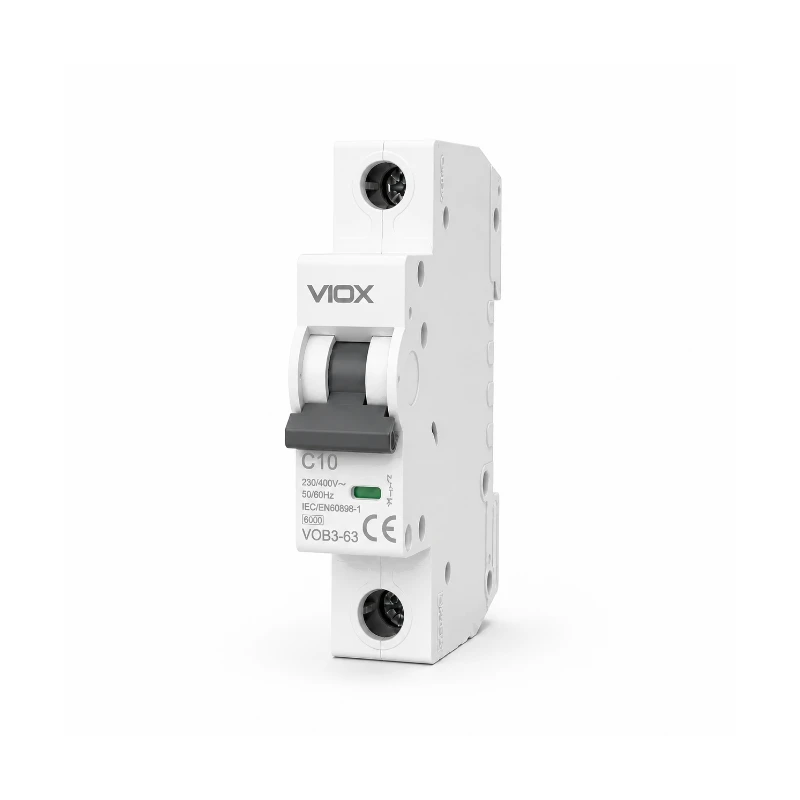
VOB3-63
Standard 6kA model with the widest B/C/D curve and 1–63A configuration range.
- Rated current
- 1–63A
- Curves
- B / C / D
- Breaking capacity
- 6kA
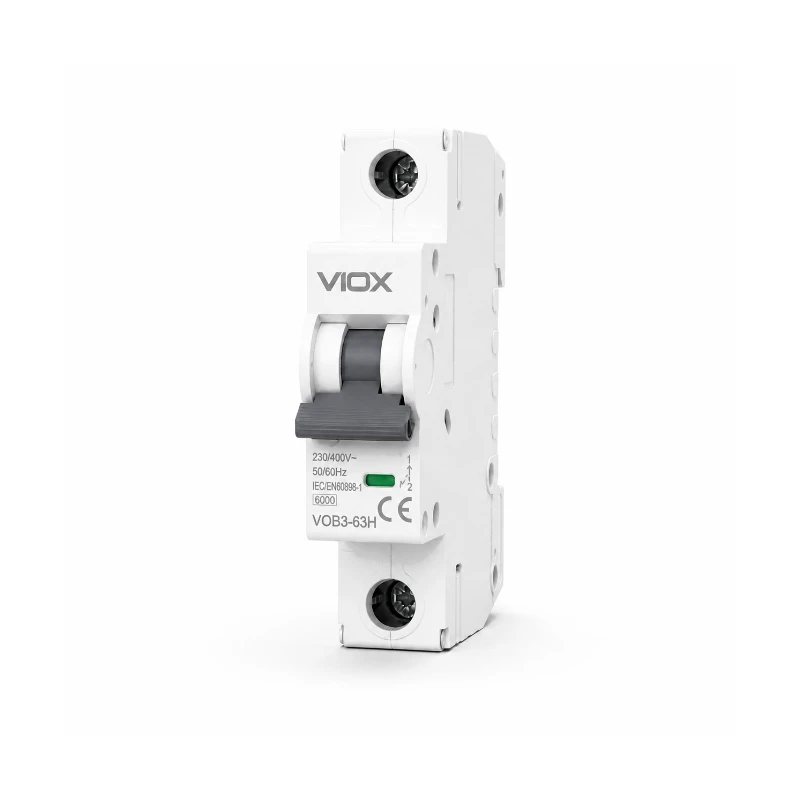
VOB3-63H
10kA high-breaking model for installations with higher prospective short-circuit current.
- Rated current
- 1–63A
- Curves
- B / C / D
- Breaking capacity
- 10kA
Technical verification center
Check the product-specific document before fixing the final order code.
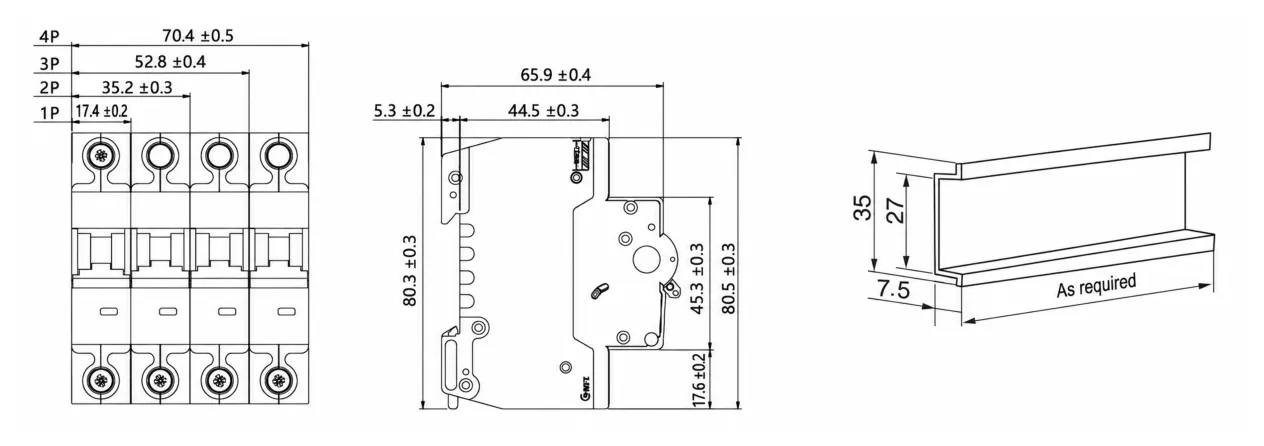
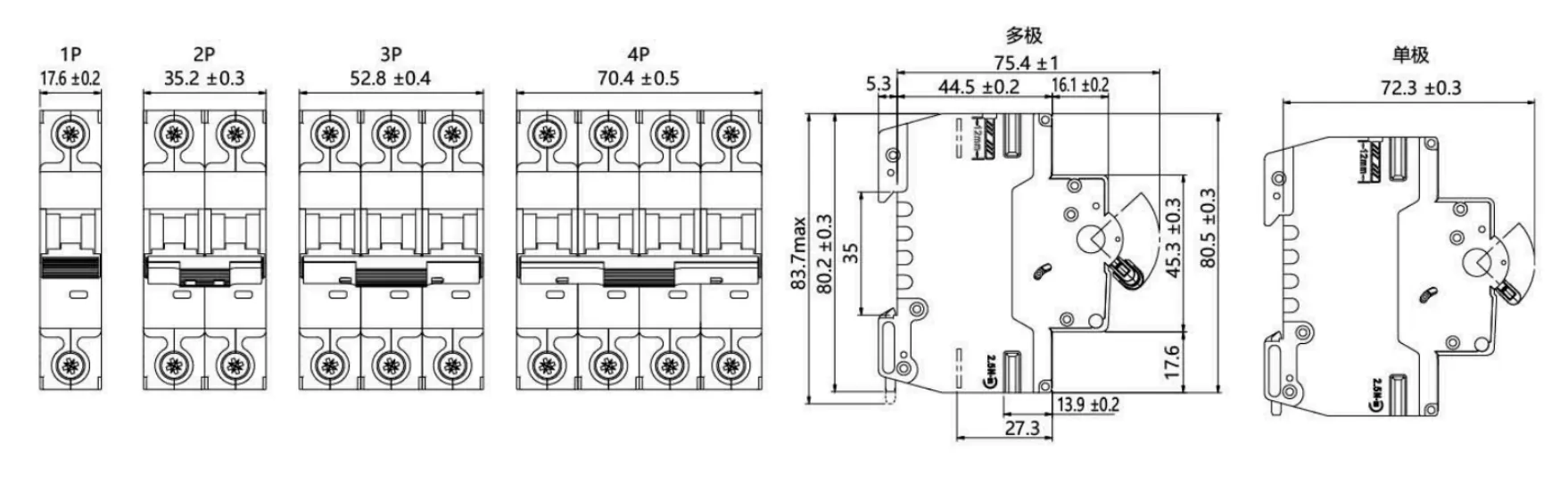
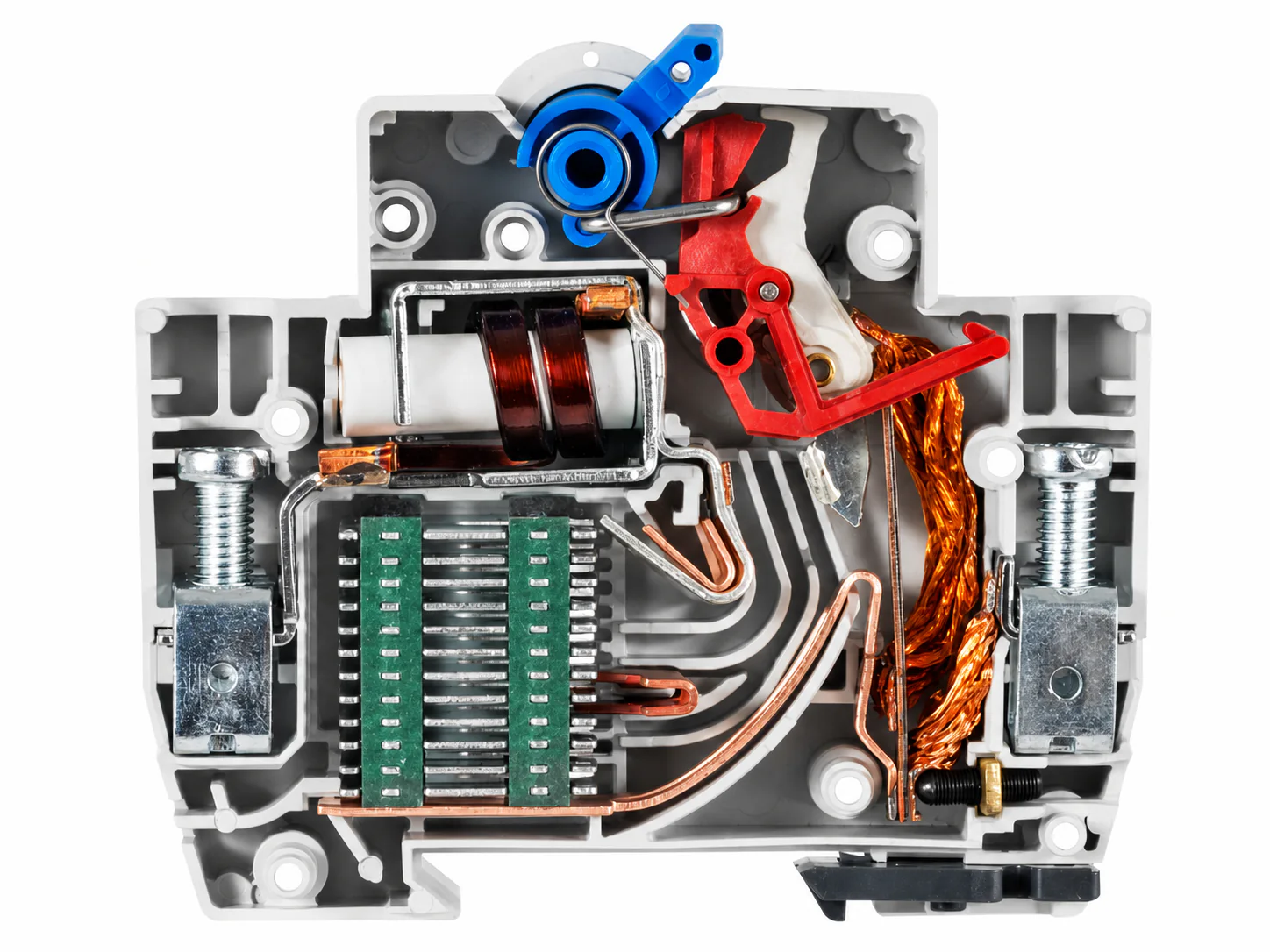
The indicated current is inside the typical instantaneous pickup band.
- B Curve
- 3–5 × In
- C Curve
- 5–10 × In
- D Curve
- 10–20 × In
Confirm these five points before ordering
Confirm the circuit voltage, rated current, fault level, trip curve and pole configuration before ordering.
- Confirm AC voltageMatch the series and pole configuration to the declared circuit voltage.
- Determine rated currentProtect the conductor while carrying the calculated design load.
- Check prospective short-circuit currentThe breaker’s rated breaking capacity must be equal to or greater than the prospective short-circuit current at the installation point.
- Select B, C or D curveMatch the instantaneous response to the load’s verified inrush behaviour.
- Choose poles and quantityConfirm the conductor isolation arrangement and purchasing quantity.
MCB knowledge center
Follow the same sequence used on this page: choose the electrical characteristics, then verify the order details.
Choose the correct MCB
Move from circuit requirements to the right curve and breaking capacity.
Verify before ordering
Check the current, product markings and applicable standard before finalizing the order code.
New to miniature circuit breakers? Read our Complete MCB Guide or compare MCB, MCCB, RCCB and RCBO.
MCB selection questions
What does an MCB protect against?
A miniature circuit breaker opens a circuit when an overload or short-circuit condition exceeds its operating characteristics. The selected device must match the circuit design and applicable product documentation.
Which details should be checked before choosing an MCB?
Confirm the rated current, pole configuration, voltage, breaking capacity and trip curve required by the circuit. Exact options vary by VIOX product series.
What is the difference between B, C and D trip curves?
B, C and D identify different magnetic response ranges for inrush conditions. Availability varies by series, and the final curve should be confirmed against the load and project requirements.
How is an MCB different from an MCCB?
An MCB is a compact modular breaker commonly used for final and branch circuits. An MCCB generally covers higher-current applications and may provide broader protection adjustment options.
Can the same MCB be used for AC and DC circuits?
Not automatically. Use a model whose voltage, poles and AC or DC rating are explicitly suitable for the circuit. Confirm the individual product page or datasheet before specification.
Need the Right MCB?
Let’s Confirm It Together.
Send the circuit type, rated current, pole configuration, quantity and target market. VIOX will review the requirement and help identify the most relevant published series.
Request MCB Support