On this page
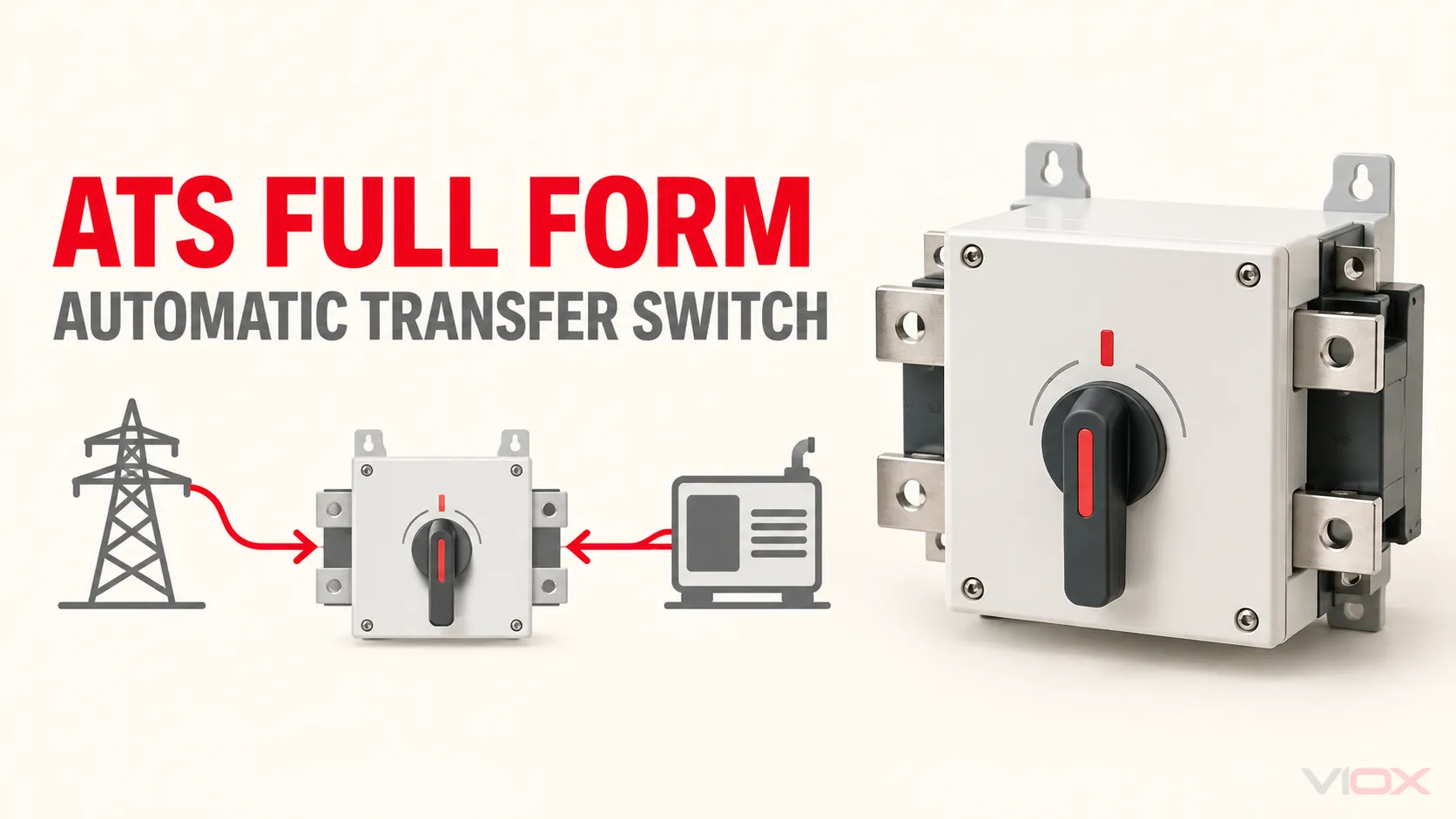
In electrical systems, ATS stands for Automatic Transfer Switch. It is transfer switching equipment that selects between two power sources and transfers a load automatically when defined source conditions are met. The alternate source supplies the power; the ATS controls which acceptable source feeds the load.
| Question | Direct answer |
|---|---|
| What is the ATS full form in electrical? | Automatic Transfer Switch |
| What is its basic job? | Select an acceptable source and transfer the load automatically |
| Does an ATS generate backup power? | No. A generator, utility feeder, inverter, or other source supplies power |
| Is ATS the formal IEC term? | ATS is common industry wording; IEC 60947-6-1 uses ATSE for automatic transfer switching equipment |
What Does ATS Mean on an Electrical Drawing or Specification?
On an electrical single-line diagram, panel schedule, or equipment list, ATS normally identifies the automatic transfer function between a preferred source and an alternate source. A common arrangement is:
Utility source → ATS ← Generator source; ATS → Load
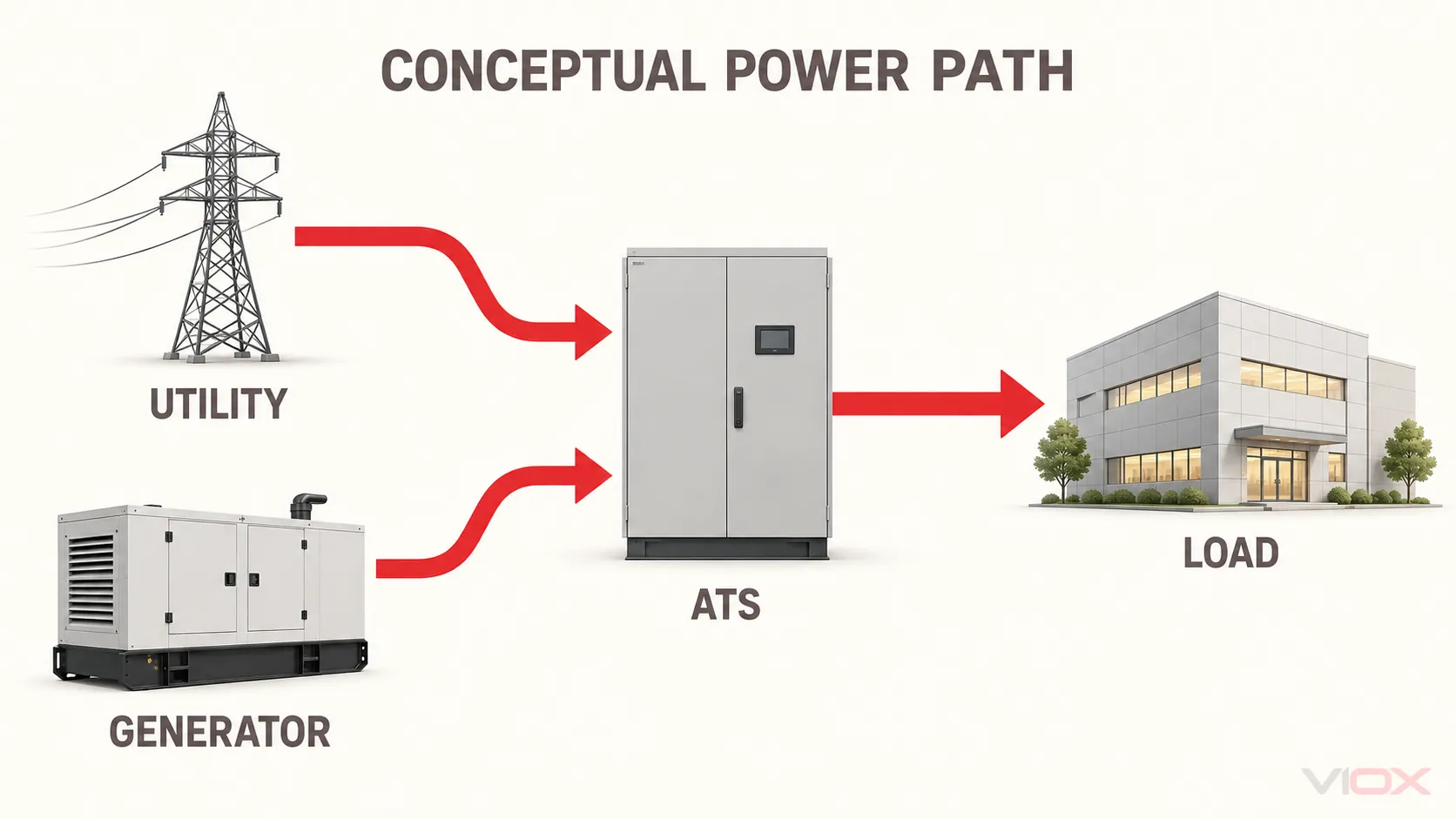
The label may refer to the transfer switch itself or, in phrases such as ATS panel, to an assembly containing the switching mechanism, controller, sensing circuits, and auxiliary functions. The exact contents cannot be inferred from the acronym alone; verify the single-line diagram, specification, and product documentation.
The IEC 60947-6-1:2026 scope describes transfer switching equipment as equipment that transfers a load between power sources. It specifically includes automatic transfer switching equipment (ATSE), including the controller, and separately addresses stand-alone ATS controllers. This is why ATSE is the more precise standards term even though ATS is the more familiar search and industry abbreviation.
What an Automatic Transfer Switch Does—and Does Not Do
| Function or device | Relationship to an ATS |
|---|---|
| Source monitoring | The controller evaluates the source conditions defined for the system |
| Load transfer | The switching equipment connects the load to the selected acceptable source according to its control logic |
| Generator start command | Some ATS systems provide a generator-start contact or command; this is not guaranteed by the letters ATS alone |
| Generator | Produces alternate power; it is not the ATS |
| UPS | Conditions or temporarily supports a load; it is not another name for an ATS |
| Overcurrent protection | Must be coordinated as part of the system; the ATS label alone does not prove that all required protection is included |
This boundary matters in specifications. Writing only “provide ATS” leaves unanswered questions about source arrangement, poles, neutral treatment, transition mode, controller functions, withstand capability, protection, and assembly requirements. Those are selection and design inputs, not part of the acronym’s definition.
ATS Operating Sequence in Four Steps
At orientation level, an ATS performs four functions:
- Monitor: observe the preferred and alternate sources.
- Qualify: determine whether a source meets the configured acceptance conditions.
- Command: issue any system-dependent start or transfer commands.
- Transfer: connect the load to the selected source through the switching mechanism.
The actual delays, thresholds, transition method, retransfer behavior, and generator-cooldown sequence depend on the equipment and system design. See how an automatic transfer switch works for the complete operating sequence rather than treating this definition page as an installation reference.
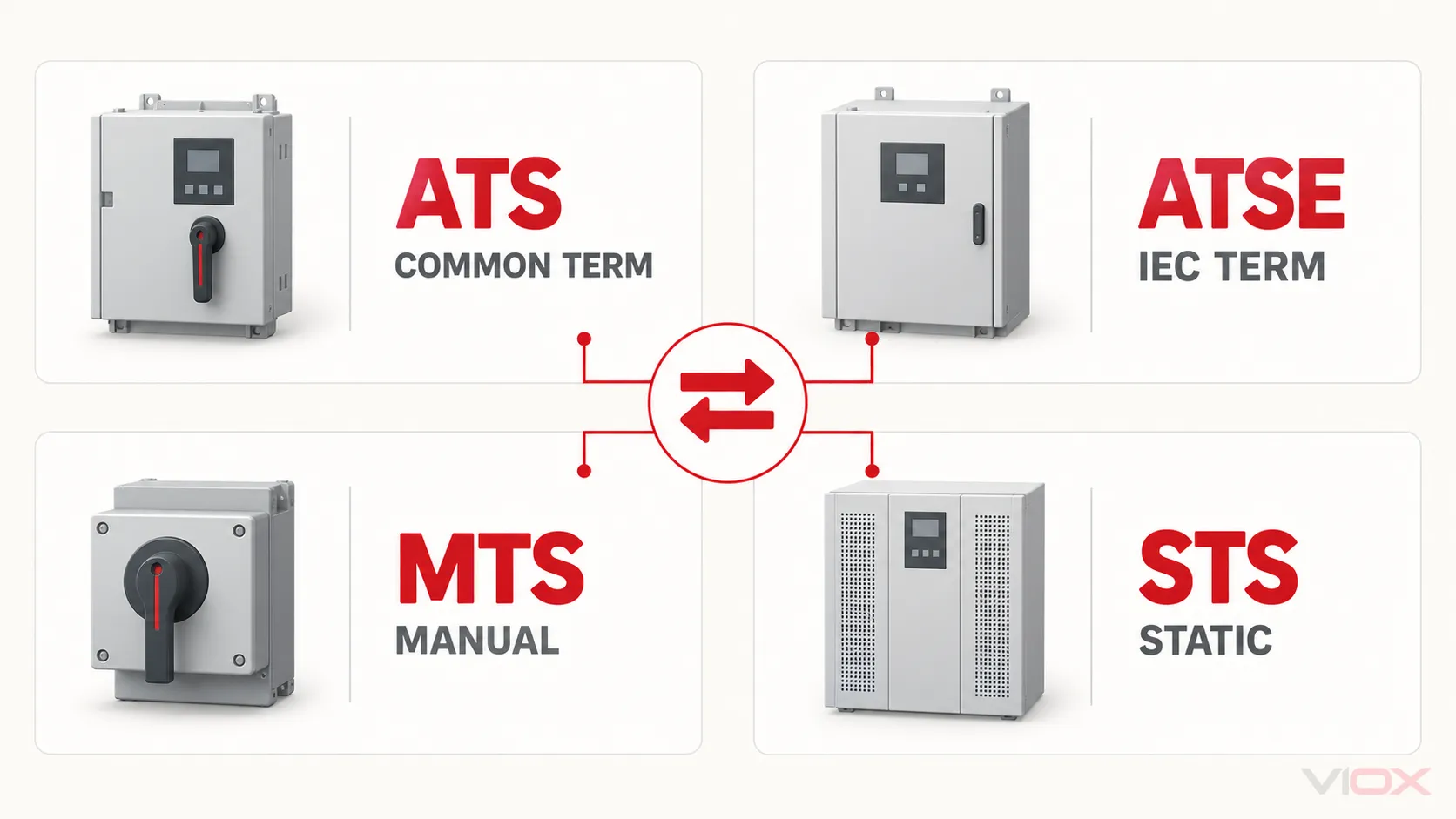
ATS, ATSE, MTS, and STS: The Terminology Boundary
| Term | Expansion | What the term tells you |
|---|---|---|
| ATS | Automatic Transfer Switch | Common name for an automatically controlled source-transfer device or function |
| ATSE | Automatic Transfer Switching Equipment | IEC terminology for automatic transfer switching equipment, including the controller within the standard’s scope |
| MTS | Manual Transfer Switch | Source transfer requires an operator action rather than an automatic transfer decision |
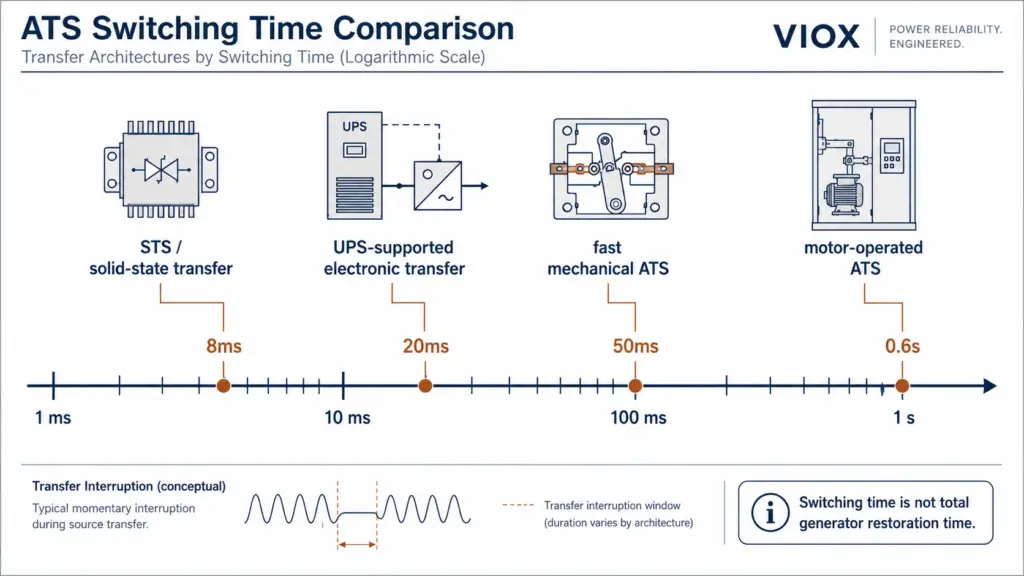
| STS | Static Transfer Switch | A transfer device based on static switching technology; it is a different transfer architecture from a conventional electromechanical ATS |
The terms are related, but they are not interchangeable. For an operating-mode decision, use the dedicated manual versus automatic transfer switch guide. For critical-power architectures that compare electromechanical and static switching, see ATS versus STS.
In North American product evaluation, UL Solutions lists both automatic and nonautomatic transfer switches under UL 1008 on its switch certification and evaluation service page. That product-standard context is separate from the electrical installation requirements that apply to the completed system in a specific jurisdiction.
Which ATS Resource Do You Need Next?
| If your next question is… | Use this resource |
|---|---|
| What types, ratings, and system decisions exist? | Automatic transfer switch topic guide |
| What happens from source failure through retransfer? | How an automatic transfer switch works |
| Should the transfer be manual or automatic? | Manual vs automatic transfer switch |
| How do the power, sensing, start, neutral, and PE boundaries appear conceptually? | ATS wiring diagram reference |
| Which VIOX devices are available for evaluation? | VIOX automatic transfer switch product family |