


Residual Current Circuit Breakers (RCCB)
Compare VIOX RCCB series by rated current, pole configuration, rated residual operating current and waveform type for low-voltage earth-leakage protection.
Protection functionResidual-current detection
Pole options2P and 4P by series
SensitivityConfirm IΔn by model
RCCB typeMatch load waveforms


What is a residual current circuit breaker?
An RCCB monitors the balance between current flowing through the outgoing and returning conductors. When the residual current exceeds the device operating characteristics, it disconnects the circuit to support earth-leakage protection.
An RCCB is not selected by rated current alone. Pole configuration, rated residual operating current, RCCB type, circuit voltage and coordination with overload and short-circuit protection must also match the installation.
RCCB Series Overview
Compare published VIOX models using facts already available in product data.
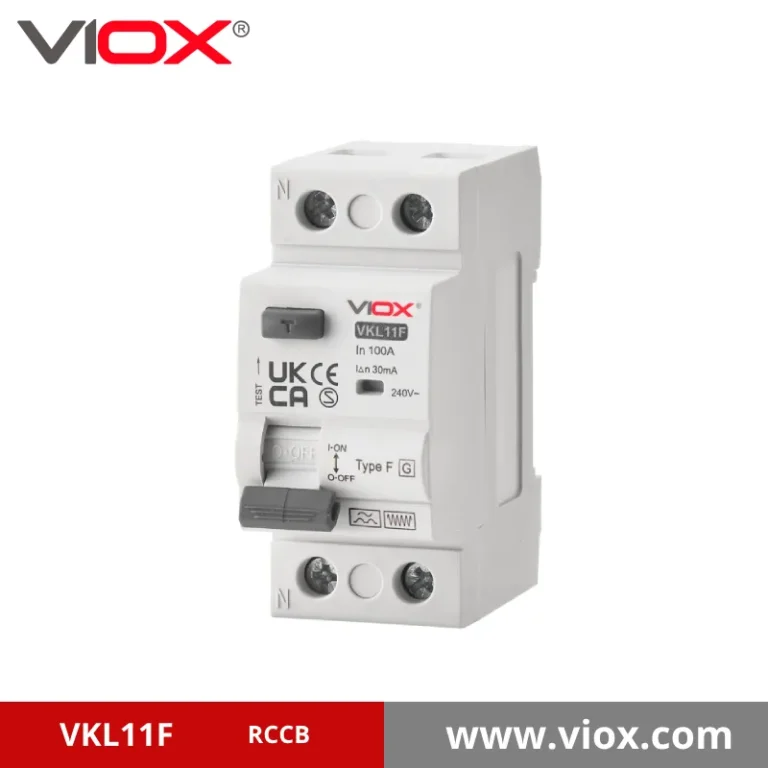
VIOX VKL11F
Residual current circuit breaker- Poles
- 2P
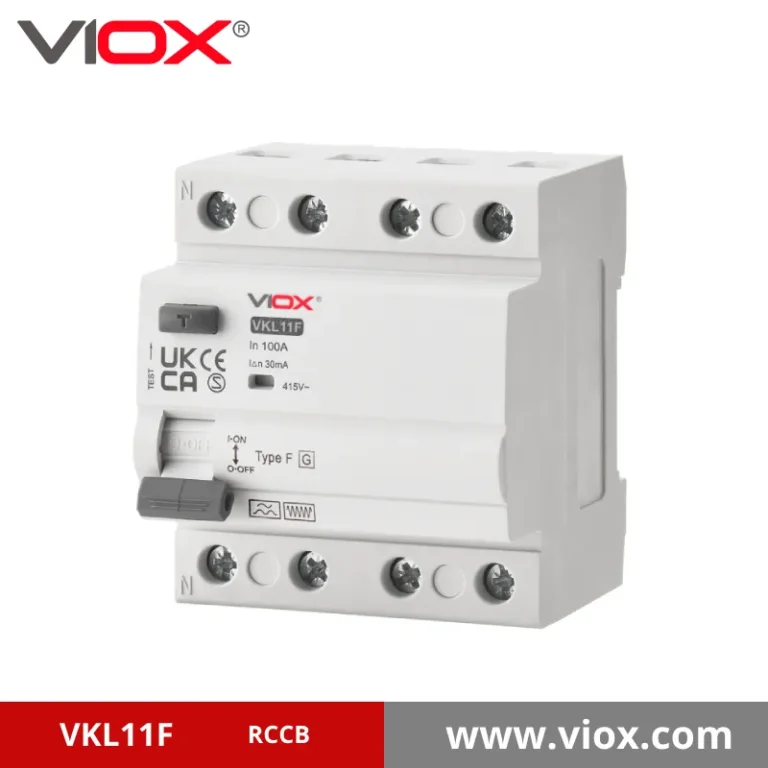
VIOX VKL11F
Residual current circuit breaker- Poles
- 4P
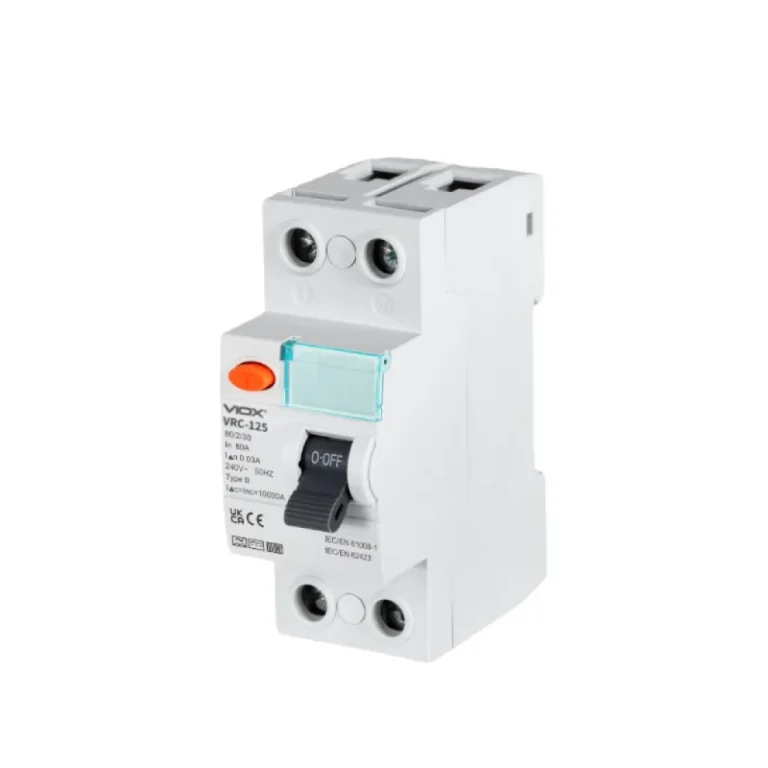
VIOX VRC1-125-B
Residual current circuit breaker- Poles
- 2P
- Rated current
- 100A
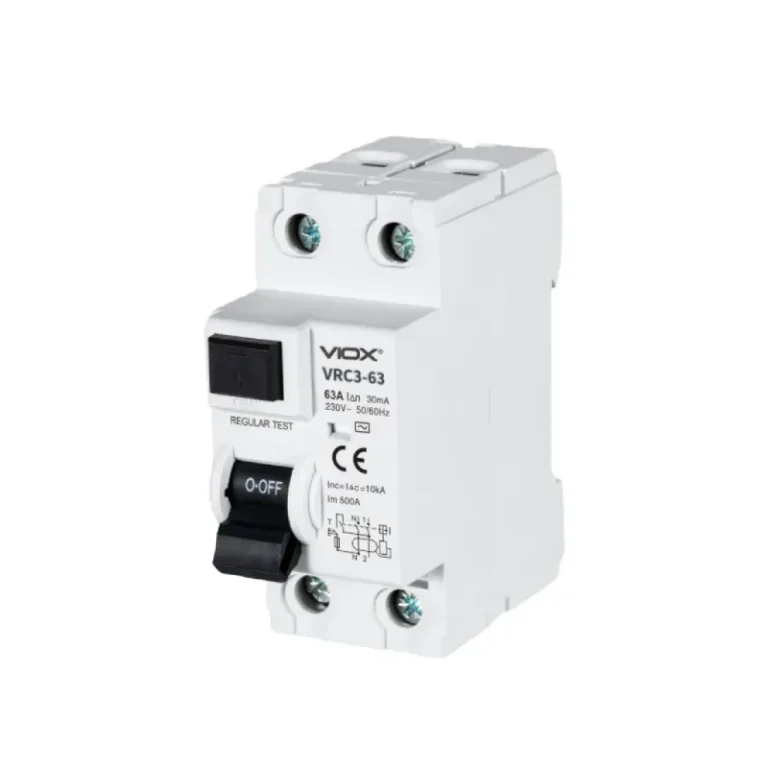
VIOX VRC3-63
Residual current circuit breaker- Poles
- 2P
- Rated current
- 25A
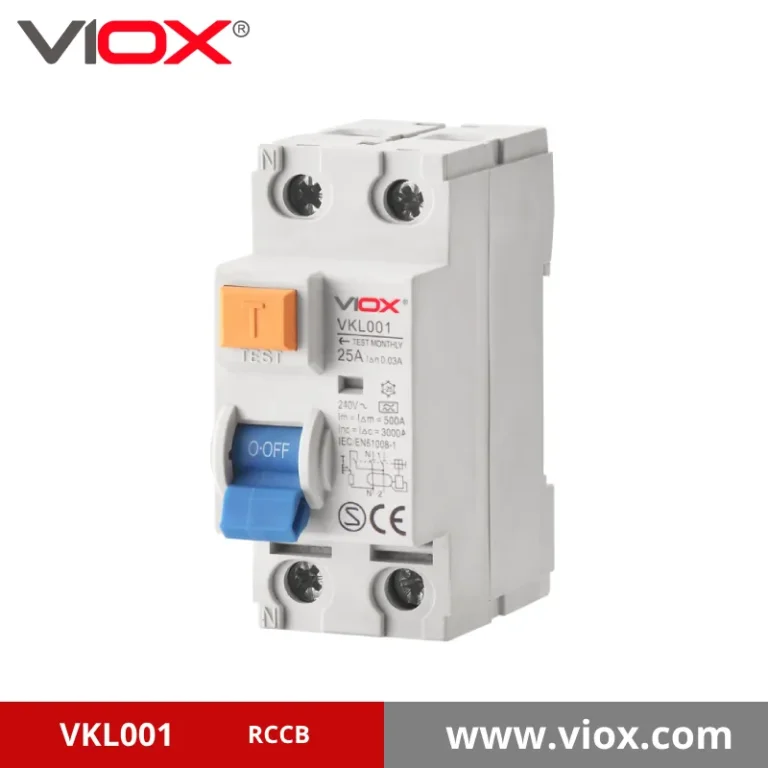
VIOX VKL11
Residual current circuit breaker- Poles
- 2P
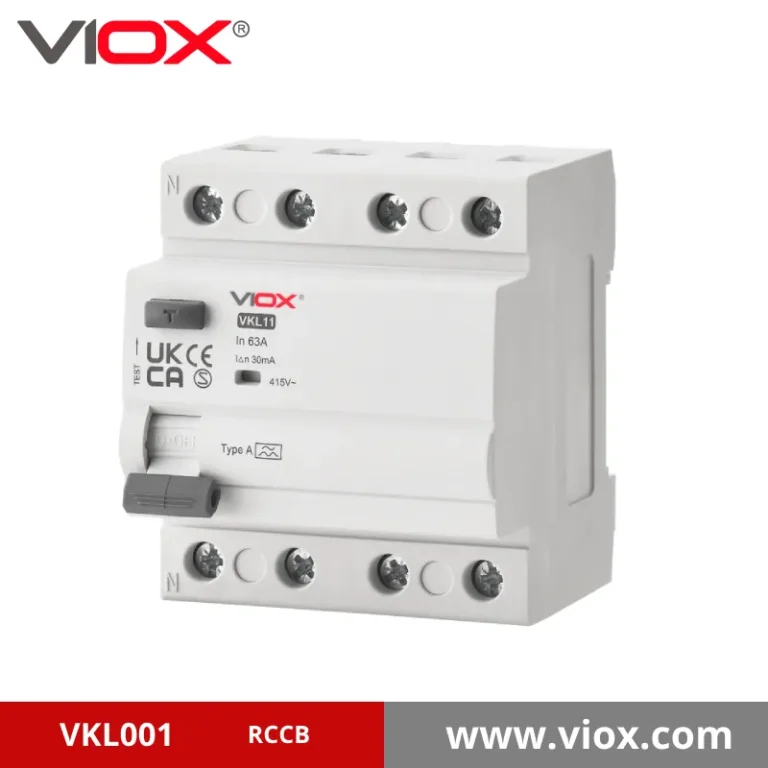
VIOX VKL11
Residual current circuit breaker- Poles
- 4P
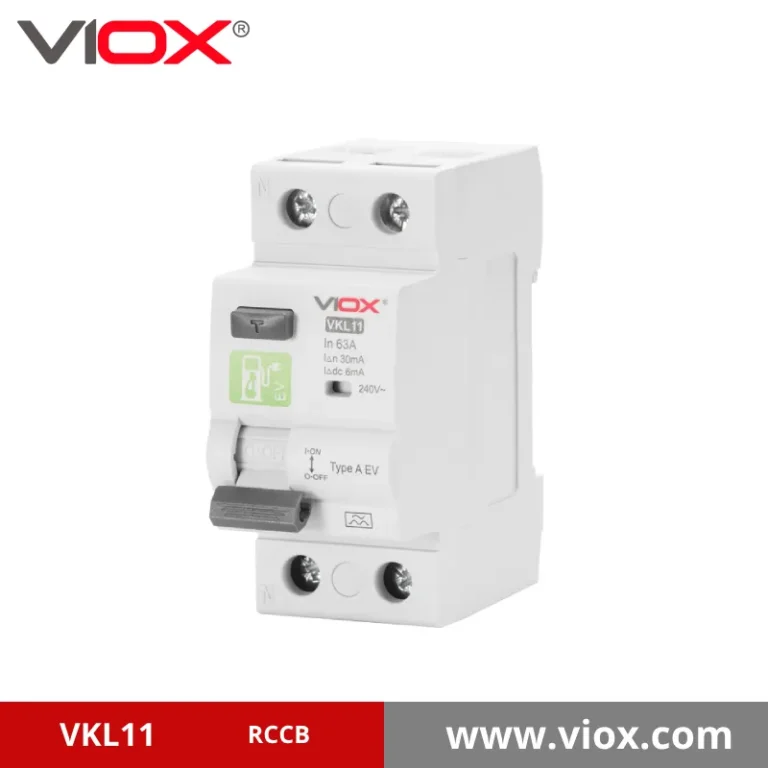
VIOX VKL11
Residual current circuit breaker- Poles
- 2P
- RCCB type
- Type A
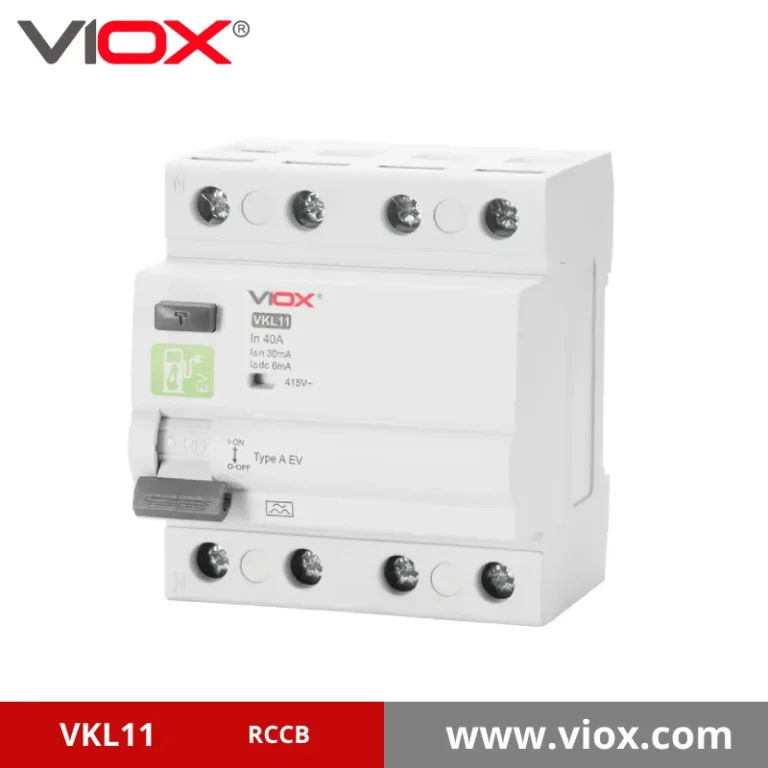
VIOX VKL11
Residual current circuit breaker- Poles
- 4P
- RCCB type
- Type A
How to choose an RCCB
Use these checkpoints for preliminary comparison, then verify the exact model documentation and installation requirements.
Rated residual current
Match IΔn to the protection objective and applicable installation requirements.
RCCB waveform type
Choose Type AC, A, F, B or another available type according to the connected loads and standards.
Pole configuration
Confirm the required 2P or 4P arrangement, circuit voltage and neutral configuration.
Overcurrent coordination
Coordinate the RCCB with the required MCB, fuse or other overcurrent protective device.
RCCB waveform types
Type availability varies by VIOX series. Confirm the product datasheet and applicable installation standard before selection.
Compare published RCCB series
Blank cells mean the value is not available in the current product summary. Open the model page or request its datasheet before specification.
| Series | Poles | Rated current | RCCB type | Sensitivity |
|---|---|---|---|---|
| VIOX VKL11F | 2P | — | — | — |
| VIOX VKL11F | 4P | — | — | — |
| VIOX VRC1-125-B | 2P | 100A | — | — |
| VIOX VRC3-63 | 2P | 25A | — | — |
| VIOX VKL11 | 2P | — | — | — |
| VIOX VKL11 | 4P | — | — | — |
| VIOX VKL11 | 2P | — | Type A | — |
| VIOX VKL11 | 4P | — | Type A | — |
RCCB applications
Typical environments where the correct residual-current protection characteristics must be verified.

Residential Buildings
Residual-current protection for final circuits and residential distribution boards.

Industrial Automation
Appropriately selected RCCB types for electronic loads, drives and control-system supply circuits.

Solar & Energy Storage
Residual-current protection coordinated with inverter and power-conversion equipment.
RCCB Knowledge & Selection Guides
All articles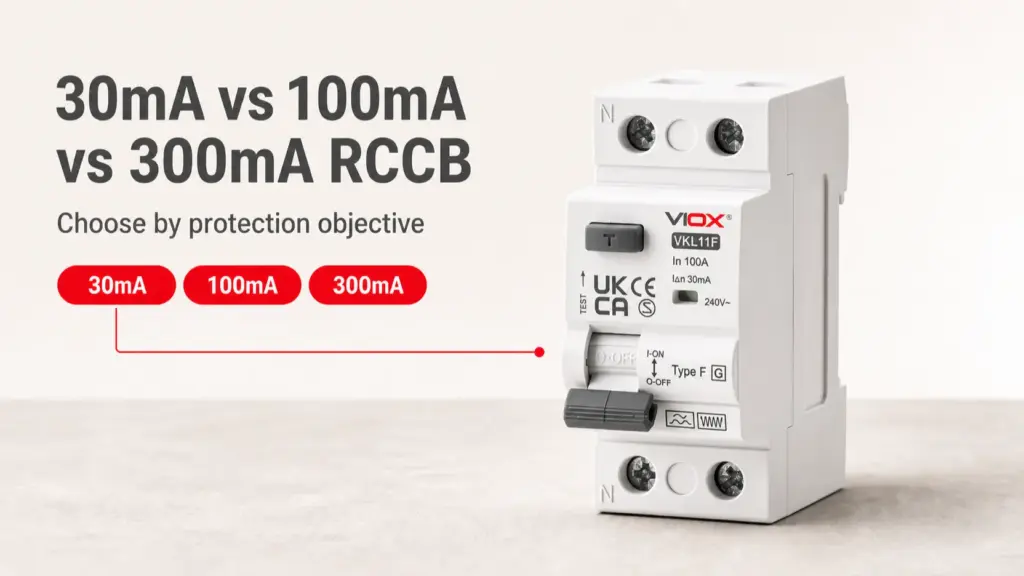
RCCB selection questions
Quick answers for comparing a residual-current protection family before detailed circuit verification.
What does an RCCB protect against?
An RCCB detects an imbalance between outgoing and returning current and disconnects the circuit when the residual current exceeds its operating characteristics. It is used for earth-leakage protection in an appropriately designed installation.
Does an RCCB provide overload and short-circuit protection?
An RCCB is selected for residual-current protection and does not normally replace overcurrent protection. The circuit may also require an MCB, fuse or a combined RCBO according to the installation design.
What is the difference between Type AC, A, F and B RCCBs?
The type identifies the residual-current waveforms the device is designed to detect. The correct type depends on the connected equipment, applicable standards and manufacturer documentation; availability varies by VIOX series.
How should RCCB sensitivity be selected?
The rated residual operating current must match the protection objective and the applicable installation rules. Confirm the required sensitivity on the individual model page or datasheet before specification.
Can an RCCB be selected by rated current alone?
No. Rated current, pole configuration, rated residual operating current, RCCB type, circuit voltage and coordination with overcurrent protection must all be checked.
Need the Right RCCB?
Let’s Confirm It Together.
Send the circuit voltage, rated current, pole configuration, required sensitivity, connected loads, quantity and target market. VIOX will help identify the most relevant published series.
Request RCCB Support