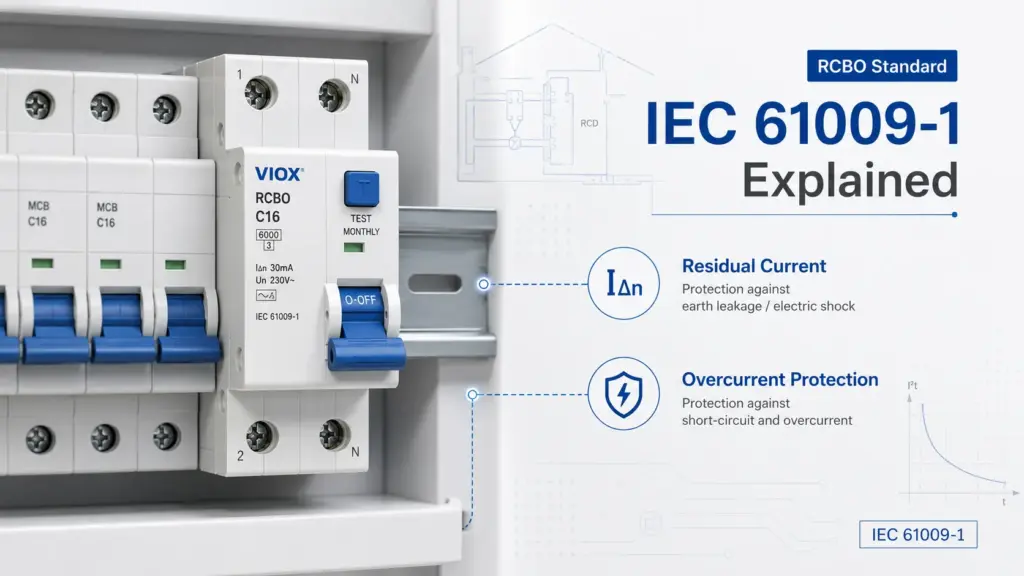
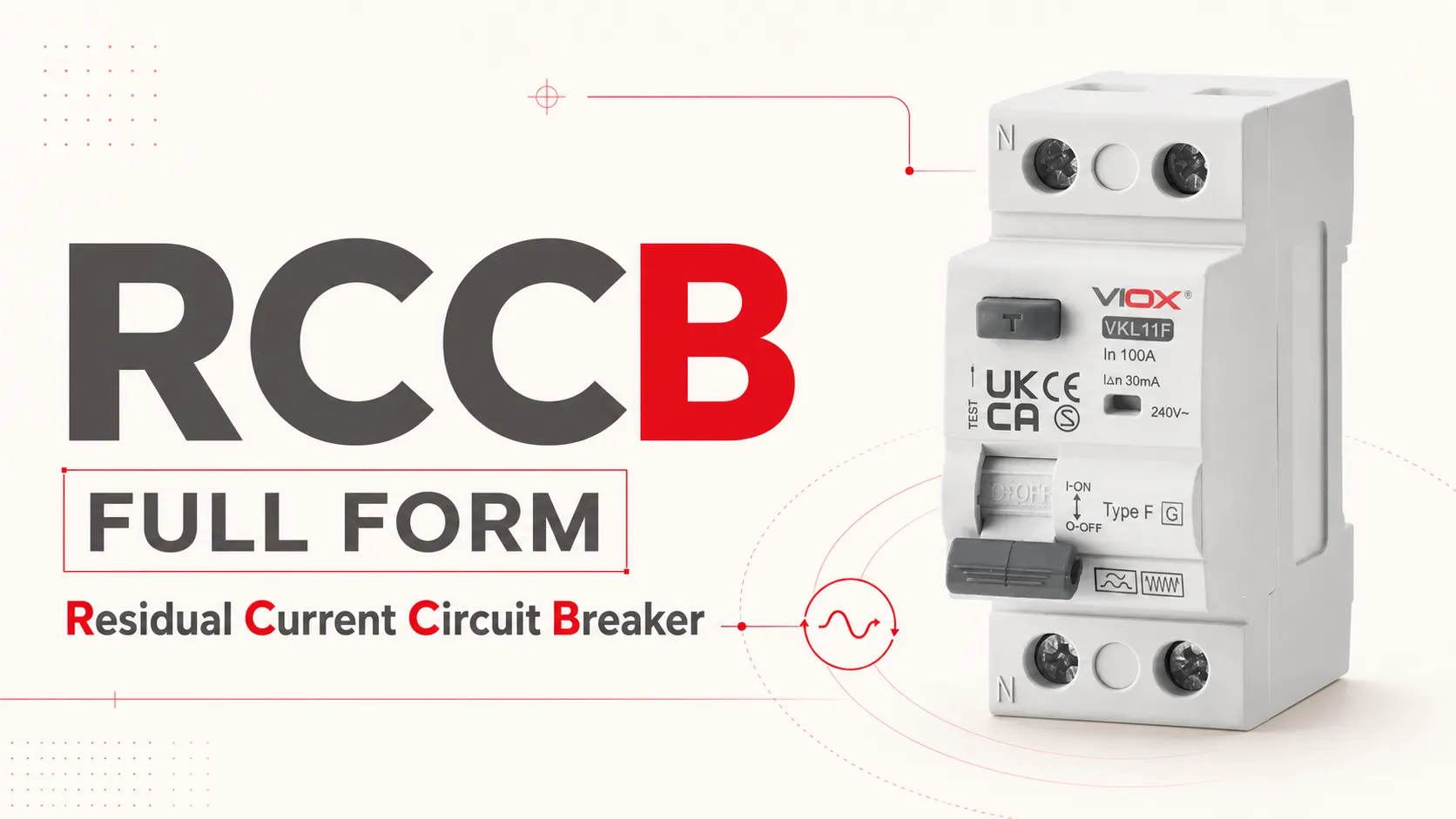
If you are searching for the meaning of RCCB, the direct answer is simple:
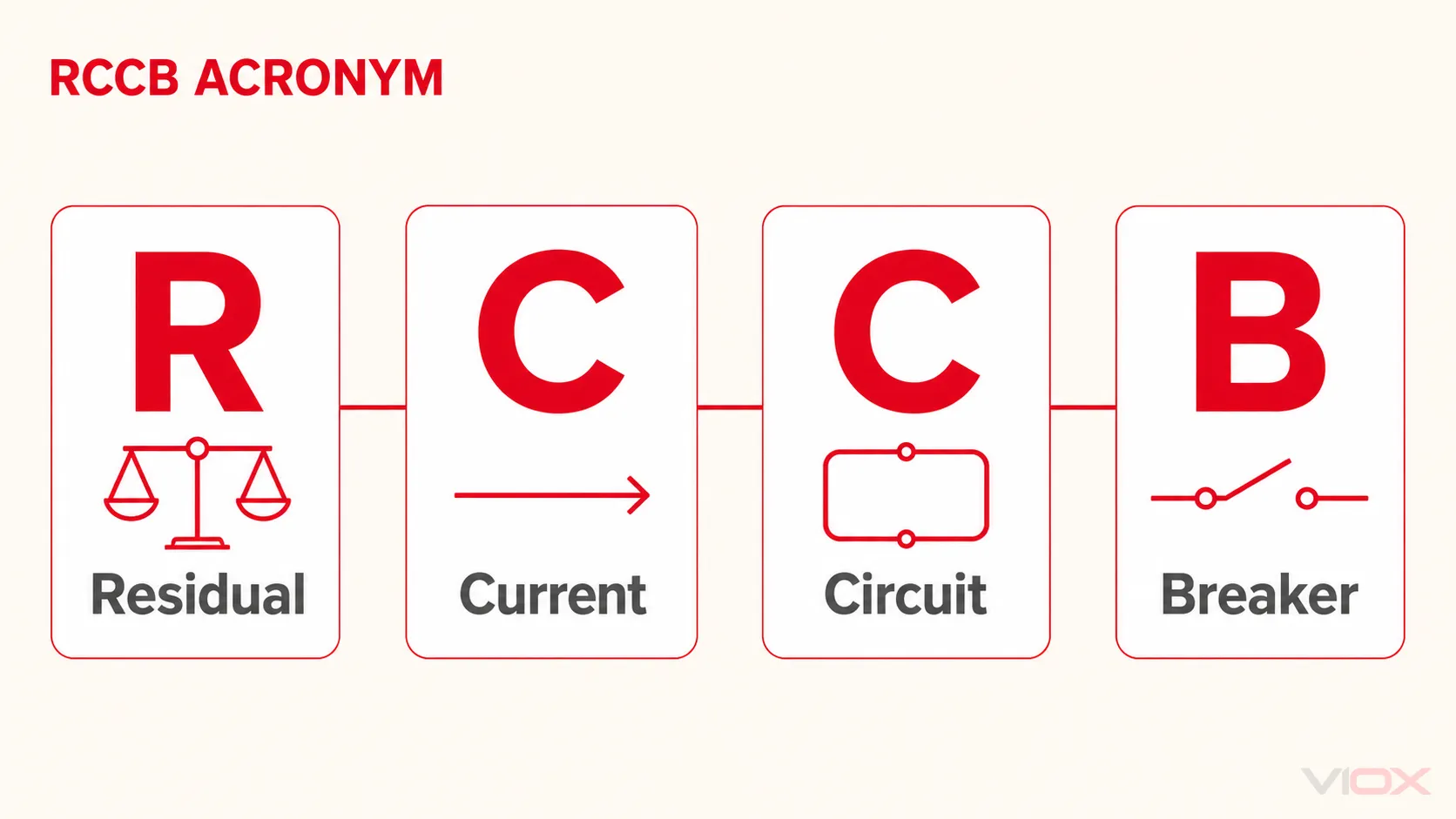
RCCB Full Form means Residual Current Circuit Breaker.
That is the short answer, but not the whole answer. In real electrical usage, RCCB, RCD, RCBO, and sometimes even RCB are often mixed together. That creates confusion for buyers, electricians, students, and even some content pages ranking for this topic.
What Does RCCB Mean in Electrical Systems?
In electrical systems, RCCB Full Form stands for Residual Current Circuit Breaker.
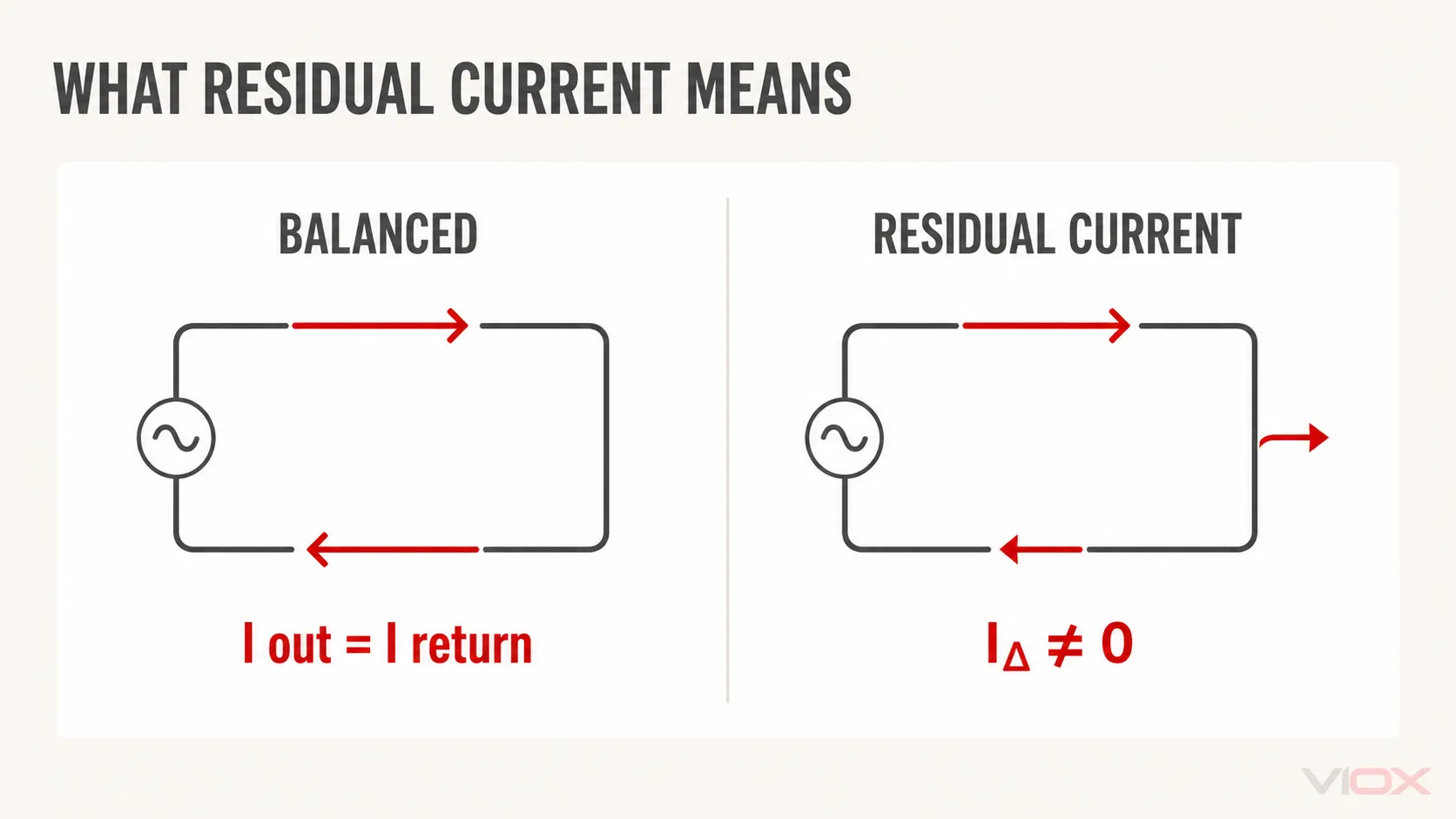
An RCCB is a protective device designed to disconnect a circuit when it detects residual current, also called earth leakage current. In simple terms, it monitors whether the current leaving through the live conductor is equal to the current returning through the neutral conductor. If part of the current leaks away through an unintended path, the device trips and isolates the circuit.
Quick answer table
| Term | Meaning |
|---|---|
| RCCB Full Form | Residual Current Circuit Breaker |
| Main purpose | Detect residual current or earth leakage and disconnect the circuit |
| Main safety value | Help reduce electric-shock and earth-fault risk |
| Commonly confused with | RCD, RCBO, RCB, and MCB |
So if the reader only wants the acronym expansion, the answer is clear: Residual Current Circuit Breaker. But if the reader wants to understand the device correctly, the next question is what makes RCCB different from the broader term RCD and from combined devices such as RCBO.
What Does an RCCB Do?

An RCCB is designed to protect against leakage current or earth-fault current.
Under normal operating conditions, the current flowing out through the live conductor should match the current returning through the neutral conductor. If current flows through an unintended path, such as faulty insulation, damaged equipment, or contact with earth, the RCCB detects that imbalance and disconnects the circuit.
This is why RCCBs are associated with:
- electric-shock protection
- earth-leakage protection
- improved safety in wet or exposed environments
- reduction of some earth-fault-related fire risks
This is also why an RCCB is not the same as a standard overcurrent breaker. It is designed around current imbalance, not primarily around overload or short-circuit protection.
How Does an RCCB Work?

To understand the device properly, it helps to understand the basic operating principle.
An RCCB continuously compares the current in the live and neutral conductors. In a healthy circuit, those currents are balanced. If current leaks away to earth or another unintended path, the balance is lost. The RCCB detects that abnormal condition and trips.
Basic operating logic
| Circuit condition | What the RCCB detects | Typical result |
|---|---|---|
| Normal operation | Outgoing current equals returning current | No trip |
| Earth leakage fault | Outgoing current does not fully return through neutral | Trip |
| Faulty equipment contact | Current escapes the intended circuit path | Device disconnects if leakage exceeds its operating threshold |
| Insulation damage | Current leaks to earth or another unintended path | Circuit is disconnected when the fault becomes significant enough |
This is why RCCB protection matters in locations where people may come into contact with faulty equipment or where earth leakage could otherwise go undetected by an ordinary breaker.
RCCB Types: Why Waveform Sensitivity Matters
One important layer that many acronym-style pages miss is that not every RCCB is intended for the same leakage waveform environment.
In older or simpler circuits, a basic residual-current breaker may be enough. But in modern installations with electronics, variable-speed drives, inverters, EV charging equipment, or solar-related equipment, waveform type matters much more.
Common RCCB waveform types
| RCCB type | What it is commonly associated with | Typical application note |
|---|---|---|
| Type AC | Alternating sinusoidal residual current | More traditional AC-only loads |
| Type A | Alternating and pulsating DC residual current | Common in modern circuits with electronic loads |
| Type B | Alternating, pulsating DC, and smooth DC residual current | Used where more complex power electronics may be present |
This matters because a device that is not suited to the actual leakage-current waveform may not be the right fit for the application, even if the current rating and pole arrangement look correct.
That is one reason residual-current device selection has become more important in modern installations. If your project includes EV charging, inverter-based systems, or other electronic equipment, the next relevant page is RCCB Type B vs Type F vs Type EV. If you want the broader category view, electronic vs electromagnetic RCD is also useful context.
RCCB vs RCD: What Is the Difference?

This is the most important section to get right if you want this page to rank better for the acronym query itself.
Many pages treat RCCB and RCD as if they are identical. That is not the clearest way to explain the terminology.
RCD is the broader category term
RCD usually means Residual Current Device. In many IEC-style contexts, it is the broader family term for devices that provide residual-current protection.
RCCB is the more specific product term
RCCB usually means Residual Current Circuit Breaker. In many technical catalogs and product discussions, this is the more precise term for a device that trips on residual current but does not itself provide the same overcurrent protection function as an MCB.
Why this matters
When users search this term, they often want:
- the acronym expansion
- a clear device definition
- a simple explanation of how RCCB relates to RCD
That is why this page should be more precise than broader comparison articles.
RCCB vs RCD table
| Term | Full form | How it is commonly used | Key note |
|---|---|---|---|
| RCD | Residual Current Device | Broad category term | Umbrella term for residual-current protection devices |
| RCCB | Residual Current Circuit Breaker | Specific product term | One common device type within the wider RCD family |
If the reader wants the broader terminology map, VIOX already has a supporting article on the difference between MCB, MCCB, RCB, RCD, RCCB, and RCBO.
RCCB vs RCBO
This is the next question many readers ask after understanding the acronym and the device name.
An RCCB provides residual-current protection.
An RCBO provides:
- residual-current protection
- overload protection
- short-circuit protection
That means an RCBO combines the roles of residual-current protection and overcurrent protection in one device, while an RCCB is usually used together with separate overcurrent protection where required.
RCCB vs RCBO table
| Device | Residual-current protection | Overcurrent protection | Typical use logic |
|---|---|---|---|
| RCCB | Yes | No | Used where leakage protection is needed and overcurrent protection is handled separately |
| RCBO | Yes | Yes | Used where both functions are needed in one device |
For deeper selection logic, the most relevant supporting page is RCBO vs RCCB and MCB.
RCCB vs MCB
Another reason users search this term is that they want to understand how an RCCB differs from a normal breaker.
An RCCB mainly detects:
- leakage current
- residual current
- earth-fault imbalance
An MCB mainly detects:
- overload
- short circuit
RCCB vs MCB table
| Device | Main protection focus | What it mainly detects |
|---|---|---|
| RCCB | Leakage or residual current | Current imbalance |
| MCB | Overload and short circuit | Excess current magnitude |
That is why an RCCB does not replace an MCB in every circuit, and an MCB does not replace RCCB protection where leakage safety matters.
If the reader wants to go deeper, VIOX already has why use RCCB instead of MCB and RCD vs MCB.
Where Is RCCB Protection Used?
Understanding the acronym becomes more useful when readers can connect the device to real installations.
RCCB protection is commonly associated with:
- residential distribution boards
- wet or moisture-prone areas
- socket circuits
- outdoor circuits
- commercial installations
- circuits where earth-leakage protection is important
The exact installation rules depend on the market, project type, and applicable standards, so this page focuses on function and terminology first rather than forcing one universal code interpretation.
Why RCCB Protection Matters
Ordinary overcurrent protection does not detect every dangerous leakage condition. That is why RCCB protection remains an important part of electrical safety.
RCCBs help reduce risk in situations where current escapes the intended circuit path and creates:
- electric-shock risk
- earth-fault risk
- greater danger in damp or exposed locations
This is also why readers who begin with the acronym often move next into questions such as:
- what sensitivity should I choose
- how do I test an RCCB
- what is the difference between RCCB and ELCB
- when should I use RCBO instead
The most useful next-step pages on VIOX are:
- How to choose the right RCCB sensitivity
- How to check RCCB functionality
- What is the difference between RCCB and ELCB
How to Read the Term Correctly in Practice
If someone searches this phrase, they are often early in the learning process. The most useful next step is knowing how to read the terminology correctly when they see it in a catalog, specification, or product page.
Practical terminology guide
| If you see… | It usually means… |
|---|---|
| RCD | The wider residual-current protection category |
| RCCB | A specific residual-current circuit breaker product type |
| RCBO | A device combining residual-current and overcurrent protection |
| MCB | A breaker focused on overload and short-circuit protection |
That clarity is exactly what this page should deliver better than broader comparison pages or general safety pages.
Conclusion: From Acronym to Device Selection
The strongest version of this topic does not stop at the phrase RCCB Full Form. It helps the reader move from acronym recognition to practical understanding.
The key takeaway is simple:
- RCCB means Residual Current Circuit Breaker
- it is a more specific device term within the wider residual-current protection family
- it is different from MCB because it is focused on leakage-current imbalance
- it is different from RCBO because it does not combine overcurrent protection in the same way
- waveform type now matters more than it used to in modern electrical systems
If the reader is comparing products or planning protection design, the next best step is not to memorize the acronym again. It is to move to the adjacent decision pages:
- RCCB vs ELCB
- RCBO vs RCCB and MCB
- How to choose the right RCCB sensitivity
- Difference between MCB, MCCB, RCB, RCD, RCCB, and RCBO
FAQ
What is the RCCB Full Form?
The RCCB Full Form is Residual Current Circuit Breaker.
What is RCCB Full Form in Electrical?
In electrical systems, RCCB Full Form in Electrical means Residual Current Circuit Breaker, a device used to disconnect a circuit when it detects residual current or earth leakage.
Is RCCB the same as RCD?
Not exactly. RCD is often the broader category term, while RCCB is a more specific product term used for one type of residual-current protection device.
Is RCCB the same as RCBO?
No. An RCBO combines residual-current protection with overcurrent protection, while an RCCB is generally focused on residual-current protection only.
What is the difference between RCCB and MCB?
An RCCB detects leakage or residual current, while an MCB mainly protects against overload and short-circuit conditions.
Why is RCCB important in electrical safety?
RCCB protection helps disconnect circuits when current leaks away from the intended path, reducing electric-shock and earth-fault risk.