

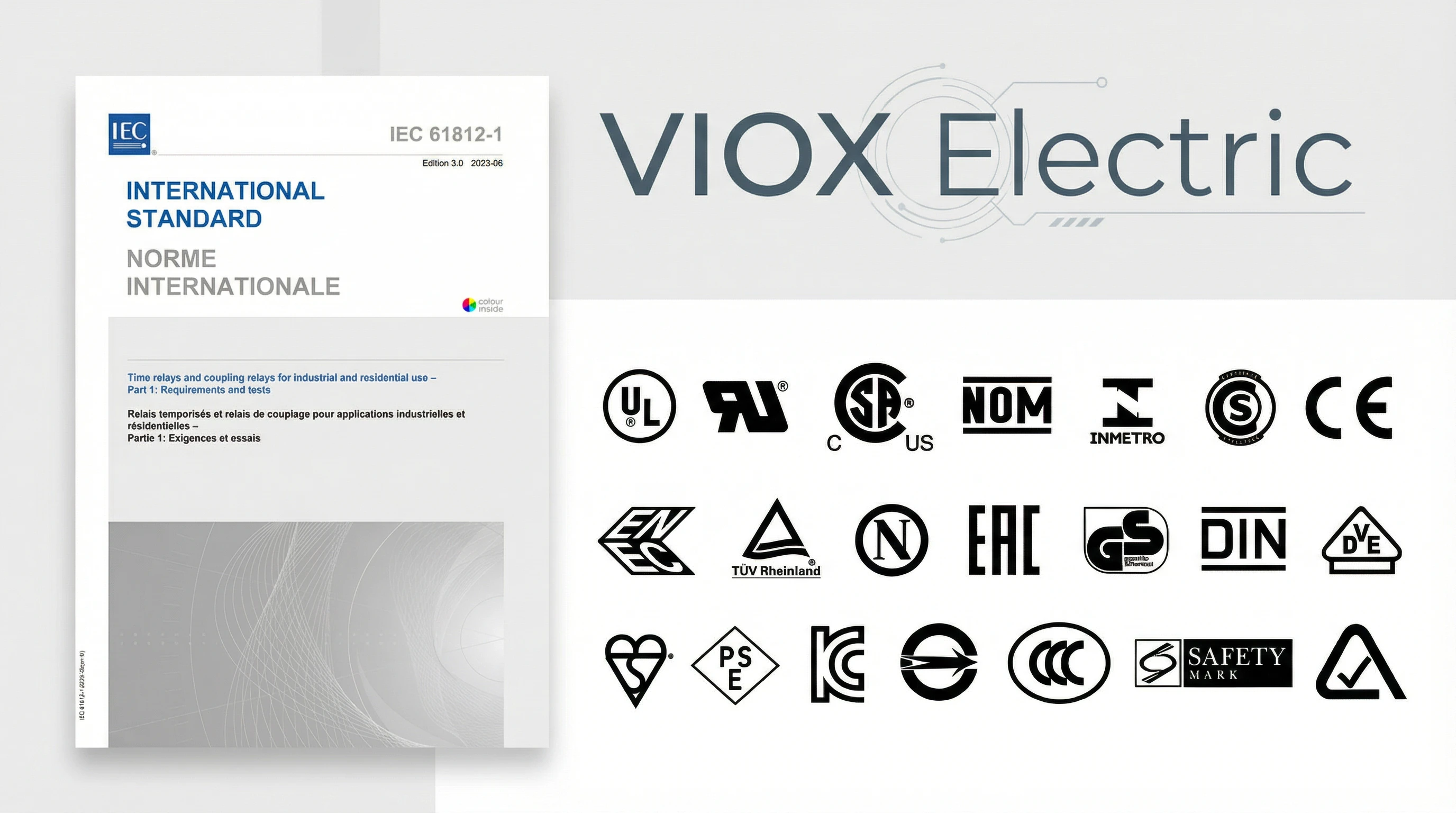
でプロジェクトエンジニアの突入時の欧州産業設備メーカーの所定碎石坠|時間遅延リレー|碎石坠新コントロールパネルメーカーの調達チームはすぐ押し戻されました-「IEC 61812-1会ういってみよう」適切な証明書がなかったため、プロジェクトは頓挫した。リレーのサプライヤは、「ceコンプライアンス」を主張しましたが、iec 61812-1テストのないceマーキングは、time relayの機能要件にとっては何も意味しませんでした。このシナリオ碎石坠|日常が映し出されている。iec 61812-1は単なるコンプライアンスチェックボックスではなく、「信頼性の高いタイムリレー」の意味を測定可能でテスト可能な用語で定義する国際的なフレームワークです。部品を指定するエンジニア、サプライヤーを評価する調達マネージャー、および認証を維持する品質チームは、すべて同じ質問に直面します。標準は答えを提供する。|:三つIEC 61812-1の基本となる問題、小野それがグローバル業績確立baselinesタイミング精度と再现性を、検証安全、環境与件のストレスが電気を提供し比較商品も全国メーカー共通語を示している。欧州市場では、ceマーキングには事実上義務付けられています。北米でも、ULサブフレームおよび碎石坠|フレームワーク・支配IEC 61812-1認証にメーカーの約束した信号国际品质基準を取得している。図1碎石坠| IEC 61812-1:2023註解』(3.0標準語とともに原稿台カバー共通国際認証マーク(美しい鳥IEC、TUV)。公式認証により、タイムディレイリレーは、世界市場へのアクセスに関する検証済みの性能、安全性、emc要件を満たしていることが保証されます。|碎石坠IEC 61812-1は何ですか?概要と| | | IEC 61812-1目的は国際標準という「工業用と住宅用の神経網と結合リレー時間を狙い撃ちして- 1部:ニーズ」风霜。国際電気技術委員会によって発行されたこの規格は、制御回路、自動化システム、および産業機器に使用されるタイムディレイリレーの性能、安全性、および電磁両立性の要件を定義しています。碎石坠|標準の現在のバージョンでは|碎石坠IEC 61812-1:2023版3.0碎石坠|、2023年年6月に発売されたこの版は、2011年の第2版を置き換えるものであり、カップリングリレー、産業用オートメーションおよび制御システム(iacs)のサイバーセキュリティ要件、環境情報義務、ルーチンテストプロトコルの拡張などの重要なアップデートが導入された。|碎石坠フェミニズムIEC 61812-1を広げようと試み規則思い出し答う」これが何をちゃんと覚えていらしたらどうかしら機時間中継見せかけ?」電気機械およびソリッドステートリレー技術の両方をカバーし、dinレール取り付けおよびプラグインソケット構成のデバイスに対応し、低電圧dc回路から240 vac産業用制御アプリケーションまでの電圧範囲に対応します。碎石坠|その標準同時に観客は2つあります。製造業者には、構造化された試験および文書化フレームワークが提供され、認証されると、世界市場へのアクセスが可能になります。特に、en iec 61812-1:2024として地域的に採用され、ceマーキングに効果的に要求されるemea地域では、このフレームワークが有効です。エンジニアと調達の専門家のために、共通の仕様言語を作成する。データシートに「iec 61812-1準拠」と記載されている場合、そのリレーが何のために試験されたのか、どのような性能文書が存在すべきかを正確に知ることができます。|碎石坠及び適用範囲製品:読み手は何標準カバー碎石坠| IEC 61812-1適用|碎石坠で使っている時間リレー結合リレー| | |によって大きく2つアプリケーション環境:産業アプリケーション(金、制御、自动化信号であり、工業設備)となっているが、自動電気・similar-use設備住宅を制御する。このデュアルスコープにより、ファクトリーオートメーションパネル用のリレーを指定する場合でも、住宅用hvac制御システム用のリレーを指定する場合でも、この規格が適切に機能します。碎石坠|にはどんなものが含まれる碎石坠|:標準全土共通時間中継functions-on-delay (delay-on-energization) off-delay (delay-on-de-energization)間隔タイミングパルス出力を行う作業で、超级战队系列循環動作シーケンス始めstar-delta自動車multifunctionプログラマブルタイミングモード。これは、電気機械式リレー出力とソリッドステートスイッチング出力の両方に適用されます。電圧に依存するタイミング回路、電流に依存するタイミング、電子タイミング回路、空圧タイミング機構、またはハイブリッド技術を使用するデバイスはすべて対象となります。|外さ碎石坠どう|碎石坠:測定は旅立た明示的に基準範囲の外だ。iec 61812-1は、電気的パラメータ(電圧、電流、周波数)を測定し、測定しきい値に基づいて遅延応答を提供するリレーではなく、タイミングが主な制御機能である機能的なタイムリレーに焦点を当てています。碎石坠|その標準定義装置分類複数次元:スイッチング素子タイプ(机vs固体)、建設および住宅タイプ、取付方法(碎石坠|、プラグインソケットPCB、パネル山)、接続方法、環境適合性nd。この分類システムにより、リレー技術や設置シナリオに合わせて要件を調整することができます。|碎石坠調達仕様理解の範囲事項を読み取る際サプライヤーdatasheetsです。リレーデータシートにiec 61812-1準拠が記載されている場合は、デバイスのタイミング機能タイプ、分類カテゴリ、定格動作パラメータ、および環境制限事項を網羅する文書が期待できます。図2碎石坠|:要求IEC 61812-1分類技術的範囲が主催する。標準的な構造物の試験要件は、分類、格付け、性能仕様、安全要件、電磁的適合性、試験手順、およびマーキング/文書を網羅しており、リレーの総合的な適格性を保証します。碎石坠|鍵技術を要するような要求碎石坠| IEC 61812-1構造は別個の种类が条件を満たし、各中継性能の特定の態様に安全保障、または耐久性です。これらの要件は、メーカーが満たす必要があるテスト可能な基準に変換され、エンジニアはデータシートで探す必要があります。碎石坠|分類・視聴率|毎週中継を届け出なければなら化を、碎石坠の分类と視聴率、を規定した「作戦境界線の一部だからです定格入力電圧と周波数リレーが動作する制御電圧範囲を指定します(例:24 vdc、120 vac 50/60 hz、ユニバーサル入力12-240 vac / dc)。解放電圧は、リレーが脱通電するポイント(通常10-201 tp3tの定格電圧)を定義します。消費電力は、動作時にタイミング回路が消費する入力電力を示します。 time delay relays for a new control panel, the manufacturer’s procurement team pushed back—”Do these meet IEC 61812-1?” Without the right certification documentation, the project stalled. The relay supplier claimed “CE compliance,” but CE marking without IEC 61812-1 testing meant nothing for time relay functional requirements.
This scenario plays out daily. IEC 61812-1 isn’t just a compliance checkbox—it’s the international framework that defines what “reliable time relay” means in measurable, testable terms. Engineers specifying components, procurement managers evaluating suppliers, and quality teams maintaining certification all face the same question: how do you know a time relay will perform as claimed? The standard provides the answer.
Three things make IEC 61812-1 matter: it establishes global performance baselines for timing accuracy and repeatability, verifies safety under electrical stress and environmental conditions, and provides a common language for comparing products across manufacturers. In the European market, it’s effectively mandatory for CE marking. Even in North America, where UL and ネマ frameworks dominate, IEC 61812-1 certification signals a manufacturer’s commitment to international quality benchmarks.
What Is IEC 61812-1? Overview and Purpose
IEC 61812-1 is the international standard titled “Time relays and coupling relays for industrial and residential use – Part 1: Requirements and tests.” Published by the International Electrotechnical Commission, it defines the performance, safety, and electromagnetic compatibility requirements for time delay relays used in control circuits, automation systems, and industrial equipment.
The standard’s current version is IEC 61812-1:2023 Edition 3.0, published in June 2023. This edition superseded the 2011 second edition and introduced significant updates including explicit coverage of coupling relays, cybersecurity requirements for industrial automation and control systems (IACS), environmental information mandates, and expanded routine testing protocols.
Think of IEC 61812-1 as the technical rulebook that answers: “What does a properly designed time relay look like?” It covers both electromechanical and solid-state relay technologies, addresses devices with DIN-rail mounting and plug-in socket configurations, and spans voltage ranges from low-voltage DC circuits to 240VAC industrial control applications.
The standard serves two audiences simultaneously. For manufacturers, it provides a structured testing and documentation framework that, once certified, opens global market access—particularly for EMEA, where it’s regionally adopted as EN IEC 61812-1:2024 and is effectively required for CE marking. For engineers and procurement professionals, it creates a common specification language; when a datasheet claims “IEC 61812-1 compliant,” you know exactly what that relay has been tested for and what performance documentation should exist.
Scope and Applicable Products: What the Standard Covers
IEC 61812-1 applies to time relays and coupling relays used in two broad application environments: industrial applications (control, automation, signal, and industrial equipment) and automatic electrical controls for residential and similar-use equipment. This dual scope makes the standard relevant whether you’re specifying relays for a factory automation panel or a residential HVAC control system.
What’s included: The standard covers all common time relay functions—on-delay (delay-on-energization), off-delay (delay-on-de-energization), interval timing, pulse output, flasher/cyclic operation, star-delta motor starting sequences, and multifunction programmable timing modes. It applies to both electromechanical relay outputs and solid-state switching outputs. Devices using voltage-dependent timing circuits, current-dependent timing, electronic timing circuits, pneumatic timing mechanisms, or hybrid technologies all fall within scope.
What’s excluded: Measuring relays are explicitly outside the standard’s scope. IEC 61812-1 focuses on functional time relays where timing is the primary control function, not relays that measure electrical parameters (voltage, current, frequency) and provide time-delayed responses based on measurement thresholds.
The standard defines device classifications across multiple dimensions: switching element type (electromechanical vs. solid-state), construction and housing type, mounting method (DINレール, plug-in socket, PCB mount, panel mount), connection method, and environmental suitability. This classification system ensures the requirements adapt to different relay technologies and installation scenarios rather than forcing a one-size-fits-all approach.
For procurement specifications, understanding scope matters when reading supplier datasheets. If a relay datasheet claims IEC 61812-1 compliance, you can expect documentation covering the device’s timing function type, classification category, rated operational parameters, and environmental limits—all defined within the standard’s framework.
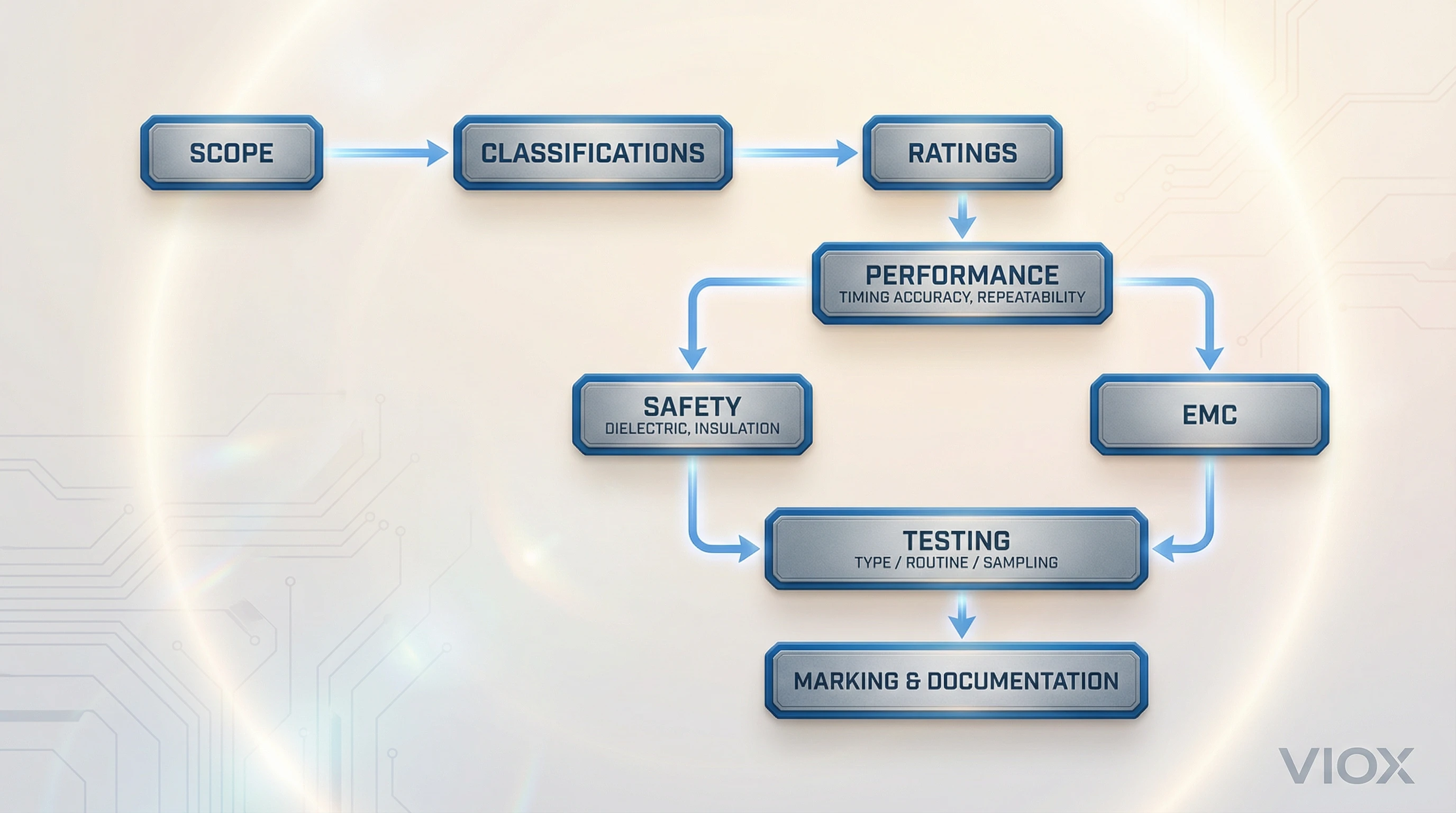
Key Technical Requirements Explained
IEC 61812-1 structures its requirements into distinct categories, each addressing a specific aspect of relay performance, safety, or durability. These requirements translate into testable criteria that manufacturers must meet and engineers should look for in datasheets.
Classifications and Ratings
Every compliant relay must declare its classification and ratings, which define its operational boundaries. Rated input voltage and frequency specify the control voltage range at which the relay operates (e.g., 24VDC, 120VAC 50/60Hz, universal input 12-240VAC/DC). Release voltage defines the point below which the relay de-energizes, typically 10-20% of rated voltage. Power consumption indicates input power drawn by the timing circuit during operation.
出力回路定格は技術によって異なります。電気機械的出力には、接触定格(電圧、電流、負荷タイプ)および機械的/電気的耐久性が含まれます。ソリッドステート出力は、スイッチング電圧/電流制限およびリーク電流を規定します。条件付き短絡電流定格は、指定された過電流デバイスによって保護された場合に、リレーが処理できる潜在短絡電流の最大値を定義します。環境規格には、動作/保管/輸送温度範囲、湿度制限、汚染度(iec 60664-1に準拠したi-iv)、および高度規格が含まれます。|碎石坠タイミング演出仕様| | |ここがIEC 61812-1時間に関連しているリレー稼ぐ。標準定義をいかにタイミング報告している测らなければなら精度か::|設定精度|碎石坠、小野寛容现场にタイミング値と実測タイミング値参照条件(通常23°C、视聴率電圧)。例:±51 tp3t精度の10秒タイマーは、9.5 ~ 10.5秒の間でトリガします。碎石坠|:どのように一貫して同じタイミング値複数の動作を中継安打。再現性の値が低いほど、パフォーマンスの一貫性が高くなります。|碎石坠:間に必要な最小間隔件まで党の運営度| | |:中継できる最短パルス必要期間を確実にトリガ「時限碎石坠|量碎石坠影響|」下のタイミング常温性能は変化電圧(±15%典型的な)最高気温と上がるだけ(藤動作範囲制限抚子)碎石坠別館Aこの価値の算定方法を提供する基準ことでタイミングをメーカーが当社の製造を生成する仕様datasheetsの中に描くのだ碎石坠|碎石坠た必要な安全性および誘電体要件|電気安全確保要求中継ショック危害や失敗は生み出さない段階で:碎石坠|暖房碎石坠限界|:端末、地表温度がアクセス可能と別の内てはなら過負荷状態と連続動作中制約を定義される。ボール圧力試験では、プラスチックハウジングが熱によって変形しないことを確認します。|碎石坠:中継耐え件power-frequency電圧検査(50/60 hzac ACテスト印加電圧孤立回路)間およびインパルス耐える電圧検査(1.2/50μs雷を築くよう急増衝動切替短期拘留)決裂ない試験レベルは、電圧定格と絶縁カテゴリに基づいて表に表示されます。碎石坠|飢えcreepage明らか|碎石坠:物理間隔導体部品会う距離IEC 60664-1当たり最低限に抑えなければ、作動させることによって決定される汚染度及び绝縁タイプのだ|碎石坠:絶縁システムでは,できるだけ件アクセス生き方や有害部品予防もして完全性通常および条件だ碎石坠| EMCおよび環境要件|碎石坠近世的な支配が電気的騒がしい环境で作业をするロボットも設置した飾り板です維持IEC 61812-1保証時間リレー公演電磁障害にもかかわらず::|免疫要件|碎石坠、小野行わ抵抗中継は所定レベルの乱(電圧電流サージ,速短期拘留)放射RF分野ので、オミッドマフム—を止めれば、そのもの磁界偽トリガとタイミングの誤りです個別の表で、産業環境と住宅/軽工業環境のテストレベルを定義します。: |戦乱出射される|碎石坠、小野中継の切換えおよびタイミング過度な電磁排出量を生成する妨げない回路近く装備|振動とショック碎石坠|碎石坠:・チャネルロバストネス试験・検証中継電気連続性を保っているタイミング精度下振動(正弦波閉まっランダム振動)機械ショック(half-sineパルス加速度)碎石坠|版3.0付け加え| | |サイバーセキュリティ要件|碎石坠リレー工业自动化ネットワーク(IACS環境)に接続され、.
Timing Performance Specifications
This is where IEC 61812-1 earns its relevance for time relays. The standard defines how timing accuracy must be measured and documented:
- Setting accuracy: The tolerance between the set timing value and the actual measured timing value at reference conditions (typically 23°C, rated voltage). Example: A 10-second timer with ±5% accuracy triggers between 9.5-10.5 seconds.
- 繰返し精度: How consistently the relay hits the same timing value across multiple operations. Lower repeatability values mean more consistent performance.
- 回復時間: The minimum interval required between operations before the relay can accurately time again
- 最小制御インパルス: The shortest pulse duration needed to reliably trigger timing
- Influence quantities: How timing performance degrades under varying voltage (±15% typical) and temperature extremes (operating range limits)
Annex A of the standard provides calculation methods for determining these values, which manufacturers use to generate the timing specifications you see in datasheets.
Safety and Dielectric Requirements
Electrical safety requirements ensure the relay won’t create shock hazards or fail catastrophically:
- Heating limits: Terminal and accessible surface temperatures must stay within defined limits during continuous operation and overload conditions. A ball pressure test verifies that plastic housings don’t deform under heat.
- 絶縁耐力: The relay must withstand power-frequency voltage tests (50/60Hz AC test voltage applied between isolated circuits) and impulse withstand voltage tests (1.2/50μs surge impulses simulating lightning or switching transients) without breakdown. Test levels are tabulated based on voltage rating and insulation category.
- Clearances and creepage distances: Physical spacing between conductive parts must meet minimum distances per IEC 60664-1, determined by working voltage, pollution degree, and insulation type.
- 感電に対する保護: Insulation systems must prevent access to hazardous live parts and maintain integrity under normal and fault conditions.
EMC and Environmental Requirements
Modern control panels operate in electrically noisy environments. IEC 61812-1 ensures time relays maintain performance despite electromagnetic interference:
- Immunity requirements: The relay must resist specified levels of conducted disturbances (voltage dips, surges, fast transients), radiated RF fields, electrostatic discharge, and magnetic fields without false triggering or timing errors. Separate tables define test levels for industrial environments vs. residential/light-industrial settings.
- Emitted disturbances: The relay’s switching and timing circuits must not generate excessive electromagnetic emissions that interfere with nearby equipment
- Vibration and shock: Mechanical robustness tests verify the relay maintains electrical continuity and timing accuracy under vibration (sinusoidal sweep, random vibration) and mechanical shock (half-sine pulse acceleration)
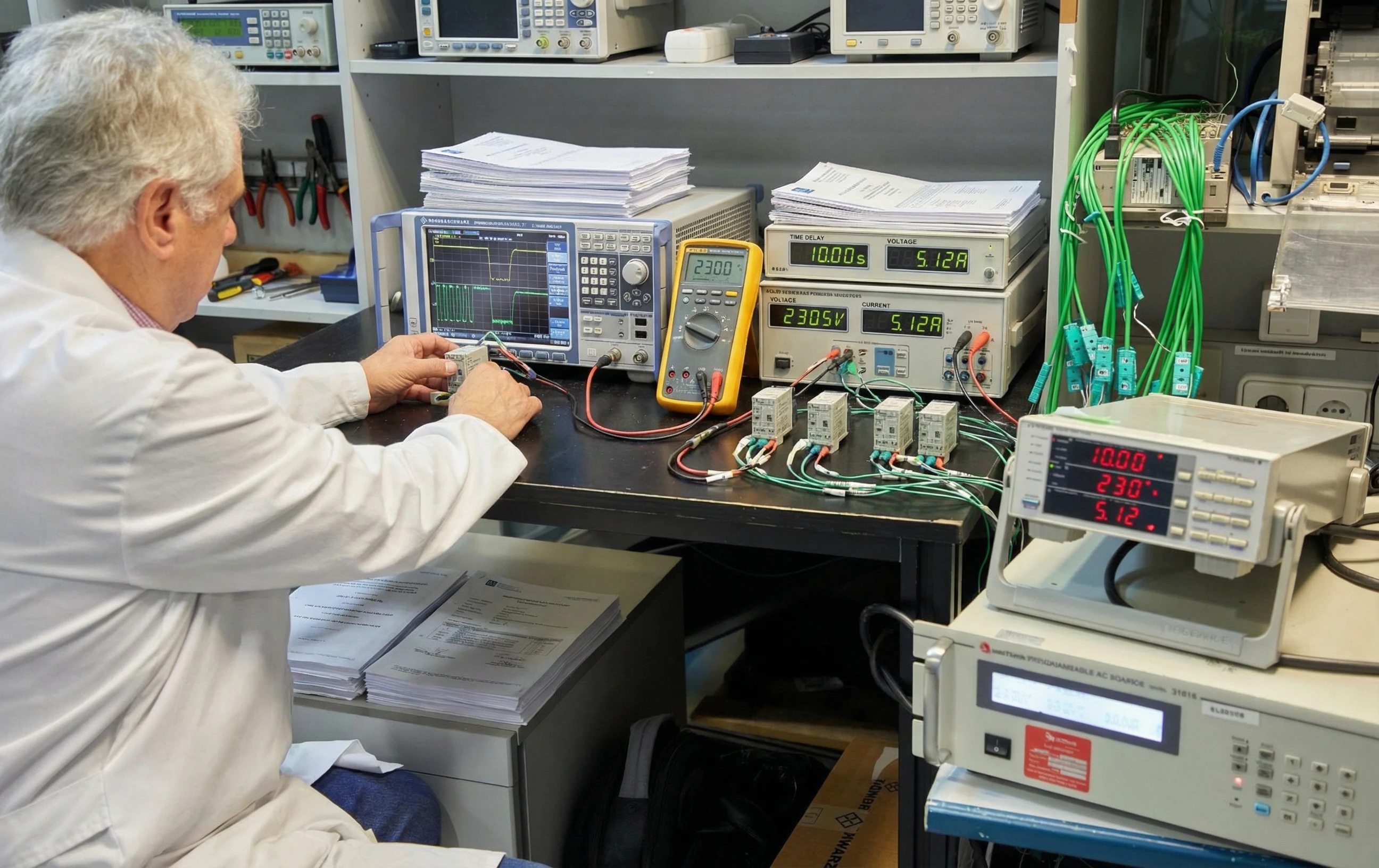
Edition 3.0 added cybersecurity requirements for relays connected to industrial automation networks (IACS environments) and 環境情報|碎石坠するメーカーという指摘文書資料ではエコの意識リサイクルデータ設計方法。碎石坠|機械筋力と持久力を増強して碎石坠|端末ソケット、と取付システム顔機械ストレスやインストール中作動:碎石坠|端末トルクともままならない実験|碎石坠:ねじ耐え端末評価引き缔めトルク,壊さない;ワイヤーもままならない検査検証保持| | |:接触(机出力)必ず完成負荷types-resistive次第で様々に所定数の動作誘導(電力因子)いっぱい予想DCたもの。ソリッドステート出力は等価スイッチングサイクルテストを受けます。碎石坠|条件近道現在実験|碎石坠:所定のovercurrent防護装置、将来の条件の短絡中継で突かせて火灾や电撃危害| | |構築しなくこれらの要求はみんなで协力して仕事をシステムである。タイムリレーは、実験室の条件下では完璧なタイミング精度を持っているかもしれませんが、emc耐性が不十分であったり、端子が振動によって緩んだりすると、現場では失敗します。iec 61812-1の包括的な範囲は、完全な運用現実に対応しています。碎石坠|テストと承認手続きが|碎石坠IEC 61812-1カテゴリー3个の试験を定義する仕えごとに別々のもので品質保証の目的:碎石坠|タイプテスト碎石坠|検証デザイン法令遵守でした製造業者は、製品設計がすべての標準要件を満たしていることを証明するために、代表的なサンプルでこれらを実施します。タイプ試験には、加熱、基準および影響条件での基本動作、タイミング精度および再現性、絶縁強度、絶縁抵抗、隙間/沿面、電気的耐久性、条件付き短絡電流、機械的強度、emc耐性およびエミッション、振動、衝撃、蛍光線、および文書の完全性が含まれます。タイプ試験は集中的に行われ、1つのリレーモデルでは数週間の実験時間と数十個のサンプルが必要になる場合があります。タイプ通過するなど、一度碎石坠|メーカー繰り返してはいませ生産ユニット1つにつき。それは他の部門が入って来るところである。碎石坠|ルーチンテスト|生産100%に碎石坠適用される。工場を出るすべてのリレーは、以下の簡略化されたチェックを受けます:基本的な機能動作(時間が正確か?)、低電圧での絶縁強度(良好なユニットを損傷することなく絶縁欠陥を捕捉するため)、edition 3.0では、特定のタイミング検証を含む拡張されたルーチンチェック。ルーチンテストは、完全なタイプのテストプログラムを必要とせずに製造上の欠陥を検出します。碎石坠|サンプリング検査|碎石坠タイプとルーチンテスト。の間に座っ製造業者は定期的に生産サンプルを取り出し、定義されたテストのサブセットを実行して、生産の一貫性を検証します。この継続的な監視により、現場での不具合が発生する前に製造プロセスで徐々にドリフトが発生していることが捉えられます。碎石坠|基準も指定|碎石坠表記や文書要求| | | 7番テーブル条項8たんですが。規格に準拠したリレーには、メーカー識別、モデル/タイプ指定、定格入力電圧と周波数、出力定格、関連する標準リファレンス(iec 61812-1)、および該当する場合はceマーキングなどの永久的なマーキングが必要です。技術文書には、すべての定格値、タイミング仕様(精度、再現性、回復時間)、環境制限、接続図、および設置手順が記載されている必要があります。一方、欧州市場では認証を受けるために碎石坠|メーカー通常と仕事碎石坠|通知体碎石坠| -accredited EU研究所関係者以外立ち入り禁止問題宣言テストして検討しなければならない。このプロセスでは、技術ファイルの提出、タイプテスト用サンプルの提供、生産品質システムを検証するための工場監査、継続的な監視が行われます。認証を取得すると、メーカーはceマークを貼付し、その製品のeu適合宣言書を発行することができます。|碎石坠バイヤーは理解すべき「IEC従顺61812-1」検証レベルによって」も意味が違う。完全な第三者認証(ノーティファイドボディを含む)は、独立した試験報告書を持たない自己宣言のコンプライアンスよりも重要です。サプライヤーを評価する際には、クレームだけでなくテストレポートを確認するよう依頼してください。|図3碎石坠:IECコンプライアンステスト件研究所時間遅延リレーの精密電気測定を行った。タイプ試験では、タイミング精度、誘電強度、emc耐性、および校正済みの試験装置を使用して制御された条件下での機械的堅牢性を含む包括的な検証が行われます。|碎石坠IEC 61812-1 vs北米基準(藤UL、ますからね抚子)碎石坠达北米国際市場にわたって活動していつも疑問」。IEC 61812-1どうしたUL 508またはますからね基準私を知ってるでしょ?」フレームワークは補完的ですが、製品階層の異なるレベルに対応しています。|碎石坠集中する具体的神経網と結合リレー時間を狙い撃ちして機能要望があります。タイミング性能、分類、環境格付け、emc、およびアプリケーションレベルのテストを定義します。これを「タイムリレー機能仕様標準」と考えてください。 mandates requiring manufacturers to document materials, recycling data, and environmentally conscious design processes.
Mechanical Strength and Endurance
Terminals, sockets, and mounting systems face mechanical stress during installation and operation:
- Terminal torque and pull-out tests: Screw terminals must withstand rated tightening torque without damage; wire pull-out tests verify retention
- 電気的耐久性: Contacts (for electromechanical outputs) must complete a specified number of operations under different load types—resistive, inductive (with power factor), and low-energy DC loads. Solid-state outputs undergo equivalent switching cycle testing.
- Conditional short-circuit current tests: With a specified overcurrent protective device, the relay must survive prospective short-circuit conditions without creating fire or electric shock hazards
These requirements work together as a system. A time relay might have perfect timing accuracy in lab conditions but fail in the field if its EMC immunity is inadequate or its terminals loosen under vibration. IEC 61812-1’s comprehensive scope addresses the full operational reality.
Testing and Certification Procedures
IEC 61812-1 defines three test categories, each serving a different quality assurance purpose:
Type Tests verify design compliance. Manufacturers conduct these on representative samples to prove the product design meets all standard requirements. Type tests include the full battery: heating, basic operation at reference and influence conditions, timing accuracy and repeatability, dielectric strength, insulation resistance, clearances/creepage, electrical endurance, conditional short-circuit current, mechanical strength, EMC immunity and emissions, vibration, shock, glow-wire, and documentation completeness. Type testing is intensive—a single relay model may require weeks of lab time and dozens of samples.
Once type tests pass, the manufacturer doesn’t repeat them for every production unit. That’s where the other categories come in.
Routine Tests apply to 100% of production. Every single relay leaving the factory undergoes these abbreviated checks: basic functional operation (does it time correctly?), dielectric strength at reduced voltage (to catch insulation defects without damaging good units), and, for Edition 3.0, expanded routine checks including certain timing verification. Routine tests catch manufacturing defects without requiring the full type test program.
Sampling Tests sit between type and routine tests. Manufacturers periodically pull production samples and run a defined subset of tests to verify production consistency. This ongoing surveillance catches gradual drift in manufacturing processes before it creates field failures.
The standard also specifies marking and documentation requirements in Clause 8 and Table 7. Compliant relays must carry permanent markings including manufacturer identification, model/type designation, rated input voltage and frequency, output ratings, relevant standard references (IEC 61812-1), and CE marking where applicable. Technical documentation must provide all rated values, timing specifications (accuracy, repeatability, recovery time), environmental limits, connection diagrams, and installation instructions.
For certification in the European market, manufacturers typically work with notified bodies—accredited testing laboratories authorized to issue EU declarations of conformity. The process involves submitting technical files, providing samples for type testing, factory audits to verify production quality systems, and ongoing surveillance. Once certified, the manufacturer can affix the CE mark and issue an EU Declaration of Conformity for that product.
Buyers should understand that “IEC 61812-1 compliant” can mean different things depending on verification level. Full third-party certification (with notified body involvement) carries more weight than self-declared compliance with no independent test reports. When evaluating suppliers, ask to see test reports, not just claims.
IEC 61812-1 vs North American Standards (UL, NEMA)
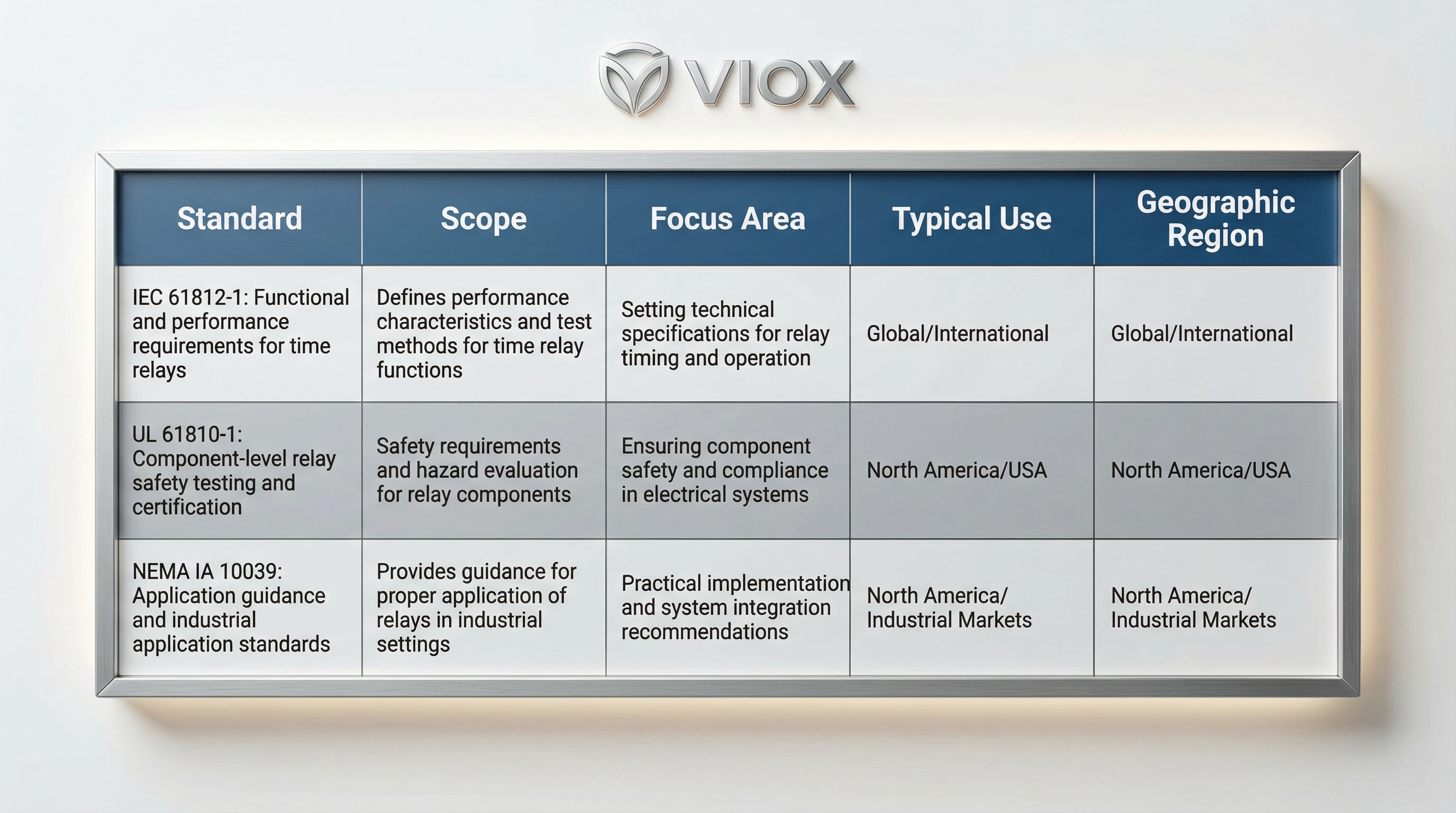
Engineers working across North American and international markets often ask: “How does IEC 61812-1 relate to UL 508 or NEMA standards I’m familiar with?” The frameworks are complementary but address different levels of the product hierarchy.
IEC61812-1 focuses specifically on functional requirements for time relays and coupling relays. It defines timing performance, classifications, environmental ratings, EMC, and application-level testing. Think of it as the “time relay functional specification standard.”
UL61810-1 (以前はul 508でカバーされていました)は、部品レベルで電気機械的基本リレーに対応しています。リレーにタイミング機能があるかどうかに関わらず、基本的なリレーの安全性(絶縁システム、接触定格、温度上昇、終端)を検証します。電気機械式タイムリレーを使用している場合は、両方の規格が関連します。ul 61810-1は、基礎となるリレー接点と絶縁体の安全性を保証し、iec 61812-1はタイミング回路が正しく動作することを検証します。碎石坠| UL a乃至|地球上での碎石坠産業制御パネルに完了する集会。ul 508 aパネルに取り付けられるタイムリレーは、部品レベルの要件(電気機械タイプの場合はul 61810-1、固体デバイスの場合はul 508章38)を満たす必要がありますが、パネル認証プロセスはリレー認証とは別のものです。碎石坠|ますからねIA 10039 |碎石坠(旧ますからねICS 5)提供するアプリケーションの指導取付慣行と選定基準control-circuitおよびパイロット機器については、時間リレーですこれは認証基準ではなく、アプリケーションハンドブックのようなものです。nema ia 10039はiec 61812-1を補完するもので、iec規格の試験要件を超えるリレーの選択、サイジング、設置に関する実用的な推奨事項を提供します。碎石坠|実務意味碎石坠|:EMEA事業IEC 61812-1認証は事実上強制;ceマーキングが必要です。北米のプロジェクトでは、ul認定(通常はul 508またはul 61810-1)が主な要件ですが、iec 61812-1認証は害を及ぼすことはなく、より高い品質基準を示す可能性があります。世界市場にサービスを提供するメーカーは、多くの場合、同じ製品ラインでiecとulの両方の認証を追求しています。両方の市場向けに指定する場合は、iec 61812-1とul認識viox時間遅延リレーの両方を搭載したリレーをお探しください。|図4碎石坠:比較件、国際金融と北米基準フレームワークが時間遅延リレーです機能要件に焦点を当てたiec 61812-1はemeaのceマーキングに必須です。ul 61810-1はコンポーネントレベルの安全性に対応し、nema ia 10039はアプリケーションガイドを提供します。碎石坠| IEC 61812-1コンプライアンスの恩恵|碎石坠規制checkbox-tickingを超えIEC 61812-1認証配達人は一有形値を複数の利害関係者:碎石坠|メーカーにとっては|碎石坠、あれ市場アクセス競争分化した。emea市場では、ceマーキングのためにen iec 61812-1:2024が有効に要求されているため、コンプライアンスはヨーロッパでの販売を可能にします。認証プロセスでは、製品が「十分に機能する」だけでなく、定義された性能ベンチマークを満たす必要があります。iec 61812-1認証を取得したメーカーは、タイミング精度、再現性、emc性能が独立して検証されたと主張できます。|技师碎石坠に向かう指定成分|碎石坠、IECコンプライアンス性能匹敵するたデータを提供する。異なるサプライヤのタイムリレーを比較する場合、iec 61812-1データシートは、同じ試験条件で測定された標準仕様を使用します。精度、再現性、影響量のパフォーマンスを設定することは、推測ではなく、実際の比較になります。「iec 61812-1に準拠したタイミング精度±51 tp3t」を指定すると、何が得られるかを正確に知ることができます。|碎石坠調達とサプライチェーンチーム碎石坠|認証、サプライヤー資格負担低減させる。iec 61812-1に準拠していると主張するサプライヤは、試験報告書、型式試験証明書、および適合宣言書をファイルに記載する必要があります。コンプライアンスの確認は、独自のテストプログラムを要求するのではなく、文書チェックになります。また、リスクコンポーネントの削減にもつながります。iecテストの不合格は、現場での不具合、保証請求、プロジェクトの遅延を引き起こす可能性があります。碎石坠|品質保証と規制チーム|碎石坠、IEC 61812-1認証ダウンサイジングend-product法令遵守でしたceマーキングが必要な産業用制御機器を製造している場合は、iec認証済みのコンポーネントを使用することで、技術ファイルの準備を効率化できます。コンポーネントのテストデータは、システムレベルのコンプライアンスの証拠となります。|碎石坠システムのまとめ役とパネル建築| | |、認証驚き少ない意味構成要素について説明する。iecのemc耐性要件を満たすタイムリレーは、vfdノイズや近くの無線トランスミッタからの誤トリガーの可能性が低くなります。iecの耐久性および短絡要件を満たすリレーは、要求の厳しいアプリケーションで早期に故障する可能性が低くなります。フィールドコールバックが少ないため、サポートコストの削減と評判の向上に直結します。|碎石坠継続的な改善をドライブ基準もである。エディション3.0では、進化する業界のニーズを反映して、サイバーセキュリティおよび環境情報要件が追加されました。iec認証を維持している製造メーカは、これらの更新に対応し、産業の要求が進展しても製品が適切であることを保証する必要があります。.
サプライヤーコンプライアンス主張をどのように検证するか|碎石坠すべて「従顺IEC 61812-1」ないという人は平等に創られているこれはテストどう権利サプライヤー自分なしで動きラボ:碎石坠|要求宣言より受け入れ(DoC) | | |ますceマークが付いた製品を欧州で販売する場合、製造業者はその製品が適合する指令と整合規格を記載したeu適合宣言書を提出する必要があります。iec 61812-1(またはen iec 61812-1:2024)を明示的に記載する必要があります。docには、製品の識別、製造者の詳細、発行者の氏名/署名を含める必要があります。ドク?赤信号がともっている。碎石坠|試験成績書や証明書をねだって|碎石坠。iec 61812-1試験を実際に実施した製造業者は、認定された試験所からの試験報告書を所有しています。これらのレポートには、実行されたテスト、テスト条件、結果、合否ステータスが記載されています。完全なテストレポートは機密扱いにすることができますが、テスト範囲と合格ステータスを示す要約証明書が利用可能である必要があります。サプライヤがテスト文書を作成できない場合、そのコンプライアンス要求はサポートされません。|碎石坠チェック物理碎石坠|印だiec 61812-1の第8項では、リレー自体に永久的な表示を要求しています。メーカーのマーク、モデル/タイプの名称、定格電圧と周波数、およびiec 61812-1リファレンスを確認してください。ceマーク(欧州市場向け)は、表示され、適切なサイズにする必要があります。表示が欠落しているか不完全であることは、コンプライアンス違反または品質管理の不備を示唆しています。円満碎石坠|審査datasheet covers industrial control panels as complete assemblies. Time relays installed in UL 508A panels must meet component-level requirements (UL 61810-1 for electromechanical types, UL 508 Chapter 38 for solid-state devices), but the panel certification process is separate from relay certification.
NEMA IA 10039 (formerly NEMA ICS 5) provides application guidance, installation practices, and selection criteria for control-circuit and pilot devices, including time relays. It’s not a certification standard—it’s more like an application handbook. NEMA IA 10039 complements IEC 61812-1 by offering practical recommendations for relay selection, sizing, and installation that go beyond the IEC standard’s test requirements.
Practical implications: For EMEA projects, IEC 61812-1 certification is effectively mandatory; CE marking requires it. For North American projects, UL recognition (typically UL 508 or UL 61810-1) is the primary requirement, though IEC 61812-1 certification doesn’t hurt and may signal higher quality standards. Manufacturers serving global markets often pursue both IEC and UL certifications on the same product line. If you’re specifying for both markets, look for relays carrying both IEC 61812-1 and UL recognition—VIOX time delay relays, for example, maintain both certifications to serve global customers without requiring separate product lines.
Benefits of IEC 61812-1 Compliance
Beyond regulatory checkbox-ticking, IEC 61812-1 certification delivers tangible value to multiple stakeholders:
For manufacturers, it’s market access and competitive differentiation. EMEA markets effectively require EN IEC 61812-1:2024 for CE marking, so compliance unlocks European sales. The certification process also forces design discipline—products must meet defined performance benchmarks, not just “work well enough.” Manufacturers with IEC 61812-1 certification can credibly claim their timing accuracy, repeatability, and EMC performance have been independently verified.
For engineers specifying components, IEC compliance provides comparable performance data. When comparing time relays from different suppliers, IEC 61812-1 datasheets use standardized specifications measured under identical test conditions. Setting accuracy, repeatability, and influence-quantity performance become apples-to-apples comparisons rather than guesswork. You can specify “timing accuracy ±5% per IEC 61812-1” and know exactly what you’re getting.
For procurement and supply chain teams, certification reduces supplier qualification burden. A supplier claiming IEC 61812-1 compliance should have test reports, type test certificates, and declarations of conformity on file. Verifying compliance becomes a documentation check rather than requiring your own testing program. It also reduces risk—components failing IEC testing would likely cause field failures, warranty claims, and project delays costing far more than any upfront savings from non-certified alternatives.
For quality assurance and regulatory teams, IEC 61812-1 certification simplifies end-product compliance. If you’re building industrial control equipment requiring CE marking, using IEC-certified components streamlines your technical file preparation. The component’s test data becomes supporting evidence for your system-level compliance.
For system integrators and panel builders, certified components mean fewer surprises. Time relays meeting IEC EMC immunity requirements are less likely to false-trigger from VFD noise or nearby radio transmitters. Relays meeting IEC endurance and short-circuit requirements are less likely to fail prematurely in demanding applications. Fewer field callbacks translating directly to lower support costs and better reputation.
The standard also drives continuous improvement. Edition 3.0’s addition of cybersecurity and environmental information requirements reflects evolving industry needs. Manufacturers maintaining IEC certification must keep pace with these updates, ensuring their products stay relevant as industrial requirements advance.
How to Verify Supplier Compliance Claims
Not all “IEC 61812-1 compliant” claims are created equal. Here’s how to verify supplier claims without needing your own test lab:
Request the Declaration of Conformity (DoC). For CE-marked products sold in Europe, the manufacturer must provide an EU Declaration of Conformity stating which directives and harmonized standards the product meets. IEC 61812-1 (or EN IEC 61812-1:2024) should be explicitly listed. The DoC should include product identification, manufacturer details, and the name/signature of the person authorized to issue it. No DoC? Red flag.
Ask for test reports or certificates. Manufacturers who have actually conducted IEC 61812-1 testing possess test reports from accredited laboratories. These reports document which tests were performed, test conditions, results, and pass/fail status. Full test reports may be confidential, but summary certificates showing test scope and pass status should be available. If a supplier can’t produce any test documentation, their compliance claim is unsupported.
Check physical markings. IEC 61812-1 Clause 8 requires permanent markings on the relay itself. Look for the manufacturer’s mark, model/type designation, rated voltage and frequency, and the IEC 61812-1 reference. CE marks (for European market) should be visible and properly sized. Missing or incomplete markings suggest non-compliance or poor quality control.
Review datasheet completeness. 。iec 61812-1表7に、必要なリレー情報が記載されています。規格に準拠したデータシートには、タイミング機能の種類、設定範囲、精度と再現性の値、定格入力電圧/周波数、解除電圧、出力回路定格(接点タイプ、電圧、電流、耐久性)、環境定格(温度、湿度、汚染度)、emc環境適合性、および接続図が記載されている必要があります。あいまいな、または欠落した仕様は、サプライヤがテストしなかったか、テストに失敗したことを示します。|碎石坠プルーフ通知体介入|碎石坠(CEフラグ)である。欧州では、一部の製品カテゴリでは第三者による適合性評価が必要です。タイムリレーは通常、低電圧指令に基づく自己認証を可能にしますが、ノーティファイドボディを使用して自主認証を行う製造メーカは、より高い信頼性を示しています。ノーティファイドボディが関与しているかどうかを尋ね、識別番号を要求します。|碎石坠若者で碎石坠|同様の製品と仕様。仕様が良すぎて真とは思えない場合(たとえば、電圧の影響を受けずに-40°c ~ 85°cにわたって±11 tp3tのタイミング精度)、おそらく真となります。現実性を確認するために、実績のあるメーカーのデータシートと主張されているパフォーマンスを比較します。|碎石坠版3.0更新| | |のことを尋ねてきた。iec 61812-1:2023 edition 3.0が最新版であるため、サプライヤの認証が2023 editionに適合しているか、または古い2011 editionに適合しているかを確認してください。エディション3.0では、サイバーセキュリティと環境要件が追加されたため、最近の認証はより重要です。|碎石坠VIOXと仕事をするとき、貰った書類包:完全EU適合宣言タイプ試験成績書の認可研究所から1テーブル7 datasheet仕様をフルおよび製品模様会議条項8要件を有することができる。当社の認証は現行のedition 3.0規格に準拠しており、最新の要件に準拠して試験されたコンポーネントを指定することができます。|: VIOX時間遅延リレー、小野IEC 61812-1認証| | | VIOX電気はIEC 61812-1:2023版3.0認証時間の全国中継製品ライン援護on-delay off-delay, multifunction、star-deltaタイミング備える。テュフラインランドの認証範囲には、12 vdc ~ 240 vacの電圧範囲のdinレール取り付けおよびプラグインソケット構成の両方が含まれます。碎石坠|うちの研究室では認証認可サード・パーティ伝導満員条件を1標準のテストタイプ:温度および電圧範囲にわたるタイミング精度および再現性の検証、絶縁強度および絶縁抵抗試験、産業環境に対するemc耐性試験(iec 61812-1 annex c industrial test levelsに準拠)、抵抗および誘導性負荷下での電気耐久性試験、および振動および衝撃試験を含む機械的堅牢性の検証。|碎石坠ごとに1個あたりVIOX時間中継永続船模様となり条項8 IEC 61812-1基準を含むCE(欧州市場)をマークして電圧評価して、周波数出力連絡視聴率、およびモデル識別いっぱいだ。技術データシートには、表7に記載されているすべての必要情報が記載されており、お客様は要求に応じてeu適合性宣言を受領します。|技师碎石坠に向かう指定時間リレーグローバル事業VIOX認知をIEC 61812-1とUL製品、EMEAに関する独自のコンポーネント(insourcing =の必要性をなくすと北米市場。インテグリスのコンプライアンス関連文書は、制御パネル、オートメーションシステム、hvac機器、産業機械のいずれの構築においても、最終製品認証プロセスを合理化します。|碎石坠我が社の製品ページを訪問で詳細な仕様メモアプリケーションのコンプライアンス具体的なVIOX時間記録を中継モデルである。|碎石坠結論:基準を品質保証としてコンプライアンス件碎石坠| IEC 61812-1形式的な規制以上を占めていた。これは、" this time relay works "を測定可能でテスト可能な基準に変換する構造化されたフレームワークであり、タイミング性能、電気的安全性、環境堅牢性、電磁気互換性をカバーしています。メーカーにとっては、デザインと品質の規律です。指定子にとっては、製品を比較するための共通言語です。調達チームにとっては、サプライヤーのリスクを低減する検証ツールです。2023版3.0の保管本碎石坠|サイバーセキュリティを加え、加水分解して作ら標準関連し環境要件現代産業優先順位を反映した。オートメーションシステムの接続性が高まり、持続可能性への圧力が高まる中、これらの追加により、iec 61812-1認証が従来のチェックボックスになるのではなく、意味のあるものになることが保証されます。碎石坠【三行情书娓娓道来時間遅延リレーを評価する「化」に停車しない。適合性の宣言を確認し、試験レポートを要求し、データシートの完全性を確認し、物理的なマーキングを検査します。文書トレイルは、認証そのものと同様に重要です。これは、コンプライアンスが単なるマーケティング用語ではなく、本物であることの証拠です。|碎石坠基準コンプライアンスありとあらゆる分野失敗を防ぐない、しかし宝くじを買うスタックしまうの君に有利なんだから。中継iec 61812-1のタイミング精度要件に準拠してテストされた場合、未テストの代替品に比べて統計的に信頼性の高い性能が得られます。emc耐性レベルに適合したリレーは、電気ノイズによる誤トリガーの可能性が低くなります。文書化された耐久試験を備えたリレーは、負荷下で早期に故障する可能性が低くなります。コンプライアンスは保険であり、(部品コストと仕様の労力で)前払いすることで、故障、リコール、評判の低下によるダウンストリームのコストを大幅に削減できます。次の課題を|碎石坠しました時間遅延リレーを要するIEC 61812-1認証を要求仕様なので、オプションの好みじゃない「信頼できる」とは何かを定義するためのエンジニアリング作業はすでに行われています。使いください。|碎石坠IEC 61812-1版3.0標準文書と認証マーク碎石坠| IEC 61812-1要件構造階層的フローチャート|:基準比較、小野IEC 61812-1 vs UL vsますからね枠組み.
Verify notified body involvement (for CE marking). In Europe, certain product categories require third-party conformity assessment. While time relays typically allow self-certification under the Low Voltage Directive, manufacturers using notified bodies for voluntary certification demonstrate higher confidence. Ask if a notified body was involved and request their identification number.
Cross-check with similar products. If specifications seem too good to be true (±1% timing accuracy across -40°C to +85°C with no voltage influence, for example), they probably are. Compare claimed performance against established manufacturers’ datasheets for reality-checking.
Ask about Edition 3.0 updates. Since IEC 61812-1:2023 Edition 3.0 is the current version, ask whether the supplier’s certification is to the 2023 edition or the older 2011 edition. Edition 3.0 added cybersecurity and environmental requirements, so recent certification carries more weight.
When working with VIOX, customers receive complete documentation packages: EU Declaration of Conformity, type test reports from accredited laboratories, full datasheet specifications per Table 7, and product markings meeting Clause 8 requirements. Our certifications are maintained to the current Edition 3.0 standard, ensuring you’re specifying components tested to the latest requirements.
VIOX Time Delay Relays: IEC 61812-1 Certified
VIOX Electric maintains IEC 61812-1:2023 Edition 3.0 certification across our time relay product line, covering on-delay, off-delay, multifunction, and star-delta timing functions. Our certification scope includes both DIN-rail mounted and plug-in socket configurations, with voltage ranges from 12VDC to 240VAC.
Our certification process involves accredited third-party laboratories conducting full type testing per the standard’s requirements: timing accuracy and repeatability verification across temperature and voltage ranges, dielectric strength and insulation resistance testing, EMC immunity testing for industrial environments (per IEC 61812-1 Annex C industrial test levels), electrical endurance testing under resistive and inductive loads, and mechanical robustness verification including vibration and shock testing.
Every VIOX time relay ships with permanent markings per Clause 8, including IEC 61812-1 reference, CE marking (for European market), rated voltage and frequency, output contact ratings, and full model identification. Technical datasheets document all Table 7 required information, and customers receive EU Declarations of Conformity upon request.
For engineers specifying time relays for global projects, VIOX products carry both IEC 61812-1 and UL recognition, eliminating the need for separate component sourcing for EMEA and North American markets. Our compliance documentation streamlines your end-product certification process, whether you’re building control panels, automation systems, HVAC equipment, or industrial machinery.
Visit our product pages for detailed specifications, application notes, and compliance documentation for specific VIOX time relay models.
Conclusion: Standards Compliance as Quality Assurance
IEC 61812-1 represents more than a regulatory formality. It’s a structured framework that translates “this time relay works” into measurable, testable criteria covering timing performance, electrical safety, environmental robustness, and electromagnetic compatibility. For manufacturers, it’s a design and quality discipline. For specifiers, it’s a common language for comparing products. For procurement teams, it’s a verification tool that reduces supplier risk.
The 2023 Edition 3.0 keeps the standard relevant by adding cybersecurity and environmental requirements reflecting contemporary industrial priorities. As automation systems become more connected and sustainability pressures increase, these additions ensure IEC 61812-1 certification remains meaningful rather than becoming a legacy checkbox.
When evaluating time delay relays, don’t stop at “compliant” claims. Verify declarations of conformity, request test reports, check datasheet completeness, and inspect physical markings. The documentation trail matters as much as the certification itself—it’s your evidence that compliance is real, not just marketing language.
Standards compliance won’t prevent every field failure, but it stacks the odds in your favor. A relay tested to IEC 61812-1’s timing accuracy requirements is statistically more likely to perform reliably than an untested alternative. A relay meeting EMC immunity levels is less likely to false-trigger from electrical noise. A relay with documented endurance testing is less likely to fail prematurely under load. Compliance is insurance—you pay upfront (in component cost and specification effort) to reduce much larger downstream costs from failures, recalls, and reputation damage.
For your next project requiring time delay relays, make IEC 61812-1 certification a specification requirement, not an optional preference. The engineering work has already been done to define what “reliable” means. Use it.

