MCB full form in electrical is Miniature Circuit Breaker. An MCB is a protective device that automatically interrupts a circuit when it detects an overload or short circuit. It is widely used in residential, commercial, and light industrial electrical systems to improve safety and protect wiring and connected equipment.

That is the short answer. But for most readers, the real question is not only what MCB stands for. It is also:
- what an MCB actually does
- how it works
- what the different MCB types mean
- how it differs from MCCBs, fuses, RCCBs, and RCBOs
This guide focuses on those practical questions so the article matches the real user intent behind MCB full form.
What Does MCB Stand For?
MCB stands for Miniature Circuit Breaker.
The word miniature does not mean unimportant. It refers to the compact form factor commonly used for branch circuits and final distribution applications, especially in low-voltage systems.
In practical terms, an MCB is designed to:
- carry normal current during standard operation
- trip automatically during overload conditions
- trip very quickly during short circuits
- be reset after a fault instead of being replaced like a fuse
If you want a more detailed foundation article, VIOX already has a dedicated explainer on what is a miniature circuit breaker (MCB).
What Does an MCB Do in an Electrical System?
An MCB protects a circuit by interrupting current when the current exceeds safe conditions.
Its main job is to protect:
- cables and conductors
- connected devices
- distribution circuits
- people indirectly, by helping prevent overheating and fault escalation
An MCB is mainly associated with overcurrent protection, which includes:
- overload protection
- short-circuit protection
It is important not to overstate its function. A standard MCB is not the same as a dedicated residual-current device, and it does not automatically replace an RCCB or RCBO when leakage protection is required.
Quick Reference Table
| Term | Full form | Main purpose | Typical use |
|---|---|---|---|
| MCB | Miniature Circuit Breaker | Overload and short-circuit protection | Final distribution and branch circuits |
| MCCB | Molded Case Circuit Breaker | Higher-capacity circuit protection with broader adjustment options | Larger commercial and industrial systems |
| Fuse | Not an acronym in the same way | Overcurrent protection by melting element | Simple protection, high fault interruption in some applications |
| RCCB | Residual Current Circuit Breaker | Leakage or residual current protection | Shock protection applications |
| RCBO | Residual Current Breaker with Overcurrent Protection | Leakage plus overcurrent protection | Circuits requiring combined protection |
This comparison matters because many users searching MCB full form quickly move into “when should I use MCB vs something else?”
How Does an MCB Work?
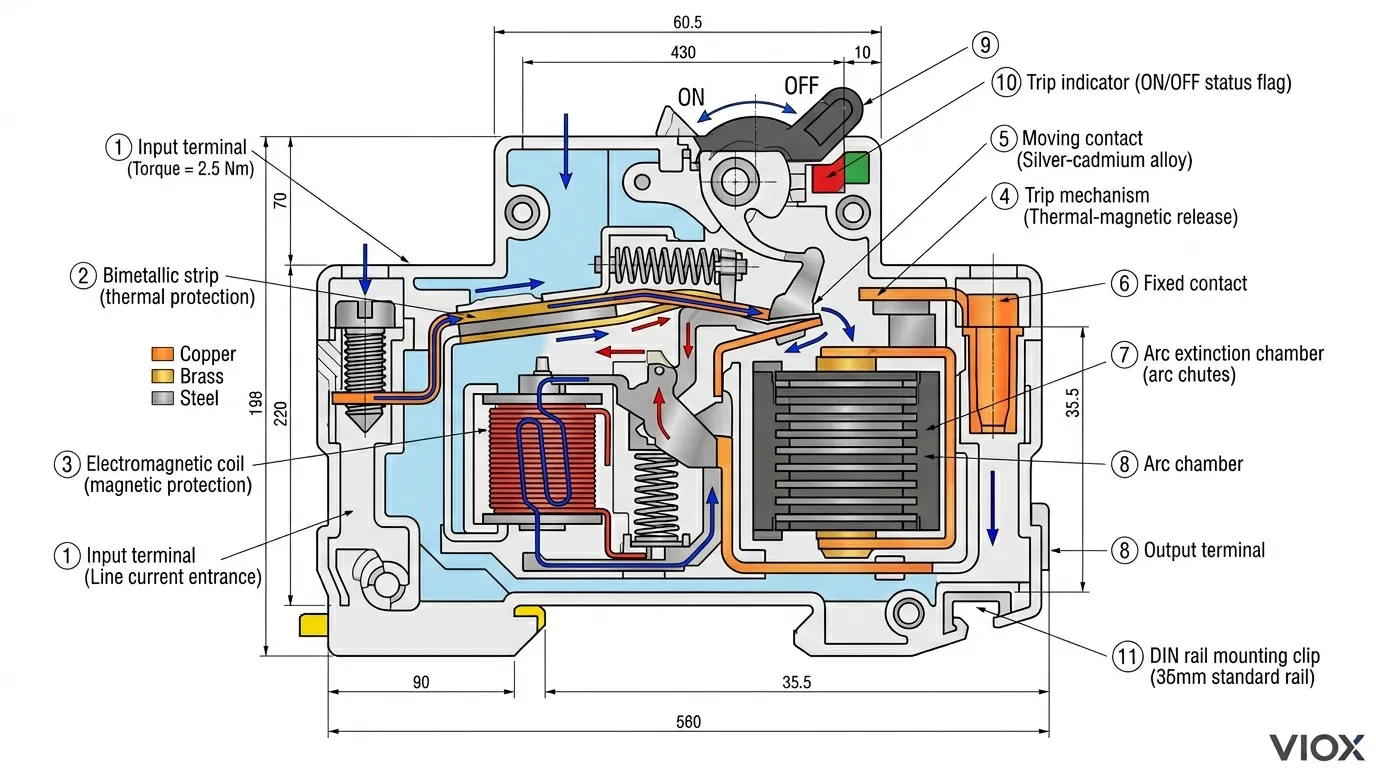
An MCB usually uses two basic tripping principles:
- thermal tripping for overload
- magnetic tripping for short circuit
Thermal Operation
During overload conditions, the current rises above the normal safe level for a longer period. This heats a thermal element inside the MCB. When the heat reaches the designed limit, the mechanism trips and opens the circuit.
Magnetic Operation
During a short circuit, the current rises sharply and very quickly. The magnetic mechanism reacts much faster than the thermal part and trips the breaker almost immediately.
That is why an MCB can protect against both gradual overload conditions and sudden fault current events.
For a simple user-facing companion page, VIOX also has a more focused article on how MCBs prevent damage during electrical overloads or short circuits.
Main Types of MCB
There are two common ways people classify MCBs:
- by trip curve
- by number of poles
Classification by Trip Curve
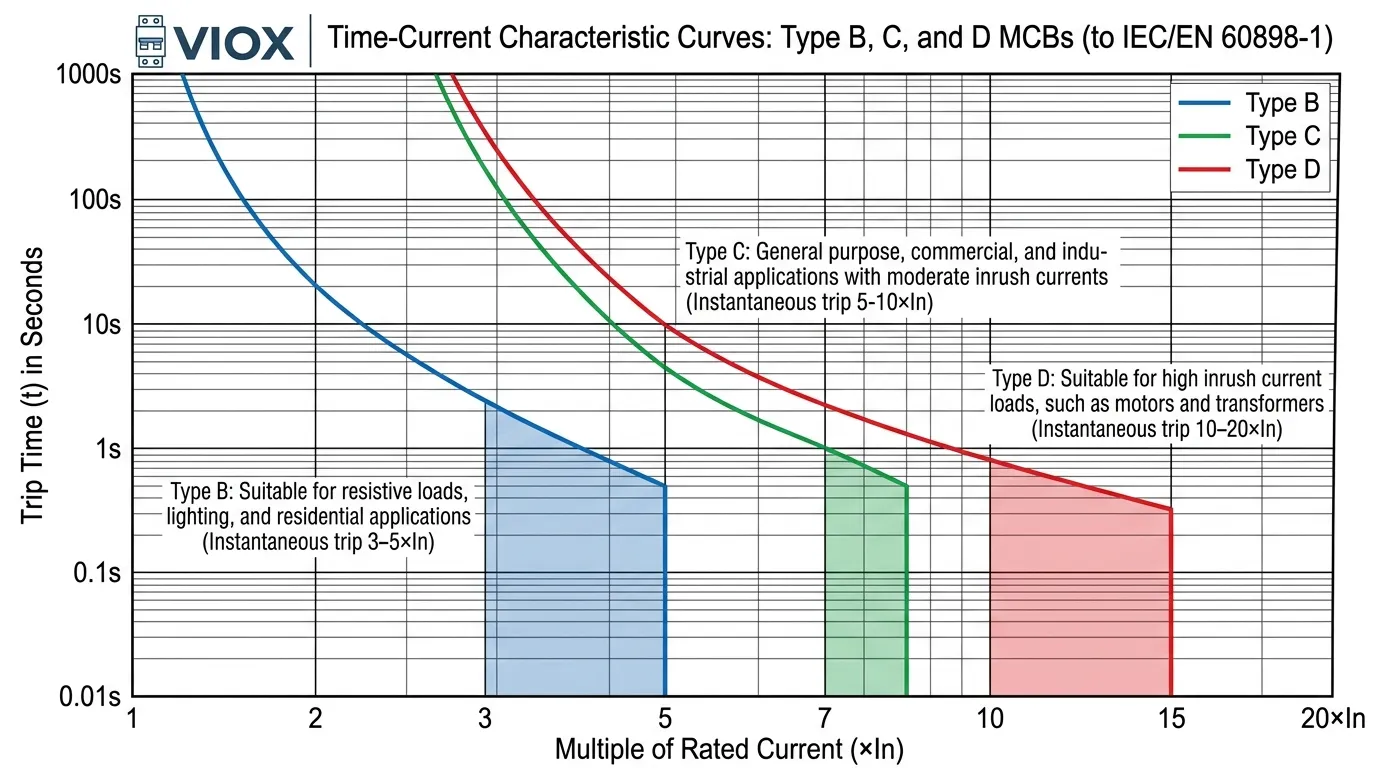
Trip curve tells you how fast the magnetic part of the MCB responds to higher fault current multiples.
| MCB type | Typical application tendency | Main point |
|---|---|---|
| B curve | Residential or lighter loads | Trips at lower fault-current multiples |
| C curve | General commercial and mixed loads | One of the most common all-purpose choices |
| D curve | Higher inrush-current applications | Used where startup surge is higher |
This topic is often misunderstood, so if you want to support this section with a deeper internal article, VIOX’s understanding trip curves is a strong fit.
Classification by Number of Poles
MCBs are also selected by pole count, such as:
- single-pole
- double-pole
- triple-pole
- four-pole, depending on system design
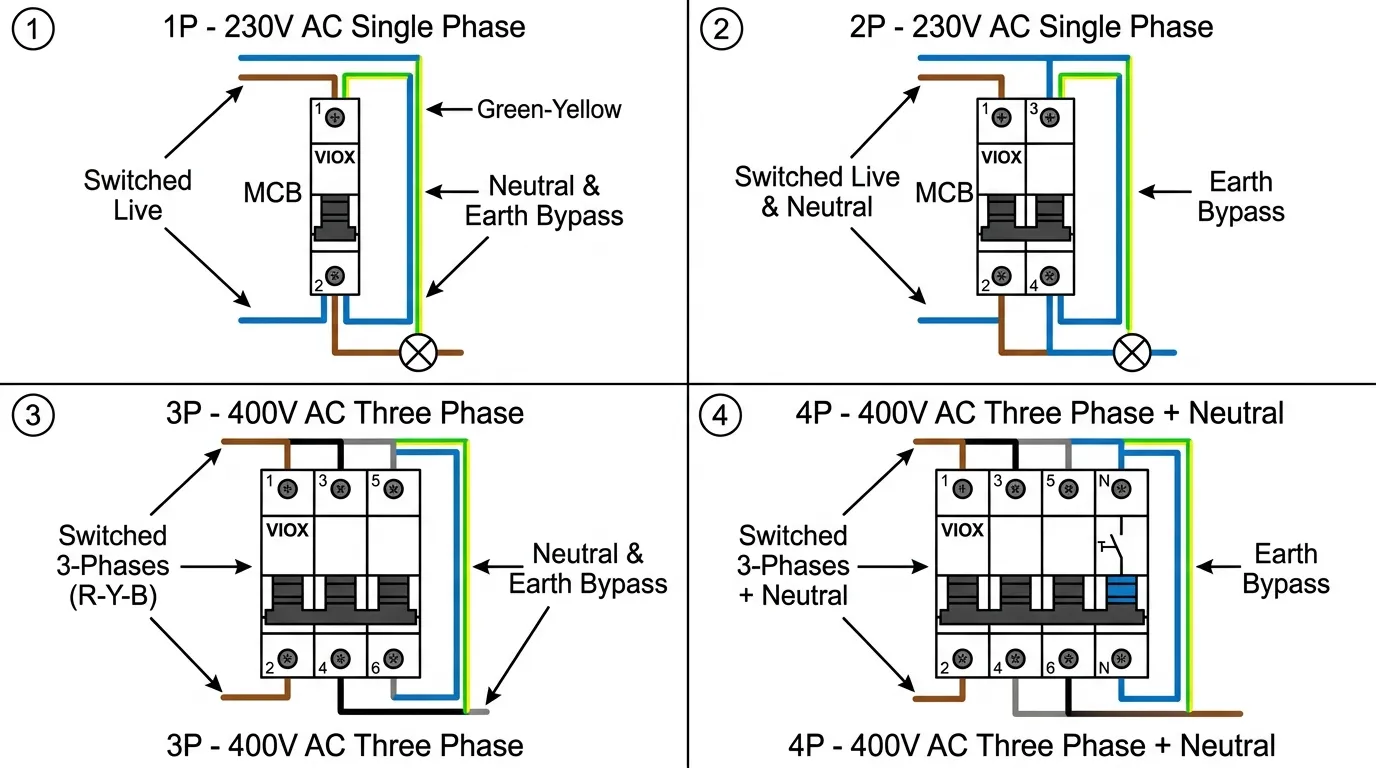
The right pole configuration depends on the circuit architecture and the protection logic required by the application.
For broader type coverage, you can also cross-link to types of miniature circuit breakers and type of MCB.
How to Read Basic MCB Markings
Users searching MCB full form often also want to understand what the printed markings on an MCB mean.
Common markings typically include:
- rated current, such as
6A,16A,32A - curve type, such as
B,C, orD - breaking capacity, such as
6kAor10kA - voltage rating
- product series or manufacturer code
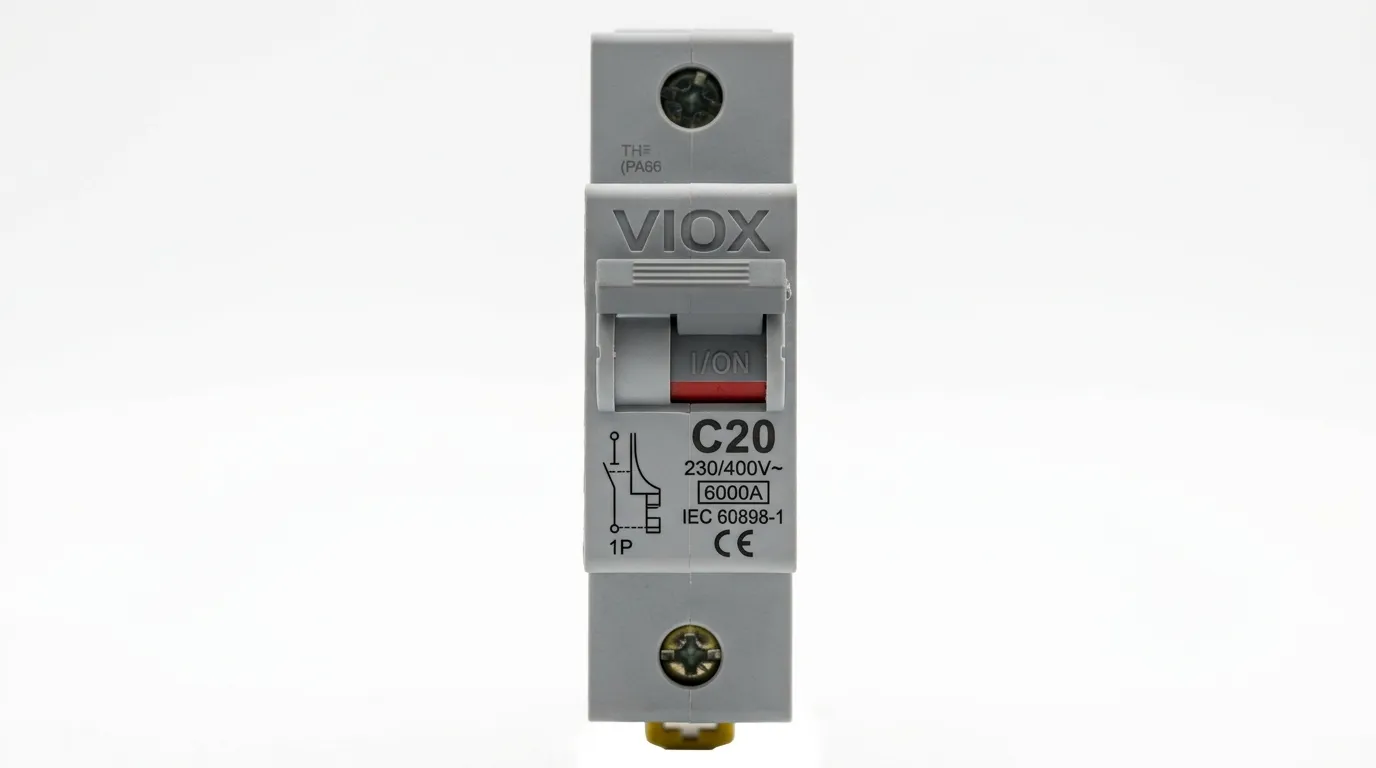
For example, a mark like C16 usually indicates:
C= trip curve16= rated current in amperes
But readers should not stop there. Breaking capacity and application fit also matter. A helpful internal next step is how to read the nameplate of a miniature circuit breaker.
MCB vs MCCB vs Fuse
Another reason many MCB full form pages underperform is that they answer only the acronym, not the comparison intent that follows immediately after.
MCB vs MCCB
An MCB is usually used for lower-current branch and final distribution applications, while an MCCB is generally used in higher-capacity systems where broader adjustment range and heavier-duty application fit may be needed.
If you want the deeper comparison, link to MCCB vs MCB.
MCB vs Fuse
An MCB can usually be reset after a trip, while a fuse must typically be replaced after operation. But that does not mean an MCB is automatically the best answer in every design. Fuse-based systems still have important roles depending on the application, fault level, and protection concept.
VIOX has useful supporting content on fuse vs MCB response time and MCB vs fuse.
How to Choose the Right MCB
If a reader moves from “What does MCB stand for?” to “Which MCB do I need?”, the article should give a simple but accurate framework.
At a basic level, selection should consider:
- rated current
- trip curve
- breaking capacity
- number of poles
- application type
- ambient conditions where relevant
Selection Table
| Selection factor | Why it matters | Common mistake |
|---|---|---|
| Rated current | Must match circuit design and conductor protection goals | Choosing only by appliance label, not circuit design |
| Trip curve | Affects how the MCB responds to inrush and faults | Using one curve type for every application |
| Breaking capacity | Must suit the available fault level | Ignoring 6kA vs 10kA differences |
| Poles | Must match the circuit arrangement | Choosing the wrong pole configuration |
| Environment | Temperature and installation conditions affect performance | Forgetting derating in hotter environments |
For readers who need more selection guidance, the strongest internal links here are:
- how to choose the right miniature circuit breaker
- MCB breaking capacity 6kA vs 10kA
- MCB ambient temperature ratings and derating factors
Common Questions People Really Mean When They Search “MCB Full Form”
Many users type MCB full form, but they actually want one of these follow-up answers:
- What is an MCB used for?
- Is an MCB better than a fuse?
- What is the difference between MCB and MCCB?
- How do I choose the right MCB?
- Why does my MCB keep tripping?
That is why a strong article should answer the acronym quickly, then expand only into the most relevant next-step topics. If the article becomes too broad, it starts to lose the original search intent.
For troubleshooting follow-up, VIOX’s top 5 reasons why your MCB keeps tripping is the most natural internal link.
FAQ
What is the full form of MCB in electrical?
MCB stands for Miniature Circuit Breaker.
What is an MCB used for?
An MCB is used to protect electrical circuits against overloads and short circuits.
What is the difference between MCB and MCCB?
An MCB is generally used in smaller branch and final distribution applications, while an MCCB is commonly used in larger systems with higher current capacity and broader adjustment options.
Is an MCB better than a fuse?
Not automatically. An MCB is reusable after tripping, which is convenient, but the correct protection device depends on the application, fault level, and protection strategy.
What do B, C, and D mean on an MCB?
They indicate trip curve type, which affects how quickly the breaker responds to higher fault-current multiples and inrush conditions.
How do I choose the right MCB?
Choose based on rated current, trip curve, breaking capacity, number of poles, and application conditions. Do not choose by current rating alone.
Conclusion
The MCB full form in electrical is Miniature Circuit Breaker. But a useful page should do more than decode the acronym. It should also help the reader understand what an MCB does, how it works, what the main types are, and how it differs from related protection devices.
If you are optimizing this topic for SEO, the best approach is to answer the acronym immediately, then support that answer with the most relevant follow-up information, not every possible MCB topic in one page.