On this page
TVSS is the legacy term; SPD is the current umbrella designation used by UL 1449. The change is not a reason to replace equipment by name alone, and it does not make every old transient voltage surge suppressor equivalent to every modern surge protective device. A defensible replacement starts with the installation position, electrical system, label ratings, current certification record, and manufacturer instructions.
| Question | Correct interpretation | What it does not prove | Action |
|---|---|---|---|
| Is TVSS different from SPD? | A hardwired TVSS is generally the predecessor of a modern load-side SPD, commonly reviewed as a Type 2 application. SPD is the broader current term. | The old and new devices are interchangeable. | Compare the complete application and ratings. |
| Is a lower SVR better than a higher VPR? | SVR and VPR come from different UL 1449 test bases. | The two label numbers can be ranked directly. | Use the rating system tied to each device’s evaluated edition. |
| Does “Type 1” mean direct-strike protection? | Type 1 describes permitted connection location and product construction under UL 1449. | The device replaces an external lightning protection system. | Review the complete lightning-protection design separately. |
| Does an IEC marking establish UL Listing? | No. IEC and UL are different conformity frameworks. | A product is suitable for a North American installation. | Verify the exact model in the applicable certification record. |
What Changed When TVSS Became SPD?
Transient voltage surge suppressor (TVSS) was the term used for a class of low-voltage surge suppressors under earlier editions of UL 1449. When the third edition took effect in 2009, the terminology moved to surge protective device (SPD) and a Type system was used to distinguish installation locations and component categories. A U.S. Department of Energy workshop document describes TVSS as the phased-out term and notes that the former load-side TVSS role became associated with a Type 2 SPD.
The practical point is not that a new physical law appeared in 2009. Both generations are intended to limit transient overvoltage by diverting or limiting surge current. The important change for an engineer or facility owner is the evaluation and marking framework used to describe the device.
The current UL 1449 Edition 5 scope covers enclosed and open-type SPDs for repeated limiting of transient voltage surges on specified AC circuits and photovoltaic applications. The standard page also shows that Edition 5 remains active and received a revision dated October 21, 2025. Therefore, a specification should identify the required edition or revision context instead of saying only “UL 1449 compliant.”
Four Different Questions Are Often Mixed Together
| Evidence layer | The question it answers | Typical evidence |
|---|---|---|
| Terminology | What is the device called under the applicable framework? | Standard edition and product category |
| Product evaluation | What ratings and conditions were evaluated for this exact model? | Certification directory entry, model number and marked ratings |
| Installation | Where and how may the device be connected in this project? | Adopted electrical code, listing conditions and installation instructions |
| System protection | What larger protection objective is being designed? | Risk assessment, external lightning protection, bonding, earthing and coordinated SPDs |
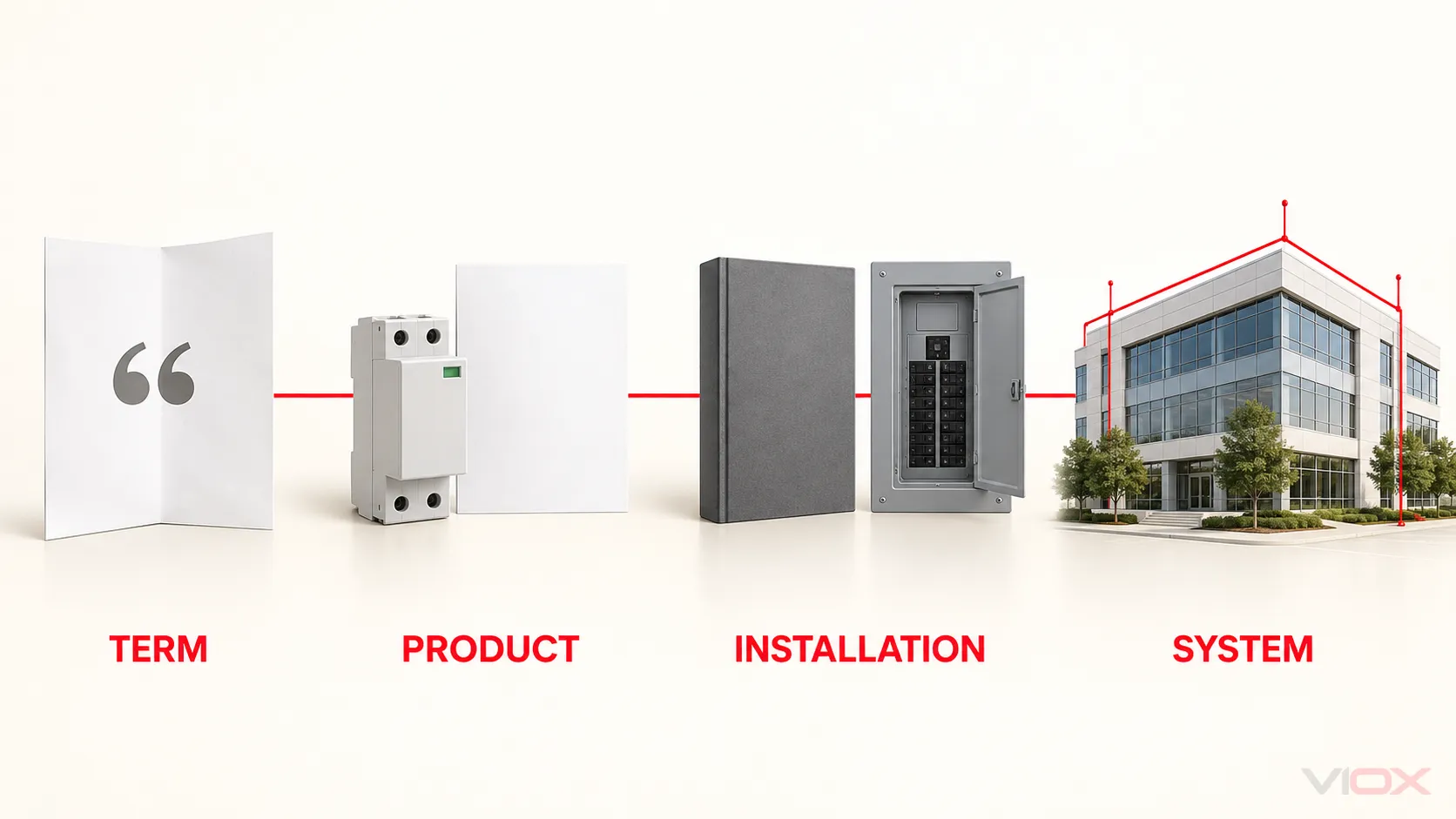
A product label cannot answer all four questions. In particular, an SPD product evaluation does not by itself prove that a whole building is protected from a direct lightning strike or that the selected voltage protection level is adequate for every connected load.
SVR vs VPR: Do Not Compare the Numbers Directly
Older TVSS documentation may show a Suppressed Voltage Rating (SVR). Modern UL 1449 SPDs use Voltage Protection Rating (VPR), assigned by mode of protection from standardized preferred values.
The key trap is treating SVR and VPR as if they were the same measurement with a renamed column. They are not. The DOE surge-protection workshop material explains that the third-edition VPR test used a surge-test current six times greater than the earlier second-edition SVR test. UL’s category guidance describes VPR as a value assigned from the measured limiting voltage produced by a 6 kV, 3 kA combination-wave test.
That means an older device with a numerically lower SVR is not automatically superior to a modern device with a higher VPR. A replacement comparison should record:
- the UL 1449 edition under which each value was established;
- the protected mode to which the value applies, such as line-to-neutral or line-to-ground;
- the device’s nominal system voltage and maximum continuous operating voltage (MCOV);
- the complete certification entry and conditions of acceptability, where applicable.
VPR is also not a guarantee that connected equipment will never be damaged. It is a product marking derived within a defined test framework. Real voltage at the load also depends on installation geometry, conductor length, the surge environment, protection mode, and coordination with other protection stages.
How the Modern SPD Types Relate to an Older TVSS
UL Type is primarily an installation-location and construction classification—not a simple quality grade. The UL guide information for surge-protective devices defines the main field-installed categories as follows:
| Modern category | Installation meaning at a high level | Legacy-device implication |
|---|---|---|
| Type 1 | Permanently connected device permitted on the supply side or load side of the service overcurrent device within its evaluated conditions | Do not select it merely because “Type 1” sounds stronger; verify the intended connection and instructions. |
| Type 2 | Permanently connected device on the load side of the service overcurrent device, including distribution panels | This is the closest usual review path for a hardwired legacy TVSS installed downstream of the service disconnect. |
| Type 3 | Point-of-utilization device used downstream under the conditions defined by the product evaluation | A plug-in or receptacle device is not a direct substitute for a panel-mounted TVSS. |
| Type 4 | Component assembly intended for incorporation into other equipment under specified conditions | Component recognition is not the same as a field-installed Listed SPD. |
| Type 5 | Discrete suppressor component, such as a voltage-dependent component used within an assembly | A component marking does not establish suitability as a complete installed SPD. |
For a deeper installation-position decision, use the separate Type 1 vs Type 2 vs Type 3 guide. This page deliberately stops at the mapping needed to interpret a legacy TVSS.
Legacy TVSS Replacement Checklist
Do not choose the replacement from surge-current magnitude or enclosure size alone. Photograph the old unit, copy the complete nameplate, and obtain the original drawing before disconnecting it. Then work through these gates.
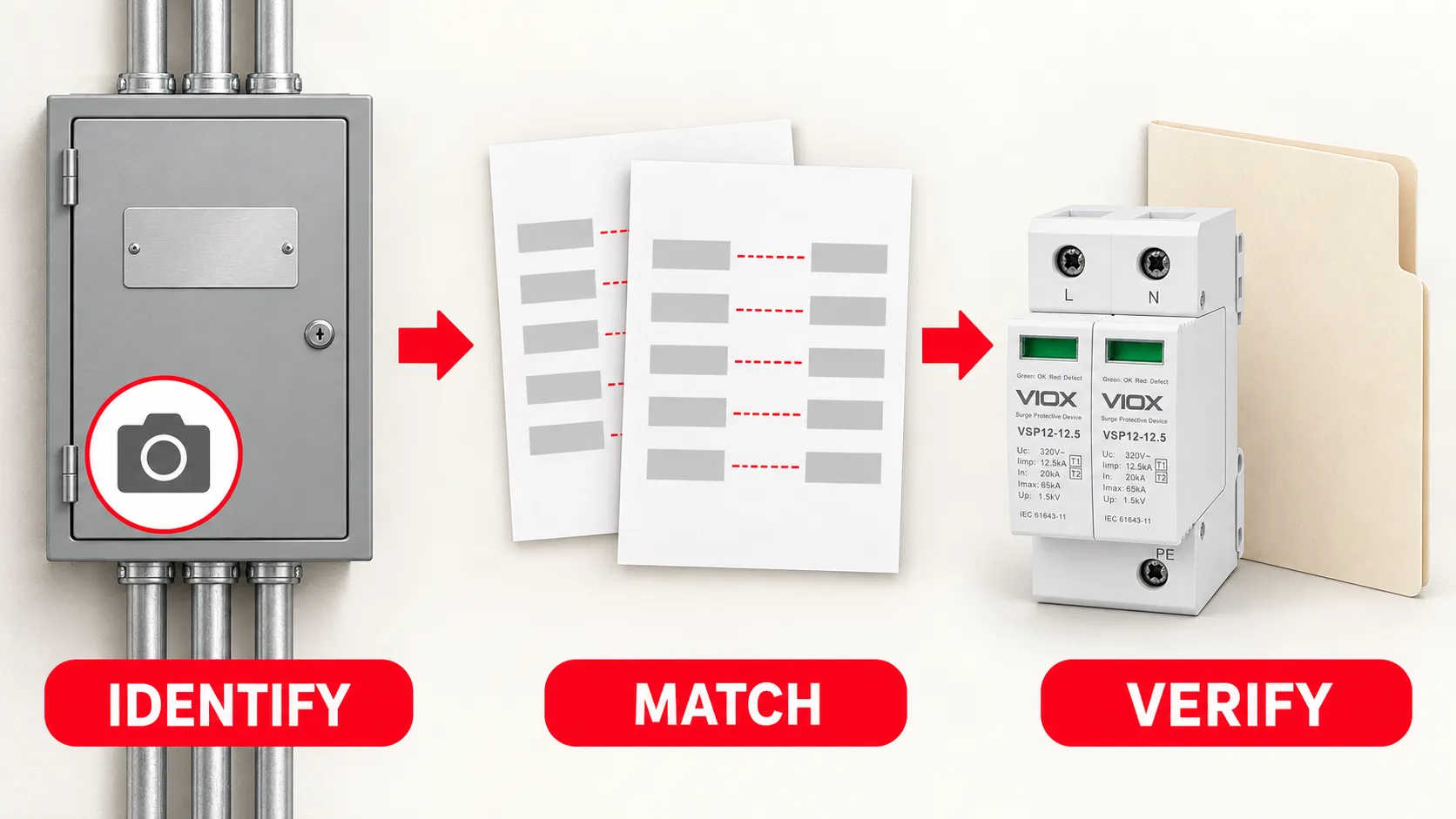
1. Confirm the Circuit and Connection Position
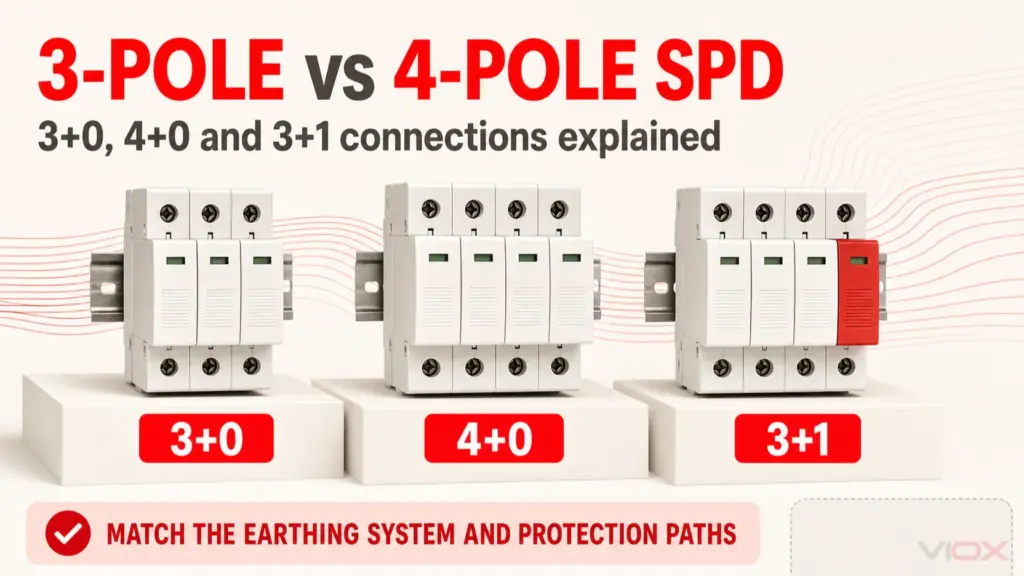
Record the nominal system voltage, phase arrangement, grounded-conductor configuration, frequency, and the modes the old device protects. Confirm whether the unit is ahead of or behind the service overcurrent device and whether it is one-port or two-port equipment.
This step determines which modern Type can be considered. It also prevents a common procurement error: ordering a device with the right nominal voltage but the wrong system configuration or protection modes.
2. Recover the Old Evaluation Record
Record the manufacturer, exact catalog number, UL file or certification identifier, product identity, and the edition referenced by the label or documentation. Search the current certification directory rather than relying on a logo reproduced in an old brochure.
UL explains that its certification mark and directory record identify products covered by its certification and follow-up service. A statement such as “designed to UL 1449” is not a substitute for a model-level certification record.
3. Build a Rating Crosswalk
| Legacy record | Modern replacement field | Verification rule |
|---|---|---|
| System voltage and frequency | Nominal operating voltage | Must match the actual circuit and connection configuration. |
| SVR by mode | VPR by mode | Do not compare the figures one-to-one; retain the edition and test basis. |
| Continuous voltage information | MCOV by mode | Verify against the actual steady-state voltage and grounding system. |
| Surge-current or duty data | Nominal discharge current (Iₙ) and other declared current ratings | Treat each rating according to its defined test, not as one universal “kA strength” number. |
| Fault-current suitability | Short-circuit current rating (SCCR) | Confirm suitability for the available fault current and any required upstream protection. |
| Enclosure/environment | Environmental or enclosure rating | Match indoor, outdoor, moisture, altitude and enclosure conditions as applicable. |
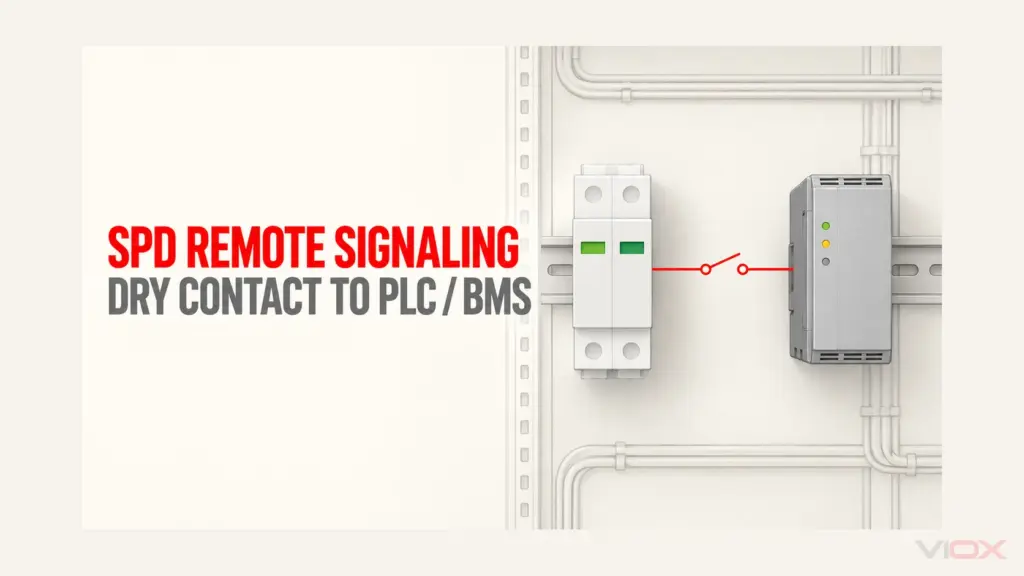
| Alarm contacts or indicators | Visual status and remote signaling | Confirm contact state, control voltage and monitoring logic from the exact manual. |
UL identifies nominal system voltage and SCCR as important safety selections, with Iₙ, MCOV and VPR among the important performance and protection ratings. The replacement must also satisfy any stated upstream overcurrent-protection conditions and conductor requirements in the exact instructions.
4. Check the Installation Code Separately
UL 1449 evaluates the product. The National Electrical Code (NEC) governs installation within its adopted jurisdiction. They are related, but one does not replace the other.
Older drawings may refer to NEC Article 285. Official NFPA development records note that the 2020 NEC cycle combined former Articles 280 and 285 into Article 242. Always check the edition adopted by the authority having jurisdiction; a current article number should not be retroactively assumed for an older project document.
For the detailed regional boundary and pre-energization review, use the SPD installation requirements guide.
5. Verify the Whole Protection System
An SPD limits transient voltage on connected conductors. It does not replace strike-termination devices, down conductors, bonding, grounding electrodes, or a lightning risk assessment. UL’s Lightning Protection Application Guide treats SPDs as one category within a larger lightning protection system.
If the site has an external lightning protection system, verify the SPD requirements of that system and the exact product evidence. Do not infer “direct-lightning protection” from a Type 1 marking alone. The separate lightning protection system guide explains these system boundaries.
6. Define an Acceptance Record
Before procurement, require a document set that can be matched to the supplied model:
- product identity and exact catalog number;
- nominal voltage, phase/system configuration and protection modes;
- SPD Type and permitted connection location;
- VPR for each required mode;
- MCOV, Iₙ and SCCR;
- required or permitted upstream protective device;
- environmental rating and mounting conditions;
- status indication and remote-contact logic, if used;
- installation instructions and current certification directory entry.
This record is more useful than asking whether the replacement has “more kA.” It allows the engineer, installer, buyer, and inspector to review the same evidence.
UL 1449 and IEC 61643 Are Not Interchangeable Labels
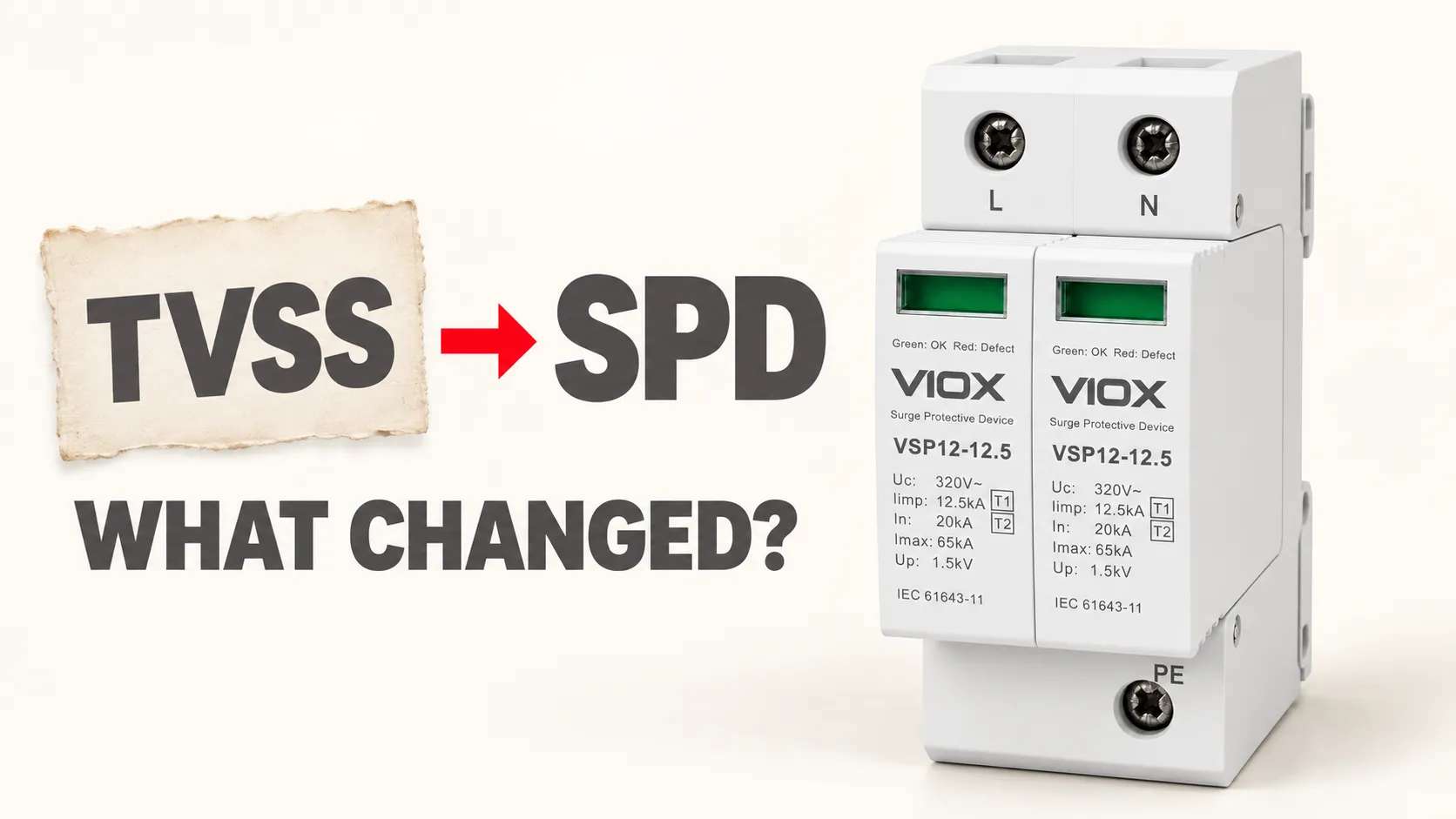
The supplied VIOX product image used with this article shows an IEC 61643-11 marking and IEC-style parameters such as Uc, Iimp, In, Imax and Up. It is a valid visual example of how a modern SPD may communicate its ratings under an IEC framework. It must not be presented as proof of UL Listing.
Likewise, a UL label may show VPR, MCOV, Iₙ, SCCR and an SPD Type applicable to the UL framework. Similar engineering concepts do not make the documents interchangeable. For each sales market and project, verify the exact product model against the required conformity record and installation rules.
When Should an Older TVSS Be Replaced?
Age alone is not a universal pass/fail criterion. Replace or escalate the review when the device indicates loss of protection, shows damage, lacks recoverable model documentation, no longer matches the circuit after a system change, cannot meet the required fault-current or environmental conditions, or has no supportable certification path for the project.
If the device remains in service, include its status indication and documentation in the facility’s inspection process. For degradation and status boundaries, see the SPD lifespan and MOV aging guide.
Work on service equipment and panelboards can expose personnel to hazardous voltage and arc-flash energy. Inspection, isolation, replacement, and verification should be performed by qualified personnel using the applicable safe-work procedure and the exact equipment instructions.
The Practical Rule
Use SPD in new specifications. Treat TVSS as a legacy search and documentation term. When replacing an older unit, do not translate only the name or the largest kA figure: translate the installation position, system configuration, protected modes, evaluation edition, VPR/MCOV/Iₙ/SCCR data, environmental conditions, and instructions.
To evaluate VIOX options, review the VIOX SPD product family and request the exact model datasheet and applicable conformity documents. The product image or this article is not certification evidence for a specific model or market.