

ဤစာမျက်နှာတွင်
မြောက်အမေရိက မော်တာထိန်းချုပ်ရေး ဝေါဟာရတွင်၊, MCP ဆိုသည်မှာ Motor Circuit Protector ဖြစ်သည်. ။ MCP ဆိုသည်မှာ မော်တာဘရန့်ဆားကစ်အတွက် ဝါယာရှော့ နှင့် မြေချိတ်ချို့ယွင်းမှု ကာကွယ်ရေးကို ပံ့ပိုးပေးရန် အသုံးပြုသည့် ချက်ချင်းဖြတ်တောက်နိုင်သော ဆားကစ်ဘရိတ်ကာ တစ်မျိုးဖြစ်သည်။ ၎င်းကို ပုံမှန်အားဖြင့် ကွန်တက်တာ နှင့် သီးခြား ဝန်ပို ရီလေးတို့ပါဝင်သည့် အတည်ပြုထားသော ပေါင်းစပ်မော်တာ ထိန်းချုပ်ကိရိယာ၏ အစိတ်အပိုင်းအဖြစ် အသုံးပြုသည်။.
အရေးအကြီးဆုံး သတ်မှတ်ချက်စည်းမျဉ်းမှာ ရိုးရှင်းသည်- MCP သည် MPCB မဟုတ်ပါ၊ ထို့အပြင် သံလိုက်သက်သက်သာပါသော MCP သည် မော်တာ၏ လည်ပတ်စဉ် ဝန်ပိုခြင်းမှ ကာကွယ်မှုကို သူ့အလိုလို ပံ့ပိုးပေးနိုင်ခြင်း မရှိပါ။.
လျှပ်စစ်ပန်နယ်တစ်ခုတွင် MCP ဆိုသည်မှာ အဘယ်နည်း။
MCP အတိုကောက်ကို မော်တာ-ထိန်းချုပ်ရေး-စင်တာ ပုံစံများ၊ ပစ္စည်းစာရင်းများ၊ ဘရိတ်ကာ အချိန်ဇယားများနှင့် ထုတ်လုပ်သူ၏ ကတ်တလောက်များတွင် အသုံးပြုသည်။ ဤအခြေအနေတွင် ၎င်းက ခွဲခြားသတ်မှတ်သည်မှာ မော်တာ ဆားကစ်ကာကွယ်ရေးကိရိယာ (Motor Circuit Protector), ၊ ၎င်းကို ပိုမိုတရားဝင်အားဖြင့် ချက်ချင်းဖြတ်တောက်သည့် ဆားကစ်ဘရိတ်ကာ.
၎င်း၏လုပ်ဆောင်ချက်မှာ လျှပ်စီးကြောင်းသည် ဝါယာရှော့ဖြစ်သည့်အဆင့် သို့မဟုတ် မြင့်မားသောအဆင့် ပြတ်တောက်မှုနယ်ပယ်သို့ ရောက်ရှိလာသည့်အခါ မော်တာ၏ ဘရန့်ချ်ဆားကစ်ကို အမြန်ဆုံးဖြတ်တောက်ပေးရန်ဖြစ်သည်။ MCP မလုပ်ဆောင်နိုင်သော လုပ်ဆောင်ချက်များကို ဆောင်ရွက်ပေးသည့် အခြားကိရိယာများနှင့် ၎င်းကို ရည်ရွယ်ချက်ရှိရှိဖြင့် တွဲဖက်အသုံးပြုထားခြင်းဖြစ်သည်။.
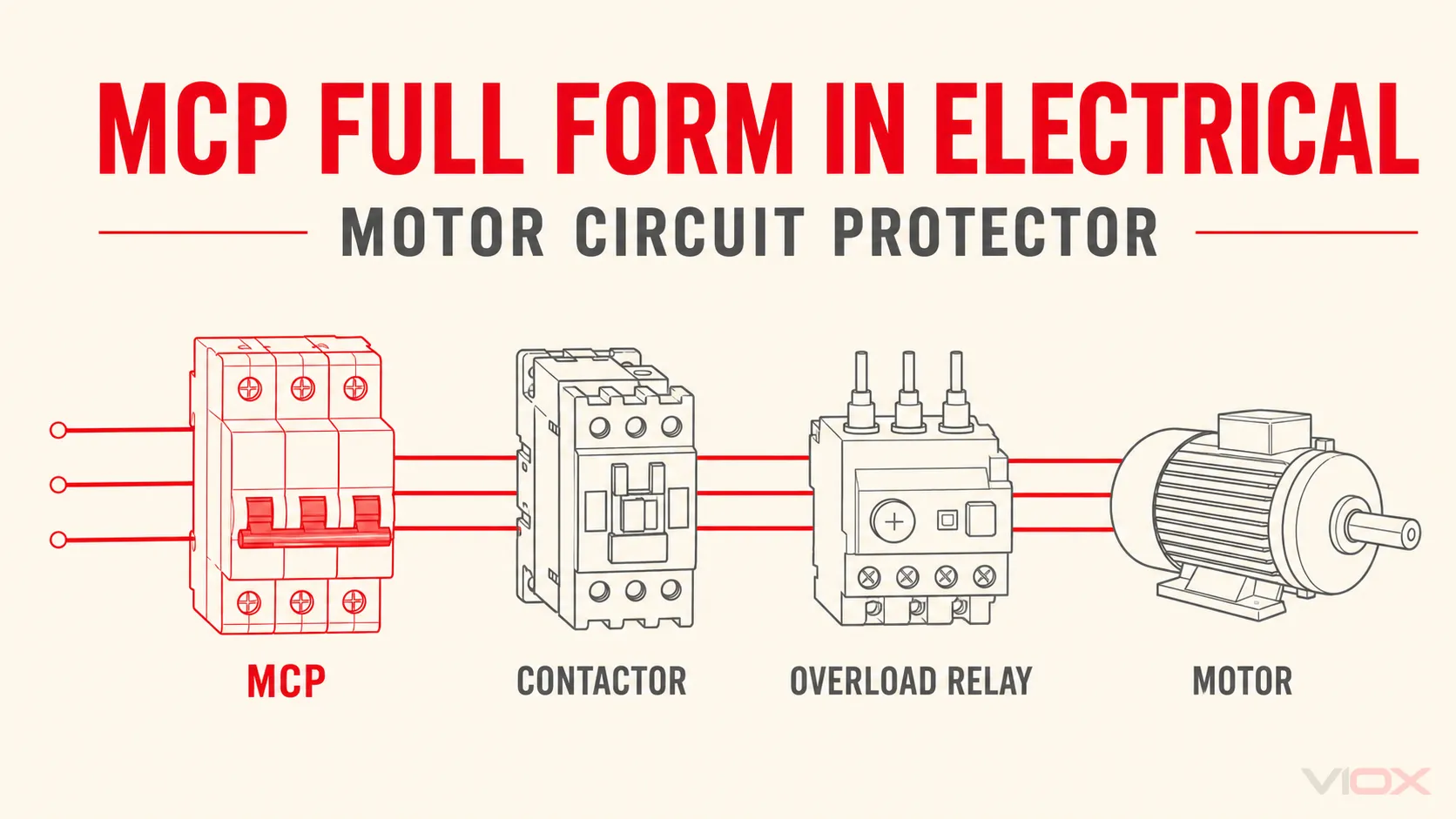
ပုံမှန် မော်တာဘရန့်ချ်တစ်ခုတွင် ဤလုပ်ဆောင်ချက် အစီအစဉ်အတိုင်း ရှိသည်:
လျှပ်စစ်ပေးသွင်းခြင်း
  |
MCP: လျှပ်စစ်ဖြတ်တောက်ခြင်း + ဝါယာရှော့/မြေချိတ်ပြတ်တောက်မှု ကာကွယ်ခြင်း
  |
ကွန်တက်တာ: ပုံမှန် အဝေးထိန်းခလုတ်ဖွင့်/ပိတ်ခြင်း
  |
ဝန်ပို ရီလေး (Overload relay): ကြာရှည်ခံသော ဝန်ပိုမှုနှင့် ဖေ့စ်နှင့်သက်ဆိုင်သည့် မော်တာကာကွယ်ရေး
  |
မော်တာ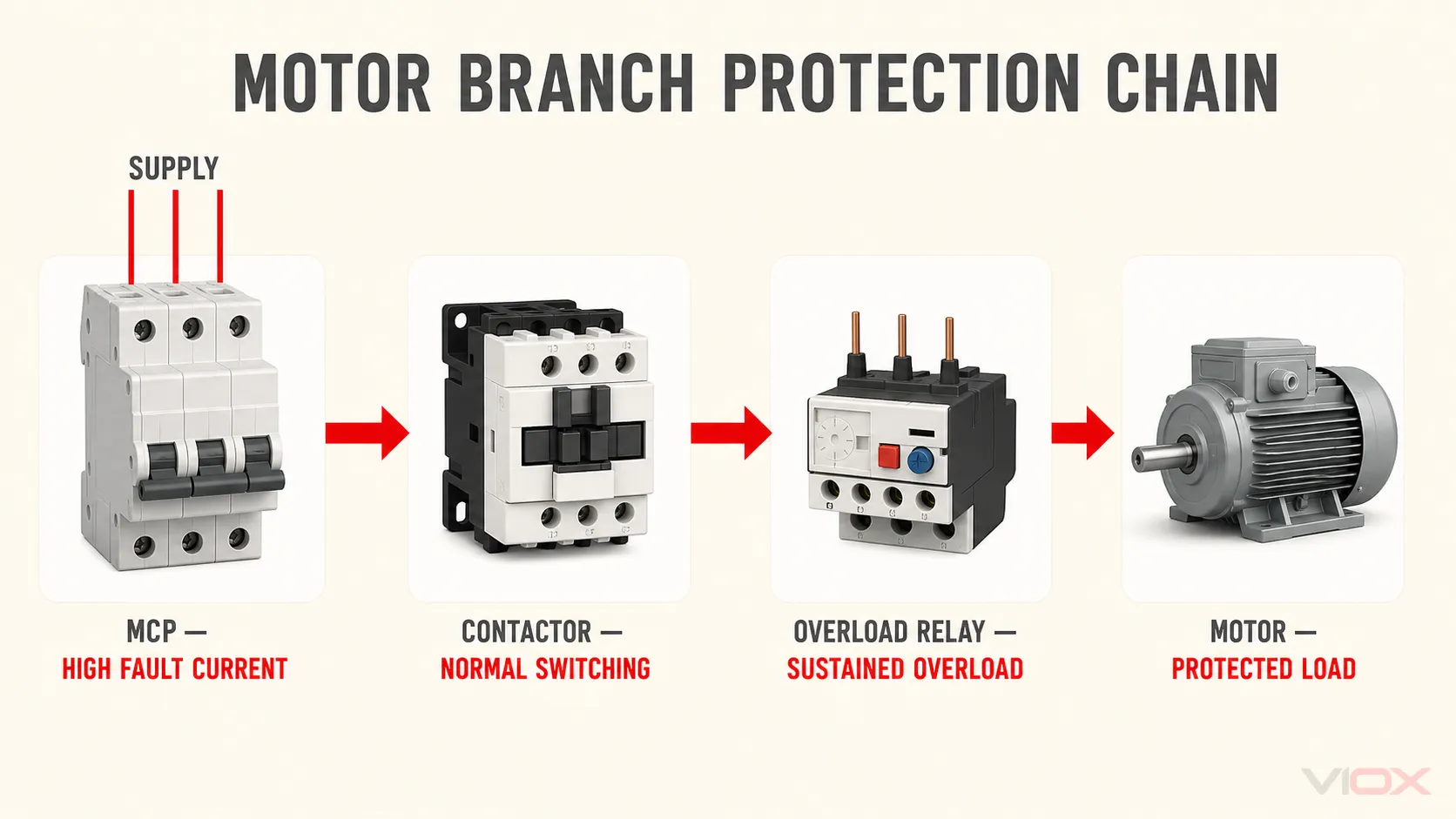
ခွင့်ပြုထားသည့် တိကျသော ပေါင်းစပ်မှု၊ ဆက်တင်များ၊ ဖြတ်တောက်နိုင်စွမ်း (interrupting rating)၊ ဝါယာရှော့ လျှပ်စီးကြောင်း အဆင့်သတ်မှတ်ချက် (short-circuit current rating)၊ လျှပ်ကူးပစ္စည်း အရွယ်အစားသတ်မှတ်ခြင်းနှင့် တပ်ဆင်မှုဆိုင်ရာ စည်းမျဉ်းများမှာ သက်ဆိုင်ရာ စည်းကမ်းချက်များ၊ ထုတ်ကုန်စာရင်းနှင့် ထုတ်လုပ်သူ၏ စမ်းသပ်ထားသော ပေါင်းစပ်မှုတို့အပေါ်တွင် မူတည်ပါသည်။.
MCP သည် မည်သို့သော ကာကွယ်မှုမျိုးကို ပံ့ပိုးပေးသနည်း။
| လုပ်ဆောင်ချက် | သံလိုက်သက်သက် MCP | သီးခြား ဝန်ပို ရီလေး | Contactor |
|---|---|---|---|
| Branch short-circuit protection | ဟုတ်ကဲ့၊ ၎င်း၏ ခွင့်ပြုထားသော အသုံးချမှုနှင့် သတ်မှတ်ချက်အတွင်းတွင် ဖြစ်သည် | အမွတ္ | အမွတ္ |
| မော်တာဘရန်ခ်အတွက် မြေပြင်ချို့ယွင်းမှု ကာကွယ်ရေး | ချက်ချင်းဖြစ်ပေါ်သော လျှပ်စီးကြောင်းလွန်လုပ်ဆောင်ချက်၏ အစိတ်အပိုင်းဖြစ်ပြီး၊ ခွင့်ပြုထားသော စနစ်အပေါ် မူတည်သည် | အမွတ္ | အမွတ္ |
| ဆက်တိုက်ဖြစ်ပေါ်နေသော မော်တာဝန်ပို ကာကွယ်ရေး | အမွတ္ | ဟုတ်ကဲ့ | အမွတ္ |
| ပုံမှန် စတင်/ရပ်တန့်ခြင်း ခလုတ်ဖွင့်ပိတ်ခြင်း | ၎င်း၏ အဓိကတာဝန် မဟုတ်ပါ | အမွတ္ | ဟုတ်ကဲ့ |
| အဝေးထိန်း | ပုံမှန်အားဖြင့် စတားတာမှတစ်ဆင့်ဖြစ်ပြီး MCP မှတစ်ဆင့် မဟုတ်ပါ | ကွန်တက်တာ ထိန်းချုပ်ရေးဆားကစ်ကို ဖြုတ်ချပေးသည် | ဟုတ်ကဲ့ |
| လျှပ်စစ်ဖြတ်တောက်ခြင်း/ချိတ်ဆက်မှုဖြုတ်ခြင်း | ခွင့်ပြုချက်ရထားသော ကွန်ထရိုလာတွင် လျှပ်စစ်ဖြတ်တောက်သည့် လုပ်ဆောင်ချက်ကို ပေးစွမ်းနိုင်သည် | အမွတ္ | ကွန်တက်တာသည် ပုံမှန်အားဖြင့် လျှပ်စစ်ဖြတ်တောက်ကိရိယာ (isolator) မဟုတ်ပါ |
UL ဖြေရှင်းချက်များ Type D အမျိုးအစား ပေါင်းစပ်မော်တာကွန်ထရိုလာကို မော်တာကွန်ထရိုလာနှင့် ဝန်ပိုရီလေးတို့နှင့်အတူ အသုံးပြုသည့် ချက်ချင်းဖြတ်တောက်နိုင်သော ဆားကစ်ဘရိတ်ကာအဖြစ် သတ်မှတ်သည်။ ထို့အပြင် UL သည် အသိအမှတ်ပြုထားသော ချက်ချင်းဖြတ်တောက်နိုင်သည့် ဆားကစ်ဘရိတ်ကာကို စာရင်းသွင်းထားသော inverse-time ဆားကစ်ဘရိတ်ကာနှင့် ကိုယ်တိုင်ကာကွယ်နိုင်သော ပေါင်းစပ်မော်တာကွန်ထရိုလာတို့မှ ခွဲခြားသတ်မှတ်ထားသည်။.
ထိုခွဲခြားချက်သည် ဒီဇိုင်းပုံစံထုတ်ရာတွင် အဖြစ်များသော အမှားတစ်ခုကို တားဆီးပေးသည်၊ ယင်းမှာ MCP ၏ အမ်ပီယာအမှတ်အသားကို ချိန်ညှိနိုင်သော မော်တာဝန်ပိုချိန်ညှိချက်ကဲ့သို့ မှားယွင်းရွေးချယ်ခြင်းဖြစ်သည်။.
MCP တစ်ခု မည်သို့အလုပ်လုပ်သနည်း
ရိုးရာ MCP များသည် ချိန်ညှိနိုင်သော သံလိုက်ဖြတ်တောက်မှု ယန္တရားကို အသုံးပြုသည်။ အီလက်ထရောနစ်ဗားရှင်းများတွင် လျှပ်စီးကြောင်းအာရုံခံကိရိယာများနှင့် အီလက်ထရောနစ် ဖြတ်တောက်ရေးယူနစ်ကို အသုံးပြုနိုင်သော်လည်း ကာကွယ်မှု၏ ရည်ရွယ်ချက်မှာ ပုံမှန်ဝန်ပိုကာကွယ်မှုထက် မြင့်မားသော လျှပ်စီးကြောင်းအမှားအယွင်းများအား ဖြတ်တောက်ရန် ဖြစ်သည်။.
ပုံမှန်မော်တာစတင်ချိန်တွင် လျှပ်စီးကြောင်းသည် မော်တာ၏ အပြည့်အဝဝန်အား လျှပ်စီးကြောင်းထက် အဆပေါင်းများစွာ ရှိနိုင်သည်။ MCP ဆက်တင်သည် မှန်ကန်သောစတင်ချိန် လျှပ်စီးကြောင်းကို ကျော်ဖြတ်နိုင်ရမည်ဖြစ်ပြီး ဝါယာရှော့ အခြေအနေများကိုလည်း တုံ့ပြန်နိုင်ရမည်။ သီးခြားဝန်ပိုရီလေးသည် အချိန်ကြာလာသည်နှင့်အမျှ လျှပ်စီးကြောင်းပမာဏနည်းပါးမှုကို စောင့်ကြည့်ပြီး တည်မြဲနေသော ဝန်ပိုမှုသည် မော်တာကို အန္တရာယ်ဖြစ်စေသောအခါ စတားတာကို ဖြတ်တောက်ပေးသည်။.
ဤတာဝန်ခွဲဝေမှုသည် ညှိနှိုင်းဆောင်ရွက်ထားသော ကာကွယ်ရေးစနစ်တစ်ခုကို ဖန်တီးပေးသည် -
- ဟိ MCP မြင့်မားသော လျှပ်စီးကြောင်းအမှားအယွင်းများကို တုံ့ပြန်သည်။.
- ဟိ overload relay ၎င်း၏ ဖြတ်တောက်မှုဝိသေသလက္ခဏာအတိုင်း တည်မြဲနေသော ဝန်ပိုမှုကို တုံ့ပြန်သည်။.
- ဟိ contactor ထိန်းချုပ်ရေးစနစ်၏ အမိန့်ပေးချက်များအောက်တွင် မော်တာ၏ ပုံမှန်လည်ပတ်မှု လျှပ်စီးကြောင်းကို ဆက်သွယ်ပေးခြင်းနှင့် ဖြတ်တောက်ခြင်းတို့ကို လုပ်ဆောင်သည်။.
ယေဘုယျဆောင်းပါးတစ်ခုမှ Universal trip multiple ကို အသုံးမပြုပါနှင့်။ ထုတ်လုပ်သူ၏ ညွှန်ကြားချက်များနှင့် အတည်ပြုထားသော ပေါင်းစပ်မှုများသည် မော်တာ၏ ဝန်အပြည့်သုံး လျှပ်စီးကြောင်း (full-load current)၊ လော့ခ်ကျနေသော ရိုတာ (locked-rotor) သို့မဟုတ် စတင်ဝင်ရောက်လာသော လျှပ်စီးကြောင်း (inrush) အခြေအနေ၊ စွမ်းဆောင်ရည်အဆင့်၊ စတင်သည့်နည်းလမ်း၊ ဘရိတ်ကာ၏ ဘောင် (frame)၊ စနစ်ဗို့အားနှင့် ရရှိနိုင်သော ချို့ယွင်းချက် လျှပ်စီးကြောင်း (fault current) တို့ကို ထည့်သွင်းစဉ်းစားရပါမည်။.
MCP နှင့် MPCB- ၎င်းတို့သည် တူညီသော ကိရိယာများမဟုတ်ပါ
ဤဝေါဟာရများကို ကတ်တလောက်များတွင် တစ်ခါတစ်ရံတွင် ပေါ့ပေါ့ဆဆ သုံးနှုန်းလေ့ရှိကြသော်လည်း ၎င်းတို့ကို အဓိပ္ပာယ်တူစကားလုံးများအဖြစ် သတ်မှတ်မထားသင့်ပါ။.
| နှိုင်းယှဉ်ချက် | MCP: မော်တာ ဆားကစ် ကာကွယ်ရေးကိရိယာ (Motor Circuit Protector) | MPCB: မော်တာ ကာကွယ်ရေး ဆားကစ်ဘရိတ်ကာ (Motor Protection Circuit Breaker) |
|---|---|---|
| ဈေးကွက်တွင် အသုံးများသော ဝေါဟာရများ | မြောက်အမေရိက မော်တာထိန်းချုပ်ရေး ဝေါဟာရများအဖြစ် အဓိကသုံးစွဲသည် | IEC ကို အခြေခံသည့် ဈေးကွက်များနှင့် ကမ္ဘာလုံးဆိုင်ရာ ထုတ်ကုန်ကတ်တလောက်များတွင် ကျယ်ကျယ်ပြန့်ပြန့် အသုံးပြုသည် |
| ပုံမှန် ကာကွယ်ရေး ပက်ကေ့ခ်ျ | ချက်ချင်းဖြစ်ပေါ်သော ဝါယာရှော့မှ ကာကွယ်ခြင်း၊ ဝန်ပိုမှ ကာကွယ်ခြင်းကို သီးခြားစီ ပံ့ပိုးပေးထားသည် | ပုံမှန်အားဖြင့် ချိန်ညှိနိုင်သော အပူပိုင်း/အီလက်ထရွန်နစ် ဝန်ပိုကာကွယ်မှုနှင့် သံလိုက်စက်ကွင်း ဝါယာရှော့ကာကွယ်မှုတို့ကို ပေါင်းစပ်ထားသည် |
| သီးခြား ဝန်ပို ရီလေး | သံလိုက်စက်ကွင်းသက်သက်ပါဝင်သော MCP ပေါင်းစပ်မှုအတွက် ပုံမှန်အားဖြင့် လိုအပ်သည် | MPCB မှ သတ်မှတ်ထားသော ဝန်ပိုကာကွယ်မှုလုပ်ဆောင်ချက်ကို ပံ့ပိုးပေးထားသည့်အခါတွင် လိုအပ်မည်မဟုတ်ပါ |
| ပုံမှန်စနစ်တွင် ပါဝင်သည့်အခန်းကဏ္ဍ | စာရင်းဝင်/ခွင့်ပြုထားသော ပေါင်းစပ် မော်တာထိန်းချုပ်ကိရိယာရှိ အစိတ်အပိုင်း | လက်ဖြင့်မောင်းနှင်ရသော မော်တာစတားတာ သို့မဟုတ် လက်မှတ်နှင့် ဆက်စပ်ပစ္စည်းများပေါ် မူတည်၍ မော်တာကာကွယ်ရေး ဆားကစ်ပြောင်းကိရိယာ |
| အမည်တစ်ခုတည်းဖြင့် လုပ်ဆောင်ချက်များကို သက်သေပြနိုင်ပါသလား? | အမွတ္ | မဖြစ်နိုင်ပါ၊ တိကျသော စံနှုန်း၊ အမျိုးအစားနှင့် ဒေတာစာရွက်တို့ကို အတည်ပြုပါ။ |
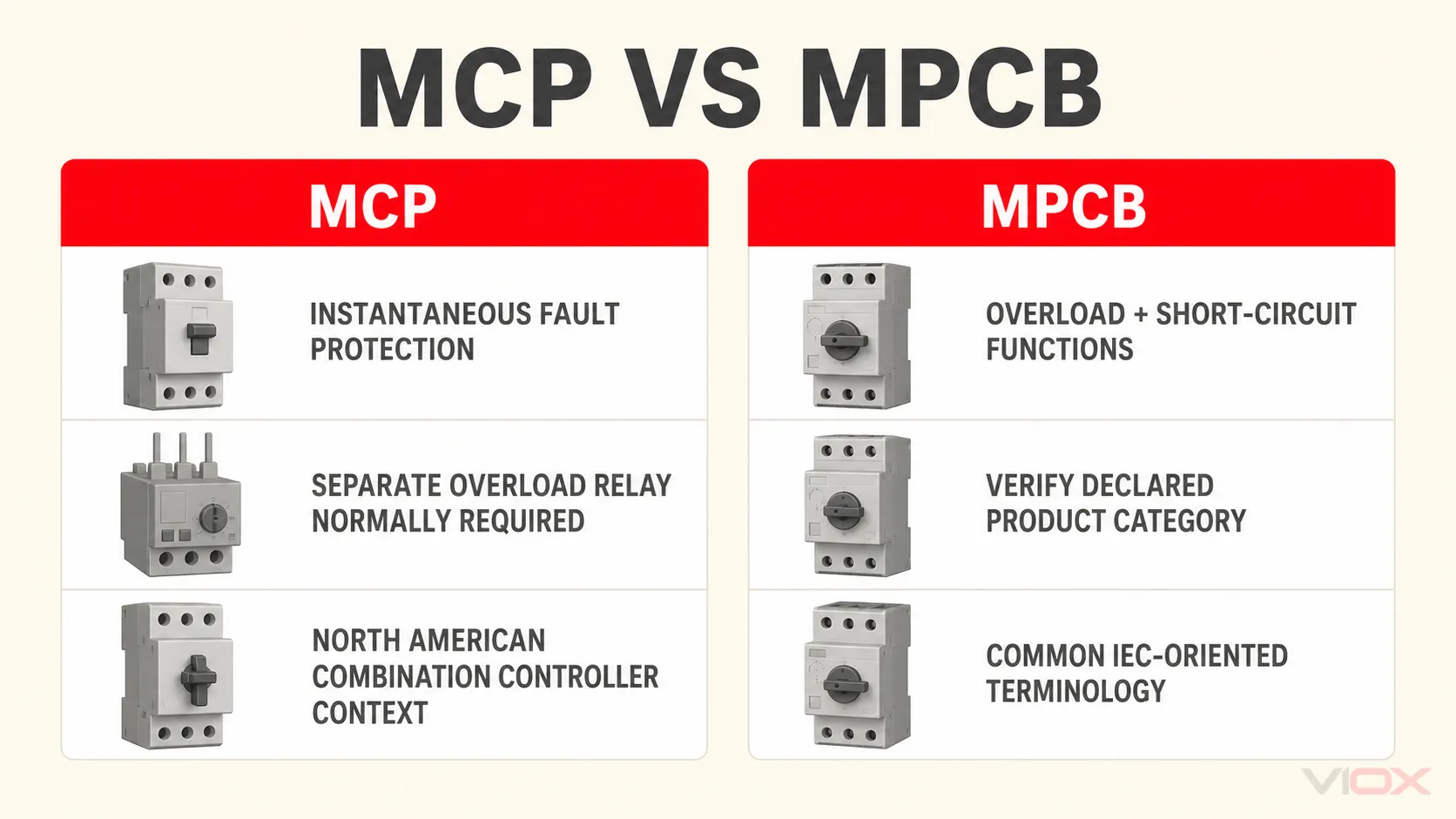
အောက်တွင် IEC 60947-4-1, ၊ သက်ဆိုင်ရာ ဝေါဟာရများတွင် ကွန်တက်တာများ၊ မော်တာစတားတာများနှင့် မော်တာကာကွယ်ရေး ဆားကစ်ပြောင်းစက်များ ပါဝင်သည်။ မြောက်အမေရိက ကျင့်စဉ်တွင်၊ ထိုမော်တာဘရန့်ခ်ျကို UL ပေါင်းစပ်ထိန်းချုပ်ကိရိယာ အမျိုးအစားများနှင့် ချက်ချင်းဖြတ်တောက်သည့် ဆားကစ်ဘရိတ်ကာ အမျိုးအစားများဖြင့် ဖော်ပြနိုင်ပါသည်။.
MCP ကို MPCB သို့ တိုက်ရိုက်ပြန်ဆိုခြင်းထက် ကြေညာထားသော စံနှုန်းနှင့် ထုတ်ကုန်အမျိုးအစားကို အမြဲဖတ်ရှုပါ။.
ပေါင်းစပ်ကိရိယာ အယူအဆအတွက် VIOX လမ်းညွှန်ကို ကြည့်ပါ Motor Protection Circuit Breakers.
MCP နှင့် MCCB၊ ဝန်ပို ရီလေး နှင့် ကွန်တက်တာ
MCP နှင့် MCCB
အထွေထွေသုံး molded-case circuit breaker (MCCB) သည် ပုံမှန်အားဖြင့် inverse-time thermal-magnetic သို့မဟုတ် electronic trip ဝိသေသလက္ခဏာကို အသုံးပြုပြီး ၎င်း၏ သတ်မှတ်ထားသော အသုံးချမှုအတွင်း ဝန်ပိုခြင်းနှင့် ဝါယာရှော့ဖြစ်ခြင်းမှ ကာကွယ်ပေးနိုင်သည်။ magnetic-only MCP ကို မော်တာအကိုင်းအခက် ချို့ယွင်းချက်များမှ ချက်ချင်းကာကွယ်ပေးနိုင်ရန် စီစဉ်သတ်မှတ်ထားပြီး မော်တာ-ထိန်းချုပ်စနစ် ပေါင်းစပ်မှု၏ အစိတ်အပိုင်းတစ်ခုအဖြစ် အကဲဖြတ်ထားသည်။.
ဤကိရိယာနှစ်ခုသည် molded-case ဖရိန်နှင့် ဆက်စပ်ပစ္စည်းများကို မျှဝေအသုံးပြုနိုင်သော်လည်း ၎င်းတို့၏ trip လုပ်ဆောင်ချက်များ သို့မဟုတ် ခွင့်ပြုထားသော အသုံးချမှုများသည် တူညီသည်ဟု မဆိုလိုပါ။.
MCP နှင့် Overload Relay
Overload relay သည် မော်တာအား ဝါယာရှော့ဟု သတ်မှတ်ရန် နည်းလွန်းသော တာရှည်ခံ လျှပ်စီးကြောင်းလွန်ခြင်းမှ ကာကွယ်ပေးသည်။ ၎င်းတွင် ဘဏ်ခွဲဆားကစ်၏ ဝါယာရှော့ကို သူ့ဘာသာသူ ဖြတ်တောက်ရန် လိုအပ်သော interrupting capacity မရှိပါ။ MCP နှင့် overload relay တို့သည် အပြန်အလှန် ဖြည့်စွက်ပေးသော ကိရိယာများဖြစ်သည်။.
ပိုမိုနက်ရှိုင်းသော လုပ်ဆောင်ချက်ဆိုင်ရာ နှိုင်းယှဉ်ချက်အတွက် ကြည့်ရှုပါ Thermal Overload Relay နှင့် MPCB နှိုင်းယှဉ်ချက်.
MCP နှင့် ကွန်တက်တာ
ကွန်တက်တာဆိုသည်မှာ အကြိမ်ရေအများအပြား အသုံးပြုနိုင်သော လျှပ်စစ်ဖြင့် လည်ပတ်သည့်ခလုတ်တစ်ခုဖြစ်သည်။ ၎င်းသည် မော်တာကို စတင်ခြင်းနှင့် ရပ်တန့်ခြင်းပြုလုပ်သော်လည်း ဘဏ်ခွဲဝါယာရှော့ ကာကွယ်မှုကို မပေးဆောင်ပါ။ စတားတာတွင် overload relay သည် ဝန်ပိုသည်ကို တွေ့ရှိပါက ကွန်တက်တာကွိုင်အား လျှပ်စစ်ဓာတ်အား ဖြတ်တောက်စေသည်။.
ဤဆောင်းပါးသည် Contactor vs Motor Starter ကွန်တက်တာတစ်ခုတည်းသည် မော်တာကာကွယ်ရေးစနစ်တစ်ခုအတွက် မည်မျှမပြည့်စုံကြောင်းကို ရှင်းပြထားပါသည်။.
MCP ဒေတာစာရွက်တွင် စစ်ဆေးရမည့်အချက်များ
MCP တစ်ခုကို ၎င်း၏အတိုကောက်အမည် သို့မဟုတ် ဖရိမ်လျှပ်စီးပမာဏတစ်ခုတည်းဖြင့် သတ်မှတ်မရပါ။ အောက်ပါတို့ကို စစ်ဆေးပါ -
- သက်ဆိုင်သည့် စံနှုန်းနှင့် ထုတ်ကုန်အမျိုးအစား - ၎င်းသည် အသိအမှတ်ပြုထားသော ချက်ချင်းဖြတ်တောက်သည့် ဆားကစ်ဘရိတ်ကာ၊ စာရင်းဝင်ဘရိတ်ကာ သို့မဟုတ် အခြားသော မော်တာကာကွယ်ရေးကိရိယာ ဟုတ်မဟုတ် အတည်ပြုပါ။.
- ခွင့်ပြုထားသည့် ပေါင်းစပ်မှု - လိုက်ဖက်ညီသော ကွန်တက်တာ၊ ဝန်ပို ရီလေး၊ အိမ်ယာ (enclosure) နှင့် လိုအပ်သော အပိုပစ္စည်းများကို ခွဲခြားသတ်မှတ်ပါ။.
- စနစ်၏ ဗို့အားနှင့် ကြိမ်နှုန်း- မော်တာ၏ ဘရန့်ချ် (branch) နှင့် ထိန်းချုပ်ရေး ပန်နယ်ဒီဇိုင်းတို့နှင့် ကိုက်ညီမှုရှိစေရမည်။.
- မော်တာ၏ ဝန်အပြည့် လျှပ်စီးကြောင်းပမာဏ- ထုတ်လုပ်သူ၏ ရွေးချယ်မှုနည်းလမ်းနှင့် မော်တာဆိုင်ရာ အချက်အလက်များကို အသုံးပြုပါ။.
- ချက်ချင်းတုံ့ပြန်မှု (Instantaneous pickup) ချိန်ညှိချက်- ၎င်း၏ အတိုင်းအတာနှင့် သည်းခံနိုင်စွမ်းကို အတည်ပြုပြီး မော်တာစတင်ချိန်တွင် ဖြစ်ပေါ်သော လျှပ်စီးကြောင်းနှင့် ချိန်ညှိဆောင်ရွက်ပါ။.
- လျှပ်စီးဖြတ်တောက်နိုင်စွမ်း (Interrupting rating) နှင့် ပေါင်းစပ် SCCR- ဘရိတ်ကာ၏ တစ်ခုချင်းစီအလိုက် အမှတ်အသားနှင့် စမ်းသပ်ပြီးဖြစ်သော စုပေါင်းစနစ်တစ်ခုလုံး၏ ဝါယာရှော့ လျှပ်စီးကြောင်း အဆင့်သတ်မှတ်ချက် (short-circuit current rating) တို့ကို ခွဲခြားသိရှိပါ။.
- ပို (poles) အရေအတွက်နှင့် တပ်ဆင်ပုံနည်းလမ်း - မော်တာဆားကစ်နှင့် တပ်ဆင်တည်ဆောက်ပုံတို့နှင့် ကိုက်ညီပါစေ။.
- အပိုပစ္စည်းများနှင့် အချင်းချင်းချိတ်ဆက်မှုများ - လိုအပ်သည့်နေရာတွင် အရန်တာမီနယ်များ၊ ရှန့်ထရစ် (shunt trip)၊ ဗို့အားကျဆင်းမှု ထုတ်လွှတ်စနစ် (undervoltage release)၊ လက်ကိုင်များနှင့် တံခါးချိတ်ဆက်မှုများကို စစ်ဆေးပါ။.
ဥပမာအားဖြင့် Schneider Electric သည် ၎င်း၏ သံလိုက်သက်သက်ဖြစ်သော Mag-Gard MCP များကို မော်တာ-ဝန်ပို ကာကွယ်ရေးပါရှိသည့် စာရင်းဝင်ပေါင်းစပ်ထိန်းချုပ်ကိရိယာ၏ အစိတ်အပိုင်းတစ်ခုအဖြစ် တပ်ဆင်သည့်အခါ NEC လျှောက်ထားမှု လိုအပ်ချက်များနှင့် ကိုက်ညီသော ဝါယာရှော့ ကာကွယ်ရေးကိရိယာများအဖြစ် ဖော်ပြထားသည်။ ဤသည်မှာ MCP အားလုံးအတွက် တစ်ကမ္ဘာလုံးဆိုင်ရာ သတ်မှတ်ချက်မဟုတ်ဘဲ ထုတ်ကုန်အုပ်စုတစ်ခု၏ ဥပမာတစ်ခုသာဖြစ်သည်။.
UL ပေါင်းစပ်မော်တာထိန်းချုပ်ကိရိယာများတွင် MCP
The phrase ပေါင်းစပ်မော်တာထိန်းချုပ်ကိရိယာ သည် MCP လျှောက်ထားမှုအတွက် အဓိကကျသည်။ ပြီးပြည့်စုံသော ထိန်းချုပ်ကိရိယာသည် သီးခြားအစိတ်အပိုင်းများဖြင့် ပံ့ပိုးပေးနိုင်သော လုပ်ဆောင်ချက်များစွာကို စုစည်းပေးသည် -
- ဘရန့်ချ် ဝါယာရှော့နှင့် မြေအောက်ယိုစိမ့်မှုမှ ကာကွယ်ခြင်း၊;
- လျှပ်စစ်ဖြတ်တောက်ပေးသည့်ကိရိယာများ၊;
- မော်တာထိန်းချုပ်ကိရိယာ သို့မဟုတ် ကွန်တက်တာ၊;
- လည်ပတ်နေစဉ် ဝန်ပိုခြင်းမှ ကာကွယ်ခြင်း၊;
- အကာအိမ်နှင့် အတွင်းပိုင်း ဝိုင်ယာသွယ်တန်းမှု၊;
- အတည်ပြုထားသော ဝါယာရှော့လျှပ်စီး ပမာဏ။.
စက်ပစ္စည်းစုစည်းမှု၏ SCCR ကို မြင့်မားသော အနှောင့်အယှက်ဖြတ်တောက်နိုင်စွမ်းရှိသည့် MCP တစ်ခုကို ရွေးချယ်ကာ ကျန်ရှိသော စတားတာအပိုင်းများက ထိုတန်ဖိုးကို ရရှိလိမ့်မည်ဟု ယူဆခြင်းဖြင့် သတ်မှတ်၍မရပါ။ စမ်းသပ်ထားသော သို့မဟုတ် စာရင်းသွင်းထားသော တိကျသည့် ပေါင်းစပ်မှု၊ အစိတ်အပိုင်း၏ အဆင့်သတ်မှတ်ချက်များ၊ ဖီးဒါးကာကွယ်မှုနှင့် ပန်နယ်တည်ဆောက်ပုံတို့ကသာ ခွင့်ပြုထားသည့် SCCR ကို ဆုံးဖြတ်ပေးပါသည်။.
နောက်ဆုံးအဓိပ္ပာယ်ဖွင့်ဆိုချက်
MCP ဆိုသည်မှာ Motor Circuit Protector ကို ဆိုလိုသည်။ မြောက်အမေရိက မော်တာထိန်းချုပ်ရေး လုပ်ငန်းများတွင် ဖြစ်သည်။ ၎င်းသည် ယေဘုယျအားဖြင့် ပေါင်းစပ်မော်တာ ထိန်းချုပ်ကိရိယာတစ်ခုအတွင်း ဝါယာရှော့မှ ကာကွယ်ရန်အတွက် အသုံးပြုသည့် ချက်ချင်းဖြတ်တောက်နိုင်သော ဆားကစ်ဘရိတ်ကာ တစ်မျိုးဖြစ်သည်။ ၎င်းသည် ကွန်တက်တာနှင့် ဝန်ပို ရီလေးတို့နှင့် တွဲဖက်လုပ်ဆောင်လေ့ရှိပြီး လည်ပတ်နေစဉ် ဝန်ပိုခြင်းမှ ကာကွယ်မှုအတွက် အပြည့်အဝ အစားထိုး အသုံးပြုနိုင်သည်ဟု မယူဆသင့်ပါ။.
သတ်မှတ်ချက်တစ်ခုတွင် “MCP” ဟုဖော်ပြပါက သက်ဆိုင်ရာ စံနှုန်း၊ ထုတ်ကုန်အမျိုးအစား၊ ခွင့်ပြုထားသော စတားတာ ပေါင်းစပ်မှု၊ မော်တာဒေတာ၊ ချက်ချင်းဖြတ်တောက်မှု သတ်မှတ်သည့်နည်းလမ်း၊ အနှောင့်အယှက်ဖြစ်မှု အဆင့်သတ်မှတ်ချက်နှင့် ပေါင်းစပ် SCCR တို့ကို အတည်ပြုပါ။ အကယ်၍ လိုအပ်သည့်ကိရိယာသည် ချိန်ညှိနိုင်သော မော်တာ ဝန်ပို ကာကွယ်မှုကိုပါ ပေးဆောင်ရန် လိုအပ်ပါက၊ ရည်ရွယ်ထားသော ထုတ်ကုန်သည် အမှန်တကယ် MPCB သို့မဟုတ် မော်တာ ကာကွယ်ရေး ဆားကစ်ပြောင်းလဲသည့်ကိရိယာ ဟုတ်မဟုတ်ကို အတည်ပြုပါ။.