ジョー

こんにちは、私はジョー、専用のプロフェッショナルで12年以上の経験を電気産業です。 でVIOX電気、私は高品質の電気的ソリューションのニーズに応えております。 私の専門知識に及ぶ産業用オートメーション、住宅の配線は、商用電気システム。お問い合わせ[email protected] がることができます。

MCB Breaking Capacity Selection Guide: When to Use 6kA vs 10kA in Residential & Commercial Panels

MCB遮断容量選定ガイド:住宅および商業パネルにおいて6kAと10kAをいつ使用すべきか

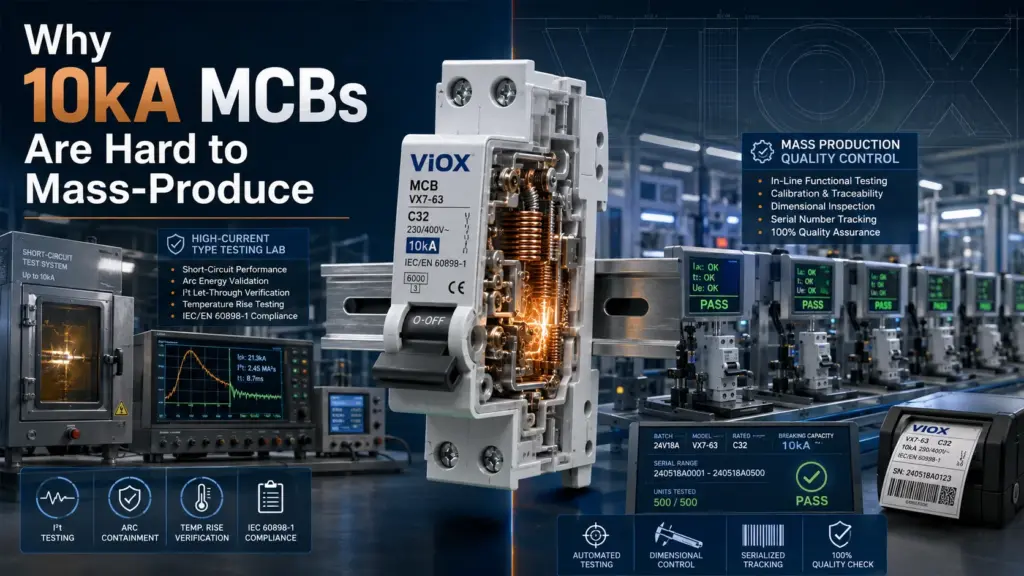
Key Takeaways Breaking capacity (Icn/Icu) represents the maximum fault current an MCB can safely interrupt without damage or failure, measured in kiloamperes (kA). 6kA MCBs are typically sufficient for residential installations where prospective short-circuit current (PSCC) remains below 5kA, particularly in locations distant from supply transformers. 10kA MCBs are recommended for commercial applications, urban installations, and locations near transformers where fault currents exceed 6kA or future expansion is anticipated. Proper selection requires calculating PSCC at the installation point using system voltage, total impedance, and transformer specifications. IEC 60898-1 governs residential MCB standards while IEC 60947-2 applies to industrial applications, with different testing requirements and performance criteria. Undersizing breaking capacity creates […]
MCB遮断容量選定ガイド:住宅および商業パネルにおいて6kAと10kAをいつ使用すべきか 続きを読む »

Understanding AFDDs: The IEC Standard for Arc Fault Protection

AFDDの理解:アーク故障保護に関するIEC規格

Electrical fires remain one of the most significant risks in residential and commercial buildings, with a substantial percentage attributed to arc faults. While standard circuit protection devices like Miniature Circuit Breakers (MCBs) and Residual Current Devices (RCDs) are essential, they have a blind spot: they cannot detect the unique signature of a dangerous electrical arc. This is where the Arc Fault Detection Device (AFDD) becomes critical. As a leading manufacturer of electrical protection equipment, VIOX Electric is committed to advancing safety standards through compliant, high-performance technology. This guide explores the engineering behind AFDDs, the rigorous requirements of the IEC 62606 standard, and why integrating these devices is no longer optional

AFDDの理解:アーク故障保護に関するIEC規格 続きを読む »

Inside AC Contactor: Key Components, Materials, and Design Logic

ACコンタクタの内部:主要部品、材料、および設計ロジック

Introduction: The Hidden Intelligence Behind Power Control You’ve likely never thought about the small rectangular device quietly sitting in your building’s electrical panel, switching your facility’s power hundreds of times per day. Yet without this single component—the AC contactor—modern industrial systems, HVAC networks, and solar installations would simply cease to function. This guide takes you inside the AC contactor, revealing the engineering precision that enables safe switching of thousands of amperes using just a 24-volt control signal. VIOX AC contactors installed in an industrial distribution panel, managing power distribution with integrated overload relays. What is an AC Contactor? The Essential Definition An AC contactor is an electromagnetic switch designed to

ACコンタクタの内部:主要部品、材料、および設計ロジック 続きを読む »

Understanding MCCB Trip Unit Settings: Ir, Im, Isd, and Ii Explained

MCCBトリップユニットの設定:Ir、Im、Isd、Ii の解説

Why MCCB Trip Unit Settings Matter: The Foundation of Electrical Protection Modern electrical distribution systems demand precise, reliable protection against overloads and short circuits. At the heart of this protection lies the molded case circuit breaker (MCCB) trip unit—the “brain” that determines when and how quickly a breaker responds to fault conditions. Unlike fixed-trip miniature circuit breakers, MCCBs equipped with adjustable trip units offer engineers the flexibility to tailor protection characteristics to specific applications, optimize coordination between protective devices, and prevent unnecessary downtime from nuisance tripping. Understanding the four fundamental trip unit parameters—Ir (long-time protection), Im (short-time protection), Isd (short-time pickup), and Ii (instantaneous protection)—is essential for anyone involved in

MCCBトリップユニットの設定:Ir、Im、Isd、Ii の解説 続きを読む »

What is the Difference Between Dry Type Transformer and Oil Filled Transformer

乾式変圧器と油入変圧器の違いは何ですか?

When designing electrical distribution systems, choosing between a dry type transformer and an oil filled transformer is one of the most critical decisions that impacts safety, efficiency, and long-term operational costs. While both serve the same fundamental purpose of stepping voltage up or down, their construction, cooling methods, and applications differ significantly. This comprehensive guide examines the key differences to help you make an informed decision for your specific application. Key Takeaways Cooling Medium: Dry type transformers use air for cooling, while oil filled transformers use insulating oil as both coolant and insulation Safety Profile: Dry type units eliminate fire risks from flammable liquids, making them ideal for indoor and

乾式変圧器と油入変圧器の違いは何ですか? 続きを読む »

MCB MCCB Temperature Rise Limits: How Hot is Too Hot per IEC 60947 & UL 489?

MCB、MCCBの温度上昇限度:IEC 60947およびUL 489に基づく許容温度は?

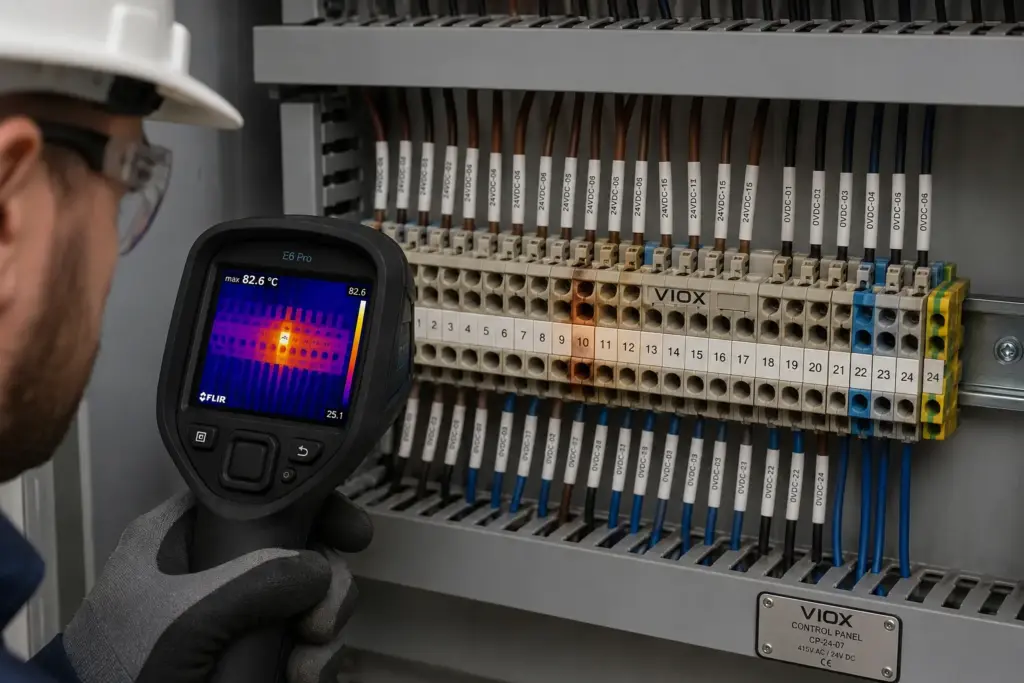
Understanding Temperature Rise in Circuit Breakers: Why It Matters Every circuit breaker generates heat during normal operation. When electrical current flows through the internal components—contacts, bimetal strips, and terminals—resistance creates thermal energy. While some heating is inevitable, excessive temperature rise can degrade insulation, accelerate contact wear, cause nuisance tripping, and ultimately lead to catastrophic failure. For electrical engineers and panel builders specifying MCBs and MCCBs, understanding temperature rise limits isn’t just about compliance—it’s about ensuring long-term reliability and safety. Both IEC 60947-2 (for MCCBs) and UL 489 (North American standard) establish precise thermal performance requirements that manufacturers like VIOX must meet through rigorous type testing. Figure 1: Thermal imaging inspection

MCB、MCCBの温度上昇限度:IEC 60947およびUL 489に基づく許容温度は? 続きを読む »

How to Choose the Right RCCB Sensitivity

適切なRCCB感度の選び方

Understanding RCCB Sensitivity: The Foundation of Electrical Safety Selecting the right Residual Current Circuit Breaker (RCCB) sensitivity is one of the most critical decisions in electrical system design. The sensitivity rating—measured in milliamperes (mA)—determines how quickly an RCCB responds to earth leakage currents, directly impacting both personal safety and equipment protection. An improperly selected sensitivity can result in either inadequate protection against electric shock or excessive nuisance tripping that disrupts operations. RCCB sensitivity represents the residual operating current (IΔn) at which the device will trip and disconnect the circuit. This threshold is carefully calibrated based on physiological research into human body current tolerance and fire prevention requirements. Understanding the relationship

適切なRCCB感度の選び方 続きを読む »

RCD Breaker Vs GFCI Breaker

RCDブレーカーとGFCIブレーカーの違いは?

For international electrical contractors, panel builders, and procurement specialists, navigating the terminology between IEC (International) and NEC (North American) standards can be a source of constant frustration. The most common point of confusion? The distinction between an RCD Breaker and a GFCI Breaker. Are they the same device? Can you use one in place of the other? Why does one trip at 5mA and the other at 30mA? This guide dismantles the terminology barrier, explaining the technical, functional, and regulatory differences between these two critical safety devices. Whether you are specifying a project in Dubai (IEC) or Dallas (NEC), understanding these nuances is essential for safety compliance and system reliability.

RCDブレーカーとGFCIブレーカーの違いは? 続きを読む »

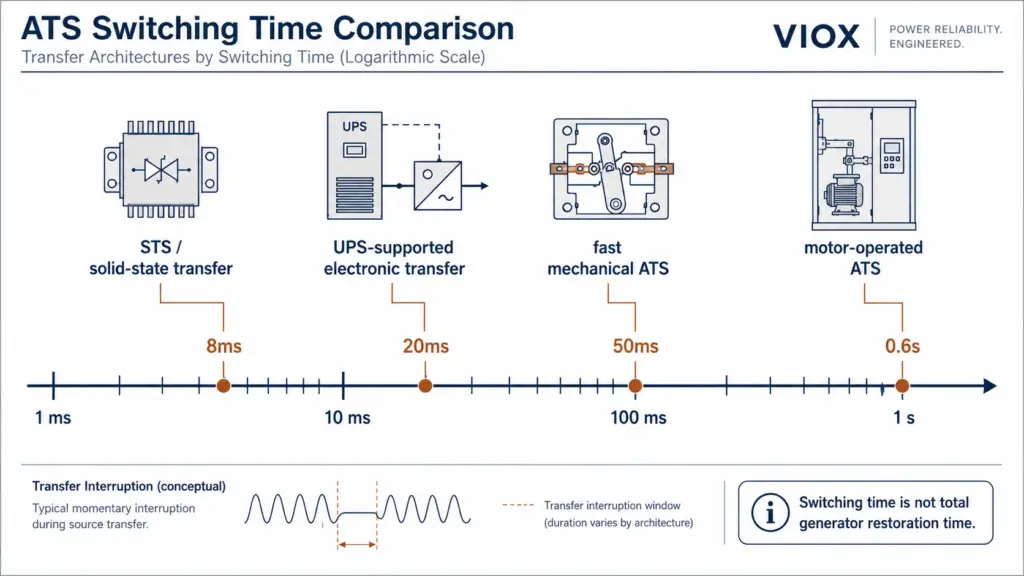
Open Transition vs. Closed Transition ATS: Which Do You Need?

開放形切換と閉鎖形切換ATS:どちらが必要ですか?

Figure 1: A VIOX automatic transfer switch installed in an industrial electrical control panel. In the world of backup power, most specifiers obsess over amperage ratings or enclosure types. However, the most critical factor determining whether your facility experiences a seamless handover or a disruptive reboot lies in the switching logic: Open Transition vs. Closed Transition. For panel builders and facility managers, understanding the distinction between “Break-Before-Make” and “Make-Before-Break” is not just about terminology—it is about preventing equipment damage, ensuring safety compliance, and optimizing project costs. This guide analyzes the technical differences, operational risks, and ideal applications for both transition types to help you specify the right Automatic Transfer Switch

開放形切換と閉鎖形切換ATS:どちらが必要ですか? 続きを読む »

Top 10 Time Relay Brands & Manufacturers

世界のタイマーリレーブランド&メーカー トップ10(2026年更新版)

In the world of industrial automation, the time relay is a small component with a massive responsibility. Whether it is controlling the star-delta startup of a 100kW motor or managing the pump cycles in a water treatment plant, the precision of a timer determines the stability of the entire system. For panel builders and procurement managers, choosing the right manufacturer is a balancing act. Do you go with the expensive, established global giants for peace of mind? Or do you look for emerging manufacturing hubs that offer the same IEC standards at a fraction of the cost? As a manufacturer with over a decade of experience in electrical control, VIOX

世界のタイマーリレーブランド&メーカー トップ10(2026年更新版) 続きを読む »

今すぐ見積もりを依頼する