Joe

Hi, I’m Joe, a dedicated professional with 12 years of experience in the electrical industry. At VIOX Electric, my focus is on delivering high-quality electrical solutions tailored to meet the needs of our clients. My expertise spans industrial automation, residential wiring, and commercial electrical systems.Contact me [email protected] if u have any questions.

MCB Breaking Capacity Selection Guide: When to Use 6kA vs 10kA in Residential & Commercial Panels

MCB Breaking Capacity Selection Guide: When to Use 6kA vs 10kA in Residential & Commercial Panels

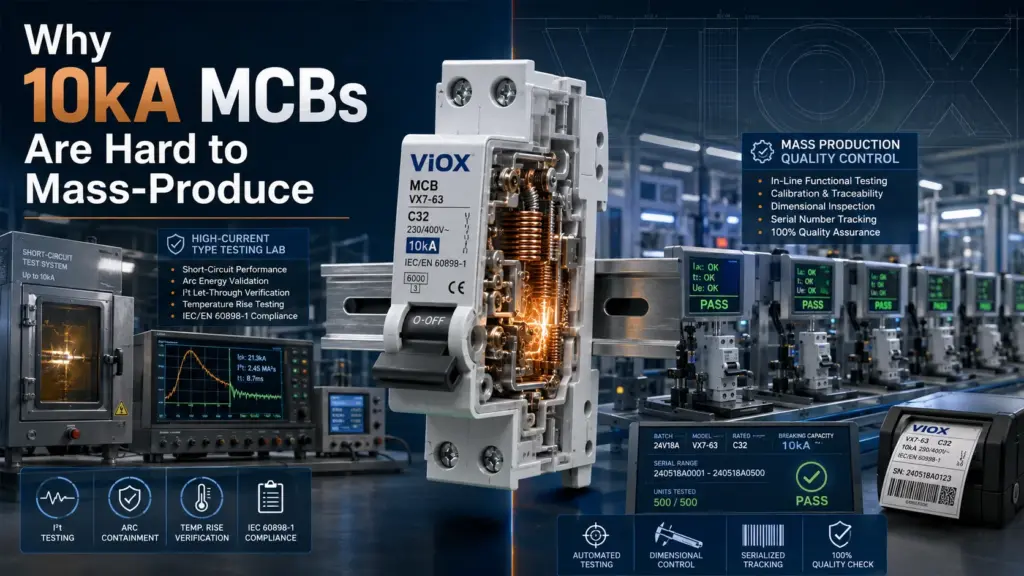
Key Takeaways Breaking capacity (Icn/Icu) represents the maximum fault current an MCB can safely interrupt without damage or failure, measured in kiloamperes (kA). 6kA MCBs are typically sufficient for residential installations where prospective short-circuit current (PSCC) remains below 5kA, particularly in locations distant from supply transformers. 10kA MCBs are recommended for commercial applications, urban installations, […]
MCB Breaking Capacity Selection Guide: When to Use 6kA vs 10kA in Residential & Commercial Panels Read More »

Understanding AFDDs: The IEC Standard for Arc Fault Protection

Understanding AFDDs: The IEC Standard for Arc Fault Protection

Electrical fires remain one of the most significant risks in residential and commercial buildings, with a substantial percentage attributed to arc faults. While standard circuit protection devices like Miniature Circuit Breakers (MCBs) and Residual Current Devices (RCDs) are essential, they have a blind spot: they cannot detect the unique signature of a dangerous electrical arc.

Understanding AFDDs: The IEC Standard for Arc Fault Protection Read More »

Inside AC Contactor: Key Components, Materials, and Design Logic

Inside AC Contactor: Key Components, Materials, and Design Logic

Introduction: The Hidden Intelligence Behind Power Control You’ve likely never thought about the small rectangular device quietly sitting in your building’s electrical panel, switching your facility’s power hundreds of times per day. Yet without this single component—the AC contactor—modern industrial systems, HVAC networks, and solar installations would simply cease to function. This guide takes you

Inside AC Contactor: Key Components, Materials, and Design Logic Read More »

Understanding MCCB Trip Unit Settings: Ir, Im, Isd, and Ii Explained

Understanding MCCB Trip Unit Settings: Ir, Im, Isd, and Ii Explained

Why MCCB Trip Unit Settings Matter: The Foundation of Electrical Protection Modern electrical distribution systems demand precise, reliable protection against overloads and short circuits. At the heart of this protection lies the molded case circuit breaker (MCCB) trip unit—the “brain” that determines when and how quickly a breaker responds to fault conditions. Unlike fixed-trip miniature

Understanding MCCB Trip Unit Settings: Ir, Im, Isd, and Ii Explained Read More »

What is the Difference Between Dry Type Transformer and Oil Filled Transformer

What is the Difference Between Dry Type Transformer and Oil Filled Transformer

When designing electrical distribution systems, choosing between a dry type transformer and an oil filled transformer is one of the most critical decisions that impacts safety, efficiency, and long-term operational costs. While both serve the same fundamental purpose of stepping voltage up or down, their construction, cooling methods, and applications differ significantly. This comprehensive guide

What is the Difference Between Dry Type Transformer and Oil Filled Transformer Read More »

MCB MCCB Temperature Rise Limits: How Hot is Too Hot per IEC 60947 & UL 489?

MCB MCCB Temperature Rise Limits: How Hot is Too Hot per IEC 60947 & UL 489?

Understanding Temperature Rise in Circuit Breakers: Why It Matters Every circuit breaker generates heat during normal operation. When electrical current flows through the internal components—contacts, bimetal strips, and terminals—resistance creates thermal energy. While some heating is inevitable, excessive temperature rise can degrade insulation, accelerate contact wear, cause nuisance tripping, and ultimately lead to catastrophic failure.

MCB MCCB Temperature Rise Limits: How Hot is Too Hot per IEC 60947 & UL 489? Read More »

How to Choose the Right RCCB Sensitivity

How to Choose the Right RCCB Sensitivity

Understanding RCCB Sensitivity: The Foundation of Electrical Safety Selecting the right Residual Current Circuit Breaker (RCCB) sensitivity is one of the most critical decisions in electrical system design. The sensitivity rating—measured in milliamperes (mA)—determines how quickly an RCCB responds to earth leakage currents, directly impacting both personal safety and equipment protection. An improperly selected sensitivity

How to Choose the Right RCCB Sensitivity Read More »

RCD Breaker Vs GFCI Breaker

RCD Breaker Vs GFCI Breaker?

For international electrical contractors, panel builders, and procurement specialists, navigating the terminology between IEC (International) and NEC (North American) standards can be a source of constant frustration. The most common point of confusion? The distinction between an RCD Breaker and a GFCI Breaker. Are they the same device? Can you use one in place of

RCD Breaker Vs GFCI Breaker? Read More »

Open Transition vs. Closed Transition ATS: Which Do You Need?

Open Transition vs. Closed Transition ATS: Which Do You Need?

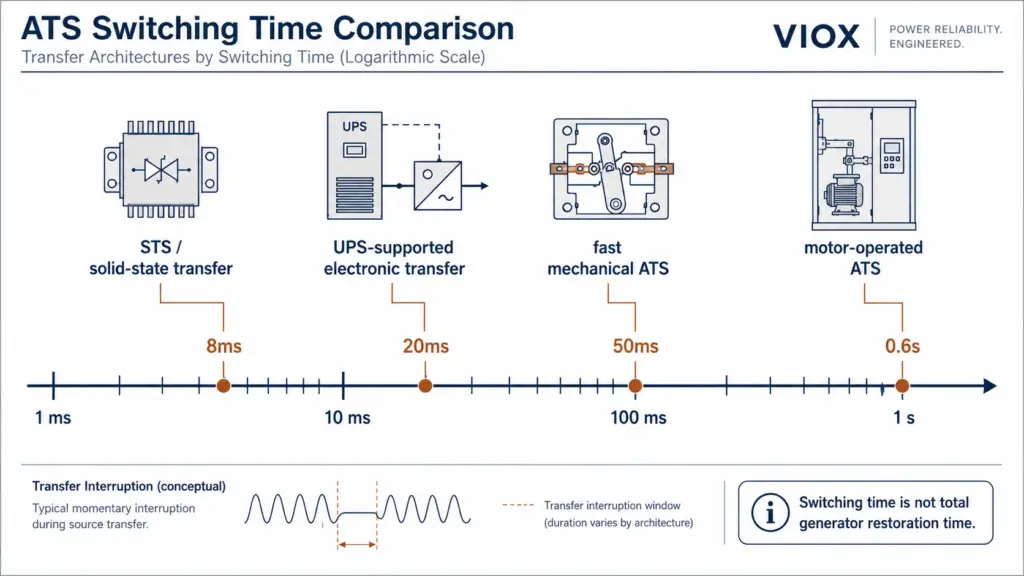
Figure 1: A VIOX automatic transfer switch installed in an industrial electrical control panel. In the world of backup power, most specifiers obsess over amperage ratings or enclosure types. However, the most critical factor determining whether your facility experiences a seamless handover or a disruptive reboot lies in the switching logic: Open Transition vs. Closed

Open Transition vs. Closed Transition ATS: Which Do You Need? Read More »

Ask for Quote Now