

In questa pagina
Risposta rapida: Conduttività, resistività e %IACS
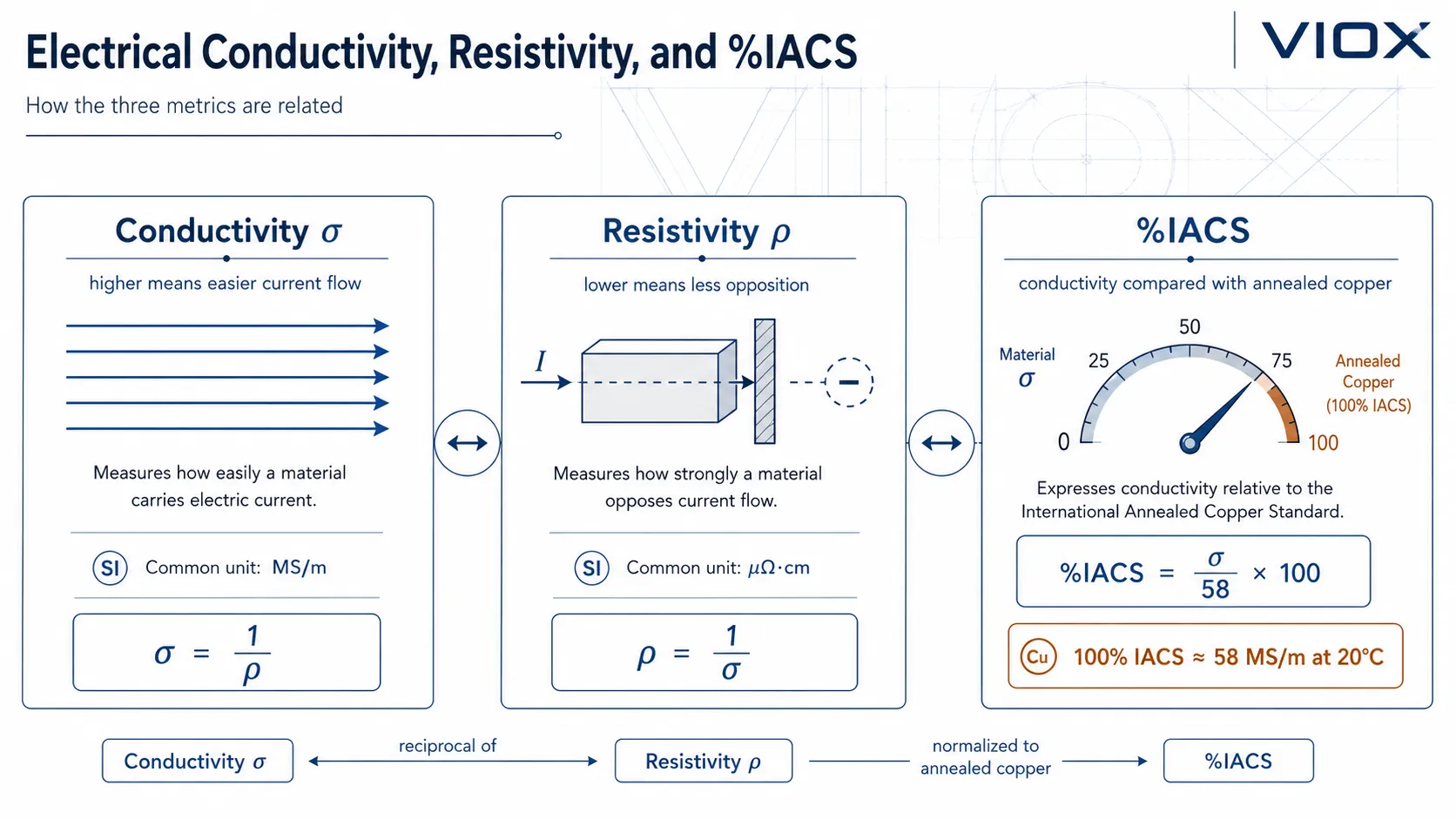
Conduttività indica con quanta facilità un materiale trasporta la corrente elettrica. Resistività indica con quanta forza oppone resistenza al passaggio di corrente. % IACS confronta la conducibilità di un materiale rispetto al rame ricotto, dove il 100% IACS è comunemente considerato pari a circa 58 MS/m a 20°C. Per sbarre collettrici, terminali, componenti di messa a terra e contatti elettrici, questi valori aiutano a confrontare i materiali, ma non sostituiscono le verifiche di progetto complete per l'aumento di temperatura, la resistenza meccanica, la placcatura, la pressione di contatto, la corrosione e la resistenza all'arco.
Le tre misurazioni descrivono lo stesso comportamento elettrico da diverse prospettive:
- Una conducibilità più elevata significa un flusso di corrente più agevole.
- Una resistività più bassa significa un flusso di corrente più agevole.
- Un valore % IACS più elevato indica che il materiale è più vicino o superiore alla conducibilità del rame ricotto.
Nella progettazione elettrica pratica, il rame rimane il conduttore di riferimento, l'alluminio viene utilizzato quando il peso e il costo sono fattori determinanti, l'argento è spesso impiegato come rivestimento o superficie di contatto piuttosto che come conduttore di massa, mentre il tungsteno o il rame-tungsteno sono utilizzati laddove la resistenza all'erosione da arco è più importante della massima conducibilità.
Perché questo è importante nei componenti elettrici
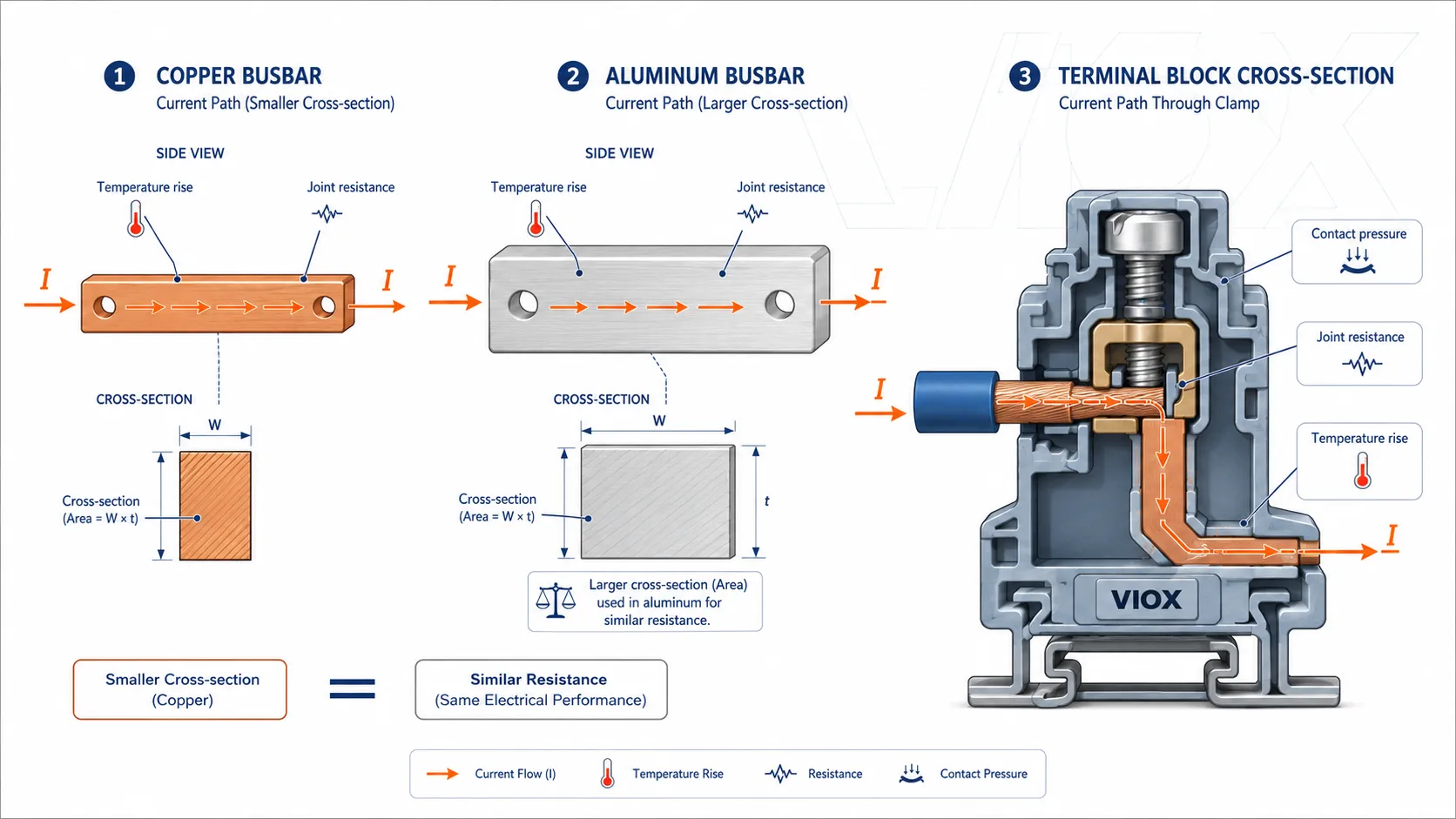
La conducibilità del materiale influisce sul calore, sulla caduta di tensione e sulla capacità di trasporto di corrente. Se due componenti hanno la stessa geometria, il materiale a minore resistività solitamente opererà a temperature inferiori a parità di corrente, poiché genera meno effetto Joule.
La relazione è:
P = I²Rdove:
Pè il calore generato dalla resistenzaIè la correnteRè la resistenza elettrica
Ecco perché la conducibilità è importante in:
- sbarre in rame e alluminio
- parti conduttive di MCB e MCCB
- morsettiere e barre di messa a terra
- contatti di contattori e relè
- superfici di contatto argentate
- contatti d'arco in rame-tungsteno
- giunzioni di quadri elettrici e collegamenti bullonati
Per la selezione specifica delle barre collettrici, consultare 10 differenze tra le sbarre di rame e quelle di alluminio e Guida alla selezione delle barre collettrici: confronto tra placcatura in rame, stagno e argento.
Cos'è la resistività elettrica?
La resistività elettrica è una proprietà intrinseca del materiale che descrive quanto fortemente un materiale si oppone alla corrente elettrica. Viene solitamente indicata come ρ e comunemente espressa in:
Ω · m(ohm-metro)μΩ · cm(micro-ohm-centimetro)nΩ · m(nano-ohm-metro)
Una resistività inferiore è preferibile per i conduttori di corrente.
Ad esempio, il rame ricotto ha una resistività tipica di circa 1,724 μΩ·cm a 20°C, mentre l'alluminio è tipicamente intorno a 2,7-2,9 μΩ·cm a seconda della purezza e del grado. Ecco perché l'alluminio richiede normalmente una sezione trasversale maggiore rispetto al rame per trasportare una corrente simile a un aumento di temperatura comparabile.
La resistività non è fissa per ogni componente reale. Cambia in base a:
- temperatura
- grado del materiale
- livello di impurità
- lavorazione a freddo
- trattamento termico
- elementi di lega
- placcatura e condizioni superficiali
Ecco perché i valori pubblicati dovrebbero essere considerati come valori di riferimento tipici, non come limiti di ispezione finali, a meno che non siano legati a uno specifico standard di materiale o a una specifica di acquisto.
Cos'è la conducibilità elettrica?
Conducibilità elettrica è l'inverso della resistività. Di solito viene scritta come σ e comunemente espressa in:
- S/m (siemens al metro)
- MS/m (megasiemens al metro)
La formula è:
σ = (1 / ρ)Una conducibilità più elevata significa che il materiale trasporta corrente più facilmente.
Esempi tipici di conducibilità a 20°C:
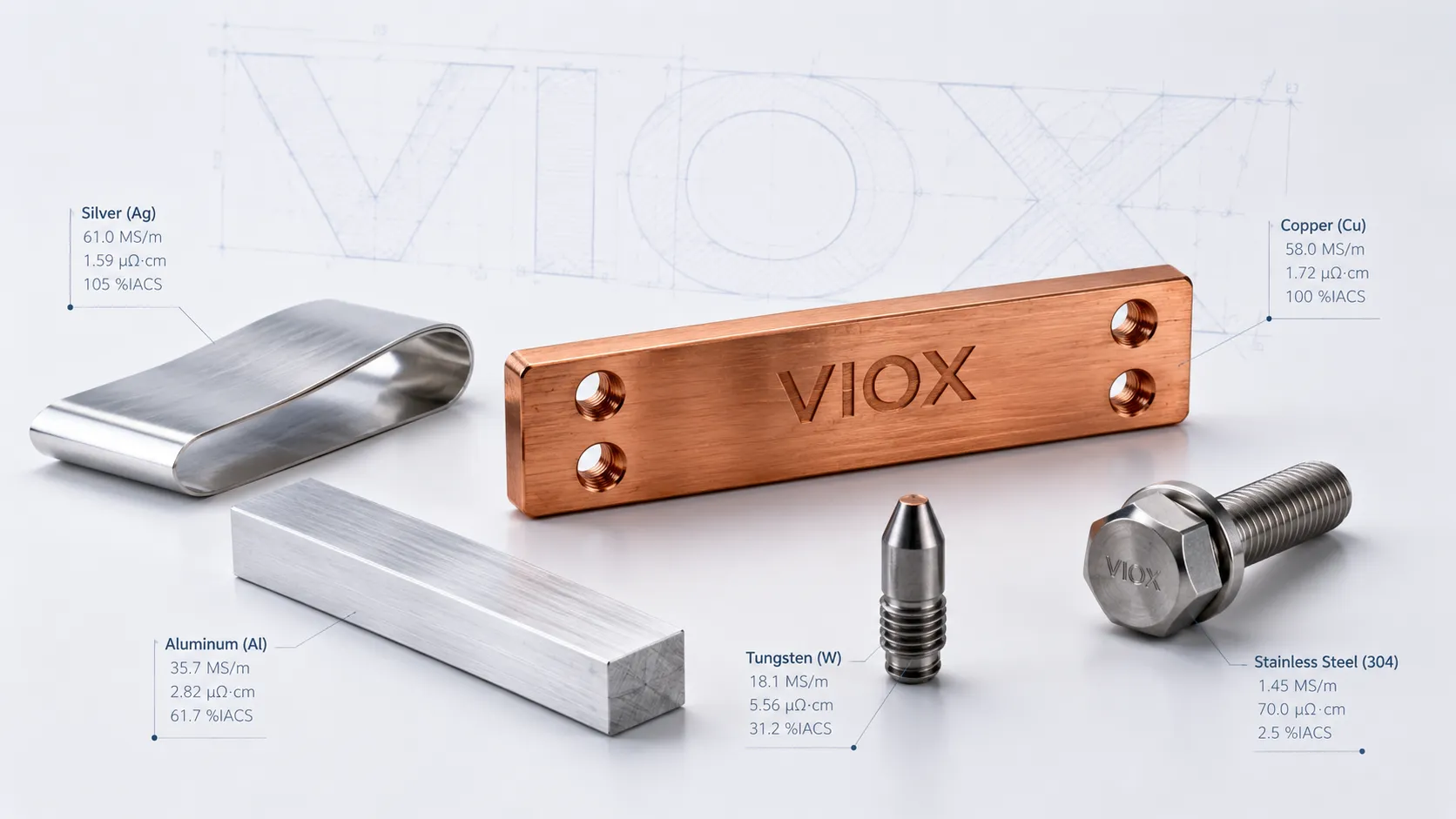
- Argento: circa 61-63 MS/m
- Rame ricotto: circa 58 MS/m
- Alluminio: circa 35-37 MS/m
- Tungsteno: circa 17-19 MS/m
- Acciaio inossidabile 304: circa 1,1-1,5 MS/m, a seconda del riferimento e delle condizioni
La conducibilità è utile quando si confrontano i materiali conduttori, ma non è l'unico criterio di selezione. Una molla di un morsetto, ad esempio, potrebbe richiedere resistenza ed elasticità più che la massima conducibilità. Una punta di contatto potrebbe richiedere resistenza all'arco più che la conducibilità del rame puro.
Cos'è l'1% IACS?
% IACS significa percentuale dello standard internazionale del rame ricotto (IACS). Esprime la conducibilità di un materiale come percentuale dello standard internazionale del rame ricotto, dove il rame ricotto viene utilizzato come riferimento.
Nella pratica ingegneristica comune:
100% IACS ≈ 58 MS/m a 20°CQuindi:
- 100% IACS significa approssimativamente uguale al rame ricotto
- 60% IACS significa circa il 60% della conducibilità del rame ricotto
- 105% IACS significa leggermente superiore al riferimento del rame IACS
L'IACS è ampiamente utilizzato perché consente agli ingegneri di confrontare rapidamente metalli e leghe senza dover convertire ogni valore in resistività o conducibilità. È particolarmente comune nelle leghe di rame, nei controlli di qualità delle leghe di alluminio, nei materiali conduttori e nei materiali di contatto.
Importante: l'IACS è normalmente riferito a 20°C. Se la temperatura cambia, cambiano anche la conducibilità e la resistività.
Formula di conversione: MS/m, μΩ·cm e IACS
Se la conducibilità è espressa in MS/m:
IACS = (σ / 58) × 100dove σ è la conducibilità in MS/m.
Se la resistività è espressa in μΩ·cm:
σ(MS/m) = (100 / ρ(μΩ · cm))E:
ρ(μΩ · cm) = (100 / σ(MS/m))Esempi di conversione rapida
| Valore dato | Conversione | Risultato |
|---|---|---|
| Rame a 58 MS/m | 58 / 58 × 100 |
100% IACS |
| Alluminio a 36 MS/m | 36 / 58 × 100 |
Circa 62% IACS |
| Argento a 61,5 MS/m | 61,5 / 58 × 100 |
Circa 106% IACS |
| Resistività 2,80 μΩ·cm | 100 / 2.80 |
Circa 35,7 MS/m |
| Conduttività 18 MS/m | 100 / 18 |
Circa 5,56 μΩ·cm |
Questi calcoli sono utili per un rapido confronto tra materiali. Non sostituiscono la verifica termica, meccanica e normativa finale.
Tabella di confronto dei materiali comuni
I valori sottostanti sono intervalli di riferimento tipici a 20°C o temperature prossime ad essa. I valori effettivi dipendono dal grado del materiale, dalla purezza, dalle condizioni di lavorazione, dalla temperatura e dal metodo di misurazione.
| Materiale | %IACS tipico | Conduttività | Resistività | Uso elettrico tipico |
|---|---|---|---|---|
| Argento | 105-108% | ~61-63 MS/m | ~1,59-1,64 μΩ·cm | Superficie di contatto, placcatura, superfici RF/ad alte prestazioni |
| Rame ricotto | 100% | ~58 MS/m | ~1,724 μΩ·cm | Sbarre collettrici, morsetti, conduttori, componenti di messa a terra |
| Rame ETP/OFC | ~100-101%+ | ~58-59 MS/m | ~1,70-1,72 μΩ·cm | Componenti elettrici ad alta conducibilità |
| Alluminio | 60-64% | ~35-37 MS/m | ~2,7-2,9 μΩ·cm | Sbarre collettrici leggere, conduttori, distribuzione di potenza |
| Tungsteno | ~30-33% | ~17-19 MS/m | ~5,3-5,8 μΩ·cm | Materiali di contatto resistenti all'arco, applicazioni per elettrodi |
| Rame-tungsteno | varia notevolmente | varia in base al rapporto W/Cu | spesso ~3-6 μΩ·cm | Contatti d'arco, applicazioni per interruttori/contattori |
| Ottone | varia notevolmente | inferiore al rame | superiore al rame | Terminali, parti di connessione dove sono richieste resistenza/formabilità |
| Acciaio inossidabile 304 | ~2-3% | ~1,1-1,5 MS/m | ~70-90 μΩ·cm | Parti strutturali, molle, minuteria resistente alla corrosione, non conduttori principali |
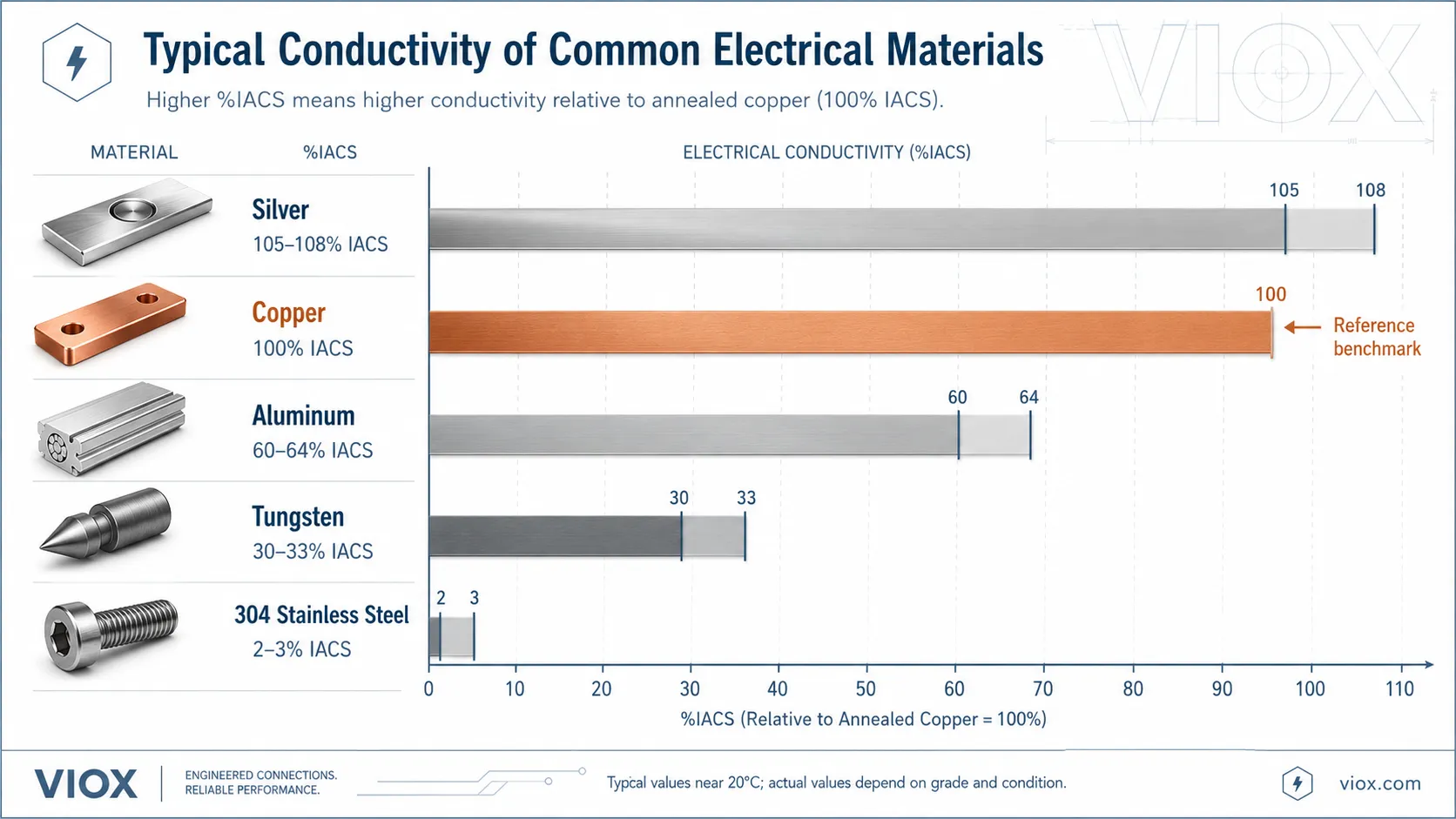
Questa tabella spiega perché la scelta dei materiali nei prodotti elettrici è un equilibrio. La conducibilità pura è importante, ma lo sono anche la resistenza, il comportamento elastico, la resistenza alla corrosione, la compatibilità con la placcatura, la pressione di contatto, la producibilità e l'erosione da arco.
Per le applicazioni relative ai terminali, vedere Come scegliere la morsettiera giusta e Guida alla costruzione dei componenti delle morsettiere.
Perché l'argento è un conduttore migliore del rame ma non viene sempre utilizzato
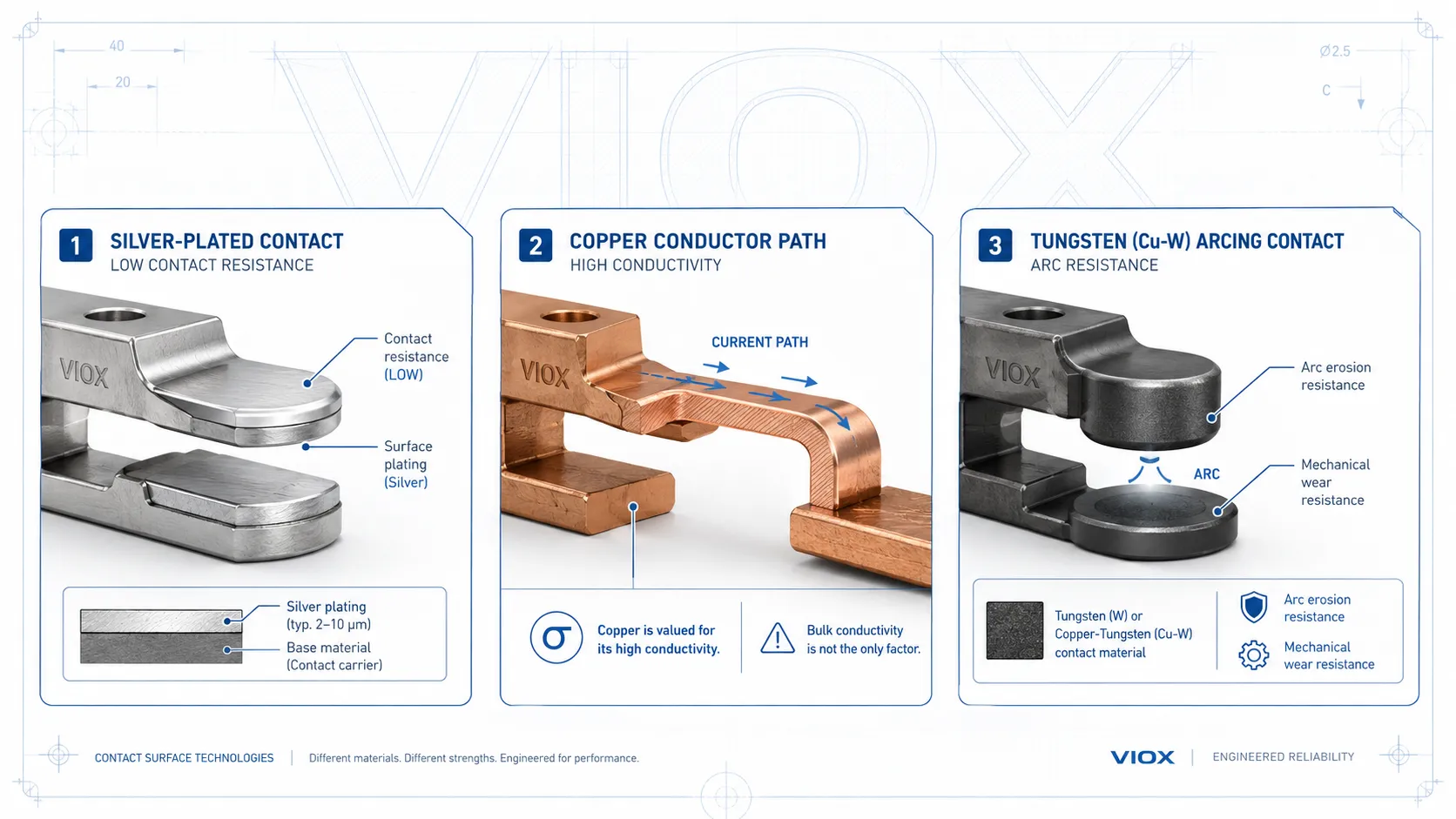
L'argento è il metallo comune più conduttivo. Sulla scala IACS, può superare leggermente il rame ricotto. Ciò solleva una domanda spontanea: perché non realizzare ogni sbarra collettrice e morsetto in argento?
La risposta risiede nel costo, nel comportamento meccanico e nelle esigenze applicative.
L'argento è costoso rispetto al rame e all'alluminio. Di solito non è necessario come conduttore di massa poiché il miglioramento della conducibilità rispetto al rame è esiguo se confrontato con la differenza di costo. In molti componenti di distribuzione dell'energia, aumentare la sezione trasversale del rame, migliorare la pressione di giunzione o utilizzare la placcatura corretta risulta più economico rispetto alla sostituzione del rame con l'argento.
L'argento è prezioso laddove la superficie è determinante:
- superfici di contatto
- contatti striscianti
- superfici dei conduttori placcate
- connettori ad alta affidabilità
- superfici ad alta frequenza o RF
Nei sistemi di contatto, l'argento e le leghe a base d'argento sono spesso utilizzati perché la conducibilità superficiale, la resistenza di contatto, il comportamento degli ossidi e le prestazioni di commutazione sono più importanti della sola conducibilità di massa.
Per il contesto relativo ai materiali di contatto, vedere Guida ai materiali per contatti di contattori: AgSnO2 vs AgNi vs AgCdO.
Perché l'alluminio richiede una sezione trasversale maggiore rispetto al rame
L'alluminio è più leggero e spesso meno costoso del rame, ma la sua conducibilità è solo di circa il 60-64% IACS per il tipico alluminio ad alta conducibilità. Ciò significa che un conduttore in alluminio richiede generalmente una sezione trasversale maggiore rispetto al rame per ottenere una resistenza elettrica simile.
Un confronto semplificato:
- Il rame offre un'elevata conducibilità in uno spazio compatto.
- L'alluminio riduce il peso e può ridurre i costi.
- L'alluminio richiede un'attenta progettazione dei giunti poiché gli strati di ossido, l'espansione termica e la pressione di connessione influiscono sull'affidabilità a lungo termine.
Nelle sbarre collettrici, la decisione raramente è "il rame è meglio" o "l'alluminio è meglio". La decisione corretta dipende da:
- spazio disponibile
- aumento di temperatura ammissibile
- supporto meccanico
- resistenza al cortocircuito
- placcatura o trattamento superficiale
- progettazione del giunto
- ambiente di installazione
- costo totale e peso
Per un confronto più specifico in base all'applicazione, vedere 10 differenze tra le sbarre di rame e quelle di alluminio.
Perché il tungsteno e il rame-tungsteno vengono utilizzati nei contatti
Il tungsteno è molto meno conduttivo del rame o dell'argento, quindi sembra un cattivo conduttore se si guarda solo la colonna della conducibilità. Tuttavia, i contatti non vengono scelti solo in base alla conducibilità.
I contatti di commutazione devono resistere a:
- arco elettrico
- rischio di fusione
- erosione dei contatti
- tendenza alla saldatura
- alta temperatura locale
- impatto meccanico
- aperture e chiusure ripetute
Il tungsteno ha un punto di fusione molto elevato e una forte resistenza all'erosione da arco. I materiali in rame-tungsteno combinano la conducibilità del rame con la resistenza all'arco del tungsteno. All'aumentare del contenuto di tungsteno, la conducibilità generalmente diminuisce, ma la resistenza all'arco e il comportamento alle alte temperature migliorano.
Ecco perché i materiali di tipo rame-tungsteno e argento-tungsteno possono essere presenti nei contatti degli interruttori, nei contatti d'arco e nelle applicazioni di commutazione gravose. L'obiettivo non è la massima conducibilità. L'obiettivo è un equilibrio funzionale tra conducibilità, comportamento termico, resistenza all'arco e durata dei contatti.
Perché l'acciaio inossidabile non è un buon materiale conduttivo principale
L'acciaio inossidabile è utile nei prodotti elettrici, ma non perché sia altamente conduttivo. Gli acciai inossidabili austenitici come il 304 hanno una resistività molto più elevata rispetto al rame e all'alluminio. In termini di %IACS, l'acciaio inossidabile 304 ha spesso solo una piccola percentuale della conducibilità del rame.
Ciò lo rende inadatto per i percorsi principali di conduzione della corrente, come sbarre collettrici o terminali primari.
Tuttavia, l'acciaio inossidabile può essere utile per:
- viti e minuteria metallica
- molle
- staffe
- componenti di involucri
- componenti strutturali resistenti alla corrosione
- parti meccaniche non conduttive primarie
La chiave è utilizzare l'acciaio inossidabile dove sono importanti la resistenza alla corrosione o le proprietà meccaniche, non dove il requisito principale è la bassa resistenza.
Come questi valori influenzano sbarre, morsetti e contatti
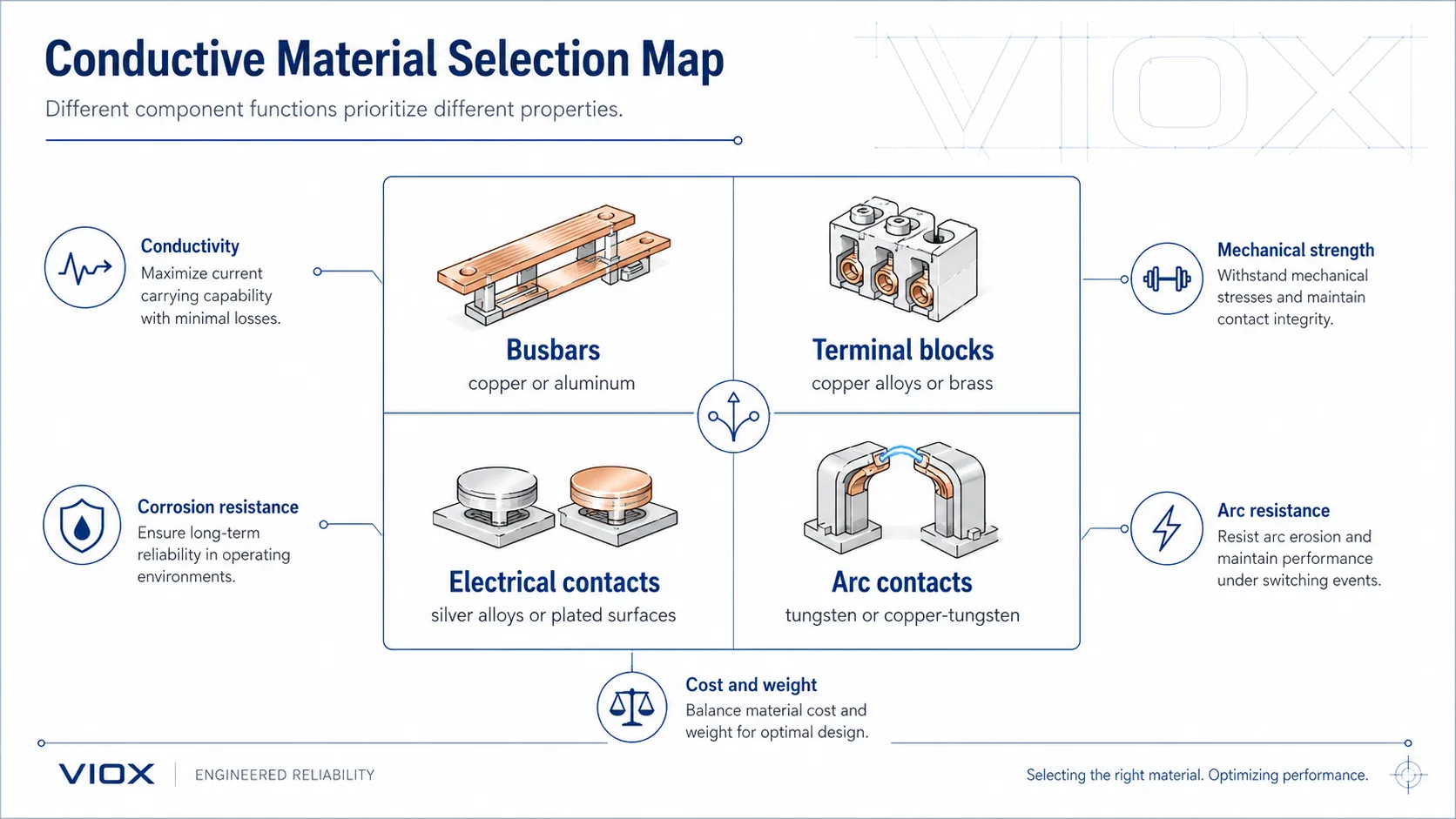
Sbarre
Per le sbarre, la conducibilità influisce sull'aumento di temperatura e sulla caduta di tensione. Il rame è compatto e altamente conduttivo. L'alluminio può funzionare bene se progettato con una sezione maggiore, un trattamento superficiale adeguato e giunzioni corrette.
Le verifiche chiave includono:
- conducibilità del materiale
- sezione trasversale
- sovratemperatura
- tenuta al cortocircuito
- resistenza di giunzione
- placcatura
- isolamento di montaggio
- ventilazione dell'involucro
Per la qualità delle barre collettrici per MCB, vedere Come determinare la qualità di una sbarra per MCB e Come scegliere la sbarra giusta per l'MCB.
Morsettiere
I morsetti richiedono più di un'elevata conducibilità. Il metallo del morsetto deve anche garantire forza di serraggio, resistenza alla corrosione, pressione di contatto stabile, lavorabilità e compatibilità con conduttori in rame o alluminio.
Ecco perché molti morsetti utilizzano leghe di rame o ottone anziché rame puro. Il rame puro è molto conduttivo, ma alcune leghe offrono una migliore rigidità, comportamento di formatura o prestazioni di serraggio a vite.
Contatti elettrici
Per i contatti, la superficie è spesso più importante del conduttore di massa. Una piccola area di contatto trasporta corrente attraverso punti di contatto microscopici. La pressione di contatto, la pellicola superficiale, il comportamento dell'ossido, la placcatura e l'erosione da arco possono determinare le prestazioni effettive.
Ecco perché vengono utilizzate leghe d'argento, argentatura, rame-tungsteno e altri materiali di contatto, anche quando la loro conducibilità di massa non appare ideale in una semplice tabella.
Componenti di messa a terra
I componenti di messa a terra richiedono bassa impedenza e affidabilità meccanica. La conducibilità è importante, ma la resistenza alla corrosione, l'integrità della connessione e il collegamento a lungo termine lo sono altrettanto. Una barra di terra o una barra PE con uno scarso contatto di giunzione può avere prestazioni peggiori di quanto suggerito dalla tabella dei materiali.
Per il contesto dei componenti di messa a terra, vedere Barra del neutro vs Barra di messa a terra e Cos'è il kit di isolamento della barra di terra.
Errori comuni nel confronto dei materiali conduttivi
Errore 1: Considerare la conducibilità come l'unico fattore di selezione
L'alta conducibilità è preziosa, ma non risolve i problemi di resistenza meccanica, corrosione, archi elettrici, forza elastica, placcatura o fabbricazione.
Errore 2: Confrontare metalli puri con leghe reali
I valori delle schede tecniche per rame puro, alluminio puro o argento puro potrebbero non corrispondere a componenti reali stampati, placcati, trattati termicamente o in lega.
Errore 3: Ignorare la temperatura
La conducibilità e la resistività dipendono dalla temperatura. Un valore dichiarato a 20°C non è lo stesso del comportamento all'interno di un quadro di distribuzione o di un armadio di controllo caldo.
Errore 4: Utilizzare l'acciaio inossidabile come percorso di corrente
La bulloneria in acciaio inossidabile può essere meccanicamente utile, ma non dovrebbe essere considerata equivalente al rame o all'alluminio per la conduzione di corrente primaria.
Errore 5: Dimenticare la resistenza di contatto
Nei giunti bullonati e nei contatti di commutazione, l'interfaccia può dominare la resistenza effettiva. La placcatura, la finitura superficiale, la coppia di serraggio, la pressione di contatto e l'ossidazione possono essere più importanti del valore del materiale di base.
FAQ
Cosa significa 1% IACS?
1% IACS significa percentuale dello standard internazionale del rame ricotto (International Annealed Copper Standard). Confronta la conducibilità di un materiale con quella del rame ricotto, dove il 100% IACS è comunemente considerato pari a circa 58 MS/m a 20°C.
La conducibilità è la stessa cosa della resistività?
No. Sono proprietà inverse. La conducibilità misura quanto facilmente scorre la corrente. La resistività misura quanto fortemente un materiale si oppone al flusso di corrente. Una conducibilità più elevata significa una resistività più bassa.
Qual è la formula che lega conducibilità e resistività?
La formula di base è σ = 1 / ρ. Se la conducibilità è espressa in MS/m e la resistività in μΩ·cm, una conversione pratica è ρ = 100 / σ.
Perché il rame viene utilizzato più dell'argento se l'argento è più conduttivo?
L'argento è più conduttivo del rame, ma è molto più costoso e non necessario per la maggior parte dei conduttori di massa. L'argento viene spesso utilizzato come placcatura o superficie di contatto laddove la resistenza di contatto, il comportamento superficiale o le prestazioni ad alta frequenza sono importanti.
Perché l'alluminio necessita di una sezione trasversale maggiore rispetto al rame?
L'alluminio ha una conduttività inferiore rispetto al rame, tipicamente intorno al 60-64% IACS per l'alluminio ad alta conduttività. Per ottenere una resistenza simile, l'alluminio necessita generalmente di un'area della sezione trasversale maggiore.
L'acciaio inossidabile è conduttivo?
Sì, l'acciaio inossidabile conduce elettricità, ma scarsamente rispetto al rame e all'alluminio. È utile per componenti meccanici e resistenti alla corrosione, non per i conduttori principali di trasporto di corrente.
Il tungsteno è un buon conduttore?
Il tungsteno conduce elettricità, ma non bene quanto il rame o l'argento. Il suo valore nei contatti deriva dal comportamento alle alte temperature e dalla resistenza all'arco, non dalla massima conducibilità.
La placcatura modifica la conducibilità?
La placcatura può influenzare notevolmente le prestazioni del contatto, specialmente in superficie. La placcatura in stagno, argento e nichel può essere utilizzata per la resistenza alla corrosione, la saldabilità, la resistenza di contatto o il comportamento all'usura. La placcatura migliore dipende dal carico elettrico e ambientale.
Sintesi
Conducibilità, resistività e %IACS sono tre modi per confrontare la capacità di un materiale di trasportare corrente. Per i prodotti elettrici, la gerarchia pratica è semplice: l'argento è il metallo comune più conduttivo, il rame è il principale riferimento ingegneristico, l'alluminio scambia una minore conducibilità con vantaggi in termini di peso e costo, i materiali a base di tungsteno scambiano la conducibilità con la resistenza all'arco e l'acciaio inossidabile è principalmente strutturale piuttosto che conduttivo.
Per le applicazioni dei prodotti VIOX, questi valori sono importanti nelle sbarre collettrici, nei morsetti, nei componenti di messa a terra, nei materiali di contatto, nelle parti conduttive di MCB/MCCB e nei giunti dei quadri elettrici. Tuttavia, la tabella dei materiali è solo il punto di partenza. Le prestazioni elettriche reali dipendono anche dalla geometria, dall'aumento di temperatura, dalla pressione di contatto, dalla placcatura, dalla corrosione, dal carico dell'arco e dalla costanza produttiva.