

ในหน้านี้
คำตอบโดยย่อ: การนำไฟฟ้า ความต้านทานไฟฟ้า และ %IACS
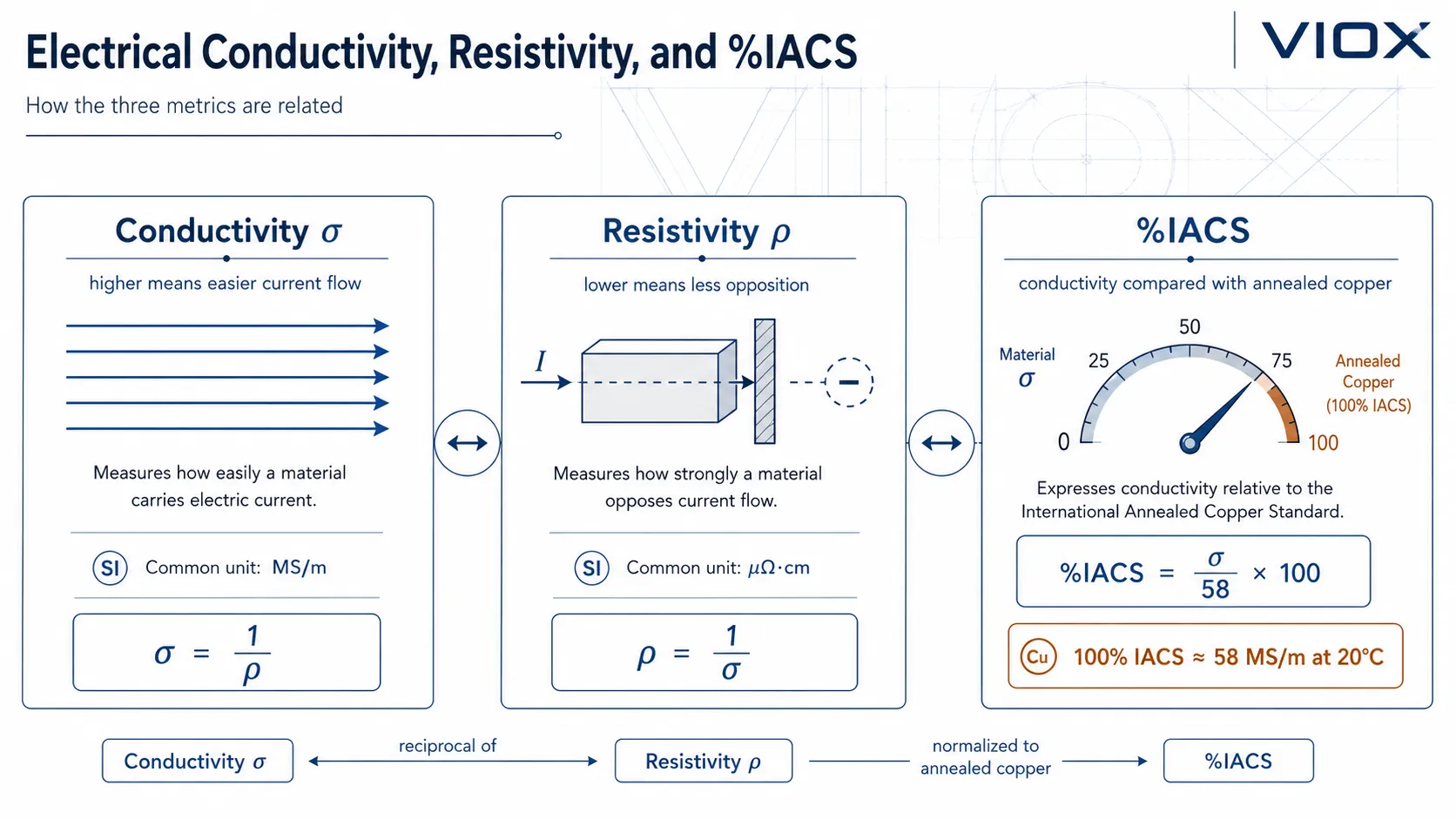
การนำไฟฟ้า (Conductivity) บอกให้ทราบว่าวัสดุชนิดหนึ่งยอมให้กระแสไฟฟ้าไหลผ่านได้ง่ายเพียงใด. ความต้านทานไฟฟ้า (Resistivity) บอกให้ทราบว่าวัสดุชนิดหนึ่งต้านทานการไหลของกระแสไฟฟ้าได้มากเพียงใด. % IACS เปรียบเทียบค่าการนำไฟฟ้าของวัสดุกับทองแดงอบอ่อน โดยที่ 100% IACS มักจะถูกกำหนดไว้ที่ประมาณ 58 MS/m ที่อุณหภูมิ 20°C. สำหรับบัสบาร์ ขั้วต่อ ชิ้นส่วนกราวด์ และหน้าสัมผัสทางไฟฟ้า ค่าเหล่านี้ช่วยในการเปรียบเทียบวัสดุ แต่ไม่สามารถใช้แทนการตรวจสอบการออกแบบอย่างละเอียดในด้านการเพิ่มขึ้นของอุณหภูมิ ความแข็งแรงทางกล การชุบผิว แรงกดหน้าสัมผัส การกัดกร่อน และความต้านทานต่ออาร์คได้.
การวัดทั้งสามแบบอธิบายพฤติกรรมทางไฟฟ้าเดียวกันจากมุมมองที่แตกต่างกัน:
- ค่าการนำไฟฟ้าที่สูงขึ้นหมายถึงกระแสไฟฟ้าไหลได้ง่ายขึ้น.
- ค่าความต้านทานจำเพาะที่ต่ำลงหมายถึงกระแสไฟฟ้าไหลได้ง่ายขึ้น.
- ค่า % IACS ที่สูงขึ้นหมายถึงวัสดุนั้นมีค่าการนำไฟฟ้าใกล้เคียงหรือสูงกว่าทองแดงอบอ่อน.
ในการออกแบบทางไฟฟ้าเชิงปฏิบัติ ทองแดงยังคงเป็นตัวนำมาตรฐาน ส่วนอะลูมิเนียมจะถูกนำมาใช้เมื่อคำนึงถึงน้ำหนักและต้นทุน เงินมักถูกใช้เป็นสารเคลือบผิวหรือพื้นผิวสัมผัสมากกว่าการใช้เป็นตัวนำหลัก และทังสเตนหรือทองแดงผสมทังสเตนจะถูกใช้ในจุดที่ต้องการความต้านทานต่อการกัดกร่อนจากอาร์คไฟฟ้ามากกว่าการนำไฟฟ้าสูงสุด.
เหตุใดเรื่องนี้จึงมีความสำคัญในอุปกรณ์ไฟฟ้า
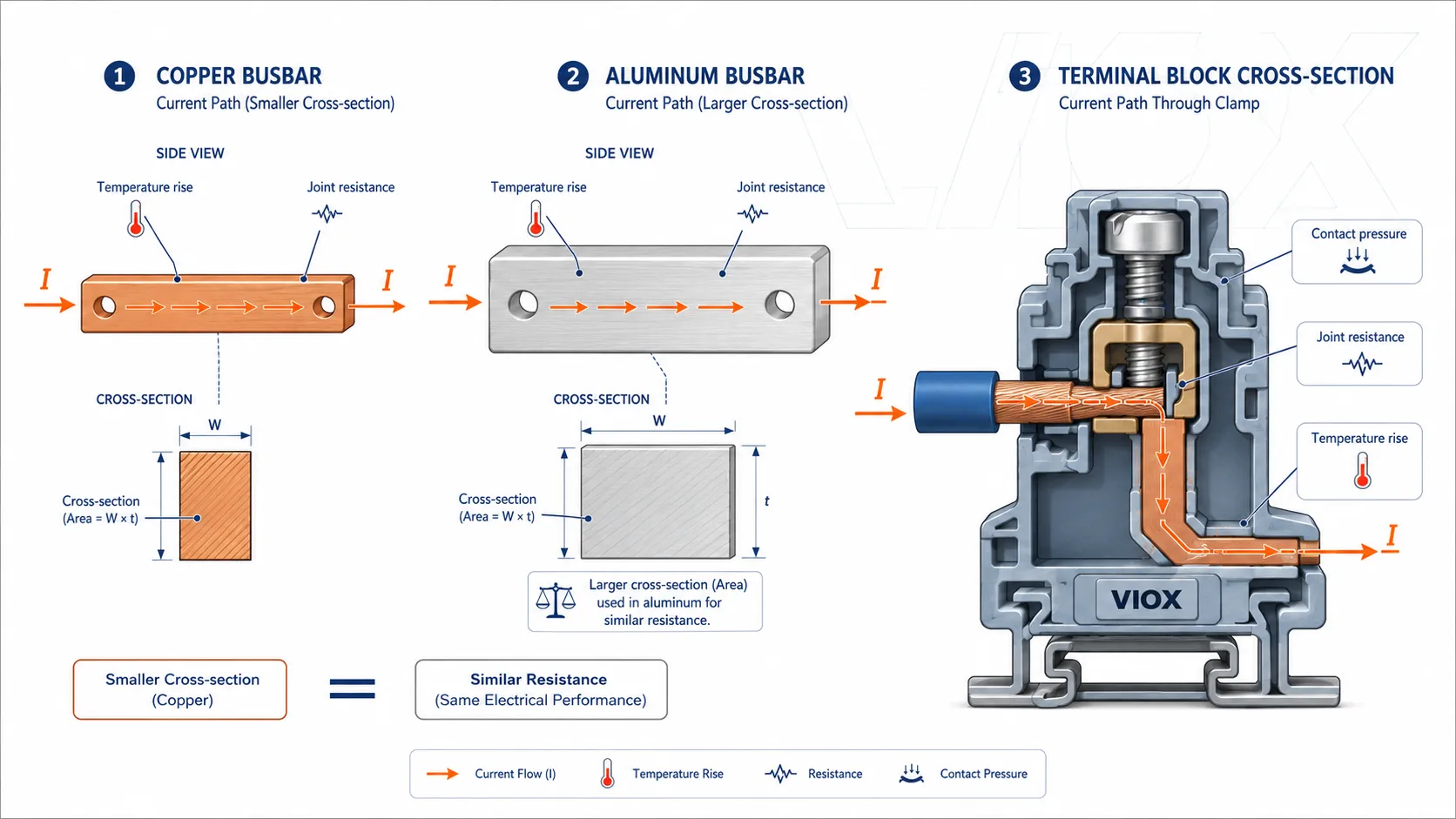
ค่าการนำไฟฟ้าของวัสดุส่งผลต่อความร้อน แรงดันตกคร่อม และความสามารถในการนำกระแส หากชิ้นส่วนสองชิ้นมีรูปทรงเหมือนกัน วัสดุที่มีค่าความต้านทานไฟฟ้าจำเพาะต่ำกว่ามักจะมีอุณหภูมิขณะทำงานต่ำกว่าเมื่อใช้กระแสไฟฟ้าเท่ากัน เนื่องจากเกิดความร้อนจูลน้อยกว่า.
ความสัมพันธ์คือ:
พี = ไอ²อาร์ที่ซึ่ง:
พีคือความร้อนที่เกิดจากความต้านทานฉันคือกระแสไฟฟ้าRคือความต้านทานไฟฟ้า
นั่นคือเหตุผลว่าทำไมค่าการนำไฟฟ้าจึงมีความสำคัญใน:
- บัสบาร์ทองแดงและอลูมิเนียม
- ชิ้นส่วนนำไฟฟ้าของ MCB และ MCCB
- เทอร์มินอลบล็อกและบาร์กราวด์
- หน้าสัมผัสของคอนแทคเตอร์และรีเลย์
- พื้นผิวหน้าสัมผัสที่ชุบเงิน
- หน้าสัมผัสอาร์คแบบทองแดง-ทังสเตน
- จุดเชื่อมต่อสวิตช์เกียร์และการต่อด้วยสลักเกลียว
สำหรับการเลือกบัสบาร์โดยเฉพาะ โปรดดู 10 ความแตกต่างระหว่างบัสบาร์ทองแดงและอลูมิเนียม แล้ว คู่มือการเลือกบัสบาร์: การเปรียบเทียบการชุบทองแดง ดีบุก และเงิน.
สภาพต้านทานไฟฟ้าคืออะไร?
สภาพต้านทานไฟฟ้า เป็นคุณสมบัติเฉพาะของวัสดุที่อธิบายว่าวัสดุนั้นต้านทานกระแสไฟฟ้าได้มากน้อยเพียงใด โดยปกติจะเขียนแทนด้วย ρ และมักแสดงหน่วยเป็น:
Ω · m(โอห์ม-เมตร)μΩ · cm(ไมโครโอห์ม-เซนติเมตร)nΩ · m(นาโนโอห์ม-เมตร)
ค่าความต้านทานจำเพาะที่ต่ำกว่าจะดีกว่าสำหรับตัวนำไฟฟ้าที่ใช้กระแสไฟฟ้า.
ตัวอย่างเช่น ทองแดงอบอ่อนมีค่าความต้านทานจำเพาะทั่วไปอยู่ที่ประมาณ 1.724 μΩ·cm ที่อุณหภูมิ 20°C, ในขณะที่อลูมิเนียมโดยทั่วไปจะอยู่ที่ประมาณ 2.7-2.9 μΩ·cm ขึ้นอยู่กับความบริสุทธิ์และเกรดของวัสดุ นี่คือเหตุผลที่โดยปกติแล้วอะลูมิเนียมจำเป็นต้องมีพื้นที่หน้าตัดใหญ่กว่าทองแดงเพื่อให้สามารถนำกระแสไฟฟ้าได้เท่ากันที่อุณหภูมิที่เพิ่มขึ้นใกล้เคียงกัน.
ค่าความต้านทานจำเพาะไม่ใช่ค่าคงที่สำหรับชิ้นงานจริงทุกชิ้น แต่จะเปลี่ยนแปลงตามปัจจัยดังนี้:
- อุณหภูมิ
- เกรดของวัสดุ
- ระดับสิ่งเจือปน
- การขึ้นรูปเย็น (Cold working)
- การอบชุบด้วยความร้อน (Heat treatment)
- ธาตุที่ใช้ผสม (Alloying elements)
- การชุบและสภาพพื้นผิว
ด้วยเหตุนี้ ค่าที่เผยแพร่ควรได้รับการพิจารณาว่าเป็นค่าอ้างอิงทั่วไป ไม่ใช่ขีดจำกัดในการตรวจสอบขั้นสุดท้าย เว้นแต่จะผูกติดอยู่กับมาตรฐานวัสดุหรือข้อกำหนดในการจัดซื้อเฉพาะเจาะจง.
การนำไฟฟ้าคืออะไร?
การนำไฟฟ้า คือส่วนกลับของความต้านทานไฟฟ้า โดยปกติจะเขียนแทนด้วย σ และมักแสดงหน่วยเป็น:
- S/m (ซีเมนส์ต่อเมตร)
- MS/m (เมกะซีเมนส์ต่อเมตร)
สูตรคำนวณคือ:
σ = (1 / ρ)ค่าการนำไฟฟ้าที่สูงกว่าหมายความว่าวัสดุนั้นสามารถนำกระแสไฟฟ้าได้ง่ายกว่า.
ตัวอย่างค่าการนำไฟฟ้าทั่วไปที่อุณหภูมิ 20°C:
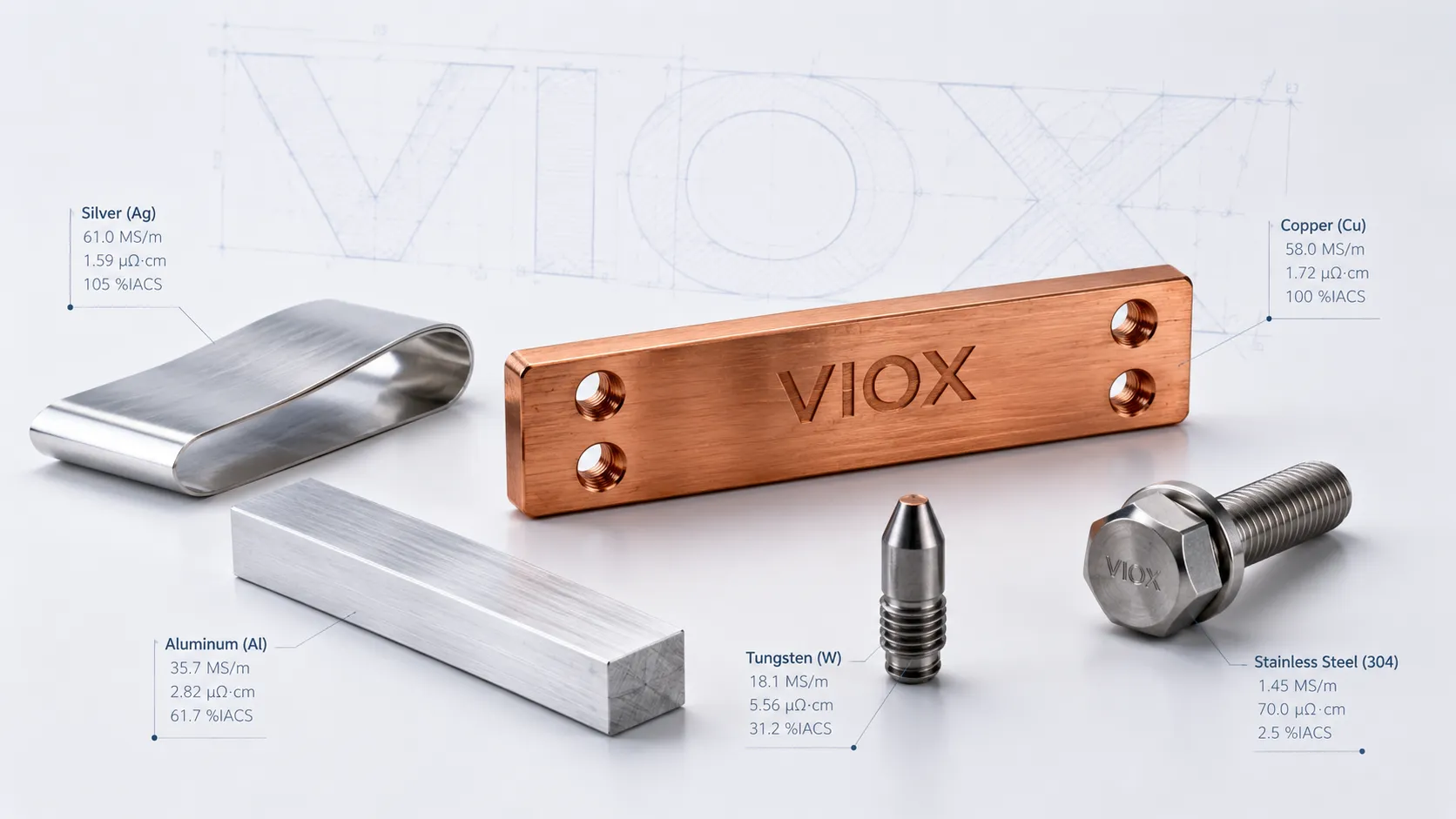
- เงิน: ประมาณ 61-63 MS/m
- ทองแดงอบอ่อน: ประมาณ 58 MS/m
- อะลูมิเนียม: ประมาณ 35-37 MS/m
- ทังสเตน: ประมาณ 17-19 MS/m
- สเตนเลสสตีล 304: ประมาณ 1.1-1.5 MS/m ขึ้นอยู่กับแหล่งอ้างอิงและสภาพของวัสดุ
ค่าการนำไฟฟ้ามีประโยชน์ในการเปรียบเทียบวัสดุตัวนำ แต่ไม่ใช่เกณฑ์การคัดเลือกเพียงอย่างเดียว ตัวอย่างเช่น สปริงของขั้วต่ออาจต้องการความแข็งแรงและความยืดหยุ่นมากกว่าค่าการนำไฟฟ้าสูงสุด หรือปลายสัมผัสอาจต้องการความต้านทานต่อการเกิดอาร์คมากกว่าค่าการนำไฟฟ้าของทองแดงบริสุทธิ์.
1% IACS คืออะไร?
% IACS หมายถึง เปอร์เซ็นต์มาตรฐานทองแดงอบอ่อนระหว่างประเทศ (IACS). เป็นการแสดงค่าการนำไฟฟ้าของวัสดุในรูปแบบเปอร์เซ็นต์เมื่อเทียบกับมาตรฐานทองแดงอบอ่อนระหว่างประเทศ โดยใช้ทองแดงอบอ่อนเป็นค่าอ้างอิง.
ในทางวิศวกรรมทั่วไป:
100% IACS ≈ 58 MS/m ที่อุณหภูมิ 20°Cดังนั้น:
- 100% IACS หมายถึงมีค่าใกล้เคียงกับทองแดงอบอ่อน
- 60% IACS หมายถึงมีค่าการนำไฟฟ้าประมาณ 60% ของทองแดงอบอ่อน
- 105% IACS หมายถึงมีค่าสูงกว่าทองแดงมาตรฐาน IACS เล็กน้อย
%IACS ถูกนำมาใช้อย่างแพร่หลายเนื่องจากช่วยให้วิศวกรสามารถเปรียบเทียบโลหะและโลหะผสมได้อย่างรวดเร็ว โดยไม่จำเป็นต้องแปลงค่าทุกค่าให้เป็นค่าความต้านทานจำเพาะหรือค่าความนำไฟฟ้า โดยเฉพาะอย่างยิ่งในงานตรวจสอบคุณภาพโลหะผสมทองแดง โลหะผสมอะลูมิเนียม วัสดุตัวนำ และวัสดุหน้าสัมผัส.
ข้อสำคัญ: โดยปกติแล้วค่า %IACS จะอ้างอิงที่อุณหภูมิ 20 องศาเซลเซียส. หากอุณหภูมิเปลี่ยนแปลง ค่าความนำไฟฟ้าและค่าความต้านทานจำเพาะก็จะเปลี่ยนแปลงตามไปด้วย.
สูตรการแปลงค่า: MS/m, μΩ·cm และ %IACS
หากกำหนดค่าความนำไฟฟ้าเป็น MS/m:
%IACS = (σ / 58) × 100ที่ไหน σ σ คือค่าความนำไฟฟ้าในหน่วย MS/m.
หากกำหนดค่าความต้านทานจำเพาะเป็น μΩ·cm:
σ(MS/m) = (100 / ρ(μΩ · cm))และ:
ρ(μΩ · cm) = (100 / σ(MS/m))ตัวอย่างการแปลงค่าอย่างรวดเร็ว
| ค่าที่กำหนด | การแปลง | ผลลัพธ์ |
|---|---|---|
| ทองแดงที่ 58 MS/m | 58 / 58 × 100 |
100% IACS |
| อะลูมิเนียมที่ 36 MS/m | 36 / 58 × 100 |
ประมาณ 62% IACS |
| เงินที่ 61.5 MS/m | 61.5 / 58 × 100 |
ประมาณ 106% IACS |
| ความต้านทานจำเพาะ 2.80 μΩ·cm | 100 / 2.80 |
ประมาณ 35.7 MS/m |
| ค่าการนำไฟฟ้า 18 MS/m | 100 / 18 |
ประมาณ 5.56 μΩ·cm |
การคำนวณเหล่านี้มีประโยชน์สำหรับการเปรียบเทียบวัสดุเบื้องต้น ไม่สามารถใช้แทนการตรวจสอบทางความร้อน ทางกล และการตรวจสอบตามมาตรฐานขั้นสุดท้ายได้.
ตารางเปรียบเทียบวัสดุทั่วไป
ค่าด้านล่างนี้เป็นช่วงอ้างอิงทั่วไปที่อุณหภูมิ 20°C หรือใกล้เคียง ค่าจริงจะขึ้นอยู่กับเกรดของวัสดุ ความบริสุทธิ์ สภาวะการแปรรูป อุณหภูมิ และวิธีการวัด.
| วัสดุ | ค่าทั่วไป %IACS | การนำไฟฟ้า (Conductivity) | ความต้านทานไฟฟ้า (Resistivity) | การใช้งานทางไฟฟ้าทั่วไป |
|---|---|---|---|---|
| เงิน | 105-108% | ~61-63 MS/m | ~1.59-1.64 μΩ·cm | พื้นผิวหน้าสัมผัส, การชุบผิว, พื้นผิวสำหรับงานความถี่วิทยุ (RF)/ประสิทธิภาพสูง |
| ทองแดงผ่านกระบวนการอบอ่อน (Annealed copper) | 100% | ~58 MS/m | ~1.724 μΩ·cm | บัสบาร์, ขั้วต่อ, ตัวนำไฟฟ้า, ชิ้นส่วนระบบสายดิน |
| ทองแดง ETP/OFC | ~100-101%+ | ~58-59 MS/m | ~1.70-1.72 μΩ·cm | ชิ้นส่วนไฟฟ้าที่มีค่าการนำไฟฟ้าสูง |
| อลูมิเนียม | 60-64% | ~35-37 MS/m | ~2.7-2.9 μΩ·cm | บัสบาร์น้ำหนักเบา, ตัวนำไฟฟ้า, ระบบจ่ายกำลังไฟฟ้า |
| ทังสเตน | ~30-33% | ~17-19 MS/m | ~5.3-5.8 μΩ·cm | วัสดุหน้าสัมผัสที่ทนต่อการอาร์ค, การประยุกต์ใช้งานขั้วไฟฟ้า |
| ทองแดง-ทังสเตน | แตกต่างกันอย่างมาก | แตกต่างกันตามอัตราส่วน W/Cu | มักจะอยู่ที่ประมาณ 3-6 μΩ·cm | หน้าสัมผัสอาร์ค, การใช้งานในเบรกเกอร์/คอนแทคเตอร์ |
| ทองเหลือง | แตกต่างกันอย่างมาก | ต่ำกว่าทองแดง | สูงกว่าทองแดง | ขั้วต่อและชิ้นส่วนเชื่อมต่อที่ต้องการความแข็งแรง/ความสามารถในการขึ้นรูป |
| 304 不锈钢 | ~2-3% | ~1.1-1.5 MS/m | ~70-90 μΩ·cm | ชิ้นส่วนโครงสร้าง สปริง อุปกรณ์ที่ทนต่อการกัดกร่อน ซึ่งไม่ใช่ตัวนำไฟฟ้าหลัก |
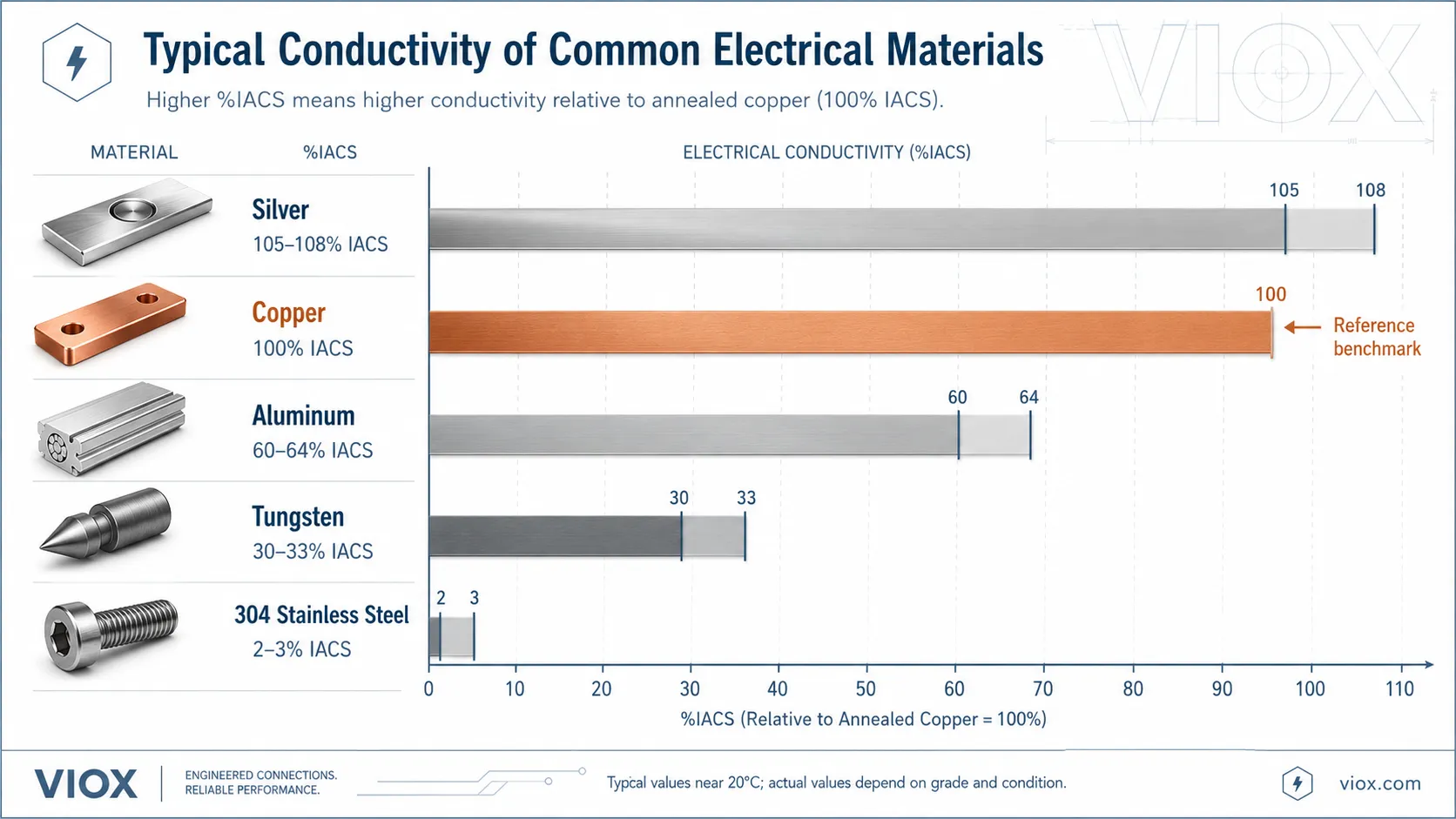
ตารางนี้อธิบายว่าเหตุใดการเลือกวัสดุในผลิตภัณฑ์ไฟฟ้าจึงเป็นเรื่องของการสร้างสมดุล ค่าการนำไฟฟ้าบริสุทธิ์เป็นสิ่งสำคัญ แต่ความแข็งแรง พฤติกรรมของสปริง ความต้านทานการกัดกร่อน ความเข้ากันได้กับการชุบ แรงกดหน้าสัมผัส ความสามารถในการผลิต และการสึกหรอจากอาร์คไฟฟ้าก็มีความสำคัญเช่นกัน.
สำหรับการใช้งานที่เกี่ยวข้องกับขั้วต่อ โปรดดู วิธีการเลือก Terminal Block ที่เหมาะสม แล้ว คู่มือการสร้างส่วนประกอบเทอร์มินัลบล็อก.
เหตุใดเงินจึงนำไฟฟ้าได้ดีกว่าทองแดงแต่ไม่ได้ถูกนำมาใช้งานเสมอไป
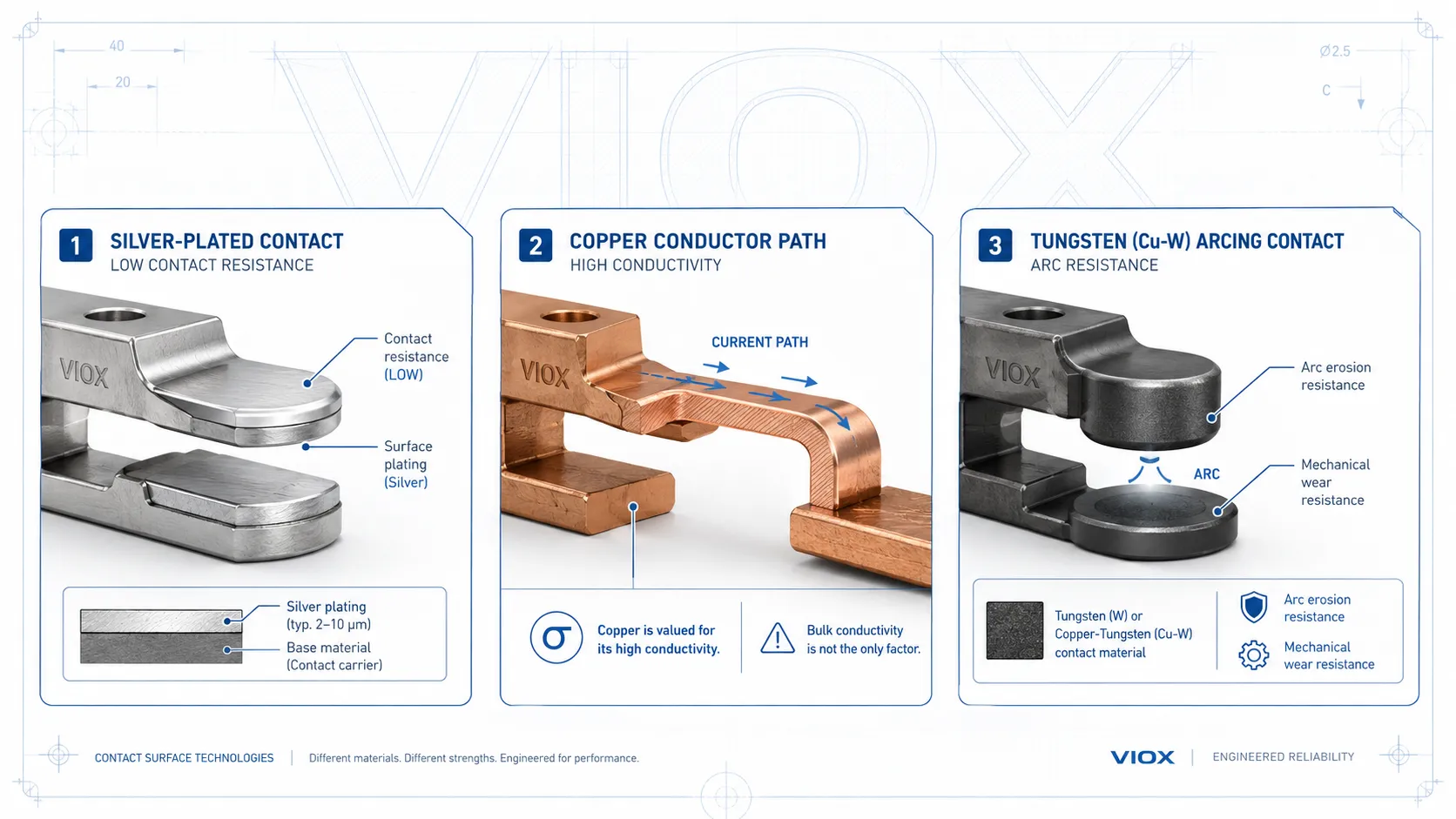
เงินเป็นโลหะทั่วไปที่มีค่าการนำไฟฟ้าสูงที่สุด โดยในมาตราส่วน IACS เงินสามารถนำไฟฟ้าได้สูงกว่าทองแดงอบอ่อนเล็กน้อย ซึ่งนำไปสู่คำถามที่ว่า เหตุใดจึงไม่ผลิตบัสบาร์และขั้วต่อทั้งหมดจากเงิน
คำตอบคือเรื่องของต้นทุน พฤติกรรมทางกล และความจำเป็นในการใช้งาน.
เงินมีราคาแพงเมื่อเทียบกับทองแดงและอลูมิเนียม โดยปกติแล้วไม่จำเป็นต้องใช้เงินเป็นตัวนำไฟฟ้าหลักเนื่องจากค่าการนำไฟฟ้าที่เพิ่มขึ้นเมื่อเทียบกับทองแดงนั้นมีน้อยมากเมื่อเทียบกับส่วนต่างของราคา ในชิ้นส่วนจ่ายกำลังไฟฟ้าหลายประเภท การเพิ่มพื้นที่หน้าตัดของทองแดง การปรับปรุงแรงกดที่จุดต่อ หรือการใช้การชุบที่เหมาะสมนั้นมีความคุ้มค่าทางเศรษฐกิจมากกว่าการเปลี่ยนจากทองแดงเป็นเงิน.
เงินมีคุณค่าในจุดที่พื้นผิวมีความสำคัญ ได้แก่:
- หน้าสัมผัส
- หน้าสัมผัสแบบเลื่อน
- พื้นผิวตัวนำที่ผ่านการชุบ
- ขั้วต่อที่มีความน่าเชื่อถือสูง
- พื้นผิวสำหรับความถี่สูงหรือคลื่นวิทยุ (RF)
ในระบบหน้าสัมผัส มักใช้เงินและโลหะผสมที่มีส่วนประกอบของเงิน เนื่องจากค่าการนำไฟฟ้าที่พื้นผิว ความต้านทานหน้าสัมผัส พฤติกรรมของออกไซด์ และประสิทธิภาพในการตัดตอนมีความสำคัญมากกว่าค่าการนำไฟฟ้าของเนื้อวัสดุเพียงอย่างเดียว.
สำหรับบริบทของวัสดุหน้าสัมผัส โปรดดู คู่มือวัสดุหน้าสัมผัสของคอนแทคเตอร์: AgSnO2 เทียบกับ AgNi เทียบกับ AgCdO.
เหตุใดอะลูมิเนียมจึงต้องการพื้นที่หน้าตัดที่ใหญ่กว่าทองแดง
อะลูมิเนียมมีน้ำหนักเบากว่าและมักมีราคาถูกกว่าทองแดง แต่มีค่าการนำไฟฟ้าเพียงประมาณ 60-64% IACS สำหรับอะลูมิเนียมที่มีค่าการนำไฟฟ้าสูงทั่วไป ซึ่งหมายความว่าโดยทั่วไปแล้วตัวนำอะลูมิเนียมจำเป็นต้องมีพื้นที่หน้าตัดที่ใหญ่กว่าทองแดงเพื่อให้ได้ค่าความต้านทานไฟฟ้าที่ใกล้เคียงกัน.
การเปรียบเทียบแบบสรุป:
- ทองแดงให้ค่าการนำไฟฟ้าสูงในพื้นที่จำกัด.
- อะลูมิเนียมช่วยลดน้ำหนักและสามารถลดต้นทุนได้.
- อะลูมิเนียมต้องการการออกแบบจุดต่อที่ระมัดระวัง เนื่องจากชั้นออกไซด์ การขยายตัวจากความร้อน และแรงกดในการเชื่อมต่อส่งผลต่อความน่าเชื่อถือในระยะยาว.
สำหรับบัสบาร์ การตัดสินใจมักไม่ใช่เรื่องของ "ทองแดงดีกว่า" หรือ "อะลูมิเนียมดีกว่า" แต่การตัดสินใจที่ถูกต้องขึ้นอยู่กับ:
- พื้นที่ที่มีอยู่
- อุณหภูมิที่เพิ่มขึ้นที่ยอมรับได้
- การรองรับทางกล
- ความทนทานต่อกระแสลัดวงจร
- การชุบหรือการเคลือบผิว
- การออกแบบรอยต่อ
- สภาพแวดล้อมในการติดตั้ง (Installation environment)
- ต้นทุนรวมและน้ำหนัก
สำหรับการเปรียบเทียบที่เฉพาะเจาะจงกับการใช้งานมากขึ้น โปรดดู 10 ความแตกต่างระหว่างบัสบาร์ทองแดงและอลูมิเนียม.
เหตุใดจึงใช้ทังสเตนและทองแดง-ทังสเตนในหน้าสัมผัส
ทังสเตนมีความสามารถในการนำไฟฟ้าต่ำกว่าทองแดงหรือเงินมาก จึงดูเหมือนเป็นตัวนำที่ไม่ดีหากพิจารณาเพียงแค่ค่าความนำไฟฟ้าเท่านั้น แต่การเลือกหน้าสัมผัสไม่ได้พิจารณาจากค่าความนำไฟฟ้าเพียงอย่างเดียว.
หน้าสัมผัสสำหรับการสับเปลี่ยนกระแสไฟฟ้าต้องทนต่อ:
- การเกิดอาร์ค
- ความเสี่ยงต่อการหลอมละลาย
- การสึกกร่อนของหน้าสัมผัส
- แนวโน้มการเชื่อมติดกัน
- อุณหภูมิเฉพาะจุดสูง
- แรงกระแทกทางกล
- การเปิดและปิดซ้ำๆ
ทังสเตนมีจุดหลอมเหลวสูงมากและมีความต้านทานต่อการกัดเซาะจากอาร์คได้ดี วัสดุทองแดง-ทังสเตนเป็นการรวมคุณสมบัติการนำไฟฟ้าของทองแดงเข้ากับความต้านทานต่ออาร์คของทังสเตน เมื่อปริมาณทังสเตนเพิ่มขึ้น โดยทั่วไปการนำไฟฟ้าจะลดลง แต่ความต้านทานต่ออาร์คและพฤติกรรมที่อุณหภูมิสูงจะดีขึ้น.
ด้วยเหตุนี้ วัสดุประเภททองแดง-ทังสเตนและเงิน-ทังสเตนจึงอาจพบได้ในหน้าสัมผัสของเบรกเกอร์ หน้าสัมผัสช่วยดับอาร์ค และการใช้งานที่มีการสับเปลี่ยนกระแสไฟฟ้าอย่างรุนแรง เป้าหมายไม่ใช่การนำไฟฟ้าสูงสุด แต่เป็นความสมดุลที่ใช้งานได้จริงระหว่างการนำไฟฟ้า พฤติกรรมทางความร้อน ความต้านทานต่ออาร์ค และอายุการใช้งานของหน้าสัมผัส.
เหตุใดสแตนเลสจึงไม่ใช่ตัวนำไฟฟ้าหลักที่ดี
สแตนเลสมีประโยชน์ในผลิตภัณฑ์ไฟฟ้า แต่ไม่ใช่เพราะมีค่าการนำไฟฟ้าสูง สแตนเลสกลุ่มออสเทนนิติก (Austenitic) เช่น เกรด 304 มีค่าความต้านทานไฟฟ้าสูงกว่าทองแดงและอลูมิเนียมมาก หากเทียบเป็นเปอร์เซ็นต์ตามมาตรฐาน IACS สแตนเลส 304 มักมีค่าการนำไฟฟ้าเพียงไม่กี่เปอร์เซ็นต์เมื่อเทียบกับทองแดง.
สิ่งนี้ทำให้สแตนเลสไม่เหมาะสำหรับใช้เป็นเส้นทางหลักในการนำกระแสไฟฟ้า เช่น บัสบาร์ (Busbars) หรือขั้วต่อหลัก.
อย่างไรก็ตาม สแตนเลสสามารถนำมาใช้ประโยชน์ในด้านต่อไปนี้ได้:
- สกรูและอุปกรณ์ฮาร์ดแวร์
- สปริง
- ขายึด
- ชิ้นส่วนตู้ควบคุมไฟฟ้า
- ส่วนประกอบโครงสร้างที่ทนต่อการกัดกร่อน
- ชิ้นส่วนทางกลที่ไม่ใช่ตัวนำไฟฟ้าหลัก
หัวใจสำคัญคือการใช้สแตนเลสในจุดที่ต้องการความทนทานต่อการกัดกร่อนหรือคุณสมบัติทางกล ไม่ใช่ในจุดที่ต้องการค่าความต้านทานต่ำเป็นหลัก.
ค่าเหล่านี้ส่งผลต่อบัสบาร์ เทอร์มินัล และหน้าสัมผัสอย่างไร
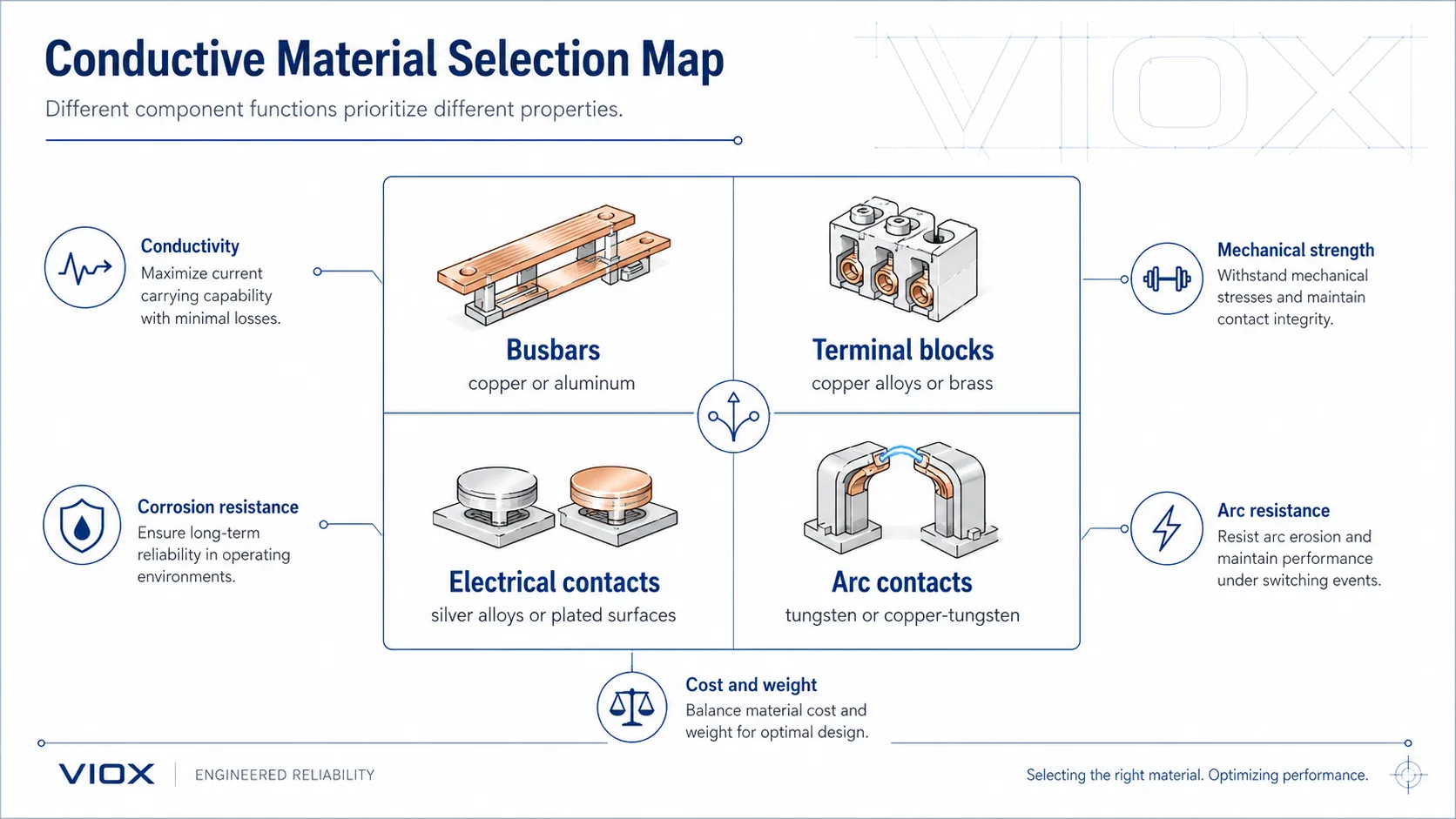
บัสบาร์
สำหรับบัสบาร์ ค่าการนำไฟฟ้าส่งผลต่อการเพิ่มขึ้นของอุณหภูมิและแรงดันไฟฟ้าตก ทองแดงมีขนาดกะทัดรัดและนำไฟฟ้าได้ดีเยี่ยม อลูมิเนียมสามารถใช้งานได้ดีหากมีการออกแบบให้มีหน้าตัดที่ใหญ่ขึ้น มีการปรับสภาพพื้นผิวที่เหมาะสม และมีการเชื่อมต่อที่ถูกต้อง.
การตรวจสอบที่สำคัญประกอบด้วย:
- ค่าการนำไฟฟ้าของวัสดุ
- พื้นที่หน้าตัด
- การเพิ่มขึ้นของอุณหภูมิ
- การทนต่อกระแสลัดวงจร
- ความต้านทานที่จุดต่อ
- การชุบผิว
- ฉนวนสำหรับติดตั้ง
- การระบายอากาศของตู้ควบคุม
สำหรับคุณภาพของบัสบาร์ MCB โปรดดูที่ วิธีการตรวจสอบคุณภาพของบัสบาร์สำหรับ MCB แล้ว วิธีการเลือกบัสบาร์ที่เหมาะสมสำหรับ MCB.
บล็อกเทอร์มินัล
เทอร์มินอลบล็อกต้องการมากกว่าแค่การนำไฟฟ้าที่ดี โลหะที่ใช้ทำเทอร์มินอลต้องมีความแข็งแรงในการยึดจับ ความต้านทานต่อการกัดกร่อน แรงกดสัมผัสที่เสถียร ความสามารถในการผลิต และความเข้ากันได้กับตัวนำทองแดงหรืออลูมิเนียม.
นั่นคือเหตุผลที่เทอร์มินอลหลายชนิดใช้โลหะผสมทองแดงหรือทองเหลืองแทนทองแดงบริสุทธิ์ ทองแดงบริสุทธิ์มีการนำไฟฟ้าสูงมาก แต่โลหะผสมบางชนิดให้ความแข็งเกร็ง พฤติกรรมการขึ้นรูป หรือประสิทธิภาพในการยึดด้วยสกรูที่ดีกว่า.
หน้าสัมผัสไฟฟ้า
สำหรับหน้าสัมผัส พื้นผิวมีความสำคัญมากกว่าเนื้อวัสดุตัวนำ พื้นที่หน้าสัมผัสขนาดเล็กจะนำกระแสผ่านจุดสัมผัสระดับจุลภาค แรงกดของหน้าสัมผัส ฟิล์มบนพื้นผิว พฤติกรรมของออกไซด์ การชุบผิว และการกัดเซาะจากอาร์คไฟฟ้า เป็นปัจจัยหลักที่กำหนดประสิทธิภาพการทำงานจริง.
นี่คือเหตุผลว่าทำไมจึงมีการใช้วัสดุประเภทโลหะผสมเงิน การชุบเงิน ทองแดง-ทังสเตน และวัสดุหน้าสัมผัสอื่นๆ แม้ว่าค่าการนำไฟฟ้าของเนื้อวัสดุเมื่อดูจากตารางทั่วไปอาจดูไม่ดีที่สุดก็ตาม.
ชิ้นส่วนกราวด์
ชิ้นส่วนกราวด์ต้องการค่าอิมพีแดนซ์ที่ต่ำและความน่าเชื่อถือทางกล ค่าการนำไฟฟ้าเป็นเรื่องสำคัญ แต่ความต้านทานการกัดกร่อน ความสมบูรณ์ของการเชื่อมต่อ และการยึดเกาะในระยะยาวมีความสำคัญไม่แพ้กัน บัสบาร์กราวด์หรือบัสบาร์ PE ที่มีการเชื่อมต่อไม่ดีอาจมีประสิทธิภาพแย่กว่าที่ระบุไว้ในตารางวัสดุ.
สำหรับบริบทของชิ้นส่วนกราวด์ โปรดดูที่ บัสบาร์นิวทรัลเทียบกับบัสบาร์กราวด์ แล้ว ชุดฉนวนกราวด์บาร์คืออะไร.
ข้อผิดพลาดทั่วไปในการเปรียบเทียบวัสดุตัวนำ
ข้อผิดพลาดที่ 1: การพิจารณาค่าการนำไฟฟ้าเป็นปัจจัยเดียวในการเลือกวัสดุ
ค่าการนำไฟฟ้าที่สูงนั้นมีประโยชน์ แต่ไม่สามารถแก้ปัญหาด้านความแข็งแรงทางกล การกัดกร่อน การเกิดอาร์ค แรงสปริง การชุบผิว หรือปัญหาในกระบวนการผลิตได้.
ข้อผิดพลาดที่ 2: การเปรียบเทียบโลหะบริสุทธิ์กับโลหะผสมจริง
ค่าในเอกสารข้อมูลทางเทคนิคสำหรับทองแดงบริสุทธิ์ อะลูมิเนียมบริสุทธิ์ หรือเงินบริสุทธิ์ อาจไม่ตรงกับชิ้นส่วนที่ผ่านการปั๊มขึ้นรูป การชุบ การอบชุบด้วยความร้อน หรือการผสมโลหะจริง.
ข้อผิดพลาดที่ 3: การละเลยเรื่องอุณหภูมิ
ค่าการนำไฟฟ้าและความต้านทานไฟฟ้าขึ้นอยู่กับอุณหภูมิ ค่าที่ระบุไว้ที่ 20°C จะไม่เหมือนกับพฤติกรรมที่เกิดขึ้นจริงภายในตู้สวิตช์บอร์ดหรือตู้ควบคุมที่มีความร้อน.
ข้อผิดพลาดที่ 4: การใช้สแตนเลสเป็นเส้นทางเดินกระแสไฟฟ้า
อุปกรณ์ที่เป็นสแตนเลสอาจมีประโยชน์ในเชิงกล แต่ไม่ควรนำมาใช้แทนทองแดงหรืออะลูมิเนียมสำหรับการนำกระแสไฟฟ้าหลัก.
ข้อผิดพลาดที่ 5: การลืมคำนึงถึงความต้านทานที่จุดสัมผัส
ในจุดต่อแบบขันสกรูและหน้าสัมผัสของสวิตช์ ค่าความต้านทานที่รอยต่ออาจมีผลมากกว่าค่าความต้านทานของวัสดุเอง การชุบผิว ความเรียบของพื้นผิว แรงบิด แรงกดที่จุดสัมผัส และการเกิดออกซิเดชัน อาจมีความสำคัญมากกว่าค่าตัวเลขของวัสดุเนื้อหลัก.
คำถามที่พบบ่อย
%IACS หมายถึงอะไร
%IACS หมายถึงร้อยละของมาตรฐานทองแดงอบอ่อนระหว่างประเทศ (International Annealed Copper Standard) ซึ่งเป็นการเปรียบเทียบค่าการนำไฟฟ้าของวัสดุกับทองแดงอบอ่อน โดยที่ 100% IACS มักถูกกำหนดให้มีค่าประมาณ 58 MS/m ที่อุณหภูมิ 20°C.
ค่าการนำไฟฟ้าเหมือนกับค่าความต้านทานไฟฟ้าหรือไม่
ไม่เหมือนกัน ทั้งสองเป็นคุณสมบัติที่แปรผกผันกัน ค่าการนำไฟฟ้าใช้วัดความง่ายในการไหลของกระแสไฟฟ้า ส่วนค่าความต้านทานไฟฟ้าใช้วัดความสามารถของวัสดุในการต้านทานการไหลของกระแสไฟฟ้า ค่าการนำไฟฟ้าที่สูงกว่าหมายถึงค่าความต้านทานไฟฟ้าที่ต่ำกว่า.
สูตรความสัมพันธ์ระหว่างค่าการนำไฟฟ้าและค่าความต้านทานไฟฟ้าคืออะไร
สูตรพื้นฐานคือ σ = 1 / ρ. หากค่าการนำไฟฟ้ามีหน่วยเป็น MS/m และค่าความต้านทานไฟฟ้ามีหน่วยเป็น μΩ·cm สูตรการแปลงที่สะดวกคือ ρ = 100 / σ.
ทำไมทองแดงถึงถูกนำมาใช้มากกว่าเงิน ทั้งที่เงินนำไฟฟ้าได้ดีกว่า?
เงินนำไฟฟ้าได้ดีกว่าทองแดง แต่มีราคาแพงกว่ามากและไม่จำเป็นสำหรับการใช้งานเป็นตัวนำไฟฟ้าทั่วไป เงินมักถูกนำมาใช้เป็นสารเคลือบผิวหรือพื้นผิวสัมผัสในจุดที่ต้องการลดความต้านทานหน้าสัมผัส การจัดการพฤติกรรมของพื้นผิว หรือประสิทธิภาพในย่านความถี่สูง.
ทำไมอลูมิเนียมถึงต้องใช้พื้นที่หน้าตัดที่ใหญ่กว่าทองแดง?
อลูมิเนียมมีความสามารถในการนำไฟฟ้าต่ำกว่าทองแดง โดยทั่วไปอยู่ที่ประมาณ 60-64% IACS สำหรับอลูมิเนียมเกรดนำไฟฟ้าสูง เพื่อให้ได้ค่าความต้านทานที่ใกล้เคียงกัน อลูมิเนียมจึงจำเป็นต้องมีพื้นที่หน้าตัดที่ใหญ่กว่า.
สแตนเลสนำไฟฟ้าหรือไม่?
ใช่ สแตนเลสนำไฟฟ้าได้ แต่ถือว่านำได้ไม่ดีเมื่อเทียบกับทองแดงและอลูมิเนียม สแตนเลสจึงเหมาะสำหรับใช้ทำชิ้นส่วนทางกลและชิ้นส่วนที่ต้องการความทนทานต่อการกัดกร่อน ไม่เหมาะสำหรับใช้เป็นตัวนำกระแสไฟฟ้าหลัก.
ทังสเตนเป็นตัวนำไฟฟ้าที่ดีหรือไม่?
ทังสเตนสามารถนำไฟฟ้าได้ แต่ไม่ดีเท่าทองแดงหรือเงิน คุณค่าของมันในงานหน้าสัมผัสมาจากคุณสมบัติการทนต่ออุณหภูมิสูงและการทนต่อการเกิดอาร์ค ไม่ใช่ค่าการนำไฟฟ้าสูงสุด.
การชุบผิวส่งผลต่อค่าการนำไฟฟ้าหรือไม่?
การชุบผิวสามารถส่งผลอย่างมากต่อประสิทธิภาพของหน้าสัมผัส โดยเฉพาะที่บริเวณพื้นผิว การชุบด้วยดีบุก เงิน และนิกเกิล อาจถูกนำมาใช้เพื่อป้องกันการกัดกร่อน เพิ่มความสามารถในการบัดกรี ลดความต้านทานหน้าสัมผัส หรือปรับปรุงคุณสมบัติการสึกหรอ การชุบที่ดีที่สุดขึ้นอยู่กับภาระทางไฟฟ้าและสภาพแวดล้อมในการใช้งาน.
สรุป
ค่าการนำไฟฟ้า (Conductivity), ค่าความต้านทานไฟฟ้า (Resistivity) และค่า %IACS เป็นสามวิธีในการเปรียบเทียบความสามารถในการนำกระแสของวัสดุ สำหรับผลิตภัณฑ์ทางไฟฟ้า ลำดับความสำคัญในทางปฏิบัติคือ เงินเป็นโลหะทั่วไปที่นำไฟฟ้าได้ดีที่สุด ทองแดงเป็นมาตรฐานอ้างอิงหลักทางวิศวกรรม อะลูมิเนียมแลกค่าการนำไฟฟ้าที่ต่ำกว่าเพื่อข้อได้เปรียบด้านน้ำหนักและต้นทุน วัสดุที่มีส่วนผสมของทังสเตนแลกค่าการนำไฟฟ้าเพื่อความทนทานต่อการเกิดอาร์ค และสแตนเลสส่วนใหญ่ใช้ในงานโครงสร้างมากกว่างานนำไฟฟ้า.
สำหรับการประยุกต์ใช้งานผลิตภัณฑ์ VIOX ค่าเหล่านี้มีความสำคัญในบัสบาร์ เทอร์มินัลบล็อก อุปกรณ์กราวด์ วัสดุหน้าสัมผัส ชิ้นส่วนนำไฟฟ้าของ MCB/MCCB และจุดเชื่อมต่อในสวิตช์เกียร์ อย่างไรก็ตามตารางวัสดุเป็นเพียงจุดเริ่มต้นเท่านั้น ประสิทธิภาพทางไฟฟ้าที่แท้จริงยังขึ้นอยู่กับรูปทรง การเพิ่มขึ้นของอุณหภูมิ แรงกดหน้าสัมผัส การชุบผิว การกัดกร่อน ภาระการเกิดอาร์ค และความสม่ำเสมอในการผลิต.