

এই পৃষ্ঠায়
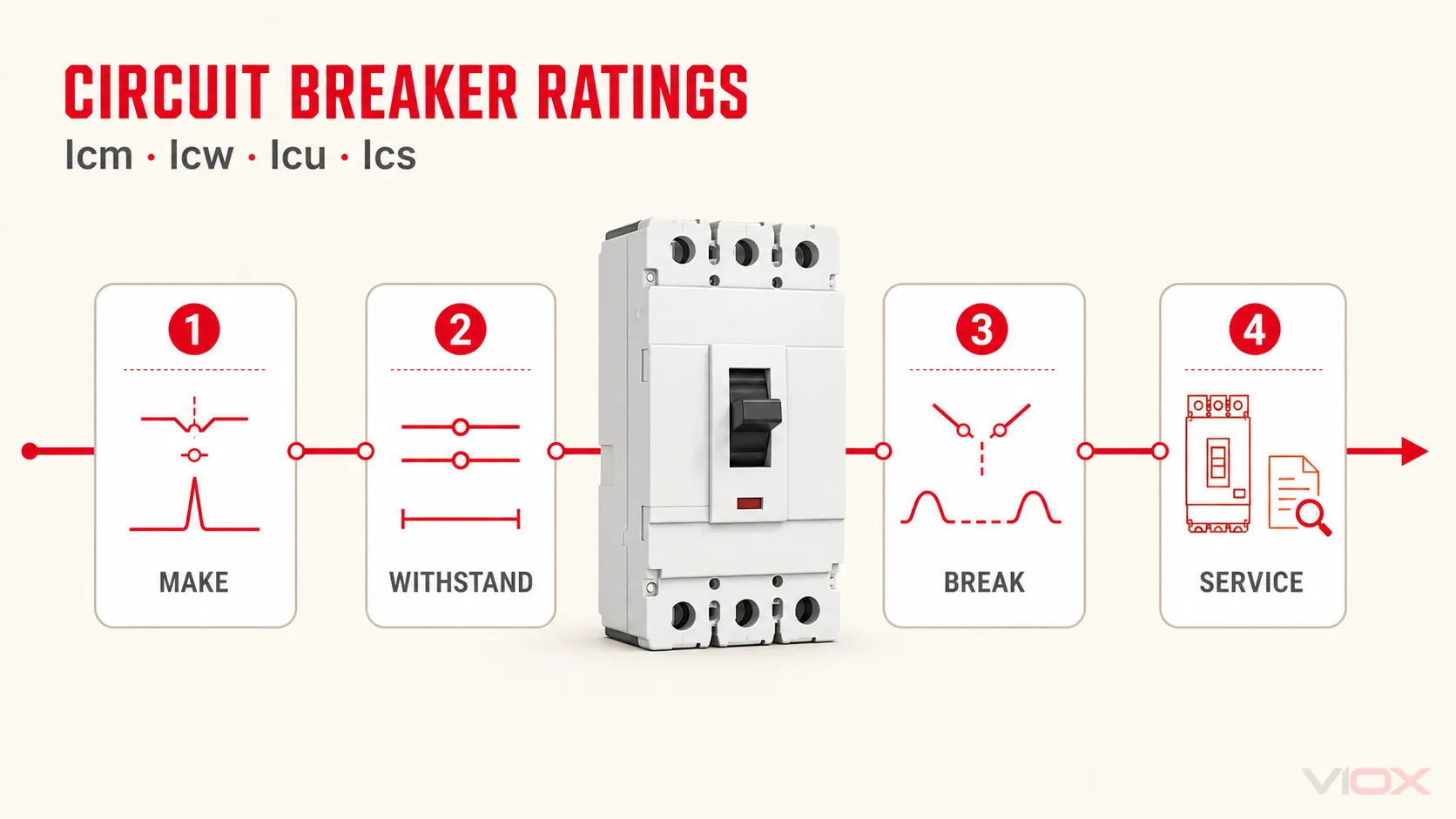
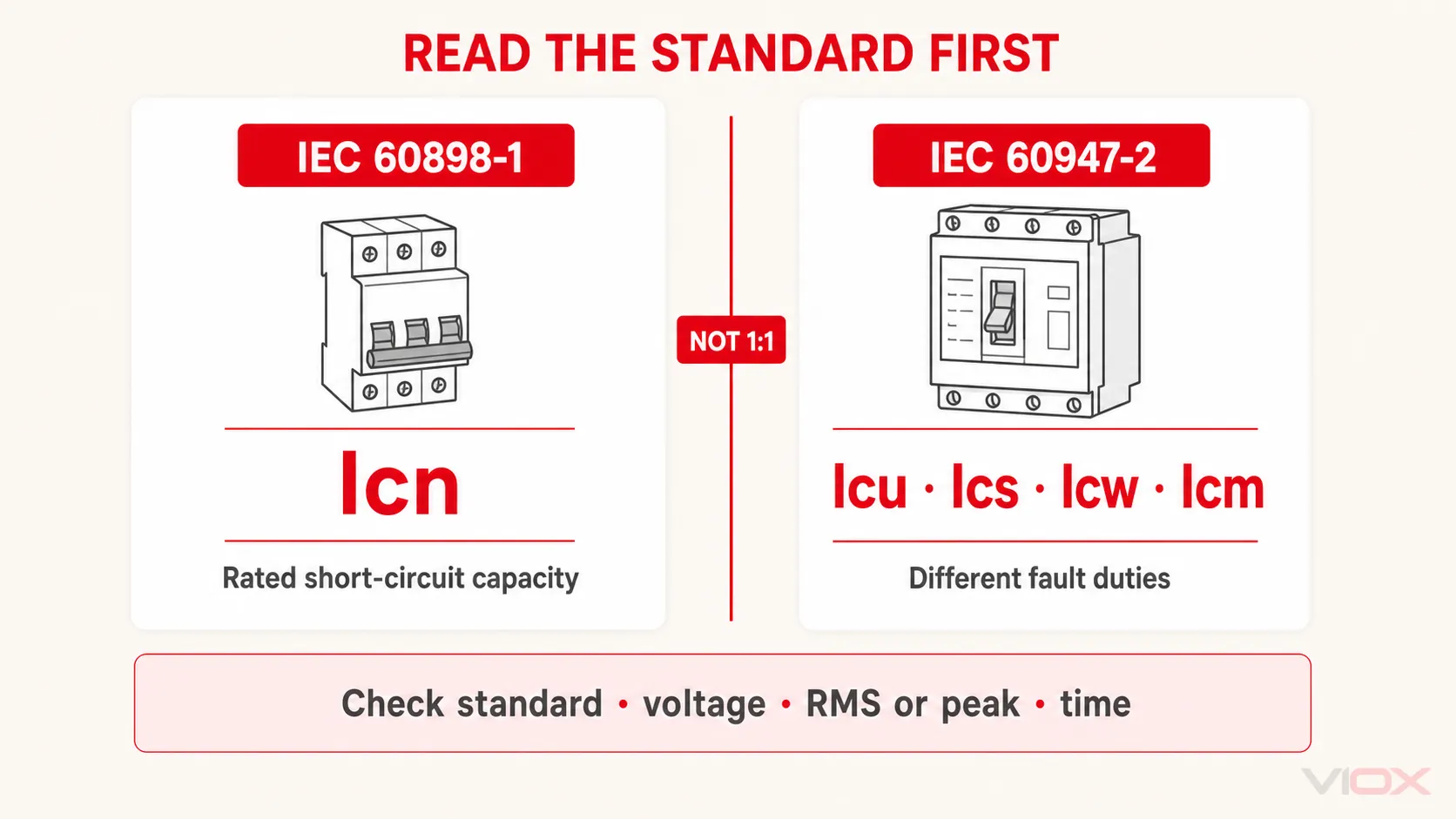
Icn, Icu, Ics, Icw এবং Icm বিভিন্ন শর্ট সার্কিট ডিউটি বর্ণনা করে; এগুলো একই ব্রেকার রেটিংয়ের পাঁচটি ভিন্ন নাম নয়।. Icn মূলত IEC 60898-1 এর অধীনে গৃহস্থালি এবং অনুরূপ সার্কিট ব্রেকারের জন্য ব্যবহৃত হয়। Icu, Ics, Icw এবং Icm IEC 60947-2 ইন্ডাস্ট্রিয়াল সার্কিট-ব্রেকার কাঠামোতে সংজ্ঞায়িত করা হয়েছে। প্রতিটি মান তার পণ্যের মান, রেটেড ভোল্টেজ, কারেন্ট ভিত্তি এবং—প্রযোজ্য ক্ষেত্রে—সময়কালসহ পড়ুন।.
| রেটিং | অর্থ | এটি আপনাকে কী জানায় | কারেন্ট ভিত্তি | প্রধান মানদণ্ডের প্রেক্ষাপট |
|---|---|---|---|---|
| আইসিএন | Rated short-circuit capacity | গৃহস্থালি বা অনুরূপ সার্কিট ব্রেকারের জন্য ঘোষিত শর্ট সার্কিট ক্ষমতা | প্রযোজ্য টেস্ট সিকোয়েন্সের অধীনে প্রসপেক্টিভ কারেন্ট | IEC 60898-1 |
| Icu | Rated ultimate short-circuit breaking capacity | নির্দিষ্ট আল্টিমেট টেস্ট ডিউটির অধীনে ব্রেকারটি যে সর্বোচ্চ প্রসপেক্টিভ শর্ট সার্কিট কারেন্ট বিচ্ছিন্ন করতে সক্ষম | kA RMS | আইইসি 60947-2 |
| Ics | Rated service short-circuit breaking capacity | যে ফল্ট লেভেলে নির্ধারিত সার্ভিস ব্রেকিং সিকোয়েন্স এবং পরবর্তী পরীক্ষাগুলো সম্পন্ন করা হয় | kA RMS বা Icu-এর শতাংশ | আইইসি 60947-2 |
| Icw | রেটেড শর্ট-টাইম উইথস্ট্যান্ড কারেন্ট | নির্দিষ্ট শর্তাধীনে একটি ঘোষিত স্বল্প সময়ের জন্য সার্কিট ব্রেকার যে কারেন্ট বহন করতে পারে | kA RMS এবং সময় | আইইসি 60947-2 |
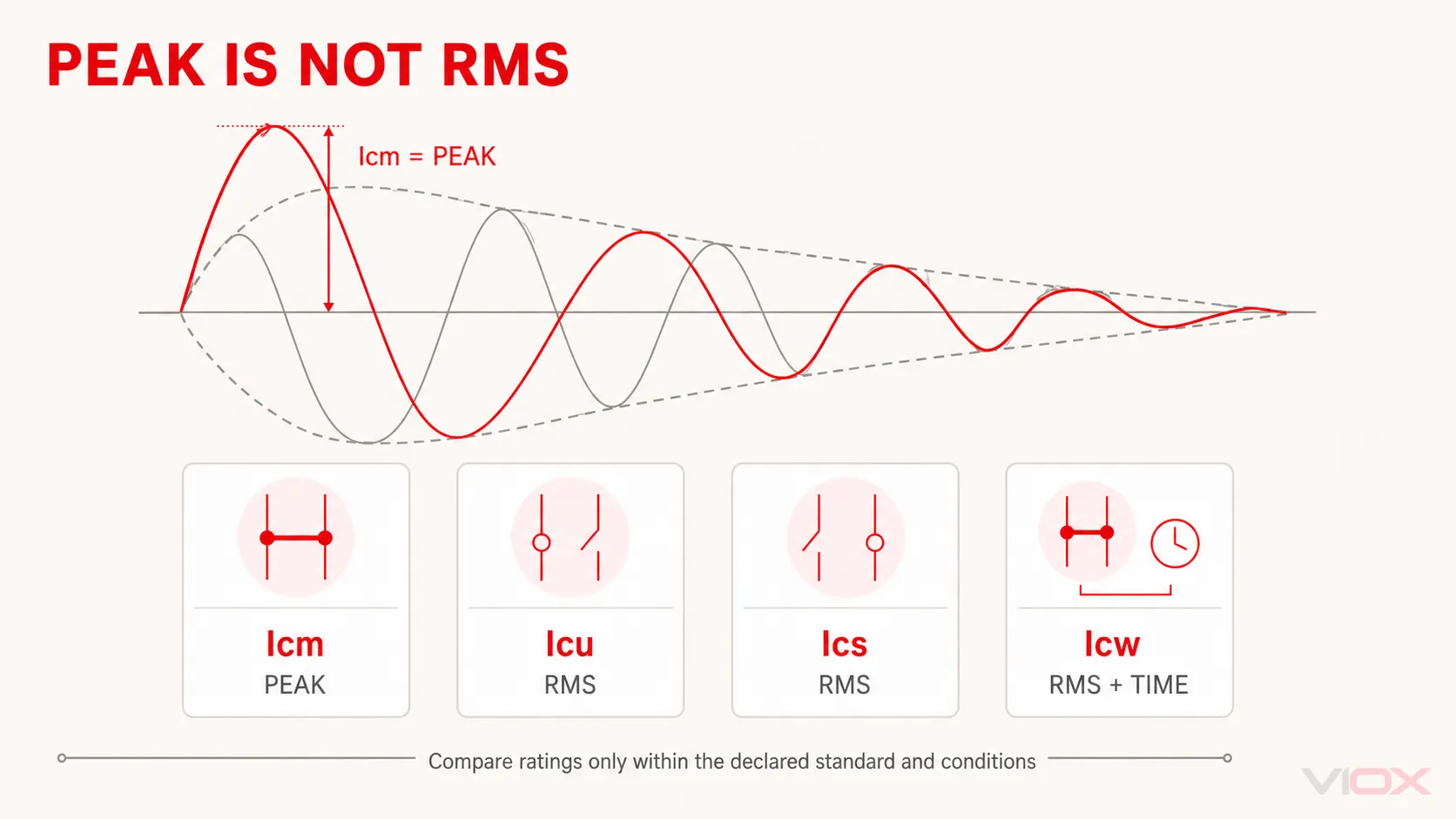
| Icm | রেটেড শর্ট-সার্কিট মেকিং ক্যাপাসিটি | নির্দিষ্ট শর্তাধীনে শর্ট সার্কিটের সময় সার্কিট ব্রেকার বন্ধ করার মুহূর্তে যে সর্বোচ্চ পিক কারেন্ট (peak current) তৈরি করতে পারে | kA পিক | আইইসি 60947-2 |
The practical rule is simple: প্রথমে পণ্যের স্ট্যান্ডার্ড শনাক্ত করুন, তারপর একই ধরনের জিনিসের সাথে তুলনা করুন।. একটি পিক Icm মানের সাথে সরাসরি একটি RMS Icu মানের তুলনা করা যায় না এবং একটি Icw মান তার সময়কাল ছাড়া অসম্পূর্ণ।.
একটি ফল্ট, চারটি ভিন্ন ব্রেকার ডিউটি
একটি শর্ট সার্কিটের সময় একটি ব্রেকার বিভিন্ন ধরনের ডিউটির সম্মুখীন হতে পারে:
- এটি হয়তো করতে হতে পারে বাধা দিতে ফল্টটি।.
- এটি হয়তো উপযুক্ত থাকতে পারে অব্যাহত পরিষেবার জন্য একটি নির্ধারিত বাধা ক্রমের পরে।.
- একটি আপস্ট্রিম ব্রেকার ইচ্ছাকৃতভাবে স্বল্প বিলম্বের জন্য ফল্টটি সহ্য করতে পারে যখন একটি ডাউনস্ট্রিম ডিভাইস এটি পরিষ্কার করে।.
- এটি কমান্ড করা হতে পারে বিদ্যমান ত্রুটির উপর বন্ধ করার জন্য.
এই কাজগুলো ভিন্ন ভিন্ন তাপীয়, ডাই-ইলেকট্রিক, যান্ত্রিক এবং আর্ক-ইন্টারাপশন স্ট্রেস তৈরি করে। এই কারণেই একটি প্রধান kA সংখ্যা ইন্ডাস্ট্রিয়াল সার্কিট ব্রেকারের কার্যকারিতার প্রতিটি দিক বর্ণনা করতে পারে না।.
এর বর্তমান সংস্করণটি IEC 60947-2:2024 এমন সার্কিট ব্রেকারের ক্ষেত্রে প্রযোজ্য যা নির্দেশপ্রাপ্ত বা দক্ষ ব্যক্তিদের দ্বারা স্ট্যান্ডার্ডে উল্লিখিত ভোল্টেজ সীমার মধ্যে ইনস্টল এবং পরিচালনা করার উদ্দেশ্যে তৈরি। তাই ডেটাশিটের শর্তাবলী সেই পণ্য-স্ট্যান্ডার্ডের প্রেক্ষাপটেই ব্যাখ্যা করতে হবে—প্রতিটি সুরক্ষা ডিভাইসের জন্য সর্বজনীন লেবেল হিসেবে নয়।.
Icu বনাম Ics: আল্টিমেট ইন্টারাপশন এবং সার্ভিস পারফরম্যান্স
Icu হলো আল্টিমেট শর্ট সার্কিট ব্রেকিং ক্যাপাসিটি।. এটি প্রথম নিরাপত্তা প্রশ্নের উত্তর দেয়: স্ট্যান্ডার্ডের আল্টিমেট ব্রেকিং টেস্ট সিকোয়েন্সের অধীনে ঘোষিত অপারেটিং ভোল্টেজে ব্রেকারটি কি নির্দিষ্ট সম্ভাব্য শর্ট সার্কিট কারেন্ট বিচ্ছিন্ন করতে সক্ষম?
যদি কোনো সুইচবোর্ডে সম্ভাব্য শর্ট সার্কিট কারেন্ট 38 kA হয়, তবে যে ব্রেকারের প্রযোজ্য Icu মাত্র 25 kA, তা সেই স্থানে ব্যবহারের জন্য উপযুক্ত নয়। 50 kA মানটি এই প্রাথমিক যাচাইয়ে কেবল তখনই উত্তীর্ণ হতে পারে যদি এটি প্রকৃত ভোল্টেজ, ফ্রিকোয়েন্সি, পোল, ইনস্টলেশন বিন্যাস এবং পণ্যের স্ট্যান্ডার্ডের ক্ষেত্রে প্রযোজ্য হয়।.
Icu মানে এই নয় যে not একটি বড় ধরনের ত্রুটির পর ব্রেকারটি স্বয়ংক্রিয়ভাবে পুনরায় চালু করা যাবে। প্রস্তুতকারকের নির্দেশাবলী এবং সাইটের ত্রুটি-পরবর্তী পদ্ধতি অনুযায়ী পরিদর্শন, পরীক্ষা, সার্ভিসিং বা প্রতিস্থাপনের প্রয়োজন হতে পারে।.
Ics হলো সার্ভিস শর্ট সার্কিট ব্রেকিং ক্যাপাসিটি।. এটি প্রায়শই Icu-এর শতাংশ হিসেবে উল্লেখ করা হয়, তবে সিস্টেমের ফল্ট লেভেলের সাথে তুলনা করার আগে এই শতাংশকে অবশ্যই প্রকৃত kA মানে রূপান্তর করে নিতে হবে।.
| ডেটাশিট ঘোষণা | সঠিক ব্যাখ্যা |
|---|---|
| Icu = 50 kA; Ics = 25 kA | সার্ভিস ক্যাপাসিটি হলো 25 kA, বা Icu-এর 50% |
| Icu = 50 kA; Ics = 37.5 kA | সার্ভিস ক্যাপাসিটি হলো 37.5 kA, বা Icu-এর 75% |
| Icu = 50 kA; Ics = 50 kA | সার্ভিস ক্যাপাসিটি Icu-এর সমান |
তাই প্রকৌশলগত পার্থক্যটি হলো:
- স্ট্যান্ডার্ড অ্যাপ্লিকেশনের জন্য Icn এবং চরম ফল্ট কারেন্ট পরিস্থিতির জন্য Icu ব্যবহার করুন। নির্দিষ্ট টেস্ট ডিউটির অধীনে চূড়ান্ত ইন্টারাপশন সক্ষমতা।.
- Ics: নির্ধারিত টেস্ট ডিউটি এবং পরবর্তী যাচাইকরণের অধীনে ঘোষিত ফল্ট লেভেলে পরীক্ষিত সার্ভিস ব্রেকিং পারফরম্যান্স।.
এটিকে “Icu একবার টিকে থাকে, Ics বারবার টিকে থাকে” এমনভাবে সংকুচিত করবেন না। টেস্ট সিকোয়েন্স এবং যাচাইকরণের প্রয়োজনীয়তাগুলো প্রযোজ্য স্ট্যান্ডার্ড দ্বারা সংজ্ঞায়িত করা হয়েছে এবং ফল্ট-পরবর্তী ফিল্ড সিদ্ধান্তগুলো এখনও প্রস্তুতকারকের নির্দেশাবলী অনুসরণ করে। Schneider Electric-এর Ics প্রযুক্তিগত ব্যাখ্যা একইভাবে Ics-কে সামগ্রিক পুনঃব্যবহারের গ্যারান্টির পরিবর্তে একটি সার্ভিস-পারফরম্যান্স বৈশিষ্ট্য হিসেবে বিবেচনা করে।.
Icw: শর্ট-টাইম উইথস্ট্যান্ড কারেন্ট অবশ্যই সময় অন্তর্ভুক্ত করবে
Icw হলো রেটেড শর্ট-টাইম উইথস্ট্যান্ড কারেন্ট।. এটি তখন গুরুত্বপূর্ণ হয়ে ওঠে যখন একটি আপস্ট্রিম ব্রেকার ইচ্ছাকৃতভাবে ওপেনিং বিলম্বিত করে, যাতে একটি ডাউনস্ট্রিম প্রোটেক্টিভ ডিভাইস প্রথমে ফল্টটি ক্লিয়ার করার সময় পায়।.
সেই বিলম্বের সময়, আপস্ট্রিম ব্রেকারটি বন্ধ থাকে এবং ফল্ট কারেন্ট বহন করে। তাই এর Icw ডিউটি অবশ্যই নিচের দুটির সাথে সমন্বয় করতে হবে:
- সেই পয়েন্টে প্রত্যাশিত শর্ট-সার্কিট কারেন্ট; এবং
- নির্বাচিত শর্ট-টাইম বিলম্ব।.
| ঘোষণা | যা তুলনা করা যেতে পারে |
|---|---|
| Icw = 20 kA, 0.5 s এর জন্য | ঘোষিত 0.5-সেকেন্ড শর্তের জন্য 20 kA অতিক্রম করে না এমন একটি ডিউটি |
| Icw = 20 kA, 1 s এর জন্য | 0.5 s এর জন্য 20 kA এর চেয়ে ভিন্ন এবং অধিক চাহিদাসম্পন্ন একটি টাইম ডিউটি |
কখনও “Icw = 20 kA” উদ্ধৃত করবেন না এবং সময়কাল বাদ দেবেন না। Schneider Electric-এর Icw এর সংজ্ঞা একইভাবে এটিকে প্রস্তুতকারক-নির্ধারিত কারেন্ট হিসেবে সংজ্ঞায়িত করে, যা সরঞ্জাম নির্দিষ্ট পরীক্ষার শর্তে কোনো ক্ষতি ছাড়াই বহন করতে পারে এবং এটি সময়ের সাথে একত্রে প্রকাশ করে।.
Icw বিশেষভাবে টাইম-ডিলেড সিলেক্টিভিটির জন্য উদ্দিষ্ট ব্রেকারগুলোর সাথে সম্পর্কিত। সঠিক আপস্ট্রিম/ডাউনস্ট্রিম সমন্বয়ের জন্য প্রস্তুতকারকের সিলেক্টিভিটি এবং ব্যাকআপ-প্রোটেকশন টেবিল যাচাই করার বিকল্প হিসেবে এটি ব্যবহার করা যাবে না। ট্রিপ-ইউনিট সেটিংস, ইনস্ট্যান্টেনিয়াস ওভাররাইড, কারেন্ট-লিমিটিং আচরণ এবং পরীক্ষিত ব্রেকার পেয়ারিং—এসবই ফলাফল পরিবর্তন করতে পারে। নির্দেশিকা দেখুন MCCB ট্রিপ-ইউনিট সেটিংস এর সাথে জড়িত Ir, Isd এবং Ii ফাংশনগুলোর জন্য।.
Icm: ফল্টের উপর ক্লোজ করার সময় পিক কারেন্ট
Icm হলো রেটেড শর্ট-সার্কিট মেকিং ক্যাপাসিটি।. এটি সেই পিক কারেন্টকে নির্দেশ করে যা একটি ব্রেকার নির্দিষ্ট শর্তাধীনে শর্ট সার্কিটের উপর তার কন্টাক্ট ক্লোজ করার সময় তৈরি করতে পারে।.
এটি যান্ত্রিকভাবে ফল্ট ব্রেকিং থেকে ভিন্ন। প্রথম অপ্রতিসম কারেন্ট পিক কন্টাক্ট, কন্ডাক্টর, অপারেটিং মেকানিজম এবং এনক্লোজারে উচ্চ ইলেক্ট্রো-ডাইনামিক বল তৈরি করতে পারে। ফলস্বরূপ:
- Icm-কে প্রকাশ করা হয় একটি peak মান হিসেবে;
- Icu এবং Ics প্রকাশ করা হয় আরএমএস (RMS) শর্ট সার্কিট কারেন্ট ব্যবহার করে;
- সাংখ্যিক Icm মান সাধারণত বেশি হয়, কিন্তু তার মানে এই নয় যে এটি একটি “উন্নত Icu।”
IEC-ভিত্তিক টেবিলগুলো প্রযোজ্য পরীক্ষার শর্ত এবং পাওয়ার ফ্যাক্টর দ্বারা নির্ধারিত একটি ফ্যাক্টর ব্যবহার করে Icm-কে সংশ্লিষ্ট ব্রেকিং ক্যাপাসিটির সাথে সম্পর্কিত করতে পারে। প্রতিটি ব্রেকার, ভোল্টেজ, স্ট্যান্ডার্ড বা AC/DC ডিউটির ক্ষেত্রে একটি নির্দিষ্ট গুণক প্রয়োগ করবেন না। সঠিক পণ্যের জন্য প্রস্তুতকারকের ঘোষিত মান অথবা পণ্যের স্ট্যান্ডার্ডের প্রযোজ্য সংস্করণ অনুযায়ী প্রয়োজনীয় সম্পর্কটি ব্যবহার করুন।.
যেখানে ব্রেকারটি দূরবর্তীভাবে বা স্বয়ংক্রিয়ভাবে বন্ধ করা যায়, যেমন ইনকামার, বাস কাপলার বা ট্রান্সফার অ্যারেঞ্জমেন্টের ক্ষেত্রে, সেখানে Icm-এর প্রতি বিশেষ মনোযোগ দেওয়া প্রয়োজন। কোনো ত্রুটির পর সিস্টেমটি প্রকৃতপক্ষে পুনরায় বন্ধ হবে কি না, তা একটি পৃথক কন্ট্রোল এবং প্রোটেকশন সংক্রান্ত সিদ্ধান্ত।.
Icn বনাম Icu: কেন MCB লেবেলে ভিন্ন ভিন্ন টার্ম ব্যবহার করা হয়
অনেকে অনুসন্ধান করেন Icu বনাম Ics একটি MCB দিয়ে শুরু করুন যা চিহ্নিত করা আছে 6000 বা 10000. । ডিভাইসে বা ডেটাশিট-এ মুদ্রিত স্ট্যান্ডার্ডটি শনাক্ত করার পরেই কেবল লেবেলটি সঠিকভাবে ব্যাখ্যা করা সম্ভব।.
আইইসি ৬0৮৯৮-১:২০১৫+এ১:২০১৯ covers AC air-break circuit breakers for household and similar installations within its declared limits, including rated voltage up to 440 V, rated current up to 125 A, and rated short-circuit capacity up to 25 kA. In that context, the central short-circuit term is আইসিএন.
IEC 60947-2 নির্দেশিত বা দক্ষ ব্যক্তিদের দ্বারা পরিচালিত শিল্প সার্কিট ব্রেকারগুলিকে কভার করে এবং ব্যবহার করে Icu এবং Ics, যার সাথে Icw এবং Icm তাদের নির্ধারিত দায়িত্বের সাথে প্রাসঙ্গিক।.
| যদি পণ্যটি ঘোষণা করা হয় যে… | শুরু করুন... | ধরে নেবেন না যে… |
|---|---|---|
| IEC 60898-1 | Icn এবং ডিভাইসের মার্কিং/ডেটাশিট | যে মুদ্রিত kA মানটি একটি IEC 60947-2 Icu |
| আইইসি 60947-2 | প্রকৃত ভোল্টেজে Icu এবং Ics | যে শুধুমাত্র Icu ফল্ট-পরবর্তী নিরবচ্ছিন্ন পরিষেবার নিশ্চয়তা দেয় |
| উভয় স্ট্যান্ডার্ড | নিজস্ব টেস্ট ফ্রেমওয়ার্কের অধীনে প্রতিটি রেটিং | যে সংখ্যাগতভাবে সমান রেটিংগুলো বিনিময়যোগ্য |
| UL 489 বা অন্য কোনো উত্তর আমেরিকান স্ট্যান্ডার্ড | প্রযোজ্য ইন্টারাপ্টিং রেটিং এবং পণ্যের সার্টিফিকেশন | IEC Icu, Ics, বা Icn উত্তর আমেরিকান রেটিংয়ের সাথে সরাসরি সামঞ্জস্যপূর্ণ |
স্ট্যান্ডার্ডের আরও বিস্তারিত তুলনার জন্য পড়ুন IEC 60898-1 বনাম IEC 60947-2. । একটি সাধারণ kA লেবেলের অর্থ বোঝার জন্য ব্যবহার করুন সার্কিট ব্রেকার kA রেটিং গাইড.
কেন অনেক MCB-তে আলাদাভাবে Icm মার্কিং থাকে না
একটি IEC 60898-1 MCB-তে আলাদা মেকিং-কারেন্ট সংখ্যার অনুপস্থিতির মানে এই নয় যে মেকিং ডিউটি উপেক্ষা করা হয়েছে। এর অর্থ হলো পণ্যটি সেই স্ট্যান্ডার্ডের প্রয়োজনীয়তা এবং ঘোষিত রেটিং অনুযায়ী চিহ্নিত ও নির্বাচিত, যার প্রধান ব্যবহারকারী-মুখী শর্ট সার্কিট সক্ষমতা হলো Icn।.
তিনটি সতর্কতা একটি সাধারণ ভুল পাঠ প্রতিরোধ করে:
- Icn-কে Icu বা Ics হিসেবে পুনরায় লেবেল করবেন না।. যদি পণ্যটি IEC 60947-2 অনুযায়ী ঘোষিত না হয়, তবে এই শব্দগুলো ভিন্ন মানদণ্ডের প্রেক্ষাপটের অন্তর্ভুক্ত।.
- একটি সর্বজনীন Icm গুণক অনুমান করবেন না।. পিক সম্পর্কটি মানদণ্ডের পরীক্ষার শর্তাবলী এবং ঘোষিত পণ্যের ডেটার উপর নির্ভর করে।.
- অনুপস্থিত Icm-এর ক্ষতিপূরণের জন্য কোনো সাধারণ নিরাপত্তা ফ্যাক্টর যোগ করবেন না।. সম্ভাব্য শর্ট সার্কিট কারেন্ট নির্ধারণ করুন, প্রযোজ্য রেটিং এবং ভোল্টেজ শনাক্ত করুন এবং যাচাইকৃত প্রস্তুতকারকের ডেটা বা পরীক্ষিত কোঅর্ডিনেশন তথ্য ব্যবহার করুন।.
সাধারণ MCB নির্বাচনের ক্ষেত্রে, প্রাথমিক পরীক্ষা হলো প্রযোজ্য শর্ট সার্কিট ক্ষমতা যেন ইনস্টলেশন পয়েন্টে সম্ভাব্য শর্ট সার্কিট কারেন্টের চেয়ে কম না হয়, যা স্থানীয় নিয়মাবলী এবং যেকোনো যাচাইকৃত ব্যাকআপ-সুরক্ষা ব্যবস্থার সাপেক্ষে প্রযোজ্য। পৃথক 6 kA বনাম 10 kA MCB নির্বাচনের নির্দেশিকা এই ব্যবহারিক সিদ্ধান্তের মালিক।.
সার্কিট ব্রেকার রেটিং যাচাইয়ের পাঁচ-ধাপ
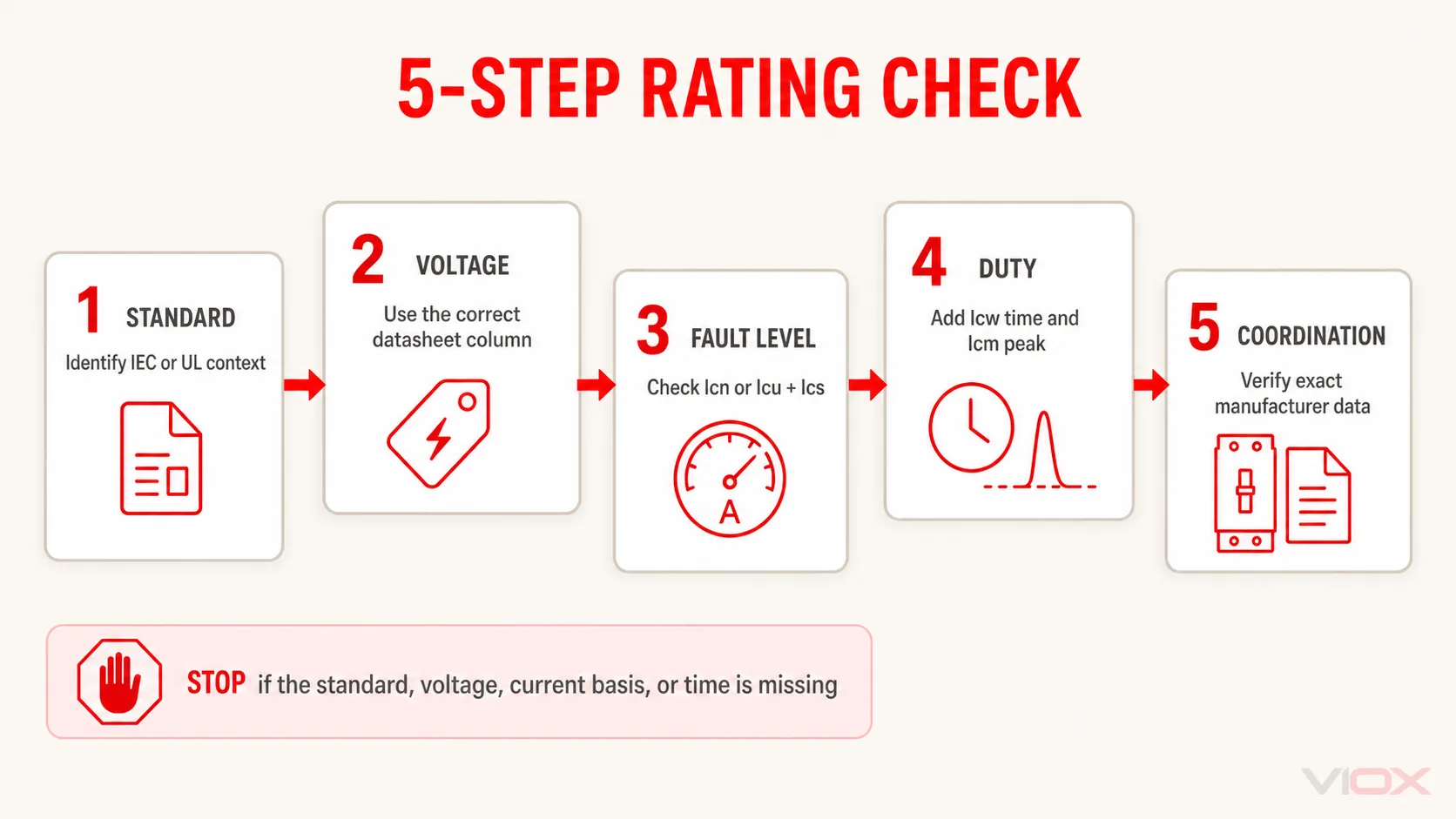
MCB, MCCB, বা ACB ডেটাশিট পড়ার সময় এই ক্রমটি ব্যবহার করুন।.
১. পণ্যের মানদণ্ড শনাক্ত করুন
প্রস্তুতকারকের ঘোষিত সঠিক মানদণ্ড এবং সংস্করণটি খুঁজে বের করুন। এটি নির্ধারণ করে যে কোন রেটিং শব্দভাণ্ডার এবং পরীক্ষার কাঠামো প্রযোজ্য হবে।.
২. রেটেড ভোল্টেজ মিলিয়ে দেখুন
অপারেশনাল ভোল্টেজের সাথে ব্রেকিং ক্যাপাসিটি পরিবর্তিত হতে পারে। সিস্টেম ভোল্টেজের সাথে ডেটাশিটের সঠিক কলামটি তুলনা করুন; এক ভোল্টেজ থেকে অন্য ভোল্টেজে kA মান বহন করবেন না।.
৩. সঠিক ব্রেকিং রেটিংয়ের সাথে ফল্ট লেভেলের তুলনা করুন
একটি IEC 60898-1 ডিভাইসের জন্য, Icn পরীক্ষা করুন। একটি IEC 60947-2 ডিভাইসের জন্য, Icu এবং তারপর Ics পরীক্ষা করুন। প্রকৃত ইনস্টলেশন পয়েন্টের জন্য সম্ভাব্য শর্ট সার্কিট কারেন্ট নির্ধারণ করতে হবে।.
৪. যখন সিস্টেমের প্রয়োজন হয় তখন সময় এবং পিক-ডিউটি চেক যোগ করুন
যদি সিলেক্টিভ ডিলে বা নির্বাচনী বিলম্ব উদ্দেশ্যমূলক হয়, তবে প্রয়োজনীয় সময়ে Icw যাচাই করুন। যদি ফল্টের ওপর ক্লোজিং হওয়ার সম্ভাবনা থাকে, তবে Icm যাচাই করুন। পিক এবং RMS মান সরাসরি তুলনা করবেন না।.
৫. সঠিক অ্যাসেম্বলি এবং কোঅর্ডিনেশন ডেটা যাচাই করুন
পোল, ফ্রিকোয়েন্সি, ট্রিপ ইউনিট, অ্যাক্সেসরিজ, এনক্লোজার বা অ্যাসেম্বলির সীমা এবং প্রস্তুতকারকের প্রকাশিত সিলেক্টিভিটি বা ক্যাসকেডিং টেবিলগুলো পরীক্ষা করুন। পৃথকভাবে পর্যাপ্ত রেটিং থাকা দুটি ব্রেকার স্বয়ংক্রিয়ভাবে একটি যাচাইকৃত কোঅর্ডিনেটেড পেয়ার গঠন করে না।.
দুটি সমাধানকৃত রিডিং উদাহরণ
উদাহরণ ১: হাউসহোল্ড-টাইপ MCB
একটি MCB চিহ্নিত থাকে C20 এবং 6000 এবং এটি IEC 60898-1 অনুযায়ী ঘোষিত।. C20 সেই মার্কিং সিস্টেমে type-C তাৎক্ষণিক বৈশিষ্ট্য এবং 20 A রেটেড কারেন্ট নির্দেশ করে; 6000 উল্লিখিত স্ট্যান্ডার্ড শর্তাবলির অধীনে 6 kA শর্ট সার্কিট ক্ষমতা নির্দেশ করে। প্রস্তুতকারকের ডকুমেন্টেশনে আলাদাভাবে সেই রেটিং ঘোষণা না করা পর্যন্ত 6 kA মার্কিংটিকে IEC 60947-2 Icu হিসেবে পুনরায় লিখবেন না।.
6 kA পর্যাপ্ত কি না তা নির্ভর করে প্রকৃত ইনস্টলেশন পয়েন্টে সম্ভাব্য শর্ট সার্কিট কারেন্টের ওপর। শুধুমাত্র লেবেল দেখে এই সিস্টেম সংক্রান্ত প্রশ্নের উত্তর দেওয়া সম্ভব নয়।.
উদাহরণ ২: ইন্ডাস্ট্রিয়াল MCCB
একটি MCCB ডেটাশিটে প্রকল্পের অপারেটিং ভোল্টেজে দেওয়া থাকে, Icu = 50 kA, Ics = 25 kA, এবং Icw = 20 kA, 1 s এর জন্য. এগুলোকে তিনটি ভিন্ন কার্যক্ষমতা হিসেবে পড়ুন:
- এর ঘোষিত আল্টিমেট ব্রেকিং ক্যাপাসিটি 50 kA;
- এর সার্ভিস ব্রেকিং ক্যাপাসিটি 25 kA;
- এর 1 সেকেন্ডের জন্য ঘোষিত শর্ট-টাইম উইথস্ট্যান্ড ডিউটি 20 kA।.
যদি কোনো কোঅর্ডিনেশন স্টাডিতে আপস্ট্রিম ব্রেকারের 1 সেকেন্ডের জন্য 24 kA কারেন্ট বহন করার প্রয়োজন হয়, তবে উল্লিখিত Icw সেই ডিউটি পূরণ করে না, যদিও Icu হলো 50 kA। এর সমাধান হলো Icu-এর সাথে ডিলে কারেন্টের তুলনা না করা; বরং একটি উপযুক্ত ব্রেকার/সেটিং কম্বিনেশন নির্বাচন করুন এবং প্রস্তুতকারকের কোঅর্ডিনেশন ডেটা থেকে তা যাচাই করুন।.
সচরাচর জিজ্ঞাস্য
Icu এবং Ics-এর মধ্যে প্রধান পার্থক্য কী?
Icu হলো আল্টিমেট শর্ট-সার্কিট ব্রেকিং ক্যাপাসিটি। Ics হলো সার্ভিস শর্ট-সার্কিট ব্রেকিং ক্যাপাসিটি, যা একটি ভিন্ন নির্ধারিত সিকোয়েন্স এবং পরবর্তী চেকের মাধ্যমে যাচাই করা হয়। Icu আল্টিমেট ইন্টারাপশন সক্ষমতা নির্ধারণ করে; Ics তার ঘোষিত ফল্ট লেভেলে অধিক প্রাসঙ্গিক সার্ভিস-পারফরম্যান্স রেফারেন্স প্রদান করে।.
MCCB বা ACB-তে Icw বলতে কী বোঝায়?
Icw হলো রেটেড শর্ট-টাইম উইথস্ট্যান্ড কারেন্ট। এটিকে একটি কারেন্ট এবং তার স্থায়িত্বকালের সমন্বয় হিসেবে পড়তে হবে, যেমন ০.৫ বা ১ সেকেন্ডের জন্য ঘোষিত kA মান। যখন সার্কিট ব্রেকার সিলেক্টিভিটির জন্য ইচ্ছাকৃতভাবে বিলম্বিত হয়, তখন এটি গুরুত্বপূর্ণ।.
Icm কি সবসময় Icu-এর ২.২ গুণ হয়?
না। ২.২-কে সার্বজনীন রূপান্তর হিসেবে ব্যবহার করবেন না। এই সম্পর্কটি প্রযোজ্য স্ট্যান্ডার্ড, পরীক্ষার শর্তাবলী, পাওয়ার ফ্যাক্টর, রেটিং পরিসীমা এবং পণ্যের ঘোষণার ওপর নির্ভর করে।.
আমি কি সরাসরি Icn এবং Icu-এর তুলনা করতে পারি?
শুধুমাত্র সংখ্যা দেখে নয়। উভয়ই শর্ট সার্কিট ইন্টারাপশনের সাথে সম্পর্কিত, কিন্তু IEC 60898-1 এবং IEC 60947-2 ভিন্ন ভিন্ন পণ্যের পরিধি এবং পরীক্ষার কাঠামো ব্যবহার করে। প্রতিটি রেটিং শুধুমাত্র সেই স্ট্যান্ডার্ড, ভোল্টেজ এবং পণ্যের ঘোষণার মধ্যেই তুলনা করুন যা এটি তৈরি করেছে।.
Icu-তে কোনো ফল্ট ইন্টারাপ্ট করার পর কি একটি ব্রেকার পুনরায় ব্যবহার করা যায়?
এমনটি ধরে নেবেন না। গুরুতর শর্ট সার্কিটের পর প্রস্তুতকারকের পরিদর্শন, পরীক্ষা, সার্ভিসিং এবং প্রতিস্থাপনের নির্দেশাবলী অনুসরণ করুন। Ics হলো অধিক প্রাসঙ্গিক সার্ভিস-পারফরম্যান্স রেটিং, তবে এটি ফল্ট-পরবর্তী মূল্যায়ন এড়িয়ে যাওয়ার অনুমতি দেয় না।.
উৎসসমূহ
- IEC 60947-2:2024 — লো-ভোল্টেজ সুইচগিয়ার এবং কন্ট্রোলগিয়ার, পার্ট ২: সার্কিট-ব্রেকার
- IEC 60898-1:2015+A1:2019 — গৃহস্থালি এবং অনুরূপ ইনস্টলেশনের জন্য ওভারকারেন্ট সুরক্ষা সার্কিট-ব্রেকার
- Schneider Electric — সার্ভিস ব্রেকিং ক্যাপাসিটি (Ics)
- Schneider Electric — রেটেড শর্ট-টাইম উইথস্ট্যান্ড কারেন্ট (Icw)
স্ট্যান্ডার্ড এবং ফল্ট ডিউটি নির্ধারিত হওয়ার পর পণ্য মূল্যায়নের জন্য, দেখুন VIOX MCCB রেঞ্জ অথবা যোগাযোগ করুন [email protected] সিস্টেম ভোল্টেজ, সম্ভাব্য শর্ট-সার্কিট কারেন্ট, প্রয়োজনীয় Ics এবং যেকোনো শর্ট-টাইম-ডিলে ডিউটির সাথে।.