

এই পৃষ্ঠায়
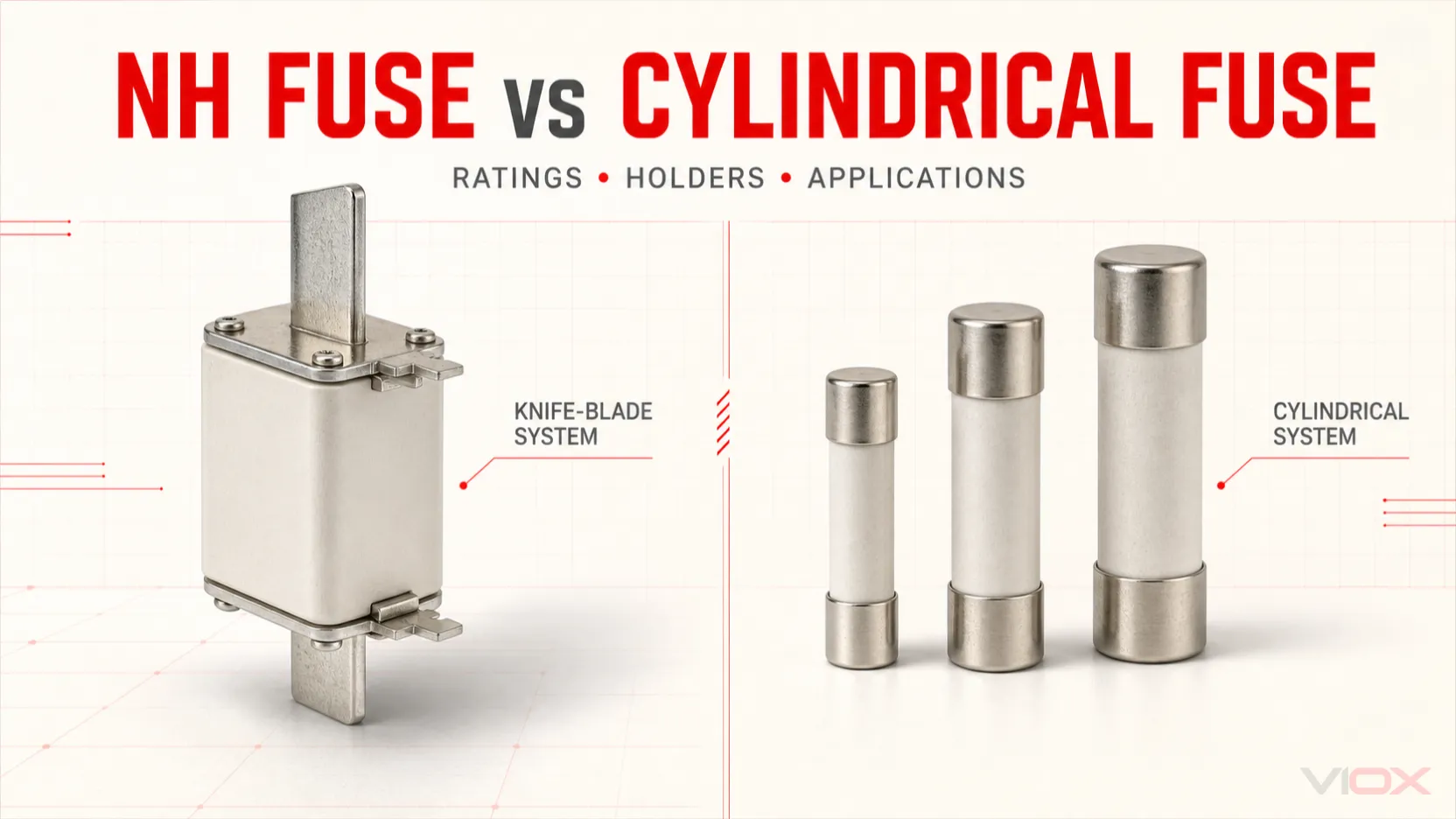
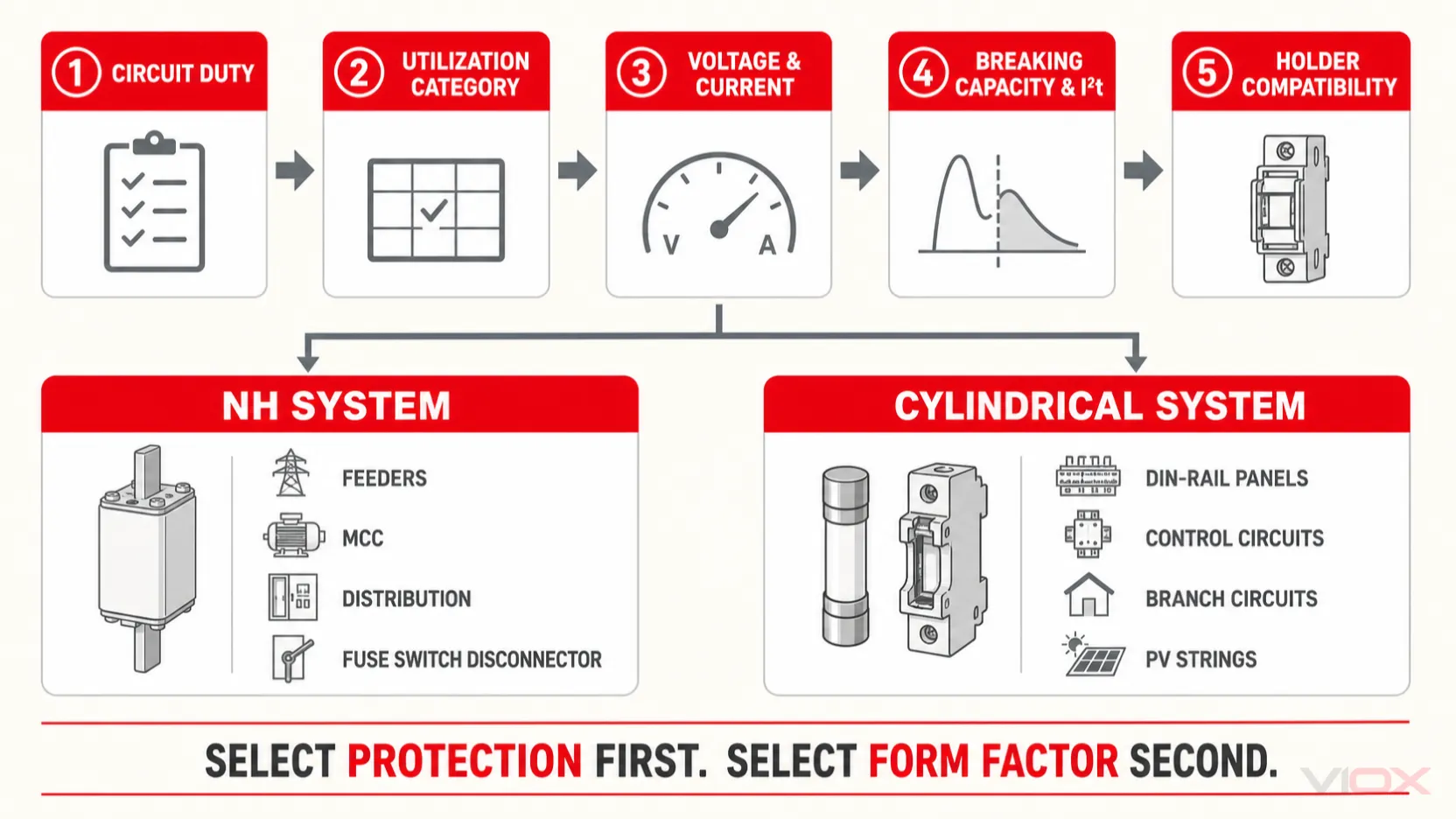
একটি NH ফিউজ সাধারণত ইন্ডাস্ট্রিয়াল ফিডার, ডিস্ট্রিবিউশন বোর্ড, মোটর কন্ট্রোল সেন্টার এবং অন্যান্য সার্কিটের জন্য বেশি উপযুক্ত, যেখানে ডেডিকেটেড বেস বা ফিউজ সুইচ ডিসকানেক্টরসহ একটি শক্তিশালী নাইফ-ব্লেড ফিউজ সিস্টেম প্রয়োজন। সিলিন্ড্রিক্যাল ফিউজ সাধারণত কমপ্যাক্ট ডিআইএন-রেল (DIN-rail) প্যানেল, কন্ট্রোল সার্কিট, ফটোভোলটাইক স্ট্রিং এবং ব্রাঞ্চ সার্কিটের জন্য বেশি উপযুক্ত, যেখানে স্ট্যান্ডার্ড কার্টিজ ডাইমেনশন এবং মডুলার হোল্ডার ইনস্টলেশনকে সহজ করে তোলে।.
এটি একটি ফর্ম-ফ্যাক্টর সিদ্ধান্ত, সম্পূর্ণ সুরক্ষা সংক্রান্ত সিদ্ধান্ত নয়। এই দুটির কোনো গঠনই স্বয়ংক্রিয়ভাবে রেটেড ভোল্টেজ, কারেন্ট, ব্রেকিং ক্যাপাসিটি, ইউটিলাইজেশন ক্যাটাগরি, টাইম-কারেন্ট বৈশিষ্ট্য বা কারেন্ট-লিমিটিং পারফরম্যান্স নির্ধারণ করে না। এই মানগুলো অবশ্যই প্রতিটি ফিউজ লিঙ্ক এবং এর সামঞ্জস্যপূর্ণ হোল্ডারের গায়ে যাচাই করে নিতে হবে।.
NH ফিউজ বনাম সিলিন্ড্রিক্যাল ফিউজ: দ্রুত তুলনা
| তুলনার বিষয় | NH ফিউজ | সিলিন্ড্রিক্যাল ফিউজ |
|---|---|---|
| যোগাযোগ ফর্ম | ফ্ল্যাট নাইফ-ব্লেড কন্টাক্টস | সিলিন্ড্রিক্যাল এন্ড ক্যাপস |
| কমন সাইজ ডেজিগনেশন | NH000, NH00, NH0, NH1, NH2, NH3 এবং অন্যান্য সিস্টেম সাইজ | 10 x 38 মিমি, 14 x 51 মিমি, 22 x 58 মিমি এবং অন্যান্য কার্টিজ সাইজ |
| টিপিক্যাল মাউন্টিং সিস্টেম | NH ফিউজ বেস, ফিউজ রেল, অথবা ফিউজ সুইচ ডিসকানেক্টর | ক্লিপ বেস বা মডুলার ডিআইএন-রেল ফিউজ হোল্ডার |
| সাধারণ প্যানেল ভূমিকা | শিল্প বিতরণ এবং উচ্চ-কারেন্ট ফিডার সুরক্ষা | কমপ্যাক্ট ব্রাঞ্চ, কন্ট্রোল, পিভি এবং সরঞ্জাম সুরক্ষা |
| প্রতিস্থাপন পদ্ধতি | সাধারণত একটি ডেডিকেটেড ফিউজ পোলার বা এনক্লোজড সুইচিং মেকানিজম | ডিজাইনের উপর নির্ভর করে ড্রয়ার, ক্যারিয়ার, ক্যাপ বা হিঞ্জড হোল্ডার থেকে অপসারণ |
| জায়গার প্রয়োজনীয়তা | বৃহত্তর সিস্টেম ফুটপ্রিন্ট | সাধারণত আরও কমপ্যাক্ট এবং মডুলার |
| প্রধান নির্বাচনের ঝুঁকি | ভুল এনএইচ (NH) সাইজ, ক্যাটাগরি, রেটিং বা অনিরাপদ হ্যান্ডলিং পদ্ধতি | শুধুমাত্র ভৌত মাত্রার ওপর ভিত্তি করে নির্বাচন করা অথবা হোল্ডারকে লোড-ব্রেক সক্ষম হিসেবে গণ্য করা |
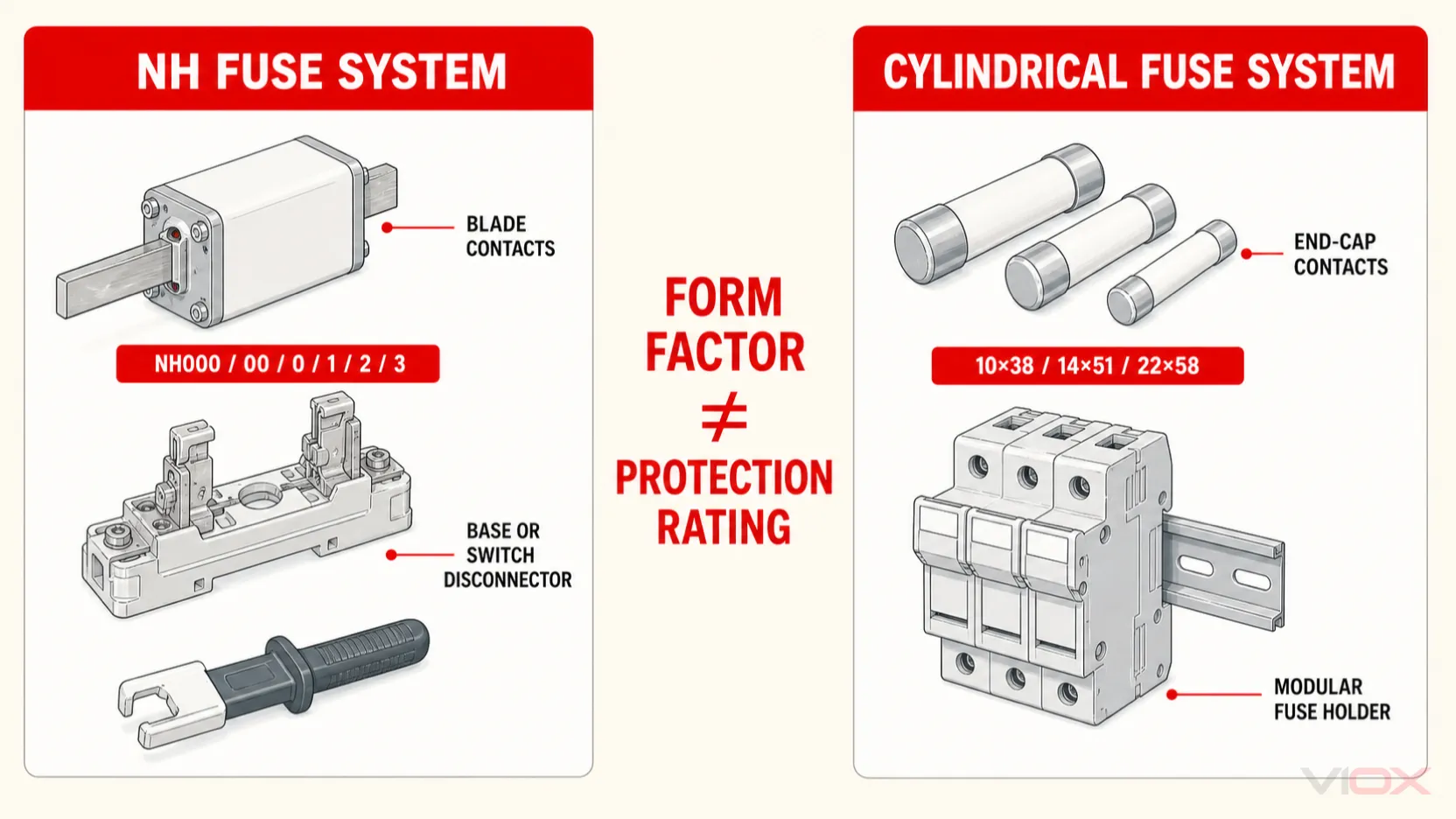
ব্যবহারিক নিয়মটি হলো: প্রথমে সুরক্ষামূলক কর্মক্ষমতা নির্বাচন করুন, তারপর এমন ফিউজ কনস্ট্রাকশন এবং হোল্ডার নির্বাচন করুন যা উপলব্ধ প্যানেল স্পেসে নিরাপদে কাজ করতে পারে।.
এনএইচ (NH) নাইফ-ব্লেড ফিউজ কী?
এনএইচ (NH) ফিউজ লিঙ্ক হলো ফ্ল্যাট ব্লেড কন্টাক্টযুক্ত ইন্ডাস্ট্রিয়াল লো-ভোল্টেজ ফিউজ লিঙ্ক। সম্পূর্ণ এনএইচ সিস্টেমে সাধারণত পরিবর্তনযোগ্য ফিউজ লিঙ্ক, একটি সামঞ্জস্যপূর্ণ ফিউজ বেস বা ফিউজ সুইচ ডিসকানেক্টর এবং একটি উপযুক্ত প্রতিস্থাপন পদ্ধতি অন্তর্ভুক্ত থাকে। অ্যাসেম্বলির ওপর নির্ভর করে, এতে ফেজ ব্যারিয়ার, টার্মিনাল কভার, ফিউজ পুড়ে যাওয়ার নির্দেশক বা অক্সিলিয়ারি সিগন্যালিং কন্টাক্টও থাকতে পারে।.
সাধারণ ওয়েব অনুসন্ধানে “নাইফ-ব্লেড ফিউজ” শব্দটি অস্পষ্ট হতে পারে কারণ অটোমোটিভ ব্লেড ফিউজগুলোতেও ফ্ল্যাট কন্টাক্ট ব্যবহার করা হয়। ইন্ডাস্ট্রিয়াল সুইচগিয়ারে, এই নিবন্ধে এটি বিশেষভাবে বোঝাতে ব্যবহৃত হয়েছে এনএইচ (NH)-ফরম্যাট লো-ভোল্টেজ ফিউজ লিঙ্ক IEC 60269 ইন্ডাস্ট্রিয়াল ফিউজ সিস্টেমের সাথে সম্পর্কিত।.
সাধারণ NH ডেজিগনেশনগুলোর মধ্যে রয়েছে NH000, NH00, NH0, NH1, NH2 এবং NH3। আকার বৃদ্ধির সাথে সাধারণত উচ্চতর কারেন্ট রেটিং এবং বড় কন্টাক্ট সিস্টেমের জায়গা তৈরি হয়, তবে শুধুমাত্র সাইজ কোড দিয়ে ফিউজের সম্পূর্ণ বৈদ্যুতিক কার্যক্ষমতা নির্ধারণ করা যায় না।.
NH ফিউজ সিস্টেম সাধারণত নিম্নলিখিত ক্ষেত্রে পাওয়া যায়:
- লো-ভোল্টেজ ডিস্ট্রিবিউশন সুইচবোর্ড;
- মোটর কন্ট্রোল সেন্টার;
- ট্রান্সফরমার সেকেন্ডারি ফিডার;
- ইন্ডাস্ট্রিয়াল ইনকামার এবং আউটগোয়িং ফিডার;
- ফিউজ রেল এবং ক্যাবল ডিস্ট্রিবিউশন ক্যাবিনেট;
- ফিউজ সুইচ ডিসকানেক্টর;
- পাওয়ার কনভার্সন ইকুইপমেন্ট যখন একটি উপযুক্ত সেমিকন্ডাক্টর ফিউজ নির্দিষ্ট করা থাকে।.
একটি গুরুত্বপূর্ণ নিরাপত্তা বৈশিষ্ট্য হলো যে, এনএইচ (NH) সিস্টেমগুলো প্রশিক্ষিত কর্মীদের দ্বারা শিল্প ব্যবহারের জন্য তৈরি। খোলা এনএইচ বেসগুলো একই ফিজিক্যাল সিস্টেমের মধ্যে ভিন্ন কারেন্ট রেটিংয়ের ফিউজ প্রবেশ করানো থেকে সবসময় বাধা দেয় না। তাই ফিউজ লিংকের মতোই প্রতিস্থাপন পদ্ধতি, আইসোলেশন, ব্যক্তিগত সুরক্ষা সরঞ্জাম (PPE) এবং অনুমোদিত ফিউজ পুলার বা সুইচিং ডিভাইসের ব্যবহার অত্যন্ত গুরুত্বপূর্ণ।.
সিলিন্ড্রিক্যাল ফিউজ কী?
একটি সিলিন্ড্রিক্যাল ফিউজ লিংক হলো একটি কার্টিজ যার বডি সিলিন্ডার আকৃতির ইনসুলেটিং উপাদানে তৈরি এবং দুই প্রান্তে পরিবাহী ক্যাপ থাকে। এটি একটি নির্দিষ্ট হোল্ডারে বসে যার কন্টাক্ট ক্লিপগুলো দুই প্রান্তের ক্যাপকে শক্তভাবে ধরে রাখে। সাধারণ আইইসি (IEC) ফরম্যাটের মাত্রাগুলোর মধ্যে রয়েছে ১০ x ৩৮ মিমি, ১৪ x ৫১ মিমি এবং ২২ x ৫৮ মিমি, যা ব্যাস গুণন দৈর্ঘ্য হিসেবে উল্লেখ করা হয়।.
সিলিন্ড্রিক্যাল গঠন বিভিন্ন ধরনের সুরক্ষা দায়িত্ব পালন করতে সক্ষম। একই মাত্রার ফিউজ লিংকগুলো সাধারণ ক্যাবল সুরক্ষা, মোটর সার্কিট, সেমিকন্ডাক্টর সুরক্ষা, ফটোভোলটাইক স্ট্রিং বা অন্যান্য অ্যাপ্লিকেশনের জন্য তৈরি হতে পারে। একটি ১০ x ৩৮ মিমি জিজি (gG) ফিউজ, একটি ১০ x ৩৮ মিমি জিপিভি (gPV) ফিউজ এবং একটি ১০ x ৩৮ মিমি ফাস্ট সেমিকন্ডাক্টর ফিউজ কেবল একই আকারের হোল্ডারে ফিট হয় বলেই একে অপরের পরিবর্তে ব্যবহারযোগ্য নয়।.
সাধারণ অ্যাপ্লিকেশনগুলির মধ্যে রয়েছে:
- কন্ট্রোল ট্রান্সফরমার এবং কন্ট্রোল সার্কিট;
- কমপ্যাক্ট ইন্ডাস্ট্রিয়াল ডিস্ট্রিবিউশন প্যানেল;
- ছোট মোটর বা ব্রাঞ্চ সার্কিট যেখানে সঠিক ইউটিলাইজেশন ক্যাটাগরি উপলব্ধ;
- ডিসি-রেটেড জিপিভি (gPV) ফিউজ লিঙ্ক এবং হোল্ডার ব্যবহার করে ফটোভোলটাইক স্ট্রিং সুরক্ষা;
- উদ্দেশ্যমূলকভাবে ডিজাইন করা সেমিকন্ডাক্টর ফিউজ ব্যবহার করে পাওয়ার ইলেকট্রনিক সরঞ্জাম;
- ওইএম (OEM) মেশিনারি যেখানে ডিআইএন-রেল মডুলারিটি এবং প্রতিস্থাপনের সহজলভ্যতাকে অগ্রাধিকার দেওয়া হয়।.
সিলিন্ড্রিক্যাল হোল্ডারগুলো সাধারণত কমপ্যাক্ট এবং বন্ধ অবস্থায় আঙুলের স্পর্শ থেকে সুরক্ষিত থাকে, তবে এদের গঠন ভিন্ন হতে পারে। একটি হোল্ডার স্বয়ংক্রিয়ভাবে সুইচ ডিসকানেক্টর নয়, এবং লোড থাকা অবস্থায় এটি খোলা উচিত নয়, যদি না সম্পূর্ণ ডিভাইসটি বিশেষভাবে সেই অপারেশনের জন্য রেট করা থাকে এবং নির্দেশিত থাকে।.
রেটিং: ফিউজের আকৃতি কেন সুরক্ষার কার্যকারিতা নির্ধারণ করে না
এনএইচ (NH) এবং সিলিন্ড্রিক্যাল হলো ফিউজ সিস্টেমের ভৌত বর্ণনা। নিচের রেটিংগুলো নির্ধারণ করে যে একটি ফিউজ কোনো নির্দিষ্ট সার্কিটকে সুরক্ষা দিতে পারবে কি না।.
রেট করা বর্তমান
ফিউজ-লিঙ্কের রেটেড কারেন্ট অবশ্যই পরিবাহী, লোড, অপারেটিং কন্ডিশন এবং প্রয়োজনীয় সুরক্ষা আচরণের সাথে সামঞ্জস্যপূর্ণ হতে হবে। এটি অবশ্যই হোল্ডার, বেস এবং সংযুক্ত টার্মিনালের অবিচ্ছিন্ন কারেন্ট বহন ক্ষমতার মধ্যে থাকতে হবে। একটি হোল্ডারের সর্বোচ্চ ফ্রেম রেটিং মানে এই নয় যে প্রতিটি ইনস্টল করা ফিউজ লিঙ্ক সেই মান অনুযায়ী নির্বাচন করতে হবে।.
NH রেঞ্জগুলো প্রায়শই উচ্চতর ফিডার কারেন্ট পর্যন্ত বিস্তৃত থাকে, কারণ এদের বড় বডি এবং ব্লেড কন্টাক্টগুলো ইন্ডাস্ট্রিয়াল ডিস্ট্রিবিউশন আর্কিটেকচারকে সাপোর্ট করে। সিলিন্ড্রিক্যাল রেঞ্জগুলো সাধারণত কম এবং মাঝারি কারেন্টের কমপ্যাক্ট প্যানেল পজিশনে বেশি ব্যবহৃত হয়। এগুলো সাধারণ প্রবণতা, কোনো সর্বজনীন সীমা নয়; তাই প্রকৃত পণ্যের ডেটা ব্যবহার করুন।.
রেটেড ভোল্টেজ এবং এসি/ডিসি উপযোগিতা
রেটেড ভোল্টেজ অবশ্যই প্রযোজ্য এসি বা ডিসি শর্তে সার্কিট ভোল্টেজের সমান বা তার চেয়ে বেশি হতে হবে। এসি রেটিং সরাসরি ডিসি সার্কিটে কখনোই প্রয়োগ করবেন না। ডিসি আর্ক ইন্টারাপশনের জন্য ভিন্ন অভ্যন্তরীণ গঠন, ভোল্টেজ সীমা, হোল্ডারে পোলারিটি বিন্যাস বা জিপিভি (gPV)-এর মতো বিশেষ ইউটিলাইজেশন ক্যাটাগরির প্রয়োজন হতে পারে।.
ফিউজ হোল্ডারেরও সামঞ্জস্যপূর্ণ ভোল্টেজ রেটিং থাকতে হবে। একটি সঠিক রেটিংয়ের ফিউজ লিঙ্ক যদি অনুপযুক্ত হোল্ডারে ইনস্টল করা হয়, তবে তা একটি কমপ্লায়েন্ট প্রোটেক্টিভ অ্যাসেম্বলি তৈরি করে না।.
ভাঙার ক্ষমতা
ব্রেকিং ক্যাপাসিটি হলো সর্বোচ্চ সম্ভাব্য ফল্ট কারেন্ট যা একটি ফিউজ তার নির্ধারিত শর্তে বিচ্ছিন্ন করতে পারে। এটি ইনস্টলেশন পয়েন্টে বিদ্যমান শর্ট-সার্কিট কারেন্টের সমান বা তার চেয়ে বেশি হতে হবে।.
এনএইচ (NH) ফিউজগুলো সাধারণত উচ্চ ব্রেকিং ক্যাপাসিটি সম্পন্ন ইন্ডাস্ট্রিয়াল সুরক্ষার সাথে যুক্ত, তবে এটি মনে করা ভুল যে প্রতিটি এনএইচ ফিউজের ব্রেকিং ক্যাপাসিটি প্রতিটি সিলিন্ড্রিক্যাল ফিউজের চেয়ে বেশি। উচ্চ-ক্ষমতাসম্পন্ন সিলিন্ড্রিক্যাল ফিউজেরও উল্লেখযোগ্য ইন্টারাপ্টিং রেটিং থাকতে পারে। প্রাসঙ্গিক ভোল্টেজ, কারেন্টের ধরন, প্রযোজ্য ক্ষেত্রে টাইম কনস্ট্যান্ট এবং টেস্ট স্ট্যান্ডার্ড অনুযায়ী প্রস্তুতকারকের ডেটা তুলনা করুন।.
ব্যবহার বিভাগ
আইইসি (IEC) ফিউজ সিস্টেমের অধীনে, ইউটিলাইজেশন ক্যাটাগরি কারেন্টের পরিসীমা এবং অ্যাপ্লিকেশনের দায়িত্ব বর্ণনা করে। উদাহরণস্বরূপ:
- gG ফুল-রেঞ্জ জেনারেল-পারপাস কেবল এবং লাইন সুরক্ষার জন্য;
- এএম আংশিক-রেঞ্জ মোটর-সার্কিট শর্ট-সার্কিট সুরক্ষার জন্য, যার জন্য সমন্বিত ওভারলোড সুরক্ষা প্রয়োজন;
- gPV ফটোভোলটাইক সোর্স এবং অ্যারে সার্কিটের জন্য;
- aR অথবা gR নির্দিষ্ট সেমিকন্ডাক্টর সুরক্ষা কার্যের জন্য।.
এই বিভাগগুলো একাধিক ফিজিক্যাল ফিউজ ফরম্যাট জুড়ে থাকতে পারে। তাই, একটি ফর্ম-ফ্যাক্টর তুলনা কখনোই একটি ক্যাটাগরি তুলনার বিকল্প হতে পারে না। সম্পূর্ণ ব্যাখ্যার জন্য ব্যবহার করুন VIOX IEC 60269 ফিউজ গাইড.
টাইম-কারেন্ট কার্ভ, I²t, এবং পাওয়ার ডিসিপেশন
একই রেটেড কারেন্ট থাকা দুটি ফিউজ ওভারলোড, মোটর স্টার্ট বা শর্ট সার্কিটের সময় ভিন্নভাবে কাজ করতে পারে। সমতুল্য পারফরম্যান্স ধরে না নিয়ে প্রস্তুতকারকের টাইম-কারেন্ট কার্ভ এবং লেট-থ্রু ডেটা যাচাই করুন।.
কন্টাক্টর, সেমিকন্ডাক্টর ডিভাইস, কেবল এবং ডাউনস্ট্রিম সরঞ্জামের সাথে সমন্বয়ের জন্য, ফিউজের প্রি-আর্কিং এবং মোট I²t মান অত্যন্ত গুরুত্বপূর্ণ হতে পারে। পাওয়ার ডিসিপেশন বা শক্তি অপচয়ও গুরুত্বপূর্ণ কারণ হোল্ডার, এনক্লোজার, স্পেসিং এবং পরিবেষ্টিত তাপমাত্রা নির্ধারণ করে যে কতটা তাপ নিরাপদে ব্যবস্থাপনা করা সম্ভব।.
ফিউজ হোল্ডার এবং বেস নির্বাচনের অংশ
একটি ফিউজ লিঙ্ক সুরক্ষা অ্যাসেম্বলির মাত্র একটি অংশ। বেস বা হোল্ডার কন্টাক্ট প্রেশার, কন্ডাক্টর টার্মিনেশন, তাপ অপচয়, টাচ প্রোটেকশন, মাউন্টিং পদ্ধতি এবং প্রতিস্থাপনের সুবিধা নিশ্চিত করে।.
এনএইচ (NH) ফিউজ বেস এবং ফিউজ সুইচ ডিসকানেক্টর
একটি ওপেন এনএইচ (NH) বেস ফিউজ ব্লেডগুলোর জন্য স্থির কন্টাক্ট প্রদান করে। এটি ইনস্টলেশন এবং অপসারণের জন্য ফিউজ পুলারের প্রয়োজন হতে পারে। একটি ফিউজ রেল বাস বা কেবল ডিস্ট্রিবিউশনের সাথে একাধিক এনএইচ (NH) পজিশনকে একত্রিত করে। একটি ফিউজ সুইচ ডিসকানেক্টর একটি অপারেটিং মেকানিজমের মধ্যে লিঙ্কগুলোকে আবদ্ধ রাখে এবং সঠিকভাবে রেট করা হলে একটি নির্দিষ্ট সুইচিং ও আইসোলেশন ফাংশন যোগ করে।.
এই তিনটি ডিভাইসকে সমার্থক হিসেবে গণ্য করা উচিত নয়। একটি সাধারণ ফিউজ বেস ফিউজ ধরে রাখে; এটি স্বয়ংক্রিয়ভাবে নিরাপদ লোড সুইচিং প্রদান করে না। একটি ফিউজ সুইচ ডিসকানেক্টরের অতিরিক্ত সুইচিং দায়িত্ব থাকে এবং এটিকে অবশ্যই তার নিজস্ব ইউটিলাইজেশন ক্যাটাগরি, রেটেড কারেন্ট, ভোল্টেজ এবং কন্ডিশনাল শর্ট-সার্কিট পারফরম্যান্স অনুযায়ী নির্বাচন করতে হবে।.
সিলিন্ড্রিক্যাল ফিউজ হোল্ডার
সিলিন্ড্রিক্যাল লিঙ্কগুলো ওপেন ক্লিপ, ক্যাপড বেস, পুল-আউট ক্যারিয়ার বা ডিআইএন-রেল (DIN-rail) মডুলার হোল্ডারে ইনস্টল করা যেতে পারে। হোল্ডারটিকে অবশ্যই কার্টিজের সঠিক মাত্রা এবং বৈদ্যুতিক রেটিংয়ের সাথে মিলতে হবে। পরীক্ষা করুন:
- ফিউজের মাত্রা;
- পোল সংখ্যা;
- রেটেড কারেন্ট এবং ভোল্টেজ;
- কন্ডাক্টরের ধারণক্ষমতা এবং টাইট করার প্রয়োজনীয়তা;
- ইনস্টল করা অবস্থায় স্পর্শ সুরক্ষা;
- ইন্ডিকেশন বা অক্সিলিয়ারি-কন্টাক্ট অপশন;
- অনুমোদিত খোলার এবং প্রতিস্থাপনের পদ্ধতি;
- এসি (AC), ডিসি (DC), বা পিভি (PV) উপযোগিতা।.
স্থির এবং অপসারণযোগ্য অংশগুলির পরিভাষার জন্য, দেখুন ফিউজ হোল্ডার বনাম ফিউজ ব্লক বনাম ফিউজ ক্যারিয়ার. নিবন্ধটি ফিউজ বনাম ফিউজ লিঙ্ক আরও ব্যাখ্যা করে যে কেন প্রতিস্থাপনযোগ্য লিঙ্ক এবং এর হোল্ডারকে একই উপাদান হিসেবে অর্ডার করা উচিত নয়।.
আপনার কোন ফিউজ সিস্টেমটি বেছে নেওয়া উচিত?
এনএইচ (NH) ফিউজ সিস্টেম বেছে নিন যখন
- সার্কিটটি একটি ইন্ডাস্ট্রিয়াল ফিডার বা ডিস্ট্রিবিউশন পজিশনে থাকে;
- প্রয়োজনীয় কারেন্ট রেঞ্জ এবং কোঅর্ডিনেশন স্টাডি একটি এভেইলেবল এনএইচ (NH) লিঙ্কের দিকে নির্দেশ করে;
- প্যানেলটি একটি এনএইচ (NH) বেস, ফিউজ রেল, অথবা ফিউজ সুইচ ডিসকানেক্টর আর্কিটেকচার ব্যবহার করে;
- মজবুত ব্লেড কন্টাক্ট এবং স্পষ্ট ফেজ সেপারেশন ডিজাইনের ক্ষেত্রে অগ্রাধিকার পায়;
- প্রশিক্ষিত কর্মী এবং একটি নিয়ন্ত্রিত প্রতিস্থাপন পদ্ধতি বিদ্যমান রয়েছে;
- একটি স্ট্রাইকার, ইন্ডিকেটর, মাইক্রো-সুইচ, অথবা সুইচ-ডিসকানেক্টর ইন্টিগ্রেশন প্রয়োজন এবং সমর্থিত;.
সিলিন্ড্রিক্যাল ফিউজ সিস্টেম বেছে নিন যখন
- ডিআইএন-রেল (DIN-rail) স্পেস এবং মডুলারিটি গুরুত্বপূর্ণ;
- সার্কিটটি একটি কমপ্যাক্ট ব্রাঞ্চ, কন্ট্রোল, ইকুইপমেন্ট, অথবা পিভি (PV) স্ট্রিং পজিশন;
- প্রয়োজনীয় ফিউজ ক্যাটাগরি এবং রেটিং ১০ x ৩৮, ১৪ x ৫১, ২২ x ৫৮ বা অন্য উপযুক্ত আকারে পাওয়া যায়;
- দ্রুত হোল্ডার প্রতিস্থাপন এবং স্ট্যান্ডার্ডাইজড কার্টিজ ডাইমেনশন ওইএম (OEM) রক্ষণাবেক্ষণকে সহায়তা করে;
- এনক্লোজারে একটি কমপ্যাক্ট মাল্টি-পোল হোল্ডার বিন্যাস প্রয়োজন;
- হোল্ডারটি বিশেষভাবে সার্কিটের এসি (AC), ডিসি (DC), বা ফটোভোলটাইক কাজের জন্য অনুমোদিত।.
ফিউজ প্রতিস্থাপনের সময় বিদ্যমান প্যানেল সিস্টেম ব্যবহার করুন
রক্ষণাবেক্ষণজনিত প্রতিস্থাপনের ক্ষেত্রে, ইনস্টল করা বেস সাধারণত ফিউজের ভৌত ফরম্যাট নির্ধারণ করে। একটি এনএইচ (NH) ফিউজকে সিলিন্ড্রিক্যাল হোল্ডারে মানিয়ে নেবেন না বা অন্য কোনো কার্টিজ ডাইমেনশন ব্যবহার করবেন না। মূল বা অনুমোদিত প্রতিস্থাপনের সাথে নিচের বিষয়গুলো মিলিয়ে নিন:
- ফিউজ সিস্টেম এবং ভৌত আকার;
- রেটেড কারেন্ট;
- রেটেড ভোল্টেজ এবং এসি/ডিসি ডিউটি;
- ইউটিলাইজেশন ক্যাটাগরি;
- ব্রেকিং ক্যাপাসিটি;
- টাইম-কারেন্ট এবং আই-স্কয়ার-টি (I²t) প্রয়োজনীয়তা;
- প্রস্তুতকারক কর্তৃক অনুমোদিত হোল্ডার সামঞ্জস্যতা।.
যদি মূল ফিউজটি বারবার কেটে যায়, তবে লোড কারেন্ট, স্টার্টিং কন্ডিশন, কন্ডাক্টরের সক্ষমতা, পরিবেষ্টিত তাপমাত্রা, হোল্ডারের উত্তাপ এবং ত্রুটির কারণ অনুসন্ধান না করে উচ্চতর কারেন্ট রেটিংয়ের ফিউজ ইনস্টল করবেন না।.
সাধারণ নির্বাচন ভুল
নাইফ-ব্লেডকে একটি সম্পূর্ণ স্পেসিফিকেশন হিসেবে গণ্য করা।. এই শব্দটি এনএইচ (NH) সাইজ, ইউটিলাইজেশন ক্যাটাগরি, ভোল্টেজ, কারেন্ট বা ব্রেকিং ক্যাপাসিটিকে সংজ্ঞায়িত করে না।.
শুধুমাত্র আকারের ওপর ভিত্তি করে সিলিন্ড্রিক্যাল ফিউজ নির্বাচন করা।. একই আকারের ফিউজের ভেতরে এসি (AC), ডিসি (DC), পিভি (PV), মোটর বা সেমিকন্ডাক্টর ব্যবহারের জন্য ভিন্ন ভিন্ন লিঙ্কের সক্ষমতা থাকতে পারে।.
সব হোল্ডারই লোড কারেন্ট বিচ্ছিন্ন করতে পারে বলে ধরে নেওয়া।. ফিউজ হোল্ডার এবং ফিউজ সুইচ ডিসকানেক্টর ভিন্ন ভিন্ন শ্রেণির পণ্য। ডিভাইসের মার্কিং এবং প্রস্তুতকারকের নির্দেশাবলী অনুসরণ করুন।.
শুধুমাত্র রেটেড কারেন্টের তুলনা করা।. ভোল্টেজ, সম্ভাব্য ফল্ট কারেন্ট, ইউটিলাইজেশন ক্যাটাগরি, টাইম-কারেন্ট আচরণ, I²t, হোল্ডারের পাওয়ার ডিসিপেশন এবং পরিবেশগত অবস্থা—এসবের যেকোনো একটি শুধুমাত্র কারেন্টের ওপর ভিত্তি করে করা নির্বাচনকে ভুল প্রমাণ করতে পারে।.
লিঙ্ক এবং হোল্ডারের রেটিং গুলিয়ে ফেলা।. একটি অ্যাসেম্বলি তার দুর্বলতম সঠিক উপাদানের সক্ষমতা দ্বারা সীমাবদ্ধ থাকে। একটি উচ্চ রেটিংয়ের লিঙ্ক হোল্ডারের রেটিং বৃদ্ধি করতে পারে না।.
যাচাই না করে ডিসি (DC) বা পিভি (PV) সার্কিটে এসি (AC) ফিউজ ব্যবহার করা।. ডিসি ইন্টারাপশন এবং ফটোভোলটাইক ফল্ট আচরণের জন্য সুনির্দিষ্ট রেটিং এবং সঠিক ফিউজ ক্যাটাগরি প্রয়োজন।.
চূড়ান্ত উত্তর
পছন্দ করা এনএইচ (NH) যখন প্রজেক্টের ফিডার, ডিস্ট্রিবিউশন ইকুইপমেন্ট বা উচ্চ-কারেন্ট প্যানেল আর্কিটেকচারের জন্য ইন্ডাস্ট্রিয়াল নাইফ-ব্লেড ফিউজ সিস্টেমের প্রয়োজন হয়। নির্বাচন করুন সিলিন্ড্রিক্যাল ফিউজ যখন কমপ্যাক্ট ডিআইএন-রেল (DIN-rail) ইনস্টলেশন, স্ট্যান্ডার্ড কার্টিজ ডাইমেনশন এবং ব্রাঞ্চ, কন্ট্রোল, ইকুইপমেন্ট বা পিভি অ্যাপ্লিকেশন অগ্রাধিকার পায়।.
শুধুমাত্র আকৃতি বা কারেন্ট দেখে কোনো সিস্টেম নির্বাচন করবেন না। ইউটিলাইজেশন ক্যাটাগরি, রেটেড ভোল্টেজ, কারেন্ট, ব্রেকিং ক্যাপাসিটি, টাইম-কারেন্ট কার্ভ, I²t, পাওয়ার ডিসিপেশন, ফিজিক্যাল সাইজ এবং সামঞ্জস্যপূর্ণ হোল্ডার নিশ্চিত করুন। VIOX সরবরাহ করে লো-ভোল্টেজ ফিউজ এবং ফিউজ হোল্ডার প্যানেল বিল্ডার, ওএম (OEM), ডিস্ট্রিবিউটর এবং নবায়নযোগ্য জ্বালানি সরঞ্জাম প্রস্তুতকারকদের জন্য।.
প্রায়শই জিজ্ঞাসিত প্রশ্নাবলী
এনএইচ (NH) ফিউজ কি নাইফ-ব্লেড ফিউজের মতোই?
শিল্পক্ষেত্রে লো-ভোল্টেজ অ্যাপ্লিকেশনে, এনএইচ ফিউজ লিঙ্কগুলোকে সাধারণত নাইফ-ব্লেড ফিউজ বলা হয় কারণ এগুলোতে ফ্ল্যাট ব্লেড কন্টাক্ট ব্যবহার করা হয়। তবে, “ব্লেড ফিউজ” বলতে অটোমোটিভ ফিউজকেও বোঝানো হতে পারে, তাই সুইচগিয়ার এবং প্যানেল অ্যাপ্লিকেশনের ক্ষেত্রে এনএইচ (NH) শব্দটি অধিকতর সুনির্দিষ্ট।.
এনএইচ ফিউজের কারেন্ট রেটিং কি সিলিন্ড্রিক্যাল ফিউজের চেয়ে সবসময় বেশি হয়?
না। এনএইচ সিস্টেম সাধারণত উচ্চ-কারেন্ট ফিডার অ্যাপ্লিকেশনের জন্য ব্যবহৃত হয়, তবে এদের রেঞ্জ একে অপরের সাথে ওভারল্যাপ করতে পারে। সঠিক কারেন্ট সক্ষমতা ফিউজের আকার, লিঙ্কের ডিজাইন, হোল্ডার, ভোল্টেজ, ইউটিলাইজেশন ক্যাটাগরি এবং প্রস্তুতকারকের তথ্যের ওপর নির্ভর করে।.
একই অ্যাম্পিয়ার রেটিংয়ের একটি সিলিন্ড্রিক্যাল ফিউজ কি এনএইচ ফিউজের পরিবর্তে ব্যবহার করা যাবে?
না। এদের কন্টাক্ট সিস্টেম, হোল্ডার, ডাইমেনশন, তাপ নিঃসরণ ক্ষমতা এবং পরীক্ষিত অ্যাসেম্বলি ভিন্ন। সমান অ্যাম্পিয়ার রেটিং থাকলেই ফিউজ লিঙ্কগুলো যান্ত্রিক বা বৈদ্যুতিকভাবে একে অপরের পরিপূরক বা পরিবর্তনযোগ্য হয় না।.
এনএইচ এবং সিলিন্ড্রিক্যাল উভয় ফিউজই কি জিজি (gG) বা এএম (aM) হতে পারে?
হ্যাঁ, পণ্যের রেঞ্জ অনুযায়ী এটি সম্ভব। ফিজিক্যাল ফরম্যাট এবং ইউটিলাইজেশন ক্যাটাগরি হলো নির্বাচনের দুটি আলাদা বৈশিষ্ট্য। সর্বদা ফিউজের সম্পূর্ণ মার্কিং এবং ডেটাশিট পড়ে দেখুন।.
একটি সিলিন্ড্রিক্যাল ফিউজ হোল্ডার কি লোড থাকা অবস্থায় খোলা নিরাপদ?
স্বয়ংক্রিয়ভাবে নয়। শুধুমাত্র তখনই লোড থাকা অবস্থায় হোল্ডার পরিচালনা করুন যখন সম্পূর্ণ ডিভাইসটি বিশেষভাবে লোড সুইচিংয়ের জন্য রেট করা থাকে এবং নির্দেশিত থাকে। অন্যথায়, ফিউজ খোলার বা প্রতিস্থাপনের আগে সার্কিটটি আইসোলেট করুন।.
সোলার পিভি স্ট্রিংয়ের জন্য কোন ফরম্যাট ব্যবহার করা হয়?
পিভি স্ট্রিং সুরক্ষায় সিলিন্ড্রিক্যাল ১০ x ৩৮ মিমি জিপিভি (gPV) ফিউজ লিঙ্ক সাধারণ, তবে শুধুমাত্র আকার যথেষ্ট নয়। ফিউজ লিঙ্ক এবং হোল্ডারকে অবশ্যই সিস্টেম ভোল্টেজ এবং সম্ভাব্য ফল্ট কন্ডিশনের জন্য উপযুক্ত ডিসি (DC) এবং ফটোভোলটাইক রেটিং বহন করতে হবে।.
টেকনিক্যাল রেফারেন্স
- সিমেন্স (Siemens), সেন্ট্রন ফিউজ সিস্টেমস টেকনোলজি প্রাইমার (SENTRON Fuse Systems Technology Primer).
- মারসেন (Mersen), এনএইচ (NH) ফিউজ লিঙ্কস জিজি (gG) ৬৯০ ভিএসি (VAC), সাইজ ০০০ থেকে ৩.
- মারসেন (Mersen), NH প্লাস্টিক ফিউজ বেস.
- সিমেন্স (Siemens), NH1 এলভি এইচআরসি (LV HRC) ফিউজ লিঙ্কের প্রযুক্তিগত তথ্য.