في هذه الصفحة
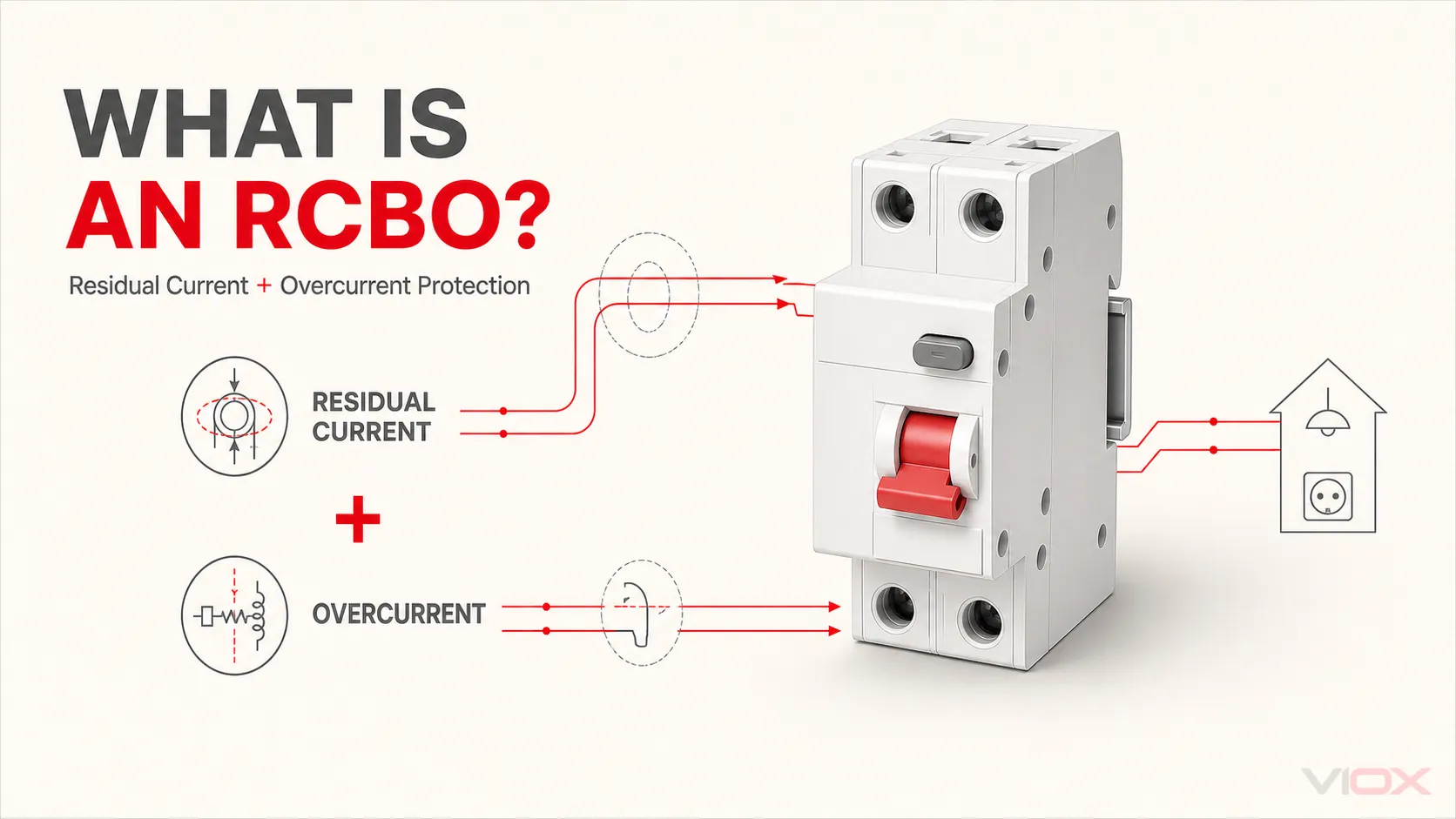
جهاز RCBO هو عبارة عن قاطع دائرة يعمل بالتيار المتبقي مع حماية مدمجة من التيار الزائد. وهو يجمع بين وظيفتين في جهاز واحد: حيث تستجيب حماية التيار المتبقي لأي عدم توازن بين الموصلات المراقبة، بينما يستجيب قسم التيار الزائد لحالات الحمل الزائد والقصر الكهربائي.
هذا الدمج لا يجعل كل جهاز RCBO مناسباً لكل دائرة. إذ لا يزال يتعين اختيار الجهاز بناءً على نوع وحساسية التيار المتبقي، والتيار المقنن In، ومنحنى الفصل، وقدرة القطع، والجهد، وترتيب الأقطاب والمحايد، ومعيار المنتج المطبق، ومتطلبات التركيب المحلية.
إذا كنت بحاجة فقط إلى شرح الاختصار، فاستخدم دليل المسمى الكامل لـ RCBO. تشرح هذه الصفحة نطاق عمل الجهاز وتوجه كل مهمة متعلقة بـ RCBO إلى موردها الصحيح.
خريطة حماية RCBO
أسرع طريقة لفهم جهاز RCBO هي الفصل بين العطل والوظيفة التي تستجيب له.
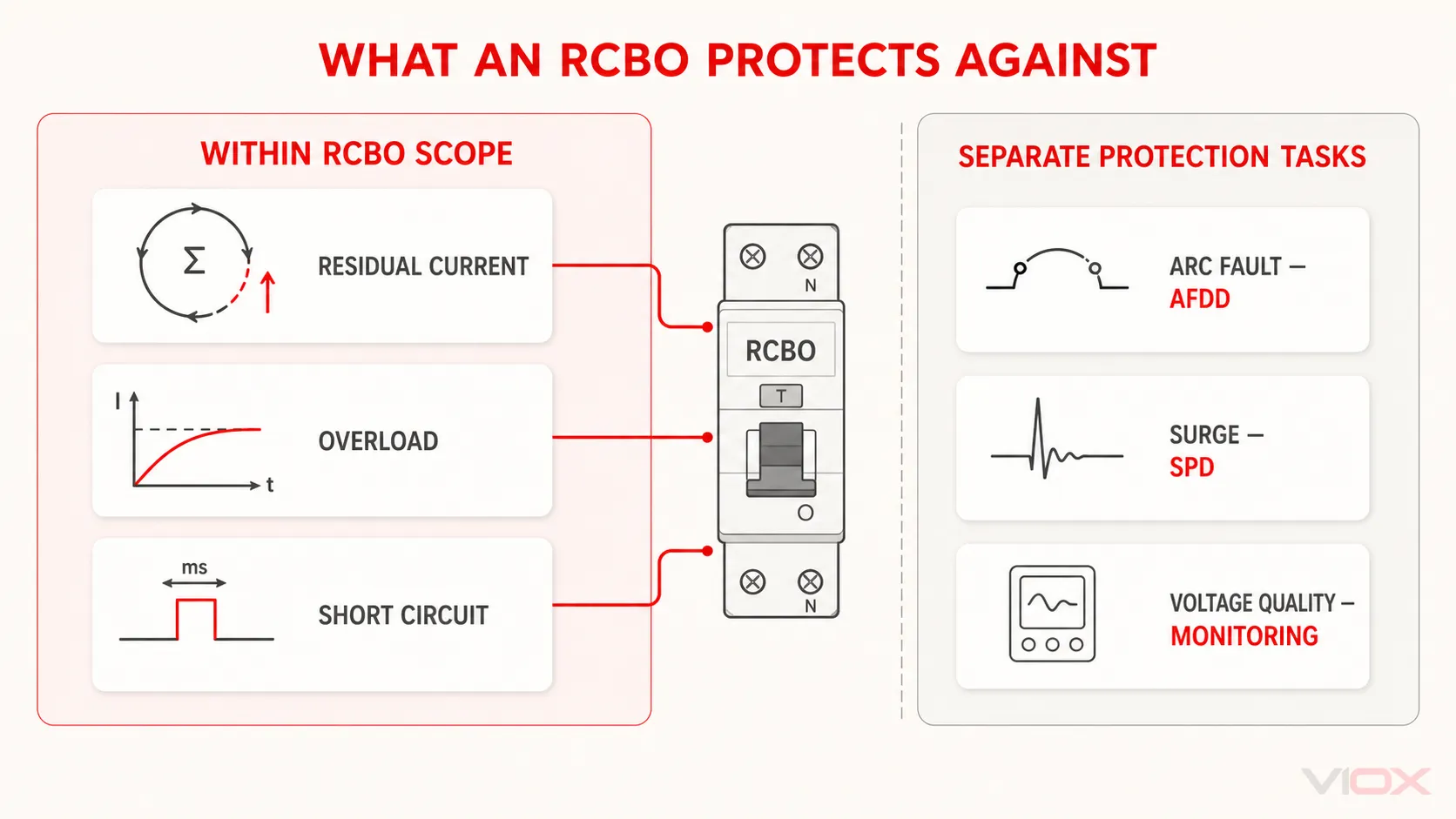
| الحالة الكهربائية | هل يعالج قاطع RCBO العادي ذلك؟ | شرط مهم |
|---|---|---|
| التيار المتبقي الناتج عن خروج التيار من مسار العودة المخصص له | نعم، من خلال وظيفة التيار المتبقي الخاصة به | يجب أن يقع شكل الموجة، والمقدار، والمدة، وترتيب الدائرة، وخصائص المنتج ضمن النطاق التشغيلي المعلن للجهاز |
| الحمل الزائد المستمر | نعم، من خلال وظيفة التيار الزائد الخاصة به | يجب أن يتوافق التيار المقنن وخصائص الفصل مع الموصل والحمل |
| ماس كهربائي | نعم، من خلال وظيفة التيار الزائد الخاصة به | يجب ألا يتجاوز تيار القصر الكهربائي المحتمل قدرة القطع المعلنة للجهاز |
| خطأ القوس الكهربائي على التوالي أو التوازي دون وجود تيار زائد كافٍ أو عدم توازن في التيار المتبقي | ليس بالضرورة | يؤدي جهاز كشف خطأ القوس الكهربائي (AFDD) وظيفة مختلفة |
| جهد زائد عابر أو ارتفاع مفاجئ في الجهد ناتج عن الصواعق | لا | تتطلب الحماية من الارتفاع المفاجئ في الجهد جهاز حماية من الارتفاع المفاجئ (SPD) مناسباً وتركيباً منسقاً |
| جهد زائد عام، أو جهد منخفض، أو فقدان طور، أو حدث يتعلق بجودة الطاقة | ليس كوظيفة أساسية لجهاز RCBO | قد تكون هناك حاجة إلى مراقبة أو حماية إضافية ما لم يوثق مستند المنتج الدقيق وجود وظيفة مدمجة |
| توجيه غير صحيح للموصلات أو استخدام خط محايد (N) مشترك | قد يفصل القاطع، لكنه لا يصحح التوصيلات الكهربائية. | يجب فحص الدائرة وتصحيحها وفقاً للتصميم المعتمد. |
لذلك، يغطي قاطع RCBO أنماط أعطال أكثر مما يغطيه قاطع MCB بمفرده، لكنه ليس جهاز سلامة كهربائية شاملاً. تعتمد الحماية على الدائرة الكاملة، ونظام التأريض، ومسار الموصلات، وخصائص المعدات، والتنسيق، والتحقق، وليس فقط على الملصق الموجود على واجهة الجهاز.
كيف يعمل RCBO؟
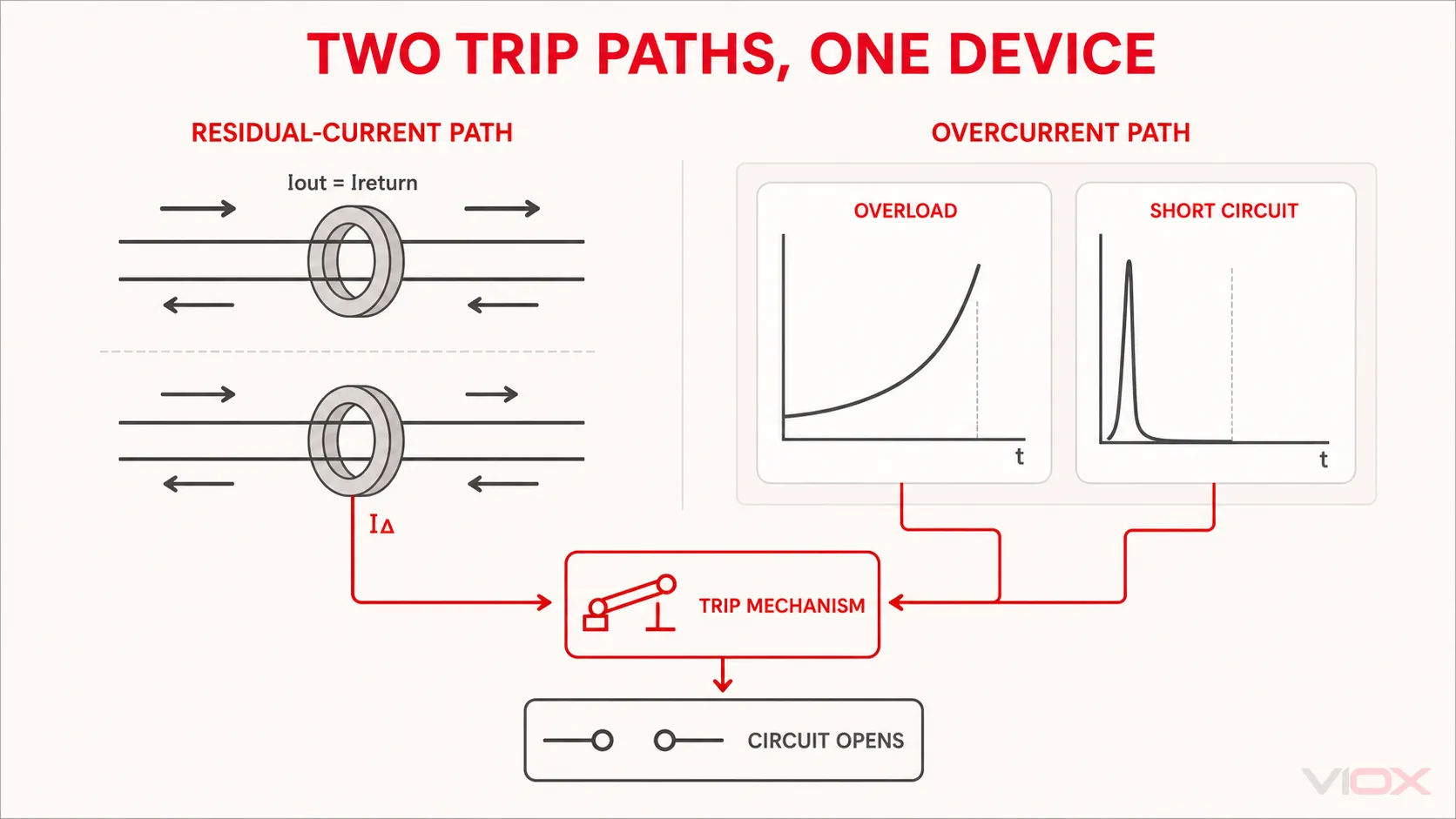
يحتوي قاطع RCBO على مساري حماية متصلين بآلية فصل مشتركة.
كشف التيار المتبقي
تمر الموصلات الحاملة للتيار التي يراقبها قاطع RCBO عبر مستشعر تجميع التيار. في الدائرة السليمة، يكون المجموع المتجهي للتيارات الخارجة والراجعة صفراً تقريباً. إذا سلك بعض التيار مساراً آخر، فإن عدم التوازن الناتج هو التيار المتبقي.
عندما يلبي ذلك التيار المتبقي ظروف تشغيل الجهاز، يقوم قسم التيار المتبقي بتحرير آلية الفصل وفتح الدائرة. لا يقوم قاطع RCBO ببساطة “بقياس التيار في موصل التأريض”، بل يكتشف عدم التوازن في الموصلات المراقبة.
يعتمد تشغيل التيار المتبقي أيضاً على نوع شكل الموجة الذي صُمم الجهاز لاكتشافه. علامات النوع AC و A و F و B ليست ملصقات قابلة للتبديل. تحدد المعدات المتصلة والقواعد المعمول بها نوع التيار المتبقي المطلوب؛ ويعود القرار التفصيلي إلى دليل RCBO من النوع AC و A و F و B.
الحماية من الحمل الزائد والقصر الكهربائي
يقوم قسم التيار الزائد بوظيفة قاطع الدائرة. في التصميم الكهروميكانيكي التقليدي، يستجيب عنصر حراري للحمل الزائد المستمر، بينما يستجيب عنصر مغناطيسي بشكل أسرع لتيار العطل العالي. يمكن للتصاميم الأخرى تنفيذ السلوك المعلن بطريقة مختلفة، لذا تظل وثائق الشركة المصنعة هي المرجع المعتمد.
شرح ABB الخاص بطرازها لـ مبدأ تشغيل RCBO طراز DS301C يوضح هذين المسارين: يتم اكتشاف عدم توازن التيار بواسطة نظام التيار المتبقي، بينما تستخدم استجابة الحمل الزائد والقصر الكهربائي آلية قاطع الدائرة. يوضح المثال المبدأ؛ ولا ينقل تصنيفات ذلك الطراز إلى أي RCBO آخر.
يعمل كلا المسارين على نفس آلية الفصل، لكن تصنيفاتهما تجيب على أسئلة مختلفة. علامة التيار المتبقي 30 mA ليست تصنيفاً للحمل الزائد، وعلامة منحنى C ليست حساسية للتيار المتبقي.
مقارنة بين RCBO و MCB و RCCB
تتشابه هذه الأجهزة في المظهر ولكن ليس في نطاق الحماية.
| الجهاز | حماية التيار المتبقي | الحماية من التحميل الزائد | الحماية من قصر الدائرة الكهربائية | دور التصميم النموذجي |
|---|---|---|---|---|
| MCB | لا | نعم | نعم | حماية من التيار الزائد لدائرة فردية |
| RCCB | نعم | لا توجد حماية مدمجة من التيار الزائد | لا توجد حماية مدمجة من التيار الزائد | حماية من التيار المتبقي تُستخدم مع حماية منسقة من التيار الزائد |
| RCBO | نعم | نعم | نعم | حماية مدمجة من التيار المتبقي والتيار الزائد لدائرة فردية |
“كلمة ”مدمجة“ لا تعني تلقائياً ”أفضل في كل لوحة". يمكن لجهاز RCBO تحسين فصل الأعطال على مستوى الدائرة لأن جهازاً واحداً يخدم دائرة محمية واحدة، بينما يمكن لجهاز RCCB مع عدة قواطع MCB دعم بنية توزيع مختلفة. تؤثر المساحة، والاستمرارية، والانتقائية، وتوجيه المحايد، واستراتيجية الصيانة، والتكلفة، والمتطلبات المحلية جميعها على الاختيار. استخدم مقارنة بين RCBO و RCCB مع MCB لاتخاذ قرار البنية هذا.
يُعد AFDD فئة منفصلة أخرى. فهو يبحث عن تواقيع محددة لأعطال القوس الكهربائي؛ بينما لا يوفر RCBO هذه الوظيفة تلقائياً. الـ قاطع التيار المتبقي مقابل دليل AFDD يوضح متى تختلف الوظائف ومتى قد تكون كلتاهما مطلوبة.
موقع RCBO في الدائرة الكهربائية
يُستخدم RCBO بشكل شائع كجهاز حماية لدائرة نهائية أو فرع محدد آخر من النظام الكهربائي:
مصدر التغذية أو قضيب التوزيع
          │
ترتيب الحماية والعزل في المنبع
          │
RCBO للدائرة المحددة
  ├── وظيفة التيار المتبقي
  └── وظيفة الحمل الزائد والقصر الكهربائي
          │
الحمل وموصلات الدائرة

موصل التأريض الوقائي (PE): يظل مسار حماية منفصلاً
هذه خريطة وظيفية وليست مخطط توصيل. يجب الحصول على الموصلات المراقبة بدقة، ومسار المحايد، واتجاه طرف التوصيل، وسلوك الأقطاب، ومتطلبات التغذية من مخطط المنتج وتصميم التركيب المعتمد. بالنسبة لترتيبات 1P+N و 2P و 3P+N و 4P، استخدم الـ دليل مخطط توصيل RCBO.
يعد الحفاظ على موصلات كل دائرة معاً أمراً ضرورياً لقياس التيار المتبقي. فالمحايد المشترك أو المستعار أو المتقاطع يمكن أن يجعل التيار يعود خارج مسار الاستشعار المقصود ويسبب الفصل. الـ دليل استكشاف أخطاء RCBO ذي المحايد المشترك تغطي ذلك العطل المحدد دون تحويله إلى تفسير عام لكل عملية فصل.
تصنيفات RCBO: ما يحدده كل رمز
تصف الرموز الموجودة على جهاز RCBO عدة قرارات مستقلة. قيمة الأمبير الصحيحة وحدها لا تكفي.
| التصنيف أو الرمز | ما يخبرك به | الخطوات التالية |
|---|---|---|
| جهد التشغيل المقنن والتردد | ظروف التغذية التي ينطبق عليها الإعلان | تحقق من ورقة البيانات الدقيقة ونظام التركيب |
التيار المقنن, في |
تصنيف التيار الزائد المستخدم في تنسيق الموصلات والحمل | دليل اختيار RCBO الكامل |
تيار التشغيل المتبقي المقنن, IΔn |
حساسية التيار المتبقي | دليل الاختيار وقواعد التركيب المعمول بها |
| نوع التيار المتبقي | أشكال موجات التيار المتبقي التي صُمم الجهاز للكشف عنها | النوع AC مقابل A مقابل F مقابل B |
| منحنى الفصل B أو C أو D | خصائص التيار الزائد اللحظي | دليل الاختيار والتحقق من تيار القصر الكهربائي |
| قدرة الكسر | تيار القصر الكهربائي الذي يمكن للجهاز قطعه في ظل ظروفه المعلنة | دليل قدرة القطع لـ RCBO |
| ترتيب الأقطاب والمحايد | الموصلات التي يتم تبديلها وحمايتها ومراقبتها | مخطط المنتج الدقيق و دليل توصيل أسلاك RCBO |
| معيار المنتج وعلامات الاعتماد | إطار الاختبار والأدلة السوقية المزعومة للطراز المحدد | الشهادة، والتقرير، والعلامات، ومتطلبات المشروع |
لا تترجم علامة واحدة إلى أخرى. IΔn لا يصف القصر الكهربائي، ولا يصف منحنى B/C/D الكشف عن شكل موجة التيار المتبقي، ولا تخبرك قدرة القطع بنوع تيار التسريب الموجود.
ما هو دليل RCBO الذي تحتاجه تالياً؟
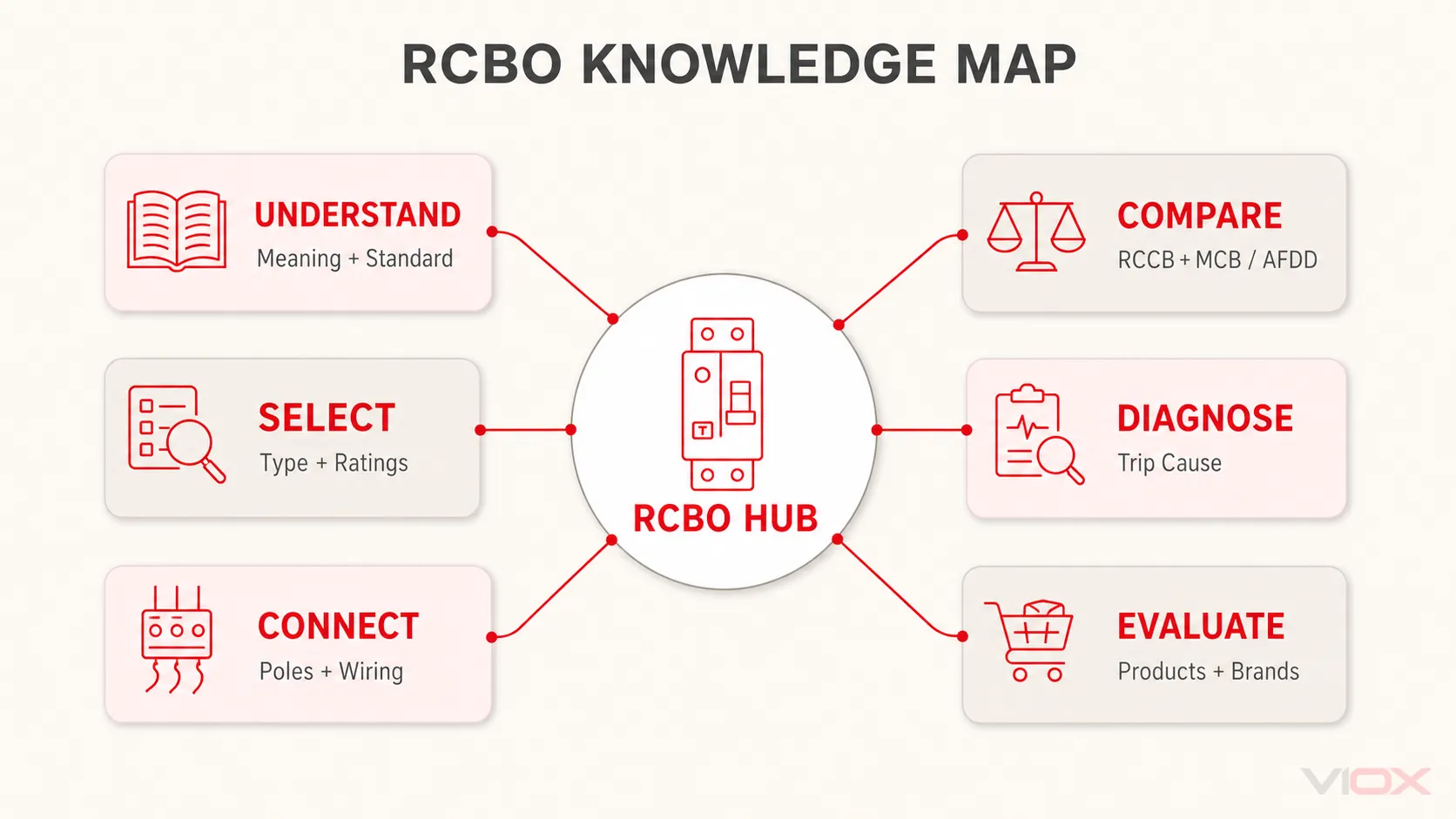
هذا المركز أقصر عمداً من الصفحات المتخصصة. اختر المسار الذي يطابق المهمة التي تحتاج إلى إكمالها.
| سؤالك التالي | مالك VIOX الصحيح |
|---|---|
| ماذا يعني اختصار RCBO؟ | RCBO النموذج الكامل في الكهرباء |
| كيف أختار التيار، والحساسية، والمنحنى، والأقطاب، وقدرة القطع؟ | كيفية اختيار RCBO المناسب |
| ما الذي تغطيه وتثبته المواصفة IEC 61009-1؟ | شرح معيار IEC 61009-1 |
| هل يجب أن أختار النوع AC أو A أو F أو B؟ | دليل أنواع التيار المتبقي لـ RCBO |
| هل 6 kA أو 10 kA أو 16 kA مناسب؟ | اختيار قدرة القطع لـ RCBO |
| كيف تختلف مسارات 1P+N و 2P و 3P+N و 4P؟ | مخططات توصيل RCBO |
| هل أستخدم RCBO أم RCCB مع MCB؟ | مقارنة المساحة، والتكلفة، والانتقائية، وعزل الأعطال |
| جهاز RCBO أم AFDD—أم كلاهما؟ | RCBO مقابل AFDD |
| لماذا يفصل جهاز RCBO بعد أعمال الصيانة على الخط المحايد (N) أو تغييرات لوحة التوزيع؟ | تشخيص الخط المحايد المشترك والمستعار |
| ما هي التغييرات التي تطرأ عند تحديث صندوق المصهرات القديم؟ | من صندوق منصهرات قديم إلى وحدة مستهلك تعمل بـ RCBO |
| ما هي العلامات التجارية التي يجب على المشتري البحث عنها؟ | أفضل الشركات المصنعة لأجهزة RCBO حول العالم |
| ما هي سلاسل أجهزة RCBO من VIOX المتوفرة؟ | مجموعة منتجات RCBO من VIOX |
نطاق معايير RCBO
IEC 61009-1:2024 يحدد المتطلبات والاختبارات العامة لأجهزة RCBO للاستخدامات المنزلية وما يشابهها ضمن نطاق جهد AC والتيار والتردد وسعة القصر الكهربائي المذكورة. ولا يثبت هذا المعيار بحد ذاته أن كل منتج يتم الإعلان عنه كجهاز RCBO متوافق، أو مقبول في كل سوق، أو مناسب لدائرة محددة.
IEC 62423 يضيف متطلبات واختبارات لأجهزة التيار المتبقي من النوع F والنوع B المستخدمة مع المعايير الأساسية المعمول بها. تساعد مراجع المعايير هذه في تحديد سلوك المنتج؛ ومع ذلك، يجب أن يظل النظام الكهربائي المثبت مستوفياً للقواعد الوطنية المعمول بها، ومواصفات المشروع، وتعليمات المعدات، والأدلة الخاصة بالطراز.
لأغراض الشراء، طابق رقم الطراز بدقة عبر ورقة البيانات، وعلامات الجهاز، والإقرار، والشهادة أو تقرير الاختبار، وعرض سعر المورد. لا تُعد كتيبات العائلة أو ملصقات IEC بديلاً عن الأدلة الخاصة بالطراز.
أسئلة شائعة حول RCBO
ماذا يعني اختصار RCBO؟
التوسع الشائع الاستخدام هو قاطع التيار المتبقي مع حماية من التيار الزائد. تصفه مصطلحات IEC بأنه قاطع دائرة يعمل بالتيار المتبقي مع حماية مدمجة من الحمل الزائد. الـ صفحة المصطلح الكامل لـ RCBO تمتلك المصطلحات التفصيلية.
هل يحمي RCBO من تسرب التيار الأرضي؟
إنه يستجيب للتيار المتبقي - أي عدم التوازن في الموصلات المراقبة - وفقاً لنوع التيار المتبقي وحساسيته وخصائص التشغيل الخاصة به. يمكن أن يوفر ذلك حماية لحالات خطأ أرضي محددة، ولكن لا ينبغي وصفه بأنه ضمان ضد كل سيناريوهات الصعق الكهربائي أو التسرب.
هل يمكن لـ RCBO أن يحل محل MCB و RCCB؟
يقوم RCBO المختار بشكل صحيح بدمج وظائف التيار المتبقي والتيار الزائد التي كانت ستتطلب بخلاف ذلك وظيفة RCCB/RCD بالإضافة إلى حماية الدائرة من التيار الزائد. يعتمد ما إذا كان يجب أن يحل محل ترتيب الأجهزة المنفصلة على تصميم التوزيع، والتنسيق، ومتطلبات الاستمرارية، وبنية المحايد، والقواعد المحلية، والمنتجات الدقيقة.
هل يحمي RCBO من ارتفاعات الجهد؟
لا. إن RCBO العادي ليس جهاز حماية من الارتفاع المفاجئ في الجهد (SPD). التيار الزائد، والتيار المتبقي، وخطأ القوس الكهربائي، والجهد الزائد العابر هي مهام حماية مختلفة.
لماذا قد يفصل قاطع RCBO في حال عدم وجود حمل زائد ظاهر؟
قد ينشأ الفصل من جانب التيار المتبقي بدلاً من جانب التيار الزائد. تشمل الفئات المحتملة تسرب العزل، أو تسرب المعدات، أو أخطاء في توجيه الموصل أو المحايد، أو الرطوبة، أو تلف الأسلاك، أو حالة أخرى في الدائرة. استخدم أي مؤشر فصل موثق واطلب تقييم الدائرة من قبل أفراد مؤهلين بشكل مناسب؛ لا تقم بإعادة ضبط القاطع بشكل متكرر في حال حدوث فصل غير مبرر.
من الفهم إلى تقييم المنتج
بمجرد تحديد متطلبات الدائرة، قارن بين الخيارات المنشورة في VIOX مجموعة منتجات قواطع التيار المتبقي مع الحماية من التيار الزائد (RCBO) من VIOX. تأكد من الجهد المقنن للطراز الدقيق، والتيار، ونوع التيار المتبقي وحساسيته، ومنحنى الفصل، وقدرة القطع، والأقطاب، ومخطط التوصيل، والمعيار، ووثائق السوق، وحدود التركيب قبل التحديد.
للحصول على دعم على مستوى الطراز، أرسل جهد الدائرة والتردد، والحمل، ومعلومات الموصل، والأقطاب المطلوبة، وتيار القصر الكهربائي المتوقع، ومتطلبات التيار المتبقي، والكمية، والسوق المستهدف إلى [email protected].