Bu sayfada
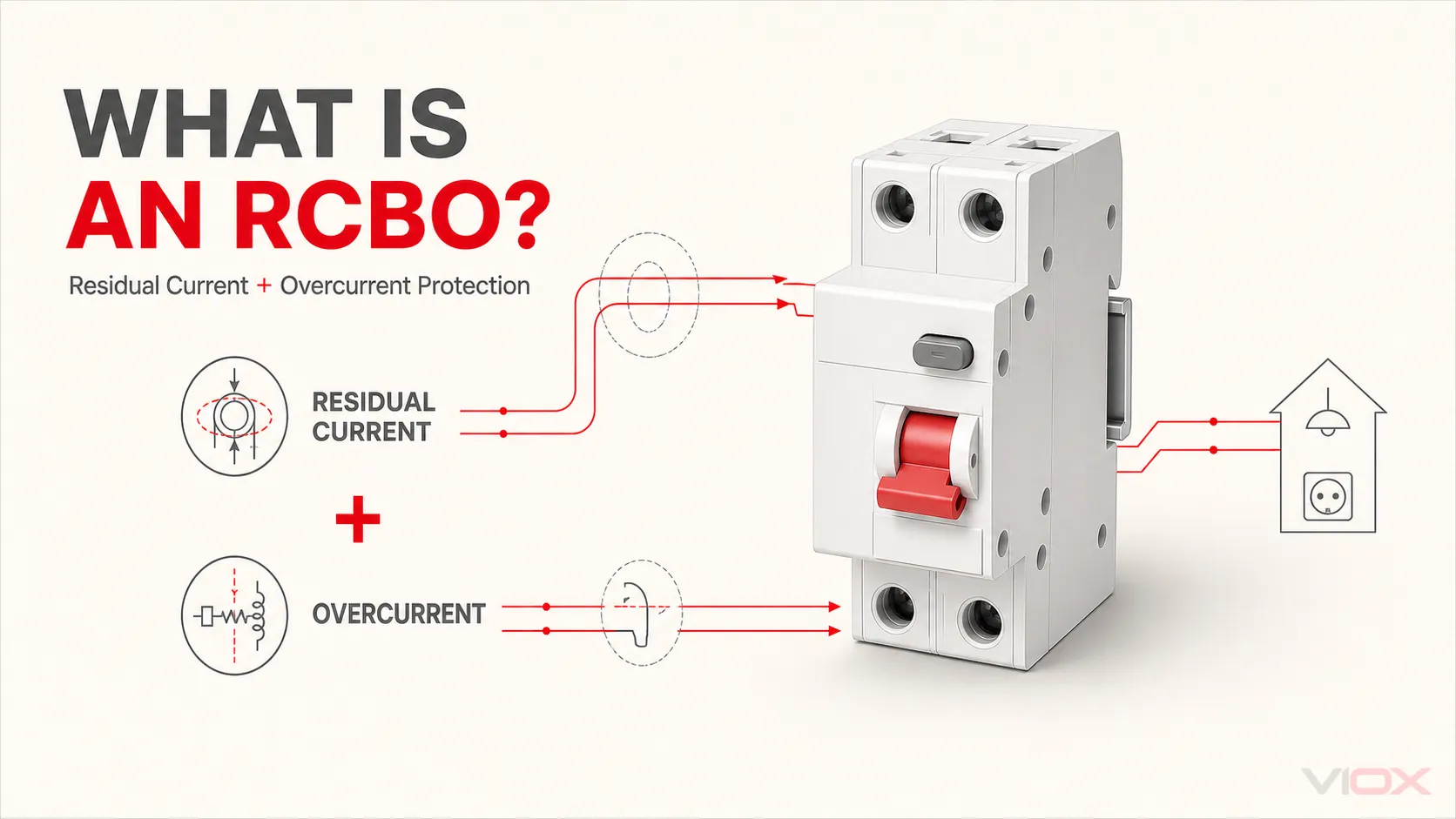
Bir RCBO, entegre aşırı akım korumalı kaçak akım korumalı devre kesici. Tek bir cihazda iki işlevi birleştirir: artık akım koruması, izlenen iletkenler arasındaki dengesizliğe yanıt verirken, aşırı akım bölümü aşırı yük ve kısa devre koşullarına yanıt verir.
Bu kombinasyon, her RCBO'yu her devre için uygun kılmaz. Cihaz yine de artık akım tipi ve hassasiyeti, anma akımı (In), açma eğrisi, kesme kapasitesi, gerilim, kutup ve nötr düzeni, geçerli ürün standardı ve yerel kurulum gereksinimlerine göre seçilmelidir.
Yalnızca kısaltmanın açıklanmasına ihtiyacınız varsa, ayrı olanı kullanın RCBO tam açılım kılavuzu. Bu sayfa cihaz sınırını açıklar ve her bir derinlemesine RCBO görevini doğru kaynağına yönlendirir.
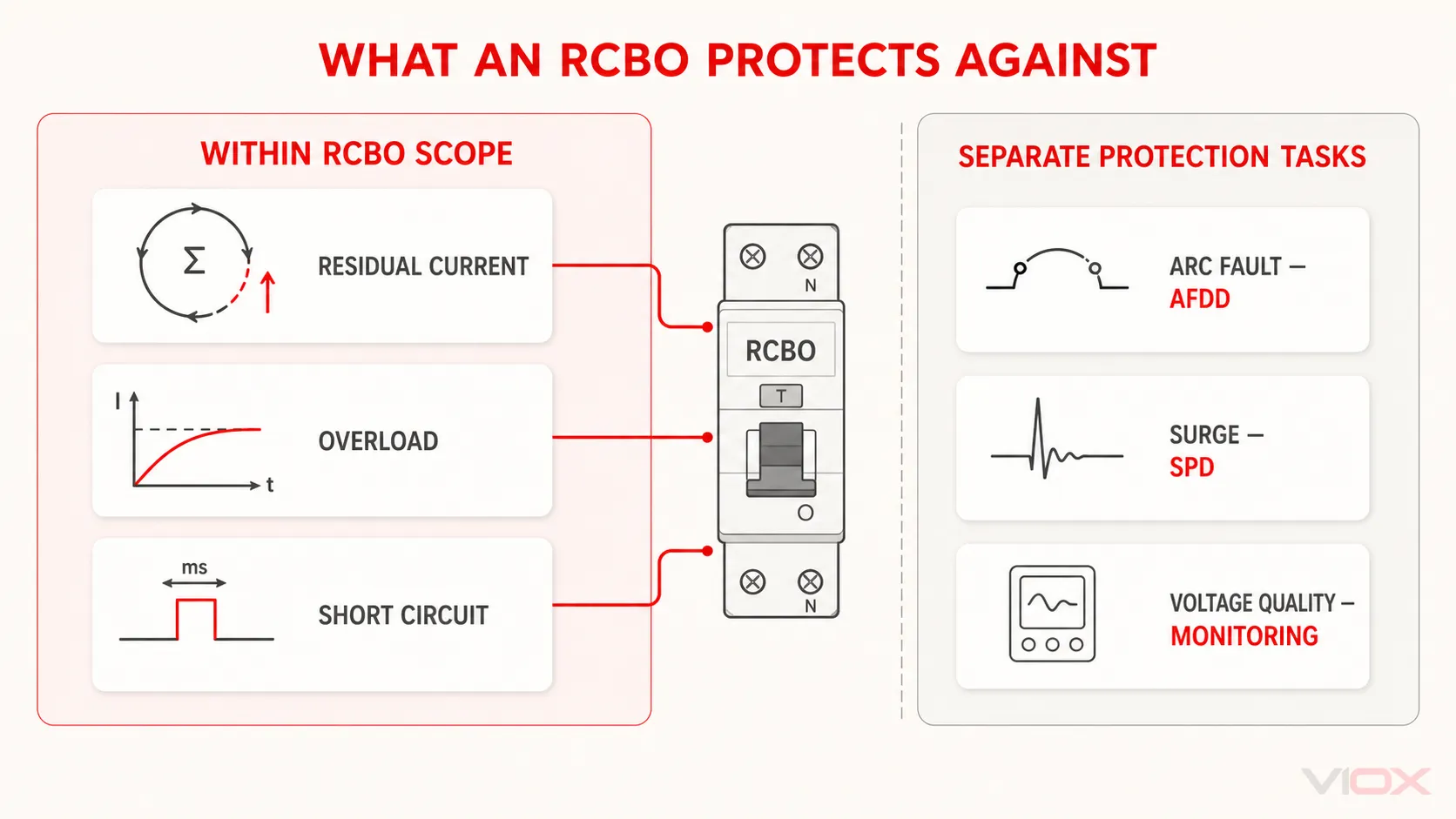
RCBO Koruma Haritası
Bir RCBO'yu anlamanın en hızlı yolu, arızayı ona yanıt veren işlevden ayırmaktır.
| Elektriksel durum | Sıradan bir RCBO bunu çözer mi? | Önemli koşul |
|---|---|---|
| Akımın hedeflenen dönüş yolunu terk etmesinden kaynaklanan artık akım | Evet, artık akım fonksiyonu sayesinde | Dalga formu, büyüklük, süre, devre düzeni ve ürün özellikleri, cihazın beyan edilen çalışma sınırları içerisinde kalmalıdır |
| Sürekli aşırı yük | Evet, aşırı akım fonksiyonu sayesinde | Anma akımı ve açma karakteristiği, iletken ve yük ile uyumlu olmalıdır |
| Kısa devre | Evet, aşırı akım fonksiyonu sayesinde | Olası kısa devre akımı, geçerli kesme kapasitesi beyanını aşmamalıdır |
| Yeterli aşırı akım veya artık akım dengesizliği olmayan seri veya paralel ark hatası | İlla ki değil | Bir ark hatası algılama cihazı (AFDD) farklı bir işlev görür |
| Geçici aşırı gerilim veya yıldırım kaynaklı aşırı gerilim | Hayır | Aşırı gerilim koruması, uygun bir SPD ve koordineli bir kurulum gerektirir |
| Genel aşırı gerilim, düşük gerilim, faz kaybı veya güç kalitesi olayı | Temel bir RCBO işlevi olarak değil | İlgili ürün entegre bir işlevi belgelemediği sürece ek izleme veya koruma gerekebilir |
| Hatalı iletken yönlendirmesi veya ortak nötr kullanımı | Açma yapabilir ancak kablolamayı düzeltmez | Devre, onaylı tasarıma uygun şekilde incelenmeli ve düzeltilmelidir |
Bu nedenle bir RCBO, tek başına bir MCB'den daha fazla hata modunu kapsar ancak evrensel bir elektrik güvenliği cihazı değildir. Koruma; sadece cihazın önündeki etikete değil, komple devreye, topraklama düzenine, iletken güzergahına, ekipman özelliklerine, koordinasyona ve doğrulamaya bağlıdır.
Bir RCBO Nasıl Çalışır?
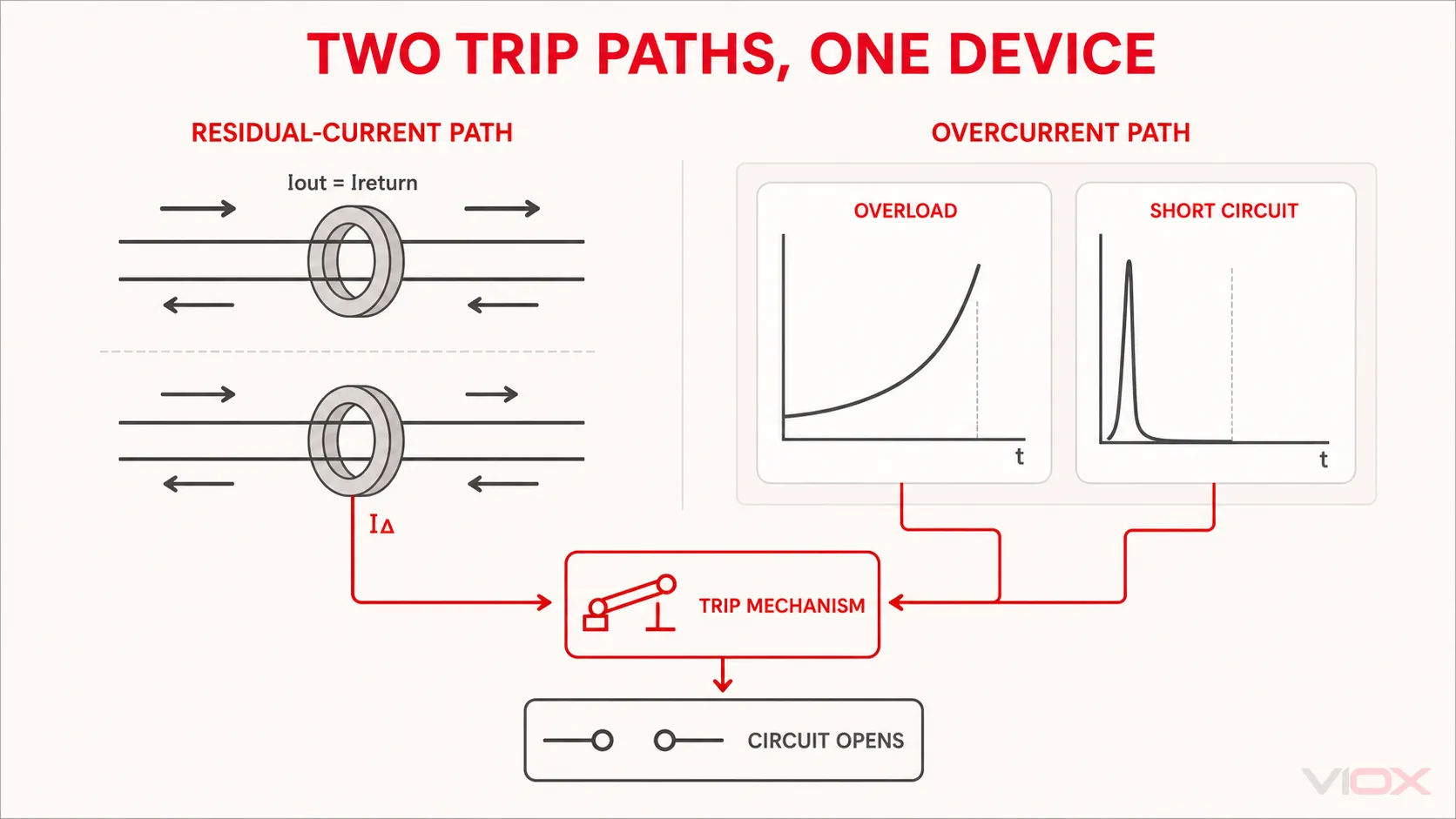
Bir RCBO, ortak bir açma mekanizmasına bağlı iki koruma yolu içerir.
Artık Akım Algılama
RCBO tarafından izlenen akım taşıyan iletkenler, bir akım toplama sensöründen geçer. Sağlıklı bir devrede, giden ve dönen akımların vektörel toplamı yaklaşık olarak sıfırdır. Eğer bir miktar akım başka bir yol izlerse, ortaya çıkan dengesizlik artık akımdır.
Bu artık akım, cihazın çalışma koşullarını karşıladığında, artık akım bölümü açma mekanizmasını serbest bırakır ve devreyi açar. RCBO sadece “topraklama iletkenindeki akımı ölçmez”. İzlenen iletkenlerdeki dengesizliği algılar.
Artık akım çalışması, cihazın algılamak üzere tasarlandığı dalga formu tipine de bağlıdır. Tip AC, A, F ve B işaretleri birbirinin yerine kullanılabilen etiketler değildir. Bağlı ekipman ve geçerli kurallar hangi artık akım tipinin gerekli olduğunu belirler; detaylı karar şuna aittir: RCBO Tip AC, A, F ve B kılavuzu.
Aşırı yük ve kısa devre koruması
Aşırı akım bölümü, devre kesici işlevini yerine getirir. Geleneksel bir elektromekanik tasarımda, termal bir eleman sürekli aşırı yüke yanıt verirken, manyetik bir eleman yüksek hata akımına daha hızlı yanıt verir. Diğer tasarımlar belirtilen davranışı farklı şekilde uygulayabilir, bu nedenle üreticinin kesin dokümantasyonu esas alınmalıdır.
ABB'nin kendi modeline özel açıklaması: DS301C RCBO çalışma prensibi bu iki yolu göstermektedir: akım dengesizliği artık akım sistemi tarafından algılanırken, aşırı yük ve kısa devre yanıtı devre kesici mekanizmasını kullanır. Bu örnek prensibi açıklamaktadır; söz konusu modelin değerlerini başka bir RCBO'ya aktarmaz.
Her iki yol da aynı ayırma mekanizmasını çalıştırır, ancak değerleri farklı sorulara yanıt verir. 30 mA artık akım işareti bir aşırı yük değeri değildir ve C-eğrisi işareti bir artık akım hassasiyeti değildir.
RCBO ile MCB ile RCCB karşılaştırması
Bu cihazlar görünüş olarak örtüşür ancak koruma kapsamı bakımından örtüşmez.
| Cihaz | Artık akım koruması | Aşırı yük koruması | Kısa devre koruması | Tipik tasarım rolü |
|---|---|---|---|---|
| MCB'NİN | Hayır | Evet | Evet | Münferit bir devre için aşırı akım koruması |
| RCCB'NİN | Evet | Dahili aşırı akım koruması yoktur | Dahili aşırı akım koruması yoktur | Koordineli aşırı akım koruması ile birlikte kullanılan artık akım koruması |
| RCBO | Evet | Evet | Evet | Münferit bir devre için birleşik artık akım ve aşırı akım koruması |
“Birleşik” ifadesi, “her panoda daha iyi” anlamına gelmez. Bir RCBO, devre seviyesinde arıza ayrımını iyileştirebilir çünkü tek bir cihaz tek bir korumalı devreye hizmet eder; oysa bir RCCB ve birden fazla MCB kombinasyonu farklı bir dağıtım mimarisini destekleyebilir. Alan, süreklilik, seçicilik, nötr hattı yönlendirmesi, bakım stratejisi, maliyet ve yerel gereksinimlerin tümü seçimi etkiler. Söz konusu mimari kararı için RCBO ile RCCB artı MCB karşılaştırması kullanın.
AFDD başka bir ayrı kategoridir. Belirli ark hatası imzalarını arar; bir RCBO bu işlevi otomatik olarak sağlamaz. Bu RCBO - AFDD kılavuzumuza bakın işlevlerin ne zaman farklılaştığını ve her ikisinin ne zaman gerekli olabileceğini açıklar.
Bir RCBO'nun Devredeki Yeri
Bir RCBO, genellikle bir nihai devre veya bir dağıtım sisteminin tanımlanmış başka bir kolu için koruyucu cihaz olarak kullanılır:
Besleme veya dağıtım barası
          │
Üst akım koruma ve ayırma düzeni
          │
Tanımlı devre için RCBO
  ├── artık akım işlevi
  └── aşırı yük ve kısa devre işlevi
          │
Yük ve devre iletkenleri

Koruma iletkeni (PE): ayrı bir koruma yolu olarak kalır
Bu bir kablolama şeması değil, işlevsel bir haritadır. İzlenen iletkenler, nötr yolu, terminal yönü, kutup davranışı ve besleme gereksinimleri ile ilgili kesin bilgiler ürün şemasından ve onaylı kurulum tasarımından alınmalıdır. 1P+N, 2P, 3P+N ve 4P düzenlemeleri için ayrı RCBO bağlantı şeması kılavuzu.
Her devrenin iletkenlerini bir arada tutmak, artık akım ölçümü için esastır. Paylaşılan, ödünç alınan veya çapraz bağlanmış bir nötr, akımın amaçlanan algılama yolunun dışında dönmesine ve açmaya neden olabilir. Bu paylaşılan nötr RCBO sorun giderme kılavuzu her bir açmayı evrensel bir açıklama haline getirmeden o spesifik arızayı kapsar.
RCBO Değerleri: Her Bir İşaretin Belirlediği Şey
Bir RCBO üzerindeki işaretler birkaç bağımsız kararı tanımlar. Sadece doğru bir amper değeri yeterli değildir.
| Değer veya işaretleme | Size ne anlatıyor | Sırada ne var |
|---|---|---|
| Anma işletme gerilimi ve frekansı | Beyanın geçerli olduğu besleme koşulları | Tam veri sayfasını ve kurulum sistemini doğrulayın |
Anma akımı, İçinde |
İletken ve yük koordinasyonunda kullanılan aşırı akım değeri | Eksiksiz RCBO seçim kılavuzu |
Anma hata çalışma akımı, IΔn |
Artık akım hassasiyeti | Seçim kılavuzu ve uygulanabilir kurulum kuralları |
| Artık akım türü | Cihazın algılamak üzere tasarlandığı artık akım dalga formları | Tip AC, A, F ve B karşılaştırması |
| B, C veya D açma eğrisi | Ani aşırı akım karakteristiği | Seçim kılavuzu ve devre hata akımı doğrulama |
| Kesme kapasitesi | Cihazın beyan edilen koşulları altında kesebileceği kısa devre akımı | RCBO kesme kapasitesi kılavuzu |
| Kutup ve nötr düzenlemesi | Hangi iletkenlerin anahtarlanacağı, korunacağı ve izleneceği | Tam ürün şeması ve RCBO kablolama kılavuzu |
| Ürün standardı ve onay işaretleri | Test çerçevesi ve ilgili model için iddia edilen pazar kanıtları | Sertifika, rapor, işaretleme ve proje gereksinimleri |
Bir işaretlemeyi bir başkasıyla çevirmeyin. IΔn kısa devre kesmesini tanımlamaz, B/C/D eğrisi artık akım dalga formu algılamasını tanımlamaz ve kesme kapasitesi size hangi kaçak akım tipinin mevcut olduğunu söylemez.
Bir Sonraki RCBO Kılavuzuna mı İhtiyacınız Var?
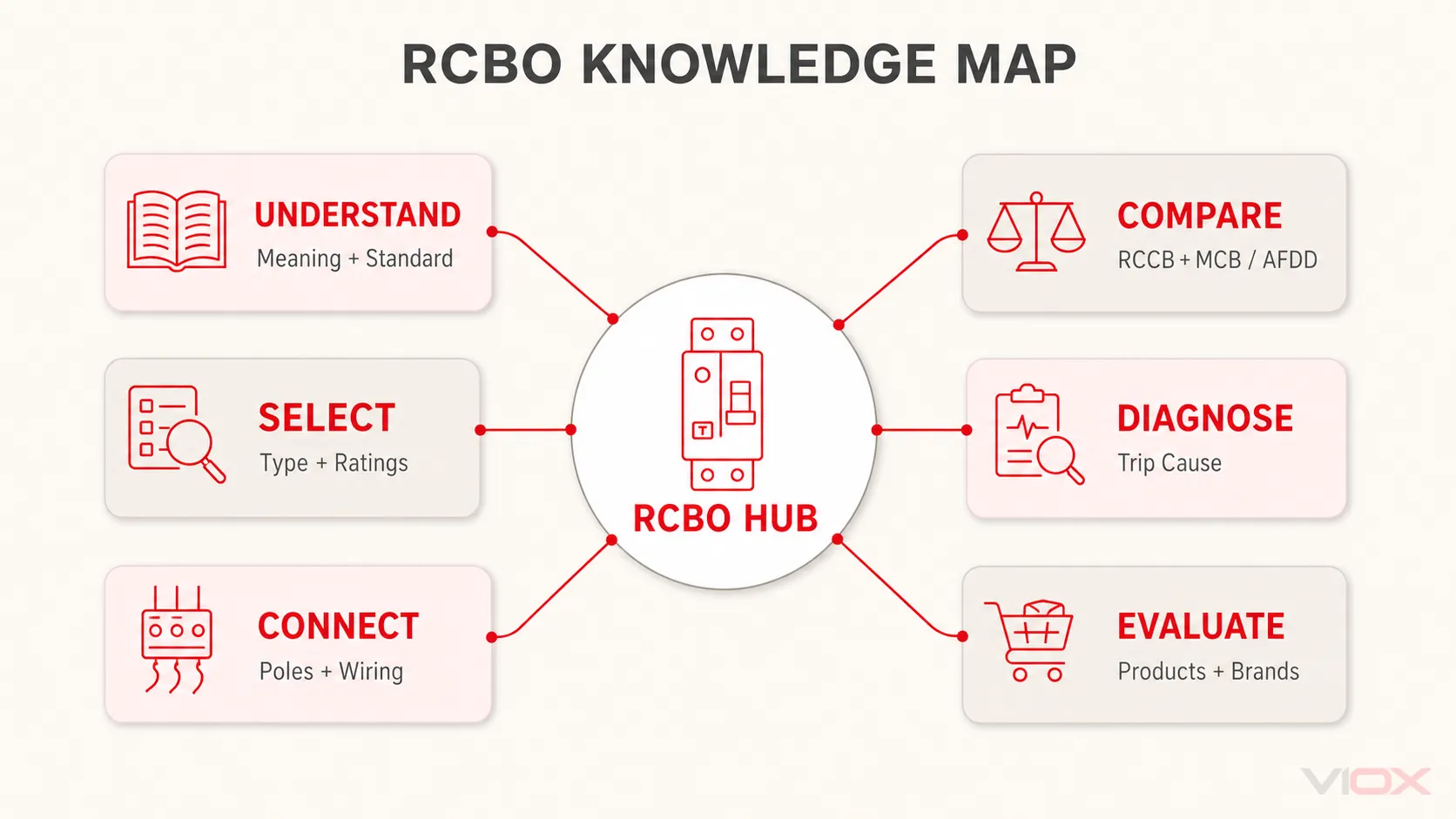
Bu merkez, uzman sayfalarından kasıtlı olarak daha kısa tutulmuştur. Tamamlamanız gereken göreve uygun yolu seçin.
| Bir sonraki sorunuz | Doğru VIOX sahibi |
|---|---|
| RCBO ne anlama gelir? | Elektrikte RCBO Açılımı |
| Akım, hassasiyet, eğri, kutup ve kesme kapasitesini nasıl seçerim? | Doğru RCBO Nasıl Seçilir |
| IEC 61009-1 neleri kapsar ve doğrular? | IEC 61009-1 Açıklaması |
| Tip AC, A, F veya B mi seçmeliyim? | RCBO Artık Akım Tipi Kılavuzu |
| 6 kA, 10 kA veya 16 kA uygun mudur? | RCBO Kesme Kapasitesi Seçimi |
| 1P+N, 2P, 3P+N ve 4P yolları nasıl farklılık gösterir? | RCBO Bağlantı Şemaları |
| RCBO mu yoksa RCCB artı MCB mi? | Alan, Maliyet, Seçicilik ve Hata İzolasyonu Karşılaştırması |
| RCBO mu yoksa AFDD mi; ya da her ikisi birden mi? | RCBO ve AFDD |
| Nötr hattındaki çalışma veya pano değişikliklerinden sonra RCBO neden açma yapar? | Paylaşımlı ve Ödünç Alınmış Nötr Hattı Tanısı |
| Eski bir sigorta kutusu yükseltmesinde neler değişir? | Eski Sigorta Kutusundan RCBO Tüketici Birimine |
| Bir alıcı hangi markaları araştırmalıdır? | Dünya Genelinde Önde Gelen RCBO Üreticileri |
| Hangi VIOX RCBO serileri mevcuttur? | VIOX RCBO Ürün Serisi |
RCBO Standartları Kapsamı
IEC 61009-1:2024 belirtilen AC gerilim, akım, frekans ve kısa devre kapasitesi kapsamı dahilinde, ev ve benzeri kullanımlara yönelik RCBO'lar için genel gereklilikleri ve testleri tanımlar. Bu standart tek başına, RCBO olarak tanıtılan her ürünün uyumlu olduğunu, her pazarda kabul gördüğünü veya belirli bir devre için uygun olduğunu kanıtlamaz.
IEC 62423 ilgili temel standartlarla birlikte kullanılan Tip F ve Tip B artık akım cihazları için gereklilikleri ve testleri ekler. Bu standart referansları ürün davranışını tanımlamaya yardımcı olur; kurulu sistemin yine de geçerli ulusal kuralları, proje şartnamesini, ekipman talimatlarını ve model bazlı kanıtları karşılaması gerekir.
Satın alma işlemleri için veri sayfası, cihaz üzerindeki işaretleme, beyan, sertifika veya test raporu ve tedarikçi teklifi üzerindeki model numarasının birebir eşleştiğinden emin olun. Bir ürün ailesi broşürü veya IEC tarzı bir etiket, modele özel kanıtların yerini tutmaz.
Sıkça Sorulan RCBO Soruları
RCBO ne anlama gelir?
Yaygın olarak kullanılan açılımı şudur: Aşırı Akım Korumalı Artık Akım Kesici. IEC terminolojisi bunu, entegre aşırı akım korumalı artık akımla çalışan devre kesici olarak tanımlar. Söz konusu RCBO tam açılım sayfası ayrıntılı terminolojiye sahiptir.
Bir RCBO toprak kaçağına karşı koruma sağlar mı?
İzlenen iletkenlerdeki dengesizlik olan artık akıma, kendi artık akım tipine, hassasiyetine ve çalışma karakteristiklerine göre yanıt verir. Bu, belirli toprak hatası koşulları için koruma sağlayabilir, ancak her elektrik çarpması veya kaçak senaryosuna karşı bir garanti olarak tanımlanmamalıdır.
Bir RCBO, bir MCB ve bir RCCB'nin yerini alabilir mi?
Doğru seçilmiş bir RCBO, aksi takdirde bir RCCB/RCD fonksiyonu artı devre aşırı akım koruması gerektirecek olan artık akım ve aşırı akım fonksiyonlarını birleştirir. Ayrı bir cihaz düzenlemesinin yerini alıp almaması; dağıtım tasarımına, koordinasyona, süreklilik gereksinimine, nötr mimarisine, yerel kurallara ve kesin ürünlere bağlıdır.
Bir RCBO voltaj dalgalanmalarına karşı koruma sağlar mı?
Hayır. Normal bir RCBO, bir SPD değildir. Aşırı akım, artık akım, ark hatası ve geçici aşırı gerilim farklı koruma görevleridir.
Görünür bir aşırı yük yokken bir RCBO neden açma yapabilir?
Açma, aşırı akım tarafından ziyade artık akım tarafından kaynaklanıyor olabilir. Olası kategoriler arasında yalıtım kaçağı, ekipman kaçağı, iletken veya nötr yönlendirme hataları, nem, hasarlı kablolama veya başka bir devre durumu yer alır. Belgelenmiş herhangi bir açma göstergesini kullanın ve devrenin uygun nitelikli personel tarafından değerlendirilmesini sağlayın; açıklanamayan bir açmayı defalarca sıfırlamayın.
Anlamaktan Ürün Değerlendirmeye
Devre gereksinimleri tanımlandıktan sonra, VIOX içindeki yayınlanmış seçenekleri karşılaştırın RCBO ürün gamı. Şartname öncesinde tam modelin anma gerilimini, akımını, artık akım tipini ve hassasiyetini, eğrisini, kesme kapasitesini, kutup sayısını, bağlantı şemasını, standardını, pazar dokümantasyonunu ve kurulum sınırlarını doğrulayın.
Model düzeyinde destek için devre gerilimini ve frekansını, yükü, iletken bilgilerini, gerekli kutup sayısını, muhtemel kısa devre akımını, artık akım gereksinimini, miktarı ve hedef pazarı şuraya gönderin: [email protected].