Blog

Votre catégorie de blog

The Differences Between Low, Medium & High Voltages

Les différences entre les basses, moyennes et hautes tensions

Understanding voltage classifications is fundamental to electrical engineering, power distribution, and equipment selection. Whether you’re designing a residential circuit, managing an industrial facility, or planning a power transmission network, knowing the differences between low, medium, and high voltage is essential for safety, efficiency, and compliance with international standards. This comprehensive guide explores the technical distinctions, […]

Les différences entre les basses, moyennes et hautes tensions Lire la suite »
Silver vs. Copper Dependence: A Sensitivity Ranking for Contactors, Breakers, Relays, and Fuses

Dépendance argent vs cuivre : un classement de sensibilité pour les contacteurs, disjoncteurs, relais et fusibles

Key Takeaways Contactors are the most silver-sensitive devices, with silver costs representing 25-55% of total material costs depending on current rating Silver prices surged 147% in 2025, reaching $72/oz from $29/oz, creating unprecedented cost pressure on electrical equipment manufacturers AgSnO₂ (silver tin oxide) has replaced toxic AgCdO as the industry-standard contact material, containing 88-95% silver

Dépendance argent vs cuivre : un classement de sensibilité pour les contacteurs, disjoncteurs, relais et fusibles Lire la suite »

Surge Protection Standards Around the World: IEC vs UL vs GB Differences and Mutual Recognition

Normes de protection contre les surtensions dans le monde : Différences et reconnaissance mutuelle entre IEC, UL et GB

When specifying surge protective devices (SPDs) for international projects, engineers face a maze of conflicting standards, test protocols, and certification requirements. A single specification error can result in non-compliant installations, failed inspections, or—worse—inadequate protection during critical surge events. This comprehensive guide decodes the three dominant surge protection standards worldwide: IEC 61643, UL 1449, and GB

Normes de protection contre les surtensions dans le monde : Différences et reconnaissance mutuelle entre IEC, UL et GB Lire la suite »

AC-7a vs. AC-7b: Why Your Modular Contactors Are Failing on Inductive Loads

AC-7a vs AC-7b : Pourquoi vos contacteurs modulaires tombent en panne sur des charges inductives

When modular contactors fail prematurely in household and light commercial applications, the root cause often traces back to a critical specification error: using an AC-7a rated contactor for an AC-7b application. This seemingly minor distinction—defined by IEC 61095 standards—represents the difference between reliable operation and catastrophic failure when controlling inductive loads like motors, fans, and

AC-7a vs AC-7b : Pourquoi vos contacteurs modulaires tombent en panne sur des charges inductives Lire la suite »

IEC 61095 vs. IEC 60947-4-1: The Difference Between Household and Industrial Contactor Standards

IEC 61095 vs. IEC 60947-4-1 : La différence entre les normes des contacteurs domestiques et industriels

When specifying contactors for electrical systems, understanding the difference between IEC 61095 and IEC 60947-4-1 standards is critical for ensuring safety, performance, and compliance. These two International Electrotechnical Commission (IEC) standards govern contactor design and application—but they serve distinctly different markets. IEC 61095 addresses household and similar applications, while IEC 60947-4-1 covers industrial motor control

IEC 61095 vs. IEC 60947-4-1 : La différence entre les normes des contacteurs domestiques et industriels Lire la suite »

Understanding 80% Vs. 100% Rated Circuit Breakers

Comprendre les disjoncteurs calibrés 80% par rapport aux 100%

For electrical contractors, panel builders, and facility managers working with commercial and industrial installations, understanding the difference between 80% and 100% rated circuit breakers is critical for safety, code compliance, and cost optimization. Despite their widespread use, these ratings remain one of the most misunderstood aspects of electrical panel design. This comprehensive guide clarifies the

Comprendre les disjoncteurs calibrés 80% par rapport aux 100% Lire la suite »

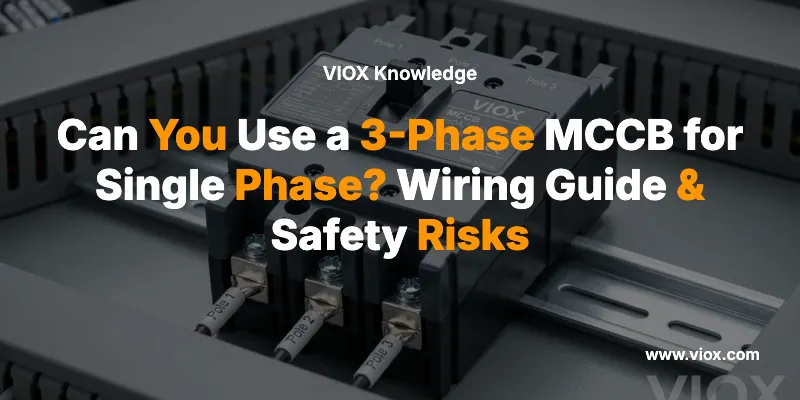
Can You Use a 3-Phase MCCB for Single Phase? Wiring Guide & Safety Risks

Peut-on utiliser un MCCB triphasé pour du monophasé ? Guide de câblage et risques de sécurité

Introduction: The Compatibility Question Figure 1: Industrial 3-pole MCCB equipment mounted on a DIN rail, a common sight in spare parts bins. You’re specifying protection for a 50kW single-phase industrial heater at a new manufacturing facility. Your distributor quotes a standard single-pole MCB at $120—or you could repurpose a 3-pole MCCB from your spare parts

Peut-on utiliser un MCCB triphasé pour du monophasé ? Guide de câblage et risques de sécurité Lire la suite »

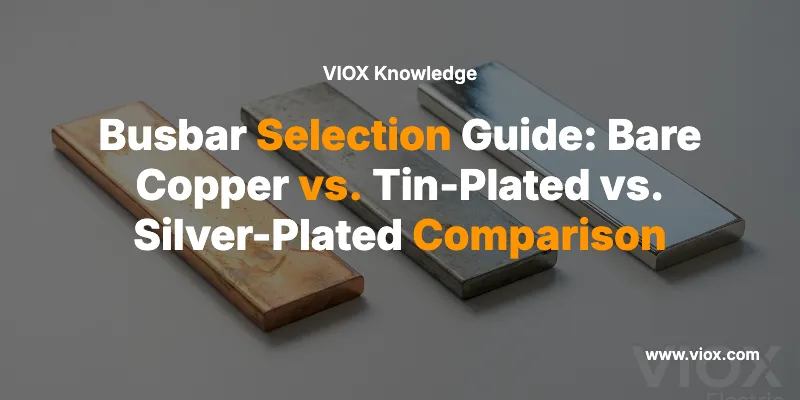
Busbar Selection Guide: Bare Copper vs. Tin-Plated vs. Silver-Plated Comparison

Guide de sélection des barres omnibus : Comparaison entre le cuivre nu, le cuivre étamé et le cuivre argenté

You’ve just ordered new busbars for your switchgear panel. The supplier offers three options: bare copper (the cheapest), tin-plated (mid-range), or silver-plated (premium). All carry the same rated current. All meet IEC standards. So why would you ever pay more? Three months after installation, you get a call: a connection joint is running hot. The

Guide de sélection des barres omnibus : Comparaison entre le cuivre nu, le cuivre étamé et le cuivre argenté Lire la suite »

From C1-C5 and CX: The Corrosion Resistance Grade and Design Lifespan of Metal Parts

De C1 à C5 et CX : Grade de résistance à la corrosion et durée de vie prévue des pièces métalliques

Figure 1: The impact of environmental stress — a rusted electrical cabinet showing coating failure after 3-4 years in a C4 coastal zone. Introduction Metal components in electrical systems are under siege. Humidity creeps in. Salt spray corrodes. Industrial atmospheres accelerate degradation. Without proper protection, corrosion transforms reliable equipment into costly failures. This is where

De C1 à C5 et CX : Grade de résistance à la corrosion et durée de vie prévue des pièces métalliques Lire la suite »

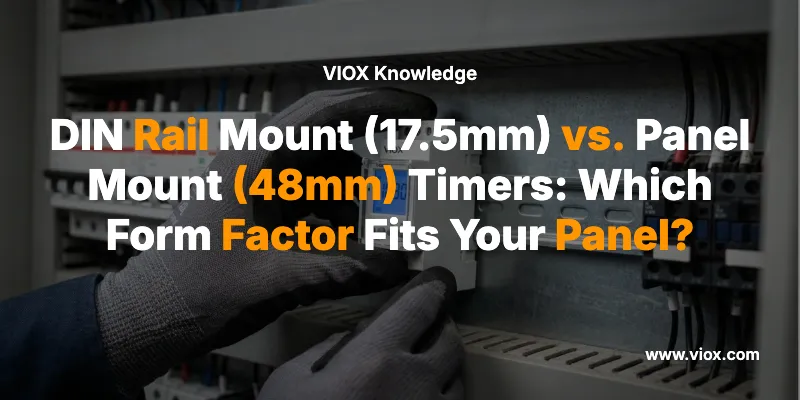
DIN Rail Mount (17.5mm) vs. Panel Mount (48mm) Timers: Which Form Factor Fits Your Panel?

Minuterie à montage sur rail DIN (17,5 mm) ou à montage sur panneau (48 mm) : quel format convient à votre panneau ?

Figure 1: VIOX 17.5mm DIN rail mount timer being installed on 35mm DIN rail in industrial control panel. When designing control panels for industrial automation, HVAC systems, or manufacturing equipment, selecting the right timer form factor can significantly impact installation efficiency, space utilization, and long-term maintenance costs. The choice between DIN rail mount (17.5mm) and

Minuterie à montage sur rail DIN (17,5 mm) ou à montage sur panneau (48 mm) : quel format convient à votre panneau ? Lire la suite »

Demander un devis maintenant