Blog

A categoria do seu blogue

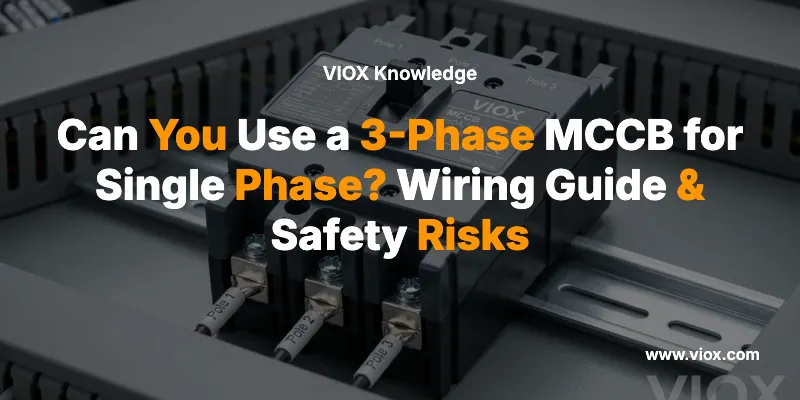
Can You Use a 3-Phase MCCB for Single Phase? Wiring Guide & Safety Risks

Pode-se usar um MCCB trifásico para uma fase? Guia de fiação e riscos de segurança

Introduction: The Compatibility Question Figure 1: Industrial 3-pole MCCB equipment mounted on a DIN rail, a common sight in spare parts bins. You’re specifying protection for a 50kW single-phase industrial heater at a new manufacturing facility. Your distributor quotes a standard single-pole MCB at $120—or you could repurpose a 3-pole MCCB from your spare parts […]

Pode-se usar um MCCB trifásico para uma fase? Guia de fiação e riscos de segurança Ler mais "

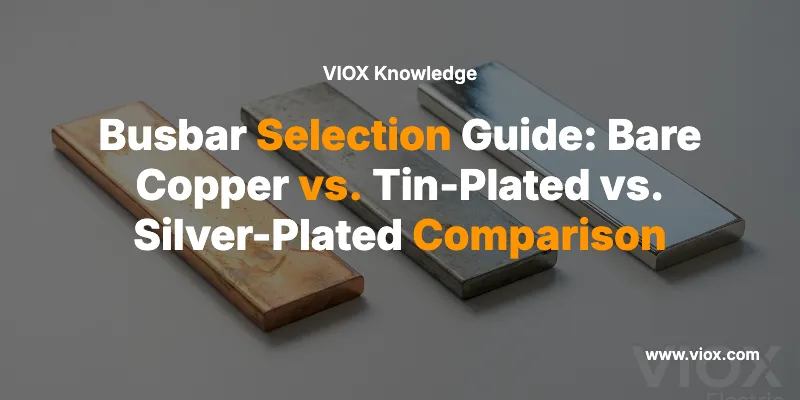
Busbar Selection Guide: Bare Copper vs. Tin-Plated vs. Silver-Plated Comparison

Guia de Seleção de Barramentos: Comparação entre Cobre Nu, Estanhado e Prateado

You’ve just ordered new busbars for your switchgear panel. The supplier offers three options: bare copper (the cheapest), tin-plated (mid-range), or silver-plated (premium). All carry the same rated current. All meet IEC standards. So why would you ever pay more? Three months after installation, you get a call: a connection joint is running hot. The

Guia de Seleção de Barramentos: Comparação entre Cobre Nu, Estanhado e Prateado Ler mais "

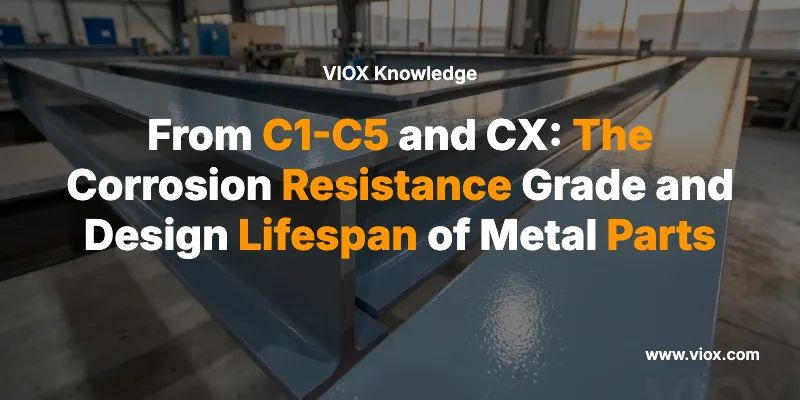
From C1-C5 and CX: The Corrosion Resistance Grade and Design Lifespan of Metal Parts

De C1-C5 e CX: Grau de Resistência à Corrosão e Vida Útil Projetada de Peças Metálicas

Figure 1: The impact of environmental stress — a rusted electrical cabinet showing coating failure after 3-4 years in a C4 coastal zone. Introduction Metal components in electrical systems are under siege. Humidity creeps in. Salt spray corrodes. Industrial atmospheres accelerate degradation. Without proper protection, corrosion transforms reliable equipment into costly failures. This is where

De C1-C5 e CX: Grau de Resistência à Corrosão e Vida Útil Projetada de Peças Metálicas Ler mais "

DIN Rail Mount (17.5mm) vs. Panel Mount (48mm) Timers: Which Form Factor Fits Your Panel?

Temporizadores de montagem em calha DIN (17,5 mm) vs. temporizadores de montagem em painel (48 mm): Qual formato se adapta ao seu painel?

Figure 1: VIOX 17.5mm DIN rail mount timer being installed on 35mm DIN rail in industrial control panel. When designing control panels for industrial automation, HVAC systems, or manufacturing equipment, selecting the right timer form factor can significantly impact installation efficiency, space utilization, and long-term maintenance costs. The choice between DIN rail mount (17.5mm) and

Temporizadores de montagem em calha DIN (17,5 mm) vs. temporizadores de montagem em painel (48 mm): Qual formato se adapta ao seu painel? Ler mais "

MCB Breaking Capacity Selection Guide: When to Use 6kA vs 10kA in Residential & Commercial Panels

Guia de Seleção da Capacidade de Interrupção de MCB: Quando Usar 6kA vs 10kA em Painéis Residenciais e Comerciais

Key Takeaways Breaking capacity (Icn/Icu) represents the maximum fault current an MCB can safely interrupt without damage or failure, measured in kiloamperes (kA). 6kA MCBs are typically sufficient for residential installations where prospective short-circuit current (PSCC) remains below 5kA, particularly in locations distant from supply transformers. 10kA MCBs are recommended for commercial applications, urban installations,

Guia de Seleção da Capacidade de Interrupção de MCB: Quando Usar 6kA vs 10kA em Painéis Residenciais e Comerciais Ler mais "

Understanding AFDDs: The IEC Standard for Arc Fault Protection

Compreendendo os AFDDs: A Norma IEC para Proteção contra Falhas de Arco

Electrical fires remain one of the most significant risks in residential and commercial buildings, with a substantial percentage attributed to arc faults. While standard circuit protection devices like Miniature Circuit Breakers (MCBs) and Residual Current Devices (RCDs) are essential, they have a blind spot: they cannot detect the unique signature of a dangerous electrical arc.

Compreendendo os AFDDs: A Norma IEC para Proteção contra Falhas de Arco Ler mais "

Inside AC Contactor: Key Components, Materials, and Design Logic

Interior do Contator AC: Componentes Chave, Materiais e Lógica de Design

Introduction: The Hidden Intelligence Behind Power Control You’ve likely never thought about the small rectangular device quietly sitting in your building’s electrical panel, switching your facility’s power hundreds of times per day. Yet without this single component—the AC contactor—modern industrial systems, HVAC networks, and solar installations would simply cease to function. This guide takes you

Interior do Contator AC: Componentes Chave, Materiais e Lógica de Design Ler mais "

Understanding MCCB Trip Unit Settings: Ir, Im, Isd, and Ii Explained

Compreendendo as Configurações da Unidade de Disparo de MCCB: Ir, Im, Isd e Ii Explicados

Why MCCB Trip Unit Settings Matter: The Foundation of Electrical Protection Modern electrical distribution systems demand precise, reliable protection against overloads and short circuits. At the heart of this protection lies the molded case circuit breaker (MCCB) trip unit—the “brain” that determines when and how quickly a breaker responds to fault conditions. Unlike fixed-trip miniature

Compreendendo as Configurações da Unidade de Disparo de MCCB: Ir, Im, Isd e Ii Explicados Ler mais "

What is the Difference Between Dry Type Transformer and Oil Filled Transformer

Qual é a diferença entre um transformador a seco e um transformador imerso em óleo?

When designing electrical distribution systems, choosing between a dry type transformer and an oil filled transformer is one of the most critical decisions that impacts safety, efficiency, and long-term operational costs. While both serve the same fundamental purpose of stepping voltage up or down, their construction, cooling methods, and applications differ significantly. This comprehensive guide

Qual é a diferença entre um transformador a seco e um transformador imerso em óleo? Ler mais "

MCB MCCB Temperature Rise Limits: How Hot is Too Hot per IEC 60947 & UL 489?

Limites de Elevação de Temperatura de MCB e MCCB: Quão Quente é Demasiado Quente de acordo com as normas IEC 60947 e UL 489?

Understanding Temperature Rise in Circuit Breakers: Why It Matters Every circuit breaker generates heat during normal operation. When electrical current flows through the internal components—contacts, bimetal strips, and terminals—resistance creates thermal energy. While some heating is inevitable, excessive temperature rise can degrade insulation, accelerate contact wear, cause nuisance tripping, and ultimately lead to catastrophic failure.

Limites de Elevação de Temperatura de MCB e MCCB: Quão Quente é Demasiado Quente de acordo com as normas IEC 60947 e UL 489? Ler mais "

Pedir orçamento agora