

On this page
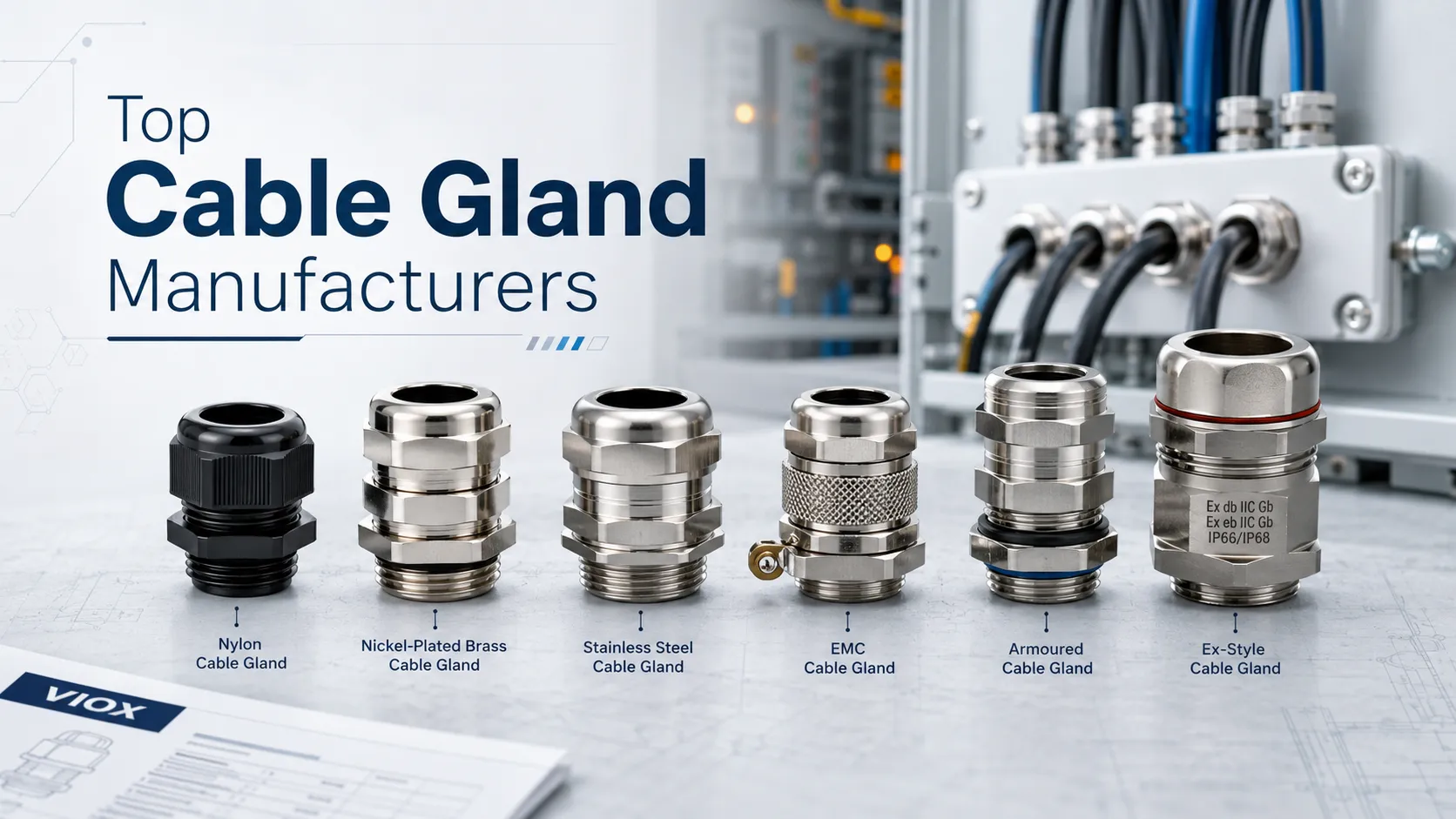
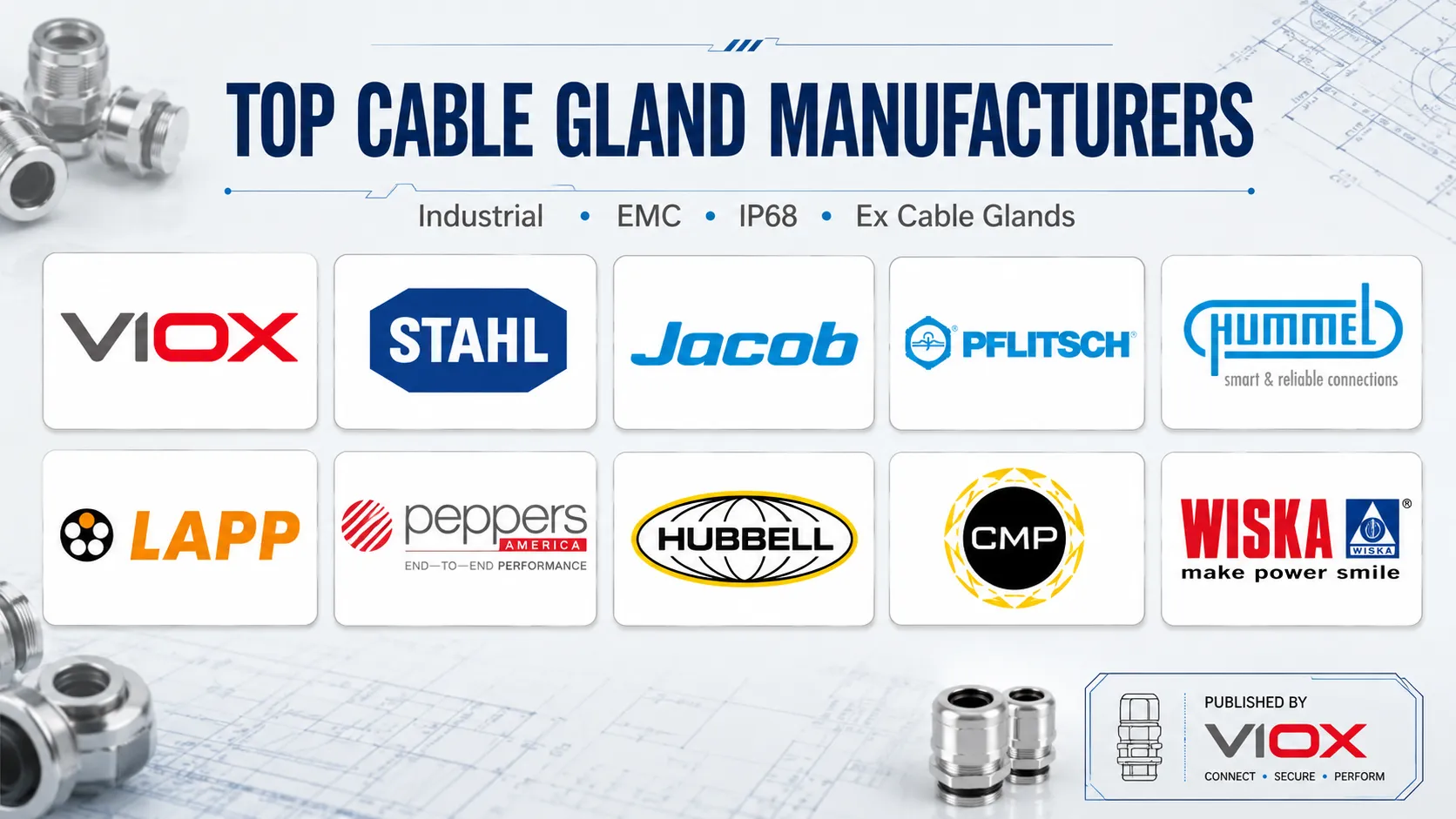
The most recognized global cable gland manufacturers include CMP Products, Hawke / Hubbell, Peppers Cable Glands, LAPP SKINTOP, HUMMEL, PFLITSCH, Jacob, WISKA, R. STAHL, and VIOX. These companies serve different buyer needs: hazardous-area cable glands, EMC cable glands, industrial strain relief, marine cable entries, panel accessories, nylon glands, brass glands, stainless steel glands, and OEM cable gland supply.
There is no single “best” cable gland manufacturer for every project. The right supplier depends on material, thread type, cable diameter range, IP rating, EMC shielding requirement, hazardous-area approval, accessories, lead time, documentation, and OEM customization.
For a distributor or panel builder, a good cable gland supplier is not only a brand name. It is a partner that can provide stable product quality, clear datasheets, correct threads, reliable sealing, packaging consistency, and support for repeat orders.
Key Takeaways
- Cable gland manufacturers should be compared by application, not only by brand. A supplier strong in Ex cable glands may not be the best choice for low-cost nylon glands.
- IP68 alone is not enough. Check test conditions, cable diameter range, sealing washer, wall thickness, and installation quality.
- EMC cable glands require shield continuity. A metal gland is not automatically an EMC gland.
- Hazardous-area glands require documentation. ATEX, IECEx, UL, CSA, NEC, CEC, and regional approvals should be verified for the exact model.
- Ex cable glands are not one category. Ex d, Ex e, armoured, unarmoured, and barrier glands solve different protection problems.
- OEM buyers should check customization and lead time. Thread type, color, material, packaging, logo, and accessory kits often matter as much as the gland body.
Cable Gland Manufacturer Comparison Table
| Manufacturer | Main Strength | Best For | What Buyers Should Verify |
|---|---|---|---|
| CMP Products | Industrial, hazardous-area cable glands and cable cleats | Oil and gas, marine, mining, heavy industry | ATEX, IECEx, UL, CSA, IEC 62444, cable type compatibility |
| Hawke / Hubbell | Harsh and hazardous-area electrical products | Petrochemical, offshore, industrial projects | Ex approval, material, cable armour compatibility |
| Peppers Cable Glands | Ex and industrial cable gland ranges | Hazardous areas and industrial installations | Certification scope, cable type, sealing system |
| LAPP SKINTOP | Cable system ecosystem and industrial glands | Automation, machinery, cable assemblies | Material, thread, EMC range, cable system compatibility |
| HUMMEL | Cable glands and circular connectors | Machine building and industrial equipment | Thread range, material, IP rating, EMC options |
| PFLITSCH | Cable glands and cable routing systems | Industrial equipment, EMC, hygienic or specialty applications | EMC design, material, sealing, special installation needs |
| Jacob | Cable glands and cable entry systems | Industrial panels and equipment wiring | Product series, cable diameter range, approvals |
| WISKA | Marine, electrical installation, cable glands | Marine, electrical installation, outdoor equipment | Material, marine suitability, IP rating, accessories |
| R. STAHL | Hazardous-area electrical products | Ex environments and industrial safety systems | Exact hazardous-area approval and installation method |
| VIOX | OEM cable glands, panel accessories, flexible sourcing | Distributors, panel builders, custom and repeat-order supply | Required material, IP rating, thread, sample validation, packaging |
This list is not a financial ranking. It compares cable gland manufacturers from a buyer’s perspective: product scope, certification support, application fit, and sourcing practicality.
How We Selected These Cable Gland Manufacturers
For industrial buyers, the strongest cable gland manufacturers usually have more than a long product list. They can support different application conditions and provide enough documentation for engineering review.
| Selection Factor | Why It Matters |
|---|---|
| Material range | Nylon, nickel-plated brass, stainless steel, EMC metal glands, and specialty materials cover different environments |
| IP rating support | Outdoor, washdown, marine, and enclosure applications depend on sealing performance |
| Hazardous-area capability | Oil, gas, chemical, mining, and offshore projects may require Ex approvals |
| EMC gland options | VFD, servo, instrumentation, and automation systems may require shield continuity |
| Thread standards | Metric, PG, NPT, and other thread types must match the enclosure entry |
| Cable diameter range | Correct sealing depends on matching the actual cable outer diameter |
| Accessories | Locknuts, sealing washers, reducers, adaptors, blanking plugs, and breather plugs simplify procurement |
| OEM support | Custom color, packaging, logo, thread, material, and bulk supply can matter for distributors |
| Documentation | Datasheets, drawings, certifications, and installation instructions reduce approval risk |
Top 10 Cable Gland Manufacturers and Suppliers
1. CMP Products
CMP Products is one of the strongest names in industrial and hazardous-area cable glands. Its product scope covers cable glands, cable cleats, accessories, and application-specific solutions for IEC, NEC, and CEC installation contexts.
CMP is especially relevant for buyers who need cable glands for oil and gas, mining, marine, process plants, and heavy industrial environments. Its product filters and documentation structure reflect the real complexity of cable gland selection: cable type, armour type, sealing configuration, hazardous-area protection, material, and approvals.
Best for: hazardous-area projects, heavy industry, cable cleats, engineered cable entry systems. If your specification already mentions cable armour, Ex d / Ex e, NEC / CEC, or IECEx, CMP is a benchmark supplier worth comparing against.
Buyer note: do not buy only by gland size. Verify the exact approval, cable type, sealing method, installation standard, and whether a barrier gland is required.
2. Hawke / Hubbell
Hawke is widely associated with harsh and hazardous-area cable glands and electrical connection products. As part of the broader Hubbell electrical portfolio, Hawke is commonly considered in demanding industrial and petrochemical projects.
Hawke-style cable gland selection is usually not a low-cost commodity decision. Buyers should evaluate cable construction, armour type, Ex requirements, sealing method, and installation environment. It is more relevant to project engineering than to simple plastic gland replacement.
Best for: oil and gas, petrochemical, offshore, harsh industrial areas.
Buyer note: confirm the exact certification and installation method rather than relying on brand recognition alone. Brand familiarity does not replace the certificate schedule.
3. Peppers Cable Glands
Peppers Cable Glands is known for industrial and hazardous-area cable glands, especially in Ex environments. It is often evaluated by engineers who need certified cable glands for harsh industrial installations and who want a focused cable-gland specialist rather than a broad electrical catalog.
Peppers is a strong candidate when project specifications require proven hazardous-area cable entry products and detailed technical documentation.
Best for: Ex cable glands, industrial cable entries, hazardous-area installations.
Buyer note: match the gland to the cable type, certification requirement, and enclosure protection method. For compound barrier glands, installation quality is part of the safety design.
4. LAPP SKINTOP
LAPP is a major global cable and connection technology company, and its SKINTOP cable gland line is widely used in industrial automation, machinery, and panel-building applications.
LAPP is especially strong when the buyer wants a complete cable system ecosystem: cables, connectors, glands, accessories, and industrial wiring products from one supplier family.
Best for: automation, machinery, industrial panels, cable system integration.
Buyer note: check whether the application needs standard strain relief, EMC shielding, food-grade design, chemical resistance, or high-temperature performance. SKINTOP is often strongest when the gland is selected as part of the cable system, not as an isolated accessory.
5. HUMMEL
HUMMEL manufactures cable glands, circular connectors, and related industrial connection products. It is often considered by machine builders and industrial equipment manufacturers who need reliable cable entry and connection components.
HUMMEL is a good benchmark for buyers comparing German industrial gland designs, thread quality, and material options.
Best for: machine building, industrial equipment, circular connector and cable gland sourcing.
Buyer note: compare thread type, cable diameter range, material, EMC options, and installation torque. For OEM machinery, small differences in nut geometry and tightening feel can affect assembly speed.
6. PFLITSCH
PFLITSCH is known for cable glands and cable routing systems, with strengths in industrial, EMC, hygienic, and specialty cable entry applications.
For equipment builders with noise-sensitive drives, shielded cables, or demanding industrial routing needs, PFLITSCH is often part of the shortlist. It is especially relevant when cable routing, EMC, and enclosure entry are designed together.
Best for: EMC applications, specialty cable routing, hygienic or industrial machinery.
Buyer note: check the shield termination method and whether the installation needs a standard gland, EMC gland, or special routing system. A gland that seals well is not automatically a good EMC termination.
7. Jacob
Jacob is a long-established cable gland and cable entry manufacturer. Its product range is relevant for industrial enclosures, machine building, control cabinets, and standard cable entry applications.
Jacob is a practical option for buyers who need a broad technical gland range rather than only a single commodity product.
Best for: industrial panels, machine wiring, cable entry systems.
Buyer note: verify thread type, seal material, IP rating, and cable diameter compatibility. In cabinet production, consistent thread quality can matter more than a small unit-price difference.
8. WISKA
WISKA supplies electrical installation products, marine electrical products, and cable glands. It is especially relevant for marine, outdoor, and electrical installation environments.
For buyers working with marine equipment, outdoor electrical products, or installation accessories, WISKA can be a strong option.
Best for: marine, outdoor equipment, electrical installation products.
Buyer note: confirm marine suitability, material grade, sealing rating, and accessory compatibility. Outdoor and marine work should be evaluated with the enclosure, gasket, and cable gland as one sealing system.
9. R. STAHL
R. STAHL is a major hazardous-area electrical equipment company. Its cable gland relevance is strongest where the gland is part of a larger Ex-rated electrical system or installation.
Buyers in chemical plants, oil and gas, and hazardous industrial environments may evaluate R. STAHL when safety system compatibility and hazardous-area documentation are central.
Best for: hazardous-area electrical systems and Ex equipment environments.
Buyer note: verify exact Ex classification, installation method, and product compatibility with the equipment enclosure. In hazardous areas, a mechanically compatible gland can still be wrong if the protection concept is wrong.
10. VIOX
VIOX is a practical choice for distributors, panel builders, electrical accessory buyers, and OEM customers who need cable glands as part of a broader low-voltage electrical component supply system.
VIOX cable gland sourcing can support common panel and enclosure requirements such as nylon cable glands, metal cable glands, IP-rated cable entry products, accessories, and custom packaging requirements. For OEM orders, buyers should define material, thread type, cable range, sealing requirement, color, packaging, and documentation needs at the quotation stage.
Best for: OEM sourcing, distributors, panel accessories, repeat-order cable gland supply.
Buyer note: validate samples, datasheets, IP rating, thread dimensions, and packaging before mass purchase. For OEM buyers, the best result usually comes from sending the real cable OD range, enclosure wall thickness, thread requirement, and target packing method before quotation.
For product evaluation, start with the VIOX cable gland product page. For basic product knowledge, see what is a cable gland.
Cable Gland Types Buyers Should Compare
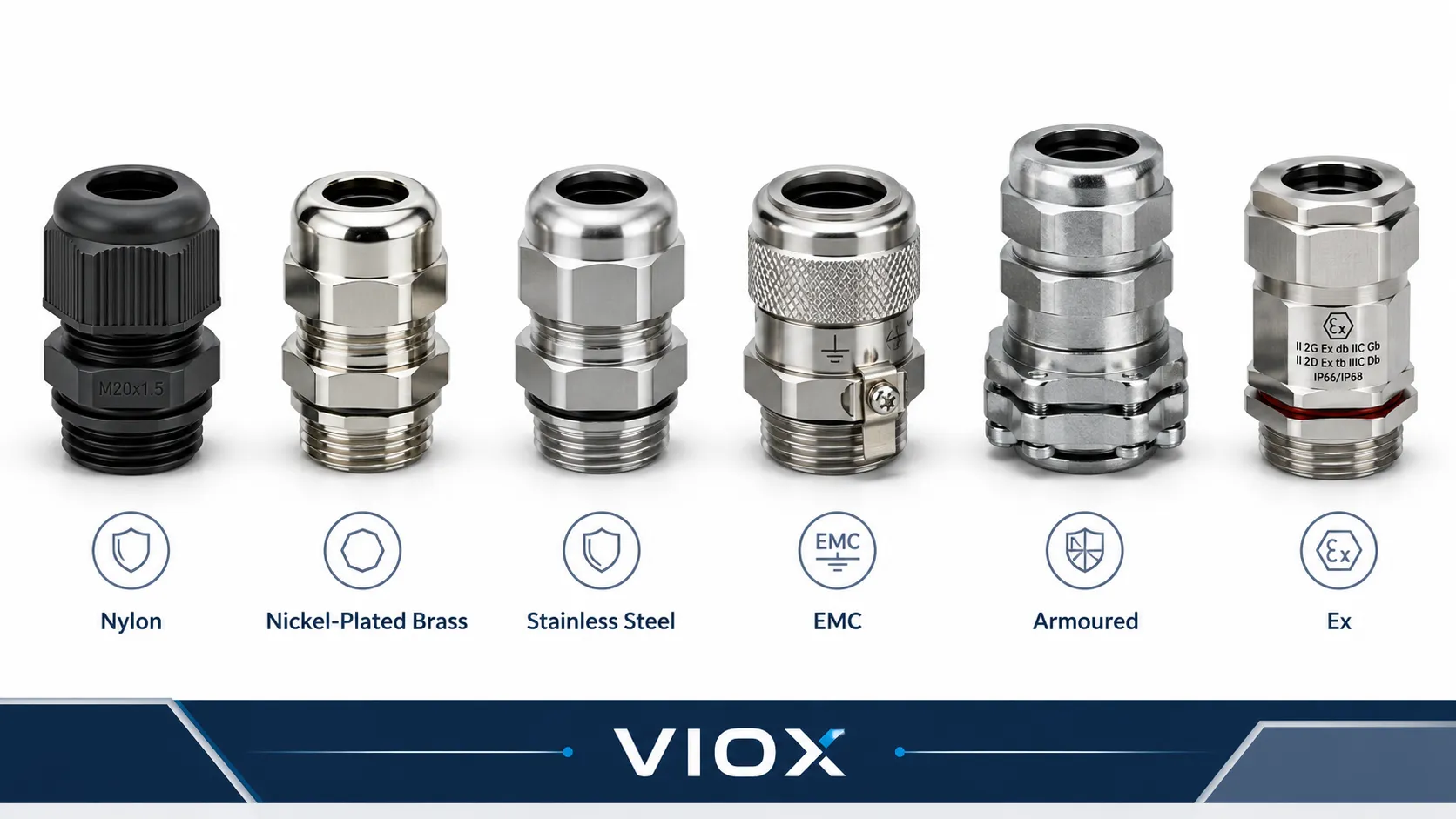
Different cable gland manufacturers may be strong in different product categories.
| Cable Gland Type | Best Use | Key Check |
|---|---|---|
| Nylon cable gland | General enclosures, distribution boxes, control panels | IP rating, UV resistance, temperature range |
| Nickel-plated brass cable gland | Industrial panels, machinery, automation | Plating quality, thread accuracy, sealing washer |
| Stainless steel cable gland | Marine, corrosive, food, chemical environments | 304 vs 316 material, corrosion exposure |
| EMC cable gland | VFD, servo, shielded cable, instrumentation | 360-degree shield contact, bonding path |
| Armoured cable gland | SWA, AWA, STA, armoured industrial cable | Armour clamping, earth continuity, cable type |
| Ex cable gland | Hazardous areas | ATEX, IECEx, UL, CSA, NEC / CEC context |
| Breathable cable gland | Outdoor enclosures with condensation risk | Membrane performance, airflow, IP rating |
| Barrier gland | Hazardous areas, compound-sealed cable entry | Certification, installation method, compound curing |
For EMC comparison, see VIOX’s guide to EMC vs standard cable glands and how to choose the right EMC cable gland.
Certifications and Standards to Verify
Certification wording can be confusing because a cable gland may be suitable for one market or installation type but not another. Always verify the exact model, not only the brand.
| Standard or Approval | Why It Matters |
|---|---|
| IEC 62444 | Important cable gland standard covering construction and performance requirements such as mechanical retention, sealing, and cable anchorage |
| ATEX | Required for certain explosive atmosphere applications in Europe |
| IECEx | International hazardous-area certification scheme |
| UL / CSA | Important for North American product acceptance where applicable |
| NEC / CEC installation context | Affects hazardous-area and wiring method requirements in North America and Canada |
| IP66 / IP68 | Indicates ingress protection, but must be checked with test conditions |
| RoHS / REACH | Common supply-chain and material compliance requirements |
IEC 62444: Cable Anchorage Is Not Just a Pull Test
IEC 62444 is one of the most important technical references for cable glands because it deals with construction and performance requirements such as sealing, mechanical retention, and cable anchorage. For buyers, the practical point is that a cable gland must not only seal the opening; it must also hold the cable correctly under the expected mechanical stress.
When reviewing IEC 62444-related documentation, ask whether the gland is intended for the required cable anchorage performance. In practical procurement discussions, this is often described through cable retention or anchorage classes such as Class A and Class B. Do not assume that a small nylon gland, a brass industrial gland, and an armoured hazardous-area gland provide the same cable retention behavior.
For machine builders, the field failure is often simple: the gland seals at first, but vibration, cable pull, or repeated maintenance gradually shifts the cable. Once the seal is distorted, the enclosure rating and strain relief are both compromised.
Ex d vs Ex e vs Barrier Glands
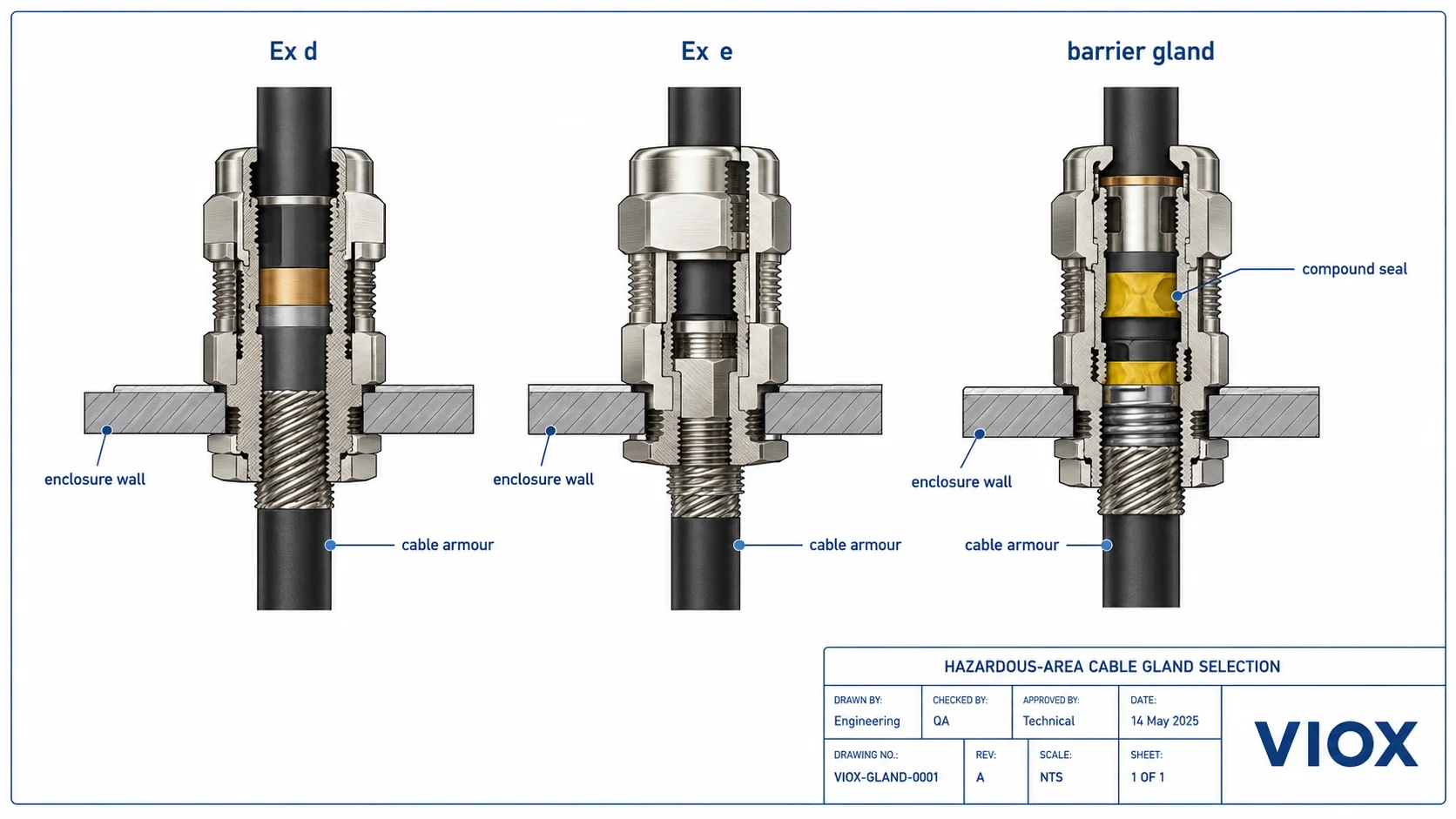
Hazardous-area cable glands require more than an ATEX or IECEx logo. Engineers must check the protection concept.
| Hazardous-Area Term | Meaning | Buyer Risk |
|---|---|---|
| Ex d / flameproof | Designed for flameproof equipment where internal ignition must not propagate outside the enclosure | Wrong gland or poor installation can compromise the flame path |
| Ex e / increased safety | Designed to reduce the chance of arcs, sparks, and excessive temperatures in normal operation | Cable clamping, sealing, and ingress protection must match the equipment concept |
| Barrier gland | Uses compound or sealing material to block gas migration through cable interstices | Often needed for certain cable constructions or hazardous-area conditions |
| Cold flow | Cable insulation or bedding can deform over time under pressure | Poor sealing choice may lose compression and weaken protection |
The key question is not “Is this cable gland explosion-proof?” The real question is: Does this exact gland match the equipment protection type, cable construction, installation standard, and certificate conditions?
Barrier glands are often specified when there is concern about gas migration through cable bedding or when the certificate and installation rule require a compound-sealed entry. They require careful installation, because the compound fill and curing process become part of the protection method.
Why IP68 Alone Is Not Enough
Many cable glands are marketed as IP68, but buyers should check the test conditions. IP68 performance depends on:
- cable outer diameter fit
- seal design
- sealing washer
- enclosure wall thickness
- hole quality
- thread engagement
- installation torque
- test depth and duration
- cable movement after installation
A gland can be well designed and still fail if installed on the wrong cable diameter or on a poor enclosure entry surface.
Field Notes: Where Cable Gland Selection Fails
In panel and machine projects, the cable gland failure is rarely dramatic at first. It usually starts as a small weakness: a cable diameter near the edge of the seal range, a missing sealing washer, a gland tightened onto a painted or uneven surface, or an EMC cable shield terminated with a normal brass gland.
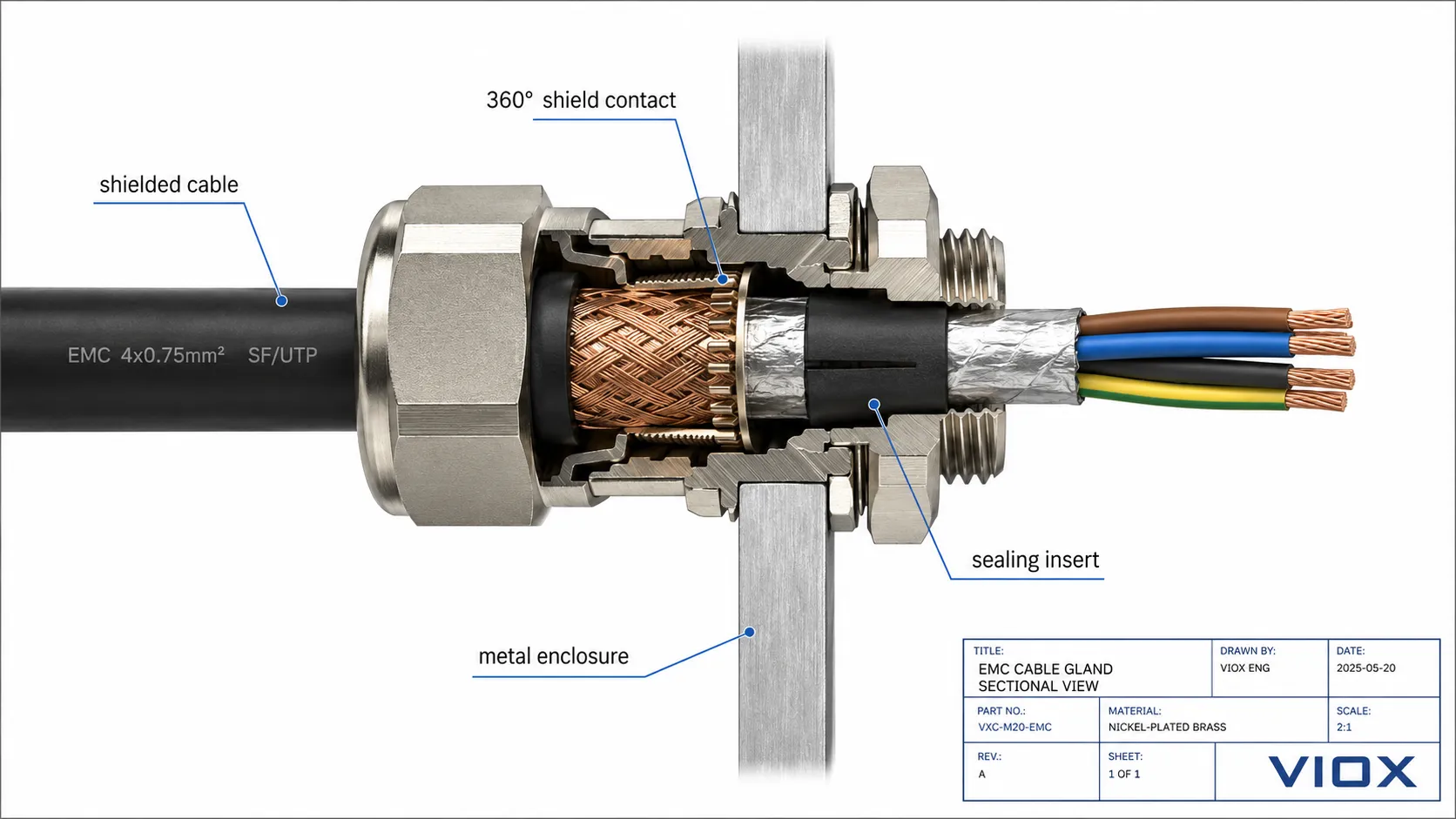
One common VFD cabinet mistake is using a standard metal gland for a shielded motor cable while assuming the metal body automatically provides EMC continuity. It may seal the cable, but if the braid is not clamped with a proper 360-degree contact path, high-frequency noise can still enter the enclosure and disturb nearby PLC, encoder, or communication wiring.
For this reason, VIOX recommends separating three questions during supplier selection:
- Does the gland seal and hold the cable mechanically?
- Does it maintain the enclosure IP rating under the actual installation condition?
- Does it provide the required electrical function, such as EMC shield termination, armour bonding, or hazardous-area protection?
If the answer to the third question matters, do not treat the gland as a generic accessory.
Cable Gland Supplier vs Cable Gland Factory
Some buyers search for a cable gland manufacturer, while others search for a cable gland supplier or cable gland factory. These are not always the same.
| Supplier Type | Strength | Limitation |
|---|---|---|
| Global brand manufacturer | Strong documentation, certifications, engineering history | Higher price or longer lead time for some projects |
| Specialized Ex manufacturer | Strong hazardous-area experience | May be over-specified for general panel use |
| Cable gland factory | Flexible pricing, OEM packaging, customization | Documentation and quality control must be verified carefully |
| Distributor | Fast stock availability and mixed-brand supply | Less control over customization and factory-level changes |
| OEM supplier | Custom color, thread, package, branding, and repeat-order support | Requires sample validation and clear specifications |
For distributors and OEM buyers, the best approach is often to use global brands as technical benchmarks while qualifying a stable factory supplier for standard nylon, brass, stainless steel, and accessories.
Common Buying Mistakes
Mistake 1: Choosing by Thread Size Only
Thread size does not confirm cable sealing range, IP rating, material, EMC performance, or Ex approval.
Mistake 2: Treating All Metal Cable Glands as EMC Glands
An EMC cable gland must provide a proper shield termination path. A normal brass gland may not provide reliable 360-degree shield contact.
Mistake 3: Assuming IP68 Means Any Outdoor Use
Outdoor performance also depends on UV exposure, temperature cycling, cable movement, gasket quality, enclosure interface, and condensation control.
Mistake 4: Ignoring Accessories
Locknuts, sealing washers, reducers, adaptors, blanking plugs, PVC shrouds, and breather plugs can decide whether the installation works cleanly.
Mistake 5: Buying Ex Cable Glands Without Checking the Exact Certificate
Hazardous-area approvals are specific. Check product code, protection type, gas or dust group, temperature class, and installation instructions.
For Ex applications, also confirm whether the equipment protection concept requires Ex d, Ex e, or a barrier gland. A gland with the wrong protection concept can be unacceptable even if the thread and cable diameter look correct.
Mistake 6: Comparing Price Without Checking Cable Range
A cheaper gland may cover a narrower cable diameter range, require more SKUs, or create more installation errors.
How to Choose a Cable Gland Manufacturer
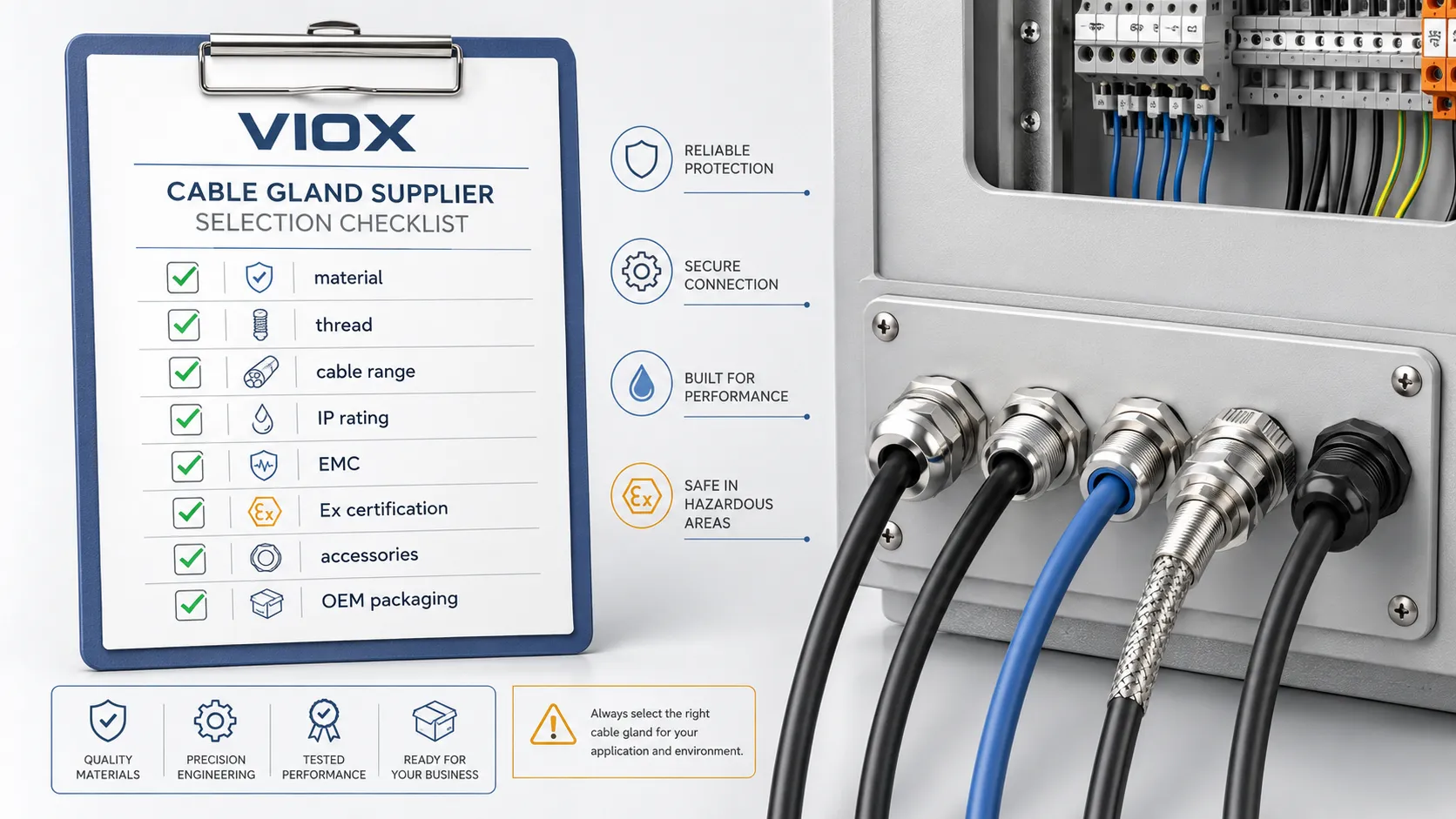
Use this checklist before choosing a cable gland manufacturer or supplier:
| Check Item | What to Confirm |
|---|---|
| Application | Indoor panel, outdoor enclosure, marine, automation, hazardous area, PV, machinery |
| Material | Nylon, brass, stainless steel, EMC metal, special polymer |
| Thread | Metric, PG, NPT, or project-specific thread |
| Cable range | Actual cable outer diameter and tolerance |
| IP rating | IP66, IP67, IP68, NEMA context where applicable |
| EMC need | Shielded cable and bonding requirement |
| Hazardous-area need | ATEX, IECEx, UL, CSA, NEC / CEC installation context |
| Accessories | Locknut, washer, reducer, adaptor, breather plug, blanking plug |
| Documentation | Datasheet, drawing, certificate, installation instruction |
| Supply model | Stock purchase, distributor support, OEM packaging, bulk production |
FAQ
Who is the best cable gland manufacturer?
There is no single best manufacturer for every application. CMP, Hawke, Peppers, LAPP, HUMMEL, PFLITSCH, Jacob, WISKA, R. STAHL, and VIOX serve different needs. The best choice depends on material, certification, IP rating, EMC requirement, hazardous-area approval, and supply model.
What should I check before choosing a cable gland supplier?
Check material, thread type, cable diameter range, IP rating, sealing design, EMC requirement, certification, accessories, datasheets, sample quality, lead time, and packaging.
Which cable gland manufacturer is best for hazardous areas?
CMP Products, Hawke, Peppers, and R. STAHL are commonly evaluated for hazardous-area applications. Always verify the exact ATEX, IECEx, UL, CSA, NEC, or CEC documentation for the selected model.
Are IP68 cable glands always waterproof?
No. IP68 depends on test conditions and installation. The cable diameter, sealing washer, enclosure hole, thread engagement, installation torque, and cable movement all affect real sealing performance.
When should I choose an EMC cable gland manufacturer?
Choose an EMC cable gland manufacturer when shielded cables must maintain a low-impedance path between the cable shield and the enclosure. This is common in VFD, servo, automation, instrumentation, and electrically noisy environments.
Should I buy from a global brand or an OEM cable gland factory?
Use global brands when the project requires established approvals and strict specification acceptance. Use an OEM cable gland factory when you need flexible sourcing, packaging, customization, and competitive repeat supply. For critical applications, validate samples and documentation before bulk purchase.
What accessories should a cable gland supplier provide?
Common accessories include locknuts, sealing washers, reducers, adaptors, blanking plugs, stopper plugs, breather plugs, drain plugs, PVC shrouds, and thread converters.
Conclusion
The best cable gland manufacturer is the one that matches the actual installation requirement. For hazardous areas, approvals and installation method dominate the decision. For automation and VFD systems, EMC performance matters. For outdoor enclosures, sealing, UV resistance, cable fit, and accessories matter. For OEM and distributor supply, consistency, packaging, and lead time become just as important as the gland itself.
If you are sourcing cable glands for industrial panels, enclosures, automation systems, PV equipment, or distributor inventory, compare suppliers by material, IP rating, EMC capability, hazardous-area documentation, thread options, cable range, accessories, and OEM support rather than brand name alone.