On this page
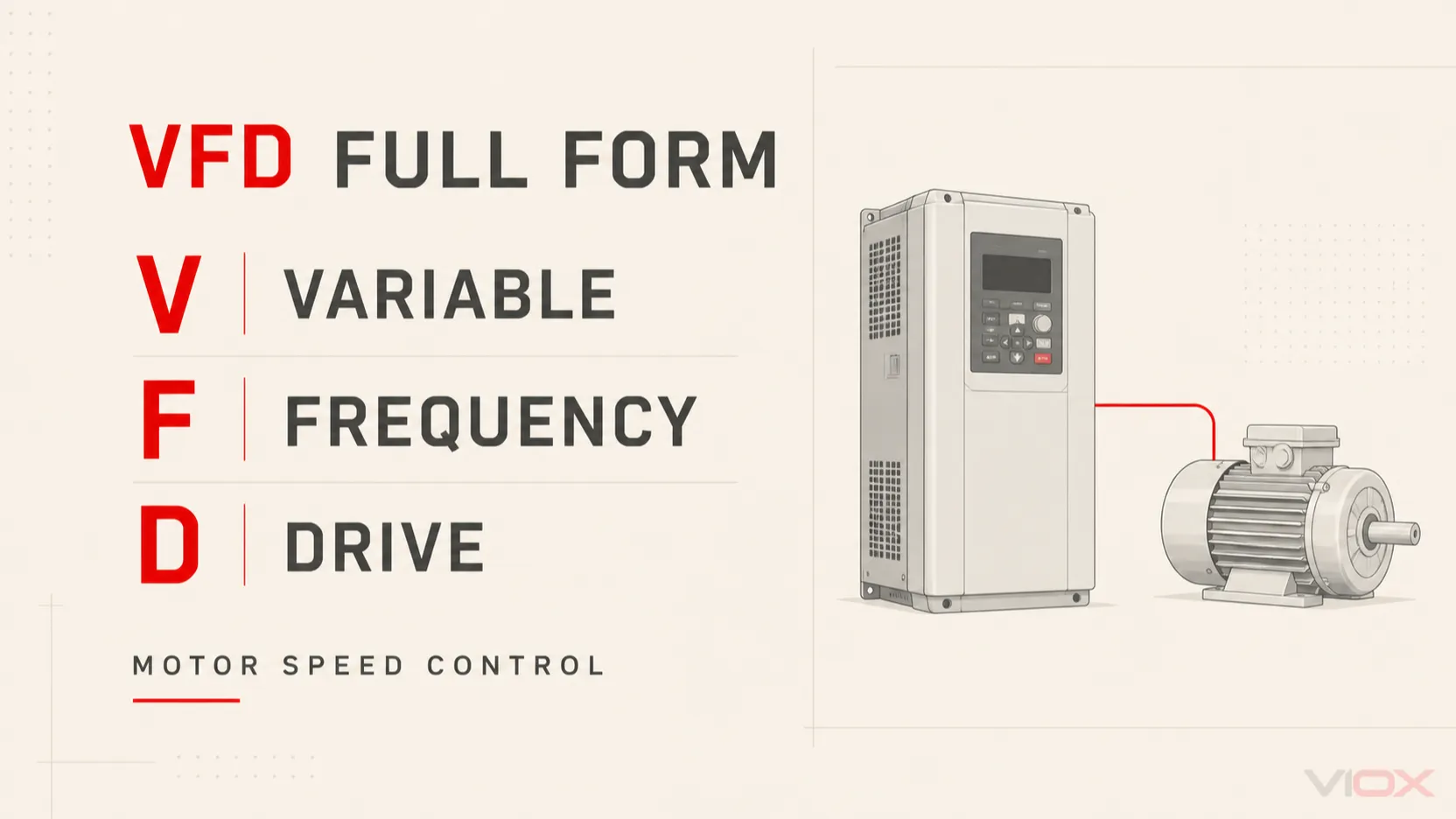
VFD stands for Variable Frequency Drive. In electrical systems, it means an electronic motor controller that varies the frequency and voltage supplied to an AC motor. The term describes speed-control equipment; it does not refer to a circuit breaker, contactor, or simple motor starter.
What Does VFD Stand For?
| Letter | Word | Practical meaning |
|---|---|---|
| V | Variable | The drive can change its output instead of supplying one fixed operating condition. |
| F | Frequency | Changing output frequency changes the operating speed of a compatible AC motor. |
| D | Drive | The unit actively controls electrical power delivered to the motor. |
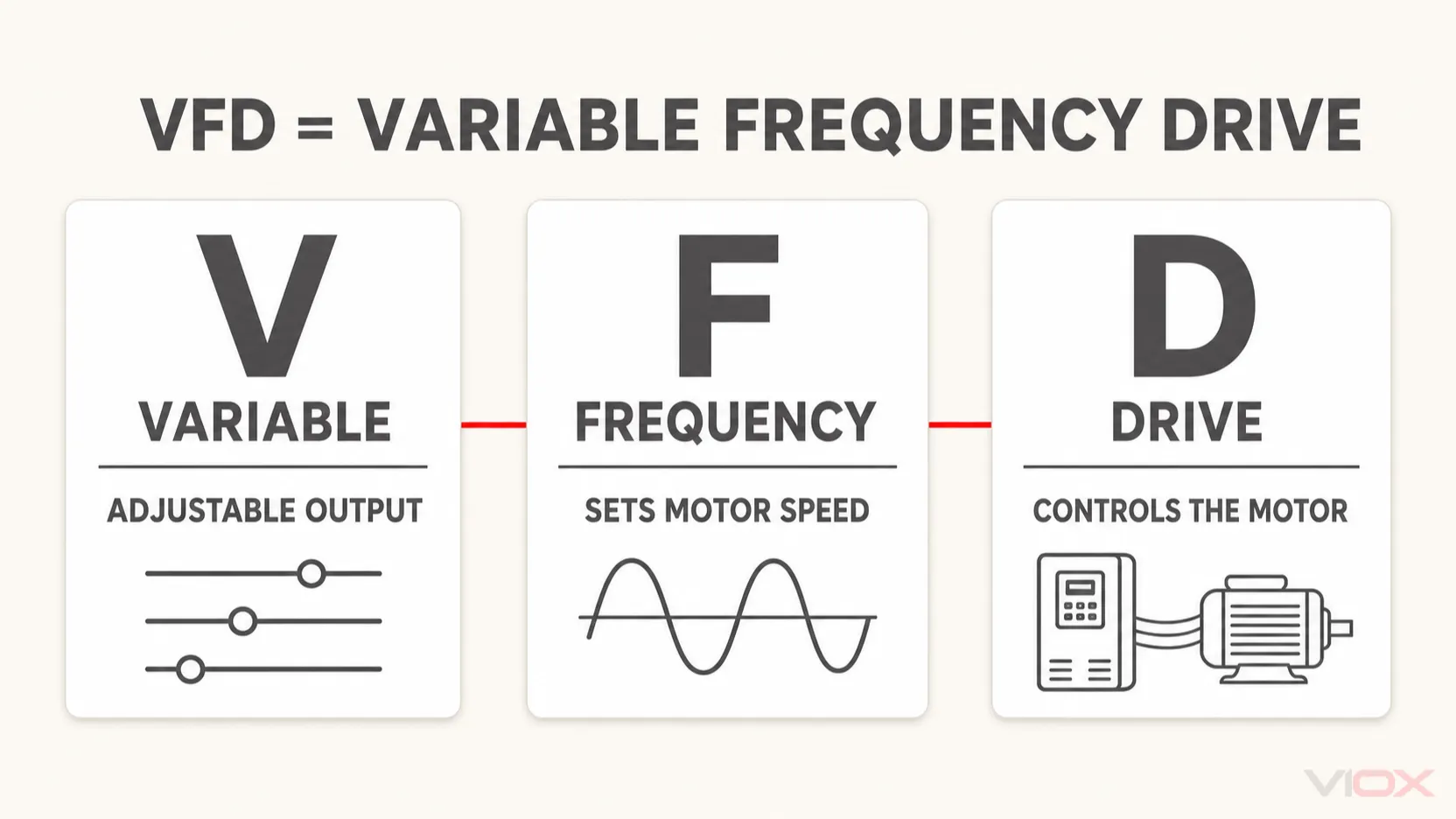
The complete term is Variable Frequency Drive. In technical writing, spell out the name on first use and put the abbreviation in parentheses: “variable frequency drive (VFD).” Use VFD alone after that.
What Does VFD Mean in an Electrical System?
A VFD is installed in the power path between an electrical supply and a motor. Its defining job is to provide controlled-frequency, controlled-voltage output for motor operation.
That boundary matters. A contactor switches a circuit, and a conventional motor starter combines switching with motor protection. Neither provides continuous motor-speed control. A VFD is chosen when the process needs adjustable speed, controlled acceleration or deceleration, or more advanced motor control.
For the complete system overview, including the internal power path and application-fit decisions, read What Is a VFD?.
VFD and Related Terms
| Term | Meaning | Relationship to VFD |
|---|---|---|
| VFD | Variable Frequency Drive | The precise term for a drive that controls motor operation by varying output frequency and voltage. |
| VSD | Variable Speed Drive | A broader term that can include electrical, mechanical, or hydraulic methods of varying speed. In many electrical contexts, it is used for a VFD. |
| ASD | Adjustable Speed Drive | Another broad drive term used in standards and technical literature; context determines whether it specifically means a VFD. |
| Inverter | A power-conversion stage or a broader class of conversion equipment | A VFD contains an inverter stage, but not every inverter is a motor drive. Solar and UPS inverters serve different purposes. |
| Soft starter | A device that manages motor starting and stopping | It does not normally provide continuous operating-speed control like a VFD. |
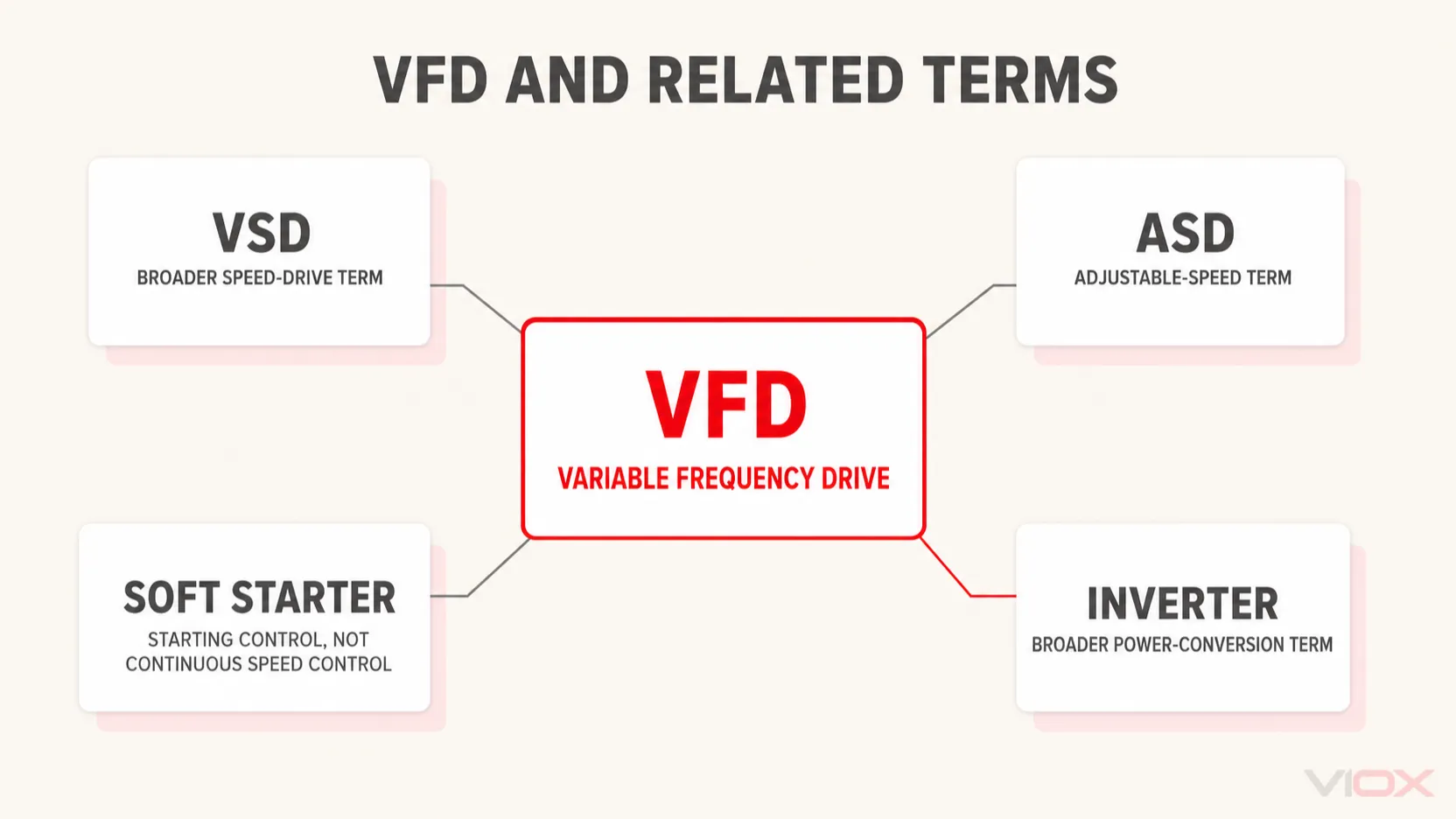
If the project decision is between variable-speed control and reduced-stress starting, use the dedicated VFD vs soft starter guide rather than treating the terms as interchangeable.
Where You May See the Abbreviation
The letters VFD commonly appear in:
- motor-control-center and control-panel drawings
- equipment schedules and bills of materials
- pump, fan, conveyor, and machine specifications
- drive nameplates and datasheets
- automation input/output lists and communication documents
- procurement descriptions
Always check the surrounding document. Outside motor control, the same letters can occasionally represent another term. In an electrical motor circuit, however, Variable Frequency Drive is the standard interpretation.
Correct Usage in Drawings and Procurement
Use the abbreviation with enough information to identify the intended equipment. “One VFD” is rarely a complete purchasing description. A project specification may also need the supply voltage and phase, motor nameplate current, load duty, control method, enclosure or installation environment, braking requirement, and communication interface.
Those items define a particular drive application; they do not change the full form of the acronym. Refer to the VFD hub for the rating categories and the correct deeper selection path.
Short Answers
What is the full form of VFD in electrical engineering?
VFD means Variable Frequency Drive.
Is VFD another name for an inverter?
Not exactly. A VFD includes an inverter power stage, but “inverter” is a broader term used for many forms of power-conversion equipment.
Is a VFD a motor starter?
A VFD can start and stop a motor, but its defining function is controlled motor operation through variable-frequency and variable-voltage output. A conventional motor starter does not provide the same continuous speed control.