⎯⎯ Electrical Protection Devices
SPD for AC, DC, and Solar Systems
VIOX surge protective device solutions are built for low-voltage distribution, photovoltaic systems, industrial panels, and sensitive equipment protection. The current range covers AC SPD, DC SPD, Type 1 SPD, Type 2 SPD, and Type 1+2 SPD options for buyers, panel builders, and EPC teams evaluating the right protection path.
⎯⎯ At a Glance
Core Product Highlights
Coverage
4
Main SPD families online
Protection
T1 / T2 / T1+2
Layered surge protection options
Applications
AC + DC
Distribution, PV, panels, machinery
Mounting
DIN Rail
Panel-friendly installation approach
Certified By


⎯⎯ Overview
SPD basics for product evaluation
⎯⎯ Available Products
Current surge protective device families
⎯⎯ DC SPD
VSPDN40-DC Type 2 SPD


Designed for photovoltaic and other direct-current applications where coordinated Type 2 surge protection is needed at string, combiner, or downstream DC distribution level.
⎯⎯ DC SPD
VSPDH6.25-DC Type 1+2 SPD


⎯⎯ AC SPD
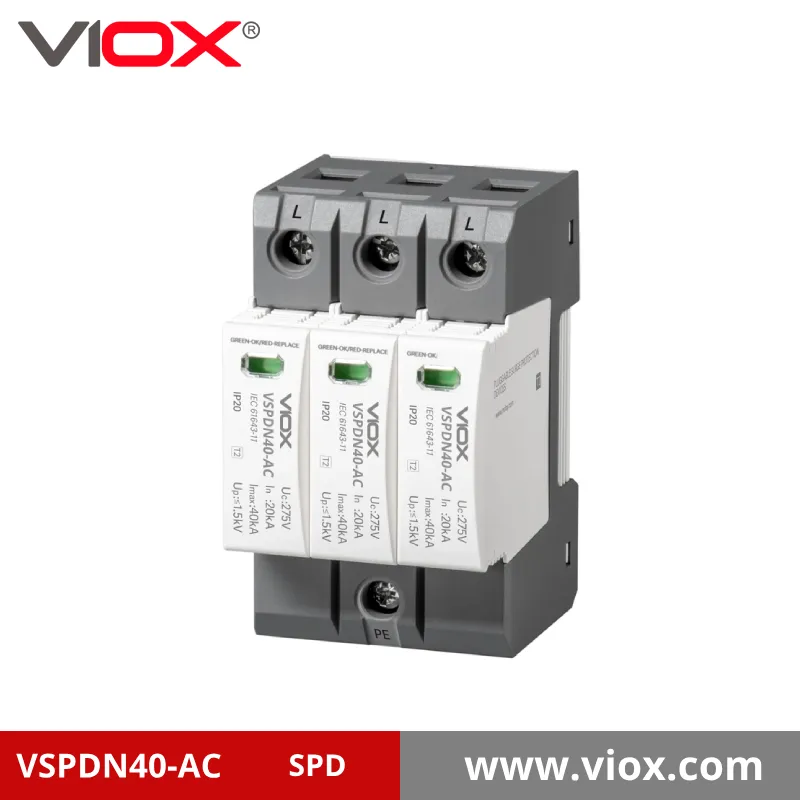
VSPDN40-AC Type 2 SPD



⎯⎯ SPD Types
AC SPD, DC SPD, and type-based selection
Type 1 SPD
Selected where lightning current exposure is relevant and the SPD is positioned at the upstream side of the protection concept.
- Industrial control cabinets
- Machine power branch circuits
- Panel building for OEM equipment
Type 2 SPD
- Sub-distribution boards
- Industrial panel protection
- General equipment-side surge control
Type 1+2 SPD
Combined protection strategy that appeals to buyers who want broader project fit without splitting the decision across multiple product roles.
- Main and exposed installations
- Solar and outdoor systems
- Single-device shortlist preference
AC SPD vs DC SPD
- AC SPD for low-voltage distribution
- DC SPD for PV and direct-current systems
- Voltage and configuration must match the real system
⎯⎯ Selection Factors
Key factors when selecting a surge protective device
| Selection Factor | Why It Matters | Typical Choice Direction |
|---|---|---|
| System TypeAC or DC | The first split determines whether the buyer needs an AC SPD or a DC SPD family. | Distribution panel, machine panel, PV string, combiner box, battery or DC bus. |
| Protection TypeType 1, Type 2, or Type 1+2 | The installation role and surge environment determine whether a combined or single-role SPD is more suitable. | Type 2 for downstream distribution, Type 1+2 for broader or higher-exposure applications. |
| Voltage Range | Product voltage must match real operating conditions and system architecture. | 275V AC panel protection, 500V to 1500V DC PV protection, or project-specific equivalents. |
| Configuration | Pole count and wiring structure affect product shortlist and installation fit. | 1P, 2P, 3P, 4P for AC; 2P and 3P directions for common DC applications. |
| Installation Point | Main panel, sub-board, combiner box, and equipment-side points do not carry the same protection role. | Main entry, sub-distribution, control cabinet, inverter side, or PV field protection path. |
| Status and Maintenance | Monitoring and replacement planning matter in critical systems and multi-panel projects. | Visual status indication, remote signaling, planned maintenance workflow. |
⎯⎯ Applications
Where these SPD families fit best
Solar PV Systems
Low-voltage distribution
Industrial Panels and Controls
⎯⎯ Technical Focus
What buyers usually compare before they ask for price
Protection role
Voltage alignment
Panel execution
⎯⎯ Resources
Supporting technical resources for SPD buyers
Definition, function, and where SPD fits in electrical protection architecture.
Useful comparison for buyers narrowing the right installation role and protection type.
Solar-specific guidance for DC SPD selection, PV string protection, and project evaluation.
Helps buyers interpret surge-current capability rather than compare numbers without context.
Important for buyers matching device operating behavior to the real electrical system.
Explains main panel, sub-panel, and equipment-side placement logic for better protection planning.
⎯⎯ FAQ
Frequently Asked Questions
What does SPD mean in electrical systems?
What is the difference between Type 1, Type 2, and Type 1+2 SPD?
How do I choose between AC SPD and DC SPD?
Where should an SPD be installed?
⎯⎯ Request Quote