

このページについて
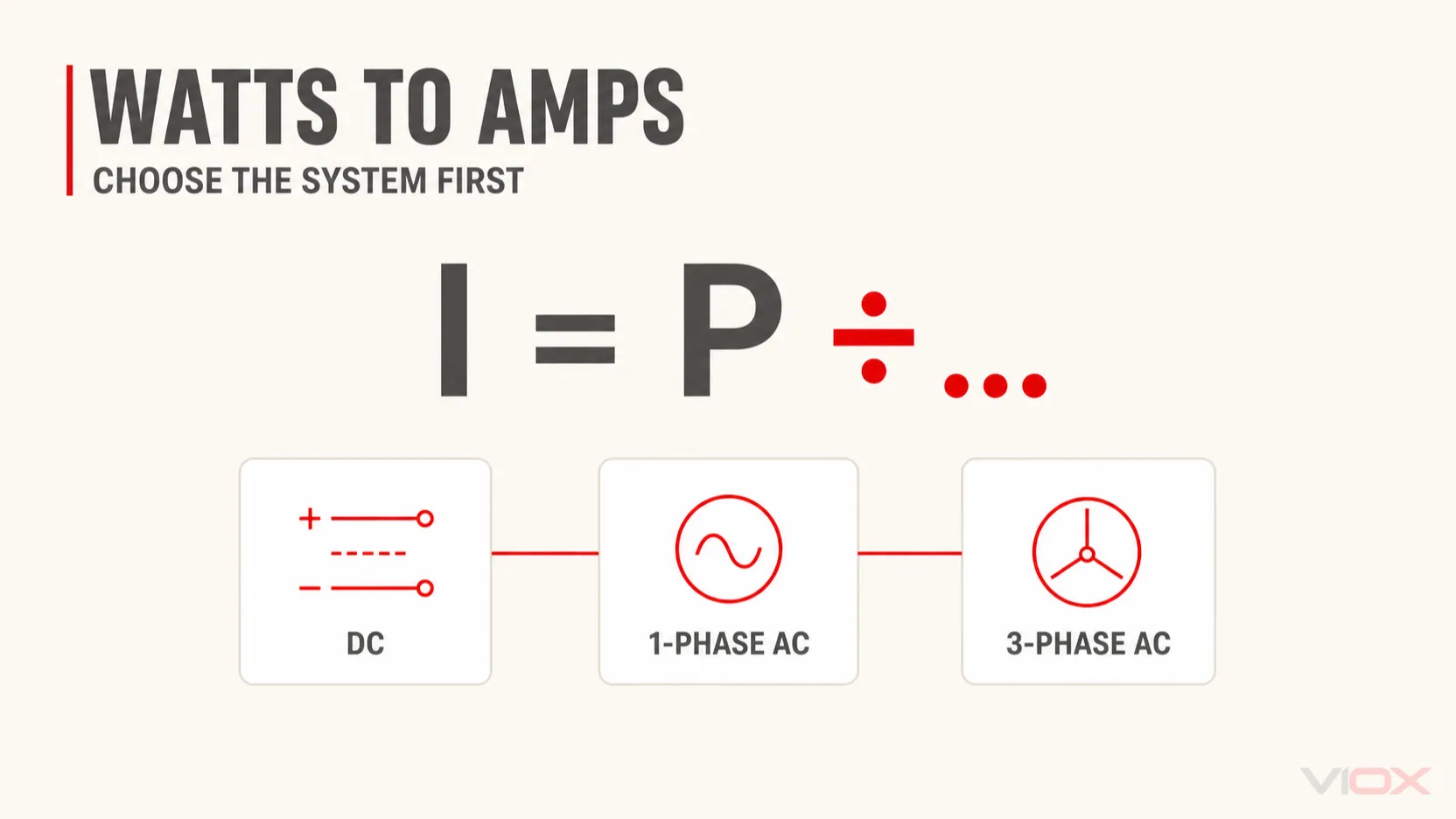
ワットをアンペアに変換するには、電圧と電気システムを知る必要があります。以下から選択してください。 DC, 単相ACあるいは 平衡三相AC を計算機で選択し、既知の電力と電圧を入力してください。AC負荷の場合は、機器のデータシートやプロジェクト文書に示されている力率も入力してください。.
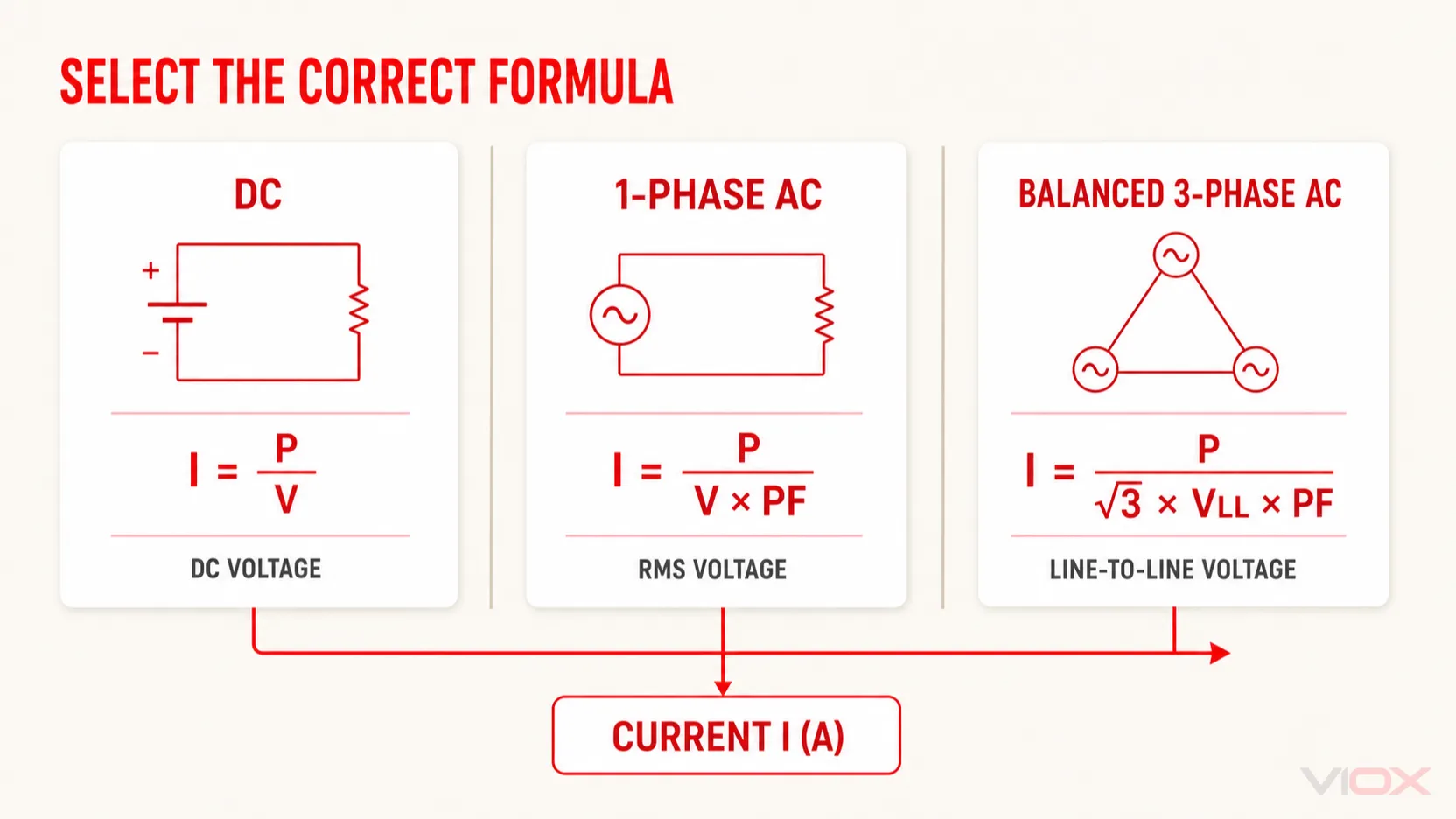
3つの主要な関係式は以下の通りです。
| 電気システム | ワットからアンペアへの変換式 | 入力する電圧 |
|---|---|---|
| DC | I = P / V |
負荷にかかるDC電圧 |
| 単相交流 | I = P / (V × PF) |
負荷にかかるRMS電圧 |
| 平衡三相AC | I = P / (√3 × VLL × PF) |
RMS線間電圧 |
次の場合:
Iは電流(単位:A)です。;Pは有効電力(単位:W)です。;VはDCまたは単相電圧(単位:V)です。;VLLは三相線間電圧です。;力率は、0から1で表されるAC力率です。.
ワット数だけではアンペア数を決定するのに十分ではありません。同じ電力であっても電圧が低ければより多くの電流が流れ、AC負荷において力率が低い場合、同じ有効電力に対してより多くの電流を消費します。.
ワットからアンペアへの計算ツールの使用方法
- DC、単相AC、または三相ACを選択します。.
- 既知の2つの量としてワットとボルトを選択します。.
- 有効電力を入力します。入力フィールドがワットに設定されている場合は、キロワットに1,000を掛けてワットに変換してください。.
- 動作電圧を入力します。三相計算の場合は、線間電圧を使用してください。.
- AC負荷の機器に記載されている力率を入力してください。.
- 現在の計算結果と表示された代替値を読み取り、それを別の計算に使用してください。.
この結果は、入力された条件に対して算出された定常電流です。これは自動的にケーブルの許容電流、回路遮断器の定格、電磁接触器の定格、または電動機始動電流を示すものではありません。.
ワットからアンペアへの計算式の解説
DCのワットからアンペアへの変換
DC負荷の場合:
I = P / V24 Vで動作する480 WのDC負荷が消費する電流は以下の通りです:
I = 480 / 24 = 20 Aこの関係は国際単位系と一致しており、米国国立標準技術研究所(NIST)は1ボルトを1ワット毎アンペアと定義しています。.
単相ACのワットからアンペアへの換算
有効電力を使用する単相AC負荷の場合:
I = P / (V × PF)230 Vで動作し、力率が0.90と規定されている1,500 Wの単相負荷が消費する電流は以下の通りです:
I = 1,500 / (230 × 0.90) = 7.25 A負荷が純抵抗性であり、力率が実質的に1である場合、式は次のように簡略化されます。 I = P / V. メーカーのデータが入手可能な場合、モーター、ドライブ、電源、またはその他の非抵抗性負荷に対して力率を想定しないでください。.
三相のワットからアンペアへの換算
線間電圧を使用する平衡三相AC負荷の場合:
I = P / (√3 × VLL × PF)400 V、力率0.90の15 kW平衡三相電気負荷が引き込む電流:
I = 15,000 / (√3 × 400 × 0.90) = 24.06 A結果はおよそ 各線で24.1 A, であり、3本の導体に分割された24.1 Aではありません。この式は平衡負荷および線間電圧を前提としています。不平衡システムの場合は、各相電流を個別に計算または測定してください。.
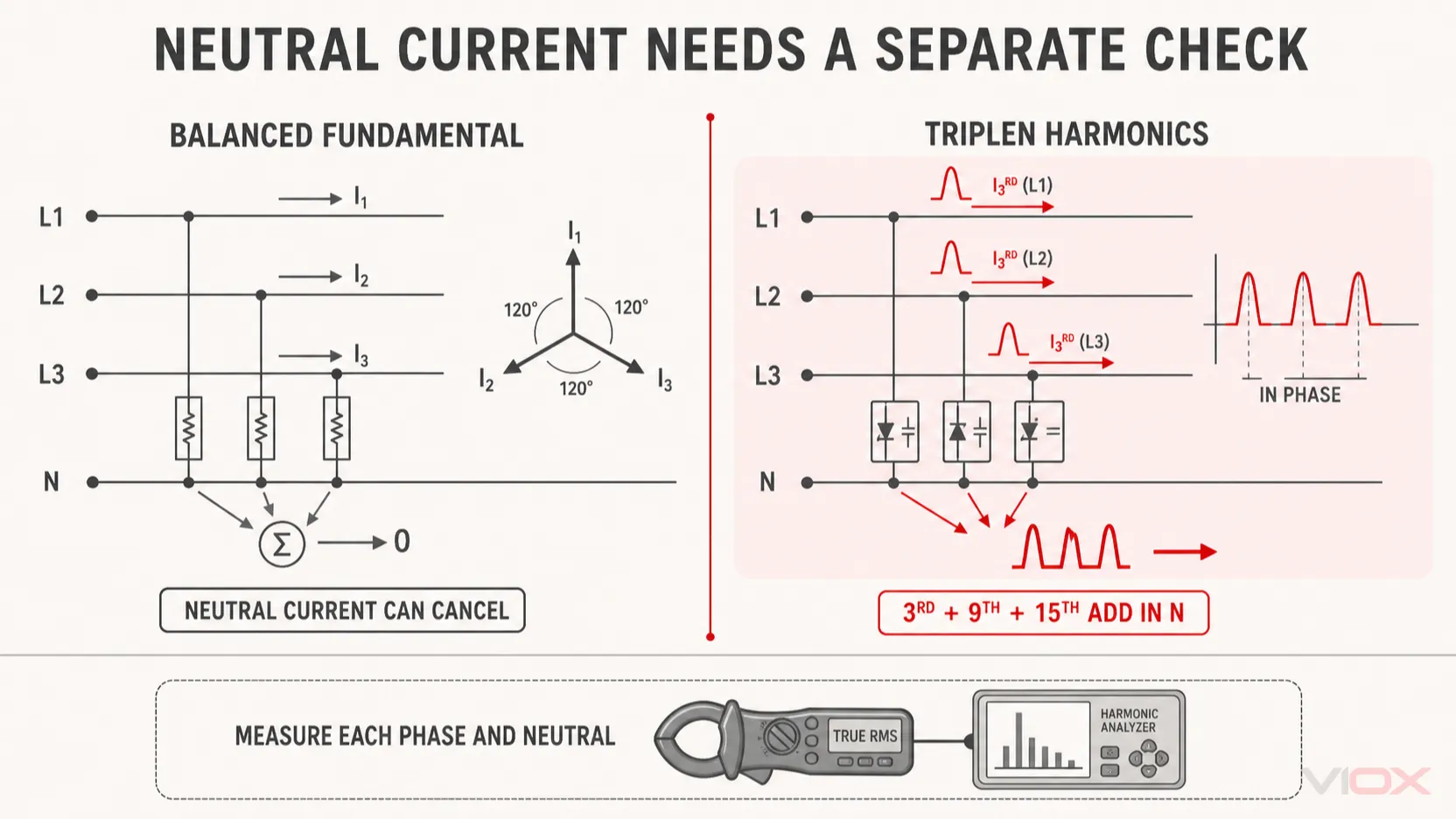
中性線電流、負荷の不平衡、およびトリプル高調波
このワットからアンペアへの計算は、総有効電力から平衡線電流を求めるものであり、中性線電流を計算するものではありません。三相4線式システムにおいて、不平衡の相中性線間負荷は、3つの相電流のベクトル和に等しい基本周波数の中性線電流を発生させます。.
非線形単相負荷には追加の確認が必要です。一部のスイッチング電源、コンピュータ機器、およびLEDドライバは、以下を含む歪んだ電流を消費します。 第3次高調波成分—特に第3次、第9次、および第15次。これらの零相高調波成分は、打ち消し合うのではなく共通の中性線内で加算される可能性があるため、特定の負荷の組み合わせ条件下では、中性線電流が個々の相電流に近づく、あるいはそれを超えることがあります。.
中性線電流を総ワット数、平均力率、または全高調波歪率のみから推定しないでください。正確な評価には、各相の電流の大きさおよび位相角、高調波測定、または適切な電力品質調査が必要です。True-RMS(真の実効値)計器を使用して各相と中性線を測定し、VIOXの 高調波およびTHD計算ツール を使用して予備的な高調波スクリーニングを行ってください。この計算ツールは、各相の解析に基づく中性線電流分析に代わるものではありません。.
電圧の定義および位相関係の詳細な説明については、VIOXの 単相および三相電気システムガイドをご参照ください。.
一般的なワット・アンペア換算表
これらの表はクイックリファレンスであり、機器の定格を示すものではありません。値は小数点以下第2位まで四捨五入しています。.
12 V、24 V、48 VにおけるDCワットからアンペアへの換算
| パワー | 12 V DC | 24 V DC | 48 V DC |
|---|---|---|---|
| 100 W | 8.33 A | 4.17 A | 2.08 A |
| 500 W | 41.67 A | 20.83 A | 10.42 A |
| 1,000 W | 83.33 A | 41.67 A | 20.83 A |
| 2,000 W | 166.67 A | 83.33 A | 41.67 A |
この表は、規定のDC電圧で供給される電力を示しています。バッテリー、コンバータ、またはインバータのアプリケーションでは、変換効率、動作電圧範囲、および過渡需要に対する個別の余裕が必要になる場合があります。.
単相の電力(W)から電流(A)への換算(力率1)
| パワー | 120 V AC | 230 V AC | 240 V AC |
|---|---|---|---|
| 500 W | 4.17 A | 2.17 A | 2.08 A |
| 1,000 W | 8.33 A | 4.35 A | 4.17 A |
| 1,500 W | 12.50 A | 6.52 A | 6.25 A |
| 2,000 W | 16.67 A | 8.70 A | 8.33 A |
| 3,000 W | 25.00 A | 13.04 A | 12.50 A |
これらの値は次の場合にのみ適用されます: PF = 1. 。例えば、120 Vで 1,000 W、かつ PF = 0.80 は 1,000 / (120 × 0.80) = 10.42 Aであり、8.33 Aではありません。.
力率1における平衡三相電力(W)から電流(A)への換算
| パワー | 208 V | 400 V | 415 V | 480 V |
|---|---|---|---|---|
| 1 kW | 2.78 A | 1.44 A | 1.39 A | 1.20 A |
| 5 kW | 13.88 A | 7.22 A | 6.96 A | 6.01 A |
| 10 kW | 27.76 A | 14.43 A | 13.91 A | 12.03 A |
| 15 kW | 41.64 A | 21.65 A | 20.87 A | 18.04 A |
これらは理想的な PF = 1 線間電圧を使用した参考値です。実際のAC負荷については、計算機に記載の力率を入力してください。.
力率が電流値に与える影響
力率とは、有効電力(ワット)と皮相電力(ボルトアンペア)の比率です。力率が低いということは、同じ電圧で同じ有効電力を供給するために、システムにより多くの電流を流さなければならないことを意味します。.
230 V、5,000 Wの単相負荷を例に検討します:
| 力率 | 計算電流 |
|---|---|
| 1.00 | 21.74 A |
| 0.90 | 24.15 A |
| 0.80 | 27.17 A |
この比較においてワット数は変化しませんが、皮相電力と電流は変化します。可能な限り、測定値またはメーカー提供の力率を使用してください。一般的なデフォルト値を使用すると、特にモーター、可変周波数駆動装置(VFD)、整流器、LEDドライバ、スイッチング電源などの場合、誤解を招く結果が生じる可能性があります。.
kWまたはkVAから開始する変換については、VIOXを使用してください。 kW、kVAおよびアンペア計算機.
効率を計算に含めるべき場合
すべてのワットからアンペアへの変換式に効率を含めるべきではありません。まず、記載されているワットが何を表しているかを確認してください。.
| 利用可能な電力値 | 意味 | 計算手法 |
|---|---|---|
| 電気入力ワット | 機器によって既に消費されている有効電力 | 効率で再度割らないこと |
| 機械出力ワット数またはモーター軸kW | 内部損失後の有効出力 | 効率で除算して電気入力電力を推定する |
| 銘板電流 | 規定条件下におけるメーカーの定格電流 | 最終的な機器選定にはこちらを優先する |
モーターが機械出力で定格表示されている場合、平衡三相入力電流の推定式は以下の通りである:
I = Pout / (√3 × VLL × PF × η)配線がどこに η 効率は0から1で表されます。この式は定格動作電流を推定するものであり、始動電流を予測するものではありません。モーターの銘板に実際の電圧および接続に対する電流値が記載されている場合は、一般的な計算式に置き換えるのではなく、その値を最終選定に使用してください。.
VIOX 電気計算式リファレンス 低圧パネル計算用の追加式を提供します。.
計算上の電流値が実測値や銘板記載の電流値と異なる理由
数学的に正しい換算であっても、入力値や動作条件が異なるため、現場の電流値とは異なる場合があります。以下を確認してください。
- 実際の電圧: 供給電圧は公称値と異なる場合があります。.
- 実際の負荷: 機器は想定された出力ポイントよりも低い、あるいは高い状態で動作する可能性があります。.
- 力率: それは負荷や制御モードによって変化する可能性があります。.
- 効率が良い: 定格出力の機械には効率値が必要ですが、効率はすべての負荷ポイントで一定ではありません。.
- 相平衡: 標準的な三相式は、平衡負荷を前提としています。.
- 波形歪み: 非線形機器では、真の実効値(true-RMS)測定とメーカーデータが必要になる場合があります。.
- 中性線負荷: 三相四線式電気システムにおいて、相間の不平衡および相対中性線間の非線形負荷による三次高調波は、平衡線電流の公式には現れない中性線電流を発生させる可能性がある。.
- 始動電流または突入電流: 定常状態の電力方程式では、電動機、変圧器、または電子負荷の過渡現象を計算できない。.
実際の動作電流が重要である場合は、適切な計測器と安全な測定手順を使用すること。その際、システムタイプ、電圧、負荷状態、力率、および測定方法を結果とともに記録すること。.
計算された電流値は回路遮断器やケーブルのサイズではない
換算された電流値は機器選定のための入力の一つであり、最終的な定格ではない。ケーブルの選定は、導体材料、絶縁体、敷設方法、周囲温度、束ね係数、端子制限、電圧降下、および適用される内線規程にも依存する。回路遮断器の選定は、さらにトリップ特性、遮断容量、始動電流、ケーブル保護、協調、システム電圧、極数、および関連する製品規格にも依存する。.
設計作業を個別の確認項目として継続すること:
- 保護装置の定格電流を以下の値で推定する: 回路遮断器サイズ計算ツール.
- 導体の要件については、以下を使用して確認してください。 ケーブルサイズ計算ツール.
- 選択したルートについては、以下を使用して検証してください。 電圧降下計算ツール.
すべての結果に「80%ルール」を画一的に適用しないでください。連続負荷要件、機器定格、および設置規則は、適用される市場、規格、機器、および用途によって異なります。.
よくある質問
1,000ワットは何アンペアですか?
電圧とシステムタイプによって異なります。力率1の場合、1,000 Wは、12 V DCでは83.33 A、120 V単相では8.33 A、230 V単相では4.35 A、または400 V平衡三相では1.44 Aとなります。ACの力率が1未満の場合、電流値は増加します。.
電圧を知らずにワットをアンペアに変換できますか?
いいえ。ワット数だけで電流が決まるわけではありません。電圧が必要であり、ACの有効電力換算には相配置と力率も必要です。.
なぜ三相のワットからアンペアへの換算に1.732を使用するのですか?
1.732という値は、以下の近似値です。 √3. 。これは、平衡三相システムの全電力を線間電圧と線電流を用いて表す際に現れます。.
ワットからアンペアへの計算にモーター効率を含めるべきですか?
ワットまたはキロワットの値が機械的出力である場合は、効率を含めてください。記載されているワットがすでに電気的入力電力を表している場合は、再度適用しないでください。最終的な選定には、モーターの銘板に記載された電流値を優先してください。.
アンペアをワットに戻すにはどうすればよいですか?
該当する式を並べ替えます。DCの場合、, P = V × I. 。単相ACの場合、, P = V × I × PF. 。平衡三相ACの場合、, P = √3 × VLL × I × PF.