On this page
What Is a Circuit Overload?
A circuit overload happens when the connected loads draw more current than the circuit wiring or protection device is designed to carry. Unlike a short circuit, overload current usually flows through the normal conductive path, but it lasts long enough to overheat wires, terminals, plugs, outlets, or breakers. A properly selected fuse or circuit breaker should trip before the overload becomes a fire risk.
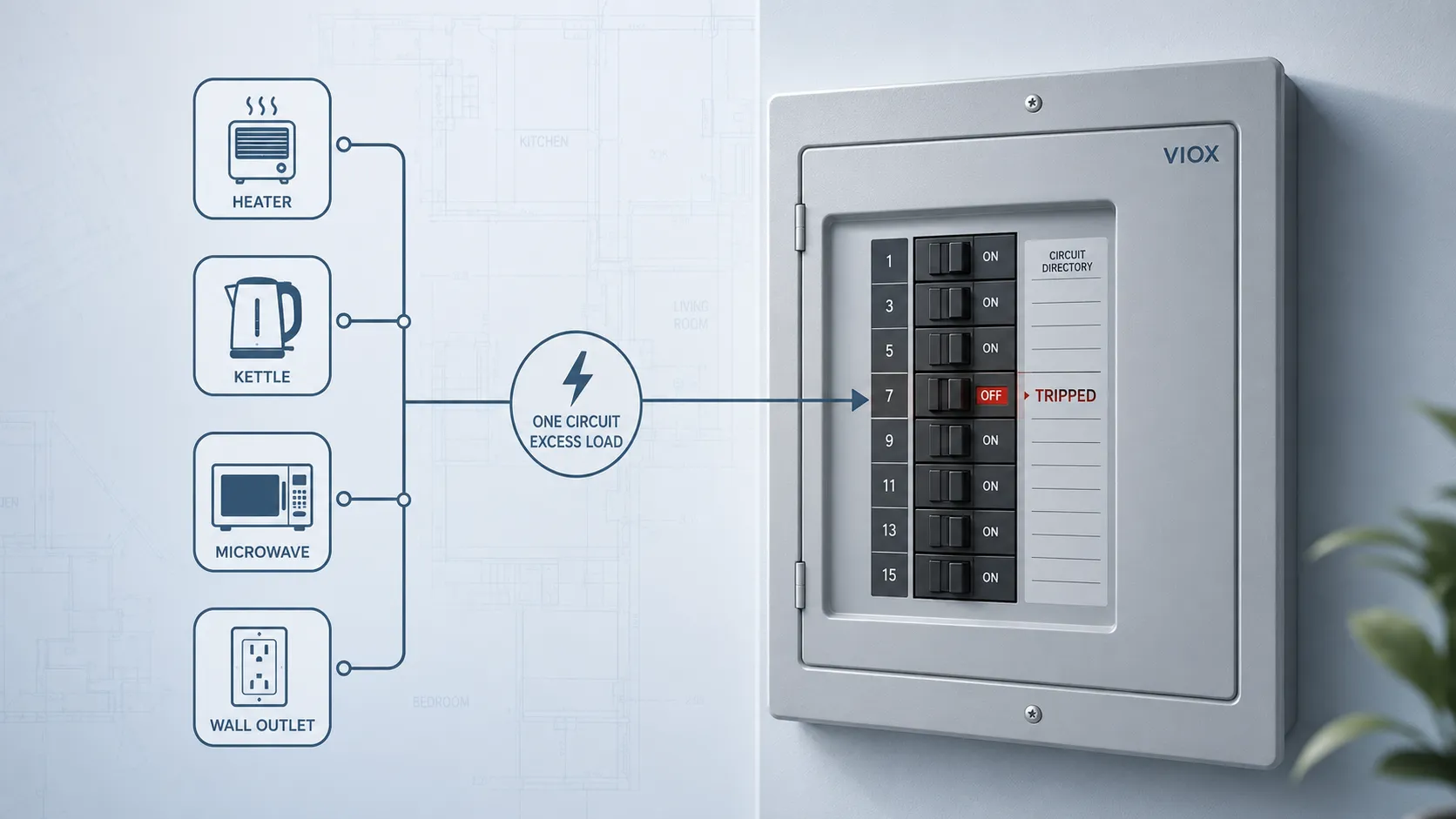
The everyday example is simple: too many high-power appliances are plugged into the same circuit and used at the same time. The circuit may work for a short period, but the current can exceed the safe rating of the wiring or breaker. If the overload continues, heat builds up.
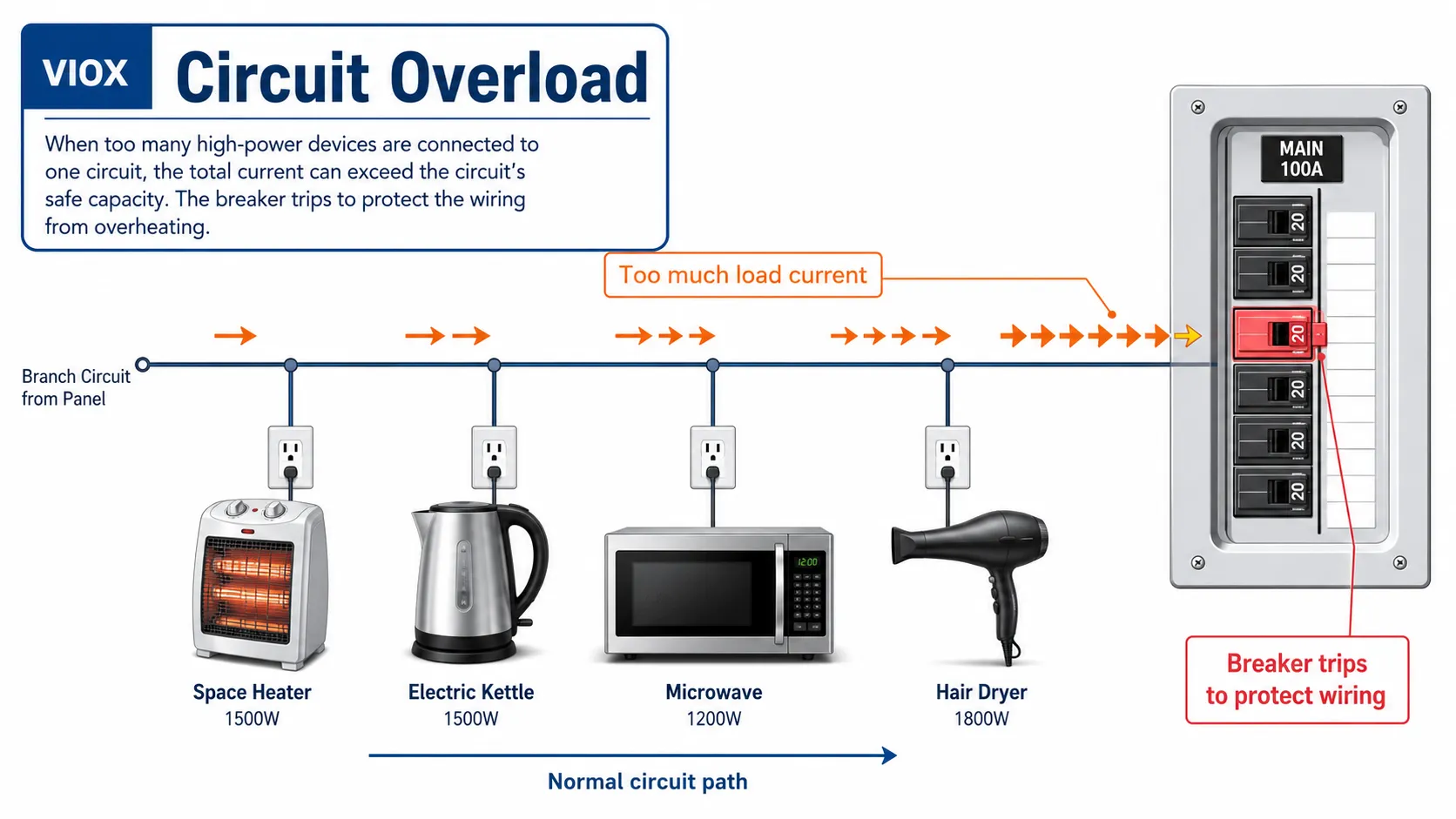
That is why circuit overload is not just an inconvenience. It is a fire-prevention issue.
Circuit Overload vs Short Circuit vs Ground Fault
Many people use these terms interchangeably, but they are different fault conditions.
| Problem | What It Means | Current Path | Typical Example | Protective Device |
|---|---|---|---|---|
| Circuit overload | Too much load current for the circuit rating | Normal conductive path | Too many appliances on one circuit | MCB, MCCB, fuse, overload device |
| Short circuit | Very high fault current through an unintended low-resistance path | Abnormal path between conductors | Live conductor touches neutral or another phase | Breaker or fuse short-circuit protection |
| Ground fault | Current leaks to earth or exposed conductive parts | Leakage path to ground/earth | Damaged insulation contacts metal housing | RCD, RCCB, RCBO, GFCI depending market |
| Arc fault | Dangerous arcing caused by damaged conductors or loose connections | Intermittent arc path | Damaged cord, loose terminal, cracked insulation | AFCI / AFDD where required |
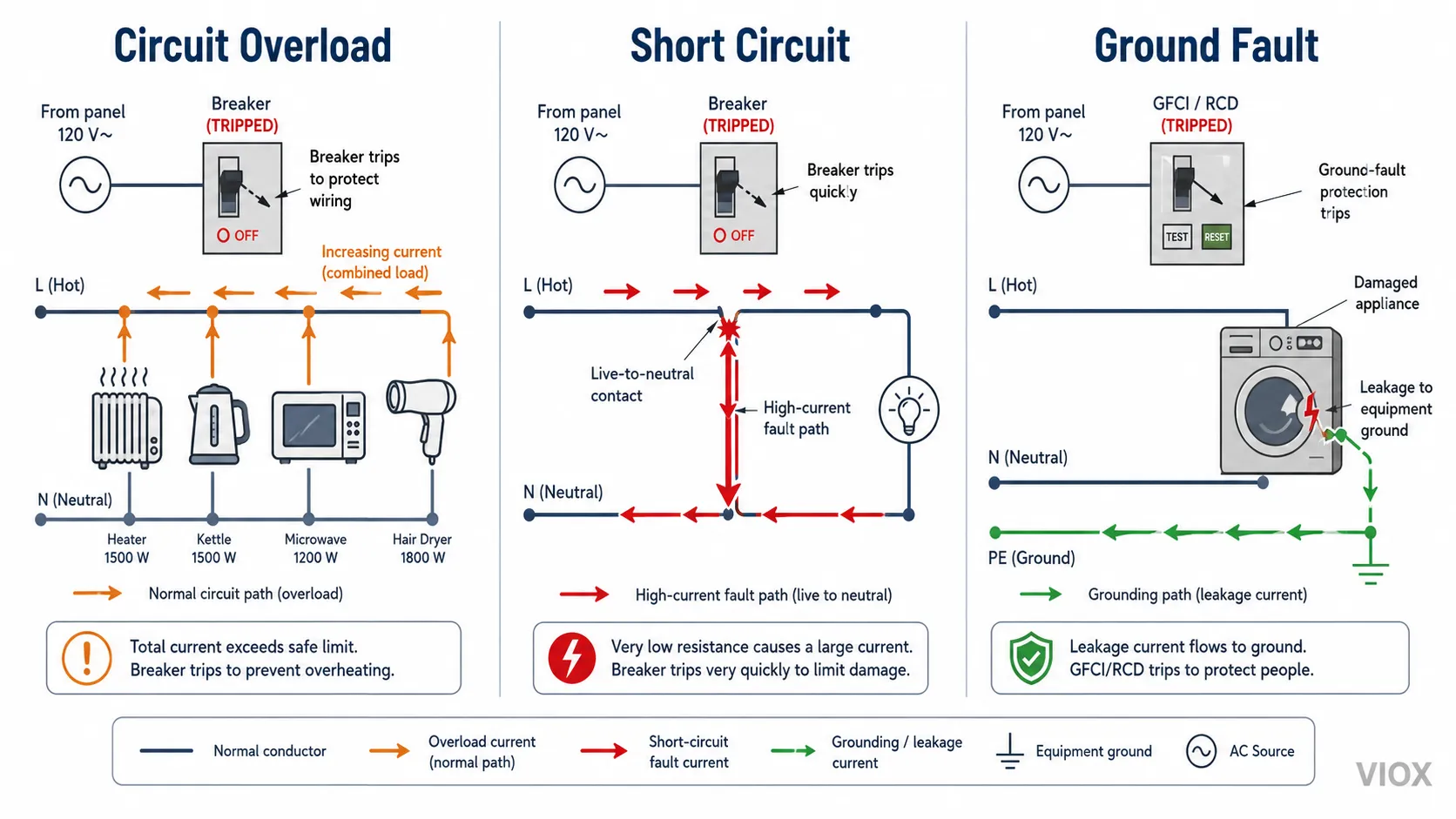
The key point:
An overload is not the same as a short circuit. Overload current normally flows through the intended circuit path, but the amount of current is higher than the circuit can safely carry for the duration.
What Causes an Overloaded Circuit?
Circuit overload is usually caused by excessive load, poor circuit planning, or equipment changes after installation.
Common causes include:
- too many devices plugged into one circuit
- high-wattage appliances used together
- extension cords or power strips used as permanent wiring
- space heaters, kettles, hair dryers, microwaves, or portable AC units on the same circuit
- undersized wiring for the connected load
- old circuits used for modern higher-power equipment
- loose terminals increasing local heating
- motor starting current or repeated equipment startup
- added loads after a panel or circuit was originally designed
In homes, overloads often happen when several appliances operate at once. In industrial or control-panel applications, overloads may appear when equipment is upgraded, motors are replaced, heaters are added, or branch circuits are expanded without checking current capacity.
Warning Signs of Circuit Overload
An overloaded circuit may show visible or operational symptoms before a serious failure occurs.
| Warning Sign | What It May Indicate |
|---|---|
| Breaker trips repeatedly | Load current may exceed circuit rating |
| Fuse blows after several appliances operate | Circuit may be overloaded |
| Outlet or plug feels warm | High current or poor contact may be causing heating |
| Burning smell near outlet or panel | Stop using the circuit and call a qualified electrician |
| Lights dim when appliances start | Voltage drop or high inrush current may be present |
| Buzzing or crackling sound | Loose connection, arcing, or failing device may be present |
| Discolored outlet, plug, or terminal | Heat damage may already have occurred |
| Power strip feels hot | Connected load may exceed safe use |
Do not ignore repeated breaker trips. A breaker that trips under overload is doing its job. The problem is usually the load, wiring, connection, or circuit design, not the fact that the breaker operated.
Why Breakers Trip During Overload
A circuit breaker is designed to open the circuit when current exceeds a safe level for too long. In a typical thermal-magnetic breaker, overload protection is handled by the thermal element, while short-circuit protection is handled by the magnetic element.
In simple terms:
- Overload: current is too high for too long, so the breaker trips after a delay.
- Short circuit: current rises extremely fast, so the breaker trips much more quickly.
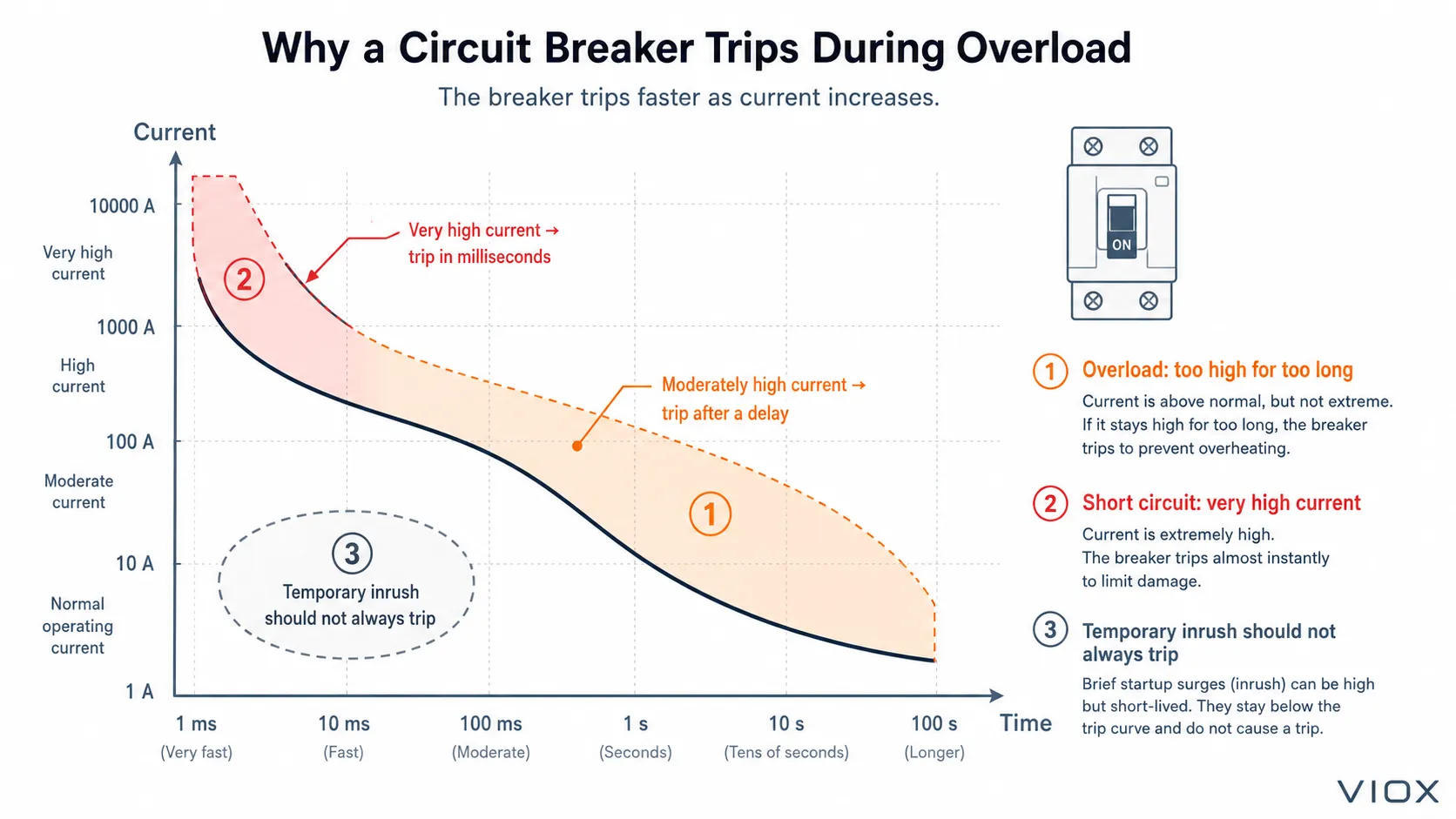
This time-delay behavior is intentional. Some loads draw temporary inrush current when starting. A breaker should not trip instantly for every brief current spike. But if current remains above the safe level long enough to overheat conductors, the breaker must disconnect the circuit.
For more on how breakers work, see VIOX’s guide to miniature circuit breakers.
How to Fix a Circuit Overload Safely
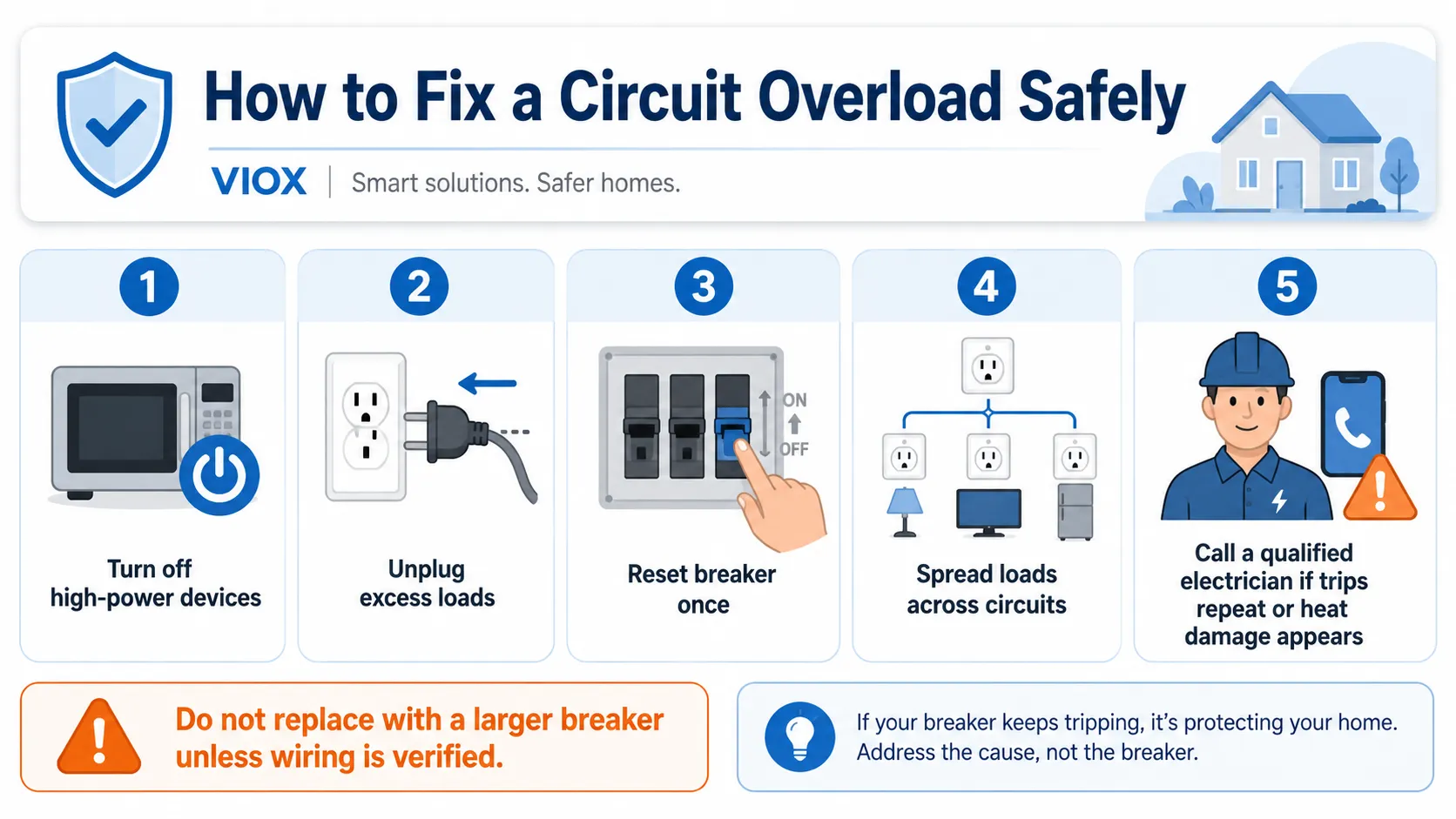
If you suspect a circuit overload, do not simply reset the breaker and keep using the same loads. Reduce the load first.
Step 1: Turn off or unplug high-power devices
Unplug or turn off devices such as heaters, kettles, microwaves, portable air conditioners, power tools, or other high-wattage equipment connected to the same circuit.
Step 2: Reset the breaker once after reducing load
After reducing the load, reset the breaker once. If it holds, the circuit was likely overloaded. If it trips again immediately or repeatedly, stop using the circuit and call a qualified electrician.
Step 3: Spread loads across different circuits
Move some appliances or equipment to a different branch circuit. Do not put multiple high-power devices on the same circuit if the circuit is not designed for that total load.
Step 4: Do not replace the breaker with a larger one casually
Never solve nuisance tripping by installing a higher-rated breaker unless the wiring, outlet rating, installation method, panel design, and local code allow it.
Oversizing the breaker can allow the wire to overheat before the breaker trips.
Step 5: Add a dedicated circuit if needed
High-load equipment may require a dedicated circuit. This is common for ovens, HVAC equipment, water heaters, large motors, EV chargers, industrial heaters, and similar loads.
Step 6: Inspect for heat damage
If an outlet, plug, cable, terminal, or breaker shows discoloration, melting, odor, or heat damage, it should be inspected before reuse. The overload may have weakened the connection or insulation.
What Not to Do During an Overload
Avoid these common mistakes:
| Mistake | Why It Is Dangerous |
|---|---|
| Repeatedly resetting the breaker | Heat may continue building in the circuit |
| Replacing the breaker with a larger one | Wiring may not be protected correctly |
| Using extension cords permanently | Cord and plug ratings may be exceeded |
| Ignoring warm outlets or plugs | Heat indicates a possible overload or poor contact |
| Taping a breaker handle on | Prevents the protection device from working |
| Assuming every trip is a bad breaker | The breaker may be correctly responding to unsafe current |
If a breaker trips repeatedly, the safest assumption is that the circuit needs diagnosis, not that the breaker should be defeated.
How to Prevent Circuit Overload
Prevention is mostly about load planning and protection coordination.
Practical prevention steps:
- know which outlets are on the same circuit
- avoid running several high-wattage appliances together
- use dedicated circuits for large fixed loads
- check equipment nameplates before adding load
- avoid permanent use of extension cords and power strips
- keep panel schedules accurate
- inspect warm outlets, terminals, and plugs
- size breakers according to wire capacity and application
- upgrade old circuits when adding modern loads
- use appropriate protection devices for the circuit type
For panel design and load calculation basics, see VIOX’s guide to low-voltage electrical formulas.
Circuit Overload Protection Devices
Different protection devices respond to different conditions.
| Device | Main Protection Role | Notes |
|---|---|---|
| MCB | Overload and short-circuit protection for smaller circuits | Common in distribution boards |
| MCCB | Overload and short-circuit protection for higher-current circuits | Often used in commercial and industrial panels |
| Fuse | Overcurrent protection | Must match voltage, current, and breaking capacity requirements |
| RCBO | Residual-current protection plus overcurrent protection | Combines leakage and overcurrent protection in one device |
| RCCB | Residual-current protection only | Does not provide overload protection by itself |
| Overload relay | Motor overload protection | Usually coordinated with contactor and short-circuit protection |
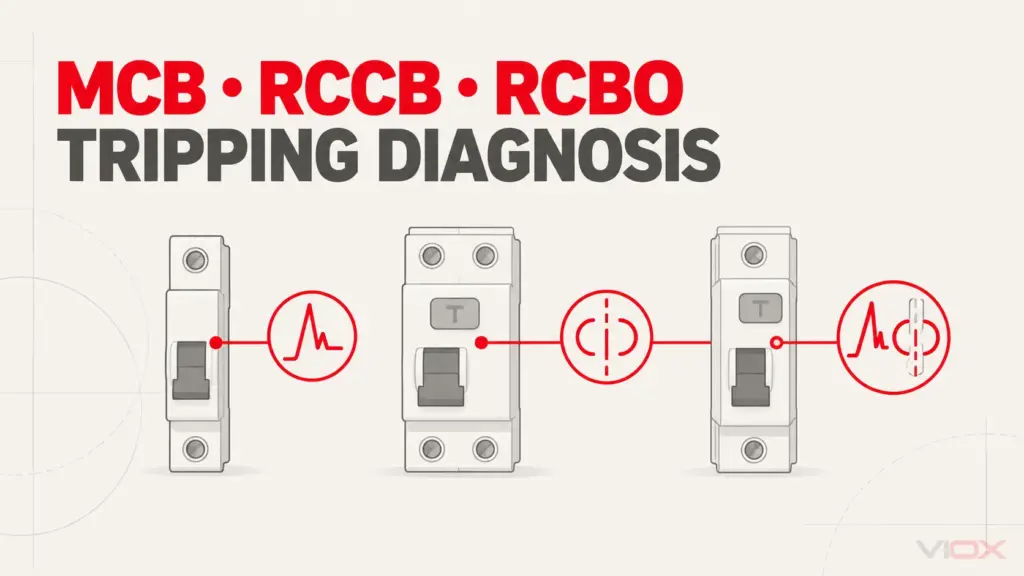
This distinction matters. For example, an RCCB can protect against residual current or earth leakage, but it does not replace the overload protection of an MCB, MCCB, fuse, or RCBO. For a broader device comparison, see RCBO vs RCCB + MCB.
Overload Current: The Correct Concept
Several electrical training questions focus on the definition of overload current. The concept is:
Overload current is excessive current flowing in the normal conductive path of the circuit.
That means:
- overload is not the same as short circuit
- overload is usually caused by too much connected load
- overload current follows the intended circuit path
- protective devices must interrupt dangerous overloads before conductors overheat
- overload can damage insulation, outlets, terminals, and equipment if not cleared
This is why a statement such as “too many appliances on one circuit can cause more current than the wiring is designed to carry” describes a circuit overload.
When to Call an Electrician
Call a qualified electrician if:
- the breaker trips repeatedly after loads are reduced
- an outlet, plug, cable, or panel area feels hot
- there is a burning smell
- an outlet or breaker is discolored
- lights dim severely when equipment starts
- you need to add a high-power appliance
- old wiring is being used with modern loads
- you are unsure which circuits supply which outlets
- the panel has buzzing, crackling, or visible damage
Electrical overload can be a fire hazard. If there is heat, smoke, burning odor, or visible damage, stop using the circuit and arrange inspection before restoring normal use.
Quick Reference
| Question | Short Answer |
|---|---|
| What is a circuit overload? | Too much current for the circuit rating |
| Is overload the same as short circuit? | No |
| Does overload current follow the normal path? | Yes, usually |
| Why does the breaker trip? | To stop overheating and reduce fire risk |
| Can I install a larger breaker? | Not unless the wiring and code allow it |
| How do I fix overload? | Reduce load, redistribute circuits, add dedicated circuits if needed |
| What prevents overload fires? | Correct wiring, correct breaker/fuse, and proper load planning |
FAQ
What is circuit overload?
Circuit overload is a condition where the connected loads draw more current than the circuit wiring or protective device is designed to carry safely.
What causes an overloaded circuit?
An overloaded circuit is commonly caused by too many appliances or devices operating on the same circuit at the same time, especially high-wattage loads such as heaters, microwaves, kettles, or portable air conditioners.
How do you fix a circuit overload?
Reduce the connected load, reset the breaker once after reducing load, move equipment to other circuits, and add a dedicated circuit if needed. If the breaker trips again or any component is warm, damaged, or discolored, call a qualified electrician.
Is overload the same as short circuit?
No. An overload is excessive current through the normal circuit path. A short circuit is a fault current through an unintended low-resistance path.
Can an overloaded circuit cause a fire?
Yes. If overload current continues without proper protection, conductors, outlets, terminals, or plugs can overheat and create a fire risk.
What device prevents overload from causing fires?
A properly selected fuse, MCB, MCCB, RCBO, or other overcurrent protective device can interrupt overload current before the circuit overheats. The device must match the wiring and application.
Why does my breaker trip when I use several appliances?
The combined current of the appliances may exceed the circuit rating. The breaker trips to protect the wiring from overheating.
Should I replace a tripping breaker with a larger breaker?
No, not without proper verification. A larger breaker may fail to protect the existing wire. The circuit wiring, outlet rating, panel design, and applicable code must be checked first.
Conclusion
A circuit overload occurs when too much current flows through the normal conductive path of a circuit. It is different from a short circuit, but it can still overheat wiring and create a fire risk if not interrupted.
The right response is not to defeat the breaker. Reduce the load, identify what is connected to the circuit, inspect for heat damage, and upgrade the circuit when the load demand requires it. A correctly selected breaker or fuse is not just a switch. It is part of the fire-prevention system that keeps the circuit within safe current limits.