

On this page
Direct Answer: What Is a Tandem Breaker?
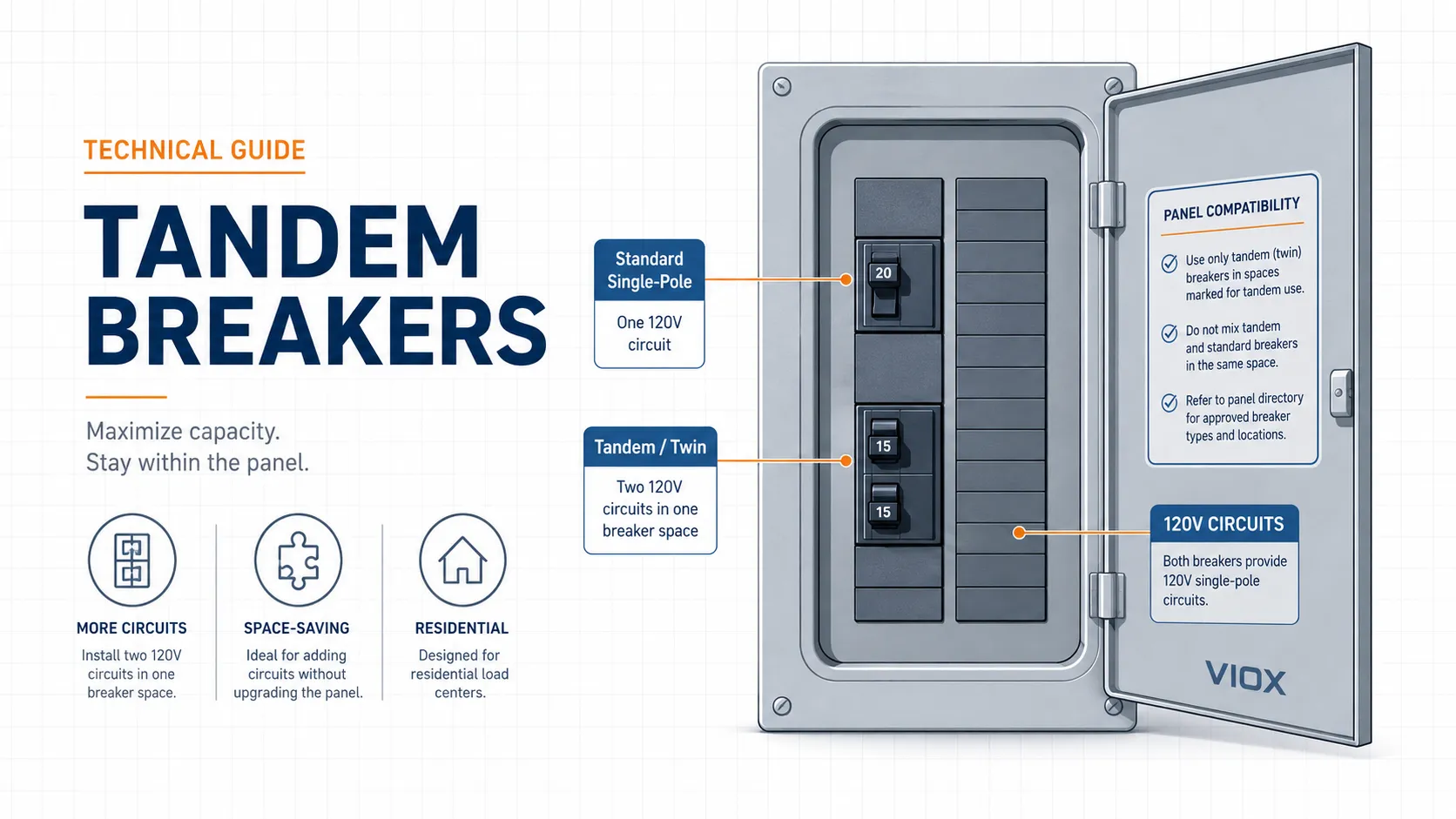
A tandem breaker, also called a twin breaker, duplex breaker, split breaker, or piggyback breaker, fits two independent 120V branch circuits into one full-size breaker space. It is used when a compatible electrical panel has limited physical spaces but still allows additional circuits.
A tandem breaker is safe only when the panel is listed for tandem breakers, the breaker model matches the panel manufacturer’s approved list, and it is installed in a slot designed for tandem use. A tandem breaker is not the same as a double-pole breaker and should not be used as a shortcut around panel capacity, shared-neutral rules, or required AFCI/GFCI protection.
Key Takeaways
- Tandem breakers create two separate 120V circuits in one breaker space.
- They are also called twin breakers, duplex breakers, split breakers, or piggyback breakers.
- They are safe only in panels and slots approved for tandem breakers.
- CTL tandem breakers include rejection features to prevent use in non-approved panel spaces.
- Non-CTL breakers are generally replacement-type products for older compatible panels, not a way to bypass modern panel limits.
- If the panel label says 20 spaces / 20 circuits, tandem breakers are usually not allowed; if it says 20 spaces / 40 circuits, designated tandem slots may be allowed.
Tandem Breaker vs Twin Breaker vs Piggyback Breaker
These terms usually refer to the same general idea: two single-pole breaker handles or circuits in one full-size breaker body.
| Term | Common Meaning | Notes |
|---|---|---|
| Tandem breaker | Two 120V circuits in one breaker space | Most common technical term |
| Twin breaker | Same idea as tandem breaker | Common in consumer searches |
| Duplex breaker | Same general category | Often used by manufacturers or distributors |
| Piggyback breaker | Informal name for tandem breaker | Sometimes used negatively when installed incorrectly |
| Split breaker | Informal or regional term | Can be confused with split-bus panels |
The name matters less than compatibility. The breaker should match the panel label, bus design, and approved breaker type.
Tandem vs Single-Pole vs Double-Pole Breaker
A common mistake is confusing a tandem breaker with a double-pole breaker. They are physically and electrically different.
| Breaker Type | Panel Spaces Used | Output | Typical Use |
|---|---|---|---|
| Single-pole breaker | 1 | One 120V circuit | Lighting, receptacles, small loads |
| Tandem / twin / piggyback breaker | 1 | Two separate 120V circuits | Adding circuits in approved tandem slots |
| Double-pole breaker | 2 | One 240V circuit or multi-wire circuit with common trip | Dryer, range, HVAC, water heater, EV charger |
| Quad breaker | 2 | Multiple 120V/240V combinations depending on model | Panel-specific space-saving applications |
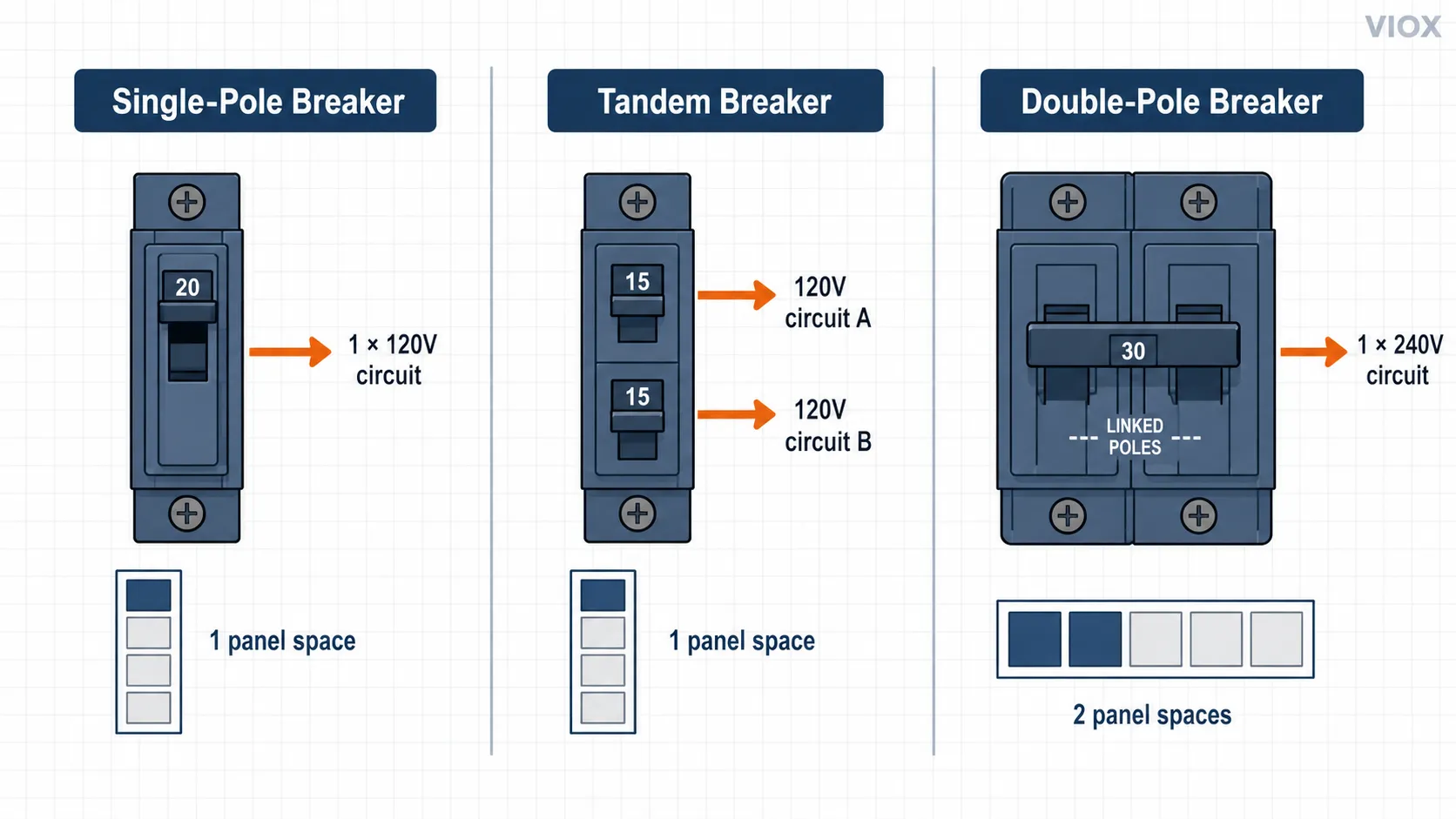
A tandem breaker does not provide the same function as a two-pole breaker. It does not automatically give a common trip, and it should not be used for a 240V load unless the exact breaker and panel design are listed for that application.
Are Tandem Breakers Safe?
Tandem breakers are safe when used exactly as the panel manufacturer allows. They become unsafe when used to force extra circuits into a panel that was not designed for them.
| Safe Condition | Risk Condition |
|---|---|
| Panel label allows tandem breakers | Panel label does not allow tandem breakers |
| Tandem installed in approved slots | Tandem installed in a non-tandem slot |
| Breaker model is listed for the panel | Breaker brand or series does not match panel approval |
| Circuit load is calculated correctly | Panel is overcrowded to avoid a needed upgrade |
| AFCI/GFCI requirements are still met | Tandem used to avoid required protection |
| Shared-neutral circuits are handled correctly | Tandem used on MWBC without correct common disconnect |
The safety question is not “are tandem breakers always good or always bad?” The real question is: does this specific panel accept this specific tandem breaker in this specific position?
CTL vs Non-CTL Tandem Breakers
CTL means Circuit Total Limiting. CTL tandem breakers include a rejection feature designed to prevent installation in panel positions that are not intended for tandem breakers.
| Item | CTL Tandem Breaker | Non-CTL Tandem Breaker |
|---|---|---|
| Meaning | Circuit Total Limiting design | No CTL rejection feature |
| Typical use | Modern tandem-compatible panels | Replacement use in older compatible panels |
| Physical feature | Rejection notch or limiting feature | May fit where modern CTL breaker should not |
| Main purpose | Helps prevent exceeding panel circuit design | Used for legacy panel replacement situations |
| Main risk | Wrong breaker type or wrong slot | Misused as a “cheater breaker” in modern panels |
| Selection rule | Check panel label and approved breaker list | Use only when documentation specifically permits |
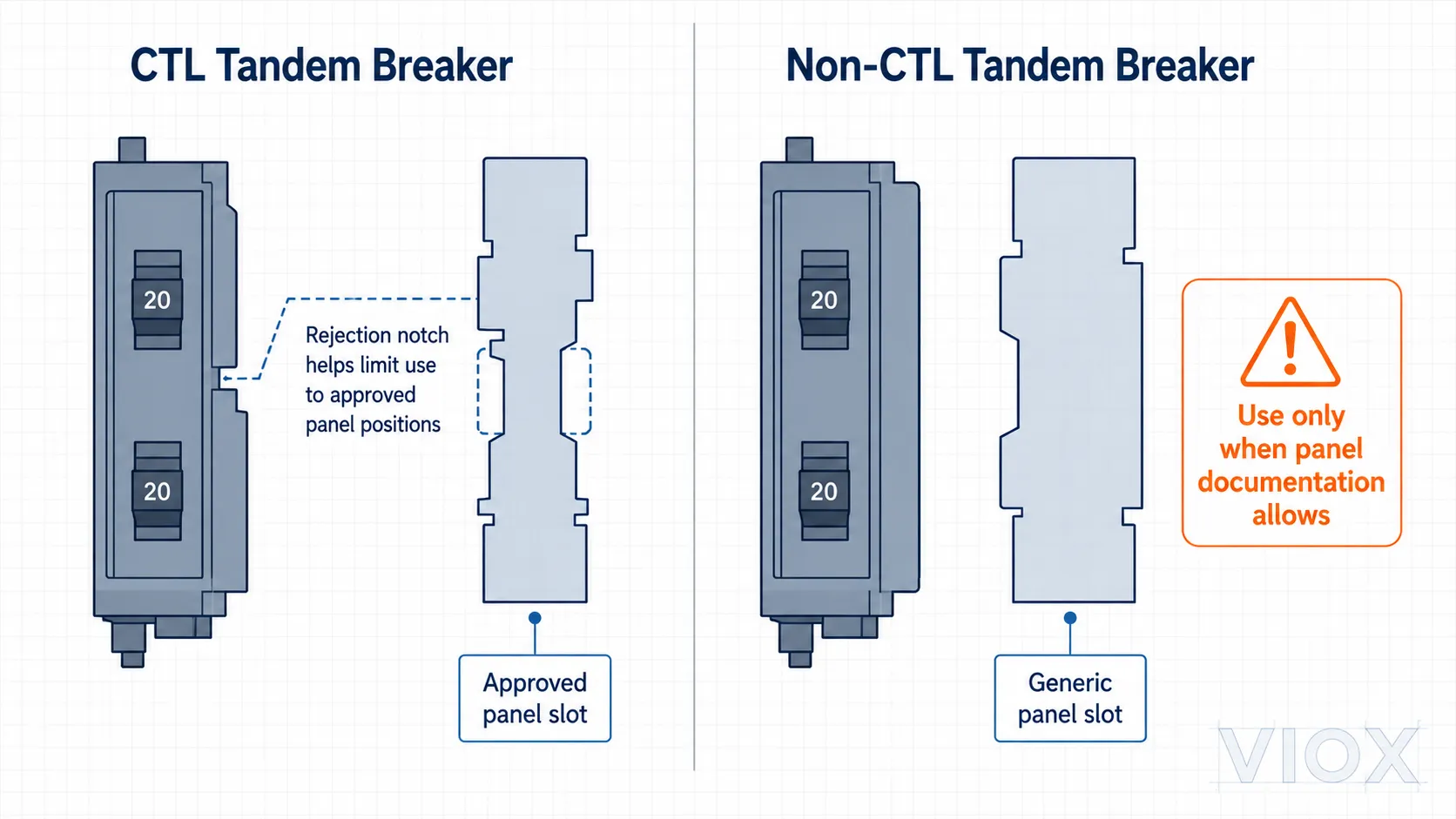
Non-CTL breakers should not be treated as a universal workaround. If a modern panel rejects a CTL tandem breaker, that is usually a sign that the slot or panel is not intended for tandem use.
How to Know If Your Panel Accepts Tandem Breakers
The panel label is the first place to check. It may be inside the panel door or on the enclosure. It usually lists the number of spaces, number of circuits, approved breaker types, and sometimes which positions accept tandem breakers.
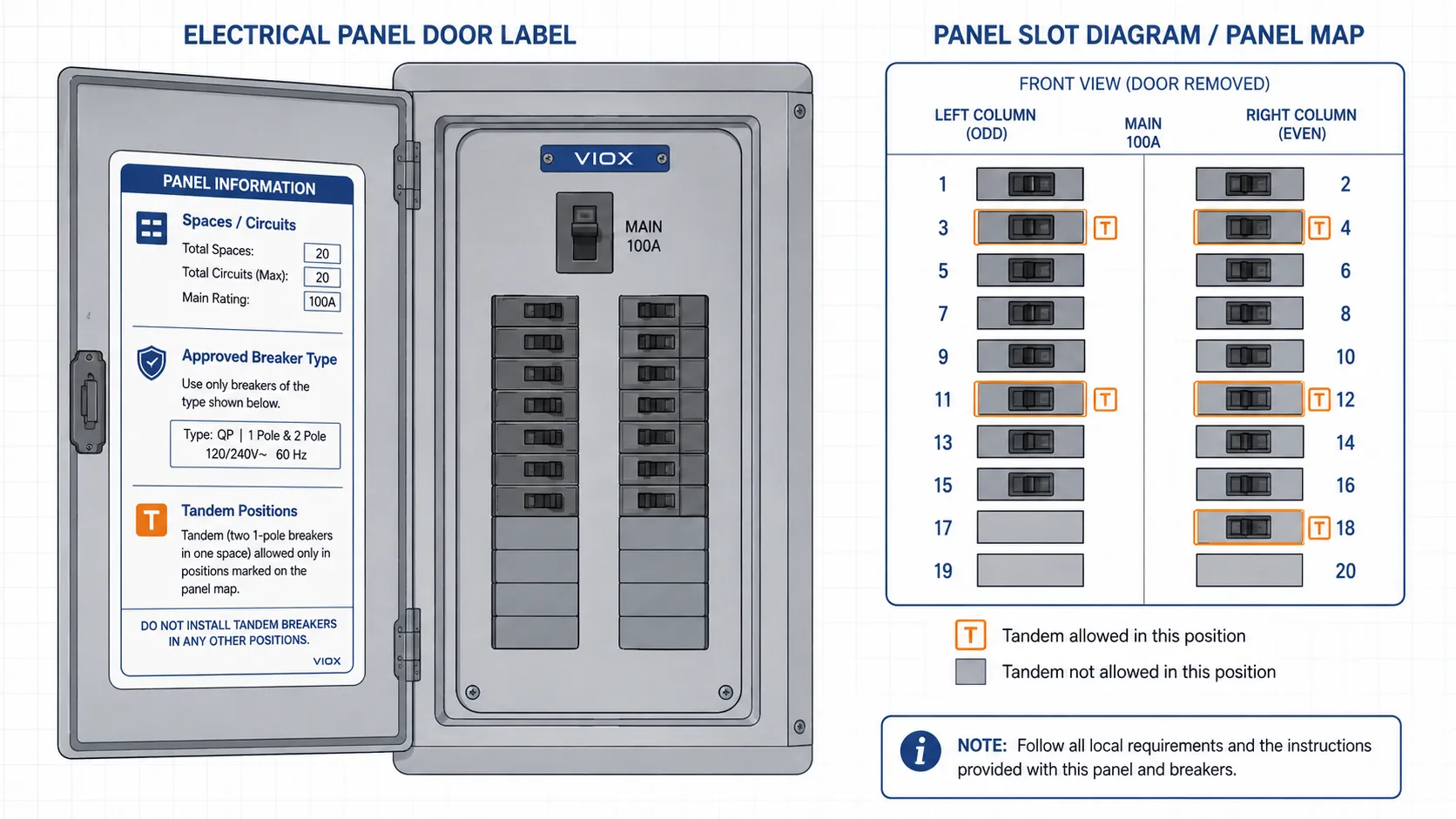
Look for:
- spaces/circuits rating, such as 20/20, 20/40, 30/40, or 40/80
- diagram showing where tandem breakers are allowed
- approved breaker type or catalog number
- CTL or tandem breaker notes
- restrictions for AFCI, GFCI, or two-pole breakers
- maximum bus rating and main breaker rating
If the panel label is missing or unreadable, the safe approach is to identify the exact panel model and check manufacturer documentation. Guessing based on physical fit is not enough.
How Many Tandem Breakers Are Allowed in a 100 Amp Panel?
The number of tandem breakers allowed in a 100 amp panel is not determined only by the 100A service rating. It depends on the panel’s spaces/circuits rating, bus design, label diagram, and approved breaker list.
Examples:
| Panel Marking | What It Usually Means |
|---|---|
| 20 spaces / 20 circuits | Tandem breakers are usually not allowed |
| 20 spaces / 30 circuits | Some tandem positions may be allowed |
| 20 spaces / 40 circuits | Tandems may be allowed in designated positions |
| 30 spaces / 40 circuits | Limited tandem use may be allowed |
The service size also matters. Even if a panel physically accepts tandem breakers, the total load must still be calculated. Tandem breakers add circuit positions; they do not increase the panel’s service capacity.
Why Tandem Breakers Should Not Be Used on Shared-Neutral MWBC Circuits
A multi-wire branch circuit (MWBC) uses two hot conductors sharing one neutral. These circuits require correct handle tie or common disconnect rules so that the shared neutral is not left energized unexpectedly.
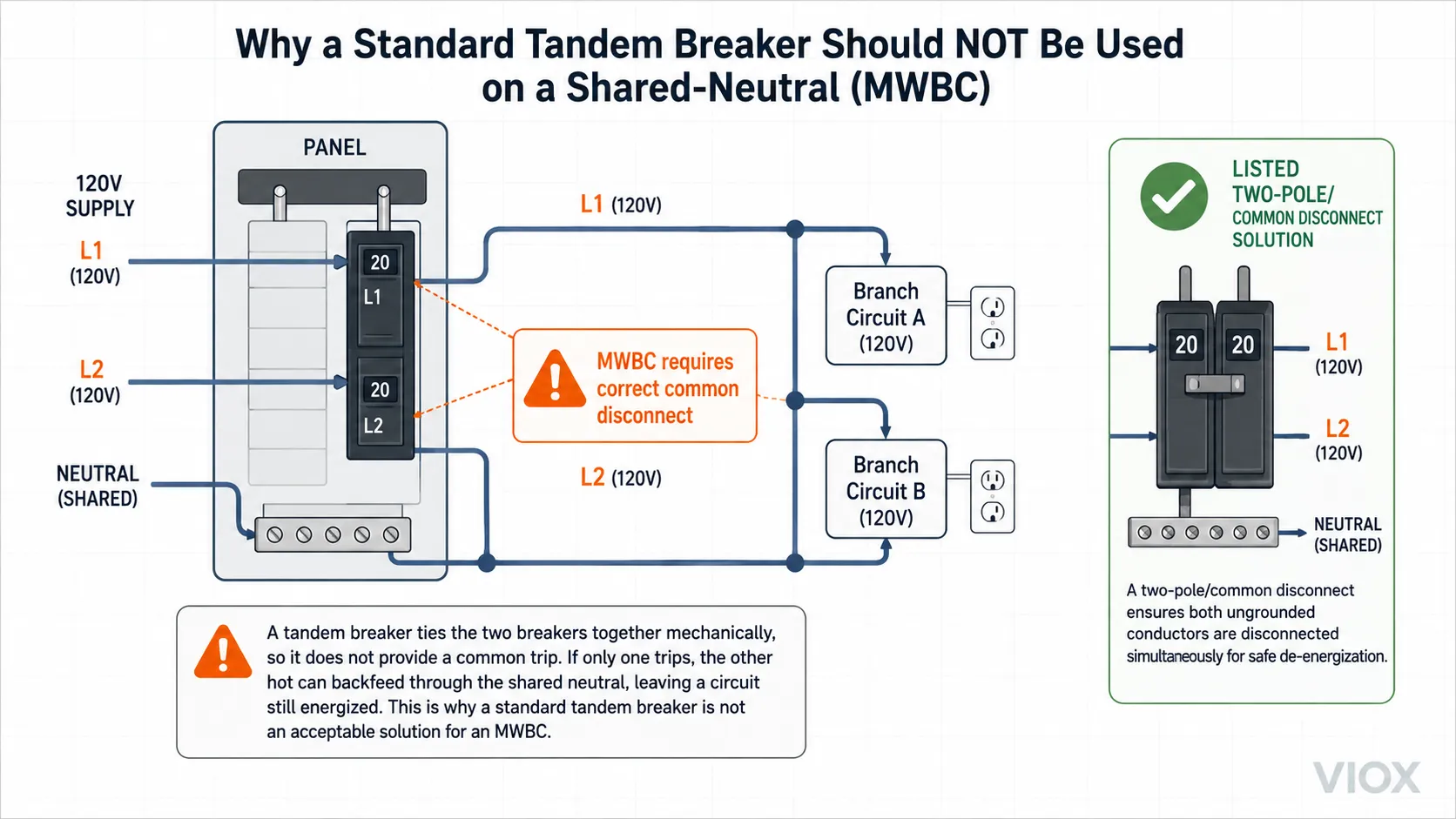
A standard tandem breaker can create problems because the two 120V circuits may end up on the same phase or without the required common disconnect. This can overload the neutral or create a maintenance hazard.
For shared-neutral circuits, the correct solution usually involves a listed two-pole breaker or a breaker assembly specifically designed for that application. Do not assume a tandem breaker is acceptable because it has two handles.
Do Tandem AFCI or GFCI Breakers Exist?
AFCI and GFCI protection with tandem breakers is more complicated than standard tandem protection. Availability depends on the panel brand, breaker series, jurisdiction, and whether the circuit requires AFCI, GFCI, or dual-function protection.
If a circuit requires AFCI or GFCI protection:
- verify the exact breaker model listed for the panel
- confirm whether a tandem AFCI, tandem GFCI, or tandem dual-function breaker is available for that panel series
- check whether the local electrical code and inspector accept that configuration
- use a full-size breaker, subpanel, or panel upgrade if no listed option exists
The important point is not whether a tandem AFCI/GFCI breaker exists somewhere in the market. The important point is whether the exact required breaker exists for your exact panel and application.
When to Use a Tandem Breaker vs Subpanel vs Panel Upgrade
| Situation | Better Option | Reason |
|---|---|---|
| Panel allows tandems and load calculation passes | Tandem breaker | Efficient use of approved panel spaces |
| Panel has no tandem-approved slots | Subpanel or panel upgrade | Avoids using non-approved breaker positions |
| Several new circuits are needed | Subpanel | Cleaner expansion and better future capacity |
| High-load circuit is being added | Load calculation and possibly panel upgrade | Tandem breaker does not increase service capacity |
| AFCI/GFCI requirement cannot be met with tandem | Full-size protected breaker or subpanel | Protection requirement comes first |
| Panel is old, damaged, or poorly labeled | Evaluation by qualified electrician | Compatibility cannot be confirmed safely |
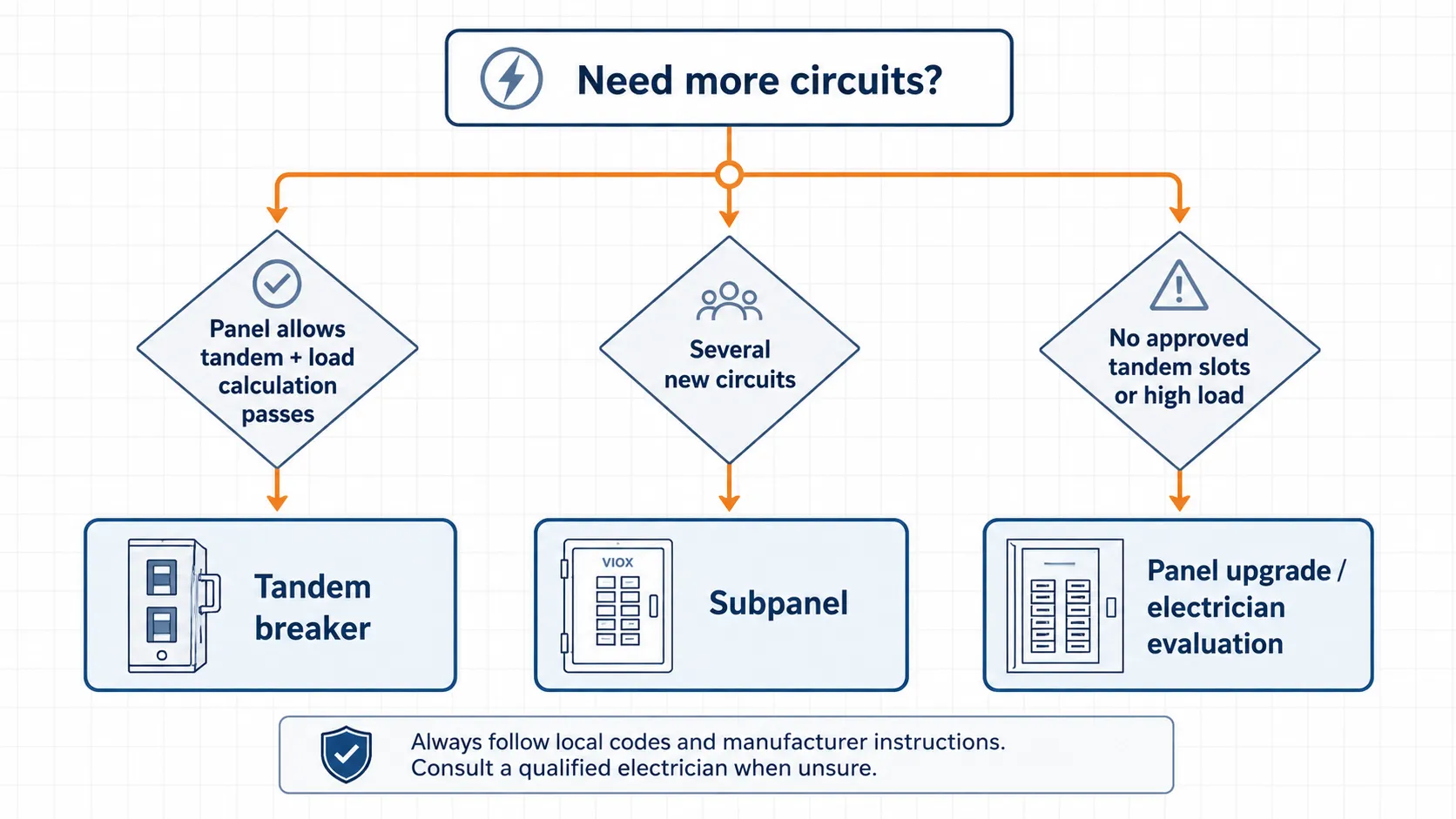
Tandem breakers solve a space problem, not a capacity problem. If the real issue is load, heat, aging equipment, or missing protection, a tandem breaker is not the right fix.
Common Tandem Breaker Mistakes
Mistake 1: Using a Tandem Breaker Because It Physically Fits
Physical fit is not approval. Breakers should match the panel listing and be used only in approved positions.
Mistake 2: Using Non-CTL Breakers as Cheater Breakers
Non-CTL breakers may fit in places where they should not be used. This can exceed the panel’s designed circuit count.
Mistake 3: Confusing Tandem Breakers with Double-Pole Breakers
A tandem breaker gives two 120V circuits in one space. A double-pole breaker uses two spaces and is designed for 240V or common-trip applications.
Mistake 4: Ignoring AFCI or GFCI Requirements
If a circuit requires AFCI or GFCI protection, adding a basic tandem breaker may not meet the requirement.
Mistake 5: Adding Circuits Without a Load Calculation
Tandem breakers do not increase the service rating of the panel. Too many circuits can still create overload and overheating risks if the load is not evaluated.
Tandem Breaker Selection Checklist
Before using a tandem breaker, verify:
- panel manufacturer and model number
- spaces/circuits rating
- panel label diagram
- approved breaker catalog number
- CTL or non-CTL requirement
- slot position where tandem is allowed
- circuit voltage and load type
- AFCI/GFCI requirements
- shared neutral or MWBC status
- service load calculation
- local code and inspection requirements
For basic breaker selection concepts, see VIOX’s guide to how to choose the right MCB and MCB nameplate markings.
FAQ
What is a tandem breaker?
A tandem breaker is a breaker that provides two separate 120V circuits in one full-size breaker space. It is also called a twin, duplex, split, or piggyback breaker.
Are tandem breakers safe?
They are safe when used in a panel that is listed for tandem breakers and installed in an approved position with the correct breaker type. They are unsafe when used to exceed panel limits or bypass required protection.
What is the difference between CTL and non-CTL breakers?
CTL breakers include a rejection feature to prevent installation in non-approved tandem positions. Non-CTL breakers lack that feature and are generally intended for replacement use in older compatible panels.
How many tandem breakers are allowed in a 100 amp panel?
It depends on the panel label, not just the 100A rating. Check the spaces/circuits marking and the manufacturer’s breaker diagram. A 20/20 panel usually does not allow tandems, while a 20/40 panel may allow tandems in designated slots.
Is a tandem breaker the same as a double-pole breaker?
No. A tandem breaker provides two separate 120V circuits in one space. A double-pole breaker uses two spaces and is designed for 240V loads or circuits requiring common trip.
Can I use a tandem breaker for a 240V appliance?
Usually no. Most 240V appliances require a listed double-pole breaker. Do not use a tandem breaker unless the breaker and panel are specifically listed for that configuration.
Do tandem GFCI or AFCI breakers exist?
Availability depends on the panel brand, breaker series, and required protection type. If the circuit requires AFCI or GFCI protection, verify the exact listed breaker model for that panel.
Can I add tandem breakers instead of upgrading my panel?
Sometimes, if the panel is designed for tandem breakers and the load calculation allows it. If the panel is full because the electrical load has grown, a subpanel or panel upgrade may be the safer long-term solution.
Conclusion
Tandem breakers are useful when a compatible panel needs more branch circuits without adding more physical breaker spaces. They are not inherently unsafe, but they are often misused.
The correct question is not “can I make it fit?” The correct question is whether the panel label, breaker listing, slot position, circuit type, AFCI/GFCI requirements, and load calculation all allow it. If any of those checks fail, a subpanel or panel upgrade is usually a better answer than forcing in another piggyback breaker.