

Bu sayfada
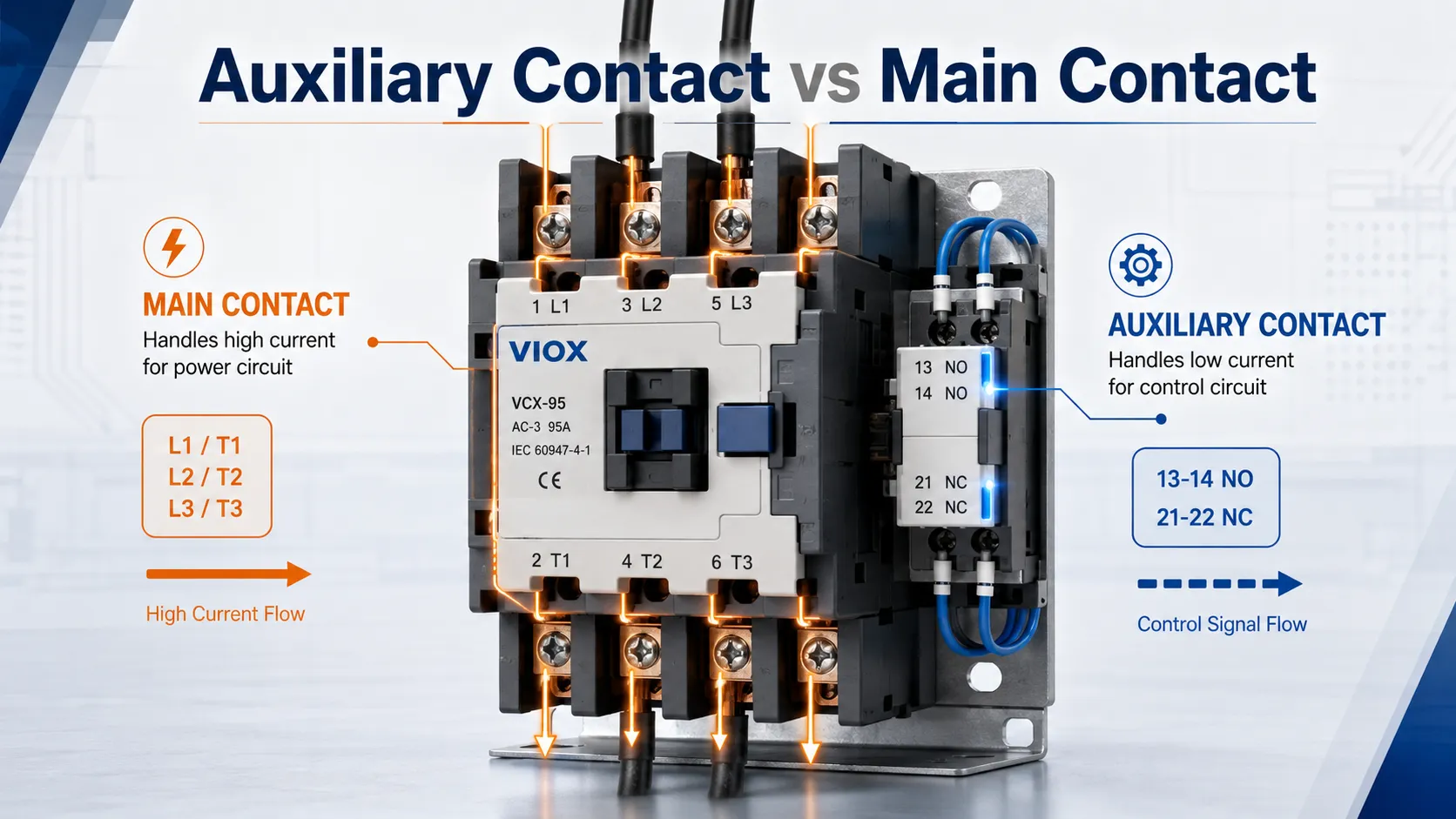
Yardımcı kontak, sinyalizasyon, kilitleme, geri bildirim, mühürleme devreleri ve PLC giriş durumu için kullanılan düşük akımlı bir kontrol kontağıdır. Ana kontak ise motor, ısıtıcı, aydınlatma devresi veya besleme hattı gibi ana yük akımını anahtarlamak için kullanılan bir güç kontağıdır.
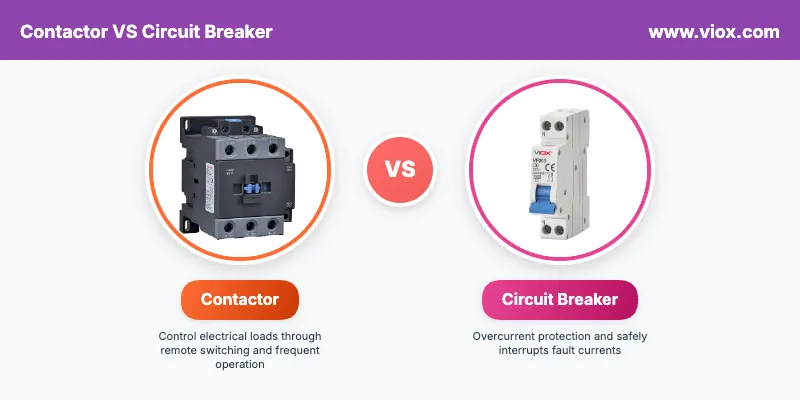
Kısa versiyonu basittir: Ana kontaklar yükü taşır; yardımcı kontaklar ise kontrol devresine ne olduğunu bildirir. Birçok kontaktör ve devre kesicide mekanik olarak birbirlerine bağlıdırlar ancak birbirlerinin yerine kullanılamazlar.
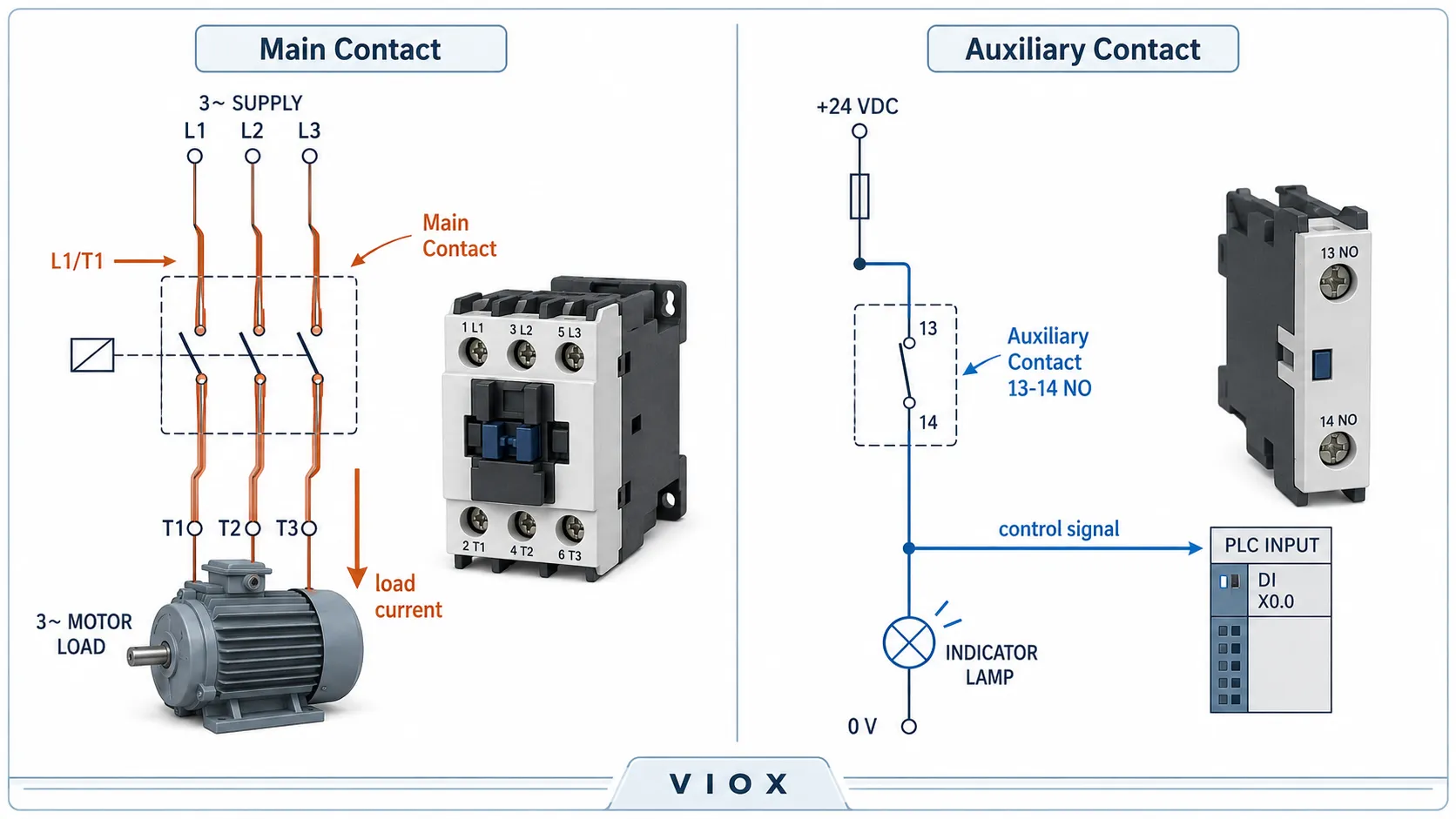
Bir kontaktörde ana kontaklar genellikle L1/T1, L2/T2 ve L3/T3 olarak işaretlenir. Yardımcı kontaklar ise normalde açık (NO) için genellikle 13-14 ve normalde kapalı (NC) için 21-22 olarak işaretlenir. Devre kesicilerde yardımcı kontaklar; kontrol devresine, alarm devresine, bina yönetim sistemine veya PLC'ye açık/kapalı/açma (tripped) durumunu bildirmek için kullanılır.
Hızlı Karşılaştırma: Yardımcı Kontak ve Ana Kontak
| Öğe | Ana Kontak | Yardımcı Kontak |
|---|---|---|
| Ana işlev | Güç devresini anahtarlar | Kontrol devresini sinyaller veya kontrol eder |
| Akım seviyesi | Daha yüksek yük akımı | Daha düşük kontrol akımı |
| Tipik kontaktör terminalleri | L1/T1, L2/T2, L3/T3 | 13-14 NA, 21-22 NK, 31-32 NK, 43-44 NA |
| Tipik yükler | Motor, ısıtıcı, aydınlatma, besleyici, transformatör | PLC girişi, gösterge lambası, kilitleme, mühürleme devresi |
| Ark görevi | Kullanım kategorisi dahilinde yük anahtarlaması için tasarlanmıştır | Ana yük akımını kesmek için tasarlanmamıştır |
| Kontak malzemesi ve boyutu | Daha büyük, daha ağır kontak sistemi | Daha küçük sinyal/kontrol kontak sistemi |
| Birbirinin yerine kullanılabilir mi? | Hayır | Hayır |
| Hatalı kullanım durumunda ana risk | Yanlış kullanım kategorisi, kontak yapışması, aşırı ısınma | Yanmış yardımcı kontak, hatalı geri bildirim, kontrol arızası |
Bir yardımcı kontak, kontaktörün anahtarlayabileceği akım miktarını artırmaz. Ayrıca aşırı yük veya kısa devre koruması sağlamaz. Bu işlevler devre kesiciler, sigortalar, aşırı yük röleleri, motor koruma şalterleri ve koruma röleleri gibi cihazlara aittir.
Ana Kontak Nedir?
Ana kontak, bir kontaktör, röle, devre kesici veya anahtarın içindeki güç anahtarlama kontağıdır. Bir kontaktörde ana kontaklar, bobin enerjilendiğinde veya enerjisi kesildiğinde yük devresini bağlar ve ayırır.
Üç fazlı bir kontaktör için ana güç terminalleri genellikle şu şekilde etiketlenir:
- L1'den T1'e
- L2'den T2'ye
- L3'ten T3'e
L tarafı normalde hat veya besleme tarafıdır. T tarafı ise normalde yük tarafıdır. Kontaktör terminal işaretleri hakkında daha fazla detay için VIOX'un şu kılavuzuna bakın: kontaktör üzerinde L1, L2, T1 ve T2 ne anlama gelir.
Ana kontaklar, yük tipine ve kullanım kategorisine göre seçilir. Örneğin, bir AC-3 motor yükü, bir kontaktörü AC-1 rezistif yükten çok daha fazla zorlar; çünkü motorun kalkışı ve durdurulması endüktif akım içerir. Ana kontaklar yanlış seçilirse, sonuç kontak aşırı ısınması, yapışma, aşırı ark oluşumu veya kısa servis ömrü olabilir.
Yük kategorisi detayları için VIOX'un şu kılavuzuna bakın: AC-1, AC-2, AC-3 ve AC-4 kontaktör kullanım kategorileri.
Yardımcı Kontak Nedir?
Yardımcı kontak, kontrol devresinde kullanılan mekanik olarak çalıştırılan ek bir kontaktır. Kontaktör, röle veya devre kesici durum değiştirdiğinde o da durum değiştirir.
Bir kontaktörde yardımcı kontak genellikle kontaktör gövdesinin ön veya yan tarafına monte edilir. Kontaktör bobini enerjilendiğinde, yardımcı kontak tipine bağlı olarak açık konumdan kapalı konuma veya kapalı konumdan açık konuma geçer.
Yardımcı kontaklar şunlar için kullanılır:
- Mühürleme veya tutma devreleri
- Kontaktörler arası elektriksel kilitleme
- PLC veya kontrolör geri bildirimi
- Gösterge ışıkları
- Alarm sinyalleri
- Uzaktan durum göstergesi
- Sıralı kontrol
- Doğru kontrol tasarımı dahilinde kullanıldığında güvenlik veya izin mantığı
Önemli sınır şudur: yardımcı kontak bir kontrol kontağıdır, güç kontağı değildir. Motor, ısıtıcı, kompresör, pompa veya diğer ana yükleri anahtarlamak için kullanılmamalıdır.
Yardımcı Kontakların AC-15 ve DC-13 Değerleri
Ana kontaklar, AC-1, AC-3 veya AC-4 gibi güç yükü kullanım kategorilerine göre seçilir. Yardımcı kontaklar genellikle kontrol devresi cihazları olarak değerlendirilir, bu nedenle daha ilgili kategoriler genellikle AC-15 ve DC-13 IEC 60947-5-1 kapsamındadır.
| Kullanım Kategorisi | Tipik Yük Tipi | Yardımcı Kontakların Önemi |
|---|---|---|
| AC-15 | Kontaktör bobinleri, röle bobinleri ve solenoidler gibi AC elektromanyetik kontrol yükleri | Kontağın endüktif AC kontrol yüklerini ne kadar iyi yönetebildiğini tanımlar |
| DC-13 | DC röle bobinleri, solenoidler veya PLC kontrollü bobinler gibi DC elektromanyetik kontrol yükleri | DC arkları doğal olarak sıfır noktasından geçmediği için daha zorlayıcıdır |
Küçük bir yardımcı kontağın rezistif yükler, AC-15 kontrol yükleri ve DC-13 kontrol yükleri için farklı akım değerlerine sahip olmasının nedeni budur. 24 V DC bobin devresi, 230 V AC gösterge lambası devresinden otomatik olarak daha kolay değildir; bobin endüktansı ve ark enerjisi önemlidir.
B2B tedarik süreçlerinde sadece “1NO yardımcı kontak” belirtmeyin. Kontak konfigürasyonunu ve panoda kullanılan gerçek kontrol gerilimindeki AC-15/DC-13 değerlerini talep edin.
NO ve NC Yardımcı Kontakların Açıklaması
Yardımcı kontaklar genellikle NA veya NK olarak tanımlanır.
| İletişim Türü | Tam Adı | Cihaz Çalıştırılmadığında Durum | Cihaz Çalıştığında Durum | Ortak Kullanım |
|---|---|---|---|---|
| HAYIR | Normalde Açık | Açık | Kapanır | Kendinden tutmalı, çalışma göstergesi, PLC “kontaktör AÇIK” geri bildirimi |
| NC | Normalde Kapalı | Kapalı | Açılır | Kilitleme, durdurma izni, hata mantığı, zıt durum göstergesi |
“Normal”, makinenin normal çalışma durumunu değil, kontaktör veya kesici mekanizmasının normal dinlenme durumunu ifade eder. Bir kontaktör için normal, genellikle bobinin enerjisiz olduğu durumdur.
Yaygın Yardımcı Kontak Terminal Numaraları
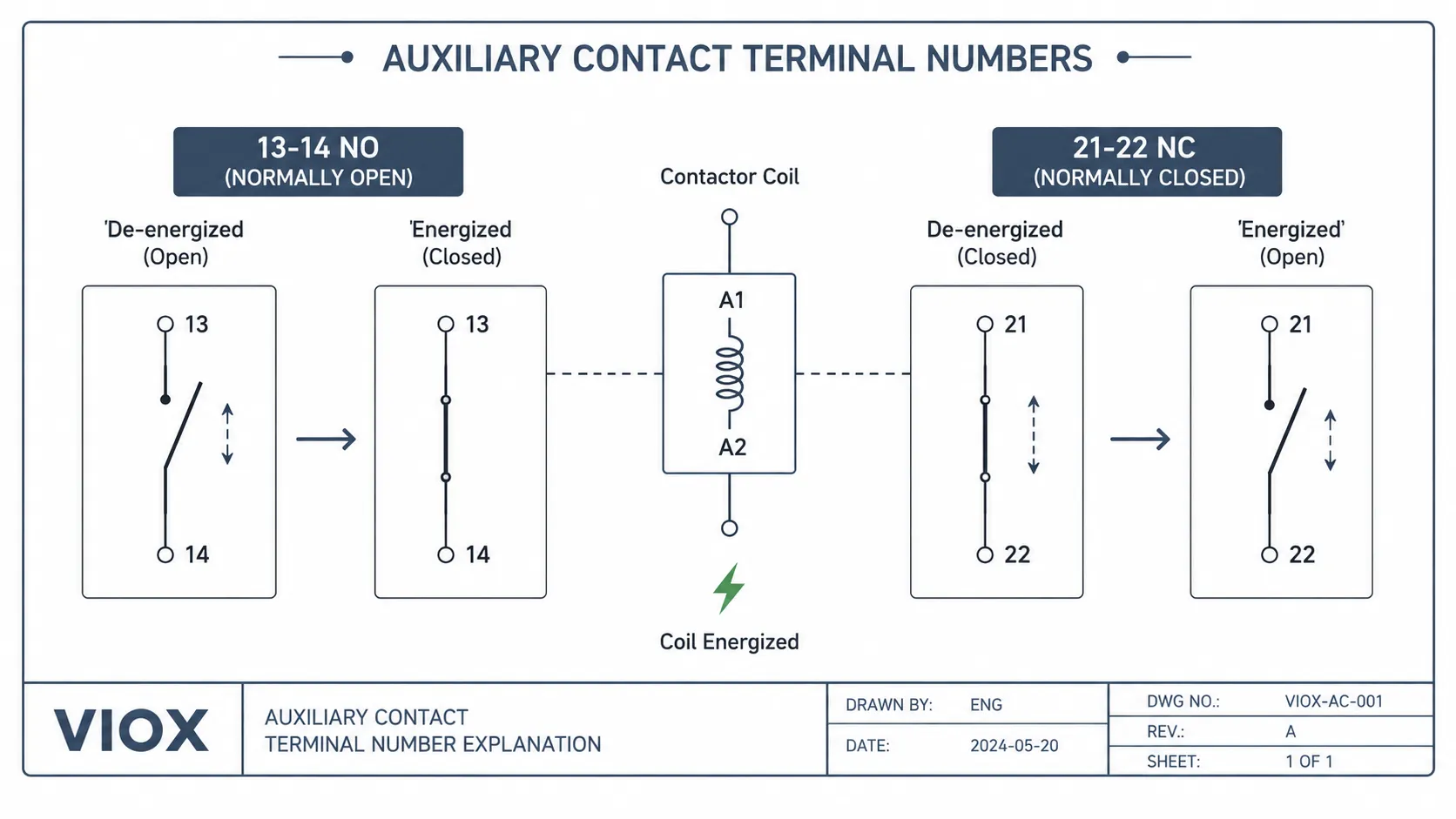
IEC tarzı terminal numaralandırması, teknisyenlerin kontak işlevini tahmin yürütmeden tanımlamasına yardımcı olur.
| Terminal Numarası | İletişim Türü | Anlamı |
|---|---|---|
| 13-14 | NA (Normalde Açık) yardımcı kontak | Cihaz çalıştığında kapanır |
| 21-22 | NC yardımcı kontak | Cihaz devreye girdiğinde açılır |
| 31-32 | NC yardımcı kontak | İlave NC kontak |
| 43-44 | NA (Normalde Açık) yardımcı kontak | İlave NO kontak |
| 53-54 | NA (Normalde Açık) yardımcı kontak | Bazı cihazlarda ilave NO kontak |
| 61-62 | NC yardımcı kontak | Bazı cihazlarda ilave NC kontak |
Ürün üzerinde veya veri sayfasında basılı olan bağlantı şemasını her zaman kontrol edin. Terminal numaralandırması güçlü bir kılavuzdur, ancak kablolamadan önce gerçek cihaz konfigürasyonu doğrulanmalıdır.
Kontaktörlerde Yardımcı Kontakların Çalışma Prensibi
Bir kontaktörde bobin, armatürü kapalı konuma çeken bir manyetik alan oluşturur. Bu hareket, ana kontakları kapatır ve yardımcı kontak durumunu neredeyse aynı anda değiştirir.
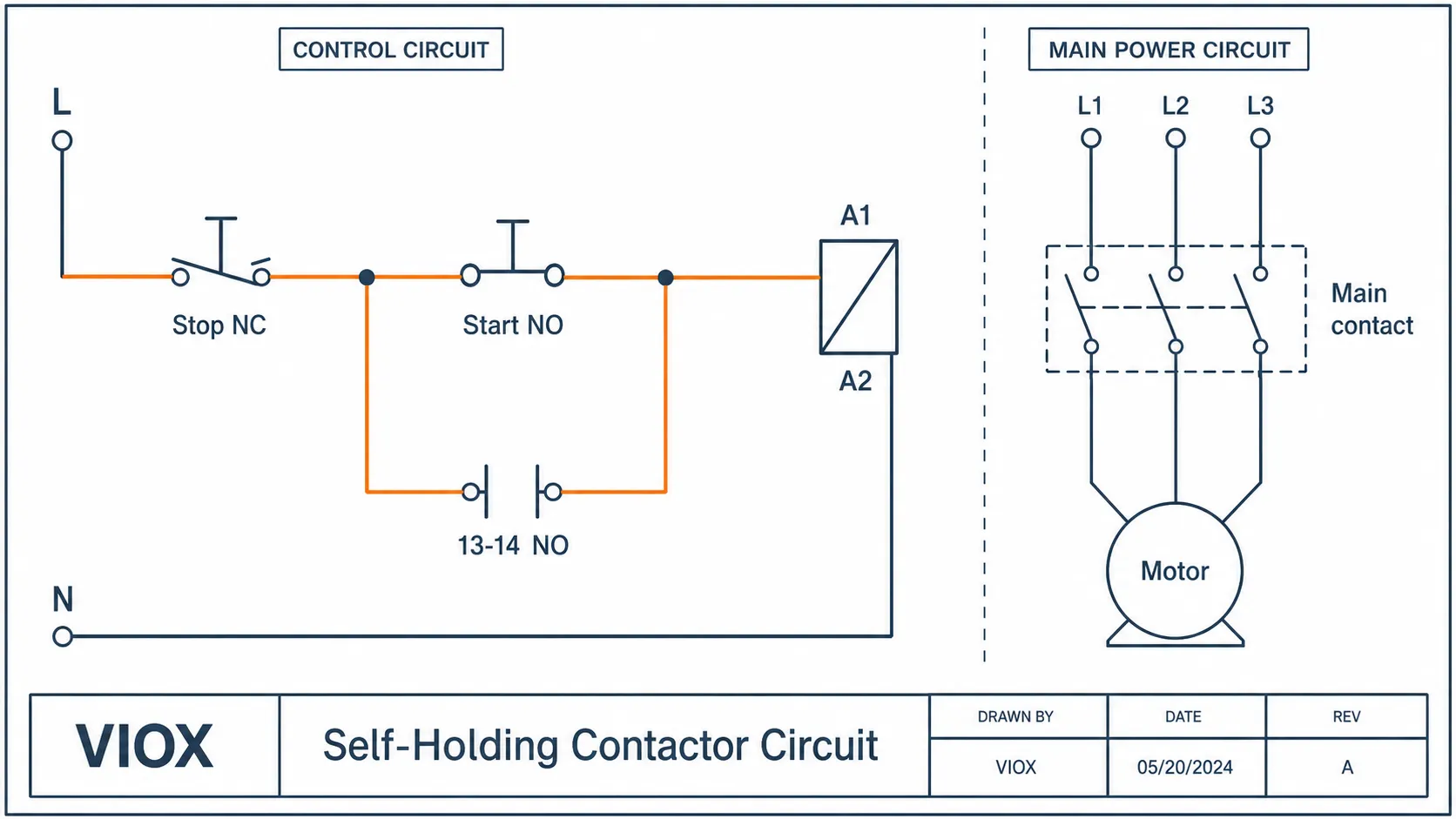
Basit bir motor yol verici için:
- Operatör başlat butonuna basar.
- Kontaktör bobini enerjilenir.
- Ana kontaklar kapanır ve motora enerji sağlar.
- Normalde açık (NA) bir yardımcı kontak kapanır.
- Bu NA yardımcı kontak, başlat butonunu baypas eder ve bobin devresini enerjili tutar.
- Durdurma butonuna basıldığında veya aşırı yük kontağı açıldığında, bobinin enerjisi kesilir ve yardımcı kontak dinlenme konumuna döner.
Buna kendinden tutmalı, mühürlemeli veya kilitlemeli kontrol devresi denir. Yardımcı kontak motoru beslemez; sadece kontrol devresinin sürekliliğini sağlar.
Yardımcı Kontakların Yaygın Kullanım Alanları
1. Kendinden Tutmalı Devre
Normalde açık (NO) bir yardımcı kontak, başlatma butonu bırakıldıktan sonra kontaktör bobininin enerjili kalmasını sağlar. Bu, motor kontrol panolarındaki en yaygın kullanımlardan biridir.
2. Elektriksel Kilitleme
Normalde kapalı (NC) bir yardımcı kontak, iki kontaktörün aynı anda enerjilenmesini önleyebilir. Bu durum ileri/geri yol vericilerde, yıldız-üçgen yol vericilerde ve transfer devrelerinde yaygındır.
Bir geri dönüşlü motor yol vericide, ileri kontaktörünün NC yardımcı kontağı geri bobinine seri olarak, geri kontaktörünün NC yardımcı kontağı ise ileri bobinine seri olarak bağlanır. Bu, her iki kontaktörün aynı anda kapanmasını önlemeye yardımcı olur.
3. PLC Geri Bildirimi
Bir NA (Normalde Açık) yardımcı kontak, bir kontaktörün çekili olduğunu PLC'ye bildirebilir. Bu durum genellikle durum izleme, sıralama onayı veya alarm mantığı için kullanılır.
Daha yüksek güvenilirlik için mühendisler, yardımcı geri bildirimin kontaktör mekanizmasının konumunu doğruladığını, her zaman gerçek yük akımını doğrulamadığını bilmelidir. Sistemin akımın aktığına dair kanıta ihtiyacı varsa, bir akım sensörü veya güç monitörü de gerekebilir.
4. Gösterge Işığı
Bir NA yardımcı kontak, kontaktör enerjilendiğinde bir “ÇALIŞIYOR” göstergesini yakabilir. Devre doğru tasarlandığında, ters durum göstergesi için bir NK (Normalde Kapalı) kontak kullanılabilir.
5. Kontrol Sıralama Mantığı
Yardımcı kontaklar; röleler, zamanlayıcılar, kontaktörler ve aşırı yük röleleri arasında basit kablolu mantıklar oluşturabilir. Örneğin, bir fan kontaktörünün çalışmasına, yalnızca bir damper kontaktörü onaylanmış bir duruma ulaştıktan sonra izin verilebilir.
Devre Kesicilerde Yardımcı Kontakları
Devre kesiciler yardımcı kontaklar da kullanabilir, ancak amaç genellikle motor kontrolü için kendi kendini tutma (self-holding) değil, durum göstergesidir.
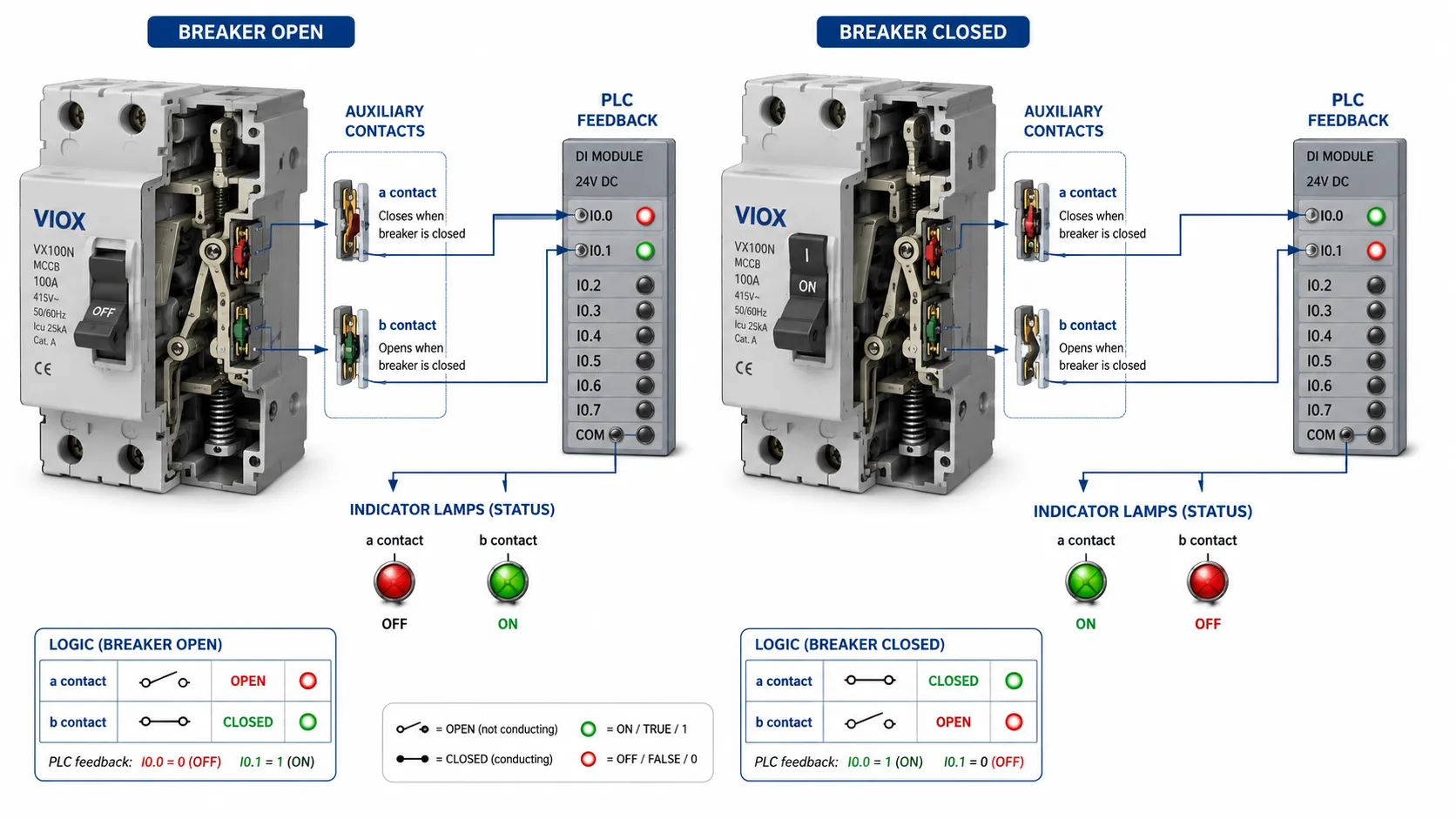
MCCB'lerde, ACB'lerde ve bazı endüstriyel kesicilerde yardımcı kontaklar şunları gösterebilir:
- Kesici açık
- Kesici kapalı
- Kesici açma yapmış (tripped)
- PLC veya SCADA için uzaktan durum bilgisi
- Bir kontrol panelinde konum geri bildirimi
Devre kesici yardımcı kontakları, koruma fonksiyonları ile karıştırılmamalıdır. Bu kontaklar kesiciyi kendi başlarına açtırmazlar. Sadece kesicinin durumunu bildirmek için kontak konumunu değiştirirler.
Bazı şalt cihazı ve kesici dokümantasyonlarında, özellikle ANSI/IEEE tarzı proje dilinde, yardımcı kontaklar şu şekilde de tanımlanabilir: “a kontakları” ve “b kontakları.” Bir a kontağı genellikle kesici açıkken açık, kesici kapalıyken kapalı konumdadır. Bir b kontağı genellikle kesici açıkken kapalı, kesici kapalıyken açık konumdadır. Proje gelenekleri ve aksesuar modülleri farklılık gösterebileceğinden, cihazın bağlantı şemasını her zaman teyit edin.
Kesiciye özel bir tartışma için VIOX'un ilgili bölümüne bakın MCCB yardımcı kontak kılavuzu.
Yardımcı Kontak vs Alarm Kontağı vs Şönt Açtırma
Bu terimler genellikle birbirine karıştırılır, ancak farklı işlevleri vardır.
| Cihaz veya Kontak | Ana Fonksiyon | Tipik Kullanım |
|---|---|---|
| Yardımcı kontak | Cihaz konumunu belirtir veya kontrol mantığını destekler | AÇIK/KAPALI geri bildirimi, kilitleme, kendi kendine tutma |
| Alarm kontağı | Açtırma veya arıza durumunu belirtir | Açma alarmı, hata sinyali, uzaktan bildirim |
| Şönt açtırma bobini | Enerjilendiğinde kesiciyi elektriksel olarak açtırır | Acil durdurma, yangın alarmı açtırması, uzaktan açtırma |
| Düşük gerilim bobini | Voltaj çok düşük olduğunda açtırır veya kapanmayı engeller | Güvenlik kilidi, düşük voltaj koruması |
| Ana kontak | Yük akımını anahtarlar | Motor, besleyici, ısıtıcı, aydınlatma güç devresi |
Şönt açtırma bir aktüatördür. Yardımcı kontak bir sinyal kontağıdır. Bunlar aynı cihaz değildir. Kesici açtırma aksesuarları için VIOX'un şu konulardaki kılavuzlarına bakın: MCCB'lerde şönt açtırma bobinleri ve şönt açtırma ile açtırma bobini karşılaştırması.
Yardımcı Kontak ile Yardımcı Kontaktör karşılaştırması
Yardımcı kontak, bir kontak bloğu veya kontak elemanıdır. Yardımcı kontaktör, esas olarak kontrol devrelerinde kullanılan küçük bir kontaktör veya kontrol rölesidir.
| Dönem | Anlamı | Örnek |
|---|---|---|
| Yardımcı kontak | Ana cihaza mekanik olarak bağlı ek NA (NO) veya NK (NC) kontak | Kontaktör üzerine yandan monte edilmiş 1NA (1NO) kontak |
| Yardımcı kontak bloğu | Modüler eklenti kontak ünitesi | Önden montajlı 2NA+2NK kontak bloğu |
| Yardımcı kontaktör | Çoklu kontrol kontaklarına sahip küçük kontaktör/kontrol rölesi | Sinyal çoğaltma veya kontrol mantığı için kullanılır |
Bu ayrım satın alma aşamasında önemlidir. Eğer bir adet ekstra geri bildirim kontağına ihtiyacınız varsa, bir yardımcı kontak bloğuna ihtiyacınız olabilir. Eğer bir bobin tarafından çalıştırılan çoklu kontrol kontaklarına ihtiyacınız varsa, bir yardımcı kontaktör veya kontrol rölesine ihtiyacınız olabilir.
Yardımcı Kontak Nasıl Seçilir
Bir yardımcı kontak bloğu sipariş etmeden önce şunları doğrulayın:
| Seçim Öğesi | Ne Kontrol Edilmeli |
|---|---|
| Cihaz uyumluluğu | Kontak bloğu, tam olarak ilgili kontaktör, MCCB, ACB veya röle serisine uygun olmalıdır |
| Kontak konfigürasyonu | 1NA, 1NK, 1NA+1NK, 2NA, 2NK veya diğer kombinasyonlar |
| Montaj konumu | Önden montajlı, yandan montajlı, geçmeli veya dahili aksesuar |
| Kontrol gerilimi ve akımı | PLC girişi, röle bobin devresi, lamba devresi veya kontrol devresi yükü ile eşleşmelidir |
| AC-15 / DC-13 değerleri | AC veya DC elektromanyetik kontrol yükleri için uygunluğu doğrular |
| AC/DC değerleri | DC kontrol devrelerinin kesilmesi, AC kontrol devrelerine göre daha zor olabilir |
| Minimum anahtarlama yükü | Düşük seviyeli PLC sinyalleri için önemlidir |
| Terminal tipi | Vidalı, yaylı, geçmeli veya fişli terminal |
| Elektriksel ömür | Anahtarlama frekansına ve kontrol görevine uygun olmalıdır |
| Mekanik bağlantı | Kontak, cihaz mekanizması ile güvenilir bir şekilde durum değiştirmelidir |
Kontaktör seçimi hakkında daha geniş bilgi için VIOX'un kontaktör kılavuzuna bakınız ve kontaktör ve röle karşılaştırması.
Yaygın Kablolama Hataları
Saha Örneği: Bir Yükü Anahtarlamak İçin Yardımcı Kontak Kullanımı
Bir pano incelemesinde, küçük bir yardımcı kontak, bir röle veya kontaktör bobinini sürmek yerine doğrudan bir soğutma fanını anahtarlayacak şekilde bağlanmıştı. Devre devreye alma sırasında çalıştı, ancak fanın kalkış akımı ve endüktif davranışı, yardımcı kontağın kesme kapasitesini aştığı için kontak kısa sürede kaynaklandı ve renk değiştirdi.
Kuralın arkasındaki pratik neden şudur: Yardımcı kontaklar ana güç kontakları değildir. Kontak değerleri ve kullanım kategorisi bu göreve açıkça izin vermediği sürece, bir motoru, ısıtıcıyı, kompresörü, fanı veya büyük bir lamba yükünü anahtarlamak için 13-14 kontağını kullanmayın.
Hata 2: NO'nun “Güç Açık” anlamına geldiğini varsaymak”
NO ve NC, istenen süreç durumunu değil, kontağın dinlenme durumunu tanımlar. Bobinin veya kesici mekanizmasının enerjili, enerjisiz, açık, kapalı veya açma (trip) durumunda olup olmadığını her zaman kontrol edin.
Hata 3: Yardımcı Kontak ile Alarm Kontağını karıştırmak
Bir yardımcı kontak, açık veya kapalı konumu gösterebilir. Bir alarm kontağı ise genellikle bir açma (trip) veya arıza durumunu belirtir. Yanlış olanı kullanmak, bir PLC'ye veya alarm sistemine hatalı sinyal gönderebilir.
Hata 4: DC Anahtarlama Limitlerini Göz Ardı Etmek
Küçük bir yardımcı kontak belirli bir AC kontrol akımını taşıyabilir ancak DC arkları doğal olarak sıfır noktasından geçmediği için daha düşük bir DC akımını taşıyabilir. AC-15 ve DC-13 değerlerini her zaman gerçek kontrol voltajında ayrı ayrı kontrol edin.
Hata 5: Yük Akımının Kanıtı Olarak Yardımcı Geri Bildirime Güvenmek
Bir yardımcı kontak mekanizma hareketini doğrulayabilir ancak akımı ölçmez. Proses güvenliği gerçek motor akımına veya yük akımına bağlıysa, bir akım sensörü, aşırı yük rölesi veya izleme cihazı kullanın.
Hata 6: Çok Fazla Kontak Bloğu Eklemek
Kontaktörlerin genellikle kaç adet ön veya yan yardımcı bloğun takılabileceğine dair limitleri vardır. Çok fazla blok, montajı, pano aralığını veya mekanik çalışmayı etkileyebilir.
SSS
Yardımcı kontak üzerindeki 13-14 ne anlama gelir?
13-14 genellikle normalde açık bir yardımcı kontağı tanımlar. Kontaktör veya cihaz çalıştığında kapanır.
Yardımcı kontak üzerindeki 21-22 ne anlama gelir?
21-22 genellikle normalde kapalı (NC) bir yardımcı kontağı tanımlar. Kontaktör veya cihaz devreye girdiğinde açılır.
Yardımcı kontak üzerindeki AC-15 nedir?
AC-15, kontaktör bobinleri, röle bobinleri ve solenoidler gibi AC elektromanyetik kontrol yükleri için bir IEC kullanım kategorisidir. Ana güç kontak görevleri için geçerli olan AC-3 veya AC-4'ten ziyade, yardımcı kontak seçimi ile daha yakından ilgilidir.
Yardımcı kontak üzerindeki DC-13 nedir?
DC-13, DC elektromanyetik kontrol yükleri için bir IEC kullanım kategorisidir. DC bobin devrelerinin, benzer görünümlü AC kontrol devrelerine kıyasla küçük kontaklar tarafından kesilmesinin daha zor olabilmesi nedeniyle önemlidir.
Devre kesicide a kontağı ve b kontağı nedir?
Kesici ve şalt cihazı terminolojisinde, a kontağı genellikle kesicinin kapalı konumunu takip ederken, b kontağı ise bunun tersi durumu belirtir. Özellikle ANSI/IEEE tarzı projelerde kablolama yapmadan önce ilgili aksesuar şemasını mutlaka doğrulayın.
Yardımcı kontak motor akımı taşıyabilir mi?
Hayır. Bir yardımcı kontak, ana motor akımını taşıyacak şekilde tasarlanmamıştır. Motor akımı, kontaktörün ana kontakları veya uygun değerlere sahip başka bir güç anahtarlama cihazı tarafından anahtarlanmalıdır.
Yardımcı kontak ile yardımcı kontaktör aynı şey midir?
Hayır. Yardımcı kontak, münferit bir kontak veya kontak bloğudur. Yardımcı kontaktör ise kontrol devrelerini anahtarlamak için kullanılan küçük bir kontrol kontaktörü veya röledir.
Devre kesici yardımcı kontağı ile açtırma kontağı aynı şey midir?
Her zaman değil. Bir yardımcı kontak, kesicinin açık/kapalı durumunu gösterebilir. Alarm kontağı genellikle açtırma durumunu belirtir. Şönt açtırma ise kesiciyi açtıran bobin kumandalı bir mekanizmadır.
Bir yardımcı kontak aynı anda hem NO hem de NC olabilir mi?
Tek bir kontak elemanı ya NO ya da NC'dir, ancak bir yardımcı kontak bloğu 1NO+1NC veya 2NO+2NC gibi hem NO hem de NC kontakları bir arada içerebilir.
Sonuç
Ana kontaklar ve yardımcı kontakların her ikisi de gereklidir ancak farklı sorunları çözerler. Ana kontaklar yük akımını anahtarlar. Yardımcı kontaklar ise kontrol mantığı, kilitleme, geri bildirim ve durum göstergesi sağlar.
Kontaktörler için en yaygın yardımcı kontak kullanımları; mühürleme, kilitleme, gösterge ışıkları ve PLC geri bildirimidir. Devre kesiciler için yardımcı kontaklar temel olarak uzaktan durum izleme ve kontrol sistemi geri bildirimi için kullanılır. Her iki durumda da doğru seçim; kontak konfigürasyonuna, cihaz uyumluluğuna, elektriksel değerlere, AC/DC çalışma tipine ve kontrol devresi tasarımına bağlıdır.
Eğer çoğu kablolama hatasını önleyen tek bir kural varsa, o da şudur: Asla bir yardımcı kontağı güç kontağı olarak kullanmayın ve yardımcı bir sinyalin yükün gerçekten enerjili olduğunu kanıtladığını varsaymayın.