Na tej stronie
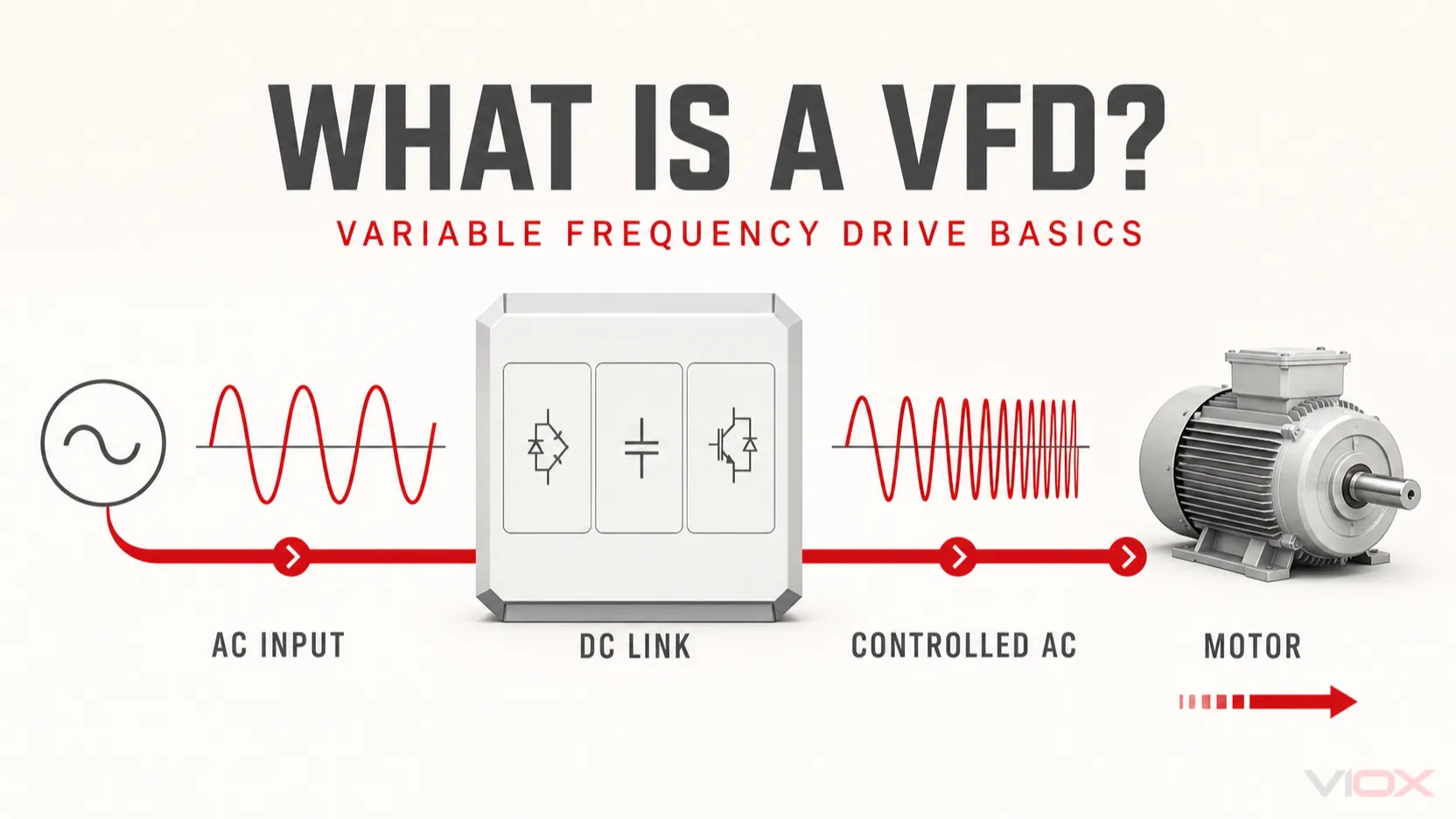
Przemiennik częstotliwości (VFD) to elektroniczny sterownik silnika zainstalowany pomiędzy zasilaniem elektrycznym a silnikiem AC. Przekształca on zasilanie wejściowe o stałej częstotliwości w wyjście o regulowanej częstotliwości i napięciu, co pozwala na dostosowanie prędkości silnika do zapotrzebowania procesu, zamiast utrzymywania jej na sztywno powiązanej z częstotliwością sieci zasilającej.
Przydatnym sposobem na zrozumienie VFD jest potraktowanie go jako granicy systemu: zasilanie wchodzi do napędu, napęd przekształca tę energię, a sterowane wyjście trafia do silnika. Napęd może zarządzać prędkością, przyspieszeniem, hamowaniem i momentem obrotowym w granicach swoich parametrów projektowych, ale nie eliminuje to potrzeby zapewnienia odpowiednich zabezpieczeń po stronie zasilania, izolacji, okablowania, uziemienia, chłodzenia oraz inżynierii aplikacyjnej.
Schemat systemu VFD
Zasilanie elektryczne → izolacja i zabezpieczenia → VFD → silnik → napędzane obciążenie
| Pozycja w systemie | Główne zadanie | Ważna granica. |
|---|---|---|
| Zasilanie i urządzenia nadrzędne | Doprowadzić zasilanie, odizolować i zabezpieczyć obwód zgodnie z projektem instalacji | Musi być zgodne z wejściem napędu i obowiązującymi przepisami; VFD nie definiuje całego projektu obwodu odgałęźnego. |
| Wejście VFD i stopień mocy | Przyjmowanie zasilania wejściowego i tworzenie sterowanego wyjścia elektrycznego | Napięcie wejściowe, faza, jakość zasilania, warunki otoczenia oraz moc znamionowa napędu mają znaczenie. |
| Stopień sterowania VFD | Interpretacja poleceń, sygnałów zwrotnych, limitów i sygnałów komunikacyjnych | Dostępne funkcje zależą od modelu napędu i metody sterowania. |
| Silnik | Przekształcanie sterowanego wyjścia elektrycznego w moment obrotowy i prędkość mechaniczną | Należy sprawdzić izolację silnika, prąd, chłodzenie, zakres prędkości oraz kompatybilność. |
| Obciążenie napędzane | Realizacja procesu: przemieszczanie powietrza, wody, materiałów lub maszyn | Charakterystyka momentu obrotowego w funkcji prędkości decyduje o tym, czy VFD i silnik są odpowiednio dobrane. |
Ten schemat zapobiega powszechnemu nieporozumieniu: VFD nie stanowi kompletnego układu silnikowego. Jest to element przekształcania mocy i sterowania wewnątrz tego układu.
Jak działa VFD?
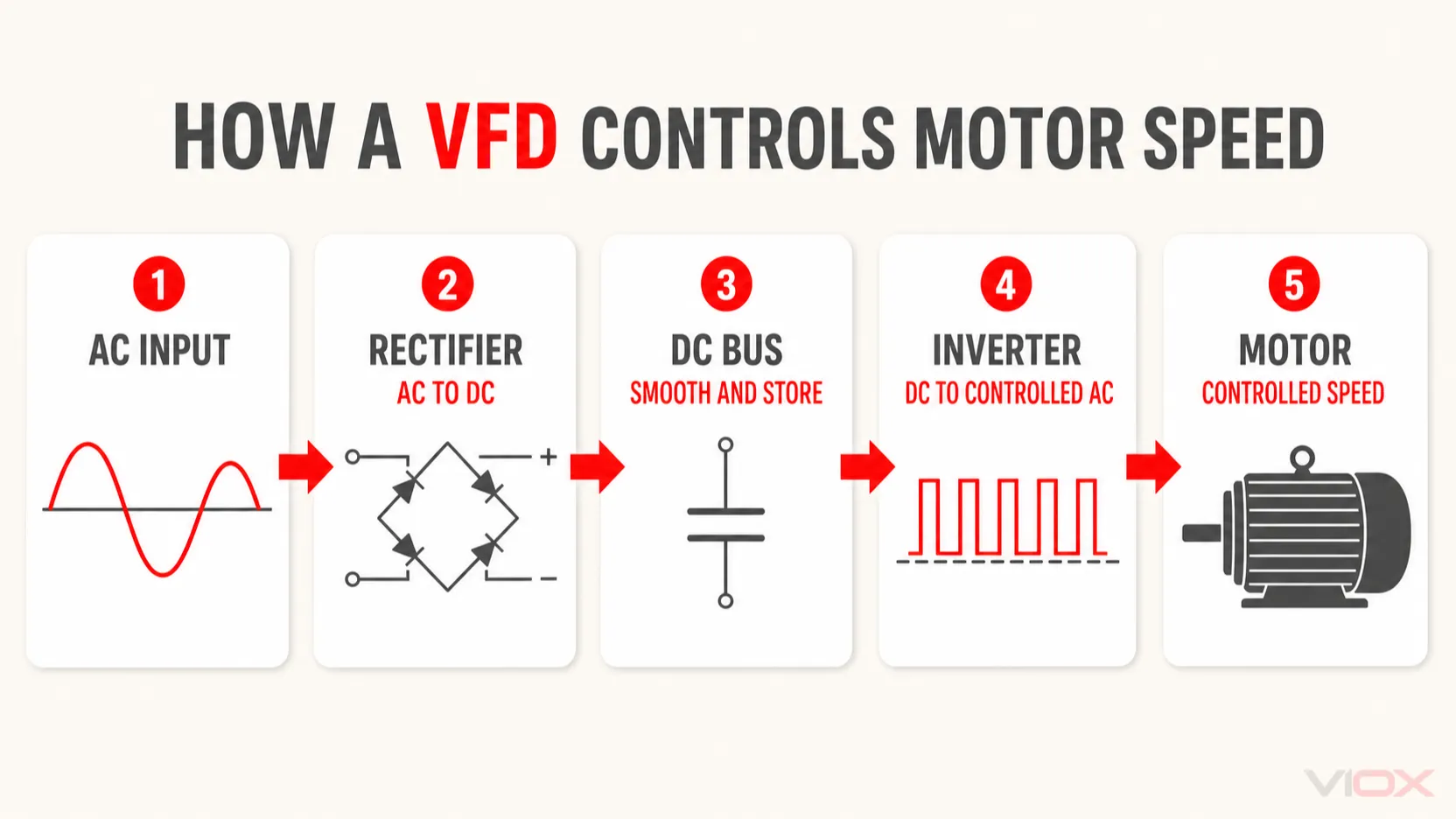
Działanie większości niskonapięciowych przemienników częstotliwości AC można zrozumieć, analizując trzy etapy konwersji mocy.
| Scena | Co się dzieje | Dlaczego to ma znaczenie |
|---|---|---|
| Prostownik | Przychodzący prąd AC jest przekształcany na DC. | Oddziela on wyjście napędu od stałej częstotliwości wejściowej. |
| Szyna DC lub obwód pośredniczący DC | Kondensatory i powiązane komponenty wygładzają i magazynują energię w pośrednim obwodzie DC. | Zapewnia stabilne połączenie między konwersją wejściową a przełączaniem wyjściowym. |
| Falownik (Inwerter) | Półprzewodniki mocy przełączają szynę DC w celu syntezy wyjścia AC o zadanej częstotliwości i napięciu. | Silnik otrzymuje warunki elektryczne wymagane dla żądanego punktu pracy. |
Modulacja szerokości impulsu (PWM) jest powszechną metodą stosowaną przez stopień falownika. Wyjście nie jest po prostu kopią przebiegu sinusoidalnego sieci o niższej częstotliwości; jest to przełączany przebieg, którego napięcie skuteczne i częstotliwość podstawowa są sterowane dla silnika.
Ten przegląd jest wystarczający do prawidłowego rozmieszczenia komponentów. Szczegółowa topologia przełączania, ograniczanie harmonicznych, filtrowanie wyjściowe oraz wpływ kabli silnikowych to odrębne zagadnienia inżynieryjne, które należy ocenić dla konkretnego napędu i instalacji.
Dlaczego zmiana częstotliwości zmienia prędkość obrotową silnika
W przypadku silnika AC prędkość synchroniczna jest powiązana z częstotliwością elektryczną oraz liczbą biegunów silnika:
Prędkość synchroniczna (obr./min) = 120 × częstotliwość (Hz) ÷ liczba biegunów
Silnik czterobiegunowy ma prędkość synchroniczną 1500 obr./min przy 50 Hz oraz 1800 obr./min przy 60 Hz. Silnik indukcyjny pracuje zazwyczaj poniżej prędkości synchronicznej, ponieważ do wytworzenia momentu obrotowego wymagany jest poślizg. Dlatego falownik (VFD) zmienia zarówno napięcie, jak i częstotliwość oraz stosuje metodę sterowania dostosowaną do silnika i obciążenia, zamiast jedynie zmieniać samą częstotliwość.
Wzór ten wyjaśnia podstawową zależność, a nie pełny proces doboru. Chłodzenie przy niskich prędkościach, zapotrzebowanie na moment obrotowy, osłabienie pola powyżej częstotliwości podstawowej, izolacja silnika, częstotliwość przełączania oraz długość kabla mogą stanowić ograniczenia aplikacyjne.
Czym może sterować VFD?
Odpowiednio dobrany i skonfigurowany VFD może sterować:
- prędkość robocza silnika
- rampy przyspieszania i zwalniania
- kierunek obrotów, jeśli konstrukcja maszyny na to pozwala
- charakterystyka prądu i momentu obrotowego w granicach napędu i silnika
- zmienne procesowe poprzez sygnały analogowe, cyfrowe, sieciowe lub sygnały sprzężenia zwrotnego
- charakterystyka zatrzymania, jeśli napęd i układ hamulcowy na to pozwalają
Może on również zapewniać funkcje monitorowania i ochrony. Funkcje te są specyficzne dla danego modelu i nie zastępują automatycznie każdego nadrzędnego urządzenia ochronnego, środka odłączającego, pomiaru temperatury silnika ani funkcji bezpieczeństwa maszyny wymaganych przez instalację elektryczną.
Gdzie stosuje się VFD?
Przemienniki częstotliwości (VFD) są przydatne, gdy zmiana prędkości silnika poprawia proces lub gdy wymagane jest kontrolowane zachowanie silnika podczas pracy.
| Rodzina obciążeń | Dlaczego regulacja prędkości jest przydatna | Kwestia doboru do rozważenia w następnej kolejności |
|---|---|---|
| Pompy i wentylatory | Dostosowanie przepływu lub ciśnienia do zapotrzebowania zamiast polegania wyłącznie na dławieniu | Minimalna prędkość robocza, charakterystyka układu, rezonans i chłodzenie silnika |
| Przenośniki | Koordynacja prędkości linii i zapewnienie kontrolowanego przyspieszenia | Moment rozruchowy, cykl przeciążeniowy, hamowanie i bezwładność obciążenia |
| Mieszadła i mieszalniki | Dostosowanie prędkości procesu do różnych materiałów lub etapów | Moment obrotowy w całym zakresie prędkości i obciążenie termiczne |
| Sprężarki | Dostosowanie wydajności do zapotrzebowania, gdy konstrukcja sprężarki pozwala na zmienną prędkość obrotową | Zatwierdzony przez producenta zakres pracy i ograniczenia dotyczące smarowania |
| Obrabiarki i urządzenia produkcyjne | Zapewnienie powtarzalnej regulacji prędkości i integracji z automatyką | Metoda sterowania, sprzężenie zwrotne, odpowiedź dynamiczna i wymagania dotyczące zatrzymania |
| Wciągniki i inne obciążenia zwrotne | Sterowanie ruchem, gdzie mogą być wymagane specjalistyczne funkcje napędowe | Regeneracja, hamowanie, funkcje bezpieczeństwa oraz atesty specyficzne dla danej aplikacji |
Obecność silnika nie oznacza, że VFD jest właściwym rozwiązaniem. O dopasowaniu decyduje napędzane obciążenie oraz wymagany efekt pracy.
Pięciobramkowa kontrola dopasowania VFD
Skorzystaj z tych pięciu bramek, aby zdecydować, na które bardziej szczegółowe pytanie należy odpowiedzieć przed określeniem parametrów napędu.
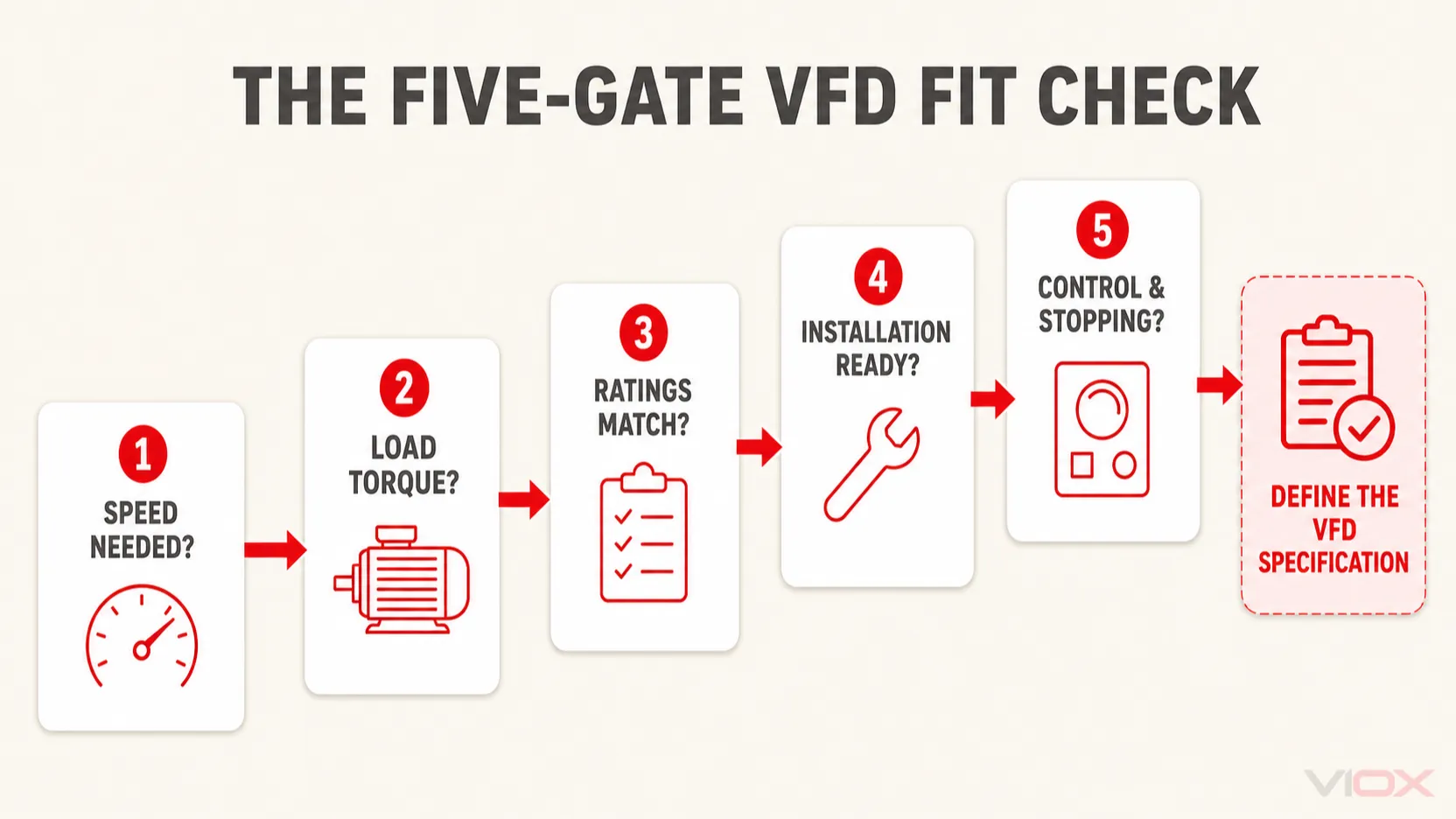
1. Czy proces wymaga zmiennej prędkości podczas normalnej pracy?
Jeśli silnik wymaga jedynie ograniczenia naprężeń elektrycznych i mechanicznych podczas rozruchu, a następnie pracuje w sposób ciągły z pełną prędkością, porównaj VFD z softstartem. W przewodnika VFD vs soft starter podejmuje tę decyzję.
2. Jakiej charakterystyki momentu obrotowego w funkcji prędkości wymaga obciążenie?
Pompy i wentylatory zazwyczaj zachowują się inaczej niż przenośniki, mieszadła, kruszarki czy wciągniki. Należy określić, czy aplikacja charakteryzuje się zmiennym momentem obrotowym, stałym momentem obrotowym, wysokim momentem rozruchowym, pracą cykliczną, czy też możliwością zwrotu energii do silnika. Określa to wymagania dotyczące cyklu pracy, przeciążenia, sterowania i hamowania.
3. Czy parametry znamionowe zasilania, silnika i napędu są zgodne?
Należy sprawdzić napięcie i liczbę faz zasilania, napięcie i prąd znamionowy silnika podane na tabliczce znamionowej, kompatybilność wyjścia, cykl pracy oraz wszelkie warunki obniżenia parametrów znamionowych (derating). Nie należy dokonywać wyboru wyłącznie na podstawie nominalnej mocy w kW lub KM. Prąd i cykl pracy mogą stać się wartościami ograniczającymi.
W przypadku zmian wydajności związanych z temperaturą, wysokością n.p.m. oraz obudową, należy skorzystać z przewodnika dotyczącego obniżania parametrów znamionowych instalacji elektrycznej.
4. Czy instalacja elektryczna jest w stanie poradzić sobie z oddziaływaniami elektrycznymi i środowiskowymi?
Projekt może wymagać uwzględnienia odprowadzania ciepła, wentylacji, kompatybilności elektromagnetycznej (EMC), uziemienia, jakości zasilania wejściowego, długości kabli wyjściowych, naprężeń izolacji silnika, harmonicznych oraz narażenia na przepięcia. Dokładne środki zależą od producenta napędu, systemu oraz lokalnych przepisów.
W przypadku jednej ścieżki dedykowanej ochronie, zobacz przewodnik VIOX dotyczący ryzyka awarii ochrony przeciwprzepięciowej VFD.
5. Jakie funkcje sterowania i zatrzymywania są faktycznie wymagane?
Zdefiniuj źródło poleceń, zadaną prędkość, sprzężenie zwrotne procesu, protokół sieciowy, potrzebę hamowania, zachowanie przy restarcie, reakcję na awarię oraz granice bezpieczeństwa maszynowego. Napęd o prawidłowej mocy znamionowej może być nadal niewłaściwy, jeśli brakuje mu wymaganych funkcji sterowania lub zatrzymywania.
Jeśli wszystkie pięć etapów zostanie zdefiniowanych, projekt może przejść od pytania “Czym jest VFD?” do uzasadnionej specyfikacji napędu.
VFD a softstarter, rozrusznik i falownik
| Termin | Główne zadanie | Skorzystaj z tego kolejnego zasobu |
|---|---|---|
| VFD | Sterowanie pracą silnika AC za pomocą wyjścia o zmiennej częstotliwości i zmiennym napięciu | Kontynuuj zgodnie z poniższą tabelą znamionową. |
| Soft starter | Ogranicz prąd rozruchowy i wstrząsy mechaniczne, a następnie zazwyczaj zasilaj silnik z częstotliwością sieciową | Czytaj Czym jest softstarter? czy Porównanie VFD i softstartera. |
| Rozrusznik silnikowy | Przełącz silnik i zapewnij odpowiedni układ rozruchowy/zabezpieczający | Przejrzyj typy rozruszników silnikowych. |
| Falownik (Inwerter) | Przekształć DC na AC lub opisz szersze urządzenie do konwersji mocy | Używaj “VFD”, gdy konkretnym tematem jest sterowana praca silnika prądu przemiennego (AC). |
W przypadku intencji ograniczonej wyłącznie do akronimów, zwięzła Pełna forma VFD w elektryce strona stanowi kanoniczne źródło terminologii.
Które parametry znamionowe VFD są najważniejsze?
To centrum informacyjne nie zastępuje doboru urządzenia dla konkretnego modelu, ale pozwala określić kategorie wejściowe wymagane do takiego procesu.
| Parametr znamionowy lub funkcja | Pytanie, na które odpowiada |
|---|---|
| Napięcie wejściowe i liczba faz | Czy napęd można podłączyć do dostępnego zasilania? |
| Kompatybilność wyjścia i silnika | Czy napęd jest przeznaczony do napięcia, typu i metody sterowania silnika? |
| Ciągły prąd wyjściowy | Czy może on przewodzić prąd silnika w rzeczywistych warunkach pracy? |
| Obciążenie przeciążeniowe | Czy może on obsłużyć przyspieszenie i chwilowe zapotrzebowanie na obciążenie? |
| Metoda sterowania | Czy podstawowe sterowanie skalarne (U/f) jest wystarczające, czy wymagane jest sterowanie wektorowe lub sprzężenie zwrotne? |
| Hamowanie i odzysk energii | Co się dzieje, gdy obciążenie musi zostać szybko zatrzymane lub zwraca energię? |
| Warunki otoczenia i obudowy | Czy temperatura, wysokość, kurz, wilgoć lub chłodzenie panelu zmniejszą dostępną wydajność? |
| Wymogi dotyczące kompatybilności elektromagnetycznej (EMC) i kabli silnikowych | Czy instalacja wymaga filtrów, dławików, kabli ekranowanych lub układów wyjściowych? |
| Komunikacja i wejścia/wyjścia (I/O) | Czy napęd może wymieniać wymagane polecenia, wartości zadane i dane o stanie? |
| Zdolność w zakresie bezpieczeństwa funkcjonalnego | Czy wybrany model obsługuje architekturę bezpieczeństwa maszynowego, tam gdzie jest to wymagane? |
Zawsze weryfikuj ostateczną specyfikację z danymi silnika, profilem obciążenia, instrukcją napędu oraz obowiązującymi wymaganiami instalacyjnymi.
Kiedy VFD może nie być najlepszym rozwiązaniem
VFD może zwiększać koszty, emisję ciepła, harmoniczne, efekty przełączania, nakład pracy przy konfiguracji oraz liczbę trybów awaryjnych. Prostsza metoda sterowania może być bardziej odpowiednia, gdy:
- silnik musi pracować z jedną stałą prędkością, a praca zmienna nie wnosi wartości dodanej do procesu
- wymagany jest kontrolowany rozruch, ale nie jest potrzebna ciągła regulacja prędkości
- silnik lub napędzane urządzenie nie posiada atestu dla zamierzonego zakresu prędkości
- ograniczenia środowiskowe lub obudowy nie pozwalają na zastosowanie napędu
- obciążenie wymaga specjalistycznych funkcji regeneracji, pozycjonowania lub bezpieczeństwa wykraczających poza możliwości ogólnego przeznaczenia VFD
Właściwa decyzja nie brzmi: “używaj VFD zawsze, gdy występuje silnik”. Brzmi ona: “używaj VFD, gdy sterowana praca silnika rozwiązuje określone wymagania systemu, a kompletna instalacja elektryczna może go obsłużyć”.”
Częste pytania dotyczące VFD
Czy VFD zmienia zarówno częstotliwość, jak i napięcie?
Tak. VFD steruje częstotliwością wyjściową i napięciem zgodnie ze swoją strategią sterowania, dzięki czemu silnik może pracować w zamierzonym zakresie prędkości i momentu obrotowego.
Czy VFD oszczędza energię w każdym zastosowaniu?
Nie. Oszczędności zależą od obciążenia, pierwotnej metody sterowania, profilu pracy oraz zadanej prędkości. Systemy pomp i wentylatorów o zmiennym przepływie mogą być dobrymi kandydatami, podczas gdy proces o stałej prędkości i stałym zapotrzebowaniu może oferować niewielkie korzyści energetyczne.
Czy każdy silnik AC można podłączyć do przemiennika częstotliwości (VFD)?
Nie należy tego zakładać. Należy potwierdzić typ silnika, napięcie, prąd, odpowiednią izolację, chłodzenie, zakres prędkości, stan kabli oraz wytyczne producenta.
Czy VFD zastępuje rozrusznik silnikowy lub zabezpieczenie obwodu?
VFD może uruchamiać, zatrzymywać, monitorować i chronić silnik w określony sposób, jednak kompletna instalacja elektryczna może nadal wymagać zabezpieczenia nadrzędnego, izolacji oraz innych funkcji bezpieczeństwa lub sterowania. Należy postępować zgodnie z instrukcją napędu oraz obowiązującymi przepisami.