Na tej stronie
Szybka odpowiedź: które parametry SPD są najważniejsze?
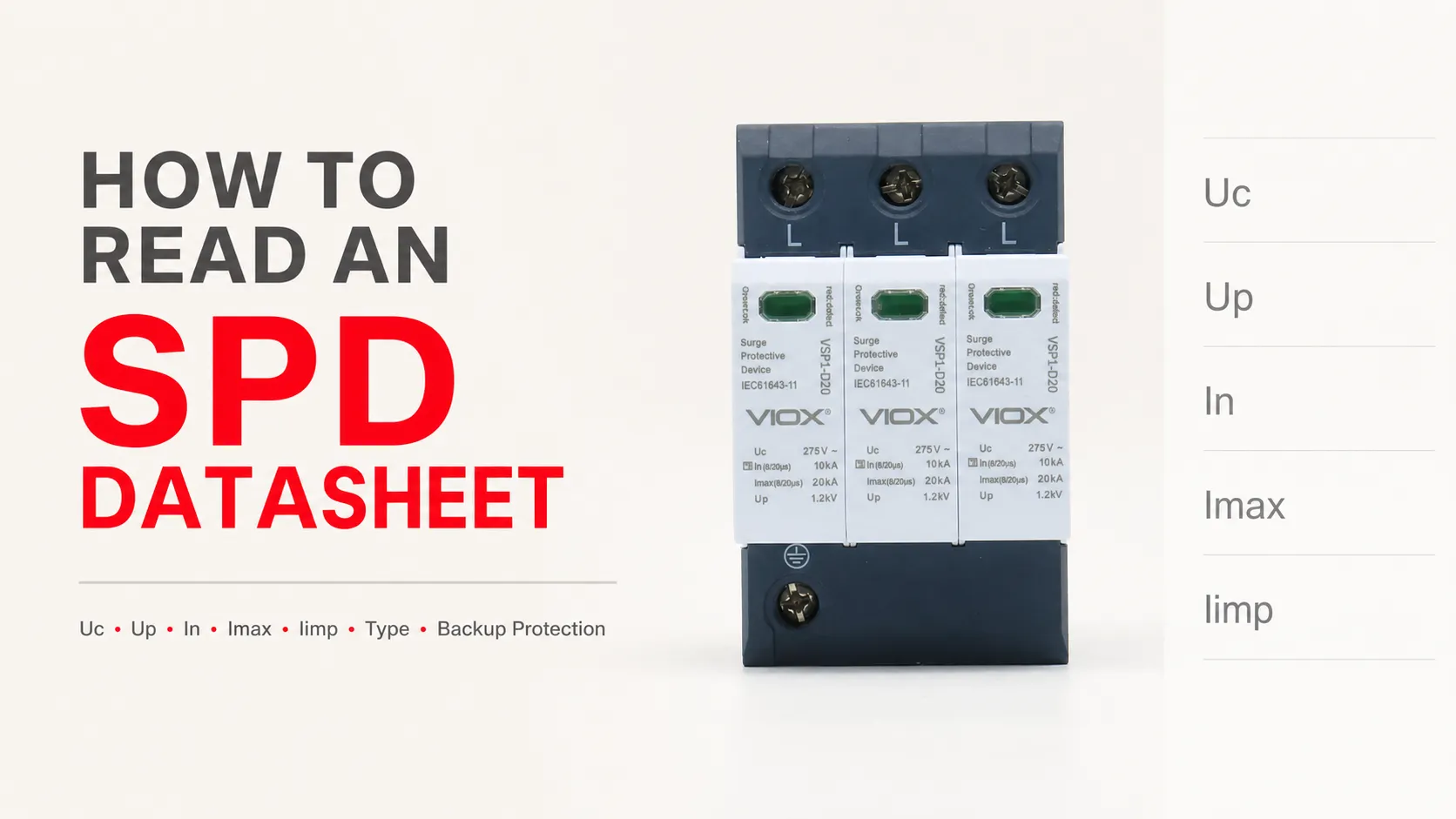
Kiedy otwierasz kartę katalogową ogranicznika przepięć (SPD), pierwszą rzeczą, którą zazwyczaj widzisz, jest gąszcz liczb: Uc 275 V, Up ≤ 1,5 kV, In 20 kA, Imax 40 kA, Iimp 12,5 kA, Typ 1, Typ 2, bezpiecznik dobezpieczający, i czasami SCCR, Isccrlub VPR. Pułapka polega na założeniu, że jedna liczba mówi wszystko. Tak nie jest.
Czytając kartę katalogową ogranicznika przepięć (SPD), zacznij od napięcia znamionowego systemu i typu ochrony, a następnie zweryfikuj Uc/MCOV, W górę, W, Imax, Iimp, Typ 1/2/3, parametry znamionowe AC lub DCoraz wymagania dotyczące bezpiecznika zapasowego lub wyłącznika. Nie wybieraj ogranicznika przepięć (SPD) kierując się wyłącznie najwyższą wartością kA. Prawidłowo dobrany ogranicznik musi być dopasowany do rzeczywistego napięcia systemu, układu sieciowego, miejsca instalacji, narażenia na przepięcia, ram prawnych oraz zabezpieczenia wstępnego.
Aby uzyskać ogólny przegląd urządzeń, zobacz Co to jest urządzenie przeciwprzepięciowe (SPD)?. Niniejszy przewodnik koncentruje się w szczególności na analizie kart katalogowych i tabliczek znamionowych z perspektywy kupującego, montera rozdzielnic lub inżyniera elektryka.
Kolejność analizy karty katalogowej SPD
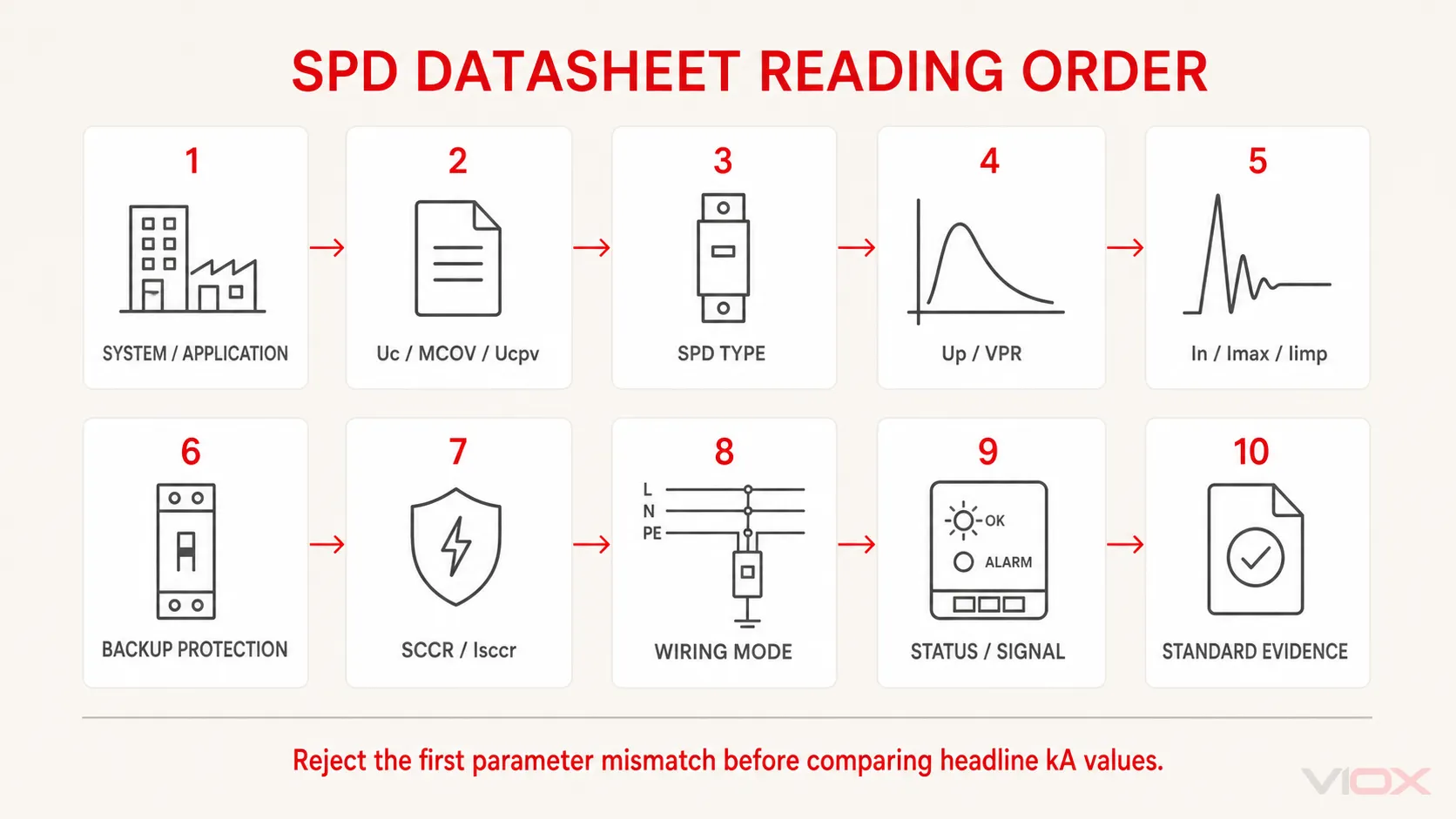
Najbezpieczniejszym sposobem czytania karty katalogowej SPD nie jest analiza od góry do dołu. Należy czytać ją w kolejności, która najszybciej eliminuje nieodpowiednie produkty.
| Krok | Co sprawdzić | Dlaczego to ma znaczenie |
|---|---|---|
| 1 | Typ systemu: AC, DC, PV, sygnałowy, TN-S, TN-C-S, TT, IT | Okablowanie i tryb napięciowy ogranicznika przepięć (SPD) zależą od systemu |
| 2 | Uc / MCOV / Ucpv | Musi być wystarczająco wysokie dla ciągłego napięcia roboczego |
| 3 | Typ SPD: Typ 1, Typ 2, Typ 3, Typ 1+2 | Musi być dopasowany do punktu instalacji i narażenia na przepięcia |
| 4 | Up / VPR | Charakteryzuje skuteczność ograniczania napięcia w ramach stosownego środowiska testowego |
| 5 | In, Imax, Iimp | Określa zdolność odprowadzania prądu udarowego przy różnych przebiegach testowych |
| 6 | Ochrona kopii zapasowej | Może być wymagana koordynacja bezpieczników lub wyłączników |
| 7 | SCCR lub stosowna deklaracja wytrzymałości na zwarcie/prąd zwarciowy, taka jak Isccr | Musi być kompatybilny z przewidywanym prądem zwarciowym oraz zabezpieczeniem nadrzędnym |
| 8 | Tryb okablowania i konfiguracja biegunów | L-N, L-PE, N-PE, 3+1, 4+0, DC+/DC-, DC-do-PE |
| 9 | Wskaźnik stanu i sygnalizacja zdalna | Niezbędne do konserwacji i monitorowania |
| 10 | Podstawa normatywna i certyfikacyjna | Wymagania norm IEC, UL, GB, EN lub wymagania specyficzne dla projektu |
Ta kolejność zapobiega częstemu błędowi: najpierw wybór ogranicznika przepięć (SPD) o najwyższym Imax, a następnie odkrycie, że napięcie ciągłe, bezpiecznik zapasowy lub typ instalacji są nieprawidłowe.
Przykład tabliczki znamionowej / karty katalogowej SPD
Typowa etykieta niskonapięciowego ogranicznika przepięć (SPD) może zawierać oznaczenia takie jak:
Typ 2, Uc 275 VAC, Up ≤ 1,5 kV, In 20 kA, Imax 40 kA, 8/20 μs, IEC 61643-11, maks. bezpiecznik zapasowy 125 A gG, opcjonalny styk zdalnyOto jak to odczytać:
| Oznaczenie | Co ci mówi | Co należy zweryfikować |
|---|---|---|
| Typ 2 | Klasa SPD dla ochrony przeciwprzepięciowej na poziomie rozdzielnicy | Czy Typ 2 jest odpowiedni dla danego punktu instalacji? |
| Uc 275 VAC | Maksymalne napięcie robocze ciągłe | Czy jest zgodne z napięciem systemu i układem uziemienia? |
| Up ≤ 1,5 kV | Poziom ochrony napięciowej w standardowych warunkach testowych | Czy urządzenia odbiorcze są odpowiednio zabezpieczone? |
| In 20 kA | Znamionowy prąd wyładowczy, zazwyczaj 8/20 μs dla typu 2 | Czy wytrzymałość na powtarzalne przepięcia jest odpowiednia dla danego obiektu? |
| Imax 40 kA | Maksymalny prąd wyładowczy dla przebiegu testowego 8/20 μs | Nie należy traktować tego jako normalnej, powtarzalnej obciążalności |
| IEC 61643-11 | Oznaczenie zgodne z normą produktową dla ograniczników przepięć SPD niskiego napięcia AC | Potwierdź wydanie, zakres certyfikatu, model oraz dokumentację testową |
| Maksymalny bezpiecznik dobezpieczający 125 A gG | Deklarowane przez producenta maksymalne dopuszczalne zabezpieczenie nadprądowe dla wskazanej konfiguracji SPD | Porównaj urządzenie po stronie instalacji z instrukcją producenta i ustal, czy wymagane jest dedykowane zabezpieczenie odgałęzienia |
| Styk zdalny | Umożliwia przesyłanie sygnału stanu do systemu BMS/PLC/obwodu alarmowego | Sprawdzenie obciążalności styków i logiki sygnalizacji awarii |
Powyższe wartości stanowią przykładowy format, a nie uniwersalne zalecenie. Zawsze należy postępować zgodnie z kartą katalogową oraz lokalnymi przepisami elektrycznymi.
Które wydanie normy IEC należy zweryfikować?
Dla współczesnych ograniczników przepięć SPD w instalacjach elektrycznych niskiego napięcia AC, IEC 61643-01:2024 zawiera wspólne wymagania dla ograniczników SPD, podczas gdy IEC 61643-11:2025 zawiera wymagania specyficzne dla prądu przemiennego (AC) i jest stosowana łącznie z IEC 61643-01. Etykieta z samym oznaczeniem “IEC 61643-11” nie wystarcza do ustalenia wydania, zakresu certyfikatu ani tego, czy dostarczony model jest zgodny z badaną konstrukcją.
Inne zastosowania wykorzystują pozostałe części tej serii. Przykładowo, ograniczniki SPD dla instalacji fotowoltaicznych (PV) są objęte normą IEC 61643-31, natomiast ograniczniki SPD dla sieci telekomunikacyjnych i sygnalizacyjnych są objęte normą IEC 61643-21:2025, która jest również stosowana wraz z IEC 61643-01:2024. Przed porównaniem parametrów znamionowych w różnych normach należy zweryfikować kategorię produktu.
Uc / MCOV: Maksymalne napięcie trwałej pracy
Uc to termin IEC określający maksymalne napięcie trwałej pracy. W terminologii północnoamerykańskiej, MCOV oznacza maksymalne napięcie trwałej pracy. W przypadku ograniczników przepięć (SPD) dla instalacji fotowoltaicznych DC, w karcie katalogowej może być użyte UCPV.
Jest to zazwyczaj pierwszy parametr, który należy sprawdzić, ponieważ ogranicznik SPD podłączony do napięcia wyższego niż jego napięcie znamionowe może ulec przegrzaniu, szybkiej degradacji lub przedwczesnej awarii.
Częsty błąd kupującego
Wybór wartości Uc zbyt bliskiej napięciu znamionowemu.
Na przykład, dla systemu 230/400 V AC nie dokonuje się wyboru poprzez odczytanie z katalogu jedynie wartości "230 V". Prawidłowa wartość Uc zależy od trybu połączenia przewód-neutralny lub przewód-uziemienie, układu sieciowego, tolerancji napięcia oraz schematu połączeń przewidzianego przez producenta.
Aby uzyskać bardziej szczegółowy przewodnik, zobacz Co oznaczają Uc i Up w ogranicznikach przepięć (SPD)? oraz Przewodnik po maksymalnym napięciu roboczym ciągłym MCOV SPD.
W górę: Poziom ochrony napięciowej
W górę to deklarowany poziom ochrony napięciowej ustalony podczas stosownych badań znormalizowanych. Charakteryzuje on zdolność SPD do ograniczania napięcia, jednak nie należy go traktować jako dokładnego napięcia, któremu będą poddawane urządzenia odbiorcze w zainstalowanej instalacji elektrycznej.
Niższa wartość Up jest zazwyczaj pożądana, ponieważ oznacza, że do urządzeń odbiorczych dociera mniejsze napięcie udarowe. Jednak niższa wartość Up jest przydatna tylko wtedy, gdy parametry Uc, typ, koordynacja, długość przewodów i kompatybilność z systemem są prawidłowe. SPD z bardzo niskim parametrem Up, ale niewłaściwym Uc, niewłaściwym typem, słabą koordynacją lub nieodpowiednim zabezpieczeniem wstępnym, jest nadal niewłaściwym produktem.
Co powinien sprawdzić dział zakupów
- Wartość Up dla odpowiedniego trybu ochrony
- koordynacja z ogranicznikami SPD zainstalowanymi przed i za urządzeniem
- odległość od chronionego urządzenia
- długość przewodów i jakość instalacji
- poziom wytrzymałości udarowej urządzenia
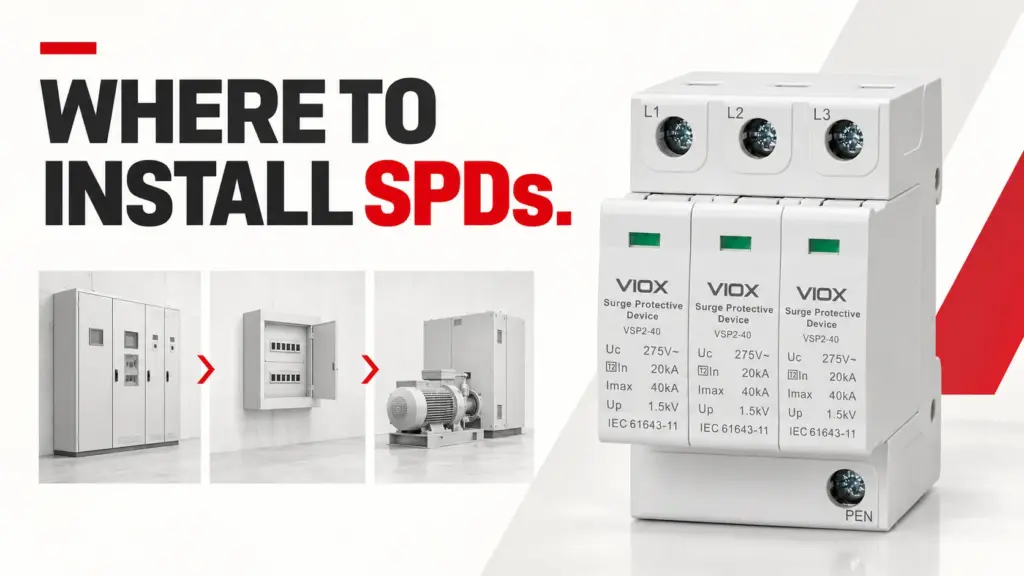
Montaż ma znaczenie. Długie przewody ogranicznika przepięć (SPD) zwiększają rzeczywiste napięcie ograniczane, nawet jeśli wartość Up w karcie katalogowej wygląda dobrze. Jeśli masz wątpliwości co do rozmieszczenia, zobacz Gdzie instalować SPD: Przewodnik po panelach elektrycznych.
Dlaczego długość przewodów może pogorszyć rzeczywiste napięcie Up względem wartości katalogowej
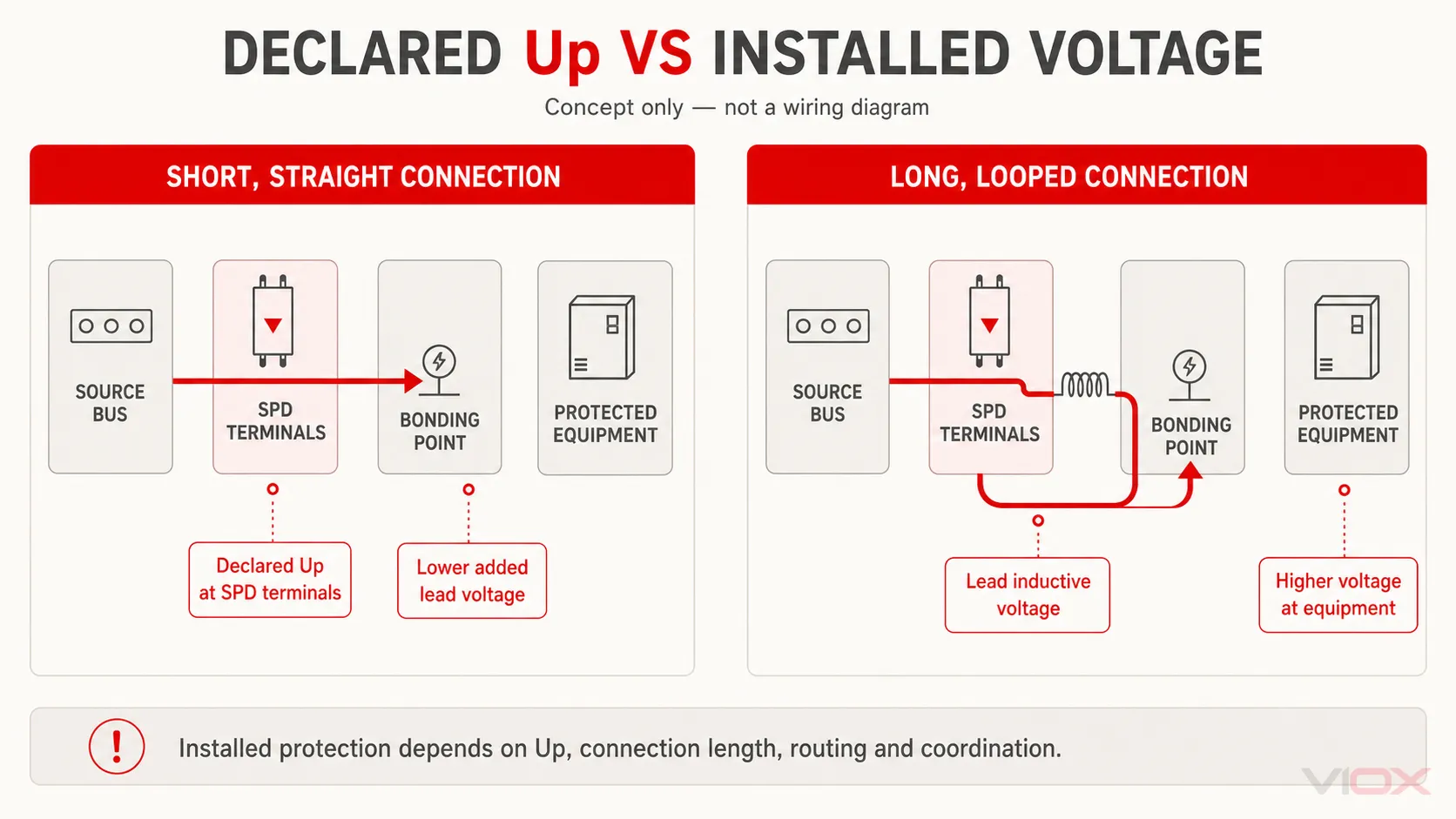
Deklarowany Up jest ustalany na podstawie znormalizowanych testów na zaciskach SPD. W rzeczywistej rozdzielnicy przewody łączące powodują dodatkowy spadek napięcia indukcyjnego podczas przepływu szybkiego prądu udarowego. Napięcie występujące na chronionym urządzeniu może zatem być wyższe niż wydrukowana wartość Up.
Dlatego instrukcje instalacji SPD kładą nacisk na krótkie, proste przewody oraz ścieżkę o niskiej impedancji do przewodu ochronnego lub punktu wyrównywania potencjałów. Dwa urządzenia SPD o porównywalnych deklarowanych wartościach Up mogą zapewniać różny stopień ochrony po zainstalowaniu, jeśli różnią się długością połączeń i sposobem ich prowadzenia.
Zasada inżynierska jest prosta: odczytaj wartość Up w karcie katalogowej, ale oceniaj skuteczność ochrony na podstawie zainstalowanej ścieżki obwodu.
Dekodowanie wartości znamionowych prądu: In, Imax oraz Iimp
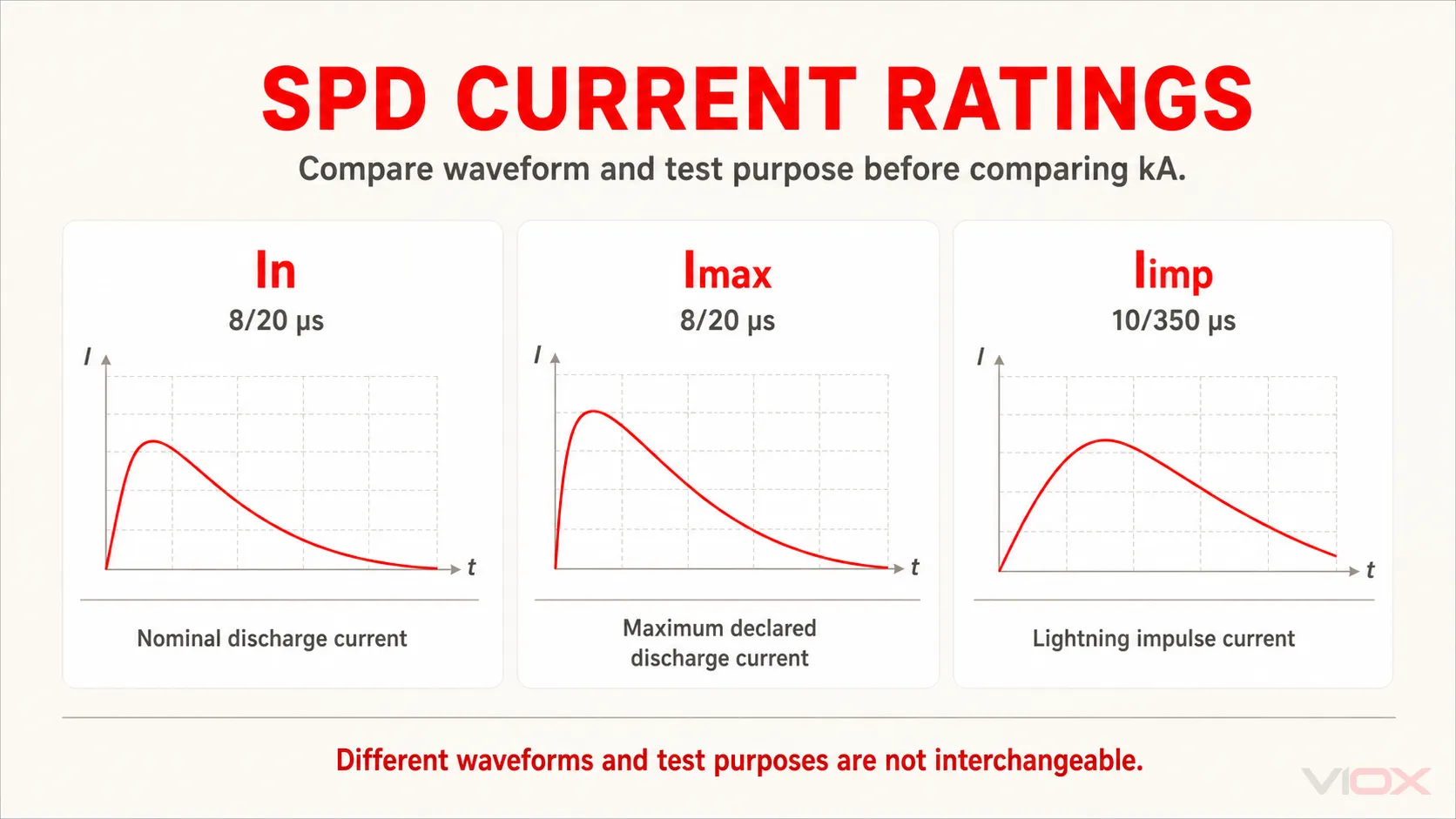
Wartości znamionowe prądu SPD nie są tym samym rodzajem liczby kA. Wykorzystują one różne przebiegi i odpowiadają na różne pytania dotyczące specyfikacji technicznej.
| Ocena | Typowy przebieg | Co testuje | Typowy kontekst | Błąd przy zakupie |
|---|---|---|---|---|
| W | 8/20 μs | Znamionowy prąd wyładowczy i wytrzymałość na powtarzające się udary | Ocena ogranicznika przepięć typu 2 | Ignorowanie trwałości i zakup wyłącznie na podstawie Imax |
| Imax | 8/20 μs | Maksymalny deklarowany prąd wyładowczy w warunkach testowych | Główny parametr wydajności ogranicznika przepięć typu 2 | Traktowanie tego jako normalnej powtarzalnej obciążalności |
| Iimp | 10/350 μs | Zdolność do odprowadzania prądu piorunowego | Ogranicznik przepięć typu 1 lub typu 1+2 | Bezpośrednie porównanie z Imax |
W celach zakupowych, In jest zazwyczaj bardziej informatywne niż Imax przy porównywaniu znamionowego prądu wyładowczego w ramach tych samych ram badawczych, chwila Iimp jest kluczowym deklarowanym parametrem, gdy projekt wymaga odporności na impuls prądu piorunowego. Wysoka wartość Imax może wyglądać imponująco w katalogu, ale nie rekompensuje ona niewłaściwego Uc, wysokiego poziomu ochrony Up, braku zabezpieczenia dobezpieczającego ani niewłaściwego typu ogranicznika przepięć (SPD).
In vs Imax: Znamionowy vs Maksymalny prąd wyładowczy
W to znamionowy prąd wyładowczy, powszechnie kojarzony z wielokrotnym obciążeniem udarowym przy przebiegu 8/20 μs dla wielu ograniczników typu 2.
Imax to maksymalny prąd wyładowczy, również typowo oparty na przebiegu 8/20 μs dla ograniczników typu 2. Reprezentuje on wyższy deklarowany poziom udaru w warunkach testowych, ale nie powinien być traktowany jako prąd, który ogranicznik może wielokrotnie przyjmować w normalnej eksploatacji.
| Ocena | Znaczenie | Błąd kupującego |
|---|---|---|
| W | Znamionowy prąd wyładowczy; pomaga określić zdolność do wielokrotnego przyjmowania udarów | Ignorowanie go i patrzenie wyłącznie na Imax |
| Imax | Maksymalny prąd wyładowczy przy deklarowanym przebiegu | Traktowanie tego jako normalnej zdolności operacyjnej |
| 8/20 μs | Kształt fali prądu udarowego powszechnie stosowany w testach typu 2 | Porównywanie wartości kA bez sprawdzenia kształtu fali |
Szczegółowe porównanie znajduje się w Parametry znamionowe Imax i In dla urządzeń przeciwprzepięciowych oraz Przewodnik po doborze prądu znamionowego SPD kA.
Iimp: Dlaczego ograniczniki przepięć typu 1 wykorzystują prąd udarowy
Iimp oznacza prąd udarowy. Jest on zazwyczaj powiązany z ogranicznikami typu 1 oraz 10/350 μs przebieg. Przy tym samym prądzie szczytowym ten impuls testowy oznacza znacznie większy ładunek i obciążenie energią właściwą niż impuls 8/20 μs, dlatego te dwie wartości kA nie są zamienne.
To tutaj dochodzi do wielu błędów zakupowych. Wartość 25 kA nie jest automatycznie lepsza ani gorsza od wartości 40 kA, chyba że kształt fali i typ ogranicznika przepięć są takie same.
| Parametr | Typowy przebieg | Typowy kontekst SPD | Co oznacza |
|---|---|---|---|
| W | 8/20 μs | Typ 2 | Znamionowy prąd wyładowczy |
| Imax | 8/20 μs | Typ 2 | Maksymalny deklarowany prąd wyładowczy |
| Iimp | 10/350 μs | Typ 1 | Zdolność do odprowadzania prądu piorunowego |
Jeśli budynek posiada zewnętrzną instalację odgromową, jest narażony na napowietrzne linie zasilające lub wymagania projektowe obejmują odprowadzanie prądu piorunowego, może być wymagany dobór ogranicznika typu 1 lub typu 1+2. Nie należy zastępować wartości Imax dla typu 2 wymaganiem Iimp dla typu 1.
Ogranicznik przepięć Typu 1 vs Typu 2 vs Typu 3
Typ SPD określa miejsce i sposób przeznaczenia urządzenia. Typy 1/2/3 według IEC oraz typy 1/2/3 według UL to powiązane koncepcje, ale nie identyczne systemy, dlatego nie należy ich porównywać bez sprawdzenia odpowiedniej normy.
| IEC SPD Type | Typowy kontekst zastosowania wg IEC | Kluczowe parametry znamionowe |
|---|---|---|
| Typ 1 | Początek instalacji elektrycznej lub granica strefy LPZ, gdzie można spodziewać się wystąpienia częściowego prądu piorunowego | Iimp, zachowanie prądu następczego (jeśli dotyczy), koordynacja z zabezpieczeniami wstępnymi |
| Typ 2 | Główna rozdzielnica lub podrozdzielnica | In, Imax, Up, Uc |
| Typ 3 | W pobliżu wrażliwego sprzętu i ze skoordynowaniem z zabezpieczeniem nadrzędnym | Uoc lub odpowiednie dane fali kombinowanej, poziom ochrony napięciowej, koordynacja |
| Typ 1+2 | Zintegrowana ochrona odgromowa i przeciwprzepięciowa | Iimp oraz parametry pracy typu 2 |
Są to typowe konteksty zastosowań wg IEC, a nie uniwersalne oznaczenia lokalizacji. Oznaczenia typów UL są zgodne z wytycznymi normy UL 1449 i powinny być interpretowane na podstawie odpowiedniej dokumentacji produktu UL, a nie mapowane bezpośrednio na tabelę IEC.
Pełne porównanie znajduje się w Urządzenie przeciwprzepięciowe typu 1 vs typ 2 vs typ 3.
Klasyfikacja ograniczników przepięć AC vs DC / PV
Ograniczniki przepięć AC i DC nie są zamienne, chyba że karta katalogowa wyraźnie dopuszcza takie zastosowanie.
W przypadku systemów zasilania prądem przemiennym (AC), należy odczytać:
- Uc / MCOV (Maksymalne napięcie trwałej pracy)
- napięcie systemowe
- Układu sieciowego (systemu uziemienia)
- Typ 1/2/3
- konfiguracja biegunów
- bezpiecznik zapasowy lub wyłącznik
- SCCR lub odpowiednia deklaracja wytrzymałości zwarciowej/prądu, taka jak Isccr
W przypadku zastosowań fotowoltaicznych DC lub magazynów energii (BESS) DC, należy również odczytać:
- Ucpv lub znamionowe napięcie robocze DC
- maksymalne napięcie obwodu otwartego ciągu PV
- polaryzację i tryb okablowania
- tryby ochrony DC+/DC-, DC-do-PE
- Norma IEC 61643-31 lub odpowiednia podstawa normatywna dla ograniczników przepięć (SPD) DC/PV
- zabezpieczenie dobezpieczające oraz zachowanie w warunkach zwarcia DC
W przypadku zastosowań specyficznych dla prądu stałego (DC), patrz Ograniczniki przepięć DC: Przewodnik doboru SPD dla instalacji PV, ładowarek EV, systemów BESS oraz przemysłowych instalacji DC oraz Przewodnik po ochronie przeciwprzepięciowej dla systemów BESS.
Wymagania dotyczące bezpiecznika lub wyłącznika dobezpieczającego
Bezpiecznik rezerwowy lub wyłącznik rezerwowy to ograniczenie instalacyjne producenta, a nie dekoracyjna specyfikacja. Określa on dopuszczalny układ zabezpieczenia nadprądowego dla danej konfiguracji SPD i musi być interpretowany łącznie z urządzeniem ochronnym po stronie instalacji, spodziewanym prądem zwarciowym, układem przewodów oraz instrukcjami producenta.
W zależności od konstrukcji i instalacji ogranicznika SPD, zabezpieczenie dobezpieczające może być wymagane w celu:
- bezpiecznego odłączenia ogranicznika SPD po wystąpieniu awarii wynikającej z zakończenia okresu eksploatacji
- skoordynować z dostępnym prądem zwarciowym
- zapobiegać przekroczeniu przez zabezpieczenie nadrzędne warunków testowych
- przestrzegać instrukcji montażu producenta
- spełniać wymagania lokalnych przepisów lub norm dotyczących rozdzielnic
Co sprawdzić
| Linia arkusza danych | Dlaczego to ma znaczenie |
|---|---|
| Maksymalny bezpiecznik rezerwowy | Należy porównać zabezpieczenie po stronie instalacji z zadeklarowaną wartością maksymalną; dedykowany bezpiecznik odgałęźny dla SPD może być wymagany, gdy urządzenie nadrzędne ją przekracza |
| Opcja wyłącznika rezerwowego | Potwierdź charakterystykę wyzwalania, prąd znamionowy oraz zdolność wyłączania, jeśli jest to dozwolone |
| SCCR / Isccr / stosowna deklaracja zwarciowa | Należy zweryfikować dokładną normę, napięcie, kombinację zabezpieczeń oraz warunki spodziewanego prądu zakłóceniowego |
| Zintegrowany odłącznik | Nie zawsze eliminuje potrzebę stosowania zabezpieczenia wstępnego |
| Typ bezpiecznika | Należy przestrzegać wymagań dotyczących wkładek gG, gL, klasy lub specyfikacji producenta |
Jeśli karta katalogowa wskazuje na konieczność stosowania zabezpieczenia dodatkowego (backup), nie należy go pomijać tylko dlatego, że ogranicznik przepięć (SPD) posiada wskaźnik lub odłącznik termiczny.
Jak interpretować “maks. bezpiecznik rezerwowy 125 A gG”
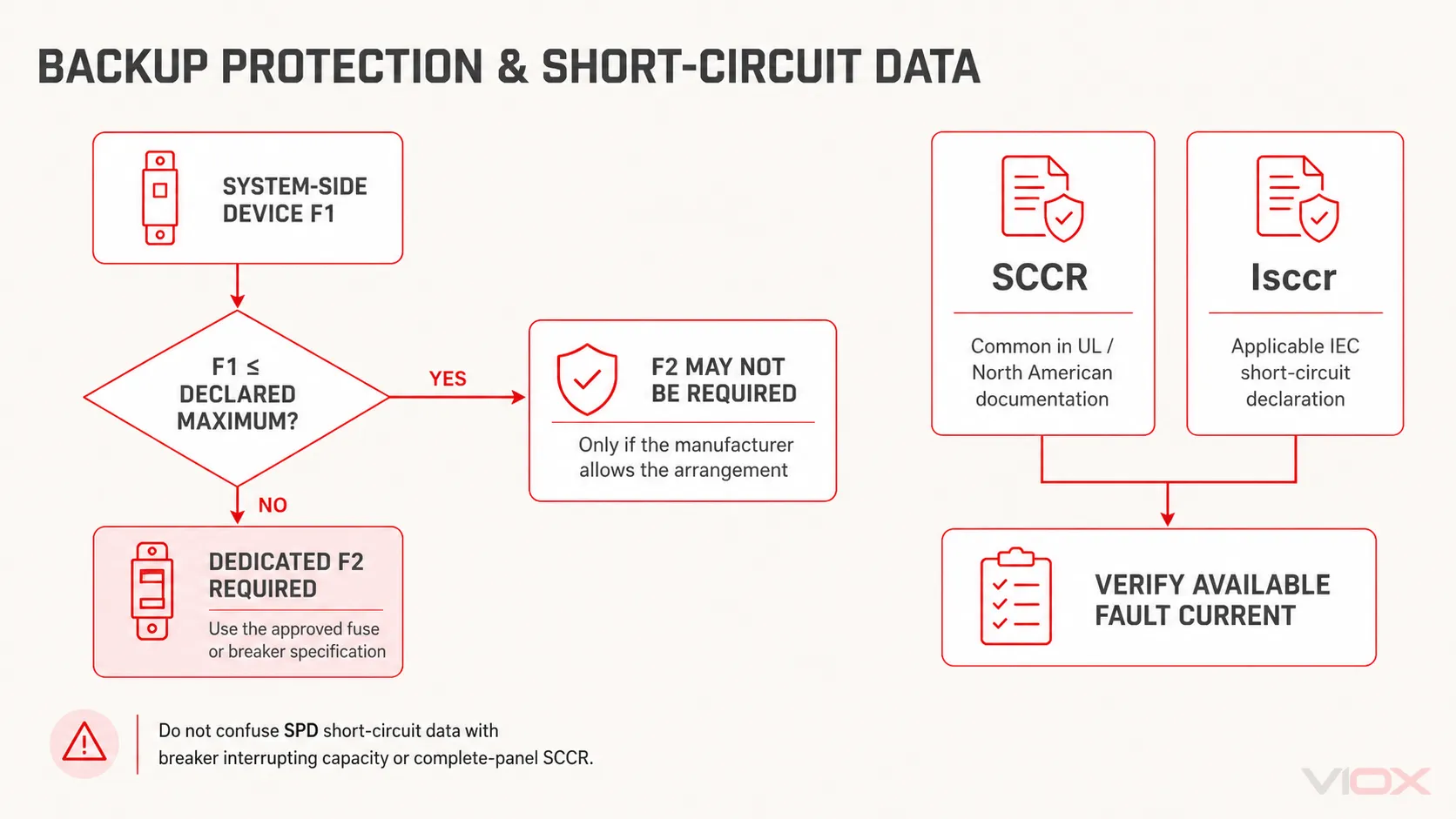
Nie należy automatycznie interpretować tego oznaczenia jako “cała instalacja nie może posiadać bezpiecznika nadrzędnego większego niż 125 A”. W przypadku SPD podłączonego równolegle należy skorzystać z instrukcji koordynacji producenta:
- Jeśli urządzenie ochronne po stronie instalacji F1 jest równe lub mniejsze niż wartość dopuszczalna, oddzielny bezpiecznik odgałęźny dla SPD F2 może nie być wymagany, pod warunkiem że producent dopuszcza takie rozwiązanie.
- Jeśli F1 przekracza deklarowaną wartość maksymalną, zwykle wymagany jest dedykowany bezpiecznik odgałęźny lub inne zatwierdzone zabezpieczenie nadprądowe.
- Jeśli zamiast bezpiecznika gG dopuszczono użycie wyłącznika automatycznego, należy zweryfikować jego prąd znamionowy, charakterystykę wyzwalania, zdolność wyłączania oraz zadeklarowaną przez producenta równoważność. Nie należy zakładać, że wyłączniki o tych samych wartościach prądu znamionowego są zamienne.
- Należy sprawdzić wytrzymałość udarową wybranego zabezpieczenia wstępnego, aby nie spowodowało ono odłączenia SPD podczas przepięcia w przewidzianym zakresie pracy.
Terminologia dotycząca zwarć zależy również od ram normatywnych. SCCR jest powszechne w dokumentacji północnoamerykańskiej i UL. Karty katalogowe IEC mogą zamiast tego określać wartość wytrzymałości zwarciowej lub prądu zwarciowego, taką jak Isccr. Żadnej z tych wartości nie należy mylić ze zdolnością wyłączania wyłącznika nadrzędnego ani ze wskaźnikiem SCCR kompletnego panelu.
W przypadku błędów instalacyjnych, patrz Przewodnik naprawy błędów instalacji SPD oraz Wymagania instalacyjne ograniczników przepięć (SPD): Normy i standardy bezpieczeństwa.
Zdalna sygnalizacja, wskaźnik uszkodzenia i wymienny moduł
Wskazanie stanu SPD jest istotne, ponieważ ogranicznik może osiągnąć kres swojej żywotności po wielokrotnym narażeniu na przepięcia. Jeśli nikt nie sprawdzi wskaźnika, rozdzielnica może sprawiać wrażenie zabezpieczonej, podczas gdy moduł SPD nie jest już sprawny.
Typowe funkcje sygnalizacji stanu obejmują:
- wizualne okienko zielone/czerwone
- wymienny moduł wtykowy
- styk zdalnej sygnalizacji
- wyjście alarmowe dla systemów BMS, PLC, SCADA lub lampki kontrolnej na rozdzielnicy
- kodowanie wkładki zapobiegające nieprawidłowej wymianie
Podczas czytania karty katalogowej należy sprawdzić, czy styk zdalny jest typu normalnie otwarty (NO), normalnie zamknięty (NC), przełączny czy bezpieczny (fail-safe) w wymaganej logice alarmowej. Przed podłączeniem do obwodu alarmowego należy również sprawdzić obciążalność styków.
Czego nie mówią parametry znamionowe ograniczników przepięć (SPD)
Dwa ograniczniki SPD mogą wykazywać podobne parametry znamionowe: Typ 2, Uc 275 VAC, Up ≤ 1,5 kV, In 20 kA, Imax 40 kA. Nie oznacza to automatycznie, że będą się one w ten sam sposób starzeć, odłączać, sygnalizować awarię lub działać w sposób spójny.
Karty katalogowe podają deklarowane parametry testowe. Nie ukazują one w pełni dyscypliny produkcyjnej stojącej za tymi wartościami.
Jakość i spójność warystorów (MOV)
Wiele niskonapięciowych ograniczników przepięć wykorzystuje warystory tlenkowe (MOV) jako główny element ograniczający napięcie. Charakterystyka warystora wpływa na zachowanie podczas ograniczania napięcia, prąd upływu, starzenie się, obciążenie termiczne oraz podział prądu pomiędzy ścieżkami ochrony.
W kwestii zaopatrzenia należy zapytać:
- Czy parametry znamionowe warystorów (MOV) są odpowiednie dla deklarowanego napięcia Uc i obciążenia udarowego?
- Czy warystory są dobrane w sposób spójny dla wszystkich biegunów lub modułów?
- Czy istnieje możliwość identyfikowalności partii dla kluczowych komponentów przeciwprzepięciowych?
- Czy producent prowadzi kontrolę przyjmowanych komponentów?
Nie oznacza to, że każdy nabywca musi przeprowadzać audyt produkcji warystorów. Oznacza to, że rzetelny dostawca powinien być w stanie wyjaśnić procedury kontroli jakości komponentów, które decydują o parametrach ogranicznika przepięć (SPD).
Konstrukcja wyłącznika termicznego
Oczekuje się, że ogranicznik przepięć (SPD) po zakończeniu okresu eksploatacji ulegnie bezpiecznemu uszkodzeniu. W przypadku ograniczników opartych na warystorach, wyłącznik termiczny jest kluczowym elementem bezpieczeństwa. Odłącza on warystor od obwodu w sytuacji, gdy przegrzanie lub degradacja stwarzają zagrożenie.
Podczas porównywania produktów sprawdź:
- czy ogranicznik przepięć (SPD) posiada wewnętrzny odłącznik
- w jaki sposób sygnalizacja uszkodzenia jest powiązana z mechanizmem odłączającym
- czy moduł posiada widoczny wskaźnik stanu
- czy wymagane jest dodatkowe zewnętrzne zabezpieczenie nadprądowe
- czy karta katalogowa jasno określa zachowanie urządzenia po zakończeniu okresu eksploatacji
Nie zakładaj, że samo zielone/czerwone okienko świadczy o solidności konstrukcji odłącznika. Wskaźnik jest użyteczny tylko wtedy, gdy poprawnie odzwierciedla stan wewnętrznego zabezpieczenia.
Obudowa, komora gaszeniowa łuku i zachowanie materiałów w warunkach pożarowych
Materiały obudowy SPD oraz układ wewnętrzny mają znaczenie, ponieważ komponenty przeciwprzepięciowe mogą być narażone na obciążenia termiczne i elektryczne. Karta katalogowa może zawierać informacje o klasie palności, danych izolacyjnych lub zgodności z normami, jednak nabywca powinien zawsze sprawdzić, czy produkt jest odpowiedni dla środowiska rozdzielnicy oraz przewidywanego poziomu prądu zwarciowego.
Ważne punkty do weryfikacji obejmują:
- klasę trudnopalności obudowy, jeśli została podana
- odstępy izolacyjne i konstrukcję izolacji
- wewnętrzne oddzielenie części czynnych
- konstrukcję blokady i wymiany modułów
- wytrzymałość zacisków i kompatybilność z przewodami
Należy unikać podejmowania decyzji wyłącznie na podstawie etykiety przedniej. Jakość wewnętrznego odłącznika oraz konstrukcja obudowy stanowią o rzeczywistym bezpieczeństwie ogranicznika przepięć (SPD).
Certyfikacja i powtarzalność produkcji
Certyfikat lub odniesienie do normy są ważne, ale muszą być zgodne z faktycznie zakupionym modelem. Dla producentów OEM, dystrybutorów i producentów rozdzielnic praktyczne pytanie brzmi nie tylko "czy próbka została przetestowana?", ale także "czy produkcja pozostaje zgodna z przetestowanym projektem?"."
Wymagaj:
- dokładnej zgodności numeru modelu między kartą katalogową, certyfikatem a etykietą produktu
- odpowiedniej normy i zakresu raportu z badań
- identyfikowalności partii produkcyjnej
- kontroli zmian komponentów
- instrukcji montażu zgodnej z dostarczonym produktem
- jasne instrukcje dotyczące bezpiecznika zapasowego lub wyłącznika
W tej sekcji profesjonalne zespoły zakupowe odróżniają rzeczywistą specyfikację od zapewnień katalogowych.
Częste błędy zakupowe
1. Kupowanie wyłącznie na podstawie Imax
Wysoka wartość Imax wygląda atrakcyjnie, ale nie dowodzi, że ogranicznik przepięć (SPD) jest odpowiedni. Uc, Up, typ, kształt fali, zabezpieczenie wstępne oraz punkt instalacji mają kluczowe znaczenie.
2. Porównywanie Iimp dla typu 1 z Imax dla typu 2
Wartości te opierają się na różnych kształtach fali i celach testowych. Nie należy ich porównywać tak, jakby były tym samym rodzajem wartości znamionowej kA.
3. Ignorowanie Uc / MCOV
Ogranicznik przepięć (SPD) ze zbyt niskim napięciem trwałej pracy może ulec przedwczesnej awarii. Ogranicznik ze zbyt wysokim napięciem znamionowym może zapewniać mniej skuteczne ograniczenie napięcia. Należy dokonać wyboru w oparciu o rzeczywiste parametry systemu.
4. Traktowanie niższego poziomu ochrony napięciowej (Up) jako zawsze lepszego
Niższy poziom Up jest przydatny tylko wtedy, gdy ogranicznik SPD jest prawidłowo skoordynowany i zainstalowany. Długość przewodów, ścieżka uziemienia, koordynacja z ogranicznikami wyższego stopnia oraz napięcie systemu nadal mają kluczowe znaczenie.
5. Stosowanie ograniczników SPD AC w obwodach fotowoltaicznych DC
Systemy DC/PV wymagają ograniczników SPD przystosowanych do prądu stałego z odpowiednimi parametrami Ucpv i sposobem okablowania. Nie należy używać oznaczeń AC jako zamiennika dla parametrów znamionowych PV/DC.
6. Brak zabezpieczenia dobezpieczającego
Jeśli karta katalogowa ogranicznika SPD określa maksymalny bezpiecznik lub wyłącznik dobezpieczający, należy go uwzględnić w projekcie rozdzielnicy.
7. Mylenie norm produktowych
Normy IEC 61643-01:2024, IEC 61643-11:2025, IEC 61643-31, IEC 61643-21:2025, UL 1449 oraz GB/T 18802 nie dotyczą tej samej kategorii produktów ani systemu certyfikacji. W przypadku produktu AC zgodnie z IEC, należy zapoznać się z normą IEC 61643-11:2025 łącznie z IEC 61643-01:2024; dla innych zastosowań należy zweryfikować właściwą część i wydanie.
Porównanie norm znajduje się w Normy dotyczące ochrony przeciwprzepięciowej: IEC 61643 vs UL 1449 vs GB 18802.
Lista kontrolna specyfikacji ogranicznika przepięć (SPD)
Użyj tej listy kontrolnej przed zatwierdzeniem SPD do zakupu lub montażu w rozdzielnicy.
| Element kontrolny | Pytanie typu zaliczony / niezaliczony |
|---|---|
| Typ systemu | Czy jest to system AC, PV DC, BESS DC, ładowania pojazdów elektrycznych (EV), sygnałowy czy linia danych? |
| Napięcie | Czy Uc / MCOV / Ucpv odpowiadają rzeczywistemu napięciu systemu i tolerancji? |
| Punktu instalacji | Czy typ ogranicznika przepięć (SPD) jest odpowiedni dla przyłącza głównego, rozdzielnicy lub zabezpieczenia urządzeń końcowych? |
| System uziemienia | Czy okablowanie SPD jest zgodne z układem sieci TN-S, TN-C-S, TT, IT lub specyficznym uziemieniem projektowym? |
| Poziom ochrony | Czy poziom ochrony Up jest odpowiedni dla urządzeń odbiorczych i koordynacji zabezpieczeń? |
| Wytrzymałość udarowa | Czy wartości In, Imax lub Iimp są odpowiednie dla poziomu narażenia na przepięcia? |
| Kształt fali | Czy porównujesz parametry 8/20 μs z 8/20 μs oraz 10/350 μs z 10/350 μs? |
| Ochrona kopii zapasowej | Czy wymóg zastosowania bezpiecznika/wyłącznika nadprądowego został uwzględniony w projekcie rozdzielnicy? |
| Dane dotyczące zwarć | Czy stosowny wskaźnik SCCR, Isccr lub inna zadeklarowana wartość zwarciowa jest kompatybilna z dostępnym prądem zwarciowym i zabezpieczeniem nadrzędnym? |
| Status modułu | Czy wymagana jest sygnalizacja wizualna lub zdalna? |
| Standard | Czy norma jest zgodna z rynkiem i zastosowaniem? |
| Dokumentacja | Czy karta katalogowa, schemat połączeń, certyfikat i numer modelu są ze sobą zgodne? |
FAQ
Jaki jest najważniejszy parametr ogranicznika przepięć (SPD)?
Nie ma jednego najważniejszego parametru. Uc/MCOV jest na pierwszym miejscu, ponieważ SPD musi wytrzymać znamionowe napięcie sieci. Następnie należy sprawdzić typ, Up, In, Imax, Iimp, zabezpieczenie wstępne oraz podstawę normatywną.
Czy Imax jest ważniejsze niż In?
Nie. Imax oznacza maksymalny deklarowany prąd wyładowczy w warunkach testowych, zazwyczaj dla ograniczników przepięć typu 2 przy przebiegu 8/20 μs. In jest bardziej przydatne do zrozumienia znamionowej wytrzymałości na powtarzające się przepięcia. Oba parametry należy rozpatrywać łącznie.
Jaka jest różnica między Uc a Up?
Uc to maksymalne napięcie pracy ciągłej dla określonego trybu i warunków. Up to deklarowany poziom ochrony napięciowej ustalony zgodnie z obowiązującymi testami znormalizowanymi. Uc dotyczy kompatybilności z ciągłym napięciem instalacji; Up charakteryzuje ograniczanie napięcia udarowego, podczas gdy napięcie na chronionym urządzeniu zależy również od zainstalowanej ścieżki połączenia i koordynacji.
Co oznacza Iimp w ograniczniku przepięć?
Iimp oznacza prąd udarowy. Jest on zazwyczaj powiązany z ogranicznikami typu 1 oraz przebiegiem 10/350 μs, stosowanym do testów udarowych prądem piorunowym.
Czy mogę porównać 40 kA Imax z 25 kA Iimp?
Nie bezpośrednio. Imax oraz Iimp wykorzystują różne przebiegi falowe i cele testowe. Przy tym samym prądzie szczytowym impuls testowy 10/350 μs reprezentuje znacznie większy ładunek i energię właściwą niż impuls 8/20 μs.
Czy każdy ogranicznik przepięć (SPD) wymaga bezpiecznika zapasowego?
Nie zawsze w ten sam sposób, ale należy przestrzegać karty katalogowej. Niektóre ograniczniki SPD wymagają zewnętrznego zabezpieczenia zapasowego w określonych warunkach bezpiecznika zasilającego lub prądu zwarciowego. Inne mogą zawierać wewnętrzne urządzenia odłączające, ale nadal mają ograniczenia instalacyjne.
Co oznacza zdalna sygnalizacja w ograniczniku SPD?
Zdalna sygnalizacja oznacza, że ogranicznik SPD posiada styk pomocniczy, który przekazuje status do lampki kontrolnej na panelu, systemu BMS, sterownika PLC, systemu SCADA lub obwodu alarmowego. Przed podłączeniem należy sprawdzić typ i parametry znamionowe styku.
Czy ograniczniki SPD AC mogą być stosowane w systemach DC lub PV?
Tylko jeśli karta katalogowa wyraźnie określa ogranicznik SPD dla danego zastosowania DC lub PV. Systemy PV/DC wymagają odpowiedniego napięcia Ucpv, trybu okablowania, polaryzacji (jeśli dotyczy) oraz zgodności z normami dla systemów DC/PV.
Podsumowanie
Prawidłowe czytanie karty katalogowej SPD polega głównie na zachowaniu kolejności i kontekstu. Należy zacząć od napięcia systemu i typu aplikacji, a następnie potwierdzić parametry Uc/MCOV, Up, typ, In, Imax, Iimp, zabezpieczenie zapasowe, tryb okablowania, sygnalizację stanu oraz podstawę normatywną.
Najlepszy nawyk zakupowy jest prosty: nigdy nie zatwierdzaj ogranicznika SPD na podstawie pojedynczej wartości kA. Odpowiedni ogranicznik SPD to taki, którego pełny zestaw parametrów znamionowych odpowiada rzeczywistemu systemowi elektrycznemu, punktowi instalacji, narażeniu na przepięcia oraz projektowi zabezpieczeń rozdzielnicy.
Aby zapoznać się z recenzją produktu, zobacz VIOX Strona produktu SPD, lub skorzystaj z powyższych powiązanych przewodników, aby bardziej szczegółowo porównać poszczególne parametry.
Wykorzystane źródła
- IEC 61643-01:2024: Wymagania ogólne i metody badań dla SPD
- IEC 61643-11:2025: SPD podłączone do instalacji elektrycznych niskiego napięcia AC
- IEC 61643-21:2025: SPD dla sieci telekomunikacyjnych i sygnalizacyjnych
- Phoenix Contact: Właściwy bezpiecznik zapasowy dla ograniczników przepięć
- VIOX: Czym jest ogranicznik przepięć?
- VIOX: Co oznaczają parametry Uc i Up w ogranicznikach przepięć
- VIOX: Porównanie wartości znamionowych Imax i In dla ograniczników przepięć
- VIOX: Normy ochrony przeciwprzepięciowej IEC 61643 vs UL 1449 vs GB 18802