

Na tej stronie
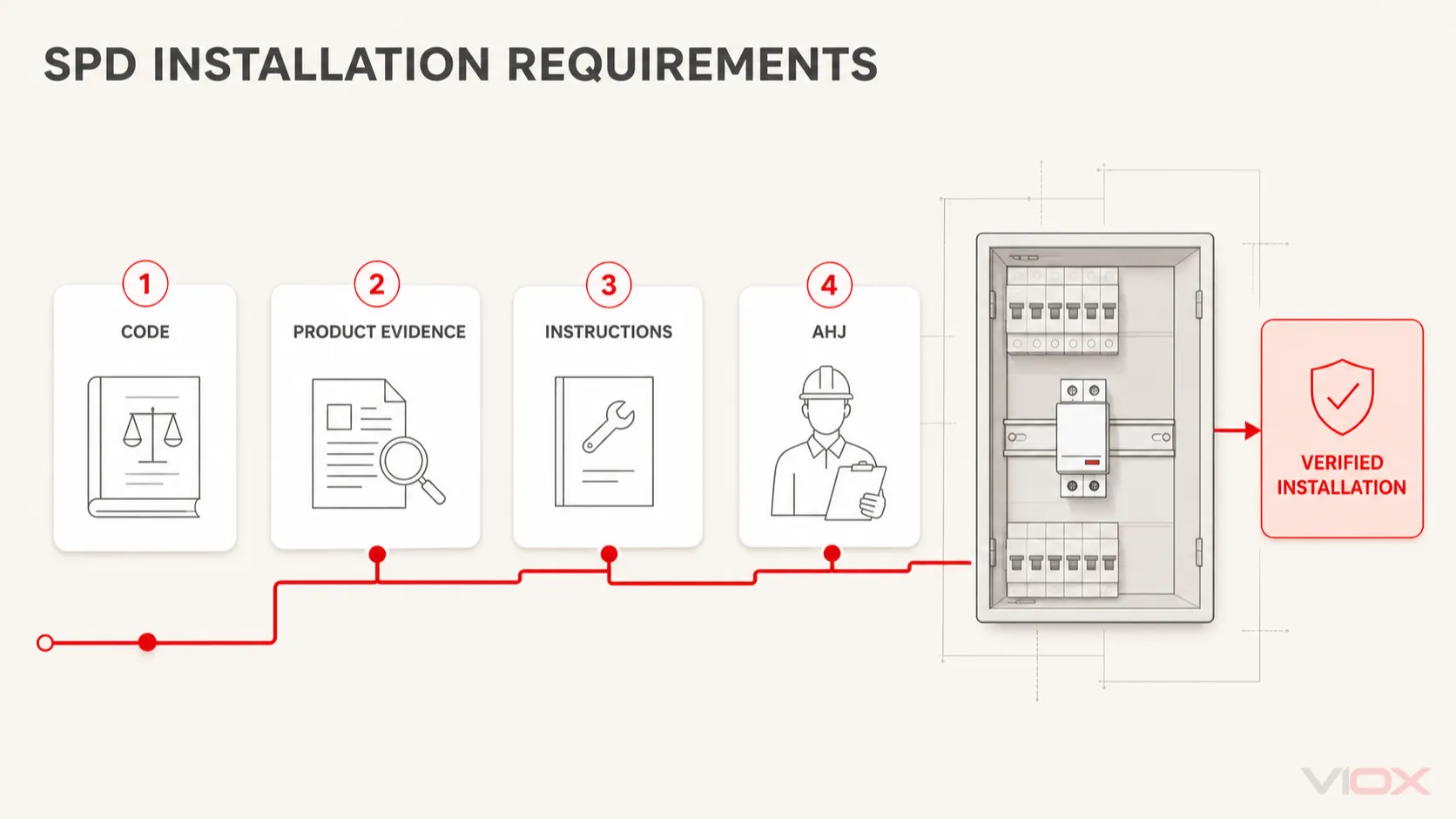
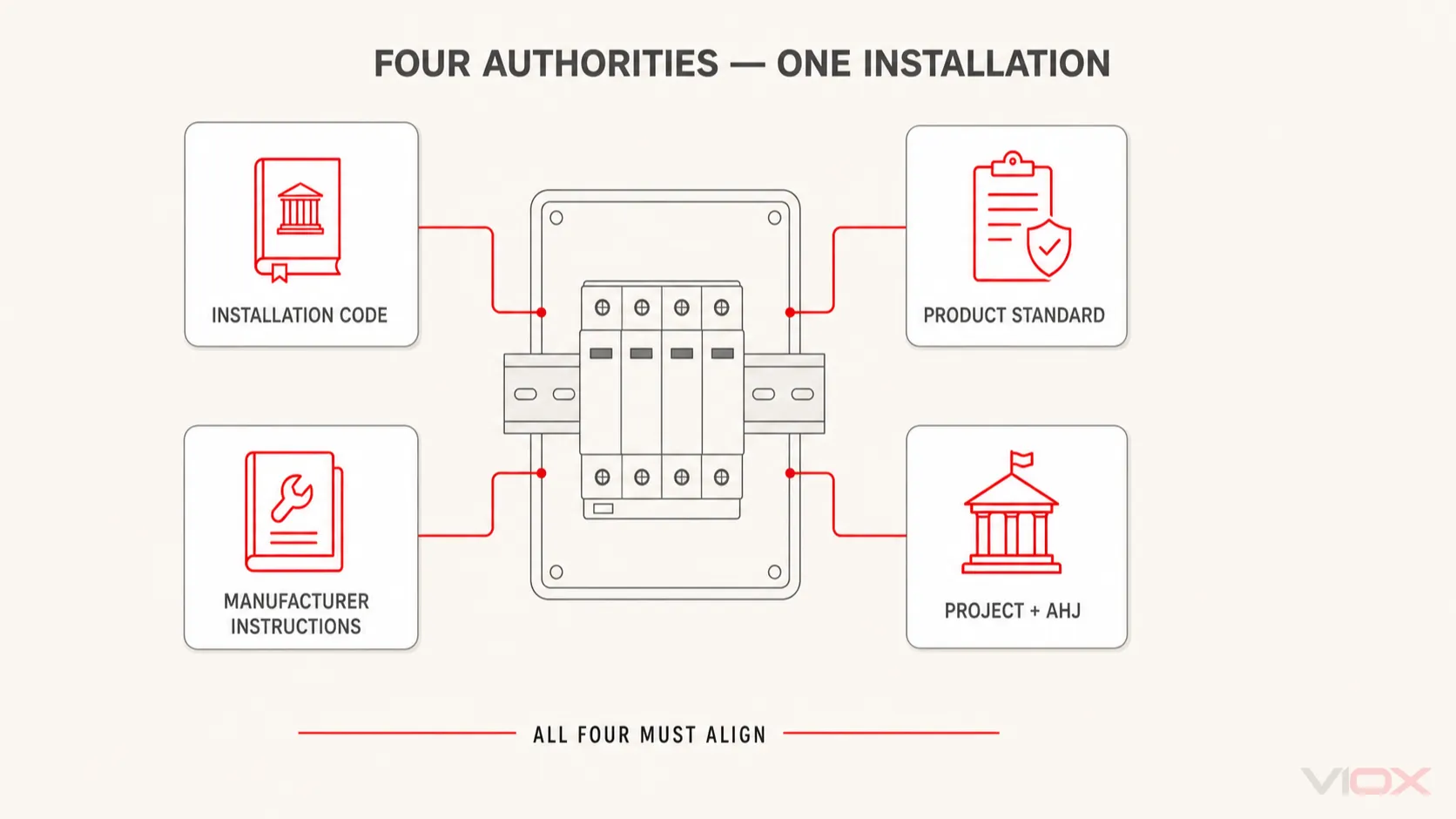
Nie istnieje jedna globalna zasada, która sprawia, że każda urządzenie przeciwprzepięciowe (SPD) instalacja jest zgodna z przepisami. Instalacja, którą można obronić, musi spełniać wymagania czterech organów: lokalnie przyjętych przepisów instalacyjnych, odpowiedniej listy lub certyfikacji produktu, instrukcji producenta oraz wszelkich wymogów projektu lub organu posiadającego jurysdykcję (AHJ).
To rozróżnienie ma znaczenie. Urządzenie przetestowane zgodnie z normą UL 1449 lub IEC 61643 nie jest automatycznie zatwierdzone dla każdego rozdzielnicy, układu uziemienia, poziomu prądu zwarciowego, trasy przewodów ani miejsca instalacji. Dowody dotyczące produktu i dowody dotyczące instalacji odpowiadają na różne pytania.
Zasady bezpieczeństwa: Urządzenia SPD podłączone na stałe są instalowane w pobliżu niebezpiecznych napięć i dostępnego prądu zwarciowego. Dobór, izolacja, instalacja i weryfikacja powinny być wykonywane przez wykwalifikowany personel zgodnie z zasadami obowiązującymi w danym miejscu. Niniejszy artykuł stanowi ramy zgodności, a nie substytut przyjętego kodeksu lub instrukcji urządzenia.
Cztery organy regulujące instalację SPD
Należy zacząć od dokumentów w następującej kolejności. Pominięcie jednego poziomu może sprawić, że instalacja będzie niezgodna z przepisami, nawet jeśli samo urządzenie SPD posiada uznany znak certyfikacji.
| Organ nadzorczy | Co określa | Czego samo w sobie nie potwierdza |
|---|---|---|
| Lokalnie przyjęte przepisy instalacyjne | Czy wymagane jest zabezpieczenie, dopuszczalne lokalizacje, zasady podłączenia, weryfikacja instalacji oraz obiekty specjalne | Że dany model SPD jest kompatybilny z obwodem lub rozdzielnicą |
| Norma produktu lub komponentu | W jaki sposób urządzenie zostało sklasyfikowane, przetestowane, oznaczone i ocenione w zakresie danej normy | Że kompletna instalacja obiektowa spełnia lokalne przepisy |
| Instrukcje producenta | Dopuszczalne konfiguracje systemu, zaciski, przekroje przewodów, zabezpieczenia dodatkowe, montaż oraz ograniczenia środowiskowe | Czy projekt wykorzystuje właściwą edycję normy lub spełnia wszystkie wymagania AHJ |
| Specyfikacja projektu i AHJ | Przyjęta edycja, poprawki lokalne, wymagania obiektu, dokumentacja i zatwierdzenie | Wydajność produktu wykraczająca poza przedstawione dowody |
The compliance question is therefore not simply “Is this an IEC SPD?” or “Is this UL Listed?” It is:
Czy udokumentowane urządzenie, zainstalowane w tym konkretnym systemie i lokalizacji, spełnia wszystkie cztery warstwy?
Czy stosowanie SPD jest obowiązkowe?
Czasami – odpowiedź zależy jednak od jurysdykcji, przyjętego wydania, przeznaczenia obiektu, funkcji systemu oraz wymagań projektowych.
Stany Zjednoczone: Sprawdź przyjęte wydanie NEC
NFPA publikuje obecnie 2026 National Electrical Code (NEC), jednak stany i lokalne jurysdykcje mogą nadal egzekwować wydanie z 2023, 2020 lub inne znowelizowane wydanie. Nigdy nie należy używać najnowszej daty publikacji jako dowodu na to, że dany kodeks jest prawnie przyjęty w konkretnej lokalizacji.
NEC z 2023 r. zawiera przydatne przykłady struktury wymogów dotyczących SPD:
- Sekcja 230.67 dotyczy przyłączy zasilających określone obiekty, w tym lokale mieszkalne, akademiki, pokoje lub apartamenty hotelowe i motelowe oraz wybrane obszary przeznaczone do spania dla pacjentów. Wymaga ona zastosowania SPD typu 1 lub typu 2 oraz zawiera przepisy dotyczące lokalizacji i wymiany przyłącza.
- Sekcja 215.18 dotyczy wersji zasilanych z linii zasilającej dla określonych obiektów i umieszcza SPD wewnątrz lub w sąsiedztwie odpowiedniego urządzenia rozdzielczego, z zastrzeżeniem określonego wyjątku.
- Sekcja 700.8 wymaga zastosowania certyfikowanego SPD wewnątrz lub na rozdzielnicach i tablicach rozdzielczych systemów zasilania awaryjnego.
Powyższe przykłady nie stanowią kompletnej listy kontrolnej NEC. Projekt musi uwzględniać dokładnie przyjętą edycję, lokalne poprawki oraz interpretację AHJ. Do konkretnych systemów, urządzeń lub obiektów mogą mieć zastosowanie inne artykuły.
W przypadku oceny produktów na rynek północnoamerykański, UL 1449 jest główną normą produktową dla SPD. Wytyczne UL rozróżniają urządzenia typu 1 podłączone na stałe – które mogą być oceniane pod kątem zastosowania po stronie zasilania lub po stronie odbioru – od urządzeń typu 2 przeznaczonych do montażu po stronie odbioru urządzenia zabezpieczającego przed przetężeniem. O dopuszczalnym zastosowaniu decyduje oznaczenie i certyfikat, a nie nazwa marketingowa.
Instalacje oparte na normach IEC: Oddzielenie zasad dotyczących produktów od zasad instalacyjnych
The Struktura normy IEC 61643 to rodzina dokumentów, a nie jedno uniwersalne zatwierdzenie:
| Dokument | Główna rola w procesie decyzyjnym |
|---|---|
| IEC 60364-4-44:2024 | Wymogi bezpieczeństwa dla instalacji elektrycznych niskiego napięcia narażonych na zakłócenia napięciowe i elektromagnetyczne; punkt 443 dotyczy przepięć przejściowych |
| IEC 60364-5-53:2019 wraz z poprawkami 1:2020 oraz 2:2024 | Dobór i montaż wyposażenia elektrycznego, w tym ramy instalacyjnej zawierającej wymogi dotyczące SPD |
| IEC 61643-01:2024 | Wspólne wymagania produktowe i metody badań dla SPD |
| IEC 61643-11:2025 | Wymagania i badania właściwe dla SPD podłączanych do instalacji elektrycznych niskiego napięcia AC; stosowane łącznie z IEC 61643-01 |
| IEC 61643-12:2020 | Zasady doboru, eksploatacji, lokalizacji i koordynacji dla SPD w obwodach zasilających AC |
| IEC 62305-4:2024 | Środki ochrony przeciwprzepięciowej dla systemów elektrycznych i elektronicznych wewnątrz obiektów, w których przedmiotem ochrony jest piorunowy impuls elektromagnetyczny |
Norma IEC 61643-11 może stanowić wsparcie dla deklaracji produktu, jednak nie zastępuje ona wymogów instalacyjnych IEC 60364, krajowych aktów prawnych, decyzji projektowych dotyczących ryzyka piorunowego ani instrukcji podłączenia producenta. Normy krajowe oparte na dokumentach IEC mogą dodawać, usuwać lub modyfikować wymagania.
Wielka Brytania: Sprawdź okres przejściowy i datę projektu zgodnie z BS 7671
BS 7671 to brytyjska norma krajowa dotycząca instalacji elektrycznych. Na dzień niniejszego przeglądu technicznego, BS 7671:2018+A4:2026 została opublikowana, podczas gdy poprawka Amendment 3:2024 pozostaje ważna w okresie przejściowym kończącym się 15 października 2026 r.. Podstawa projektowa i certyfikacyjna powinna określać, która obowiązująca edycja ma zastosowanie do danych prac.
Aktualne wytyczne IET wyjaśniają również, dlaczego uniwersalna wartość wyłącznika zabezpieczającego jest niebezpieczna. Zgodnie z BS 7671:2018+A4:2026, zabezpieczenie nadprądowe zwarciowe SPD może być wewnętrzne, zewnętrzne lub stanowić skoordynowane połączenie, a zewnętrzne urządzenie zabezpieczające przed przetężeniem musi być zgodne z instrukcjami producenta SPD oraz obowiązującymi zasadami instalacji.
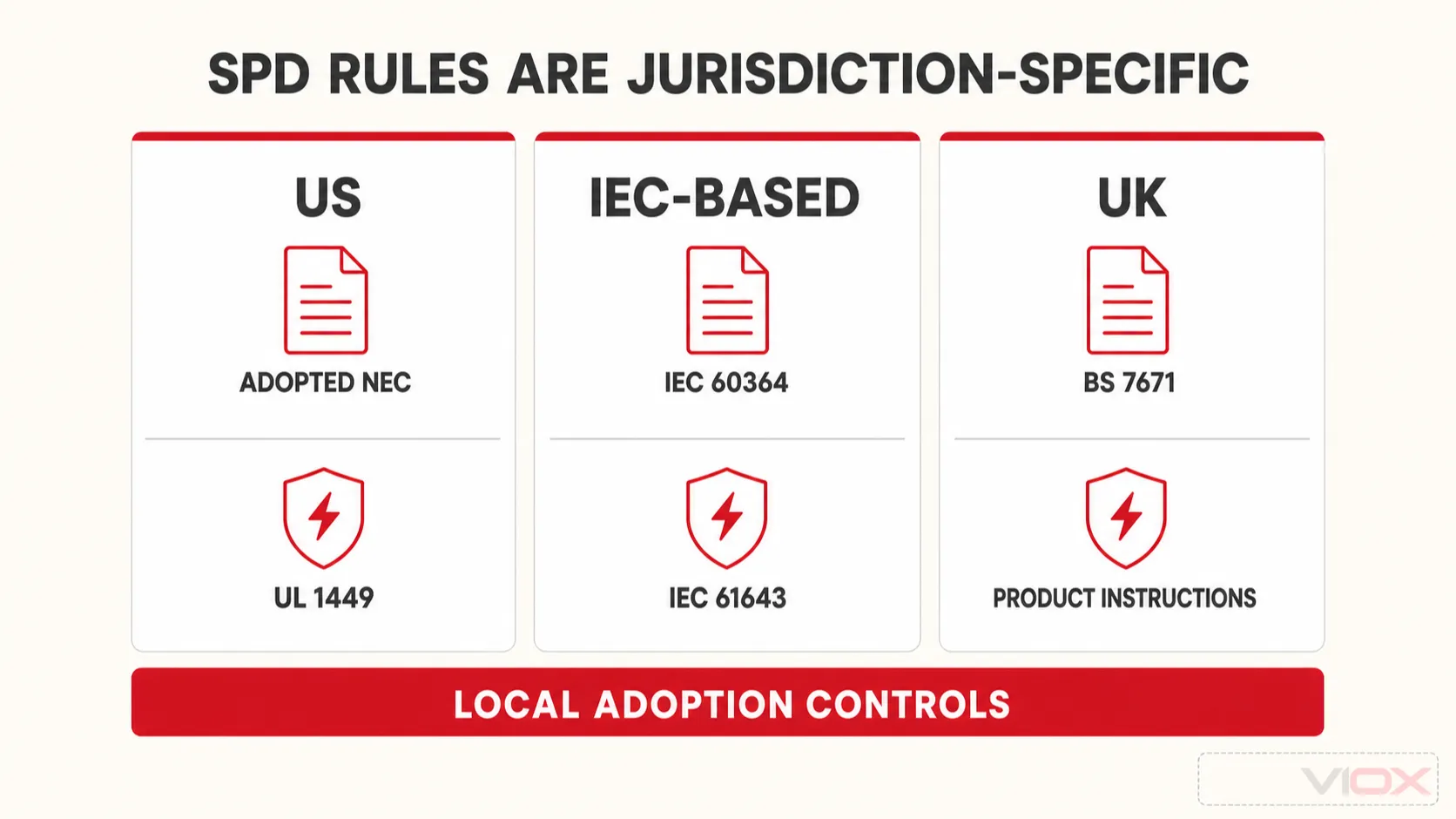
Norma wyrobu nie jest certyfikatem instalacji
Normy produktowe określają metody badań, klasyfikacje oraz oznaczenia parametrów znamionowych. Przepisy instalacyjne wykorzystują te dane jako jeden z czynników. Na poziomie instalacji elektrycznej należy nadal odpowiedzieć na poniższe pytania.
| Pytanie dotyczące instalacji | Dowody weryfikacyjne | Powszechne, lecz błędne uproszczenie |
|---|---|---|
| Czy w tym miejscu wymagany jest SPD? | Przyjęte przepisy, przeznaczenie obiektu, ocena ryzyka, specyfikacja projektu oraz właściwy organ nadzorczy (AHJ) | “SPD są obowiązkowe wszędzie” |
| Czy ta lokalizacja jest dozwolona? | Oznaczenie typu/klasy, zasady lokalizacji wynikające z przepisów oraz instrukcje producenta | “Typ 1 jest zawsze najmocniejszym wyborem” |
| Czy obwód jest kompatybilny? | Napięcie znamionowe, częstotliwość, faza, układ uziemienia oraz maksymalne napięcie pracy | “Napięcie nadrukowane na froncie jest wystarczające” |
| Czy tryby ochrony są poprawne? | Tryby L-N, L-PE, N-PE lub L-L wymagane przez instalację elektryczną i topologię SPD | “Każdy SPD po prostu odprowadza przepięcie do ziemi” |
| Czy może pozostać bezpiecznie podłączony? | Uc lub MCOV, zachowanie przy przepięciach dorywczych i tolerancje instalacji elektrycznej | “Najniższa wartość napięcia ograniczanego zawsze wygrywa” |
| Czy narażenie na prąd zwarciowy jest akceptowalne? | Dostępny prąd zwarciowy plus SCCR lub odpowiednia deklaracja wytrzymałości zwarciowej/prądu, taka jak Isccr | “Wysoka wartość znamionowa udarowa w kA dowodzi bezpieczeństwa zwarciowego” |
| Czy zabezpieczenie dodatkowe jest prawidłowe? | Informacje o wewnętrznym odłączniku, dopuszczalnym zewnętrznym bezpieczniku lub wyłączniku automatycznym oraz instrukcje koordynacji | “Każdy SPD wykorzystuje wyłącznik automatyczny 20 A lub 30 A” |
| Czy trasa przewodu jest dopuszczalna? | Wytyczne producenta dotyczące trasy, przewodu, gięcia i zacisków oraz lokalne przepisy | “Każda instalacja ma taką samą maksymalną długość przewodu” |
| Czy zespół jest nadal zgodny z wymaganiami? | Instrukcje dotyczące panelu lub rozdzielnicy, warunki uznania/certyfikacji komponentów oraz wymagania dotyczące obudowy | “Montaż na szynie DIN sprawia, że wszystkie SPD są wymienne” |
| Czy można zweryfikować stan ochrony? | Znaczenie wskaźnika stanu, logika styku zdalnego, instrukcje kontroli i dokumentacja | “Zielone okienko potwierdza, że cała instalacja elektryczna jest chroniona” |
Nie należy mylić znamionowych prądów udarowych, takich jak W, Imax lub Iimp ze zdolnością zwarciową. Opisują one różne rodzaje badań. Podobnie, zdolność wyłączania wyłącznika automatycznego nie zastępuje wartości SCCR dla SPD ani odpowiedniej deklaracji zwarciowej według IEC.
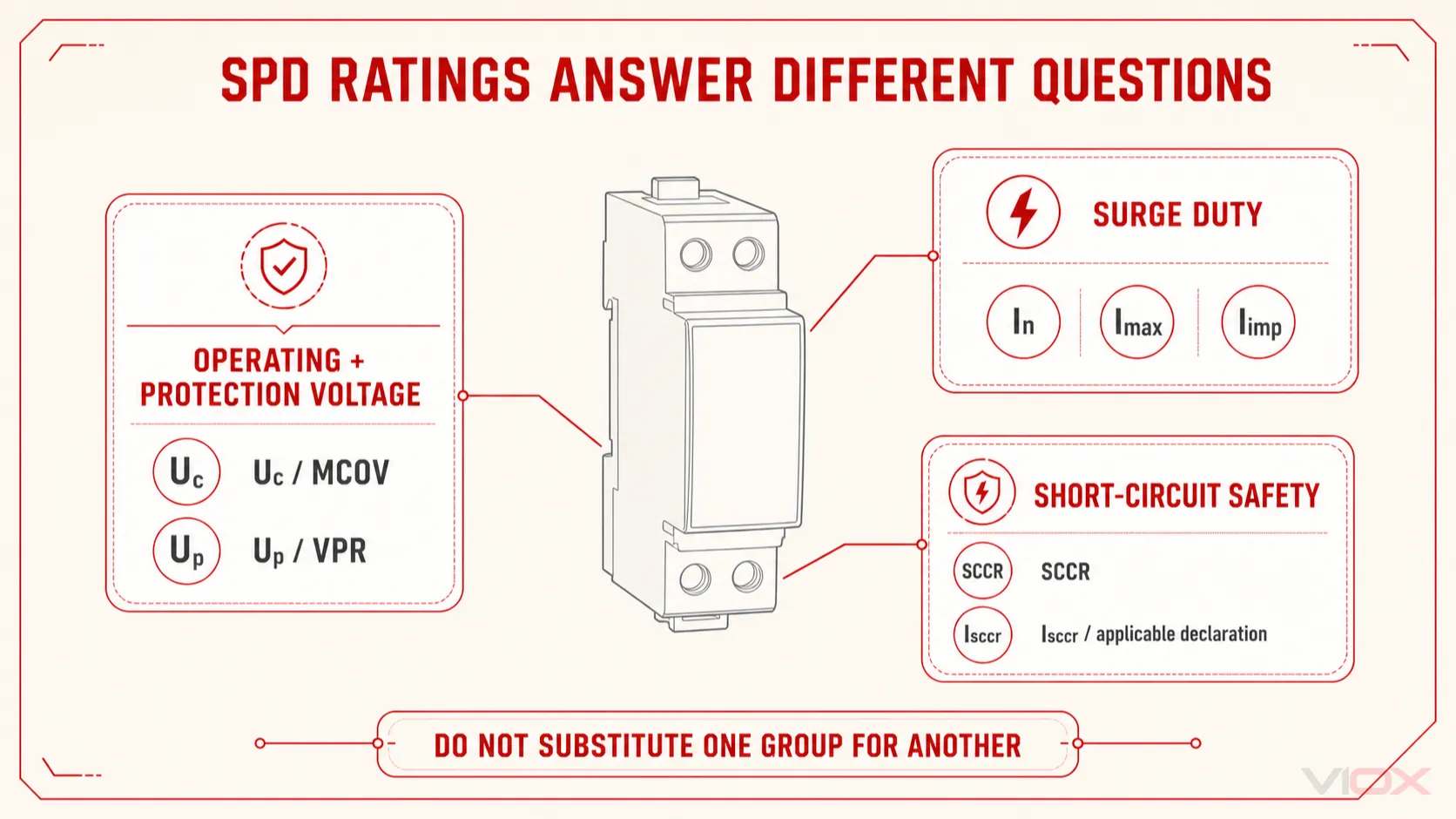
Dziesięć kontroli przed zatwierdzeniem SPD do instalacji
1. Odnotuj jurysdykcję i wydanie przepisów
Zapisz kraj, stan lub region, przyjęte przepisy i ich wydanie, lokalne poprawki, specyfikację projektu oraz właściwy organ (AHJ). “Zgodny z NEC” lub “zgodny z IEC” to zbyt ogólne określenia dla dokumentacji technicznej.
2. Określ, dlaczego wymagana jest ochrona
Zidentyfikuj punkt normy, ocenę ryzyka, projekt ochrony odgromowej, wymagania klienta lub instrukcję obsługi urządzenia, które uzasadniają taką potrzebę. Określa to, czy SPD jest minimalnym środkiem wymaganym przez przepisy, częścią skoordynowanego systemu ochrony odgromowej, czy dodatkowym środkiem poprawy niezawodności.
3. Potwierdź punkt instalacji oraz kategorię urządzenia
Ustal, czy połączenie znajduje się po stronie zasilania, czy po stronie odbioru urządzenia nadprądowego, w rozdzielnicy głównej, w rozdzielnicy podrzędnej lub w pobliżu chronionego sprzętu. Następnie zweryfikuj, czy typ, klasa lub kategoria testowa SPD pozwalają na taką lokalizację.
Typ nie jest uniwersalną hierarchią energetyczną. Oznaczenie typu 1 według UL, wynik testu klasy I według IEC oraz duża Imax wartość nie są zamiennymi stwierdzeniami. Skorzystaj z przewodnika po SPD typu 1, typu 2 i typu 3 gdy sama klasyfikacja jest podstawą decyzji.
4. Dopasuj do instalacji elektrycznej
Potwierdź wszystkie poniższe punkty w oparciu o kartę katalogową oraz instrukcję instalacji:
- napięcie znamionowe i maksymalne napięcie ciągłe;
- zastosowanie AC lub DC oraz częstotliwość, jeśli ma zastosowanie;
- układ jednofazowy lub trójfazowy;
- układ przewodu uziemionego i przewodu ochronnego;
- konfiguracja systemu TN, TT, IT, grounded-wye, delta lub inna;
- liczba biegunów i wymagane tryby ochrony;
- oczekiwane warunki przepięć dorywczych.
The przewodnika po kartach katalogowych SPD wyjaśnia, jak interpretować Uc/MCOV, W górę/VPR, W, Imax, Iimp oraz powiązane deklaracje, nie traktując jednej wartości znamionowej jako kompletnej decyzji o doborze.
5. Weryfikacja dostępnego prądu zwarciowego i deklaracji SPD
Określ dostępny prąd zwarciowy w rzeczywistym punkcie instalacji. W przypadku zastosowań zgodnych z UL należy zweryfikować, czy oznaczone SCCR nie jest mniejsze niż dostępny prąd zwarciowy oraz czy spełnione są wszelkie warunki dopuszczenia. W przypadku produktów IEC należy zweryfikować odpowiednią deklarację wytrzymałości zwarciowej/prądu zwarciowego — taką jak Isccr tam, gdzie jest stosowana — wraz z wymaganym rozłącznikiem i przewidywanym prądem zwarciowym.
Wydajności prądu udarowego nie można zastąpić tą weryfikacją. Urządzenie oznaczone wysoką wartością Imax może nadal być nieodpowiednie dla dostępnego prądu zwarciowego o częstotliwości sieciowej.
6. Rozwiązanie kwestii wewnętrznego i zewnętrznego zabezpieczenia nadprądowego
Określ, czy SPD wykorzystuje zabezpieczenie wewnętrzne, wymaga dedykowanego zewnętrznego bezpiecznika lub wyłącznika automatycznego, dopuszcza oba rozwiązania, czy też opiera się na określonej kombinacji. Zapisz:
- typ urządzenia zabezpieczającego;
- dopuszczalna lub maksymalna wartość znamionowa;
- zdolność wyłączania;
- wymagany warunek koordynacji;
- wpływ na ciągłość obwodu w momencie odłączenia SPD;
- wszelkie ograniczenia dotyczące rozdzielnicy lub zespołu.
Nie należy kopiować wartości znamionowej wyłącznika z innego urządzenia SPD. Prawidłowa wartość wynika z instrukcji konkretnego modelu oraz obowiązujących przepisów instalacyjnych. W kwestii decyzji o wykorzystaniu istniejącego wyłącznika, patrz Czy mogę podłączyć ogranicznik przepięć do istniejącego wyłącznika?.
7. Długość, prowadzenie i połączenia wyrównawcze przewodów sterowniczych
Przewody przyłączeniowe SPD generują napięcie indukcyjne podczas szybkiego przepięcia. Należy prowadzić je w sposób możliwie najkrótszy i najbardziej bezpośredni, zgodnie z instrukcją produktu i konstrukcją rozdzielnicy, unikać zbędnych pętli oraz przestrzegać wymagań dotyczących zacisków, promienia gięcia, przekroju przewodów, separacji, przewodu neutralnego i przewodu ochronnego.
Nie istnieje uniwersalna “zasada 10 cali”, która byłaby nadrzędna wobec instrukcji urządzenia lub lokalnych przepisów. Co ważniejsze, SPD nie zawsze odprowadza cały prąd udarowy do ziemi. Prąd przepływa przez dostępne tryby ochrony i ścieżki powrotne określone przez układ obwodu i sposób uziemienia.
Użyj instrukcją okablowania SPD dotyczące ścieżek przewodów, zabezpieczenia dodatkowego i szczegółów uruchomienia. Skorzystaj z przewodnika dotyczącego rozmieszczenia w rozdzielnicy w przypadku wątpliwości dotyczących miejsca fizycznego montażu urządzenia.
8. Sprawdzenie rozdzielnicy, obudowy i środowiska
Należy zweryfikować, czy instalacja zachowuje certyfikację rozdzielnicy, tablicy rozdzielczej lub panelu sterowania oraz czy jest zgodna z wszelkimi warunkami dopuszczenia komponentów. Należy również sprawdzić stopień ochrony obudowy, stopień zanieczyszczenia, wysokość n.p.m., temperaturę, wibracje, wilgotność, dostępność, odstępy oraz wymagania dotyczące stref zagrożonych wybuchem, jeśli mają zastosowanie.
Podobny wymiar montażowy lub zaczep na szynę DIN nie stanowi dowodu na to, że jedna marka lub model jest zgodnym zamiennikiem drugiej.
9. Kontrola przed podaniem napięcia
Przed podaniem napięcia wykwalifikowany personel powinien zweryfikować co najmniej:
- model i parametry znamionowe zgodnie z zatwierdzoną dokumentacją;
- procedurę izolacji i sprawdzenia braku napięcia;
- oznaczenia zacisków i prowadzenie przewodów;
- typ i parametry znamionowe urządzenia zabezpieczającego;
- określone wymagania dotyczące momentu dokręcania przy użyciu zalecanej metody;
- połączenia przewodu neutralnego, przewodu ochronnego, połączeń wyrównawczych i uziemiających;
- zamknięcie obudowy i bariery;
- sygnalizacja stanu i logika styków zdalnych, jeśli są zainstalowane;
- etykiety, rysunki i informacje dotyczące wymiany.
Szczegółowe testy muszą być zgodne z instrukcją produktu i instalacji. Nie należy przeprowadzać testu rezystancji izolacji, testu wysokim napięciem ani testu ciągłości przez SPD, chyba że odpowiednia procedura wyraźnie na to pozwala; podłączone elementy nieliniowe mogą wpłynąć na wyniki lub ulec uszkodzeniu.
10. Zachowanie dokumentacji zgodności
Pakiet przekazania powinien zawierać informacje o przyjętej edycji normy, zatwierdzonym modelu SPD, certyfikacie produktu lub wykazie certyfikatów, karcie katalogowej, instrukcji instalacji, koordynacji urządzeń zabezpieczających, schemacie obwodu, podstawie obliczeń prądu zwarciowego, wyniku inspekcji oraz procedurze wymiany.
Ten zapis ma znaczenie w przypadku wymiany modułów, modyfikacji rozdzielnic lub zmiany schematu ochrony w obiekcie. Późniejszy technik nie powinien musieć domyślać się pierwotnego projektu na podstawie koloru okna stanu.
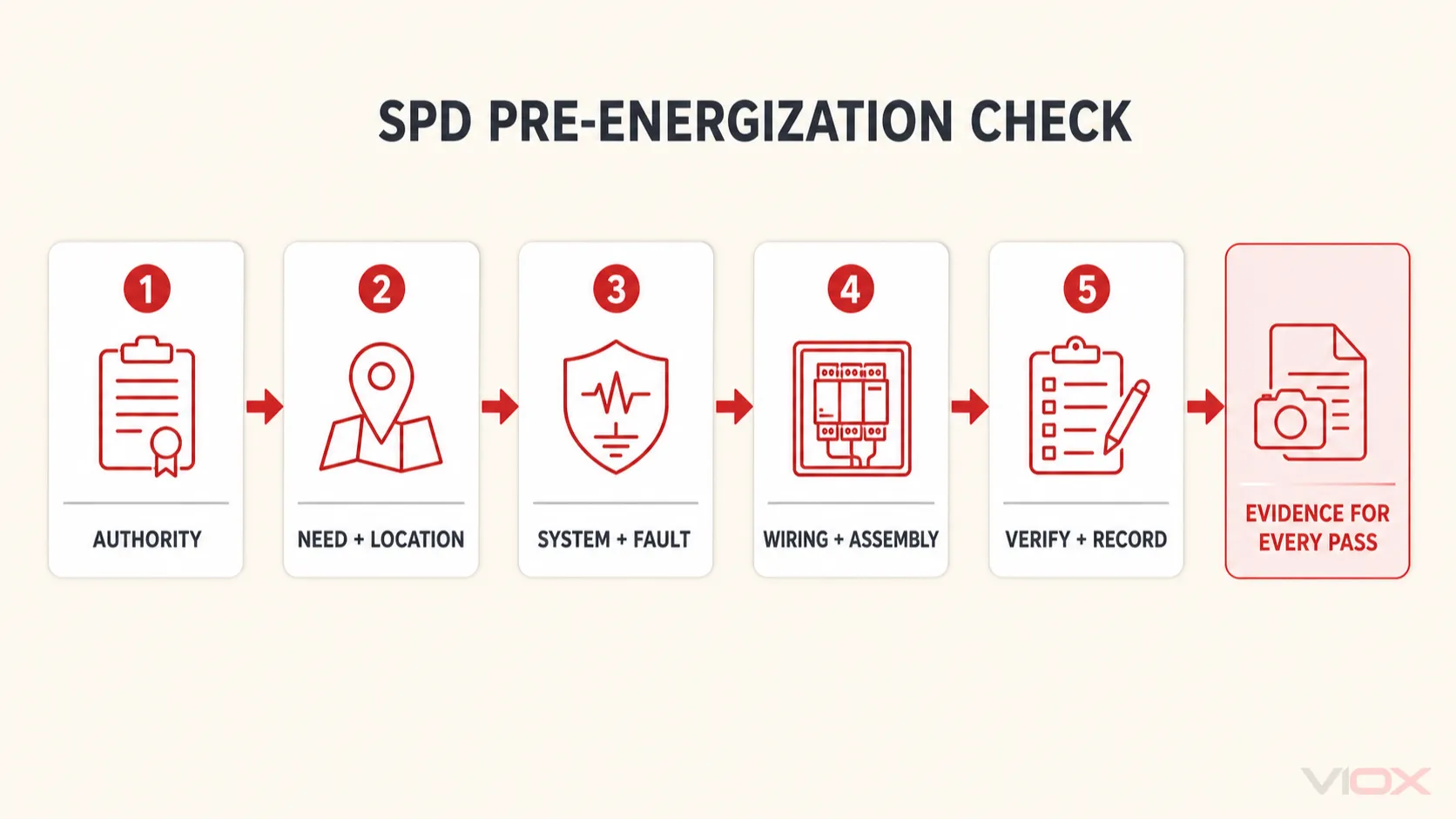
Macierz zgodności instalacji SPD
Należy używać tej macierzy jako dokumentacji przedłożeniowej oraz kontroli przed podaniem napięcia. Puste lub nieuzasadnione odpowiedzi nie oznaczają zaliczenia.
| Element weryfikacji | Wymagane dowody | Warunek zaliczenia |
|---|---|---|
| Jurysdykcja | Przyjęte przepisy, wydanie, poprawki oraz właściwy organ (AHJ) | Zarejestrowana dokładna podstawa |
| Potrzeba ochrony | Klauzula przepisów, ocena ryzyka, projekt LPS lub specyfikacja projektu | Wymagania i zakres ochrony zdefiniowane |
| Status produktu | Wykaz/certyfikat i dokładny zapis modelu | Dowód jest ważny dla dostarczonego modelu i rynku |
| Miejsce instalacji | Schemat jednokreskowy oraz dopuszczenie typu/klasy | Strona zasilania/odbioru oraz poziom dystrybucji są dozwolone |
| Zgodność systemu | Napięcie, częstotliwość, faza, układ uziemienia i tryby | Wszystkie warunki pracy obwodu mieszczą się w deklarowanych granicach |
| Napięcie ciągłe i dorywcze | Charakterystyka Uc/MCOV oraz TOV | Zgodność z normalnymi i prawdopodobnymi nieprawidłowymi warunkami pracy |
| Skuteczność ochrony | Deklaracje Up/VPR oraz odpowiednie deklaracje prądu udarowego | Spełnia założenia projektowe koordynacji |
| Bezpieczeństwo w przypadku prądu zwarciowego | Dostępny prąd zwarciowy oraz SCCR lub odpowiednia deklaracja Isccr/wytrzymałości zwarciowej | Urządzenie oraz wymagany rozłącznik są odpowiednie dla punktu instalacji |
| Ochrona kopii zapasowej | Instrukcje producenta oraz dane OCPD | Układ wewnętrzny/zewnętrzny oraz parametry znamionowe są udokumentowane |
| Przewody i zaciski | Schemat połączeń, specyfikacja przewodów oraz instrukcje dotyczące zacisków | Trasa, przekrój, oznaczenia oraz połączenia są zgodne z wymaganiami |
| Rozdzielnica i środowisko | Instrukcje montażu oraz deklaracje środowiskowe | Warunki certyfikacji oraz środowisko zostały zachowane |
| Weryfikacja | Rejestr inspekcji/testów oraz logika statusu | Kontrole przed podaniem napięcia zostały zakończone i są powtarzalne |
| Przekazanie | Rysunki, certyfikaty, instrukcje oraz dane dotyczące części zamiennych | Właściciel obiektu otrzymuje pełną dokumentację |
Często Zadawane Pytania
Czy SPD zawsze wymaga dedykowanego wyłącznika automatycznego?
Nie ma jednej uniwersalnej odpowiedzi. W wielu projektach instalacja typu 2 może wykorzystywać dedykowany wyłącznik automatyczny, jednak wymagany układ może obejmować zabezpieczenie wewnętrzne, zewnętrzny bezpiecznik, zewnętrzny wyłącznik automatyczny lub skoordynowaną kombinację. Należy postępować zgodnie z instrukcjami urządzenia, zasadami dotyczącymi rozdzielnic oraz przyjętymi przepisami.
Czy najniższa wartość Up lub VPR jest zawsze najbezpieczniejszym wyborem?
Nie. Niższe napięcie resztkowe może być pożądane, ale porównanie jest ważne tylko wtedy, gdy ramy testowe, tryby, napięcie systemu, Uc/MCOV, zachowanie przy TOV, wpływ przewodów oraz miejsce instalacji są również kompatybilne.
Czy zielony wskaźnik stanu dowodzi, że instalacja jest zgodna z przepisami?
Nie. Zazwyczaj informuje on jedynie o stanie monitorowanego modułu ochronnego lub rozłącznika określonego przez dany produkt. Nie weryfikuje on napięcia systemu, brakujących trybów ochrony, nadmiernej impedancji połączeń, nieprawidłowego zabezpieczenia wstępnego, słabej koordynacji ani integralności każdego z obwodów odbiorczych.
Czy istniejąca instalacja musi zostać zmodernizowana po opublikowaniu nowej edycji przepisów?
Nie automatycznie. Przyjęcie przepisów, daty wejścia w życie, zakres projektu, lokalne poprawki oraz zasady dotyczące modyfikacji lub wymiany sprzętu decydują o tym, czy wymagana jest modernizacja. Należy zapytać właściwy organ (AHJ), zamiast traktować publikację nowej edycji jako natychmiastowe prawo lokalne.
Określ wymagania, a nie tylko “jeden SPD”
Użyteczne zapytanie ofertowe powinno zawierać podstawy rynkowe i prawne, napięcie systemu i układ sieci, miejsce instalacji, dostępny prąd zwarciowy, wymagany Typ/Klasę i tryby ochrony, Uc/MCOV, Up/VPR, deklaracje prądu udarowego, ograniczenia zabezpieczenia wstępnego, warunki środowiskowe, potrzeby w zakresie sygnalizacji stanu lub zdalnej sygnalizacji oraz wymagane dokumenty certyfikacyjne.
Przejrzyj oferty ograniczników przepięć (SPD) VIOX dopiero po zdefiniowaniu tych danych wejściowych. W celu uzyskania propozycji dla konkretnego modelu, prosimy o przesłanie danych instalacji elektrycznej oraz wymaganych dokumentów zgodności na adres [email protected]. Certyfikaty oraz deklaracje dotyczące funkcjonalności powinny być zawsze weryfikowane w oparciu o konkretny dostarczony model.
Główne odniesienia
- NFPA LiNK: 2026 NFPA 70, National Electrical Code
- Rejestr prac nad kodem NFPA NEC 2023 dla sekcji 230.67
- IEC 60364-4-44:2024
- IEC 60364-5-53:2019 wraz z poprawkami
- IEC 61643-01:2024
- IEC 61643-11:2025
- IEC 61643-12:2020
- IEC 62305-4:2024
- Przewodnik po zastosowaniach rozdzielnic UL Solutions
- IET: Wydanie BS 7671 i narzędzie do sprawdzania okresów przejściowych
- IET: Czy SPD wymagają zabezpieczenia nadprądowego?