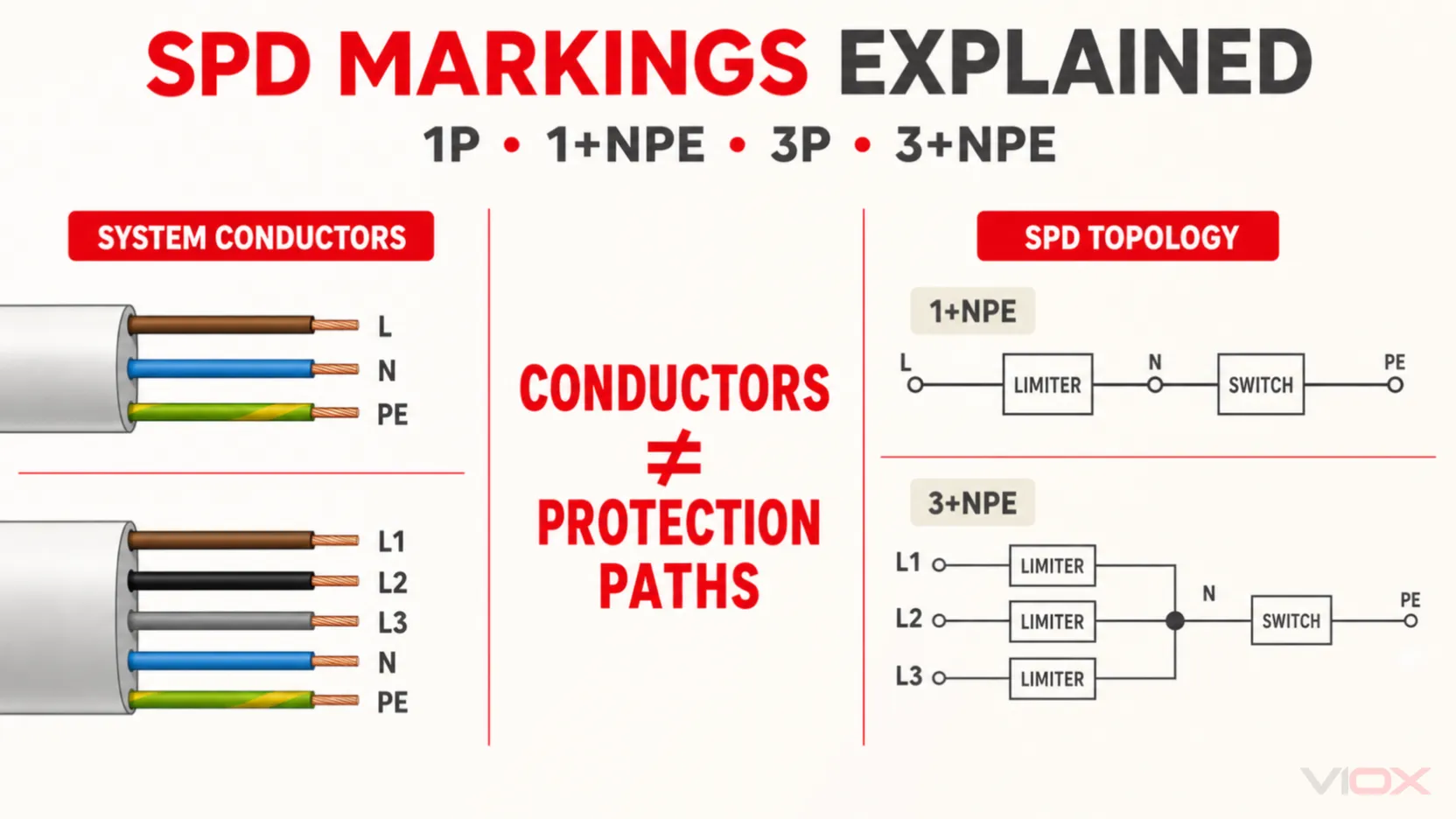
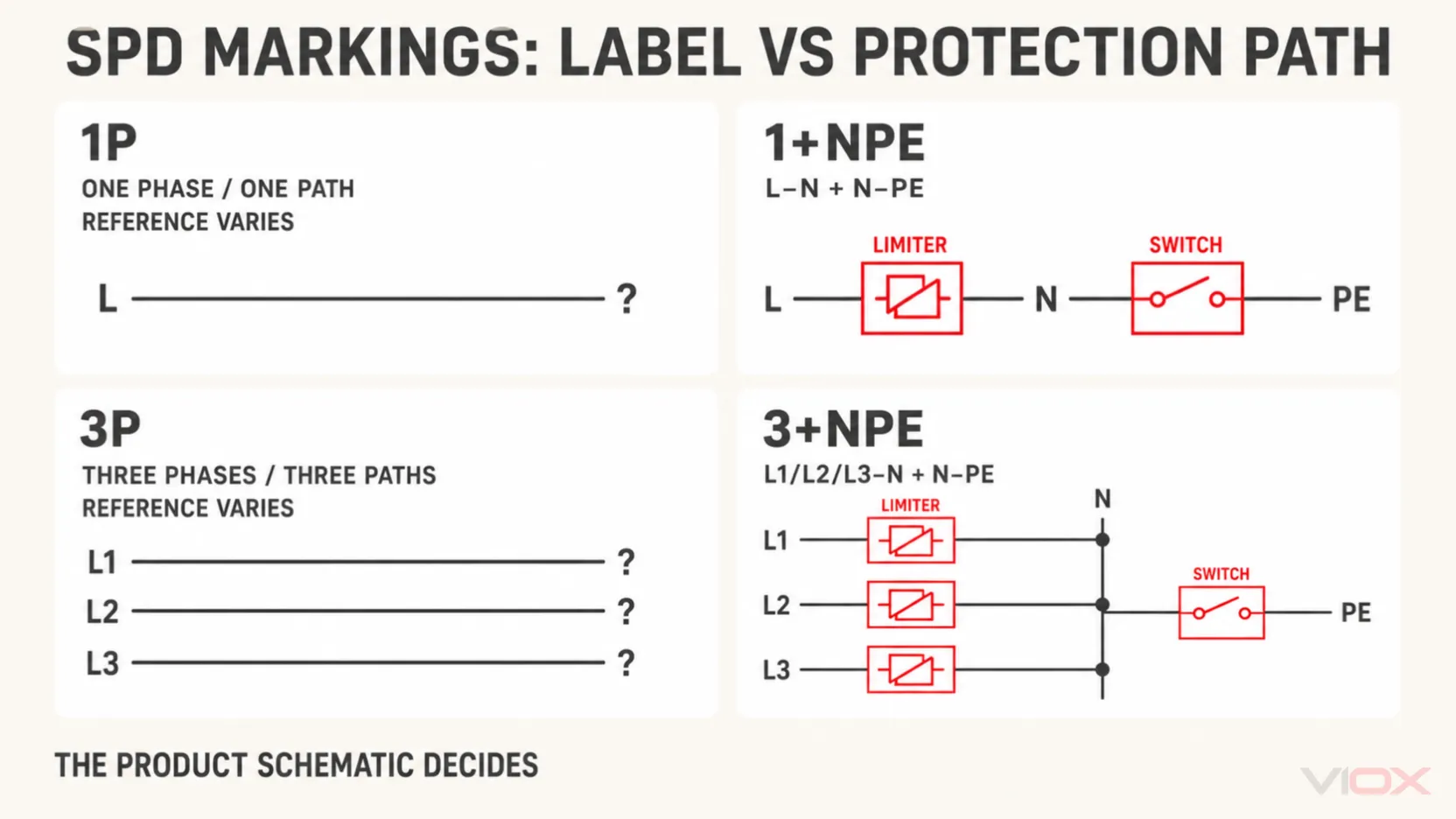
မြေကြီး (earth) ကို အခြားသော pole တစ်ခုအနေဖြင့် “ကာကွယ်ထားသည်” ဟု ဆိုခြင်း
PE သည် အကာအကွယ်ပေးသည့် ချိတ်ဆက်မှုနှင့် လျှပ်စီးကြောင်းလွန်လမ်းကြောင်း၏ အစိတ်အပိုင်းတစ်ခုဖြစ်သည်။ ၎င်းသည် L သို့မဟုတ် N ကဲ့သို့ အကာအကွယ်ပေးရန် လိုအပ်သော သာမန်လျှပ်ကူးပစ္စည်းမျိုး မဟုတ်ပါ။.
The residual voltage level during a specified surge test
Too high may expose downstream equipment to damaging voltage
If you need the broader device background first, start with What Is a Surge Protective Device?. This article focuses specifically on the two voltage parameters that buyers, panel builders, and engineers most often misread on SPD datasheets.
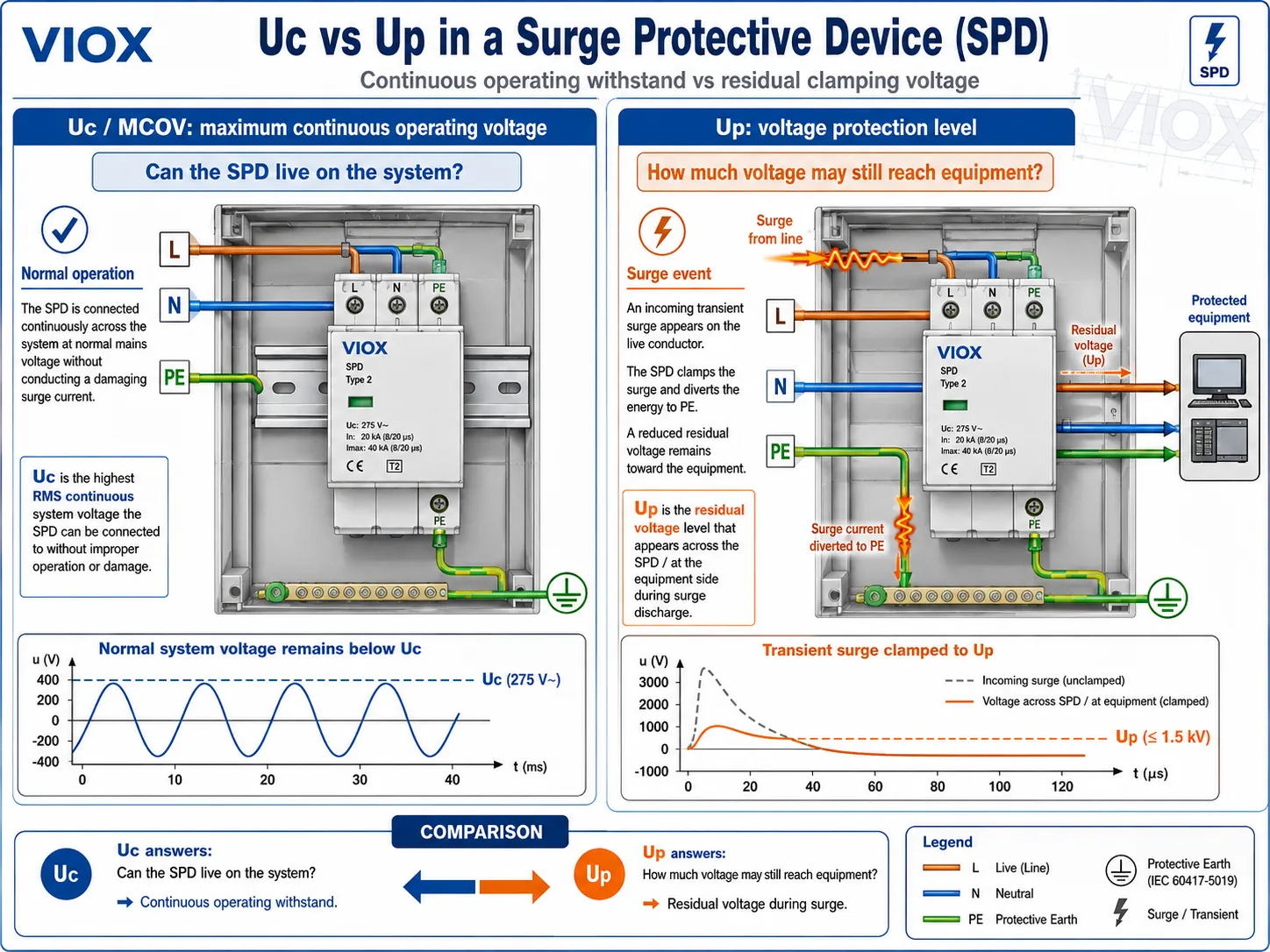
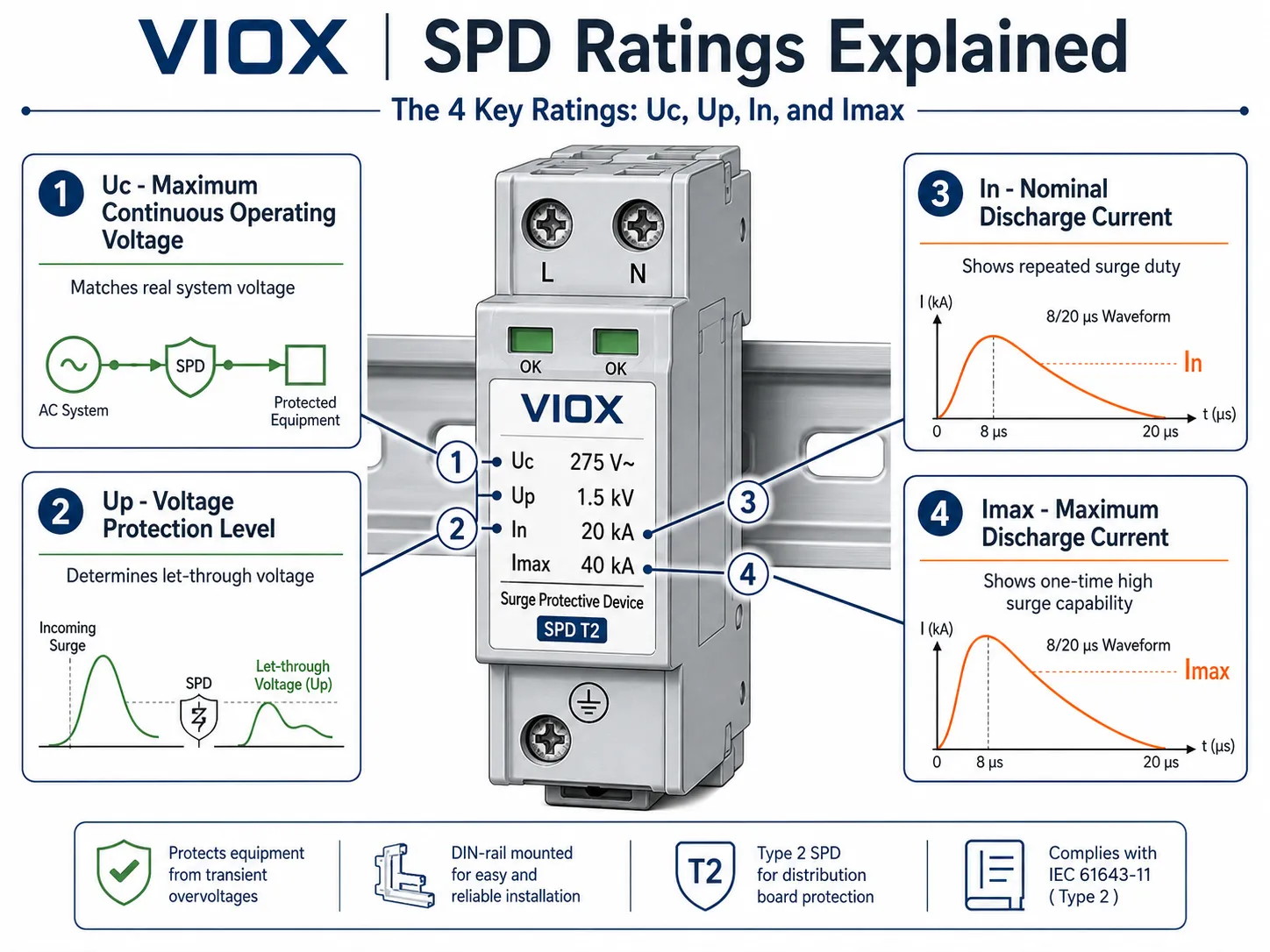
What Does Uc Mean on an SPD?
Uc အကြောင်းရင်းက အမြင့်ဆုံးဆက်တိုက်အသုံးပြုနိုင်သောဗို့အား of an SPD. It is the highest voltage that can be continuously applied across a specific SPD protection mode without abnormal operation.
In UL terminology, the equivalent concept is commonly called MCOV (Maximum Continuous Operating Voltage). In IEC-based datasheets, the marking is usually Uc.
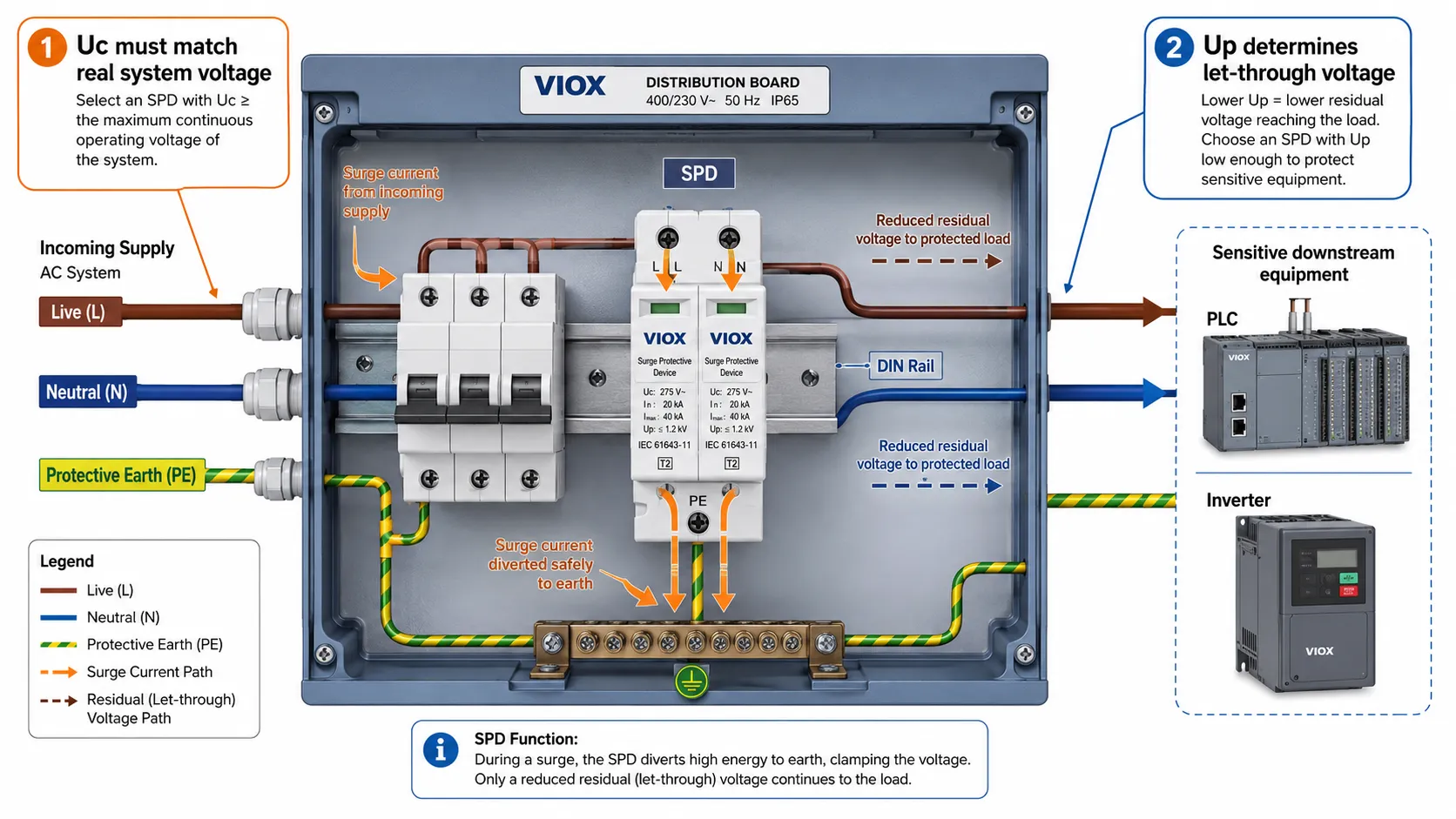
SPD သည် ဗို့အားကို သုညအထိ လျှော့ချပေးခြင်းမဟုတ်ပါ။ ၎င်းသည် လျှပ်စီးကြောင်းမြင့်တက်မှုကို ပိုမိုနည်းပါးသော ကျန်ရှိသည့်အဆင့် (residual level) သို့သာ ကန့်သတ်ပေးခြင်းဖြစ်သည်။ ထိုကျန်ရှိသည့်အဆင့်ကို ဖော်ပြရန်အတွက် Up က ကူညီပေးသည်။.
Why Lower Up Is Usually Better, But Not Always Enough
A lower Up value generally means better voltage limitation, but only when compared under the same:
SPD အမျိုးအစား
standard
voltage rating
test waveform
discharge current condition
protection mode
တပ်ဆင်နည်းလမ်း
Comparing Up values across different SPD types or standards can be misleading. A Type 1 SPD designed for lightning-current duty and a Type 2 SPD designed for distribution-level protection may not be directly comparable just because both datasheets show a Up value.
Up Must Be Read With Installation Lead Length
The Up value is measured at the SPD terminals under standard test conditions. In a real panel, the protected equipment sees:
SPD terminal voltage + voltage added by connection leads and wiring layout
Long, looped, or poorly routed SPD conductors add inductive voltage during a surge. This can make the actual let-through voltage higher than the datasheet Up value suggests.
The two parameters work together. Uc must be high enough for the system; Up must be low enough for the equipment. If either side is wrong, the SPD selection is weak.
Why Uc Must Match the System Voltage
Uc is system-dependent. The same SPD may be suitable in one power system and unsuitable in another, even if both systems have similar nominal voltage.
upstream/downstream SPD coordination (အထက်ပိုင်း/အောက်ပိုင်း SPD ချိတ်ဆက်ဆောင်ရွက်မှု)
Type 1, Type 2, or Type 3 SPD role (Type 1, Type 2 သို့မဟုတ် Type 3 SPD တို့၏ အခန်းကဏ္ဍ)
test condition behind the published Up value (ထုတ်ပြန်ထားသော Up တန်ဖိုးနောက်ကွယ်ရှိ စမ်းသပ်မှုအခြေအနေများ)
For sensitive electronics, control panels, PLC systems, IT equipment, and EV charging electronics, Up often becomes the parameter that determines whether the protection is genuinely useful, not just installed. (ထိခိုက်လွယ်သော အီလက်ထရောနစ်ပစ္စည်းများ၊ ထိန်းချုပ်ခန်းများ (Control panels)၊ PLC စနစ်များ၊ IT ပစ္စည်းကိရိယာများနှင့် EV အားသွင်းစနစ်များအတွက် Up တန်ဖိုးသည် တပ်ဆင်ထားရုံသက်သက်မဟုတ်ဘဲ အမှန်တကယ် အကာအကွယ်ပေးနိုင်ခြင်း ရှိ၊ မရှိကို ဆုံးဖြတ်ပေးသည့် အဓိကသတ်မှတ်ချက် ဖြစ်လာလေ့ရှိသည်။).
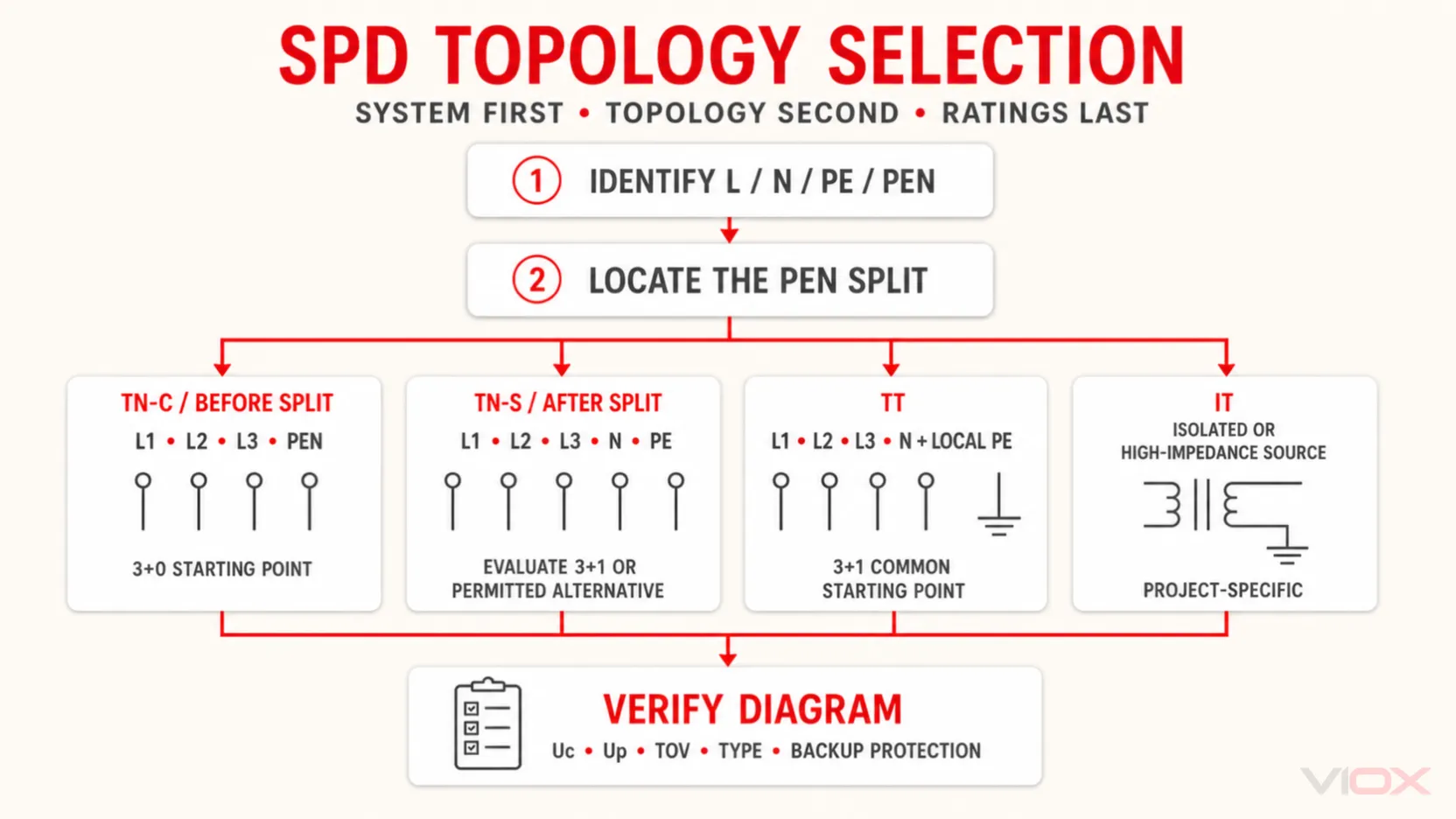
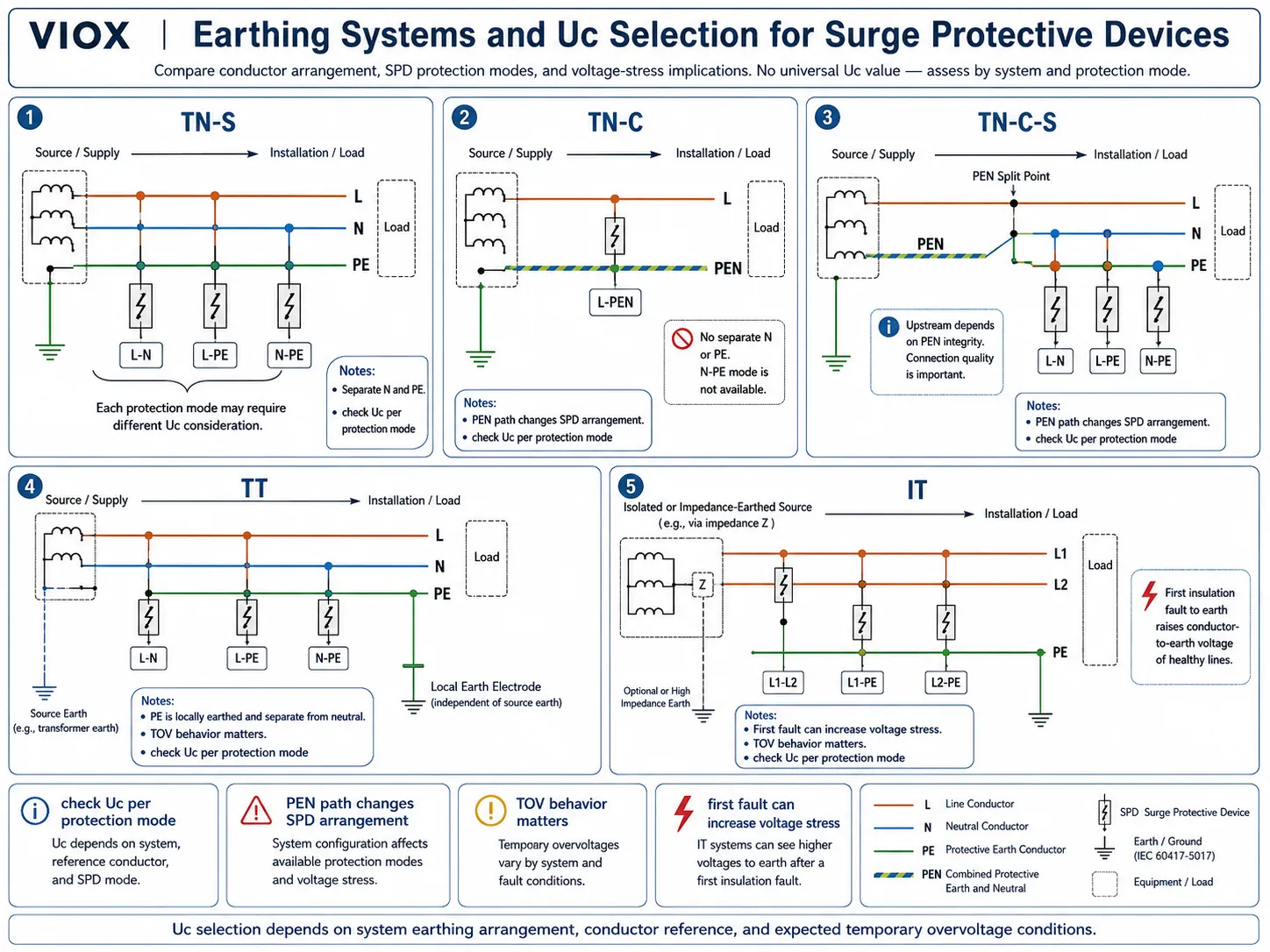
How Earthing Systems Affect Uc Selection (မြေစိုက်စနစ်များ (Earthing Systems) က Uc ရွေးချယ်မှုအပေါ် မည်သို့သက်ရောက်မှုရှိသနည်း)
Earthing system diagram showing how TN-S, TN-C, TN-C-S, TT, and IT arrangements affect SPD Uc selection and protection modes. (TN-S, TN-C, TN-C-S, TT နှင့် IT စနစ်များက SPD ၏ Uc ရွေးချယ်မှုနှင့် အကာအကွယ်ပေးသည့်ပုံစံများအပေါ် မည်သို့သက်ရောက်မှုရှိကြောင်း ပြသသည့် မြေစိုက်စနစ်ပုံစံများ).
Earthing arrangement affects which conductors may experience voltage stress and which protection modes are required. This is one of the most common places where SPD voltage selection goes wrong. (မြေစိုက်ပုံစံသည် မည်သည့်လျှပ်ကူးပစ္စည်းများတွင် ဗို့အားဖိအား (Voltage stress) ဖြစ်ပေါ်နိုင်သည်နှင့် မည်သည့်အကာအကွယ်ပေးသည့်ပုံစံ လိုအပ်သည်ကို သက်ရောက်မှုရှိသည်။ ဤအချက်သည် SPD ဗို့အားရွေးချယ်မှုတွင် အမှားအယွင်းအများဆုံးဖြစ်လေ့ရှိသည့် နေရာတစ်ခုဖြစ်သည်။).
စနစ်
Why it matters for Uc (Uc အတွက် အဘယ်ကြောင့် အရေးကြီးသနည်း)
Selection note
TN-S
Line, neutral, and protective earth are separated; L-PE and N-PE protection modes may be used
Check Uc for each protection mode, not only the line-to-neutral system voltage
TN-C
Neutral and protective earth are combined as PEN in part or all of the system
Do not treat it the same as TN-S without checking the exact wiring point and permitted SPD arrangement
TN-CS
PEN is separated into N and PE at a defined point
The transition point matters; confirm the SPD wiring diagram for that location
TT
Local earth electrode impedance and neutral-to-earth behavior can influence overvoltage stress
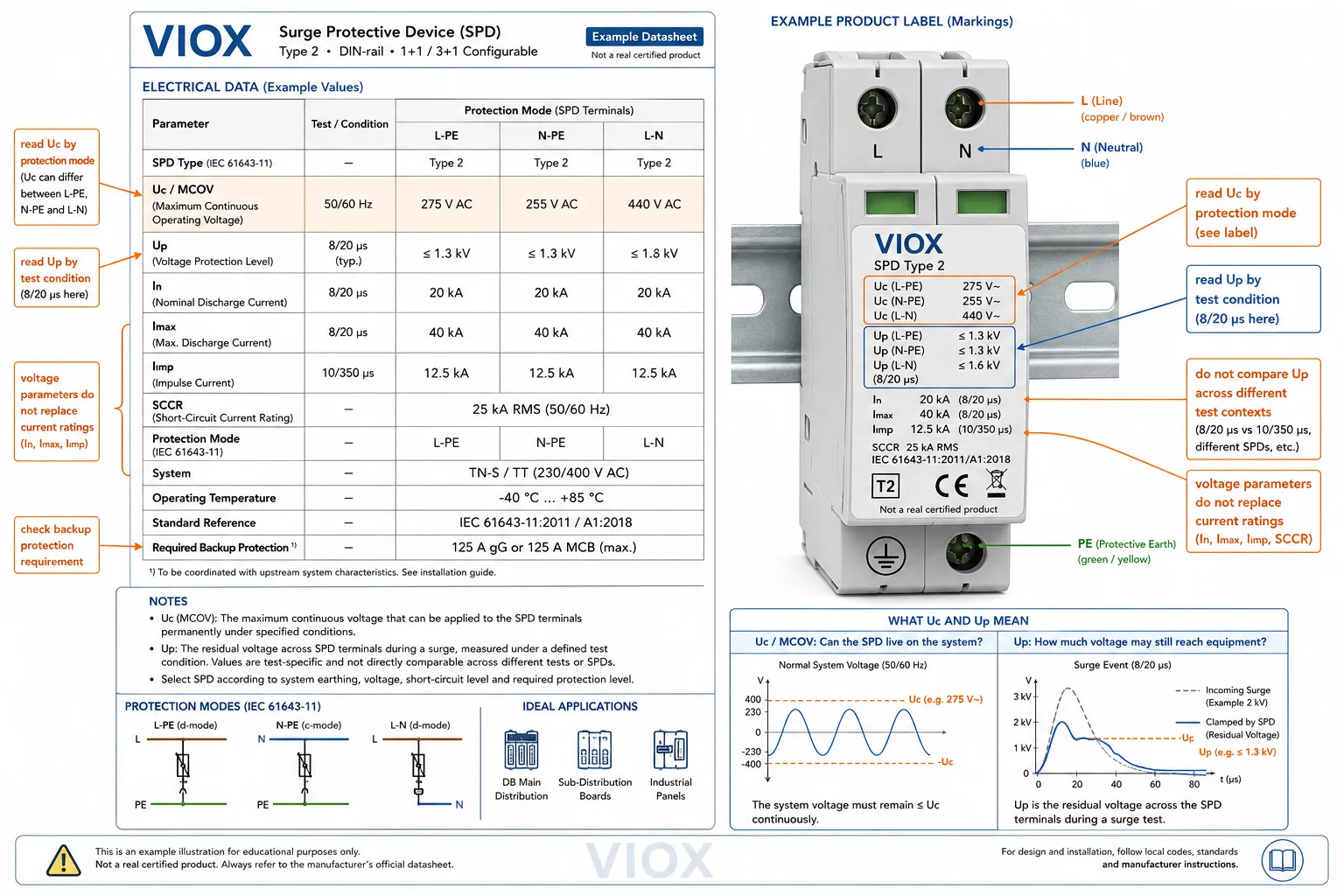
SPD Datasheet ပေါ်ရှိ Uc နှင့် Up တန်ဖိုးများကို မည်သို့ဖတ်ရှုရမည်နည်း
Uc, Up, In, Imax, Iimp, SCCR, အကာအကွယ်ပေးသည့် ပုံစံနှင့် အရန်အကာအကွယ် (Backup protection) လိုအပ်ချက်များကို မည်သည့်နေရာတွင် ရှာဖွေရမည်ကို ပြသထားသည့် မှတ်ချက်ပါသော SPD datasheet နှင့် ထုတ်ကုန်တံဆိပ်များ။.
When reviewing an SPD datasheet, do not read the front label as a collection of independent numbers. Read it as a protection design.
Use this sequence:
Identify the SPD application. AC, DC, PV, signal, Type 1, Type 2, Type 3, or Type 1+2.
Confirm the standard. IEC 61643-11 for AC low-voltage SPDs, IEC 61643-31 for PV DC-side SPDs, UL 1449 for North American SPD applications, or another local standard where required.
Read Uc or MCOV by protection mode. Check whether the listed value applies to L-N, L-PE, N-PE, L-L, DC+/DC-, or DC-to-PE.
စမ်းသပ်မှုအခြေအနေအလိုက် Up တန်ဖိုးကို ဖတ်ရှုပါ။. ထုတ်ပြန်ထားသော Up တန်ဖိုးနောက်ကွယ်ရှိ SPD အမျိုးအစား၊ လှိုင်းပုံစံ (waveform)၊ စီးဆင်းမှုလျှပ်စီးကြောင်း (discharge current) နှင့် ဗို့အားအဆင့်တို့ကို အတည်ပြုပါ။.
If Uc is too low, the SPD may conduct during normal voltage variation or temporary overvoltage. This can accelerate aging, cause heating, trigger end-of-life indication, or disconnect the protection module.
What happens if Uc is too high?
If Uc is unnecessarily high, the SPD may provide less effective voltage limitation and may have a higher Up value. Higher Uc should be used only when required by system voltage, earthing arrangement, TOV behavior, or manufacturer guidance.
Is Uc the same as MCOV?
They are closely related terms from different standard contexts. Uc is commonly used in IEC-based SPD datasheets. MCOV, maximum continuous operating voltage, is commonly used in UL-based terminology.
How do I choose Uc for a TT or IT system?
For TT systems, pay close attention to N-PE behavior, temporary overvoltage, and the protection mode. For IT systems, the first fault condition can raise voltage stress on healthy conductors, so Uc selection may need additional margin. In both cases, use the project earthing design and manufacturer data rather than a generic voltage table alone.
Can I compare Up values from different SPD types?
Only with caution. Up values are meaningful when the standard, SPD type, voltage rating, waveform, discharge current, and test context are comparable. Comparing a Type 1 SPD and Type 2 SPD only by Up can lead to a wrong conclusion.
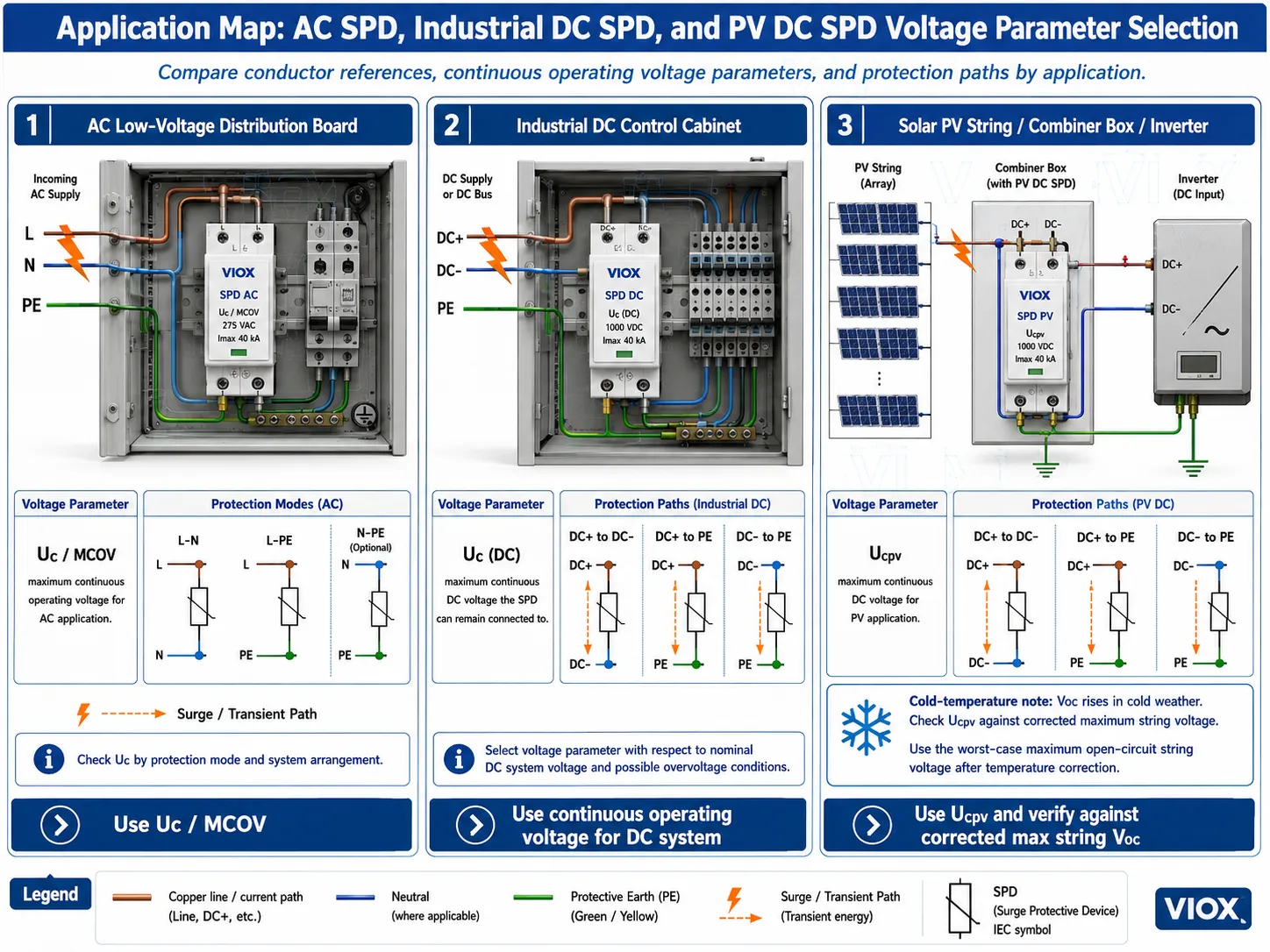
What is Ucpv on a DC solar SPD?
Ucpv is the maximum continuous operating voltage rating for a PV DC SPD. It must be selected against the maximum PV string open-circuit voltage, including cold-temperature correction, not just the nominal PV system voltage.
Should I choose an SPD by Uc and Up only?
No. Uc and Up are critical voltage parameters, but a complete SPD selection also checks Type 1/2/3, In, Imax, Iimp, SCCR, backup protection, earthing system, installation location, lead length, and applicable standard.
Imax, သို့မဟုတ် maximum discharge current သည် သတ်မှတ်ထားသော စမ်းသပ်မှုအခြေအနေများအောက်တွင် SPD တစ်ခုမှ ထုတ်လွှတ်နိုင်သည့် အမြင့်ဆုံး 8/20 us surge current တန်ဖိုးကို ဖော်ပြသည်။ ၎င်းသည် နေ့စဉ်သက်တမ်းထက် အမြင့်ဆုံး surge စွမ်းဆောင်ရည်နှင့် ပိုမိုသက်ဆိုင်သည်။.
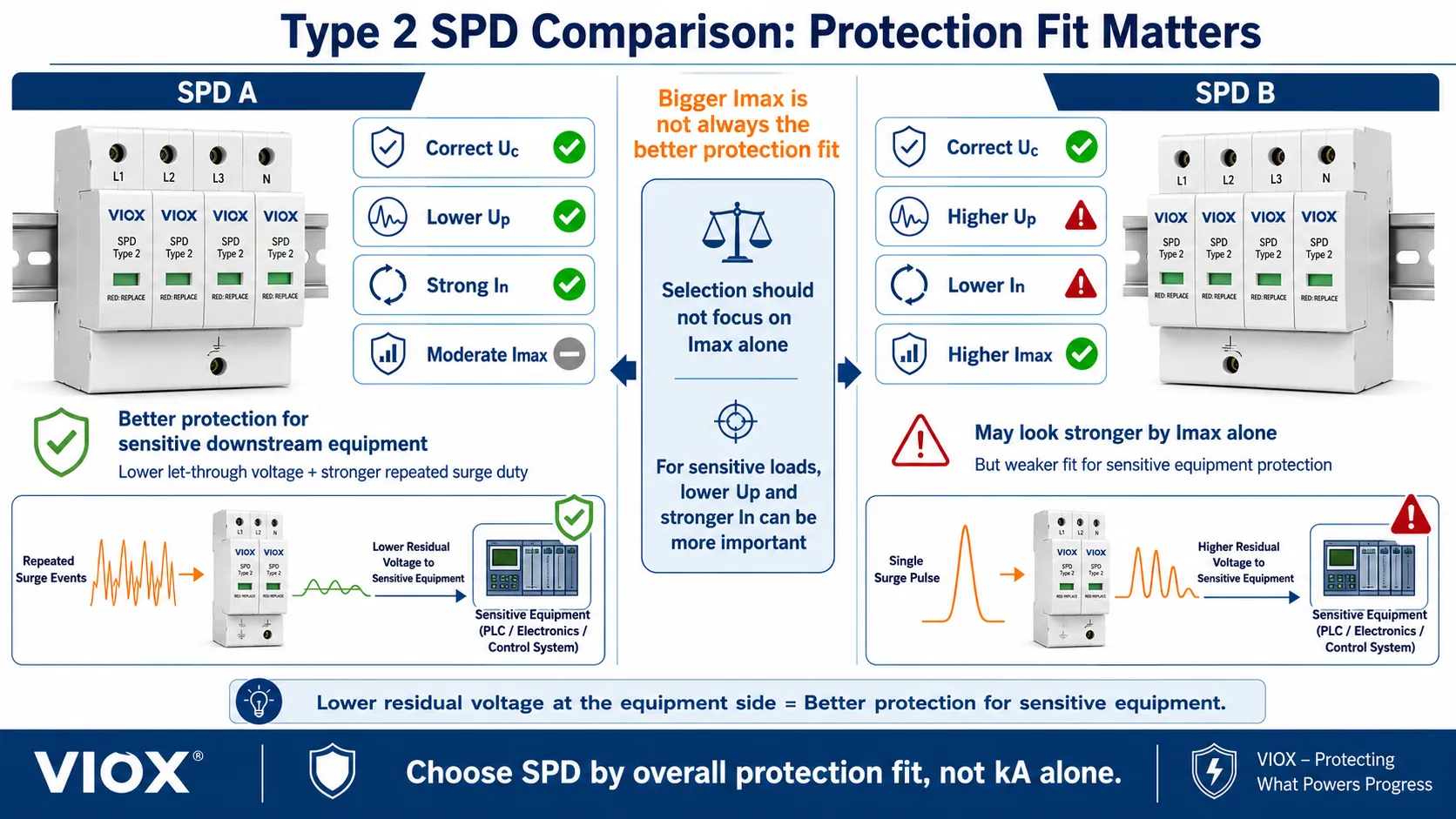
သတိပေးချက်- Uc, Up နှင့် In တန်ဖိုးများသည် အသုံးပြုမည့်နေရာနှင့် ကိုက်ညီမှုမရှိပါက Imax တန်ဖိုး မြင့်မားရုံမျှဖြင့် SPD တစ်ခုသည် ပိုကောင်းသည်ဟု မဆိုနိုင်ပါ။.
Up (ဗို့အားကာကွယ်မှုအဆင့်)၊ ညှိနှိုင်းမှုအကွာအဝေးနှင့် စက်ပစ္စည်းများ၏ လိုက်ဖက်ညီမှုတို့သည် အလွန်အရေးကြီးသည်
Type 1 SPD များအတွက် ရွေးချယ်ရာတွင် Imax ကိုသာ အဓိကမထားပါနှင့်။ IEC စံနှုန်းအရ၊, Iimp 10/350 us လှိုင်းပုံစံသည် မိုးကြိုးလျှပ်စီးကြောင်းအတွက် အဓိကကျသော ကန့်သတ်ချက်တစ်ခုဖြစ်သည်။ Type 2 SPD များအတွက်မူ ဝယ်ယူသူများအနေဖြင့် In နှင့် Imax ကို နှိုင်းယှဉ်လေ့ရှိကြသည်။ Type 3 SPD များအတွက်မူ ဗို့အားကာကွယ်မှုနှင့် စနစ်ညှိနှိုင်းမှုတို့သည် အထူးအရေးကြီးလာသည်။.
If the project is solar, EV, or industrial DC, review the actual DC rating. Do not use an AC SPD simply because the Imax number looks strong. VIOX’s DC surge protection device guide covers that application boundary in more detail.
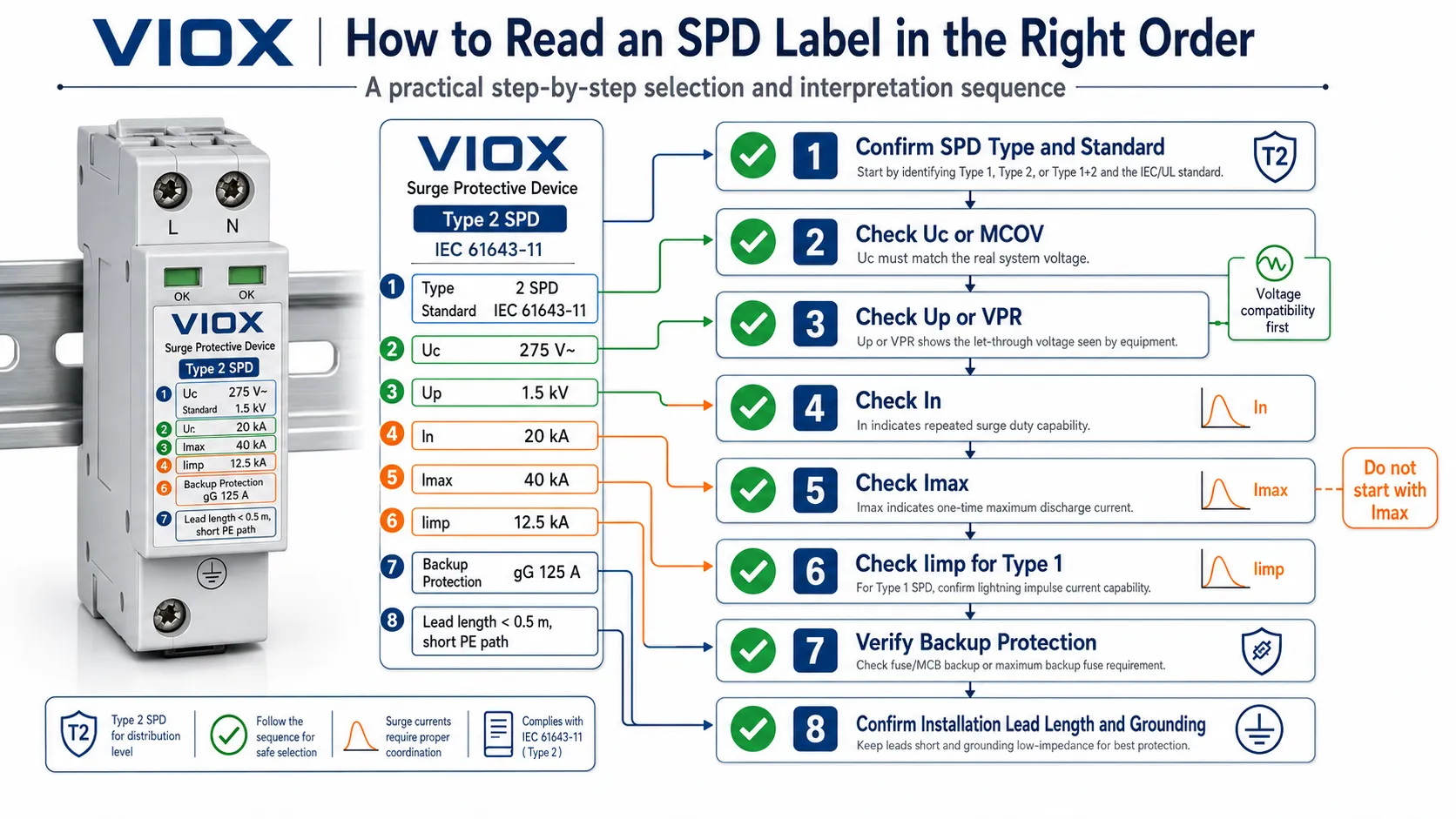
How to Read an SPD Label in the Right Order
Use this sequence when comparing SPDs:
Confirm the SPD type and standard. Type 1, Type 2, Type 3, IEC, UL, AC, DC, or PV application.
Check Uc or MCOV. SPD သည် လက်ရှိဖြစ်ပေါ်နေသော စနစ်၏ ဗို့အားကို ခံနိုင်ရည်ရှိရမည်။.
Imax ကို စစ်ဆေးပါ။. ၎င်းသည် အများဆုံး 8/20 us လျှပ်စီးကြောင်း ထုတ်လွှတ်နိုင်စွမ်းကို ပြသသည်။.
Type 1 လျှပ်စီးကြောင်း (lightning-current) နှင့် ထိတွေ့မှုရှိပါက Iimp ကို စစ်ဆေးပါ။.
Check backup protection and short-circuit current rating.
Check installation details. Lead length, grounding, bonding, panel location, and protection coordination affect real performance.
Flowchart showing the correct order for reading SPD ratings including Uc, Up, In, Imax, and Iimp.
This sequence prevents the common error of starting with Imax and forgetting the voltage side of the protection problem.
Common Mistakes When Comparing Imax and In
Mistake 1: Choosing the largest Imax without checking Uc
If Uc does not match the system, the SPD is not suitable. A high Imax value does not fix a wrong continuous operating voltage.
Mistake 2: Treating Imax as a life expectancy rating
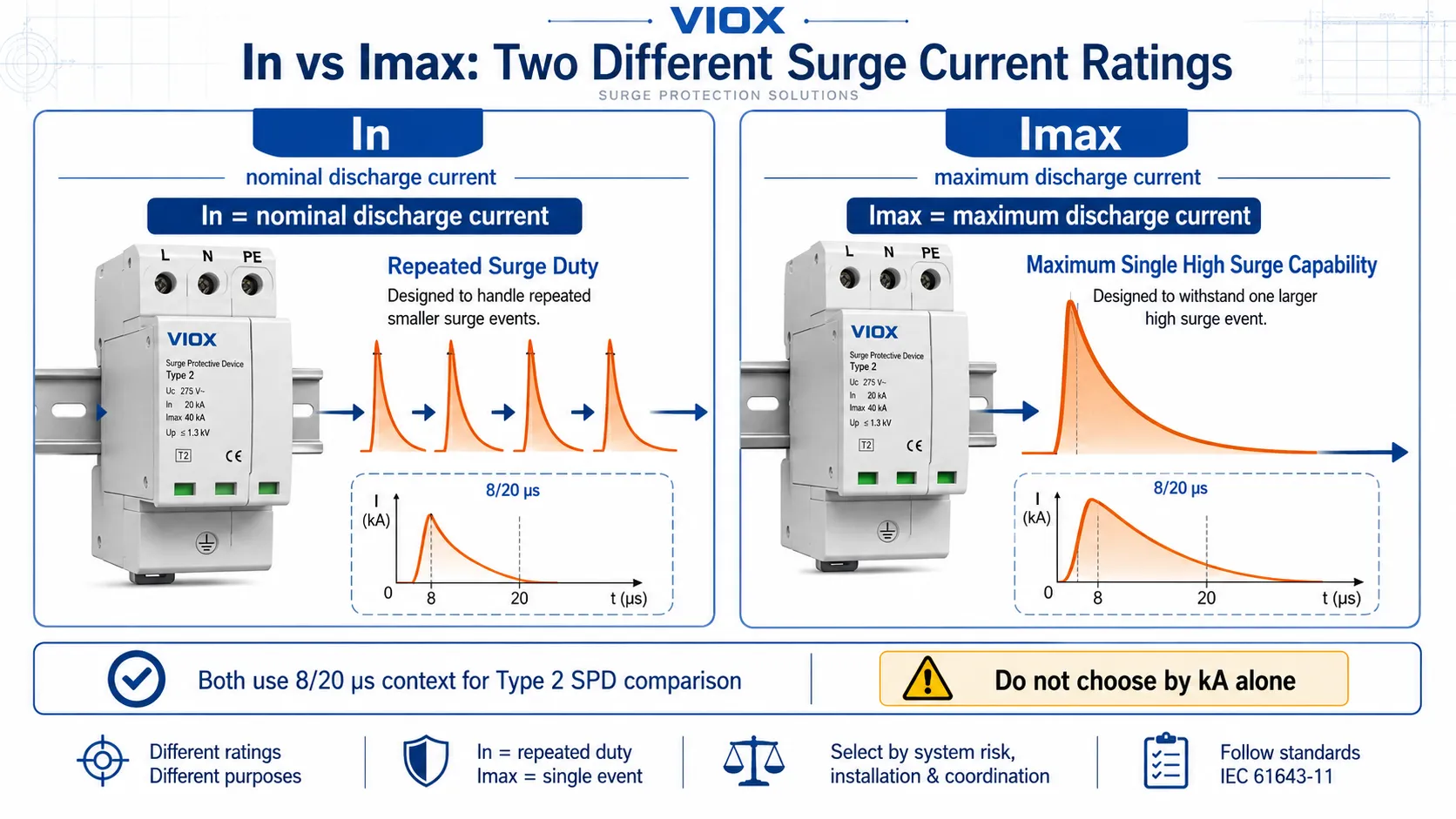
Imax is not the normal repeated-duty value. In is more useful when comparing repeated surge endurance within the same class of SPD.
Mistake 3: Ignoring Up
An SPD can have high current-handling capability but still let through too much voltage for sensitive downstream equipment. Up is the protection-quality parameter buyers often overlook.
Mistake 4: Comparing AC and PV SPDs by the same kA number
PV systems have different DC voltage behavior, polarity considerations, and standards. For PV DC-side SPDs, check the relevant DC and PV markings.
Mistake 5: Assuming installation does not affect protection
Long leads, poor grounding, and bad routing add voltage during a surge event. A good Up rating on the datasheet can be undermined by poor installation practice.
Mistake 6: Forgetting end-of-life indication
SPDs degrade after surge events. Status indication, remote signaling, and replaceable modules matter in maintainable panel designs. For MOV-based SPD aging, see ZnO MOV Explained.
Practical Selection Checklist
Before approving an SPD, confirm:
the SPD type matches the installation point
Uc or MCOV matches the real system voltage and earthing arrangement
Up or VPR is low enough for the protected equipment
In is appropriate for expected repeated surge exposure
Imax သည် 8/20 us surge-current margin အတွက် လုံလောက်သော အမြင့်ဆုံးပမာဏကို ပေးစွမ်းသည်။
Type 1 lightning-current duty လိုအပ်သည့်နေရာများတွင် Iimp ကို ပြန်လည်စစ်ဆေးရမည်။
AC, DC သို့မဟုတ် PV အသုံးပြုမှုအမျိုးအစားကို ရှင်းလင်းစွာ ဖော်ပြထားသည်။
short-circuit current rating သည် တပ်ဆင်မည့်နေရာနှင့် ကိုက်ညီမှုရှိရမည်။
lead length နှင့် grounding path တို့ကို မှန်ကန်စွာ ဒီဇိုင်းထုတ်ထားရမည်။
ပြုပြင်ထိန်းသိမ်းမှုအတွက် အရေးကြီးသည့်နေရာများတွင် status indication သို့မဟုတ် remote signaling ပါဝင်ရမည်။
အကယ်၍ သင်သည် rating အဓိပ္ပာယ်ဖွင့်ဆိုချက်မှ ထုတ်ကုန်အကဲဖြတ်ခြင်းသို့ ပြောင်းလဲနေပါက၊ အောက်ပါတို့ကို ပြန်လည်သုံးသပ်ပါ - VIOX SPD ထုတ်ကုန်အမျိုးအစားများ စနစ်၏ဗို့အား၊ SPD အမျိုးအစား၊ စံနှုန်းနှင့် တပ်ဆင်မည့်နေရာတို့နှင့် ကိုက်ညီမှုရှိမရှိ မော်ဒယ်တစ်ခုချင်းစီကို စစ်ဆေးပါ။.
အမြဲမေးလေ့ရှိသောမေးခွန်းများ
SPD တစ်ခုတွင် Imax နှင့် In အကြား ကွာခြားချက်မှာ အဘယ်နည်း။
In ဆိုသည်မှာ Nominal discharge current ဖြစ်ပြီး စံသတ်မှတ်ချက်များအောက်တွင် ထပ်ခါတလဲလဲ ဖြစ်ပေါ်သော လျှပ်စီးကြောင်းဒဏ်ကို ခံနိုင်ရည်ရှိမှုကို ဖော်ပြသည်။ Imax ဆိုသည်မှာ Maximum discharge current ဖြစ်ပြီး သတ်မှတ်ထားသော စမ်းသပ်မှုအခြေအနေများအောက်တွင် SPD တစ်ခုက ခံနိုင်ရည်ရှိသည့် အမြင့်ဆုံး 8/20 us လျှပ်စီးကြောင်းပမာဏကို ဖော်ပြသည်။.
SPD ကို kA အဆင့်သတ်မှတ်ချက်တစ်ခုတည်းကိုသာ ကြည့်၍ ရွေးချယ်သင့်ပါသလား။
မရွေးချယ်သင့်ပါ။ kA အဆင့်သတ်မှတ်ချက်သည် လျှပ်စီးကြောင်းမြင့်တက်မှု (surge-current) ခံနိုင်ရည်စွမ်းရည်ကိုသာ ဖော်ပြသည်။ SPD ရွေးချယ်ရာတွင် Uc၊ Up၊ SPD အမျိုးအစား၊ စံနှုန်း၊ စနစ်ဗို့အား၊ မြေချစနစ်၊ အရန်ကာကွယ်မှု (backup protection)၊ ဝါယာရှော့ဖြစ်မှုခံနိုင်ရည် (short-circuit rating) နှင့် တပ်ဆင်သည့် ဝါယာကြိုးအရှည်တို့အပေါ်တွင်လည်း မူတည်သည်။.
Imax နှင့် Iimp တို့သည် အတူတူပင်လော။
မတူပါ။ Imax သည် ပုံမှန်အားဖြင့် 8/20 us လျှပ်စီးကြောင်းထုတ်လွှတ်မှုပုံစံ (discharge-current waveform) နှင့် သက်ဆိုင်သည်။ Iimp သည် Impulse current ဖြစ်ပြီး IEC စံနှုန်းအရ Type 1 လျှပ်စီးကြောင်းဆိုင်ရာ တာဝန်အတွက် ပုံမှန်အားဖြင့် 10/350 us လှိုင်းပုံစံနှင့် သက်ဆိုင်သည်။.
AC နှင့် DC SPD များသည် တူညီသော သတ်မှတ်ချက်များ (ratings) ကို အသုံးပြုပါသလား။
အချို့သော သတ်မှတ်ချက်အမည်များမှာ ဆင်တူသော်လည်း အသုံးချမှုစံနှုန်းများနှင့် ဗို့အားဆိုင်ရာ တုံ့ပြန်မှုများမှာ ကွဲပြားပါသည်။ AC SPD များ၊ PV DC SPD များ နှင့် မြောက်အမေရိက UL 1449 SPD များကို ၎င်းတို့၏ သက်ဆိုင်ရာ အချက်အလက်စာရွက်များ (datasheets) နှင့် သက်ဆိုင်သော စံနှုန်းများနှင့်အညီ စစ်ဆေးရပါမည်။.
အောက်ခြေလိုင်း
Imax နှင့် In တို့သည် အရေးကြီးသော SPD လျှပ်စီးကြောင်း သတ်မှတ်ချက်များ ဖြစ်ကြသော်လည်း ၎င်းတို့သည် မေးခွန်းအမျိုးမျိုးအတွက် အဖြေပေးပါသည်။. In သည် ထပ်ခါတလဲလဲ ဖြစ်ပေါ်သော လျှပ်စီးကြောင်းမြင့်တက်မှု (surge-duty) ခံနိုင်ရည်စွမ်းရည်ကို ဖော်ပြသည်။ Imax သည် အများဆုံး 8/20 us လျှပ်စီးကြောင်းမြင့်တက်မှု (surge-current) ခံနိုင်ရည်စွမ်းရည်ကို ဖော်ပြသည်။.
တိုက်ရိုက်အဖြေ: No, most circuit breaker finders require power to operate effectively. These devices need electricity flowing through the circuit to detect and trace the electrical signal to the correct breaker. However, there are specific techniques and alternative methods for circuit identification when power is unavailable.
Circuit breaker finders are essential electrical tools that help identify which breaker controls a specific outlet or fixture. Understanding their power requirements and limitations is crucial for safe electrical work and proper circuit management.
What is a Circuit Breaker Finder and How Does It Work?
A circuit breaker finder (also called a circuit tracer) is a two-part electrical testing device consisting of a transmitter and receiver. The transmitter plugs into an outlet or connects to a fixture, sending a specific signal through the electrical circuit. The receiver detects this signal at the electrical panel, allowing you to identify the correct ဆားကစ်အနိုင်အထက်.
အဓိကအစိတ်အပိုင်းများ-
Transmitter unit: Plugs into outlet or connects to wires
Receiver unit: Handheld device used at the electrical panel
Test leads: For direct wire connections when needed
Signal generation circuit: Creates traceable electrical signature
Types of Circuit Breaker Finders and Their Power Requirements
အမျိုးအစား
Power Required
How It Works
အကောင်းဆုံးအသုံးပြုမှုကိစ္စများ
Standard Plug-In Finders
Yes – Active circuit
Sends signal through live outlet
Working outlets, powered circuits
Professional Wire Tracers
Yes – Energized circuit
Injects tone signal into live wires
Complex electrical troubleshooting
Non-Contact Voltage Tracers
Yes – Powered circuit
Detects electromagnetic field
Quick circuit verification
Tone Generator Systems
Depends on model
Some work on dead circuits
Telecommunications and low-voltage
Why Circuit Breaker Finders Need Power
Signal Transmission Requirements
Electrical path completion: The device needs current flow to create a traceable signal path
Circuit continuity: Power ensures there’s a complete electrical loop for signal transmission
Signal strength: Adequate voltage is required to generate a detectable signal at the panel
Noise filtering: Active circuits help distinguish the finder’s signal from electrical noise
ဘေးကင်းရေး ထည့်သွင်းစဉ်းစားမှုများ
⚠️ ဘေးကင်းလုံခြုံမှုသတိပေးခြင်း: Never attempt to energize circuits for testing purposes if you’re not qualified. Always follow NEC (National Electrical Code) guidelines and local electrical codes.
ပရော်ဖက်ရှင်နယ် အကြံပြုချက်များ-
Only test circuits that are already safely energized
Never work on live electrical panels without proper training
Use appropriate PPE (Personal Protective Equipment)
Consider hiring a licensed electrician for complex circuit identification
When Circuit Breaker Finders Won’t Work
Power Outage Situations
Circuit breaker finders become ineffective during:
Complete power outages: No electricity available for signal generation
Tripped breakers: Dead circuits can’t carry the finder’s signal
Disconnected circuits: Broken connections prevent signal transmission
GFCI/AFCI trips: Safety devices may block the finder’s signal
Circuit Condition Issues
Open circuits: Broken wires prevent signal completion
Overloaded circuits: May cause interference with finder signals
Multi-wire branch circuits: Can create confusing signal patterns
Look for obvious connections (dedicated appliance circuits)
Consider hiring emergency electrical services
Never energize unknown circuits without professional help
နိဂုံး
Circuit breaker finders are valuable electrical tools, but they fundamentally require electrical power to operate effectively. Understanding their limitations helps ensure safe and accurate circuit identification. When power isn’t available, alternative methods like systematic testing and professional consultation provide reliable circuit identification solutions.
အဓိက ထုတ်ယူမှုများ-
Standard circuit breaker finders need powered circuits to function
Alternative identification methods exist for power-out situations
Safety should always be the primary consideration
Professional assistance is recommended for complex electrical systems
For complex electrical work or when safety is uncertain, always consult with a licensed electrician who can ensure proper procedures and code compliance.