

ဤစာမျက်နှာတွင်
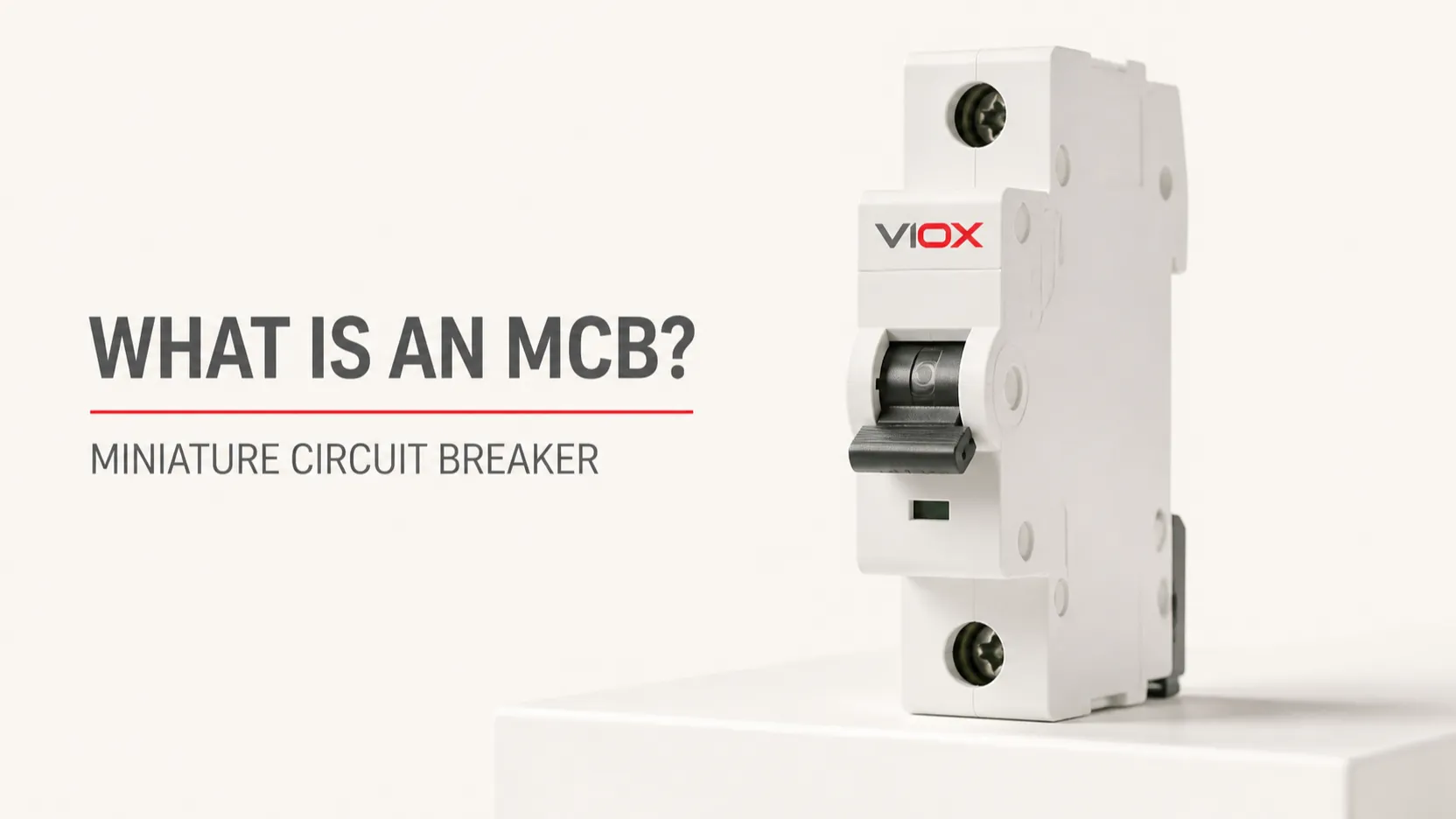
တစ်ခု တက္ကို, သို့မဟုတ် Miniature Circuit Breaker, MCB သည် ဝန်ပိုခြင်း (overload) သို့မဟုတ် ရှော့ဖြစ်ခြင်း (short circuit) ကြောင့် လျှပ်စီးကြောင်းများလွန်ကဲလာသည့်အခါ ဆားကစ်ကို ဖြတ်တောက်ပေးသည့် အလိုအလျောက် လျှပ်စစ်ဗို့အားနိမ့် ကာကွယ်ရေးကိရိယာတစ်ခုဖြစ်သည်။ ၎င်းကို အဓိကအားဖြင့် ဆားကစ်ကြိုးများနှင့် ဝိုင်ယာကြိုးများကို ကာကွယ်ရန် ရွေးချယ်အသုံးပြုပြီး၊ ဝန်အားနှင့် ကိုက်ညီအောင် ချိန်ညှိထားပါက ချိတ်ဆက်ထားသော စက်ပစ္စည်းများကိုလည်း ကာကွယ်ပေးနိုင်သည်။.
ဖြန့်ဖြူးရေးဘုတ်များတွင် အသုံးပြုသည့် MCB အများစုသည် ဝန်ပိုခြင်းကို ကာကွယ်ရန်အတွက် အချိန်နှောင့်နှေးသော အပူချိန်ထိန်းစနစ် (thermal trip) နှင့် ချက်ချင်းတုံ့ပြန်သော သံလိုက်စနစ် (magnetic release) တို့ကို ပေါင်းစပ်ထားသည်။ လျှပ်စီးကြောင်းသည် ရှော့ဖြစ်သည့်အခြေအနေမျိုးတွင်ကဲ့သို့ သတ်မှတ်ထားသော ပမာဏသို့ ရောက်ရှိသည့်အခါ သံလိုက်စနစ်က လျင်မြန်စွာ တုံ့ပြန်ပေးသည်။ ချို့ယွင်းချက်ကို ရှာဖွေပြီး ဖြေရှင်းပြီးနောက်တွင် ဘရိတ်ကာကို အစားထိုးရန်မလိုဘဲ ပုံမှန်အတိုင်း ပြန်လည်အသုံးပြုနိုင်သည်။.
ဤစာမျက်နှာတွင် MCB ၏ အဓိပ္ပာယ်၊ လုပ်ဆောင်ချက်၊ အတွင်းပိုင်းလည်ပတ်မှုနှင့် ကာကွယ်မှုနယ်ပယ်များကို ရှင်းပြထားသည်။ မော်ဒယ်အရွယ်အစားနှင့် သတ်မှတ်ချက်များကို ဆုံးဖြတ်ရန်အတွက် သီးသန့်ဖော်ပြထားသော အပိုင်းကို အသုံးပြုပါ။ MCB ရွေးချယ်မှုလမ်းညွှန်.
MCB အကျဉ်းချုပ်
| Question | တိုက်ရိုက်အဖြေ |
|---|---|
| What does MCB stand for? | Miniature Circuit Breaker |
| What does an MCB protect against? | ဝန်ပိုခြင်းနှင့် ရှော့ဖြစ်ခြင်းကြောင့် လျှပ်စီးကြောင်းလွန်ကဲခြင်း |
| ၎င်း၏ အဓိက ကာကွယ်မှုရည်ရွယ်ချက်မှာ အဘယ်နည်း။ | ဆားကစ်လျှပ်ကူးပစ္စည်းများနှင့် ဝါယာကြိုးများကို လျှပ်စီးကြောင်းလွန်ကဲခြင်းမှ ကာကွယ်ပေးခြင်း |
| ၎င်းသည် မည်သို့ဖြုတ်ချ (Trip) သနည်း။ | အပူချိန်ထိန်းဒြပ်စင် (Thermal element) သည် ကြာရှည်ခံသော ဝန်ပိုမှု (Overload) ကို တုံ့ပြန်ပြီး သံလိုက်ဓာတ်ထိန်းဒြပ်စင် (Magnetic release) သည် လျှပ်စီးကြောင်းလွန်ကဲမှုသည် ချက်ချင်းဖြတ်တောက်နိုင်သည့် အတိုင်းအတာသို့ ရောက်ရှိသောအခါ လျင်မြန်စွာ တုံ့ပြန်ပါသည်။ |
| ၎င်းကို ပြန်လည်စတင် (Reset) လုပ်နိုင်ပါသလား။ | ပုံမှန်အားဖြင့် ရနိုင်ပါသည်။ ချို့ယွင်းချက်ကို ရှင်းလင်းပြီး တပ်ဆင်ထားသောစနစ်သည် လျှပ်စစ်ပြန်လည်ပေးပို့ရန် ဘေးကင်းသည့်အခါ ပြန်လည်စတင်နိုင်ပါသည်။ |
| ၎င်းသည် ကျန်ရှိသောလျှပ်စီးကြောင်း (Residual current) ကို ထောက်လှမ်းနိုင်ပါသလား။ | ပုံမှန် MCB တစ်ခုသည် ကျန်ရှိသောလျှပ်စီးကြောင်းကို မထောက်လှမ်းနိုင်ပါ၊ ထို့ကြောင့် RCCB၊ RCD သို့မဟုတ် RCBO တို့၏ အစားထိုးပစ္စည်းအဖြစ် အသုံးမပြုနိုင်ပါ။ |
| ၎င်းကို မည်သည့်နေရာတွင် အသုံးပြုသနည်း။ | နောက်ဆုံးအဆင့် လျှပ်စစ်ပတ်လမ်းများ၊ ဖြန့်ဖြူးရေးဘုတ်များ၊ ထိန်းချုပ်ပတ်လမ်းများနှင့် OEM စက်ကိရိယာ ပန်နယ်များ |
MCB သည် ဘာကို ကိုယ်စားပြုသလဲ။
MCB stands for Miniature Circuit Breaker.
“Miniature” ဆိုသည်မှာ ပိုမိုကြီးမားသော ဘရိတ်ကာအမျိုးအစားများနှင့် နှိုင်းယှဉ်ပါက ၎င်း၏ ကျစ်လျစ်သော တည်ဆောက်ပုံကို ဖော်ပြခြင်းဖြစ်ပြီး “breaker” ဆိုသည်မှာ ၎င်း၏ အလိုအလျောက် ဖြတ်တောက်ပေးသည့် လုပ်ဆောင်ချက်ကို ဖော်ပြခြင်းဖြစ်သည်။ အတိုကောက်အမည်နှင့် ပတ်သက်သည့် အဖြေအတွက် ကြည့်ရှုပါ။ လျှပ်စစ်တွင် MCB အပြည့်အစုံပုံစံ. ဤဆောင်းပါးသည် လုပ်ဆောင်ချက်နှင့် လည်ပတ်မှုအပေါ် အဓိကထားပါသည်။.
MCB သည် မည်သည့်အရာများမှ ကာကွယ်ပေးသနည်း။
MCB တစ်ခုသည် လျှပ်စီးကြောင်းလွန်ကဲခြင်း ပုံစံနှစ်မျိုးကို တုံ့ပြန်ပေးသည် -
- ဝန်ပိုလျှပ်စီးကြောင်း (Overload current) - လျှပ်စစ်ပတ်လမ်းတစ်ခု၏ သတ်မှတ်ထားသော သယ်ဆောင်နိုင်စွမ်းထက် ကျော်လွန်၍ အချိန်ကြာမြင့်စွာ ဖြစ်ပေါ်ပါက လက်ခံနိုင်ဖွယ်မရှိသော အပူချိန်ကို ဖြစ်ပေါ်စေသည်။.
- ရှော့ခ်ဖြစ်ခြင်းကြောင့် ဖြစ်ပေါ်သော လျှပ်စီးကြောင်း (Short-circuit current) - ပုံမှန်အားဖြင့် အလွန်နည်းပါးသော Impedance ရှိသည့် ချို့ယွင်းချက်တစ်ခုကြောင့် အလွန်ကြီးမားသော လျှပ်စီးကြောင်း ရုတ်တရက် ဖြစ်ပေါ်လာပြီး ချက်ချင်းဖြတ်တောက်ရန် လိုအပ်သည်။.
MCB ကို လျှပ်ကူးပစ္စည်း၏ လျှပ်စီးကြောင်းသယ်ဆောင်နိုင်မှု၊ တပ်ဆင်မှုအခြေအနေများ၊ ဝန်အားလျှပ်စီးကြောင်း၊ စတင်ဝင်ရောက်သည့် လျှပ်စီးကြောင်း (inrush current)၊ ဖြစ်ပေါ်နိုင်သည့် အမှားအယွင်း လျှပ်စီးကြောင်း (fault current) နှင့် အထက်ပိုင်း သို့မဟုတ် အောက်ပိုင်းရှိ အခြားသော ကာကွယ်ရေးကိရိယာများနှင့် ကိုက်ညီအောင် ချိန်ညှိရပါမည်။ အမ်ပီယာအဆင့်မြင့်သော Breaker ကို ရွေးချယ်ခြင်းသည် အလိုအလျောက် ပိုမိုလုံခြုံသည်ဟု မဆိုလိုပါ၊ အလွန်ကြီးမားသော Breaker သည် လျှပ်ကူးပစ္စည်းကို ရည်ရွယ်ထားသည့်အတိုင်း ကာကွယ်ပေးနိုင်မည်မဟုတ်ပါ။.
MCB သည် ပုံမှန်အားဖြင့် Residual-current ကာကွယ်မှုကို မပေးနိုင်ပါ။ ထို့ကြောင့် Residual-current ကာကွယ်မှု လိုအပ်သည့်နေရာများတွင် RCCB၊ RCD သို့မဟုတ် RCBO တို့၏ အစားထိုးပစ္စည်းအဖြစ် မသတ်မှတ်ရပါ။.
MCB သည် မည်သို့အလုပ်လုပ်သနည်း။
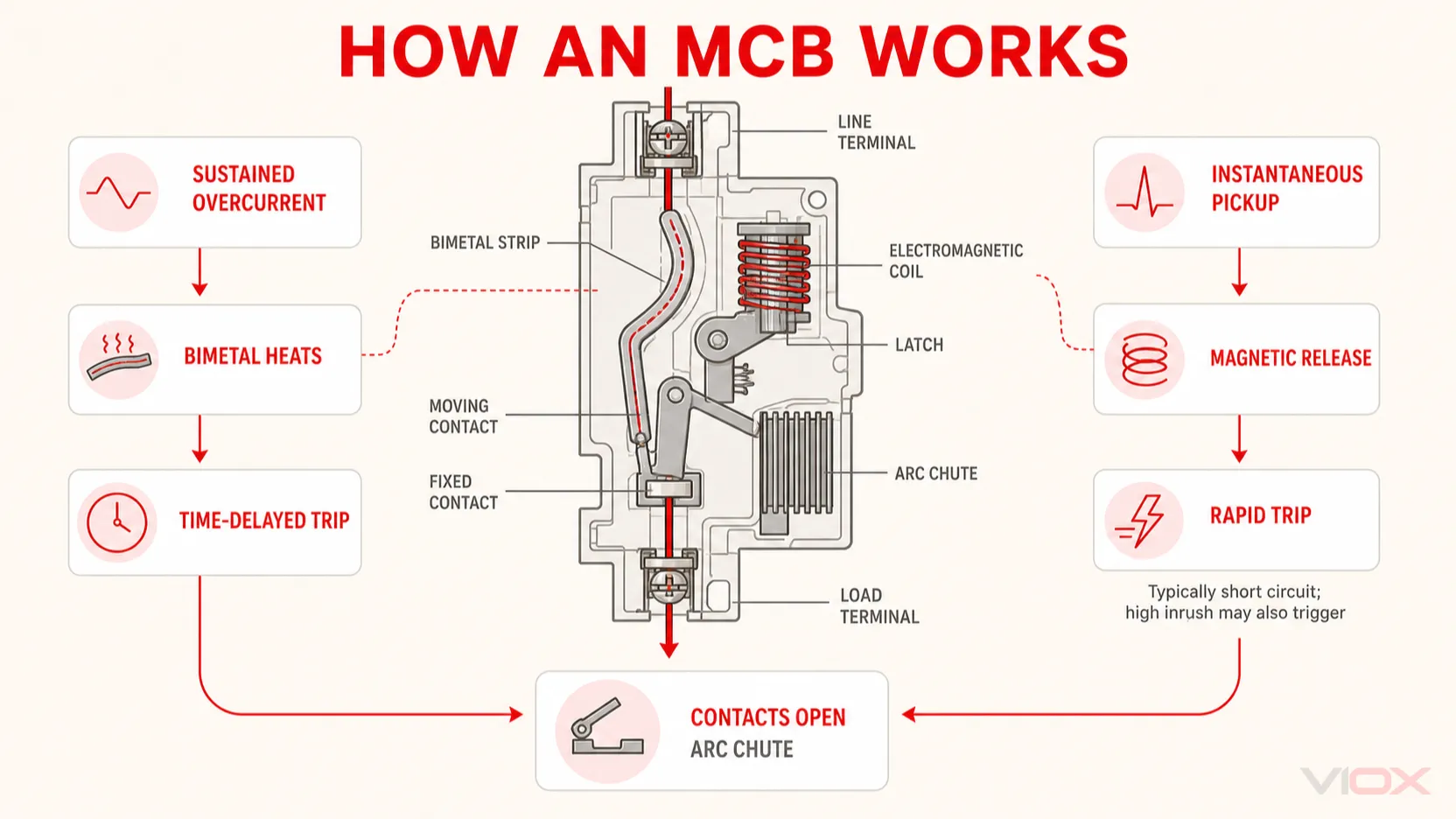
ပုံမှန် Thermal-magnetic MCB တစ်ခုတွင် လုပ်ဆောင်ချက်လေးမျိုး ပေါင်းစပ်ပါဝင်သည် -
- လျှပ်စီးကြောင်းသည် အတွင်းပိုင်း လျှပ်စီးလမ်းကြောင်းနှင့် ပိတ်ထားသော Contact များမှတစ်ဆင့် ဖြတ်သန်းသွားသည်။.
- Bimetal ဒြပ်စင်သည် ကြာရှည်ခံသော ဝန်ပိုလျှပ်စီးကြောင်း (sustained overload current) ကို တုံ့ပြန်သည်။.
- လျှပ်စီးကြောင်းလွန်ကဲမှုသည် ချက်ချင်းဖြတ်တောက်နိုင်သည့် အတိုင်းအတာသို့ ရောက်ရှိသောအခါ Electromagnetic release သည် လျင်မြန်စွာ တုံ့ပြန်သည်။.
- Contact များ ပွင့်သွားသောအခါ Arc chute သည် Breaker ၏ သတ်မှတ်ထားသော ဖြတ်တောက်နိုင်စွမ်းအတွင်း လျှပ်စစ်မီးပွား (arc) ကို ခွဲထုတ်ခြင်း၊ အေးစေခြင်းနှင့် ငြိမ်းသတ်ခြင်းတို့ကို လုပ်ဆောင်သည်။.
Thermal overload trip
Thermal trip သည် Bimetal strip ကို အသုံးပြုသည်။ လျှပ်စီးကြောင်းက အဆိုပါ Strip ကို ပူလာစေပြီး ကြာရှည်ခံသော ဝန်ပိုမှုကြောင့် ၎င်းသည် ကွေးညွတ်သွားကာ Trip ယန္တရားကို လွှတ်ပေးပြီး Contact များကို ပွင့်စေသည်။.
ဤတုံ့ပြန်မှုသည် အချိန်အပေါ် မူတည်ပါသည်။ ဝန်ပိုမှု အနည်းငယ်သာရှိပါက ဖြတ်တောက်ရန် ပိုမိုကြာမြင့်တတ်ပြီး ဝန်ပိုမှု များပြားပါက ပိုမိုမြန်ဆန်စွာ ဖြတ်တောက်ပေးပါသည်။ ဤလုပ်ဆောင်ချက်သည် MCB အနေဖြင့် အန္တရာယ်မရှိသော လျှပ်စီးကြောင်း အတက်အကျများကို ခံနိုင်ရည်ရှိစေပြီး လျှပ်ကူးပစ္စည်းများ အပူလွန်ကဲခြင်းကို ကာကွယ်ပေးပါသည်။.
ချက်ချင်းတုံ့ပြန်သော သံလိုက်စက်ကွင်းဖြတ်တောက်မှုစနစ် (Instantaneous magnetic release)
သံလိုက်စက်ကွင်းဖြတ်တောက်မှုစနစ်တွင် လျှပ်စစ်သံလိုက်ကွိုင် သို့မဟုတ် ဆိုလီနွိုက်ကို အသုံးပြုထားပါသည်။ ပုံမှန်လျှပ်စီးကြောင်းသည် ယန္တရားကို လည်ပတ်စေရန် လုံလောက်သော သံလိုက်စွမ်းအားကို မထုတ်ပေးနိုင်ပါ။ လျှပ်စီးကြောင်းသည် ချက်ချင်းဖြတ်တောက်ရမည့် အတိုင်းအတာသို့ ရောက်ရှိသောအခါ ပိုမိုအားကောင်းသော သံလိုက်စက်ကွင်းက လော့ခ်ကို လျင်မြန်စွာ ဖွင့်ပေးလိုက်ပါသည်။ ၎င်းသည် များသောအားဖြင့် ဝါယာရှော့ဖြစ်သည့်အခါ ဖြစ်ပေါ်လေ့ရှိသော်လည်း မော်တာစတင်ချိန် သို့မဟုတ် ထရန်စဖော်မာ၏ လျှပ်စီးကြောင်း ရုတ်တရက်မြင့်တက်ချိန်တွင်လည်း သတ်မှတ်ချက်ထက် ကျော်လွန်ပါက ဖြတ်တောက်ပေးနိုင်ပါသည်။.
ချက်ချင်းတုံ့ပြန်သည့် လုပ်ဆောင်ချက် အတိုင်းအတာသည် Trip characteristic နှင့် သက်ဆိုင်ပါသည်။ IEC စံနှုန်းပါ ထုတ်ကုန်များတွင် B, C နှင့် D ကွေးမျဉ်းများသည် မတူညီသော သံလိုက်စက်ကွင်း တုံ့ပြန်မှု အတိုင်းအတာများကို ကိုယ်စားပြုပြီး ၎င်းတို့သည် အရည်အသွေး အဆင့်အတန်းများမဟုတ်ဘဲ အသုံးပြုပုံဆိုင်ရာ လက္ခဏာများသာ ဖြစ်ပါသည်။.
စက်ဝန်းသုဉ်း
ချို့ယွင်းချက်ရှိသော လျှပ်စီးကြောင်းအောက်တွင် ဆက်သွယ်မှုများကို ဖွင့်လိုက်သောအခါ လျှပ်စစ်မီးပွား (Arc) ဖြစ်ပေါ်ပါသည်။ Arc chute သည် ထိုမီးပွားကို သတ္တုပြားများဆီသို့ ဆွဲယူကာ အပိုင်းပိုင်းခွဲ၍ အေးသွားစေခြင်းဖြင့် လျှပ်စီးကြောင်းကို အပြီးသတ် ဖြတ်တောက်ပေးပါသည်။.
ထို့ကြောင့် MCB သည် လက်ဖြင့်ဖွင့်ပိတ်ရုံသက်သက်မဟုတ်ဘဲ ပိုမိုရှုပ်ထွေးသော စက်ပစ္စည်းတစ်ခု ဖြစ်ပါသည်။ ၎င်း၏ ဆက်သွယ်မှုစနစ်၊ ယန္တရား၊ လျှပ်ကာနှင့် မီးပွားထိန်းချုပ်မှု တည်ဆောက်ပုံတို့သည် စက်ပစ္စည်း၏ သတ်မှတ်ဗို့အားနှင့် ဖြတ်တောက်နိုင်စွမ်း (Breaking-capacity) အတိုင်းအတာအတွင်း အတူတကွ လုပ်ဆောင်ရမည် ဖြစ်ပါသည်။.
Main Parts of a Miniature Circuit Breaker
| အစိတ်အပိုင်း | လုပ်ဆောင်ချက် |
|---|---|
| Toggle handle | လက်ဖြင့် ON/OFF ပြုလုပ်နိုင်ပြီး အနေအထားကို ပြသပေးခြင်း |
| လည်ပတ်ယန္တရား | ဆက်သွယ်မှုများကို လက်ဖြင့် သို့မဟုတ် အလိုအလျောက် ဖွင့်ပေးပြီး Trip-free လုပ်ဆောင်ချက်ကို ပံ့ပိုးပေးခြင်း |
| Fixed and moving contacts | ပုံမှန်လျှပ်စီးကြောင်းကို သယ်ဆောင်ပေးပြီး လျှပ်စစ်ပြတ်တောက်မှုဖြစ်ပေါ်ချိန်တွင် ဖြတ်တောက်ပေးခြင်း |
| Bimetal strip | အပူလွန်ကဲမှုကြောင့် အချိန်နှောင့်နှေးစွာဖြင့် လျှပ်စစ်ဖြတ်တောက်ပေးခြင်း (Thermal overload tripping) |
| သံလိုက်ကွိုင် သို့မဟုတ် ဆိုလီနွိုက် (Magnetic coil or solenoid) | လျှပ်စီးကြောင်း ပမာဏ အလွန်အကျွံတက်လာပြီး ချက်ချင်းဖြတ်တောက်ရမည့် အတိုင်းအတာသို့ ရောက်ရှိချိန်တွင် လျင်မြန်စွာ ဖြတ်တောက်ပေးခြင်း |
| Arc chute | လျှပ်စစ်ဖြတ်တောက်စဉ် ဖြစ်ပေါ်လာသော လျှပ်စစ်မီးပွား (Arc) ကို ခွဲထုတ်ပြီး အအေးခံပေးခြင်း |
| Terminals များ | ခွင့်ပြုချက်ရထားသော လျှပ်ကူးပစ္စည်းများ သို့မဟုတ် သင့်လျော်သော ဘတ်စ်ဘား (Busbars) များကို ချိတ်ဆက်ပေးခြင်း |
| DIN-rail ကလစ်နှင့် အိမ်အဖုံး (Housing) | မော်ဂျူလာ တပ်ဆင်ခြင်း၊ ထိန်းသိမ်းခြင်းနှင့် လျှပ်ကာပြုလုပ်ခြင်းတို့ကို ပံ့ပိုးပေးခြင်း |
MCB အဆင့်သတ်မှတ်ချက်များနှင့် အမှတ်အသားများ
အမ်ပီယာအဆင့်သတ်မှတ်ချက်တူညီသော MCB နှစ်ခုသည် လုပ်ဆောင်ချက်ချင်း ကွဲပြားနိုင်သည်။ အမှတ်အသားအစုံအလင်နှင့် ထုတ်လုပ်သူ၏ နည်းပညာဆိုင်ရာ စာရွက်စာတမ်းများကို ဖတ်ရှုပါ။.
| ပန္လည္စစ္ေ | အသုံးပြုမှုဆိုင်ရာ စစ်ဆေးခြင်း |
|---|---|
| သတ်မှတ်ထားသော လျှပ်စီးကြောင်း (Rated current), ၌ | ဒီဇိုင်းလျှပ်စီးကြောင်း၊ လျှပ်ကူးပစ္စည်း၏ လျှပ်စီးသယ်ဆောင်နိုင်မှု၊ ပတ်ဝန်းကျင်အခြေအနေနှင့် တပ်ဆင်မှုပုံစံတို့နှင့် ကိုက်ညီမှုရှိစေရန် ညှိနှိုင်းဆောင်ရွက်ပါ |
| အဆင့်သတ်မှတ်ထားသော ဗို့အား | စနစ်၏ ဗို့အားနှင့် လျှပ်စီးကြောင်းအမျိုးအစားကို ကိုက်ညီအောင်ထားပါ၊ AC အတွက် သတ်မှတ်ချက်သည် DC အတွက်လည်း အကျုံးဝင်သည်ဟု မယူဆပါနှင့် |
| Trip ဖြစ်ပေါ်မှု လက္ခဏာရပ် (Trip characteristic) | ဝန်၏ အစပိုင်းလျှပ်စီးကြောင်း (Inrush current) နှင့် ဖြစ်ပေါ်နိုင်သည့် Fault current တို့နှင့် ကိုက်ညီအောင် ရွေးချယ်ပါ |
| ချိုးဖျက်နိုင်စွမ်း | တပ်ဆင်မည့်နေရာရှိ ဖြစ်ပေါ်လာနိုင်သော ဝါယာရှော့ဖြစ်စဉ် (short-circuit current) အတွက် လုံလောက်မှုရှိမရှိ စစ်ဆေးပါ။ |
| Pole configuration | ဝါယာသွယ်တန်းမှုစနစ်နှင့် လိုအပ်သော လျှပ်စစ်ဖြတ်တောက်မှုပုံစံတို့နှင့် ကိုက်ညီမှုရှိစေရမည်။ |
| ထုတ်ကုန်စံနှုန်း | သတ်မှတ်ထားသော စံနှုန်းများ၏ အဆင့်သတ်မှတ်ချက် ဝေါဟာရများနှင့် အသုံးချနိုင်သည့် နယ်ပယ်အတိုင်း လိုက်နာပါ။ |
| Terminal စွမ်းရည် | လျှပ်ကူးကြိုးများ၊ ဘတ်စ်ဘားများ (busbar) ပြင်ဆင်ခြင်းနှင့် တင်းကျပ်စွာ တပ်ဆင်ခြင်းတို့အတွက် ထုတ်ကုန်၏ လမ်းညွှန်ချက်များကို လိုက်နာပါ။ |
အမှတ်အသားတစ်ခုချင်းစီ၏ ရှင်းလင်းချက်အတွက် အောက်ပါတို့ကို ကြည့်ပါ။ How to Read the Nameplate of a Miniature Circuit Breaker.
6kA နှင့် 10kA ဆိုသည်မှာ အဘယ်နည်း။
MCB အများစုတွင် 6kA သို့မဟုတ် 10kA သည် သတ်မှတ်ထားသော ထုတ်ကုန်စံနှုန်းနှင့် စမ်းသပ်မှုအစီအစဉ်အောက်တွင် ကြေညာထားသည့် ဝါယာရှော့ဖြစ်စဉ်ကို ဖြတ်တောက်နိုင်စွမ်း (short-circuit breaking capacity) ကို ဖော်ပြသည်။ တိကျသော သင်္ကေတမှာ ဖြစ်နိုင်သည်မှာ အိုင်ကွန်, Icu, သို့မဟုတ် Ics, ၊ သက်ဆိုင်ရာ စံနှုန်းနှင့် ကိရိယာအမျိုးအစားပေါ် မူတည်၍ ကွဲပြားနိုင်သဖြင့် အဆိုပါကိန်းဂဏန်းကို စံနှုန်းကိုးကားချက်နှင့် ထုတ်လုပ်သူ၏ စာရွက်စာတမ်းများနှင့်အတူ တွဲဖက်၍ နားလည်သဘောပေါက်ရမည်ဖြစ်သည်။.
10kA စက်ပစ္စည်းတိုင်းသည် ဆားကစ်တိုင်းအတွက် မှန်ကန်သောရွေးချယ်မှုမဟုတ်သလို 6kA စက်ပစ္စည်းတိုင်းသည်လည်း လုံလောက်မှုရှိသည်ဟု အလိုအလျောက်ယူဆ၍မရပါ။ အဆိုပါသတ်မှတ်ချက် (Rating) ကို ဖြစ်နိုင်ခြေရှိသော ရှော့ဆားကစ်လျှပ်စီးကြောင်း (Prospective short-circuit current) နှင့် ကာကွယ်မှုပုံစံတို့နှင့် ကိုက်ညီမှုရှိမရှိ စစ်ဆေးရပါမည်။ ကြည့်ရှုရန် MCB Breaking Capacity: 6kA vs 10kA သီးသန့်ရွေးချယ်မှုဆိုင်ရာ ဆွေးနွေးချက်အတွက်။.
စံနှုန်းဆိုင်ရာအကြောင်းအရာ- IEC 60898-1၊ IEC 60947-2 နှင့် UL 489
“MCB” ဟူသော ဝေါဟာရကို ဈေးကွက်အသီးသီးတွင် အသုံးပြုကြသော်လည်း အသုံးချသည့်အခြေအနေနှင့် သတ်မှတ်ချက်ဆိုင်ရာ ဘာသာစကားများမှာ တူညီမှုမရှိပါ။.
| Standard context | ဤဆောင်းပါးနှင့် သက်ဆိုင်သည့် ယေဘုယျနယ်ပယ် | Practical implication |
|---|---|---|
| IEC 60898-1 | အိမ်သုံးနှင့် အလားတူတပ်ဆင်မှုများတွင် လျှပ်စီးကြောင်းလွန်ကဲမှုမှ ကာကွယ်ရန်အတွက် AC ဆားကစ်ဘရိတ်ကာများ (စံနှုန်းပါ ဗို့အား၊ လျှပ်စီးကြောင်းနှင့် ရှော့ဆားကစ်ခံနိုင်ရည် ကန့်သတ်ချက်များအတွင်း) | နောက်ဆုံးအဆင့် ဖြန့်ဖြူးရေးစနစ်တွင် အသုံးပြုသည့် B, C နှင့် D curve MCB များအတွက် ဘုံအခြေအနေ |
| IEC 60947-2:2024 | ဗို့အားသတ်မှတ်ချက်နယ်ပယ်အတွင်း လေ့ကျင့်သင်ကြားထားသူ သို့မဟုတ် ကျွမ်းကျင်သူများမှ လည်ပတ်အသုံးပြုရသည့် ဗို့အားနိမ့် ဆားကစ်ဘရိတ်ကာများနှင့် ထိန်းချုပ်ကိရိယာများအတွက် အသုံးချမှုများ | စက်မှုလုပ်ငန်းသုံး အသုံးချမှုနှင့် အဆင့်သတ်မှတ်ချက်ဆိုင်ရာ ဝေါဟာရများသည် IEC 60898-1 နှင့် ကွဲပြားနိုင်ပါသည်။ |
| အဆိုပါ ၄၈၉ | မြောက်အမေရိက ထုတ်ကုန်ဆိုင်ရာ အခြေအနေအတွက် Molded-case circuit breakers (MCCB) များ၊ Molded-case switches များနှင့် circuit-breaker enclosures များ။ | IEC curve အမှတ်အသားများ သို့မဟုတ် အဆင့်သတ်မှတ်ချက်ဆိုင်ရာ ယူဆချက်များကို UL ထုတ်ကုန်များအပေါ် အလိုအလျောက် အသုံးမပြုပါနှင့်။ |
စက်ပစ္စည်းတစ်ခုတွင် ရိုက်နှိပ်ထားသော စံသတ်မှတ်ချက်ကိုးကားချက်တစ်ခုတည်းဖြင့် ဗားရှင်း သို့မဟုတ် မော်ဒယ်တိုင်းတွင် တတိယအဖွဲ့အစည်း၏ အသိအမှတ်ပြုလက်မှတ်ရှိသည်ဟု အတည်မပြုနိုင်ပါ။ ပစ်မှတ်ဈေးကွက်အတွက် လိုအပ်သော တိကျသည့် မော်ဒယ်စာရွက်စာတမ်းများကို စစ်ဆေးပါ။.
အသုံးများသော MCB အမျိုးအစားများ
Trip curves
| Curve (မျဉ်းကွေး) | IEC 60898-1 အသုံးချမှုများတွင် အဖြစ်များသော ချက်ချင်းတုံ့ပြန်မှုအပိုင်း (Instantaneous range)။ | ပုံမှန် ဝန်အား (Load) အပြုအမူ။ |
|---|---|---|
| ခ | 3–5 × In | ခုခံမှုပါဝင်သော ဆားကစ်များ (Resistive circuits) နှင့် မီးအလင်းရောင် ဆားကစ်များ အပါအဝင် အဝင်စီးကြောင်း (Inrush) နည်းပါးသော အခြေအနေများ။ |
| ဂ | 5–10 × In | အသင့်အတင့်ရှိသော အဝင်လျှပ်စီးကြောင်း (Inrush) နှင့် ရောနှောထားသော စီးပွားရေးလုပ်ငန်းသုံး ဝန်အားများ |
| ဃ | 10–20 × In | ပိုမိုမြင့်မားသော အဝင်လျှပ်စီးကြောင်း၊ လုံလောက်သော အမှားအယွင်းလျှပ်စီးကြောင်း (Fault current) နှင့် ညှိနှိုင်းဆောင်ရွက်မှုအပေါ် မူတည်သည် |
| K သို့မဟုတ် Z | ထုတ်ကုန်နှင့် ထုတ်လုပ်သူအပေါ် မူတည်သည် | ကြေညာထားသော အချိန်-လျှပ်စီးကြောင်းမျဉ်းကွေး (Time-current curve) သည် အသုံးပြုမည့်နေရာနှင့် ကိုက်ညီမှသာ အသုံးပြုပါ |
မျဉ်းကွေးရရှိနိုင်မှုနှင့် တိကျသော ကန့်သတ်ချက်များကို သက်ဆိုင်ရာစံနှုန်းများနှင့် ထုတ်လုပ်သူ၏ အချက်အလက်များအတိုင်း စစ်ဆေးရမည်။ အသေးစိတ် မျဉ်းကွေးရွေးချယ်မှုအတွက် ကြည့်ရှုပါ MCB အမျိုးအစားများ- ကာ့ဗ်များ (Curves)၊ အဆင့်သတ်မှတ်ချက်များ (Ratings)၊ ပိုလ်များ (Poles) နှင့် အသုံးပြုပုံများ.
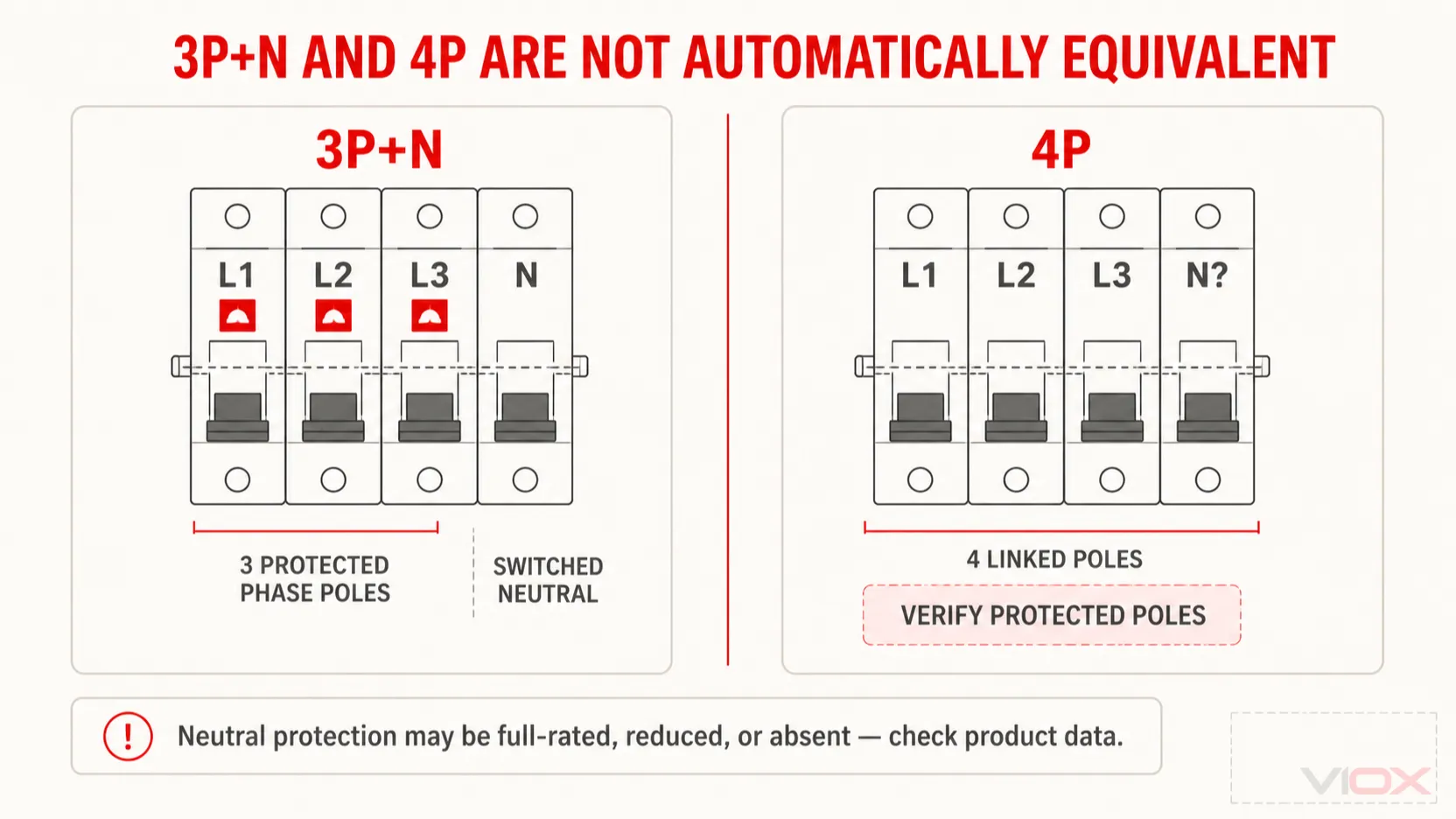
ပိုလ်ဖွဲ့စည်းပုံများ
| ဖွဲ့စည်းမှု | အထွေထွေလုပ်ဆောင်ချက် |
|---|---|
| 1P | အကာအကွယ်ပါဝင်သော ဖေ့စ်ပိုလ်တစ်ခု |
| 1P+N | အကာအကွယ်ပါဝင်သော ဖေ့စ်နှင့်အတူ ဆားကစ်ဖြတ်နိုင်သော နျူထရယ် (ထုတ်ကုန်ဒီဇိုင်းအပေါ် မူတည်သည်) |
| 2P | စက်မှုနည်းလမ်းဖြင့် ချိတ်ဆက်ထားသော ပိုလ်နှစ်ခု၊ အကာအကွယ်ပေးပုံစံကို ထုတ်ကုန်အချက်အလက်များမှ အတည်ပြုရမည် |
| 3P | သုံးဖေ့စ်ဆားကစ်များအတွက် ပိုလ်သုံးခုပါဝင်သော လုပ်ဆောင်ချက် |
| 3P+N | ဖေ့စ်ပိုလ်သုံးခုနှင့် စက်မှုနည်းလမ်းဖြင့် ချိတ်ဆက်ထားသော နျူထရယ်ပိုလ်တစ်ခု။ ဖေ့စ်ပိုလ်များတွင် အများအားဖြင့် အကာအကွယ်ပါဝင်ပြီး နျူထရယ်ပိုလ်မှာ ဆားကစ်ဖြတ်ရန်အတွက်သာဖြစ်ခြင်း ရှိ၊ မရှိနှင့် ၎င်း၏လုပ်ဆောင်ပုံကို ထုတ်ကုန်စာရွက်စာတမ်းများတွင် အတည်ပြုပါ |
| ၄P | စက်မှုနည်းလမ်းဖြင့် ချိတ်ဆက်ထားသော ပို (၄) ခု။ မည်မျှသော ပို (poles) များတွင် overcurrent release ပါဝင်သည်ကိုလည်းကောင်း၊ ကြားခံ (neutral) ကာကွယ်မှုသည် အပြည့်အဝသတ်မှတ်ချက် (full-rated) ရှိမရှိ၊ လျှော့ချထားခြင်းရှိမရှိ သို့မဟုတ် လုံးဝမပါဝင်သည်ကိုလည်းကောင်း အတည်ပြုပါ။ |
ပို (pole) ရွေးချယ်မှုသည် ဝါယာသွယ်တန်းမှုစနစ်၊ မြေချစနစ် (earthing arrangement)၊ ဒေသဆိုင်ရာ စည်းမျဉ်းများ၊ ထုတ်ကုန်တည်ဆောက်ပုံနှင့် လိုအပ်သော လျှပ်စစ်ဖြတ်တောက်ခြင်း သို့မဟုတ် ခွဲထုတ်ခြင်းလုပ်ဆောင်ချက်များအပေါ် မူတည်ပါသည်။.
MCB နှင့် Fuse၊ MCCB၊ RCCB နှင့် RCBO တို့၏ ကွာခြားချက်များ
| ကိရိယာ | အဓိကကာကွယ်မှုလုပ်ဆောင်ချက် | Resettable? | အရေးကြီးသော နယ်နိမိတ် |
|---|---|---|---|
| တက္ကို | ဝန်ပိုခြင်းနှင့် ဝါယာရှော့ကာကွယ်ခြင်း | ဟုတ်ကဲ့ | ပုံမှန်အားဖြင့် residual current (ယိုစိမ့်လျှပ်စီးကြောင်း) ကို မသိရှိနိုင်ပါ |
| ကြိယာ | အစားထိုးနိုင်သော အစိတ်အပိုင်းကို အသုံးပြု၍ overcurrent ကာကွယ်ခြင်း | အမွတ္ | ရွေးချယ်မှုသည် အသုံးပြုမှုအမျိုးအစား (utilization category)၊ fault duty နှင့် ညှိနှိုင်းဆောင်ရွက်မှု ရည်မှန်းချက်များအပေါ် မူတည်ပါသည်။ |
| MCCB | ပိုမိုကျယ်ပြန့်သော လျှပ်စီးကြောင်း၊ ပြတ်တောက်မှုနှင့် ချိန်ညှိမှုအပိုင်းအခြားများအတွက် လျှပ်စီးကြောင်းလွန်ကာကွယ်မှု | ဟုတ်ကဲ့ | Feeder များအတွက်နှင့် ပိုမိုကြီးမားသော ဖြန့်ဖြူးရေးလုပ်ငန်းများအတွက် အသုံးများခြင်း |
| RCCB / RCD | လက်ကျန်လျှပ်စီးကြောင်း ကာကွယ်မှု | Usually yes | လျှပ်စီးကြောင်းလွန်ကာကွယ်မှုပါဝင်ခြင်းမရှိသော RCCB သည် သင့်လျော်သော လျှပ်စီးကြောင်းလွန်ကာကွယ်မှု လိုအပ်နေဆဲဖြစ်သည် |
| RCBO | လျှပ်စီးကြောင်းလွန်ကာကွယ်မှုပါဝင်သော Residual-current ကာကွယ်မှု | ဟုတ်ကဲ့ | RCD/RCCB ၏ သက်ဆိုင်ရာလုပ်ဆောင်ချက်များနှင့် လျှပ်စီးကြောင်းလွန်ကာကွယ်ရေးကိရိယာတို့ကို ပေါင်းစပ်ထားခြင်း |
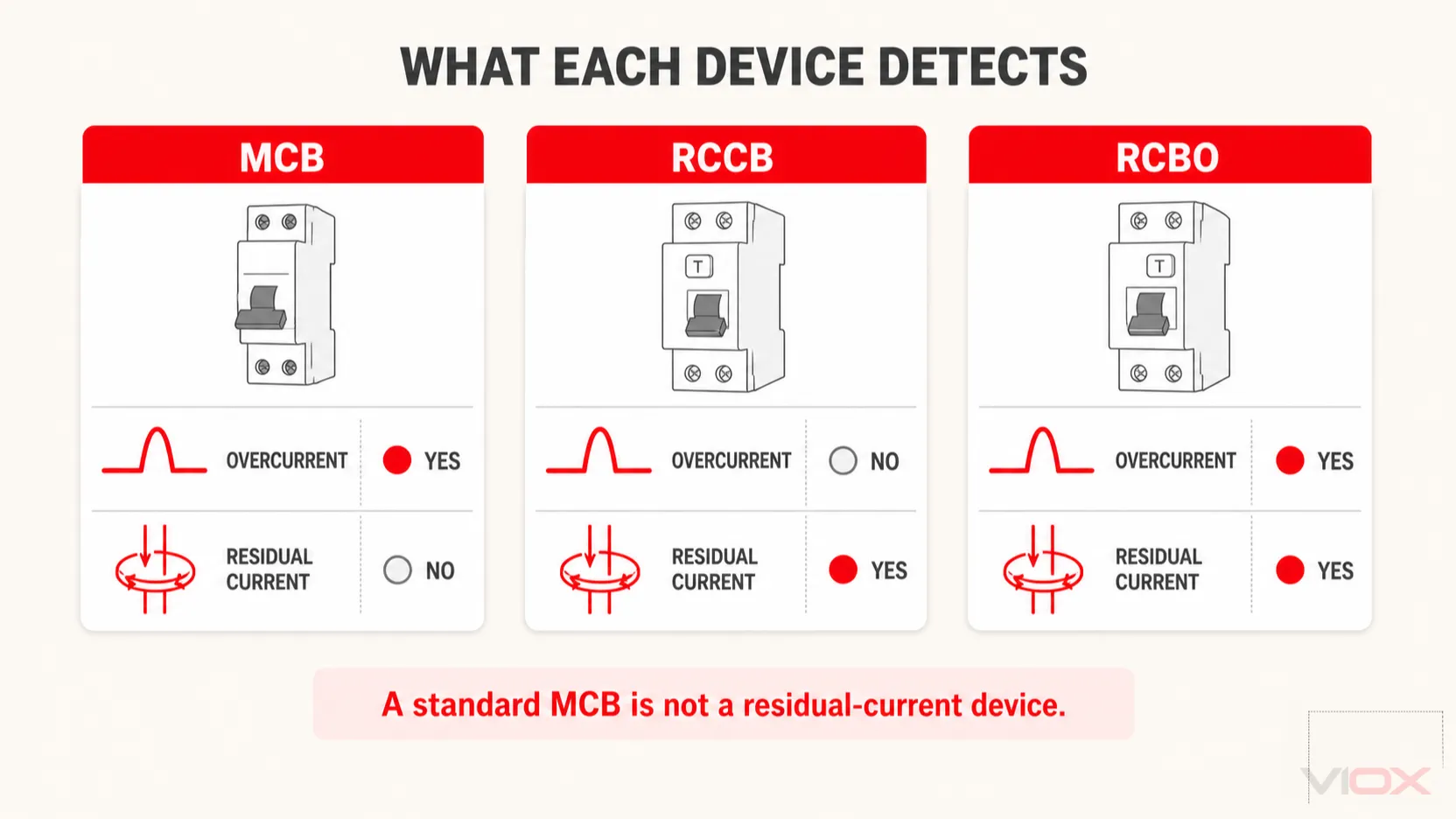
IEC ဝေါဟာရအရ RCCB ကို ပိုမိုတိကျစွာ ရှင်းလင်းဖော်ပြနိုင်သည်မှာ လျှပ်စီးကြောင်းလွန်ကဲမှု ကာကွယ်ခြင်းစနစ် မပါဝင်သော Residual Current Operated Circuit-Breaker (RCCB). RCBO ဆိုသည်မှာ လျှပ်စီးကြောင်းလွန်ကဲမှု ကာကွယ်ခြင်းစနစ် ပါဝင်သော Residual Current Operated Circuit-Breaker (RCBO).
ဘေးချင်းကပ်လျက်ရှိသော ကိရိယာများအတွက် ဆုံးဖြတ်ချက်များအား ကြည့်ရှုရန် Circuit Breakers များနှင့် Miniature Circuit Breakers များ, ၊ MCCB လမ်းညွှန်နှင့် RCBO vs RCCB + MCB.
Where Are MCBs Used?
MCB များကို အောက်ပါနေရာများတွင် အများဆုံးတွေ့ရှိရသည် -
- အိမ်သုံး လျှပ်စစ်ဖြန့်ဖြူးရေးဘုတ်များတွင် မီးချောင်းများ၊ ပလပ်ပေါက်များနှင့် သီးသန့်လျှပ်စစ်ပစ္စည်းများအတွက်၊;
- လုပ်ငန်းသုံး လျှပ်စစ်ဖြန့်ဖြူးရေးဘုတ်များနှင့် အသေးစား လျှပ်စစ်ပတ်လမ်းခွဲများတွင်၊;
- စက်မှုလုပ်ငန်းသုံး ထိန်းချုပ်ရေးဘုတ်များတွင် ထိန်းချုပ်ရေးထရန်စဖော်မာများ၊ ပါဝါထောက်ပံ့ရေးပစ္စည်းများ၊ PLC ပတ်လမ်းများ၊ ဆိုလီနွိုက်များနှင့် အရန်ပတ်လမ်းများအတွက်၊;
- ကျစ်လစ်ပြီး DIN-rail ပေါ်တွင် တပ်ဆင်နိုင်သော ထပ်ခါတလဲလဲ အသုံးပြုနိုင်သည့် ဆားကစ်ကာကွယ်ရေးစနစ် လိုအပ်သော OEM စက်များတွင်၊ နှင့်
- ဆိုလာ၊ ဘက်ထရီ၊ တယ်လီကွန်းနှင့် ထိန်းချုပ်ရေးစနစ်အချို့အပါအဝင် သင့်လျော်သော DC စနစ်များတွင်။.
DC အသုံးပြုမှုအတွက် သီးသန့်သတ်မှတ်ထားသော DC rating လိုအပ်သည်။ AC MCB တစ်ခုသည် DC ဆားကစ်ကို ဘေးကင်းစွာ ဖြတ်တောက်နိုင်သည်ဟု မယူဆပါနှင့်။ ဗို့အား၊ ဝင်ရိုးစွန်း (polarity)၊ ဆက်တိုက်ချိတ်ဆက်ထားသော ပိုလ် (poles) အရေအတွက်နှင့် ဖြတ်တောက်နိုင်စွမ်းတို့သည် စက်ပစ္စည်း၏ ညွှန်ကြားချက်အတိုင်း တိကျစွာ လိုက်နာရမည်။ သီးခြား DC ခေါင်းစဉ်အတွက် အောက်ပါကို ကြည့်ပါ - DC Circuit Breaker လမ်းညွှန်.
MCB တစ်ခုကို မရွေးချယ်မီ မည်သည့်အချက်များကို စစ်ဆေးရန် လိုအပ်သနည်း။
ဤဆောင်းပါးသည် အင်ဂျင်နီယာဆိုင်ရာ ရွေးချယ်မှုလုပ်ငန်းစဉ်ကို အစားထိုးခြင်းမဟုတ်ဘဲ စက်ပစ္စည်းအကြောင်း ရှင်းပြခြင်းသာဖြစ်သည်။ အနည်းဆုံးအားဖြင့် ရွေးချယ်ရာတွင် အောက်ပါတို့ကို စစ်ဆေးရန် လိုအပ်သည် -
- ဆားကစ်ဒီဇိုင်း၏ လျှပ်စီးကြောင်းနှင့် လျှပ်ကူးပစ္စည်း၏ လျှပ်စီးသယ်ဆောင်နိုင်မှု (Ampacity)၊;
- စနစ်၏ ဗို့အားနှင့် AC သို့မဟုတ် DC အသုံးပြုမှု၊;
- ဖြစ်နိုင်ခြေရှိသော ရှော့ဆားကစ် လျှပ်စီးကြောင်း (Prospective short-circuit current)၊;
- သက်ဆိုင်ရာ စံနှုန်းများအရ ကြေညာထားသော ဖြတ်တောက်နိုင်စွမ်း (Breaking capacity)၊;
- ဝန်၏ ရုတ်တရက်မြင့်တက်လာသော လျှပ်စီးကြောင်း (Inrush current) နှင့် အချိန်-လျှပ်စီးကြောင်းဆိုင်ရာ ဂုဏ်သတ္တိ (Time-current characteristic)၊;
- ပိုလ် (Pole) တည်ဆောက်ပုံနှင့် လျှပ်စစ်ဖြတ်တောက်ခြင်းဆိုင်ရာ လိုအပ်ချက်များ၊;
- ပတ်ဝန်းကျင်နှင့် အကာအရံအခြေအနေများ၊;
- လျှပ်ကူးပစ္စည်း၊ တာမီနယ်နှင့် ဘတ်စ်ဘားတို့၏ ကိုက်ညီမှု၊ နှင့်
- အထက်ပိုင်းနှင့် အောက်ပိုင်းရှိ ကာကွယ်ရေးစနစ်များနှင့် ညှိနှိုင်းဆောင်ရွက်မှု။.
အသုံးပြုပါ MCB ရွေးချယ်မှုလမ်းညွှန် ပြည့်စုံသော ဆုံးဖြတ်ချက်ချမှတ်ခြင်းလုပ်ငန်းစဉ်အတွက်။ လျှောက်လွှာလိုအပ်ချက်များကို သိရှိပြီးသည့်အခါ၊ VIOX MCB product page အကဲဖြတ်ရန်အတွက် ရရှိနိုင်သော ထုတ်ကုန်အမျိုးအစားများကို ပံ့ပိုးပေးသည်။.
မကြာခဏမေးမေးခွန်းများ
MCB တစ်ခု၏ အဓိကလုပ်ဆောင်ချက်မှာ အဘယ်နည်း။
MCB တစ်ခု၏ အဓိကလုပ်ဆောင်ချက်မှာ ဝန်ပိုခြင်း (overload) နှင့် ရှော့ခ်ဖြစ်ခြင်း (short-circuit) ကြောင့်ဖြစ်သော လျှပ်စီးကြောင်းလွန်ကဲမှုကို ဖြတ်တောက်ပေးရန်ဖြစ်ပြီး၊ ထိုသို့ပြုလုပ်ခြင်းဖြင့် လျှပ်စစ်ပတ်လမ်းရှိ လျှပ်ကူးပစ္စည်းများကို ရည်ရွယ်ထားသည့် ဒီဇိုင်းနှင့် ညှိနှိုင်းမှုအခြေအနေများအတွင်း ကာကွယ်ပေးသည်။.
How does an MCB work?
ပုံမှန် MCB တစ်ခုသည် အချိန်နှောင့်နှေးစွာဖြင့် ဝန်ပိုမှုကို ဖြတ်တောက်ရန် အပူဓာတ်ဆိုင်ရာ အစိတ်အပိုင်း (thermal element) ကို အသုံးပြုပြီး၊ လျှပ်စီးကြောင်းလွန်ကဲမှုသည် ၎င်း၏ ချက်ချင်းတုံ့ပြန်နိုင်သည့် အတိုင်းအတာ (instantaneous pickup range) သို့ ရောက်ရှိသည့်အခါ၊ အထူးသဖြင့် ရှော့ခ်ဖြစ်သည့်အချိန်မျိုးတွင် လျင်မြန်စွာ အလုပ်လုပ်သော သံလိုက်ဓာတ်ဆိုင်ရာ ဖြုတ်ချသည့်စနစ် (magnetic release) ကို အသုံးပြုသည်။ စတင်ချိန်တွင် ဖြစ်ပေါ်သော မြင့်မားသည့် လျှပ်စီးကြောင်း (inrush current) သည်လည်း ထိုအတိုင်းအတာထက် ကျော်လွန်ပါက သံလိုက်ဓာတ်ဆိုင်ရာ ဖြုတ်ချသည့်စနစ်ကို အလုပ်လုပ်စေနိုင်သည်။ လျှပ်ကူးဆက်သွယ်မှုများ ပွင့်သွားသည့်အခါ၊ arc chute သည် လျှပ်စစ်မီးပွား (arc) ကို ထိန်းချုပ်ရန်နှင့် ငြှိမ်းသတ်ရန် ကူညီပေးသည်။.
Does an MCB protect against electric shock?
စံ MCB တစ်ခုသည် residual-current device မဟုတ်သည့်အတွက် residual current အပေါ် အခြေခံသော ထပ်ဆောင်းကာကွယ်မှုမျိုး မပေးနိုင်ပါ။ ၎င်းသည် မြေကြီးသို့ လျှပ်စီးယိုစိမ့်မှု (earth fault) ဖြစ်ပေါ်လာသည့်အခါ လျှပ်စီးပမာဏသည် trip threshold သို့ ရောက်ရှိမှသာ ဖြတ်တောက်ပေးနိုင်သော်လည်း၊ residual-current protection လိုအပ်သည့်နေရာများတွင် RCCB, RCD သို့မဟုတ် RCBO အစားထိုးအဖြစ် အသုံးပြု၍ မရပါ။.
MCB နှင့် RCBO တို့၏ ကွာခြားချက်မှာ အဘယ်နည်း။
MCB သည် overcurrent (လျှပ်စီးလွန်ကဲမှု) ကို ကာကွယ်ပေးသည်။ RCBO သည် residual-current protection နှင့် overcurrent protection တို့ကို ပေါင်းစပ်ထားသောကြောင့် လျှပ်စီးယိုစိမ့်မှုများအပြင် ဝန်ပိုခြင်း (overload) နှင့် ရှော့ခ်ဖြစ်ခြင်း (short circuit) တို့ကိုပါ တုံ့ပြန်နိုင်စွမ်းရှိသည်။.
MCB နှင့် MCCB တို့၏ ကွာခြားချက်မှာ အဘယ်နည်း။
MCB သည် ယေဘုယျအားဖြင့် နောက်ဆုံးအဆင့်နှင့် သေးငယ်သော ဌာနခွဲဆားကစ်များအတွက် အသုံးပြုသည့် ကျစ်လစ်သော modular breaker ဖြစ်သည်။ MCCB သည် ပိုမိုကျယ်ပြန့်သော လျှပ်စီးပမာဏ၊ ဖြတ်တောက်နိုင်စွမ်း (breaking-capacity)၊ trip-unit နှင့် ဆက်စပ်ပစ္စည်း လိုအပ်ချက်များကို ဖြည့်ဆည်းပေးနိုင်ပြီး feeder များနှင့် ပိုမိုကြီးမားသော ဖြန့်ဖြူးရေးလုပ်ငန်းများတွင် အသုံးများသည်။ အသုံးပြုနိုင်သည့် နယ်ပယ်အတိအကျမှာ ထုတ်ကုန်စံနှုန်းနှင့် ထုတ်လုပ်သူ၏ အမျိုးအစားအပေါ် မူတည်သည်။.
MCB တစ်ခုတွင် C16 ဆိုသည်မှာ အဘယ်အရာကို ဆိုလိုသနည်း။
IEC ပုံစံ B, C သို့မဟုတ် D curve အမှတ်အသားများပါရှိသော MCB တစ်ခုတွင်၊, C16 ကဲ့သို့ အမှတ်အသားတစ်ခု ပုံမှန်အားဖြင့် C trip characteristic နှင့် rated current 16 A ကို ဖော်ပြသည်။ ကျန်ရှိသော အမှတ်အသားများဖြစ်သည့် ဗို့အား၊ ဖြတ်တောက်နိုင်စွမ်း၊ စံနှုန်း၊ pole အရေအတွက်နှင့် အသုံးပြုနိုင်သည့် ကန့်သတ်ချက်များကို ဆက်လက်စစ်ဆေးရန် လိုအပ်သည်။.
Ampere rating ပိုမြင့်ခြင်းက MCB ကို ပိုမိုလုံခြုံစေပါသလား။
မဟုတ်ပါ။ အဆင့်သတ်မှတ်ချက် (Rating) သည် လျှပ်ကူးပစ္စည်းနှင့် ဆားကစ်ဒီဇိုင်းတို့နှင့် ကိုက်ညီမှုရှိရပါမည်။ လျှပ်ကူးပစ္စည်း၏ လျှပ်စီးကြောင်းခံနိုင်ရည် (Ampacity) နှင့် ကာကွယ်မှုလိုအပ်ချက်များကို အတည်မပြုဘဲ ၎င်းကို တိုးမြှင့်ခြင်းသည် ဝိုင်ယာကြိုးများကို လုံလောက်စွာ ကာကွယ်မှုမပေးနိုင်ခြင်း ဖြစ်စေနိုင်သည်။.
MCB ကို ON/OFF ခလုတ်အဖြစ် အသုံးပြုနိုင်ပါသလား။
MCB ကို လက်ဖြင့် အသုံးပြုနိုင်သော်လည်း ၎င်းသည် အဓိကအားဖြင့် လျှပ်စီးကြောင်းလွန်ကဲမှုမှ ကာကွယ်ပေးသည့် ကိရိယာတစ်ခုဖြစ်သည်။ လျှပ်စစ်ဖြတ်တောက်ခြင်း (Isolation)၊ လုပ်ငန်းသုံးခလုတ်အဖြစ် အသုံးပြုခြင်း၊ ခလုတ်ဖွင့်ပိတ်သည့်အကြိမ်ရေနှင့် သီးခြားဝန်အား (Load) တို့အတွက် သင့်လျော်မှုရှိမရှိကို သက်ဆိုင်ရာ စံနှုန်းများနှင့် ထုတ်လုပ်သူ၏ စာရွက်စာတမ်းများတွင် အတည်ပြုရပါမည်။ ပုံမှန်ထိန်းချုပ်မှုများအတွက် သင့်လျော်သော အဆင့်သတ်မှတ်ချက်ရှိသည့် ခလုတ် (Switch) သို့မဟုတ် ကွန်တက်တာ (Contactor) ကို အသုံးပြုခြင်းက ပိုမိုသင့်လျော်နိုင်ပါသည်။.
နိဂုံး
MCB သည် ဆားကစ်အတွင်းရှိ လျှပ်ကူးပစ္စည်းများကို ဝန်အားလွန်ကဲခြင်းနှင့် ရှော့ခ်ဖြစ်ခြင်း (Short-circuit) တို့မှ အဓိကကာကွယ်ပေးသည့် ပြန်လည်အသုံးပြုနိုင်သော ဆားကစ်ဘရိတ်ကာတစ်ခုဖြစ်သည်။ ၎င်း၏ လုပ်ဆောင်ချက်တွင် အပူချိန်ကြောင့် ဝန်အားလွန်ကဲမှုကို ဖြတ်တောက်ပေးသည့်စနစ် (Thermal overload release)၊ သံလိုက်စက်ကွင်းကြောင့် ရှော့ခ်ဖြစ်မှုကို ဖြတ်တောက်ပေးသည့်စနစ် (Magnetic short-circuit release)၊ ဖြတ်တောက်သည့် ယန္တရား (Trip mechanism)၊ ထိတွေ့ဆက်သွယ်မှုများ (Contacts) နှင့် မီးပွားငြှိမ်းသတ်သည့်ကိရိယာ (Arc chute) တို့ ပါဝင်သည်။.
မှန်ကန်စွာအသုံးပြုခြင်းသည် ရှေ့မျက်နှာပြင်တွင် ရိုက်နှိပ်ထားသော အမ်ပီယာ (Ampere) အရေအတွက်ထက် ပိုမိုလိုအပ်ပါသည်။ ဆားကစ်ဒီဇိုင်နာသည် ဗို့အား၊ ဖြတ်တောက်မှုလက္ခဏာ (Trip characteristic)၊ ဖြတ်တောက်နိုင်စွမ်း (Breaking capacity)၊ ပိုလ် (Poles) အရေအတွက်၊ ထုတ်ကုန်စံနှုန်း၊ တပ်ဆင်မှုအခြေအနေများနှင့် ကျန်ရှိသော လျှပ်စီးကြောင်း (Residual-current) နှင့် အထက်ပိုင်းကာကွယ်မှုစနစ်တို့နှင့် ကိုက်ညီမှုရှိမရှိကိုလည်း စစ်ဆေးရပါမည်။.
မော်ဒယ်ရွေးချယ်ရန်အတွက် ဆက်လက်ကြည့်ရှုပါ MCB ရွေးချယ်မှုလမ်းညွှန်. ထုတ်ကုန်အကဲဖြတ်ရန်အတွက် ပြန်လည်သုံးသပ်ပါ VIOX MCB အမျိုးအစားများ.
Sources Reviewed
- IEC 60898-1:2015+A1:2019 — အိမ်သုံးနှင့် အလားတူတပ်ဆင်မှုများအတွက် လျှပ်စီးကြောင်းလွန်ကာကွယ်ရေး ဆားကစ်ဘရိတ်ကာများ
- IEC 60947-2:2024 — ဗို့အားနိမ့် ဆားကစ်ခွဲခြားကိရိယာနှင့် ထိန်းချုပ်ကိရိယာများ- ဆားကစ်ဘရိတ်ကာများ
- UL Solutions — ပုံသွင်းကိုယ်ထည် ဆားကစ်ဘရိတ်ကာ (Molded Case Circuit Breaker) - အမှတ်အသားပြုခြင်းနှင့် အသုံးပြုခြင်းဆိုင်ရာ လမ်းညွှန်ချက်
- UL Solutions — ဆားကစ်ဘရိတ်ကာနှင့် ဖြည့်စွက်ကာကွယ်ရေးကိရိယာ ဝန်ဆောင်မှုများ
- VIOX — MCB ရွေးချယ်ခြင်းဆိုင်ရာ လမ်းညွှန်ချက်
- VIOX — Miniature Circuit Breaker တစ်ခု၏ နာမည်ပြား (Nameplate) ကို ဖတ်ရှုနည်း