

ဤစာမျက်နှာတွင်
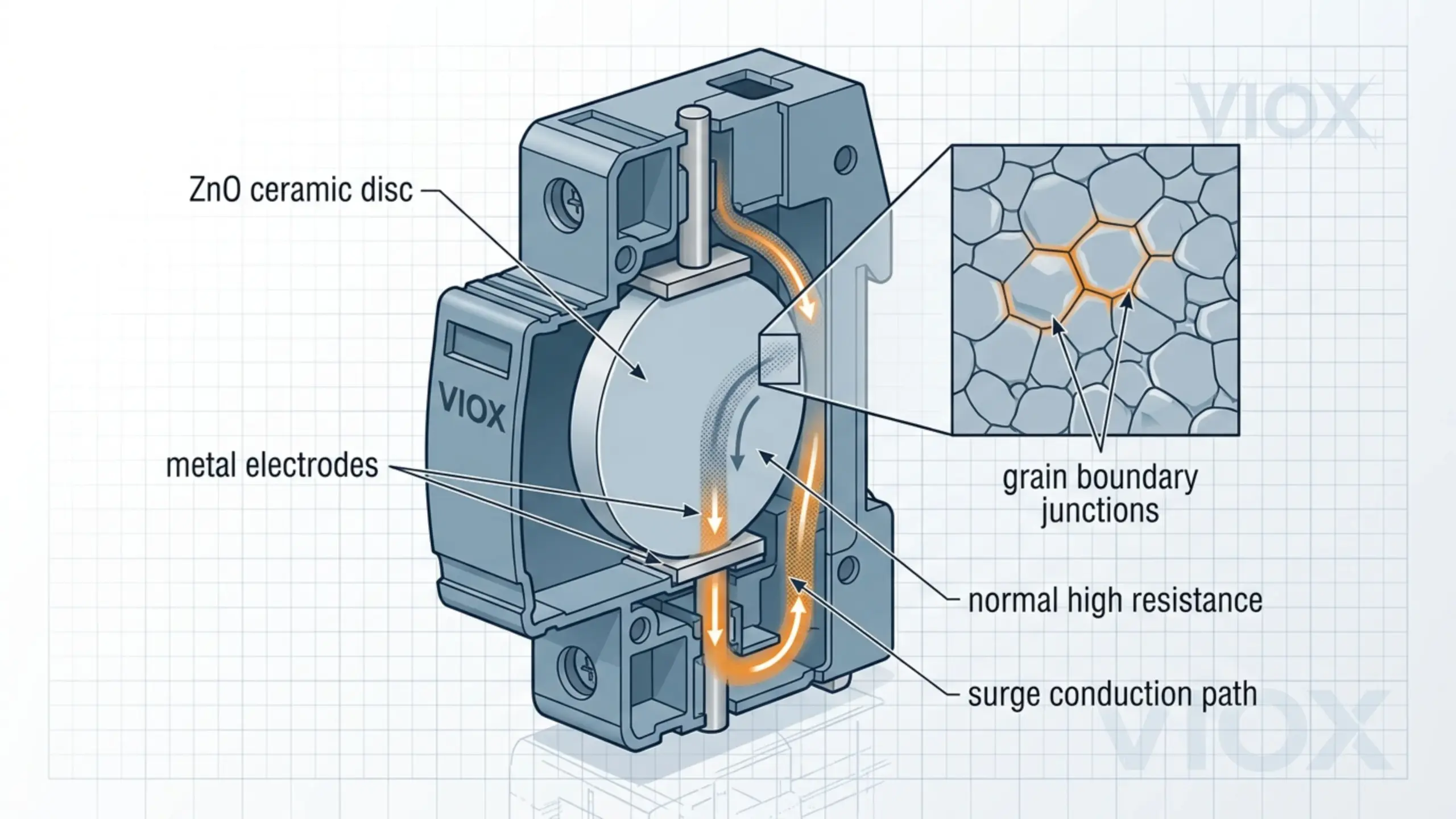
တဲ့ ZnO MOV is a zinc oxide metal oxide varistor, a voltage-dependent ceramic component used inside many low-voltage surge protective devices (SPDs). Under normal voltage, it behaves like a very high-resistance part and allows only tiny leakage current. During a surge, its resistance drops sharply, so it can divert surge current and limit the voltage seen by downstream equipment.
In practical SPD design, the MOV is the part that performs most of the voltage-clamping work. The SPD around it adds terminals, housing, thermal disconnectors, status indication, coordination features, and certification-ready construction.
The important engineering point is this: an MOV is not a simple resistor, fuse, or switch. It is a nonlinear ceramic surge-clamping element. ၎င်း၏ ပစ္စည်းဆိုင်ရာ ဂုဏ်သတ္တိများသည် Uc သို့မဟုတ် MCOV၊ Up၊ In၊ Imax၊ ယိုစိမ့်လျှပ်စီးကြောင်း (leakage current)၊ အပူချိန်ကြောင့် ပြတ်တောက်ခြင်း (thermal disconnection) နှင့် သက်တမ်းကုန်ဆုံးကြောင်း ပြသခြင်း (end-of-life indication) အပါအဝင် SPD အဆင့်သတ်မှတ်ချက်များစွာကို ရှင်းပြပေးပါသည်။.
အကယ်၍ သင်သည် SPD နှင့်ပတ်သက်သည့် ပိုမိုကျယ်ပြန့်သော နောက်ခံအချက်အလက်များကို ဦးစွာသိရှိလိုပါက၊ အောက်ပါတို့မှ စတင်လေ့လာပါ။ Surge Protection Device (လျှပ်စီးကြောင်းမြင့်တက်မှုမှ ကာကွယ်ပေးသည့်ကိရိယာ) ဆိုသည်မှာ အဘယ်နည်း။ သို့မဟုတ် လျှပ်စစ်ပစ္စည်းတွင် SPD အပြည့်အစုံပုံစံ. ဤဆောင်းပါးသည် SPD အတွင်းရှိ ZnO MOV ကို အထူးပြု၍ အဓိကထား ဆွေးနွေးထားပါသည်။.
သော့ထုတ်ယူမှုများ
- ZnO MOV ဆိုသည်မှာ zinc oxide metal oxide varistor (ဇင့်အောက်ဆိုဒ် သတ္တုအောက်ဆိုဒ် ဗယ်ရီစတာ) ဖြစ်သည်။.
- ၎င်းသည် AC နှင့် DC ပါဝါ SPD များစွာတွင်၊ အထူးသဖြင့် Type 2 နှင့် Type 3 ဗို့အားနိမ့် ကိရိယာများတွင် အသုံးအများဆုံး ဗို့အားထိန်းညှိပေးသည့် အစိတ်အပိုင်းတစ်ခုဖြစ်သည်။.
- ZnO MOV သည် အလွန်မြင့်မားသော nonlinear ဗို့အား-လျှပ်စီးကြောင်းမျဉ်းကွေး (voltage-current curve) ရှိသည် - ပုံမှန်ဗို့အားတွင် impedance မြင့်မားပြီး၊ ဗို့အားမြင့်တက်လာချိန်တွင် impedance နည်းပါးသွားသည်။.
- MOVs do not “absorb all surge energy” in a simple way. They mainly create a low-impedance diversion path and clamp the voltage to a safer level.
- MOVs age under repeated surges, temporary overvoltage, heat, and excessive leakage current.
- A properly designed SPD includes thermal disconnection and status indication because a degraded MOV can overheat or fail.
- Not every SPD uses only MOV technology. Spark gaps, gas discharge tubes, and TVS diodes are also used depending on SPD type, voltage system, and application.
What Is a ZnO MOV?
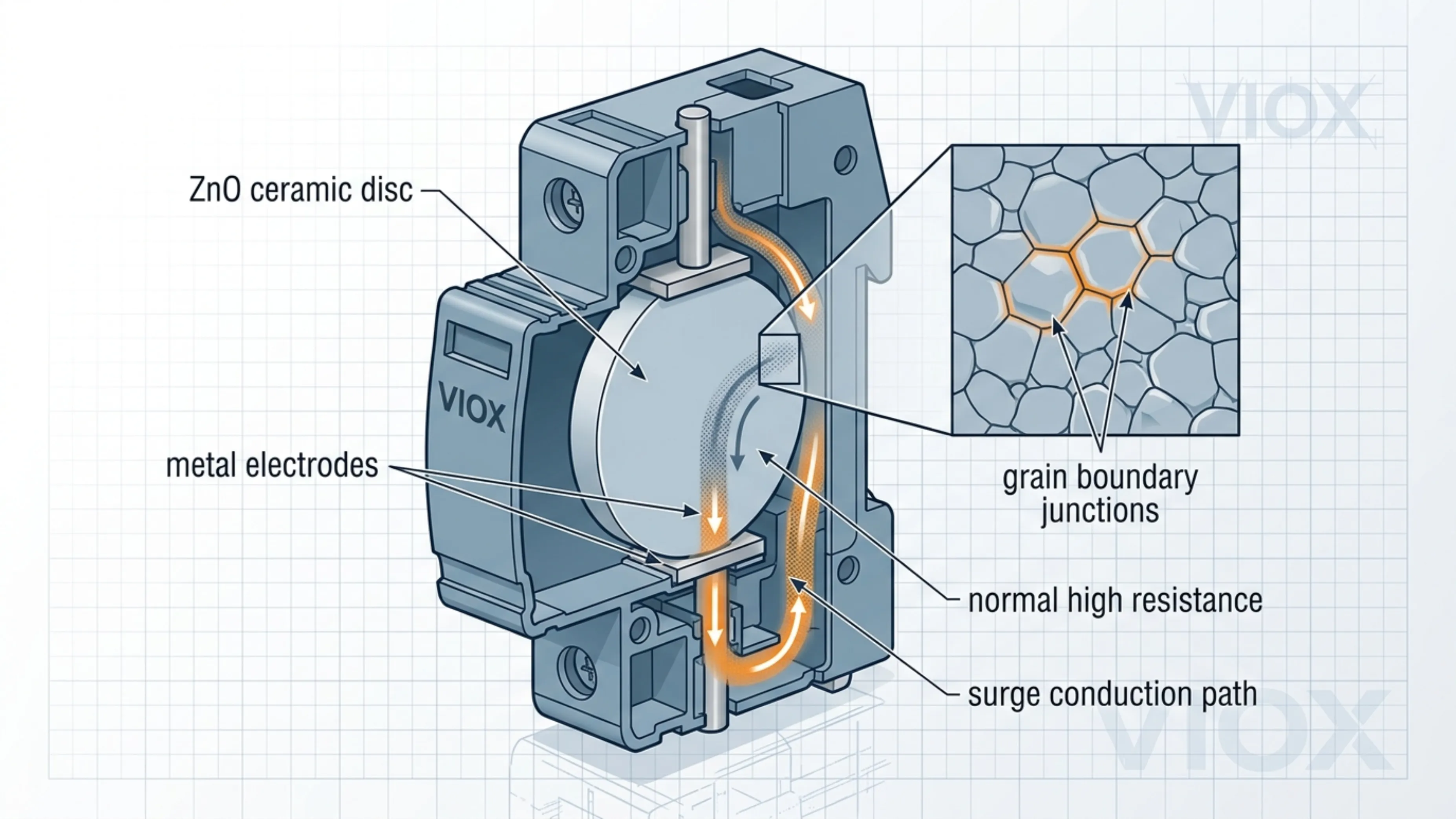
A ZnO MOV is a ceramic varistor made primarily from zinc oxide grains with small amounts of other metal oxides added during manufacturing. The word varistor means voltage-dependent resistor. Its resistance changes with applied voltage.
At normal system voltage, the MOV stays in a high-resistance state. It does not carry meaningful load current. When the voltage rises above its designed knee region, the MOV rapidly changes into a conductive state. This allows surge current to flow through the MOV path instead of forcing the full transient voltage into sensitive equipment.
In a simplified way, the MOV behavior can be described as:
$I = k \cdot V^{\alpha}$
Where:
- $I$ is current through the MOV
- $V$ is voltage across the MOV
- $k$ is a device-dependent constant
- $\alpha$ is the nonlinear coefficient
The exact constants depend on MOV material, disc size, formulation, electrode design, and manufacturing process. The useful field takeaway is simpler: ဗို့အားသည် ဒူးခေါင်းအမှတ် (knee point) ထက် အနည်းငယ်တိုးလာပါက လျှပ်စီးကြောင်းကို အလွန်အမင်း တိုးပွားစေနိုင်သည်။.
ထိုသို့သော မတ်စောက်သည့် Nonlinear အပြုအမူကြောင့် ZnO MOV များသည် SPD များတွင် အလွန်အသုံးဝင်ရခြင်းဖြစ်သည်။.
ဇင့်အောက်ဆိုဒ် (Zinc Oxide) ကို အဘယ်ကြောင့် အသုံးပြုရသနည်း
ဇင့်အောက်ဆိုဒ် ကြွေထည်များကို အသုံးပြုရခြင်းမှာ ၎င်းတို့သည် အဏုကြည့်မှန်ပြောင်းဖြင့်သာ မြင်နိုင်သော အစေ့အဆန်နယ်နိမိတ် (grain-boundary) တည်ဆောက်ပုံများကို ဖြစ်ပေါ်စေပြီး ၎င်းတို့သည် စီးရီးနှင့် ပါရာလက်ချိတ်ဆက်ထားသော သေးငယ်သည့် Nonlinear Junction သန်းပေါင်းများစွာကဲ့သို့ လုပ်ဆောင်ပေးသောကြောင့်ဖြစ်သည်။ ဤအစေ့အဆန်နယ်နိမိတ်များသည် ပုံမှန်ဗို့အားတွင် MOV ကို လျှပ်ကူးမှုမရှိသလောက်ဖြစ်စေပြီး လျှပ်စီးကြောင်း ရုတ်တရက်မြင့်တက်လာသည့် အခြေအနေများတွင် လျှပ်ကူးနိုင်စေသည့် အကြောင်းရင်းဖြစ်သည်။.
SPD ဒီဇိုင်နာတစ်ဦး၏ ရှုထောင့်မှကြည့်လျှင် ZnO MOV များသည် အောက်ပါ အားသာချက်များကို ပေးစွမ်းသည် -
- ဗို့အားကို လျင်မြန်စွာ ထိန်းချုပ်နိုင်ခြင်း (fast voltage-clamping)
- အရွယ်အစားနှင့် နှိုင်းယှဉ်ပါက မြင့်မားသော လျှပ်စီးကြောင်း ရုတ်တရက်မြင့်တက်မှုကို ခံနိုင်ရည်ရှိခြင်း
- ကျစ်လစ်သော တည်ဆောက်ပုံရှိခြင်း
- မှန်ကန်စွာ သတ်မှတ်ထားပါက AC နှင့် DC လျှပ်စစ်ပတ်လမ်းများအတွက် သင့်လျော်မှုရှိခြင်း
- ပိုမိုရှုပ်ထွေးသော ကာကွယ်ရေးစနစ်များနှင့် နှိုင်းယှဉ်ပါက ကုန်ကျစရိတ် သက်သာခြင်း
- Modular Type 2 နှင့် Type 3 SPD cartridge များအတွင်းသို့ အလွယ်တကူ ပေါင်းစပ်အသုံးပြုနိုင်ခြင်း
ဤအကြောင်းကြောင့်ပင် MOV နည်းပညာသည် ဗို့အားနိမ့် လျှပ်စစ် SPD ဒီဇိုင်းအများစုတွင် လွှမ်းမိုးထားခြင်းဖြစ်သည်။ MOV များသည် ပြီးပြည့်စုံသောကြောင့် မဟုတ်ဘဲ၊ လက်တွေ့ လျှပ်စစ်ဓာတ်အားဖြန့်ဖြူးရေး လုပ်ငန်းစဉ်များစွာအတွက် Clamping စွမ်းဆောင်ရည်၊ စွမ်းအင်ထိန်းချုပ်နိုင်မှု၊ အရွယ်အစားနှင့် ကုန်ကျစရိတ်တို့အကြား အကောင်းဆုံး ဟန်ချက်ညီမှုကို ပေးစွမ်းနိုင်သောကြောင့် ဖြစ်သည်။.
SPD တစ်ခုအတွင်းတွင် ZnO MOV တစ်ခု မည်သို့အလုပ်လုပ်ပုံ
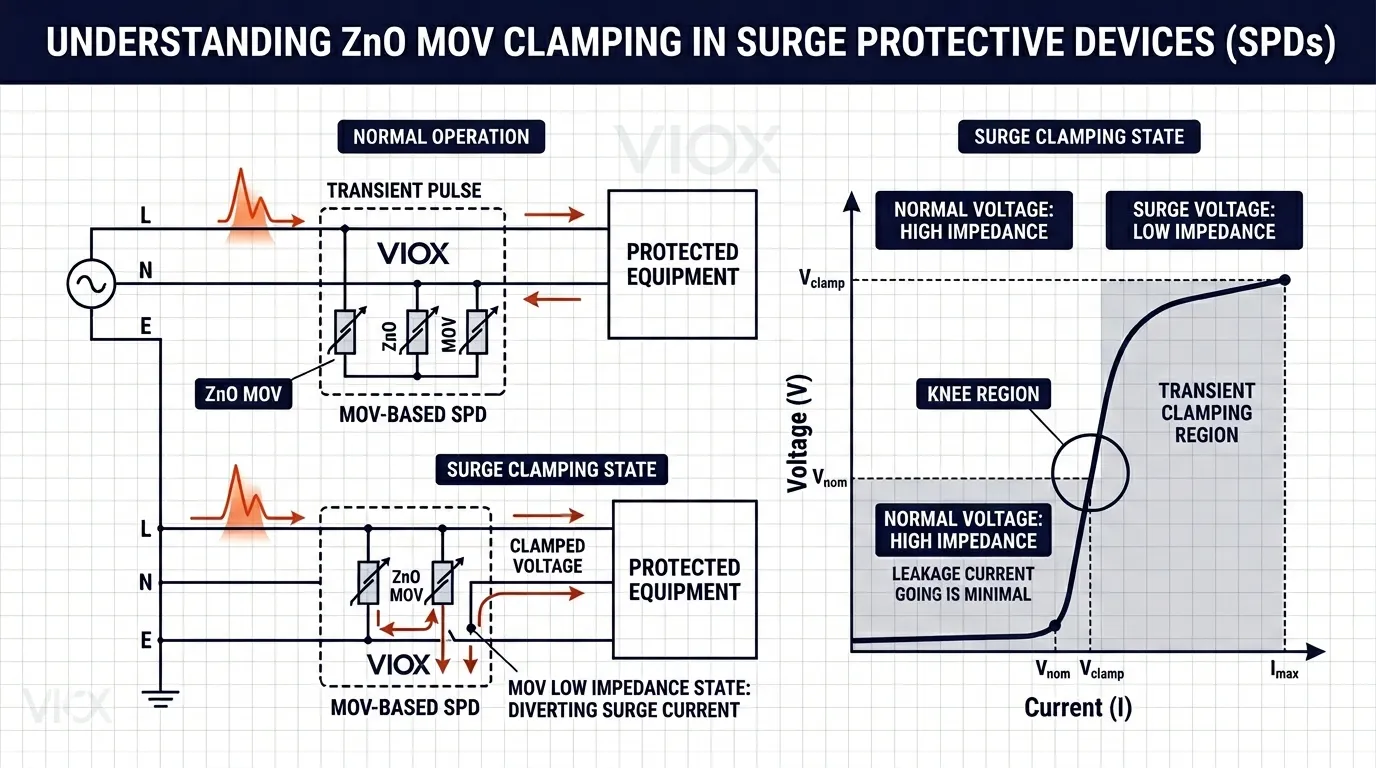
ပုံမှန်အားဖြင့် SPD တစ်ခုတွင် MOV ကို ဗို့အားမြင့်တက်မှုကို ကန့်သတ်ရန် လိုအပ်သော လျှပ်ကူးပစ္စည်းများအကြား ချိတ်ဆက်ထားသည်။ အသုံးများသော ချိတ်ဆက်မှုပုံစံများမှာ-
- လိုင်း (Line) နှင့် ကြားခံ (Neutral) အကြား
- လိုင်းမှ မြေကြီးသို့ (line to earth)
- နျူထရယ်မှ မြေကြီးသို့ (neutral to earth)
- DC စနစ်များတွင် ပိုစတစ်မှ နက်ဂတစ်သို့
- အချို့သော DC ဗိသုကာပုံစံများတွင် ပိုစတစ် သို့မဟုတ် နက်ဂတစ်မှ မြေကြီးသို့
ပုံမှန်လည်ပတ်နေစဉ်အတွင်း SPD သည် passive ဖြစ်သည်။ MOV သည် စနစ်၏ ဗို့အားကို ခံယူထားသော်လည်း ၎င်း၏ high-impedance (ခုခံမှုမြင့်မားသော) အပိုင်းတွင်သာ ရှိနေသည်။ လျှပ်စီးကြောင်း ရုတ်တရက် မြင့်တက်လာသည့်အခါ (transient surge) ဗို့အားသည် လျင်မြန်စွာ မြင့်တက်လာသည်။ MOV ၏ conduction region (လျှပ်ကူးသည့်အပိုင်း) ကို ကျော်လွန်သွားသည်နှင့် MOV သည် surge current ကို စတင်သယ်ဆောင်သည်။ ၎င်းသည် surge စွမ်းအင်၏ တစ်စိတ်တစ်ပိုင်းကို နောက်ဆက်တွဲရှိ စက်ပစ္စည်းများထံမှ လမ်းကြောင်းလွှဲပေးပြီး ကာကွယ်ထားသောဘက်ရှိ ဗို့အားကို ကန့်သတ်ပေးသည်။.
SPD သည် surge ဗို့အားကို လုံးဝပျောက်ကွယ်သွားအောင် မလုပ်ဆောင်ပါ။ ၎င်းသည် အောက်ပါအချက်များဖြင့် သတ်မှတ်ထားသော အဆင့်တစ်ခုအထိသာ ကန့်သတ်ပေးသည် -
- MOV ပစ္စည်းနှင့် အရွယ်အစား
- MOV ဗို့အားသတ်မှတ်ချက် (voltage rating)
- လျှပ်စီးကြောင်းမြင့်တက်မှုပမာဏ (surge current magnitude)
- ဆားကစ်၏ လျှပ်စစ်ခုခံမှု (circuit impedance)
- ဝါယာကြိုးအရှည်နှင့် တပ်ဆင်မှုပုံစံ (lead length and installation layout)
- SPD ၏ အတွင်းပိုင်းဒီဇိုင်း (SPD internal design)
- အထက်ပိုင်းနှင့် အောက်ပိုင်း ဆားကစ်များအကြား ညှိနှိုင်းဆောင်ရွက်မှု (upstream and downstream coordination)
- မြေစိုက်ခြင်းနှင့် ချိတ်ဆက်ခြင်း၏ အရည်အသွေး (grounding and bonding quality)
ထို့ကြောင့် MOV သဘောတရားတူညီသော်လည်း SPD တစ်ခုလုံး၏ ဒီဇိုင်းနှင့် တပ်ဆင်မှုအပေါ် မူတည်၍ လက်တွေ့အသုံးပြုရာတွင် ရလဒ်များစွာ ကွာခြားနိုင်ပါသည်။ တပ်ဆင်မှုနှင့် သက်ဆိုင်သော စွမ်းဆောင်ရည်ဆိုင်ရာ ပြဿနာများအတွက် အောက်ပါတို့ကို ကြည့်ရှုပါ။ SPD တပ်ဆင်မှုတွင် မှားယွင်းလေ့ရှိသောအချက်များနှင့် ၎င်းတို့ကို ပြုပြင်နည်းများ နှင့် Panel Surge Protector Earth Ground Problem.
MOV Behavior: Normal Voltage vs Surge Voltage
| Operating condition | MOV behavior | Practical meaning in an SPD |
|---|---|---|
| Normal system voltage | High resistance, very low leakage current | SPD remains passive and does not affect the load |
| ဗို့အားအနည်းငယ်မြင့်တက်ခြင်း | ယိုစိမ့်လျှပ်စီးကြောင်း မြင့်တက်လာနိုင်ခြင်း | ကြာရှည်စွာထိတွေ့မိပါက MOV ကို အပူလွန်ကဲစေပြီး ပျက်စီးစေနိုင်ခြင်း |
| လျှပ်စီးကြောင်း ရုတ်တရက်မြင့်တက်လာခြင်း (Surge transient) | လျှပ်စစ်ခုခံမှု သိသိသာသာကျဆင်းသွားခြင်း | MOV မှ လျှပ်စီးကြောင်းကို စီးဆင်းစေပြီး ဗို့အားကို ထိန်းညှိပေးခြင်း |
| အလွန်အကျွံ သို့မဟုတ် ထပ်ခါတလဲလဲ ဖိအားသက်ရောက်ခြင်း | ယိုစိမ့်မှုများလာပြီး ပစ္စည်း၏အရည်အသွေး ကျဆင်းလာခြင်း | SPD may show end-of-life status or disconnect |
| Severe failure condition | MOV may overheat or short before disconnector operates | Thermal protection and enclosure design become critical |
The middle rows matter most. MOV failure is often not caused by one dramatic lightning event alone. Many MOVs degrade through cumulative stress: repeated smaller surges, temporary overvoltage, poor grounding, high ambient temperature, and operation close to the voltage limit.
For a dedicated lifespan discussion, see Surge Protective Device Lifespan and MOV Aging Guide.
How ZnO MOVs Relate to SPD Ratings
Most important SPD ratings can be understood through MOV behavior.
Uc or MCOV: The Voltage the MOV Must Survive Continuously
Uc, also called maximum continuous operating voltage (MCOV) in many markets, is the maximum voltage the SPD can withstand continuously without entering destructive conduction.
If Uc is too low, the MOV may conduct during normal voltage fluctuations or temporary overvoltage. That increases leakage current and heat, which accelerates aging.
If Uc is too high, the SPD may clamp at a higher voltage than the protected equipment can tolerate.
This is the first selection boundary. Do not choose an SPD only by kA rating if Uc does not match the actual system voltage, earthing arrangement, and expected voltage tolerance.
For a deeper rating guide, see MCOV in SPD: Maximum Continuous Operating Voltage Guide နှင့် What Do Uc and Up Mean on an SPD?.
Up: The Voltage That Gets Through During a Surge
Up is the voltage protection level. In practical terms, it tells you the limited voltage that can appear downstream of the SPD under defined test conditions.
MOV selection strongly affects Up. A lower MOV voltage can improve clamping, but only if it is still high enough for safe continuous operation. A higher MOV voltage may survive more comfortably during normal operation but allow higher let-through voltage.
This is the core design tradeoff:
Uc must be high enough for the real system. Up must be low enough for the protected equipment.
In and Imax: How Much Surge Current the MOV Path Can Handle
In is the nominal discharge current. Imax is the maximum discharge current under a defined test waveform. These ratings depend heavily on MOV disc size, construction, parallel arrangement, thermal design, and SPD test standard.
Do not compare MOV-based SPDs by headline kA alone. A kA rating only has meaning when the waveform, test sequence, standard, and protection mode are understood.
For the rating boundary, see Imax နှင့် Surge Protection Devices အတွက် အဆင့်သတ်မှတ်ချက်များ နှင့် SPD kA Rating Sizing Guide.
Leakage Current: The Early Warning Signal
A healthy MOV has very low leakage at normal operating voltage. As it ages, leakage current can increase. Higher leakage creates more heat. More heat accelerates degradation. This can become a thermal runaway path if the SPD does not disconnect safely.
That is why quality SPDs include thermal disconnectors, visual indicators, and sometimes remote signal contacts. The indicator does not make the MOV stronger. It tells maintenance staff when the protective element has reached a failed or disconnected state.
What Is Inside an MOV-Based SPD?
The MOV is the core protective element, but it is not the whole SPD.
A practical MOV-based SPD may include:
- ZnO MOV discs တစ်ခု သို့မဟုတ် တစ်ခုထက်ပိုသော ပြားများ
- အပူချိန်ထိန်းဖြတ်စက် သို့မဟုတ် ဖျူးစ်အစိတ်အပိုင်း
- စက်ပိုင်းဆိုင်ရာ အခြေအနေအလံ
- အဝေးမှ အချက်ပေးနိုင်သော ဆက်သွယ်မှုအမှတ် (remote signalling contact)
- အလွယ်တကူဖြုတ်တပ်နိုင်သော ကာထရစ်ကိုယ်ထည် (pluggable cartridge body)
- တာမီနယ်များနှင့် ဘတ်စ်ဘားချိတ်ဆက်မှု တည်ဆောက်ပုံ
- မီးမလောင်ကျွမ်းစေသော ပစ္စည်းဖြင့်ပြုလုပ်ထားသည့် အိမ် (housing)
- လျှပ်စစ်မီးပွားနှင့် အပူကို ထိန်းချုပ်နိုင်သော လုပ်ဆောင်ချက်များ
- ထုတ်ကုန်ဒီဇိုင်းအပေါ် မူတည်၍ ညှိနှိုင်းဆောင်ရွက်ပေးသော အစိတ်အပိုင်းများ
MOV အစိတ်အပိုင်းတစ်ခုနှင့် လက်မှတ်ရထားသော SPD တစ်ခုကြား ကွာခြားချက်မှာ ဤစနစ်ဒီဇိုင်းပင်ဖြစ်သည်။ ဘုတ်ပြားပေါ်တွင် ဂဟေဆော်ထားသော MOV အလွတ်တစ်ခုသည် ဗို့အားမြင့်တက်မှုများကို ထိန်းချုပ်နိုင်သော်လည်း၊ Panel တွင် တပ်ဆင်ထားသော SPD တစ်ခုသည် လျှပ်စီးကြောင်းမြင့်တက်မှု (Surge current)၊ အပူချိန်ကြောင့် ပျက်စီးယိုယွင်းမှု၊ သက်တမ်းကုန်ဆုံးချိန်တွင် ပြတ်တောက်မှု၊ ရှော့ဖြစ်ခြင်း၊ ထိတွေ့မှုအတွက် ဘေးကင်းလုံခြုံမှု၊ တပ်ဆင်သည့် ပတ်ဝန်းကျင်နှင့် စံချိန်စံညွှန်းဆိုင်ရာ စမ်းသပ်မှုများကို ဘေးကင်းစွာ ကိုင်တွယ်ဖြေရှင်းနိုင်ရမည်။.
စက်ပစ္စည်းအဆင့် အပြည့်အဝကာကွယ်မှုဆိုင်ရာ သဘောတရားများအတွက် ကြည့်ရှုပါ Surge Protective Devices (SPD) များသည် ဗို့အားမြင့်တက်မှုများကို မည်သို့လမ်းကြောင်းပြောင်းလဲပေးပြီး ကန့်သတ်ပေးသနည်း.
MOV နှင့် Spark Gap၊ GDT နှင့် TVS Diode တို့၏ ကွာခြားချက်များ
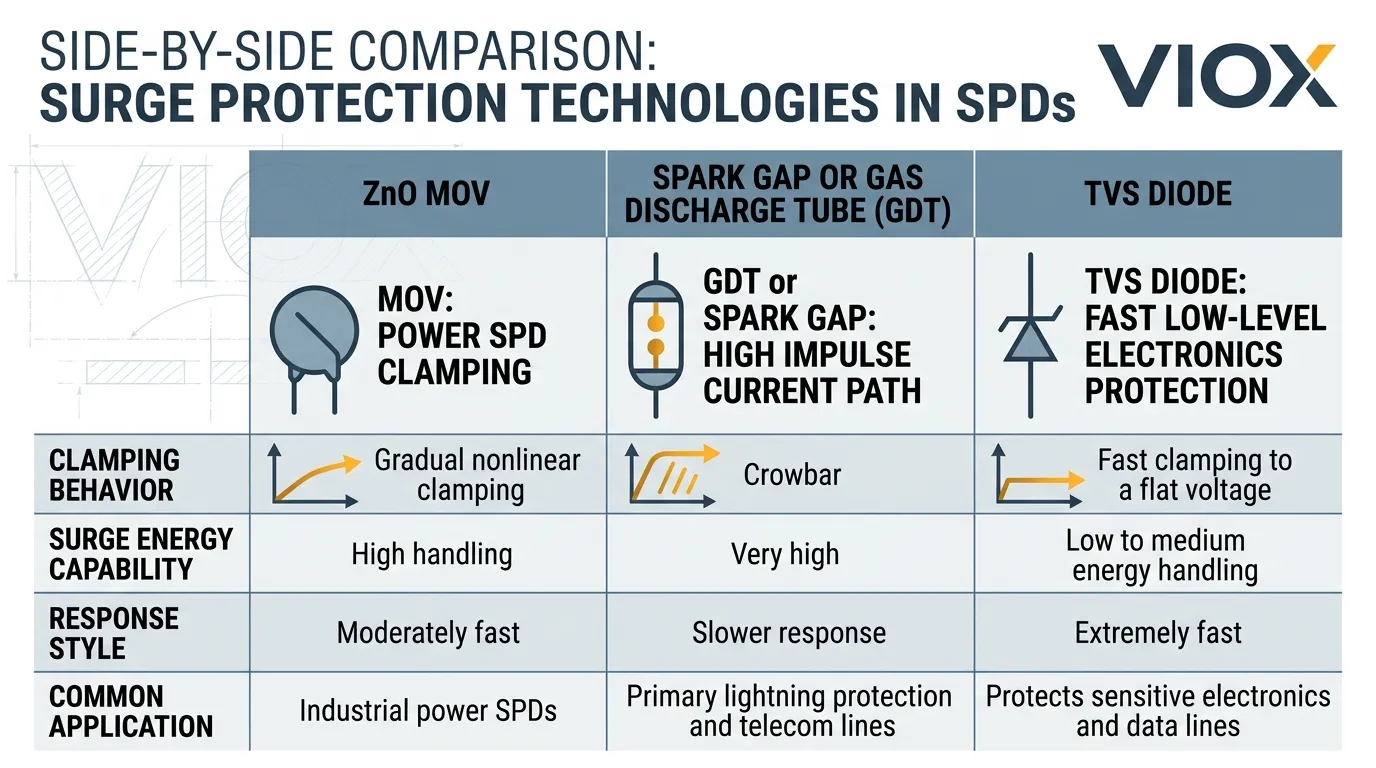
MOV နည်းပညာသည် အသုံးများသော်လည်း ၎င်းသည် တစ်ခုတည်းသော surge ကာကွယ်ရေးနည်းပညာ မဟုတ်ပါ။.
| နည္းပညာ | အဓိကအားသာချက် | အဓိကကန့်သတ်ချက် | အသုံးများပုံ |
|---|---|---|---|
| ZnO MOV | ကုပ်တွယ်နိုင်မှု၊ လျှပ်စီးကြောင်းမြင့်တက်မှုကို ခံနိုင်ရည်ရှိမှု၊ ကုန်ကျစရိတ်နှင့် အရွယ်အစားတို့အကြား သင့်လျော်မျှတမှုရှိခြင်း | ထပ်ခါတလဲလဲ ဖိအားသက်ရောက်မှုကြောင့် သက်တမ်းကုန်ဆုံးနိုင်ပြီး အပူပိုင်းကာကွယ်မှု လိုအပ်ခြင်း | AC/DC ပါဝါသုံး SPD များ၊ Type 2 နှင့် Type 3 ကိရိယာများ |
| စပတ်ခ်ဂက်ပ် (Spark gap) | မြင့်မားသော တွန်းအားပေးလျှပ်စီးကြောင်းကို ခံနိုင်ရည်ရှိပြီး ယိုစိမ့်မှုနည်းပါးခြင်း | ပိုမိုမြင့်မားသော စပတ်ခ်ဖြစ်ပေါ်မှုပုံစံနှင့် ပိုမိုရှုပ်ထွေးသော ညှိနှိုင်းဆောင်ရွက်မှု | Type 1 SPD များ နှင့် လျှပ်စီးကြောင်း ထုတ်လွှတ်သည့် လမ်းကြောင်းများ |
| ဂက်စ်ထုတ်လွှတ်သည့်ပြွန် (GDT) | မြင့်မားသော လျှပ်စီးကြောင်းလှိုင်း (Surge) ကို ခံနိုင်ရည်ရှိပြီး လျှပ်စီးပမာဏ (Capacitance) နည်းပါးခြင်း | ဆီမီးကွန်ဒတ်တာ ကိရိယာများထက် တုံ့ပြန်မှုနှေးကွေးပြီး စပါ့ခ်ဖြစ်ပေါ်သည့် ဗို့အား (Sparkover voltage) ပိုမိုမြင့်မားခြင်း | N-PE လမ်းကြောင်းများ၊ တယ်လီကွန်း၊ အချက်ပြစနစ်နှင့် ပေါင်းစပ်အမျိုးအစား SPD များ |
| TVS ဒိုင်အုတ် (TVS diode) | အလွန်မြန်ဆန်ပြီး ကလမ်ပင်းဗို့အား (Clamping voltage) နည်းပါးခြင်း | MOV/GDT အစိတ်အပိုင်းကြီးများထက် လျှပ်စီးကြောင်းလှိုင်း စွမ်းအင်ခံနိုင်ရည် ပိုမိုနည်းပါးခြင်း | အချက်ပြ/ဒေတာလိုင်းများနှင့် အီလက်ထရောနစ်အဆင့် ကာကွယ်ရေးစနစ်များ |
SPD အများစုသည် ပေါင်းစပ်ဒီဇိုင်းများကို အသုံးပြုကြသည်။ ဥပမာအားဖြင့်၊ ပါဝါ SPD တစ်ခုတွင် အပူချိန်ထိန်းညှိဖြတ်တောက်သည့်စနစ် (Thermal disconnectors) ပါဝင်သော MOV ဘလောက်များကို အသုံးပြုနိုင်ပြီး၊ အချက်ပြ SPD တစ်ခုတွင် GDT နှင့် TVS အဆင့်များကို ပေါင်းစပ်အသုံးပြုနိုင်သည်။ PV SPD တစ်ခုတွင် DC စနစ်၏ လုပ်ဆောင်ချက်အတွက် အထူးထုတ်လုပ်ထားသော MOV နည်းပညာကို အသုံးပြုနိုင်သည်။ မှန်ကန်သောနည်းပညာကို ရွေးချယ်ခြင်းသည် SPD ကို မည်သည့်နေရာတွင် တပ်ဆင်မည်နှင့် မည်သည့်အရာကို ကာကွယ်ပေးမည်ဆိုသည့်အချက်အပေါ်တွင် မူတည်သည်။.
For signal and control wiring, see Signal Surge Protector Selection Guide. For SPD type selection, see Surge Protective Device Type 1 vs Type 2 vs Type 3.
Why MOVs Age
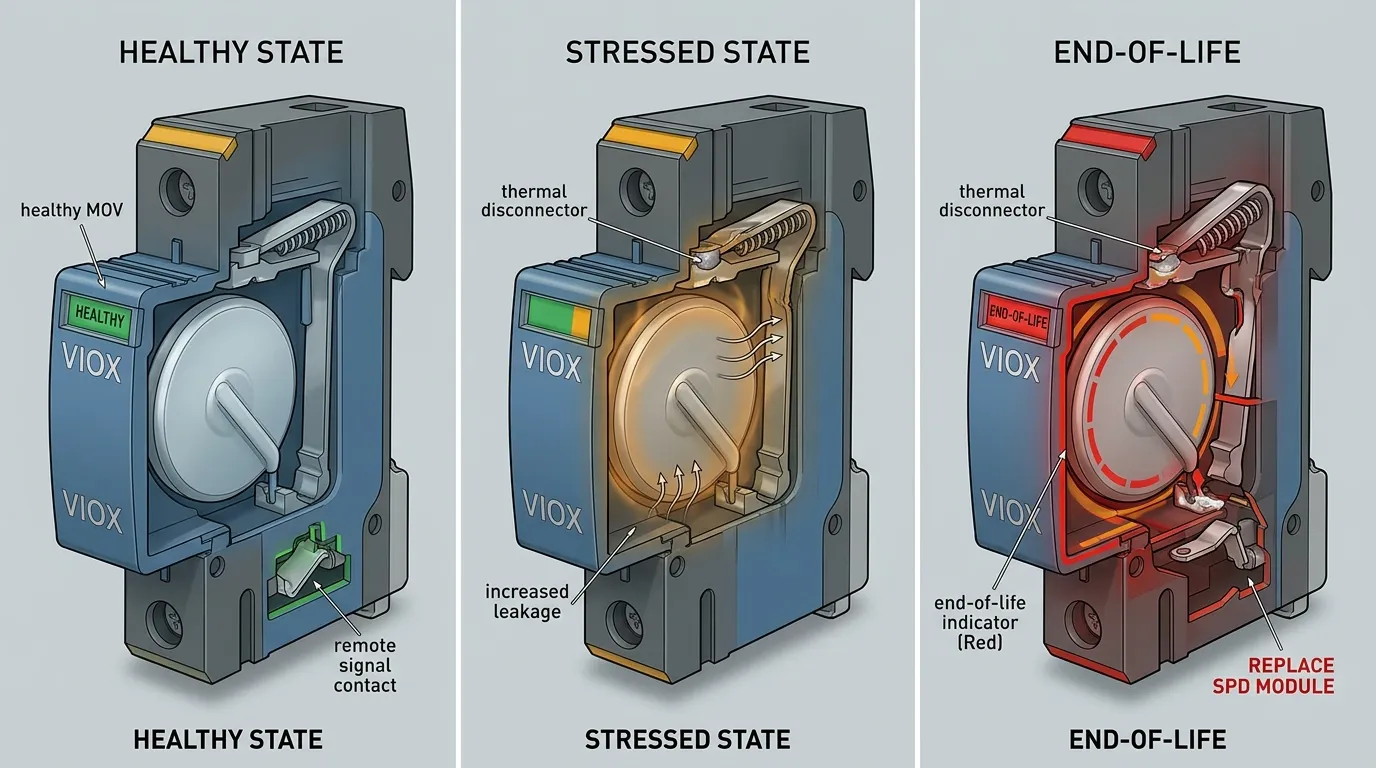
MOV aging is one of the most misunderstood SPD topics.
An MOV does not have a simple “used once and dead” rule. Some surges may be well within the MOV’s capability. Others may consume a significant part of its life. Repeated stress can gradually shift the MOV’s electrical characteristics.
Main aging drivers include:
- repeated surge current events
- temporary overvoltage above the intended continuous operating range
- high ambient temperature inside electrical panels
- poor grounding or long SPD connection leads
- incorrect Uc or MCOV selection
- operation in systems with unstable neutral or abnormal voltage rise
- excessive leakage current after earlier damage
The practical result is usually rising leakage current and heat. Once the MOV enters a degraded state, the SPD’s thermal disconnector should separate the MOV from the circuit before unsafe overheating develops.
This is why an SPD status window matters. A green indicator generally means the protection module is still connected. A red indicator generally means the module has disconnected and must be replaced. Always follow the specific manufacturer’s indication method.
MOV Failure Modes in Real Installations
Failure mode 1: Open circuit after thermal disconnection
This is the intended safe end-of-life mode in many modular SPDs. The MOV or its protection path becomes unsafe, so the thermal disconnector opens. The load still has power, but surge protection is reduced or lost.
Field risk: the system appears to operate normally, but the next surge may reach equipment with little or no SPD protection.
Failure mode 2: Increased leakage and heating
Before full disconnection, a damaged MOV may show increased leakage current and temperature rise.
Field risk: တဖြည်းဖြည်းချင်း အပူချိန်မြင့်တက်လာခြင်းသည် မော်ဂျူးကို ပျက်စီးစေခြင်း၊ တာမီနယ်များ အရောင်ပြောင်းသွားခြင်း သို့မဟုတ် အကာအရံအတွင်း အပူဒဏ်ဖိအားများ ဖြစ်ပေါ်စေနိုင်သည်။.
ပျက်စီးမှုပုံစံ ၃- ရှော့ဖြစ်ခြင်းကြောင့် ဖြစ်ပေါ်သော ဖိအား (Short-circuit stress)
ပြင်းထန်သော ဗို့အားလွန်ကဲမှု သို့မဟုတ် လျှပ်စီးကြောင်း ရုတ်တရက်မြင့်တက်မှု (Surge) ကြုံတွေ့ရသည့်အခါ၊ အတွင်းပိုင်း သို့မဟုတ် အပြင်ပိုင်း အကာအကွယ်စနစ်များက မဖြေရှင်းမီ MOV သည် impedance နည်းပါးသော အခြေအနေသို့ ရောက်ရှိပြီး ပျက်စီးသွားနိုင်သည်။.
Field risk: ထို့ကြောင့် SPD အရန်အကာအကွယ်၊ အပူဒဏ်ခံနိုင်သော ဖြတ်တောက်ကိရိယာများ (thermal disconnectors)၊ ရှော့ဖြစ်နိုင်သည့် လျှပ်စီးကြောင်းပမာဏ (short-circuit current rating) နှင့် တပ်ဆင်မှုဆိုင်ရာ ညွှန်ကြားချက်များကို လိုက်နာရန် လိုအပ်ပါသည်။.
ပျက်စီးမှုပုံစံ ၄- သတ်မှတ်ချက်မပြည့်မီသော MOV အစုအဝေး (Underspecified MOV array)
အရည်အသွေးနိမ့်သော SPD တစ်ခုတွင် MOV အရွယ်အစား မလုံလောက်ခြင်း သို့မဟုတ် အပြိုင်ချိတ်ဆက်ထားသော MOV များကြား လျှပ်စီးကြောင်း ခွဲဝေမှု ညံ့ဖျင်းခြင်းရှိပါက၊ အစိတ်အပိုင်းတစ်ခုခုသည် ဖိအားဒဏ်ကို အလွန်အကျွံ ခံစားရနိုင်သည်။.
Field risk: SPD သည် ကနဦးစစ်ဆေးမှုကို အောင်မြင်နိုင်သော်လည်း လက်တွေ့တွင် လျှပ်စီးကြောင်း ရုတ်တရက်မြင့်တက်မှုကို ခံနိုင်ရည်အား နည်းပါးနိုင်သည်။.
SPD ဝယ်ယူသူများအတွက် ရွေးချယ်မှုဆိုင်ရာ သင်ခန်းစာများ
MOV ကို နားလည်သဘောပေါက်မှသာ SPD ရွေးချယ်မှုသည် ပိုမိုစနစ်တကျရှိလာမည်ဖြစ်သည်။.
၁။ kA ကို အခြေမခံဘဲ စနစ်၏ ဗို့အား (System voltage) မှ စတင်ပါ။
MOV သည် စနစ်၏ လက်ရှိအသုံးပြုနေသော ဗို့အားကို ခံနိုင်ရည်ရှိရမည်။ စနစ်၏ ဗို့အား၊ မြေချစနစ် (Earthing arrangement)၊ ဗို့အားသည်းခံနိုင်မှုနှင့် ဖြစ်ပေါ်လာနိုင်သည့် ယာယီဗို့အားမြင့်တက်မှု (Temporary overvoltage) တို့အပေါ် မူတည်၍ Uc သို့မဟုတ် MCOV ကို ရွေးချယ်ပါ။.
၂။ စက်ပစ္စည်းများ၏ ခံနိုင်ရည်အဆင့်နှင့် Up ကို နှိုင်းယှဉ်စစ်ဆေးပါ။
SPD သည် အောက်ဘက်ရှိ စက်ပစ္စည်းများကို ကာကွယ်နိုင်ရန် ဗို့အားကို လုံလောက်စွာ လျှော့ချပေးရမည်။ ဗို့အားကာကွယ်မှုအဆင့် (Voltage protection level) မြင့်မားနေပါက kA rating ကြီးမားသော်လည်း အကျိုးမရှိပါ။.
၃။ In နှင့် Imax ကို တူညီသော စမ်းသပ်မှုအခြေအနေအောက်တွင်သာ နှိုင်းယှဉ်ပါ။
လျှပ်စီးကြောင်း (Surge current) ဂဏန်းများသည် လှိုင်းပုံစံ (Waveform) နှင့် စံနှုန်း (Standard) ပေါ်တွင် မူတည်သည်။ တူညီသောအရာများကိုသာ နှိုင်းယှဉ်ပါ။.
၄။ အပူချိန်ကြောင့် ပြတ်တောက်မှု (Thermal disconnection) နှင့် အခြေအနေပြသမှု (Status indication) ရှိမရှိ စစ်ဆေးပါ။
MOVs များသည် အချိန်ကြာလာသည်နှင့်အမျှ သက်တမ်းကုန်ဆုံးလာတတ်သဖြင့် SPD တွင် ဘေးကင်းသော သက်တမ်းကုန်ဆုံးမှုစနစ် (end-of-life mechanism) ပါဝင်သင့်သည်။ လျှပ်စစ်ပန်နယ်များတွင် အသုံးပြုသည့်အခါ ပြုပြင်ထိန်းသိမ်းရေးအဖွဲ့များအတွက် အဝေးမှစောင့်ကြည့်နိုင်သော အချက်ပြစနစ် (remote indication) သည် အသုံးဝင်သည်။.
5. အစိတ်အပိုင်းဆိုင်ရာ အာမခံချက်များကိုသာမက စံချိန်စံညွှန်းများကိုပါ စစ်ဆေးပါ။
အစိတ်အပိုင်းအဆင့် MOV အဆင့်သတ်မှတ်ချက်သည် SPD ထုတ်ကုန်လက်မှတ်နှင့် တူညီသည်မဟုတ်ပါ။ ဗို့အားနိမ့်ပါဝါ SPD များအတွက် ဘုံစံချိန်စံညွှန်းမူဘောင်များတွင် ဈေးကွက်အပေါ်မူတည်၍ IEC 61643-11 နှင့် UL 1449 တို့ ပါဝင်သည်။.
စံချိန်စံညွှန်းများဆိုင်ရာ အကျဉ်းချုပ်အတွက် အောက်ပါတို့ကို ကြည့်ရှုပါ။ လျှပ်စီးကြောင်းကာကွယ်ရေးစံချိန်စံညွှန်းများ- IEC 61643 နှင့် UL 1449 နှင့် GB 18802 နှင့် TVSS vs SPD: UL 1449 Standards Guide.
အဖြစ်များသော အမှားများ
အမှား (၁) - MOV များသည် လျှပ်စီးကြောင်းစွမ်းအင်အားလုံးကို စုပ်ယူသည်ဟု ထင်မှတ်ခြင်း
MOV များသည် ဗို့အားကို ထိန်းညှိပေးပြီး လျှပ်စီးကြောင်းကို လမ်းကြောင်းလွှဲပေးခြင်းကိုသာ အဓိကလုပ်ဆောင်သည်။ တပ်ဆင်ထားသော မြေစိုက်စနစ် (grounding)၊ ချိတ်ဆက်မှု (bonding)၊ လျှပ်ကူးပစ္စည်းအရှည်၊ အထက်ပိုင်းစနစ်၏ impedance နှင့် SPD ညှိနှိုင်းဆောင်ရွက်မှုတို့သည် နောက်ဆုံးရရှိမည့် ကာကွယ်မှုအဆင့်ကို သက်ရောက်မှုရှိသည်။.
အမှား (၂) - Imax ကိုသာ ကြည့်၍ SPD ကို ရွေးချယ်ခြင်း
Imax is important, but it is not the first selection parameter. Uc, Up, In, system type, SPD type, backup protection, and installation location all matter.
Mistake 3: Ignoring MOV aging
An SPD is not a permanent fit-and-forget device. MOV-based SPDs can degrade under repeated stress. Visual inspection and replacement after end-of-life indication are part of responsible maintenance.
Mistake 4: Treating all MOV-based SPDs as equal
Two SPDs may both use ZnO MOVs but differ greatly in MOV size, parallel structure, thermal design, housing safety, terminals, status indication, and certification.
Mistake 5: Using an AC SPD on a DC system without verification
DC systems have different fault behavior and no natural current zero-crossing. A MOV element may be voltage-dependent, but the complete SPD must be designed and certified for the target AC or DC application.
Mistake 6: Ignoring installation lead length
Even a good MOV-based SPD cannot overcome poor installation. Long leads add inductive voltage during fast transients and raise the effective let-through voltage.
Where ZnO MOVs Are Used
ZnO MOVs appear in many protection products, including:
- Type 2 AC distribution SPDs
- Type 3 point-of-use SPDs
- DC SPDs for photovoltaic and battery systems when designed for DC use
- surge modules inside industrial control cabinets
- appliance and electronics surge suppression circuits
- GDT သို့မဟုတ် spark gaps များဖြင့် ပေါင်းစပ်ထားသော hybrid SPD များ
အလွန်မြန်ဆန်သော ဒေတာလိုင်းကာကွယ်ရေးစနစ်များတွင် ၎င်းတို့၏ အခန်းကဏ္ဍမှာ နည်းပါးသည်။ ထိုကဲ့သို့သော ဆားကစ်များတွင် capacitance နှင့် signal integrity တို့သည် ပိုမိုအရေးကြီးသောကြောင့် TVS diodes၊ GDT သို့မဟုတ် hybrid low-capacitance ဒီဇိုင်းများကို ပိုမိုအသုံးပြုကြသည်။.
အကယ်၍ သင်သည် အစိတ်အပိုင်းများကို နားလည်သဘောပေါက်ခြင်းမှသည် ထုတ်ကုန်အကဲဖြတ်ခြင်းသို့ ကူးပြောင်းနေပါက၊ အောက်ပါတို့ဖြင့် စတင်ပါ VIOX SPD ထုတ်ကုန်စာမျက်နှာ ထို့နောက် SPD အမျိုးအစား၊ Uc၊ Up၊ In၊ Imax၊ စံနှုန်းများ၊ pole configuration နှင့် တပ်ဆင်မှုလိုအပ်ချက်များကို လက်တွေ့စနစ်နှင့် ကိုက်ညီမှုရှိမရှိ စစ်ဆေးပါ။.
အမြဲမေးလေ့ရှိသောမေးခွန်းများ
ZnO MOV ဆိုသည်မှာ အဘယ်နည်း။
ZnO MOV ဆိုသည်မှာ zinc oxide metal oxide varistor ဖြစ်သည်။ ၎င်းသည် surge protective device အများအပြားတွင် surge voltage ကို ထိန်းချုပ်ရန်အတွက် အသုံးပြုသော ဗို့အားအပေါ်မူတည်သည့် ceramic အစိတ်အပိုင်းတစ်ခုဖြစ်သည်။.
MOV နှင့် SPD တို့သည် တစ်ခုတည်းဖြစ်ပါသလား။
No. The MOV is a component inside many SPDs. The SPD is the complete protective device, including housing, terminals, thermal disconnection, status indication, coordination features, and product-level certification.
Why are MOVs used in most power SPDs?
MOVs offer a practical balance of fast clamping behavior, surge current capability, compact size, and cost. That makes them suitable for many low-voltage AC and DC power surge protection applications.
Do MOVs wear out?
Yes. MOVs can age under repeated surge stress, temporary overvoltage, heat, and rising leakage current. A quality SPD should include end-of-life disconnection and status indication.
What happens when an MOV fails?
Depending on the fault condition and SPD design, a degraded MOV may disconnect through a thermal mechanism, show increased leakage and heating, or fail under severe stress. This is why thermal protection and backup protection are essential.
Is a higher kA MOV always better?
No. Surge current rating matters, but the SPD must also match system voltage, voltage protection level, SPD type, installation location, standard, and coordination requirements.
Can a ZnO MOV be used on DC circuits?
MOV technology can be used in DC SPDs, but the complete SPD must be designed and rated for DC operation. Do not use an AC-only SPD on a DC system unless the datasheet explicitly allows it.
Why does an SPD have a red or green indicator?
The indicator shows whether the protection module is still connected or has reached end of life, depending on the manufacturer’s design. In MOV-based SPDs, the indicator often reflects the state of the thermal disconnector.
Sources Reviewed
-
- TDK – How Varistors Operate Against Repetitive Surge
- TDK/EPCOS – General Technical Information for Varistors
- Bourns – Metal Oxide Varistor ထုတ်ကုန်ဆိုင်ရာ သင်တန်းအစီအစဉ်
- IEC 61643-11 – ဗို့အားနိမ့် လျှပ်စစ်စနစ်များတွင် ချိတ်ဆက်အသုံးပြုသော ဗို့အားနိမ့် လျှပ်စီးကြောင်းကာကွယ်ရေးကိရိယာများ (Surge Protective Devices)