ဤစာမျက်နှာတွင်
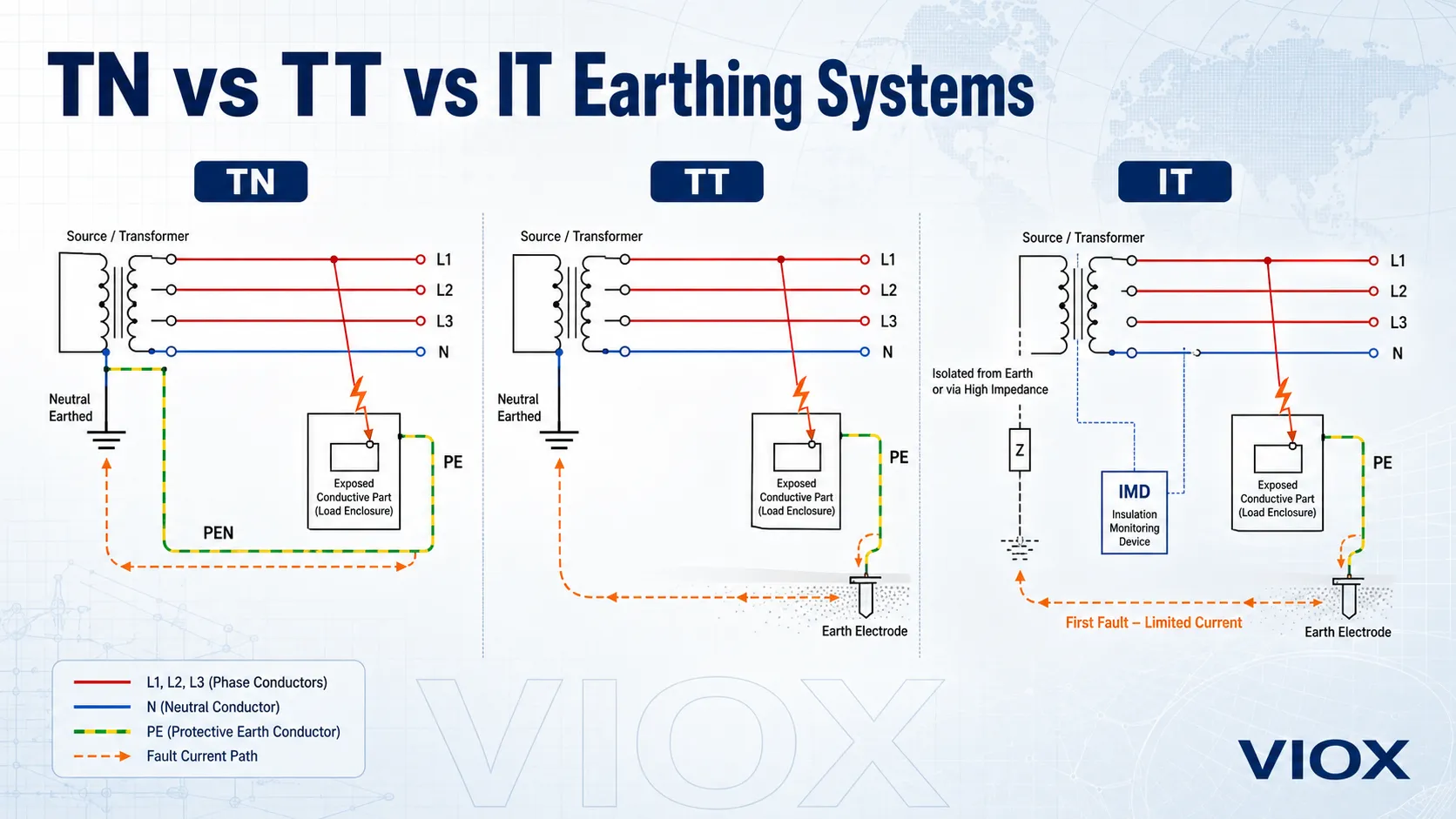
မြေစိုက်စနစ်များ (Earthing systems) ဆိုသည်မှာ ဗို့အားနိမ့် လျှပ်စစ်ကွန်ရက်တစ်ခုတွင် ပါဝါအရင်းအမြစ်၊ ထိတွေ့နိုင်သော သတ္တုအစိတ်အပိုင်းများ၊ အကာအကွယ်ပေးသည့် လျှပ်ကူးပစ္စည်းများနှင့် မြေကြီးတို့ကို မည်သို့ချိတ်ဆက်ထားသည်ကို သတ်မှတ်ပေးခြင်းဖြစ်သည်။ IEC စံနှုန်းအရ အဓိက မြေစိုက်စနစ် (၃) မျိုးမှာ - TN, TTနှင့် အိုင်တီ. ၎င်းတို့အားလုံး၏ ရည်ရွယ်ချက်မှာ လျှပ်စစ်ရှော့ခ်ဖြစ်ခြင်းနှင့် မီးလောင်မှုအန္တရာယ်ကို လျှော့ချရန်ဖြစ်သော်လည်း လုပ်ဆောင်ပုံနည်းလမ်းများမှာ ကွဲပြားကြသည်။.
အတိုချုပ်အဖြေ:
- TN စနစ်များ use a protective conductor connected back to the supply source. Earth-fault current usually returns through a metallic path, so fault current is relatively high.
- TT စနစ်များ use a local earth electrode at the installation. Earth-fault current returns through the soil, so fault current is often lower and residual current devices (RCDs) become essential.
- အိုင်တီစနစ်များ isolate the supply from earth or connect it through high impedance. The first earth fault produces limited current, allowing continuity of operation, but insulation monitoring is required.
These differences explain why countries, utilities, factories, hospitals, mines, data centers, and residential installations do not all ground low-voltage networks in the same way.
What Do TN, TT, and IT Mean?
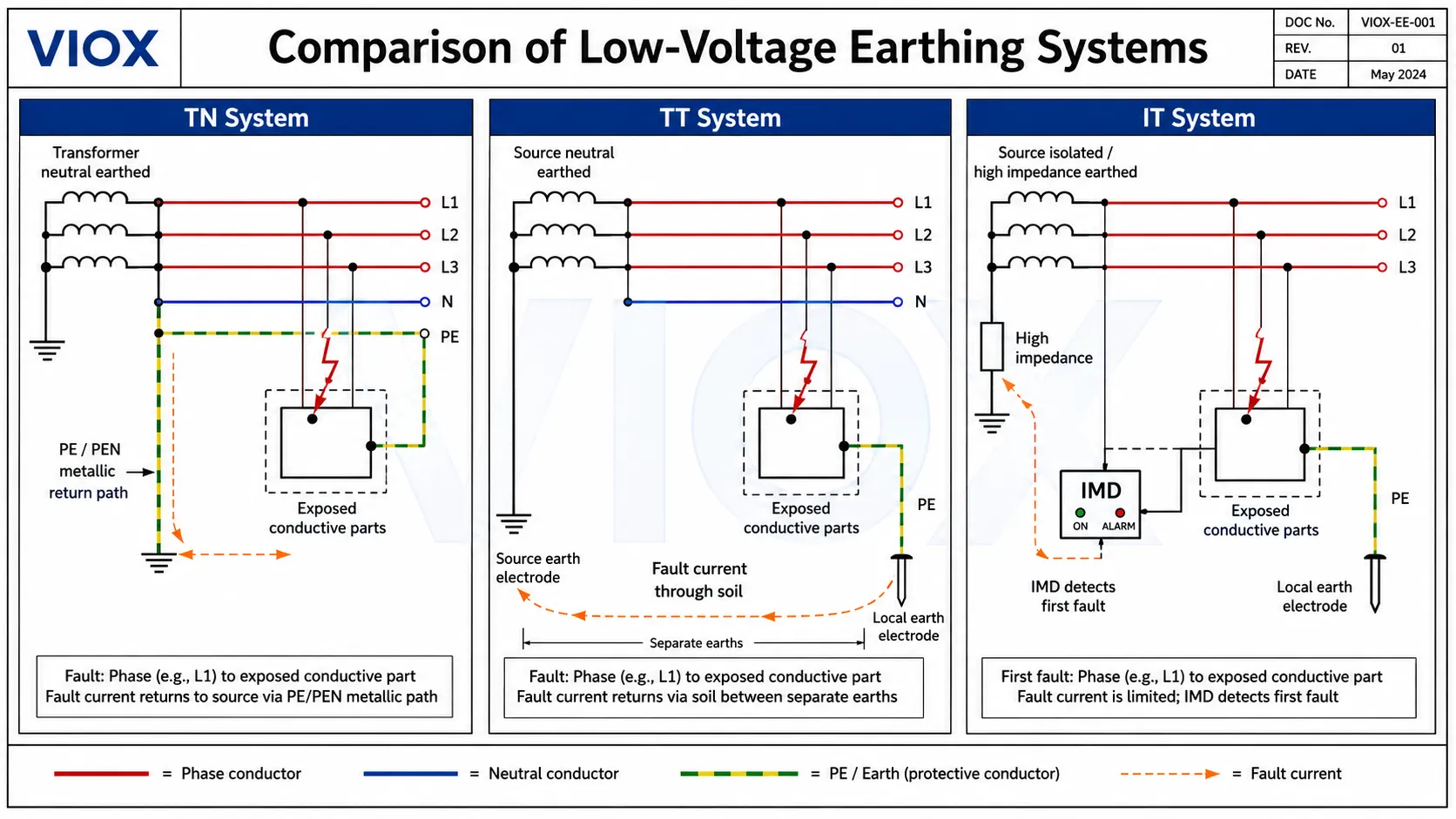
The IEC earthing code uses letters to describe two relationships:
- The relationship between the power source and earth.
- The relationship between exposed conductive parts and earth.
| Letter | အဓိပ္ပာယ် | Practical interpretation |
|---|---|---|
| T | Terra, direct connection to earth | A point of the source or installation is directly earthed |
| ငါ | Isolated or impedance-earthed source | The source is not directly earthed, or is earthed through high impedance |
| N | Exposed conductive parts connected to source earth | Protective conductors return to the earthed supply point |
| ၎ | ကြားခံ (Neutral) နှင့် အကာအကွယ် (Protective) လျှပ်ကူးပစ္စည်းများကို ခွဲခြားထားခြင်း | N နှင့် PE တို့သည် သီးခြားစီဖြစ်သော လျှပ်ကူးပစ္စည်းများ ဖြစ်သည် |
| ဂ | ပေါင်းစပ်ထားသော ကြားခံနှင့် အကာအကွယ် လျှပ်ကူးပစ္စည်း | ကြားခံနှင့် အကာအကွယ် မြေစိုက်ခြင်း လုပ်ဆောင်ချက်များကို PEN လျှပ်ကူးပစ္စည်းတစ်ခုတည်းတွင် ပေါင်းစပ်ထားခြင်း |
၎င်းသည် အောက်ပါ အသုံးများသော စနစ်အမျိုးအစားများကို ဖြစ်ပေါ်စေသည် -
- TN-S
- TN-C
- TN-CS
- TT
- အိုင်တီ
အက္ခရာများမှာ ရိုးရှင်းပုံပေါက်သော်လည်း ကာကွယ်မှုဆိုင်ရာ လုပ်ဆောင်ချက်များမှာ အလွန်ကွာခြားပါသည်။ Breaker, RCD, SPD, Neutral bar, PE bar သို့မဟုတ် Grounding electrode တို့ကို မှန်ကန်စွာ ရွေးချယ်နိုင်ရန်အတွက် Earthing စနစ်ကို နားလည်သဘောပေါက်ရန် လိုအပ်ပါသည်။.
TN-S, TN-C နှင့် TN-C-S စနစ်များအကြောင်း ရှင်းလင်းချက်
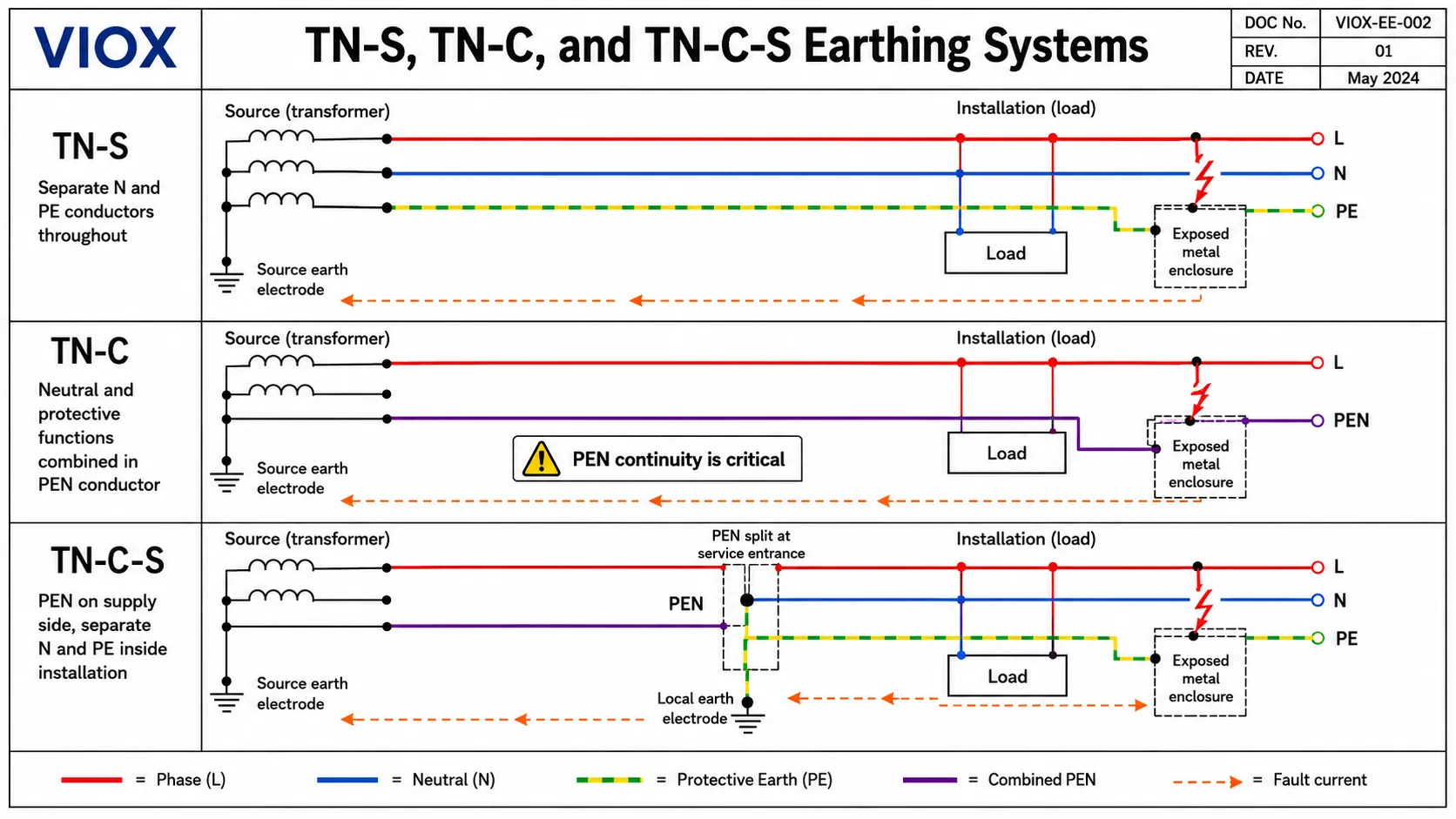
တဲ့ TN မြေစိုက်စနစ် (TN earthing system) ထောက်ပံ့ပေးသော လျှပ်စစ်အရင်းအမြစ်၏ အချက်တစ်ချက်ကို တိုက်ရိုက်မြေစိုက်ထားခြင်းဖြစ်သည်။ တပ်ဆင်ထားသော လျှပ်စစ်ပစ္စည်းများ၏ ထိတွေ့နိုင်သော သတ္တုအစိတ်အပိုင်းများကို အဆိုပါ မြေစိုက်ထားသည့် အရင်းအမြစ်အချက်သို့ အကာအကွယ်ပေးသော လျှပ်ကူးပစ္စည်းများ (protective conductors) မှတစ်ဆင့် ပြန်လည်ချိတ်ဆက်ထားသည်။.
လက်တွေ့အားဖြင့် TN စနစ်သည် သတ္တုဖြင့်ပြုလုပ်ထားသော မြေစိုက်ချို့ယွင်းချက် ပြန်လည်စီးဆင်းရာလမ်းကြောင်းကို ပံ့ပိုးပေးသည်။ ချို့ယွင်းချက်ဖြစ်ပေါ်သည့် လမ်းကြောင်း၏ impedance (fault loop impedance) သည် များသောအားဖြင့် နည်းပါးသောကြောင့် မြေစိုက်ချို့ယွင်းချက် လျှပ်စီးကြောင်းသည် ဖျူးစ်များ (fuses)၊ အသေးစား လျှပ်စစ်ပတ်လမ်းဖြတ်ကိရိယာများ (MCBs)၊ ပုံသွင်းထားသော ကိုယ်ထည်ရှိ လျှပ်စစ်ပတ်လမ်းဖြတ်ကိရိယာများ (MCCBs) သို့မဟုတ် အခြားသော လျှပ်စီးကြောင်းလွန် အကာအကွယ်ပေးသည့် ကိရိယာများကို အလုပ်လုပ်စေရန် လုံလောက်သော ပမာဏရှိသည်။.
TN-S စနစ်
တွင် TN-S စနစ်, ကြားခံလျှပ်ကူးပစ္စည်း (N) နှင့် အကာအကွယ်ပေးသော မြေစိုက်လျှပ်ကူးပစ္စည်း (PE) တို့သည် စနစ်တစ်ခုလုံးတွင် သီးခြားစီရှိနေသည်။.
ထရန်စဖော်မာ၏ ကြားခံအချက်ကို မြေစိုက်ထားခြင်းTN-S စနစ်သည် ကြားခံလျှပ်စီးကြောင်းနှင့် အကာအကွယ်ပေးသော မြေစိုက်လျှပ်စီးကြောင်းတို့ကို ခွဲခြားထားသောကြောင့် ဆွဲဆောင်မှုရှိသည်။ ၎င်းသည် ပုံမှန်ဝန်အားလျှပ်စီးကြောင်းများ ထိတွေ့နိုင်သော သတ္တုအစိတ်အပိုင်းများ သို့မဟုတ် အကာအကွယ်ပေးသော ချိတ်ဆက်လမ်းကြောင်းများပေါ်သို့ စီးဆင်းနိုင်သည့် အန္တရာယ်ကို လျှော့ချပေးသည်။.
ပုံမှန်လက္ခဏာများ-
- N နှင့် PE လျှပ်ကူးပစ္စည်းများကို ခွဲခြားထားပါ။.
- သတ္တုဖြင့်ပြုလုပ်ထားသော အမှားအယွင်းလျှပ်စီးကြောင်း ပြန်လည်စီးဆင်းရာလမ်းကြောင်း။.
- လျှပ်စီးကြောင်းပတ်လမ်း၏ ခုခံမှု (loop impedance) နည်းပါးပါက လွန်ကဲလျှပ်စီးကြောင်း ကာကွယ်ရေးကိရိယာများသည် မြေပြင်အမှားအယွင်းများကို ဖြေရှင်းပေးနိုင်သည်။.
- ဒေသဆိုင်ရာ စည်းမျဉ်းများအပေါ် မူတည်၍ ထပ်ဆောင်းကာကွယ်မှု၊ အထူးနေရာများ သို့မဟုတ် ပလပ်ပေါက်ပတ်လမ်းများအတွက် RCD များကို ဆက်လက်အသုံးပြုနိုင်သည်။.
- လျှပ်စစ်သံလိုက်ဆိုင်ရာ လိုက်လျောညီထွေမှု၊ ကာကွယ်ရေးလျှပ်ကူးပစ္စည်း၏ ခိုင်မာမှု သို့မဟုတ် အထိခိုက်မခံသော စက်ကိရိယာများအတွက် ဦးစားပေးအသုံးပြုလေ့ရှိသည်။.
TN-C စနစ်
တွင် TN-C စနစ်, ၊ ကြားခံ (neutral) နှင့် မြေပြင်ကာကွယ်ရေး (protective earth) လုပ်ဆောင်ချက်များကို တစ်ခုတည်းတွင် ပေါင်းစပ်ထားသည်။ PEN လျှပ်ကူးပစ္စည်း စနစ်တစ်ခုလုံးတွင်။.
ဤအစီအစဉ်သည် ဖြန့်ဖြူးရေးကွန်ရက်များတွင် လျှပ်ကူးပစ္စည်းပမာဏကို သက်သာစေနိုင်သော်လည်း ၎င်းသည် အရေးကြီးသော ဘေးကင်းလုံခြုံမှုဆိုင်ရာ ကန့်သတ်ချက်များကို ဖြစ်ပေါ်စေသည်။ PEN လျှပ်ကူးပစ္စည်းသည် ပုံမှန်ကြားခံလျှပ်စီးကြောင်း (neutral current) ကို သယ်ဆောင်ပြီး အကာအကွယ်ပေးသည့် လျှပ်ကူးပစ္စည်းအဖြစ်လည်း လုပ်ဆောင်သောကြောင့် ၎င်းကို မဆင်မခြင် ဖြတ်တောက်ခြင်း သို့မဟုတ် ခလုတ်ခတ်ခြင်း မပြုလုပ်ရပါ။ အကယ်၍ PEN လျှပ်ကူးပစ္စည်းသည် ပြတ်တောက်သွားခြင်း သို့မဟုတ် ခုခံအားမြင့်တက်လာပါက၊ ထိတွေ့နိုင်သော လျှပ်ကူးပစ္စည်းအစိတ်အပိုင်းများသည် အန္တရာယ်ရှိသော ဗို့အားအဆင့်သို့ ရောက်ရှိသွားနိုင်သည်။.
အရေးကြီးသော နယ်နိမိတ်- TN-C သည် TN-C-S နှင့် မတူပါ။ TN-C တွင် ကြားခံ (neutral) နှင့် အကာအကွယ်ပေးသည့် လုပ်ဆောင်ချက်များသည် PEN အဖြစ် ပေါင်းစပ်လျက်ရှိသည်။ PEN ကို N နှင့် PE အဖြစ် ခွဲထုတ်လိုက်သည်နှင့်တပြိုင်နက်၊ အောက်ပိုင်းအပိုင်းသည် TN-C မဟုတ်တော့ဘဲ စီစဉ်ထားပုံပေါ်မူတည်၍ TN-C-S သို့မဟုတ် TN-S ဖြစ်လာသည်။.
ပုံမှန်လက္ခဏာများ-
- ပေါင်းစပ်ထားသော PEN လျှပ်ကူးပစ္စည်းကို အသုံးပြုသည်။.
- ခေတ်မီဗို့အားနိမ့် တပ်ဆင်မှုများ၏ အစိတ်အပိုင်းအားလုံးအတွက် မသင့်လျော်ပါ။.
- ကြားခံ (neutral) နှင့် အကာအကွယ်ပေးသည့် မြေစိုက် (protective earth) တို့ကို ပေါင်းစပ်ထားသောကြောင့် TN-C အပိုင်းတွင် RCD များကို ပုံမှန်အတိုင်း အသုံးပြု၍မရပါ။.
- PEN continuity is safety-critical.
TN-C-S System
တွင် TN-C-S system, the supply network uses a combined PEN conductor for part of the system, then separates it into distinct neutral (N) and protective earth (PE) conductors at the installation origin or service equipment.
This arrangement is known in some countries as PME (Protective Multiple Earthing) or MEN (Multiple Earthed Neutral) - အများအပြား မြေကြီးချိတ်ဆက်ထားသော ကြားခံစနစ်။.
ထောက်ပံ့ရေးဘက်ခြမ်း- ပေါင်းစပ်ထားသော PEN၊ ခွဲခြားပြီးနောက် တပ်ဆင်မှုဘက်ခြမ်း- သီးခြား N နှင့် PE။TN-C-S စနစ်သည် တပ်ဆင်မှုတိုင်းတွင် ကိုယ်ပိုင်မြေစိုက်တိုင် (earth electrode) တစ်ခုတည်းအပေါ် မှီခိုရန်မလိုဘဲ လျှပ်စစ်အမှားအယွင်းဖြစ်သည့်အခါ လျှပ်စီးကြောင်းစီးဆင်းရန် လျှပ်ခံအားနည်းသော လမ်းကြောင်းကို ပေးစွမ်းနိုင်သောကြောင့် တွင်ကျယ်စွာ အသုံးပြုကြသည်။ သို့သော် အဓိက အင်ဂျင်နီယာဆိုင်ရာ စိုးရိမ်ချက်မှာ PEN ပြတ်တောက်ခြင်းဖြစ်သည်။ အကယ်၍ PEN လျှပ်ကူးပစ္စည်းသည် ခွဲခြားသည့်နေရာ၏ အထက်ပိုင်းတွင် ပြတ်တောက်သွားပါက၊ တပ်ဆင်ထားသော ကာကွယ်ရေးမြေစိုက်စနစ် (protective earth) ၏ ဗို့အားသည် လိုင်းဗို့အားအထိ မြင့်တက်လာနိုင်သည်။.
ပုံမှန်လက္ခဏာများ-
- အများပြည်သူသုံး ဗို့အားနိမ့် ဖြန့်ဖြူးရေးကွန်ရက်များစွာတွင် အသုံးများသည်။.
- TT စနစ်နှင့် နှိုင်းယှဉ်ပါက အမှားအယွင်းဖြစ်သည့်အခါ လျှပ်စီးကြောင်းစီးဆင်းမှု လမ်းကြောင်း၏ လျှပ်ခံအား (fault-loop impedance) နည်းပါးသည်။.
- မှန်ကန်စွာ ရွေးချယ်ထားသော ကာကွယ်ရေးစနစ်ဖြင့် အမှားအယွင်းများကို ထိရောက်စွာ ရှင်းလင်းနိုင်သည်။.
- PEN လျှပ်ကူးပစ္စည်း၏ ဆက်တိုက်ဖြစ်မှု၊ ချိတ်ဆက်မှု (bonding) နှင့် အထူးနေရာများအတွက် တင်းကျပ်သော စည်းမျဉ်းများ လိုအပ်သည်။.
- အထူးသဖြင့် ပြင်ပသတ္တုတည်ဆောက်ပုံများ၊ လျှပ်စစ်ကားအားသွင်းစခန်းများ၊ လယ်ယာမြေများ၊ သင်္ဘောဆိပ်များနှင့် အလားတူ တပ်ဆင်မှုများတွင် PEN ပြတ်တောက်နိုင်သည့် အန္တရာယ်ကို ထည့်သွင်းစဉ်းစားရမည်။.
For device-level protection differences, VIOX’s guide on RCD နှင့် MCB explains why overcurrent protection and residual-current protection are not the same thing.
TT Earthing System Explained
တွင် TT earthing system, the supply source has one point directly earthed, but the installation’s exposed conductive parts are connected to a local earth electrode independent of the supply earth.
Supply neutral: earthed by utility
Installation PE: connected to local earth electrode
Fault return path: through earth/soil
The key difference from TN is the fault-current path. In TT, the earth fault loop includes the local electrode resistance and the soil path back to the source. That impedance is usually much higher than a metallic PE return path, so earth-fault current may be too low to trip a fuse or MCB quickly.
That is why RCD protection is central to TT systems. The RCD detects residual current imbalance and disconnects the circuit even when the earth-fault current is not high enough to operate an overcurrent device.
TT System Strengths
- Does not rely on the utility’s protective earth conductor.
- Avoids some broken-PEN risks associated with TN-C-S.
- Useful where the utility cannot provide a reliable TN earthing facility.
- Common in rural, overhead-line, temporary, or certain public distribution situations.
TT System Challenges
- မြေစိုက်လျှပ်ကူးပစ္စည်း (Earth electrode) ၏ ခုခံမှုသည် အရေးကြီးပါသည်။.
- RCD ရွေးချယ်ခြင်းနှင့် ညှိနှိုင်းဆောင်ရွက်ခြင်းတို့သည် အလွန်အရေးကြီးပါသည်။.
- လျှပ်စီးကြောင်းမြင့်တက်မှုမှ ကာကွယ်သည့်စနစ် (Surge protection) ဒီဇိုင်းတွင် ဒေသအလိုက် မြေစိုက်လမ်းကြောင်းကို ထည့်သွင်းစဉ်းစားရပါမည်။.
- လျှပ်စီးယိုစိမ့်မှုများသော စက်ပစ္စည်းများသည် ဆားကစ်များကို စနစ်တကျခွဲခြားမထားပါက မလိုအပ်ဘဲ RCD ပြုတ်ကျခြင်း (nuisance tripping) ကို ဖြစ်ပေါ်စေနိုင်သည်။.
- မြေစိုက်လျှပ်ကူးပစ္စည်းကို စစ်ဆေးခြင်းနှင့် စမ်းသပ်ခြင်းတို့သည် အရေးကြီးသော ပြုပြင်ထိန်းသိမ်းမှုလုပ်ငန်းများ ဖြစ်လာပါသည်။.
လက်တွေ့ကျသော ဘေးကင်းလုံခြုံရေးဆိုင်ရာ အချက်အလက်များအတွက် VIOX ၏ ဆောင်းပါးကို ကြည့်ရှုပါ။ မြေစိုက်ခြင်း vs GFCI vs လျှပ်စီးကြောင်း ကာကွယ်ခြင်း.
IT Earthing System အကြောင်း ရှင်းလင်းချက်
တွင် IT earthing စနစ်, the supply source is isolated from earth or connected to earth through a high impedance. Exposed conductive parts of the installation are still earthed, but the source itself is not solidly earthed like in TN or TT.
The main purpose of IT is service continuity. During the first earth fault, the fault current is limited because there is no low-impedance return path to the source. Instead of immediately disconnecting the circuit, an insulation monitoring device (IMD) detects the first fault and alarms.
First earth fault: limited current, alarm by IMD
Second earth fault: dangerous condition, must be cleared
Where IT Systems Are Used
IT systems are not normally the default for ordinary residential distribution. They are used where continuity of supply is critical or where interruption after the first fault would create a greater hazard.
Common examples include:
- medical locations
- operating rooms and intensive care areas
- မိုင်းတွင်းများ
- သင်္ဘောများနှင့် ကမ်းလွန်စနစ်များ
- စက်မှုလုပ်ငန်းသုံး ထုတ်လုပ်မှုလိုင်းများ
- ဓာတုဗေဒစက်ရုံများ
- အချို့သော UPS သို့မဟုတ် လျှပ်စစ်ဓာတ်အား သီးခြားခွဲထုတ်ထားသော စနစ်များ
- အရေးကြီးဆုံး အဆောက်အအုံများ (Mission-critical facilities)
IT စနစ်ဆိုင်ရာ စိန်ခေါ်မှုများ
IT စနစ်များသည် စနစ်တကျ ထိန်းသိမ်းပြုပြင်မှု လိုအပ်သည်။ ပထမအကြိမ် ဖြစ်ပေါ်သော လျှပ်စစ်ချို့ယွင်းချက်ကို လျစ်လျူရှု၍ မရပါ။ ပထမအကြိမ် ချို့ယွင်းချက်ကို မပြုပြင်မီ အခြားသော လျှပ်ကူးပစ္စည်းတစ်ခုတွင် ဒုတိယအကြိမ် ချို့ယွင်းချက် ထပ်မံဖြစ်ပေါ်ပါက၊ ထိုစနစ်သည် အဆင့်ချင်းချင်း (phase-to-phase) ထိတွေ့မှု သို့မဟုတ် စွမ်းအင်မြင့်မားသော ချို့ယွင်းမှုအခြေအနေကဲ့သို့ ဖြစ်ပေါ်လာနိုင်သည်။.
That means an IT system normally needs:
- insulation monitoring
- alarm response procedures
- trained maintenance personnel
- clear fault-location methods
- correct protective-device coordination for second-fault conditions
Why Countries Use Different Earthing Systems
Countries do not choose TN, TT, or IT only because of preference. Earthing practice is shaped by network history, utility infrastructure, soil conditions, safety philosophy, regulatory tradition, and cost.
Key factors include:
- Distribution network design: Underground networks, overhead lines, and rural feeders create different practical constraints.
- Fault-loop impedance: TN systems can provide higher fault current through metallic return paths; TT systems often depend more heavily on RCDs.
- Soil resistivity: Rocky, dry, sandy, or frozen ground can make local earth electrodes harder to design.
- Legacy infrastructure: Old TN-S, TN-C, TT, or mixed networks often remain in service for decades.
- Public safety rules: Some countries restrict PME/TN-C-S use in special locations because of broken-PEN risk.
- Continuity requirements: IT systems are selected when first-fault disconnection is undesirable.
- Cost and maintenance culture: Systems that reduce conductor cost may demand stricter bonding and inspection discipline.
This is why two countries with the same nominal voltage can use different earthing approaches, and why one country may contain several earthing systems depending on region, utility, and installation type.
Country Examples: UK, France, Germany, India, Australia, US, and Middle East
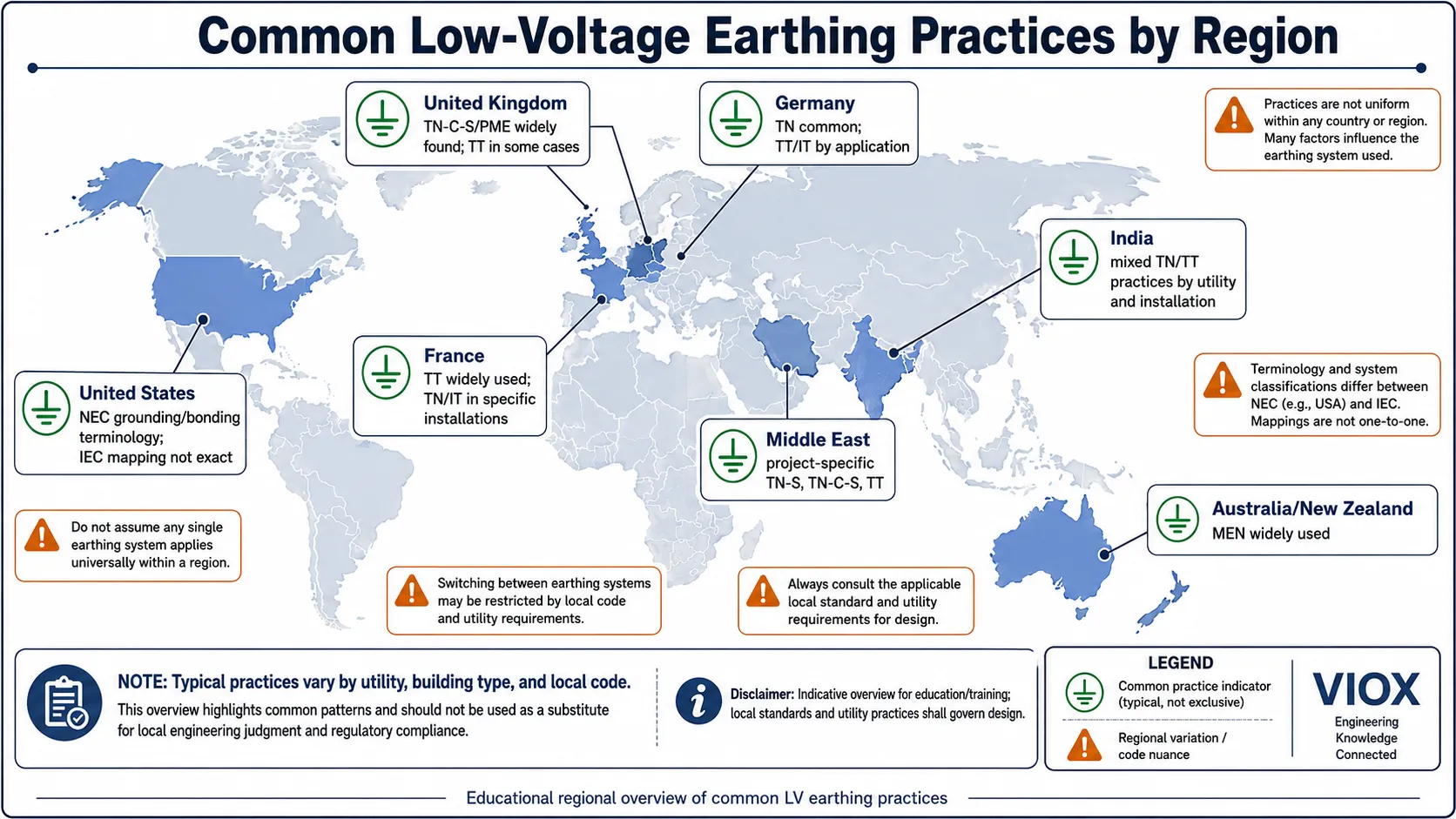
The table below gives typical patterns, not legal rules. Earthing systems can vary by utility, building age, installation type, and local code. Always follow the applicable national wiring standard and the distribution network operator’s requirements.
| Country or region | Commonly found arrangements | Practical notes |
|---|---|---|
| ယူနိုက်တက်ကင်းဒမ်း | TN-C-S/PME widely found, TN-S in older or specific supplies, TT in rural/outbuilding/special cases | Earthing arrangement is usually recorded during inspection. TT often needs RCD-based fault protection because loop impedance is higher. |
| ပြင်သစ် | TT စနစ်ကို အများပြည်သူသုံး ဗို့အားနိမ့် လျှပ်စစ်ဓာတ်အားပေးစနစ်များတွင် တွင်ကျယ်စွာ အသုံးပြုကြပြီး TN နှင့် IT စနစ်များကိုလည်း သီးခြားတပ်ဆင်မှုများတွင် အသုံးပြုကြသည်။ | TT စနစ်တွင် RCD ညှိနှိုင်းဆောင်ရွက်မှုသည် အထူးအရေးကြီးသည်။ စက်မှုလုပ်ငန်း သို့မဟုတ် ပုဂ္ဂလိက ထရန်စဖော်မာ တပ်ဆင်မှုများတွင် အခြားသော စနစ်များကို အသုံးပြုနိုင်သည်။. |
| ဂျာမနီ | TN စနစ်များသည် တပ်ဆင်မှုအများစုတွင် အသုံးများပြီး TT နှင့် IT စနစ်များကို ဒီဇိုင်း သို့မဟုတ် လိုအပ်ချက်အရ အသုံးပြုကြသည်။ | DIN VDE ကျင့်စဉ်နှင့် လျှပ်စစ်ဓာတ်အားပေးရေးဆိုင်ရာ စည်းမျဉ်းများက နောက်ဆုံးအသုံးပြုမည့် စနစ်ကို ဆုံးဖြတ်ပေးသည်။ IT စနစ်ကို ဆေးဘက်ဆိုင်ရာနှင့် စက်မှုလုပ်ငန်းဆိုင်ရာ အခြေအနေအချို့တွင် အသုံးပြုသည်။. |
| အိန္ဒိယ | လျှပ်စစ်ဓာတ်အားပေးရေး၊ စက်မှုလုပ်ငန်း၊ ဒေသနှင့် တပ်ဆင်မှုအမျိုးအစားပေါ် မူတည်၍ TN၊ TT နှင့် ရောနှောအသုံးပြုသည့် စနစ်များကို တွေ့ရှိနိုင်သည်။ | နိုင်ငံတစ်နိုင်ငံတည်းတွင် စနစ်တစ်ခုတည်းသာ ရှိသည်ဟု မယူဆပါနှင့်။ ဝန်ဆောင်မှုပေးသည့်နေရာတွင် စစ်ဆေးခြင်းနှင့် ဒေသဆိုင်ရာ စည်းမျဉ်းများကို လိုက်နာခြင်းသည် မရှိမဖြစ် လိုအပ်သည်။. |
| ဩစတြေးလျ / နယူးဇီလန် | MEN စနစ်ကို တွင်ကျယ်စွာ အသုံးပြုပြီး TN-C-S သဘောတရားများနှင့် ကျယ်ပြန့်စွာ ဆင်တူသည်။ | Neutral-earth bonding rules are central. Local standards such as AS/NZS 3000 govern installation requirements. |
| အမေရိကန်ပြည်ထောင်စု | NEC terminology differs from IEC, but grounded neutral with bonding at service equipment is common | The US does not normally describe systems using TN/TT/IT labels in everyday practice. Do not map IEC terms mechanically without engineering review. |
| အရှေ့အလယ်ပိုင်း | TN-S, TN-C-S, TT, and project-specific arrangements may be used depending on utility and project standards | Large commercial, oil and gas, industrial, and infrastructure projects often specify earthing arrangements explicitly. |
The safest wording is not “this country is always TT” or “this country is always TN-C-S.” Real projects should verify the earthing arrangement at the supply origin, in the electrical design documents, and with the local authority or utility.
How Earthing Systems Affect Fault Current and Protection
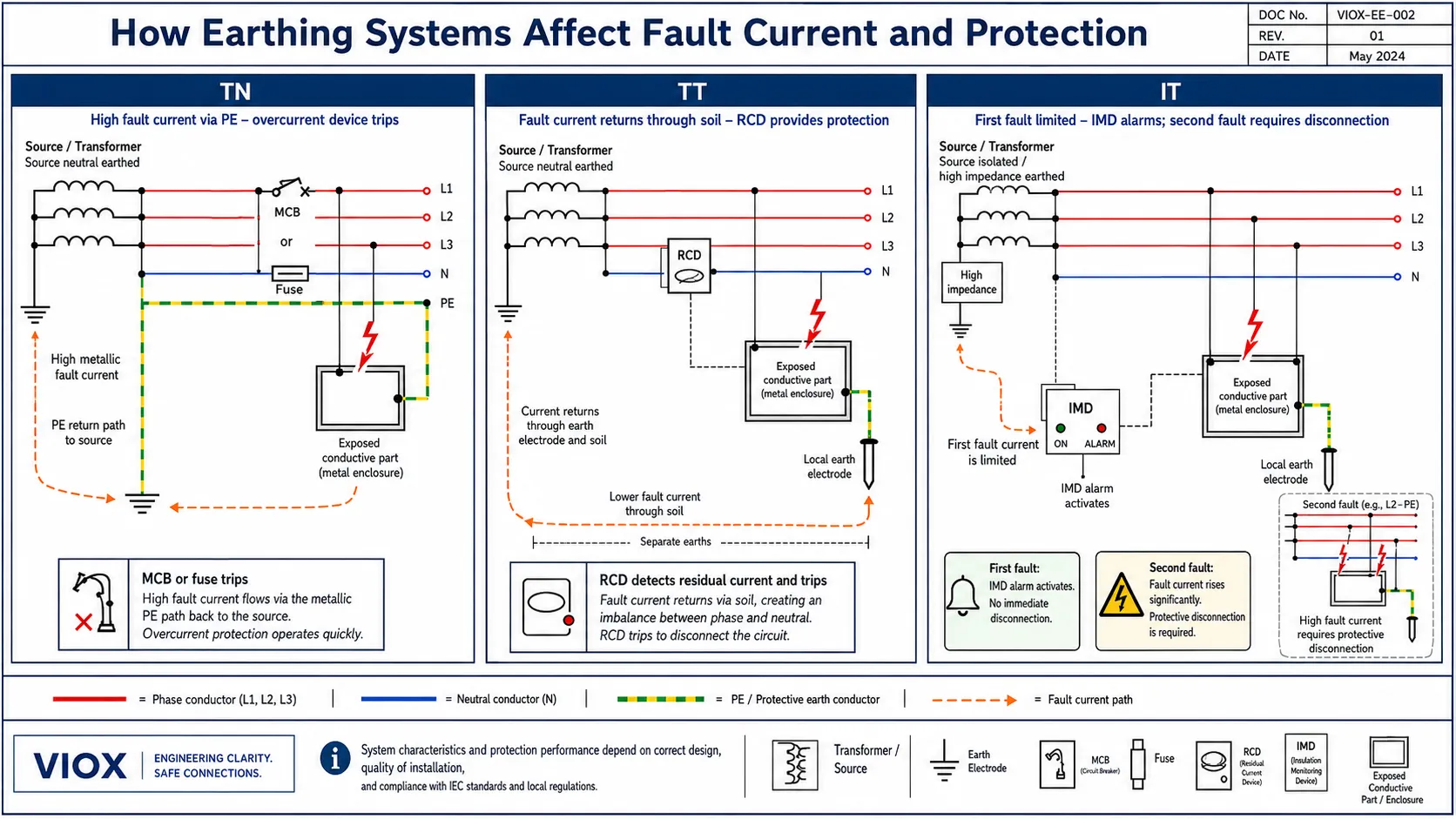
မြေစိုက်စနစ်များ (Earthing systems) ဆိုသည်မှာ အမည်ပေးစနစ်သက်သက်မဟုတ်ပါ။ ၎င်းတို့သည် ချို့ယွင်းချက်ဖြစ်ပေါ်သည့် လျှပ်စီးကြောင်း (fault current) စီးဆင်းပုံနှင့် မည်သည့်ကာကွယ်ရေးကိရိယာက ဆားကစ်ကို ဖြတ်တောက်ပေးနိုင်သည်ဆိုသည်ကို ပြောင်းလဲစေပါသည်။.
| စနစ် | ချို့ယွင်းချက်ဖြစ်ပေါ်သည့် လျှပ်စီးကြောင်းလမ်းကြောင်း (Fault-current path) | ပုံမှန်ချို့ယွင်းချက်ဖြစ်ပေါ်သည့် လျှပ်စီးကြောင်းပမာဏ (Typical fault-current level) | ကာကွယ်မှုဆိုင်ရာ သက်ရောက်မှု (Protection implication) |
|---|---|---|---|
| TN-S | ရင်းမြစ်ဆီသို့ ပြန်သွားသော သတ္တု PE လျှပ်ကူးပစ္စည်း (Metallic PE conductor back to source) | များသောအားဖြင့် မြင့်မားသည် | လูป impedance (loop impedance) လုံလောက်စွာ နိမ့်ပါက MCB များ၊ ဖျူးစ်များ သို့မဟုတ် MCCB များသည် ချို့ယွင်းချက်များကို မကြာခဏ ရှင်းလင်းပေးနိုင်သည် |
| TN-C | ပေါင်းစပ်ထားသော PEN လျှပ်ကူးပစ္စည်း (Combined PEN conductor) | များသောအားဖြင့် မြင့်မားသော်လည်း PEN ဘေးကင်းလုံခြုံရေးမှာ အလွန်အရေးကြီးပါသည်။ | PEN ဆက်တိုက်ရှိနေရန် မရှိမဖြစ်လိုအပ်ပြီး TN-C အပိုင်းတွင် RCD အသုံးပြုမှုကို ကန့်သတ်ထားပါသည်။ |
| TN-CS | PEN ပံ့ပိုးပေးသည့်လမ်းကြောင်းရှိပြီး ခွဲထုတ်ပြီးနောက် PE ကို သီးခြားခွဲထားပါသည်။ | များသောအားဖြင့် မြင့်မားသည် | ချို့ယွင်းချက်များကို ထိရောက်စွာ ရှင်းလင်းနိုင်သော်လည်း PEN ပြတ်တောက်မှုအန္တရာယ်ကို စီမံခန့်ခွဲရပါမည်။ |
| TT | ဒေသဆိုင်ရာ မြေစိုက်လျှပ်ကူးပစ္စည်း (Local earth electrode) နှင့် မြေကြီးလမ်းကြောင်း။ | များသောအားဖြင့် ပို၍နည်းပါသည်။ | အလိုအလျောက် လျှပ်စစ်ဖြတ်တောက်ခြင်းအတွက် RCD များ ပုံမှန်အားဖြင့် လိုအပ်ပါသည်။ |
| အိုင်တီ | ပထမအကြိမ် ချို့ယွင်းမှုဖြစ်ပွားချိန်တွင် ခိုင်မာသော ပြန်လှည့်လမ်းကြောင်း (Solid return path) မရှိပါ။ | ပထမအကြိမ် ချို့ယွင်းမှုဖြစ်ပွားချိန်တွင် လျှပ်စီးကြောင်း အလွန်နည်းပါးခြင်း | IMD သည် ပထမအကြိမ် ချို့ယွင်းမှုကို အချက်ပေးစနစ်ဖြင့် အသိပေးပြီး ဒုတိယအကြိမ် ချို့ယွင်းမှုအတွက် ကာကွယ်ရေးစနစ်ကို ဒီဇိုင်းထုတ်ရမည် |
TN စနစ်များနှင့် လျှပ်စီးကြောင်းလွန် ကာကွယ်ရေးစနစ်များ
TN စနစ်များတွင် မြေပြင်ချို့ယွင်းမှု လမ်းကြောင်း (earth-fault loop) သည် များသောအားဖြင့် သတ္တုဖြင့် ပြုလုပ်ထားသည်။ ဆိုလိုသည်မှာ လိုင်းမှ မြေပြင်သို့ ချို့ယွင်းမှုဖြစ်ပွားပါက MCB, MCCB သို့မဟုတ် ဖျူးစ် (fuse) ကို အလုပ်လုပ်စေရန် လုံလောက်သော လျှပ်စီးကြောင်းကို ဖန်တီးပေးနိုင်သည်။ ဒီဇိုင်းပိုင်းသည် လမ်းကြောင်း၏ impedance၊ လျှပ်ကူးပစ္စည်း၏ အရှည်၊ ဘရိတ်ကာ၏ ကွေးညွှတ်မှု (breaker curve)၊ ချို့ယွင်းမှုအဆင့်နှင့် လျှပ်စစ်ဖြတ်တောက်ရမည့် အချိန်လိုအပ်ချက်များအပေါ်တွင် မူတည်နေဆဲဖြစ်သည်။.
TT စနစ်များနှင့် RCD ကာကွယ်ရေးစနစ်များ
TT စနစ်များတွင် မြေပြင်ချို့ယွင်းမှုဖြစ်ပွားချိန်၌ သာမန်လျှပ်စီးကြောင်းလွန် ကာကွယ်ရေးစနစ်များဖြင့် လျှပ်စစ်ကို လျင်မြန်စွာ ဖြတ်တောက်ရန်အတွက် လမ်းကြောင်း၏ impedance သည် များသောအားဖြင့် မြင့်မားလွန်းသည်။ ထို့ကြောင့် RCD များသည် လျှပ်စစ်ရှော့ခ်ဖြစ်ခြင်းမှ ကာကွယ်ရန် အဓိက ကာကွယ်ရေးကိရိယာများ ဖြစ်လာသည်။.
ဤအချက်သည် မလိုအပ်ဘဲ လျှပ်စစ်ဖြတ်တောက်ခြင်း (nuisance tripping) ကိုလည်း သက်ရောက်မှုရှိသည်။ အကယ်၍ ယိုစိမ့်လျှပ်စီးကြောင်း (leakage current) ရှိသော ဆားကစ်များစွာကို RCD တစ်ခုတည်း၏ နောက်တွင် ထားရှိပါက စုပုံလာသော ယိုစိမ့်လျှပ်စီးကြောင်းသည် ဖြတ်တောက်ရမည့် အတိုင်းအတာ (trip threshold) သို့ ရောက်ရှိသွားနိုင်သည်။ VIOX ၏ ဆောင်းပါးတွင် ဖော်ပြထားသည့် ယိုစိမ့်လျှပ်စီးကြောင်း (leakage current) နှင့် ကျန်ရှိလျှပ်စီးကြောင်း (residual current) နှင့် မြေပြင်လျှပ်စီးကြောင်း (ground current) တို့၏ ကွာခြားချက်များ ဤနယ်နိမိတ်ကို ပိုမိုအသေးစိတ် ရှင်းပြထားပါသည်။.
IT စနစ်များနှင့် လျှပ်ကာစောင့်ကြည့်ခြင်း (Insulation Monitoring)
IT စနစ်များတွင် ပထမဆုံးဖြစ်ပေါ်သော လျှပ်စစ်ယိုစိမ့်မှု (Fault) ကို ရှာဖွေဖော်ထုတ်ပြီး ပြုပြင်ရမည်ဖြစ်သည်။ စနစ်တစ်ခုကို ပထမဆုံးဖြစ်ပေါ်သော အမှားတစ်ခုရှိနေလျက်နှင့် အချိန်အကန့်အသတ်မရှိ ဆက်လက်အသုံးပြုမထားသင့်ပါ။ ဒုတိယအကြိမ်ဖြစ်ပေါ်သော အမှားသည် အန္တရာယ်ရှိသော အခြေအနေကို ဖန်တီးနိုင်သဖြင့် ဒီဇိုင်းပုံစံအတိုင်း ကာကွယ်ရေးကိရိယာများဖြင့် ချက်ချင်းဖြတ်တောက်ရမည်ဖြစ်သည်။.
TN၊ TT နှင့် IT စနစ်များ နှိုင်းယှဉ်ချက်ဇယား
| အင်္ဂါ | TN စနစ် | TT စနစ် | IT စနစ် |
|---|---|---|---|
| ရင်းမြစ်မြေချခြင်း (Source earthing) | ရင်းမြစ်၏ ကြားခံကြိုး (Neutral) ကို တိုက်ရိုက်မြေချထားခြင်း | ရင်းမြစ်၏ ကြားခံကြိုး (Neutral) ကို တိုက်ရိုက်မြေချထားခြင်း | ရင်းမြစ်ကို လျှပ်စစ်သီးသန့်ခွဲထားခြင်း (Isolated) သို့မဟုတ် Impedance ဖြင့် မြေချထားခြင်း |
| Installation exposed parts | Connected to source earth through PE/PEN | Connected to local earth electrode | Connected to earth, while source is isolated/high impedance |
| Main fault path | Metallic return path | Earth/soil return path | Limited first-fault path |
| Fault current | များသောအားဖြင့် မြင့်မားသည် | Often low | Low on first fault |
| Main protective logic | Overcurrent devices plus RCDs where required | RCD-based automatic disconnection | Insulation monitoring and second-fault protection |
| Common variants | TN-S, TN-C, TN-C-S | TT | အိုင်တီ |
| အဓိကအားသာချက် | ထိရောက်သော ချို့ယွင်းချက်ရှင်းလင်းခြင်း | Utility PE လမ်းကြောင်းအပေါ် မှီခိုမှုနည်းပါးခြင်း | ပထမအကြိမ် ချို့ယွင်းမှုဖြစ်ပြီးနောက် ဝန်ဆောင်မှုဆက်လက်ရရှိနိုင်ခြင်း |
| အဓိကစိုးရိမ်ရသည့်အချက် | TN-C/TN-C-S စနစ်တွင် PEN ပျက်စီးခြင်း၊ Loop impedance စစ်ဆေးခြင်း | Electrode ခုခံမှု၊ RCD ညှိနှိုင်းဆောင်ရွက်မှု | ပထမအကြိမ် ချို့ယွင်းမှုကို မဖြစ်မနေရှာဖွေပြီး ပြုပြင်ရမည် |
| ပုံမှန်အသုံးပြုမှု | လူနေအိမ်၊ စီးပွားရေးလုပ်ငန်းနှင့် စက်မှုလုပ်ငန်းသုံး လျှပ်စစ်ဖြန့်ဖြူးခြင်း | ကျေးလက်ဒေသသုံး လျှပ်စစ်ဓာတ်အားပေးစနစ်များ၊ လေကြောင်းလိုင်းကွန်ရက်များ၊ မြေကြီးအース (Earth) ချိတ်ဆက်မှုမရှိသော တပ်ဆင်မှုများ | ဆေးရုံများ၊ မိုင်းတွင်းများ၊ သင်္ဘောများ၊ စက်ရုံထုတ်လုပ်မှုလုပ်ငန်းစဉ်များနှင့် အရေးကြီးသော စနစ်များ |
အဖြစ်များသော နားလည်မှုလွဲမှားခြင်းများ
အထင်အမြင်မှားခြင်း ၁ - မြေစိုက်တိုင် (Ground Rod) တစ်ခုတည်းဖြင့် ချို့ယွင်းချက်အားလုံးကို ဖြေရှင်းနိုင်သည်
ဒေသအလိုက် မြေစိုက်လျှပ်ကူးပစ္စည်း (Local earth electrode) တစ်ခုတည်းဖြင့် Breaker တစ်ခုကို ဖြုတ်ချနိုင်လောက်သည့် လျှပ်စီးကြောင်းကို အလိုအလျောက် မဖန်တီးပေးနိုင်ပါ။ TT စနစ်များတွင် မြေကြီးမှတစ်ဆင့် စီးဆင်းသော ချို့ယွင်းချက် လျှပ်စီးကြောင်းသည် MCB သို့မဟုတ် Fuse တစ်ခု လျင်မြန်စွာ အလုပ်လုပ်နိုင်ရန်အတွက် နည်းလွန်းနေနိုင်သည်။ ထို့ကြောင့် TT စနစ်ကာကွယ်ရေးတွင် RCD များသည် အဓိကကျပါသည်။.
အထင်အမြင်မှားခြင်း ၂ - TN-S နှင့် TN-C-S တို့သည် အတူတူပင်ဖြစ်သည်
၎င်းတို့သည် မတူညီပါ။ TN-S စနစ်တွင် Neutral နှင့် Protective Earth (PE) တို့ကို တစ်လျှောက်လုံး ခွဲခြားထားသည်။ TN-C-S စနစ်တွင်မူ ဓာတ်အားပေးစနစ်၏ အစိတ်အပိုင်းတစ်ခုတွင် ပေါင်းစပ်ထားသော PEN conductor ကို အသုံးပြုပြီးမှ နောက်ပိုင်းတွင် N နှင့် PE ကို ခွဲထုတ်ခြင်းဖြစ်သည်။ ထို PEN အစိတ်အပိုင်းသည် မတူညီသော အန္တရာယ်ဖြစ်နိုင်ခြေကို ဖန်တီးပေးသည်။.
အထင်အမြင်မှားခြင်း ၃ - IT စနစ်ဆိုသည်မှာ စက်ပစ္စည်းများကို မြေစိုက် (Earth) မလုပ်ထားခြင်းဟု ဆိုလိုသည်
IT does not mean exposed metal parts are left floating. The source is isolated or impedance-earthed, but exposed conductive parts are still connected to protective earth. The system also requires insulation monitoring.
Misunderstanding 4: TT Is Always Safer Than TN
TT avoids some PEN-related risks, but it depends heavily on RCD operation, electrode quality, and correct coordination. Poorly maintained TT systems can be dangerous.
Misunderstanding 5: RCDs Replace Earthing
RCDs detect imbalance and disconnect supply. They do not replace protective bonding, correct earthing, fault-loop design, or conductor sizing.
Misunderstanding 6: One Country Uses Only One Earthing System
Most countries contain mixed practices. Utilities, rural networks, industrial installations, hospitals, older buildings, and new developments may use different arrangements.
အမြဲမေးလေ့ရှိသောမေးခွန်းများ
What is the difference between TN, TT, and IT earthing systems?
TN systems connect exposed conductive parts back to the earthed supply source through protective conductors. TT systems use a local earth electrode at the installation. IT systems isolate the supply from earth or connect it through high impedance, limiting first-fault current.
What does TN-S mean?
TN-S means the supply source is earthed, the installation protective conductors are connected back to that source earth, and the neutral and protective earth conductors remain separate throughout the system.
What does TN-C-S mean?
TN-C-S means the neutral and protective earth functions are combined in a PEN conductor for part of the supply system, then separated into N and PE conductors at the installation origin or service equipment.
Why is TT usually protected by RCDs?
TT earth-fault current returns through the local earth electrode and soil path. That impedance is often too high to operate an MCB or fuse quickly, so RCDs are used to detect residual current and disconnect the circuit.
Why are IT systems used in hospitals and critical facilities?
IT systems allow the first earth fault to be detected without immediate disconnection. This is valuable where continuity of supply matters, such as medical locations or critical industrial processes. The first fault must still be located and repaired.
Is TN-C-S the same as PME or MEN?
PME and MEN are regional terms that are broadly related to TN-C-S concepts, where a combined neutral-earth conductor is earthed at multiple points and separated at the installation. The exact rules depend on national standards and utility practice.
Can an MCB protect a TT system without an RCD?
In many TT installations, an MCB or fuse alone may not disconnect quickly enough for earth faults because the fault current is limited by electrode and soil resistance. RCD protection is usually required for automatic disconnection.
Which earthing system is best?
There is no universal best system. TN, TT, and IT solve different problems. TN is efficient for fault clearing, TT is useful when the utility earth path is not provided or suitable, and IT is selected when first-fault continuity is important.
How do I identify the earthing system in a real installation?
Check the service equipment, neutral-earth bonding arrangement, PE conductor path, local earth electrode, inspection certificate, distribution network operator information, and local wiring documents. Do not identify the system by wire color alone.
Does the United States use TN, TT, or IT?
US installations are normally described using NEC grounding and bonding terminology rather than IEC TN/TT/IT labels. Some arrangements can be compared conceptually, but the mapping is not exact. Use NEC terminology for US code work.