ဤစာမျက်နှာတွင်
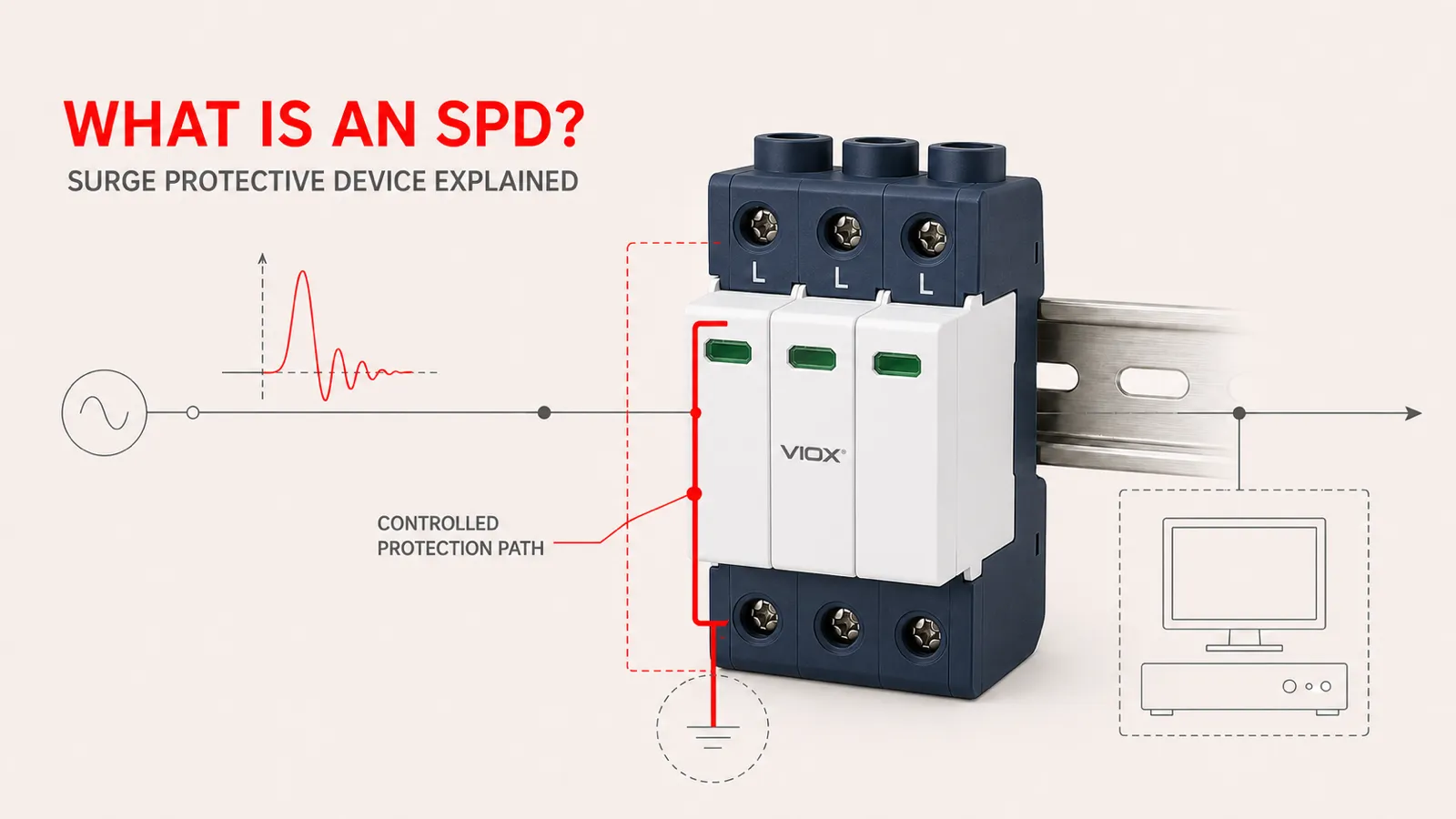
တဲ့ ရေလှိုင်းကာကွယ်ရေးကိရိယာ (SPD) လျှပ်စီးကြောင်းကို ထိန်းချုပ်ထားသော ကာကွယ်ရေးလမ်းကြောင်းမှတစ်ဆင့် လမ်းကြောင်းပြောင်းပေးခြင်းဖြင့် ယာယီဗို့အားလွန်ကဲမှုကို ကန့်သတ်ပေးသည်။ ဗို့အားနိမ့်ပါဝါသုံး SPD အများစုသည် ပုံမှန်လည်ပတ်နေချိန်တွင် impedance မြင့်မားသော အသင့်အနေအထားတွင် ရှိနေပြီး လျှပ်စီးကြောင်း ရုတ်တရက်မြင့်တက်လာချိန်တွင် လျှပ်ကူးနိုင်စွမ်းရှိလာကာ နောက်ဆက်တွဲပစ္စည်းများဆီသို့ ရောက်ရှိမည့် ဗို့အားဖိအားကို လျှော့ချပေးသည်။.
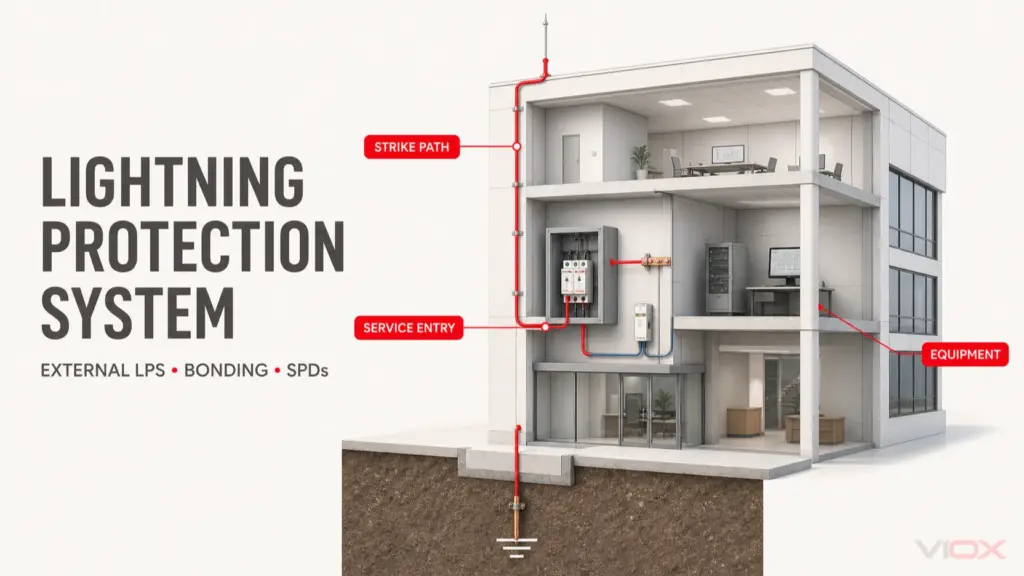
SPD သည် လျှပ်စီးကြောင်း ရုတ်တရက်မြင့်တက်မှုကို ပျောက်ကွယ်သွားအောင် မလုပ်ဆောင်နိုင်သလို ဆားကစ်ဘရိတ်ကာ၊ မှန်ကန်သော မြေချိတ်ခြင်းနှင့် ချိတ်ဆက်ခြင်း သို့မဟုတ် ပြင်ပလျှပ်စီးကြောင်း ကာကွယ်ရေးစနစ်တို့ကို အစားထိုးနိုင်ခြင်းမရှိပါ။ ၎င်းသည် လျှပ်စစ်စနစ် ကာကွယ်ရေးတွင် ပေါင်းစပ်ထားသော အလွှာတစ်ခုသာ ဖြစ်သည်။.
အကယ်၍ သင်သည် လည်ပတ်မှုနိယာမကို လေ့လာနေခြင်းထက် ထုတ်ကုန်များကို အကဲဖြတ်နေပါက၊ အောက်ပါတို့ကို ပြန်လည်သုံးသပ်ပါ VIOX surge protective device အမျိုးအစားများ AC၊ DC နှင့် photovoltaic အသုံးချမှုများအတွက်။.
လျှပ်စစ်စနစ်များတွင် SPD ဆိုသည်မှာ အဘယ်နည်း။
SPD ဆိုသည်မှာ Surge Protective Device (လျှပ်စီးကြောင်းမြင့်တက်မှု ကာကွယ်ရေးကိရိယာ) ကို ခေါ်ဆိုခြင်းဖြစ်သည်။. ဤသည်မှာ လျှပ်စစ်စံနှုန်းများ၊ နည်းပညာဆိုင်ရာ သတ်မှတ်ချက်များ၊ ပန်နယ်ဇယားများနှင့် ထုတ်ကုန် ဒေတာစာရွက်များတွင် အသုံးပြုသော ဝေါဟာရဖြစ်သည်။ “Surge protector” သည် နေ့စဉ်သုံးစွဲရာတွင် ပိုမိုကျယ်ပြန့်သော အသုံးအနှုန်းဖြစ်ပြီး SPD သည် ယာယီဗို့အားလွန်ကဲမှုကို ကန့်သတ်ရန်နှင့် လျှပ်စီးကြောင်း ရုတ်တရက်မြင့်တက်မှုကို လျှပ်ကူးပေးရန် ဒီဇိုင်းထုတ်ထားသော ကိရိယာအတွက် ပိုမိုတိကျသော အင်ဂျင်နီယာဆိုင်ရာ ဝေါဟာရဖြစ်သည်။.
စကားလုံး ယာယီ သည် အရေးကြီးပါသည်။ SPD တစ်ခုသည် ကြာချိန်တိုသော ဗို့အားမငြိမ်သက်မှုများကို တုံ့ပြန်ပေးသည်။ ၎င်းသည် အဆက်မပြတ် မြင့်မားနေသော သို့မဟုတ် နိမ့်ကျနေသော လျှပ်စစ်ပေးဝေမှုကို ထိန်းညှိပေးရန်အတွက် ဒီဇိုင်းထုတ်ထားခြင်း မဟုတ်ပါ။.
အတိုကောက်နှင့် ဝေါဟာရများကိုသာ လိုအပ်သော စာဖတ်သူများအတွက်၊ အောက်ပါတို့ကို ကြည့်ရှုပါ လျှပ်စစ်ပစ္စည်းတွင် SPD အပြည့်အစုံပုံစံ.
SPD တစ်ခုသည် အဘယ်အရာကို လုပ်ဆောင်ပေးသနည်း—နှင့် အဘယ်အရာကို မလုပ်ဆောင်ပေးသနည်း။
SPD ကို နားလည်ရန် အလွယ်ကူဆုံးနည်းလမ်းမှာ ၎င်း၏လုပ်ဆောင်ချက်ကို အခြားဆက်စပ်နေသော ကာကွယ်ရေးလုပ်ဆောင်ချက်များနှင့် ခွဲခြားသိမြင်ခြင်း ဖြစ်သည်။.
| ကာကွယ်ရေးလုပ်ဆောင်ချက် | ၎င်းက ဖြေရှင်းပေးသည့်အရာများ | ၎င်းက အစားမထိုးနိုင်သောအရာများ |
|---|---|---|
| Surge protective device (SPD) | ကြာချိန်တိုသော ယာယီဗို့အားလွန်ကဲမှုနှင့် ဆက်စပ်နေသော လျှပ်စီးကြောင်းမြင့်တက်မှုများ | ဆားကစ်ဘရိတ်ကာ၊ မြေချိတ်ခြင်း၊ ဘွန်းဒင်းပြုလုပ်ခြင်း၊ ဗို့အားထိန်းညှိခြင်း သို့မဟုတ် လျှပ်စီးကြောင်းကာကွယ်မှု အပြည့်အစုံ |
| ဆားကစ်ဘရိတ်ကာ သို့မဟုတ် ဖျူးစ် | ရေရှည်ဝန်ပိုလျှပ်စီးနှင့် ဝါယာရှော့ဖြစ်ခြင်းဆိုင်ရာ ချို့ယွင်းချက်များ | ဗို့အားရုတ်တရက်မြင့်တက်မှုကို ကန့်သတ်ခြင်း |
| မြေချိတ်ခြင်းနှင့် ဘောင်ဒင်းစနစ် | ကိုးကားချက်ဗို့အား၊ ချို့ယွင်းချက်လျှပ်စီးလမ်းကြောင်းနှင့် အလားတူဗို့အားရှိစေရန် ဘောင်ဒင်းပြုလုပ်ခြင်း | စက်ပစ္စည်း၏ တာမီနယ်များတွင် ဗို့အားရုတ်တရက်မြင့်တက်မှုကို ကန့်သတ်ပေးသည့် ကိရိယာ |
| ဗို့အားထိန်းညှိကိရိယာ သို့မဟုတ် အလိုအလျောက် ဗို့အားကာကွယ်ရေးကိရိယာ | ကိရိယာအမျိုးအစားပေါ်မူတည်၍ ကြာရှည်ခံသော ဗို့အားလွန်ခြင်း၊ ဗို့အားလျော့နည်းခြင်း သို့မဟုတ် ဗို့အားအတက်အကျဖြစ်ခြင်း | လျှပ်စီးကြောင်းမြင့် လျှပ်စီးကို လျင်မြန်စွာ လမ်းကြောင်းပြောင်းပေးခြင်း |
| ပြင်ပလျှပ်စီး ကာကွယ်ရေးစနစ် | အဆောက်အအုံ၏ အပြင်ဘက် သို့မဟုတ် အတွင်းဘက်မှတစ်ဆင့် တိုက်ရိုက်ကျရောက်သော လျှပ်စီးကို ကြားဖြတ်ဖမ်းယူခြင်းနှင့် လမ်းကြောင်းပေးခြင်း | လျှပ်စစ်နှင့် အချက်ပြ ဆားကစ်များအတွင်းသို့ ဝင်ရောက်လာသော လျှပ်စီးမြင့်များကို အတွင်းပိုင်း၌ ညှိနှိုင်းထိန်းချုပ်ခြင်း |
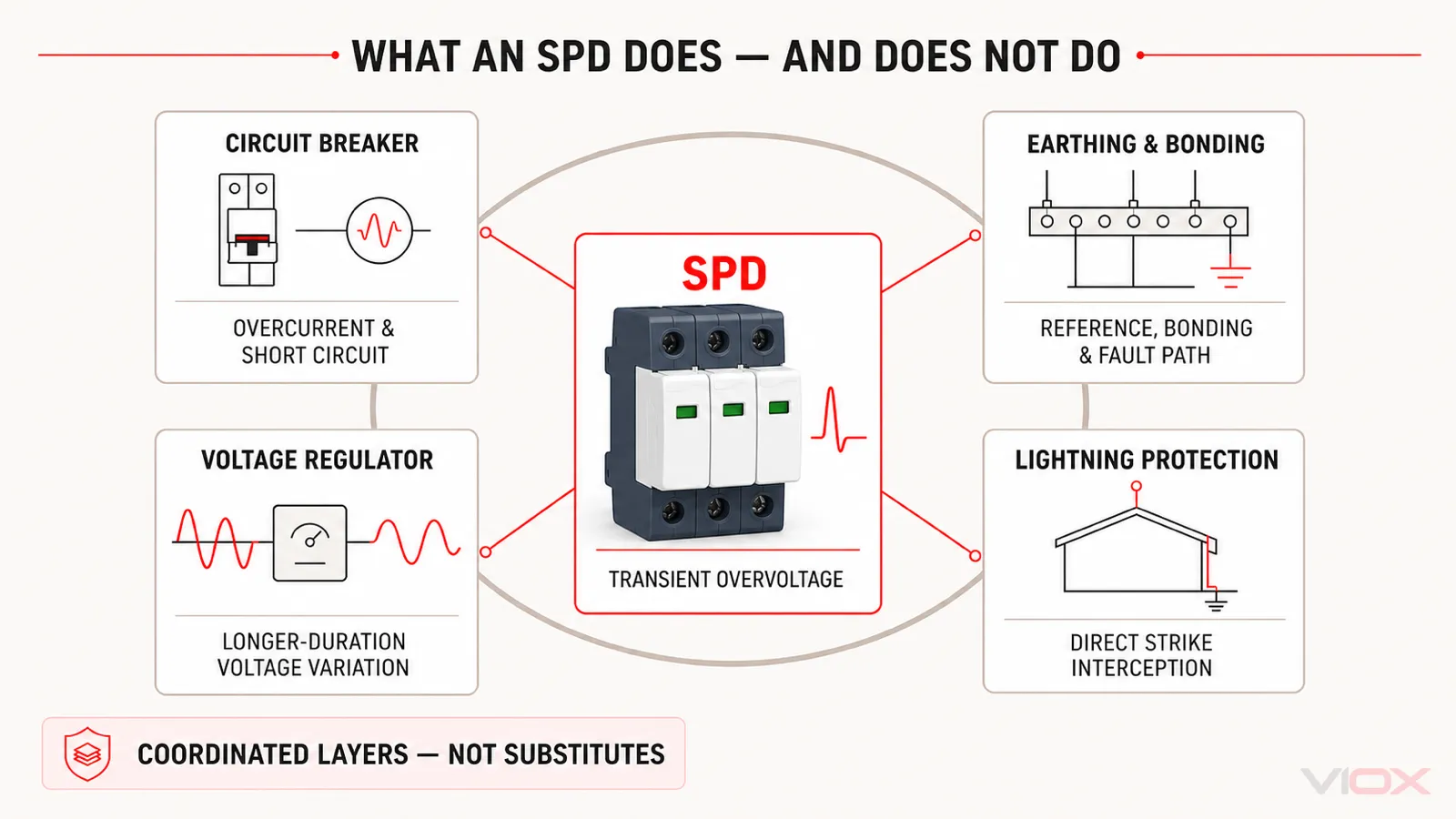
SPD တစ်ခုသည် လျှပ်စီးကြောင်းကြောင့် ဖြစ်ပေါ်လာသော လျှပ်စီးမြင့်များကို ကန့်သတ်ပေးခြင်းဖြင့် လျှပ်စီးကာကွယ်ရေးကို အထောက်အကူပြုနိုင်သော်လည်း SPD တစ်ခုတည်းဖြင့် လျှပ်စီးကာကွယ်ရေးစနစ် အပြည့်အစုံ မဖြစ်နိုင်ပါ။ အလားတူပင် ဘရိတ်ကာတစ်ခုသည် SPD အတွက် လိုအပ်သော အရန်ကာကွယ်မှုကို ပေးနိုင်သော်လည်း ထိုကိရိယာနှစ်ခုသည် လုပ်ဆောင်ချက်ချင်း မတူညီကြပါ။.
SPD သည် မည်သို့အလုပ်လုပ်သနည်း။
ဗို့အားနိမ့် လျှပ်စစ်စနစ်သုံး SPD အများစုကို ၎င်းတို့ကာကွယ်ပေးမည့် ဆားကစ်နှင့် အပြိုင် ချိတ်ဆက်ထားသည်။ ပုံမှန်ဗို့အားအောက်တွင် လျှပ်စီးမြင့်ကို ကန့်သတ်ပေးသည့် အစိတ်အပိုင်းများသည် လျှပ်ကူးခြင်းမရှိဘဲ သို့မဟုတ် အလွန်မြင့်မားသော impedance ကို ပြသသည်။ ဗို့အားသည် ကိရိယာ၏ လုပ်ဆောင်မှု အတိုင်းအတာထက် လျင်မြန်စွာ မြင့်တက်လာသောအခါ ထိုအစိတ်အပိုင်းများသည် အခြေအနေပြောင်းလဲသွားပြီး လျှပ်စီးမြင့်အတွက် impedance နည်းသော လမ်းကြောင်းကို ဖန်တီးပေးသည်။.
လုပ်ဆောင်မှု အစီအစဉ်ကို အဆင့်ငါးဆင့်ဖြင့် အောက်ပါအတိုင်း အကျဉ်းချုပ်နိုင်သည် -
- ပုံမှန်လည်ပတ်မှု- စနစ်၏ ဗို့အားသည် SPD ၏ ဆက်တိုက်လုပ်ဆောင်နိုင်သော အတိုင်းအတာအတွင်း၌ ရှိနေသဖြင့် ကာကွယ်ရေးလမ်းကြောင်းသည် အသင့်အနေအထားတွင် ရှိနေသည်။.
- Transient စတင်ခြင်း- လျှပ်စီးလက်ခြင်း၊ ဆားကစ်ပြောင်းလဲခြင်း၊ ချို့ယွင်းချက်များကို ရှင်းလင်းခြင်း သို့မဟုတ် အခြားသော အနှောင့်အယှက်များကြောင့် ဗို့အား ရုတ်တရက် မြင့်တက်လာခြင်း ဖြစ်ပေါ်စေသည်။.
- SPD ၏ impedance ပြောင်းလဲခြင်း- ဗို့အားကို ကန့်သတ်ပေးသော သို့မဟုတ် ဗို့အားကို ပြောင်းလဲပေးသော အစိတ်အပိုင်းတစ်ခုသည် လျှပ်ကူးနိုင်သည့် အခြေအနေသို့ ရောက်ရှိသွားသည်။.
- Surge current သည် ကာကွယ်ရေးလမ်းကြောင်းအတိုင်း စီးဆင်းခြင်း- လျှပ်စီးကြောင်းကို SPD ဖွဲ့စည်းပုံအရ သတ်မှတ်ထားသော လျှပ်ကူးပစ္စည်းများကြားသို့ လမ်းကြောင်းပြောင်းပေးလိုက်ခြင်းဖြင့် နောက်ဆက်တွဲ စက်ပစ္စည်းများအပေါ် သက်ရောက်နေသော ဗို့အားဖိအားကို လျှော့ချပေးသည်။.
- SPD ပြန်လည်ကောင်းမွန်လာခြင်း သို့မဟုတ် ချိတ်ဆက်မှုဖြတ်တောက်ခြင်း- ဖြစ်စဉ်ပြီးဆုံးပြီးနောက်၊ အသုံးပြုနိုင်ဆဲဖြစ်သော SPD သည် standby အခြေအနေသို့ ပြန်လည်ရောက်ရှိသွားသည်။ အကယ်၍ ကာကွယ်ရေးအစိတ်အပိုင်းတစ်ခုသည် မလုံခြုံသော အခြေအနေသို့ ရောက်ရှိသွားပါက၊ အတွင်းပိုင်းရှိ disconnector သည် ၎င်းကို သီးခြားခွဲထုတ်ပြီး အခြေအနေပြသမှုကို ပြောင်းလဲပေးနိုင်သည်။.
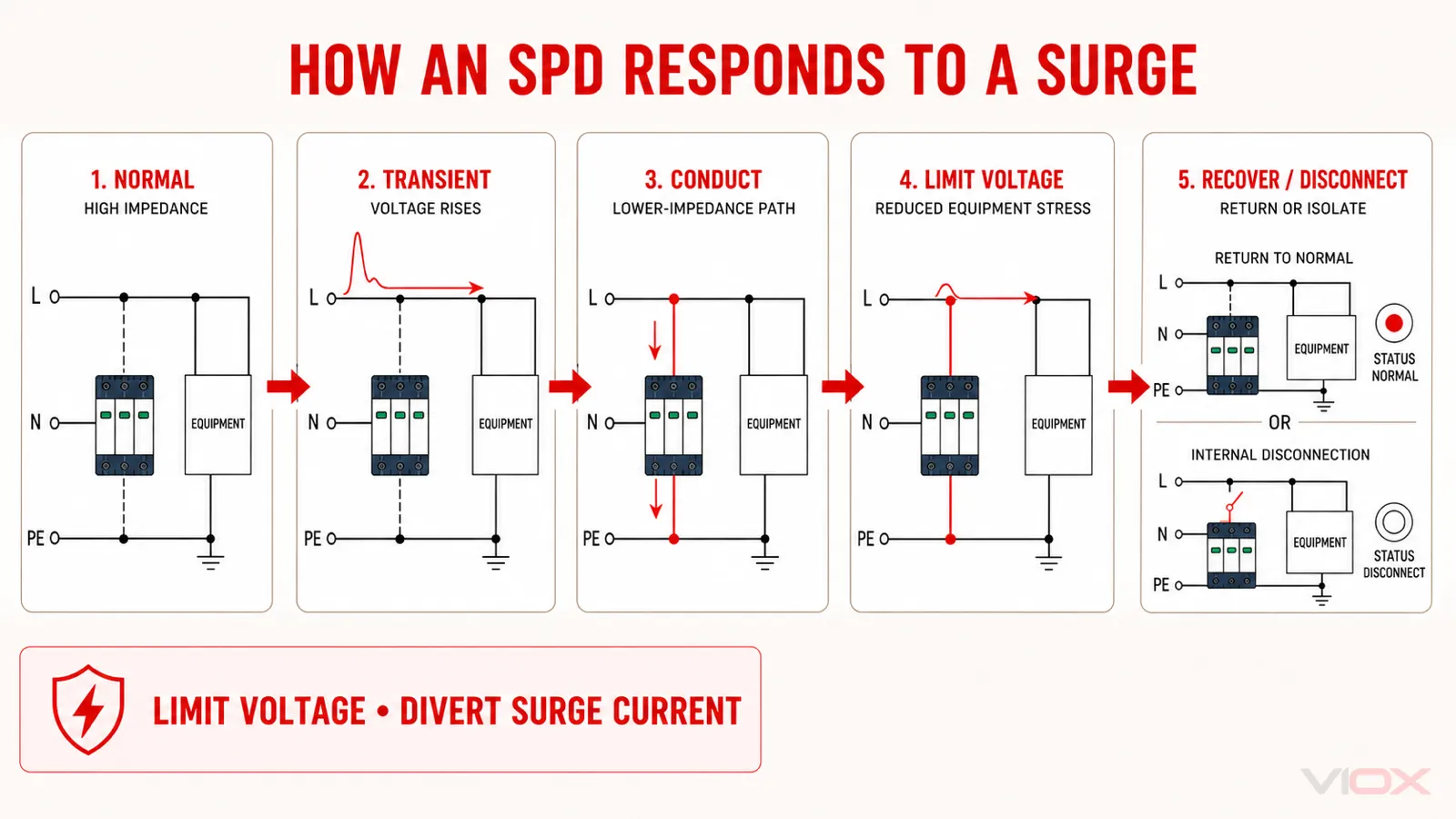
ဤတုံ့ပြန်မှုကို မကြာခဏဆိုသလို clamping, ဟု ဖော်ပြလေ့ရှိသော်လည်း SPD တိုင်းသည် တူညီသော အတွင်းပိုင်းနည်းပညာ သို့မဟုတ် တုံ့ပြန်မှုပုံစံကို အသုံးပြုသည်မဟုတ်ပါ။.
အသုံးများသော လျှပ်စီးကြောင်းမြင့်တက်မှုကို ကန့်သတ်သည့် နည်းပညာများ
| နည္းပညာ | ပုံမှန်လုပ်ဆောင်ချက် | အသုံးများပုံ | အရေးကြီးသော နယ်နိမိတ် |
|---|---|---|---|
| Metal oxide varistor (MOV) | ဗို့အားမြင့်တက်လာသည်နှင့်အမျှ လျှပ်ကူးနိုင်စွမ်း ပိုမိုအားကောင်းလာသည် | AC နှင့် DC ပါဝါ SPDs များ | စုပုံလာသော လျှပ်စီးကြောင်းမြင့်တက်မှု၏ ဖိအားသည် ဒြပ်စင်ကို ပျက်စီးစေနိုင်သဖြင့် အပူချိန်ကြောင့် ပြတ်တောက်မှုနှင့် အခြေအနေပြသမှုတို့သည် အရေးကြီးသည် |
| ဂက်စ်ထုတ်လွှတ်သည့်ပြွန် (GDT) | မီးပွားဖြစ်ပေါ်ပြီးနောက် လျှပ်ကူးနိုင်သော ထုတ်လွှတ်မှုအခြေအနေသို့ ပြောင်းလဲသွားသည် | လျှပ်စစ်ဓာတ်အား၊ တယ်လီကွန်းနှင့် အချက်ပြစနစ် ကာကွယ်ရေး | Follow-current လုပ်ဆောင်ချက်နှင့် ညှိနှိုင်းဆောင်ရွက်မှုများသည် ဒီဇိုင်းအပေါ် မူတည်သည် |
| Transient voltage suppressor (TVS) ဒိုင်အုတ် | လျင်မြန်သော avalanche clamping ကို ပံ့ပိုးပေးသည် | ထိခိုက်လွယ်သော အီလက်ထရောနစ်ပစ္စည်းများနှင့် ဗို့အားနိမ့် အချက်ပြ ဆားကစ်များ | ယေဘုယျအားဖြင့် ပင်မလျှပ်စစ် SPD များထက် စွမ်းအင်နည်းသော ဆားကစ်များကို ကိုင်တွယ်ဖြေရှင်းပေးသည် |
မှန်ကန်သော အစိတ်အပိုင်းပေါင်းစပ်မှုသည် လျှပ်စစ်စနစ်၊ ကာကွယ်မှုပုံစံ၊ စွမ်းအင်တာဝန်ယူမှု၊ လက်ကျန်ဗို့အား လိုအပ်ချက်နှင့် သက်ဆိုင်ရာ ထုတ်ကုန်စံနှုန်းများအပေါ် မူတည်သည်။ အစိတ်အပိုင်း နည်းပညာတစ်ခုတည်းဖြင့် ရွေးချယ်ခြင်းသည် ပြည့်စုံသော ရွေးချယ်မှုနည်းလမ်း မဟုတ်ပါ။.
Surge လျှပ်စီးကြောင်းသည် မည်သည့်နေရာသို့ သွားသနည်း။
SPD တစ်ခုသည် “လျှပ်စီးကြောင်းလှိုင်းကို မြေကြီးသို့ ပို့ဆောင်ပေးသည်” ဟု ပြောလေ့ရှိကြသော်လည်း ထိုဖော်ပြချက်မှာ မပြည့်စုံပါ။ SPD တစ်ခုသည် ၎င်း၏ ကာကွယ်ရေးပုံစံများနှင့် ချိတ်ဆက်ထားသော လျှပ်ကူးပစ္စည်းများကြားရှိ ဗို့အားကို ကန့်သတ်ပေးသည်။ လျှပ်စစ်စနစ်နှင့် SPD တိုပိုလိုဂျီအပေါ် မူတည်၍ ထိုပုံစံများတွင် အောက်ပါတို့ ပါဝင်နိုင်သည် -
- လိုင်းမှ နျူထရယ်သို့ (L–N)
- လိုင်းမှ ကာကွယ်ရေး မြေချိတ်သို့ (L–PE)
- နျူထရယ်မှ ကာကွယ်ရေး မြေချိတ်သို့ (N–PE)
- လိုင်းမှ လိုင်းသို့ (L–L)
- DC အပေါင်းမှ DC အနှုတ်သို့ (DC+–DC−)
- DC လျှပ်ကူးပစ္စည်းမှ ကာကွယ်ရေး မြေချိတ်သို့
လျှပ်စီးကြောင်းလှိုင်းသည် ရရှိနိုင်သော ကာကွယ်ရေးနှင့် ချိတ်ဆက်မှုလမ်းကြောင်းအတိုင်း စီးဆင်းသည်။ ထို့ကြောင့် မြေချိတ်စနစ်၊ ကာကွယ်ရေးပုံစံ၊ လျှပ်ကူးပစ္စည်းသွယ်တန်းမှုနှင့် SPD တိုပိုလိုဂျီတို့အားလုံးသည် လက်တွေ့စွမ်းဆောင်ရည်အပေါ် သက်ရောက်မှုရှိသည်။ နည်းပညာပိုင်းအရ အားကောင်းသော SPD တစ်ခုပင်လျှင် ၎င်း၏ ချိတ်ဆက်မှုလမ်းကြောင်းက လျှပ်စီးကြောင်းလှိုင်း မြန်ဆန်စွာဝင်ရောက်လာချိန်တွင် ခုခံမှု (impedance) များလွန်းနေပါက အကာအကွယ်ပေးနိုင်မှု အားနည်းသွားနိုင်သည်။.
What Causes Transient Overvoltage?
Transient overvoltage ဆိုသည်မှာ ပုံမှန်လည်ပတ်မှုအဆင့်ထက် ကျော်လွန်၍ လျင်မြန်ပြီး အချိန်တိုအတွင်း ဗို့အားမြင့်တက်လာခြင်းဖြစ်သည်။ ၎င်းသည် ပါဝါဆားကစ်၊ photovoltaic string၊ ဆက်သွယ်ရေးကေဘယ်၊ အာရုံခံလိုင်း၊ သို့မဟုတ် အခြားလျှပ်ကူးလမ်းကြောင်းတစ်ခုခုမှတစ်ဆင့် ဝင်ရောက်လာနိုင်သည်။.
| အရင်းအမြစ် | ပုံမှန်ဖြစ်စဉ် | အများအားဖြင့် ထိတွေ့လေ့ရှိသော စနစ်များ |
|---|---|---|
| လျှပ်စီးကြောင်း၏ သက်ရောက်မှု | တိုက်ရိုက်ချိတ်ဆက်မှု၊ လျှပ်စီးကြောင်းကြောင့် ဖြစ်ပေါ်လာသော ဗို့အား (induced voltage) သို့မဟုတ် လျှပ်စီးကြောင်းလှိုင်း (surge current) ပို့လွှတ်မှု | Utility ထောက်ပံ့မှုများ၊ ပြင်ပ feeder များ၊ PV array များ၊ တယ်လီကွန်းနှင့် အချက်ပြလိုင်းများ |
| Utility နှင့် ဖြန့်ဖြူးရေးစနစ် ပြောင်းလဲခြင်း | ထရန်စဖော်မာပြောင်းလဲခြင်း၊ ကက်ပစီတာဘဏ်ပြောင်းလဲခြင်း၊ ချို့ယွင်းချက်ရှင်းလင်းခြင်း သို့မဟုတ် ကွန်ရက်ပြန်လည်ပြင်ဆင်ခြင်း | ပင်မဖြန့်ဖြူးရေးနှင့် အောက်ဆင့်ပန်နယ်များ |
| Inductive load switching | မော်တာများ၊ ကွန်တက်တာ ကွိုင်များ၊ ဆိုလီနွိုက်များ သို့မဟုတ် အခြားသော inductive load များတွင် လျှပ်စီးကြောင်းကို လျင်မြန်စွာ ဖြတ်တောက်ခြင်း | စက်မှုထိန်းချုပ်ရေး ပန်နယ်များနှင့် အလိုအလျောက်စနစ်များ |
| Power-electronic switching | ကွန်ဗာတာများ၊ ဒရိုက်များ၊ အင်ဗာတာများ၊ UPS စနစ်များနှင့် အားသွင်းကိရိယာများအကြား လျင်မြန်သော switching အစွန်းများနှင့် အပြန်အလှန်သက်ရောက်မှုများ | စက်မှုစနစ်များ၊ ပြန်လည်ပြည့်ဖြိုးမြဲစွမ်းအင်၊ EV အားသွင်းစနစ်နှင့် ဒေတာအခြေခံအဆောက်အအုံများ |
ဤရင်းမြစ်များသည် တူညီသော လှိုင်းပုံစံများ သို့မဟုတ် စွမ်းအင်အဆင့်များကို မဖန်တီးပါ။ ထို့ကြောင့် SPD ရွေးချယ်မှုသည် စက်ပစ္စည်းကို မည်သည့်နေရာတွင် တပ်ဆင်ထားသနည်းနှင့် မည်သည့် surge ပတ်ဝန်းကျင်ကို ကိုင်တွယ်ဖြေရှင်းရန် မျှော်လင့်ထားသနည်းဆိုသည့်အပေါ်တွင် မူတည်ပါသည်။.
Type 1၊ Type 2 နှင့် Type 3 SPD များ- အကျဉ်းချုပ်လမ်းညွှန်
SPD အမျိုးအစားများသည် သက်ဆိုင်ရာစံနှုန်းတစ်ခုအောက်တွင် စမ်းသပ်ထားသော ကာကွယ်ရေးအခန်းကဏ္ဍများကို ဖော်ပြခြင်းဖြစ်သည်။ ၎င်းတို့ကို ရိုးရှင်းသော အရည်အသွေးအဆင့်များအဖြစ် မသတ်မှတ်သင့်ပါ။.
| SPD အမျိုးအစား | အထွေထွေကာကွယ်မှုဆိုင်ရာ အခန်းကဏ္ဍ | အသုံးများသော တပ်ဆင်မှုဆိုင်ရာ အခြေအနေ | အသုံးများသော အဆင့်သတ်မှတ်ချက်များ |
|---|---|---|---|
| အမျိုးအစား ၁ | လျှပ်စီးကြောင်း တစ်စိတ်တစ်ပိုင်း ဖြစ်ပေါ်နိုင်သည့်နေရာများတွင် လျှပ်စီးကြောင်းဆိုင်ရာ တာဝန်ကို ထမ်းဆောင်ပေးသည် | လျှပ်စစ်ဝင်ပေါက် သို့မဟုတ် လျှပ်စီးကာကွယ်ရေး နယ်နိမိတ် | Iimp နှင့် ဆက်စပ်နေသော စမ်းသပ်လှိုင်းပုံစံ၊ ဗို့အားနှင့် ဝါယာရှော့ ညှိနှိုင်းမှုများ |
| အမျိုးအစား ၂ | လျှပ်စီးလက်ကျန်သက်ရောက်မှုများနှင့် switching surge များမှ ဖြန့်ဖြူးရေးအဆင့် ကာကွယ်မှုကို ပံ့ပိုးပေးသည် | ပင်မ သို့မဟုတ် အခွဲဖြန့်ဖြူးရေး ဘုတ်များနှင့် ထိန်းချုပ်ရေး ပန်နယ်များ | In, Imax, Up, Uc/MCOV နှင့် ညှိနှိုင်းဆောင်ရွက်မှု လိုအပ်ချက်များ |
| အမျိုးအစား ၃ | အောက်ပိုင်း သို့မဟုတ် စက်ပစ္စည်းအဆင့်တွင် အသေးစိတ် ကာကွယ်မှုကို ပံ့ပိုးပေးသည် | ထိခိုက်လွယ်သော စက်ပစ္စည်းများနှင့် နီးကပ်စွာထားရှိပြီး အထက်ပိုင်းရှိ SPD များနှင့် ညှိနှိုင်းဆောင်ရွက်ထားသည် | Combination-wave စွမ်းဆောင်ရည်၊ ကာကွယ်မှုအဆင့်နှင့် တပ်ဆင်မှု အခြေအနေများ |
| 1+2 ဟုရိုက်ပါ။ | စမ်းသပ်ပြီးဖြစ်သော Type 1 နှင့် Type 2 တာဝန်များကို ထုတ်ကုန်တစ်ခုတည်းတွင် ပေါင်းစပ်ထားသည် | လုပ်ဆောင်ချက်နှစ်ခုလုံး လိုအပ်သော ပင်မဖြန့်ဖြူးရေးနေရာများ | Iimp နှင့် သက်ဆိုင်ရာ Type 2 အဆင့်သတ်မှတ်ချက်များ |
IEC နှင့် UL အမျိုးအစား သတ်မှတ်ချက်များကို ၎င်းတို့၏ သက်ဆိုင်ရာ စံနှုန်းများနှင့် ထုတ်ကုန်အမှတ်အသားများအတွင်း၌သာ ဖတ်ရှုရမည်ဖြစ်ပြီး ၎င်းတို့သည် တစ်ခုနှင့်တစ်ခု တိုက်ရိုက်ပြောင်းလဲအသုံးပြုနိုင်သည့် စာရင်းဇယားများ မဟုတ်ပါ။ တည်နေရာ၊ လှိုင်းပုံစံနှင့် ညှိနှိုင်းဆောင်ရွက်မှုဆိုင်ရာ အသေးစိတ်နှိုင်းယှဉ်ချက်များအတွက် ကြည့်ရှုပါ Type 1 vs Type 2 vs Type 3 SPD.
မည်သည့် SPD အဆင့်သတ်မှတ်ချက်များက အရေးပါသနည်း။
ရှေ့ဘက်တံဆိပ်တွင် ဗို့အားနှင့် လျှပ်စီးတန်ဖိုးအချို့ကို ပြသထားနိုင်သည်။ တစ်ခုချင်းစီသည် မတူညီသော အင်ဂျင်နီယာဆိုင်ရာ မေးခွန်းများကို ဖြေကြားပေးသည်။.
| အဆင့်သတ်မှတ်ချက် သို့မဟုတ် အချက်အလက် | ၎င်းက ဖြေရှင်းပေးသည့် မေးခွန်း |
|---|---|
| Uc / MCOV (အမြင့်ဆုံးဆက်တိုက်လုပ်ဆောင်နိုင်သော ဗို့အား) | SPD သည် လက်ရှိ လျှပ်စစ်စနစ် ဗို့အားနှင့် မြေချိတ်စနစ်တွင် ဆက်တိုက်ချိတ်ဆက်ထားနိုင်ပါသလား။ |
| Up / VPR | သတ်မှတ်ထားသော စမ်းသပ်မှုအခြေအနေများနှင့် ဆက်စပ်နေသည့် လက်ကျန်ဗို့အား သို့မဟုတ် ဖြတ်သန်းသွားသော ဗို့အားမှာ မည်မျှရှိသနည်း။ ဝေါဟာရအသုံးအနှုန်းသည် သက်ဆိုင်ရာ စံနှုန်းအပေါ် မူတည်ပါသည်။. |
| ၌ | SPD ကို မည်သည့် အမည်ခံ discharge-current တာဝန်အတွက် စမ်းသပ်ထားသနည်း။ |
| Imax | သက်ဆိုင်ရာ စမ်းသပ်မှုနည်းလမ်းအရ ကြေညာထားသော အမြင့်ဆုံး Type 2-style discharge-current တန်ဖိုးမှာ မည်မျှရှိသနည်း။ |
| Iimp | SPD သည် Type 1 လျှပ်စီးကြောင်းဆိုင်ရာ တာဝန်အတွက် ဒီဇိုင်းထုတ်ပြီး စမ်းသပ်ထားခြင်း ရှိပါသလား။ |
| ဝါယာရှော့ဖြစ်စဉ်အတွက် ညှိနှိုင်းဆောင်ရွက်ခြင်း (Short-circuit coordination) | SPD တပ်ဆင်မှုသည် ရရှိနိုင်သော ဝါယာရှော့လျှပ်စီးကြောင်းနှင့် လိုအပ်သော အရန်ကာကွယ်မှုအတွက် သင့်လျော်ပါသလား။ |
| ကာကွယ်မှုပုံစံနှင့် တိုပိုလိုဂျီ | မည်သည့် လျှပ်ကူးပစ္စည်းအတွဲများကို ကာကွယ်ထားသနည်း၊ ၎င်းအစီအစဉ်သည် မြေချိတ်စနစ်နှင့် ကိုက်ညီပါသလား။ |
| အခြေအနေ ညွှန်ပြခြင်း | ထိန်းသိမ်းရေးဝန်ထမ်းများသည် ချိတ်ဆက်မှုပြတ်တောက်နေသော သို့မဟုတ် သက်တမ်းကုန်ဆုံးသွားသော မော်ဂျူးကို မည်သို့ခွဲခြားသတ်မှတ်နိုင်မည်နည်း။ |
ပိုမိုမြင့်မားသော kA တန်ဖိုးသည် အလိုအလျောက် ပိုမိုကောင်းမွန်သော ရွေးချယ်မှုမဟုတ်ပါ။ အထင်ကြီးလောက်သော လျှပ်စီးကြောင်းအဆင့်သတ်မှတ်ချက်ရှိသည့် SPD တစ်ခုပင်လျှင် ၎င်း၏ စဉ်ဆက်မပြတ် လည်ပတ်မှုဗို့အား၊ ကာကွယ်မှုအဆင့်၊ တိုပိုလိုဂျီ၊ ဝါယာရှော့ ညှိနှိုင်းဆောင်ရွက်မှု သို့မဟုတ် တပ်ဆင်သည့်လမ်းကြောင်း မှားယွင်းနေပါက မသင့်လျော်နိုင်ပါ။.
သုံးပါ။ SPD အချက်အလက်စာရွက် (Datasheet) ကို မည်သို့ဖတ်ရှုရမည်နည်း ပြီးပြည့်စုံသော သတ်မှတ်ချက်လုပ်ငန်းစဉ်အတွက်။ သီးသန့်လမ်းညွှန်ချက်များကို Uc နှင့် Up နှင့် In နှင့် Imax တို့၏ နှိုင်းယှဉ်ချက် ထိုအဆင့်သတ်မှတ်ချက်အတွဲများကို ပိုမိုအသေးစိတ် ရှင်းပြပေးပါ။.
AC၊ DC၊ PV နှင့် Signal SPD များသည် အပြန်အလှန် အစားထိုး၍ မရနိုင်ပါ
“SPD” သည် ကာကွယ်ရေးလုပ်ဆောင်ချက်တစ်ခုကို ဖော်ပြခြင်းဖြစ်ပြီး တစ်ကမ္ဘာလုံးဆိုင်ရာ ထုတ်ကုန်တစ်ခုတည်းကို ဆိုလိုခြင်းမဟုတ်ပါ။ ဗို့အားဆိုင်ရာ အပြုအမူ၊ လျှပ်ကာစနစ်၊ ချို့ယွင်းချက်အခြေအနေများ၊ ကာကွယ်မှုပုံစံများနှင့် စမ်းသပ်မှုမူဘောင်များသည် အသုံးချမှုအလိုက် ပြောင်းလဲသွားပါသည်။.
| လျှောက်လွှာ | ရွေးချယ်မှုမပြုမီ အဓိကမေးခွန်း | နောက်ထပ် VIOX အရင်းအမြစ် |
|---|---|---|
| AC ဗို့အားနိမ့် လျှပ်စစ်ဖြန့်ဖြူးမှု | စနစ်၏ ဗို့အား၊ မြေချိတ်စနစ်၊ တပ်ဆင်မည့်နေရာနှင့် လိုအပ်သော SPD အမျိုးအစားမှာ အဘယ်နည်း။ | VIOX SPD ထုတ်ကုန်မိသားစု |
| PV DC ဆားကစ်များ | အမြင့်ဆုံး PV ဗို့အား၊ DC တိုပိုလိုဂျီ၊ လျှပ်စီးကြောင်းထိတွေ့မှုနှင့် အင်ဗာတာ/ပေါင်းစပ်ကိရိယာ တည်နေရာတို့မှာ အဘယ်နည်း။ | ဆိုလာစွမ်းအင်စနစ်အတွက် SPD တစ်ခုကို မည်သို့ရွေးချယ်ရမည်နည်း |
| EV၊ ဘက်ထရီနှင့် စက်မှုလုပ်ငန်းသုံး DC စနစ်များ | မည်သည့် DC ဗို့အားအမျိုးအစား၊ ချို့ယွင်းမှုပတ်ဝန်းကျင်၊ လျှပ်ကာစီစဉ်မှုနှင့် စက်ပစ္စည်းနယ်နိမိတ်တို့ သက်ရောက်မှုရှိသနည်း။ | DC လျှပ်စီးကြောင်းမြင့် အကာအကွယ်ကိရိယာများဆိုင်ရာ လမ်းညွှန်ချက် |
| တယ်လီကွန်း၊ ဒေတာနှင့် ထိန်းချုပ်ရေးလိုင်းများ | မည်သည့် အချက်ပြဗို့အား၊ အင်တာဖေ့စ်၊ ဘန်းဝစ်သ်၊ အကာအရံနှင့် မြေချိတ်စနစ်တို့ကို ထိန်းသိမ်းထားရမည်နည်း။ | Signal Surge Protector Selection Guide |
ထုတ်ကုန်နှစ်ခုစလုံးတွင် အလားတူ kA တန်ဖိုးကို ပြသနေရုံမျှဖြင့် PV DC ဆားကစ်တစ်ခုတွင် AC SPD ကို အသုံးပြုခြင်းသည် မှန်ကန်သော အစားထိုးမှုမဟုတ်ပါ။ လျှောက်လွှာအလိုက် သတ်မှတ်ထားသော ဗို့အားနှင့် စမ်းသပ်မှုလိုအပ်ချက်များကို ဒေတာစာရွက်နှင့် သက်ဆိုင်ရာ စံနှုန်းများမှတစ်ဆင့် အတည်ပြုရမည်။.
SPD ကို မည်သည့်နေရာတွင် တပ်ဆင်သနည်း။
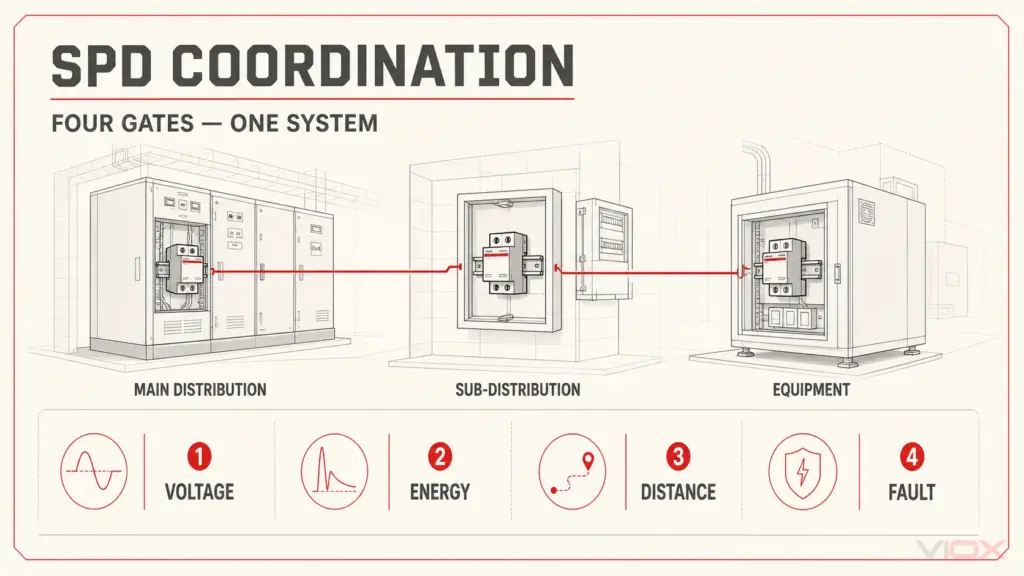
SPD များကို ဝန်ဆောင်မှုဝင်ပေါက်၊ ပင်မဖြန့်ဖြူးရေးဘုတ်၊ လက်အောက်ခံဖြန့်ဖြူးရေးဘုတ်၊ ထိန်းချုပ်ရေးပန်နယ်၊ စက်ကိရိယာနယ်နိမိတ်၊ နေရောင်ခြည်စွမ်းအင်သုံး ပေါင်းစပ်ကိရိယာ သို့မဟုတ် အင်ဗာတာ အင်တာဖေ့စ် သို့မဟုတ် အချက်ပြဝင်ရောက်သည့်နေရာတို့တွင် တပ်ဆင်နိုင်သည်။ မှန်ကန်သော တည်နေရာသည် ထိတွေ့မှု၊ စနစ်တည်ဆောက်ပုံ၊ ကေဘယ်ကြိုးသွယ်တန်းမှု၊ စက်ကိရိယာ၏ အာရုံခံနိုင်စွမ်းနှင့် အထက်ပိုင်းနှင့် အောက်ပိုင်းရှိ ကာကွယ်ရေးစနစ်များနှင့် ညှိနှိုင်းဆောင်ရွက်မှုတို့အပေါ် မူတည်သည်။.
တပ်ဆင်ခြင်းသည် SPD ၏ စွမ်းဆောင်ရည်၏ အစိတ်အပိုင်းတစ်ခုဖြစ်သည်။ ချိတ်ဆက်ထားသော လျှပ်ကူးပစ္စည်းများသည် ထုတ်လုပ်သူ၏ ပုံကြမ်းအတိုင်း လိုက်နာရမည်ဖြစ်ပြီး မလိုအပ်သော အရှည်၊ ကွင်းဆက်များ (loops) နှင့် ပူးတွဲအနှောင့်အယှက်ဖြစ်စေသော impedance တို့ကို အနည်းဆုံးဖြစ်အောင် သွယ်တန်းရမည်။ လိုအပ်သည့်နေရာတွင် အရန်ဖျူးစ်များ သို့မဟုတ် ဆားကစ်ဘရိတ်ကာများသည် ထုတ်ကုန်၏ ညွှန်ကြားချက်များနှင့် ရရှိနိုင်သော ဝါယာရှော့ဖြစ်စဉ် အခြေအနေများကို လိုက်နာရမည်။.
နေရာချထားမှု ဗျူဟာအတွက် အသုံးပြုပါ Where to Install SPDs in an Electrical Panel. ။ ဘရိတ်ကာချိတ်ဆက်မှုနှင့် အရန်ကာကွယ်ရေးဆိုင်ရာ သီးခြားမေးခွန်းအတွက်၊ ကြည့်ရှုပါ SPD ကို ရှိပြီးသား ဘရိတ်ကာတစ်ခုသို့ ချိတ်ဆက်နိုင်ပါသလား။.
“SPD ဆိုသည်မှာ အဘယ်နည်း” မှ မှန်ကန်သော အင်ဂျင်နီယာဆိုင်ရာ ဆုံးဖြတ်ချက်သို့ မည်သို့ကူးပြောင်းမည်နည်း
လည်ပတ်မှုနိယာမကို ရှင်းလင်းစွာသိရှိပြီးနောက်၊ သင်၏ နောက်တစ်ဆင့်လုပ်ဆောင်ရမည့်အလုပ်နှင့် ကိုက်ညီသော မေးခွန်းကို အသုံးပြုပါ:
| သင်၏ နောက်ထပ်မေးခွန်း | ဤစာမျက်နှာကို အသုံးပြုပါ |
|---|---|
| ကာကွယ်ရေးအဆင့်တစ်ခုစီတွင် မည်သည့်အမျိုးအစားကို တပ်ဆင်သင့်သနည်း။ | Type 1 vs Type 2 vs Type 3 SPD |
| တံဆိပ်နှင့် ဒေတာစာရွက်ကို မည်သို့ အဓိပ္ပာယ်ဖွင့်ဆိုသင့်သနည်း။ | SPD အချက်အလက်စာရွက် (Datasheet) ကို မည်သို့ဖတ်ရှုရမည်နည်း |
| SPD သည် surge arrester နှင့် မည်သို့ကွာခြားသနည်း။ | SPD နှင့် Surge Arrester နှိုင်းယှဉ်ချက် |
| SPD ကို ပန်နယ်စနစ်တွင် မည်သည့်နေရာ၌ ထားရှိသင့်သနည်း။ | SPDs များကို ဘယ်မှာ တပ်ဆင်ရမလဲ |
| မည်သည့်အမှားများသည် တပ်ဆင်မှုကို ထိခိုက်စေနိုင်သနည်း။ | SPD တပ်ဆင်မှုဆိုင်ရာ အမှားများနှင့် ပြင်ဆင်နည်းများ |
| မည်သည့် AC၊ DC သို့မဟုတ် PV ထုတ်ကုန်အမျိုးအစားများ ရရှိနိုင်သနည်း။ | VIOX လျှပ်စီးကြောင်းမြင့်တက်မှု ကာကွယ်ရေးကိရိယာများ (Surge Protective Devices) |
မှန်ကန်သော နောက်တစ်ဆင့်မှာ လျှပ်စီးကြောင်းပမာဏ အကြီးဆုံးကို ရွေးချယ်ခြင်းမဟုတ်ပါ။ ထုတ်ကုန်၏ အဆင့်သတ်မှတ်ချက်များကို မနှိုင်းယှဉ်မီ လျှပ်စစ်စနစ်၊ တပ်ဆင်မည့်နေရာ၊ ထိတွေ့နိုင်မှု၊ ကာကွယ်ရမည့်ပစ္စည်းကိရိယာ၊ သက်ဆိုင်ရာစံနှုန်းနှင့် လိုအပ်သော ကာကွယ်မှုပုံစံများကို ဦးစွာသတ်မှတ်ရန် ဖြစ်သည်။.
Sources Reviewed
- IEC 61643-11:2025 — AC ဗို့အားနိမ့် လျှပ်စစ်စနစ်များနှင့် ချိတ်ဆက်ထားသော ဗို့အားနိမ့် လျှပ်စီးကြောင်းမြင့်တက်မှု ကာကွယ်ရေးကိရိယာများ
- IEC 61643-31:2018 — ဖိုတိုဗို့အစ် (photovoltaic) တပ်ဆင်မှုများအတွက် လျှပ်စီးကြောင်းမြင့်တက်မှု ကာကွယ်ရေးကိရိယာများ
- UL 1449 — လျှပ်စီးကြောင်းမြင့်တက်မှု ကာကွယ်ရေးကိရိယာများ