នៅលើទំព័រនេះ
តើអ្វីទៅជាផ្លាស្ទិកវិស្វកម្មនៅក្នុងគ្រឿងបន្លាស់អគ្គិសនី?
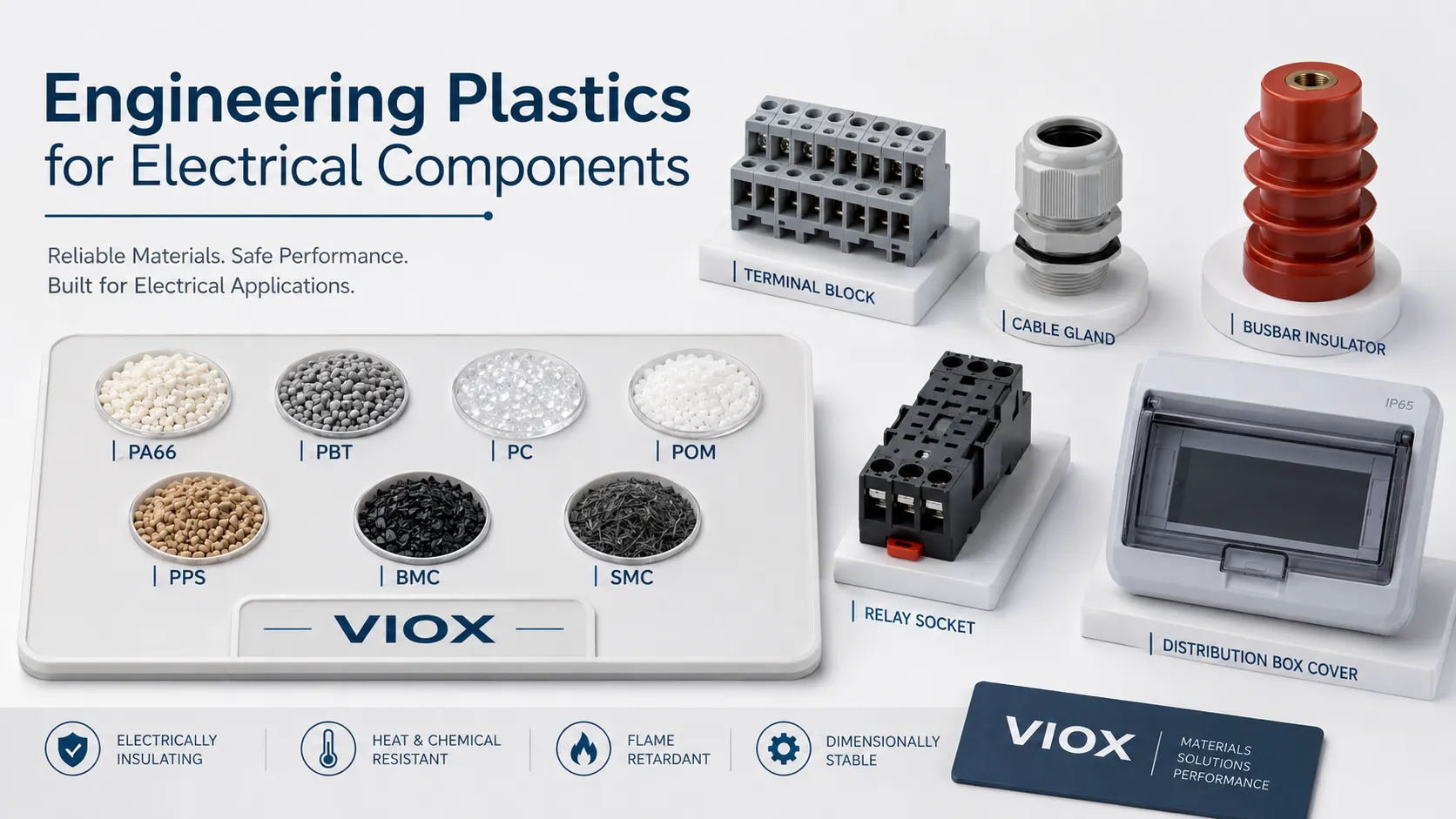
ផ្លាស្ទិកវិស្វកម្មគឺជាវត្ថុធាតុដើមប៉ូលីមែរដែលត្រូវបានជ្រើសរើសសម្រាប់គ្រឿងបន្លាស់អគ្គិសនី ដោយសារវាអាចផ្តល់នូវការការពារចរន្តអគ្គិសនី កម្លាំងមេកានិច ស្ថេរភាពវិមាត្រ ភាពធន់នឹងកម្ដៅ ភាពធន់នឹងអណ្តាតភ្លើង និងភាពធន់នឹងបរិស្ថាន។ នៅក្នុងផលិតផលអគ្គិសនី ការជ្រើសរើសវត្ថុធាតុដើមមានឥទ្ធិពលលើសុវត្ថិភាព ស្ថេរភាពនៃចំណុចតភ្ជាប់ (Terminal) ភាពធន់នឹងការលេចធ្លាយចរន្ត (Tracking resistance) កម្លាំងនៃស្រោមការពារ ការសឹករិចរិលដោយកម្ដៅ និងភាពជឿជាក់ក្នុងរយៈពេលវែង។.
សម្រាប់ផលិតផលដូចជា អ៊ីសូឡង់របារស្ពាន់ (Busbar insulators), ប្លុកតភ្ជាប់ខ្សែភ្លើង (Terminal blocks), ប្រអប់តំណខ្សែភ្លើង (Junction boxes), ប្រអប់ចែកចាយភ្លើង (Distribution boxes), ក្បាលតភ្ជាប់ខ្សែភ្លើង (Cable glands), រន្ធដោតរីឡេ (Relay sockets), ស្រោមប្តូរភ្លើង (Switch housings), ស្រោម MCB/MCCB និងគ្រឿងបន្លាស់កុងតាក់ទ័រ (Contactor components) ផ្លាស្ទិកមិនមែនគ្រាន់តែជាសំបកក្រៅប៉ុណ្ណោះទេ។ វាតែងតែជាផ្នែកមួយនៃប្រព័ន្ធអ៊ីសូឡង់ រចនាសម្ព័ន្ធមេកានិច យុទ្ធសាស្ត្រទប់ស្កាត់ធ្នូអគ្គិសនី និងការគ្រប់គ្រងភាពត្រឹមត្រូវនៃការដំឡើង។.
នោះហើយជាមូលហេតុដែលការជ្រើសរើសវត្ថុធាតុដើមមិនអាចកំណត់ត្រឹមតែសំណួរមួយដូចជា "តើវាជា PA66 ឬ?" ឬ "តើវាធន់នឹងអណ្តាតភ្លើងដែរឬទេ?" ការសម្រេចចិត្តជ្រើសរើសផ្លាស្ទិកសម្រាប់អគ្គិសនីដ៏ល្អមួយ គួរតែពិចារណាលើកម្រិតធន់នឹងអណ្តាតភ្លើង, សន្ទស្សន៍តាមដានប្រៀបធៀប (CTI), កម្លាំងឌីអេឡិចត្រិច, សីតុណ្ហភាពបន្ទន់ដោយកម្ដៅ, ការស្រូបយកសំណើម, ការពង្រឹងដោយសរសៃកញ្ចក់, ស្ថេរភាពវិមាត្រ និងបរិស្ថានអគ្គិសនីជាក់ស្តែង។.
មគ្គុទ្ទេសក៍នេះធ្វើការប្រៀបធៀប PA66, PBT, PC, POM, PPS, BMC, DMC និង SMC ពីទស្សនៈនៃការរចនាគ្រឿងបន្លាស់អគ្គិសនី និងការជ្រើសរើសផលិតផល។.
តារាងប្រៀបធៀបរហ័ស៖ PA66, PBT, PC, POM, PPS, BMC និង SMC
| សម្ភារៈ | ចំណុចខ្លាំងសំខាន់ៗ | ការប្រុងប្រយ័ត្នសំខាន់ៗ | ការប្រើប្រាស់ផ្នែកអគ្គិសនីទូទៅ |
|---|---|---|---|
| PA66 | រឹងមាំ ធន់ ងាយរកបាន និងមានសមត្ថភាពមេកានិចល្អ | ការស្រូបសំណើមអាចប៉ះពាល់ដល់វិមាត្រ និងលក្ខណៈសម្បត្តិអគ្គិសនី | ខ្សែរឹត (Cable ties), ក្បាលតភ្ជាប់ (connectors), ប្រអប់ការពារ (housings), ក្បាលខ្ទាស់ខ្សែ (cable glands), ឃ្លីបមេកានិច (mechanical clips) |
| PBT | ការស្រូបយកសំណើមទាប, ស្ថេរភាពវិមាត្រល្អ, ការការពារចរន្តអគ្គិសនីបានល្អ | ផុយជាងប៉ូលីអាមីត (polyamides) មួយចំនួន ប្រសិនបើជ្រើសរើសមិនបានត្រឹមត្រូវ | ប្លុកតភ្ជាប់ខ្សែ (terminal blocks), រន្ធដោតរីឡេ (relay sockets), ក្បាលតភ្ជាប់ (connectors), គ្រឿងបន្លាស់កុងតាក់ (switch parts) |
| កុំព្យូទ័រ | ភាពធន់នឹងការប៉ះទង្គិចខ្ពស់ និងជម្រើសដែលមានតម្លាភាព | ត្រូវពិនិត្យមើលភាពធន់នឹងការប្រេះស្រាំដោយសារភាពតានតឹង (stress cracking) និងភាពធន់នឹងសារធាតុគីមី | គម្របថ្លា (transparent covers), បង្អួច (windows), ប្រអប់ការពារ (protective housings), គម្របសម្រាប់ត្រួតពិនិត្យ (inspection lids) |
| POM | កកិតទាប ធន់នឹងការសឹក និងមានភាពជាក់លាក់នៃទំហំ | មិនស័ក្តិសមសម្រាប់តំបន់អ៊ីសូឡង់អគ្គិសនីដែលមានហានិភ័យខ្ពស់នៃការឆេះ ឬផ្កាភ្លើងអគ្គិសនី | ប្រអប់លេខ ឧបករណ៍រំកិល យន្តការផ្លាស់ទី និងគ្រឿងបន្លាស់មេកានិចតូចៗ |
| PPS | ធន់នឹងកម្ដៅខ្ពស់ ធន់នឹងសារធាតុគីមី និងមានស្ថេរភាពនៃទំហំ | តម្លៃខ្ពស់ និងត្រូវការដំណើរការផលិតដែលមានលក្ខណៈពិសេសជាងមុន | ឧបករណ៍តភ្ជាប់ដែលមានសីតុណ្ហភាពខ្ពស់ គ្រឿងបន្លាស់អ៊ីសូឡង់ដែលមានភាពជាក់លាក់ និងគ្រឿងបន្លាស់អគ្គិសនីនិងអេឡិចត្រូនិកដែលទាមទារគុណភាពខ្ពស់ |
| BMC / DMC | Thermoset, មានអ៊ីសូឡង់រឹងមាំ, មានភាពធន់នឹងកម្ដៅ និងធន់នឹងធ្នូអគ្គិសនីបានល្អតាមរយៈរូបមន្តផលិត | អាស្រ័យលើផ្សិត និងរូបមន្តផលិត | អ៊ីសូឡង់សម្រាប់របារស្ពាន់ (Busbar), ជើងទ្រដែលបានចាក់ពុម្ព, និងគ្រឿងបន្លាស់អ៊ីសូឡង់អគ្គិសនី |
| SMC | សារធាតុ Thermoset ពង្រឹងដោយសរសៃកញ្ចក់ដែលមានសមត្ថភាពរចនាសម្ព័ន្ធរឹងមាំ | សមស្របជាងសម្រាប់ការផលិតទម្រង់ធំៗ ជាជាងគ្រឿងបន្លាស់តូចៗដែលមានភាពលម្អិត | បន្ទះទូភ្លើង, បន្ទះអ៊ីសូឡង់, និងគ្រឿងបន្លាស់រចនាសម្ព័ន្ធអគ្គិសនីខ្នាតធំ |
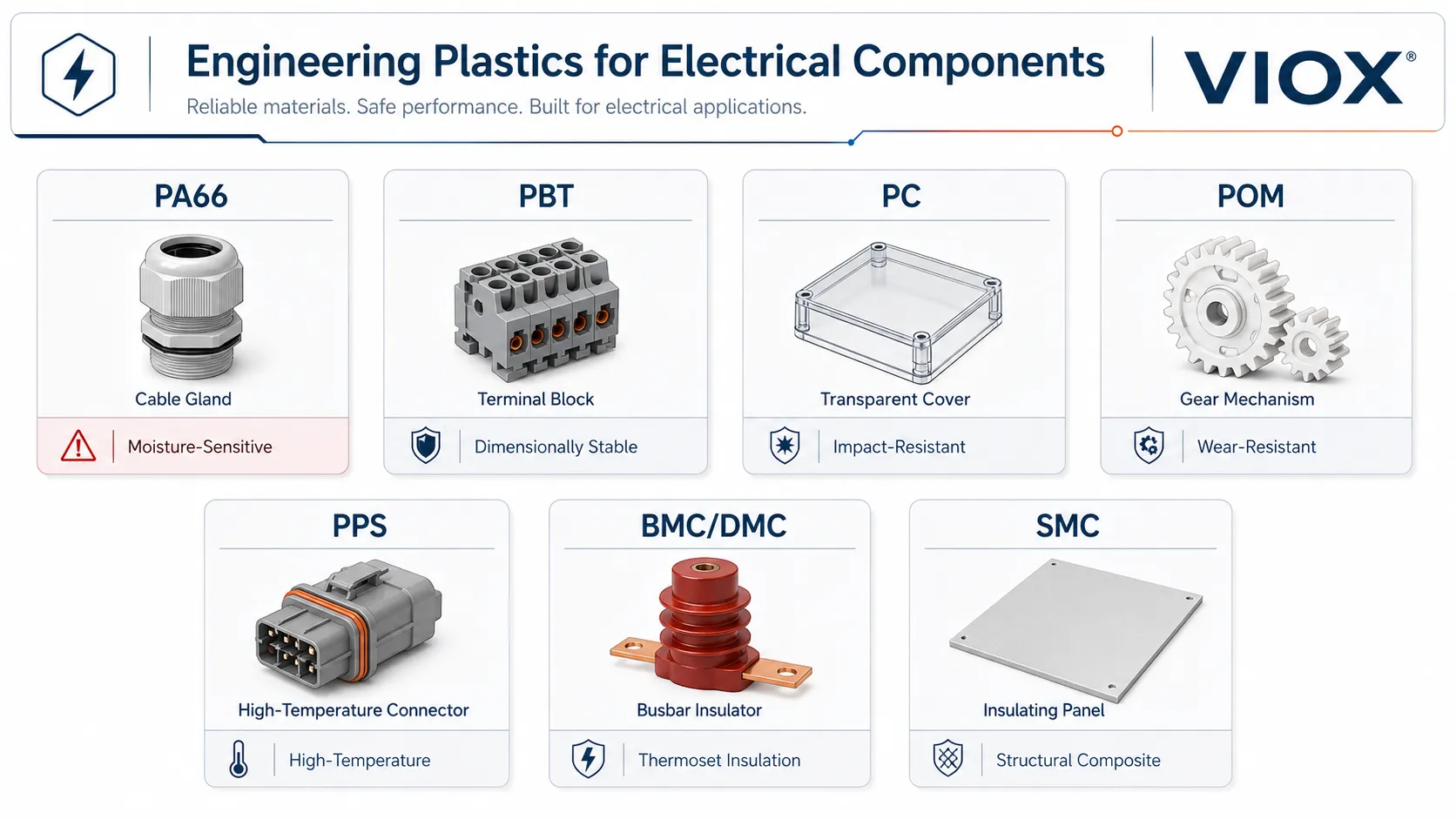
តារាងនេះគ្រាន់តែជាចំណុចចាប់ផ្តើមប៉ុណ្ណោះ។ សមត្ថភាពជាក់ស្តែងអាស្រ័យលើថ្នាក់គុណភាព មាតិកាបំពេញ ភាគរយនៃសរសៃកញ្ចក់ ប្រព័ន្ធទប់ស្កាត់អណ្តាតភ្លើង ដំណើរការចាក់ពុម្ព កម្រាស់ជញ្ជាំង និងភស្តុតាងនៃការបញ្ជាក់គុណភាព។.
កត្តាជ្រើសរើសដែលមានសារៈសំខាន់សម្រាប់ប្លាស្ទិកប្រើក្នុងវិស័យអគ្គិសនី
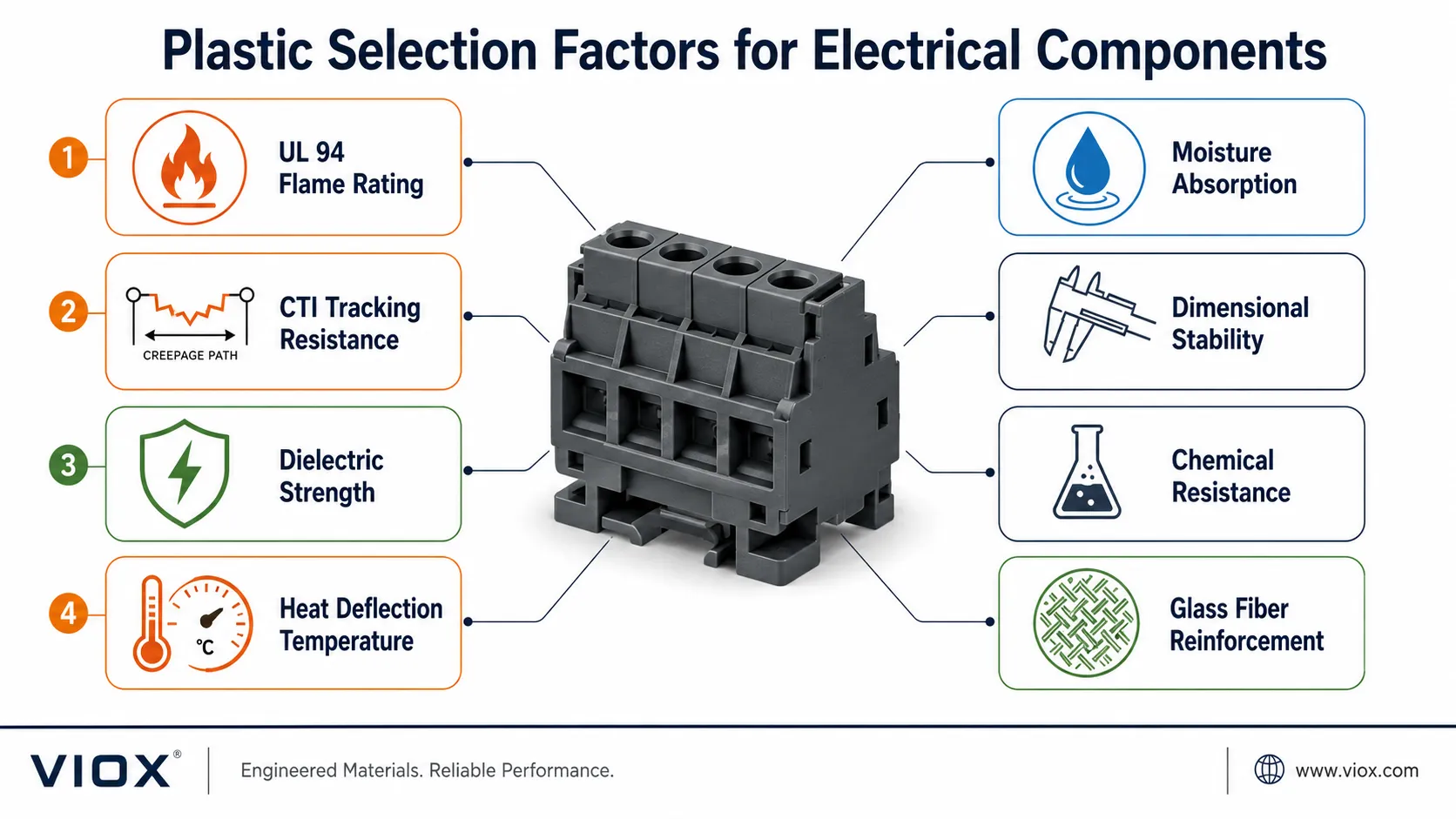
| កត្តាជ្រើសរើស | មូលហេតុដែលវាមានសារៈសំខាន់នៅក្នុងគ្រឿងបន្លាស់អគ្គិសនី |
|---|---|
| កម្រិតធន់នឹងអណ្តាតភ្លើង UL 94 | បង្ហាញពីរបៀបដែលសម្ភារៈប្លាស្ទិកមានប្រតិកម្មក្នុងអំឡុងពេលធ្វើតេស្តអណ្តាតភ្លើងដែលបានកំណត់; V-0 គឺជាកម្រិតដែលត្រូវបានទាមទារជាទូទៅសម្រាប់គ្រឿងបន្លាស់អគ្គិសនីជាច្រើន |
| CTI | បង្ហាញពីភាពធន់នឹងការឆេះលើផ្ទៃ (Tracking); មានសារៈសំខាន់សម្រាប់ចម្ងាយលូន (Creepage distance) និងបរិស្ថានដែលមានការបំពុល |
| Dielectric កម្លាំង | ជួយវាយតម្លៃសមត្ថភាពនៃអ៊ីសូឡង់តាមរយៈសម្ភារៈ |
| សីតុណ្ហភាពនៃការខូចទ្រង់ទ្រាយដោយកម្ដៅ | បង្ហាញថាតើផ្នែកនោះអាចខូចទ្រង់ទ្រាយក្រោមឥទ្ធិពលកម្ដៅ និងបន្ទុកមេកានិចដែរឬទេ |
| ការស្រូបយកសំណើម | អាចផ្លាស់ប្តូរវិមាត្រ លក្ខណៈអ៊ីសូឡង់ និងស្ថិរភាពរយៈពេលវែង |
| ស្ថេរភាពវិមាត្រ | មានសារៈសំខាន់សម្រាប់ចំណុចតភ្ជាប់ រន្ធដោត ស្រោមឧបករណ៍កាត់ផ្ដាច់ (Breaker) និងផ្នែកដែលត្រូវផ្គុំចូលគ្នា |
| ភាពធន់នឹងធ្នូអគ្គិសនី និងការឆ្លងចរន្តលើផ្ទៃសម្ភារៈ | មានសារៈសំខាន់នៅជិតចំណុចទំនាក់ទំនងនៃការបិទបើក របារស្ពាន់ (Busbars) ចំណុចតភ្ជាប់ និងតំបន់ដែលមានដែនអគ្គិសនីខ្លាំង |
| ការពង្រឹងដោយសរសៃកញ្ចក់ | ជួយបង្កើនភាពរឹង និងភាពធន់នឹងកម្ដៅ ប៉ុន្តែអាចបង្កើនការកោង និងប៉ះពាល់ដល់គុណភាពផ្ទៃខាងក្រៅ |
| ធន់នឹងសារធាតុគីមី | មានសារៈសំខាន់ក្នុងករណីប្រើប្រាស់នៅក្រៅផ្ទះ ក្នុងវិស័យឧស្សាហកម្ម ឬការប៉ះពាល់ជាមួយប្រេង សារធាតុរំលាយ ឬសារធាតុសម្អាត |
| វិធីសាស្ត្រកែច្នៃ | ការចាក់ពុម្ព (Injection molding) ការសង្កត់ពុម្ព (Compression molding) និងការចាក់ពុម្ពជ័ររឹង (Thermoset molding) មានឥទ្ធិពលលើសេរីភាពក្នុងការរចនា និងតម្លៃ |
សម្រាប់ការរចនាអ៊ីសូឡង់តង់ស្យុងខ្ពស់ ឬតង់ស្យុងទាបដែលមានទំហំតូច ការជ្រើសរើសសម្ភារៈគួរតែត្រូវបានពិនិត្យរួមគ្នាជាមួយចម្ងាយលូន (Creepage) និងចម្ងាយសុវត្ថិភាព (Clearance)។ មគ្គុទ្ទេសក៍ពាក់ព័ន្ធស្តីពី ចម្ងាយលូន (creepage distance) ទល់នឹងចម្ងាយសុវត្ថិភាព (clearance distance) ពន្យល់ពីមូលហេតុដែលគន្លងលើផ្ទៃ និងគម្លាតខ្យល់គឺជាដែនកំណត់វិស្វកម្មផ្សេងគ្នា.
PA66៖ រឹងមាំ និងត្រូវបានប្រើប្រាស់យ៉ាងទូលំទូលាយ ប៉ុន្តែងាយរងផលប៉ះពាល់ដោយសំណើម
PA66, ឬប៉ូលីអាមីត 66 (Polyamide 66) គឺជាប្លាស្ទិកវិស្វកម្មទូទៅបំផុតមួយ ដែលត្រូវបានប្រើប្រាស់ក្នុងគ្រឿងបន្លាស់អគ្គិសនី និងមេកានិក។ វាមានភាពរឹងមាំ ធន់ ធន់នឹងការកកិត និងងាយស្រួលក្នុងការកែច្នៃ។ ប្រភេទ PA66 ដែលពង្រឹងដោយសរសៃកញ្ចក់ (Glass-fiber reinforced) អាចផ្តល់នូវភាពរឹង និងភាពធន់នឹងកម្ដៅបានខ្ពស់ជាងប្រភេទដែលមិនបានពង្រឹង។.
ការប្រើប្រាស់ទូទៅក្នុងវិស័យអគ្គិសនីរួមមាន៖
- ខ្សែរឹតខ្សែភ្លើង (Cable ties)
- គ្រឿងបន្លាស់សម្រាប់តំណភ្ជាប់ខ្សែភ្លើង (Cable gland components)
- សំបកដុំតំណភ្ជាប់ (Connector housings)
- ឃ្លីប និងឧបករណ៍ភ្ជាប់ (Clips and fasteners)
- សំបកឧបករណ៍បញ្ជូនសញ្ញា (Relay housings)
- គ្រឿងបន្លាស់សម្រាប់ទ្រទ្រង់ផ្នែកមេកានិក (Mechanical support parts)
- គ្រឿងបន្លាស់ឧបករណ៍ប្តូរ និងឧបករណ៍បញ្ជា
PA66 មានភាពទាក់ទាញដោយសារវាផ្តល់នូវតុល្យភាពដ៏ល្អរវាងតម្លៃ ភាពរឹងមាំ កម្លាំង និងសមត្ថភាពក្នុងការចាក់ពុម្ព។ នៅក្នុងផលិតផលអគ្គិសនីដែលចាក់ពុម្ពជាច្រើន វាគឺជាសម្ភារៈមូលដ្ឋានដែលត្រូវបានប្រើប្រាស់យ៉ាងជាក់ស្តែង។.
ការប្រុងប្រយ័ត្នគឺការស្រូបយកសំណើម។ ប៉ូលីអាមីត (Polyamides) ស្រូបយកសំណើមពីបរិស្ថាន។ សំណើមនោះអាចប៉ះពាល់ដល់វិមាត្រ ភាពរឹង និងលក្ខណៈសម្បត្តិអគ្គិសនី។ នេះមិនមែនមានន័យថាជាការបរាជ័យដោយស្វ័យប្រវត្តិនោះទេ ប៉ុន្តែវាត្រូវតែត្រូវបានពិចារណានៅក្នុងគ្រឿងបន្លាស់ដែលមានភាពជាក់លាក់ខ្ពស់ ការតម្រឹមចំណុចតភ្ជាប់ ការផ្សាភ្ជាប់ប្រអប់ និងកម្មវិធីដែលត្រូវប៉ះពាល់នឹងសំណើម។.
ប្រើ PA66 នៅពេលដែល៖
- គ្រឿងបន្លាស់ត្រូវការភាពរឹងមាំ និងកម្លាំងមេកានិច
- ការផ្លាស់ប្តូរវិមាត្រខ្លះដោយសារសំណើមអាចទទួលយកបាន ឬអាចគ្រប់គ្រងបាន
- ប្រភេទសម្ភារៈនោះមានលក្ខណៈសម្បត្តិសមស្របខាងការទប់ស្កាត់អណ្តាតភ្លើង កម្ដៅ និងលក្ខណៈសម្បត្តិអគ្គិសនី
- ផ្នែកនោះមិនមែនជាឧបសគ្គអ៊ីសូឡង់ដែលងាយនឹងកើតមានការលេចធ្លាយចរន្ត (creepage) ឬការឆេះដោយធ្នូអគ្គិសនី (arc-prone) ដ៏សំខាន់បំផុតនោះទេ
សូមប្រុងប្រយ័ត្នចំពោះការប្រើប្រាស់ PA66 នៅពេល៖
- ទាមទារស្ថិរភាពវិមាត្រខ្ពស់នៅពេលមានការប្រែប្រួលសំណើម
- ផ្នែកនោះនៅជិតស្ថានីយដែលមានចរន្តអគ្គិសនី និងមានចម្ងាយលូន (creepage distance) ខ្លី
- ផលិតផលនឹងត្រូវប្រើប្រាស់ក្នុងបរិយាកាសដែលមានសំណើម ឬនៅខាងក្រៅអគារ
- ការប្រើប្រាស់ទាមទារឱ្យមានការស្រូបយកទឹកតិចបំផុត
សម្រាប់ផលិតផលដែលមានច្រកចូលខ្សែភ្លើង ការជ្រើសរើសសម្ភារៈក៏មានទំនាក់ទំនងទៅនឹងការផ្សាភ្ជាប់ និងការគៀបមេកានិចផងដែរ។ សូមមើល VIOX ក្រពេញខ្សែកាប សម្រាប់បរិបទនៃគ្រឿងបន្លាស់ដែលពាក់ព័ន្ធ។.
PBT៖ មានស្ថិរភាពវិមាត្រសម្រាប់ការការពារចរន្តអគ្គិសនី
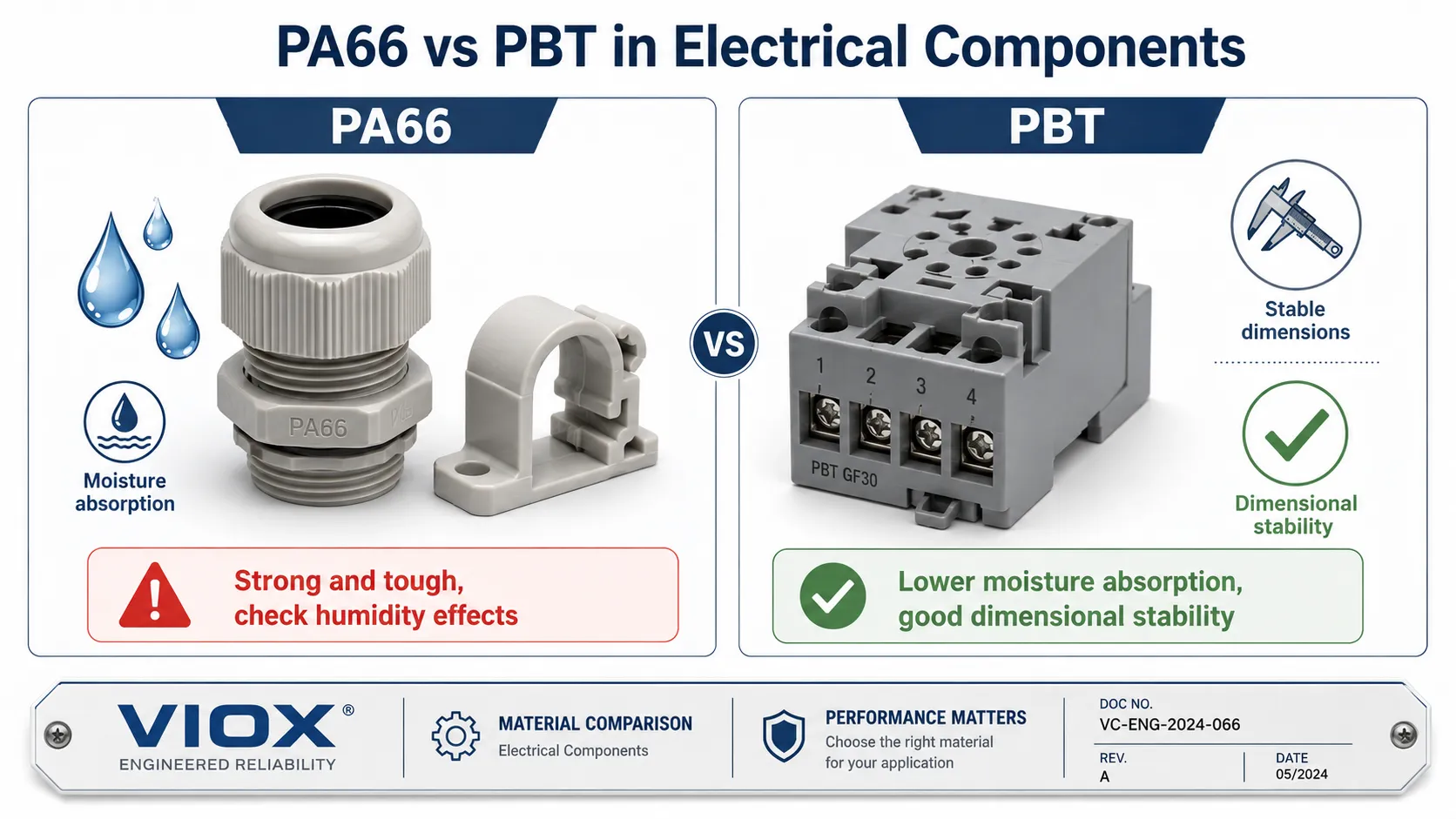
PBT, PBT ឬ polybutylene terephthalate គឺជាប៉ូលីអេស្ទ័រប្រភេទ thermoplastic ដែលត្រូវបានប្រើប្រាស់យ៉ាងទូលំទូលាយក្នុងវិស័យអគ្គិសនី និងអេឡិចត្រូនិក។ បើប្រៀបធៀបជាមួយ PA66, PBT ជាទូទៅមានកម្រិតនៃការស្រូបសំណើមទាបជាង និងមានស្ថិរភាពវិមាត្រល្អជាងនៅក្នុងបរិយាកាសដែលមានសំណើម។.
លក្ខណៈនេះធ្វើឱ្យ PBT មានប្រយោជន៍ជាពិសេសនៅកន្លែងដែលទាមទារភាពជាក់លាក់ និងភាពស្ថិតស្ថេរនៃអ៊ីសូឡង់។.
ការប្រើប្រាស់ទូទៅក្នុងវិស័យអគ្គិសនីរួមមាន៖
- ប្លុកស្ថានីយ
- រន្ធដោតរីឡេ (Relay sockets)
- សំបកដុំតំណភ្ជាប់ (Connector housings)
- ផ្នែកនៃកុងតាក់ (Switch parts)
- ស្នូលរុំខ្សែស្ពាន់ (Coil bobbins)
- ស្រោមការពារឧបករណ៍ចាប់សញ្ញា (Sensor housings)
- យន្តការអគ្គិសនីខ្នាតតូច (Miniature electrical mechanisms)
PBT គឺជាជម្រើសដ៏រឹងមាំសម្រាប់គ្រឿងបន្លាស់អគ្គិសនីដែលទាមទារនូវស្ថិរភាពវិមាត្រ លក្ខណៈសម្បត្តិក្នុងការចាក់ពុម្ពបានល្អ និងសមត្ថភាពអ៊ីសូឡង់ដែលអាចទុកចិត្តបាន។ សម្រាប់ប្រភេទប្រើប្រាស់ក្នុងវិស័យអគ្គិសនី វាច្រើនតែត្រូវបានលាយជាមួយសរសៃកញ្ចក់ និងមានលក្ខណៈធន់នឹងអណ្តាតភ្លើង។.
ប្រើប្រាស់ PBT នៅពេលដែល៖
- ស្ថិរភាពវិមាត្រមានសារៈសំខាន់
- ការស្រូបយកសំណើមត្រូវតែទាបជាង PA66
- គ្រឿងបន្លាស់ត្រូវការអ៊ីសូឡង់អគ្គិសនីដែលមានស្ថិរភាព
- រូបរាងធរណីមាត្ររួមមានចំណុចតភ្ជាប់ (terminals) រន្ធ និងផ្នែកសម្រាប់ផ្គុំចូលគ្នា
- សមាសភាគត្រូវបានប្រើប្រាស់នៅក្នុងឧបករណ៍បញ្ជា ឬឧបករណ៍ចែកចាយថាមពលដែលមានទំហំតូច
ត្រូវប្រុងប្រយ័ត្នជាមួយ PBT នៅពេលដែល៖
- ផ្នែកនេះត្រូវតែអាចទប់ទល់នឹងកម្លាំងប៉ះទង្គិចខ្លាំងដោយមិនមានការប្រេះស្រាំ
- ការរចនាមានជញ្ជាំងស្តើង និងទទួលរងកម្លាំងមេកានិចខ្ពស់
- ប្រភេទវត្ថុធាតុដែលបានជ្រើសរើសមិនឆ្លើយតបតាមតម្រូវការនៃការឆេះ ឬដំណើរការទប់ទល់នឹងចរន្តលេច (tracking performance)
សម្រាប់ផលិតផលតភ្ជាប់ដែលទាមទារភាពជាក់លាក់នៃស្រោមខាងក្រៅ សូមមើល VIOX ប្លុកស្ថានីយ កម្មវិធី។
PC: ធន់នឹងការប៉ះទង្គិច និងមានប្រយោជន៍សម្រាប់គម្របថ្លា
កុំព្យូទ័រ, ឬប៉ូលីកាបូណាត (polycarbonate) ត្រូវបានគេស្គាល់ថាមានភាពធន់នឹងការប៉ះទង្គិចខ្ពស់ និងមានតម្លាភាពល្អ។ វាត្រូវបានគេប្រើជាញឹកញាប់នៅកន្លែងដែលផ្នែកនោះត្រូវទប់ទល់នឹងការប៉ះទង្គិច ឬផ្តល់ជាបង្អួចសម្រាប់ត្រួតពិនិត្យដែលមើលឃើញច្បាស់.
ការប្រើប្រាស់ទូទៅក្នុងវិស័យអគ្គិសនីរួមមាន៖
- គម្របថ្លា
- បង្អួចសម្រាប់ត្រួតពិនិត្យ
- គម្របប្រអប់ចែកចាយភ្លើង
- របាំងការពារ
- បង្អួចកុងទ័រ
- គម្របសូចនាករ
- សំបកការពារធន់នឹងការប៉ះទង្គិច
សម្ភារៈ PC មានប្រយោជន៍នៅពេលដែលផលិតផលត្រូវការភាពថ្លា និងភាពរឹងមាំ។ ឧទាហរណ៍ គម្របថ្លាអនុញ្ញាតឱ្យមានការត្រួតពិនិត្យសូចនាករ កុងតាក់ ឬស្ថានភាពនៃចំណុចតភ្ជាប់ (terminal) ដោយមិនចាំបាច់បើកប្រអប់។.
ការប្រុងប្រយ័ត្នគឺទាក់ទងនឹងភាពធន់នឹងសារធាតុគីមី និងការប្រេះស្រាំដោយសារភាពតានតឹង។ PC អាចមានប្រតិកម្មទៅនឹងប្រេង សារធាតុរំលាយ សារធាតុសម្អាត និងភាពតានតឹងដែលកើតឡើងក្នុងពេលផលិត។ ប្រសិនបើផ្នែកនោះស្ថិតក្រោមបន្ទុកមេកានិច និងប៉ះពាល់ជាមួយសារធាតុគីមី គុណភាព និងការរចនាត្រូវតែពិនិត្យឱ្យបានហ្មត់ចត់។.
ប្រើ PC នៅពេល៖
- តម្រូវឱ្យមានភាពថ្លា
- ភាពធន់នឹងការប៉ះទង្គិចមានសារៈសំខាន់
- ផ្នែកនេះគឺជាគម្រប គម្របបិទ បង្អួច ឬរបាំងការពារ
- ការប៉ះពាល់នឹងបរិយាកាសខាងក្រៅ ឬកាំរស្មី UV ត្រូវបានគ្រប់គ្រងដោយកម្រិតគុណភាពត្រឹមត្រូវ
សូមប្រុងប្រយ័ត្នជាមួយ PC នៅពេល៖
- ផលិតផលត្រូវបានប៉ះពាល់នឹងសារធាតុគីមីដែលមានប្រតិកម្មខ្លាំង
- ផ្នែកនេះស្ថិតក្រោមភាពតានតឹងជាបន្តបន្ទាប់
- កម្រិតនៃការធន់នឹងអណ្តាតភ្លើងត្រូវតែបញ្ជាក់នៅកម្រាស់ជញ្ជាំងជាក់ស្តែង
- សមាសធាតុនេះស្ថិតនៅជិតតំបន់ដែលមានការបញ្ចេញធ្នូអគ្គិសនី ឬតំបន់ដែលមានសីតុណ្ហភាពខ្ពស់នៅពេលបិទបើក
សម្រាប់បរិបទផលិតផលកម្រិតប្រអប់ការពារ (Enclosure) សូមមើល VIOX ប្រអប់ចែកចាយ កម្មវិធី។
POM៖ ធន់នឹងការកកិត ប៉ុន្តែមិនស័ក្តិសមសម្រាប់តំបន់អគ្គិសនីដែលមានហានិភ័យនៃការបញ្ចេញធ្នូអគ្គិសនីនោះទេ
POM, ដែលត្រូវបានគេហៅថាអាសេតាល់ (acetal) ឬប៉ូលីអុកស៊ីមេទីលែន (polyoxymethylene) គឺជាប្លាស្ទិកវិស្វកម្មដែលត្រូវបានគេឱ្យតម្លៃចំពោះកម្រិតកកិតទាប ភាពរឹងខ្ពស់ ភាពធន់នឹងការកកិត និងភាពជាក់លាក់នៃទំហំ។ វាល្អឥតខ្ចោះសម្រាប់ផ្នែកមេកានិចដែលធ្វើចលនា។.
ការប្រើប្រាស់ទូទៅរួមមាន៖
- ធ្មេញកង់ (Gears)
- កាំ (Cams)
- ឧបករណ៍រំកិល (Sliders)
- សោរ (latches)
- យន្តការផ្លាស់ទី (moving mechanisms)
- គ្រឿងបន្លាស់មេកានិចដែលមានភាពជាក់លាក់ខ្ពស់ (small precision mechanical parts)
នៅក្នុងគ្រឿងបន្លាស់អគ្គិសនី POM អាចមានប្រយោជន៍សម្រាប់ចលនាមេកានិច ប៉ុន្តែគួរប្រើដោយប្រុងប្រយ័ត្ននៅជិតតំបន់ដែលមានចរន្តអគ្គិសនី។ ជាទូទៅវាមិនមែនជាជម្រើសដំបូងសម្រាប់តំបន់អ៊ីសូឡង់ដែលងាយនឹងកើតមានធ្នូអគ្គិសនី តំបន់ដែលមានហានិភ័យអគ្គីភ័យខ្ពស់ ឬផ្នែកដែលត្រូវផ្តល់អ៊ីសូឡង់អគ្គិសនីចម្បងនៅជិតចំណុចតភ្ជាប់ប្តូរភ្លើងនោះទេ។.
ប្រើ POM នៅពេល៖
- ផ្នែកនោះជាផ្នែកមេកានិចជាចម្បង
- ការកកិតទាប និងភាពធន់នឹងការសឹកជារឿងសំខាន់
- គ្រឿងបន្លាស់នោះស្ថិតនៅឆ្ងាយពីធ្នូអគ្គិសនី និងភាពតានតឹងនៃកម្ដៅអគ្គិសនីខ្ពស់
- ទាមទារឱ្យមានចលនាដែលមានភាពជាក់លាក់ខ្ពស់
ត្រូវមានការប្រុងប្រយ័ត្នចំពោះ POM នៅពេល៖
- ផ្នែកនោះស្ថិតនៅជិតចំណុចតភ្ជាប់ ធ្នូអគ្គិសនី ឬចំណុចតំណចរន្ត
- សមត្ថភាពទប់ស្កាត់អណ្តាតភ្លើងមានសារៈសំខាន់ខ្លាំង
- ការរចនាទាមទារឱ្យមានភាពធន់នឹងការឆេះដាច់ចរន្ត (Tracking resistance) ខ្ពស់
- ការប៉ះពាល់ជាមួយសារធាតុគីមីអាចបង្កឱ្យមានការសឹករិចរិល
គោលការណ៍ជាក់ស្តែង៖ POM គឺជាប្លាស្ទិកដែលមានកម្លាំងមេកានិចខ្លាំង ប៉ុន្តែជាធម្មវាមិនមែនជាជម្រើសដំបូងសម្រាប់ការការពារចរន្តអគ្គិសនីនៅជុំវិញចំណុចប្តូរចរន្តដែលមានថាមពលខ្ពស់នោះទេ។.
PPS៖ ប្លាស្ទិកវិស្វកម្មធន់នឹងសីតុណ្ហភាពខ្ពស់សម្រាប់គ្រឿងបន្លាស់អគ្គិសនីដែលទាមទារគុណភាពខ្ពស់
PPS, PPS ឬ polyphenylene sulfide គឺជាប្លាស្ទិកវិស្វកម្មដែលមានសមត្ថភាពខ្ពស់ ដែលគេស្គាល់ថាមានភាពធន់នឹងកម្ដៅ ធន់នឹងសារធាតុគីមី មានស្ថេរភាពវិមាត្រ និងមានការស្រូបយកសំណើមទាប។ វាត្រូវបានប្រើប្រាស់នៅពេលដែលប្លាស្ទិកវិស្វកម្មធម្មតាមិនអាចបំពេញតម្រូវការបាន។.
ការប្រើប្រាស់ទូទៅក្នុងវិស័យអគ្គិសនី និងអេឡិចត្រូនិក រួមមាន៖
- ឧបករណ៍ភ្ជាប់ដែលមានសីតុណ្ហភាពខ្ពស់
- គ្រឿងបន្លាស់អ៊ីសូឡង់ដែលមានភាពជាក់លាក់ខ្ពស់
- គ្រឿងបន្លាស់ឧបករណ៍ចាប់សញ្ញា (Sensor)
- ស៊ុមឧបករណ៏ (Coil forms)
- គ្រឿងបន្លាស់ដែលត្រូវប៉ះពាល់នឹងសារធាតុគីមី ឬកម្ដៅ
- គ្រឿងបន្លាស់ខ្នាតតូចដែលត្រូវការស្ថេរភាពវិមាត្រ
PPS មានប្រយោជន៍នៅពេលដែលគ្រឿងបន្លាស់ត្រូវរក្សាទម្រង់ និងសមត្ថភាពអគ្គិសនីក្រោមលក្ខខណ្ឌកម្ដៅ ការប៉ះពាល់នឹងសារធាតុគីមី ឬតម្រូវការភាពជាក់លាក់ខ្ពស់។.
ប្រើប្រាស់ PPS នៅពេល៖
- ទាមទារភាពធន់នឹងកម្ដៅខ្ពស់
- ស្ថិរភាពនៃទំហំមានសារៈសំខាន់ខ្លាំង
- ភាពធន់នឹងសារធាតុគីមីមានសារៈសំខាន់
- សមាសភាគមានទំហំតូច ជាក់លាក់ និងមានតម្រូវការខ្ពស់
- PA66 ឬ PBT មិនអាចបំពេញតាមកម្រិតសមត្ថភាពដែលត្រូវការ
ត្រូវប្រុងប្រយ័ត្នជាមួយ PPS នៅពេល៖
- តម្លៃគឺជាឧបសគ្គចម្បង
- ការរចនាមិនតម្រូវឱ្យមានសមត្ថភាពធន់នឹងសីតុណ្ហភាពខ្ពស់នោះទេ
- អ្នកផ្គត់ផ្គង់គ្រឿងបន្លាស់ចាក់ពុម្ពមិនមានបទពិសោធន៍ជាមួយសម្ភារៈនេះទេ
PPS ជារឿយៗគឺជាការបង្កើនសមត្ថភាព មិនមែនជាសម្ភារៈស្តង់ដារនោះទេ។ សូមប្រើវាសម្រាប់តែកម្មវិធីដែលសមស្របនឹងតម្លៃ និងតម្រូវការផលិតកម្មប៉ុណ្ណោះ។.
BMC, DMC និង SMC៖ សម្ភារៈ Thermoset សម្រាប់ឧបករណ៍អ៊ីសូឡង់អគ្គិសនី
BMC (Bulk Molding Compound), DMC (Dough Molding Compound) និង SMC (Sheet Molding Compound) គឺជាសម្ភារៈផ្សំប្រភេទ Thermoset ដែលពង្រឹងដោយសរសៃកញ្ចក់។ មិនដូចសម្ភារៈ Thermoplastics ដូចជា PA66, PBT, PC, POM និង PPS នោះទេ សម្ភារៈ Thermoset នឹងរឹងខ្លួនទៅជាទម្រង់បណ្តាញ ហើយមិនអាចរលាយម្តងទៀតបានដូចសម្ភារៈ Thermoplastics ទូទៅឡើយ។.
សម្ភារៈទាំងនេះមានសារៈសំខាន់ជាពិសេសសម្រាប់ផ្នែកអ៊ីសូឡង់អគ្គិសនី និងផ្នែកទ្រទ្រង់។.
កម្មវិធីទូទៅរួមមាន:
- អ៊ីសូឡង់ busbar
- ឧបករណ៍ទ្រទ្រង់អ៊ីសូឡង់ (Standoff insulators)
- ឧបករណ៍ទ្រទ្រង់អគ្គិសនីដែលបានចាក់ពុម្ព (Molded electrical supports)
- រចនាសម្ព័ន្ធទ្រទ្រង់ចំណុចតភ្ជាប់ (Terminal support structures)
- បន្ទះអ៊ីសូឡង់ (Insulating plates)
- គ្រឿងបន្លាស់ទ្រទ្រង់ឧបករណ៍ប្តូរអគ្គិសនី (Switchgear support parts)
- គ្រឿងបន្លាស់ឧបករណ៍ចែកចាយថាមពលអគ្គិសនី
BMC និង DMC ត្រូវបានប្រើប្រាស់ជាញឹកញាប់សម្រាប់គ្រឿងបន្លាស់ទ្រនាប់អ៊ីសូឡង់ដែលធ្វើពីជ័រ។ SMC ត្រូវបានប្រើប្រាស់ជាទូទៅនៅពេលដែលត្រូវការគ្រឿងបន្លាស់ដែលមានរចនាសម្ព័ន្ធធំជាង ឬគ្រឿងបន្លាស់ដែលមានលក្ខណៈជាបន្ទះ។.
មូលហេតុដែលវាមានសារៈសំខាន់នៅក្នុងផលិតផលអគ្គិសនី៖
- មានលក្ខណៈសម្បត្តិអ៊ីសូឡង់អគ្គិសនីល្អតាមរយៈរូបមន្តផ្សំ
- មានភាពធន់នឹងកម្ដៅបានល្អបើធៀបនឹងប្លាស្ទិកទូទៅជាច្រើនប្រភេទ
- មានស្ថេរភាពនៃទំហំរឹងមាំបន្ទាប់ពីការធ្វើឱ្យរឹង (curing)
- មានការពង្រឹងដោយសរសៃកញ្ចក់ដើម្បីបង្កើនភាពរឹងមាំ
- មានភាពសមស្របល្អសម្រាប់ការបង្ហាប់ និងការចាក់ពុម្ពផ្ទេរ (compression and transfer molding)
- មានប្រយោជន៍ក្នុងបរិយាកាសដែលមានធ្នូអគ្គិសនី កម្ដៅ និងការទ្រទ្រង់អ៊ីសូឡង់ នៅពេលដែលបានកំណត់លក្ខណៈបច្ចេកទេសត្រឹមត្រូវ
សម្រាប់ VIOX សម្ភារៈទាំងនេះមានសារៈសំខាន់ជាពិសេសចំពោះ អ៊ីសូឡង់ busbar ផលិតផល ដែលការទ្រទ្រង់ផ្នែកមេកានិក និងអ៊ីសូឡង់អគ្គិសនីត្រូវតែដំណើរការរួមគ្នា.
តើជាតិសរសៃកញ្ចក់ សារធាតុទប់ស្កាត់អណ្តាតភ្លើង និងសារធាតុរក្សាលំនឹង ផ្លាស់ប្តូរប្រសិទ្ធភាពយ៉ាងដូចម្តេច
ឈ្មោះប៉ូលីមែរមូលដ្ឋានមិនអាចបញ្ជាក់ពីលក្ខណៈសម្បត្តិទាំងស្រុងបានទេ។ គ្រឿងបន្លាស់ដែលសម្គាល់ថា "PA66" ឬ "PBT" អាចមានប្រតិកម្មខុសគ្នាខ្លាំងអាស្រ័យលើសារធាតុបន្ថែម និងសារធាតុពង្រឹង.
ការពង្រឹងដោយជាតិសរសៃកញ្ចក់
ជាតិសរសៃកញ្ចក់អាចជួយបង្កើនភាពរឹង ភាពធន់នឹងកម្ដៅ និងកម្លាំងវិមាត្រ ប៉ុន្តែវាក៏អាចប៉ះពាល់ដល់៖
- ការកោង (warpage)
- ផ្ទៃសម្រេច
- កម្លាំងនៃខ្សែផ្សារ (weld-line strength)
- ការសឹករលាកនៃពុម្ព
- ការរួញតូចមិនស្មើគ្នា (anisotropic shrinkage)
- ឥរិយាបថនៃក្បាលវីស (screw boss) និងការភ្ជាប់បែប snap-fit
ចំពោះដុំតំណខ្សែភ្លើង (terminal blocks) រន្ធដោតរ៉េឡេ និងស្រោមប្តូរភ្លើង ប្រភេទជ័រលាយកញ្ចក់អាចជួយបង្កើនភាពជាក់លាក់ និងភាពរឹងមាំ ប៉ុន្តែការរចនាផ្នែកត្រូវតែគិតគូរពីការរួញតូច និងទិសដៅនៃសរសៃកញ្ចក់។.
សារធាតុទប់ស្កាត់អណ្តាតភ្លើង
សារធាតុទប់ស្កាត់អណ្តាតភ្លើងជួយឱ្យសម្ភារៈឆ្លើយតបតាមស្តង់ដារដូចជា UL 94 V-0 ឬតម្រូវការការពារអណ្តាតភ្លើងផ្សេងទៀត។ ប៉ុន្តែវាអាចជះឥទ្ធិពលលើ៖
- ភាពរឹងមាំ
- ស្ថិរភាពពណ៌
- ភាពធន់នឹងការឆេះតាមផ្ទៃ (Tracking resistance)
- ជួរដំណើរការ (Processing window)
- ការเสื่อមគុណភាពតាមរយៈការប្រើប្រាស់យូរអង្វែង
- តម្លៃ
កុំសន្មតថាថ្នាក់ធន់នឹងភ្លើង (flame-retardant grade) នឹងមានតម្លៃ CTI ឬកម្លាំងមេកានិចល្អឥតខ្ចោះដោយស្វ័យប្រវត្តិ។ ទាំងនេះត្រូវតែត្រួតពិនិត្យដោយឡែកពីគ្នា។.
សារធាតុទប់លំនឹងកម្ដៅ និងសារធាតុទប់លំនឹងកាំរស្មី UV
សារធាតុទប់លំនឹងកម្ដៅជួយកែលម្អភាពเสื่อមគុណភាពនៅក្រោមសីតុណ្ហភាពខ្ពស់។ សារធាតុទប់លំនឹងកាំរស្មី UV មានសារៈសំខាន់សម្រាប់ផលិតផលប្រើប្រាស់ក្រៅផ្ទះ ឬប្រអប់ការពារដែលត្រូវពន្លឺ។ កញ្ចប់សារធាតុទប់លំនឹងដែលត្រឹមត្រូវគឺអាស្រ័យលើបរិស្ថាន។.
សម្រាប់ប្រអប់តំណខ្សែភ្លើង (junction boxes) ឬប្រអប់ចែកចាយភ្លើង (distribution boxes) ដែលប្រើប្រាស់ក្រៅផ្ទះ សម្ភារៈ និងការរចនាប្រអប់ត្រូវតែដំណើរការរួមគ្នា។ សូមមើល VIOX ប្រអប់ប្រសព្វ និង ប្រអប់ចែកចាយ បរិបទនៃផលិតផល។.
របៀបជ្រើសរើសប្លាស្ទិកវិស្វកម្មសម្រាប់ផលិតផលអគ្គិសនី
1. ចាប់ផ្តើមពីមុខងារអគ្គិសនី
សួរថាតើប្លាស្ទិកនោះមានតួនាទីអ្វីពិតប្រាកដ៖
- តើវាគ្រាន់តែជាគម្របមែនទេ?
- តើវាជារបាំងអ៊ីសូឡង់ចម្បងមែនទេ?
- តើវាទ្រទ្រង់ផ្នែកលោហៈដែលមានចរន្តអគ្គិសនីមែនទេ?
- តើវាជួយរក្សាទីតាំងរបស់ចំណុចតភ្ជាប់ (Terminals) មែនទេ?
- តើវាស្ថិតនៅជិតទំនាក់ទំនងផ្កាភ្លើងអគ្គិសនី (arcing contacts) ឬទេ?
- តើវាប៉ះពាល់ដល់ចម្ងាយលូន (creepage) និងចម្ងាយសុវត្ថិភាព (clearance) ឬទេ?
គម្របថ្លា, គ្រាប់រឹតខ្សែភ្លើង (cable gland nut), រន្ធដោតរីឡេ (relay socket), ប្រអប់តំណខ្សែភ្លើង (terminal block housing) និងឧបករណ៍ការពារអ៊ីសូឡង់របារស្ពាន់ (busbar insulator) មិនចាំបាច់ប្រើគោលការណ៍សម្ភារៈដូចគ្នាទេ។.
2. បញ្ជាក់ពីតម្រូវការនៃការឆេះ និងការឆ្លងចរន្តលើផ្ទៃ (tracking)
សម្រាប់ផលិតផលអគ្គិសនីជាច្រើន កម្រិតនៃការឆេះ និងភាពធន់នឹងការឆ្លងចរន្តលើផ្ទៃមានសារៈសំខាន់ជាងកម្លាំងមេកានិចទូទៅ។.
ពិនិត្យ៖
- កម្រិត UL 94 និងកម្រាស់
- CTI ឬក្រុមសម្ភារៈ
- តម្រូវការខ្សែភ្លើងកម្ដៅ (glow-wire) ក្នុងករណីដែលអាចអនុវត្តបាន
- តម្រូវការភាពធន់នឹងធ្នូអគ្គិសនី ឬការឆេះតាមផ្ទៃ (arc or tracking resistance)
- តម្រូវការវិញ្ញាបនបត្រសម្រាប់ទីផ្សារគោលដៅ
ពិនិត្យមើលបរិយាកាសកម្ដៅ និងចរន្តអគ្គិសនី
ប្លាស្ទិកដែលនៅជិតលោហៈចម្លងចរន្តនឹងទទួលរងកម្ដៅ។ ប្រដាប់តភ្ជាប់ខ្សែភ្លើង (Terminal blocks) ជើងទ្ររបារស្ពាន់ (busbar supports) និងសំបកឧបករណ៍កាត់ភ្លើង (breaker housings) អាចនឹងត្រូវប៉ះពាល់នឹងការកើនឡើងកម្ដៅជាបន្តបន្ទាប់ពីខ្សែចម្លង និងភាពធន់នៃចំណុចប៉ះ (contact resistance)។.
ពិចារណា៖
- សីតុណ្ហភាពដែលធ្វើឱ្យប្លាស្ទិកខូចទ្រង់ទ្រាយដោយកម្ដៅ (heat deflection temperature)
- ការเสื่อមគុណភាពដោយកម្ដៅក្នុងរយៈពេលវែង
- ភាពជិតទៅនឹងរបារស្ពាន់ (busbars) ឬចំណុចប៉ះ (contacts)
- ការລະบายខ្យល់ក្នុងប្រអប់ការពារ
- សីតុណ្ហភាពព័ទ្ធជុំវិញ
- ទម្រង់នៃបន្ទុកអគ្គិសនី (load profile)
សម្រាប់ហានិភ័យនៃផលិតផលដែលទាក់ទងនឹងកម្ដៅ សូមមើលការណែនាំអំពី ការឡើងកម្ដៅនៃ Terminal block នៅក្នុងផ្ទាំងបញ្ជា.
4. ពិនិត្យមើលសំណើម និងបរិស្ថាន
សំណើមអាចផ្លាស់ប្តូរលក្ខណៈនៃប្លាស្ទិក។ PA66 គឺជាឧទាហរណ៍ជាក់ស្តែងមួយ ដោយសារការស្រូបយកសំណើមអាចប៉ះពាល់ដល់វិមាត្រ និងសមត្ថភាពអគ្គិសនី។ ផលិតផលប្រើប្រាស់ក្រៅផ្ទះក៏ត្រូវប្រឈមនឹងកាំរស្មី UV ភ្លៀង ការប្រែប្រួលសីតុណ្ហភាព ធូលី ការច្រេះដោយអំបិល និងសារធាតុគីមីផងដែរ។.
សម្រាប់ទីតាំងដែលមានសំណើម ឬនៅក្រៅផ្ទះ ការជ្រើសរើសវត្ថុធាតុដើមត្រូវតែពិនិត្យរួមគ្នាជាមួយនឹងការរចនាការផ្សាភ្ជាប់ កម្រិត IP សម្ភារៈកៅស៊ូទ្រនាប់ (gasket) និងការរចនាច្រកចូលខ្សែភ្លើង។.
5. ជ្រើសរើសវត្ថុធាតុដើមឱ្យស្របនឹងដំណើរការផលិត
ប្លាស្ទិកប្រភេទ Thermoplastics ជាទូទៅត្រូវបានផលិតដោយការចាក់ពុម្ព (injection molded)។ ចំណែកឯ BMC, DMC និង SMC ជាធម្មតាត្រូវបានកែច្នៃជាសមាសធាតុផ្សិតប្រភេទ Thermoset។ ដំណើរការនេះប៉ះពាល់ដល់៖
- កម្រាស់ជញ្ជាំង
- រយៈពេលនៃវដ្តផលិតកម្ម (cycle time)
- ឧបករណ៍ផលិត (Tooling)
- ការចាក់ពុម្ពបញ្ចូល (Insert molding)
- ការអត់ធ្មត់នៃវិមាត្រ (Dimensional tolerance)
- ផ្ទៃសម្រេច
- តម្លៃផលិតកម្ម (Production cost)
សម្ភារៈដែលល្អបំផុតនៅលើក្រដាស អាចនឹងមិនត្រឹមត្រូវ ប្រសិនបើវាមិនសមស្របនឹងវិធីសាស្ត្រផលិត ឬរូបរាងរបស់ផ្នែកនោះ។.
ការជ្រើសរើសសម្ភារៈជាក់ស្តែងតាមប្រភេទផលិតផល
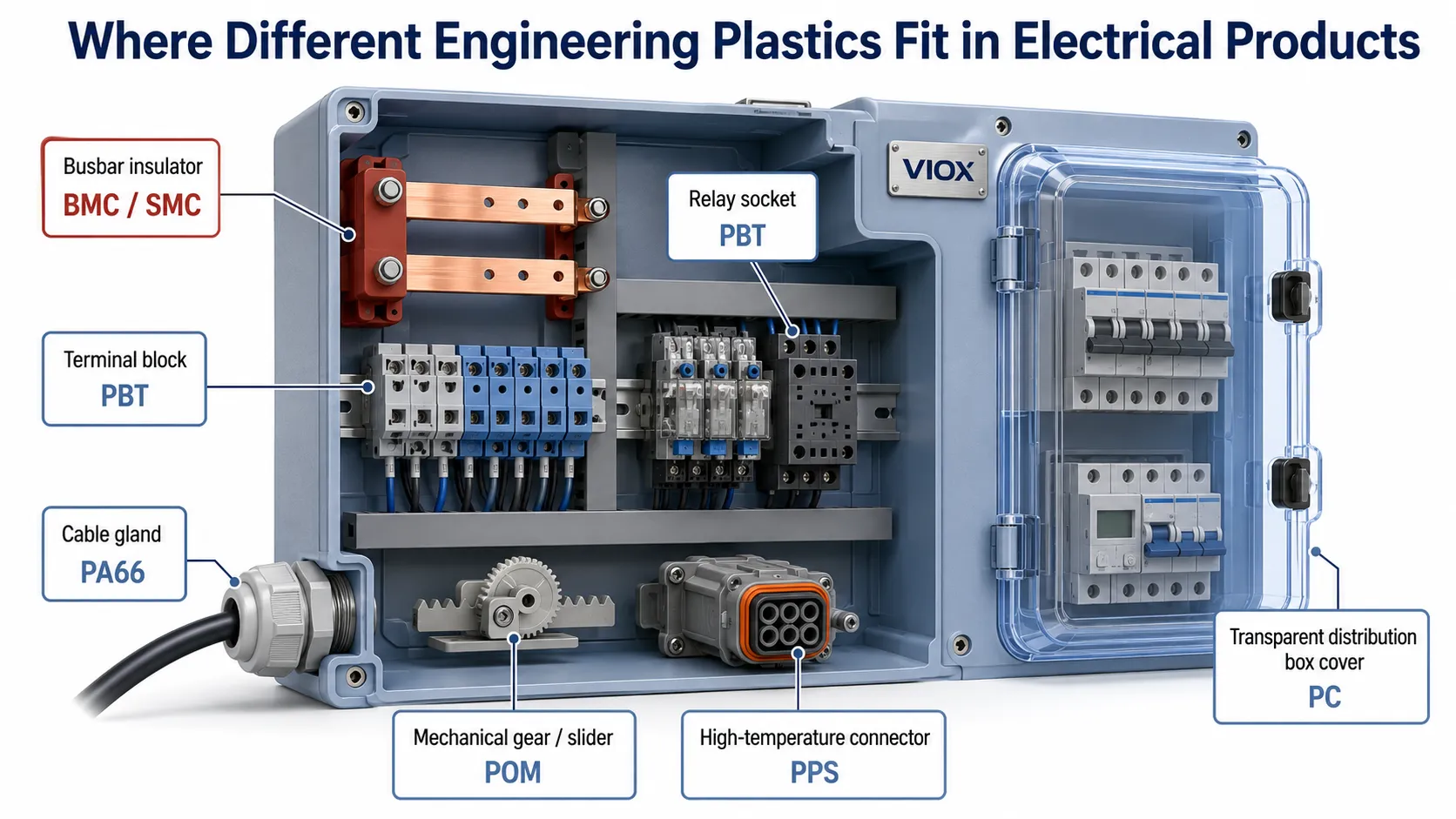
| ប្រភេទផលិតផល | ទិសដៅសម្ភារៈទូទៅ | ចំណុចសំខាន់ក្នុងការជ្រើសរើស |
|---|---|---|
| Busbar insulator | BMC, DMC, SMC, ប្រព័ន្ធដែលមានមូលដ្ឋានលើអេប៉ូស៊ី (epoxy-based systems) | អ៊ីសូឡង់, ភាពធន់នឹងការឆេះដាច់ (tracking resistance), កម្ដៅ, ការទ្រទ្រង់ផ្នែកមេកានិច |
| ប្លុកស្ថានីយ | PBT, PA66, ប្រភេទផ្លាស្ទិកវិស្វកម្មដែលធន់នឹងអណ្តាតភ្លើង (flame-retardant engineering grades) | CTI, កម្រិតធន់នឹងអណ្តាតភ្លើង (flame rating), ស្ថេរភាពវិមាត្រ, ការរក្សាទុកស្ថានីយ (terminal retention) |
| ប្រអប់ប្រសព្វ | PC, ABS, PC/ABS, PA, ប្រភេទផ្លាស្ទិកកម្ដៅ (thermoset) ឬប្រភេទពង្រឹង (reinforced grades) អាស្រ័យលើការរចនា | ការប៉ះទង្គិច, កាំរស្មី UV, ការផ្សាភ្ជាប់ IP, កម្រិតធន់នឹងអណ្តាតភ្លើង, ការប៉ះពាល់នឹងសារធាតុគីមី |
| ប្រអប់ចែកចាយភ្លើង (Distribution box) | PC, ABS, ផ្នែកខាងក្នុងធ្វើពីលោហៈ + ផ្លាស្ទិក, ប្រភេទធន់នឹងអណ្តាតភ្លើង (flame-retardant grades) | កម្លាំងនៃប្រអប់ការពារ កម្ដៅ ការប៉ះទង្គិច និងភាពឆបគ្នានៃម៉ូឌុល |
| ក្រពេញខ្សែកាប | PA66, លង្ហិន, ដែកអ៊ីណុក, ប៉ូលីមែរពិសេស | ការគៀបដោយមេកានិច, ការផ្សាភ្ជាប់, ការការពារកាំរស្មី UV, ភាពធន់នឹងសារធាតុគីមី |
| រន្ធដោតរីឡេ (Relay socket) | PBT, PA66, ប្រភេទវត្ថុធាតុធន់នឹងអណ្តាតភ្លើង | ការរក្សាម្ជុល, ស្ថេរភាពវិមាត្រ, កម្ដៅនៅជិតចំណុចតភ្ជាប់ |
| សំបកការពារ MCB / MCCB | សារធាតុ Thermosets ឬប្លាស្ទិកវិស្វកម្មដែលធន់នឹងអណ្តាតភ្លើង | ភាពធន់នឹងធ្នូអគ្គិសនី កម្រិតធន់នឹងភ្លើង កម្ដៅ និងភាពរឹងមាំនៃមេកានិច |
| សំបកកុងតាក់ទ័រ (Contactor housing) | ប្លាស្ទិកវិស្វកម្មធន់នឹងភ្លើង | កម្ដៅ ភាពជិតនៃធ្នូអគ្គិសនី សីតុណ្ហភាពឧបករណ៏ និងភាពធន់នៃមេកានិច |
| យន្តការចល័ត | POM, PA, PBT អាស្រ័យលើទីតាំងប្រើប្រាស់ | ការសឹក កកិត ភាពជាក់លាក់នៃវិមាត្រ និងចម្ងាយពីតំបន់ធ្នូអគ្គិសនី |
កំហុសទូទៅក្នុងការជ្រើសរើសសម្ភារៈ
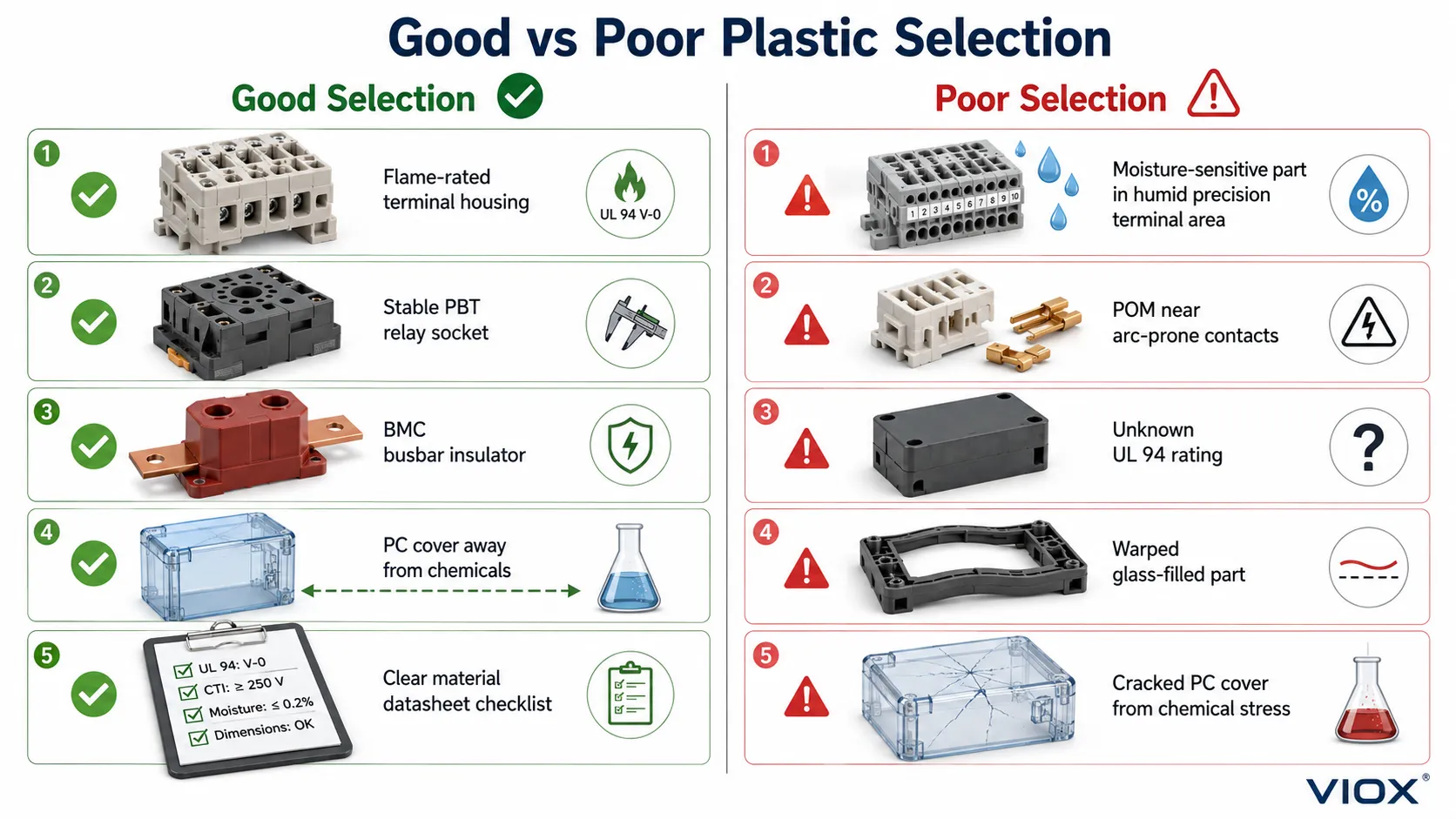
កំហុសទី ១៖ ការជ្រើសរើសដោយផ្អែកលើឈ្មោះសម្ភារៈតែប៉ុណ្ណោះ
"PA66" ឬ "PBT" មិនទាន់គ្រប់គ្រាន់ទេ។ កម្រិតគុណភាព មាតិកាជាតិសរសៃកញ្ចក់ កម្រិតធន់នឹងភ្លើង CTI ការเสื่อមគុណភាពដោយកម្ដៅ និងគុណភាពនៃដំណើរការផលិតគឺជារឿងសំខាន់។.
កំហុសទី ២៖ ការមិនអើពើនឹងការស្រូបយកសំណើម
PA66 អាចជាសម្ភារៈដ៏ល្អ ប៉ុន្តែត្រូវតែពិចារណាលើឥទ្ធិពលនៃសំណើម។ គ្រឿងបន្លាស់ដែលដាក់ចូលគ្នាល្អឥតខ្ចោះនៅពេលស្ងួត អាចនឹងផ្លាស់ប្តូរទំហំក្រោយពេលទទួលរងសំណើម។.
កំហុសទី ៣៖ ការសន្មតថា UL 94 V-0 មានន័យថាមានសុវត្ថិភាពផ្នែកអគ្គិសនី
UL 94 គឺជាការធ្វើតេស្តភាពងាយឆេះ។ វាមិនមែនជាការបញ្ជាក់ដោយស្វ័យប្រវត្តិអំពី CTI កម្លាំងឌីអេឡិចត្រិក កម្លាំងមេកានិក ឬភាពសមស្របសម្រាប់ផលិតផលអគ្គិសនីជាក់លាក់ណាមួយនោះទេ។.
កំហុសទី ៤៖ ការប្រើប្រាស់ POM នៅជិតតំបន់ដែលងាយកើតមានធ្នូអគ្គិសនី
POM គឺល្អឥតខ្ចោះសម្រាប់ចលនាមេកានិចដែលមានភាពជាក់លាក់ខ្ពស់ ប៉ុន្តែវាមិនមែនជាជម្រើសដ៏ល្អបំផុតនោះទេនៅជិតធ្នូអគ្គិសនី (switching arcs) ឬតំបន់អ៊ីសូឡង់អគ្គិសនីដែលមានហានិភ័យឆេះខ្ពស់។.
កំហុសទី 5៖ ការមិនយកចិត្តទុកដាក់លើកម្រាស់ជញ្ជាំង
កម្រិតធន់នឹងអណ្តាតភ្លើង និងសមត្ថភាពមេកានិចអាចអាស្រ័យលើកម្រាស់នៃផ្នែក។ ការវាយតម្លៃសម្ភារៈនៅកម្រាស់មួយ ប្រហែលជាមិនអាចអនុវត្តបានចំពោះជញ្ជាំងដែលចាក់ពុម្ពស្តើងជាងនេះទេ។.
កំហុសទី 6៖ ការភ្លេចអំពីការកោងដោយសារសរសៃកញ្ចក់ (glass-fiber warpage)
សរសៃកញ្ចក់ជួយបង្កើនភាពរឹង ប៉ុន្តែអាចបង្កើតការកោង ឬការរួញតាមទិសដៅ។ រឿងនេះមានសារៈសំខាន់ក្នុងការតម្រឹមចំណុចតភ្ជាប់ (terminal) រន្ធដោតរ៉េឡេ គម្រប និងការដំឡើងបែប snap-fit។.
កំហុសទី 7៖ ការចាត់ទុកផលិតផលប្រើក្នុងផ្ទះ និងក្រៅផ្ទះដូចគ្នា
ប្រអប់ការពារក្រៅផ្ទះ (enclosures) ក្បាលតភ្ជាប់ខ្សែ (cable glands) និងប្រអប់តំណ (junction boxes) ត្រូវការការត្រួតពិនិត្យលើកាំរស្មី UV ទឹក ការប្រែប្រួលសីតុណ្ហភាព និងការប៉ះពាល់នឹងសារធាតុគីមី ដែលផ្នែកនៃបន្ទះអគ្គិសនីក្នុងផ្ទះប្រហែលជាមិនត្រូវការ។.
សំណួរគេសួរញឹកញាប់
តើផ្លាស្ទិកវិស្វកម្មអ្វីដែលល្អបំផុតសម្រាប់គ្រឿងបន្លាស់អគ្គិសនី?
មិនមានសម្ភារៈណាមួយដែលល្អបំផុតតែមួយមុខនោះទេ។ PBT ជារឿយៗមានភាពរឹងមាំសម្រាប់ការការពារចរន្តអគ្គិសនីដែលមានភាពជាក់លាក់ខ្ពស់ PA66 មានភាពរឹងមាំនិងធន់ប៉ុន្តែងាយរងផលប៉ះពាល់ដោយសំណើម PC មានប្រយោជន៍សម្រាប់គម្របថ្លាដែលធន់នឹងការប៉ះទង្គិច POM ល្អសម្រាប់ផ្នែកដែលធ្វើចលនា PPS ត្រូវបានប្រើសម្រាប់ផ្នែកដែលមានភាពជាក់លាក់ខ្ពស់ក្នុងសីតុណ្ហភាពខ្ពស់ ហើយ BMC/SMC មានសារៈសំខាន់សម្រាប់ឧបករណ៍ការពារចរន្តអគ្គិសនីដែលបានចាក់ពុម្ព។.
តើ PA66 ល្អសម្រាប់ការការពារចរន្តអគ្គិសនីដែរឬទេ?
បាទ PA66 អាចត្រូវបានប្រើនៅក្នុងសមាសភាគអគ្គិសនីជាច្រើន ជាពិសេសនៅពេលដែលប្រភេទរបស់វាត្រូវបានជ្រើសរើសយ៉ាងត្រឹមត្រូវ។ ការប្រុងប្រយ័ត្នចម្បងគឺការស្រូបយកសំណើម ដែលអាចប៉ះពាល់ដល់វិមាត្រនិងលក្ខណៈអគ្គិសនី។ ត្រូវពិនិត្យមើលប្រភេទជាក់លាក់និងលក្ខខណ្ឌនៃការប្រើប្រាស់ជានិច្ច។.
តើ PBT ល្អជាង PA66 សម្រាប់បន្ទះតភ្ជាប់ខ្សែភ្លើង (Terminal blocks) ដែរឬទេ?
PBT ជារឿយៗត្រូវបានគេពេញចិត្តនៅកន្លែងដែលស្ថេរភាពវិមាត្រនិងការស្រូបយកសំណើមទាបមានសារៈសំខាន់។ PA66 នៅតែអាចត្រូវបានប្រើនៅកន្លែងដែលភាពធន់និងកម្លាំងមេកានិចជាអាទិភាព។ ការជ្រើសរើសចុងក្រោយអាស្រ័យលើប្រភេទ CTI កម្រិតនៃការឆេះ ការរចនាបន្ទះតភ្ជាប់ និងបរិយាកាសប្រតិបត្តិការ។.
ហេតុអ្វីបានជា CTI មានសារៈសំខាន់នៅក្នុងប្លាស្ទិកអគ្គិសនី?
CTI បង្ហាញពីភាពធន់នឹងការដាច់ចរន្តលើផ្ទៃ (Surface tracking)។ ភាពធន់នឹងការដាច់ចរន្តខ្ពស់អាចជួយឱ្យដំណើរការនៃចម្ងាយឆ្ងាយតាមផ្ទៃ (Creepage) កាន់តែប្រសើរឡើងក្រោមស្តង់ដាររចនាដែលពាក់ព័ន្ធ។ CTI មានសារៈសំខាន់សម្រាប់បន្ទះតភ្ជាប់ខ្សែភ្លើង ឧបករណ៍តភ្ជាប់ (Connectors) រន្ធដោតរ៉េឡេ ឧបករណ៍ទ្រទ្រង់របារស្ពាន់ (Busbar supports) និងគ្រឿងបង្គុំអគ្គិសនីដែលមានទំហំតូច។.
តើ UL 94 V-0 មានន័យថាប្លាស្ទិកនោះមានសុវត្ថិភាពសម្រាប់ផ្នែកអគ្គិសនីដែរឬទេ?
UL 94 V-0 គ្រាន់តែពិពណ៌នាអំពីឥរិយាបថនៅក្នុងការធ្វើតេស្តអណ្តាតភ្លើងដែលបានកំណត់ប៉ុណ្ណោះ។ ភាពសមស្របនៃផលិតផលអគ្គិសនីក៏អាស្រ័យទៅលើ CTI, កម្លាំងឌីអេឡិចត្រិច, ភាពធន់នឹងកំដៅ, កម្លាំងមេកានិច, កម្រាស់ជញ្ជាំង, ការเสื่อมគុណភាពតាមអាយុកាល និងតម្រូវការស្តង់ដារជាក់ស្តែងរបស់ផលិតផលនោះ។.
ហេតុអ្វីបានជា POM មិនមែនជាជម្រើសដ៏ល្អសម្រាប់តំបន់អគ្គិសនីដែលមានហានិភ័យនៃការឆេះដោយធ្នូអគ្គិសនី (Arc)?
POM មានគុណសម្បត្តិល្អសម្រាប់ផ្នែកមេកានិចដែលមានកកិតទាប ប៉ុន្តែវាមិនត្រូវបានគេជ្រើសរើសជាសម្ភារៈអ៊ីសូឡង់ចម្បងនៅជិតចំណុចប៉ះដែលមានធ្នូអគ្គិសនី ឬតំបន់ដែលមានហានិភ័យអណ្តាតភ្លើងខ្ពស់នោះទេ។ សូមប្រើវាសម្រាប់តែផ្នែកចលនាមេកានិចដែលនៅឆ្ងាយពីកម្លាំងអគ្គិសនីដែលមានថាមពលខ្ពស់ប៉ុណ្ណោះ។.
តើ BMC និង SMC ត្រូវបានប្រើសម្រាប់អ្វីខ្លះនៅក្នុងផលិតផលអគ្គិសនី?
BMC និង SMC គឺជាសម្ភារៈប្រភេទ Thermoset ដែលពង្រឹងដោយសរសៃកញ្ចក់ (Glass-fiber) ដែលប្រើសម្រាប់អ៊ីសូឡង់អគ្គិសនីដែលបានចាក់ពុម្ព និងសមាសធាតុរចនាសម្ព័ន្ធ។ វាត្រូវបានគេប្រើជាទូទៅនៅក្នុងអ៊ីសូឡង់របារស្ពាន់ (Busbar insulators), ប្លុកទ្រទ្រង់, បន្ទះអ៊ីសូឡង់ និងប្រអប់អគ្គិសនីមួយចំនួន ឬផ្នែករចនាសម្ព័ន្ធផ្សេងទៀត។.
តើសរសៃកញ្ចក់តែងតែធ្វើឱ្យប្រសើរឡើងនូវដំណើរការនៃផ្លាស្ទិកអគ្គិសនីដែរឬទេ?
មិនមែនទេ។ សរសៃកញ្ចក់អាចធ្វើឱ្យប្រសើរឡើងនូវភាពរឹង និងភាពធន់នឹងកំដៅ ប៉ុន្តែវាអាចបង្កើនការកោង (Warpage), ប៉ះពាល់ដល់គុណភាពផ្ទៃ និងផ្លាស់ប្តូរឥរិយាបថនៃការចាក់ពុម្ព។ វាត្រូវតែត្រូវបានជ្រើសរើសឱ្យសមស្របទៅនឹងធរណីមាត្រនៃផលិតផល និងតម្រូវការនៃភាពជាក់លាក់ (Tolerance)។.
ចម្លើយចុងក្រោយ
សម្រាប់សមាសធាតុអគ្គិសនី ការជ្រើសរើសសម្ភារៈគឺជាការសម្រេចចិត្តផ្នែកវិស្វកម្ម មិនមែនគ្រាន់តែជាការពិនិត្យបញ្ជីឈ្មោះសម្ភារៈនោះទេ។.
ប្រើ PA66 នៅពេលដែលភាពរឹងមាំ និងកម្លាំងមានសារៈសំខាន់ ប៉ុន្តែត្រូវគ្រប់គ្រងផលប៉ះពាល់នៃសំណើម។ សូមប្រើ PBT សម្រាប់គ្រឿងបន្លាស់អគ្គិសនីដែលមានភាពជាក់លាក់ខ្ពស់។ សូមប្រើ កុំព្យូទ័រ សម្រាប់គម្របដែលធន់នឹងការប៉ះទង្គិច ឬមានតម្លាភាព។ សូមប្រើ POM សម្រាប់ផ្នែកមេកានិចដែលផ្លាស់ទីនៅឆ្ងាយពីតំបន់ដែលមានហានិភ័យនៃធ្នូអគ្គិសនី។ សូមប្រើ PPS សម្រាប់សមាសធាតុដែលធន់នឹងសីតុណ្ហភាពខ្ពស់ ធន់នឹងសារធាតុគីមី និងមានស្ថេរភាពវិមាត្រ។ សូមប្រើ BMC, DMC, និង SMC កន្លែងដែលត្រូវការអ៊ីសូឡង់ប្រភេទ Thermoset និងការទ្រទ្រង់រចនាសម្ព័ន្ធ ជាពិសេសនៅក្នុងឧបករណ៍អ៊ីសូឡង់របារស្ពាន់ (Busbar) និងសមាសធាតុទ្រទ្រង់អគ្គិសនី។.
ប្លាស្ទិកអគ្គិសនីដ៏ល្អបំផុត គឺជាប្រភេទដែលមានកម្រិតធន់នឹងភ្លើង, CTI, លក្ខណៈសម្បត្តិឌីអេឡិចត្រិច, ភាពធន់នឹងកម្ដៅ, កម្លាំងមេកានិច, ឥរិយាបថចំពោះសំណើម និងស្ថេរភាពនៃការចាក់ពុម្ព ដែលត្រូវគ្នានឹងផលិតផលជាក់ស្តែង និងតម្រូវការស្តង់ដារ។.
ទំព័រ VIOX ដែលពាក់ព័ន្ធ
- Busbar ដ៏
- តើអ៊ីសូឡង់ Busbar ជាអ្វី?
- ស្ថានីយប្លុក
- ប្រអប់ចែកចាយ
- សព្វប្រអប់
- ខ្សែក្រពេញ
- Creepage Distance vs Clearance Distance
- ការឡើងកម្ដៅនៃដុំតំណភ្ជាប់ខ្សែភ្លើង (Terminal Block) នៅក្នុងទូបញ្ជា
ប្រភព និងស្តង់ដារដែលបានយោង
- UL 94 – ផ្ទៃខាងក្រោយនៃការចាត់ថ្នាក់ភាពងាយឆេះនៃប្លាស្ទិក
- សន្ទស្សន៍តាមដានប្រៀបធៀប (Comparative Tracking Index) – ផ្ទៃខាងក្រោយនៃ CTI និង IEC 60112
- នីឡុង 66 (Nylon 66) – ផ្ទៃខាងក្រោយនៃ PA66 និងការប្រើប្រាស់ក្នុងវិស័យអគ្គិសនី/អេឡិចត្រូនិក
- ប៉ូលីប៊ុយទីលីន តេរេហ្វតាលេត (Polybutylene terephthalate) – ផ្ទៃខាងក្រោយនៃអ៊ីសូឡង់អគ្គិសនី PBT
- ប៉ូលីអុកស៊ីមេទីលីន (Polyoxymethylene) – លក្ខណៈសម្បត្តិមេកានិក និងភាពធន់នឹងការសឹករបស់ POM
- ប៉ូលីហ្វេនីលីន ស៊ុលហ្វីត (Polyphenylene sulfide) – ប្លាស្ទិកវិស្វកម្មធន់នឹងកម្ដៅខ្ពស់ PPS
- សារធាតុផ្សំសម្រាប់ចាក់ពុម្ព (Bulk Molding Compound) – ការប្រើប្រាស់ BMC ក្នុងវិស័យអគ្គិសនី
- Sheet Molding Compound (SMC) – ការប្រើប្រាស់ក្នុងវិស័យអគ្គិសនី និងសំណង់រចនាសម្ព័ន្ធ