2025年

The Engineer's Guide to Choosing Between Optocouplers, Relays, and SSRs

ストップリレーの故障を防ぐ:オプトカプラ、リレー、SSRの選択に関するエンジニア向けガイド

You’ve just completed the design for a new PID temperature control system controlling six industrial ovens. The specification called for precise control at ±2°C, which requires the heating elements to cycle on and off approximately every 10 seconds. You specified standard industrial relays—rated for 10A, the heater elements draw 8A, so there’s comfortable headroom. The panel passes factory testing, ships to the customer, and goes into production. Two weeks later, you get the call. Half the relays have failed. Some contacts welded shut, causing runaway temperatures and scrap product. Others burned open, leaving ovens stone cold and stopping production. The customer is demanding answers, and you’re staring at the relay […]

ストップリレーの故障を防ぐ:オプトカプラ、リレー、SSRの選択に関するエンジニア向けガイド 続きを読む »
Stop Wiring Failures: The Engineer's Guide to Dry vs. Wet Contacts

配線不良を止める:エンジニアのためのドライ接点とウェット接点のガイド

You’ve just completed the wiring on a new control panel—proximity sensors feeding a PLC, which drives a bank of solenoid valves through relay outputs. The schematic is flawless, your wire labels match perfectly, and continuity tests pass with flying colors. But when you energize the system, nothing happens. The PLC input LED stays dark even when you manually trigger the sensor. Or worse, you get random false triggers that create nuisance shutdowns costing thousands per hour. After burning three hours tracing circuits, you finally discover the culprit: you assumed a relay output would provide power to the load, but it’s a dry contact that requires an external source. This single

配線不良を止める:エンジニアのためのドライ接点とウェット接点のガイド 続きを読む »

Terminal Blocks vs Cold-Pressed Terminals: The Selection Guide That Prevents Costly Rewiring

端子台 vs 圧着端子:コストのかかる再配線を防ぐための選択ガイド

The Troubleshooting Nightmare Every Panel Builder Fears You’re standing in front of a control panel you designed six months ago, and your stomach is sinking. The production manager is hovering behind you, arms crossed, waiting for answers. The line has been down for three hours—intermittent faults that come and go, impossible to trace. You open the enclosure and immediately see the problem: dozens of cold-pressed terminals daisy-chained together, each connection buried under heat shrink, making it impossible to isolate the faulty circuit without cutting and re-terminating everything. “How long to fix this?” the manager asks. You do the math in your head: cut, strip, crimp, heat-shrink, test. Multiply by 30

端子台 vs 圧着端子:コストのかかる再配線を防ぐための選択ガイド 続きを読む »

Stop Terminal Block Failures: The 3-Step Selection Method Engineers Swear By

端子台の故障を阻止: エンジニアが誓う3ステップの選択方法

The 2 AM Call You Never Want to Receive You’ve spent weeks designing a control panel. Every motor starter, every relay, every sensor—meticulously spec’d and double-checked. The commissioning went smoothly. Your customer signed off. You moved on to the next project. Then, at 2 AM on a Saturday, your phone rings. Production is down. The overnight supervisor is frantic. When the maintenance tech opened the enclosure, he found a melted terminal block, its housing charred black, three circuits completely dead. Your carefully designed system just cost your customer $50,000 in lost production, and now you’re being asked the question every engineer dreads: “How did this pass inspection?” Here’s the uncomfortable

端子台の故障を阻止: エンジニアが誓う3ステップの選択方法 続きを読む »

雷雨時に$50,000 VFDが故障した理由:エンジニアのためのサージ保護デバイス選定6ステップガイド

The Monday Morning Catastrophe It’s 6:47 AM on Monday, and your phone is already ringing. The plant manager’s voice is tight with panic: “The main production line is down. The VFD is completely fried—circuit boards are black, and there’s a burnt smell throughout the electrical room.” You rush to the site. Weekend thunderstorms rolled through, and a nearby lightning strike sent a massive surge through the facility’s power system. As you stare at the charred remains of a $52,000 variable frequency drive, you notice something that makes your stomach drop: there’s a surge protector installed right there in the panel—a $300 device that was supposed to prevent exactly this disaster.

雷雨時に$50,000 VFDが故障した理由:エンジニアのためのサージ保護デバイス選定6ステップガイド 続きを読む »

Homeowner's Guide to Circuit Breaker Sizing and Load Calculation

回路遮断器のサイジングと負荷計算に関する住宅所有者向けガイド

The Kitchen Renovation That Almost Burned Down You’ve been planning this kitchen renovation for months. The new induction cooktop is on order, the double oven is ready to install, and you’ve already picked out that gorgeous tankless water heater for instant hot water. Your contractor gives you the green light—everything’s ready to wire up. But then the building inspector stops by and drops a bombshell: “Your electrical panel can’t handle this load. You’re already at 85% capacity, and adding these appliances will push you into the danger zone.” Your contractor sheepishly admits he never actually calculated the load. He just saw a few empty breaker slots and assumed you had

回路遮断器のサイジングと負荷計算に関する住宅所有者向けガイド 続きを読む »

シャントトリップとトリップコイル:適切な回路ブレーカ保護を指定するためのエンジニアガイド

When a $200 Accessory Becomes a $20,000 Mistake You’re deep into the electrical design for a new manufacturing facility. The specs are clear: you need emergency power-off (EPO) capability for safety compliance, and robust overcurrent protection to prevent equipment damage. You send the breaker schedule out for quotes. Two weeks later, you’re staring at two wildly different proposals. Vendor A specifies “MCCB with shunt trip accessory” at $850 per breaker. Vendor B offers “standard circuit breakers with integrated trip protection” at $420 each. Both claim to meet the requirements. The project manager is pressing you to explain the $43,000 price difference across 100 breakers. Here’s the problem: you’re not entirely

シャントトリップとトリップコイル:適切な回路ブレーカ保護を指定するためのエンジニアガイド 続きを読む »

automatic-transfer-switch-vs-interlock-kit

自動切換スイッチ vs. インターロックキット:回避できたはずの$8,000の間違い

The Generator That Made Everything Worse Last winter, a small medical clinic invested $7,500 in a quality standby generator after years of storm-related outages disrupting patient care. They hired professionals, tested everything, and felt prepared. Then the January ice storm hit. Power failed at 2 PM—peak patient hours. The generator started perfectly. But in the chaos of a packed waiting room and failing medical equipment, the office manager flipped the wrong breaker sequence. For just three seconds, both utility power and generator power connected simultaneously. The backfeed surge destroyed $4,200 in diagnostic equipment, welded the transfer contacts, and sent dangerous voltage onto utility lines—endangering line workers restoring power. The tragedy?

自動切換スイッチ vs. インターロックキット:回避できたはずの$8,000の間違い 続きを読む »

Stop Backup Power Failure: The Engineer's 3-Step Guide to Automatic Transfer Switch Selection

バックアップ電源の停止:エンジニアのための自動切換スイッチ選定3ステップガイド

The $15,000 Generator That Won’t Save You You’ve done everything right. As the facilities manager for a critical operations facility, you convinced management to invest $15,000 in a standby generator. You’ve tested it monthly. The fuel tank is full. Your preventive maintenance schedule is flawless. Then the winter storm hits. Utility power drops. Your generator roars to life perfectly. And… nothing happens. Your facility stays dark. The generator runs beautifully in the parking lot while your refrigerated inventory slowly spoils and your security systems go offline. The culprit? A $1,200 automatic transfer switch (ATS) that was undersized by just 50 amps—a spec error that seemed insignificant on paper but became

バックアップ電源の停止:エンジニアのための自動切換スイッチ選定3ステップガイド 続きを読む »

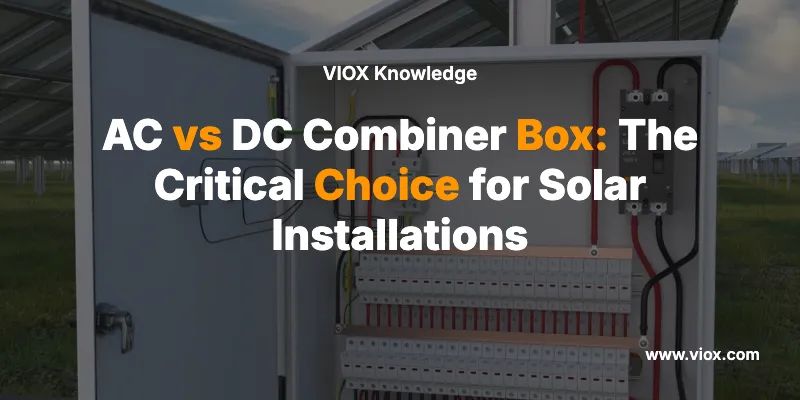
AC対DCコンバイナーボックス:太陽光発電設備における重要な選択

When One Wrong Component Choice Costs You Thousands You’ve just finished designing a 50kW commercial rooftop solar installation. Twelve strings of high-efficiency panels. Three string inverters. The layout is optimized, the structural calculations check out, and your client is thrilled with the projected ROI. You’re finalizing your bill of materials when your supplier calls with a simple question: “Do you need an AC combiner box or a DC combiner box?” You pause. You know you need a combiner box—the system has multiple outputs that need consolidation. But suddenly, the distinction feels critical. You’ve heard horror stories: an installer in Phoenix who mixed up the two types and faced a failed

AC対DCコンバイナーボックス:太陽光発電設備における重要な選択 続きを読む »

今すぐ見積もりを依頼する