2025年

The Transparency Trap: Why That "See-Through" Glass Fuse is a Time Bomb

透明性の罠:なぜ「シースルー」ガラス管ヒューズが時限爆弾なのか

Why that transparent fuse you can “see through” might be the most dangerous component in your electrical panel. The Fatal Convenience It starts innocently enough. You open an industrial control panel. A fuse has blown. You check the spare parts drawer and find a glass fuse. It’s 6.3 × 32mm—the exact same physical size. The amperage rating matches: 10A. It slides perfectly into the holder with a satisfying click. Best of all? It’s transparent. You can see the wire element inside. Next time it fails, you won’t even need to grab your multimeter for testing. You close the panel door. Problem solved. You have just installed a miniature explosive device […]

透明性の罠:なぜ「シースルー」ガラス管ヒューズが時限爆弾なのか 続きを読む »
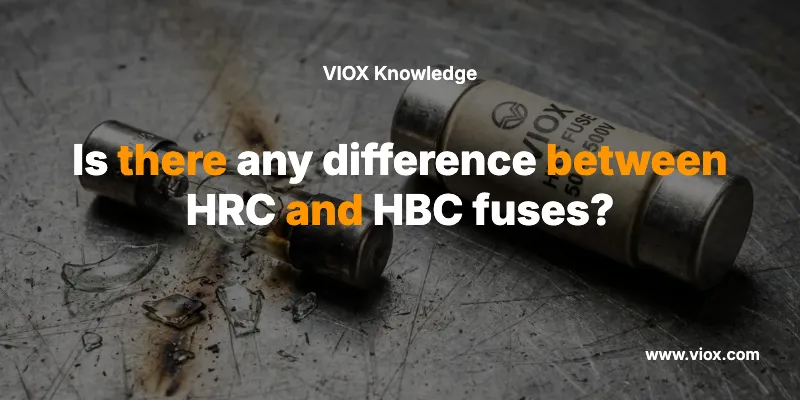
Is there any difference between HRC and HBC fuses?

HRCヒューズとHBCヒューズに違いはありますか?

The Old Blueprint Dilemma Picture this scenario: You’re the lead procurement engineer for a facility modernization project. The electrical drawings from 1995 explicitly specify HRC Fuses for the main distribution panel. You open your supplier’s latest catalog—perhaps even VIOX Electric’s current product line—and suddenly, you can’t find “HRC” anywhere. Every specification sheet shows HBC Fuses instead. Your pulse quickens. Did industrial standards change? Is “Breaking Capacity” somehow inferior to “Rupturing Capacity”? Are you about to compromise the electrical safety of your entire facility by ordering the wrong protection device? Take a breath. According to industry standards bodies and electrical engineering consensus, you’re experiencing a linguistic evolution, not a technical downgrade.

HRCヒューズとHBCヒューズに違いはありますか? 続きを読む »

The Invisible Shield: Why High Breaking Capacity Fuse Is Your Facility's Last Line of Defense

目に見えない盾:高遮断容量ヒューズが施設を守る最後の砦である理由

The Industry’s Silent Upgrade: Why Major Manufacturers Are Raising the Bar Recently, a procurement manager raised a sharp question on a technical forum: “Why are major brands like Mersen, Littelfuse, and Bussmann quietly relabeling their Class R fuses from 200kA to 300kA interrupting ratings? Is this just a marketing gimmick, or a genuine safety advancement?” The skepticism is understandable. In an industry where standards evolve slowly and conservatively, a 50% jump in performance specifications feels suspiciously like a sales tactic. After all, if 200kA (200,000 amperes) was sufficient for decades, why the sudden change? Here’s the uncomfortable truth: It’s not marketing—it’s a response to an increasingly dangerous electrical grid. The

目に見えない盾:高遮断容量ヒューズが施設を守る最後の砦である理由 続きを読む »

What's the Difference Between a Fuse and a Fuse Link?

ヒューズとヒューズリンクの違いは何ですか?

Understanding the Critical Distinction in Electrical Protection Walk into a hardware store and ask for a “fuse,” and you’ll receive a small glass or ceramic tube. Walk into an industrial switchgear facility and request a “fuse,” and you’ll face a critical question: “Do you need the complete assembly or just the replaceable link?” This distinction isn’t semantic hair-splitting—it’s a technical necessity that directly impacts procurement costs, system safety, and operational efficiency. At VIOX Electric, a B2B manufacturer of electrical equipment, we’ve witnessed purchasing officers order “fuses” expecting $8 replacement parts, only to receive pallets of $180 fuse bases they didn’t need. The reverse scenario—ordering fuse bases when only links were

ヒューズとヒューズリンクの違いは何ですか? 続きを読む »

How to Handle Abandoned Electrical Outlets During Home Renovation: Code-Compliant Solutions

家庭のリフォーム中に放置された電気コンセントの取り扱い:法規に準拠した解決策(2026年)

The Hidden Danger Behind Your Renovation Dream It usually happens on “Demo Day.” You’ve ripped down those greasy old kitchen cabinets. The space looks open, clean, and ready for your modern design vision. But there, staring back at you from the middle of what should be a smooth wall, sits a dusty, beige electrical outlet. It’s in the wrong place. It’s ugly. And it’s blocking your new cabinet layout. The temptation is overwhelming: “I’ll just disconnect the receptacle, tape up the wires, shove them in the hole, and drywall over it. Out of sight, out of mind.” Stop. Put down the spackle knife. What you’re about to do isn’t just

家庭のリフォーム中に放置された電気コンセントの取り扱い:法規に準拠した解決策(2026年) 続きを読む »

Enclosure Manufacturing: The Complete Guide to Industrial-Grade Electrical Enclosures

エンクロージャー製造:産業用グレード電気エンクロージャーの完全ガイド(2026年)

What Makes Industrial Enclosure Manufacturing Different? Run your fingernail across a hardware store junction box. It feels like painted metal and clangs when tapped. Now touch a premium industrial enclosure from manufacturers like VIOX, Rittal, or Hoffman. The surface feels ceramic-smooth, and tapping produces a solid, dampened thud. This tangible difference reveals a fundamental truth: industrial enclosure manufacturing isn’t about bending metal and applying paint—it’s engineering a complete corrosion defense system designed to protect critical electrical equipment for decades. Quality enclosure manufacturing determines whether your electrical infrastructure lasts 20 years or fails within months. The difference lies in three critical manufacturing stages: substrate selection, chemical pretreatment, and thermal coating application.

エンクロージャー製造:産業用グレード電気エンクロージャーの完全ガイド(2026年) 続きを読む »

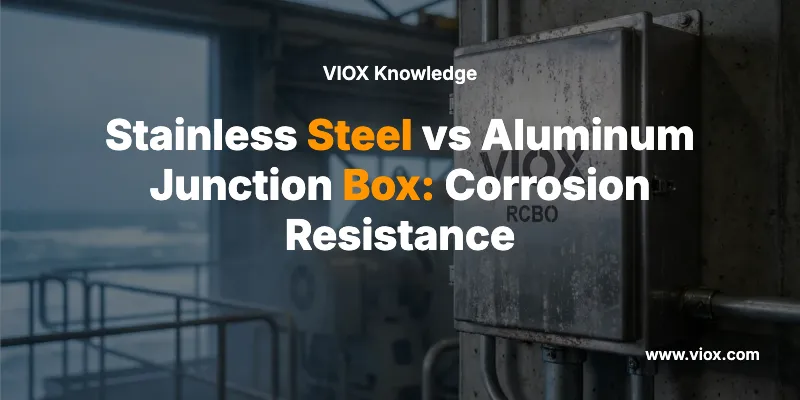
Stainless Steel vs Aluminum Junction Box: Corrosion Resistance

ステンレス鋼とアルミニウム製 junction box:耐腐食性

Introduction: Material Selection Determines Junction Box Longevity When specifying electrical enclosures for challenging environments, the junction box material choice directly impacts system reliability, maintenance costs, and operational safety. For procurement managers and electrical engineers, understanding the corrosion resistance differences between stainless steel and aluminum junction boxes is critical for long-term asset protection. VIOX Electric, a leading B2B manufacturer of electrical equipment, has conducted extensive field testing across marine, industrial, and chemical processing environments. Our research demonstrates that while both materials offer superior corrosion resistance compared to standard steel, their performance characteristics vary significantly based on environmental exposure, chemical composition, and operating conditions. This comprehensive analysis examines the metallurgical properties, corrosion

ステンレス鋼とアルミニウム製 junction box:耐腐食性 続きを読む »

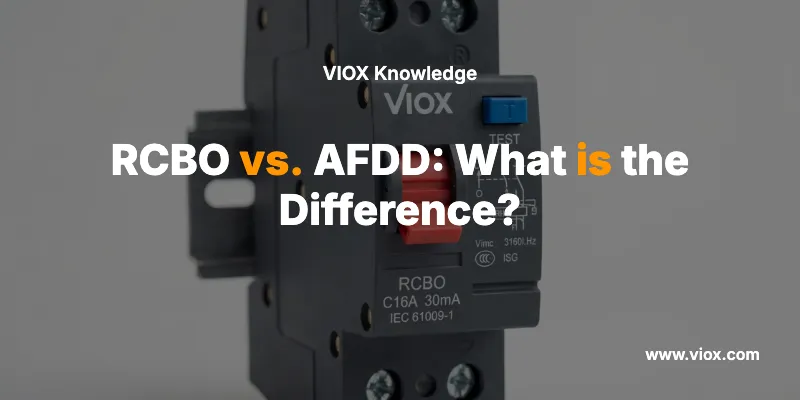
RCBO vs. AFDD: What is the Difference?

RCBOとAFDD:違いは何ですか?

In modern electrical installations, safety is paramount. As electrical systems become increasingly complex and the demand for power grows, protecting against electrical hazards has never been more critical. Two essential devices—Residual Current Circuit Breakers with Overcurrent Protection (RCBO) and Arc Fault Detection Devices (AFDD)—play distinct yet complementary roles in safeguarding lives and property. For B2B electrical equipment professionals, understanding the difference between these devices is crucial for designing safe, compliant, and reliable electrical installations. This comprehensive guide explores the fundamental differences between RCBO and AFDD, their specific applications, and how they work together to provide comprehensive electrical protection in residential, commercial, and industrial settings. What is an RCBO (Residual Current

RCBOとAFDD:違いは何ですか? 続きを読む »

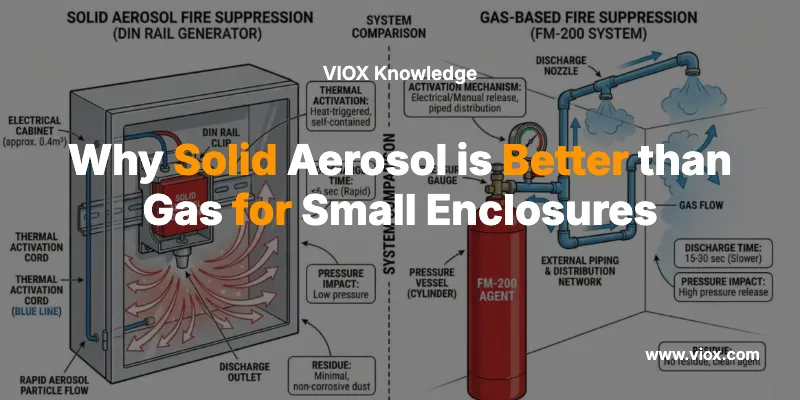
Why Solid Aerosol is Better than Gas for Small Enclosures

小型エンクロージャにおいて、固体エアロゾルがガスよりも優れている理由

Introduction: The Small Enclosure Challenge Electrical control panels and server cabinets face a critical vulnerability: fire. In confined spaces—where circuit breakers, terminals, and transformers operate at high density—a single fault can trigger thermal runaway within seconds. Traditional fire suppression solutions present a paradox for facility managers: gas-based systems like FM-200 struggle in micro-volumes due to pressure derating, while dry chemical agents leave corrosive residue that damages sensitive electronics. Solid aerosol fire suppression addresses these constraints directly. Unlike gaseous suppressants that require substantial volume to achieve effective concentration, condensed aerosols generate ultra-fine particulate that floods small enclosures rapidly—often within 6 seconds—while remaining non-conductive and non-corrosive. For DIN rail-mounted systems in electrical

小型エンクロージャにおいて、固体エアロゾルがガスよりも優れている理由 続きを読む »

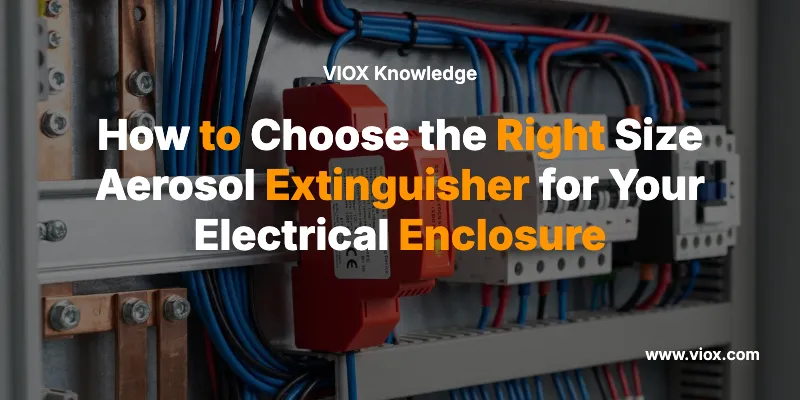
How to Choose the Right Size Aerosol Extinguisher for Your Electrical Enclosure

電気エンクロージャーに最適なサイズのエーロゾル消火器の選び方

Why Electrical Enclosure Fire Protection Matters Electrical fires account for approximately 25,000 residential and commercial incidents annually, with distribution panels and control cabinets representing critical fire hazards in industrial facilities. Unlike open-space fires, electrical enclosure fires present unique challenges: confined spaces amplify thermal buildup, energized components complicate suppression efforts, and traditional extinguishing methods often cause collateral damage that exceeds fire-related losses. The aerosol fire extinguisher represents a paradigm shift in electrical cabinet fire suppression. These compact, self-contained units deploy ultra-fine potassium-based particles that suppress fires through chemical chain reaction interruption rather than oxygen displacement or cooling. For facility managers specifying fire protection systems, understanding proper sizing ensures adequate protection without

電気エンクロージャーに最適なサイズのエーロゾル消火器の選び方 続きを読む »

今すぐ見積もりを依頼する