2025年

outdoor isolator survivor checklist

太陽、雨、そして破壊者:屋外アイソレーターが故障し続ける理由

You walk up to the AC disconnect or rooftop solar isolator you installed three years ago. The red handle is faded to a sickly pink. You turn it and CRACK—the handle crumbles in your hand like a dry biscuit. Or worse, you open the casing and find the terminals covered in the fuzzy green corrosion of copper oxide. “But it was IP66 rated!” you protest. “It was sealed!” Outdoors is a brutal test lab that exposes every shortcut in materials and installation. If your switches are dying young, it’s not bad luck. It’s usually one of three enemies: The Sun, The Rain, or The Vandal. This article walks through the […]

太陽、雨、そして破壊者:屋外アイソレーターが故障し続ける理由 続きを読む »

The Importance of Isolation Switches in Distribution Boxes.

分電盤における絶縁スイッチの重要性。.

Isolation switches, also known as disconnector switches or isolators, are mechanical switching devices designed to ensure that an electrical circuit can be completely de-energized for safe maintenance, inspection, or repair work. Unlike circuit breakers that protect against overloads and short circuits, isolation switches serve a fundamentally different purpose: they provide a visible break in the electrical circuit, guaranteeing that no current can flow through the isolated section. In distribution boxes, these switches act as the first line of defense for maintenance personnel, creating a physical gap in the electrical pathway that can often be verified visually. This visible disconnection provides critical assurance that the downstream equipment is truly isolated from

分電盤における絶縁スイッチの重要性。. 続きを読む »

The $10,000 Question: How to Beat the NEC 120% Rule Without Replacing Your Panel

の$10,000ある質問を打つために、NEC120%ルールを交換せずにパネル

You’ve done the math. The ROI on that 8kW solar system looks fantastic. The panels are selected, the inverter is spec’d, and the installer is ready to go. Then the permit application comes back denied. The reason? Your trusty old 125A electrical panel “can’t handle” the solar backfeed. The installer hands you a new quote: an extra $10,000 to dig a trench through your front yard, rip out the conduit, and upgrade your service to 200A. Suddenly, your solar ROI just evaporated. Before you sign that check or cancel the project, put down the shovel. The NEC (National Electrical Code) isn’t trying to bankrupt you; it’s trying to stop you

の$10,000ある質問を打つために、NEC120%ルールを交換せずにパネル 続きを読む »

How to Ground an Electrical Panel: NEC Requirements & Step-by-Step Guide

どのように地上の電気パネル:NEC要請-段階的なガイド

Properly grounding an electrical panel is one of the most critical safety measures in any home’s electrical system. It is a non-negotiable requirement for protecting against severe electrical shocks, preventing electrical fires, and safeguarding sensitive electronics from power surges. By creating a safe, direct path for excess or fault-related electricity to flow into the earth, a complete grounding system ensures the safety and stability of your entire electrical installation. This guide provides a comprehensive overview of the principles, components, and procedures for correctly grounding an electrical panel according to established safety standards. The Fundamentals: Grounding vs. Bonding While the terms are often used interchangeably, grounding and bonding are two distinct

どのように地上の電気パネル:NEC要請-段階的なガイド 続きを読む »

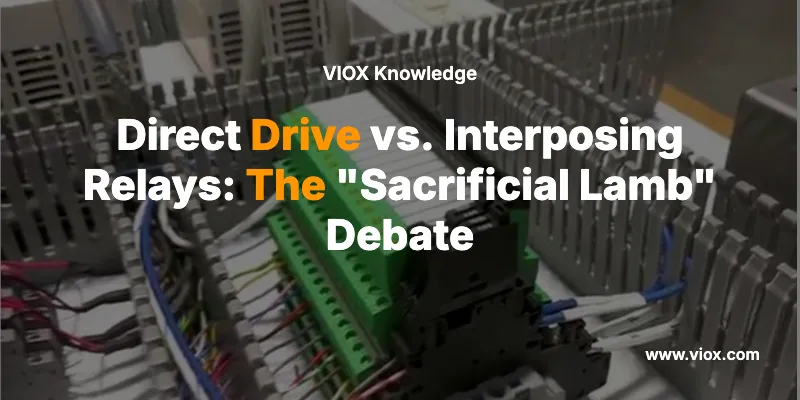
Direct Drive vs. Interposing Relays: The "Sacrificial Lamb" Debate

ダイレクトドライブvs介リレーの"犠牲ラム"の議論

It is the control engineer’s version of the “Tabs vs. Spaces” argument. You are designing a control panel. You have a 24VDC solenoid valve that controls a pneumatic cylinder. You have a spare output on your PLC card. Do you: A) Wire the valve directly to the PLC output? B) Install an “interposing relay” between the PLC and the valve? If you ask this in a room full of engineers (or on the r/PLC forum), you will start a fight. The “Old Guard” will tell you that driving a valve directly is reckless malpractice that will cost you thousands. The “Modernists” will tell you that adding relays is a waste

ダイレクトドライブvs介リレーの"犠牲ラム"の議論 続きを読む »

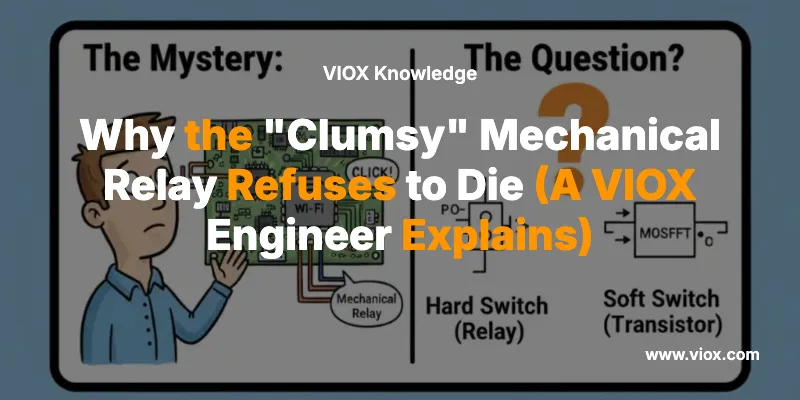
Why the "Clumsy" Mechanical Relay Refuses to Die (A VIOX Engineer Explains)

なぜ、"不器用なもの"メカニカルリレーを拒否する金型(VIOX技術説明)

You open up a modern, high-tech smart home controller. It’s packed with microscopic surface-mount components, powerful microprocessors, and Wi-Fi chips. And then, sitting right in the middle of all that silicon, is a big, blocky, plastic cube. When it activates, it makes a loud CLICK. It’s a mechanical relay. Technology from the 1830s. This begs a “soul-searching” question for any engineer: In a world where MOSFETs and IGBTs are cheap, microscopic, and silent, why haven’t we killed off the relay? Why rely on a moving metal arm held by a spring when we have solid-state physics? The answer isn’t nostalgia—it is cold, hard engineering reality. It turns out, the “clumsy”

なぜ、"不器用なもの"メカニカルリレーを拒否する金型(VIOX技術説明) 続きを読む »

the-forbidden-soup-why-your-buried-junction-box-is.webp

“「禁断のスープ」:埋設されたジャンクションボックスが水でいっぱいになる理由(およびその修正方法)

It’s a nightmare scenario every electrician faces at least once. You dig up a buried PVC junction box to troubleshoot a landscape light. You unscrew the lid. And there it is. The box is filled to the brim with a brown, sludgy liquid. Your wire nuts are floating in it like croutons. The copper is green and rotting. It looks like a bowl of what the internet calls “Forbidden Soup.” Recently, a pro had to dig up and replace 25 of these boxes. His frustration was palpable: “Why? Why would anyone design it this way if water just gets in anyway?” It’s a valid question. If we have submarines that

“「禁断のスープ」:埋設されたジャンクションボックスが水でいっぱいになる理由(およびその修正方法) 続きを読む »

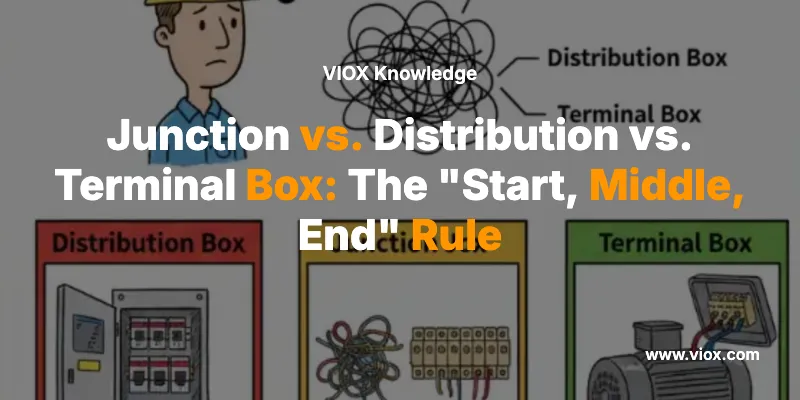
ジャンクションボックス、配線ボックス、ターミナルボックス: 「始点、中間点、終点」の原則

Picture this: You walk into an electrical supply store. You walk down the aisle and grab three identical, grey, 4×4-inch metal enclosures. You put them on the counter. They look exactly the same. They feel the same. They cost the same. But depending on where you install them tomorrow, one will become a Distribution Box, one will become a Junction Box, and one will become a Terminal Box. This is one of the most common sources of confusion for apprentices and even junior engineers. If the hardware is identical, why do we have three different names? The answer is simple, but profound: An electrical box is defined by its mission,

ジャンクションボックス、配線ボックス、ターミナルボックス: 「始点、中間点、終点」の原則 続きを読む »

「スパイダー配線」は違法ですか?屋根裏部屋の「乱雑な」ジャンクションボックスが問題ないかもしれない理由

You crawl into your attic to check on a light fixture. You shine your flashlight into a dark corner and see it. A single metal junction box. But it doesn’t look like the neat, orderly diagrams you see in textbooks. It looks like a Spider. One cable enters, and four, five, maybe six cables shoot out of it in every direction—feeding the garage, the bedroom fan, the hallway lights, and an outlet. Your gut reaction is: “This looks like a mess. Is this illegal? Shouldn’t it be a neat daisy chain?” The answer is a classic engineering “Yes and No.” The Topology (the “Spider” shape) is 100% legal. The Execution

「スパイダー配線」は違法ですか?屋根裏部屋の「乱雑な」ジャンクションボックスが問題ないかもしれない理由 続きを読む »

How to Wire a 24V DC Control Panel: Why "Power Injection" Beats "Daisy-Chains"

24V DC制御盤の配線方法:「パワーインジェクション」が「デイジーチェーン」に勝る理由“

An ambitious LED hobbyist meticulously connects five meters of 12V light strips, one after another, in a long “daisy-chain” down his hallway. He flips the switch. The first meter by the power supply is a brilliant, crisp white. The last meter, 50 feet away? It’s a dim, “sad,” yellowish-red. An online forum instantly diagnoses the problem: Voltage Drop. The single, thin copper trace in that LED strip can’t handle the massive current (amps) needed by all the strips. The “daisy-chain” is starving the end of the line. This “dim LED” is the single best analogy for the “ghost faults” that are killing your industrial control panel. That “flickering” 24V sensor?

24V DC制御盤の配線方法:「パワーインジェクション」が「デイジーチェーン」に勝る理由“ 続きを読む »

今すぐ見積もりを依頼する