In questa pagina
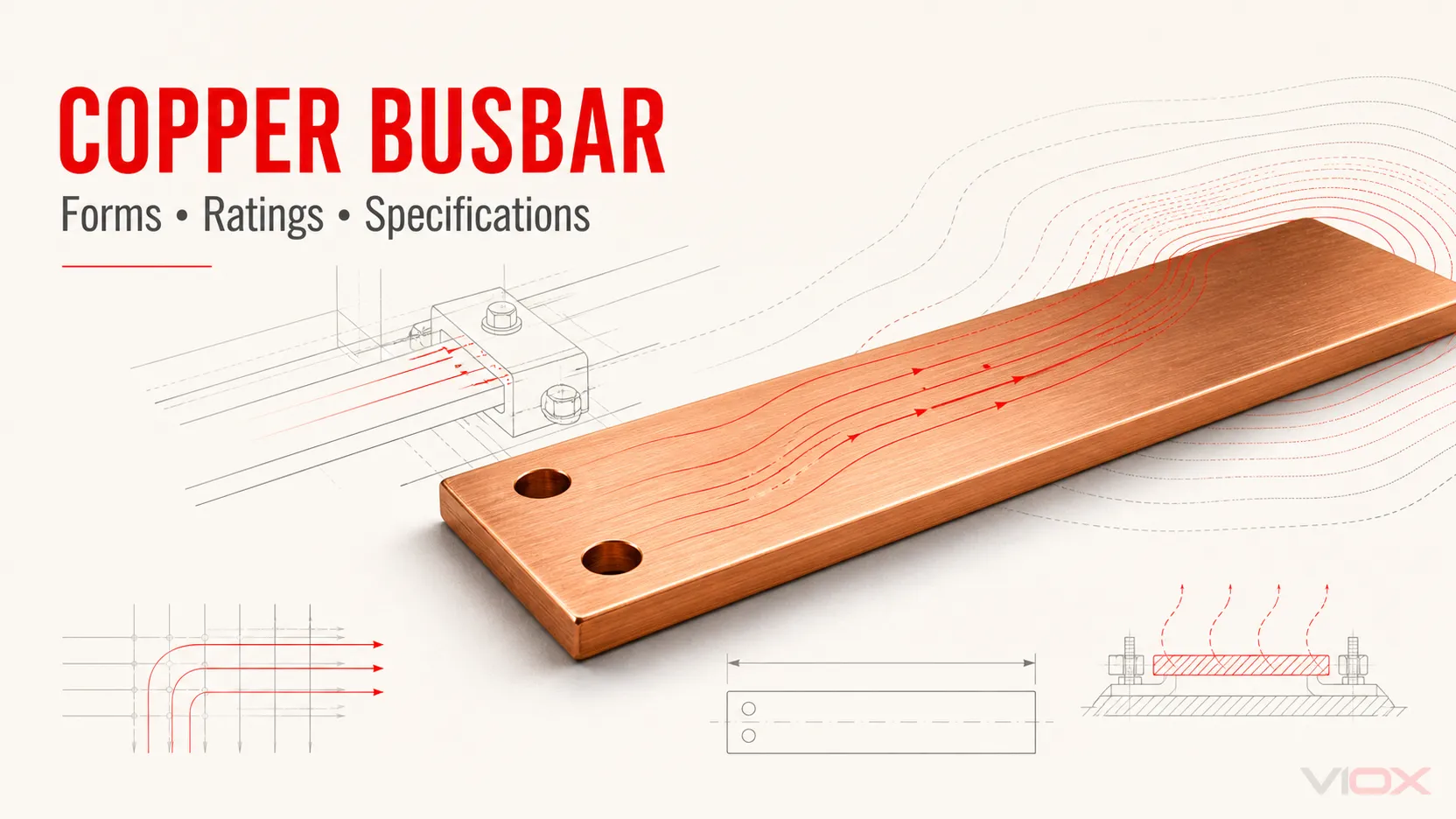
Un sbarra collettrice in rame è un conduttore in rame a bassa impedenza utilizzato per raccogliere e distribuire la corrente elettrica tra più circuiti o componenti. Può trattarsi di una barra piatta rigida, una treccia flessibile, un assemblaggio di conduttori laminati o un collegamento a pettine per dispositivi modulari. A differenza di un sistema di sbarre completo, la sbarra collettrice è il conduttore stesso che trasporta la corrente.
L'importante limite ingegneristico è che il materiale e le dimensioni non creano una portata di corrente universale. Una sbarra collettrice in rame finita deve essere valutata in base all'ambiente di installazione, all'aumento di temperatura ammissibile, ai giunti, all'isolamento, ai supporti, alla tenuta al cortocircuito e al metodo di verifica richiesto per l'apparecchiatura o l'assemblaggio.
Panoramica sulle forme delle sbarre collettrici in rame
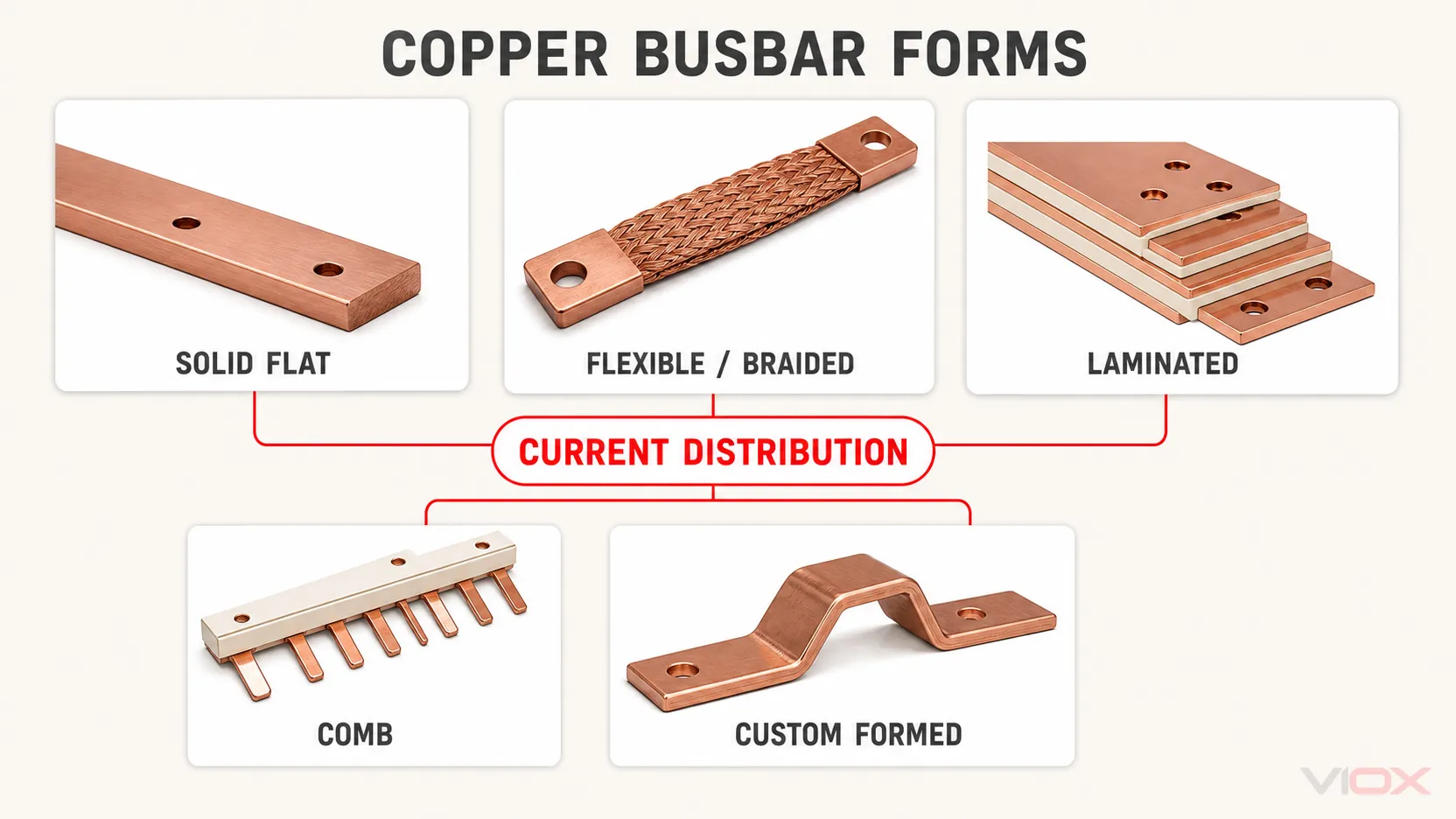
“Sbarra collettrice in rame” descrive una funzione e un materiale, non una forma fissa. La forma corretta dipende da come il conduttore deve trasportare la corrente, collegare le apparecchiature, gestire il movimento e adattarsi all'interno dell'assemblaggio.
| Forma della sbarra collettrice in rame | Costruzione fisica | Scopo principale | Esempi tipici |
|---|---|---|---|
| Sbarra piatta rigida | Barra in rame rettangolare, nuda o placcata | Distribuzione compatta ad alta corrente e interconnessione rigida | Quadri elettrici, quadri di distribuzione, apparecchiature di distribuzione dell'energia |
| Sbarra flessibile o intrecciata | Fogli di rame, laminazioni, trefoli o trecce unite alle estremità | Trasporto di corrente compensando vibrazioni, tolleranze o movimenti | Trasformatori, batterie, macchinari, connessioni mobili |
| Sbarra collettrice laminata | Strati conduttivi sagomati multipli separati da materiale dielettrico | Creano una struttura multipolare compatta e controllata | Inverter, elettronica di potenza, convertitori per accumulo di energia |
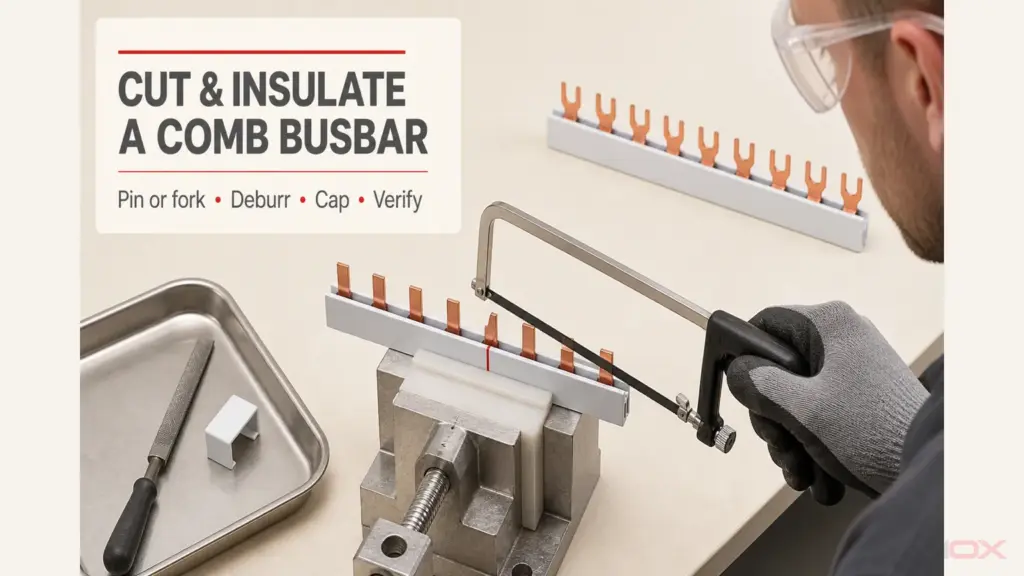
| Pettine di cablaggio | Barra in rame isolata con pin o forcelle regolarmente distanziati | Alimentano una fila di dispositivi modulari compatibili | Interruttori automatici magnetotermici e quadri di distribuzione modulari |
| Barra collettrice sagomata su misura | Conduttore punzonato, piegato, lavorato a macchina o stampato | Abbinare un involucro specifico e una disposizione dei morsetti | Quadri OEM, sistemi a batteria, quadri elettrici di distribuzione |
Queste forme non sono intercambiabili. Una treccia flessibile risolve il movimento meccanico; una sbarra laminata controlla un percorso di corrente multistrato; una sbarra a pettine per MCB deve corrispondere alla geometria e al passo dei morsetti. Per una panoramica più ampia delle sbarre collettrici, consultare la VIOX guida completa alle sbarre collettrici.
Perché il rame viene utilizzato per le sbarre collettrici?
Il rame combina un'elevata conducibilità elettrica con un'utile conducibilità termica, resistenza meccanica e lavorabilità. Il rame elettrolitico a tenacità elevata, come l'UNS C11000, è un grado elettrico comune ad alta conducibilità. La Copper Development Association elenca il C11000 con una conducibilità minima del 100% dell'International Annealed Copper Standard (IACS) allo stato ricotto.
L'alta conducibilità aiuta a ridurre la resistenza per una data geometria, ma il solo termine “rame” non costituisce una specifica finita. La lega o il grado, la tempra, le dimensioni, le condizioni dei bordi, la finitura superficiale, lo schema dei fori e le prove di collaudo possono influenzare la conformità del componente fornito al disegno e all'applicazione.
L'attivo Specifica ASTM B187/B187M-26 copre sbarre, barre e profilati in rame per applicazioni elettriche. Il suo campo di applicazione include le designazioni dei materiali, nonché i requisiti dimensionali, meccanici, di resistività elettrica e di composizione chimica. Altri mercati potrebbero utilizzare standard diversi per materiali e forme dei prodotti.
Se un progetto utilizza designazioni dei materiali cinesi, la guida VIOX su gradi di rame T1, T2 e T3 spiega perché il nome del grado non deve essere considerato come una classificazione completa della conducibilità o del componente finito.
Il grado e la conducibilità del rame non sono la portata di corrente
Tre dichiarazioni distinte vengono spesso confuse tra loro:
- Grado del materiale identifica un quadro di riferimento per la composizione chimica e la forma del prodotto.
- Conduttività o resistività descrive una proprietà elettrica del materiale in condizioni definite.
- Portata di corrente della sbarra si applica al conduttore o all'assieme finito in condizioni termiche e di installazione dichiarate.
Un certificato del materiale può confermare il grado e la conduttività del rame, ma non prova che una sbarra installata possa trasportare una corrente specificata all'interno di un particolare involucro. Al contrario, due barre realizzate con lo stesso grado di rame possono avere portate di corrente diverse perché la loro geometria, il raffreddamento, i giunti, l'isolamento o le apparecchiature circostanti differiscono.
Questa distinzione è importante negli approvvigionamenti. “Sbarra di rame C11000” o “sbarra di rame T2” descrive parte del requisito; non sostituisce un disegno dimensionale, una portata nominale dell'assieme o la verifica dell'aumento di temperatura.
Perché Larghezza × Spessore non fornisce una portata universale
L'area della sezione trasversale è un input iniziale essenziale, ma la portata di corrente delle sbarre in rame è regolata dall'equilibrio tra perdite elettriche e dissipazione del calore. Le variabili rilevanti includono:
- corrente di carico, ciclo di lavoro, frequenza e contenuto armonico;
- larghezza, spessore, lunghezza, orientamento, spaziatura e numero di sbarre in parallelo;
- temperatura ambiente e sovratemperatura ammissibile;
- condizioni di installazione all'aperto, ventilate, sigillate o in quadri compartimentati;
- condizioni della superficie nuda, placcata, verniciata o isolata;
- resistenza di giunzione, area di contatto, sistema di fissaggio e design del morsetto;
- fonti di calore vicine e limiti termici dell'isolamento e dei componenti adiacenti.
Le tabelle pubblicate dalla Copper Development Association dimostrano che l'emissività, la tolleranza di sovratemperatura, la spaziatura e il numero di barre in parallelo possono modificare sostanzialmente la portata di corrente della stessa dimensione nominale di barra. Le tabelle sono riferimenti utili solo quando le condizioni dichiarate corrispondono al progetto.
Per gli assemblaggi a bassa tensione, la verifica della sovratemperatura compete al progetto dell'assemblaggio piuttosto che alla barra di rame isolata. IEC TR 60890:2022, ad esempio, descrive un metodo di calcolo per la sovratemperatura dell'aria all'interno di determinati quadri elettrici di bassa tensione e si allinea alla norma IEC 61439-1:2020. Il suo campo di applicazione e le sue limitazioni devono essere rispettati.
Utilizzare il VIOX calcolatore della portata di corrente delle sbarre per una stima preliminare, quindi verificare il risultato rispetto alla norma dell'apparecchiatura applicabile, ai dati del produttore, alle condizioni di installazione e al metodo di prova o di verifica del progetto richiesto.
Lista di controllo per le specifiche delle sbarre in rame
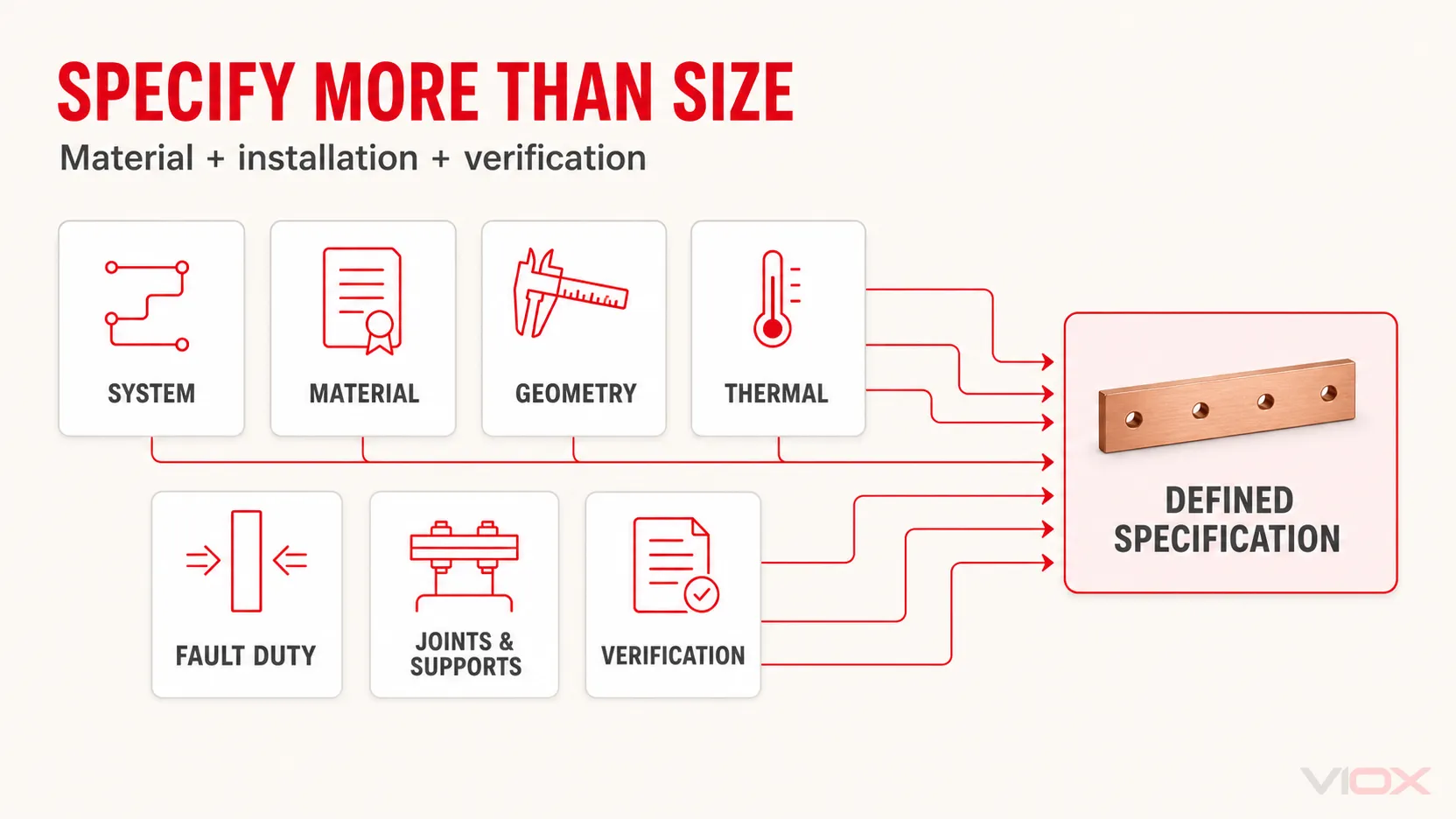
Una richiesta di offerta o una specifica tecnica utile dovrebbe identificare qualcosa di più del semplice materiale e delle dimensioni.
| Campo delle specifiche | Cosa dichiarare o verificare | Perché è importante |
|---|---|---|
| Funzione e sistema delle sbarre | AC o DC, tensione nominale, corrente continua, servizio e posizione nel circuito | Stabilisce il compito elettrico e il contesto di isolamento |
| Materiale | Designazione del rame, norma di riferimento, stato fisico, requisiti di conducibilità o resistività | Previene ambigue sostituzioni con “rame puro” |
| Geometria | Larghezza, spessore, lunghezza, geometria di piegatura, schema dei fori, tolleranze e condizioni dei bordi | Adattamento dei controlli, sezione trasversale, concentrazione degli sforzi e area di connessione |
| Condizioni termiche | Ambiente, tipo di involucro, ventilazione, aumento di temperatura ammissibile e fonti di calore adiacenti | Definisce le condizioni alla base della corrente nominale In |
| Capacità di cortocircuito | Livello di guasto presunto, durata, requisito di tenuta di picco e disposizione dei supporti | Determina le esigenze di tenuta elettrodinamica e termica |
| Superficie e isolamento | Costruzione nuda, stagnata, argentata, isolata, rivestita o laminata | Modifica il comportamento ambientale, le interfacce e il trasferimento di calore |
| Giunzioni e morsetti | Sovrapposizione dei contatti, sistema di fori e fissaggi, compatibilità dei morsetti e istruzioni del produttore | La resistenza di giunzione può predominare nel riscaldamento locale |
| Supporti e distanze di isolamento | Tipo di isolatore, campata, spaziatura tra le fasi, distanza di isolamento, linea di fuga e disposizione dell'involucro | Supporta la stabilità meccanica e il coordinamento dell'isolamento |
| Evidenza di verifica | Certificato del materiale, ispezione dimensionale, evidenza di conducibilità, verifica dell'aumento di temperatura e documentazione di assemblaggio | Collega la parte fornita al progetto dichiarato |
La finitura superficiale merita una decisione a sé stante. Il confronto VIOX tra barre collettrici in rame nudo, stagnato e argentato spiega dove l'esposizione ambientale, il comportamento dei giunti e i requisiti di contatto modificano la scelta.
Dove vengono utilizzate le barre collettrici in rame?
Le barre collettrici in rame compaiono ovunque l'apparecchiatura necessiti di un percorso di distribuzione della corrente compatto e ripetibile. Esempi comuni includono quadri elettrici a bassa tensione, quadri di distribuzione, centri di controllo motori, trasformatori, raddrizzatori, inverter, sistemi di accumulo di energia a batteria, apparecchiature di ricarica per veicoli elettrici e apparecchiature di conversione dell'energia solare.
All'interno dei quadri di distribuzione modulari, il prodotto pertinente è solitamente una barra di distribuzione a pettine piuttosto che una barra principale realizzata su misura. La selezione dipende quindi dall'approvazione del dispositivo, dal tipo di connessione a pin o a forcella, dalla disposizione dei poli, dal passo, dall'isolamento, dal metodo di taglio e dalla compatibilità dei morsetti. Utilizzare il Guida alla selezione di MCB e sbarre collettrici a pettine dedicato per tale compito.
Per i progetti che confrontano i materiali dei conduttori, utilizzare il separato confronto tra barre in rame e alluminio. Per la valutazione delle condizioni, consultare le guide su corrosione delle barre in rame e surriscaldamento dei giunti delle barre. Mantenere separate queste decisioni impedisce che una pagina di definizioni diventi un manuale di progettazione universale inaffidabile.
Barra di rame, sistema di sbarre e condotto sbarre: sono la stessa cosa?
No. Una barra di rame è l'elemento conduttivo. Un sistema di sbarre combina conduttori con supporti, adattatori, coperture, protezioni e componenti di connessione. Il condotto sbarre o blindosbarra è un sistema di distribuzione prefabbricato e chiuso, con sezioni definite e punti di derivazione. I termini possono sovrapporsi nell'uso colloquiale, ma descrivono livelli di apparecchiature differenti.
Domande Frequenti
“Busbar” è uguale a “bus bar”?
Sì. Entrambe le grafie si riferiscono al conduttore elettrico. “Busbar” è comune nella documentazione tecnica internazionale, mentre “bus bar” rimane ampiamente utilizzato nelle specifiche dei materiali e nelle ricerche in Nord America.
La corrente di una barra di rame può essere calcolata solo in base alla sezione trasversale?
No. La sezione trasversale è solo un dato preliminare. La capacità di corrente finale dipende anche dall'aumento di temperatura, dalle condizioni ambientali e dell'involucro, dall'orientamento, dalla spaziatura, dalla superficie, dagli effetti AC, dai giunti, dall'isolamento e dal metodo di verifica applicabile.
Ogni barra di rame è realizzata in rame C11000?
No. Il C11000 è un grado comune di rame elettrolitico a tenacità elevata (ETP), ma la norma ASTM B187/B187M consente diverse designazioni di rame per applicazioni su sbarre elettriche. L'ordine di acquisto e la norma di riferimento dovrebbero identificare il materiale accettato invece di presupporre un grado universale.
Fonti
- ASTM B187/B187M-26 — Rame, sbarre collettrici, barre e profilati
- Copper Development Association — Proprietà della lega C11000
- Copper Development Association — Portata ed emissività di sbarre collettrici in rame a sezione rettangolare
- IEC TR 60890:2022 — Verifica dell'aumento di temperatura mediante calcolo
VIOX fornisce prodotti a sbarre per MCB per la distribuzione di potenza modulare. Dopo aver identificato la forma di connessione richiesta, la disposizione delle fasi, il passo, i valori nominali e la famiglia di dispositivi compatibili, consultare la gamma di barre collettrici per MCB VIOX o inviare le specifiche di progetto per una revisione tecnica.