

Na této stránce
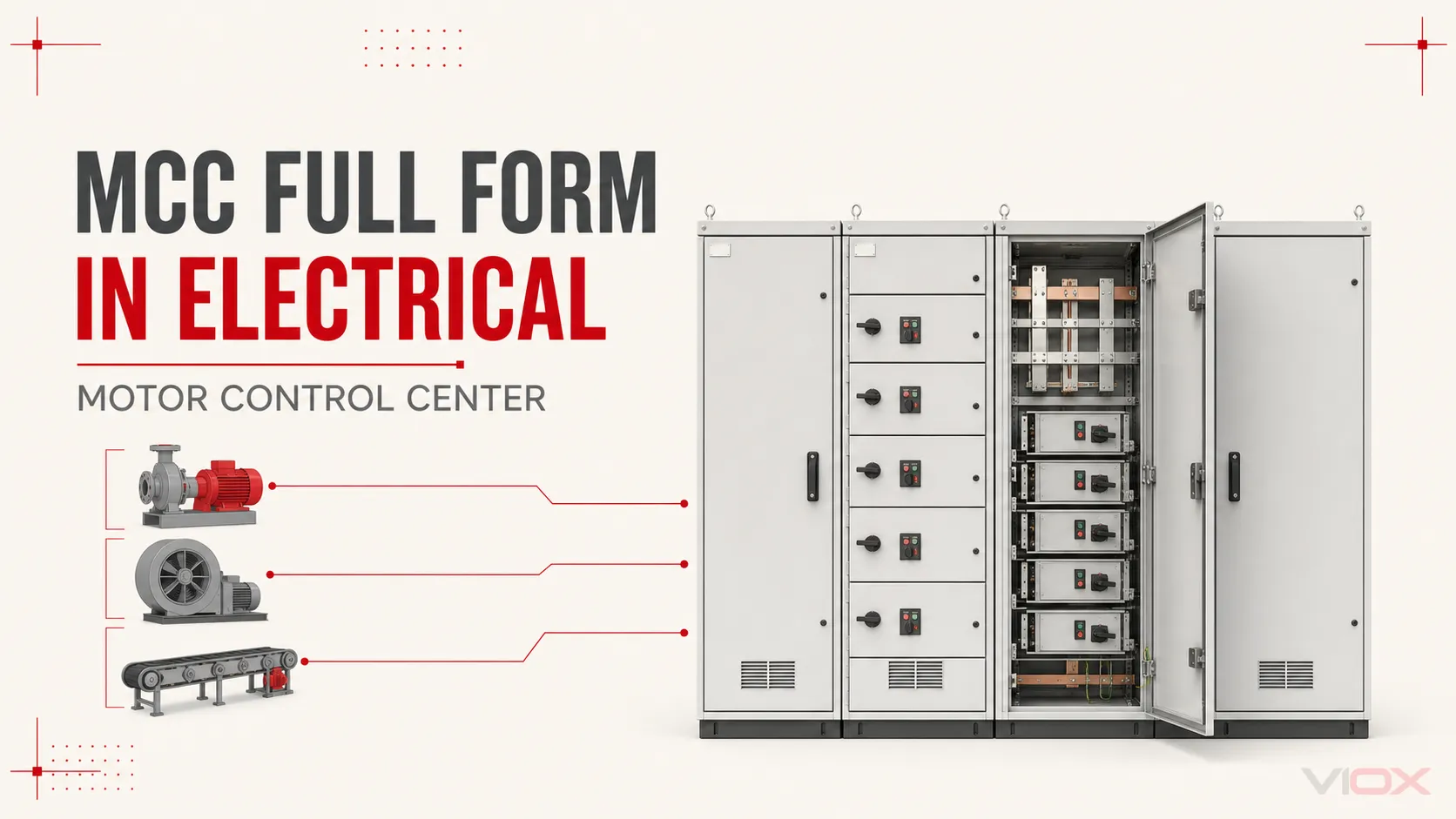
Na stránkách Zkratka MCC v elektrotechnice znamená Motor Control Center (motorové řídicí centrum). MCC je nízkonapěťové nebo středněnapěťové zařízení, které centralizuje spínání, ochranu, spouštění, zastavování a monitorování více motorů. Obvykle obsahuje společnou napájecí sběrnici a několik jednotek pro řízení motorů uspořádaných v kovových sekcích.
Fráze Rozváděč MCC se široce používá, ačkoliv průmyslové MCC může tvořit řada několika vertikálních sekcí namísto jednoho malého panelu. Každý přívod pro motor může být instalován v pevné přihrádce nebo ve vyjímatelné jednotce, často nazývané MCC výsuvný modul (bucket).
| Dotaz ohledně MCC | Přímá odpověď |
|---|---|
| Celý název | Středisko řízení motorů |
| Hlavní účel | Centralizace distribuce energie a řízení pro více motorů |
| Běžné zátěže | Čerpadla, ventilátory, kompresory, dopravníky, míchačky a procesní stroje |
| Typický obsah jednotky | Odpojovač/odbočková ochrana, stykač nebo pohon, ochrana proti přetížení, ovládání a signalizace |
| Stavebnictví | Společná přípojnice s pevnými nebo výsuvnými/vyjímatelnými motorovými jednotkami |
| Hlavní normy | Závislé na trhu; IEC 61439-1/-2 nebo severoamerické rámce MCC, jako jsou postupy UL 845/NEMA |
Co dělá centrum řízení motorů (MCC)?
MCC přijímá elektrickou energii a distribuuje ji prostřednictvím horizontálního a/nebo vertikálního přípojnicového systému do jednotlivých řídicích jednotek motorů. Každá jednotka zajišťuje řídicí a ochranné funkce požadované pro jeden motor nebo napájecí vývod.
Centralizace poskytuje inženýrům strukturované místo pro:
- jištění odbočných obvodů motorů;
- spouštění a zastavování pomocí stykačů;
- ochranu proti přetížení a výpadku fáze;
- reverzaci nebo vícerychlostní řízení;
- softstartéry a frekvenční měniče (VFD);
- volbu místního/vzdáleného ovládání a indikaci stavu;
- rozhraní pro PLC, sítě a monitorování energie;
- údržbová izolace a výměna napájecího přívodu.
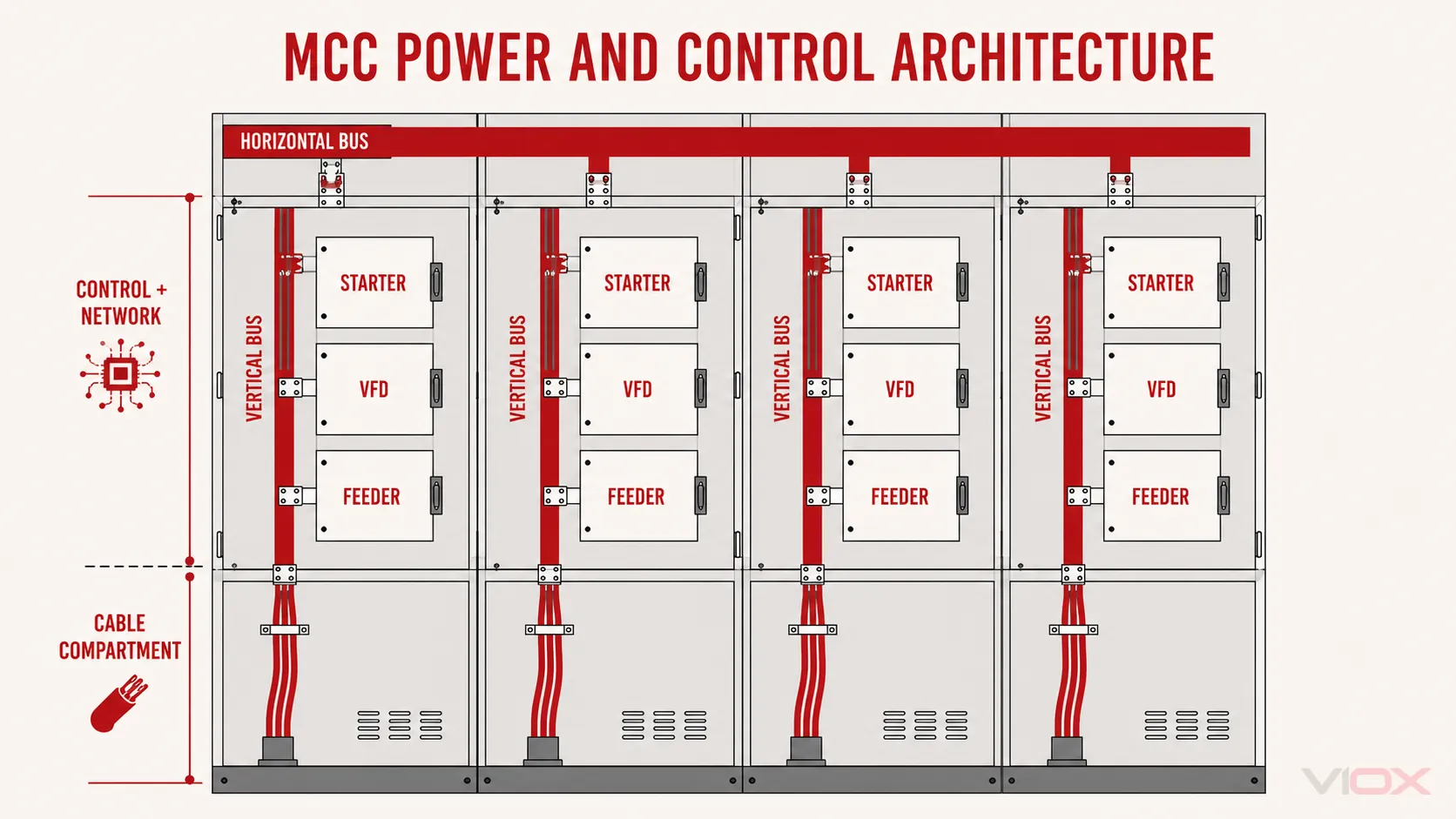
Hlavní části MCC
| Sekce nebo komponent MCC | Funkce | Technická kontrola |
|---|---|---|
| Hlavní přívodní jednotka | Připojuje MCC k napájení | Proud, úroveň poruchy, izolace, ochrana, měření |
| Horizontální přípojnice | Rozvádí napájení napříč celou sestavou | Jmenovitý proud, odolnost proti zkratu, spoje, oteplení |
| Svislá přípojnice | Napájí jednotky v rámci sekce | Oddělení, clony, kontaktní systém, omezení následků poruchy |
| Jednotka/výsuvný modul pro řízení motoru | Obsahuje jeden spouštěč motoru nebo pohonný obvod | Jmenovitý výkon motoru, metoda řízení, výsuvnost, blokování |
| Odbočovací ochranný přístroj | Poskytuje ochranu proti zkratu/odbočce | Vypínací schopnost a koordinace s navazujícími přístroji |
| Stykač a nadproudové relé | Spíná motor a chrání proti trvalému přetížení | Kategorie užití, napětí cívky, proud motoru, třída vybavení |
| Frekvenční měnič nebo softstartér | Řídí zrychlení a u frekvenčních měničů i provozní rychlost | Harmonické kmity, EMC, teplo, bypass, kompatibilita motorů |
| Ovládací prostor | Obsahuje relé, svorkovnice, vstupy/výstupy PLC a síťová zařízení | Oddělení, ovládací napětí, označování, servisní přístup |
| Kabelový prostor | Podporuje napájení v terénu a ovládací kabeláž | Poloměr ohybu, prostor pro kabelové průchodky, fázové oddělení, přístup ke svorkám |
Co je to MCC jednotka (výsuvný modul)?
MCC jednotka je samostatná řídicí jednotka motoru instalovaná v sekci MCC. V závislosti na konstrukci může být pevná, zásuvná, vyjímatelná nebo výsuvná.
Typický spouštěč motoru s přímým připojením může obsahovat:
- odbočkový jistič nebo pojistkový odpínač;
- stykač;
- tepelné nebo elektronické nadproudové relé;
- ovládací transformátor nebo napájecí zdroj řídicího obvodu, je-li vyžadován;
- ovládací prvky START/STOP a přepínače;
- kontrolky a pomocné kontakty;
- svorkovnice a komunikační moduly.
Ostatní moduly mohou obsahovat frekvenční měniče (VFD), softstartéry, napájecí jističe, stykače osvětlení nebo měřicí přístroje.
Společnost Rockwell Automation definuje nízkonapěťové MCC jako volně stojící kovovou skříň s horizontální přípojnicí, vertikálními sekcemi a jednotlivými jednotkami konfigurovanými pro motory a zátěže. Tato architektura odlišuje MCC od rozvaděče, který pouze obsahuje několik nesouvisejících stykačů.
Běžné typy spouštěčů MCC
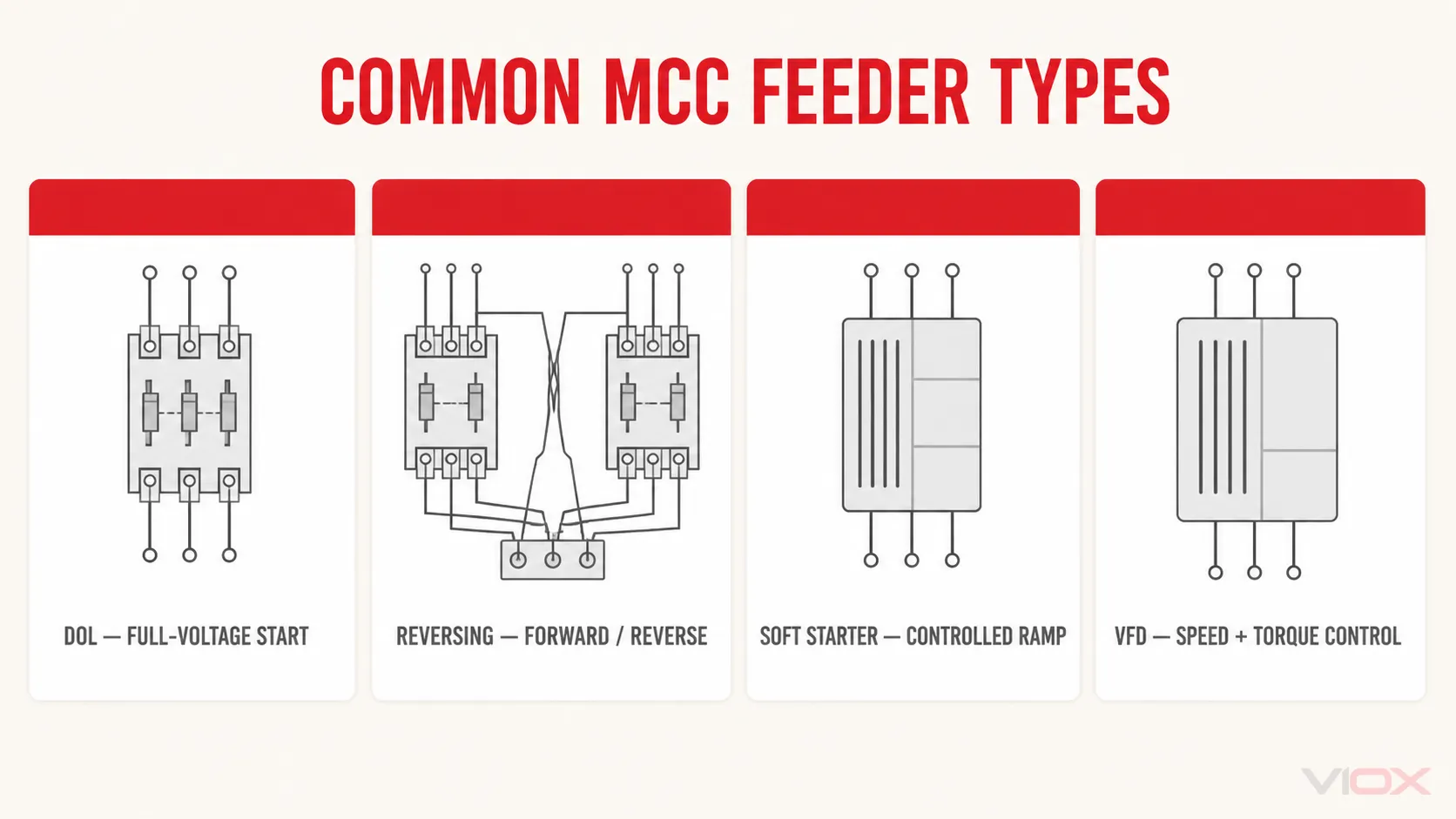
| Typ spouštěče/ovládání | Co to dělá | Typický důvod pro výběr |
|---|---|---|
| Přímý start (DOL) / plné síťové napětí | Aplikuje plné síťové napětí prostřednictvím stykače | Jednoduché spouštění, kde jsou přípustné záběrové proudy a mechanické rázy |
| Reverzační spouštěč | Používá blokované stykače pro změnu směru otáčení motoru | Dopravníky, zdvihací zařízení, polohování a reverzibilní stroje |
| Spouštěč hvězda-trojúhelník | Snižuje počáteční napětí vinutí během rozběhu | Snižuje rozběhový proud pro vhodné motory a zátěže |
| Soft startér | Řídí aplikované napětí během zrychlování/zpomalování | Snižuje mechanické rázy a rozběhový proud |
| VFD | Řídí frekvenci a napětí | Řízení rychlosti, točivého momentu, procesu a energie |
Pro rozlišení na úrovni komponent čtěte Stykač vs. motorový spouštěč a VIOX Průvodce VFD vs. Soft Starter.
MCC vs PCC vs Rozvaděč vs Ovládací panel
| Montáž | Celý název | Primární účel |
|---|---|---|
| MCC | Středisko řízení motorů | Ovládání a ochrana více motorů |
| PCC | Power Control Center, běžně používaná projektová terminologie | Hlavní distribuce napájení pro velké napájecí větve a následné sestavy |
| Rozváděč (DB) | Distribuční rada | Distribuce příchozího napájení do chráněných výstupních obvodů |
| PLC/ovládací panel | Programovatelná logika/ovládací panel | Automatizační logika, instrumentace a řídicí signály |
Tyto hranice se mohou překrývat. MCC může zahrnovat vstupy/výstupy PLC a napájecí jednotky; rozváděč elektrické energie může zahrnovat motorové vývody. Skutečnou roli definuje jednopólové schéma projektu, specifikace sestavy a příslušná norma.
Kontext MCC podle IEC vs. NEMA
Nízkonapěťové sestavy MCC orientované na normy IEC jsou běžně specifikovány pomocí IEC 61439-1 spolu s IEC 61439-2, plus norem pro komponenty, jako je IEC 60947-4-1 pro stykače a motorové spouštěče. Sestava musí být ověřena jako systém; instalace jednotlivých vyhovujících komponent sama o sobě nezajišťuje shodu sestavy.
Severoamerické MCC běžně využívají rámce pro produkty a instalace NEMA/UL, včetně UL 845 pro řídicí centra motorů. Běžné jsou termíny jako velikost spouštěče NEMA, přímé spouštění (FVNR) a zásuvková konstrukce (bucket construction).
Neprovádějte převody mezi kategoriemi užití IEC a velikostmi spouštěčů NEMA prostřednictvím jednoduché proudové ekvivalence. Jde o odlišné systémy výběru s odlišnými produktovými konvencemi a doklady o shodě.
Důležité jmenovité hodnoty MCC
Jmenovité napětí a frekvence
Slaďte požadavky na napájení systému a řídicí napájení. Napětí motoru a napětí cívky/řídicí napětí se mohou lišit.
Jmenovitý proud sestavy
Zkontrolujte jmenovité hodnoty přívodu a přípojnic, koeficient současnosti vývodů, ventilaci a ověření oteplení. Aritmetický součet jmenovitých proudů motorů automaticky neodpovídá návrhovému proudu sestavy.
Jmenovitá hodnota zkratu
Stanovte dostupný poruchový proud a ověřte jmenovitou odolnost celé sestavy proti zkratu. Vypínací schopnosti jednotlivých komponent samy o sobě nedokládají odolnost nebo ochranu celé řady MCC.
Zatížení spouštěče
Stykače a spouštěče musí odpovídat kategorii užití motoru, provoznímu proudu, napětí, zatěžovateli a četnosti spouštění. Viz VIOX Průvodce stykači AC-1, AC-2, AC-3 a AC-4.
Vnitřní oddělení a přístupnost
Definujte oddíly, přepážky, clony, dveřní blokování, zmírnění rizika oblouku, přístup ke kabelům a zda jsou jednotky pevné nebo výsuvné. Vyhněte se označení MCC jako “odolné proti oblouku” bez konkrétních testovaných důkazů.
Hodnocení vlivu na životní prostředí
Teplota, nadmořská výška, prach, vlhkost, chemikálie, vibrace a místo instalace ovlivňují krytí, snížení výkonu (derating), chlazení a životnost komponentů.
Jak specifikovat MCC
- Uveďte každý motor a napájecí vývod, včetně údajů na štítku a dat spouštění.
- Definujte metodu řízení: přímý start (DOL), reverzace, hvězda-trojúhelník, softstartér nebo frekvenční měnič (VFD).
- Uveďte systémové napětí, frekvenci, uspořádání uzemnění a řídicí napětí.
- Vypočítejte zátěž, koeficient soudobosti, proud přípojnic a dostupný poruchový proud.
- Definujte požadavky na ochranu a koordinaci.
- Zvolte konstrukci jednotek: pevnou, vyjímatelnou nebo výsuvnou.
- Definujte místní ovládání, vzdálené vstupy/výstupy, komunikaci, měření a blokování.
- Specifikujte rozváděčovou skříň, provozní podmínky, kabelové vstupy a rezervní kapacitu.
- Uveďte platné normy pro sestavy a komponenty.
- Požadujte výkresy, záznamy o ověření, nastavení, štítky a zkušební dokumentaci.
Časté chyby ve specifikacích MCC
Záměna MCC a MCCB
MCC znamená Motor Control Center (centrum řízení motorů). MCCB znamená Molded Case Circuit Breaker (kompaktní jistič). MCC může obsahovat jističe MCCB, ale tyto pojmy nejsou zaměnitelné.
Dimenzování pouze podle výkonu motoru v kilowattech
Používejte jmenovitý proud ze štítku, metodu spouštění, provozní režim, případný činitel zatížení a údaje výrobce.
Ignorování tepla z pohonů a spouštěčů
Frekvenční měniče (VFD) a softstartéry mohou představovat značnou tepelnou zátěž rozváděče. Chlazení a snížení výkonu (derating) vyžadují výpočet.
Specifikace komponentů bez požadavků na sestavu
MCC je sestava. Je nutné řešit přípojnice, vnitřní dělení (segregaci), kabeláž, chování při zkratu, oteplení a kontinuitu ochranného obvodu.
Nedefinovaná komunikace
“Smart MCC” není specifikace protokolu. Definujte síť, datové body, řídicí autoritu, hranici kybernetické bezpečnosti, diagnostiku a chování při poruše.
ČASTO KLADENÉ DOTAZY
Co znamená zkratka MCC v elektrotechnice?
MCC znamená Motor Control Center (centrum řízení motorů).
K čemu slouží MCC panel?
Centralizuje distribuci napájení, spouštění, zastavování, ochranu a monitorování pro více motorů.
Co se nachází uvnitř výsuvné jednotky (bucket) MCC?
Typická startovací jednotka obsahuje odbočkovou ochranu, stykač, nadproudovou ochranu, ovládací prvky, signalizaci a svorky. Další jednotky mohou obsahovat frekvenční měniče (VFD), softstartéry nebo napájecí jističe.
Jaký je rozdíl mezi MCC a PCC?
MCC je organizováno kolem řízení motorů. PCC obvykle popisuje rozvaděč pro distribuci energie vyšší úrovně. Terminologie projektů se liší, proto se řiďte jednopólovým schématem a specifikací.
Je MCC totéž co ovládací panel?
Ne. Ovládací panel se může zaměřovat hlavně na automatizaci a signály. MCC zahrnuje podstatné spínání a ochranu motorů, i když může obsahovat i řídicí zařízení.
Která norma se vztahuje na panely MCC?
Na trzích IEC jsou pro nízkonapěťové rozvaděče běžně relevantní normy IEC 61439-1 a IEC 61439-2, přičemž IEC 60947-4-1 se vztahuje na stykače a motorové spouštěče. Severoamerická MCC běžně odkazují na UL 845 a postupy NEMA.