ACB ທຽບກັບ VCB: ຄູ່ມືປຽບທຽບທີ່ສົມບູນ (ມາດຕະຖານ IEC 2024)

ທ່ານກໍາລັງເບິ່ງແຜ່ນຂໍ້ມູນຂອງເຄື່ອງຕັດວົງຈອນສອງອັນສໍາລັບໂຄງການສະວິດເກຍ 15kV ຂອງທ່ານ. ທັງສອງສະແດງລະດັບແຮງດັນໄຟຟ້າສູງເຖິງ 690V. ທັງສອງລາຍຊື່ຄວາມສາມາດໃນການຕັດທີ່ຫນ້າປະທັບໃຈ. ໃນເອກະສານ, ພວກເຂົາເບິ່ງຄືວ່າສາມາດປ່ຽນແທນກັນໄດ້.

ພວກເຂົາບໍ່ແມ່ນ.

ເລືອກຜິດ—ຕິດຕັ້ງເຄື່ອງຕັດວົງຈອນອາກາດ (ACB) ບ່ອນທີ່ທ່ານຕ້ອງການເຄື່ອງຕັດວົງຈອນສູນຍາກາດ (VCB), ຫຼືໃນທາງກັບກັນ—ແລະທ່ານບໍ່ພຽງແຕ່ລະເມີດມາດຕະຖານ IEC. ທ່ານກໍາລັງຫຼີ້ນການພະນັນກັບຄວາມສ່ຽງຕໍ່ການເກີດໄຟຟ້າ, ງົບປະມານການບໍາລຸງຮັກສາ, ແລະອາຍຸການໃຊ້ງານຂອງອຸປະກອນ. ຄວາມແຕກຕ່າງທີ່ແທ້ຈິງບໍ່ແມ່ນຢູ່ໃນໂບຊົວການຕະຫຼາດ. ມັນຢູ່ໃນຟີຊິກຂອງວິທີທີ່ເຄື່ອງຕັດແຕ່ລະອັນດັບໄຟຟ້າ, ແລະຟີຊິກນັ້ນກໍານົດຄວາມແຂງ ເພດານແຮງດັນໄຟຟ້າ ທີ່ບໍ່ມີຂໍ້ປະຕິເສດຂອງແຜ່ນຂໍ້ມູນສາມາດລົບລ້າງໄດ້.

ນີ້ແມ່ນສິ່ງທີ່ແຍກ ACBs ອອກຈາກ VCBs—ແລະວິທີການເລືອກອັນທີ່ຖືກຕ້ອງສໍາລັບລະບົບຂອງທ່ານ.


ຄໍາຕອບດ່ວນ: ACB vs VCB ໂດຍຫຍໍ້

ຄວາມແຕກຕ່າງຫຼັກ: ເຄື່ອງຕັດວົງຈອນອາກາດ (ACBs) ດັບໄຟຟ້າໃນອາກາດແລະຖືກອອກແບບມາສໍາລັບ ລະບົບແຮງດັນໄຟຟ້າຕ່ໍາເຖິງ 1,000V AC (ຄຸ້ມຄອງໂດຍ IEC 60947-2:2024). ເຄື່ອງຕັດວົງຈອນສູນຍາກາດ (VCBs) ດັບໄຟຟ້າໃນສະພາບແວດລ້ອມສູນຍາກາດທີ່ຜະນຶກເຂົ້າກັນແລະເຮັດວຽກໃນ ລະບົບແຮງດັນໄຟຟ້າປານກາງຈາກ 11kV ຫາ 33kV (ຄຸ້ມຄອງໂດຍ IEC 62271-100:2021). ການແບ່ງແຮງດັນໄຟຟ້ານີ້ບໍ່ແມ່ນທາງເລືອກໃນການແບ່ງສ່ວນຜະລິດຕະພັນ—ມັນຖືກກໍານົດໂດຍຟີຊິກຂອງການຂັດຂວາງໄຟຟ້າ.

ນີ້ແມ່ນວິທີທີ່ພວກເຂົາປຽບທຽບໃນທົ່ວສະເພາະທີ່ສໍາຄັນ:

ຂໍ້ມູນຈໍາເພາະ ເຄື່ອງຕັດວົງຈອນອາກາດ (ACB) ເຄື່ອງຕັດວົງຈອນສູນຍາກາດ (VCB)
ຊ່ວງແຮງດັນ ແຮງດັນໄຟຟ້າຕ່ໍາ: 400V ຫາ 1,000V AC ແຮງດັນໄຟຟ້າປານກາງ: 11kV ຫາ 33kV (ບາງ 1kV-38kV)
ຊ່ວງປັດຈຸບັນ ກະແສໄຟຟ້າສູງ: 800A ຫາ 10,000A ກະແສໄຟຟ້າປານກາງ: 600A ຫາ 4,000A
ຂີດຄວາມສາມາດ ສູງເຖິງ 100kA ທີ່ 690V 25kA ຫາ 50kA ທີ່ MV
ສື່ກາງດັບໄຟຟ້າ ອາກາດໃນຄວາມກົດດັນບັນຍາກາດ ສູນຍາກາດ (10^-2 ຫາ 10^-6 torr)
ກົນໄກການດໍາເນີນງານ ທໍ່ໄຟຟ້າເຮັດໃຫ້ໄຟຟ້າຍາວຂຶ້ນແລະເຢັນລົງ ເຄື່ອງຂັດຂວາງສູນຍາກາດທີ່ຜະນຶກເຂົ້າກັນດັບໄຟຟ້າໃນສູນປະຈຸບັນທໍາອິດ
ຄວາມຖີ່ຂອງການບໍາລຸງຮັກສາ ທຸກໆ 6 ເດືອນ (ສອງຄັ້ງຕໍ່ປີ) ທຸກໆ 3 ຫາ 5 ປີ
ອາຍຸການໃຊ້ງານຂອງຫນ້າສໍາຜັດ 3 ຫາ 5 ປີ (ການສໍາຜັດກັບອາກາດເຮັດໃຫ້ເກີດການເຊາະເຈື່ອນ) 20 ຫາ 30 ປີ (ສະພາບແວດລ້ອມທີ່ຜະນຶກເຂົ້າກັນ)
ຄໍາຮ້ອງສະຫມັກທົ່ວໄປ ການແຈກຢາຍ LV, MCCs, PCCs, ແຜງການຄ້າ/ອຸດສາຫະກໍາ ສະວິດເກຍ MV, ສະຖານີຍ່ອຍຂອງສາທາລະນູປະໂພກ, ການປ້ອງກັນມໍເຕີ HV
ມາດຕະຖານ IEC IEC 60947-2:2024 (≤1000V AC) IEC 62271-100:2021+A1:2024 (>1000V)
ຄ່າໃຊ້ຈ່າຍເບື້ອງຕົ້ນ ຕ່ໍາກວ່າ ($8K-$15K ປົກກະຕິ) ສູງກວ່າ ($20K-$30K ປົກກະຕິ)
ຄ່າໃຊ້ຈ່າຍທັງຫມົດ 15 ປີ ~$48K (ມີການບໍາລຸງຮັກສາ) ~$24K (ການບໍາລຸງຮັກສາຫນ້ອຍທີ່ສຸດ)

ສັງເກດເຫັນເສັ້ນແບ່ງທີ່ຊັດເຈນຢູ່ທີ່ 1,000V ບໍ? ນັ້ນແມ່ນ ການແບ່ງມາດຕະຖານ—ແລະມັນມີຢູ່ເພາະວ່າສູງກວ່າ 1kV, ອາກາດບໍ່ສາມາດດັບໄຟຟ້າໄດ້ໄວພໍ. ຟີຊິກກໍານົດຂອບເຂດ; IEC ພຽງແຕ່ລະຫັດມັນ.

You're staring at two circuit breaker datasheets for your 15kV switchgear project. Both show voltage ratings up to 690V. Both list impressive breaking capacities. On paper, they look interchangeable.They're not.Choose wrong—install an Air Circuit Breaker (ACB) where you need a Vacuum Circuit Breaker (VCB), or vice versa—and you're not just violating IEC standards. You're gambling with arc flash risk, maintenance budgets, and equipment lifespan. The real difference isn't in the marketing brochure. It's in the physics of how each breaker extinguishes an electrical arc, and that physics imposes a hard Voltage Ceiling that no datasheet disclaimer can override.Here's what actually separates ACBs from VCBs—and how to choose the right one for your system.Quick Answer: ACB vs VCB at a GlanceThe core difference: Air Circuit Breakers (ACBs) quench electrical arcs in atmospheric air and are designed for low-voltage systems up to 1,000V AC (governed by IEC 60947-2:2024). Vacuum Circuit Breakers (VCBs) extinguish arcs in a sealed vacuum environment and operate in medium-voltage systems from 11kV to 33kV (governed by IEC 62271-100:2021). This voltage split isn't a product segmentation choice—it's dictated by the physics of arc interruption.Here's how they compare across critical specifications:SpecificationAir Circuit Breaker (ACB)Vacuum Circuit Breaker (VCB)Voltage RangeLow voltage: 400V to 1,000V ACMedium voltage: 11kV to 33kV (some 1kV-38kV)Current RangeHigh current: 800A to 10,000AModerate current: 600A to 4,000ABreaking CapacityUp to 100kA at 690V25kA to 50kA at MVArc Quenching MediumAir at atmospheric pressureVacuum (10^-2 to 10^-6 torr)Operating MechanismArc chutes lengthen and cool the arcSealed vacuum interrupter quenches arc at first current zeroMaintenance FrequencyEvery 6 months (twice yearly)Every 3 to 5 yearsContact Lifespan3 to 5 years (air exposure causes erosion)20 to 30 years (sealed environment)Typical ApplicationsLV distribution, MCCs, PCCs, commercial/industrial panelsMV switchgear, utility substations, HV motor protectionIEC StandardIEC 60947-2:2024 (≤1000V AC)IEC 62271-100:2021+A1:2024 (>1000V)Initial CostLower ($8K-$15K typical)Higher ($20K-$30K typical)15-Year Total Cost~$48K (with maintenance)~$24K (minimal maintenance)Notice the clean dividing line at 1,000V? That's The Standards Split—and it exists because above 1kV, air simply can't extinguish an arc fast enough. Physics sets the boundary; IEC just codified it. Figure 1: Structural comparison of ACB and VCB technologies. The ACB (left) uses arc chutes in open air, while the VCB (right) employs a sealed vacuum interrupter for arc extinction.Arc Quenching: Air vs Vacuum (Why Physics Sets the Voltage Ceiling)When you separate current-carrying contacts under load, an arc forms. Always. That arc is a plasma column—ionized gas conducting thousands of amperes at temperatures reaching 20,000°C (hotter than the surface of the sun). Your circuit breaker's job is to extinguish that arc before it welds the contacts together or triggers an arc flash event.How it does that depends entirely on the medium surrounding the contacts.How ACBs Use Air and Arc ChutesAn Air Circuit Breaker interrupts the arc in atmospheric air. The breaker's contacts are housed in arc chutes—arrays of metal plates positioned to intercept the arc as the contacts separate. Here's the sequence:Arc formation: Contacts separate, arc strikes in airArc lengthening: Magnetic forces drive the arc into the arc chuteArc division: The chute's metal plates split the arc into multiple shorter arcsArc cooling: Increased surface area and air exposure cool the plasmaArc extinction: As the arc cools and lengthens, resistance increases until the arc can no longer sustain itself at the next current zeroThis works reliably up to about 1,000V. Above that voltage, the arc's energy is too great. Air's dielectric strength (the voltage gradient it can withstand before breaking down) is approximately 3 kV/mm at atmospheric pressure. Once system voltage climbs into the multi-kilovolt range, the arc simply re-strikes across the widening contact gap. You can't build an arc chute long enough to stop it without making the breaker the size of a small car.That's The Voltage Ceiling.How VCBs Use Vacuum PhysicsA Vacuum Circuit Breaker takes a completely different approach. The contacts are enclosed in a sealed vacuum interrupter—a chamber evacuated to a pressure between 10^-2 and 10^-6 torr (that's roughly one-millionth of atmospheric pressure).When the contacts separate under load:Arc formation: Arc strikes in the vacuum gapLimited ionization: With almost no gas molecules present, the arc lacks sustaining mediumRapid de-ionization: At the first natural current zero (every half-cycle in AC), there are insufficient charge carriers to re-strike the arcInstant extinction: Arc dies within one cycle (8.3 milliseconds on a 60 Hz system)The vacuum provides two massive advantages. First, dielectric strength: a vacuum gap of just 10mm can withstand voltages up to 40kV—that's 10 to 100 times stronger than air at the same gap distance. Second, contact preservation: with no oxygen present, the contacts don't oxidize or erode at the same rate as ACB contacts exposed to air. That's The Sealed-for-Life Advantage.VCB contacts in a properly maintained breaker can last 20 to 30 years. ACB contacts exposed to atmospheric oxygen and arc plasma? You're looking at replacement every 3 to 5 years, sometimes sooner in dusty or humid environments.Figure 2: Arc quenching mechanisms. The ACB requires multiple steps to lengthen, divide, and cool the arc in air (left), while the VCB extinguishes the arc instantly at the first current zero due to vacuum's superior dielectric strength (right).Pro-Tip #1: The Voltage Ceiling isn't negotiable. ACBs are physically incapable of reliably interrupting arcs above 1kV in air at atmospheric pressure. If your system voltage exceeds 1,000V AC, you need a VCB—not as a "better" option, but as the only option that complies with physics and IEC standards.Voltage and Current Ratings: What the Numbers Really MeanVoltage isn't just a specification line on the datasheet. It's the fundamental selection criterion that determines which breaker type you can even consider. Current rating matters, but it comes second.Here's what the numbers mean in practice.ACB Ratings: High Current, Low VoltageVoltage ceiling: ACBs operate reliably from 400V up to 1,000V AC (with some specialized designs rated to 1,500V DC). The typical sweet spot is 400V or 690V for three-phase industrial systems. Above 1kV AC, air's dielectric properties make reliable arc interruption impractical—that Voltage Ceiling we discussed isn't a design limitation; it's a physical boundary.Current capacity: Where ACBs dominate is current handling. Ratings range from 800A for smaller distribution panels up to 10,000A for main service entrance applications. High current capability at low voltage is precisely what low-voltage distribution needs—think motor control centers (MCCs), power control centers (PCCs), and main distribution boards in commercial and industrial facilities.Breaking capacity: Short-circuit interrupting ratings reach up to 100kA at 690V. That sounds impressive—and it is, for low-voltage applications. But let's put it in perspective with a power calculation:Breaking capacity: 100kA at 690V (line-to-line)Apparent power: √3 × 690V × 100kA ≈ 119 MVAThat's the maximum fault power an ACB can safely interrupt. For a 400V/690V industrial plant with a 1.5 MVA transformer and typical X/R ratios, a 65kA breaker is often sufficient. The 100kA units are reserved for utility-scale low-voltage distribution or facilities with multiple large transformers in parallel.Typical applications:Low-voltage main distribution panels (LVMDP)Motor control centers (MCCs) for pumps, fans, compressorsPower control centers (PCCs) for industrial machineryGenerator protection and synchronization panelsCommercial building electrical rooms (below 1kV)VCB Ratings: Medium Voltage, Moderate CurrentVoltage range: VCBs are engineered for medium-voltage systems, typically from 11kV to 33kV. Some designs extend the range down to 1kV or up to 38kV (the 2024 amendment to IEC 62271-100 added standardized ratings at 15.5kV, 27kV, and 40.5kV). The sealed vacuum interrupter's superior dielectric strength makes these voltage levels manageable within a compact footprint.Current capacity: VCBs handle moderate currents compared to ACBs, with typical ratings from 600A to 4,000A. This is perfectly adequate for medium-voltage applications. A 2,000A breaker at 11kV can carry 38 MVA of continuous load—equivalent to several dozen large industrial motors or an entire medium-sized industrial facility's power demand.Breaking capacity: VCBs are rated from 25kA to 50kA at their respective voltage levels. Let's run the same power calculation for a 50kA VCB at 33kV:Breaking capacity: 50kA at 33kV (line-to-line)Apparent power: √3 × 33kV × 50kA ≈ 2,850 MVAThat's 24 times more interrupting power than our 100kA ACB at 690V. Suddenly, that "lower" 50kA breaking capacity doesn't look so modest. VCBs are interrupting fault currents at power levels that would vaporize an ACB's arc chute.Figure 3: The Voltage Ceiling visualization. ACBs operate reliably up to 1,000V but cannot safely interrupt arcs above this threshold (red zone), while VCBs dominate the medium-voltage range from 11kV to 38kV (green zone).Typical applications:Utility distribution substations (11kV, 22kV, 33kV)Industrial medium-voltage switchgear (ring main units, switchboards)High-voltage induction motor protection (>1,000 HP)Transformer primary protectionPower generation facilities (generator circuit breakers)Renewable energy systems (wind farms, solar inverter stations)Pro-Tip #2: Don't compare breaking capacity in kiloamperes alone. Calculate the MVA interrupting power (√3 × voltage × current). A 50kA VCB at 33kV interrupts vastly more power than a 100kA ACB at 690V. Voltage matters more than current when assessing breaker capability.The Standards Split: IEC 60947-2 (ACB) vs IEC 62271-100 (VCB)The International Electrotechnical Commission (IEC) doesn't casually divide standards. When IEC 60947-2 governs breakers up to 1,000V and IEC 62271-100 takes over above 1,000V, that boundary reflects the physical reality we've been discussing. This is The Standards Split, and it's your design compass.IEC 60947-2:2024 for Air Circuit BreakersScope: This standard applies to circuit-breakers with rated voltage not exceeding 1,000V AC or 1,500V DC. It's the authoritative reference for low-voltage circuit protection, including ACBs, molded-case circuit breakers (MCCBs), and miniature circuit breakers (MCBs).The sixth edition was published in September 2024, superseding the 2016 edition. Key updates include:Suitability for isolation: Clarified requirements for using circuit-breakers as isolating switchesClassification removal: IEC eliminated the classification of breakers by interrupting medium (air, oil, SF6, etc.). Why? Because voltage already tells you the medium. If you're at 690V, you're using air or a sealed molded case. The old classification system was redundant.External device adjustments: New provisions for adjusting overcurrent settings via external devicesEnhanced testing: Added tests for ground-fault releases and dielectric properties in the tripped positionEMC improvements: Updated electromagnetic compatibility (EMC) test procedures and power loss measurement methodsThe 2024 revision makes the standard cleaner and more aligned with modern digital trip units and smart breaker technology, but the core voltage boundary—≤1,000V AC—remains unchanged. Above that, you're out of IEC 60947-2's jurisdiction.IEC 62271-100:2021 (Amendment 1: 2024) for Vacuum Circuit BreakersScope: This standard governs alternating current circuit-breakers designed for three-phase systems with voltages above 1,000V. It's specifically tailored for medium-voltage and high-voltage indoor and outdoor switchgear, where VCBs are the dominant technology (alongside SF6 breakers for the highest voltage classes).The third edition was published in 2021, with Amendment 1 released in August 2024. Recent updates include:Updated TRV (Transient Recovery Voltage) values: Recalculated TRV parameters in multiple tables to reflect real-world system behavior and newer transformer designsNew rated voltages: Standardized ratings added at 15.5kV, 27kV, and 40.5kV to cover regional system voltages (particularly in Asia and the Middle East)Revised terminal fault definition: Clarified what constitutes a terminal fault for testing purposesDielectric test criteria: Added criteria for dielectric testing; explicitly stated that partial discharge tests apply only to GIS (Gas-Insulated Switchgear) and dead-tank breakers, not typical VCBsEnvironmental considerations: Enhanced guidance on altitude, pollution, and temperature derating factorsThe 2024 amendment keeps the standard current with global grid infrastructure changes, but the fundamental principle holds: above 1,000V, you need a medium-voltage breaker, and for the 1kV-38kV range, that almost always means a VCB.Why These Standards Don't OverlapThe 1,000V boundary isn't arbitrary. It's the point where atmospheric air transitions from "adequate arc quenching medium" to "liability." IEC didn't create two standards to sell more books. They formalized the engineering reality:Below 1kV: Air-based or molded-case designs work. Arc chutes are effective. Breakers are compact and economical.Above 1kV: Air requires impractically large arc chutes; vacuum (or SF6 for higher voltages) becomes necessary for safe, reliable arc interruption in a reasonable footprint.When you're speccing a breaker, the first question isn't "ACB or VCB?" It's "What's my system voltage?" That answer points you to the correct standard, which points you to the correct breaker type.Pro-Tip #3: When reviewing a circuit breaker datasheet, check which IEC standard it complies with. If it lists IEC 60947-2, it's a low-voltage breaker (≤1kV). If it lists IEC 62271-100, it's a medium/high-voltage breaker (>1kV). The standard compliance tells you the voltage class instantly.Applications: Matching Breaker Type to Your SystemChoosing between ACB and VCB isn't about preference. It's about matching the breaker's physical capabilities to your system's electrical characteristics and operational requirements.Here's how to map breaker type to application.When to Use ACBsAir Circuit Breakers are the right choice for low-voltage distribution systems where high current capacity matters more than compact size or long maintenance intervals.Ideal applications:400V or 690V three-phase distribution: The backbone of most industrial and commercial electrical systemsMotor Control Centers (MCCs): Protection for pumps, fans, compressors, conveyors, and other low-voltage motorsPower Control Centers (PCCs): Main distribution for industrial machinery and process equipmentLow-voltage main distribution panels (LVMDP): Service entrance and main breakers for buildings and facilitiesGenerator protection: Low-voltage backup generators (typically 480V or 600V)Marine and offshore: Low-voltage ship power distribution (where IEC 60092 also applies)When ACBs make sense financially:Lower initial cost priority: If capital budget is constrained and you have in-house maintenance capabilityHigh current requirements: When you need 6,000A+ ratings that are more economical in ACB form factorsRetrofit into existing LV switchgear: When replacing like-for-like in panels designed for ACBsLimitations to remember:Maintenance burden: Expect inspections every 6 months and contact replacement every 3-5 yearsFootprint: ACBs are larger and heavier than equivalent VCBs due to arc chute assembliesNoise: Arc interruption in air is louder than in a sealed vacuumLimited service life: Typically 10,000 to 15,000 operations before major overhaulWhen to Use VCBsVacuum Circuit Breakers dominate medium-voltage applications where reliability, low maintenance, compact size, and long service life justify the higher initial cost.Ideal applications:11kV, 22kV, 33kV utility substations: Primary and secondary distribution switchgearIndustrial MV switchgear: Ring main units (RMUs), metal-clad switchboards, pad-mounted transformersHigh-voltage motor protection: Induction motors above 1,000 HP (typically 3.3kV, 6.6kV, or 11kV)Transformer protection: Primary-side breakers for distribution and power transformersPower generation facilities: Generator circuit breakers, station auxiliary powerRenewable energy systems: Wind farm collector circuits, solar inverter step-up transformersMining and heavy industry: Where dust, moisture, and harsh conditions make ACB maintenance problematicWhen VCBs are the only option:System voltage >1kV AC: Physics and IEC 62271-100 require medium-voltage rated breakersFrequent switching operations: VCBs are rated for 30,000+ mechanical operations (some designs exceed 100,000 operations)Limited maintenance access: Remote substations, offshore platforms, rooftop installations where semi-annual ACB inspections are impracticalLong lifecycle cost focus: When total cost of ownership over 20-30 years outweighs upfront capital costAdvantages in harsh environments:Sealed vacuum interrupters aren't affected by dust, humidity, salt spray, or altitude (up to derating limits)No arc chutes to clean or replaceSilent operation (important for indoor substations in occupied buildings)Compact footprint (critical in urban substations with expensive real estate)Decision Matrix: ACB or VCB?Your System CharacteristicsRecommended Breaker TypePrimary ReasonVoltage ≤ 1,000V ACACBIEC 60947-2 jurisdiction; air quenching is adequateVoltage > 1,000V ACVCBIEC 62271-100 required; air cannot reliably interrupt arcHigh current (>5,000A) at LVACBMore economical for very high current at low voltageFrequent switching (>20/day)VCBRated for 30,000+ operations vs ACB's 10,000Harsh environment (dust, salt, humidity)VCBSealed interrupter unaffected by contaminationLimited maintenance accessVCB3-5 year service intervals vs ACB's 6-month schedule20+ year lifecycle cost focusVCBLower TCO despite higher initial costTight space constraintsVCBCompact design; no arc chute volumeBudget-constrained capital projectACB (if ≤1kV)Lower upfront cost, but factor in maintenance budgetFigure 5: Circuit breaker selection flowchart. System voltage is the primary decision criterion, directing you to either ACB (low-voltage) or VCB (medium-voltage) applications based on the 1,000V boundary.Pro-Tip #4: If your system voltage is anywhere near the 1kV boundary, spec a VCB. Don't try to stretch an ACB to its maximum voltage rating. The Voltage Ceiling isn't a "rated maximum"—it's a hard physics limit. Design with margin.The Maintenance Tax: Why VCBs Cost Less Over 20 YearsThat $15,000 ACB looks attractive compared to a $25,000 VCB. Until you run the numbers over 15 years.Welcome to The Maintenance Tax—the hidden recurring cost that flips the economic equation.ACB Maintenance: The Twice-Yearly BurdenAir Circuit Breakers demand regular, hands-on maintenance because their contacts and arc chutes operate in an open-air environment. Here's the typical maintenance schedule recommended by manufacturers and IEC 60947-2:Every 6 months (semi-annual inspection):Visual inspection of contacts for pitting, erosion, or discolorationArc chute cleaning (removal of carbon deposits and metal vapor residue)Contact gap and wipe measurementMechanical operation test (manual and automatic)Terminal connection torque checkLubrication of moving parts (hinges, linkages, bearings)Overcurrent trip unit functional testEvery 3-5 years (major service):Contact replacement (if erosion exceeds manufacturer limits)Arc chute inspection and replacement if damagedInsulation resistance testing (megger test)Contact resistance measurementComplete disassembly and cleaningReplacement of worn mechanical componentsCost breakdown (typical, varies by region):Semi-annual inspection: $600-$1,000 per breaker (contractor labor: 3-4 hours)Contact replacement: $2,500-$4,000 (parts + labor)Arc chute replacement: $1,500-$2,500 (if damaged)Emergency service call (if breaker fails between inspections): $1,500-$3,000For an ACB with a 15-year service life:Semi-annual inspections: 15 years × 2 inspections/year × $800 average = $24,000Contact replacements: (15 years ÷ 4 years) × $3,000 = $9,000 (3 replacements)Unplanned failures: Assume 1 failure × $2,000 = $2,000Total maintenance over 15 years: $35,000Add the initial purchase cost ($15,000), and your 15-year total cost of ownership is ~$50,000.That's the Maintenance Tax. You pay it in labor hours, downtime, and consumable parts—every year, twice a year, for the life of the breaker.VCB Maintenance: The Sealed-for-Life AdvantageVacuum Circuit Breakers flip the maintenance equation. The sealed vacuum interrupter protects the contacts from oxidation, contamination, and environmental exposure. Result: drastically extended service intervals.Every 3-5 years (periodic inspection):Visual external inspectionMechanical operation count check (via counter or digital interface)Contact wear indicator check (some VCBs have external indicators)Operational test (open/close cycles)Control circuit functional testTerminal connection inspectionEvery 10-15 years (major inspection, if at all):Vacuum integrity test (using high-voltage test or X-ray inspection)Contact gap measurement (requires partial disassembly on some models)Insulation resistance testingNotice what's not on the list:No contact cleaning (sealed environment)No arc chute maintenance (doesn't exist)No semi-annual inspections (unnecessary)No routine contact replacement (20-30 year lifespan)Cost breakdown (typical):Periodic inspection (every 4 years): $400-$700 per breaker (contractor labor: 1.5-2 hours)Vacuum interrupter replacement (if needed after 20-25 years): $6,000-$10,000For a VCB with the same 15-year evaluation period:Periodic inspections: (15 years ÷ 4 years) × $500 average = $1,500 (3 inspections)Unplanned failures: Extremely rare; assume $0 (VCBs have 10x lower failure rate)Major overhaul: Not required within 15 yearsTotal maintenance over 15 years: $1,500Add the initial purchase cost ($25,000), and your 15-year total cost of ownership is ~$26,500.The TCO Crossover PointLet's put them side-by-side:Cost ComponentACB (15 years)VCB (15 years)Initial purchase$15,000$25,000Routine maintenance$24,000$1,500Contact/component replacement$9,000$0Unplanned failures$2,000$0Total Cost of Ownership$50,000$26,500Cost per year$3,333/year$1,767/yearThe VCB pays for itself through maintenance savings alone. But here's the kicker: the crossover happens around year 3.Year 0: ACB = $15K, VCB = $25K (ACB ahead by $10K)Year 1.5: First 3 ACB inspections = $2,400; VCB = $0 (ACB ahead by $7,600)Year 3: Six ACB inspections = $4,800; VCB = $0 (ACB ahead by $5,200)Year 4: First ACB contact replacement + 8 inspections = $9,400; VCB first inspection = $500 (ACB ahead by $900)Year 5: ACB total maintenance = $12,000; VCB = $500 (VCB starts saving money)Year 15: ACB total = $50K; VCB total = $26.5K (VCB saves $23,500)Figure 4: 15-Year Total Cost of Ownership (TCO) analysis. Despite higher initial cost, VCBs become more economical than ACBs by Year 3 due to dramatically lower maintenance requirements, saving $23,500 over 15 years.If you plan to keep the switchgear for 20 years (typical for industrial facilities), the savings gap widens to $35,000+ per breaker. For a substation with 10 breakers, that's $350,000 in lifecycle savings.Hidden Costs Beyond the InvoiceThe TCO calculation above only captures direct costs. Don't forget:Downtime risk:ACB failures between inspections can cause unplanned outagesVCB failures are rare (MTBF often exceeds 30 years with proper use)Labor availability:Finding qualified technicians for ACB maintenance is getting harder as the industry shifts to VCBsSemi-annual maintenance windows require production downtime or careful schedulingSafety:ACB arc flash incidents during maintenance are more common than VCB incidents (open-air contacts vs sealed interrupter)Arc flash PPE requirements are more stringent for ACB maintenanceEnvironmental factors:ACBs in dusty, humid, or corrosive environments need more frequent maintenance (quarterly instead of semi-annual)VCBs are unaffected—the sealed interrupter doesn't care about external conditionsPro-Tip #5 (The Big One): Calculate total cost of ownership over the expected switchgear lifespan (15-25 years), not just initial capital cost. For medium-voltage applications, VCBs almost always win on TCO. For low-voltage applications where you must use an ACB, budget $2,000-$3,000 per year per breaker for maintenance—and don't let the maintenance schedule slip. Skipped inspections turn into catastrophic failures.Frequently Asked Questions: ACB vs VCBQ: Can I use an ACB above 1,000V if I derate it or add external arc suppression?A: No. The 1,000V limit for ACBs isn't a thermal or electrical stress issue that derating can solve—it's a fundamental arc physics limitation. Above 1kV, atmospheric air cannot reliably quench an arc within safe timeframes, regardless of how you configure the breaker. IEC 60947-2 explicitly scopes ACBs to ≤1,000V AC, and operating outside that scope violates the standard and creates arc flash hazards. If your system is above 1kV, you legally and safely must use a medium-voltage breaker (VCB or SF6 breaker per IEC 62271-100).Q: Are VCBs more expensive to repair than ACBs if something goes wrong?A: Yes, but VCBs fail far less frequently. When a VCB vacuum interrupter fails (rare), it typically requires factory replacement of the entire sealed unit at $6,000-$10,000. ACB contacts and arc chutes can be serviced in the field for $2,500-$4,000, but you'll replace them 3-4 times over the VCB's lifespan. The math still favors VCBs: one VCB interrupter replacement in 25 years vs. three ACB contact replacements in 15 years, plus the ongoing Maintenance Tax every six months.Q: Which breaker type is better for frequent switching (capacitor banks, motor starting)?A: VCBs by a wide margin. Vacuum circuit breakers are rated for 30,000 to 100,000+ mechanical operations before major overhaul. ACBs are typically rated for 10,000 to 15,000 operations. For applications involving frequent switching—such as capacitor bank switching, motor starting/stopping in batch processes, or load transfer schemes—VCBs will outlast ACBs by 3:1 to 10:1 in operation count. Additionally, VCBs' fast arc extinction (one cycle) reduces the stress on downstream equipment during each switching event.Q: Do VCBs have any drawbacks compared to ACBs beyond initial cost?A: Three minor considerations: (1) Overvoltage risk when switching capacitive or inductive loads—VCBs' fast arc extinction can produce transient overvoltages that may require surge arresters or RC snubbers for sensitive loads. (2) Repair complexity—if a vacuum interrupter fails, you can't fix it in the field; the entire unit must be replaced. (3) Audible hum—some VCB designs produce low-frequency hum from the operating mechanism, though this is far quieter than ACB arc blast. For 99% of applications, these drawbacks are negligible compared to the advantages (see Sealed-for-Life Advantage section).Q: Can I retrofit a VCB into existing ACB switchgear panels?A: Sometimes, but not always. VCBs are more compact than ACBs, so physical space is rarely a problem. The challenges are: (1) Mounting dimensions—ACB and VCB mounting hole patterns differ; you may need adapter plates. (2) Busbar configuration—VCB terminals may not align with existing ACB busbars without modification. (3) Control voltage—VCB operating mechanisms may require different control power (e.g., 110V DC vs 220V AC). (4) Protection coordination—changing breaker types can alter short-circuit clearing times and coordination curves. Always consult with the switchgear manufacturer or a qualified electrical engineer before retrofitting. New installations should specify VCBs for medium-voltage and ACBs (or MCCBs) for low-voltage from the start.Q: Why don't manufacturers make ACBs for medium voltage (11kV, 33kV)?A: They tried. Medium-voltage ACBs existed in the mid-20th century, but they were enormous—room-sized breakers with arc chutes several meters long. Air's relatively low dielectric strength (~3 kV/mm) meant that a 33kV breaker needed contact gaps and arc chutes measured in meters, not millimeters. The size, weight, maintenance burden, and fire risk made them impractical. Once vacuum interrupter technology matured in the 1960s-1970s, medium-voltage ACBs were obsoleted. Today, vacuum and SF6 breakers dominate the medium-voltage market because physics and economics both favor sealed-interrupter designs above 1kV. That Voltage Ceiling isn't a product decision—it's an engineering reality.Conclusion: Voltage First, Then Everything Else FollowsRemember those two datasheets from the opening? Both listed voltage ratings up to 690V. Both claimed robust breaking capacity. But now you know: voltage isn't just a number—it's the dividing line between breaker technologies.Here's the decision framework in three parts:1. Voltage determines the breaker type (The Voltage Ceiling)System voltage ≤1,000V AC → Air Circuit Breaker (ACB) governed by IEC 60947-2:2024System voltage >1,000V AC → Vacuum Circuit Breaker (VCB) governed by IEC 62271-100:2021+A1:2024This isn't negotiable. Physics sets the boundary; standards formalized it.2. Standards formalize the split (The Standards Split)IEC didn't create two separate standards for market segmentation—they codified the reality that air-based arc interruption fails above 1kVYour system voltage tells you which standard applies, which tells you which breaker technology to specifyCheck the breaker's IEC compliance marking: 60947-2 = low voltage, 62271-100 = medium voltage3. Maintenance determines lifecycle economics (The Maintenance Tax)ACBs cost less upfront but bleed $2,000-$3,000/year in semi-annual inspections and contact replacementsVCBs cost more initially but require inspection only every 3-5 years, with 20-30 year contact lifespanThe TCO crossover happens around year 3; by year 15, VCBs save $20,000-$25,000 per breakerFor medium-voltage applications (where you must use VCBs anyway), the cost advantage is a bonusFor low-voltage applications (where ACBs are appropriate), budget for the Maintenance Tax and stick to the inspection scheduleThe datasheet might show overlapping voltage ratings. The marketing brochure might imply they're interchangeable. But physics doesn't negotiate, and neither should you.Choose based on your system voltage. Everything else—current rating, breaking capacity, maintenance intervals, footprint—falls into place once you've made that first choice correctly.Need Help Selecting the Right Circuit Breaker?VIOX's application engineering team has decades of experience specifying ACBs and VCBs for industrial, commercial, and utility applications worldwide. Whether you're designing a new 400V MCC, upgrading an 11kV substation, or troubleshooting frequent breaker failures, we'll review your system requirements and recommend IEC-compliant solutions that balance performance, safety, and lifecycle cost.Contact VIOX today for:Circuit breaker selection and sizing calculationsShort-circuit coordination studiesSwitchgear retrofit feasibility assessmentsMaintenance optimization and TCO analysisBecause getting the breaker type wrong isn't just expensive—it's dangerous.

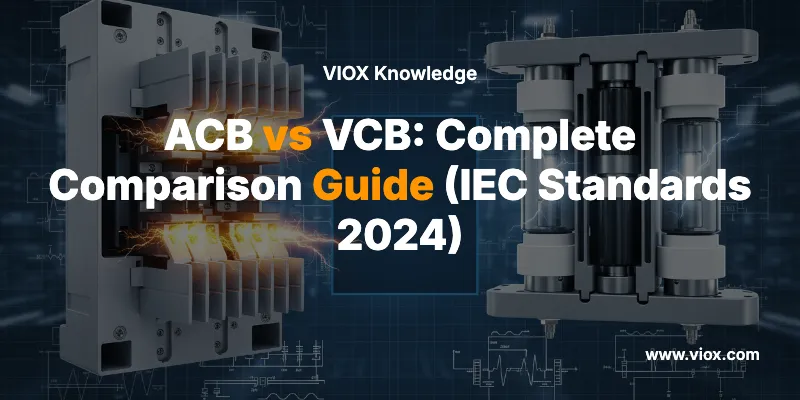
ຮູບທີ 1: ການປຽບທຽບໂຄງສ້າງຂອງເຕັກໂນໂລຢີ ACB ແລະ VCB. ACB (ຊ້າຍ) ໃຊ້ທໍ່ໄຟຟ້າໃນອາກາດເປີດ, ໃນຂະນະທີ່ VCB (ຂວາ) ໃຊ້ເຄື່ອງຂັດຂວາງສູນຍາກາດທີ່ຜະນຶກເຂົ້າກັນສໍາລັບການດັບໄຟຟ້າ.


ການດັບໄຟຟ້າ: ອາກາດ vs ສູນຍາກາດ (ເປັນຫຍັງຟີຊິກກໍານົດເພດານແຮງດັນໄຟຟ້າ)

ເມື່ອທ່ານແຍກຫນ້າສໍາຜັດທີ່ບັນຈຸກະແສໄຟຟ້າພາຍໃຕ້ການໂຫຼດ, ໄຟຟ້າຈະເກີດຂື້ນ. ສະເຫມີ. ໄຟຟ້ານັ້ນແມ່ນຖັນ plasma—ອາຍແກັສ ionized ດໍາເນີນການຫຼາຍພັນ amperes ໃນອຸນຫະພູມສູງເຖິງ 20,000°C (ຮ້ອນກວ່າຫນ້າດິນຂອງດວງອາທິດ). ວຽກຂອງເຄື່ອງຕັດວົງຈອນຂອງທ່ານແມ່ນເພື່ອດັບໄຟຟ້ານັ້ນກ່ອນທີ່ມັນຈະເຊື່ອມຫນ້າສໍາຜັດເຂົ້າກັນຫຼືກະຕຸ້ນເຫດການໄຟຟ້າ.

ວິທີທີ່ມັນເຮັດແມ່ນຂຶ້ນກັບສື່ກາງທີ່ອ້ອມຮອບຫນ້າສໍາຜັດທັງຫມົດ.

ວິທີທີ່ ACBs ໃຊ້ອາກາດແລະທໍ່ໄຟຟ້າ

ອັນ ອາກາງຈອນໄຟ ຂັດຂວາງໄຟຟ້າໃນອາກາດ. ຫນ້າສໍາຜັດຂອງເຄື່ອງຕັດແມ່ນຕັ້ງຢູ່ໃນທໍ່ໄຟຟ້າ—ແຖວຂອງແຜ່ນໂລຫະທີ່ຕັ້ງໄວ້ເພື່ອຂັດຂວາງໄຟຟ້າໃນຂະນະທີ່ຫນ້າສໍາຜັດແຍກອອກ. ນີ້ແມ່ນລໍາດັບ:

  1. ການສ້າງໄຟຟ້າ: ຫນ້າສໍາຜັດແຍກອອກ, ໄຟຟ້າເກີດຂື້ນໃນອາກາດ
  2. ການຍືດໄຟຟ້າ: ກໍາລັງແມ່ເຫຼັກຂັບໄຟຟ້າເຂົ້າໄປໃນທໍ່ໄຟຟ້າ
  3. ການແບ່ງໄຟຟ້າ: ແຜ່ນໂລຫະຂອງທໍ່ແຍກໄຟຟ້າອອກເປັນໄຟຟ້າສັ້ນຫຼາຍອັນ
  4. ການເຮັດຄວາມເຢັນຂອງໄຟຟ້າ: ພື້ນທີ່ຜິວຫນ້າທີ່ເພີ່ມຂຶ້ນແລະການສໍາຜັດກັບອາກາດເຮັດໃຫ້ plasma ເຢັນລົງ
  5. ການດັບໄຟຟ້າ: ເມື່ອໄຟຟ້າເຢັນລົງແລະຍາວຂຶ້ນ, ຄວາມຕ້ານທານເພີ່ມຂຶ້ນຈົນກ່ວາໄຟຟ້າບໍ່ສາມາດຮັກສາຕົວມັນເອງໄດ້ໃນສູນປະຈຸບັນຕໍ່ໄປ

ນີ້ເຮັດວຽກໄດ້ຢ່າງຫນ້າເຊື່ອຖືເຖິງປະມານ 1,000V. ສູງກວ່າແຮງດັນໄຟຟ້ານັ້ນ, ພະລັງງານຂອງໄຟຟ້າແມ່ນໃຫຍ່ເກີນໄປ. ຄວາມແຂງແຮງຂອງ dielectric ຂອງອາກາດ (gradient ແຮງດັນໄຟຟ້າທີ່ມັນສາມາດທົນທານໄດ້ກ່ອນທີ່ຈະແຕກແຍກ) ແມ່ນປະມານ 3 kV/mm ໃນຄວາມກົດດັນບັນຍາກາດ. ເມື່ອແຮງດັນໄຟຟ້າຂອງລະບົບປີນຂຶ້ນໄປໃນລະດັບຫຼາຍກິໂລໂວນ, ໄຟຟ້າພຽງແຕ່ເກີດຂື້ນໃຫມ່ໃນຊ່ອງຫວ່າງຂອງຫນ້າສໍາຜັດທີ່ກວ້າງຂວາງ. ທ່ານບໍ່ສາມາດສ້າງທໍ່ໄຟຟ້າຍາວພໍທີ່ຈະຢຸດມັນໄດ້ໂດຍບໍ່ເຮັດໃຫ້ເຄື່ອງຕັດມີຂະຫນາດເທົ່າກັບລົດນ້ອຍ.

ນັ້ນແມ່ນ ເພດານແຮງດັນໄຟຟ້າ.

ວິທີທີ່ VCBs ໃຊ້ຟີຊິກສູນຍາກາດ

ເຄື່ອງຕັດວົງຈອນສູນຍາກາດ ໃຊ້ວິທີການທີ່ແຕກຕ່າງກັນຫມົດ. ຫນ້າສໍາຜັດແມ່ນຕັ້ງຢູ່ໃນເຄື່ອງຂັດຂວາງສູນຍາກາດທີ່ຜະນຶກເຂົ້າກັນ—ຫ້ອງທີ່ຖືກອົບພະຍົບໄປສູ່ຄວາມກົດດັນລະຫວ່າງ 10^-2 ແລະ 10^-6 torr (ນັ້ນແມ່ນປະມານຫນຶ່ງລ້ານຂອງຄວາມກົດດັນບັນຍາກາດ).

ເມື່ອຫນ້າສໍາຜັດແຍກອອກພາຍໃຕ້ການໂຫຼດ:

  1. ການສ້າງໄຟຟ້າ: ການເກີດປະກາຍໄຟຟ້າໃນຊ່ອງຫວ່າງສູນຍາກາດ
  2. ການແຕກຕົວເປັນໄອອອນທີ່ຈຳກັດ: ເນື່ອງຈາກວ່າເກືອບບໍ່ມີໂມເລກຸນອາຍແກັສ, ປະກາຍໄຟຟ້າຂາດສື່ກາງຮອງຮັບ
  3. ການລົບລ້າງໄອອອນຢ່າງໄວວາ: ໃນຈຸດສູນປັດຈຸບັນທຳມະຊາດທຳອິດ (ທຸກເຄິ່ງຮອບວຽນໃນ AC), ມີຕົວນຳກະແສໄຟຟ້າບໍ່ພຽງພໍທີ່ຈະເຮັດໃຫ້ເກີດປະກາຍໄຟຟ້າຄືນໃໝ່
  4. ການດັບມອດທັນທີ: ປະກາຍໄຟຟ້າດັບພາຍໃນໜຶ່ງຮອບວຽນ (8.3 ມິນລິວິນາທີໃນລະບົບ 60 Hz)

ສູນຍາກາດໃຫ້ຂໍ້ໄດ້ປຽບອັນໃຫຍ່ຫຼວງສອງຢ່າງ. ທຳອິດ, ຄວາມແຮງຂອງໄຟຟ້າສະຖິດ: ຊ່ອງຫວ່າງສູນຍາກາດພຽງແຕ່ 10 ມມ ສາມາດທົນຕໍ່ແຮງດັນໄຟຟ້າໄດ້ເຖິງ 40kV—ນັ້ນແມ່ນແຮງກວ່າອາກາດ 10 ຫາ 100 ເທົ່າໃນໄລຍະຫ່າງດຽວກັນ. ອັນທີສອງ, ການຮັກສາໜ້າສຳຜັດ: ເນື່ອງຈາກບໍ່ມີອົກຊີເຈນ, ໜ້າສຳຜັດບໍ່ໄດ້ຜຸພັງ ຫຼື ເປື່ອຍໃນອັດຕາດຽວກັນກັບໜ້າສຳຜັດ ACB ທີ່ຖືກອາກາດ. ນັ້ນແມ່ນ ຂໍ້ໄດ້ປຽບທີ່ຜະນຶກເຂົ້າຕະຫຼອດຊີວິດ.

ໜ້າສຳຜັດ VCB ໃນເຄື່ອງຕັດໄຟທີ່ຮັກສາໄວ້ຢ່າງຖືກຕ້ອງສາມາດຢູ່ໄດ້ 20 ຫາ 30 ປີ. ໜ້າສຳຜັດ ACB ທີ່ຖືກອົກຊີເຈນໃນບັນຍາກາດ ແລະ ພລາສມາຂອງປະກາຍໄຟຟ້າ? ທ່ານກຳລັງເບິ່ງການປ່ຽນແທນທຸກໆ 3 ຫາ 5 ປີ, ບາງຄັ້ງໄວກວ່ານັ້ນໃນສະພາບແວດລ້ອມທີ່ມີຝຸ່ນ ຫຼື ຄວາມຊຸ່ມຊື່ນ.
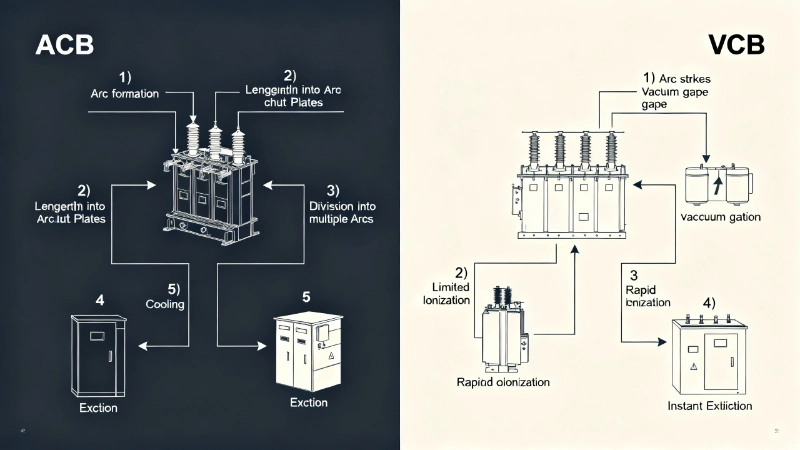
Arc quenching mechanisms

ຮູບທີ 2: ກົນໄກການດັບປະກາຍໄຟຟ້າ. ACB ຕ້ອງການຫຼາຍຂັ້ນຕອນເພື່ອເຮັດໃຫ້ຍາວ, ແບ່ງ, ແລະ ເຮັດໃຫ້ປະກາຍໄຟຟ້າເຢັນລົງໃນອາກາດ (ຊ້າຍ), ໃນຂະນະທີ່ VCB ດັບປະກາຍໄຟຟ້າທັນທີໃນຈຸດສູນປັດຈຸບັນທຳອິດເນື່ອງຈາກຄວາມແຮງຂອງໄຟຟ້າສະຖິດທີ່ດີກວ່າຂອງສູນຍາກາດ (ຂວາ).

ສໍາລັບການ-ເຄັດລັບ#໑: ເພດານແຮງດັນໄຟຟ້າບໍ່ສາມາດຕໍ່ລອງໄດ້. ACBs ບໍ່ສາມາດຂັດຂວາງປະກາຍໄຟຟ້າທີ່ສູງກວ່າ 1kV ໃນອາກາດດ້ວຍຄວາມກົດດັນບັນຍາກາດໄດ້ຢ່າງໜ້າເຊື່ອຖື. ຖ້າແຮງດັນໄຟຟ້າຂອງລະບົບຂອງທ່ານເກີນ 1,000V AC, ທ່ານຕ້ອງການ VCB—ບໍ່ແມ່ນເປັນທາງເລືອກທີ່ “ດີກວ່າ”, ແຕ່ເປັນທາງເລືອກດຽວທີ່ສອດຄ່ອງກັບຟີຊິກ ແລະ ມາດຕະຖານ IEC.


ອັດຕາແຮງດັນໄຟຟ້າ ແລະ ກະແສໄຟຟ້າ: ຕົວເລກໝາຍເຖິງຫຍັງແທ້

ແຮງດັນໄຟຟ້າບໍ່ແມ່ນພຽງແຕ່ເສັ້ນສະເພາະໃນເອກະສານຂໍ້ມູນ. ມັນເປັນເງື່ອນໄຂການຄັດເລືອກພື້ນຖານທີ່ກຳນົດປະເພດເຄື່ອງຕັດໄຟທີ່ທ່ານສາມາດພິຈາລະນາໄດ້. ອັດຕາກະແສໄຟຟ້າມີຄວາມສຳຄັນ, ແຕ່ມັນມາເປັນອັນດັບສອງ.

ນີ້ແມ່ນສິ່ງທີ່ຕົວເລກໝາຍເຖິງໃນພາກປະຕິບັດ.

ອັດຕາ ACB: ກະແສໄຟຟ້າສູງ, ແຮງດັນໄຟຟ້າຕໍ່າ

ເພດານແຮງດັນໄຟຟ້າ: ACBs ເຮັດວຽກໄດ້ຢ່າງໜ້າເຊື່ອຖືຈາກ 400V ເຖິງ 1,000V AC (ໂດຍມີບາງການອອກແບບພິເສດທີ່ມີອັດຕາເຖິງ 1,500V DC). ຈຸດທີ່ເໝາະສົມໂດຍທົ່ວໄປແມ່ນ 400V ຫຼື 690V ສຳລັບລະບົບອຸດສາຫະກຳສາມເຟດ. ສູງກວ່າ 1kV AC, ຄຸນສົມບັດຂອງໄຟຟ້າສະຖິດຂອງອາກາດເຮັດໃຫ້ການຂັດຂວາງປະກາຍໄຟຟ້າທີ່ໜ້າເຊື່ອຖືເປັນໄປບໍ່ໄດ້—ນັ້ນ ເພດານແຮງດັນໄຟຟ້າ ທີ່ພວກເຮົາໄດ້ສົນທະນາມາບໍ່ແມ່ນຂໍ້ຈຳກັດດ້ານການອອກແບບ; ມັນເປັນຂອບເຂດທາງກາຍະພາບ.

ຄວາມສາມາດໃນການຮອງຮັບກະແສໄຟຟ້າ: ສິ່ງທີ່ ACBs ເດັ່ນແມ່ນການຈັດການກະແສໄຟຟ້າ. ອັດຕາຕັ້ງແຕ່ 800A ສຳລັບແຜງຈຳໜ່າຍຂະໜາດນ້ອຍກວ່າເຖິງ 10,000A ສຳລັບການນຳໃຊ້ທາງເຂົ້າບໍລິການຫຼັກ. ຄວາມສາມາດໃນການຮອງຮັບກະແສໄຟຟ້າສູງໃນແຮງດັນໄຟຟ້າຕໍ່າແມ່ນສິ່ງທີ່ການຈຳໜ່າຍແຮງດັນໄຟຟ້າຕໍ່າຕ້ອງການຢ່າງແນ່ນອນ—ຄິດເຖິງສູນຄວບຄຸມມໍເຕີ (MCCs), ສູນຄວບຄຸມພະລັງງານ (PCCs), ແລະ ກະດານຈຳໜ່າຍຫຼັກໃນສະຖານທີ່ການຄ້າ ແລະ ອຸດສາຫະກຳ.

ຄວາມອາດສາມາດທໍາລາຍ: ອັດຕາການຂັດຂວາງວົງຈອນສັ້ນສາມາດບັນລຸໄດ້ເຖິງ 100kA ທີ່ 690V. ນັ້ນຟັງແລ້ວໜ້າປະທັບໃຈ—ແລະ ມັນກໍ່ແມ່ນ, ສຳລັບການນຳໃຊ້ແຮງດັນໄຟຟ້າຕໍ່າ. ແຕ່ໃຫ້ເຮົາເອົາມັນເຂົ້າໃນມຸມມອງດ້ວຍການຄຳນວນພະລັງງານ:

  • ຄວາມສາມາດໃນການຕັດ: 100kA ທີ່ 690V (ເສັ້ນຫາເສັ້ນ)
  • ພະລັງງານປາກົດ: √3 × 690V × 100kA ≈ 119 MVA

ນັ້ນແມ່ນພະລັງງານຄວາມຜິດພາດສູງສຸດທີ່ ACB ສາມາດຂັດຂວາງໄດ້ຢ່າງປອດໄພ. ສຳລັບໂຮງງານອຸດສາຫະກຳ 400V/690V ທີ່ມີໝໍ້ແປງໄຟຟ້າ 1.5 MVA ແລະ ອັດຕາສ່ວນ X/R ປົກກະຕິ, ເຄື່ອງຕັດໄຟ 65kA ມັກຈະພຽງພໍ. ໜ່ວຍ 100kA ແມ່ນສະຫງວນໄວ້ສຳລັບການຈຳໜ່າຍແຮງດັນໄຟຟ້າຕໍ່າໃນລະດັບສາທາລະນຸປະໂພກ ຫຼື ສະຖານທີ່ທີ່ມີໝໍ້ແປງໄຟຟ້າຂະໜາດໃຫຍ່ຫຼາຍໜ່ວຍຂະໜານກັນ.

ການນຳໃຊ້ທົ່ວໄປ:

  • ແຜງຈຳໜ່າຍຫຼັກແຮງດັນໄຟຟ້າຕໍ່າ (LVMDP)
  • ສູນຄວບຄຸມມໍເຕີ (MCCs) ສຳລັບປ້ຳ, ພັດລົມ, ເຄື່ອງອັດ
  • ສູນຄວບຄຸມພະລັງງານ (PCCs) ສຳລັບເຄື່ອງຈັກອຸດສາຫະກຳ
  • ແຜງປ້ອງກັນ ແລະ ຊິງໂຄຣໄນຂອງເຄື່ອງກຳເນີດໄຟຟ້າ
  • ຫ້ອງໄຟຟ້າອາຄານການຄ້າ (ຕ່ຳກວ່າ 1kV)

ອັດຕາ VCB: ແຮງດັນໄຟຟ້າປານກາງ, ກະແສໄຟຟ້າປານກາງ

ຊ່ວງແຮງດັນໄຟຟ້າ: VCBs ຖືກອອກແບບມາສຳລັບລະບົບແຮງດັນໄຟຟ້າປານກາງ, ໂດຍທົ່ວໄປຕັ້ງແຕ່ 11kV ເຖິງ 33kV. ບາງການອອກແບບຂະຫຍາຍຊ່ວງລົງໄປເຖິງ 1kV ຫຼື ຂຶ້ນໄປເຖິງ 38kV (ການແກ້ໄຂປີ 2024 ຂອງ IEC 62271-100 ໄດ້ເພີ່ມອັດຕາທີ່ໄດ້ມາດຕະຖານຢູ່ທີ່ 15.5kV, 27kV, ແລະ 40.5kV). ຄວາມແຮງຂອງໄຟຟ້າສະຖິດທີ່ດີກວ່າຂອງເຄື່ອງຂັດຂວາງສູນຍາກາດທີ່ຜະນຶກໄວ້ເຮັດໃຫ້ລະດັບແຮງດັນໄຟຟ້າເຫຼົ່ານີ້ສາມາດຈັດການໄດ້ພາຍໃນພື້ນທີ່ຂະໜາດນ້ອຍ.

ຄວາມສາມາດໃນການຮອງຮັບກະແສໄຟຟ້າ: VCBs ຮອງຮັບກະແສໄຟຟ້າປານກາງເມື່ອທຽບກັບ ACBs, ໂດຍມີອັດຕາປົກກະຕິຈາກ 600A ເຖິງ 4,000A. ນີ້ແມ່ນພຽງພໍຢ່າງສົມບູນສຳລັບການນຳໃຊ້ແຮງດັນໄຟຟ້າປານກາງ. ເຄື່ອງຕັດໄຟ 2,000A ທີ່ 11kV ສາມາດບັນທຸກໄດ້ 38 MVA ຂອງການໂຫຼດຢ່າງຕໍ່ເນື່ອງ—ທຽບເທົ່າກັບມໍເຕີອຸດສາຫະກຳຂະໜາດໃຫຍ່ຫຼາຍສິບໜ່ວຍ ຫຼື ຄວາມຕ້ອງການພະລັງງານຂອງສະຖານທີ່ອຸດສາຫະກຳຂະໜາດກາງທັງໝົດ.

ຄວາມອາດສາມາດທໍາລາຍ: VCBs ມີອັດຕາຕັ້ງແຕ່ 25kA ເຖິງ 50kA ໃນລະດັບແຮງດັນໄຟຟ້າຂອງພວກມັນ. ໃຫ້ເຮົາຄຳນວນພະລັງງານດຽວກັນສຳລັບ VCB 50kA ທີ່ 33kV:

  • ຄວາມສາມາດໃນການຕັດ: 50kA ທີ່ 33kV (ເສັ້ນຫາເສັ້ນ)
  • ພະລັງງານປາກົດ: √3 × 33kV × 50kA ≈ 2,850 MVA

ນັ້ນແມ່ນ ພະລັງງານຂັດຂວາງຫຼາຍກວ່າ 24 ເທົ່າ ກວ່າ ACB 100kA ຂອງພວກເຮົາທີ່ 690V. ທັນທີທັນໃດ, ຄວາມສາມາດໃນການຕັດ 50kA ທີ່ “ຕ່ຳກວ່າ” ນັ້ນເບິ່ງຄືວ່າບໍ່ໜ້ອຍປານໃດ. VCBs ກຳລັງຂັດຂວາງກະແສໄຟຟ້າຜິດພາດໃນລະດັບພະລັງງານທີ່ຈະເຮັດໃຫ້ທໍ່ປະກາຍໄຟຟ້າຂອງ ACB ກາຍເປັນອາຍ.
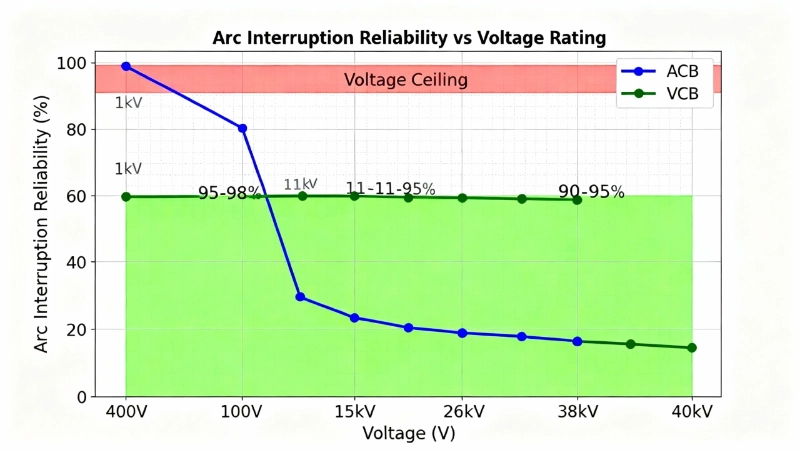
the Voltage Ceiling visualization

ຮູບທີ 3: ການສະແດງພາບເພດານແຮງດັນໄຟຟ້າ. ACBs ເຮັດວຽກໄດ້ຢ່າງໜ້າເຊື່ອຖືເຖິງ 1,000V ແຕ່ບໍ່ສາມາດຂັດຂວາງປະກາຍໄຟຟ້າທີ່ສູງກວ່າຂອບເຂດນີ້ໄດ້ຢ່າງປອດໄພ (ເຂດສີແດງ), ໃນຂະນະທີ່ VCBs ເດັ່ນໃນຊ່ວງແຮງດັນໄຟຟ້າປານກາງຈາກ 11kV ເຖິງ 38kV (ເຂດສີຂຽວ).

ການນຳໃຊ້ທົ່ວໄປ:

  • ສະຖານີຍ່ອຍຈຳໜ່າຍສາທາລະນຸປະໂພກ (11kV, 22kV, 33kV)
  • ສະວິດເກຍແຮງດັນໄຟຟ້າປານກາງອຸດສາຫະກຳ (ໜ່ວຍວົງແຫວນຫຼັກ, ສະວິດບອດ)
  • ການປ້ອງກັນມໍເຕີໄຟຟ້າແຮງສູງ (>1,000 HP)
  • ການປົກປ້ອງຫຼັກ Transformer
  • ສະຖານທີ່ຜະລິດພະລັງງານ (ເຄື່ອງຕັດວົງຈອນເຄື່ອງກຳເນີດໄຟຟ້າ)
  • ລະບົບພະລັງງານທົດແທນ (ຟາມກັງຫັນລົມ, ສະຖານີອິນເວີເຕີແສງຕາເວັນ)

ສໍາລັບການ-ເຄັດລັບ#໒: ຢ່າປຽບທຽບຄວາມສາມາດໃນການຕັດເປັນກິໂລແອມແປເທົ່ານັ້ນ. ຄຳນວນພະລັງງານຂັດຂວາງ MVA (√3 × ແຮງດັນໄຟຟ້າ × ກະແສໄຟຟ້າ). VCB 50kA ທີ່ 33kV ຂັດຂວາງພະລັງງານຫຼາຍກວ່າ ACB 100kA ທີ່ 690V ຢ່າງຫຼວງຫຼາຍ. ແຮງດັນໄຟຟ້າມີຄວາມສຳຄັນກວ່າກະແສໄຟຟ້າເມື່ອປະເມີນຄວາມສາມາດຂອງເຄື່ອງຕັດໄຟ.


ການແບ່ງມາດຕະຖານ: IEC 60947-2 (ACB) ທຽບກັບ IEC 62271-100 (VCB)

ຄະນະກຳມະການໄຟຟ້າເຕັກນິກສາກົນ (IEC) ບໍ່ໄດ້ແບ່ງມາດຕະຖານແບບທຳມະດາ. ເມື່ອ IEC 60947-2 ຄວບຄຸມເຄື່ອງຕັດໄຟເຖິງ 1,000V ແລະ IEC 62271-100 ເຂົ້າຮັບໜ້າທີ່ສູງກວ່າ 1,000V, ຂອບເຂດນັ້ນສະທ້ອນເຖິງຄວາມເປັນຈິງທາງກາຍະພາບທີ່ພວກເຮົາໄດ້ສົນທະນາມາ. ນີ້ແມ່ນ ການແບ່ງມາດຕະຖານ, ແລະ ມັນແມ່ນເຂັມທິດການອອກແບບຂອງທ່ານ.

IEC 60947-2:2024 ສຳລັບເຄື່ອງຕັດວົງຈອນອາກາດ

ຂອບເຂດ: ມາດຕະຖານນີ້ໃຊ້ກັບເຄື່ອງຕັດວົງຈອນທີ່ມີແຮງດັນໄຟຟ້າທີ່ໄດ້ມາດຕະຖານ ບໍ່ເກີນ 1,000V AC ຫຼື 1,500V DC. ມັນເປັນເອກະສານອ້າງອີງທີ່ເຊື່ອຖືໄດ້ສຳລັບການປ້ອງກັນວົງຈອນແຮງດັນໄຟຟ້າຕໍ່າ, ລວມທັງ ACBs, ເຄື່ອງຕັດວົງຈອນແບບຫຸ້ມ (MCCBs), ແລະ ເຄື່ອງຕັດວົງຈອນຂະໜາດນ້ອຍ (MCBs).

ສະບັບທີຫົກໄດ້ຖືກຕີພິມໃນ ເດືອນກັນຍາ 2024, ແທນທີ່ສະບັບປີ 2016. ການປັບປຸງຫຼັກປະກອບມີ:

  1. ຄວາມເໝາະສົມສຳລັບການແຍກ: ຂໍ້ກຳນົດທີ່ຊັດເຈນສຳລັບການນຳໃຊ້ເຄື່ອງຕັດວົງຈອນເປັນສະວິດແຍກ
  2. ການລຶບການຈັດປະເພດ: IEC ໄດ້ລົບລ້າງການຈັດປະເພດຂອງເຄື່ອງຕັດວົງຈອນໂດຍສື່ກາງຂັດຂວາງ (ອາກາດ, ນ້ຳມັນ, SF6, ແລະອື່ນໆ). ເປັນຫຍັງ? ເນື່ອງຈາກວ່າ ແຮງດັນໄຟຟ້າບອກທ່ານແລ້ວວ່າສື່ກາງແມ່ນຫຍັງ. ຖ້າທ່ານຢູ່ທີ່ 690V, ທ່ານກຳລັງໃຊ້ອາກາດ ຫຼື ກ່ອງແມ່ພິມທີ່ຜະນຶກເຂົ້າກັນ. ລະບົບການຈັດປະເພດເກົ່າແມ່ນຊ້ຳຊ້ອນ.
  3. ການປັບອຸປະກອນພາຍນອກ: ຂໍ້ກຳນົດໃໝ່ສຳລັບການປັບການຕັ້ງຄ່າກະແສເກີນຜ່ານອຸປະກອນພາຍນອກ
  4. ການທົດສອບທີ່ປັບປຸງ: ເພີ່ມການທົດສອບສຳລັບການປ່ອຍກະແສໄຟຟ້າລົງດິນ ແລະ ຄຸນສົມບັດໄຟຟ້າໃນຕຳແໜ່ງທີ່ຖືກຕັດ
  5. ການປັບປຸງ EMC: ຂັ້ນຕອນການທົດສອບຄວາມເຂົ້າກັນໄດ້ທາງແມ່ເຫຼັກໄຟຟ້າ (EMC) ທີ່ປັບປຸງ ແລະ ວິທີການວັດແທກການສູນເສຍພະລັງງານ

ການປັບປຸງປີ 2024 ເຮັດໃຫ້ມາດຕະຖານສະອາດຂຶ້ນ ແລະ ສອດຄ່ອງກັບໜ່ວຍເດີນທາງດິຈິຕອລທີ່ທັນສະໄໝ ແລະ ເຕັກໂນໂລຊີເຄື່ອງຕັດວົງຈອນອັດສະລິຍະ, ແຕ່ຂອບເຂດແຮງດັນໄຟຟ້າຫຼັກ—≤1,000V AC—ຍັງຄົງບໍ່ປ່ຽນແປງ. ເໜືອສິ່ງນັ້ນ, ທ່ານອອກຈາກຂອບເຂດອຳນາດຂອງ IEC 60947-2.

IEC 62271-100:2021 (ການແກ້ໄຂ 1: 2024) ສຳລັບເຄື່ອງຕັດວົງຈອນສູນຍາກາດ

ຂອບເຂດ: ມາດຕະຖານນີ້ຄວບຄຸມເຄື່ອງຕັດວົງຈອນກະແສສະຫຼັບທີ່ອອກແບບມາສຳລັບ ລະບົບສາມເຟດທີ່ມີແຮງດັນໄຟຟ້າສູງກວ່າ 1,000V. ມັນຖືກປັບແຕ່ງໂດຍສະເພາະສຳລັບສະວິດເກຍໃນລົ່ມ ແລະ ກາງແຈ້ງແຮງດັນປານກາງ ແລະ ແຮງດັນສູງ, ບ່ອນທີ່ VCBs ເປັນເຕັກໂນໂລຊີທີ່ໂດດເດັ່ນ (ຄຽງຄູ່ກັບເຄື່ອງຕັດ SF6 ສຳລັບຊັ້ນແຮງດັນໄຟຟ້າສູງສຸດ).

ສະບັບທີສາມໄດ້ຖືກຕີພິມໃນປີ 2021, ໂດຍມີ ການແກ້ໄຂ 1 ປ່ອຍອອກມາໃນເດືອນສິງຫາ 2024. ການປັບປຸງທີ່ຜ່ານມາປະກອບມີ:

  1. ຄ່າ TRV (ແຮງດັນຟື້ນຕົວຊົ່ວຄາວ) ທີ່ປັບປຸງ: ພາລາມິເຕີ TRV ທີ່ຄຳນວນຄືນໃໝ່ໃນຫຼາຍຕາຕະລາງເພື່ອສະທ້ອນເຖິງພຶດຕິກຳຂອງລະບົບຕົວຈິງ ແລະ ການອອກແບບໝໍ້ແປງໄຟຟ້າໃໝ່ກວ່າ
  2. ແຮງດັນໄຟຟ້າທີ່ໄດ້ຮັບການຈັດອັນດັບໃໝ່: ການຈັດອັນດັບມາດຕະຖານເພີ່ມເຂົ້າໃນ 15.5kV, 27kV, ແລະ 40.5kV ເພື່ອຄອບຄຸມແຮງດັນໄຟຟ້າຂອງລະບົບພາກພື້ນ (ໂດຍສະເພາະໃນອາຊີ ແລະ ຕາເວັນອອກກາງ)
  3. ການແກ້ໄຂຄຳນິຍາມຄວາມຜິດປົກກະຕິຂອງປາຍທາງ: ອະທິບາຍໃຫ້ຈະແຈ້ງວ່າອັນໃດປະກອບເປັນຄວາມຜິດປົກກະຕິຂອງປາຍທາງເພື່ອຈຸດປະສົງໃນການທົດສອບ
  4. ມາດຕະຖານການທົດສອບໄຟຟ້າ: ເພີ່ມມາດຕະຖານສຳລັບການທົດສອບໄຟຟ້າ; ລະບຸຢ່າງຈະແຈ້ງວ່າການທົດສອບການໄຫຼອອກບາງສ່ວນໃຊ້ໄດ້ກັບ GIS (ສະວິດເກຍທີ່ເປັນສນວນແກັສ) ແລະ ເຄື່ອງຕັດຖັງຕາຍເທົ່ານັ້ນ, ບໍ່ແມ່ນ VCBs ປົກກະຕິ
  5. ຂໍ້ຄວນພິຈາລະນາດ້ານສິ່ງແວດລ້ອມ: ຄຳແນະນຳທີ່ປັບປຸງກ່ຽວກັບລະດັບຄວາມສູງ, ມົນລະພິດ, ແລະ ປັດໃຈການຫຼຸດອຸນຫະພູມ

ການແກ້ໄຂປີ 2024 ຮັກສາມາດຕະຖານໃຫ້ທັນສະໄໝກັບການປ່ຽນແປງຂອງພື້ນຖານໂຄງລ່າງຕາຂ່າຍໄຟຟ້າທົ່ວໂລກ, ແຕ່ຫຼັກການພື້ນຖານຍັງຄົງຢູ່: ເໜືອ 1,000V, ທ່ານຕ້ອງການເຄື່ອງຕັດແຮງດັນປານກາງ, ແລະ ສຳລັບລະດັບ 1kV-38kV, ນັ້ນເກືອບໝາຍເຖິງ VCB ສະເໝີ.

ເປັນຫຍັງມາດຕະຖານເຫຼົ່ານີ້ຈຶ່ງບໍ່ທັບຊ້ອນກັນ

ຂອບເຂດ 1,000V ບໍ່ແມ່ນໂດຍຕົນເອງ. ມັນແມ່ນຈຸດທີ່ອາກາດໃນບັນຍາກາດປ່ຽນຈາກ “ສື່ກາງດັບໄຟຟ້າທີ່ພຽງພໍ” ໄປເປັນ “ຄວາມຮັບຜິດຊອບ.” IEC ບໍ່ໄດ້ສ້າງສອງມາດຕະຖານເພື່ອຂາຍປຶ້ມເພີ່ມເຕີມ. ພວກເຂົາໄດ້ສ້າງຄວາມເປັນຈິງທາງດ້ານວິສະວະກຳຢ່າງເປັນທາງການ:

  • ຕ່ຳກວ່າ 1kV: ການອອກແບບທີ່ໃຊ້ອາກາດ ຫຼື ກ່ອງແມ່ພິມເຮັດວຽກໄດ້. ທໍ່ລະບາຍອາກາດມີປະສິດທິພາບ. ເຄື່ອງຕັດມີຂະໜາດກະທັດຮັດ ແລະ ປະຢັດ.
  • ສູງກວ່າ 1kV: ອາກາດຕ້ອງການທໍ່ລະບາຍອາກາດຂະໜາດໃຫຍ່ທີ່ບໍ່ສາມາດປະຕິບັດໄດ້; ສູນຍາກາດ (ຫຼື SF6 ສຳລັບແຮງດັນໄຟຟ້າທີ່ສູງກວ່າ) ກາຍເປັນສິ່ງຈຳເປັນສຳລັບການຂັດຂວາງໄຟຟ້າທີ່ປອດໄພ ແລະ ເຊື່ອຖືໄດ້ໃນພື້ນທີ່ທີ່ສົມເຫດສົມຜົນ.

ເມື່ອທ່ານກຳລັງລະບຸເຄື່ອງຕັດ, ຄຳຖາມທຳອິດບໍ່ແມ່ນ “ACB ຫຼື VCB?” ມັນແມ່ນ “ແຮງດັນໄຟຟ້າຂອງລະບົບຂອງຂ້ອຍແມ່ນຫຍັງ?” ຄຳຕອບນັ້ນຊີ້ໃຫ້ທ່ານເຫັນມາດຕະຖານທີ່ຖືກຕ້ອງ, ເຊິ່ງຊີ້ໃຫ້ທ່ານເຫັນປະເພດເຄື່ອງຕັດທີ່ຖືກຕ້ອງ.

专业提示#3: ເມື່ອທົບທວນເອກະສານຂໍ້ມູນເຄື່ອງຕັດວົງຈອນ, ໃຫ້ກວດເບິ່ງວ່າມັນປະຕິບັດຕາມມາດຕະຖານ IEC ໃດ. ຖ້າມັນລະບຸ IEC 60947-2, ມັນແມ່ນເຄື່ອງຕັດແຮງດັນຕ່ຳ (≤1kV). ຖ້າມັນລະບຸ IEC 62271-100, ມັນແມ່ນເຄື່ອງຕັດແຮງດັນປານກາງ/ສູງ (>1kV). ການປະຕິບັດຕາມມາດຕະຖານບອກທ່ານເຖິງຊັ້ນແຮງດັນໄຟຟ້າທັນທີ.


ການນຳໃຊ້: ການຈັບຄູ່ປະເພດເຄື່ອງຕັດກັບລະບົບຂອງທ່ານ

ການເລືອກລະຫວ່າງ ACB ແລະ VCB ບໍ່ແມ່ນກ່ຽວກັບຄວາມມັກ. ມັນແມ່ນກ່ຽວກັບການຈັບຄູ່ຄວາມສາມາດທາງກາຍະພາບຂອງເຄື່ອງຕັດກັບຄຸນລັກສະນະໄຟຟ້າ ແລະ ຄວາມຕ້ອງການໃນການດຳເນີນງານຂອງລະບົບຂອງທ່ານ.

ນີ້ແມ່ນວິທີການສ້າງແຜນທີ່ປະເພດເຄື່ອງຕັດກັບການນຳໃຊ້.

ເມື່ອໃດຄວນໃຊ້ ACBs

ເຄື່ອງຕັດວົງຈອນອາກາດແມ່ນທາງເລືອກທີ່ຖືກຕ້ອງສຳລັບ ລະບົບແຈກຢາຍແຮງດັນຕ່ຳ ບ່ອນທີ່ຄວາມຈຸຂອງກະແສໄຟຟ້າສູງມີຄວາມສຳຄັນຫຼາຍກວ່າຂະໜາດກະທັດຮັດ ຫຼື ໄລຍະການບຳລຸງຮັກສາທີ່ຍາວນານ.

ການນຳໃຊ້ທີ່ເໝາະສົມ:

  • ການແຈກຢາຍສາມເຟດ 400V ຫຼື 690V: ກະດູກສັນຫຼັງຂອງລະບົບໄຟຟ້າອຸດສາຫະກຳ ແລະ ການຄ້າສ່ວນໃຫຍ່
  • ສູນຄວບຄຸມມໍເຕີ (MCCs): ການປົກປ້ອງປັ້ມ, ພັດລົມ, ເຄື່ອງອັດ, ສາຍພານລຳລຽງ, ແລະ ມໍເຕີແຮງດັນຕ່ຳອື່ນໆ
  • ສູນຄວບຄຸມພະລັງງານ (PCCs): ການແຈກຢາຍຫຼັກສຳລັບເຄື່ອງຈັກອຸດສາຫະກຳ ແລະ ອຸປະກອນຂະບວນການ
  • ແຜງແຈກຢາຍຫຼັກແຮງດັນຕ່ຳ (LVMDP): ທາງເຂົ້າບໍລິການ ແລະ ເຄື່ອງຕັດຫຼັກສຳລັບອາຄານ ແລະ ສິ່ງອຳນວຍຄວາມສະດວກ
  • ການປົກປ້ອງເຄື່ອງກຳເນີດໄຟຟ້າ: ເຄື່ອງກຳເນີດໄຟຟ້າສຳຮອງແຮງດັນຕ່ຳ (ໂດຍປົກກະຕິ 480V ຫຼື 600V)
  • ທະ​ເລ​ແລະ offshore: ການແຈກຢາຍພະລັງງານເຮືອແຮງດັນຕ່ຳ (ບ່ອນທີ່ IEC 60092 ຍັງໃຊ້ໄດ້)

ເມື່ອ ACBs ເໝາະສົມທາງດ້ານການເງິນ:

  • ລຳດັບຄວາມສຳຄັນຂອງຄ່າໃຊ້ຈ່າຍເບື້ອງຕົ້ນຕໍ່າ: ຖ້າງົບປະມານທຶນຖືກຈຳກັດ ແລະ ທ່ານມີຄວາມສາມາດໃນການບຳລຸງຮັກສາພາຍໃນ
  • ຄວາມຕ້ອງການກະແສໄຟຟ້າສູງ: ເມື່ອທ່ານຕ້ອງການລະດັບ 6,000A+ ທີ່ມີລາຄາຖືກກວ່າໃນຮູບແບບ ACB
  • ປັບປຸງເຂົ້າໃນສະວິດເກຍ LV ທີ່ມີຢູ່: ເມື່ອປ່ຽນແທນແບບດຽວກັນໃນແຜງທີ່ອອກແບບມາສຳລັບ ACBs

ຂໍ້ຈຳກັດທີ່ຄວນຈື່:

  • ພາລະການບຳລຸງຮັກສາ: ຄາດວ່າຈະມີການກວດກາທຸກໆ 6 ເດືອນ ແລະ ປ່ຽນແທນໜ້າສຳຜັດທຸກໆ 3-5 ປີ
  • ຂະໜາດ: ACBs ມີຂະໜາດໃຫຍ່ກວ່າ ແລະ ໜັກກວ່າ VCBs ທີ່ທຽບເທົ່າກັນເນື່ອງຈາກການປະກອບ arc chute
  • ສຽງດັງ: ການຂັດຂວາງ arc ໃນອາກາດແມ່ນດັງກວ່າໃນສູນຍາກາດທີ່ປິດສະໜິດ
  • ອາຍຸການໃຊ້ງານຈຳກັດ: ໂດຍປົກກະຕິ 10,000 ຫາ 15,000 ຄັ້ງກ່ອນການສ້ອມແປງໃຫຍ່

ເມື່ອໃດຄວນໃຊ້ VCBs

Vacuum Circuit Breakers ເດັ່ນ ການນຳໃຊ້ແຮງດັນປານກາງ ບ່ອນທີ່ຄວາມໜ້າເຊື່ອຖື, ການບຳລຸງຮັກສາຕ່ຳ, ຂະໜາດກະທັດຮັດ, ແລະ ອາຍຸການໃຊ້ງານຍາວນານເຮັດໃຫ້ຄ່າໃຊ້ຈ່າຍເບື້ອງຕົ້ນສູງຂຶ້ນ.

ການນຳໃຊ້ທີ່ເໝາະສົມ:

  • ສະຖານີຍ່ອຍໄຟຟ້າ 11kV, 22kV, 33kV: ສະວິດເກຍແຈກຢາຍຂັ້ນຕົ້ນ ແລະ ຂັ້ນສອງ
  • ສະວິດເກຍ MV ອຸດສາຫະກຳ: ຫົວໜ່ວຍວົງແຫວນຫຼັກ (RMUs), ກະດານສະວິດຫຸ້ມດ້ວຍໂລຫະ, ໝໍ້ແປງທີ່ຕິດຢູ່ເທິງແຜ່ນຮອງ
  • ການປ້ອງກັນມໍເຕີແຮງດັນສູງ: ມໍເຕີ Induction ຂ້າງເທິງ 1,000 HP (ໂດຍປົກກະຕິ 3.3kV, 6.6kV, ຫຼື 11kV)
  • ການປ້ອງກັນການຫັນເປັນ: ເບກເກີດ້ານຫຼັກສຳລັບການແຈກຢາຍ ແລະ ໝໍ້ແປງໄຟຟ້າ
  • ສິ່ງອຳນວຍຄວາມສະດວກໃນການຜະລິດໄຟຟ້າ: ເບກເກີວົງຈອນເຄື່ອງກຳເນີດໄຟຟ້າ, ພະລັງງານຊ່ວຍສະຖານີ
  • ລະບົບພະລັງງານທົດແທນ: ວົງຈອນເກັບກຳຟາມລົມ, ໝໍ້ແປງຂັ້ນໄດຂອງເຄື່ອງປ່ຽນກະແສໄຟຟ້າແສງຕາເວັນ
  • ການຂຸດຄົ້ນບໍ່ແຮ່ ແລະ ອຸດສາຫະກຳໜັກ: ບ່ອນທີ່ຂີ້ຝຸ່ນ, ຄວາມຊຸ່ມຊື່ນ, ແລະ ສະພາບທີ່ຮຸນແຮງເຮັດໃຫ້ການບຳລຸງຮັກສາ ACB ເປັນບັນຫາ

ເມື່ອ VCBs ເປັນທາງເລືອກດຽວ:

  • ແຮງດັນໄຟຟ້າຂອງລະບົບ >1kV AC: ຟີຊິກ ແລະ IEC 62271-100 ຮຽກຮ້ອງໃຫ້ມີເບກເກີທີ່ໄດ້ຮັບການຈັດອັນດັບແຮງດັນປານກາງ
  • ການດຳເນີນງານປ່ຽນເລື້ອຍໆ: VCBs ໄດ້ຮັບການຈັດອັນດັບສຳລັບການດຳເນີນງານກົນຈັກ 30,000+ (ບາງການອອກແບບເກີນ 100,000 ການດຳເນີນງານ)
  • ການເຂົ້າເຖິງການບຳລຸງຮັກສາຈຳກັດ: ສະຖານີຍ່ອຍຫ່າງໄກສອກຫຼີກ, ເວທີນອກຝັ່ງທະເລ, ການຕິດຕັ້ງເທິງຫຼັງຄາບ່ອນທີ່ການກວດກາ ACB ເຄິ່ງປີແມ່ນບໍ່ສາມາດປະຕິບັດໄດ້
  • ຈຸດສຸມຂອງຄ່າໃຊ້ຈ່າຍຕະຫຼອດຊີວິດຍາວນານ: ເມື່ອຄ່າໃຊ້ຈ່າຍທັງໝົດຂອງການເປັນເຈົ້າຂອງໃນໄລຍະ 20-30 ປີເກີນຄ່າໃຊ້ຈ່າຍທຶນເບື້ອງຕົ້ນ

ຂໍ້ໄດ້ປຽບໃນສະພາບແວດລ້ອມທີ່ຮຸນແຮງ:

  • ເຄື່ອງຂັດຂວາງສູນຍາກາດທີ່ປິດສະໜິດບໍ່ໄດ້ຮັບຜົນກະທົບຈາກຂີ້ຝຸ່ນ, ຄວາມຊຸ່ມຊື່ນ, ການສີດເກືອ, ຫຼື ລະດັບຄວາມສູງ (ສູງເຖິງຂີດຈຳກັດການຫຼຸດອັດຕາ)
  • ບໍ່ມີ arc chutes ທີ່ຈະເຮັດຄວາມສະອາດ ຫຼື ປ່ຽນແທນ
  • ການດຳເນີນງານທີ່ງຽບສະຫງົບ (ສຳຄັນສຳລັບສະຖານີຍ່ອຍພາຍໃນອາຄານທີ່ຄົນອາໄສຢູ່)
  • ຂະໜາດກະທັດຮັດ (ສຳຄັນໃນສະຖານີຍ່ອຍໃນຕົວເມືອງທີ່ມີອະສັງຫາລິມະສັບລາຄາແພງ)

ຕາຕະລາງການຕັດສິນໃຈ: ACB ຫຼື VCB?

ຄຸນລັກສະນະຂອງລະບົບຂອງທ່ານ ປະເພດເບກເກີທີ່ແນະນຳ ເຫດຜົນຫຼັກ
ແຮງດັນໄຟຟ້າ ≤ 1,000V AC ACB ຂອບເຂດອຳນາດຂອງ IEC 60947-2; ການດັບໄຟດ້ວຍອາກາດແມ່ນພຽງພໍ
ແຮງດັນໄຟຟ້າ > 1,000V AC VCB ຕ້ອງການ IEC 62271-100; ອາກາດບໍ່ສາມາດຂັດຂວາງ arc ໄດ້ຢ່າງໜ້າເຊື່ອຖື
ກະແສໄຟຟ້າສູງ (>5,000A) ທີ່ LV ACB ປະຢັດກວ່າສຳລັບກະແສໄຟຟ້າສູງຫຼາຍທີ່ແຮງດັນໄຟຟ້າຕ່ຳ
ການປ່ຽນເລື້ອຍໆ (>20/ມື້) VCB ໄດ້ຮັບການຈັດອັນດັບສຳລັບການດຳເນີນງານ 30,000+ ທຽບກັບ 10,000 ຂອງ ACB
ສະພາບແວດລ້ອມທີ່ຮຸນແຮງ (ຂີ້ຝຸ່ນ, ເກືອ, ຄວາມຊຸ່ມຊື່ນ) VCB ເຄື່ອງຂັດຂວາງທີ່ປິດສະໜິດບໍ່ໄດ້ຮັບຜົນກະທົບຈາກການປົນເປື້ອນ
ການເຂົ້າເຖິງການບຳລຸງຮັກສາຈຳກັດ VCB ໄລຍະການບໍລິການ 3-5 ປີ ທຽບກັບຕາຕະລາງ 6 ເດືອນຂອງ ACB
ຈຸດສຸມຂອງຄ່າໃຊ້ຈ່າຍຕະຫຼອດຊີວິດ 20+ ປີ VCB TCO ຕ່ຳກວ່າເຖິງວ່າຈະມີຄ່າໃຊ້ຈ່າຍເບື້ອງຕົ້ນສູງກວ່າ
ຂໍ້ຈຳກັດດ້ານພື້ນທີ່ແໜ້ນໜາ VCB ການອອກແບບກະທັດຮັດ; ບໍ່ມີປະລິມານ arc chute
ໂຄງການທຶນທີ່ຖືກຈຳກັດງົບປະມານ ACB (ຖ້າ ≤1kV) ຄ່າໃຊ້ຈ່າຍເບື້ອງຕົ້ນຕໍ່າກວ່າ, ແຕ່ໃຫ້ຄຳນຶງເຖິງງົບປະມານການບຳລຸງຮັກສາ

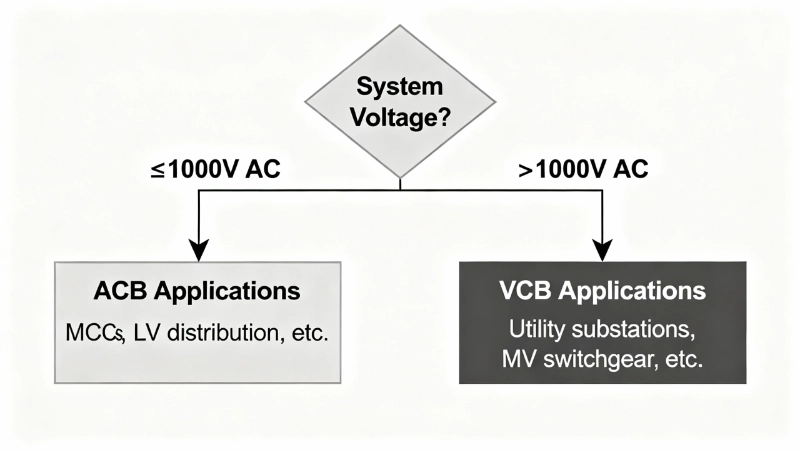
Circuit breaker selection flowchart

ຮູບທີ 5: ແຜນວາດການເລືອກເຄື່ອງຕັດວົງຈອນ. ແຮງດັນໄຟຟ້າຂອງລະບົບແມ່ນເງື່ອນໄຂການຕັດສິນໃຈຕົ້ນຕໍ, ຊີ້ ນຳ ທ່ານໄປສູ່ການ ນຳ ໃຊ້ ACB (ແຮງດັນໄຟຟ້າຕ່ ຳ) ຫຼື VCB (ແຮງດັນໄຟຟ້າປານກາງ) ໂດຍອີງໃສ່ຂອບເຂດ 1,000V.

专业提示 #4: ຖ້າແຮງດັນໄຟຟ້າຂອງລະບົບຂອງທ່ານຢູ່ໃກ້ກັບຂອບເຂດ 1kV, ໃຫ້ລະບຸ VCB. ຢ່າພະຍາຍາມຂະຫຍາຍ ACB ໄປສູ່ລະດັບແຮງດັນໄຟຟ້າສູງສຸດ. ເພດານແຮງດັນໄຟຟ້າ ບໍ່ແມ່ນ “ລະດັບສູງສຸດ” - ມັນເປັນຂີດ ຈຳ ກັດທາງຟີຊິກທີ່ແຂງກະດ້າງ. ອອກແບບດ້ວຍຂອບເຂດ.


ພາສີບຳລຸງຮັກສາ: ເຫດຜົນທີ່ VCBs ລາຄາຖືກກວ່າໃນໄລຍະ 20 ປີ

ACB $15,000 ນັ້ນເບິ່ງຄືວ່າມີຄວາມດຶງດູດເມື່ອທຽບກັບ VCB $25,000. ຈົນກວ່າທ່ານຈະ ດຳ ເນີນການຕົວເລກໃນໄລຍະ 15 ປີ.

ຍິນດີຕ້ອນຮັບສູ່ ພາສີບຳລຸງຮັກສາ- ຄ່າໃຊ້ຈ່າຍທີ່ເກີດຂື້ນທີ່ເຊື່ອງໄວ້ເຊິ່ງປ່ຽນສົມຜົນເສດຖະກິດ.

ການບຳລຸງຮັກສາ ACB: ພາລະສອງຄັ້ງຕໍ່ປີ

ເຄື່ອງຕັດວົງຈອນອາກາດຮຽກຮ້ອງໃຫ້ມີການບຳລຸງຮັກສາເປັນປະ ຈຳ, ເພາະວ່າການຕິດຕໍ່ແລະທໍ່ສົ່ງໄຟຟ້າຂອງພວກເຂົາເຮັດວຽກຢູ່ໃນສະພາບແວດລ້ອມກາງແຈ້ງ. ນີ້ແມ່ນຕາຕະລາງການບຳລຸງຮັກສາປົກກະຕິທີ່ແນະ ນຳ ໂດຍຜູ້ຜະລິດແລະ IEC 60947-2:

ທຸກໆ 6 ເດືອນ (ກວດກາເຄິ່ງປີ):

  • ກວດກາເບິ່ງການຕິດຕໍ່ ສຳ ລັບການກັດ, ການເຊາະເຈື່ອນ, ຫຼືການປ່ຽນສີ
  • ທຳ ຄວາມສະອາດທໍ່ສົ່ງໄຟຟ້າ (ການ ກຳ ຈັດສິ່ງເສດເຫຼືອຂອງກາກບອນແລະສານລະເຫີຍໂລຫະ)
  • ການວັດແທກຊ່ອງຫວ່າງແລະເຊັດຕິດຕໍ່
  • ການທົດສອບການປະຕິບັດງານກົນຈັກ (ຄູ່ມືແລະອັດຕະໂນມັດ)
  • ກວດສອບແຮງບິດຂອງການເຊື່ອມຕໍ່ຢູ່ປາຍຍອດ
  • ການຫລໍ່ລື່ນຂອງຊິ້ນສ່ວນທີ່ເຄື່ອນຍ້າຍ (hinges, linkages, bearings)
  • ການທົດສອບ ໜ້າ ທີ່ຂອງ ໜ່ວຍ ເດີນທາງເກີນ ກຳ ນົດ

ທຸກໆ 3-5 ປີ (ບໍລິການໃຫຍ່):

  • ການປ່ຽນແທນການຕິດຕໍ່ (ຖ້າການເຊາະເຈື່ອນເກີນຂອບເຂດ ຈຳ ກັດຂອງຜູ້ຜະລິດ)
  • ກວດກາແລະປ່ຽນທໍ່ສົ່ງໄຟຟ້າຖ້າເສຍຫາຍ
  • ການທົດສອບຄວາມຕ້ານທານຂອງສນວນ (ການທົດສອບ megger)
  • ການວັດແທກຄວາມຕ້ານທານຕິດຕໍ່
  • ການຖອດແລະ ທຳ ຄວາມສະອາດໃຫ້ຄົບຖ້ວນ
  • ການປ່ຽນແທນສ່ວນປະກອບກົນຈັກທີ່ສວມໃສ່

ການແບ່ງປັນຄ່າໃຊ້ຈ່າຍ (ປົກກະຕິ, ແຕກຕ່າງກັນໄປຕາມພາກພື້ນ):

  • ກວດກາເຄິ່ງປີ: $600-$1,000 ຕໍ່ເຄື່ອງຕັດ (ແຮງງານຂອງຜູ້ຮັບ ເໝົາ: 3-4 ຊົ່ວໂມງ)
  • ການປ່ຽນແທນການຕິດຕໍ່: $2,500-$4,000 (ຊິ້ນສ່ວນ + ແຮງງານ)
  • ການປ່ຽນທໍ່ສົ່ງໄຟຟ້າ: $1,500-$2,500 (ຖ້າເສຍຫາຍ)
  • ການໂທຫາບໍລິການສຸກເສີນ (ຖ້າເຄື່ອງຕັດລົ້ມເຫລວລະຫວ່າງການກວດກາ): $1,500-$3,000

ສຳ ລັບ ACB ທີ່ມີອາຍຸການໃຊ້ງານ 15 ປີ:

  • ການກວດກາເຄິ່ງປີ: 15 ປີ× 2 ການກວດກາ / ປີ× $800 ໂດຍສະເລ່ຍ = $24,000
  • ການປ່ຽນແທນການຕິດຕໍ່: (15 ປີ÷ 4 ປີ) × $3,000 = $9,000 (3 ການປ່ຽນແທນ)
  • ຄວາມລົ້ມເຫຼວທີ່ບໍ່ໄດ້ວາງແຜນ: ສົມມຸດວ່າ 1 ຄວາມລົ້ມເຫຼວ× $2,000 = $2,000
  • ຄ່າໃຊ້ຈ່າຍໃນການບຳລຸງຮັກສາທັງ ໝົດ ໃນໄລຍະ 15 ປີ: $35,000

ເພີ່ມຄ່າໃຊ້ຈ່າຍໃນການຊື້ເບື້ອງຕົ້ນ ($15,000), ແລະຂອງທ່ານ ຄ່າໃຊ້ຈ່າຍທັງ ໝົດ ໃນການເປັນເຈົ້າຂອງ 15 ປີແມ່ນ ~ $50,000.

ນັ້ນແມ່ນ ພາສີບຳລຸງຮັກສາ. ທ່ານຈ່າຍມັນເປັນຊົ່ວໂມງແຮງງານ, ການຢຸດເຮັດວຽກ, ແລະຊິ້ນສ່ວນທີ່ບໍລິໂພກ - ທຸກໆປີ, ສອງຄັ້ງຕໍ່ປີ, ສຳ ລັບອາຍຸຂອງເຄື່ອງຕັດ.

ການບຳລຸງຮັກສາ VCB: ຂໍ້ໄດ້ປຽບທີ່ຜະນຶກເຂົ້າກັນຕະຫຼອດຊີວິດ

ເຄື່ອງຕັດວົງຈອນສູນຍາກາດປ່ຽນສົມຜົນການບຳລຸງຮັກສາ. ເຄື່ອງຂັດຂວາງສູນຍາກາດທີ່ຜະນຶກເຂົ້າກັນປົກປ້ອງການຕິດຕໍ່ຈາກການຜຸພັງ, ການປົນເປື້ອນແລະການ ສຳ ຜັດກັບສິ່ງແວດລ້ອມ. ຜົນໄດ້ຮັບ: ໄລຍະການບໍລິການທີ່ຍາວນານຢ່າງຫຼວງຫຼາຍ.

ທຸກໆ 3-5 ປີ (ກວດກາເປັນໄລຍະ):

  • ກວດກາພາຍນອກດ້ວຍສາຍຕາ
  • ກວດສອບ ຈຳ ນວນການປະຕິບັດງານກົນຈັກ (ຜ່ານເຄື່ອງນັບຫລືອິນເຕີເຟດດິຈິຕອນ)
  • ກວດສອບຕົວຊີ້ບອກການສວມໃສ່ຕິດຕໍ່ (VCBs ບາງອັນມີຕົວຊີ້ບອກພາຍນອກ)
  • ການທົດສອບການປະຕິບັດງານ (ວົງຈອນເປີດ / ປິດ)
  • ການທົດສອບ ໜ້າ ທີ່ຂອງວົງຈອນຄວບຄຸມ
  • ກວດກາການເຊື່ອມຕໍ່ຢູ່ປາຍຍອດ

ທຸກໆ 10-15 ປີ (ກວດກາຄັ້ງໃຫຍ່, ຖ້າມີ):

  • ການທົດສອບຄວາມສົມບູນຂອງສູນຍາກາດ (ໂດຍໃຊ້ການທົດສອບແຮງດັນໄຟຟ້າສູງຫລືການກວດກາ X-ray)
  • ການວັດແທກຊ່ອງຫວ່າງຕິດຕໍ່ (ຕ້ອງມີການຖອດປະກອບບາງສ່ວນໃນບາງແບບ)
  • ການທົດສອບຄວາມຕ້ານທານຂອງ insulation

ສັງເກດເບິ່ງສິ່ງທີ່ ບໍ່ ຢູ່ໃນລາຍຊື່:

  • ບໍ່ມີການ ທຳ ຄວາມສະອາດຕິດຕໍ່ (ສະພາບແວດລ້ອມທີ່ຜະນຶກເຂົ້າກັນ)
  • ບໍ່ມີການບຳລຸງຮັກສາທໍ່ສົ່ງໄຟຟ້າ (ບໍ່ມີຢູ່)
  • ບໍ່ມີການກວດກາເຄິ່ງປີ (ບໍ່ ຈຳ ເປັນ)
  • ບໍ່ມີການປ່ຽນແທນການຕິດຕໍ່ເປັນປະ ຈຳ (ອາຍຸການໃຊ້ງານ 20-30 ປີ)

ການແບ່ງປັນຄ່າໃຊ້ຈ່າຍ (ປົກກະຕິ):

  • ກວດກາເປັນໄລຍະ (ທຸກໆ 4 ປີ): $400-$700 ຕໍ່ເຄື່ອງຕັດ (ແຮງງານຂອງຜູ້ຮັບ ເໝົາ: 1.5-2 ຊົ່ວໂມງ)
  • ການປ່ຽນແທນເຄື່ອງຂັດຂວາງສູນຍາກາດ (ຖ້າ ຈຳ ເປັນຫຼັງຈາກ 20-25 ປີ): $6,000-$10,000

ສຳ ລັບ VCB ທີ່ມີໄລຍະເວລາປະເມີນຜົນ 15 ປີຄືກັນ:

  • ການກວດກາແຕ່ລະໄລຍະ: (15 ປີ ÷ 4 ປີ) × ຄ່າສະເລ່ຍ $500 = $1,500 (3 ຄັ້ງຂອງການກວດກາ)
  • ຄວາມລົ້ມເຫຼວທີ່ບໍ່ໄດ້ວາງແຜນ: ຫາຍາກທີ່ສຸດ; ສົມມຸດ $0 (VCBs ມີອັດຕາຄວາມລົ້ມເຫຼວຕ່ຳກວ່າ 10 ເທົ່າ)
  • ການປັບປຸງຄັ້ງໃຫຍ່: ບໍ່ຈຳເປັນພາຍໃນ 15 ປີ
  • ຄ່າໃຊ້ຈ່າຍໃນການບຳລຸງຮັກສາທັງໝົດໃນໄລຍະ 15 ປີ: $1,500

ເພີ່ມຄ່າໃຊ້ຈ່າຍໃນການຊື້ເບື້ອງຕົ້ນ ($25,000), ແລະ ຄ່າໃຊ້ຈ່າຍທັງໝົດໃນການເປັນເຈົ້າຂອງໃນໄລຍະ 15 ປີແມ່ນ ~$26,500.

ຈຸດຕັດກັນຂອງ TCO

ໃຫ້ເຮົາເອົາພວກມັນມາປຽບທຽບກັນ:

ອົງປະກອບຄ່າໃຊ້ຈ່າຍ ACB (15 ປີ) VCB (15 ປີ)
ການຊື້ເບື້ອງຕົ້ນ $15,000 $25,000
ບໍາລຸງຮັກສາເປັນປົກກະຕິ $24,000 $1,500
ການປ່ຽນແທນໜ້າສຳຜັດ/ສ່ວນປະກອບ $9,000 $0
ຄວາມລົ້ມເຫຼວທີ່ບໍ່ໄດ້ວາງແຜນ $2,000 $0
ຄ່າໃຊ້ຈ່າຍທັງຫມົດຂອງການເປັນເຈົ້າຂອງ $50,000 $26,500
ຄ່າໃຊ້ຈ່າຍຕໍ່ປີ $3,333/ປີ $1,767/ປີ

VCB ຈ່າຍເອງຜ່ານການປະຢັດຄ່າບຳລຸງຮັກສາຢ່າງດຽວ. ແຕ່ສິ່ງທີ່ໜ້າສົນໃຈກວ່ານັ້ນຄື: ຈຸດຕັດກັນເກີດຂຶ້ນປະມານປີທີ 3.

  • ປີທີ 0: ACB = $15K, VCB = $25K (ACB ນຳໜ້າຢູ່ $10K)
  • ປີທີ 1.5: ການກວດກາ ACB 3 ຄັ້ງທຳອິດ = $2,400; VCB = $0 (ACB ນຳໜ້າຢູ່ $7,600)
  • ປີທີ 3: ການກວດກາ ACB ຫົກຄັ້ງ = $4,800; VCB = $0 (ACB ນຳໜ້າຢູ່ $5,200)
  • ປີທີ 4: ການປ່ຽນແທນໜ້າສຳຜັດ ACB ຄັ້ງທຳອິດ + ການກວດກາ 8 ຄັ້ງ = $9,400; ການກວດກາ VCB ຄັ້ງທຳອິດ = $500 (ACB ນຳໜ້າຢູ່ $900)
  • ປີທີ 5: ຄ່າບຳລຸງຮັກສາທັງໝົດຂອງ ACB = $12,000; VCB = $500 (VCB ເລີ່ມປະຢັດເງິນ)
  • ປີທີ 15: ACB ທັງໝົດ = $50K; VCB ທັງໝົດ = $26.5K (VCB ປະຢັດ $23,500)
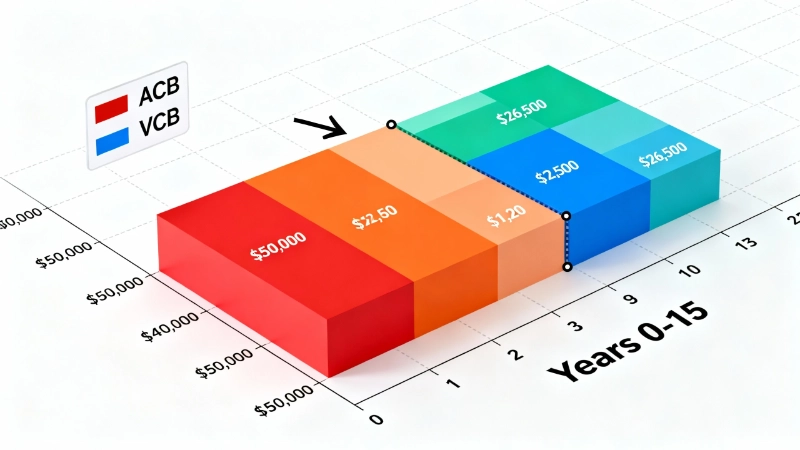
5-Year Total Cost of Ownership (TCO) analysis

ຮູບທີ 4: ການວິເຄາະຄ່າໃຊ້ຈ່າຍທັງໝົດໃນການເປັນເຈົ້າຂອງ (TCO) ໃນໄລຍະ 15 ປີ. ເຖິງວ່າຄ່າໃຊ້ຈ່າຍເບື້ອງຕົ້ນຈະສູງກວ່າ, ແຕ່ VCBs ກາຍເປັນປະຢັດກວ່າ ACBs ພາຍໃນປີທີ 3 ເນື່ອງຈາກຄວາມຕ້ອງການໃນການບຳລຸງຮັກສາຫຼຸດລົງຢ່າງຫຼວງຫຼາຍ, ປະຢັດໄດ້ $23,500 ໃນໄລຍະ 15 ປີ.

ຖ້າທ່ານວາງແຜນທີ່ຈະຮັກສາສະວິດເກຍໄວ້ເປັນເວລາ 20 ປີ (ປົກກະຕິສຳລັບໂຮງງານອຸດສາຫະກຳ), ຊ່ອງຫວ່າງການປະຢັດຈະກວ້າງຂຶ້ນເປັນ $35,000+ ຕໍ່ເບຣກເກີ. ສຳລັບສະຖານີໄຟຟ້າຍ່ອຍທີ່ມີ 10 ເບຣກເກີ, ນັ້ນແມ່ນ $350,000 ໃນການປະຢັດຕະຫຼອດອາຍຸການນຳໃຊ້.

ຄ່າໃຊ້ຈ່າຍທີ່ເຊື່ອງໄວ້ເກີນໃບແຈ້ງໜີ້

ການຄຳນວນ TCO ຂ້າງເທິງນີ້ພຽງແຕ່ຈັບຄ່າໃຊ້ຈ່າຍໂດຍກົງ. ຢ່າລືມວ່າ:

ຄວາມສ່ຽງຂອງການຢຸດເຮັດວຽກ:

  • ຄວາມລົ້ມເຫຼວຂອງ ACB ລະຫວ່າງການກວດກາສາມາດເຮັດໃຫ້ເກີດການຢຸດໄຟທີ່ບໍ່ໄດ້ວາງແຜນ
  • ຄວາມລົ້ມເຫຼວຂອງ VCB ແມ່ນຫາຍາກ (MTBF ມັກຈະເກີນ 30 ປີ ດ້ວຍການນຳໃຊ້ທີ່ຖືກຕ້ອງ)

ຄວາມພ້ອມຂອງແຮງງານ:

  • ການຊອກຫາຊ່າງເຕັກນິກທີ່ມີຄຸນວຸດທິສຳລັບການບຳລຸງຮັກສາ ACB ແມ່ນຍາກຂຶ້ນ ເນື່ອງຈາກອຸດສາຫະກຳປ່ຽນໄປໃຊ້ VCBs
  • ໄລຍະເວລາການບຳລຸງຮັກສາເຄິ່ງປີຮຽກຮ້ອງໃຫ້ມີການຢຸດເຮັດວຽກຂອງການຜະລິດ ຫຼື ການກຳນົດເວລາຢ່າງລະມັດລະວັງ

ຄວາມປອດໄພ:

  • ເຫດການ arc flash ຂອງ ACB ໃນລະຫວ່າງການບຳລຸງຮັກສາມີຫຼາຍກວ່າເຫດການ VCB (ໜ້າສຳຜັດເປີດທຽບກັບ interrupter ທີ່ປິດສະໜາ)
  • ຂໍ້ກຳນົດ PPE arc flash ແມ່ນເຂັ້ມງວດກວ່າສຳລັບການບຳລຸງຮັກສາ ACB

ປັດໃຈສິ່ງແວດລ້ອມ:

  • ACBs ໃນສະພາບແວດລ້ອມທີ່ມີຝຸ່ນ, ຄວາມຊຸ່ມຊື່ນ, ຫຼື ສານກັດກ່ອນຕ້ອງການ ຫຼາຍກວ່າ ການບຳລຸງຮັກສາເລື້ອຍໆ (ລາຍໄຕມາດແທນທີ່ຈະເປັນເຄິ່ງປີ)
  • VCBs ບໍ່ໄດ້ຮັບຜົນກະທົບ—interrupter ທີ່ປິດສະໜາບໍ່ສົນໃຈສະພາບພາຍນອກ

ຄຳແນະນຳແບບມືອາຊີບ #5 (ອັນໃຫຍ່): ຄຳນວນຄ່າໃຊ້ຈ່າຍທັງໝົດໃນການເປັນເຈົ້າຂອງຕະຫຼອດອາຍຸການນຳໃຊ້ຂອງສະວິດເກຍທີ່ຄາດໄວ້ (15-25 ປີ), ບໍ່ແມ່ນແຕ່ຄ່າໃຊ້ຈ່າຍໃນເບື້ອງຕົ້ນ. ສຳລັບການນຳໃຊ້ແຮງດັນປານກາງ, VCBs ເກືອບຈະຊະນະສະເໝີໃນ TCO. ສຳລັບການນຳໃຊ້ແຮງດັນຕ່ຳທີ່ທ່ານຕ້ອງໃຊ້ ACB, ໃຫ້ຈັດສັນງົບປະມານ $2,000-$3,000 ຕໍ່ປີຕໍ່ເບຣກເກີສຳລັບການບຳລຸງຮັກສາ—ແລະຢ່າປ່ອຍໃຫ້ຕາຕະລາງການບຳລຸງຮັກສາຫຼຸດລົງ. ການກວດກາທີ່ຂ້າມໄປຈະກາຍເປັນຄວາມລົ້ມເຫຼວທີ່ຮ້າຍແຮງ.


ຄຳຖາມທີ່ຖາມເລື້ອຍໆ: ACB ທຽບກັບ VCB

ຖາມ: ຂ້ອຍສາມາດໃຊ້ ACB ຂ້າງເທິງ 1,000V ໄດ້ບໍ ຖ້າຂ້ອຍຫຼຸດລະດັບມັນ ຫຼື ເພີ່ມການສະກັດກັ້ນ arc ພາຍນອກ?

ຕອບ: ບໍ່ໄດ້. ຂີດຈຳກັດ 1,000V ສຳລັບ ACBs ບໍ່ແມ່ນບັນຫາຄວາມຮ້ອນ ຫຼື ຄວາມກົດດັນທາງໄຟຟ້າທີ່ການຫຼຸດລະດັບສາມາດແກ້ໄຂໄດ້—ມັນເປັນຂໍ້ຈຳກັດທາງຟີຊິກ arc ພື້ນຖານ. ຂ້າງເທິງ 1kV, ອາກາດໃນຊັ້ນບັນຍາກາດບໍ່ສາມາດດັບ arc ໄດ້ຢ່າງໜ້າເຊື່ອຖືພາຍໃນກອບເວລາທີ່ປອດໄພ, ບໍ່ວ່າທ່ານຈະຕັ້ງຄ່າເບຣກເກີແນວໃດກໍ່ຕາມ. IEC 60947-2 ກຳນົດຂອບເຂດຂອງ ACBs ຢ່າງຈະແຈ້ງເຖິງ ≤1,000V AC, ແລະ ການດຳເນີນງານນອກຂອບເຂດນັ້ນລະເມີດມາດຕະຖານ ແລະ ສ້າງອັນຕະລາຍ arc flash. ຖ້າລະບົບຂອງທ່ານສູງກວ່າ 1kV, ທ່ານຕ້ອງໃຊ້ເບຣກເກີແຮງດັນປານກາງຕາມກົດໝາຍ ແລະ ປອດໄພ (VCB ຫຼື SF6 breaker ຕໍ່ IEC 62271-100).

ຖາມ: VCBs ມີລາຄາແພງກວ່າໃນການສ້ອມແປງກວ່າ ACBs ບໍ ຖ້າມີບາງຢ່າງຜິດພາດ?

ຕອບ: ແມ່ນແລ້ວ, ແຕ່ VCBs ລົ້ມເຫຼວໜ້ອຍກວ່າຫຼາຍ. ເມື່ອ VCB vacuum interrupter ລົ້ມເຫຼວ (ຫາຍາກ), ມັນມັກຈະຮຽກຮ້ອງໃຫ້ມີການປ່ຽນແທນໜ່ວຍທີ່ປິດສະໜາທັງໝົດຢູ່ໂຮງງານໃນລາຄາ $6,000-$10,000. ໜ້າສຳຜັດ ACB ແລະ arc chutes ສາມາດໃຫ້ບໍລິການໃນພາກສະໜາມໄດ້ໃນລາຄາ $2,500-$4,000, ແຕ່ທ່ານຈະປ່ຽນແທນພວກມັນ 3-4 ຄັ້ງຕະຫຼອດອາຍຸການນຳໃຊ້ຂອງ VCB. ຄະນິດສາດຍັງຄົງມັກ VCBs: ການປ່ຽນແທນ VCB interrupter ໜຶ່ງຄັ້ງໃນ 25 ປີ ທຽບກັບການປ່ຽນແທນໜ້າສຳຜັດ ACB ສາມຄັ້ງໃນ 15 ປີ, ບວກກັບການດຳເນີນງານຢ່າງຕໍ່ເນື່ອງ ພາສີບຳລຸງຮັກສາ ທຸກໆຫົກເດືອນ.

ຖາມ: ເບຣກເກີປະເພດໃດດີກວ່າສຳລັບການປ່ຽນເລື້ອຍໆ (capacitor banks, ການເລີ່ມຕົ້ນຂອງມໍເຕີ)?

ຕອບ: VCBs ໂດຍມີຂອບເຂດກວ້າງ. Vacuum circuit breakers ຖືກຈັດອັນດັບສຳລັບການດຳເນີນງານກົນຈັກ 30,000 ຫາ 100,000+ ຄັ້ງກ່ອນການປັບປຸງຄັ້ງໃຫຍ່. ACBs ໂດຍປົກກະຕິຖືກຈັດອັນດັບສຳລັບການດຳເນີນງານ 10,000 ຫາ 15,000 ຄັ້ງ. ສຳລັບການນຳໃຊ້ທີ່ກ່ຽວຂ້ອງກັບການປ່ຽນເລື້ອຍໆ—ເຊັ່ນ: ການປ່ຽນ capacitor bank, ການເລີ່ມຕົ້ນ/ຢຸດມໍເຕີໃນຂະບວນການ batch, ຫຼື ແຜນການໂອນການໂຫຼດ—VCBs ຈະຢູ່ໄດ້ດົນກວ່າ ACBs ໂດຍ 3:1 ຫາ 10:1 ໃນຈຳນວນການດຳເນີນງານ. ນອກຈາກນັ້ນ, ການດັບ arc ໄວຂອງ VCBs (ໜຶ່ງຮອບວຽນ) ຫຼຸດຜ່ອນຄວາມກົດດັນຕໍ່ອຸປະກອນປາຍທາງໃນລະຫວ່າງແຕ່ລະເຫດການປ່ຽນ.

ຖາມ: VCBs ມີຂໍ້ເສຍປຽບໃດໆເມື່ອທຽບກັບ ACBs ນອກເໜືອຈາກຄ່າໃຊ້ຈ່າຍເບື້ອງຕົ້ນບໍ?

A: ສາມຂໍ້ຄວນພິຈາລະນາເລັກນ້ອຍ: (1) ຄວາມສ່ຽງແຮງດັນເກີນ ເມື່ອປ່ຽນໂຫຼດ capacitive ຫຼື inductive—ການດັບໄຟຟ້າໄວຂອງ VCB ສາມາດສ້າງແຮງດັນເກີນຊົ່ວຄາວທີ່ອາດຈະຕ້ອງການ surge arresters ຫຼື RC snubbers ສໍາລັບໂຫຼດທີ່ລະອຽດອ່ອນ. (2) ຄວາມສັບສົນໃນການສ້ອມແປງ—ຖ້າ vacuum interrupter ເສຍຫາຍ, ທ່ານບໍ່ສາມາດແກ້ໄຂໄດ້ໃນພາກສະຫນາມ; ຫນ່ວຍທັງຫມົດຕ້ອງໄດ້ຮັບການທົດແທນ. (3) ສຽງດັງທີ່ໄດ້ຍິນ—ບາງການອອກແບບ VCB ສ້າງສຽງດັງຄວາມຖີ່ຕ່ໍາຈາກກົນໄກການເຮັດວຽກ, ເຖິງແມ່ນວ່າມັນງຽບກວ່າສຽງດັງຂອງ ACB ຫຼາຍ. ສໍາລັບ 99% ຂອງຄໍາຮ້ອງສະຫມັກ, ຂໍ້ເສຍເຫຼົ່ານີ້ແມ່ນບໍ່ສໍາຄັນເມື່ອທຽບກັບຂໍ້ໄດ້ປຽບ (ເບິ່ງ ຂໍ້ໄດ້ປຽບ Sealed-for-Life ພາກສ່ວນ).

Q: ຂ້ອຍສາມາດປັບປຸງ VCB ເຂົ້າໄປໃນແຜງສະວິດ ACB ທີ່ມີຢູ່ໄດ້ບໍ?

A: ບາງຄັ້ງ, ແຕ່ບໍ່ແມ່ນສະເຫມີໄປ. VCBs ມີຂະຫນາດນ້ອຍກວ່າ ACBs, ດັ່ງນັ້ນພື້ນທີ່ທາງດ້ານຮ່າງກາຍແມ່ນບໍ່ຄ່ອຍເປັນບັນຫາ. ສິ່ງທ້າທາຍແມ່ນ: (1) ຂະຫນາດການຕິດຕັ້ງ—ຮູບແບບຮູຕິດຕັ້ງ ACB ແລະ VCB ແຕກຕ່າງກັນ; ທ່ານອາດຈະຕ້ອງການແຜ່ນອະແດບເຕີ. (2) Busbar ການຕັ້ງຄ່າ—ສະຖານີ VCB ອາດຈະບໍ່ສອດຄ່ອງກັບ busbars ACB ທີ່ມີຢູ່ແລ້ວໂດຍບໍ່ມີການດັດແກ້. (3) ແຮງດັນຄວບຄຸມ—ກົນໄກການເຮັດວຽກຂອງ VCB ອາດຈະຕ້ອງການພະລັງງານຄວບຄຸມທີ່ແຕກຕ່າງກັນ (ເຊັ່ນ: 110V DC vs 220V AC). (4) ການປະສານງານການປ້ອງກັນ—ການປ່ຽນປະເພດ breaker ສາມາດປ່ຽນເວລາການລ້າງວົງຈອນສັ້ນແລະເສັ້ນໂຄ້ງການປະສານງານ. ປຶກສາຫາລືກັບຜູ້ຜະລິດ switchgear ຫຼືວິສະວະກອນໄຟຟ້າທີ່ມີຄຸນວຸດທິກ່ອນທີ່ຈະປັບປຸງ. ການຕິດຕັ້ງໃຫມ່ຄວນລະບຸ VCBs ສໍາລັບແຮງດັນປານກາງແລະ ACBs (ຫຼື MCCBs) ສໍາລັບແຮງດັນຕ່ໍາຈາກການເລີ່ມຕົ້ນ.

Q: ເປັນຫຍັງຜູ້ຜະລິດບໍ່ເຮັດ ACBs ສໍາລັບແຮງດັນປານກາງ (11kV, 33kV)?

A: ພວກເຂົາພະຍາຍາມ. ACBs ແຮງດັນປານກາງມີຢູ່ໃນກາງສະຕະວັດທີ 20, ແຕ່ພວກມັນມີຂະຫນາດໃຫຍ່—breakers ຂະຫນາດຫ້ອງທີ່ມີ arc chutes ຍາວຫຼາຍແມັດ. ຄວາມເຂັ້ມແຂງ dielectric ຕ່ໍາຂອງອາກາດ (~3 kV/mm) ຫມາຍຄວາມວ່າ breaker 33kV ຕ້ອງການຊ່ອງຫວ່າງຕິດຕໍ່ແລະ arc chutes ວັດແທກເປັນແມັດ, ບໍ່ແມ່ນ millimeters. ຂະຫນາດ, ນ້ໍາຫນັກ, ພາລະບໍາລຸງຮັກສາ, ແລະຄວາມສ່ຽງຕໍ່ການເກີດໄຟໄຫມ້ເຮັດໃຫ້ພວກເຂົາບໍ່ສາມາດປະຕິບັດໄດ້. ເມື່ອເຕັກໂນໂລຢີ vacuum interrupter ແກ່ໃນຊຸມປີ 1960-1970, ACBs ແຮງດັນປານກາງໄດ້ຖືກຍົກເລີກ. ໃນມື້ນີ້, vacuum ແລະ SF6 breakers ຄອບງໍາຕະຫຼາດແຮງດັນປານກາງເພາະວ່າຟີຊິກແລະເສດຖະກິດທັງສອງມັກການອອກແບບ sealed-interrupter ຂ້າງເທິງ 1kV. ນັ້ນ ເພດານແຮງດັນໄຟຟ້າ ບໍ່ແມ່ນການຕັດສິນໃຈຜະລິດຕະພັນ—ມັນເປັນຄວາມເປັນຈິງທາງດ້ານວິສະວະກໍາ.


ສະຫຼຸບ: ແຮງດັນໄຟຟ້າກ່ອນ, ຫຼັງຈາກນັ້ນທຸກສິ່ງທຸກຢ່າງອື່ນປະຕິບັດຕາມ

ຈົ່ງຈື່ຈໍາ datasheets ສອງອັນຈາກການເປີດ? ທັງສອງໄດ້ລະບຸລະດັບແຮງດັນໄຟຟ້າສູງເຖິງ 690V. ທັງສອງອ້າງວ່າຄວາມສາມາດໃນການທໍາລາຍທີ່ເຂັ້ມແຂງ. ແຕ່ໃນປັດຈຸບັນທ່ານຮູ້ວ່າ: ແຮງດັນໄຟຟ້າບໍ່ແມ່ນພຽງແຕ່ຕົວເລກ—ມັນເປັນເສັ້ນແບ່ງລະຫວ່າງເຕັກໂນໂລຢີ breaker.

ນີ້ແມ່ນກອບການຕັດສິນໃຈໃນສາມພາກສ່ວນ:

1. ແຮງດັນໄຟຟ້າກໍານົດປະເພດ breaker (The Voltage Ceiling)

  • ແຮງດັນໄຟຟ້າຂອງລະບົບ ≤1,000V AC → Air Circuit Breaker (ACB) ປົກຄອງໂດຍ IEC 60947-2:2024
  • ແຮງດັນໄຟຟ້າຂອງລະບົບ >1,000V AC → Vacuum Circuit Breaker (VCB) ປົກຄອງໂດຍ IEC 62271-100:2021+A1:2024
  • ນີ້ບໍ່ສາມາດຕໍ່ລອງໄດ້. ຟີຊິກກໍານົດຂອບເຂດ; ມາດຕະຖານ formalized ມັນ.

2. ມາດຕະຖານ formalize ການແບ່ງປັນ (The Standards Split)

  • IEC ບໍ່ໄດ້ສ້າງສອງມາດຕະຖານແຍກຕ່າງຫາກສໍາລັບການແບ່ງສ່ວນຕະຫຼາດ—ພວກເຂົາ codified ຄວາມເປັນຈິງທີ່ວ່າການຂັດຂວາງ arc ໂດຍອີງໃສ່ອາກາດລົ້ມເຫລວຂ້າງເທິງ 1kV
  • ແຮງດັນໄຟຟ້າຂອງລະບົບຂອງທ່ານບອກທ່ານວ່າມາດຕະຖານໃດນໍາໃຊ້, ເຊິ່ງບອກທ່ານວ່າເຕັກໂນໂລຢີ breaker ໃດທີ່ຈະລະບຸ
  • ກວດເບິ່ງເຄື່ອງຫມາຍການປະຕິບັດຕາມ IEC ຂອງ breaker: 60947-2 = ແຮງດັນຕ່ໍາ, 62271-100 = ແຮງດັນປານກາງ

3. ການບໍາລຸງຮັກສາກໍານົດເສດຖະກິດວົງຈອນຊີວິດ (The Maintenance Tax)

  • ACBs ມີຄ່າໃຊ້ຈ່າຍຫນ້ອຍລ່ວງຫນ້າແຕ່ bleed $2,000-$3,000/ປີໃນການກວດກາເຄິ່ງປີແລະການທົດແທນການຕິດຕໍ່
  • VCBs ມີຄ່າໃຊ້ຈ່າຍຫຼາຍກວ່າໃນເບື້ອງຕົ້ນແຕ່ຕ້ອງການການກວດກາພຽງແຕ່ທຸກໆ 3-5 ປີ, ໂດຍມີອາຍຸການຕິດຕໍ່ 20-30 ປີ
  • ການ TCO crossover ເກີດຂຶ້ນປະມານປີທີ 3; ພາຍໃນປີທີ 15, VCBs ປະຫຍັດ $20,000-$25,000 ຕໍ່ breaker
  • ສໍາລັບຄໍາຮ້ອງສະຫມັກແຮງດັນປານກາງ (ບ່ອນທີ່ທ່ານຕ້ອງໃຊ້ VCBs ຢ່າງໃດກໍ່ຕາມ), ຂໍ້ໄດ້ປຽບດ້ານຄ່າໃຊ້ຈ່າຍແມ່ນເປັນໂບນັດ
  • ສໍາລັບຄໍາຮ້ອງສະຫມັກແຮງດັນຕ່ໍາ (ບ່ອນທີ່ ACBs ເຫມາະສົມ), ງົບປະມານສໍາລັບ ພາສີບຳລຸງຮັກສາ ແລະຕິດກັບຕາຕະລາງການກວດກາ

datasheet ອາດຈະສະແດງໃຫ້ເຫັນລະດັບແຮງດັນໄຟຟ້າທີ່ຊ້ອນກັນ. brochure ການຕະຫຼາດອາດຈະຫມາຍຄວາມວ່າພວກເຂົາສາມາດແລກປ່ຽນໄດ້. ແຕ່ຟີຊິກບໍ່ໄດ້ເຈລະຈາ, ແລະທ່ານກໍ່ບໍ່ຄວນ.

ເລືອກໂດຍອີງໃສ່ແຮງດັນໄຟຟ້າຂອງລະບົບຂອງທ່ານ. ທຸກສິ່ງທຸກຢ່າງອື່ນ—ລະດັບປະຈຸບັນ, ຄວາມສາມາດໃນການທໍາລາຍ, ໄລຍະການບໍາລຸງຮັກສາ, footprint—ຕົກຢູ່ໃນສະຖານທີ່ເມື່ອທ່ານໄດ້ເຮັດການເລືອກຄັ້ງທໍາອິດຢ່າງຖືກຕ້ອງ.


ຕ້ອງການຄວາມຊ່ວຍເຫຼືອໃນການເລືອກ Circuit Breaker ທີ່ຖືກຕ້ອງບໍ?

ທີມງານວິສະວະກໍາຄໍາຮ້ອງສະຫມັກຂອງ VIOX ມີປະສົບການຫຼາຍສິບປີໃນການລະບຸ ACBs ແລະ VCBs ສໍາລັບຄໍາຮ້ອງສະຫມັກອຸດສາຫະກໍາ, ການຄ້າ, ແລະສາທາລະນຸປະໂພກທົ່ວໂລກ. ບໍ່ວ່າທ່ານກໍາລັງອອກແບບ MCC 400V ໃຫມ່, ຍົກລະດັບສະຖານີຍ່ອຍ 11kV, ຫຼືແກ້ໄຂບັນຫາຄວາມລົ້ມເຫຼວຂອງ breaker ເລື້ອຍໆ, ພວກເຮົາຈະທົບທວນຄວາມຕ້ອງການຂອງລະບົບຂອງທ່ານແລະແນະນໍາການແກ້ໄຂທີ່ສອດຄ່ອງກັບ IEC ທີ່ສົມດູນປະສິດທິພາບ, ຄວາມປອດໄພ, ແລະຄ່າໃຊ້ຈ່າຍໃນວົງຈອນຊີວິດ.

ຕິດຕໍ່ VIOX ມື້ນີ້ ສຳລັບ:

  • ການຄັດເລືອກ circuit breaker ແລະການຄິດໄລ່ຂະຫນາດ
  • ການສຶກສາການປະສານງານວົງຈອນສັ້ນ
  • ການປະເມີນຄວາມເປັນໄປໄດ້ຂອງການປັບປຸງ switchgear
  • ການເພີ່ມປະສິດທິພາບການບໍາລຸງຮັກສາແລະການວິເຄາະ TCO

ເນື່ອງຈາກວ່າການໄດ້ຮັບປະເພດ breaker ຜິດບໍ່ແມ່ນພຽງແຕ່ລາຄາແພງ—ມັນເປັນອັນຕະລາຍ.
ກ່ຽວກັບຜູ້ຂຽນ
Author picture

ຂໍ,ຂ້າພະເຈົ້ານ໌ເປັນມືອາຊີບທີ່ອຸທິດຕົນກັບ ໑໒ ປີຂອງການປະສົບການໃນການໄຟຟ້າອຸດສາຫະກໍາ. ໃນ VIOX ໄຟຟ້າ,ຂ້າພະເຈົ້າສຸມແມ່ນກ່ຽວກັບຫນອງຄຸນນະພາບສູງໄຟຟ້າວິທີແກ້ໄຂເຫມາະສົມເພື່ອຕອບສະຫນອງຄວາມຕ້ອງການຂອງພວກເຮົາລູກຄ້າ. ຂ້າພະເຈົ້າກວມເອົາອຸດສາຫະກໍາດຕະໂນມັດ,ອາໄສການໄຟ,ແລະການຄ້າໄຟຟ້າລະບົບ.ຕິດຕໍ່ຂ້າພະເຈົ້າ [email protected] ຖ້າຫາກທ່ານມີຄໍາຖາມໃດໆ.

ບອກຄວາມຕ້ອງການຂອງທ່ານໃຫ້ພວກເຮົາຮູ້
ຂໍ Quote ດຽວນີ້