ACBとVCB:完全比較ガイド(IEC規格2024年版)

ACB vs VCB: Complete Comparison Guide

あなたが15kVのスイッチギアプロジェクトのために2つの回路遮断器のデータシートを見ているとします。どちらも最大690Vまでの電圧定格を示しています。どちらも印象的な遮断容量をリストしています。紙の上では、それらは互換性があるように見えます。.

そうではありません。.

間違った方を選び、必要な場所に真空遮断器(VCB)の代わりに空気遮断器(ACB)を設置したり、その逆を行ったりすると、IEC規格に違反するだけでなく、アークフラッシュのリスク、メンテナンス予算、機器の寿命を賭けることになります。本当の違いはマーケティングパンフレットにあるのではなく、各遮断器がどのように電気アークを消弧するかの物理にあり、その物理が厳しい 電圧上限 を課しており、データシートの免責事項では覆すことができません。.

ここでは、実際にACBとVCBを区別するものと、システムに最適なものを選択する方法について説明します。.


簡単な答え:ACB対VCBの概要

コアの違い: 気中遮断器(ACB) 大気中の空気中で電気アークを消弧し、 最大1,000V ACの低電圧システム向けに設計されています (IEC 60947-2:2024に準拠)。真空遮断器(VCB)は、密閉された真空環境でアークを消弧し、 11kVから33kVの中電圧システムで動作します (IEC 62271-100:2021に準拠)。この電圧分割は、製品のセグメンテーションの選択ではなく、アーク遮断の物理によって決定されます。.

重要な仕様全体でどのように比較されるかを以下に示します。

仕様 気中遮断器(ACB) 真空遮断器(VCB)
電圧範囲 低電圧:400V〜1,000V AC 中電圧:11kV〜33kV(一部1kV〜38kV)
現在の範囲 高電流:800A〜10,000A 中程度の電流:600A〜4,000A
遮断容量 690Vで最大100kA MVで25kA〜50kA
アーク消弧媒体 大気圧の空気 真空(10^-2〜10^-6トル)
操作メカニズム アークシュートはアークを長くして冷却します 密閉された真空遮断器は、最初の電流ゼロでアークを消弧します
メンテナンス頻度 6か月ごと(年2回) 3〜5年ごと
接点寿命 3〜5年(空気への暴露が腐食を引き起こす) 20〜30年(密閉された環境)
代表的な用途 LV配電、MCC、PCC、商業/産業パネル MVスイッチギア、ユーティリティ変電所、HVモーター保護
IEC規格 IEC 60947-2:2024(≤1000V AC) IEC 62271-100:2021+A1:2024(>1000V)
初期費用 低い(通常$8K-$15K) 高い(通常$20K-$30K)
15年間の総コスト 〜$48K(メンテナンスあり) 〜$24K(最小限のメンテナンス)

1,000Vの明確な境界線に注目してください。それは 規格の分割であり、1kVを超えると、空気はアークを十分に速く消弧できないために存在します。物理が境界を設定し、IECがそれを成文化しただけです。.

You're staring at two circuit breaker datasheets for your 15kV switchgear project. Both show voltage ratings up to 690V. Both list impressive breaking capacities. On paper, they look interchangeable.They're not.Choose wrong—install an Air Circuit Breaker (ACB) where you need a Vacuum Circuit Breaker (VCB), or vice versa—and you're not just violating IEC standards. You're gambling with arc flash risk, maintenance budgets, and equipment lifespan. The real difference isn't in the marketing brochure. It's in the physics of how each breaker extinguishes an electrical arc, and that physics imposes a hard Voltage Ceiling that no datasheet disclaimer can override.Here's what actually separates ACBs from VCBs—and how to choose the right one for your system.Quick Answer: ACB vs VCB at a GlanceThe core difference: Air Circuit Breakers (ACBs) quench electrical arcs in atmospheric air and are designed for low-voltage systems up to 1,000V AC (governed by IEC 60947-2:2024). Vacuum Circuit Breakers (VCBs) extinguish arcs in a sealed vacuum environment and operate in medium-voltage systems from 11kV to 33kV (governed by IEC 62271-100:2021). This voltage split isn't a product segmentation choice—it's dictated by the physics of arc interruption.Here's how they compare across critical specifications:SpecificationAir Circuit Breaker (ACB)Vacuum Circuit Breaker (VCB)Voltage RangeLow voltage: 400V to 1,000V ACMedium voltage: 11kV to 33kV (some 1kV-38kV)Current RangeHigh current: 800A to 10,000AModerate current: 600A to 4,000ABreaking CapacityUp to 100kA at 690V25kA to 50kA at MVArc Quenching MediumAir at atmospheric pressureVacuum (10^-2 to 10^-6 torr)Operating MechanismArc chutes lengthen and cool the arcSealed vacuum interrupter quenches arc at first current zeroMaintenance FrequencyEvery 6 months (twice yearly)Every 3 to 5 yearsContact Lifespan3 to 5 years (air exposure causes erosion)20 to 30 years (sealed environment)Typical ApplicationsLV distribution, MCCs, PCCs, commercial/industrial panelsMV switchgear, utility substations, HV motor protectionIEC StandardIEC 60947-2:2024 (≤1000V AC)IEC 62271-100:2021+A1:2024 (>1000V)Initial CostLower ($8K-$15K typical)Higher ($20K-$30K typical)15-Year Total Cost~$48K (with maintenance)~$24K (minimal maintenance)Notice the clean dividing line at 1,000V? That's The Standards Split—and it exists because above 1kV, air simply can't extinguish an arc fast enough. Physics sets the boundary; IEC just codified it. Figure 1: Structural comparison of ACB and VCB technologies. The ACB (left) uses arc chutes in open air, while the VCB (right) employs a sealed vacuum interrupter for arc extinction.Arc Quenching: Air vs Vacuum (Why Physics Sets the Voltage Ceiling)When you separate current-carrying contacts under load, an arc forms. Always. That arc is a plasma column—ionized gas conducting thousands of amperes at temperatures reaching 20,000°C (hotter than the surface of the sun). Your circuit breaker's job is to extinguish that arc before it welds the contacts together or triggers an arc flash event.How it does that depends entirely on the medium surrounding the contacts.How ACBs Use Air and Arc ChutesAn Air Circuit Breaker interrupts the arc in atmospheric air. The breaker's contacts are housed in arc chutes—arrays of metal plates positioned to intercept the arc as the contacts separate. Here's the sequence:Arc formation: Contacts separate, arc strikes in airArc lengthening: Magnetic forces drive the arc into the arc chuteArc division: The chute's metal plates split the arc into multiple shorter arcsArc cooling: Increased surface area and air exposure cool the plasmaArc extinction: As the arc cools and lengthens, resistance increases until the arc can no longer sustain itself at the next current zeroThis works reliably up to about 1,000V. Above that voltage, the arc's energy is too great. Air's dielectric strength (the voltage gradient it can withstand before breaking down) is approximately 3 kV/mm at atmospheric pressure. Once system voltage climbs into the multi-kilovolt range, the arc simply re-strikes across the widening contact gap. You can't build an arc chute long enough to stop it without making the breaker the size of a small car.That's The Voltage Ceiling.How VCBs Use Vacuum PhysicsA Vacuum Circuit Breaker takes a completely different approach. The contacts are enclosed in a sealed vacuum interrupter—a chamber evacuated to a pressure between 10^-2 and 10^-6 torr (that's roughly one-millionth of atmospheric pressure).When the contacts separate under load:Arc formation: Arc strikes in the vacuum gapLimited ionization: With almost no gas molecules present, the arc lacks sustaining mediumRapid de-ionization: At the first natural current zero (every half-cycle in AC), there are insufficient charge carriers to re-strike the arcInstant extinction: Arc dies within one cycle (8.3 milliseconds on a 60 Hz system)The vacuum provides two massive advantages. First, dielectric strength: a vacuum gap of just 10mm can withstand voltages up to 40kV—that's 10 to 100 times stronger than air at the same gap distance. Second, contact preservation: with no oxygen present, the contacts don't oxidize or erode at the same rate as ACB contacts exposed to air. That's The Sealed-for-Life Advantage.VCB contacts in a properly maintained breaker can last 20 to 30 years. ACB contacts exposed to atmospheric oxygen and arc plasma? You're looking at replacement every 3 to 5 years, sometimes sooner in dusty or humid environments.Figure 2: Arc quenching mechanisms. The ACB requires multiple steps to lengthen, divide, and cool the arc in air (left), while the VCB extinguishes the arc instantly at the first current zero due to vacuum's superior dielectric strength (right).Pro-Tip #1: The Voltage Ceiling isn't negotiable. ACBs are physically incapable of reliably interrupting arcs above 1kV in air at atmospheric pressure. If your system voltage exceeds 1,000V AC, you need a VCB—not as a "better" option, but as the only option that complies with physics and IEC standards.Voltage and Current Ratings: What the Numbers Really MeanVoltage isn't just a specification line on the datasheet. It's the fundamental selection criterion that determines which breaker type you can even consider. Current rating matters, but it comes second.Here's what the numbers mean in practice.ACB Ratings: High Current, Low VoltageVoltage ceiling: ACBs operate reliably from 400V up to 1,000V AC (with some specialized designs rated to 1,500V DC). The typical sweet spot is 400V or 690V for three-phase industrial systems. Above 1kV AC, air's dielectric properties make reliable arc interruption impractical—that Voltage Ceiling we discussed isn't a design limitation; it's a physical boundary.Current capacity: Where ACBs dominate is current handling. Ratings range from 800A for smaller distribution panels up to 10,000A for main service entrance applications. High current capability at low voltage is precisely what low-voltage distribution needs—think motor control centers (MCCs), power control centers (PCCs), and main distribution boards in commercial and industrial facilities.Breaking capacity: Short-circuit interrupting ratings reach up to 100kA at 690V. That sounds impressive—and it is, for low-voltage applications. But let's put it in perspective with a power calculation:Breaking capacity: 100kA at 690V (line-to-line)Apparent power: √3 × 690V × 100kA ≈ 119 MVAThat's the maximum fault power an ACB can safely interrupt. For a 400V/690V industrial plant with a 1.5 MVA transformer and typical X/R ratios, a 65kA breaker is often sufficient. The 100kA units are reserved for utility-scale low-voltage distribution or facilities with multiple large transformers in parallel.Typical applications:Low-voltage main distribution panels (LVMDP)Motor control centers (MCCs) for pumps, fans, compressorsPower control centers (PCCs) for industrial machineryGenerator protection and synchronization panelsCommercial building electrical rooms (below 1kV)VCB Ratings: Medium Voltage, Moderate CurrentVoltage range: VCBs are engineered for medium-voltage systems, typically from 11kV to 33kV. Some designs extend the range down to 1kV or up to 38kV (the 2024 amendment to IEC 62271-100 added standardized ratings at 15.5kV, 27kV, and 40.5kV). The sealed vacuum interrupter's superior dielectric strength makes these voltage levels manageable within a compact footprint.Current capacity: VCBs handle moderate currents compared to ACBs, with typical ratings from 600A to 4,000A. This is perfectly adequate for medium-voltage applications. A 2,000A breaker at 11kV can carry 38 MVA of continuous load—equivalent to several dozen large industrial motors or an entire medium-sized industrial facility's power demand.Breaking capacity: VCBs are rated from 25kA to 50kA at their respective voltage levels. Let's run the same power calculation for a 50kA VCB at 33kV:Breaking capacity: 50kA at 33kV (line-to-line)Apparent power: √3 × 33kV × 50kA ≈ 2,850 MVAThat's 24 times more interrupting power than our 100kA ACB at 690V. Suddenly, that "lower" 50kA breaking capacity doesn't look so modest. VCBs are interrupting fault currents at power levels that would vaporize an ACB's arc chute.Figure 3: The Voltage Ceiling visualization. ACBs operate reliably up to 1,000V but cannot safely interrupt arcs above this threshold (red zone), while VCBs dominate the medium-voltage range from 11kV to 38kV (green zone).Typical applications:Utility distribution substations (11kV, 22kV, 33kV)Industrial medium-voltage switchgear (ring main units, switchboards)High-voltage induction motor protection (>1,000 HP)Transformer primary protectionPower generation facilities (generator circuit breakers)Renewable energy systems (wind farms, solar inverter stations)Pro-Tip #2: Don't compare breaking capacity in kiloamperes alone. Calculate the MVA interrupting power (√3 × voltage × current). A 50kA VCB at 33kV interrupts vastly more power than a 100kA ACB at 690V. Voltage matters more than current when assessing breaker capability.The Standards Split: IEC 60947-2 (ACB) vs IEC 62271-100 (VCB)The International Electrotechnical Commission (IEC) doesn't casually divide standards. When IEC 60947-2 governs breakers up to 1,000V and IEC 62271-100 takes over above 1,000V, that boundary reflects the physical reality we've been discussing. This is The Standards Split, and it's your design compass.IEC 60947-2:2024 for Air Circuit BreakersScope: This standard applies to circuit-breakers with rated voltage not exceeding 1,000V AC or 1,500V DC. It's the authoritative reference for low-voltage circuit protection, including ACBs, molded-case circuit breakers (MCCBs), and miniature circuit breakers (MCBs).The sixth edition was published in September 2024, superseding the 2016 edition. Key updates include:Suitability for isolation: Clarified requirements for using circuit-breakers as isolating switchesClassification removal: IEC eliminated the classification of breakers by interrupting medium (air, oil, SF6, etc.). Why? Because voltage already tells you the medium. If you're at 690V, you're using air or a sealed molded case. The old classification system was redundant.External device adjustments: New provisions for adjusting overcurrent settings via external devicesEnhanced testing: Added tests for ground-fault releases and dielectric properties in the tripped positionEMC improvements: Updated electromagnetic compatibility (EMC) test procedures and power loss measurement methodsThe 2024 revision makes the standard cleaner and more aligned with modern digital trip units and smart breaker technology, but the core voltage boundary—≤1,000V AC—remains unchanged. Above that, you're out of IEC 60947-2's jurisdiction.IEC 62271-100:2021 (Amendment 1: 2024) for Vacuum Circuit BreakersScope: This standard governs alternating current circuit-breakers designed for three-phase systems with voltages above 1,000V. It's specifically tailored for medium-voltage and high-voltage indoor and outdoor switchgear, where VCBs are the dominant technology (alongside SF6 breakers for the highest voltage classes).The third edition was published in 2021, with Amendment 1 released in August 2024. Recent updates include:Updated TRV (Transient Recovery Voltage) values: Recalculated TRV parameters in multiple tables to reflect real-world system behavior and newer transformer designsNew rated voltages: Standardized ratings added at 15.5kV, 27kV, and 40.5kV to cover regional system voltages (particularly in Asia and the Middle East)Revised terminal fault definition: Clarified what constitutes a terminal fault for testing purposesDielectric test criteria: Added criteria for dielectric testing; explicitly stated that partial discharge tests apply only to GIS (Gas-Insulated Switchgear) and dead-tank breakers, not typical VCBsEnvironmental considerations: Enhanced guidance on altitude, pollution, and temperature derating factorsThe 2024 amendment keeps the standard current with global grid infrastructure changes, but the fundamental principle holds: above 1,000V, you need a medium-voltage breaker, and for the 1kV-38kV range, that almost always means a VCB.Why These Standards Don't OverlapThe 1,000V boundary isn't arbitrary. It's the point where atmospheric air transitions from "adequate arc quenching medium" to "liability." IEC didn't create two standards to sell more books. They formalized the engineering reality:Below 1kV: Air-based or molded-case designs work. Arc chutes are effective. Breakers are compact and economical.Above 1kV: Air requires impractically large arc chutes; vacuum (or SF6 for higher voltages) becomes necessary for safe, reliable arc interruption in a reasonable footprint.When you're speccing a breaker, the first question isn't "ACB or VCB?" It's "What's my system voltage?" That answer points you to the correct standard, which points you to the correct breaker type.Pro-Tip #3: When reviewing a circuit breaker datasheet, check which IEC standard it complies with. If it lists IEC 60947-2, it's a low-voltage breaker (≤1kV). If it lists IEC 62271-100, it's a medium/high-voltage breaker (>1kV). The standard compliance tells you the voltage class instantly.Applications: Matching Breaker Type to Your SystemChoosing between ACB and VCB isn't about preference. It's about matching the breaker's physical capabilities to your system's electrical characteristics and operational requirements.Here's how to map breaker type to application.When to Use ACBsAir Circuit Breakers are the right choice for low-voltage distribution systems where high current capacity matters more than compact size or long maintenance intervals.Ideal applications:400V or 690V three-phase distribution: The backbone of most industrial and commercial electrical systemsMotor Control Centers (MCCs): Protection for pumps, fans, compressors, conveyors, and other low-voltage motorsPower Control Centers (PCCs): Main distribution for industrial machinery and process equipmentLow-voltage main distribution panels (LVMDP): Service entrance and main breakers for buildings and facilitiesGenerator protection: Low-voltage backup generators (typically 480V or 600V)Marine and offshore: Low-voltage ship power distribution (where IEC 60092 also applies)When ACBs make sense financially:Lower initial cost priority: If capital budget is constrained and you have in-house maintenance capabilityHigh current requirements: When you need 6,000A+ ratings that are more economical in ACB form factorsRetrofit into existing LV switchgear: When replacing like-for-like in panels designed for ACBsLimitations to remember:Maintenance burden: Expect inspections every 6 months and contact replacement every 3-5 yearsFootprint: ACBs are larger and heavier than equivalent VCBs due to arc chute assembliesNoise: Arc interruption in air is louder than in a sealed vacuumLimited service life: Typically 10,000 to 15,000 operations before major overhaulWhen to Use VCBsVacuum Circuit Breakers dominate medium-voltage applications where reliability, low maintenance, compact size, and long service life justify the higher initial cost.Ideal applications:11kV, 22kV, 33kV utility substations: Primary and secondary distribution switchgearIndustrial MV switchgear: Ring main units (RMUs), metal-clad switchboards, pad-mounted transformersHigh-voltage motor protection: Induction motors above 1,000 HP (typically 3.3kV, 6.6kV, or 11kV)Transformer protection: Primary-side breakers for distribution and power transformersPower generation facilities: Generator circuit breakers, station auxiliary powerRenewable energy systems: Wind farm collector circuits, solar inverter step-up transformersMining and heavy industry: Where dust, moisture, and harsh conditions make ACB maintenance problematicWhen VCBs are the only option:System voltage >1kV AC: Physics and IEC 62271-100 require medium-voltage rated breakersFrequent switching operations: VCBs are rated for 30,000+ mechanical operations (some designs exceed 100,000 operations)Limited maintenance access: Remote substations, offshore platforms, rooftop installations where semi-annual ACB inspections are impracticalLong lifecycle cost focus: When total cost of ownership over 20-30 years outweighs upfront capital costAdvantages in harsh environments:Sealed vacuum interrupters aren't affected by dust, humidity, salt spray, or altitude (up to derating limits)No arc chutes to clean or replaceSilent operation (important for indoor substations in occupied buildings)Compact footprint (critical in urban substations with expensive real estate)Decision Matrix: ACB or VCB?Your System CharacteristicsRecommended Breaker TypePrimary ReasonVoltage ≤ 1,000V ACACBIEC 60947-2 jurisdiction; air quenching is adequateVoltage > 1,000V ACVCBIEC 62271-100 required; air cannot reliably interrupt arcHigh current (>5,000A) at LVACBMore economical for very high current at low voltageFrequent switching (>20/day)VCBRated for 30,000+ operations vs ACB's 10,000Harsh environment (dust, salt, humidity)VCBSealed interrupter unaffected by contaminationLimited maintenance accessVCB3-5 year service intervals vs ACB's 6-month schedule20+ year lifecycle cost focusVCBLower TCO despite higher initial costTight space constraintsVCBCompact design; no arc chute volumeBudget-constrained capital projectACB (if ≤1kV)Lower upfront cost, but factor in maintenance budgetFigure 5: Circuit breaker selection flowchart. System voltage is the primary decision criterion, directing you to either ACB (low-voltage) or VCB (medium-voltage) applications based on the 1,000V boundary.Pro-Tip #4: If your system voltage is anywhere near the 1kV boundary, spec a VCB. Don't try to stretch an ACB to its maximum voltage rating. The Voltage Ceiling isn't a "rated maximum"—it's a hard physics limit. Design with margin.The Maintenance Tax: Why VCBs Cost Less Over 20 YearsThat $15,000 ACB looks attractive compared to a $25,000 VCB. Until you run the numbers over 15 years.Welcome to The Maintenance Tax—the hidden recurring cost that flips the economic equation.ACB Maintenance: The Twice-Yearly BurdenAir Circuit Breakers demand regular, hands-on maintenance because their contacts and arc chutes operate in an open-air environment. Here's the typical maintenance schedule recommended by manufacturers and IEC 60947-2:Every 6 months (semi-annual inspection):Visual inspection of contacts for pitting, erosion, or discolorationArc chute cleaning (removal of carbon deposits and metal vapor residue)Contact gap and wipe measurementMechanical operation test (manual and automatic)Terminal connection torque checkLubrication of moving parts (hinges, linkages, bearings)Overcurrent trip unit functional testEvery 3-5 years (major service):Contact replacement (if erosion exceeds manufacturer limits)Arc chute inspection and replacement if damagedInsulation resistance testing (megger test)Contact resistance measurementComplete disassembly and cleaningReplacement of worn mechanical componentsCost breakdown (typical, varies by region):Semi-annual inspection: $600-$1,000 per breaker (contractor labor: 3-4 hours)Contact replacement: $2,500-$4,000 (parts + labor)Arc chute replacement: $1,500-$2,500 (if damaged)Emergency service call (if breaker fails between inspections): $1,500-$3,000For an ACB with a 15-year service life:Semi-annual inspections: 15 years × 2 inspections/year × $800 average = $24,000Contact replacements: (15 years ÷ 4 years) × $3,000 = $9,000 (3 replacements)Unplanned failures: Assume 1 failure × $2,000 = $2,000Total maintenance over 15 years: $35,000Add the initial purchase cost ($15,000), and your 15-year total cost of ownership is ~$50,000.That's the Maintenance Tax. You pay it in labor hours, downtime, and consumable parts—every year, twice a year, for the life of the breaker.VCB Maintenance: The Sealed-for-Life AdvantageVacuum Circuit Breakers flip the maintenance equation. The sealed vacuum interrupter protects the contacts from oxidation, contamination, and environmental exposure. Result: drastically extended service intervals.Every 3-5 years (periodic inspection):Visual external inspectionMechanical operation count check (via counter or digital interface)Contact wear indicator check (some VCBs have external indicators)Operational test (open/close cycles)Control circuit functional testTerminal connection inspectionEvery 10-15 years (major inspection, if at all):Vacuum integrity test (using high-voltage test or X-ray inspection)Contact gap measurement (requires partial disassembly on some models)Insulation resistance testingNotice what's not on the list:No contact cleaning (sealed environment)No arc chute maintenance (doesn't exist)No semi-annual inspections (unnecessary)No routine contact replacement (20-30 year lifespan)Cost breakdown (typical):Periodic inspection (every 4 years): $400-$700 per breaker (contractor labor: 1.5-2 hours)Vacuum interrupter replacement (if needed after 20-25 years): $6,000-$10,000For a VCB with the same 15-year evaluation period:Periodic inspections: (15 years ÷ 4 years) × $500 average = $1,500 (3 inspections)Unplanned failures: Extremely rare; assume $0 (VCBs have 10x lower failure rate)Major overhaul: Not required within 15 yearsTotal maintenance over 15 years: $1,500Add the initial purchase cost ($25,000), and your 15-year total cost of ownership is ~$26,500.The TCO Crossover PointLet's put them side-by-side:Cost ComponentACB (15 years)VCB (15 years)Initial purchase$15,000$25,000Routine maintenance$24,000$1,500Contact/component replacement$9,000$0Unplanned failures$2,000$0Total Cost of Ownership$50,000$26,500Cost per year$3,333/year$1,767/yearThe VCB pays for itself through maintenance savings alone. But here's the kicker: the crossover happens around year 3.Year 0: ACB = $15K, VCB = $25K (ACB ahead by $10K)Year 1.5: First 3 ACB inspections = $2,400; VCB = $0 (ACB ahead by $7,600)Year 3: Six ACB inspections = $4,800; VCB = $0 (ACB ahead by $5,200)Year 4: First ACB contact replacement + 8 inspections = $9,400; VCB first inspection = $500 (ACB ahead by $900)Year 5: ACB total maintenance = $12,000; VCB = $500 (VCB starts saving money)Year 15: ACB total = $50K; VCB total = $26.5K (VCB saves $23,500)Figure 4: 15-Year Total Cost of Ownership (TCO) analysis. Despite higher initial cost, VCBs become more economical than ACBs by Year 3 due to dramatically lower maintenance requirements, saving $23,500 over 15 years.If you plan to keep the switchgear for 20 years (typical for industrial facilities), the savings gap widens to $35,000+ per breaker. For a substation with 10 breakers, that's $350,000 in lifecycle savings.Hidden Costs Beyond the InvoiceThe TCO calculation above only captures direct costs. Don't forget:Downtime risk:ACB failures between inspections can cause unplanned outagesVCB failures are rare (MTBF often exceeds 30 years with proper use)Labor availability:Finding qualified technicians for ACB maintenance is getting harder as the industry shifts to VCBsSemi-annual maintenance windows require production downtime or careful schedulingSafety:ACB arc flash incidents during maintenance are more common than VCB incidents (open-air contacts vs sealed interrupter)Arc flash PPE requirements are more stringent for ACB maintenanceEnvironmental factors:ACBs in dusty, humid, or corrosive environments need more frequent maintenance (quarterly instead of semi-annual)VCBs are unaffected—the sealed interrupter doesn't care about external conditionsPro-Tip #5 (The Big One): Calculate total cost of ownership over the expected switchgear lifespan (15-25 years), not just initial capital cost. For medium-voltage applications, VCBs almost always win on TCO. For low-voltage applications where you must use an ACB, budget $2,000-$3,000 per year per breaker for maintenance—and don't let the maintenance schedule slip. Skipped inspections turn into catastrophic failures.Frequently Asked Questions: ACB vs VCBQ: Can I use an ACB above 1,000V if I derate it or add external arc suppression?A: No. The 1,000V limit for ACBs isn't a thermal or electrical stress issue that derating can solve—it's a fundamental arc physics limitation. Above 1kV, atmospheric air cannot reliably quench an arc within safe timeframes, regardless of how you configure the breaker. IEC 60947-2 explicitly scopes ACBs to ≤1,000V AC, and operating outside that scope violates the standard and creates arc flash hazards. If your system is above 1kV, you legally and safely must use a medium-voltage breaker (VCB or SF6 breaker per IEC 62271-100).Q: Are VCBs more expensive to repair than ACBs if something goes wrong?A: Yes, but VCBs fail far less frequently. When a VCB vacuum interrupter fails (rare), it typically requires factory replacement of the entire sealed unit at $6,000-$10,000. ACB contacts and arc chutes can be serviced in the field for $2,500-$4,000, but you'll replace them 3-4 times over the VCB's lifespan. The math still favors VCBs: one VCB interrupter replacement in 25 years vs. three ACB contact replacements in 15 years, plus the ongoing Maintenance Tax every six months.Q: Which breaker type is better for frequent switching (capacitor banks, motor starting)?A: VCBs by a wide margin. Vacuum circuit breakers are rated for 30,000 to 100,000+ mechanical operations before major overhaul. ACBs are typically rated for 10,000 to 15,000 operations. For applications involving frequent switching—such as capacitor bank switching, motor starting/stopping in batch processes, or load transfer schemes—VCBs will outlast ACBs by 3:1 to 10:1 in operation count. Additionally, VCBs' fast arc extinction (one cycle) reduces the stress on downstream equipment during each switching event.Q: Do VCBs have any drawbacks compared to ACBs beyond initial cost?A: Three minor considerations: (1) Overvoltage risk when switching capacitive or inductive loads—VCBs' fast arc extinction can produce transient overvoltages that may require surge arresters or RC snubbers for sensitive loads. (2) Repair complexity—if a vacuum interrupter fails, you can't fix it in the field; the entire unit must be replaced. (3) Audible hum—some VCB designs produce low-frequency hum from the operating mechanism, though this is far quieter than ACB arc blast. For 99% of applications, these drawbacks are negligible compared to the advantages (see Sealed-for-Life Advantage section).Q: Can I retrofit a VCB into existing ACB switchgear panels?A: Sometimes, but not always. VCBs are more compact than ACBs, so physical space is rarely a problem. The challenges are: (1) Mounting dimensions—ACB and VCB mounting hole patterns differ; you may need adapter plates. (2) Busbar configuration—VCB terminals may not align with existing ACB busbars without modification. (3) Control voltage—VCB operating mechanisms may require different control power (e.g., 110V DC vs 220V AC). (4) Protection coordination—changing breaker types can alter short-circuit clearing times and coordination curves. Always consult with the switchgear manufacturer or a qualified electrical engineer before retrofitting. New installations should specify VCBs for medium-voltage and ACBs (or MCCBs) for low-voltage from the start.Q: Why don't manufacturers make ACBs for medium voltage (11kV, 33kV)?A: They tried. Medium-voltage ACBs existed in the mid-20th century, but they were enormous—room-sized breakers with arc chutes several meters long. Air's relatively low dielectric strength (~3 kV/mm) meant that a 33kV breaker needed contact gaps and arc chutes measured in meters, not millimeters. The size, weight, maintenance burden, and fire risk made them impractical. Once vacuum interrupter technology matured in the 1960s-1970s, medium-voltage ACBs were obsoleted. Today, vacuum and SF6 breakers dominate the medium-voltage market because physics and economics both favor sealed-interrupter designs above 1kV. That Voltage Ceiling isn't a product decision—it's an engineering reality.Conclusion: Voltage First, Then Everything Else FollowsRemember those two datasheets from the opening? Both listed voltage ratings up to 690V. Both claimed robust breaking capacity. But now you know: voltage isn't just a number—it's the dividing line between breaker technologies.Here's the decision framework in three parts:1. Voltage determines the breaker type (The Voltage Ceiling)System voltage ≤1,000V AC → Air Circuit Breaker (ACB) governed by IEC 60947-2:2024System voltage >1,000V AC → Vacuum Circuit Breaker (VCB) governed by IEC 62271-100:2021+A1:2024This isn't negotiable. Physics sets the boundary; standards formalized it.2. Standards formalize the split (The Standards Split)IEC didn't create two separate standards for market segmentation—they codified the reality that air-based arc interruption fails above 1kVYour system voltage tells you which standard applies, which tells you which breaker technology to specifyCheck the breaker's IEC compliance marking: 60947-2 = low voltage, 62271-100 = medium voltage3. Maintenance determines lifecycle economics (The Maintenance Tax)ACBs cost less upfront but bleed $2,000-$3,000/year in semi-annual inspections and contact replacementsVCBs cost more initially but require inspection only every 3-5 years, with 20-30 year contact lifespanThe TCO crossover happens around year 3; by year 15, VCBs save $20,000-$25,000 per breakerFor medium-voltage applications (where you must use VCBs anyway), the cost advantage is a bonusFor low-voltage applications (where ACBs are appropriate), budget for the Maintenance Tax and stick to the inspection scheduleThe datasheet might show overlapping voltage ratings. The marketing brochure might imply they're interchangeable. But physics doesn't negotiate, and neither should you.Choose based on your system voltage. Everything else—current rating, breaking capacity, maintenance intervals, footprint—falls into place once you've made that first choice correctly.Need Help Selecting the Right Circuit Breaker?VIOX's application engineering team has decades of experience specifying ACBs and VCBs for industrial, commercial, and utility applications worldwide. Whether you're designing a new 400V MCC, upgrading an 11kV substation, or troubleshooting frequent breaker failures, we'll review your system requirements and recommend IEC-compliant solutions that balance performance, safety, and lifecycle cost.Contact VIOX today for:Circuit breaker selection and sizing calculationsShort-circuit coordination studiesSwitchgear retrofit feasibility assessmentsMaintenance optimization and TCO analysisBecause getting the breaker type wrong isn't just expensive—it's dangerous.

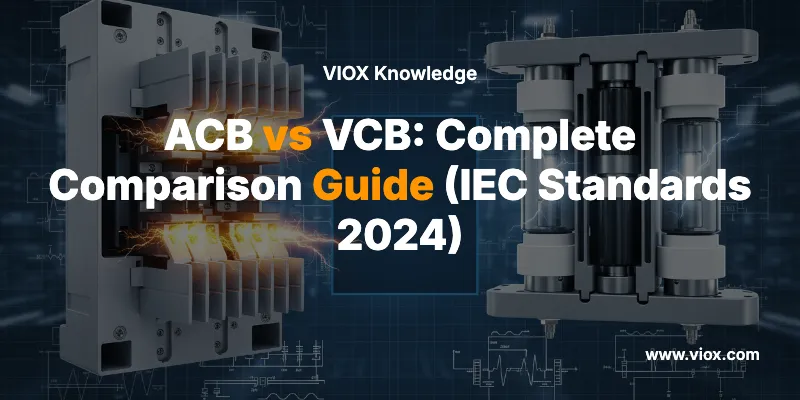
図1:ACBおよびVCB技術の構造比較。ACB(左)は開放された空気中でアークシュートを使用し、VCB(右)はアーク消弧のために密閉された真空遮断器を使用します。.


アーク消弧:空気対真空(物理が電圧上限を設定する理由)

負荷がかかった状態で通電接点を分離すると、アークが形成されます。常に。そのアークはプラズマ柱であり、20,000°Cに達する温度(太陽の表面よりも高温)で数千アンペアを伝導するイオン化されたガスです。回路遮断器の仕事は、接点が溶着したり、アークフラッシュイベントが発生したりする前に、そのアークを消弧することです。.

それをどのように行うかは、接点を取り囲む媒体に完全に依存します。.

ACBが空気とアークシュートを使用する方法

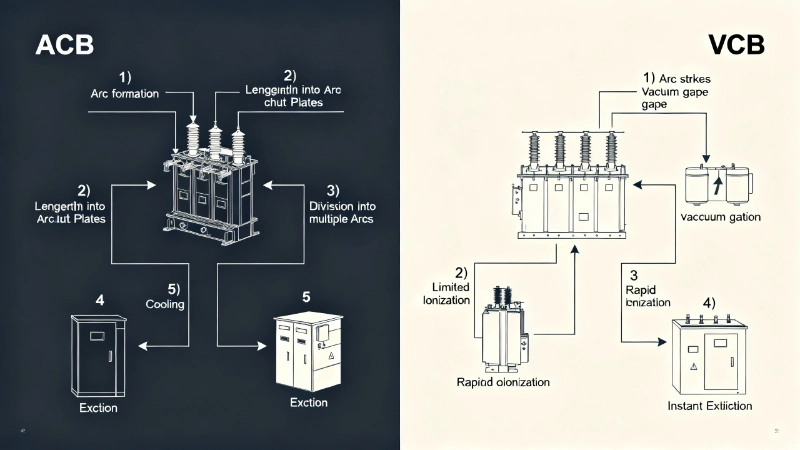
アン 空路ブレーカー は、大気中の空気中でアークを遮断します。遮断器の接点はアークシュートに収容されています。アークシュートは、接点が分離するときにアークを遮るように配置された金属板の配列です。シーケンスは次のとおりです。

  1. アーク形成: 接点が分離し、アークが空気中で発生します
  2. アークの伸長: 磁力がアークをアークシュートに押し込みます
  3. アークの分割: シュートの金属板がアークを複数の短いアークに分割します
  4. アークの冷却: 表面積の増加と空気への暴露がプラズマを冷却します
  5. アークの消弧: アークが冷却されて長くなると、抵抗が増加し、次の電流ゼロでアークがそれ自体を維持できなくなるまで増加します

これは約1,000Vまで確実に機能します。その電圧を超えると、アークのエネルギーが大きすぎます。空気の絶縁耐力(破壊する前に耐えることができる電圧勾配)は大気圧で約3 kV / mmです。システム電圧が数キロボルトの範囲に上昇すると、アークは広がる接点ギャップを越えて再発火します。遮断器を小型車ほどの大きさにせずに、それを止めるのに十分な長さのアークシュートを構築することはできません。.

ことになる 電圧上限.

VCBが真空物理を使用する方法

A 真空遮断器 は、まったく異なるアプローチを取ります。接点は、密閉された真空遮断器に収容されています。真空遮断器は、10^-2〜10^-6トル(大気圧の約100万分の1)の圧力まで排気されたチャンバーです。.

負荷がかかった状態で接点が分離すると:

  1. アーク形成: アークが真空ギャップで発生します
  2. 限定されたイオン化: ほとんどガス分子が存在しないため、アークを維持する媒体が不足している
  3. 急速な脱イオン化: 最初の自然電流ゼロ点(ACの各半サイクル)で、アークを再点弧させるのに十分な電荷キャリアがない
  4. 瞬時の消弧: アークは1サイクル以内(60 Hzシステムで8.3ミリ秒)に消滅する

真空は2つの大きな利点を提供する。まず、, 絶縁耐力: わずか10mmの真空ギャップで最大40kVの電圧に耐えることができる—これは同じギャップ距離の空気よりも10〜100倍強力である。次に、, 接点の保全: 酸素が存在しないため、接点は空気中にさらされたACB接点と同じ速度で酸化または腐食しない。それは 寿命保証の利点.

適切にメンテナンスされた遮断器のVCB接点は、20〜30年持続する可能性がある。大気中の酸素とアークプラズマにさらされたACB接点はどうだろうか?3〜5年ごとに交換が必要になり、ほこりや湿気の多い環境ではさらに早く交換が必要になる場合がある。.
Arc quenching mechanisms

図2:アーク消弧メカニズム。ACBは、空気中でアークを長くし、分割し、冷却するために複数のステップを必要とする(左)一方、VCBは真空の優れた絶縁耐力により、最初の電流ゼロ点で瞬時にアークを消弧する(右)。.

Proチップ#1: 電圧上限は交渉の余地がない。ACBは、大気圧下で空気中で1kVを超えるアークを確実に遮断することが物理的に不可能である。システムの電圧が1,000V ACを超える場合は、VCBが必要である—「より良い」オプションとしてではなく、物理学およびIEC規格に準拠する唯一のオプションとして。.


電圧および電流定格:数値が実際に意味するもの

電圧は、データシートの単なる仕様行ではない。どの遮断器タイプを検討できるかを決定する基本的な選択基準である。電流定格は重要だが、それは二の次である。.

数値が実際に意味することは次のとおりである。.

ACB定格:大電流、低電圧

電圧上限: ACBは、400Vから1,000V ACまで(一部の特殊な設計では1,500V DCまで定格)で確実に動作する。一般的なスイートスポットは、三相産業システムの場合、400Vまたは690Vである。1kV ACを超えると、空気の絶縁特性により、信頼性の高いアーク遮断が非現実的になる—それは 電圧上限 前述したように、設計上の制限ではなく、物理的な境界である。.

電流容量: ACBが優位に立つのは、電流処理である。定格は、小型配電盤用の800Aから、主サービスエントランスアプリケーション用の最大10,000Aまでである。低電圧での大電流容量は、まさに低電圧配電に必要なものである—モーターコントロールセンター(MCC)、電力制御センター(PCC)、および商業施設および産業施設の主配電盤を考えてほしい。.

破断能力: 短絡遮断定格は、690Vで最大100kAに達する。それは印象的に聞こえる—そして、低電圧アプリケーションにとってはそうである。しかし、電力計算でそれを考慮に入れてみよう:

  • 遮断容量:690V(線間)で100kA
  • 皮相電力:√3 × 690V × 100kA ≈ 119 MVA

それは、ACBが安全に遮断できる最大故障電力である。1.5 MVAの変圧器と典型的なX/R比を備えた400V/690Vの産業プラントの場合、65kAの遮断器で十分な場合が多い。100kAユニットは、ユーティリティスケールの低電圧配電または複数の大型変圧器が並列に接続された施設用に予約されている。.

一般的なアプリケーション:

  • 低電圧主配電盤(LVMDP)
  • ポンプ、ファン、コンプレッサー用のモーターコントロールセンター(MCC)
  • 産業機械用の電力制御センター(PCC)
  • 発電機保護および同期パネル
  • 商業ビルの電気室(1kV未満)

VCB定格:中電圧、中電流

電圧範囲: VCBは、通常11kV〜33kVの中電圧システム用に設計されている。一部の設計では、範囲が1kVまで、または38kVまで拡張されている(IEC 62271-100の2024年の修正では、15.5kV、27kV、および40.5kVの標準定格が追加された)。密閉された真空遮断器の優れた絶縁耐力により、これらの電圧レベルはコンパクトなフットプリント内で管理可能になる。.

電流容量: VCBは、ACBと比較して中程度の電流を処理し、一般的な定格は600A〜4,000Aである。これは、中電圧アプリケーションには完全に適切である。11kVで2,000Aの遮断器は、38 MVAの連続負荷を運ぶことができる—これは、数十台の大型産業用モーターまたは中規模の産業施設全体の電力需要に相当する。.

破断能力: VCBは、それぞれの電圧レベルで25kA〜50kAで定格されている。33kVで50kAのVCBについて、同じ電力計算を実行してみよう:

  • 遮断容量:33kV(線間)で50kA
  • 皮相電力:√3 × 33kV × 50kA ≈ 2,850 MVA

ことになる 690Vで100kAのACBよりも24倍多い遮断電力 。突然、その「低い」50kAの遮断容量はそれほど控えめには見えない。VCBは、ACBのアークシュートを蒸発させる電力レベルで故障電流を遮断している。.
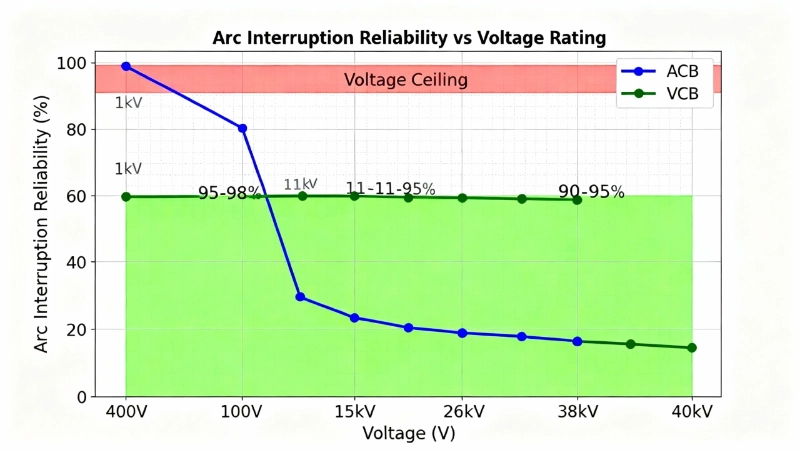
the Voltage Ceiling visualization

図3:電圧上限の視覚化。ACBは最大1,000Vまで確実に動作するが、このしきい値を超えるアークを安全に遮断することはできない(赤色のゾーン)一方、VCBは11kV〜38kVの中電圧範囲を支配する(緑色のゾーン)。.

一般的なアプリケーション:

  • ユーティリティ配電変電所(11kV、22kV、33kV)
  • 産業用中電圧スイッチギア(リングメインユニット、配電盤)
  • 高電圧誘導モーター保護(>1,000 HP)
  • 変圧器一次保護
  • 発電施設(発電機回路遮断器)
  • 再生可能エネルギーシステム(風力発電所、太陽光インバータステーション)

Proチップ#2: キロアンペア単位の遮断容量だけを比較しないでください。MVA遮断電力(√3 × 電圧 × 電流)を計算します。33kVで50kAのVCBは、690Vで100kAのACBよりもはるかに多くの電力を遮断します。遮断器の能力を評価する場合、電流よりも電圧が重要です。.


規格の分割:IEC 60947-2(ACB)対IEC 62271-100(VCB)

国際電気標準会議(IEC)は、規格を安易に分割しない。IEC 60947-2が最大1,000Vの遮断器を管理し、IEC 62271-100が1,000Vを超える遮断器を引き継ぐ場合、その境界は私たちが議論してきた物理的な現実を反映している。これは 規格の分割, であり、それはあなたの設計コンパスである。.

IEC 60947-2:2024(大気遮断器)

適用範囲: この規格は、定格電圧が 1,000V ACまたは1,500V DCを超えない. 回路遮断器に適用される。これは、ACB、モールドケース回路遮断器(MCCB)、およびミニチュア回路遮断器(MCB)を含む、低電圧回路保護の信頼できるリファレンスである。.

第6版は 2024年9月, に発行され、2016年版に取って代わった。主な更新には以下が含まれる:

  1. 絶縁への適合性: 回路遮断器を遮断スイッチとして使用する場合の要件の明確化
  2. 分類の削除: IECは、遮断媒体(空気、油、SF6など)による遮断器の分類を廃止しました。なぜでしょうか?それは、 電圧がすでに媒体を示しているからです。. 690Vであれば、空気または密閉されたモールドケースを使用しています。古い分類システムは冗長でした。.
  3. 外部デバイス調整: 外部デバイスを介して過電流設定を調整するための新しい規定
  4. 試験の強化: 地絡リリースおよびトリップ位置での絶縁耐力に関する試験の追加
  5. EMCの改善: 電磁両立性(EMC)試験手順および電力損失測定方法の更新

2024年の改訂により、規格はより明確になり、最新のデジタルトリップユニットおよびスマート遮断器技術との整合性が高まりましたが、コアとなる電圧境界—≤1,000V AC—は変更されていません。それを超えると、IEC 60947-2の管轄外となります。.

IEC 62271-100:2021(修正1: 2024)真空遮断器の場合

適用範囲: この規格は、以下のために設計された交流回路遮断器を対象としています。 1,000Vを超える電圧の三相システム. 。特に、VCBが主要な技術である(最高電圧クラスのSF6遮断器と並んで)中電圧および高電圧の屋内および屋外開閉装置向けに調整されています。.

第3版は2021年に発行され、 修正1は2024年8月にリリースされました。. 最近の更新には以下が含まれます。

  1. 更新されたTRV(過渡回復電圧)値: 実際のシステム動作と新しい変圧器設計を反映するために、複数の表でTRVパラメータを再計算
  2. 新しい定格電圧: 以下の定格が追加されました。 15.5kV、27kV、および40.5kV 地域システム電圧(特にアジアおよび中東)をカバーするため
  3. 改訂された端子故障の定義: 試験目的で端子故障を構成するものを明確化
  4. 絶縁耐力試験基準: 絶縁耐力試験の基準を追加。部分放電試験は、GIS(ガス絶縁開閉装置)およびデッドタンク遮断器にのみ適用され、一般的なVCBには適用されないことを明示的に記載
  5. 環境への配慮: 高度、汚染、および温度のディレーティング係数に関するガイダンスの強化

2024年の修正は、規格をグローバルなグリッドインフラストラクチャの変更に対応させますが、基本的な原則は変わりません。 1,000Vを超える場合は、中電圧遮断器が必要です。, そして、1kV〜38kVの範囲では、ほとんどの場合VCBを意味します。.

これらの規格が重複しない理由

1,000Vの境界は恣意的ではありません。それは、大気中の空気が「適切なアーク消弧媒体」から「責任」に移行するポイントです。IECは、より多くの本を販売するために2つの規格を作成したわけではありません。彼らはエンジニアリングの現実を形式化しました。

  • 1kV未満: 空気ベースまたはモールドケース設計が機能します。アークシュートは効果的です。遮断器はコンパクトで経済的です。.
  • 1kV以上: 空気は非現実的に大きなアークシュートを必要とします。真空(またはより高い電圧の場合はSF6)が、妥当なフットプリントで安全で信頼性の高いアーク遮断に必要になります。.

遮断器を仕様化する場合、最初の質問は「ACBかVCBか?」ではありません。「システムの電圧は?」です。その答えが正しい規格を示し、正しい遮断器タイプを示します。.

Proチップ#3: 回路遮断器のデータシートを確認する際は、どのIEC規格に準拠しているかを確認してください。IEC 60947-2が記載されている場合は、低電圧遮断器(≤1kV)です。IEC 62271-100が記載されている場合は、中/高電圧遮断器(>1kV)です。規格への準拠により、電圧クラスがすぐにわかります。.


アプリケーション:システムへの遮断器タイプの適合

ACBとVCBの選択は、好みによるものではありません。遮断器の物理的な能力を、システムの電気的特性および運用要件に適合させることです。.

遮断器タイプをアプリケーションにマッピングする方法を以下に示します。.

ACBを使用する場合

エアサーキットブレーカーは、以下の用途に最適です。 低電圧配電システム コンパクトなサイズや長いメンテナンス間隔よりも、高い電流容量が重要な場合。.

理想的なアプリケーション:

  • 400Vまたは690V三相配電: ほとんどの産業用および商業用電気システムのバックボーン
  • モーターコントロールセンター(MCC): ポンプ、ファン、コンプレッサー、コンベヤー、およびその他の低電圧モーターの保護
  • 電力制御センター(PCC): 産業機械およびプロセス機器の主配電
  • 低電圧主配電盤(LVMDP): 建物および施設のサービスエントランスおよび主遮断器
  • 発電機保護: 低電圧バックアップ発電機(通常480Vまたは600V)
  • 海洋とオフショア 低電圧船舶電力配電(IEC 60092も適用される場合)

ACBが経済的に理にかなう場合:

  • 初期コストの低減が優先される場合: 資本予算が制約されており、社内に保守能力がある場合
  • 高電流要件: 6,000A以上の定格が必要で、ACBのフォームファクタの方が経済的な場合
  • 既存のLV配電盤への後付け: ACB用に設計されたパネルで、同等のものを交換する場合

覚えておくべき制限事項:

  • 保守の負担:6ヶ月ごとの点検と3〜5年ごとの接点交換を想定してください
  • フットプリント:ACBは、アークシュートアセンブリのため、同等のVCBよりも大きく、重くなります
  • 騒音:空気中でのアーク遮断は、密閉された真空状態よりも大きくなります
  • 限定的な耐用年数:大規模なオーバーホールを行うまでに通常10,000〜15,000回の動作

VCBを使用する場合

真空遮断器が主流 中電圧アプリケーション 信頼性、低メンテナンス、コンパクトなサイズ、および長い耐用年数が初期コストの高さに見合う場合。.

理想的なアプリケーション:

  • 11kV、22kV、33kVのユーティリティ変電所: 一次および二次配電盤
  • 産業用MV配電盤: リングメインユニット(RMU)、金属閉鎖形配電盤、パッドマウント変圧器
  • 高電圧モーター保護: 1,000 HPを超える誘導モーター(通常3.3kV、6.6kV、または11kV)
  • 変圧器保護: 配電および電力変圧器の一次側ブレーカー
  • 発電施設: 発電機回路ブレーカー、所内補助電源
  • 再生可能エネルギーシステム: 風力発電所コレクター回路、太陽光インバーター昇圧変圧器
  • 鉱業および重工業: 粉塵、湿気、および過酷な条件により、ACBのメンテナンスが困難になる場合

VCBが唯一の選択肢である場合:

  • システム電圧> 1kV AC: 物理学およびIEC 62271-100は、中電圧定格のブレーカーを必要とします
  • 頻繁なスイッチング操作: VCBは30,000回以上の機械的動作定格です(一部の設計では100,000回を超える動作が可能です)
  • 制限されたメンテナンスアクセス: 半年ごとのACB点検が非現実的な遠隔変電所、オフショアプラットフォーム、屋上設置
  • 長いライフサイクルコストの重視: 20〜30年間の総所有コストが初期資本コストを上回る場合

過酷な環境での利点:

  • 密閉された真空遮断器は、粉塵、湿度、塩水噴霧、または高度の影響を受けません(ディレーティング制限まで)
  • 清掃または交換するアークシュートはありません
  • 静かな動作(占有されている建物内の屋内変電所にとって重要)
  • コンパクトなフットプリント(不動産が高価な都市部の変電所では重要)

意思決定マトリックス:ACBまたはVCB?

システムの特性 推奨ブレーカータイプ 主な理由
電圧≤1,000V AC ACB IEC 60947-2管轄; 空気消弧で十分です
電圧> 1,000V AC VCB IEC 62271-100が必要; 空気はアークを確実に遮断できません
LVでの高電流(> 5,000A) ACB 低電圧で非常に高い電流の場合、より経済的です
頻繁なスイッチング(> 20回/日) VCB ACBの10,000回に対して30,000回以上の動作定格
過酷な環境(粉塵、塩、湿度) VCB 密閉された遮断器は汚染の影響を受けません
制限されたメンテナンスアクセス VCB ACBの6ヶ月のスケジュールに対して3〜5年のサービス間隔
20年以上のライフサイクルコストの重視 VCB より高い初期コストにもかかわらず、より低いTCO
厳しいスペース制約 VCB コンパクトな設計; アークシュートの容積なし
予算が制約された資本プロジェクト ACB(≤1kVの場合) より低い初期費用、ただしメンテナンス予算を考慮してください

Circuit breaker selection flowchart

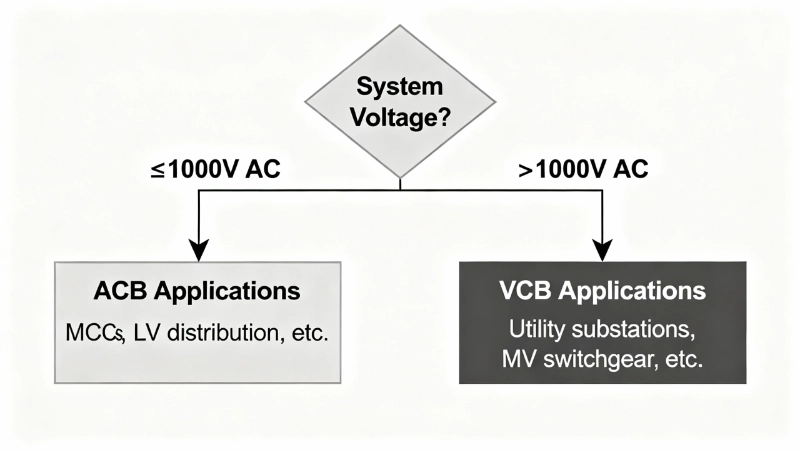
図5:遮断器選定フローチャート。システム電圧が主要な判断基準となり、1,000Vの境界に基づいてACB(低圧)またはVCB(中圧)のいずれかのアプリケーションに誘導します。.

Proチップ#4: システム電圧が1kVの境界に近い場合は、VCBを指定してください。ACBを最大電圧定格まで無理に引き伸ばそうとしないでください。 電圧上限 定格最大値ではなく、物理的な限界です。余裕を持って設計してください。.


メンテナンス税:VCBが20年間でコストが低くなる理由

あの15,000ドルのACBは、25,000ドルのVCBに比べて魅力的に見えます。15年以上にわたって数値を計算するまでは。.

ようこそ メンテナンスコスト—経済的な方程式を覆す隠れた経常費用へ。.

ACBのメンテナンス:年2回の負担

大気遮断器は、接点とアークシュートが開いた環境で動作するため、定期的な手作業によるメンテナンスが必要です。以下は、メーカーおよびIEC 60947-2によって推奨される一般的なメンテナンススケジュールです。

6ヶ月ごと(半期検査):

  • 接点のピッティング、腐食、または変色の目視検査
  • アークシュートの清掃(カーボンデポジットおよび金属蒸気残留物の除去)
  • 接点ギャップとワイプの測定
  • 機械的動作テスト(手動および自動)
  • 端子接続トルクのチェック
  • 可動部品の潤滑(ヒンジ、リンケージ、ベアリング)
  • 過電流トリップユニットの機能テスト

3〜5年ごと(主要なサービス):

  • 接点の交換(腐食がメーカーの制限を超える場合)
  • アークシュートの検査と、損傷がある場合の交換
  • 絶縁抵抗試験(メガーテスト)
  • 接触抵抗測定
  • 完全な分解と清掃
  • 摩耗した機械部品の交換

コストの内訳(一般的、地域によって異なります):

  • 半期検査:遮断器あたり600〜1,000ドル(請負業者の人件費:3〜4時間)
  • 接点交換:2,500〜4,000ドル(部品+人件費)
  • アークシュートの交換:1,500〜2,500ドル(損傷がある場合)
  • 緊急サービスコール(検査の合間に遮断器が故障した場合):1,500〜3,000ドル

15年の耐用年数を持つACBの場合:

  • 半期検査:15年×2回の検査/年×平均800ドル= $24,000
  • 接点交換:(15年÷4年)×3,000ドル= $9,000 (3回の交換)
  • 計画外の故障:1回の故障×2,000ドルと仮定= $2,000
  • 15年間の総メンテナンス費用:35,000ドル

初期購入費用(15,000ドル)を追加すると、 15年間の総所有コストは約50,000ドルになります.

それが メンテナンス税. です。遮断器の寿命の間、毎年、年に2回、人件費、ダウンタイム、および消耗部品で支払います。.

VCBのメンテナンス:密閉された寿命の利点

真空遮断器は、メンテナンスの方程式を覆します。密閉された真空遮断器は、接点を酸化、汚染、および環境への暴露から保護します。結果:サービス間隔が大幅に延長されます。.

3〜5年ごと(定期検査):

  • 外観の目視検査
  • 機械的動作回数チェック(カウンターまたはデジタルインターフェース経由)
  • 接点摩耗インジケーターのチェック(一部のVCBには外部インジケーターがあります)
  • 動作テスト(開閉サイクル)
  • 制御回路の機能テスト
  • 端子接続の検査

10〜15年ごと(主要な検査、もしあれば):

  • 真空度試験(高電圧試験またはX線検査を使用)
  • 接点ギャップの測定(一部のモデルでは部分的な分解が必要)
  • 絶縁抵抗試験

リストに ない ないものに注目してください:

  • 接点の清掃なし(密閉された環境)
  • アークシュートのメンテナンスなし(存在しない)
  • 半期検査なし(不要)
  • 定期的な接点交換なし(20〜30年の寿命)

コストの内訳(一般的):

  • 定期検査(4年ごと):遮断器あたり400〜700ドル(請負業者の人件費:1.5〜2時間)
  • 真空遮断器の交換(20〜25年後に必要な場合):6,000〜10,000ドル

同じ15年間の評価期間を持つVCBの場合:

  • 定期検査:(15年÷4年)×平均500ドル= $1,500 (3回の検査)
  • 計画外の故障:非常にまれ。0ドルと仮定(VCBの故障率は10分の1)
  • 大規模なオーバーホール:15年以内は不要
  • 15年間の総メンテナンス費用:1,500ドル

初期購入費用(25,000ドル)を加えると、 15年間の総所有コストは約26,500ドルになります。.

TCOクロスオーバーポイント

比較してみましょう:

コスト要素 ACB(15年間) VCB(15年間)
初期購入費用 $15,000 $25,000
定期メンテナンス $24,000 $1,500
接点/部品交換 $9,000 $0
計画外の故障 $2,000 $0
総所有コスト $50,000 $26,500
年間コスト 3,333ドル/年 1,767ドル/年

VCBはメンテナンス費用の削減だけで元が取れます。さらに重要な点は: クロスオーバーは3年目頃に発生します.

  • 0年目: ACB = 15,000ドル、VCB = 25,000ドル(ACBが10,000ドル先行)
  • 1.5年目: ACBの最初の3回の点検 = 2,400ドル、VCB = 0ドル(ACBが7,600ドル先行)
  • 3年目: ACBの6回の点検 = 4,800ドル、VCB = 0ドル(ACBが5,200ドル先行)
  • 4年目: ACBの最初の接点交換 + 8回の点検 = 9,400ドル、VCBの最初の点検 = 500ドル(ACBが900ドル先行)
  • 5年目: ACBの総メンテナンス費用 = 12,000ドル、VCB = 500ドル(VCBがコスト削減を開始)
  • 15年目: ACBの合計 = 50,000ドル、VCBの合計 = 26,500ドル(VCBは23,500ドル節約)
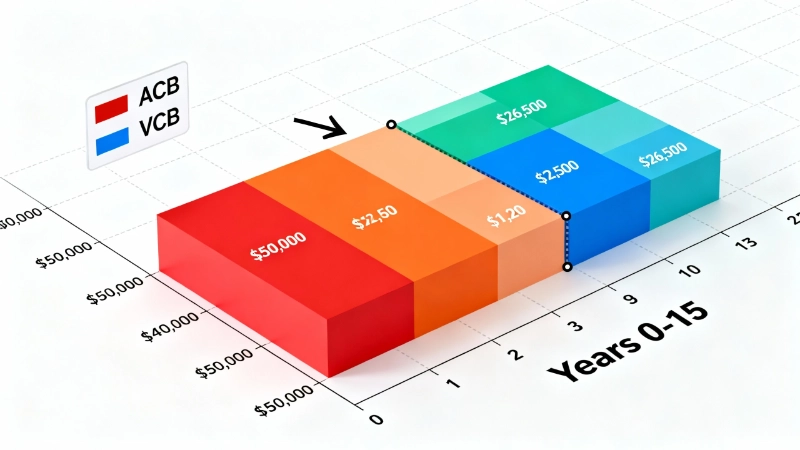
5-Year Total Cost of Ownership (TCO) analysis

図4:15年間の総所有コスト(TCO)分析。初期費用は高いものの、VCBはメンテナンス要件が大幅に低いため、3年目までにACBよりも経済的になり、15年間で23,500ドル節約できます。.

スイッチギアを20年間(一般的な産業施設の場合)使用する予定がある場合、節約額はさらに拡大し、 ブレーカーあたり35,000ドル以上. 。10個のブレーカーを備えた変電所の場合、 ライフサイクル全体で350,000ドルの節約.

請求書に記載されていない隠れたコスト

上記のTCO計算は、直接コストのみを対象としています。忘れてはならないのは:

ダウンタイムのリスク:

  • 点検と点検の間のACBの故障は、計画外の停止を引き起こす可能性があります
  • VCBの故障はまれです(適切な使用でMTBFは30年を超えることがよくあります)

労働力の可用性:

  • 業界がVCBに移行するにつれて、ACBメンテナンスの資格のある技術者を見つけるのが難しくなっています
  • 半年ごとのメンテナンス期間には、生産停止または慎重なスケジュール設定が必要です

安全だ:

  • メンテナンス中のACBアークフラッシュ事故は、VCB事故よりも一般的です(開放接点と密閉遮断器の比較)
  • アークフラッシュPPE要件は、ACBメンテナンスの方が厳格です

環境要因:

  • ほこり、湿気、または腐食性の環境にあるACBは、 より 頻繁なメンテナンスが必要です(半年ごとではなく四半期ごと)
  • VCBは影響を受けません。密閉された遮断器は外部条件を気にしません

プロのヒント5(最も重要なこと): 初期投資コストだけでなく、予想されるスイッチギアの寿命(15〜25年)にわたる総所有コストを計算します。中電圧アプリケーションの場合、VCBはほとんどの場合、TCOで優位に立ちます。低電圧アプリケーションでACBを使用する必要がある場合は、メンテナンスのためにブレーカーあたり年間2,000〜3,000ドルの予算を立ててください。また、メンテナンススケジュールを遅らせないでください。点検を怠ると、壊滅的な故障につながります。.


よくある質問:ACB対VCB

Q:定格を下げるか、外部アーク抑制を追加すれば、1,000Vを超えるACBを使用できますか?

A:いいえ。ACBの1,000V制限は、定格を下げることで解決できる熱的または電気的ストレスの問題ではなく、基本的なアーク物理学の制限です。1kVを超えると、ブレーカーをどのように構成しても、大気中の空気は安全な時間枠内でアークを確実に消弧できません。IEC 60947-2は、ACBを≤1,000V ACに明示的に規定しており、その範囲外での動作は規格に違反し、アークフラッシュの危険性を生み出します。システムが1kVを超える場合は、法的かつ安全に中電圧ブレーカー(IEC 62271-100に基づくVCBまたはSF6ブレーカー)を使用する必要があります。.

Q:VCBは、何か問題が発生した場合、ACBよりも修理費用が高くなりますか?

A:はい、ただし、VCBの故障頻度ははるかに低くなっています。VCB真空遮断器が故障した場合(まれ)、通常、6,000〜10,000ドルで密閉ユニット全体の工場交換が必要になります。ACB接点とアークシュートは、2,500〜4,000ドルで現場で修理できますが、VCBの寿命中に3〜4回交換することになります。計算では、VCBの方が有利です。25年間で1回のVCB遮断器交換と、15年間で3回のACB接点交換、さらに継続的な メンテナンス税 半年ごと。.

Q:頻繁なスイッチング(コンデンサバンク、モーター始動)には、どちらのブレーカータイプが適していますか?

A:VCBが圧倒的に優れています。真空遮断器は、大規模なオーバーホール前に30,000〜100,000回以上の機械的操作が可能です。ACBは通常、10,000〜15,000回の操作が可能です。コンデンサバンクの切り替え、バッチプロセスでのモーターの始動/停止、負荷伝達方式など、頻繁な切り替えを伴うアプリケーションの場合、VCBはACBよりも操作回数で3:1〜10:1長持ちします。さらに、VCBの高速アーク消弧(1サイクル)により、各スイッチングイベント中の下流機器へのストレスが軽減されます。.

Q:VCBには、初期費用以外にACBと比較して欠点はありますか?

A:3つの小さな考慮事項があります。(1) 過電圧リスク 容量性または誘導性負荷を切り替える場合—VCBの高速アーク消弧は、過渡的な過電圧を発生させる可能性があり、敏感な負荷にはサージアレスタまたはRCスナバが必要になる場合があります。(2) 修理の複雑さ —真空遮断器が故障した場合、現場での修理は不可能で、ユニット全体の交換が必要です。(3) 可聴ハム音 —一部のVCB設計では、作動機構から低周波のハム音が発生しますが、これはACBのアーク爆発音よりもはるかに静かです。アプリケーションの99%において、これらの欠点は利点に比べて無視できるほどです(「Sealed-for-Life Advantage」の項を参照)。 シールド・フォー・ライフの利点  セクション)。.

Q: 既存のACB開閉装置パネルにVCBを後付けできますか?

A: 可能な場合もありますが、常に可能とは限りません。VCBはACBよりもコンパクトであるため、物理的なスペースが問題になることはほとんどありません。課題は次のとおりです。(1) 取り付け寸法 —ACBとVCBでは取り付け穴のパターンが異なるため、アダプタープレートが必要になる場合があります。(2) 母線 構成 —VCB端子が、改造なしに既存のACB母線と整列しない場合があります。(3) 制御電圧 —VCBの作動機構では、異なる制御電源(例:110V DC vs 220V AC)が必要になる場合があります。(4) 保護協調 —遮断器の種類を変更すると、短絡遮断時間と協調曲線が変わる可能性があります。後付けを行う前に、必ず開閉装置メーカーまたは資格のある電気エンジニアにご相談ください。新規設置では、中電圧にはVCB、低電圧にはACB(またはMCCB)を最初から指定する必要があります。 MCCB)を低電圧用に指定する必要があります。.

Q: なぜメーカーは中電圧(11kV、33kV)用のACBを作らないのですか?

A: 彼らは試みました。中電圧ACBは20世紀半ばに存在しましたが、巨大でした—部屋サイズの遮断器で、アークシュートは数メートルもの長さがありました。空気の絶縁耐力(〜3 kV/mm)が比較的低いため、33kV遮断器には、ミリメートル単位ではなく、メートル単位で測定される接点ギャップとアークシュートが必要でした。サイズ、重量、メンテナンスの負担、および火災のリスクにより、それらは非現実的でした。1960年代から1970年代に真空遮断器技術が成熟すると、中電圧ACBは廃止されました。今日、真空遮断器とSF6遮断器が中電圧市場を支配しているのは、物理学と経済学の両方が1kVを超える密閉遮断器設計を支持しているためです。それは製品の決定ではなく、エンジニアリングの現実です。 電圧上限 それは製品の決定ではなく、エンジニアリングの現実です。.


結論:電圧が最初、その他はすべてそれに続く

冒頭の2つのデータシートを覚えていますか?どちらも最大690Vの電圧定格をリストしていました。どちらも堅牢な遮断容量を主張していました。しかし、今ではご存知でしょう。 電圧は単なる数字ではなく、遮断器技術の境界線です。.

ここに、3つの部分からなる意思決定の枠組みがあります。

1. 電圧が遮断器の種類を決定する(電圧上限)

  • システム電圧≤1,000V AC → 空気遮断器(ACB)、IEC 60947-2:2024に準拠
  • システム電圧>1,000V AC → 真空遮断器(VCB)、IEC 62271-100:2021+A1:2024に準拠
  • これは交渉の余地はありません。物理学が境界を設定し、規格がそれを形式化しました。.

2. 規格が分割を形式化する(規格分割)

  • IECは市場セグメンテーションのために2つの別々の規格を作成したのではなく、空気ベースのアーク遮断が1kVを超えると失敗するという現実を成文化しました。
  • システム電圧によって、どの規格が適用されるかがわかり、どの遮断器技術を指定するかがわかります。
  • 遮断器のIEC準拠マークを確認してください:60947-2 = 低電圧、62271-100 = 中電圧

3. メンテナンスがライフサイクル経済性を決定する(メンテナンス税)

  • ACBは初期費用が安いですが、半年に一度の検査と接点交換で年間2,000〜3,000ドルの費用がかかります。
  • VCBは初期費用が高いですが、3〜5年ごとの検査のみで済み、接点の寿命は20〜30年です。
  • TCOのクロスオーバーは約3年後に発生します。15年後には、VCBは遮断器あたり20,000〜25,000ドル節約できます。
  • 中電圧アプリケーション(いずれにせよVCBを使用する必要がある場合)では、コスト上の利点はボーナスです。
  • 低電圧アプリケーション(ACBが適切な場合)では、メンテナンス税の予算を立てて、検査スケジュールを遵守してください。 メンテナンス税 検査スケジュールを遵守してください。

データシートには、電圧定格が重複して表示される場合があります。マーケティングパンフレットでは、それらが互換性があることを示唆している場合があります。しかし、物理学は交渉しませんし、あなたもそうすべきではありません。.

システム電圧に基づいて選択してください。. その他すべて—電流定格、遮断容量、メンテナンス間隔、フットプリント—最初の選択を正しく行うと、すべてが適切になります。.


適切な遮断器の選択でお困りですか?

VIOXのアプリケーションエンジニアリングチームは、世界中の産業、商業、およびユーティリティアプリケーション向けのACBおよびVCBの仕様に関する数十年の経験があります。新しい400V MCCの設計、11kV変電所のアップグレード、または頻繁な遮断器の故障のトラブルシューティングのいずれの場合でも、システム要件を確認し、パフォーマンス、安全性、およびライフサイクルコストのバランスが取れたIEC準拠のソリューションを推奨します。.

今すぐVIOXにお問い合わせください。 今日 のために:

  • 遮断器の選択とサイズ計算
  • 短絡協調調査
  • 開閉装置の改修可能性評価
  • メンテナンスの最適化とTCO分析

遮断器の種類を間違えると、費用がかかるだけでなく、危険だからです。.
著絵

こんにちは、私はジョー、専用のプロフェッショナルで12年以上の経験を電気産業です。 でVIOX電気、私は高品質の電気的ソリューションのニーズに応えております。 私の専門知識に及ぶ産業用オートメーション、住宅の配線は、商用電気システム。お問い合わせ[email protected] がることができます。

テーブルの内容
    Ajouter un en-tête pour commencer à générer la table des matières
    今すぐ見積もりを依頼する