

Sa pahinang ito
Nakatingin ka sa dalawang datasheet ng circuit breaker para sa iyong 15kV switchgear project. Pareho silang nagpapakita ng voltage ratings hanggang 690V. Pareho ring nakalista ang kahanga-hangang breaking capacities. Sa papel, mukhang mapagpapalit sila.
Hindi sila mapagpapalit.
Kung mali ang mapili mo—mag-install ng Air Circuit Breaker (ACB) kung kailangan mo ng Vacuum Circuit Breaker (VCB), o vice versa—hindi mo lang nilalabag ang mga pamantayan ng IEC. Isinusugal mo rin ang panganib ng arc flash, mga budget sa maintenance, at ang lifespan ng kagamitan. Ang tunay na pagkakaiba ay wala sa marketing brochure. Ito ay nasa physics kung paano pinapatay ng bawat breaker ang electrical arc, at ang physics na iyon ay nagpapataw ng isang mahigpit na Voltage Ceiling na hindi kayang balewalain ng anumang disclaimer sa datasheet.
Narito kung ano talaga ang naghihiwalay sa mga ACB mula sa mga VCB—at kung paano piliin ang tama para sa iyong sistema.
Mabilisang Sagot: ACB vs VCB sa Isang Sulyap
Ang pangunahing pagkakaiba: Mga Air Circuit Breaker (ACBs) pinapatay ang electrical arcs sa atmospheric air at idinisenyo para sa low-voltage systems hanggang 1,000V AC (pinamamahalaan ng IEC 60947-2:2024). Ang Vacuum Circuit Breakers (VCBs) ay pumapatay ng arcs sa isang selyadong vacuum environment at gumagana sa medium-voltage systems mula 11kV hanggang 33kV (pinamamahalaan ng IEC 62271-100:2021). Ang voltage split na ito ay hindi isang pagpipilian sa segmentation ng produkto—ito ay idinidikta ng physics ng arc interruption.
Narito kung paano sila naghahambing sa mga kritikal na detalye:
| Pagtutukoy | Air Circuit Breaker (ACB) | Vacuum Circuit Breaker (VCB) |
| Saklaw ng Boltahe | Mababang boltahe: 400V hanggang 1,000V AC | Katamtamang boltahe: 11kV hanggang 33kV (ilang 1kV-38kV) |
| Kasalukuyang Saklaw | Mataas na kasalukuyang: 800A hanggang 10,000A | Katamtamang kasalukuyang: 600A hanggang 4,000A |
| Breaking Kapasidad | Hanggang 100kA sa 690V | 25kA hanggang 50kA sa MV |
| Arc Quenching Medium | Hangin sa atmospheric pressure | Vacuum (10^-2 hanggang 10^-6 torr) |
| Operating Mekanismo | Pinapahaba at pinapalamig ng mga arc chutes ang arc | Selyadong vacuum interrupter ang pumapatay sa arc sa unang current zero |
| Dalas ng Pagpapanatili | Bawat 6 na buwan (dalawang beses kada taon) | Bawat 3 hanggang 5 taon |
| Contact Lifespan | 3 hanggang 5 taon (ang exposure sa hangin ay nagdudulot ng erosion) | 20 hanggang 30 taon (selyadong environment) |
| Tipikal Na Mga Application | LV distribution, MCCs, PCCs, commercial/industrial panels | MV switchgear, utility substations, HV motor protection |
| IEC Standard | IEC 60947-2:2024 (≤1000V AC) | IEC 62271-100:2021+A1:2024 (>1000V) |
| Paunang Gastos | Mas mababa (karaniwang ₱8K-₱15K) | Mas mataas (karaniwang ₱20K-₱30K) |
| 15-Year Total Cost | ~₱48K (kasama ang maintenance) | ~₱24K (minimal maintenance) |
Napansin mo ba ang malinaw na dividing line sa 1,000V? Iyon ang The Standards Split—at umiiral ito dahil sa itaas ng 1kV, hindi kayang patayin ng hangin ang isang arc nang sapat na kabilis. Ang physics ang nagtatakda ng boundary; kinodify lang ito ng IEC.

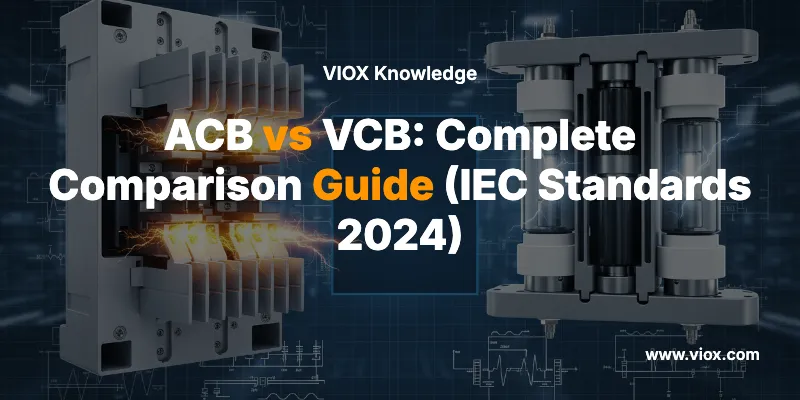
Figure 1: Structural comparison ng ACB at VCB technologies. Ang ACB (kaliwa) ay gumagamit ng arc chutes sa open air, habang ang VCB (kanan) ay gumagamit ng selyadong vacuum interrupter para sa arc extinction.
Arc Quenching: Air vs Vacuum (Bakit Physics ang Nagtatakda ng Voltage Ceiling)
Kapag hinihiwalay mo ang mga current-carrying contacts sa ilalim ng load, nabubuo ang isang arc. Palagi. Ang arc na iyon ay isang plasma column—ionized gas na nagdadala ng libu-libong amperes sa mga temperaturang umaabot sa 20,000°C (mas mainit kaysa sa surface ng araw). Ang trabaho ng iyong circuit breaker ay patayin ang arc na iyon bago nito pagdikitin ang mga contacts o mag-trigger ng isang arc flash event.
Kung paano nito ginagawa iyon ay depende nang buo sa medium na nakapaligid sa mga contacts.
Paano Ginagamit ng mga ACB ang Hangin at Arc Chutes
An Mga Naka Circuit Breaker pinapatay ang arc sa atmospheric air. Ang mga contacts ng breaker ay nakalagay sa arc chutes—mga arrays ng metal plates na nakaposisyon upang harangin ang arc habang naghihiwalay ang mga contacts. Narito ang sequence:
- Arc formation: Naghihiwalay ang mga contacts, sumisiklab ang arc sa hangin
- Arc lengthening: Itinutulak ng magnetic forces ang arc sa arc chute
- Arc division: Hinihiwalay ng metal plates ng chute ang arc sa maraming mas maiikling arcs
- Arc cooling: Ang pagtaas ng surface area at exposure sa hangin ay nagpapalamig sa plasma
- Arc extinction: Habang lumalamig at humahaba ang arc, tumataas ang resistance hanggang sa hindi na kayang sustentuhan ng arc ang sarili nito sa susunod na current zero
Gumagana ito nang maaasahan hanggang sa humigit-kumulang 1,000V. Sa itaas ng voltage na iyon, masyadong malaki ang enerhiya ng arc. Ang dielectric strength ng hangin (ang voltage gradient na kaya nitong tiisin bago masira) ay humigit-kumulang 3 kV/mm sa atmospheric pressure. Kapag umakyat ang system voltage sa multi-kilovolt range, ang arc ay muling sumisiklab sa lumalawak na contact gap. Hindi ka makakagawa ng arc chute na sapat ang haba para pigilan ito nang hindi ginagawang kasing laki ng maliit na kotse ang breaker.
Iyon ang The Voltage Ceiling.
Paano Ginagamit ng mga VCB ang Vacuum Physics
A Vacuum Circuit Breaker ay gumagamit ng ibang approach. Ang mga contacts ay nakapaloob sa isang selyadong vacuum interrupter—isang chamber na evacuated sa pressure sa pagitan ng 10^-2 at 10^-6 torr (iyon ay humigit-kumulang isang-milyong bahagi ng atmospheric pressure).
Kapag naghiwalay ang mga contact sa ilalim ng karga:
- Arc formation: Tumama ang arko sa loob ng vacuum gap
- Limitadong ionization: Dahil halos walang gas molecules, kulang ang arko ng sustaining medium
- Mabilis na de-ionization: Sa unang natural current zero (bawat half-cycle sa AC), walang sapat na charge carriers para muling magliyab ang arko
- Agarang pagkawala: Namatay ang arko sa loob ng isang cycle (8.3 milliseconds sa isang 60 Hz system)
Ang vacuum ay nagbibigay ng dalawang malaking kalamangan. Una, dielectric strength: ang vacuum gap na 10mm lamang ay kayang tumagal ng voltages hanggang 40kV—iyon ay 10 hanggang 100 beses na mas malakas kaysa sa hangin sa parehong distansya ng gap. Pangalawa, contact preservation: dahil walang oxygen, hindi nag-o-oxidize o nag-e-erode ang mga contact sa parehong bilis ng mga ACB contact na nakalantad sa hangin. Iyon ay Ang Sealed-for-Life Advantage.
Ang mga VCB contact sa isang maayos na pinapanatili na breaker ay maaaring tumagal ng 20 hanggang 30 taon. Ang mga ACB contact na nakalantad sa atmospheric oxygen at arc plasma? Naghahanap ka ng kapalit bawat 3 hanggang 5 taon, minsan mas maaga sa maalikabok o mahalumigmig na kapaligiran.
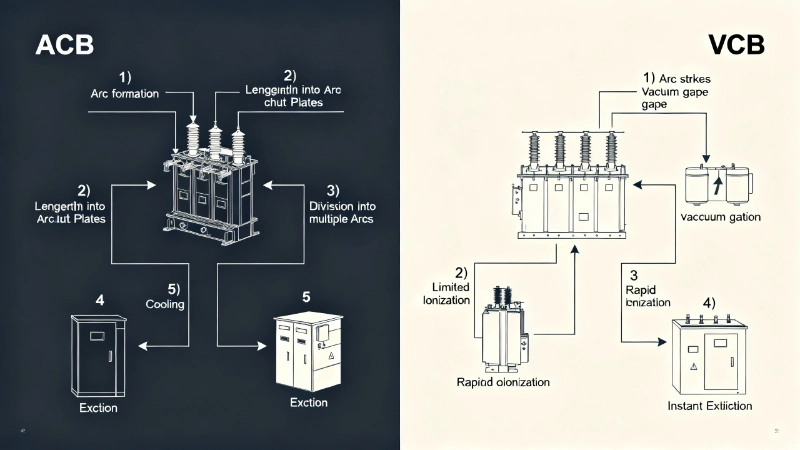
Figure 2: Arc quenching mechanisms. Ang ACB ay nangangailangan ng maraming hakbang upang pahabain, hatiin, at palamigin ang arko sa hangin (kaliwa), habang pinapatay ng VCB ang arko kaagad sa unang current zero dahil sa superyor na dielectric strength ng vacuum (kanan).
Pro-Tip #1: Ang Voltage Ceiling ay hindi negotiable. Ang mga ACB ay pisikal na hindi kayang mapagkakatiwalaang putulin ang mga arko na higit sa 1kV sa hangin sa atmospheric pressure. Kung ang iyong system voltage ay lumampas sa 1,000V AC, kailangan mo ng VCB—hindi bilang isang “mas mahusay” na opsyon, ngunit bilang ang tanging opsyon na sumusunod sa physics at mga pamantayan ng IEC.
Voltage at Current Ratings: Ano Talaga ang Kahulugan ng mga Numero
Ang Voltage ay hindi lamang isang specification line sa datasheet. Ito ang pangunahing pamantayan sa pagpili na tumutukoy kung aling uri ng breaker ang maaari mong isaalang-alang. Mahalaga ang current rating, ngunit pangalawa ito.
Narito kung ano ang kahulugan ng mga numero sa pagsasagawa.
ACB Ratings: Mataas na Current, Mababang Voltage
Voltage ceiling: Ang mga ACB ay gumagana nang maaasahan mula 400V hanggang 1,000V AC (na may ilang espesyal na disenyo na na-rate sa 1,500V DC). Ang tipikal na sweet spot ay 400V o 690V para sa three-phase industrial systems. Sa itaas ng 1kV AC, ginagawang hindi praktikal ng mga dielectric properties ng hangin ang maaasahang arc interruption—iyon Voltage Ceiling na tinalakay namin ay hindi isang limitasyon sa disenyo; ito ay isang pisikal na hangganan.
Current capacity: Kung saan nangingibabaw ang mga ACB ay ang paghawak ng current. Ang mga rating ay mula 800A para sa mas maliit na distribution panels hanggang 10,000A para sa mga pangunahing application sa service entrance. Ang mataas na current capability sa mababang voltage ay eksaktong kailangan ng low-voltage distribution—isipin ang motor control centers (MCCs), power control centers (PCCs), at main distribution boards sa commercial at industrial facilities.
Pagsira kapasidad: Ang mga short-circuit interrupting ratings ay umaabot hanggang 100kA sa 690V. Iyon ay kahanga-hanga—at ito ay, para sa mga low-voltage application. Ngunit ilagay natin ito sa pananaw sa pamamagitan ng isang power calculation:
- Breaking capacity: 100kA sa 690V (line-to-line)
- Apparent power: √3 × 690V × 100kA ≈ 119 MVA
Iyon ang maximum fault power na ligtas na mapuputol ng isang ACB. Para sa isang 400V/690V industrial plant na may 1.5 MVA transformer at tipikal na X/R ratios, ang isang 65kA breaker ay madalas na sapat. Ang mga 100kA units ay nakalaan para sa utility-scale low-voltage distribution o mga pasilidad na may maraming malalaking transformer na magkakatulad.
Mga tipikal na application:
- Low-voltage main distribution panels (LVMDP)
- Motor control centers (MCCs) para sa mga bomba, bentilador, compressor
- Power control centers (PCCs) para sa industrial machinery
- Generator protection at synchronization panels
- Commercial building electrical rooms (sa ibaba ng 1kV)
VCB Ratings: Medium Voltage, Katamtamang Current
Voltage range: Ang mga VCB ay idinisenyo para sa medium-voltage systems, karaniwan mula 11kV hanggang 33kV. Ang ilang mga disenyo ay nagpapalawak ng range pababa sa 1kV o hanggang 38kV (ang 2024 amendment sa IEC 62271-100 ay nagdagdag ng standardized ratings sa 15.5kV, 27kV, at 40.5kV). Ang superior dielectric strength ng sealed vacuum interrupter ay ginagawang manageable ang mga voltage level na ito sa loob ng isang compact footprint.
Current capacity: Ang mga VCB ay humahawak ng katamtamang currents kumpara sa mga ACB, na may tipikal na ratings mula 600A hanggang 4,000A. Ito ay perpektong sapat para sa mga medium-voltage application. Ang isang 2,000A breaker sa 11kV ay maaaring magdala ng 38 MVA ng continuous load—katumbas ng ilang dosenang malalaking industrial motors o ang power demand ng isang buong medium-sized na industrial facility.
Pagsira kapasidad: Ang mga VCB ay na-rate mula 25kA hanggang 50kA sa kani-kanilang mga voltage level. Patakbuhin natin ang parehong power calculation para sa isang 50kA VCB sa 33kV:
- Breaking capacity: 50kA sa 33kV (line-to-line)
- Apparent power: √3 × 33kV × 50kA ≈ 2,850 MVA
Iyon ang 24 na beses na mas maraming interrupting power kaysa sa aming 100kA ACB sa 690V. Bigla, ang “mas mababang” 50kA breaking capacity na iyon ay hindi mukhang napakaliit. Ang mga VCB ay pumuputol ng mga fault currents sa mga power level na magpapasingaw sa arc chute ng isang ACB.
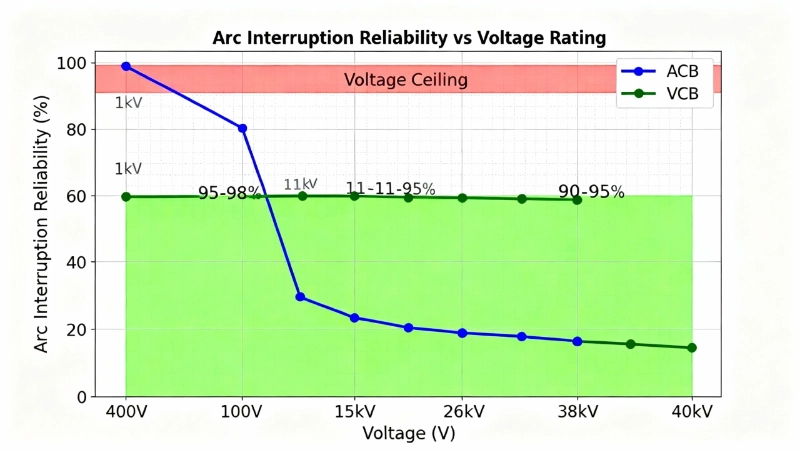
Figure 3: Ang Voltage Ceiling visualization. Ang mga ACB ay gumagana nang maaasahan hanggang 1,000V ngunit hindi ligtas na mapuputol ang mga arko sa itaas ng threshold na ito (red zone), habang ang mga VCB ay nangingibabaw sa medium-voltage range mula 11kV hanggang 38kV (green zone).
Mga tipikal na application:
- Utility distribution substations (11kV, 22kV, 33kV)
- Industrial medium-voltage switchgear (ring main units, switchboards)
- High-voltage induction motor protection (>1,000 HP)
- Pangunahing proteksyon ng transformer
- Power generation facilities (generator circuit breakers)
- Renewable energy systems (wind farms, solar inverter stations)
Pro-Tip #2: Huwag ihambing ang breaking capacity sa kiloamperes lamang. Kalkulahin ang MVA interrupting power (√3 × voltage × current). Ang isang 50kA VCB sa 33kV ay pumuputol ng mas maraming power kaysa sa isang 100kA ACB sa 690V. Mas mahalaga ang Voltage kaysa sa current kapag tinatasa ang kakayahan ng breaker.
Ang Standards Split: IEC 60947-2 (ACB) vs IEC 62271-100 (VCB)
Ang International Electrotechnical Commission (IEC) ay hindi basta-basta naghahati ng mga pamantayan. Kapag ang IEC 60947-2 ay namamahala sa mga breaker hanggang 1,000V at ang IEC 62271-100 ay pumalit sa itaas ng 1,000V, ang hangganan na iyon ay sumasalamin sa pisikal na realidad na aming tinatalakay. Ito ay The Standards Split, at ito ang iyong design compass.
IEC 60947-2:2024 para sa Air Circuit Breakers
Saklaw: Ang pamantayang ito ay nalalapat sa mga circuit-breaker na may rated voltage na hindi lalampas sa 1,000V AC o 1,500V DC. Ito ang authoritative reference para sa low-voltage circuit protection, kabilang ang mga ACB, molded-case circuit breakers (MCCBs), at miniature circuit breakers (MCBs).
Ang ikaanim na edisyon ay inilathala noong Setyembre 2024, humahalili sa edisyon ng 2016. Kabilang sa mga pangunahing pagbabago:
- Pagiging angkop para sa paghihiwalay (isolation): Nilinaw na mga kinakailangan para sa paggamit ng mga circuit-breaker bilang mga isolating switch
- Pag-aalis ng klasipikasyon: Inalis ng IEC ang klasipikasyon ng mga breaker ayon sa interrupting medium (hangin, langis, SF6, atbp.). Bakit? Dahil ang boltahe ay nagsasabi na sa iyo ng medium. Kung ikaw ay nasa 690V, gumagamit ka ng hangin o isang selyadong molded case. Ang lumang sistema ng klasipikasyon ay redundant.
- Mga pagsasaayos ng panlabas na aparato: Mga bagong probisyon para sa pagsasaayos ng mga setting ng overcurrent sa pamamagitan ng mga panlabas na aparato
- Pinahusay na pagsubok: Idinagdag na mga pagsubok para sa mga ground-fault release at mga katangiang dielectric sa naka-trip na posisyon
- Mga pagpapabuti sa EMC: Na-update na mga pamamaraan ng pagsubok sa electromagnetic compatibility (EMC) at mga pamamaraan ng pagsukat ng pagkawala ng kuryente
Ang rebisyon ng 2024 ay ginagawang mas malinis ang pamantayan at mas naaayon sa mga modernong digital trip unit at smart breaker technology, ngunit ang pangunahing hangganan ng boltahe—≤1,000V AC—ay nananatiling hindi nagbabago. Higit pa riyan, wala ka na sa hurisdiksyon ng IEC 60947-2.
IEC 62271-100:2021 (Susog 1: 2024) para sa Vacuum Circuit Breakers
Saklaw: Ang pamantayang ito ay namamahala sa mga alternating current circuit-breaker na idinisenyo para sa mga three-phase system na may mga boltahe na higit sa 1,000V. Ito ay partikular na iniakma para sa medium-voltage at high-voltage indoor at outdoor switchgear, kung saan ang mga VCB ay ang nangingibabaw na teknolohiya (kasama ang mga SF6 breaker para sa pinakamataas na klase ng boltahe).
Ang ikatlong edisyon ay inilathala noong 2021, kasama ang Susog 1 na inilabas noong Agosto 2024. Kabilang sa mga kamakailang pagbabago:
- Na-update na mga halaga ng TRV (Transient Recovery Voltage): Muling kinalkula ang mga parameter ng TRV sa maraming talahanayan upang ipakita ang pag-uugali ng real-world system at mga mas bagong disenyo ng transformer
- Mga bagong rated voltage: Idinagdag ang mga standardized rating sa 15.5kV, 27kV, at 40.5kV upang masakop ang mga regional system voltage (partikular sa Asya at Gitnang Silangan)
- Binagong kahulugan ng terminal fault: Nilinaw kung ano ang bumubuo sa isang terminal fault para sa mga layunin ng pagsubok
- Pamantayan sa pagsubok ng dielectric: Idinagdag ang mga pamantayan para sa pagsubok ng dielectric; malinaw na sinabi na ang mga partial discharge test ay nalalapat lamang sa GIS (Gas-Insulated Switchgear) at mga dead-tank breaker, hindi sa mga tipikal na VCB
- Mga pagsasaalang-alang sa kapaligiran: Pinahusay na gabay sa altitude, polusyon, at mga salik sa pagbaba ng temperatura
Ang susog ng 2024 ay nagpapanatili sa pamantayan na kasalukuyan sa mga pagbabago sa global grid infrastructure, ngunit ang pangunahing prinsipyo ay nananatili: higit sa 1,000V, kailangan mo ng medium-voltage breaker, at para sa saklaw na 1kV-38kV, halos palaging nangangahulugan iyon ng isang VCB.
Bakit Hindi Nag-o-overlap ang mga Pamantayang Ito
Ang hangganan ng 1,000V ay hindi arbitraryo. Ito ang punto kung saan ang atmospheric air ay nagta-transition mula sa “sapat na arc quenching medium” patungo sa “pananagutan.” Hindi lumikha ang IEC ng dalawang pamantayan upang magbenta ng mas maraming libro. Pormal nilang ginawa ang realidad ng engineering:
- Mas mababa sa 1kV: Gumagana ang mga disenyo na nakabatay sa hangin o molded-case. Epektibo ang mga arc chute. Ang mga breaker ay compact at matipid.
- Higit sa 1kV: Ang hangin ay nangangailangan ng hindi praktikal na malalaking arc chute; ang vacuum (o SF6 para sa mas mataas na boltahe) ay nagiging kinakailangan para sa ligtas at maaasahang pag-interrupt ng arc sa isang makatwirang footprint.
Kapag nag-speccing ka ng isang breaker, ang unang tanong ay hindi “ACB o VCB?” Ito ay “Ano ang boltahe ng aking system?” Ang sagot na iyon ay tumuturo sa iyo sa tamang pamantayan, na tumuturo sa iyo sa tamang uri ng breaker.
Pro-Tip #3: Kapag sinusuri ang isang datasheet ng circuit breaker, suriin kung aling pamantayan ng IEC ang sinusunod nito. Kung nakalista ito sa IEC 60947-2, ito ay isang low-voltage breaker (≤1kV). Kung nakalista ito sa IEC 62271-100, ito ay isang medium/high-voltage breaker (>1kV). Ang pagsunod sa pamantayan ay nagsasabi sa iyo ng klase ng boltahe kaagad.
Mga Aplikasyon: Pagtutugma ng Uri ng Breaker sa Iyong System
Ang pagpili sa pagitan ng ACB at VCB ay hindi tungkol sa kagustuhan. Ito ay tungkol sa pagtutugma ng mga pisikal na kakayahan ng breaker sa mga electrical characteristics at operational requirements ng iyong system.
Narito kung paano i-map ang uri ng breaker sa aplikasyon.
Kailan Gagamit ng mga ACB
Ang mga Air Circuit Breaker ay ang tamang pagpipilian para sa mga low-voltage distribution system kung saan ang mataas na kapasidad ng kasalukuyang (current) ay mas mahalaga kaysa sa compact na laki o mahabang agwat ng pagpapanatili.
Mga ideal na aplikasyon:
- 400V o 690V three-phase distribution: Ang backbone ng karamihan sa mga industrial at commercial electrical system
- Motor Control Centers (MCCs): Proteksyon para sa mga pump, fan, compressor, conveyor, at iba pang low-voltage motor
- Power Control Centers (PCCs): Pangunahing distribution para sa industrial machinery at process equipment
- Mga low-voltage main distribution panel (LVMDP): Pasukan ng serbisyo at mga pangunahing breaker para sa mga gusali at pasilidad
- Proteksyon ng generator: Mga low-voltage backup generator (karaniwang 480V o 600V)
- Marine at malayo sa pampang: Pamamahagi ng kuryente sa barko na low-voltage (kung saan naaangkop din ang IEC 60092)
Kapag ang mga ACB ay may katuturan sa pananalapi:
- Mas mababang priyoridad sa paunang gastos: Kung limitado ang kapital na badyet at mayroon kang kakayahan sa panloob na pagpapanatili
- Mataas na kinakailangan sa kasalukuyang: Kapag kailangan mo ng 6,000A+ na rating na mas matipid sa mga ACB form factor
- Retrofit sa umiiral na LV switchgear: Kapag pinapalitan ang katulad sa mga panel na idinisenyo para sa mga ACB
Mga limitasyon na dapat tandaan:
- Pasanin sa pagpapanatili: Asahan ang mga inspeksyon tuwing 6 na buwan at pagpapalit ng contact tuwing 3-5 taon
- Bakas ng paa: Ang mga ACB ay mas malaki at mas mabigat kaysa sa katumbas na mga VCB dahil sa mga arc chute assembly
- Ingay: Ang paghinto ng arc sa hangin ay mas malakas kaysa sa isang selyadong vacuum
- Limitadong buhay ng serbisyo: Karaniwang 10,000 hanggang 15,000 operasyon bago ang malaking overhaul
Kailan Gagamit ng mga VCB
Vacuum Circuit Breakers ang nangingibabaw mga aplikasyon ng medium-voltage kung saan ang pagiging maaasahan, mababang pagpapanatili, compact na laki, at mahabang buhay ng serbisyo ay nagbibigay-katwiran sa mas mataas na paunang gastos.
Mga ideal na aplikasyon:
- 11kV, 22kV, 33kV utility substations: Pangunahin at pangalawang pamamahagi ng switchgear
- Industrial MV switchgear: Ring main units (RMUs), metal-clad switchboards, pad-mounted transformers
- Proteksyon ng high-voltage motor: Induction motors na higit sa 1,000 HP (karaniwang 3.3kV, 6.6kV, o 11kV)
- Proteksyon ng transformer: Mga breaker sa pangunahing bahagi para sa pamamahagi at mga power transformer
- Mga pasilidad sa pagbuo ng kuryente: Mga circuit breaker ng generator, auxiliary power ng istasyon
- Mga renewable energy system: Mga wind farm collector circuit, solar inverter step-up transformers
- Pagmimina at mabigat na industriya: Kung saan ang alikabok, kahalumigmigan, at malupit na kondisyon ay nagiging problema sa pagpapanatili ng ACB
Kapag ang mga VCB ang tanging pagpipilian:
- Boltahe ng system >1kV AC: Ang physics at IEC 62271-100 ay nangangailangan ng mga medium-voltage rated breaker
- Madalas na operasyon ng paglipat: Ang mga VCB ay na-rate para sa 30,000+ mekanikal na operasyon (ang ilang mga disenyo ay lumampas sa 100,000 operasyon)
- Limitadong pag-access sa pagpapanatili: Mga remote substation, offshore platform, rooftop installation kung saan ang semi-annual na inspeksyon ng ACB ay hindi praktikal
- Pokus sa mahabang lifecycle cost: Kapag ang kabuuang halaga ng pagmamay-ari sa loob ng 20-30 taon ay mas malaki kaysa sa paunang kapital na gastos
Mga kalamangan sa malupit na kapaligiran:
- Ang mga selyadong vacuum interrupter ay hindi apektado ng alikabok, halumigmig, salt spray, o altitude (hanggang sa mga limitasyon ng derating)
- Walang mga arc chute na lilinisin o papalitan
- Tahimik na operasyon (mahalaga para sa mga panloob na substation sa mga inookupahang gusali)
- Compact na bakas ng paa (kritikal sa mga urban substation na may mamahaling real estate)
Decision Matrix: ACB o VCB?
| Mga Katangian ng Iyong System | Inirerekomendang Uri ng Breaker | Pangunahing Dahilan |
| Boltahe ≤ 1,000V AC | ACB | Sakop ng IEC 60947-2; sapat ang air quenching |
| Boltahe > 1,000V AC | VCB | Kinakailangan ang IEC 62271-100; hindi maaasahang mapuputol ng hangin ang arc |
| Mataas na kasalukuyang (>5,000A) sa LV | ACB | Mas matipid para sa napakataas na kasalukuyang sa mababang boltahe |
| Madalas na paglipat (>20/araw) | VCB | Na-rate para sa 30,000+ operasyon kumpara sa 10,000 ng ACB |
| Malupit na kapaligiran (alikabok, asin, halumigmig) | VCB | Ang selyadong interrupter ay hindi apektado ng kontaminasyon |
| Limitadong pag-access sa pagpapanatili | VCB | 3-5 taong pagitan ng serbisyo kumpara sa 6 na buwang iskedyul ng ACB |
| Pagtuon sa gastos ng lifecycle na 20+ taon | VCB | Mas mababang TCO sa kabila ng mas mataas na paunang gastos |
| Mahigpit na mga limitasyon sa espasyo | VCB | Siksik na disenyo; walang volume ng arc chute |
| Proyekto ng kapital na limitado ang badyet | ACB (kung ≤1kV) | Mas mababang paunang gastos, ngunit isaalang-alang ang badyet sa pagpapanatili |
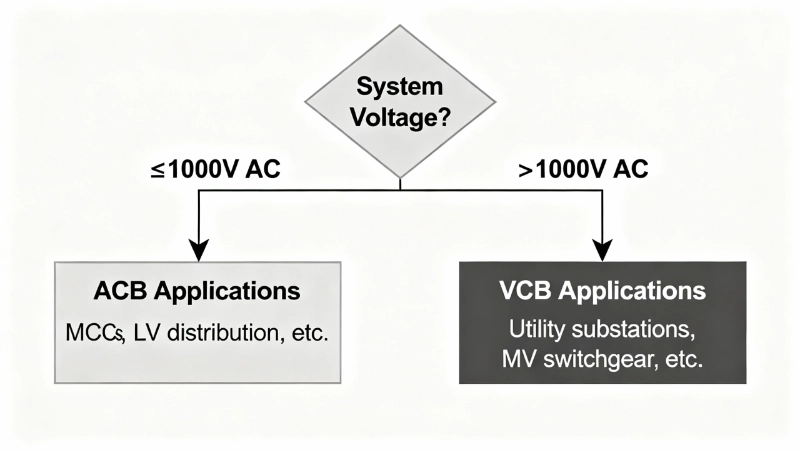
Figure 5: Flowchart ng pagpili ng circuit breaker. Ang boltahe ng sistema ang pangunahing pamantayan sa pagpapasya, na nagtuturo sa iyo sa alinman sa ACB (mababang boltahe) o VCB (medium-boltahe) na mga aplikasyon batay sa hangganan ng 1,000V.
Pro-Tip #4: Kung ang boltahe ng iyong sistema ay malapit sa hangganan ng 1kV, tukuyin ang isang VCB. Huwag subukang i-stretch ang isang ACB sa maximum na rating ng boltahe nito. Ang Voltage Ceiling ay hindi isang “rated maximum”—ito ay isang mahirap na limitasyon sa physics. Magdisenyo nang may margin.
Ang Buwis sa Pagpapanatili: Bakit Mas Mababa ang Gastos ng mga VCB sa Loob ng 20 Taon
Ang $15,000 ACB na iyon ay mukhang kaakit-akit kumpara sa isang $25,000 VCB. Hanggang sa patakbuhin mo ang mga numero sa loob ng 15 taon.
Maligayang pagdating sa Ang Buwis sa Pagpapanatili—ang nakatagong paulit-ulit na gastos na bumabaliktad sa ekonomikong equation.
Pagpapanatili ng ACB: Ang Dalawang Beses-Taunang Pasanin
Ang mga Air Circuit Breaker ay nangangailangan ng regular, hands-on na pagpapanatili dahil ang kanilang mga contact at arc chute ay gumagana sa isang open-air na kapaligiran. Narito ang tipikal na iskedyul ng pagpapanatili na inirerekomenda ng mga tagagawa at IEC 60947-2:
Bawat 6 na buwan (semi-annual na inspeksyon):
- Visual na inspeksyon ng mga contact para sa pitting, erosion, o discoloration
- Paglilinis ng arc chute (pag-alis ng mga carbon deposit at metal vapor residue)
- Pagsukat ng contact gap at wipe
- Pagsubok sa mekanikal na operasyon (manual at automatic)
- Pag-check ng torque ng terminal connection
- Pagpapadulas ng mga gumagalaw na bahagi (mga bisagra, linkage, bearings)
- Functional na pagsubok ng overcurrent trip unit
Bawat 3-5 taon (major service):
- Pagpapalit ng contact (kung ang erosion ay lumampas sa mga limitasyon ng tagagawa)
- Inspeksyon ng arc chute at pagpapalit kung nasira
- Pagsubok sa paglaban sa pagkakabukod (megger test)
- Pagsukat ng paglaban sa contact
- Kumpletong pag-disassemble at paglilinis
- Pagpapalit ng mga sirang mekanikal na bahagi
Breakdown ng gastos (tipikal, nag-iiba ayon sa rehiyon):
- Semi-annual na inspeksyon: $600-$1,000 bawat breaker (kontratista labor: 3-4 na oras)
- Pagpapalit ng contact: $2,500-$4,000 (mga piyesa + labor)
- Pagpapalit ng arc chute: $1,500-$2,500 (kung nasira)
- Emergency service call (kung nabigo ang breaker sa pagitan ng mga inspeksyon): $1,500-$3,000
Para sa isang ACB na may 15-taong buhay ng serbisyo:
- Semi-annual na inspeksyon: 15 taon × 2 inspeksyon/taon × $800 average = $24,000
- Pagpapalit ng contact: (15 taon ÷ 4 na taon) × $3,000 = $9,000 (3 pagpapalit)
- Hindi planadong pagkabigo: Ipagpalagay ang 1 pagkabigo × $2,000 = $2,000
- Kabuuang pagpapanatili sa loob ng 15 taon: $35,000
Idagdag ang paunang gastos sa pagbili ($15,000), at ang iyong 15-taong kabuuang gastos ng pagmamay-ari ay ~$50,000.
Iyan ang Buwis sa Pagpapanatili. Binabayaran mo ito sa mga oras ng paggawa, downtime, at mga consumable na bahagi—bawat taon, dalawang beses sa isang taon, para sa buhay ng breaker.
Pagpapanatili ng VCB: Ang Sealed-for-Life na Kalamangan
Binabaligtad ng mga Vacuum Circuit Breaker ang equation ng pagpapanatili. Pinoprotektahan ng sealed vacuum interrupter ang mga contact mula sa oxidation, kontaminasyon, at pagkakalantad sa kapaligiran. Resulta: lubhang pinahabang mga agwat ng serbisyo.
Bawat 3-5 taon (pana-panahong inspeksyon):
- Visual na panlabas na inspeksyon
- Pag-check ng bilang ng mekanikal na operasyon (sa pamamagitan ng counter o digital interface)
- Pag-check ng contact wear indicator (ang ilang mga VCB ay may mga panlabas na indicator)
- Pagsubok sa pagpapatakbo (open/close cycles)
- Functional na pagsubok ng control circuit
- Inspeksyon ng terminal connection
Bawat 10-15 taon (major na inspeksyon, kung mayroon man):
- Pagsubok sa integridad ng vacuum (gamit ang high-voltage test o X-ray na inspeksyon)
- Pagsukat ng contact gap (nangangailangan ng bahagyang pag-disassemble sa ilang mga modelo)
- Pagsubok sa paglaban sa pagkakabukod
Pansinin kung ano ang wala sa listahan:
- Walang paglilinis ng contact (sealed na kapaligiran)
- Walang pagpapanatili sa arc chute (wala nito)
- Walang semi-annual na inspeksyon (hindi kailangan)
- Walang regular na pagpapalit ng contact (20-30 taong lifespan)
Breakdown ng gastos (karaniwan):
- Panaka-nakang inspeksyon (bawat 4 na taon): ₱400-₱700 bawat breaker (labor ng contractor: 1.5-2 oras)
- Pagpapalit ng vacuum interrupter (kung kailangan pagkatapos ng 20-25 taon): ₱6,000-₱10,000
Para sa isang VCB na may parehong 15-taong evaluation period:
- Panaka-nakang inspeksyon: (15 taon ÷ 4 na taon) × ₱500 average = $1,500 (3 inspeksyon)
- Hindi planadong pagkasira: Bihira; ipagpalagay na ₱0 (ang mga VCB ay may 10x na mas mababang failure rate)
- Major overhaul: Hindi kailangan sa loob ng 15 taon
- Kabuuang pagpapanatili sa loob ng 15 taon: ₱1,500
Idagdag ang paunang gastos sa pagbili (₱25,000), at ang iyong 15-taong kabuuang gastos ng pagmamay-ari ay ~₱26,500.
Ang TCO Crossover Point
Pagtabihin natin sila:
| Cost Component | ACB (15 taon) | VCB (15 taon) |
| Paunang pagbili | $15,000 | $25,000 |
| Regular na pagpapanatili | $24,000 | $1,500 |
| Pagpapalit ng contact/component | $9,000 | $0 |
| Hindi planadong pagkasira | $2,000 | $0 |
| Kabuuang Halaga ng Pagmamay-ari | $50,000 | $26,500 |
| Gastos bawat taon | ₱3,333/taon | ₱1,767/taon |
Binabayaran ng VCB ang sarili nito sa pamamagitan ng pagtitipid sa pagpapanatili lamang. Ngunit narito ang kicker: ang crossover ay nangyayari sa paligid ng ika-3 taon.
- Taon 0: ACB = ₱15K, VCB = ₱25K (ACB lamang ng ₱10K)
- Taon 1.5: Unang 3 inspeksyon ng ACB = ₱2,400; VCB = ₱0 (ACB lamang ng ₱7,600)
- Taon 3: Anim na inspeksyon ng ACB = ₱4,800; VCB = ₱0 (ACB lamang ng ₱5,200)
- Taon 4: Unang pagpapalit ng contact ng ACB + 8 inspeksyon = ₱9,400; VCB unang inspeksyon = ₱500 (ACB lamang ng ₱900)
- Taon 5: Kabuuang pagpapanatili ng ACB = ₱12,000; VCB = ₱500 (Nagsisimulang makatipid ng pera ang VCB)
- Taon 15: Kabuuang ACB = ₱50K; Kabuuang VCB = ₱26.5K (Nakakatipid ang VCB ng ₱23,500)
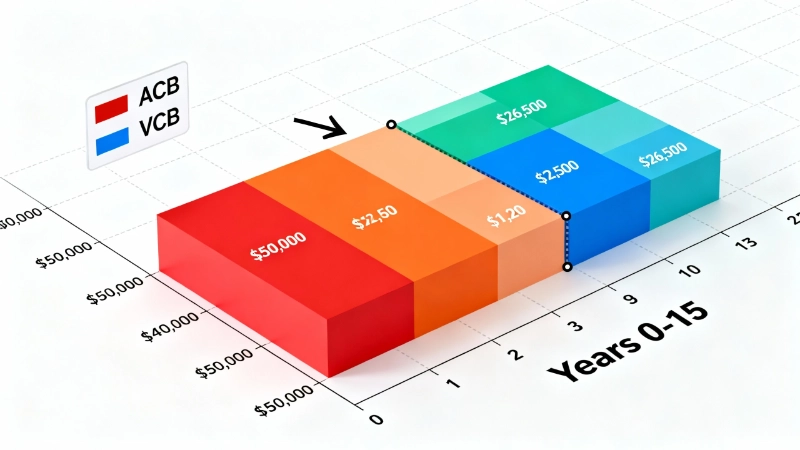
Figure 4: 15-Taong Kabuuang Gastos ng Pagmamay-ari (TCO) na pagsusuri. Sa kabila ng mas mataas na paunang gastos, ang mga VCB ay nagiging mas matipid kaysa sa mga ACB sa ika-3 Taon dahil sa mas mababang mga kinakailangan sa pagpapanatili, na nakakatipid ng ₱23,500 sa loob ng 15 taon.
Kung plano mong panatilihin ang switchgear sa loob ng 20 taon (karaniwan para sa mga pasilidad ng industriya), ang agwat ng pagtitipid ay lumalawak sa ₱35,000+ bawat breaker. Para sa isang substation na may 10 breakers, iyon ay ₱350,000 sa pagtitipid sa lifecycle.
Mga Nakatagong Gastos Higit pa sa Invoice
Ang pagkalkula ng TCO sa itaas ay nakukuha lamang ang mga direktang gastos. Huwag kalimutan:
Panganib sa downtime:
- Ang mga pagkasira ng ACB sa pagitan ng mga inspeksyon ay maaaring magdulot ng hindi planadong pagkawala ng kuryente
- Ang mga pagkasira ng VCB ay bihira (ang MTBF ay madalas na lumampas sa 30 taon na may wastong paggamit)
Availability ng labor:
- Ang paghahanap ng mga kwalipikadong technician para sa pagpapanatili ng ACB ay nagiging mas mahirap habang ang industriya ay lumilipat sa mga VCB
- Ang mga semi-annual na maintenance window ay nangangailangan ng production downtime o maingat na pag-iskedyul
Kaligtasan:
- Ang mga insidente ng arc flash ng ACB sa panahon ng pagpapanatili ay mas karaniwan kaysa sa mga insidente ng VCB (open-air contacts vs sealed interrupter)
- Ang mga kinakailangan sa arc flash PPE ay mas mahigpit para sa pagpapanatili ng ACB
Mga salik sa kapaligiran:
- Ang mga ACB sa maalikabok, mahalumigmig, o kinakaing unti-unti na kapaligiran ay kailangan mas madalas na pagpapanatili (quarterly sa halip na semi-annual)
- Ang mga VCB ay hindi apektado—ang sealed interrupter ay walang pakialam sa mga panlabas na kondisyon
Pro-Tip 5 (Ang Malaki): Kalkulahin ang kabuuang gastos ng pagmamay-ari sa inaasahang lifespan ng switchgear (15-25 taon), hindi lamang ang paunang gastos sa kapital. Para sa mga medium-voltage na aplikasyon, ang mga VCB ay halos palaging nananalo sa TCO. Para sa mga low-voltage na aplikasyon kung saan dapat kang gumamit ng ACB, maglaan ng badyet na ₱2,000-₱3,000 bawat taon bawat breaker para sa pagpapanatili—at huwag hayaang madulas ang iskedyul ng pagpapanatili. Ang mga nilaktawang inspeksyon ay nagiging mga sakuna.
Mga Madalas Itanong: ACB vs VCB
T: Maaari ba akong gumamit ng ACB sa itaas ng 1,000V kung i-derate ko ito o magdagdag ng panlabas na arc suppression?
S: Hindi. Ang 1,000V na limitasyon para sa mga ACB ay hindi isyu ng thermal o electrical stress na kayang solusyunan ng derating—ito ay isang pangunahing limitasyon sa arc physics. Sa itaas ng 1kV, hindi maaasahang mapapatay ng atmospheric air ang isang arc sa loob ng ligtas na timeframe, kahit paano mo i-configure ang breaker. Ang IEC 60947-2 ay malinaw na sumasaklaw sa mga ACB hanggang ≤1,000V AC, at ang pag-operate sa labas ng sakop na iyon ay lumalabag sa pamantayan at lumilikha ng mga panganib sa arc flash. Kung ang iyong sistema ay higit sa 1kV, legal at ligtas na dapat kang gumamit ng medium-voltage breaker (VCB o SF6 breaker ayon sa IEC 62271-100).
T: Mas mahal bang ayusin ang mga VCB kaysa sa mga ACB kung may mangyaring mali?
S: Oo, ngunit ang mga VCB ay mas madalang masira. Kapag nabigo ang VCB vacuum interrupter (bihira), karaniwan itong nangangailangan ng pagpapalit ng buong sealed unit sa pabrika sa halagang ₱300,000-₱500,000. Ang mga contact at arc chute ng ACB ay maaaring serbisyuhan sa field sa halagang ₱125,000-₱200,000, ngunit papalitan mo ang mga ito ng 3-4 na beses sa loob ng lifespan ng VCB. Mas pabor pa rin ang matematika sa mga VCB: isang VCB interrupter replacement sa loob ng 25 taon kumpara sa tatlong ACB contact replacement sa loob ng 15 taon, kasama ang patuloy na Buwis sa Pagpapanatili tuwing anim na buwan.
T: Aling uri ng breaker ang mas mahusay para sa madalas na paglipat (capacitor banks, motor starting)?
S: VCB sa malaking margin. Ang mga vacuum circuit breaker ay rated para sa 30,000 hanggang 100,000+ na mechanical operations bago ang malaking overhaul. Ang mga ACB ay karaniwang rated para sa 10,000 hanggang 15,000 operations. Para sa mga application na kinasasangkutan ng madalas na paglipat—tulad ng capacitor bank switching, motor starting/stopping sa batch processes, o load transfer schemes—ang mga VCB ay tatagal kaysa sa mga ACB ng 3:1 hanggang 10:1 sa bilang ng operasyon. Bukod pa rito, ang mabilis na arc extinction ng mga VCB (isang cycle) ay nagpapababa ng stress sa downstream equipment sa bawat switching event.
T: Mayroon bang anumang drawbacks ang mga VCB kumpara sa mga ACB maliban sa paunang gastos?
S: Tatlong menor de edad na konsiderasyon: (1) Panganib sa overvoltage kapag naglilipat ng capacitive o inductive loads—ang mabilis na arc extinction ng mga VCB ay maaaring magdulot ng transient overvoltages na maaaring mangailangan ng surge arresters o RC snubbers para sa mga sensitibong load. (2) Pagiging kumplikado ng pagkukumpuni—kung nabigo ang isang vacuum interrupter, hindi mo ito maaayos sa field; ang buong unit ay dapat palitan. (3) Naririnig na hum—ang ilang disenyo ng VCB ay naglalabas ng low-frequency hum mula sa operating mechanism, bagama't ito ay mas tahimik kaysa sa ACB arc blast. Para sa 99% ng mga application, ang mga drawbacks na ito ay bale-wala kumpara sa mga bentahe (tingnan ang Bentahe ng Sealed-for-Life seksyon).
T: Maaari ko bang i-retrofit ang isang VCB sa mga kasalukuyang ACB switchgear panel?
S: Minsan, ngunit hindi palagi. Ang mga VCB ay mas compact kaysa sa mga ACB, kaya ang pisikal na espasyo ay bihirang maging problema. Ang mga hamon ay: (1) Mga sukat ng pagkakabit—magkaiba ang mga pattern ng mounting hole ng ACB at VCB; maaaring kailanganin mo ang mga adapter plate. (2) Busbar configuration—ang mga terminal ng VCB ay maaaring hindi nakahanay sa mga kasalukuyang ACB busbar nang walang pagbabago. (3) Control voltage—ang mga operating mechanism ng VCB ay maaaring mangailangan ng iba't ibang control power (hal., 110V DC vs 220V AC). (4) Koordinasyon ng proteksyon—ang pagpapalit ng mga uri ng breaker ay maaaring magpabago sa mga short-circuit clearing times at coordination curves. Palaging kumunsulta sa tagagawa ng switchgear o isang kwalipikadong electrical engineer bago mag-retrofit. Ang mga bagong installation ay dapat tumukoy ng mga VCB para sa medium-voltage at mga ACB (o Mga MCCB) para sa low-voltage mula sa simula.
T: Bakit hindi gumagawa ang mga manufacturer ng mga ACB para sa medium voltage (11kV, 33kV)?
S: Sinubukan nila. Ang mga medium-voltage ACB ay umiral noong kalagitnaan ng ika-20 siglo, ngunit ang mga ito ay napakalaki—mga breaker na kasinlaki ng silid na may mga arc chute na ilang metro ang haba. Ang medyo mababang dielectric strength ng hangin (~3 kV/mm) ay nangangahulugan na ang isang 33kV breaker ay nangangailangan ng mga contact gap at arc chute na sinusukat sa metro, hindi sa milimetro. Ang laki, bigat, pasanin sa pagpapanatili, at panganib sa sunog ay nagpahirap sa mga ito. Nang maging mature ang vacuum interrupter technology noong 1960s-1970s, ang mga medium-voltage ACB ay naging lipas na. Ngayon, ang mga vacuum at SF6 breaker ang nangingibabaw sa medium-voltage market dahil ang physics at economics ay parehong pabor sa mga sealed-interrupter na disenyo sa itaas ng 1kV. Iyon Voltage Ceiling ay hindi isang desisyon sa produkto—ito ay isang engineering reality.
Konklusyon: Voltage Muna, Pagkatapos Susunod ang Lahat
Tandaan ang dalawang datasheet na iyon mula sa pagbubukas? Parehong nakalista ang mga voltage rating hanggang 690V. Parehong nag-claim ng matatag na breaking capacity. Ngunit alam mo na ngayon: ang voltage ay hindi lamang isang numero—ito ang naghahati sa pagitan ng mga teknolohiya ng breaker.
Narito ang decision framework sa tatlong bahagi:
1. Tinutukoy ng Voltage ang uri ng breaker (Ang Voltage Ceiling)
- System voltage ≤1,000V AC → Air Circuit Breaker (ACB) na pinamamahalaan ng IEC 60947-2:2024
- System voltage >1,000V AC → Vacuum Circuit Breaker (VCB) na pinamamahalaan ng IEC 62271-100:2021+A1:2024
- Hindi ito negotiable. Itinakda ng physics ang boundary; pormal na itong ginawa ng mga pamantayan.
2. Pormal na ginawa ng mga Pamantayan ang paghahati (Ang Paghahati ng mga Pamantayan)
- Hindi lumikha ang IEC ng dalawang magkahiwalay na pamantayan para sa market segmentation—kinodigo nila ang katotohanan na ang air-based arc interruption ay nabigo sa itaas ng 1kV
- Sinasabi sa iyo ng iyong system voltage kung aling pamantayan ang naaangkop, na nagsasabi sa iyo kung aling teknolohiya ng breaker ang tutukuyin
- Suriin ang IEC compliance marking ng breaker: 60947-2 = low voltage, 62271-100 = medium voltage
3. Tinutukoy ng Pagpapanatili ang lifecycle economics (Ang Buwis sa Pagpapanatili)
- Ang mga ACB ay mas mura sa simula ngunit naglalabas ng ₱100,000-₱150,000/taon sa semi-annual inspections at contact replacements
- Ang mga VCB ay mas mahal sa simula ngunit nangangailangan lamang ng inspeksyon tuwing 3-5 taon, na may 20-30 taong contact lifespan
- Ang TCO crossover ay nangyayari sa paligid ng taon 3; sa taon 15, ang mga VCB ay nakakatipid ng ₱1,000,000-₱1,250,000 bawat breaker
- Para sa mga medium-voltage application (kung saan dapat kang gumamit ng mga VCB pa rin), ang bentahe sa gastos ay isang bonus
- Para sa mga low-voltage application (kung saan ang mga ACB ay naaangkop), maglaan ng badyet para sa Buwis sa Pagpapanatili at sundin ang iskedyul ng inspeksyon
Maaaring magpakita ang datasheet ng magkakapatong na voltage rating. Maaaring ipahiwatig ng marketing brochure na ang mga ito ay mapagpapalit. Ngunit ang physics ay hindi nakikipag-ayos, at hindi rin dapat ikaw.
Pumili batay sa iyong system voltage. Ang lahat ng iba pa—current rating, breaking capacity, maintenance intervals, footprint—ay napupunta sa lugar kapag nagawa mo na nang tama ang unang pagpipilian na iyon.
Kailangan ng Tulong sa Pagpili ng Tamang Circuit Breaker?
Ang application engineering team ng VIOX ay may mga dekada ng karanasan sa pagtukoy ng mga ACB at VCB para sa mga industrial, commercial, at utility application sa buong mundo. Kung nagdidisenyo ka ng isang bagong 400V MCC, nag-a-upgrade ng isang 11kV substation, o nagta-troubleshoot ng madalas na pagkabigo ng breaker, susuriin namin ang iyong mga kinakailangan sa sistema at magrerekomenda ng mga solusyon na sumusunod sa IEC na nagbabalanse sa pagganap, kaligtasan, at gastos sa lifecycle.
Makipag-ugnayan sa VIOX ngayon para sa:
- Pagpili ng circuit breaker at mga kalkulasyon sa sizing
- Mga pag-aaral sa koordinasyon ng short-circuit
- Mga pagtatasa sa pagiging posible ng switchgear retrofit
- Pag-optimize ng pagpapanatili at pagsusuri ng TCO
Dahil ang pagkuha ng maling uri ng breaker ay hindi lamang mahal—ito ay mapanganib.