ACB 대 VCB: 완벽한 비교 가이드 (IEC 표준 2024)

귀하의 15kV 스위치기어 프로젝트를 위해 두 개의 회로 차단기 데이터시트를 보고 있습니다. 둘 다 최대 690V의 전압 정격을 보여줍니다. 둘 다 인상적인 차단 용량을 나열합니다. 서류상으로는 서로 바꿔 사용할 수 있는 것처럼 보입니다.

그렇지 않습니다.

잘못 선택하여 필요한 곳에 진공 회로 차단기(VCB) 대신 공기 회로 차단기(ACB)를 설치하거나 그 반대로 설치하면 IEC 표준을 위반하는 것뿐만 아니라 아크 플래시 위험, 유지 보수 예산 및 장비 수명을 가지고 도박하는 것입니다. 진정한 차이점은 마케팅 브로셔에 있는 것이 아닙니다. 각 차단기가 전기 아크를 소멸시키는 물리학에 있으며, 그 물리학은 어려운 전압 상한 을 부과하며, 어떤 데이터시트 면책 조항도 이를 무시할 수 없습니다.

ACB와 VCB를 실제로 구분하는 요소와 시스템에 적합한 것을 선택하는 방법은 다음과 같습니다.


빠른 답변: ACB 대 VCB 한눈에 보기

핵심 차이점: 공기 회로 차단기(ACB) 대기압 공기 중에서 전기 아크를 소멸시키고 최대 1,000V AC의 저전압 시스템용으로 설계되었습니다. (IEC 60947-2:2024에 따름). 진공 회로 차단기(VCB)는 밀폐된 진공 환경에서 아크를 소멸시키고 11kV ~ 33kV의 중전압 시스템에서 작동합니다. (IEC 62271-100:2021에 따름). 이 전압 분할은 제품 세분화 선택이 아니라 아크 차단의 물리학에 의해 결정됩니다.

중요한 사양에 따라 비교하는 방법은 다음과 같습니다.

사양 공기 회로 차단기(ACB) 진공 회로 차단기(VCB)
전압 범위 저전압: 400V ~ 1,000V AC 중전압: 11kV ~ 33kV(일부 1kV-38kV)
현재 범위 고전류: 800A ~ 10,000A 중간 전류: 600A ~ 4,000A
단 용량 690V에서 최대 100kA MV에서 25kA ~ 50kA
아크 소멸 매체 대기압의 공기 진공(10^-2 ~ 10^-6 torr)
작동 메커니즘 아크 슈트는 아크를 길게 하고 냉각합니다. 밀폐된 진공 인터럽터는 첫 번째 전류 제로에서 아크를 소멸시킵니다.
유지보수 빈도 6개월마다(연 2회) 3~5년마다
접점 수명 3~5년(공기 노출로 인한 침식) 20~30년(밀폐된 환경)
일반적인 애플리케이션 LV 배전, MCC, PCC, 상업/산업 패널 MV 스위치기어, 유틸리티 변전소, HV 모터 보호
IEC 표준 IEC 60947-2:2024(≤1000V AC) IEC 62271-100:2021+A1:2024(>1000V)
초기 비용 낮음(일반적으로 $8K-$15K) 높음(일반적으로 $20K-$30K)
15년 총 비용 ~$48K(유지 보수 포함) ~$24K(최소 유지 보수)

1,000V에서 깨끗한 경계선을 확인하십시오. 그것은 표준 분할입니다. 1kV 이상에서는 공기가 아크를 충분히 빠르게 소멸시킬 수 없기 때문에 존재합니다. 물리학이 경계를 설정하고 IEC는 이를 성문화했습니다.

You're staring at two circuit breaker datasheets for your 15kV switchgear project. Both show voltage ratings up to 690V. Both list impressive breaking capacities. On paper, they look interchangeable.They're not.Choose wrong—install an Air Circuit Breaker (ACB) where you need a Vacuum Circuit Breaker (VCB), or vice versa—and you're not just violating IEC standards. You're gambling with arc flash risk, maintenance budgets, and equipment lifespan. The real difference isn't in the marketing brochure. It's in the physics of how each breaker extinguishes an electrical arc, and that physics imposes a hard Voltage Ceiling that no datasheet disclaimer can override.Here's what actually separates ACBs from VCBs—and how to choose the right one for your system.Quick Answer: ACB vs VCB at a GlanceThe core difference: Air Circuit Breakers (ACBs) quench electrical arcs in atmospheric air and are designed for low-voltage systems up to 1,000V AC (governed by IEC 60947-2:2024). Vacuum Circuit Breakers (VCBs) extinguish arcs in a sealed vacuum environment and operate in medium-voltage systems from 11kV to 33kV (governed by IEC 62271-100:2021). This voltage split isn't a product segmentation choice—it's dictated by the physics of arc interruption.Here's how they compare across critical specifications:SpecificationAir Circuit Breaker (ACB)Vacuum Circuit Breaker (VCB)Voltage RangeLow voltage: 400V to 1,000V ACMedium voltage: 11kV to 33kV (some 1kV-38kV)Current RangeHigh current: 800A to 10,000AModerate current: 600A to 4,000ABreaking CapacityUp to 100kA at 690V25kA to 50kA at MVArc Quenching MediumAir at atmospheric pressureVacuum (10^-2 to 10^-6 torr)Operating MechanismArc chutes lengthen and cool the arcSealed vacuum interrupter quenches arc at first current zeroMaintenance FrequencyEvery 6 months (twice yearly)Every 3 to 5 yearsContact Lifespan3 to 5 years (air exposure causes erosion)20 to 30 years (sealed environment)Typical ApplicationsLV distribution, MCCs, PCCs, commercial/industrial panelsMV switchgear, utility substations, HV motor protectionIEC StandardIEC 60947-2:2024 (≤1000V AC)IEC 62271-100:2021+A1:2024 (>1000V)Initial CostLower ($8K-$15K typical)Higher ($20K-$30K typical)15-Year Total Cost~$48K (with maintenance)~$24K (minimal maintenance)Notice the clean dividing line at 1,000V? That's The Standards Split—and it exists because above 1kV, air simply can't extinguish an arc fast enough. Physics sets the boundary; IEC just codified it. Figure 1: Structural comparison of ACB and VCB technologies. The ACB (left) uses arc chutes in open air, while the VCB (right) employs a sealed vacuum interrupter for arc extinction.Arc Quenching: Air vs Vacuum (Why Physics Sets the Voltage Ceiling)When you separate current-carrying contacts under load, an arc forms. Always. That arc is a plasma column—ionized gas conducting thousands of amperes at temperatures reaching 20,000°C (hotter than the surface of the sun). Your circuit breaker's job is to extinguish that arc before it welds the contacts together or triggers an arc flash event.How it does that depends entirely on the medium surrounding the contacts.How ACBs Use Air and Arc ChutesAn Air Circuit Breaker interrupts the arc in atmospheric air. The breaker's contacts are housed in arc chutes—arrays of metal plates positioned to intercept the arc as the contacts separate. Here's the sequence:Arc formation: Contacts separate, arc strikes in airArc lengthening: Magnetic forces drive the arc into the arc chuteArc division: The chute's metal plates split the arc into multiple shorter arcsArc cooling: Increased surface area and air exposure cool the plasmaArc extinction: As the arc cools and lengthens, resistance increases until the arc can no longer sustain itself at the next current zeroThis works reliably up to about 1,000V. Above that voltage, the arc's energy is too great. Air's dielectric strength (the voltage gradient it can withstand before breaking down) is approximately 3 kV/mm at atmospheric pressure. Once system voltage climbs into the multi-kilovolt range, the arc simply re-strikes across the widening contact gap. You can't build an arc chute long enough to stop it without making the breaker the size of a small car.That's The Voltage Ceiling.How VCBs Use Vacuum PhysicsA Vacuum Circuit Breaker takes a completely different approach. The contacts are enclosed in a sealed vacuum interrupter—a chamber evacuated to a pressure between 10^-2 and 10^-6 torr (that's roughly one-millionth of atmospheric pressure).When the contacts separate under load:Arc formation: Arc strikes in the vacuum gapLimited ionization: With almost no gas molecules present, the arc lacks sustaining mediumRapid de-ionization: At the first natural current zero (every half-cycle in AC), there are insufficient charge carriers to re-strike the arcInstant extinction: Arc dies within one cycle (8.3 milliseconds on a 60 Hz system)The vacuum provides two massive advantages. First, dielectric strength: a vacuum gap of just 10mm can withstand voltages up to 40kV—that's 10 to 100 times stronger than air at the same gap distance. Second, contact preservation: with no oxygen present, the contacts don't oxidize or erode at the same rate as ACB contacts exposed to air. That's The Sealed-for-Life Advantage.VCB contacts in a properly maintained breaker can last 20 to 30 years. ACB contacts exposed to atmospheric oxygen and arc plasma? You're looking at replacement every 3 to 5 years, sometimes sooner in dusty or humid environments.Figure 2: Arc quenching mechanisms. The ACB requires multiple steps to lengthen, divide, and cool the arc in air (left), while the VCB extinguishes the arc instantly at the first current zero due to vacuum's superior dielectric strength (right).Pro-Tip #1: The Voltage Ceiling isn't negotiable. ACBs are physically incapable of reliably interrupting arcs above 1kV in air at atmospheric pressure. If your system voltage exceeds 1,000V AC, you need a VCB—not as a "better" option, but as the only option that complies with physics and IEC standards.Voltage and Current Ratings: What the Numbers Really MeanVoltage isn't just a specification line on the datasheet. It's the fundamental selection criterion that determines which breaker type you can even consider. Current rating matters, but it comes second.Here's what the numbers mean in practice.ACB Ratings: High Current, Low VoltageVoltage ceiling: ACBs operate reliably from 400V up to 1,000V AC (with some specialized designs rated to 1,500V DC). The typical sweet spot is 400V or 690V for three-phase industrial systems. Above 1kV AC, air's dielectric properties make reliable arc interruption impractical—that Voltage Ceiling we discussed isn't a design limitation; it's a physical boundary.Current capacity: Where ACBs dominate is current handling. Ratings range from 800A for smaller distribution panels up to 10,000A for main service entrance applications. High current capability at low voltage is precisely what low-voltage distribution needs—think motor control centers (MCCs), power control centers (PCCs), and main distribution boards in commercial and industrial facilities.Breaking capacity: Short-circuit interrupting ratings reach up to 100kA at 690V. That sounds impressive—and it is, for low-voltage applications. But let's put it in perspective with a power calculation:Breaking capacity: 100kA at 690V (line-to-line)Apparent power: √3 × 690V × 100kA ≈ 119 MVAThat's the maximum fault power an ACB can safely interrupt. For a 400V/690V industrial plant with a 1.5 MVA transformer and typical X/R ratios, a 65kA breaker is often sufficient. The 100kA units are reserved for utility-scale low-voltage distribution or facilities with multiple large transformers in parallel.Typical applications:Low-voltage main distribution panels (LVMDP)Motor control centers (MCCs) for pumps, fans, compressorsPower control centers (PCCs) for industrial machineryGenerator protection and synchronization panelsCommercial building electrical rooms (below 1kV)VCB Ratings: Medium Voltage, Moderate CurrentVoltage range: VCBs are engineered for medium-voltage systems, typically from 11kV to 33kV. Some designs extend the range down to 1kV or up to 38kV (the 2024 amendment to IEC 62271-100 added standardized ratings at 15.5kV, 27kV, and 40.5kV). The sealed vacuum interrupter's superior dielectric strength makes these voltage levels manageable within a compact footprint.Current capacity: VCBs handle moderate currents compared to ACBs, with typical ratings from 600A to 4,000A. This is perfectly adequate for medium-voltage applications. A 2,000A breaker at 11kV can carry 38 MVA of continuous load—equivalent to several dozen large industrial motors or an entire medium-sized industrial facility's power demand.Breaking capacity: VCBs are rated from 25kA to 50kA at their respective voltage levels. Let's run the same power calculation for a 50kA VCB at 33kV:Breaking capacity: 50kA at 33kV (line-to-line)Apparent power: √3 × 33kV × 50kA ≈ 2,850 MVAThat's 24 times more interrupting power than our 100kA ACB at 690V. Suddenly, that "lower" 50kA breaking capacity doesn't look so modest. VCBs are interrupting fault currents at power levels that would vaporize an ACB's arc chute.Figure 3: The Voltage Ceiling visualization. ACBs operate reliably up to 1,000V but cannot safely interrupt arcs above this threshold (red zone), while VCBs dominate the medium-voltage range from 11kV to 38kV (green zone).Typical applications:Utility distribution substations (11kV, 22kV, 33kV)Industrial medium-voltage switchgear (ring main units, switchboards)High-voltage induction motor protection (>1,000 HP)Transformer primary protectionPower generation facilities (generator circuit breakers)Renewable energy systems (wind farms, solar inverter stations)Pro-Tip #2: Don't compare breaking capacity in kiloamperes alone. Calculate the MVA interrupting power (√3 × voltage × current). A 50kA VCB at 33kV interrupts vastly more power than a 100kA ACB at 690V. Voltage matters more than current when assessing breaker capability.The Standards Split: IEC 60947-2 (ACB) vs IEC 62271-100 (VCB)The International Electrotechnical Commission (IEC) doesn't casually divide standards. When IEC 60947-2 governs breakers up to 1,000V and IEC 62271-100 takes over above 1,000V, that boundary reflects the physical reality we've been discussing. This is The Standards Split, and it's your design compass.IEC 60947-2:2024 for Air Circuit BreakersScope: This standard applies to circuit-breakers with rated voltage not exceeding 1,000V AC or 1,500V DC. It's the authoritative reference for low-voltage circuit protection, including ACBs, molded-case circuit breakers (MCCBs), and miniature circuit breakers (MCBs).The sixth edition was published in September 2024, superseding the 2016 edition. Key updates include:Suitability for isolation: Clarified requirements for using circuit-breakers as isolating switchesClassification removal: IEC eliminated the classification of breakers by interrupting medium (air, oil, SF6, etc.). Why? Because voltage already tells you the medium. If you're at 690V, you're using air or a sealed molded case. The old classification system was redundant.External device adjustments: New provisions for adjusting overcurrent settings via external devicesEnhanced testing: Added tests for ground-fault releases and dielectric properties in the tripped positionEMC improvements: Updated electromagnetic compatibility (EMC) test procedures and power loss measurement methodsThe 2024 revision makes the standard cleaner and more aligned with modern digital trip units and smart breaker technology, but the core voltage boundary—≤1,000V AC—remains unchanged. Above that, you're out of IEC 60947-2's jurisdiction.IEC 62271-100:2021 (Amendment 1: 2024) for Vacuum Circuit BreakersScope: This standard governs alternating current circuit-breakers designed for three-phase systems with voltages above 1,000V. It's specifically tailored for medium-voltage and high-voltage indoor and outdoor switchgear, where VCBs are the dominant technology (alongside SF6 breakers for the highest voltage classes).The third edition was published in 2021, with Amendment 1 released in August 2024. Recent updates include:Updated TRV (Transient Recovery Voltage) values: Recalculated TRV parameters in multiple tables to reflect real-world system behavior and newer transformer designsNew rated voltages: Standardized ratings added at 15.5kV, 27kV, and 40.5kV to cover regional system voltages (particularly in Asia and the Middle East)Revised terminal fault definition: Clarified what constitutes a terminal fault for testing purposesDielectric test criteria: Added criteria for dielectric testing; explicitly stated that partial discharge tests apply only to GIS (Gas-Insulated Switchgear) and dead-tank breakers, not typical VCBsEnvironmental considerations: Enhanced guidance on altitude, pollution, and temperature derating factorsThe 2024 amendment keeps the standard current with global grid infrastructure changes, but the fundamental principle holds: above 1,000V, you need a medium-voltage breaker, and for the 1kV-38kV range, that almost always means a VCB.Why These Standards Don't OverlapThe 1,000V boundary isn't arbitrary. It's the point where atmospheric air transitions from "adequate arc quenching medium" to "liability." IEC didn't create two standards to sell more books. They formalized the engineering reality:Below 1kV: Air-based or molded-case designs work. Arc chutes are effective. Breakers are compact and economical.Above 1kV: Air requires impractically large arc chutes; vacuum (or SF6 for higher voltages) becomes necessary for safe, reliable arc interruption in a reasonable footprint.When you're speccing a breaker, the first question isn't "ACB or VCB?" It's "What's my system voltage?" That answer points you to the correct standard, which points you to the correct breaker type.Pro-Tip #3: When reviewing a circuit breaker datasheet, check which IEC standard it complies with. If it lists IEC 60947-2, it's a low-voltage breaker (≤1kV). If it lists IEC 62271-100, it's a medium/high-voltage breaker (>1kV). The standard compliance tells you the voltage class instantly.Applications: Matching Breaker Type to Your SystemChoosing between ACB and VCB isn't about preference. It's about matching the breaker's physical capabilities to your system's electrical characteristics and operational requirements.Here's how to map breaker type to application.When to Use ACBsAir Circuit Breakers are the right choice for low-voltage distribution systems where high current capacity matters more than compact size or long maintenance intervals.Ideal applications:400V or 690V three-phase distribution: The backbone of most industrial and commercial electrical systemsMotor Control Centers (MCCs): Protection for pumps, fans, compressors, conveyors, and other low-voltage motorsPower Control Centers (PCCs): Main distribution for industrial machinery and process equipmentLow-voltage main distribution panels (LVMDP): Service entrance and main breakers for buildings and facilitiesGenerator protection: Low-voltage backup generators (typically 480V or 600V)Marine and offshore: Low-voltage ship power distribution (where IEC 60092 also applies)When ACBs make sense financially:Lower initial cost priority: If capital budget is constrained and you have in-house maintenance capabilityHigh current requirements: When you need 6,000A+ ratings that are more economical in ACB form factorsRetrofit into existing LV switchgear: When replacing like-for-like in panels designed for ACBsLimitations to remember:Maintenance burden: Expect inspections every 6 months and contact replacement every 3-5 yearsFootprint: ACBs are larger and heavier than equivalent VCBs due to arc chute assembliesNoise: Arc interruption in air is louder than in a sealed vacuumLimited service life: Typically 10,000 to 15,000 operations before major overhaulWhen to Use VCBsVacuum Circuit Breakers dominate medium-voltage applications where reliability, low maintenance, compact size, and long service life justify the higher initial cost.Ideal applications:11kV, 22kV, 33kV utility substations: Primary and secondary distribution switchgearIndustrial MV switchgear: Ring main units (RMUs), metal-clad switchboards, pad-mounted transformersHigh-voltage motor protection: Induction motors above 1,000 HP (typically 3.3kV, 6.6kV, or 11kV)Transformer protection: Primary-side breakers for distribution and power transformersPower generation facilities: Generator circuit breakers, station auxiliary powerRenewable energy systems: Wind farm collector circuits, solar inverter step-up transformersMining and heavy industry: Where dust, moisture, and harsh conditions make ACB maintenance problematicWhen VCBs are the only option:System voltage >1kV AC: Physics and IEC 62271-100 require medium-voltage rated breakersFrequent switching operations: VCBs are rated for 30,000+ mechanical operations (some designs exceed 100,000 operations)Limited maintenance access: Remote substations, offshore platforms, rooftop installations where semi-annual ACB inspections are impracticalLong lifecycle cost focus: When total cost of ownership over 20-30 years outweighs upfront capital costAdvantages in harsh environments:Sealed vacuum interrupters aren't affected by dust, humidity, salt spray, or altitude (up to derating limits)No arc chutes to clean or replaceSilent operation (important for indoor substations in occupied buildings)Compact footprint (critical in urban substations with expensive real estate)Decision Matrix: ACB or VCB?Your System CharacteristicsRecommended Breaker TypePrimary ReasonVoltage ≤ 1,000V ACACBIEC 60947-2 jurisdiction; air quenching is adequateVoltage > 1,000V ACVCBIEC 62271-100 required; air cannot reliably interrupt arcHigh current (>5,000A) at LVACBMore economical for very high current at low voltageFrequent switching (>20/day)VCBRated for 30,000+ operations vs ACB's 10,000Harsh environment (dust, salt, humidity)VCBSealed interrupter unaffected by contaminationLimited maintenance accessVCB3-5 year service intervals vs ACB's 6-month schedule20+ year lifecycle cost focusVCBLower TCO despite higher initial costTight space constraintsVCBCompact design; no arc chute volumeBudget-constrained capital projectACB (if ≤1kV)Lower upfront cost, but factor in maintenance budgetFigure 5: Circuit breaker selection flowchart. System voltage is the primary decision criterion, directing you to either ACB (low-voltage) or VCB (medium-voltage) applications based on the 1,000V boundary.Pro-Tip #4: If your system voltage is anywhere near the 1kV boundary, spec a VCB. Don't try to stretch an ACB to its maximum voltage rating. The Voltage Ceiling isn't a "rated maximum"—it's a hard physics limit. Design with margin.The Maintenance Tax: Why VCBs Cost Less Over 20 YearsThat $15,000 ACB looks attractive compared to a $25,000 VCB. Until you run the numbers over 15 years.Welcome to The Maintenance Tax—the hidden recurring cost that flips the economic equation.ACB Maintenance: The Twice-Yearly BurdenAir Circuit Breakers demand regular, hands-on maintenance because their contacts and arc chutes operate in an open-air environment. Here's the typical maintenance schedule recommended by manufacturers and IEC 60947-2:Every 6 months (semi-annual inspection):Visual inspection of contacts for pitting, erosion, or discolorationArc chute cleaning (removal of carbon deposits and metal vapor residue)Contact gap and wipe measurementMechanical operation test (manual and automatic)Terminal connection torque checkLubrication of moving parts (hinges, linkages, bearings)Overcurrent trip unit functional testEvery 3-5 years (major service):Contact replacement (if erosion exceeds manufacturer limits)Arc chute inspection and replacement if damagedInsulation resistance testing (megger test)Contact resistance measurementComplete disassembly and cleaningReplacement of worn mechanical componentsCost breakdown (typical, varies by region):Semi-annual inspection: $600-$1,000 per breaker (contractor labor: 3-4 hours)Contact replacement: $2,500-$4,000 (parts + labor)Arc chute replacement: $1,500-$2,500 (if damaged)Emergency service call (if breaker fails between inspections): $1,500-$3,000For an ACB with a 15-year service life:Semi-annual inspections: 15 years × 2 inspections/year × $800 average = $24,000Contact replacements: (15 years ÷ 4 years) × $3,000 = $9,000 (3 replacements)Unplanned failures: Assume 1 failure × $2,000 = $2,000Total maintenance over 15 years: $35,000Add the initial purchase cost ($15,000), and your 15-year total cost of ownership is ~$50,000.That's the Maintenance Tax. You pay it in labor hours, downtime, and consumable parts—every year, twice a year, for the life of the breaker.VCB Maintenance: The Sealed-for-Life AdvantageVacuum Circuit Breakers flip the maintenance equation. The sealed vacuum interrupter protects the contacts from oxidation, contamination, and environmental exposure. Result: drastically extended service intervals.Every 3-5 years (periodic inspection):Visual external inspectionMechanical operation count check (via counter or digital interface)Contact wear indicator check (some VCBs have external indicators)Operational test (open/close cycles)Control circuit functional testTerminal connection inspectionEvery 10-15 years (major inspection, if at all):Vacuum integrity test (using high-voltage test or X-ray inspection)Contact gap measurement (requires partial disassembly on some models)Insulation resistance testingNotice what's not on the list:No contact cleaning (sealed environment)No arc chute maintenance (doesn't exist)No semi-annual inspections (unnecessary)No routine contact replacement (20-30 year lifespan)Cost breakdown (typical):Periodic inspection (every 4 years): $400-$700 per breaker (contractor labor: 1.5-2 hours)Vacuum interrupter replacement (if needed after 20-25 years): $6,000-$10,000For a VCB with the same 15-year evaluation period:Periodic inspections: (15 years ÷ 4 years) × $500 average = $1,500 (3 inspections)Unplanned failures: Extremely rare; assume $0 (VCBs have 10x lower failure rate)Major overhaul: Not required within 15 yearsTotal maintenance over 15 years: $1,500Add the initial purchase cost ($25,000), and your 15-year total cost of ownership is ~$26,500.The TCO Crossover PointLet's put them side-by-side:Cost ComponentACB (15 years)VCB (15 years)Initial purchase$15,000$25,000Routine maintenance$24,000$1,500Contact/component replacement$9,000$0Unplanned failures$2,000$0Total Cost of Ownership$50,000$26,500Cost per year$3,333/year$1,767/yearThe VCB pays for itself through maintenance savings alone. But here's the kicker: the crossover happens around year 3.Year 0: ACB = $15K, VCB = $25K (ACB ahead by $10K)Year 1.5: First 3 ACB inspections = $2,400; VCB = $0 (ACB ahead by $7,600)Year 3: Six ACB inspections = $4,800; VCB = $0 (ACB ahead by $5,200)Year 4: First ACB contact replacement + 8 inspections = $9,400; VCB first inspection = $500 (ACB ahead by $900)Year 5: ACB total maintenance = $12,000; VCB = $500 (VCB starts saving money)Year 15: ACB total = $50K; VCB total = $26.5K (VCB saves $23,500)Figure 4: 15-Year Total Cost of Ownership (TCO) analysis. Despite higher initial cost, VCBs become more economical than ACBs by Year 3 due to dramatically lower maintenance requirements, saving $23,500 over 15 years.If you plan to keep the switchgear for 20 years (typical for industrial facilities), the savings gap widens to $35,000+ per breaker. For a substation with 10 breakers, that's $350,000 in lifecycle savings.Hidden Costs Beyond the InvoiceThe TCO calculation above only captures direct costs. Don't forget:Downtime risk:ACB failures between inspections can cause unplanned outagesVCB failures are rare (MTBF often exceeds 30 years with proper use)Labor availability:Finding qualified technicians for ACB maintenance is getting harder as the industry shifts to VCBsSemi-annual maintenance windows require production downtime or careful schedulingSafety:ACB arc flash incidents during maintenance are more common than VCB incidents (open-air contacts vs sealed interrupter)Arc flash PPE requirements are more stringent for ACB maintenanceEnvironmental factors:ACBs in dusty, humid, or corrosive environments need more frequent maintenance (quarterly instead of semi-annual)VCBs are unaffected—the sealed interrupter doesn't care about external conditionsPro-Tip #5 (The Big One): Calculate total cost of ownership over the expected switchgear lifespan (15-25 years), not just initial capital cost. For medium-voltage applications, VCBs almost always win on TCO. For low-voltage applications where you must use an ACB, budget $2,000-$3,000 per year per breaker for maintenance—and don't let the maintenance schedule slip. Skipped inspections turn into catastrophic failures.Frequently Asked Questions: ACB vs VCBQ: Can I use an ACB above 1,000V if I derate it or add external arc suppression?A: No. The 1,000V limit for ACBs isn't a thermal or electrical stress issue that derating can solve—it's a fundamental arc physics limitation. Above 1kV, atmospheric air cannot reliably quench an arc within safe timeframes, regardless of how you configure the breaker. IEC 60947-2 explicitly scopes ACBs to ≤1,000V AC, and operating outside that scope violates the standard and creates arc flash hazards. If your system is above 1kV, you legally and safely must use a medium-voltage breaker (VCB or SF6 breaker per IEC 62271-100).Q: Are VCBs more expensive to repair than ACBs if something goes wrong?A: Yes, but VCBs fail far less frequently. When a VCB vacuum interrupter fails (rare), it typically requires factory replacement of the entire sealed unit at $6,000-$10,000. ACB contacts and arc chutes can be serviced in the field for $2,500-$4,000, but you'll replace them 3-4 times over the VCB's lifespan. The math still favors VCBs: one VCB interrupter replacement in 25 years vs. three ACB contact replacements in 15 years, plus the ongoing Maintenance Tax every six months.Q: Which breaker type is better for frequent switching (capacitor banks, motor starting)?A: VCBs by a wide margin. Vacuum circuit breakers are rated for 30,000 to 100,000+ mechanical operations before major overhaul. ACBs are typically rated for 10,000 to 15,000 operations. For applications involving frequent switching—such as capacitor bank switching, motor starting/stopping in batch processes, or load transfer schemes—VCBs will outlast ACBs by 3:1 to 10:1 in operation count. Additionally, VCBs' fast arc extinction (one cycle) reduces the stress on downstream equipment during each switching event.Q: Do VCBs have any drawbacks compared to ACBs beyond initial cost?A: Three minor considerations: (1) Overvoltage risk when switching capacitive or inductive loads—VCBs' fast arc extinction can produce transient overvoltages that may require surge arresters or RC snubbers for sensitive loads. (2) Repair complexity—if a vacuum interrupter fails, you can't fix it in the field; the entire unit must be replaced. (3) Audible hum—some VCB designs produce low-frequency hum from the operating mechanism, though this is far quieter than ACB arc blast. For 99% of applications, these drawbacks are negligible compared to the advantages (see Sealed-for-Life Advantage section).Q: Can I retrofit a VCB into existing ACB switchgear panels?A: Sometimes, but not always. VCBs are more compact than ACBs, so physical space is rarely a problem. The challenges are: (1) Mounting dimensions—ACB and VCB mounting hole patterns differ; you may need adapter plates. (2) Busbar configuration—VCB terminals may not align with existing ACB busbars without modification. (3) Control voltage—VCB operating mechanisms may require different control power (e.g., 110V DC vs 220V AC). (4) Protection coordination—changing breaker types can alter short-circuit clearing times and coordination curves. Always consult with the switchgear manufacturer or a qualified electrical engineer before retrofitting. New installations should specify VCBs for medium-voltage and ACBs (or MCCBs) for low-voltage from the start.Q: Why don't manufacturers make ACBs for medium voltage (11kV, 33kV)?A: They tried. Medium-voltage ACBs existed in the mid-20th century, but they were enormous—room-sized breakers with arc chutes several meters long. Air's relatively low dielectric strength (~3 kV/mm) meant that a 33kV breaker needed contact gaps and arc chutes measured in meters, not millimeters. The size, weight, maintenance burden, and fire risk made them impractical. Once vacuum interrupter technology matured in the 1960s-1970s, medium-voltage ACBs were obsoleted. Today, vacuum and SF6 breakers dominate the medium-voltage market because physics and economics both favor sealed-interrupter designs above 1kV. That Voltage Ceiling isn't a product decision—it's an engineering reality.Conclusion: Voltage First, Then Everything Else FollowsRemember those two datasheets from the opening? Both listed voltage ratings up to 690V. Both claimed robust breaking capacity. But now you know: voltage isn't just a number—it's the dividing line between breaker technologies.Here's the decision framework in three parts:1. Voltage determines the breaker type (The Voltage Ceiling)System voltage ≤1,000V AC → Air Circuit Breaker (ACB) governed by IEC 60947-2:2024System voltage >1,000V AC → Vacuum Circuit Breaker (VCB) governed by IEC 62271-100:2021+A1:2024This isn't negotiable. Physics sets the boundary; standards formalized it.2. Standards formalize the split (The Standards Split)IEC didn't create two separate standards for market segmentation—they codified the reality that air-based arc interruption fails above 1kVYour system voltage tells you which standard applies, which tells you which breaker technology to specifyCheck the breaker's IEC compliance marking: 60947-2 = low voltage, 62271-100 = medium voltage3. Maintenance determines lifecycle economics (The Maintenance Tax)ACBs cost less upfront but bleed $2,000-$3,000/year in semi-annual inspections and contact replacementsVCBs cost more initially but require inspection only every 3-5 years, with 20-30 year contact lifespanThe TCO crossover happens around year 3; by year 15, VCBs save $20,000-$25,000 per breakerFor medium-voltage applications (where you must use VCBs anyway), the cost advantage is a bonusFor low-voltage applications (where ACBs are appropriate), budget for the Maintenance Tax and stick to the inspection scheduleThe datasheet might show overlapping voltage ratings. The marketing brochure might imply they're interchangeable. But physics doesn't negotiate, and neither should you.Choose based on your system voltage. Everything else—current rating, breaking capacity, maintenance intervals, footprint—falls into place once you've made that first choice correctly.Need Help Selecting the Right Circuit Breaker?VIOX's application engineering team has decades of experience specifying ACBs and VCBs for industrial, commercial, and utility applications worldwide. Whether you're designing a new 400V MCC, upgrading an 11kV substation, or troubleshooting frequent breaker failures, we'll review your system requirements and recommend IEC-compliant solutions that balance performance, safety, and lifecycle cost.Contact VIOX today for:Circuit breaker selection and sizing calculationsShort-circuit coordination studiesSwitchgear retrofit feasibility assessmentsMaintenance optimization and TCO analysisBecause getting the breaker type wrong isn't just expensive—it's dangerous.

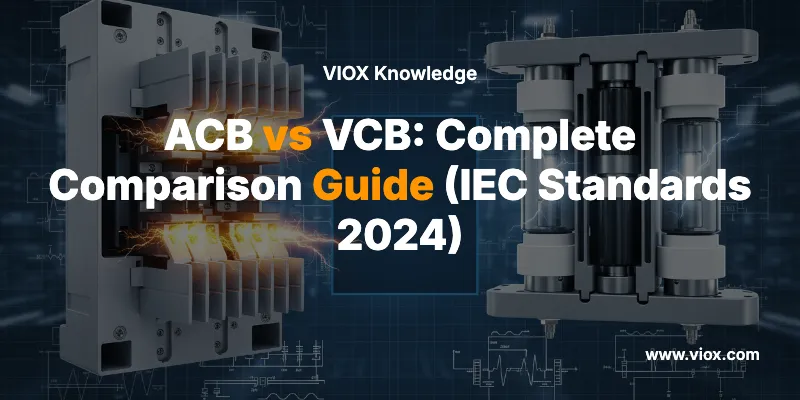
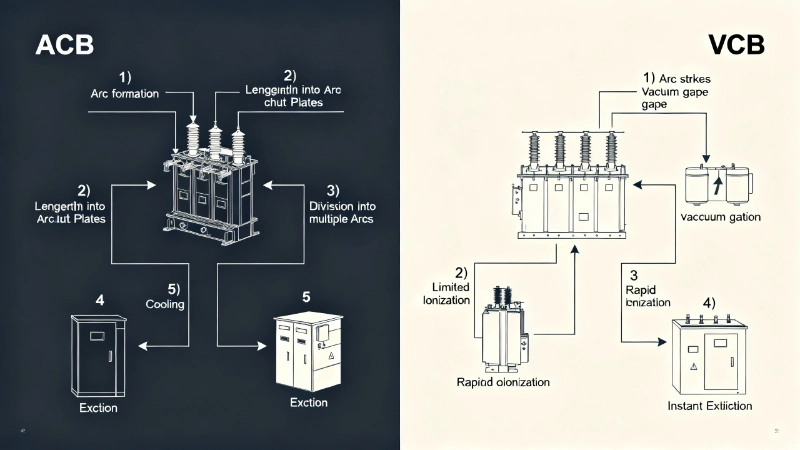
그림 1: ACB 및 VCB 기술의 구조적 비교. ACB(왼쪽)는 개방된 공기 중에서 아크 슈트를 사용하는 반면 VCB(오른쪽)는 아크 소멸을 위해 밀폐된 진공 인터럽터를 사용합니다.


아크 소멸: 공기 대 진공(물리학이 전압 상한을 설정하는 이유)

부하 상태에서 전류가 흐르는 접점을 분리하면 아크가 형성됩니다. 항상. 그 아크는 플라즈마 기둥입니다. 이온화된 가스가 20,000°C에 도달하는 온도에서 수천 암페어를 전도합니다(태양 표면보다 뜨겁습니다). 회로 차단기의 역할은 접점이 함께 용접되거나 아크 플래시 이벤트가 발생하기 전에 아크를 소멸시키는 것입니다.

그 방법은 접점을 둘러싼 매체에 따라 완전히 다릅니다.

ACB가 공기와 아크 슈트를 사용하는 방법

An 공기 회로 차단기 대기압 공기 중에서 아크를 차단합니다. 차단기의 접점은 아크 슈트에 보관됩니다. 접점이 분리될 때 아크를 가로채도록 배치된 금속판 배열입니다. 다음은 순서입니다.

  1. 아크 형성: 접점이 분리되고 공기 중에서 아크가 발생합니다.
  2. 아크 연장: 자기력이 아크를 아크 슈트로 밀어 넣습니다.
  3. 아크 분할: 슈트의 금속판이 아크를 여러 개의 더 짧은 아크로 분할합니다.
  4. 아크 냉각: 표면적 증가와 공기 노출로 플라즈마가 냉각됩니다.
  5. 아크 소멸: 아크가 냉각되고 길어짐에 따라 저항이 증가하여 아크가 다음 전류 제로에서 더 이상 자체적으로 유지될 수 없습니다.

이것은 약 1,000V까지 안정적으로 작동합니다. 그 전압 이상에서는 아크의 에너지가 너무 큽니다. 공기의 유전 강도(파괴되기 전에 견딜 수 있는 전압 기울기)는 대기압에서 약 3kV/mm입니다. 시스템 전압이 수 킬로볼트 범위로 올라가면 아크가 넓어지는 접점 간격에서 다시 발생합니다. 차단기를 소형차 크기로 만들지 않고는 아크를 막을 수 있을 만큼 충분히 긴 아크 슈트를 만들 수 없습니다.

전압 상한.

VCB가 진공 물리학을 사용하는 방법

A 진공 회로 차단기 완전히 다른 접근 방식을 취합니다. 접점은 밀폐된 진공 인터럽터에 둘러싸여 있습니다. 챔버는 10^-2 ~ 10^-6 torr 사이의 압력으로 비워집니다(대기압의 약 100만분의 1입니다).

부하 상태에서 접점이 분리되면:

  1. 아크 형성: 진공 간격에서 아크가 발생합니다.
  2. 제한적인 이온화: 가스 분자가 거의 존재하지 않아 아크를 유지하는 매체가 부족합니다.
  3. 빠른 탈이온화: 첫 번째 자연 전류 제로(AC에서 매 반 주기)에서 아크를 다시 점화할 충전 캐리어가 충분하지 않습니다.
  4. 즉각적인 소멸: 아크는 1주기 이내에 소멸됩니다(60Hz 시스템에서 8.3밀리초).

진공은 두 가지 큰 이점을 제공합니다. 첫째, 유전 강도: 단 10mm의 진공 간격으로 최대 40kV의 전압을 견딜 수 있습니다. 이는 동일한 간격 거리에서 공기보다 10~100배 더 강력합니다. 둘째, 접점 보존: 산소가 없으므로 접점이 공기에 노출된 ACB 접점과 같은 속도로 산화되거나 부식되지 않습니다. 즉, 수명 보장 이점.

적절하게 유지 관리된 차단기의 VCB 접점은 20~30년 동안 지속될 수 있습니다. 대기 산소와 아크 플라즈마에 노출된 ACB 접점은 어떻습니까? 먼지가 많거나 습한 환경에서는 3~5년마다 교체해야 하며, 때로는 더 빨리 교체해야 합니다.
Arc quenching mechanisms

그림 2: 아크 소호 메커니즘. ACB는 공기 중에서 아크를 늘리고, 나누고, 냉각하기 위해 여러 단계를 거쳐야 하는 반면(왼쪽), VCB는 진공의 우수한 유전 강도로 인해 첫 번째 전류 제로에서 즉시 아크를 소멸시킵니다(오른쪽).

프로 끝#1: 전압 상한은 협상할 수 없습니다. ACB는 대기압에서 공기 중에서 1kV 이상의 아크를 안정적으로 차단할 수 없습니다. 시스템 전압이 1,000V AC를 초과하는 경우 “더 나은” 옵션이 아니라 물리 법칙 및 IEC 표준을 준수하는 유일한 옵션인 VCB가 필요합니다.


전압 및 전류 정격: 숫자가 실제로 의미하는 것

전압은 데이터시트의 사양 라인일 뿐이 아닙니다. 고려할 수 있는 차단기 유형을 결정하는 기본 선택 기준입니다. 전류 정격도 중요하지만 두 번째입니다.

실제로 숫자가 의미하는 바는 다음과 같습니다.

ACB 정격: 고전류, 저전압

전압 상한: ACB는 400V에서 최대 1,000V AC까지 안정적으로 작동합니다(일부 특수 설계는 1,500V DC까지 정격). 일반적인 최적 지점은 3상 산업 시스템의 경우 400V 또는 690V입니다. 1kV AC 이상에서는 공기의 유전 특성으로 인해 안정적인 아크 차단이 비현실적입니다. 즉, 전압 상한 우리가 논의한 것은 설계상의 제한이 아니라 물리적 경계입니다.

전류 용량: ACB가 지배적인 것은 전류 처리입니다. 정격은 소형 배전반의 경우 800A에서 주 서비스 입구 애플리케이션의 경우 최대 10,000A까지 다양합니다. 저전압에서 높은 전류 용량은 저전압 배전에서 정확히 필요한 것입니다. 모터 제어 센터(MCC), 전력 제어 센터(PCC) 및 상업 및 산업 시설의 주 배전반을 생각해 보십시오.

차단 용량: 단락 차단 정격은 690V에서 최대 100kA에 이릅니다. 인상적으로 들립니다. 그리고 저전압 애플리케이션에서는 그렇습니다. 하지만 전력 계산을 통해 살펴보겠습니다.

  • 차단 용량: 690V에서 100kA(선간)
  • 피상 전력: √3 × 690V × 100kA ≈ 119 MVA

이는 ACB가 안전하게 차단할 수 있는 최대 고장 전력입니다. 1.5 MVA 변압기와 일반적인 X/R 비율을 가진 400V/690V 산업 플랜트의 경우 65kA 차단기로 충분한 경우가 많습니다. 100kA 장치는 유틸리티 규모의 저전압 배전 또는 여러 개의 대형 변압기가 병렬로 연결된 시설용으로 예약되어 있습니다.

일반적인 애플리케이션:

  • 저전압 주 배전반(LVMDP)
  • 펌프, 팬, 압축기용 모터 제어 센터(MCC)
  • 산업 기계용 전력 제어 센터(PCC)
  • 발전기 보호 및 동기화 패널
  • 상업용 건물 전기실(1kV 미만)

VCB 정격: 중간 전압, 중간 전류

전압 범위: VCB는 일반적으로 11kV에서 33kV까지의 중간 전압 시스템용으로 설계되었습니다. 일부 설계는 범위를 1kV까지 낮추거나 38kV까지 확장합니다(IEC 62271-100의 2024년 개정판에서는 15.5kV, 27kV 및 40.5kV에서 표준화된 정격이 추가됨). 밀폐된 진공 인터럽터의 우수한 유전 강도로 인해 이러한 전압 레벨을 컴팩트한 공간에서 관리할 수 있습니다.

전류 용량: VCB는 ACB에 비해 중간 전류를 처리하며, 일반적인 정격은 600A에서 4,000A입니다. 이는 중간 전압 애플리케이션에 완벽하게 적합합니다. 11kV에서 2,000A 차단기는 38 MVA의 연속 부하를 전달할 수 있습니다. 이는 수십 개의 대형 산업용 모터 또는 전체 중간 규모 산업 시설의 전력 수요와 동일합니다.

차단 용량: VCB는 해당 전압 레벨에서 25kA에서 50kA까지 정격이 매겨집니다. 33kV에서 50kA VCB에 대해 동일한 전력 계산을 실행해 보겠습니다.

  • 차단 용량: 33kV에서 50kA(선간)
  • 피상 전력: √3 × 33kV × 50kA ≈ 2,850 MVA

690V에서 100kA ACB보다 24배 더 많은 차단 전력 . 갑자기 “낮은” 50kA 차단 용량이 그렇게 겸손해 보이지 않습니다. VCB는 ACB의 아크 슈트를 증발시킬 전력 레벨에서 고장 전류를 차단하고 있습니다.
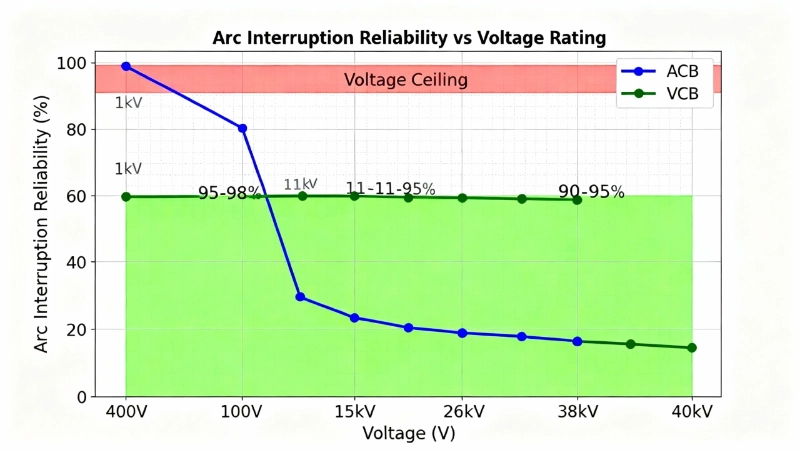
the Voltage Ceiling visualization

그림 3: 전압 상한 시각화. ACB는 최대 1,000V까지 안정적으로 작동하지만 이 임계값(빨간색 영역) 이상에서는 아크를 안전하게 차단할 수 없는 반면, VCB는 11kV에서 38kV까지의 중간 전압 범위(녹색 영역)를 지배합니다.

일반적인 애플리케이션:

  • 유틸리티 배전 변전소(11kV, 22kV, 33kV)
  • 산업용 중간 전압 스위치기어(링 메인 유닛, 스위치보드)
  • 고전압 유도 모터 보호(>1,000 HP)
  • 변압기 1차 보호
  • 발전 시설(발전기 회로 차단기)
  • 재생 에너지 시스템(풍력 발전 단지, 태양광 인버터 스테이션)

Pro-Tip#2: 킬로암페어 단위로만 차단 용량을 비교하지 마십시오. MVA 차단 전력(√3 × 전압 × 전류)을 계산하십시오. 33kV에서 50kA VCB는 690V에서 100kA ACB보다 훨씬 더 많은 전력을 차단합니다. 차단기 성능을 평가할 때는 전류보다 전압이 더 중요합니다.


표준 분할: IEC 60947-2(ACB) 대 IEC 62271-100(VCB)

국제전기기술위원회(IEC)는 표준을 함부로 나누지 않습니다. IEC 60947-2가 최대 1,000V의 차단기를 관리하고 IEC 62271-100이 1,000V 이상을 인수할 때, 그 경계는 우리가 논의해 온 물리적 현실을 반영합니다. 이것은 표준 분할, 이며, 이는 설계 나침반입니다.

공기 회로 차단기용 IEC 60947-2:2024

범위: 이 표준은 정격 전압이 1,000V AC 또는 1,500V DC를 초과하지 않는 회로 차단기에 적용됩니다.. ACB, 몰드 케이스 회로 차단기(MCCB) 및 소형 회로 차단기(MCB)를 포함한 저전압 회로 보호에 대한 권위 있는 참조 자료입니다.

여섯 번째 에디션은 2024년 9월, 에 게시되었으며, 2016년 에디션을 대체합니다. 주요 업데이트는 다음과 같습니다.

  1. 절연 적합성: 회로 차단기를 절연 스위치로 사용하는 경우에 대한 요구 사항 명확화
  2. 분류 제거: IEC는 차단 매체(공기, 오일, SF6 등)에 따른 차단기 분류를 제거했습니다. 왜냐하면 전압이 이미 매체를 알려주기 때문입니다.. 690V라면 공기 또는 밀폐형 몰드 케이스를 사용하고 있는 것입니다. 기존 분류 시스템은 중복되었습니다.
  3. 외부 장치 조정: 외부 장치를 통해 과전류 설정을 조정할 수 있는 새로운 조항
  4. 향상된 테스트: 지락 릴리스 및 트립된 위치에서의 유전체 특성에 대한 테스트 추가
  5. EMC 개선: 업데이트된 전자기 호환성(EMC) 테스트 절차 및 전력 손실 측정 방법

2024년 개정판은 표준을 더 깔끔하게 만들고 최신 디지털 트립 장치 및 스마트 차단기 기술에 더 부합하도록 하지만 핵심 전압 경계는≤1,000V AC—변경되지 않았습니다. 그 이상은 IEC 60947-2의 관할 범위를 벗어납니다.

IEC 62271-100:2021 (Amendment 1: 2024) 진공 회로 차단기용

범위: 이 표준은 다음을 위해 설계된 교류 회로 차단기를 규정합니다. 1,000V 이상의 전압을 가진 3상 시스템. 특히 중전압 및 고전압 실내외 개폐 장치에 맞게 조정되었으며, 여기서 VCB는 가장 높은 전압 등급의 SF6 차단기와 함께 지배적인 기술입니다.

세 번째 에디션은 2021년에 발행되었으며, Amendment 1은 2024년 8월에 출시되었습니다.. 최근 업데이트는 다음과 같습니다.

  1. 업데이트된 TRV(과도 회복 전압) 값: 실제 시스템 동작 및 최신 변압기 설계를 반영하기 위해 여러 테이블에서 TRV 매개변수를 재계산했습니다.
  2. 새로운 정격 전압: 다음에서 표준화된 정격이 추가되었습니다. 15.5kV, 27kV 및 40.5kV 지역 시스템 전압(특히 아시아 및 중동)을 커버하기 위해
  3. 수정된 단자 고장 정의: 테스트 목적으로 단자 고장을 구성하는 요소 명확화
  4. 유전체 테스트 기준: 유전체 테스트에 대한 기준 추가; 부분 방전 테스트는 일반적인 VCB가 아닌 GIS(가스 절연 개폐 장치) 및 데드 탱크 차단기에만 적용된다고 명시적으로 명시했습니다.
  5. 환경적 고려 사항: 고도, 오염 및 온도 저감 계수에 대한 향상된 지침

2024년 수정안은 표준을 글로벌 그리드 인프라 변경 사항과 일치하게 유지하지만 기본 원칙은 유지됩니다. 1,000V 이상에서는 중전압 차단기가 필요합니다., 그리고 1kV-38kV 범위에서는 거의 항상 VCB를 의미합니다.

이러한 표준이 겹치지 않는 이유

1,000V 경계는 임의적이지 않습니다. 대기 공기가 “적절한 아크 소호 매체”에서 “책임”으로 전환되는 지점입니다. IEC는 더 많은 책을 판매하기 위해 두 가지 표준을 만든 것이 아닙니다. 그들은 엔지니어링 현실을 공식화했습니다.

  • 1kV 미만: 공기 기반 또는 몰드 케이스 설계가 작동합니다. 아크 슈트가 효과적입니다. 차단기는 작고 경제적입니다.
  • 1kV 초과: 공기는 비현실적으로 큰 아크 슈트가 필요합니다. 진공(또는 더 높은 전압의 경우 SF6)은 합리적인 공간에서 안전하고 안정적인 아크 차단을 위해 필요합니다.

차단기를 지정할 때 첫 번째 질문은 “ACB 또는 VCB?”가 아닙니다. “내 시스템 전압은 얼마입니까?”입니다. 그 대답은 올바른 표준을 가리키고, 올바른 차단기 유형을 가리킵니다.

프로 끝#3: 회로 차단기 데이터 시트를 검토할 때 어떤 IEC 표준을 준수하는지 확인하십시오. IEC 60947-2가 나열되어 있으면 저전압 차단기(≤1kV)입니다. IEC 62271-100이 나열되어 있으면 중/고전압 차단기(>1kV)입니다. 표준 준수는 전압 등급을 즉시 알려줍니다.


애플리케이션: 시스템에 맞는 차단기 유형 매칭

ACB와 VCB 중에서 선택하는 것은 선호도의 문제가 아닙니다. 차단기의 물리적 기능을 시스템의 전기적 특성 및 작동 요구 사항에 맞추는 것입니다.

차단기 유형을 애플리케이션에 매핑하는 방법은 다음과 같습니다.

ACB를 사용해야 하는 경우

공기 회로 차단기는 다음에 적합합니다. 저전압 배전 시스템 여기서 높은 전류 용량이 컴팩트한 크기 또는 긴 유지 보수 간격보다 더 중요합니다.

이상적인 애플리케이션:

  • 400V 또는 690V 3상 배전: 대부분의 산업 및 상업용 전기 시스템의 중추
  • 모터 제어 센터(MCC): 펌프, 팬, 압축기, 컨베이어 및 기타 저전압 모터 보호
  • 전력 제어 센터(PCC): 산업 기계 및 공정 장비의 주요 배전
  • 저전압 주 배전반(LVMDP): 건물 및 시설의 서비스 입구 및 주 차단기
  • 발전기 보호: 저전압 백업 발전기(일반적으로 480V 또는 600V)
  • 해양 및 연안: 저전압 선박 전력 배전(IEC 60092도 적용되는 경우)

ACB가 재정적으로 합리적인 경우:

  • 낮은 초기 비용 우선 순위: 자본 예산이 제한되어 있고 사내 유지 보수 기능이 있는 경우
  • 높은 전류 요구 사항: 6,000A+ 정격이 필요할 때 ACB 폼 팩터가 더 경제적입니다.
  • 기존 LV 개폐 장치에 개조: ACB용으로 설계된 패널에서 동일한 제품으로 교체할 때

기억해야 할 제한 사항:

  • 유지 보수 부담: 6개월마다 점검하고 3-5년마다 접점을 교체해야 합니다.
  • 설치 공간: ACB는 아크 슈트 어셈블리 때문에 동급 VCB보다 크고 무겁습니다.
  • 소음: 공기 중 아크 차단은 밀폐된 진공 상태보다 더 큽니다.
  • 제한된 수명: 주요 정비 전 일반적으로 10,000~15,000회 작동

VCB를 사용해야 하는 경우

진공 회로 차단기가 지배적입니다. 중전압 애플리케이션 신뢰성, 낮은 유지 보수, 컴팩트한 크기 및 긴 수명이 더 높은 초기 비용을 정당화하는 경우.

이상적인 애플리케이션:

  • 11kV, 22kV, 33kV 유틸리티 변전소: 1차 및 2차 배전 개폐 장치
  • 산업용 MV 개폐 장치: 링 메인 유닛(RMU), 금속 클래드 배전반, 패드 장착 변압기
  • 고전압 모터 보호: 1,000HP 이상의 유도 모터(일반적으로 3.3kV, 6.6kV 또는 11kV)
  • 변압기 보호: 배전 및 전력 변압기용 1차측 차단기
  • 발전 시설: 발전기 회로 차단기, 스테이션 보조 전력
  • 재생 에너지 시스템: 풍력 발전 단지 집전 회로, 태양광 인버터 승압 변압기
  • 광업 및 중공업: 먼지, 습기 및 열악한 조건으로 인해 ACB 유지 보수가 문제가 되는 경우

VCB가 유일한 선택인 경우:

  • 시스템 전압 >1kV AC: 물리 및 IEC 62271-100에는 중전압 정격 차단기가 필요합니다.
  • 잦은 스위칭 작업: VCB는 30,000회 이상의 기계적 작동에 대해 정격이 부여됩니다(일부 설계는 100,000회 초과).
  • 제한된 유지 보수 액세스: 반년마다 ACB 점검이 비현실적인 원격 변전소, 해양 플랫폼, 옥상 설치
  • 긴 수명 주기 비용에 집중: 20-30년에 걸친 총 소유 비용이 초기 자본 비용보다 클 때

열악한 환경에서의 장점:

  • 밀폐된 진공 인터럽터는 먼지, 습도, 염수 분무 또는 고도에 영향을 받지 않습니다(정격 강하 한도까지).
  • 청소하거나 교체할 아크 슈트가 없습니다.
  • 조용한 작동(점유 건물 내 실내 변전소에 중요)
  • 컴팩트한 설치 공간(비싼 부동산이 있는 도시 변전소에서 중요)

의사 결정 매트릭스: ACB 또는 VCB?

시스템 특성 권장 차단기 유형 주요 이유
전압 ≤ 1,000V AC ACB IEC 60947-2 관할; 공기 소호가 적절합니다.
전압 > 1,000V AC VCB IEC 62271-100 필요; 공기가 아크를 안정적으로 차단할 수 없습니다.
LV에서 높은 전류(>5,000A) ACB 저전압에서 매우 높은 전류에 더 경제적입니다.
잦은 스위칭(>20회/일) VCB ACB의 10,000회에 비해 30,000회 이상 작동하도록 정격이 부여되었습니다.
열악한 환경(먼지, 염분, 습도) VCB 밀폐된 인터럽터는 오염의 영향을 받지 않습니다.
제한된 유지 보수 액세스 VCB ACB의 6개월 일정에 비해 3-5년 서비스 간격
20년 이상 수명 주기 비용에 집중 VCB 더 높은 초기 비용에도 불구하고 더 낮은 TCO
좁은 공간 제약 VCB 컴팩트한 디자인; 아크 슈트 부피 없음
예산 제약이 있는 자본 프로젝트 ACB(≤1kV인 경우) 더 낮은 초기 비용, 그러나 유지 보수 예산을 고려하십시오.

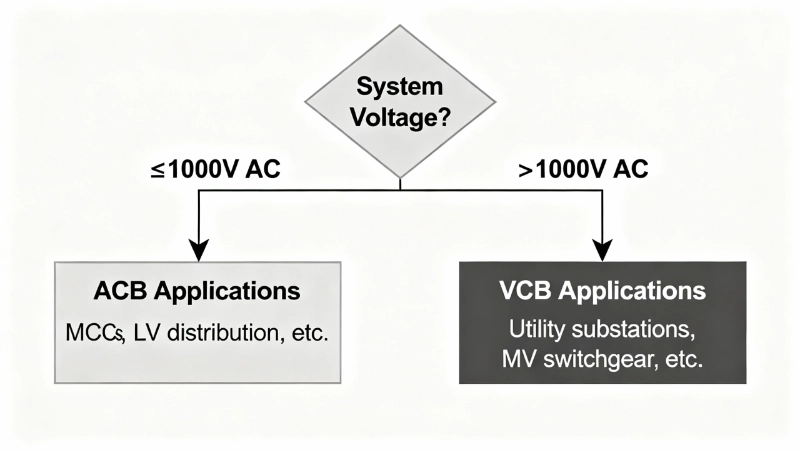
Circuit breaker selection flowchart

그림 5: 회로 차단기 선택 흐름도. 시스템 전압은 주요 의사 결정 기준이며, 1,000V 경계를 기준으로 ACB(저전압) 또는 VCB(중전압) 애플리케이션으로 안내합니다.

프로 끝#4: 시스템 전압이 1kV 경계에 가까우면 VCB를 지정하십시오. ACB를 최대 전압 정격까지 늘리려고 하지 마십시오. 전압 상한 “정격 최대값”이 아니라 엄격한 물리적 한계입니다. 여유를 두고 설계하십시오.


유지 보수세: VCB가 20년 동안 비용이 적게 드는 이유

15,000달러짜리 ACB는 25,000달러짜리 VCB보다 매력적으로 보입니다. 15년 동안 숫자를 계산하기 전까지는요.

다음을 환영합니다. 유지보수 세금— 경제적 방정식을 뒤집는 숨겨진 반복 비용입니다.

ACB 유지 보수: 연 2회 부담

공기 차단기는 접점과 아크 슈트가 개방된 환경에서 작동하기 때문에 정기적인 수동 유지 보수가 필요합니다. 다음은 제조업체와 IEC 60947-2에서 권장하는 일반적인 유지 보수 일정입니다.

6개월마다 (반기 검사):

  • 접점의 피팅, 부식 또는 변색에 대한 육안 검사
  • 아크 슈트 청소 (탄소 침전물 및 금속 증기 잔류물 제거)
  • 접점 간격 및 와이프 측정
  • 기계 작동 테스트 (수동 및 자동)
  • 단자 연결 토크 점검
  • 움직이는 부품 윤활 (힌지, 링키지, 베어링)
  • 과전류 트립 장치 기능 테스트

3-5년마다 (주요 서비스):

  • 접점 교체 (부식이 제조업체 제한을 초과하는 경우)
  • 아크 슈트 손상 시 검사 및 교체
  • 절연 저항 테스트 (메거 테스트)
  • 접촉 저항 측정
  • 완전 분해 및 청소
  • 마모된 기계 부품 교체

비용 분석 (일반적, 지역에 따라 다름):

  • 반기 검사: 차단기당 600-1,000달러 (계약자 인건비: 3-4시간)
  • 접점 교체: 2,500-4,000달러 (부품 + 인건비)
  • 아크 슈트 교체: 1,500-2,500달러 (손상된 경우)
  • 비상 서비스 호출 (검사 사이에 차단기가 고장난 경우): 1,500-3,000달러

15년 수명의 ACB의 경우:

  • 반기 검사: 15년 × 연간 2회 검사 × 평균 800달러 = $24,000
  • 접점 교체: (15년 ÷ 4년) × 3,000달러 = $9,000 (3회 교체)
  • 계획되지 않은 고장: 1회 고장 × 2,000달러 = $2,000
  • 15년 동안의 총 유지 보수: 35,000달러

초기 구매 비용 (15,000달러)을 더하면 15년 총 소유 비용은 ~50,000달러입니다..

그것이 바로 유지 보수세. 입니다. 차단기 수명 동안 매년, 연 2회 인건비, 가동 중지 시간 및 소모품 부품으로 지불합니다.

VCB 유지 보수: 밀봉된 수명 이점

진공 차단기는 유지 보수 방정식을 뒤집습니다. 밀봉된 진공 인터럽터는 접점을 산화, 오염 및 환경 노출로부터 보호합니다. 결과: 서비스 간격이 크게 연장됩니다.

3-5년마다 (정기 검사):

  • 육안 외부 검사
  • 기계 작동 횟수 점검 (카운터 또는 디지털 인터페이스를 통해)
  • 접점 마모 표시기 점검 (일부 VCB에는 외부 표시기가 있음)
  • 작동 테스트 (개방/폐쇄 주기)
  • 제어 회로 기능 테스트
  • 단자 연결 검사

10-15년마다 (주요 검사, 필요한 경우):

  • 진공 무결성 테스트 (고전압 테스트 또는 X선 검사 사용)
  • 접점 간격 측정 (일부 모델에서는 부분 분해 필요)
  • 절연 저항 테스트

목록에 없는 것은 무엇인지 주목하십시오. 목록에 없는 것은 무엇인지 주목하십시오.

  • 접점 청소 없음 (밀봉된 환경)
  • 아크 슈트 유지 보수 없음 (존재하지 않음)
  • 반기 검사 없음 (불필요)
  • 정기적인 접점 교체 없음 (20-30년 수명)

비용 분석 (일반적):

  • 정기 검사 (4년마다): 차단기당 400-700달러 (계약자 인건비: 1.5-2시간)
  • 진공 인터럽터 교체 (20-25년 후 필요한 경우): 6,000-10,000달러

동일한 15년 평가 기간의 VCB의 경우:

  • 정기 검사: (15년 ÷ 4년) × 평균 500달러 = $1,500 (3회 검사)
  • 계획되지 않은 고장: 매우 드물다. 0달러로 가정 (VCB는 고장률이 10배 낮음)
  • 주요 점검: 15년 이내에는 필요하지 않음
  • 15년간 총 유지 보수 비용: ₩1,500

초기 구매 비용(₩25,000)을 더하면, 15년간 총 소유 비용은 약 ₩26,500입니다..

TCO 교차점

나란히 비교해 보겠습니다.

비용 구성 요소 ACB (15년) VCB (15년)
초기 구매 $15,000 $25,000
정기 유지 관리 $24,000 $1,500
접점/부품 교체 $9,000 $0
계획되지 않은 고장 $2,000 $0
총 소유 비용 $50,000 $26,500
연간 비용 ₩3,333/년 ₩1,767/년

VCB는 유지 보수 비용 절감만으로도 자체 비용을 충당합니다. 하지만 핵심은 다음과 같습니다. 교차점은 약 3년 차에 발생합니다..

  • 0년 차: ACB = ₩15K, VCB = ₩25K (ACB가 ₩10K 앞섬)
  • 1.5년 차: 첫 3회 ACB 점검 = ₩2,400; VCB = ₩0 (ACB가 ₩7,600 앞섬)
  • 3년 차: 6회 ACB 점검 = ₩4,800; VCB = ₩0 (ACB가 ₩5,200 앞섬)
  • 4년 차: 첫 ACB 접점 교체 + 8회 점검 = ₩9,400; VCB 첫 점검 = ₩500 (ACB가 ₩900 앞섬)
  • 5년 차: ACB 총 유지 보수 비용 = ₩12,000; VCB = ₩500 (VCB가 비용 절감을 시작합니다.)
  • 15년 차: ACB 총 비용 = ₩50K; VCB 총 비용 = ₩26.5K (VCB가 ₩23,500 절감합니다.)
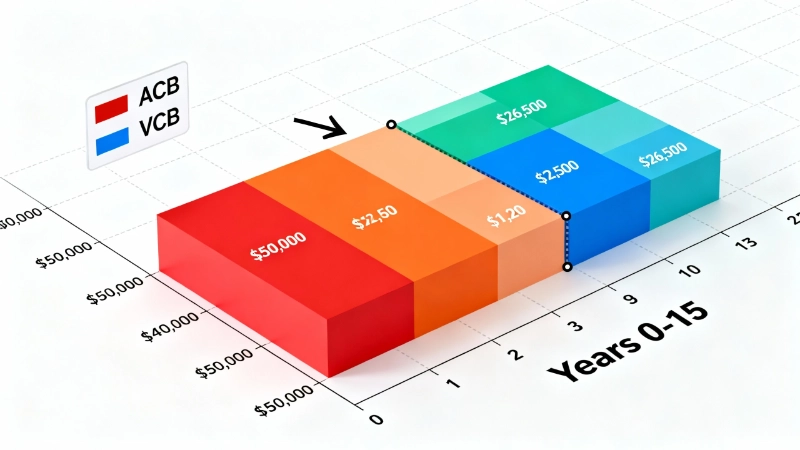
5-Year Total Cost of Ownership (TCO) analysis

그림 4: 15년간 총 소유 비용(TCO) 분석. 초기 비용이 더 높음에도 불구하고 VCB는 유지 보수 요구 사항이 현저히 낮아 3년 차부터 ACB보다 경제적이 되며, 15년 동안 ₩23,500를 절감합니다.

개폐 장치를 20년 동안 유지할 계획이라면(일반적인 산업 시설의 경우), 절감액 격차는 다음과 같이 확대됩니다. 차단기당 ₩35,000 이상. 차단기가 10개인 변전소의 경우, 수명 주기 동안 ₩350,000 절감.

송장 외 숨겨진 비용

위의 TCO 계산은 직접 비용만 포착합니다. 다음을 잊지 마십시오.

가동 중단 위험:

  • 점검 간 ACB 고장은 계획되지 않은 정전을 유발할 수 있습니다.
  • VCB 고장은 드물습니다(MTBF는 적절한 사용 시 종종 30년을 초과함).

인력 가용성:

  • 업계가 VCB로 전환됨에 따라 ACB 유지 보수를 위한 자격을 갖춘 기술자를 찾는 것이 점점 더 어려워지고 있습니다.
  • 반기별 유지 보수 기간에는 생산 중단 또는 신중한 일정이 필요합니다.

안전:

  • 유지 보수 중 ACB 아크 플래시 사고는 VCB 사고보다 더 흔합니다(개방형 접점 대 밀폐형 차단기).
  • 아크 플래시 PPE 요구 사항은 ACB 유지 보수에 대해 더 엄격합니다.

환경적 요인:

  • 먼지가 많거나 습하거나 부식성 환경의 ACB는 잦은 유지 보수(반기별 대신 분기별)가 필요합니다.
  • VCB는 영향을 받지 않습니다. 밀폐형 차단기는 외부 조건에 영향을 받지 않습니다.

전문가 팁 5 (가장 중요한 팁): 초기 자본 비용뿐만 아니라 예상되는 개폐 장치 수명(15-25년) 동안 총 소유 비용을 계산하십시오. 중전압 애플리케이션의 경우 VCB가 TCO에서 거의 항상 승리합니다. 저전압 애플리케이션에서 ACB를 사용해야 하는 경우 차단기당 연간 ₩2,000-₩3,000의 유지 보수 예산을 책정하고 유지 보수 일정을 놓치지 마십시오. 건너뛴 점검은 치명적인 고장으로 이어집니다.


자주 묻는 질문: ACB 대 VCB

Q: 정격을 낮추거나 외부 아크 억제를 추가하면 1,000V 이상에서 ACB를 사용할 수 있습니까?

A: 아니요. ACB의 1,000V 제한은 정격 강하로 해결할 수 있는 열적 또는 전기적 스트레스 문제가 아니라 기본적인 아크 물리적 제한입니다. 1kV 이상에서는 차단기를 어떻게 구성하든 대기 중 공기가 안전한 시간 내에 아크를 안정적으로 소멸시킬 수 없습니다. IEC 60947-2는 ACB를 ≤1,000V AC로 명시적으로 규정하고 있으며, 해당 범위를 벗어난 작동은 표준을 위반하고 아크 플래시 위험을 초래합니다. 시스템이 1kV 이상인 경우 법적으로 안전하게 중전압 차단기(IEC 62271-100에 따른 VCB 또는 SF6 차단기)를 사용해야 합니다.

Q: 문제가 발생하면 VCB가 ACB보다 수리 비용이 더 많이 듭니까?

A: 예, 하지만 VCB는 고장 빈도가 훨씬 적습니다. VCB 진공 차단기가 고장나는 경우(드물게 발생) 일반적으로 전체 밀폐 장치를 ₩6,000-₩10,000에 공장에서 교체해야 합니다. ACB 접점 및 아크 슈트는 현장에서 ₩2,500-₩4,000에 수리할 수 있지만 VCB 수명 동안 3-4회 교체해야 합니다. 계산은 여전히 VCB에 유리합니다. 25년에 한 번 VCB 차단기 교체 대 15년에 세 번 ACB 접점 교체, 그리고 지속적인 유지 보수세 6개월마다.

Q: 잦은 스위칭(커패시터 뱅크, 모터 기동)에 더 적합한 차단기 유형은 무엇입니까?

A: 압도적으로 VCB입니다. 진공 회로 차단기는 주요 점검 전에 30,000~100,000회 이상의 기계적 작동에 대해 정격이 지정됩니다. ACB는 일반적으로 10,000~15,000회 작동에 대해 정격이 지정됩니다. 커패시터 뱅크 스위칭, 배치 프로세스의 모터 기동/정지 또는 부하 전송 체계와 같이 잦은 스위칭과 관련된 애플리케이션의 경우 VCB는 작동 횟수에서 ACB보다 3:1에서 10:1까지 더 오래 지속됩니다. 또한 VCB의 빠른 아크 소멸(1주기)은 각 스위칭 이벤트 동안 다운스트림 장비에 대한 스트레스를 줄입니다.

Q: VCB에는 초기 비용 외에 ACB에 비해 단점이 있습니까?

A: 세 가지 사소한 고려 사항: (1) 과전압 위험 용량성 또는 유도성 부하를 스위칭할 때 VCB의 빠른 아크 소멸은 민감한 부하에 서지 어레스터 또는 RC 스너버가 필요할 수 있는 과도 과전압을 생성할 수 있습니다. (2) 수리 복잡성- 진공 차단기가 고장나면 현장에서 수리할 수 없습니다. 전체 장치를 교체해야 합니다. 가청 험—일부 VCB 설계는 작동 메커니즘에서 낮은 주파수의 험을 발생시키지만, 이는 ACB 아크 폭발보다 훨씬 조용합니다. 애플리케이션의 99%에서 이러한 단점은 장점에 비해 무시할 수 있습니다(다음 섹션 참조). 수명 밀봉 장점 섹션).

Q: 기존 ACB 스위치기어 패널에 VCB를 개조할 수 있습니까?

A: 경우에 따라 가능하지만 항상 그런 것은 아닙니다. VCB는 ACB보다 더 작기 때문에 물리적 공간은 거의 문제가 되지 않습니다. 문제는 다음과 같습니다. (1) 장착 치수—ACB와 VCB의 장착 구멍 패턴이 다르므로 어댑터 플레이트가 필요할 수 있습니다. (2) 공통 구성—VCB 단자가 수정 없이 기존 ACB 부스바와 정렬되지 않을 수 있습니다. (3) 제어 전압—VCB 작동 메커니즘은 다른 제어 전원(예: 110V DC 대 220V AC)이 필요할 수 있습니다. (4) 보호 협조—차단기 유형을 변경하면 단락 차단 시간과 협조 곡선이 변경될 수 있습니다. 개조하기 전에 항상 스위치기어 제조업체 또는 자격을 갖춘 전기 엔지니어와 상담하십시오. 새로운 설치에서는 중전압용 VCB와 저전압용 ACB(또는 MCCB)를 처음부터 지정해야 합니다. MCCB)를 처음부터 지정해야 합니다.

Q: 제조업체는 왜 중전압(11kV, 33kV)용 ACB를 만들지 않습니까?

A: 시도했습니다. 중전압 ACB는 20세기 중반에 존재했지만 엄청나게 컸습니다. 아크 슈트가 수 미터 길이인 방 크기의 차단기였습니다. 공기의 상대적으로 낮은 유전 강도(~3 kV/mm)는 33kV 차단기가 밀리미터가 아닌 미터 단위로 측정되는 접점 간격과 아크 슈트가 필요함을 의미했습니다. 크기, 무게, 유지 보수 부담 및 화재 위험으로 인해 실용적이지 않았습니다. 1960년대~1970년대에 진공 인터럽터 기술이 발전하자 중전압 ACB는 쓸모없게 되었습니다. 오늘날 진공 및 SF6 차단기는 1kV 이상의 밀봉 인터럽터 설계를 선호하는 물리적 및 경제적 요인으로 인해 중전압 시장을 지배하고 있습니다. 그것은 제품 결정이 아니라 엔지니어링 현실입니다. 전압 상한 제품 결정이 아니라 엔지니어링 현실입니다.


결론: 전압 우선, 그 다음 모든 것

서두의 두 데이터시트를 기억하십니까? 둘 다 최대 690V의 전압 등급을 나열했습니다. 둘 다 강력한 차단 용량을 주장했습니다. 그러나 이제 당신은 알고 있습니다. 전압은 단순한 숫자가 아니라 차단기 기술 간의 경계선입니다.

다음은 세 부분으로 구성된 의사 결정 프레임워크입니다.

1. 전압은 차단기 유형을 결정합니다(전압 상한).

  • 시스템 전압 ≤1,000V AC → IEC 60947-2:2024에 의해 관리되는 공기 회로 차단기(ACB)
  • 시스템 전압 >1,000V AC → IEC 62271-100:2021+A1:2024에 의해 관리되는 진공 회로 차단기(VCB)
  • 이것은 협상할 수 없습니다. 물리학이 경계를 설정하고 표준이 공식화했습니다.

2. 표준은 분할을 공식화합니다(표준 분할).

  • IEC는 시장 세분화를 위해 두 개의 별도 표준을 만든 것이 아니라 공기 기반 아크 차단이 1kV 이상에서 실패한다는 현실을 성문화했습니다.
  • 시스템 전압은 적용되는 표준을 알려주고, 이는 지정할 차단기 기술을 알려줍니다.
  • 차단기의 IEC 준수 표시를 확인하십시오. 60947-2 = 저전압, 62271-100 = 중전압

3. 유지 보수는 수명 주기 경제성을 결정합니다(유지 보수 세금).

  • ACB는 초기 비용이 저렴하지만 반년 검사 및 접점 교체에 연간 2,000~3,000달러가 소요됩니다.
  • VCB는 초기 비용이 더 많이 들지만 3~5년마다 검사가 필요하며 접점 수명은 20~30년입니다.
  • TCO 교차는 약 3년차에 발생합니다. 15년차까지 VCB는 차단기당 20,000~25,000달러를 절약합니다.
  • 중전압 애플리케이션(어쨌든 VCB를 사용해야 하는 경우)의 경우 비용 이점은 보너스입니다.
  • 저전압 애플리케이션(ACB가 적합한 경우)의 경우 유지 보수 세금을 예산에 반영하고 검사 일정을 준수하십시오. 유지 보수세 검사 일정을 준수하십시오.

데이터시트에 겹치는 전압 등급이 표시될 수 있습니다. 마케팅 브로셔는 상호 교환이 가능하다는 것을 암시할 수 있습니다. 그러나 물리학은 협상하지 않으며 귀하도 그래서는 안 됩니다.

시스템 전압을 기준으로 선택하십시오. 전류 등급, 차단 용량, 유지 보수 간격, 설치 공간 등 다른 모든 것은 첫 번째 선택을 올바르게 수행하면 제자리에 놓입니다.


올바른 회로 차단기를 선택하는 데 도움이 필요하십니까?

VIOX의 애플리케이션 엔지니어링 팀은 전 세계 산업, 상업 및 유틸리티 애플리케이션용 ACB 및 VCB를 지정하는 데 수십 년의 경험을 가지고 있습니다. 새로운 400V MCC를 설계하든, 11kV 변전소를 업그레이드하든, 빈번한 차단기 고장을 해결하든, 시스템 요구 사항을 검토하고 성능, 안전 및 수명 주기 비용의 균형을 맞추는 IEC 준수 솔루션을 권장합니다.

오늘 VIOX에 문의하여 다음 사항을 확인하십시오. 오늘 을 위한:

  • 회로 차단기 선택 및 크기 계산
  • 단락 협조 연구
  • 스위치기어 개조 타당성 평가
  • 유지 보수 최적화 및 TCO 분석

차단기 유형을 잘못 선택하면 비용이 많이 들 뿐만 아니라 위험하기 때문입니다.
About Author
저자 사진

안녕하세요,저는 조용문으로 12 년 동안의 경험을 전기 기업에서. 에 VIOX 전기,내에 포커스를 제공 높은 품질의 전기적에 맞는 솔루션의 요구를 충족하는 우리의 클라이언트입니다. 내 전문 지식에 걸쳐 있는 산업 자동화,배선 주거 및 상업적인 전기 시스템입니다.저에게 연락 [email protected] 면 어떤 질문이 있습니다.

요구 사항 알려주세요
지금 견적 요청하기