ในหน้านี้
คุณกำลังจ้องมองแผ่นข้อมูลของเซอร์กิตเบรกเกอร์สองตัวสำหรับโครงการสวิตช์เกียร์ 15kV ของคุณ ทั้งคู่แสดงพิกัดแรงดันไฟฟ้าสูงสุด 690V ทั้งคู่แสดงความสามารถในการตัดกระแสที่น่าประทับใจ บนกระดาษ พวกมันดูเหมือนจะใช้แทนกันได้.
พวกมันไม่ใช่.
เลือกผิด—ติดตั้ง Air Circuit Breaker (ACB) ในที่ที่คุณต้องการ Vacuum Circuit Breaker (VCB) หรือในทางกลับกัน—และคุณไม่ได้ละเมิดมาตรฐาน IEC เท่านั้น คุณกำลังเล่นพนันกับความเสี่ยงจากอาร์คแฟลช งบประมาณการบำรุงรักษา และอายุการใช้งานของอุปกรณ์ ความแตกต่างที่แท้จริงไม่ได้อยู่ในโบรชัวร์การตลาด มันอยู่ในฟิสิกส์ของวิธีการที่เบรกเกอร์แต่ละตัวดับอาร์คไฟฟ้า และฟิสิกส์นั้นกำหนด เพดานแรงดันไฟฟ้า ที่คำปฏิเสธในแผ่นข้อมูลใดๆ ก็ไม่สามารถแทนที่ได้.
นี่คือสิ่งที่แยก ACBs ออกจาก VCBs จริงๆ—และวิธีการเลือกสิ่งที่เหมาะสมสำหรับระบบของคุณ.
คำตอบด่วน: ACB vs VCB โดยสรุป
ความแตกต่างหลัก: เบรกเกอร์วงจรอากาศ (ACBs) ดับอาร์คไฟฟ้าในอากาศและได้รับการออกแบบมาสำหรับ ระบบแรงดันไฟฟ้าต่ำถึง 1,000V AC (ควบคุมโดย IEC 60947-2:2024) Vacuum Circuit Breakers (VCBs) ดับอาร์คในสภาพแวดล้อมสุญญากาศที่ปิดสนิทและทำงานใน ระบบแรงดันไฟฟ้าปานกลางตั้งแต่ 11kV ถึง 33kV (ควบคุมโดย IEC 62271-100:2021) การแบ่งแรงดันไฟฟ้านี้ไม่ใช่ทางเลือกในการแบ่งส่วนผลิตภัณฑ์—แต่ถูกกำหนดโดยฟิสิกส์ของการขัดจังหวะอาร์ค.
นี่คือวิธีการเปรียบเทียบตามข้อกำหนดที่สำคัญ:
| Specification | เบรกเกอร์วงจรไฟฟ้า (ACB) | Vacuum Circuit Breaker (VCB) |
| ช่วงแรงดันไฟฟ้า | แรงดันไฟฟ้าต่ำ: 400V ถึง 1,000V AC | แรงดันไฟฟ้าปานกลาง: 11kV ถึง 33kV (บางรุ่น 1kV-38kV) |
| ช่วงกระแสไฟฟ้า | กระแสไฟฟ้าสูง: 800A ถึง 10,000A | กระแสไฟฟ้าปานกลาง: 600A ถึง 4,000A |
| ทำลายคืน | สูงสุด 100kA ที่ 690V | 25kA ถึง 50kA ที่ MV |
| ตัวกลางดับอาร์ค | อากาศที่ความดันบรรยากาศ | สุญญากาศ (10^-2 ถึง 10^-6 torr) |
| กลไกการทำงาน | ช่องดับอาร์คช่วยยืดและระบายความร้อนให้อาร์ค | ตัวขัดขวางสุญญากาศที่ปิดสนิทจะดับอาร์คที่ศูนย์กระแสแรก |
| ความถี่ในการบำรุงรักษา | ทุก 6 เดือน (ปีละสองครั้ง) | ทุก 3 ถึง 5 ปี |
| อายุการใช้งานของหน้าสัมผัส | 3 ถึง 5 ปี (การสัมผัสกับอากาศทำให้เกิดการสึกกร่อน) | 20 ถึง 30 ปี (สภาพแวดล้อมที่ปิดสนิท) |
| คิดถึงเรื่องโปรแกรม | การกระจาย LV, MCCs, PCCs, แผงควบคุมเชิงพาณิชย์/อุตสาหกรรม | สวิตช์เกียร์ MV, สถานีย่อยของสาธารณูปโภค, การป้องกันมอเตอร์ HV |
| มาตรฐาน IEC | IEC 60947-2:2024 (≤1000V AC) | IEC 62271-100:2021+A1:2024 (>1000V) |
| ต้นทุนเริ่มต้น | ต่ำกว่า (โดยทั่วไป $8K-$15K) | สูงกว่า (โดยทั่วไป $20K-$30K) |
| ต้นทุนรวม 15 ปี | ~$48K (พร้อมการบำรุงรักษา) | ~$24K (การบำรุงรักษาน้อยที่สุด) |
สังเกตเส้นแบ่งที่ชัดเจนที่ 1,000V ใช่ไหม นั่นคือ การแบ่งมาตรฐาน—และมันมีอยู่เพราะเหนือ 1kV อากาศไม่สามารถดับอาร์คได้เร็วพอ ฟิสิกส์กำหนดขอบเขต IEC เพียงแค่ประมวลผลเป็นกฎหมาย.

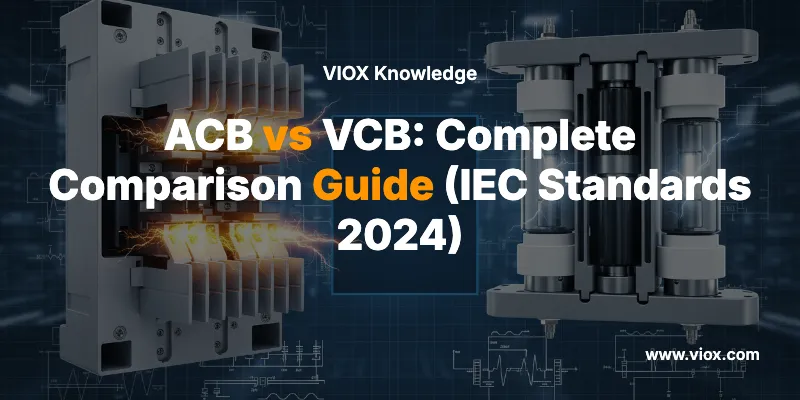
รูปที่ 1: การเปรียบเทียบโครงสร้างของเทคโนโลยี ACB และ VCB ACB (ซ้าย) ใช้ช่องดับอาร์คในอากาศ ในขณะที่ VCB (ขวา) ใช้ตัวขัดขวางสุญญากาศที่ปิดสนิทเพื่อดับอาร์ค.
การดับอาร์ค: อากาศ vs สุญญากาศ (ทำไมฟิสิกส์ถึงกำหนดเพดานแรงดันไฟฟ้า)
เมื่อคุณแยกหน้าสัมผัสที่นำกระแสไฟฟ้าภายใต้โหลด อาร์คจะก่อตัวขึ้นเสมอ อาร์คนั้นคือคอลัมน์พลาสมา—ก๊าซแตกตัวเป็นไอออนที่นำกระแสไฟฟ้าหลายพันแอมแปร์ที่อุณหภูมิสูงถึง 20,000°C (ร้อนกว่าพื้นผิวของดวงอาทิตย์) หน้าที่ของเซอร์กิตเบรกเกอร์ของคุณคือการดับอาร์คนั้นก่อนที่มันจะเชื่อมหน้าสัมผัสเข้าด้วยกันหรือกระตุ้นให้เกิดเหตุการณ์อาร์คแฟลช.
วิธีการทำเช่นนั้นขึ้นอยู่กับตัวกลางที่อยู่รอบๆ หน้าสัมผัสโดยสิ้นเชิง.
วิธีที่ ACBs ใช้อากาศและช่องดับอาร์ค
หนึ่ง อากาศวงจร Breaker ขัดจังหวะอาร์คในอากาศ หน้าสัมผัสของเบรกเกอร์ถูกบรรจุอยู่ในช่องดับอาร์ค—แถวของแผ่นโลหะที่วางตำแหน่งเพื่อสกัดกั้นอาร์คเมื่อหน้าสัมผัสแยกจากกัน นี่คือลำดับ:
- การก่อตัวของอาร์ค: หน้าสัมผัสแยกจากกัน อาร์คเกิดขึ้นในอากาศ
- การยืดอาร์ค: แรงแม่เหล็กขับอาร์คเข้าไปในช่องดับอาร์ค
- การแบ่งอาร์ค: แผ่นโลหะของช่องแบ่งอาร์คออกเป็นอาร์คที่สั้นกว่าหลายอัน
- การระบายความร้อนของอาร์ค: พื้นที่ผิวที่เพิ่มขึ้นและการสัมผัสกับอากาศช่วยระบายความร้อนให้พลาสมา
- การดับอาร์ค: เมื่ออาร์คเย็นลงและยาวขึ้น ความต้านทานจะเพิ่มขึ้นจนกว่าอาร์คจะไม่สามารถคงอยู่ได้ที่ศูนย์กระแสถัดไป
สิ่งนี้ทำงานได้อย่างน่าเชื่อถือจนถึงประมาณ 1,000V เหนือแรงดันไฟฟ้านั้น พลังงานของอาร์คมากเกินไป ความแข็งแรงของไดอิเล็กตริกของอากาศ (ความชันของแรงดันไฟฟ้าที่สามารถทนได้ก่อนที่จะพังทลาย) คือประมาณ 3 kV/mm ที่ความดันบรรยากาศ เมื่อแรงดันไฟฟ้าระบบไต่ขึ้นไปในช่วงหลายกิโลโวลต์ อาร์คจะเกิดขึ้นซ้ำๆ ข้ามช่องว่างหน้าสัมผัสที่กว้างขึ้น คุณไม่สามารถสร้างช่องดับอาร์คที่ยาวพอที่จะหยุดมันได้โดยไม่ทำให้เบรกเกอร์มีขนาดเท่ารถยนต์ขนาดเล็ก.
นั่น เพดานแรงดันไฟฟ้า.
วิธีที่ VCBs ใช้ฟิสิกส์สุญญากาศ
เป็ เบรกเกอร์สูญญากาศ ใช้วิธีการที่แตกต่างไปจากเดิมอย่างสิ้นเชิง หน้าสัมผัสถูกปิดล้อมอยู่ในตัวขัดขวางสุญญากาศที่ปิดสนิท—ห้องที่ถูกดูดออกไปจนถึงความดันระหว่าง 10^-2 ถึง 10^-6 torr (นั่นคือประมาณหนึ่งในล้านของความดันบรรยากาศ).
เมื่อหน้าสัมผัสแยกจากกันภายใต้โหลด:
- การก่อตัวของอาร์ค: อาร์คเกิดขึ้นในช่องว่างสุญญากาศ
- การแตกตัวเป็นไอออนที่จำกัด: เนื่องจากมีโมเลกุลของก๊าซอยู่น้อยมาก อาร์คจึงขาดตัวกลางในการคงอยู่
- การลดการแตกตัวเป็นไอออนอย่างรวดเร็ว: ที่จุดศูนย์กระแสธรรมชาติแรก (ทุกครึ่งรอบใน AC) มีตัวนำพาประจุไม่เพียงพอที่จะทำให้เกิดอาร์คซ้ำ
- การดับทันที: อาร์คดับภายในหนึ่งรอบ (8.3 มิลลิวินาทีในระบบ 60 เฮิรตซ์)
สุญญากาศให้ข้อได้เปรียบมหาศาลสองประการ ประการแรก, ความแข็งแรงของไดอิเล็กตริก:ช่องว่างสุญญากาศเพียง 10 มม. สามารถทนต่อแรงดันไฟฟ้าได้สูงถึง 40kV ซึ่งแข็งแกร่งกว่าอากาศถึง 10 ถึง 100 เท่าในระยะห่างเท่ากัน ประการที่สอง, การรักษาสภาพหน้าสัมผัส:เนื่องจากไม่มีออกซิเจน หน้าสัมผัสจึงไม่เกิดออกซิเดชันหรือสึกกร่อนในอัตราเดียวกับหน้าสัมผัส ACB ที่สัมผัสกับอากาศ นั่นคือ ข้อได้เปรียบแบบปิดผนึกตลอดอายุการใช้งาน.
หน้าสัมผัส VCB ในเบรกเกอร์ที่ได้รับการบำรุงรักษาอย่างเหมาะสมสามารถใช้งานได้นาน 20 ถึง 30 ปี หน้าสัมผัส ACB ที่สัมผัสกับออกซิเจนในบรรยากาศและพลาสมาอาร์ค? คุณกำลังมองหาการเปลี่ยนทุกๆ 3 ถึง 5 ปี บางครั้งเร็วกว่านั้นในสภาพแวดล้อมที่มีฝุ่นหรือชื้น.
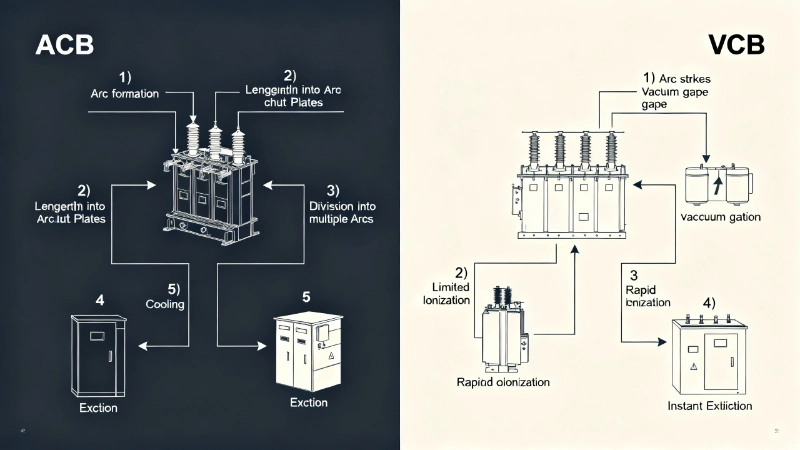
รูปที่ 2: กลไกการดับอาร์ค ACB ต้องการหลายขั้นตอนในการยืด แบ่ง และทำให้อาร์คเย็นลงในอากาศ (ซ้าย) ในขณะที่ VCB ดับอาร์คทันทีที่กระแสเป็นศูนย์ครั้งแรกเนื่องจากความแข็งแรงของไดอิเล็กตริกที่เหนือกว่าของสุญญากาศ (ขวา).
มืออาชีพ-บ#1: เพดานแรงดันไฟฟ้าไม่สามารถต่อรองได้ ACBs ไม่สามารถขัดขวางอาร์คที่สูงกว่า 1kV ในอากาศที่ความดันบรรยากาศได้อย่างน่าเชื่อถือ หากแรงดันไฟฟ้าระบบของคุณเกิน 1,000V AC คุณต้องมี VCB ไม่ใช่ในฐานะตัวเลือกที่ “ดีกว่า” แต่เป็นตัวเลือกเดียวที่สอดคล้องกับฟิสิกส์และมาตรฐาน IEC.
พิกัดแรงดันไฟฟ้าและกระแสไฟฟ้า: ตัวเลขมีความหมายอย่างไร
แรงดันไฟฟ้าไม่ใช่แค่บรรทัดข้อกำหนดในเอกสารข้อมูล แต่เป็นเกณฑ์การเลือกพื้นฐานที่กำหนดประเภทเบรกเกอร์ที่คุณสามารถพิจารณาได้ พิกัดกระแสมีความสำคัญ แต่มาเป็นอันดับสอง.
นี่คือสิ่งที่ตัวเลขหมายถึงในทางปฏิบัติ.
พิกัด ACB: กระแสสูง แรงดันไฟฟ้าต่ำ
เพดานแรงดันไฟฟ้า: ACBs ทำงานได้อย่างน่าเชื่อถือตั้งแต่ 400V ถึง 1,000V AC (โดยมีการออกแบบเฉพาะบางอย่างที่ได้รับการจัดอันดับถึง 1,500V DC) จุดที่เหมาะสมโดยทั่วไปคือ 400V หรือ 690V สำหรับระบบอุตสาหกรรมสามเฟส เหนือ 1kV AC คุณสมบัติไดอิเล็กตริกของอากาศทำให้การขัดขวางอาร์คที่เชื่อถือได้เป็นไปไม่ได้ในทางปฏิบัติ นั่นคือ เพดานแรงดันไฟฟ้า ที่เรากล่าวถึงไม่ใช่ข้อจำกัดในการออกแบบ แต่เป็นขอบเขตทางกายภาพ.
ความสามารถในการรับกระแส: สิ่งที่ ACBs ครอบงำคือการจัดการกระแสไฟฟ้า พิกัดมีตั้งแต่ 800A สำหรับแผงจ่ายไฟขนาดเล็กไปจนถึง 10,000A สำหรับการใช้งานทางเข้าบริการหลัก ความสามารถในการรับกระแสสูงที่แรงดันไฟฟ้าต่ำคือสิ่งที่การจ่ายไฟแรงดันต่ำต้องการอย่างแม่นยำ เช่น ศูนย์ควบคุมมอเตอร์ (MCCs), ศูนย์ควบคุมพลังงาน (PCCs) และบอร์ดจ่ายไฟหลักในโรงงานเชิงพาณิชย์และอุตสาหกรรม.
ความสามารถในการตัดขวาง: พิกัดการขัดขวางการลัดวงจรสูงถึง 100kA ที่ 690V ฟังดูน่าประทับใจ และเป็นเช่นนั้นสำหรับการใช้งานแรงดันไฟฟ้าต่ำ แต่ลองนำมาเปรียบเทียบกับค่ากำลังไฟฟ้า:
- ความสามารถในการตัดกระแส: 100kA ที่ 690V (สายถึงสาย)
- กำลังไฟฟ้าปรากฏ: √3 × 690V × 100kA ≈ 119 MVA
นั่นคือพลังงานความผิดพลาดสูงสุดที่ ACB สามารถขัดขวางได้อย่างปลอดภัย สำหรับโรงงานอุตสาหกรรม 400V/690V ที่มีหม้อแปลงไฟฟ้า 1.5 MVA และอัตราส่วน X/R ทั่วไป เบรกเกอร์ 65kA มักจะเพียงพอ หน่วย 100kA ถูกสงวนไว้สำหรับการจ่ายไฟแรงดันต่ำขนาดสาธารณูปโภคหรือโรงงานที่มีหม้อแปลงไฟฟ้าขนาดใหญ่วางขนานกันหลายตัว.
การใช้งานทั่วไป:
- แผงจ่ายไฟหลักแรงดันต่ำ (LVMDP)
- ศูนย์ควบคุมมอเตอร์ (MCCs) สำหรับปั๊ม พัดลม คอมเพรสเซอร์
- ศูนย์ควบคุมพลังงาน (PCCs) สำหรับเครื่องจักรอุตสาหกรรม
- แผงป้องกันและซิงโครไนซ์เครื่องกำเนิดไฟฟ้า
- ห้องไฟฟ้าของอาคารพาณิชย์ (ต่ำกว่า 1kV)
พิกัด VCB: แรงดันไฟฟ้าปานกลาง กระแสไฟฟ้าปานกลาง
ช่วงแรงดันไฟฟ้า: VCB ได้รับการออกแบบมาสำหรับระบบแรงดันไฟฟ้าปานกลาง โดยทั่วไปตั้งแต่ 11kV ถึง 33kV การออกแบบบางอย่างขยายช่วงลงไปถึง 1kV หรือสูงถึง 38kV (การแก้ไขเพิ่มเติมปี 2024 ของ IEC 62271-100 ได้เพิ่มพิกัดมาตรฐานที่ 15.5kV, 27kV และ 40.5kV) ความแข็งแรงของไดอิเล็กตริกที่เหนือกว่าของตัวขัดขวางสุญญากาศแบบปิดผนึกทำให้ระดับแรงดันไฟฟ้าเหล่านี้สามารถจัดการได้ภายในขนาดที่กะทัดรัด.
ความสามารถในการรับกระแส: VCB จัดการกระแสไฟฟ้าปานกลางเมื่อเทียบกับ ACB โดยมีพิกัดทั่วไปตั้งแต่ 600A ถึง 4,000A นี่เป็นสิ่งที่เพียงพอสำหรับการใช้งานแรงดันไฟฟ้าปานกลาง เบรกเกอร์ 2,000A ที่ 11kV สามารถรับภาระต่อเนื่องได้ 38 MVA ซึ่งเทียบเท่ากับมอเตอร์อุตสาหกรรมขนาดใหญ่หลายสิบตัวหรือความต้องการพลังงานของโรงงานอุตสาหกรรมขนาดกลางทั้งหมด.
ความสามารถในการตัดขวาง: VCB ได้รับการจัดอันดับตั้งแต่ 25kA ถึง 50kA ที่ระดับแรงดันไฟฟ้าที่เกี่ยวข้อง ลองคำนวณกำลังไฟฟ้าเดียวกันสำหรับ VCB 50kA ที่ 33kV:
- ความสามารถในการตัดกระแส: 50kA ที่ 33kV (สายถึงสาย)
- กำลังไฟฟ้าปรากฏ: √3 × 33kV × 50kA ≈ 2,850 MVA
นั่น กำลังขัดขวางมากกว่า 24 เท่า กว่า ACB 100kA ของเราที่ 690V ทันใดนั้น ความสามารถในการตัดกระแส “ต่ำกว่า” 50kA นั้นดูไม่น้อย VCB กำลังขัดขวางกระแสไฟฟ้าผิดพลาดที่ระดับพลังงานที่จะทำให้รางอาร์คของ ACB กลายเป็นไอ.
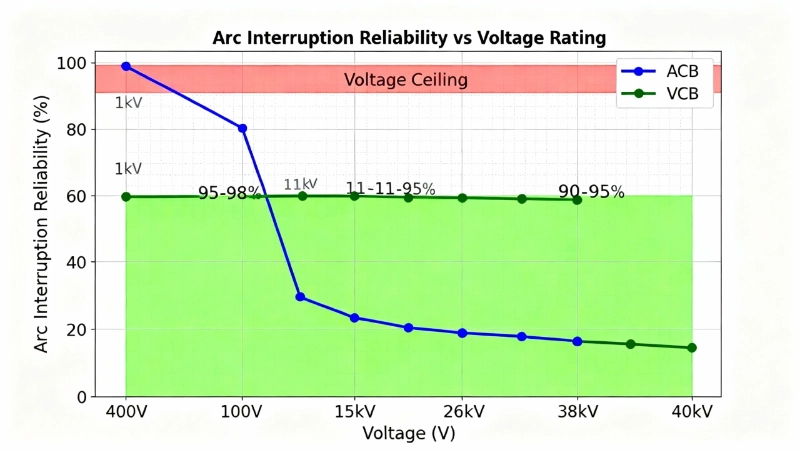
รูปที่ 3: การแสดงภาพเพดานแรงดันไฟฟ้า ACBs ทำงานได้อย่างน่าเชื่อถือถึง 1,000V แต่ไม่สามารถขัดขวางอาร์คที่สูงกว่าเกณฑ์นี้ได้อย่างปลอดภัย (โซนสีแดง) ในขณะที่ VCB ครอบงำช่วงแรงดันไฟฟ้าปานกลางตั้งแต่ 11kV ถึง 38kV (โซนสีเขียว).
การใช้งานทั่วไป:
- สถานีย่อยจ่ายไฟสาธารณูปโภค (11kV, 22kV, 33kV)
- สวิตช์เกียร์แรงดันไฟฟ้าปานกลางสำหรับอุตสาหกรรม (หน่วยวงแหวนหลัก, สวิตช์บอร์ด)
- การป้องกันมอเตอร์เหนี่ยวนำไฟฟ้าแรงสูง (>1,000 HP)
- การป้องกันหม้อแปลงเบื้องต้น
- โรงงานผลิตไฟฟ้า (เบรกเกอร์วงจรเครื่องกำเนิดไฟฟ้า)
- ระบบพลังงานหมุนเวียน (ฟาร์มกังหันลม, สถานีอินเวอร์เตอร์พลังงานแสงอาทิตย์)
มืออาชีพ-บ#2: อย่าเปรียบเทียบความสามารถในการตัดกระแสในหน่วยกิโลแอมแปร์เพียงอย่างเดียว คำนวณกำลังไฟฟ้าขัดขวาง MVA (√3 × แรงดันไฟฟ้า × กระแสไฟฟ้า) VCB 50kA ที่ 33kV ขัดขวางพลังงานมากกว่า ACB 100kA ที่ 690V อย่างมาก แรงดันไฟฟ้ามีความสำคัญมากกว่ากระแสไฟฟ้าเมื่อประเมินความสามารถของเบรกเกอร์.
การแบ่งมาตรฐาน: IEC 60947-2 (ACB) เทียบกับ IEC 62271-100 (VCB)
คณะกรรมาธิการระหว่างประเทศว่าด้วยมาตรฐานสาขาอิเล็กทรอนิกส์ (IEC) ไม่ได้แบ่งมาตรฐานอย่างไม่ใส่ใจ เมื่อ IEC 60947-2 ควบคุมเบรกเกอร์สูงถึง 1,000V และ IEC 62271-100 เข้าควบคุมเหนือ 1,000V ขอบเขตนั้นสะท้อนถึงความเป็นจริงทางกายภาพที่เราได้กล่าวถึง นี่คือ การแบ่งมาตรฐาน, และเป็นเข็มทิศการออกแบบของคุณ.
IEC 60947-2:2024 สำหรับเบรกเกอร์วงจรอากาศ
ขอบเขต: มาตรฐานนี้ใช้กับเบรกเกอร์ที่มีแรงดันไฟฟ้าที่กำหนด ไม่เกิน 1,000V AC หรือ 1,500V DC. เป็นข้อมูลอ้างอิงที่เชื่อถือได้สำหรับการป้องกันวงจรแรงดันไฟฟ้าต่ำ รวมถึง ACBs, เบรกเกอร์วงจรแบบหล่อ (MCCBs) และเบรกเกอร์วงจรขนาดเล็ก (MCBs).
ฉบับที่หกได้รับการตีพิมพ์ใน กันยายน 2024, แทนที่ฉบับปี 2016 การอัปเดตที่สำคัญ ได้แก่:
- ความเหมาะสมสำหรับการแยก: ข้อกำหนดที่ชัดเจนสำหรับการใช้เซอร์กิตเบรกเกอร์เป็นสวิตช์ตัดตอน
- การลบการจัดประเภท: IEC ได้ยกเลิกการจัดประเภทเบรกเกอร์ตามตัวกลางในการขัดขวาง (อากาศ, น้ำมัน, SF6, ฯลฯ) ทำไม เพราะว่า แรงดันไฟฟ้าบอกคุณถึงตัวกลางแล้ว. หากคุณอยู่ที่ 690V คุณกำลังใช้อากาศหรือเคสแบบหล่อปิดผนึก ระบบการจัดประเภทแบบเก่าจึงซ้ำซ้อน.
- การปรับอุปกรณ์ภายนอก: ข้อกำหนดใหม่สำหรับการปรับการตั้งค่ากระแสเกินผ่านอุปกรณ์ภายนอก
- การทดสอบที่ได้รับการปรับปรุง: เพิ่มการทดสอบสำหรับการปลดปล่อยกระแสไฟฟ้ารั่วลงดินและคุณสมบัติไดอิเล็กตริกในตำแหน่งที่ตัดวงจร
- การปรับปรุง EMC: อัปเดตขั้นตอนการทดสอบความเข้ากันได้ทางแม่เหล็กไฟฟ้า (EMC) และวิธีการวัดการสูญเสียพลังงาน
การแก้ไขปี 2024 ทำให้มาตรฐานมีความชัดเจนและสอดคล้องกับชุดทริปแบบดิจิทัลที่ทันสมัยและเทคโนโลยีเบรกเกอร์อัจฉริยะมากขึ้น แต่ขอบเขตแรงดันไฟฟ้าหลัก—≤1,000V AC—ยังคงไม่เปลี่ยนแปลง เหนือกว่านั้น คุณอยู่นอกเขตอำนาจศาลของ IEC 60947-2.
IEC 62271-100:2021 (แก้ไขเพิ่มเติม 1: 2024) สำหรับ Vacuum Circuit Breakers
ขอบเขต: มาตรฐานนี้ควบคุมเซอร์กิตเบรกเกอร์กระแสสลับที่ออกแบบมาสำหรับ ระบบสามเฟสที่มีแรงดันไฟฟ้าสูงกว่า 1,000V. โดยเฉพาะอย่างยิ่งสำหรับสวิตช์เกียร์ในร่มและกลางแจ้งแรงดันปานกลางและแรงดันสูง ซึ่ง VCB เป็นเทคโนโลยีที่โดดเด่น (ควบคู่ไปกับเบรกเกอร์ SF6 สำหรับคลาสแรงดันไฟฟ้าสูงสุด).
ฉบับที่สามได้รับการตีพิมพ์ในปี 2021 โดยมี การแก้ไขเพิ่มเติม 1 เผยแพร่ในเดือนสิงหาคม 2024. การอัปเดตล่าสุดประกอบด้วย:
- ค่า TRV (Transient Recovery Voltage) ที่อัปเดต: คำนวณพารามิเตอร์ TRV ใหม่ในหลายตารางเพื่อให้สะท้อนถึงพฤติกรรมของระบบในโลกแห่งความเป็นจริงและการออกแบบหม้อแปลงไฟฟ้ารุ่นใหม่
- แรงดันไฟฟ้าที่กำหนดใหม่: เพิ่มพิกัดมาตรฐานที่ 15.5kV, 27kV และ 40.5kV เพื่อครอบคลุมแรงดันไฟฟ้าระบบระดับภูมิภาค (โดยเฉพาะในเอเชียและตะวันออกกลาง)
- แก้ไขคำจำกัดความของข้อผิดพลาดของเทอร์มินัล: อธิบายให้ชัดเจนว่าอะไรคือข้อผิดพลาดของเทอร์มินัลเพื่อวัตถุประสงค์ในการทดสอบ
- เกณฑ์การทดสอบไดอิเล็กตริก: เพิ่มเกณฑ์สำหรับการทดสอบไดอิเล็กตริก ระบุอย่างชัดเจนว่าการทดสอบการปล่อยประจุบางส่วนใช้กับ GIS (Gas-Insulated Switchgear) และเบรกเกอร์แบบ dead-tank เท่านั้น ไม่ใช่ VCB ทั่วไป
- ข้อควรพิจารณาด้านสิ่งแวดล้อม: คำแนะนำที่ได้รับการปรับปรุงเกี่ยวกับปัจจัยการลดพิกัดความสูง มลพิษ และอุณหภูมิ
การแก้ไขเพิ่มเติมปี 2024 ทำให้มาตรฐานเป็นปัจจุบันด้วยการเปลี่ยนแปลงโครงสร้างพื้นฐานของกริดทั่วโลก แต่หลักการพื้นฐานยังคงอยู่: เหนือ 1,000V คุณต้องมีเบรกเกอร์แรงดันปานกลาง, และสำหรับช่วง 1kV-38kV นั่นหมายถึง VCB เกือบตลอดเวลา.
ทำไมมาตรฐานเหล่านี้ไม่ทับซ้อนกัน
ขอบเขต 1,000V ไม่ได้เป็นไปโดยพลการ เป็นจุดที่อากาศในบรรยากาศเปลี่ยนจาก “ตัวกลางดับอาร์กที่เพียงพอ” เป็น “ความรับผิด” IEC ไม่ได้สร้างสองมาตรฐานเพื่อขายหนังสือให้มากขึ้น พวกเขาทำให้ความเป็นจริงทางวิศวกรรมเป็นทางการ:
- ต่ำกว่า 1kV: การออกแบบที่ใช้อากาศหรือแบบหล่อทำงานได้ดี รางอาร์กมีประสิทธิภาพ เบรกเกอร์มีขนาดกะทัดรัดและประหยัด.
- สูงกว่า 1kV: อากาศต้องใช้รางอาร์กขนาดใหญ่เกินจริง สุญญากาศ (หรือ SF6 สำหรับแรงดันไฟฟ้าที่สูงกว่า) กลายเป็นสิ่งจำเป็นสำหรับการขัดขวางอาร์กที่ปลอดภัยและเชื่อถือได้ในพื้นที่ที่เหมาะสม.
เมื่อคุณกำลังระบุเบรกเกอร์ คำถามแรกไม่ใช่ “ACB หรือ VCB?” แต่เป็น “แรงดันไฟฟ้าระบบของฉันคืออะไร” คำตอบนั้นจะชี้คุณไปยังมาตรฐานที่ถูกต้อง ซึ่งจะชี้คุณไปยังประเภทเบรกเกอร์ที่ถูกต้อง.
มืออาชีพ-บ#3: เมื่อตรวจสอบเอกสารข้อมูลเซอร์กิตเบรกเกอร์ ให้ตรวจสอบว่าสอดคล้องกับมาตรฐาน IEC ใด หากระบุ IEC 60947-2 แสดงว่าเป็นเบรกเกอร์แรงดันต่ำ (≤1kV) หากระบุ IEC 62271-100 แสดงว่าเป็นเบรกเกอร์แรงดันปานกลาง/สูง (>1kV) การปฏิบัติตามมาตรฐานจะบอกคุณถึงคลาสแรงดันไฟฟ้าได้ทันที.
การใช้งาน: การจับคู่ประเภทเบรกเกอร์กับระบบของคุณ
การเลือกระหว่าง ACB และ VCB ไม่ใช่เรื่องของความชอบ แต่เป็นการจับคู่ความสามารถทางกายภาพของเบรกเกอร์กับลักษณะทางไฟฟ้าและความต้องการในการปฏิบัติงานของระบบของคุณ.
นี่คือวิธีจับคู่ประเภทเบรกเกอร์กับการใช้งาน.
เมื่อใดควรใช้ ACB
Air Circuit Breakers เป็นตัวเลือกที่เหมาะสมสำหรับ ระบบจำหน่ายแรงดันต่ำ ที่ซึ่งความสามารถในการรับกระแสไฟสูงมีความสำคัญมากกว่าขนาดที่กะทัดรัดหรือช่วงเวลาการบำรุงรักษาที่ยาวนาน.
การใช้งานที่เหมาะสม:
- การจ่ายไฟสามเฟส 400V หรือ 690V: กระดูกสันหลังของระบบไฟฟ้าอุตสาหกรรมและเชิงพาณิชย์ส่วนใหญ่
- Motor Control Centers (MCCs): การป้องกันสำหรับปั๊ม พัดลม คอมเพรสเซอร์ สายพานลำเลียง และมอเตอร์แรงดันต่ำอื่นๆ
- Power Control Centers (PCCs): การจ่ายไฟหลักสำหรับเครื่องจักรอุตสาหกรรมและอุปกรณ์ในกระบวนการ
- แผงจ่ายไฟหลักแรงดันต่ำ (LVMDP): ทางเข้าบริการและเบรกเกอร์หลักสำหรับอาคารและสิ่งอำนวยความสะดวก
- การป้องกันเครื่องกำเนิดไฟฟ้า: เครื่องกำเนิดไฟฟ้าสำรองแรงดันต่ำ (โดยทั่วไปคือ 480V หรือ 600V)
- ทางทะเลและนอกชายฝั่ง: การจ่ายไฟบนเรือแรงดันต่ำ (ซึ่ง IEC 60092 ก็ใช้ด้วย)
เมื่อ ACB สมเหตุสมผลทางการเงิน:
- ลำดับความสำคัญของต้นทุนเริ่มต้นที่ต่ำกว่า: หากงบประมาณด้านทุนมีจำกัดและคุณมีความสามารถในการบำรุงรักษาภายในองค์กร
- ข้อกำหนดด้านกระแสไฟฟ้าสูง: เมื่อคุณต้องการพิกัด 6,000A+ ที่ประหยัดกว่าในรูปแบบ ACB
- การปรับปรุงอุปกรณ์สวิตช์เกียร์ LV ที่มีอยู่: เมื่อเปลี่ยนอุปกรณ์ที่เหมือนกันในแผงที่ออกแบบมาสำหรับ ACB
ข้อจำกัดที่ควรจดจำ:
- ภาระการบำรุงรักษา: คาดว่าจะมีการตรวจสอบทุก 6 เดือนและการเปลี่ยนหน้าสัมผัสทุก 3-5 ปี
- ขนาดพื้นที่: ACB มีขนาดใหญ่และหนักกว่า VCB ที่เทียบเท่ากันเนื่องจากชุดรางดับอาร์ค
- เสียงดัง: การขัดจังหวะอาร์คในอากาศดังกว่าในสุญญากาศที่ปิดสนิท
- อายุการใช้งานที่จำกัด: โดยทั่วไป 10,000 ถึง 15,000 ครั้งก่อนการยกเครื่องครั้งใหญ่
เมื่อใดควรใช้ VCB
Vacuum Circuit Breakers มีบทบาทสำคัญ การใช้งานแรงดันไฟฟ้าปานกลาง ที่ซึ่งความน่าเชื่อถือ การบำรุงรักษาต่ำ ขนาดกะทัดรัด และอายุการใช้งานที่ยาวนานพิสูจน์ให้เห็นถึงต้นทุนเริ่มต้นที่สูงขึ้น.
การใช้งานที่เหมาะสม:
- สถานีย่อยไฟฟ้าแรงสูง 11kV, 22kV, 33kV: สวิตช์เกียร์จ่ายไฟหลักและรอง
- สวิตช์เกียร์ MV อุตสาหกรรม: หน่วยวงแหวนหลัก (RMU), สวิตช์บอร์ดหุ้มโลหะ, หม้อแปลงไฟฟ้าแบบติดตั้งบนแผ่น
- การป้องกันมอเตอร์ไฟฟ้าแรงสูง: มอเตอร์เหนี่ยวนำที่สูงกว่า 1,000 HP (โดยทั่วไป 3.3kV, 6.6kV หรือ 11kV)
- การป้องกันหม้อแปลง: เบรกเกอร์ด้านหลักสำหรับหม้อแปลงจำหน่ายและไฟฟ้า
- โรงงานผลิตไฟฟ้า: เซอร์กิตเบรกเกอร์ของเครื่องกำเนิดไฟฟ้า, ไฟฟ้าสำรองของสถานี
- ระบบพลังงานหมุนเวียน: วงจรตัวเก็บรวบรวมฟาร์มกังหันลม, หม้อแปลงไฟฟ้าเพิ่มแรงดันของอินเวอร์เตอร์พลังงานแสงอาทิตย์
- การขุดและการอุตสาหกรรมหนัก: ที่ซึ่งฝุ่นละออง ความชื้น และสภาวะที่รุนแรงทำให้การบำรุงรักษา ACB เป็นปัญหา
เมื่อ VCB เป็นตัวเลือกเดียว:
- แรงดันไฟฟ้าระบบ >1kV AC: ฟิสิกส์และ IEC 62271-100 กำหนดให้ใช้เบรกเกอร์ที่มีพิกัดแรงดันไฟฟ้าปานกลาง
- การสลับการทำงานบ่อยครั้ง: VCB ได้รับการจัดอันดับสำหรับการทำงานทางกล 30,000+ ครั้ง (บางการออกแบบเกิน 100,000 ครั้ง)
- การเข้าถึงการบำรุงรักษาที่จำกัด: สถานีย่อยระยะไกล, แท่นขุดเจาะนอกชายฝั่ง, การติดตั้งบนหลังคาที่การตรวจสอบ ACB ทุกครึ่งปีไม่สามารถทำได้จริง
- การมุ่งเน้นต้นทุนตลอดอายุการใช้งานที่ยาวนาน: เมื่อต้นทุนรวมในการเป็นเจ้าของในช่วง 20-30 ปีมีมากกว่าต้นทุนด้านทุนเริ่มต้น
ข้อดีในสภาพแวดล้อมที่รุนแรง:
- ตัวขัดขวางสุญญากาศที่ปิดสนิทไม่ได้รับผลกระทบจากฝุ่นละออง ความชื้น ละอองเกลือ หรือระดับความสูง (สูงสุดตามขีดจำกัดการลดพิกัด)
- ไม่มีรางดับอาร์คให้ทำความสะอาดหรือเปลี่ยน
- การทำงานที่เงียบ (สำคัญสำหรับสถานีย่อยในร่มในอาคารที่มีผู้คนอาศัยอยู่)
- ขนาดพื้นที่กะทัดรัด (สำคัญในสถานีย่อยในเมืองที่มีอสังหาริมทรัพย์ราคาแพง)
เมทริกซ์การตัดสินใจ: ACB หรือ VCB
| ลักษณะเฉพาะของระบบของคุณ | ประเภทเบรกเกอร์ที่แนะนำ | เหตุผลหลัก |
| แรงดันไฟฟ้า ≤ 1,000V AC | เอซีบี | เขตอำนาจศาล IEC 60947-2; การดับด้วยอากาศเพียงพอ |
| แรงดันไฟฟ้า > 1,000V AC | VCB | ต้องใช้ IEC 62271-100; อากาศไม่สามารถขัดจังหวะอาร์คได้อย่างน่าเชื่อถือ |
| กระแสไฟฟ้าสูง (>5,000A) ที่ LV | เอซีบี | ประหยัดกว่าสำหรับกระแสไฟฟ้าสูงมากที่แรงดันไฟฟ้าต่ำ |
| การสลับบ่อยครั้ง (>20/วัน) | VCB | ได้รับการจัดอันดับสำหรับการทำงาน 30,000+ ครั้ง เทียบกับ 10,000 ครั้งของ ACB |
| สภาพแวดล้อมที่รุนแรง (ฝุ่นละออง เกลือ ความชื้น) | VCB | ตัวขัดขวางที่ปิดสนิทไม่ได้รับผลกระทบจากการปนเปื้อน |
| การเข้าถึงการบำรุงรักษาที่จำกัด | VCB | ช่วงเวลาการบริการ 3-5 ปี เทียบกับกำหนดการ 6 เดือนของ ACB |
| การมุ่งเน้นต้นทุนตลอดอายุการใช้งาน 20+ ปี | VCB | TCO ที่ต่ำกว่าแม้ว่าต้นทุนเริ่มต้นจะสูงกว่า |
| ข้อจำกัดด้านพื้นที่ที่เข้มงวด | VCB | การออกแบบที่กะทัดรัด; ไม่มีปริมาตรรางดับอาร์ค |
| โครงการด้านทุนที่มีข้อจำกัดด้านงบประมาณ | ACB (ถ้า ≤1kV) | ต้นทุนเริ่มต้นต่ำกว่า แต่ต้องพิจารณางบประมาณการบำรุงรักษาด้วย |
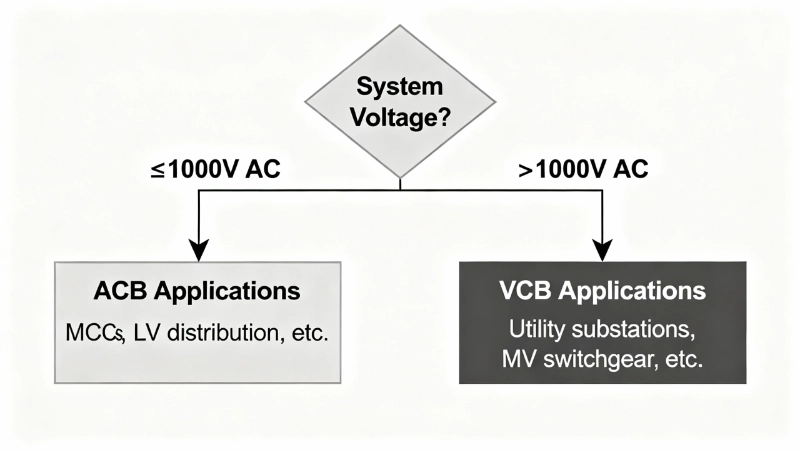
รูปที่ 5: แผนผังการเลือกเซอร์กิตเบรกเกอร์ แรงดันไฟของระบบเป็นเกณฑ์การตัดสินใจหลัก ซึ่งจะนำคุณไปสู่การใช้งาน ACB (แรงดันไฟฟ้าต่ำ) หรือ VCB (แรงดันไฟฟ้าปานกลาง) โดยอิงตามขอบเขต 1,000V.
มืออาชีพ-บ#4: หากแรงดันไฟของระบบของคุณอยู่ที่บริเวณใกล้เคียงขอบเขต 1kV ให้ระบุ VCB อย่าพยายามยืด ACB ให้ถึงพิกัดแรงดันไฟฟ้าสูงสุด เพดานแรงดันไฟฟ้า ไม่ใช่ “ค่าสูงสุดที่กำหนด”—แต่เป็นขีดจำกัดทางฟิสิกส์ที่แน่นอน ออกแบบโดยมีส่วนต่าง.
ภาษีการบำรุงรักษา: เหตุใด VCB จึงมีค่าใช้จ่ายน้อยกว่าในระยะเวลา 20 ปี
ACB ราคา 15,000 บาทนั้นดูน่าสนใจเมื่อเทียบกับ VCB ราคา 25,000 บาท จนกว่าคุณจะคำนวณตัวเลขในช่วง 15 ปี.
ยินดีต้อนรับสู่ The Maintenance Tax—ค่าใช้จ่ายแฝงที่เกิดขึ้นประจำซึ่งพลิกสมการทางเศรษฐกิจ.
การบำรุงรักษา ACB: ภาระปีละสองครั้ง
Air Circuit Breakers ต้องการการบำรุงรักษาด้วยตนเองเป็นประจำ เนื่องจากหน้าสัมผัสและรางดับอาร์กทำงานในสภาพแวดล้อมแบบเปิดโล่ง นี่คือตารางการบำรุงรักษาทั่วไปที่แนะนำโดยผู้ผลิตและ IEC 60947-2:
ทุก 6 เดือน (การตรวจสอบกึ่งรายปี):
- ตรวจสอบหน้าสัมผัสด้วยสายตาเพื่อหารอยกัดกร่อน การสึกกร่อน หรือการเปลี่ยนสี
- การทำความสะอาดรางดับอาร์ก (การกำจัดคราบคาร์บอนและสารตกค้างของไอโลหะ)
- การวัดช่องว่างและการเช็ดหน้าสัมผัส
- การทดสอบการทำงานทางกล (ด้วยตนเองและอัตโนมัติ)
- การตรวจสอบแรงบิดของการเชื่อมต่อขั้วต่อ
- การหล่อลื่นชิ้นส่วนที่เคลื่อนไหว (บานพับ ข้อต่อ ลูกปืน)
- การทดสอบการทำงานของชุดทริปกระแสเกิน
ทุก 3-5 ปี (การบริการหลัก):
- การเปลี่ยนหน้าสัมผัส (หากการสึกกร่อนเกินขีดจำกัดของผู้ผลิต)
- การตรวจสอบรางดับอาร์กและการเปลี่ยนหากเสียหาย
- การทดสอบความต้านทานของฉนวน (การทดสอบเมกเกอร์)
- การวัดความต้านทานการสัมผัส
- การถอดประกอบและทำความสะอาดทั้งหมด
- การเปลี่ยนชิ้นส่วนทางกลที่สึกหรอ
รายละเอียดค่าใช้จ่าย (โดยทั่วไป แตกต่างกันไปตามภูมิภาค):
- การตรวจสอบกึ่งรายปี: 600-1,000 บาทต่อเบรกเกอร์ (ค่าแรงผู้รับเหมา: 3-4 ชั่วโมง)
- การเปลี่ยนหน้าสัมผัส: 2,500-4,000 บาท (อะไหล่ + ค่าแรง)
- การเปลี่ยนรางดับอาร์ก: 1,500-2,500 บาท (หากเสียหาย)
- การเรียกใช้บริการฉุกเฉิน (หากเบรกเกอร์เสียระหว่างการตรวจสอบ): 1,500-3,000 บาท
สำหรับ ACB ที่มีอายุการใช้งาน 15 ปี:
- การตรวจสอบกึ่งรายปี: 15 ปี × 2 การตรวจสอบ/ปี × เฉลี่ย 800 บาท = $24,000
- การเปลี่ยนหน้าสัมผัส: (15 ปี ÷ 4 ปี) × 3,000 บาท = $9,000 (3 ครั้ง)
- ความล้มเหลวที่ไม่ได้วางแผน: สมมติว่า 1 ครั้ง × 2,000 บาท = $2,000
- ค่าบำรุงรักษารวมตลอด 15 ปี: 35,000 บาท
เพิ่มต้นทุนการซื้อเริ่มต้น (15,000 บาท) และของคุณ ต้นทุนรวมในการเป็นเจ้าของ 15 ปีคือ ~50,000 บาท.
นั่นคือ ภาษีการบำรุงรักษา. คุณจ่ายเป็นชั่วโมงแรงงาน เวลาหยุดทำงาน และชิ้นส่วนสิ้นเปลือง—ทุกปี ปีละสองครั้ง ตลอดอายุการใช้งานของเบรกเกอร์.
การบำรุงรักษา VCB: ข้อได้เปรียบของการซีลตลอดอายุการใช้งาน
Vacuum Circuit Breakers พลิกสมการการบำรุงรักษา อินเตอร์รัปเตอร์สุญญากาศที่ปิดสนิทช่วยปกป้องหน้าสัมผัสจากการเกิดออกซิเดชัน การปนเปื้อน และการสัมผัสกับสิ่งแวดล้อม ผลลัพธ์: ช่วงเวลาการบริการที่ยาวนานขึ้นอย่างมาก.
ทุก 3-5 ปี (การตรวจสอบเป็นระยะ):
- การตรวจสอบภายนอกด้วยสายตา
- การตรวจสอบจำนวนการทำงานทางกล (ผ่านเคาน์เตอร์หรืออินเทอร์เฟซดิจิทัล)
- การตรวจสอบตัวบ่งชี้การสึกหรอของหน้าสัมผัส (VCB บางรุ่นมีตัวบ่งชี้ภายนอก)
- การทดสอบการทำงาน (รอบการเปิด/ปิด)
- การทดสอบการทำงานของวงจรควบคุม
- การตรวจสอบการเชื่อมต่อขั้วต่อ
ทุก 10-15 ปี (การตรวจสอบหลัก หากมี):
- การทดสอบความสมบูรณ์ของสุญญากาศ (โดยใช้การทดสอบแรงดันสูงหรือการตรวจสอบด้วยรังสีเอกซ์)
- การวัดช่องว่างของหน้าสัมผัส (ต้องมีการถอดประกอบบางส่วนในบางรุ่น)
- การทดสอบความต้านทานฉนวน
สังเกตว่ามีอะไร ไม่ ในรายการ:
- ไม่มีการทำความสะอาดหน้าสัมผัส (สภาพแวดล้อมที่ปิดสนิท)
- ไม่มีการบำรุงรักษารางดับอาร์ก (ไม่มีอยู่)
- ไม่มีการตรวจสอบกึ่งรายปี (ไม่จำเป็น)
- ไม่มีการเปลี่ยนหน้าสัมผัสตามปกติ (อายุการใช้งาน 20-30 ปี)
รายละเอียดค่าใช้จ่าย (โดยทั่วไป):
- การตรวจสอบเป็นระยะ (ทุก 4 ปี): 400-700 บาทต่อเบรกเกอร์ (ค่าแรงผู้รับเหมา: 1.5-2 ชั่วโมง)
- การเปลี่ยนอินเตอร์รัปเตอร์สุญญากาศ (หากจำเป็นหลังจาก 20-25 ปี): 6,000-10,000 บาท
สำหรับ VCB ที่มีระยะเวลาการประเมินเดียวกัน 15 ปี:
- การตรวจสอบเป็นระยะ: (15 ปี ÷ 4 ปี) × เฉลี่ย 500 บาท = $1,500 (3 ครั้ง)
- ความเสียหายที่ไม่ได้วางแผนไว้: เกิดขึ้นได้ยากมาก; ให้ถือว่ามีโอกาสเกิด $0 (VCB มีอัตราความเสียหายต่ำกว่า 10 เท่า)
- การยกเครื่องครั้งใหญ่: ไม่จำเป็นต้องทำภายใน 15 ปี
- ค่าบำรุงรักษาทั้งหมดในช่วง 15 ปี: $1,500
เพิ่มต้นทุนการซื้อเริ่มต้น ($25,000) และ ต้นทุนรวมในการเป็นเจ้าของตลอด 15 ปีของคุณคือ ~$26,500.
จุดตัดของ TCO
มาเปรียบเทียบกัน:
| องค์ประกอบด้านต้นทุน | ACB (15 ปี) | VCB (15 ปี) |
| การซื้อเริ่มต้น | $15,000 | $25,000 |
| การบำรุงรักษาตามปกติ | $24,000 | $1,500 |
| การเปลี่ยนหน้าสัมผัส/ส่วนประกอบ | $9,000 | $0 |
| ความเสียหายที่ไม่ได้วางแผนไว้ | $2,000 | $0 |
| ต้นทุนรวมของการเป็นเจ้าของ | $50,000 | $26,500 |
| ค่าใช้จ่ายต่อปี | $3,333/ปี | $1,767/ปี |
VCB จ่ายคืนตัวเองได้จากการประหยัดค่าบำรุงรักษาเพียงอย่างเดียว แต่มีข้อดีที่สำคัญกว่านั้นคือ: จุดตัดเกิดขึ้นประมาณปีที่ 3.
- ปีที่ 0: ACB = $15K, VCB = $25K (ACB นำหน้า $10K)
- ปีที่ 1.5: การตรวจสอบ ACB 3 ครั้งแรก = $2,400; VCB = $0 (ACB นำหน้า $7,600)
- ปีที่ 3: การตรวจสอบ ACB หกครั้ง = $4,800; VCB = $0 (ACB นำหน้า $5,200)
- ปีที่ 4: การเปลี่ยนหน้าสัมผัส ACB ครั้งแรก + การตรวจสอบ 8 ครั้ง = $9,400; VCB การตรวจสอบครั้งแรก = $500 (ACB นำหน้า $900)
- ปีที่ 5: ค่าบำรุงรักษาทั้งหมดของ ACB = $12,000; VCB = $500 (VCB เริ่มประหยัดเงิน)
- ปีที่ 15: ACB รวม = $50K; VCB รวม = $26.5K (VCB ประหยัด $23,500)
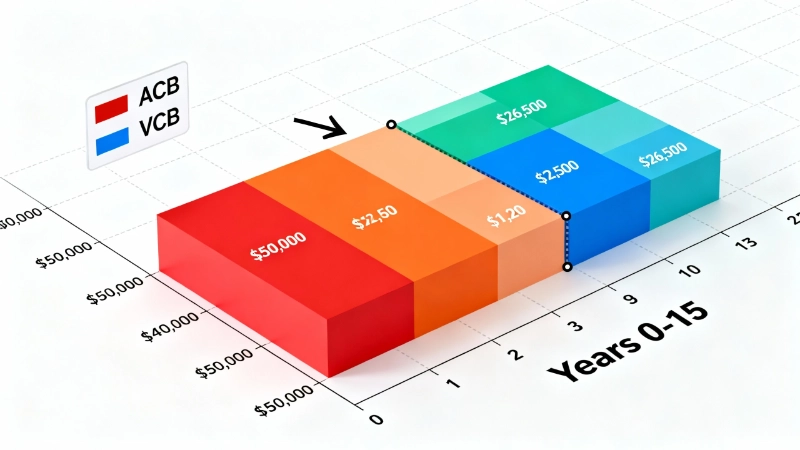
รูปที่ 4: การวิเคราะห์ต้นทุนรวมในการเป็นเจ้าของ (TCO) ในช่วง 15 ปี แม้ว่าจะมีต้นทุนเริ่มต้นที่สูงกว่า แต่ VCB กลับประหยัดกว่า ACB ภายในปีที่ 3 เนื่องจากการบำรุงรักษาที่น้อยกว่าอย่างมาก ทำให้ประหยัดได้ $23,500 ในช่วง 15 ปี.
หากคุณวางแผนที่จะเก็บสวิตช์เกียร์ไว้เป็นเวลา 20 ปี (โดยทั่วไปสำหรับโรงงานอุตสาหกรรม) ช่องว่างของการประหยัดจะกว้างขึ้นเป็น $35,000+ ต่อเบรกเกอร์. สำหรับสถานีย่อยที่มีเบรกเกอร์ 10 ตัว นั่นคือ $350,000 ในการประหยัดตลอดอายุการใช้งาน.
ค่าใช้จ่ายแฝงที่นอกเหนือจากใบแจ้งหนี้
การคำนวณ TCO ข้างต้นครอบคลุมเฉพาะค่าใช้จ่ายโดยตรง อย่าลืมว่า:
ความเสี่ยงจากการหยุดทำงาน:
- ความเสียหายของ ACB ระหว่างการตรวจสอบอาจทำให้เกิดการหยุดทำงานโดยไม่ได้วางแผนไว้
- ความเสียหายของ VCB เกิดขึ้นได้ยาก (MTBF มักจะเกิน 30 ปีเมื่อใช้งานอย่างเหมาะสม)
ความพร้อมของแรงงาน:
- การหาช่างเทคนิคที่มีคุณสมบัติเหมาะสมสำหรับการบำรุงรักษา ACB เป็นเรื่องยากขึ้นเนื่องจากอุตสาหกรรมเปลี่ยนไปใช้ VCB
- ช่วงเวลาการบำรุงรักษากึ่งรายปีต้องใช้เวลาหยุดการผลิตหรือการจัดตารางเวลาอย่างระมัดระวัง
ความปลอดภัย:
- เหตุการณ์อาร์คแฟลชของ ACB ระหว่างการบำรุงรักษามีแนวโน้มที่จะเกิดขึ้นมากกว่าเหตุการณ์ VCB (หน้าสัมผัสแบบเปิดเทียบกับตัวขัดขวางแบบปิดผนึก)
- ข้อกำหนด PPE สำหรับอาร์คแฟลชมีความเข้มงวดมากขึ้นสำหรับการบำรุงรักษา ACB
ปัจจัยด้านสิ่งแวดล้อม:
- ACB ในสภาพแวดล้อมที่มีฝุ่น ความชื้น หรือการกัดกร่อนต้องการ มากกว่า การบำรุงรักษาบ่อยครั้ง (รายไตรมาสแทนที่จะเป็นรายครึ่งปี)
- VCB ไม่ได้รับผลกระทบ—ตัวขัดขวางแบบปิดผนึกไม่สนใจสภาพภายนอก
เคล็ดลับมือโปร #5 (ข้อใหญ่): คำนวณต้นทุนรวมในการเป็นเจ้าของตลอดอายุการใช้งานที่คาดไว้ของสวิตช์เกียร์ (15-25 ปี) ไม่ใช่แค่ต้นทุนเริ่มต้น สำหรับการใช้งานแรงดันปานกลาง VCB มักจะชนะในด้าน TCO เสมอ สำหรับการใช้งานแรงดันต่ำที่คุณต้องใช้ ACB ให้จัดงบประมาณ $2,000-$3,000 ต่อปีต่อเบรกเกอร์สำหรับการบำรุงรักษา—และอย่าปล่อยให้ตารางการบำรุงรักษาคลาดเคลื่อน การละเว้นการตรวจสอบจะกลายเป็นการเสียหายร้ายแรง.
คำถามที่พบบ่อย: ACB กับ VCB
ถาม: ฉันสามารถใช้ ACB ที่สูงกว่า 1,000V ได้หรือไม่ หากฉันลดพิกัดหรือเพิ่มตัวระงับอาร์คภายนอก
ตอบ: ไม่ได้ ขีดจำกัด 1,000V สำหรับ ACB ไม่ใช่ปัญหาความร้อนหรือความเค้นทางไฟฟ้าที่การลดพิกัดสามารถแก้ไขได้—แต่เป็นข้อจำกัดทางฟิสิกส์ของอาร์คขั้นพื้นฐาน ที่แรงดันไฟฟ้าสูงกว่า 1kV อากาศในบรรยากาศไม่สามารถดับอาร์คได้อย่างน่าเชื่อถือภายในกรอบเวลาที่ปลอดภัย ไม่ว่าคุณจะกำหนดค่าเบรกเกอร์อย่างไรก็ตาม IEC 60947-2 กำหนดขอบเขตของ ACB ไว้ที่ ≤1,000V AC อย่างชัดเจน และการใช้งานนอกขอบเขตนั้นถือเป็นการละเมิดมาตรฐานและสร้างอันตรายจากอาร์คแฟลช หากระบบของคุณสูงกว่า 1kV คุณต้องใช้เบรกเกอร์แรงดันปานกลาง (VCB หรือ SF6 เบรกเกอร์ตาม IEC 62271-100) อย่างถูกกฎหมายและปลอดภัย.
ถาม: VCB มีค่าใช้จ่ายในการซ่อมแพงกว่า ACB หรือไม่ หากมีสิ่งผิดปกติเกิดขึ้น
ตอบ: ใช่ แต่ VCB เสียหายน้อยกว่ามาก เมื่อตัวขัดขวางสุญญากาศของ VCB เสียหาย (หายาก) โดยทั่วไปจะต้องเปลี่ยนทั้งยูนิตแบบปิดผนึกที่โรงงานในราคา $6,000-$10,000 หน้าสัมผัสและรางอาร์คของ ACB สามารถซ่อมบำรุงได้ในพื้นที่ในราคา $2,500-$4,000 แต่คุณจะต้องเปลี่ยน 3-4 ครั้งตลอดอายุการใช้งานของ VCB การคำนวณยังคงเป็นประโยชน์ต่อ VCB: การเปลี่ยนตัวขัดขวาง VCB หนึ่งครั้งใน 25 ปี เทียบกับการเปลี่ยนหน้าสัมผัส ACB สามครั้งใน 15 ปี บวกกับต่อเนื่อง ภาษีการบำรุงรักษา ทุกๆ หกเดือน.
ถาม: เบรกเกอร์ประเภทใดดีกว่าสำหรับการสับเปลี่ยนบ่อยครั้ง (แบงค์คาปาซิเตอร์ การสตาร์ทมอเตอร์)
ตอบ: VCB เหนือกว่าอย่างมาก เซอร์กิตเบรกเกอร์สุญญากาศได้รับการจัดอันดับสำหรับการทำงานทางกล 30,000 ถึง 100,000+ ครั้งก่อนการยกเครื่องครั้งใหญ่ ACB โดยทั่วไปได้รับการจัดอันดับสำหรับการทำงาน 10,000 ถึง 15,000 ครั้ง สำหรับการใช้งานที่เกี่ยวข้องกับการสับเปลี่ยนบ่อยครั้ง—เช่น การสับเปลี่ยนแบงค์คาปาซิเตอร์ การสตาร์ท/หยุดมอเตอร์ในกระบวนการแบทช์ หรือรูปแบบการถ่ายโอนโหลด—VCB จะมีอายุการใช้งานยาวนานกว่า ACB 3:1 ถึง 10:1 ในจำนวนการทำงาน นอกจากนี้ การดับอาร์คอย่างรวดเร็วของ VCB (หนึ่งรอบ) ช่วยลดความเค้นให้กับอุปกรณ์ปลายน้ำในระหว่างเหตุการณ์การสับเปลี่ยนแต่ละครั้ง.
ถาม: VCB มีข้อเสียเปรียบเทียบกับ ACB นอกเหนือจากต้นทุนเริ่มต้นหรือไม่
ตอบ: มีข้อควรพิจารณาเล็กน้อยสามประการ: (1) ความเสี่ยงจากแรงดันไฟฟ้าเกิน เมื่อทำการสวิตช์โหลดแบบ Capacitive หรือ Inductive – การดับอาร์คอย่างรวดเร็วของ VCB อาจทำให้เกิดแรงดันไฟฟ้าเกินชั่วขณะ ซึ่งอาจต้องใช้อุปกรณ์ป้องกันแรงดันไฟกระชาก (Surge Arrester) หรือวงจร Snubber แบบ RC สำหรับโหลดที่ไวต่อแรงดันไฟฟ้า (2) ความซับซ้อนในการซ่อม– หาก Vacuum Interrupter เสียหาย จะไม่สามารถซ่อมแซมได้ในพื้นที่หน้างาน ต้องเปลี่ยนทั้งยูนิต (3) เสียงฮัมที่ได้ยิน– VCB บางรุ่นอาจมีเสียงฮัมความถี่ต่ำจากกลไกการทำงาน แต่เสียงจะเบากว่าเสียงระเบิดอาร์คของ ACB มาก สำหรับการใช้งาน 99% ข้อเสียเหล่านี้ถือว่าเล็กน้อยมากเมื่อเทียบกับข้อดี (ดูหัวข้อ Sealed-for-Life Advantage) ข้อดีของ Sealed-for-Life ส่วน.
ถาม: ฉันสามารถติดตั้ง VCB ในแผงสวิตช์เกียร์ ACB ที่มีอยู่เดิมได้หรือไม่
ตอบ: บางครั้งก็ทำได้ แต่ไม่ใช่เสมอไป VCB มีขนาดกะทัดรัดกว่า ACB ดังนั้นพื้นที่ทางกายภาพจึงไม่ค่อยเป็นปัญหา ความท้าทายคือ: (1) ขนาดการติดตั้ง– รูปแบบรูยึดของ ACB และ VCB แตกต่างกัน คุณอาจต้องใช้แผ่นอะแดปเตอร์ (2) Busbar การกำหนดค่า– ขั้วต่อ VCB อาจไม่ตรงกับ Busbar ของ ACB ที่มีอยู่เดิมโดยไม่มีการปรับเปลี่ยน (3) แรงดันไฟฟ้าควบคุม– กลไกการทำงานของ VCB อาจต้องการแหล่งจ่ายไฟควบคุมที่แตกต่างกัน (เช่น 110V DC เทียบกับ 220V AC) (4) การประสานงานการป้องกัน– การเปลี่ยนประเภทของเบรกเกอร์อาจเปลี่ยนแปลงเวลาในการเคลียร์ไฟฟ้าลัดวงจรและเส้นโค้งการประสานงาน ควรปรึกษาผู้ผลิตสวิตช์เกียร์หรือวิศวกรไฟฟ้าที่มีคุณสมบัติเหมาะสมก่อนทำการติดตั้งเพิ่มเติม การติดตั้งใหม่ควรระบุ VCB สำหรับแรงดันไฟฟ้าปานกลาง และ ACB (หรือ MCCB) สำหรับแรงดันไฟฟ้าต่ำตั้งแต่เริ่มต้น MCCB รถมอเตอร์ไซค์) สำหรับแรงดันไฟฟ้าต่ำตั้งแต่เริ่มต้น.
ถาม: ทำไมผู้ผลิตถึงไม่ผลิต ACB สำหรับแรงดันไฟฟ้าปานกลาง (11kV, 33kV)
ตอบ: พวกเขาเคยพยายามทำแล้ว ACB แรงดันไฟฟ้าปานกลางเคยมีอยู่ในช่วงกลางศตวรรษที่ 20 แต่มีขนาดใหญ่มาก – เบรกเกอร์ขนาดเท่าห้องที่มีช่องดับอาร์คยาวหลายเมตร ความแข็งแรงของไดอิเล็กตริกของอากาศค่อนข้างต่ำ (~3 kV/mm) หมายความว่าเบรกเกอร์ 33kV ต้องมีช่องว่างของหน้าสัมผัสและช่องดับอาร์คที่วัดเป็นเมตร ไม่ใช่มิลลิเมตร ขนาด น้ำหนัก ภาระในการบำรุงรักษา และความเสี่ยงจากไฟไหม้ทำให้ไม่สามารถใช้งานได้จริง เมื่อเทคโนโลยี Vacuum Interrupter พัฒนาเต็มที่ในช่วงทศวรรษ 1960-1970 ACB แรงดันไฟฟ้าปานกลางก็ล้าสมัยไป วันนี้ เบรกเกอร์แบบ Vacuum และ SF6 ครองตลาดแรงดันไฟฟ้าปานกลาง เนื่องจากทั้งฟิสิกส์และเศรษฐศาสตร์ต่างสนับสนุนการออกแบบ Interrupter แบบซีลที่แรงดันไฟฟ้าสูงกว่า 1kV นั่นไม่ใช่การตัดสินใจเชิงผลิตภัณฑ์ – แต่มันคือความเป็นจริงทางวิศวกรรม เพดานแรงดันไฟฟ้า ไม่ใช่การตัดสินใจเชิงผลิตภัณฑ์ – แต่มันคือความเป็นจริงทางวิศวกรรม.
สรุป: แรงดันไฟฟ้าต้องมาก่อน แล้วทุกสิ่งทุกอย่างจะตามมา
จำ Datasheet สองแผ่นนั้นจากตอนต้นได้ไหม ทั้งสองแผ่นระบุพิกัดแรงดันไฟฟ้าสูงสุด 690V ทั้งสองแผ่นอ้างว่ามีความสามารถในการตัดกระแสที่แข็งแกร่ง แต่ตอนนี้คุณรู้แล้วว่า: แรงดันไฟฟ้าไม่ใช่แค่ตัวเลข – มันคือเส้นแบ่งระหว่างเทคโนโลยีเบรกเกอร์.
นี่คือกรอบการตัดสินใจในสามส่วน:
1. แรงดันไฟฟ้าเป็นตัวกำหนดประเภทของเบรกเกอร์ (The Voltage Ceiling)
- แรงดันไฟฟ้าระบบ ≤1,000V AC → Air Circuit Breaker (ACB) ควบคุมโดย IEC 60947-2:2024
- แรงดันไฟฟ้าระบบ >1,000V AC → Vacuum Circuit Breaker (VCB) ควบคุมโดย IEC 62271-100:2021+A1:2024
- นี่ไม่ใช่สิ่งที่ต่อรองได้ ฟิสิกส์เป็นตัวกำหนดขอบเขต มาตรฐานทำให้เป็นทางการ.
2. มาตรฐานทำให้การแบ่งแยกเป็นทางการ (The Standards Split)
- IEC ไม่ได้สร้างมาตรฐานสองมาตรฐานแยกกันสำหรับการแบ่งส่วนตลาด – พวกเขาได้รวบรวมความเป็นจริงที่ว่าการขัดจังหวะอาร์คด้วยอากาศล้มเหลวที่แรงดันไฟฟ้าสูงกว่า 1kV
- แรงดันไฟฟ้าระบบของคุณจะบอกคุณว่ามาตรฐานใดที่ใช้บังคับ ซึ่งจะบอกคุณว่าควรระบุเทคโนโลยีเบรกเกอร์ใด
- ตรวจสอบเครื่องหมายการปฏิบัติตามมาตรฐาน IEC ของเบรกเกอร์: 60947-2 = แรงดันไฟฟ้าต่ำ, 62271-100 = แรงดันไฟฟ้าปานกลาง
3. การบำรุงรักษาเป็นตัวกำหนดเศรษฐศาสตร์ตลอดอายุการใช้งาน (The Maintenance Tax)
- ACB มีราคาถูกกว่าในตอนแรก แต่ต้องเสียค่าใช้จ่าย 2,000-3,000 บาท/ปี ในการตรวจสอบกึ่งรายปีและการเปลี่ยนหน้าสัมผัส
- VCB มีราคาสูงกว่าในตอนแรก แต่ต้องการการตรวจสอบทุกๆ 3-5 ปี โดยมีอายุการใช้งานของหน้าสัมผัส 20-30 ปี
- จุดตัดของ TCO เกิดขึ้นประมาณปีที่ 3 ภายในปีที่ 15 VCB จะประหยัดได้ 20,000-25,000 บาทต่อเบรกเกอร์
- สำหรับการใช้งานแรงดันไฟฟ้าปานกลาง (ซึ่งคุณต้องใช้ VCB อยู่แล้ว) ข้อได้เปรียบด้านต้นทุนถือเป็นโบนัส
- สำหรับการใช้งานแรงดันไฟฟ้าต่ำ (ซึ่ง ACB เหมาะสม) ให้จัดงบประมาณสำหรับ The Maintenance Tax และปฏิบัติตามตารางการตรวจสอบ ภาษีการบำรุงรักษา และปฏิบัติตามตารางการตรวจสอบ
Datasheet อาจแสดงพิกัดแรงดันไฟฟ้าที่ทับซ้อนกัน โบรชัวร์การตลาดอาจบอกเป็นนัยว่าสามารถใช้แทนกันได้ แต่ฟิสิกส์ไม่สามารถต่อรองได้ และคุณก็ไม่ควรเช่นกัน.
เลือกตามแรงดันไฟฟ้าระบบของคุณ. ทุกสิ่งทุกอย่าง – พิกัดกระแส ความสามารถในการตัดกระแส ช่วงเวลาการบำรุงรักษา ขนาด – จะเข้าที่เมื่อคุณทำการเลือกครั้งแรกอย่างถูกต้อง.
ต้องการความช่วยเหลือในการเลือก Circuit Breaker ที่เหมาะสมหรือไม่
ทีมวิศวกรแอปพลิเคชันของ VIOX มีประสบการณ์หลายสิบปีในการระบุ ACB และ VCB สำหรับการใช้งานในอุตสาหกรรม พาณิชยกรรม และสาธารณูปโภคทั่วโลก ไม่ว่าคุณจะออกแบบ MCC 400V ใหม่ อัปเกรดสถานีย่อย 11kV หรือแก้ไขปัญหาเบรกเกอร์ขัดข้องบ่อยครั้ง เราจะตรวจสอบข้อกำหนดของระบบของคุณและแนะนำโซลูชันที่สอดคล้องกับ IEC ซึ่งสร้างสมดุลระหว่างประสิทธิภาพ ความปลอดภัย และต้นทุนตลอดอายุการใช้งาน.
ติดต่อ VIOX วันนี้เพื่อ: วันนี้ สำหรับ:
- การเลือก Circuit Breaker และการคำนวณขนาด
- การศึกษาการประสานงานไฟฟ้าลัดวงจร
- การประเมินความเป็นไปได้ในการติดตั้งสวิตช์เกียร์เพิ่มเติม
- การเพิ่มประสิทธิภาพการบำรุงรักษาและการวิเคราะห์ TCO
เพราะการเลือกประเภทเบรกเกอร์ผิดไม่ใช่แค่แพง – แต่มันอันตราย.