

이 페이지 정보
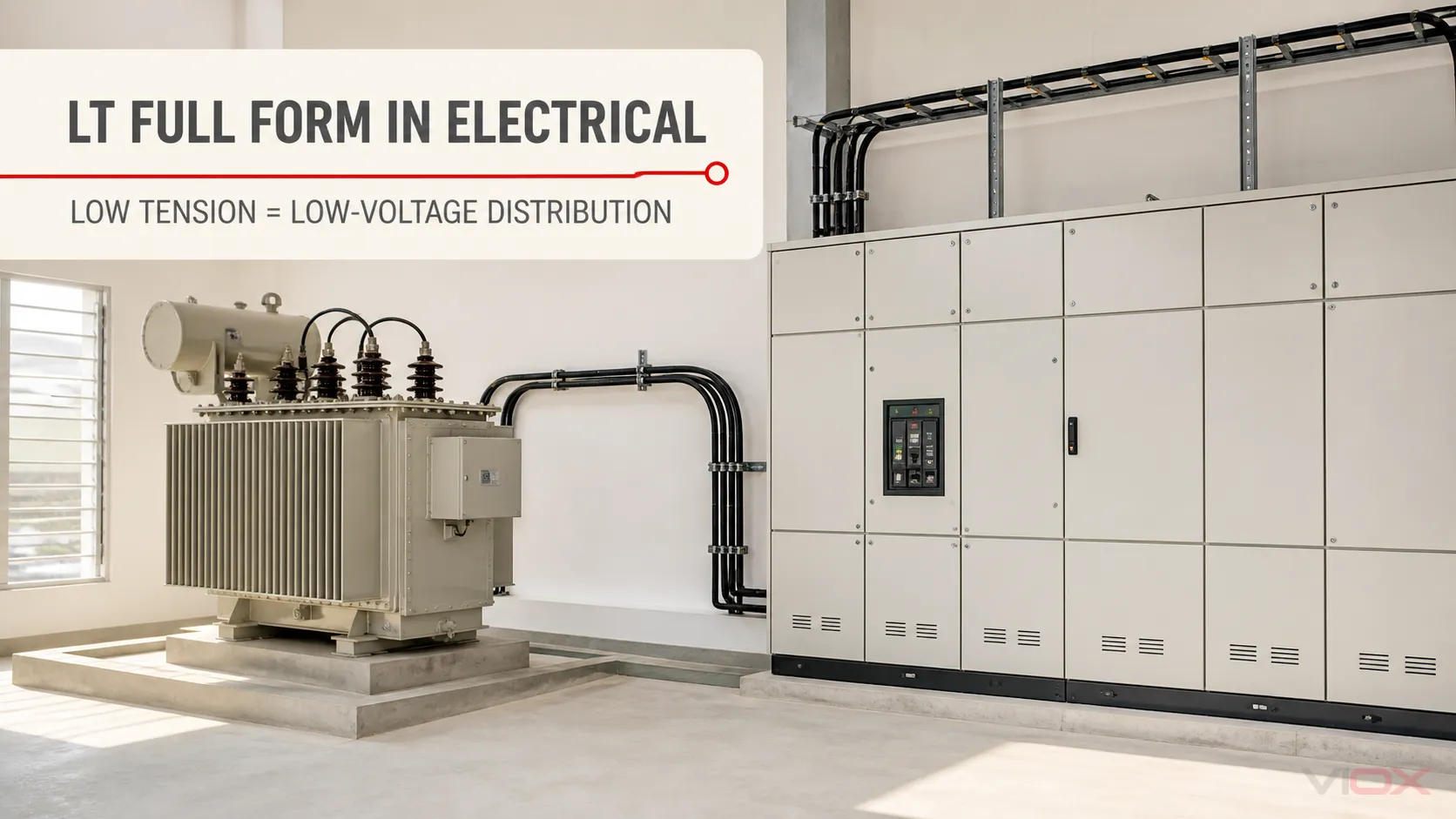
전기 공학에서 LT는 Low Tension을 의미합니다. 이 용어는 인도 및 기타 남아시아 시장에서 LT 패널, LT 케이블, LT 스위치기어 및 LT 공급을 포함한 저전압 전력 분배용으로 널리 사용됩니다. IEC 문서에서는 일반적으로 다음과 같은 용어를 선호합니다. 저전압(LV) (low tension 대신).
따라서 실제적인 의미는 간단합니다. LT 시스템은 일반적으로 배전 변압기 하단에 위치한 전기 설비의 저전압 측을 의미합니다. 그러나 정확한 전압 경계는 약어 자체가 아니라 해당 표준 또는 유틸리티 사양에서 정의해야 합니다.
전기 공학에서 LT는 무엇을 의미합니까?
단선 결선도, 입찰서, 패널 일람표 또는 유틸리티 문서에서 LT는 저전압 분배 시스템을 담당하는 장비를 식별합니다. 일반적인 공급망은 다음과 같습니다:
유틸리티 중전압 공급
        |
배전 변압기
        |
LT 메인 패널 / PCC
        |
MCC, APFC 패널, 분전반 및 최종 부하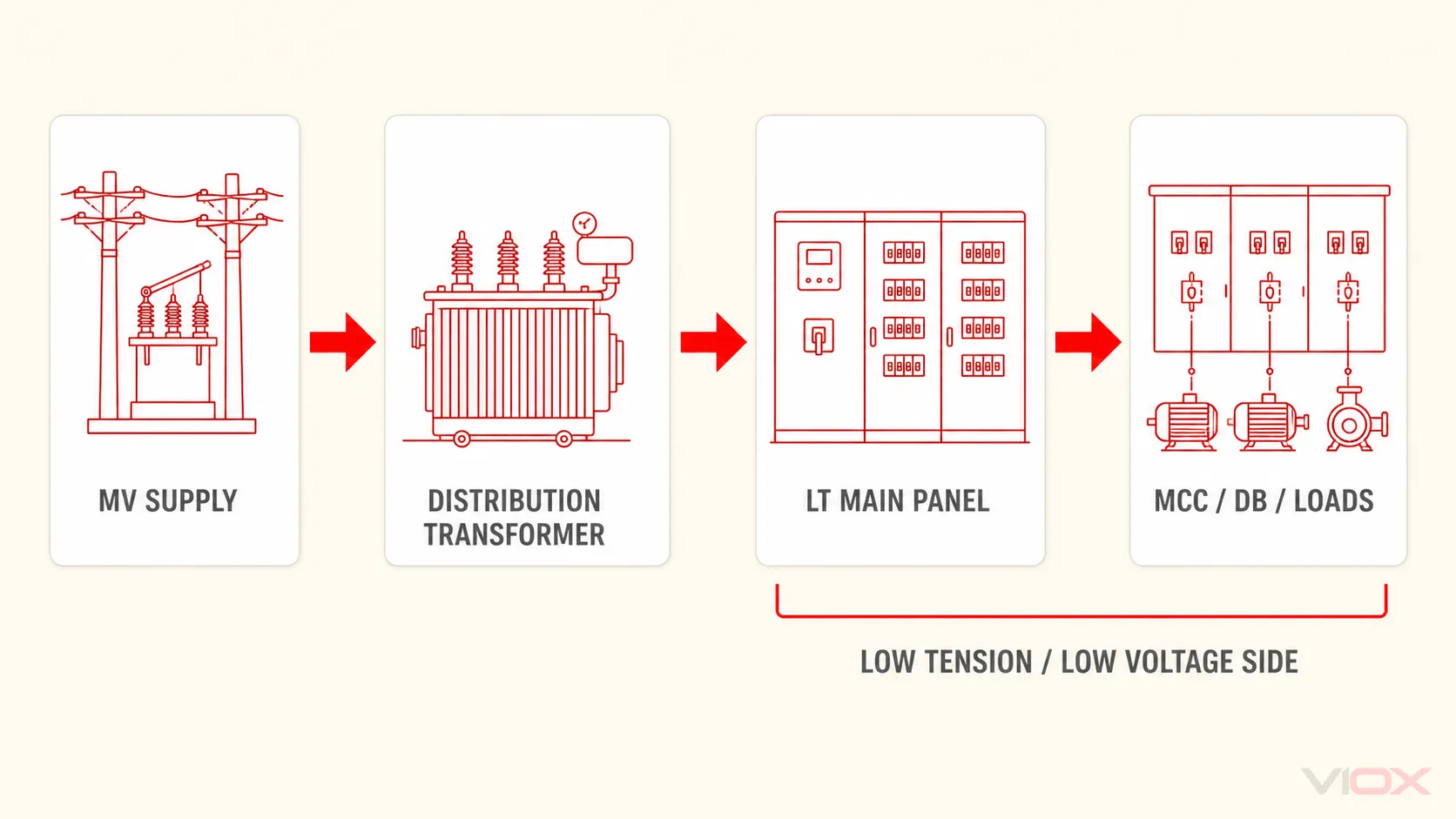
일반적인 예시는 다음과 같습니다:
- 저압 패널: 메인 저압 배전반 또는 하단 배전/제어 패널;
- 저압 케이블: 해당 저압 회로 및 절연 등급에 맞게 선정된 케이블;
- 저압 배전반: 저압 측에서 사용되는 회로 차단기, 스위치, 접촉기, 보호 장치 및 조립품;
- 저압 공급원: 건물, 기계 또는 기타 최종 사용 부하에 공급되는 사용 전압.
LT는 시스템 수준의 라벨입니다. 이는 특정 외함 설계, 회로 차단기 유형, 고장 정격 또는 인증을 식별하지 않습니다.
Low Tension은 Low Voltage와 같습니까?
인도의 일상적인 전기 사용에서, low tension 그리고 저전압 은 일반적으로 전력 시스템의 동일한 부분을 의미합니다. 차이점은 주로 용어입니다:
| 기 | 일반적으로 사용되는 곳 | 엔지니어링 해석 |
|---|---|---|
| LT: Low Tension | 인도 유틸리티, 입찰, 패널 명칭, 현장 언어 | 저압 배전 시스템 |
| LV: 저전압 | IEC 표준 및 국제 사양 | 적용 가능한 문서에 정의된 공식 저압 범주 |
| HT: 고압 | 인도 유틸리티 및 산업 용어 | 현지 LT 경계 이상의 공급 또는 장비; 정확한 분류는 관할 구역에 따라 다름 |
IEC 60947-1은 정격 전압이 다음을 초과하지 않는 회로를 위한 저전압 개폐장치 및 제어장치를 다룹니다. 1,000 V AC 또는 1,500 V DC. IEC 60364는 저전압 전기 시스템의 주요 적용 범위에 대해 동일한 상한값을 사용합니다. 이러한 한계치는 국제적인 참고 자료로서 유용하지만, “LT”라고 표시된 모든 제품이 해당 범위 내 어디에서나 적합하다는 것을 의미하지는 않습니다.
인도의 많은 설치 현장에서 415/240 V AC는 익숙한 활용 시스템입니다. 프로젝트에 따라 유틸리티 규정, 입찰 사양, 장비 표준 또는 법적 요구 사항에 따라 다른 용어나 한계가 적용될 수 있습니다. 항상 관련 규정 문서를 확인하십시오.
LT 대 HT: 차이점은 무엇인가?
| 비교 포인트 | LT 시스템 | HT 시스템 |
|---|---|---|
| 전체 형식 | 저전압(Low Tension) | 고전압(High Tension) |
| 일반적인 위치 | 변압기 2차측 및 하부 배전 | 한전 인입 공급 및 변압기 1차측 |
| 공통 장비 | 저압(LT) 패널, MCC, APFC 패널, 분전반, MCB, MCCB, ACB | 고압(HT) 패널, VCB, 보호 릴레이, CT/PT, 변압기 1차측 장비 |
| 공통 운용 고려 사항 | 부하 전류, 온도 상승, 단락 정격, 선택성, 감전 보호 | 절연 협조, 인터록, 보호 방식, 개폐 절차, 아크 및 이격 거리 요구 사항 |
| 약어가 정확한 전압을 정의할 수 있습니까? | 아니요 | 아니요 |
“LT”는 낮은 위험을 의미하지 않습니다. 415 V 배전반은 수천 암페어의 전류를 전달할 수 있으며 심각한 예상 단락 전류를 가질 수 있습니다. 아크 플래시 에너지, 도체 가열, 감전 및 전기 역학적 힘은 여전히 심각한 설계 및 유지보수 고려 사항입니다.
LT 패널이란 무엇입니까?
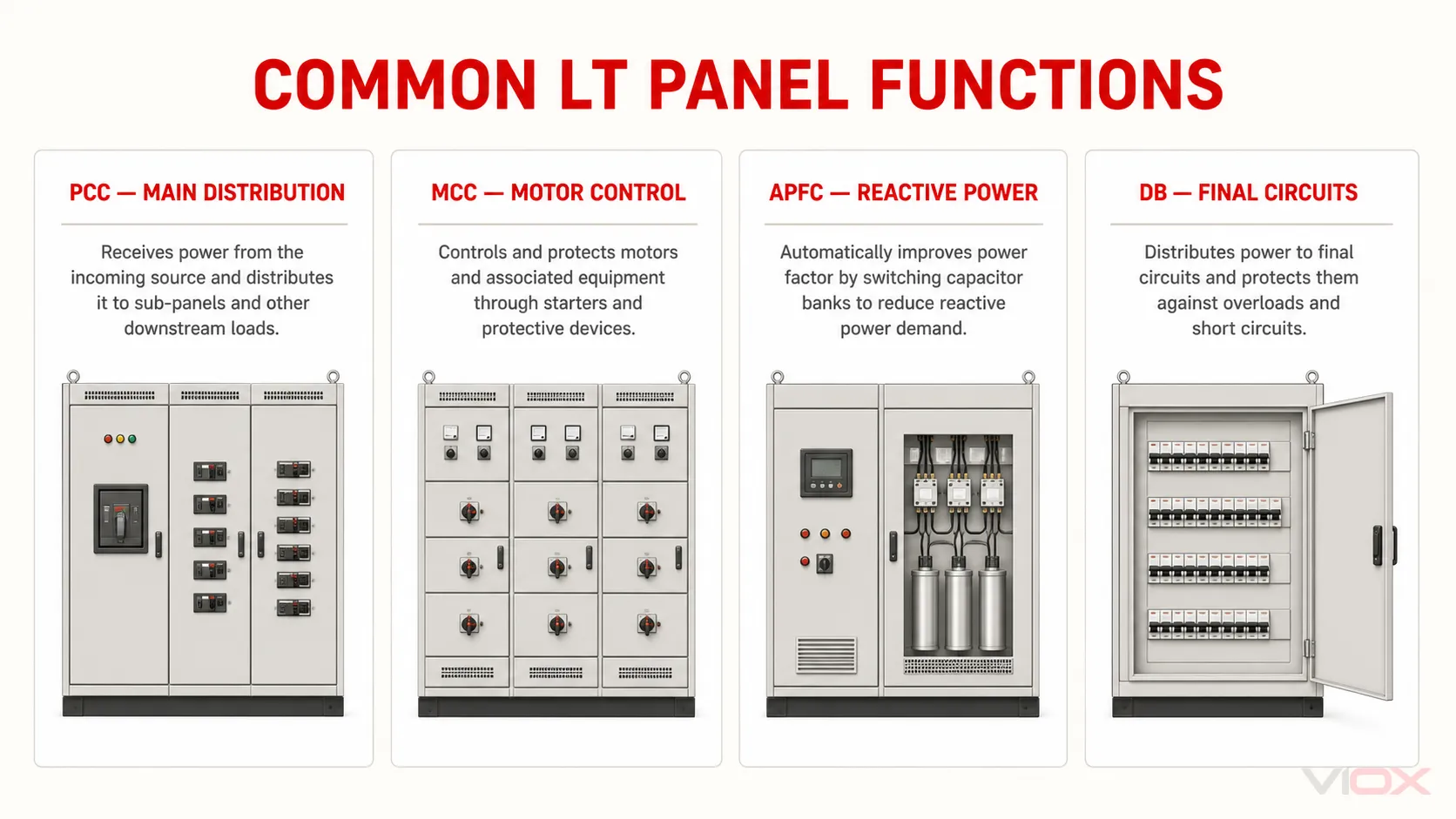
LT 패널은 저전압 전기 시스템의 전력을 수전, 제어, 보호, 계량 또는 분배하는 조립품입니다. 이 라벨은 다음과 같은 여러 가지 기능을 설명할 수 있습니다:
| LT 패널 유형 | 주요 기능 |
|---|---|
| PCC 또는 메인 LT 패널 | 변압기 또는 발전기 출력을 수전하고 주요 급전선으로 전력을 분배합니다 |
| MCC | 조정된 스위칭 및 보호 장치를 통해 모터를 기동, 정지 및 보호합니다 |
| APFC 패널 | 무효 전력 및 역률을 관리하기 위해 커패시터 단계를 스위칭함 |
| 분전반 | 공급 전원을 보호되는 최종 또는 하위 분배 회로로 분할함 |
| ATS/AMF 패널 | 시스템 설계에 따라 상용 전원과 예비 전원 간에 부하를 전환함 |
“LT 패널”이라는 용어가 IEC 61439 준수, 단락 내전류 정격, 방진·방수(IP) 등급 또는 특정 내부 분리 형태를 보증하는 것은 아닙니다. 이러한 특성에는 명시된 조립 데이터 및 검증이 필요합니다.
어셈블리 수준 설계 경계에 대해서는 다음의 VIOX 가이드를 참조하십시오: IEC 61439 저압 스위치기어 설계. 기본 패널 개요를 보려면 다음을 읽어보십시오: 저압 패널이란 무엇인가?.
도면 또는 사양에서 “LT”를 읽는 방법
프로젝트 문서에 LT가 나타나면, 해당 약어가 무엇을 수정하는지 확인하십시오:
- 시스템: 전체 변압기 2차측 네트워크입니까, 아니면 하나의 피더입니까?
- 어셈블리: “LT 패널”은 메인 PCC, MCC, 또는 분전반 중 무엇을 의미합니까?
- 전압: 공칭 시스템 전압과 주파수는 어떻게 됩니까?
- 접지 방식: 시스템이 TN-S, TN-C-S, TT 또는 다른 방식입니까?
- 고장 레벨: 장비가 견디거나 차단해야 할 예상 단락 전류는 얼마입니까?
- 조립 표준: 어떤 IEC, IS, UL 또는 프로젝트 사양이 적용됩니까?
- 사용 조건: 어떤 주위 온도, 고도, 오염, 외함 및 IP 요구 사항이 적용됩니까?
이는 버스바, 보호 장치, 외함, 온도 상승 성능 및 단락 검증을 결정하는 전기적 의무를 정의하지 않고 “LT 패널'을 요청하는 일반적인 구매 오류를 방지합니다.
LT 패널 사양 지정을 위해 필요한 정보
유용한 견적 요청서에는 최소한 다음 사항이 포함되어야 합니다:
- 정격 운전 전압 및 주파수;
- 상 수 및 중성선 구성;
- 정격 전류 및 피더 일정;
- 예상 단락 전류 및 해당되는 경우 요구되는 내구 시간;
- 입력 및 출력 보호 장치 유형;
- 접지 시스템 및 보호 도체 구성;
- 계량, 통신 및 제어 요구 사항;
- 외함 위치, IP 등급, 주변 온도 및 고도;
- 케이블 인입 방향 및 단자 연결 세부 사항;
- 적용 가능한 조립 표준 및 검증 문서.
VIOX 전기 용어 전체 명칭 용어집 관련 약어를 제공하며, 전기 분야에서의 DB 전체 명칭 더 좁은 의미의 분전반 용어에 대해 설명합니다.
일반적인 질문
LT 패널의 전체 명칭은 무엇입니까?
LT 패널이란 저압(Low Tension) 패널을 의미합니다. 이는 전력을 수전, 제어, 보호, 계량 또는 분배하는 데 사용되는 저압 전기 조립품입니다. 명칭만으로는 정확한 기능이나 정격을 정의할 수 없습니다.
415 V는 LT로 간주됩니까?
일반적인 인도 산업 및 유틸리티 용어에서 415 V 3상 시스템은 LT로 간주됩니다. 최종 분류 및 장비 선정은 여전히 적용 가능한 표준 및 프로젝트 요구 사항을 따라야 합니다.
LT와 LV는 동일한 용어입니까?
이들은 보통 동일한 일반 저압 전기 시스템 수준을 설명합니다. LT는 흔히 쓰이는 지역적 용어인 반면, LV는 IEC 및 국제 문서에서 더 일반적으로 사용되는 용어입니다.
최종 정의
LT는 저압(Low Tension)을 의미하며 전기 공학에서 사용됩니다. 이는 배전 시스템의 저압 측을 지칭하는 지역적 용어로, 일반적으로 LT 패널, 케이블, 개폐기 및 부하 회로를 포괄합니다. LT를 시스템 라벨로 취급하되, 장비를 선정하기 전에 실제 전압, 전류, 고장 수준, 조립 표준 및 사용 조건을 확인하십시오.