

Nesta página
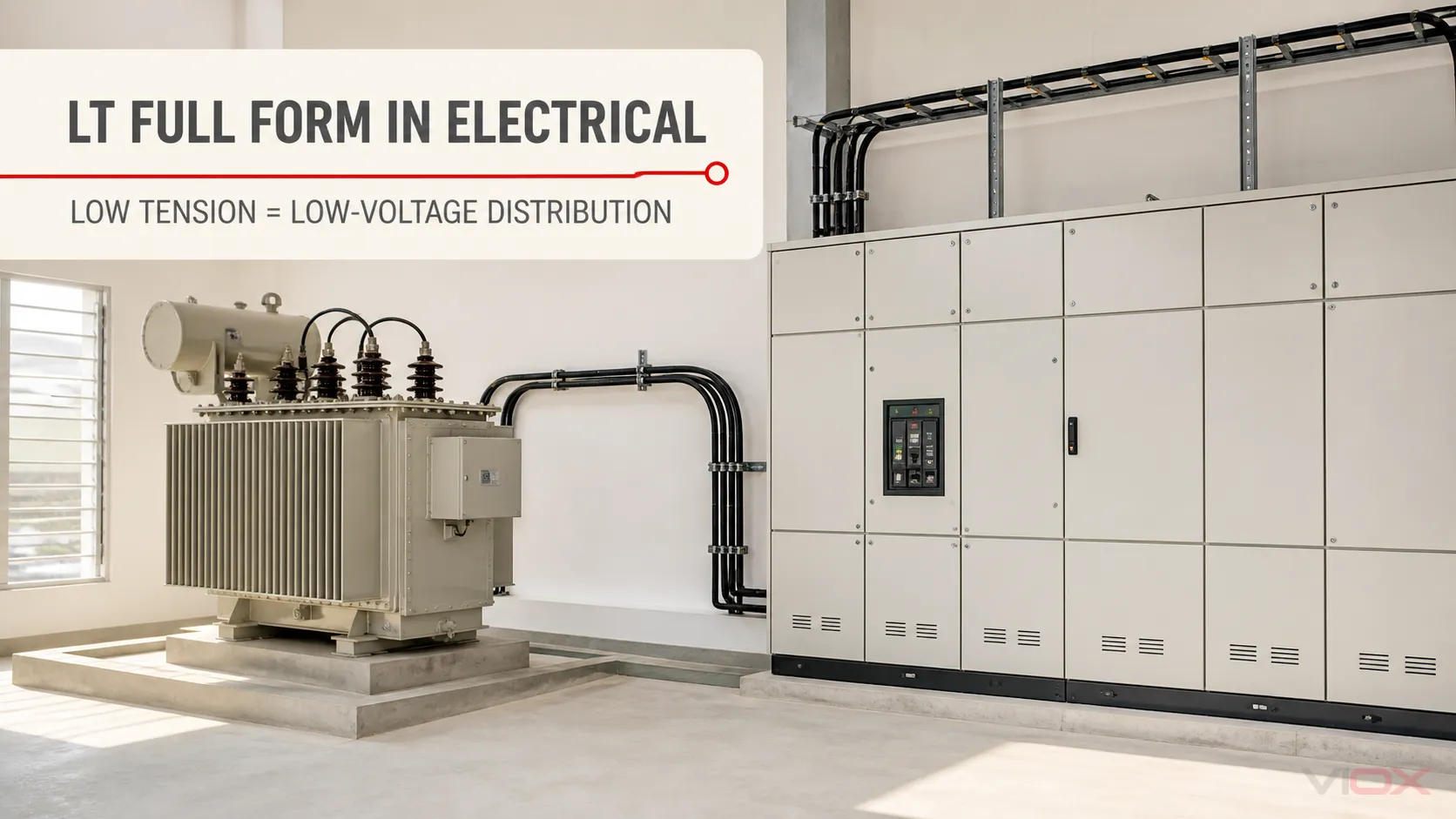
LT significa Baixa Tensão (Low Tension) na engenharia elétrica. O termo é amplamente utilizado na Índia e em outros mercados do Sul da Ásia para distribuição de energia em baixa tensão, incluindo painéis LT, cabos LT, painéis de manobra LT e suprimento LT. Na documentação da IEC, o termo preferencial é geralmente baixa tensão (LV) em vez de baixa tensão (low tension).
O significado prático é, portanto, direto: um sistema LT é o lado de baixa tensão de uma instalação elétrica, normalmente a jusante de um transformador de distribuição. No entanto, o limite exato de tensão deve ser definido pela norma aplicável ou pela especificação da concessionária, e não apenas pela abreviação.
O que significa LT na engenharia elétrica?
Em um diagrama unifilar, edital, quadro de cargas ou documento de concessionária, LT identifica equipamentos que atendem ao sistema de distribuição de baixa tensão. Uma cadeia de suprimentos típica é:
Suprimento de média tensão da concessionária
        |
Transformador de distribuição
        |
Painel principal LT / PCC
        |
MCC, painel APFC, quadros de distribuição e cargas finais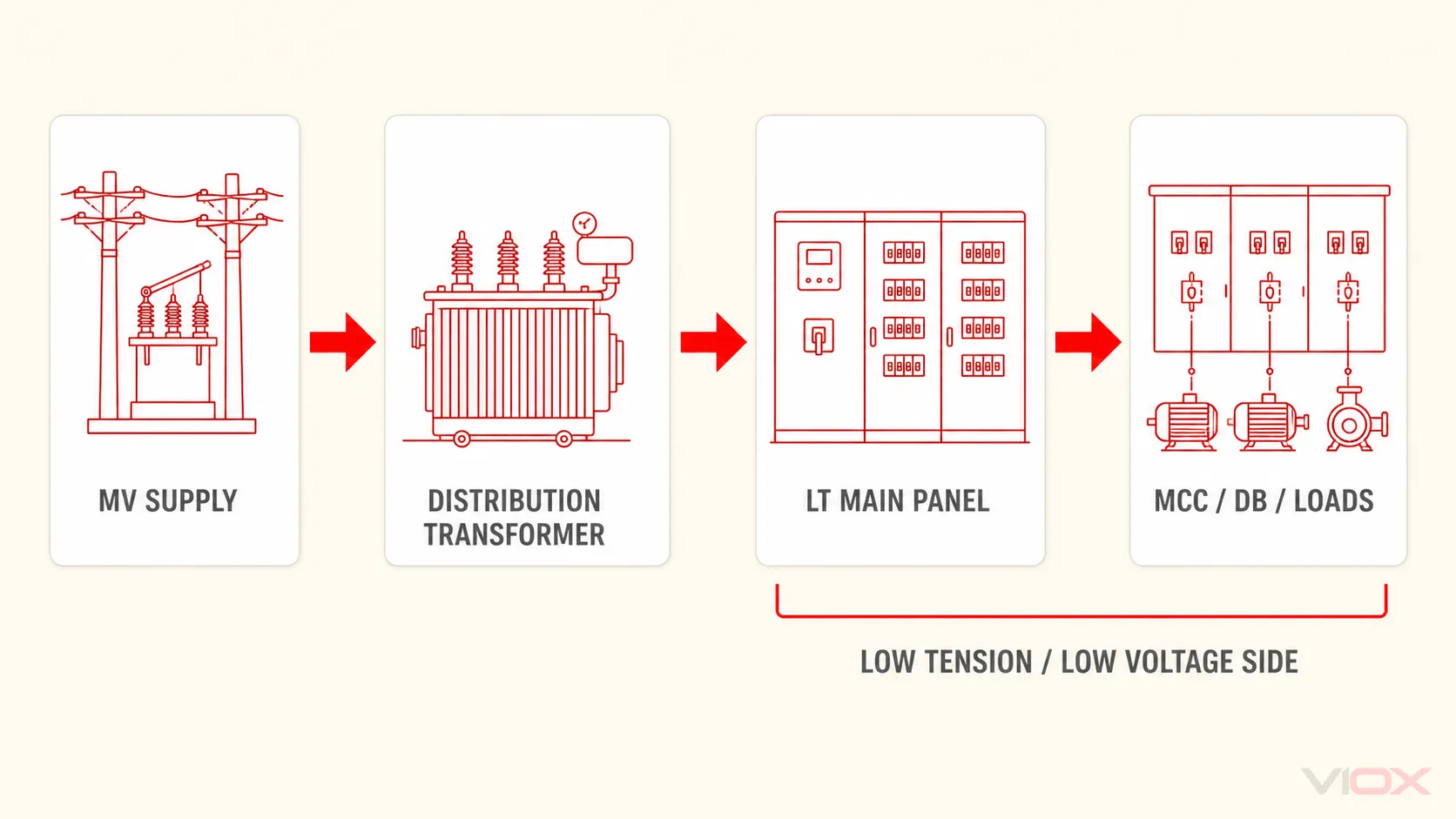
Exemplos comuns incluem:
- Painel de BT: o quadro de distribuição principal de baixa tensão ou um painel de distribuição/controle a jusante;
- Cabo de BT: um cabo selecionado para o circuito de baixa tensão aplicável e classificação de isolamento;
- Equipamento de manobra de BT: disjuntores, chaves, contatores, dispositivos de proteção e conjuntos utilizados no lado de baixa tensão;
- Suprimento de BT: a tensão de utilização fornecida a edifícios, máquinas ou outras cargas de uso final.
LT é um rótulo de nível de sistema. Ele não identifica um projeto específico de invólucro, tipo de disjuntor, capacidade de interrupção ou certificação.
Baixa Tensão (Low Tension) é o mesmo que Baixa Tensão (Low Voltage)?
No uso elétrico cotidiano na Índia, baixa tensão e baixa tensão normalmente referem-se à mesma parte geral do sistema elétrico. A diferença é principalmente de terminologia:
| Prazo | Onde é comumente usado | Interpretação de engenharia |
|---|---|---|
| LT: Baixa Tensão | Concessionárias indianas, licitações, nomes de painéis, idioma local | Sistema de distribuição de baixa tensão |
| LV: Baixa Tensão | Normas IEC e especificações internacionais | A categoria formal de baixa tensão definida pelo documento aplicável |
| HT: Alta Tensão | Terminologia industrial e de concessionárias indianas | Fornecimento ou equipamento acima do limite local de BT; a classificação exata é específica da jurisdição |
A IEC 60947-1 abrange dispositivos de manobra e comando de baixa tensão destinados a circuitos cuja tensão nominal não exceda 1,000 V AC or 1,500 V DC. A IEC 60364 utiliza os mesmos valores superiores para o escopo principal de instalações elétricas de baixa tensão. Estes limites são referências internacionais úteis, mas não significam que todo produto marcado com “LT” seja adequado em qualquer lugar dentro de toda essa faixa.
Em muitas instalações na Índia, o sistema de utilização comum é de 415/240 V AC. Um projeto ainda pode aplicar terminologia ou limites diferentes sob suas regras da concessionária, especificação de licitação, norma de equipamento ou requisitos estatutários. Sempre leia o documento vigente.
LT vs HT: Qual é a diferença?
| Ponto de comparação | Sistema de BT | Sistema de AT |
|---|---|---|
| Forma completa | Baixa Tensão | Alta Tensão |
| Posição típica | Secundário do transformador e distribuição a jusante | Suprimento da concessionária e lado primário do transformador |
| Equipamento comum | Painel de BT, CCM, painel de correção de fator de potência, quadro de distribuição, MCB, MCCB, ACB | Painel de MT, VCB, relé de proteção, TC/TP, equipamento primário do transformador |
| Preocupação operacional comum | Corrente de carga, elevação de temperatura, capacidade de curto-circuito, seletividade, proteção contra choque | Coordenação de isolamento, intertravamento, esquemas de proteção, procedimentos de manobra, requisitos de arco e distanciamento |
| A abreviação pode definir a tensão exata? | Nenhum | Nenhum |
“LT” não significa baixo risco. Um quadro de distribuição de 415 V pode conduzir milhares de ampères e apresentar uma corrente de curto-circuito presumida severa. A energia de arco elétrico, o aquecimento de condutores, o choque elétrico e as forças eletrodinâmicas continuam sendo preocupações sérias de projeto e manutenção.
O que é um painel LT?
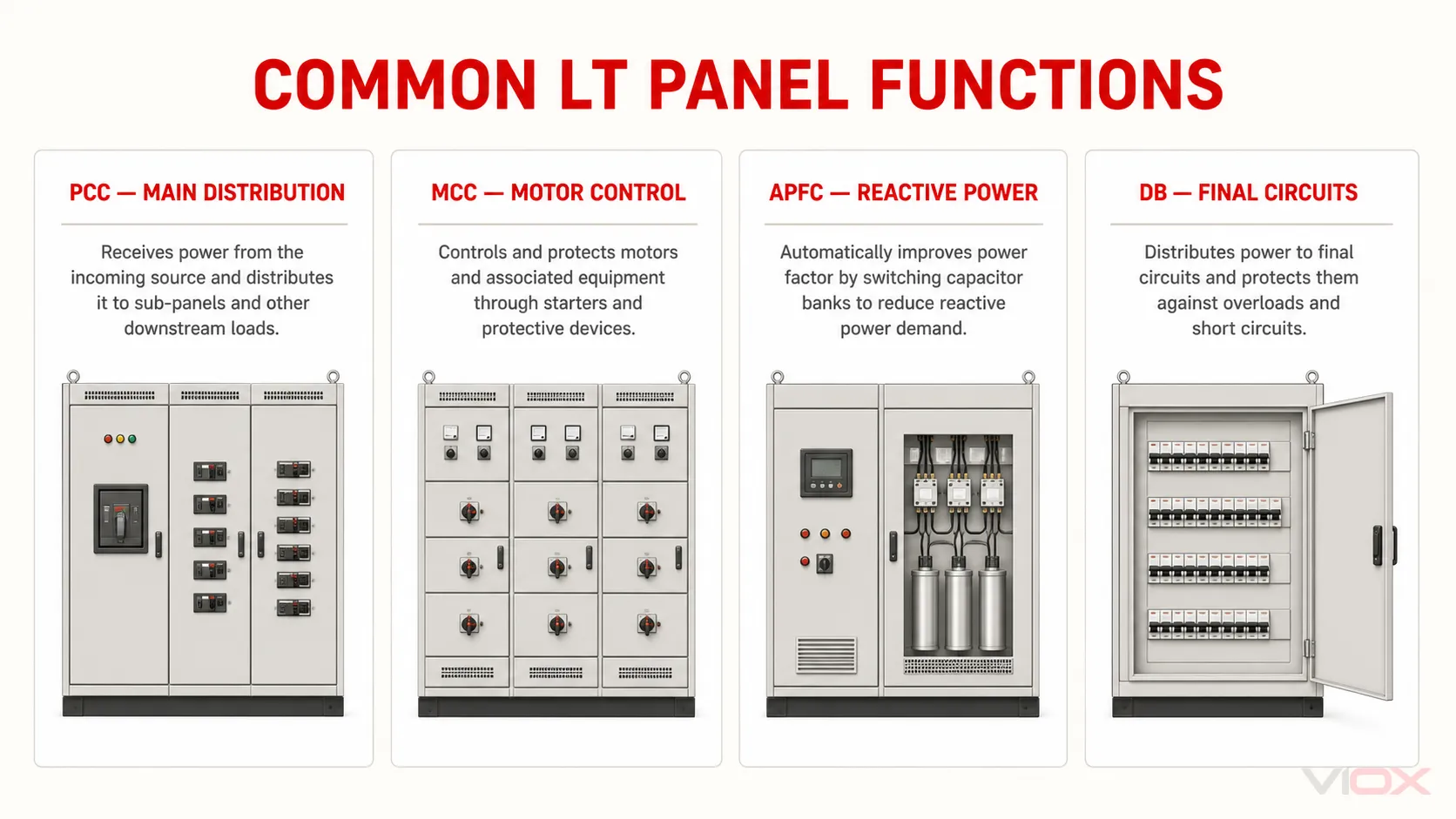
Um painel LT é um conjunto que recebe, controla, protege, mede ou distribui energia elétrica de baixa tensão. O rótulo pode descrever várias funções diferentes:
| Tipo de painel LT | Função principal |
|---|---|
| PCC ou painel LT principal | Recebe a saída de transformador ou gerador e distribui energia para alimentadores principais |
| MCC | Liga, desliga e protege motores por meio de dispositivos de manobra e proteção coordenados |
| Painel APFC | Comuta degraus de capacitores para gerenciar a potência reativa e o fator de potência |
| Quadro de distribuição | Divide a alimentação em circuitos finais protegidos ou subdistribuição |
| Painel de ATS/AMF | Transfere cargas entre fontes normal e de emergência de acordo com o projeto do sistema |
As palavras “painel de BT” não comprovam a conformidade com a norma IEC 61439, uma capacidade de suportar curto-circuito, um grau de proteção de ingresso ou uma forma específica de separação interna. Essas características exigem dados declarados do conjunto e verificação.
Para o limite de projeto em nível de montagem, consulte o guia VIOX para projeto de painéis de baixa tensão IEC 61439. Para uma visão geral básica do painel, leia O que é um painel de baixa tensão?.
Como ler “LT” em um desenho ou especificação
Quando LT aparecer em documentos de projeto, identifique o que a abreviação modifica:
- Sistema: É a rede completa do secundário do transformador ou um alimentador?
- Montagem: “Painel de BT” refere-se ao PCC principal, a um MCC ou a um quadro de distribuição?
- Tensão: Quais são a tensão nominal e a frequência do sistema elétrico?
- Esquema de aterramento: O sistema é TN-S, TN-C-S, TT ou outro esquema?
- Nível de falta: Qual é a corrente de curto-circuito presumida que o equipamento deve suportar ou interromper?
- Norma de montagem: Qual norma IEC, IS, UL ou especificação de projeto se aplica?
- Condições de serviço: Quais requisitos de temperatura ambiente, altitude, poluição, invólucro e IP se aplicam?
Isso evita um erro comum de aquisição: solicitar um “painel de baixa tensão” sem definir a função elétrica que determina suas barras, dispositivos de proteção, invólucro, desempenho de elevação de temperatura e verificação de curto-circuito.
Informações necessárias para especificar um painel de baixa tensão
Uma solicitação de cotação útil deve incluir, pelo menos:
- tensão operacional nominal e frequência;
- número de fases e disposição do neutro;
- corrente nominal e cronograma de alimentadores;
- corrente de curto-circuito prospectiva e duração de suportabilidade exigida quando aplicável;
- tipos de dispositivos de proteção de entrada e saída;
- sistema de aterramento e disposição dos condutores de proteção;
- requisitos de medição, comunicação e controle;
- localização do invólucro, grau de proteção IP, temperatura ambiente e altitude;
- direção da entrada de cabos e detalhes de terminação;
- norma de montagem aplicável e documentos de verificação.
O VIOX Glossário de formas completas elétricas fornece abreviações relacionadas, enquanto Forma completa de DB em elétrica explica o termo mais restrito de quadro de distribuição.
Perguntas Comuns
Qual é o significado completo de painel LT?
Painel LT significa Painel de Baixa Tensão. É um conjunto elétrico de baixa tensão usado para receber, controlar, proteger, medir ou distribuir energia. O nome por si só não define sua função ou capacidade exata.
415 V é considerado LT?
Na terminologia industrial e de concessionárias comum na Índia, um sistema trifásico de 415 V é considerado LT. A classificação final e a seleção do equipamento ainda devem seguir a norma aplicável e os requisitos do projeto.
LT e LV são termos idênticos?
Eles geralmente descrevem o mesmo nível geral de sistema elétrico de baixa tensão. LT é uma linguagem regional comum, enquanto LV é a terminologia usada mais comumente na IEC e em documentação internacional.
Definição final
LT significa Baixa Tensão (Low Tension) em engenharia elétrica. É um termo regional para o lado de baixa tensão de um sistema de distribuição de energia, cobrindo comumente painéis LT, cabos, painéis de manobra e circuitos de utilização. Trate LT como um rótulo de sistema e, em seguida, verifique a tensão real, a corrente, o nível de falha, a norma de montagem e as condições de serviço antes de selecionar o equipamento.