

In questa pagina
Kurze Antwort
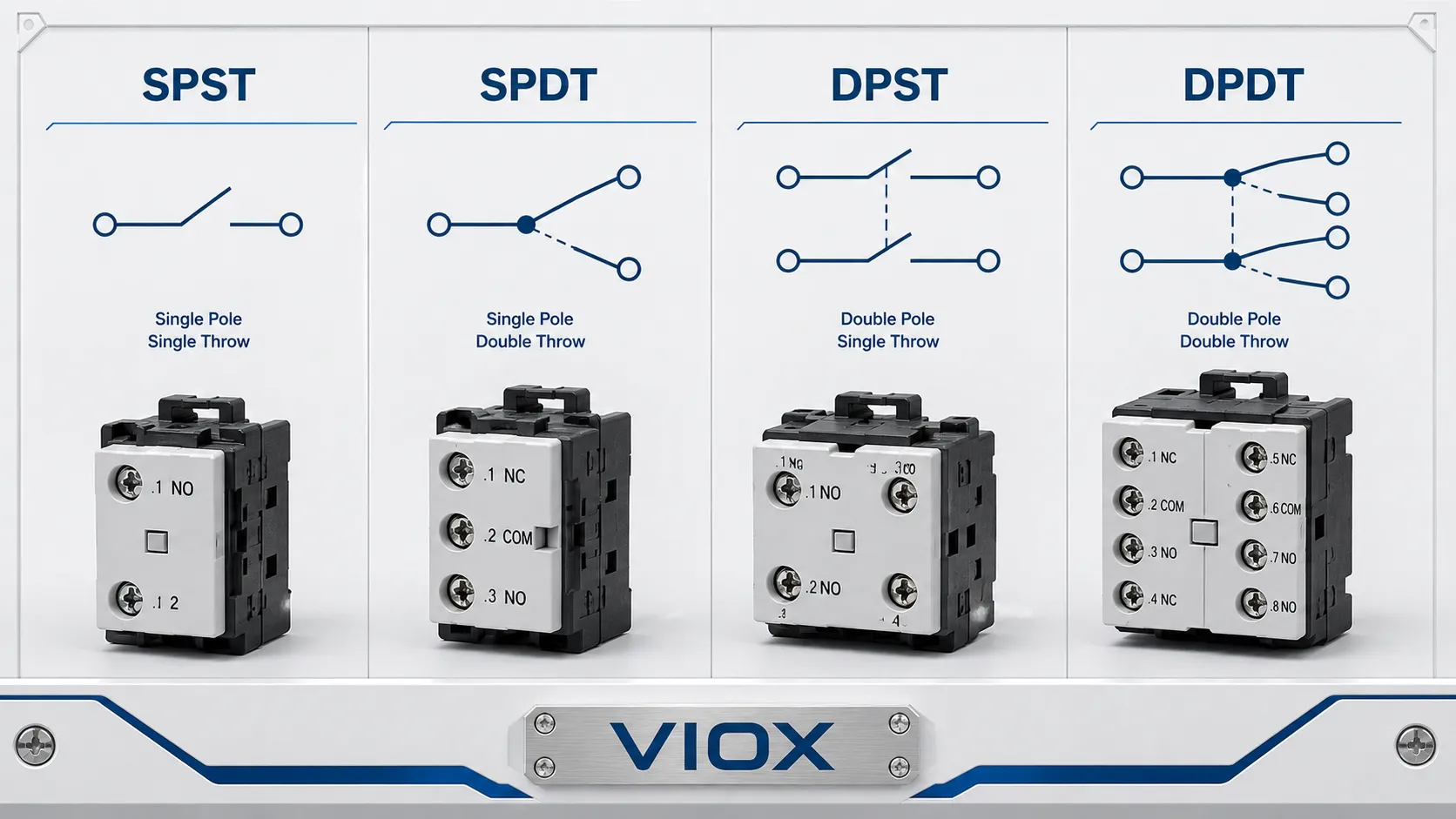
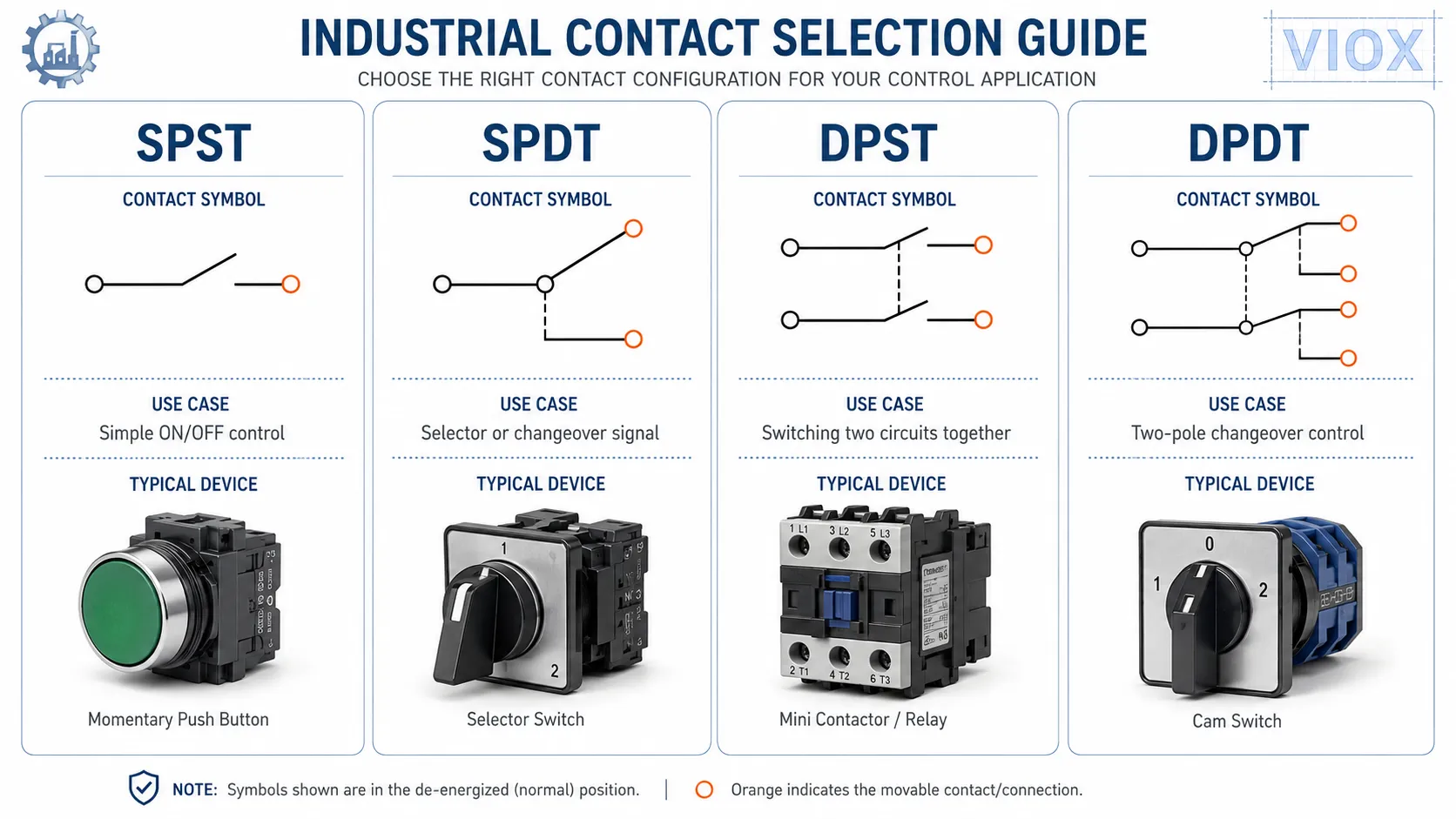
SPST, SPDT, DPST e DPDT descrivono quanti circuiti può controllare un contatto di un interruttore o relè e a quante posizioni di uscita ogni circuito può connettersi.
La prima parte descrive il numero di poli. poli. Un polo è un percorso di circuito indipendente controllato dal dispositivo. La seconda parte descrive il numero di vie. Una via è il numero di posizioni di uscita a cui ogni polo può connettersi.
In termini industriali semplici:
- SPST controlla l'accensione/spegnimento di un circuito.
- SPDT commuta un circuito tra due uscite.
- Bipolare a una via (DPST) commuta due circuiti contemporaneamente in accensione/spegnimento.
- DPDT commuta due circuiti tra due percorsi di uscita contemporaneamente.
Questi termini sono utilizzati per interruttori di comando, selettori, commutatori a camme, commutatori di scambio, relè, relè temporizzati e molti dispositivi per quadri elettrici.
Cosa significano Polo e Vie?
Prima di confrontare SPST, SPDT, DPST e DPDT, è utile separare i due termini.
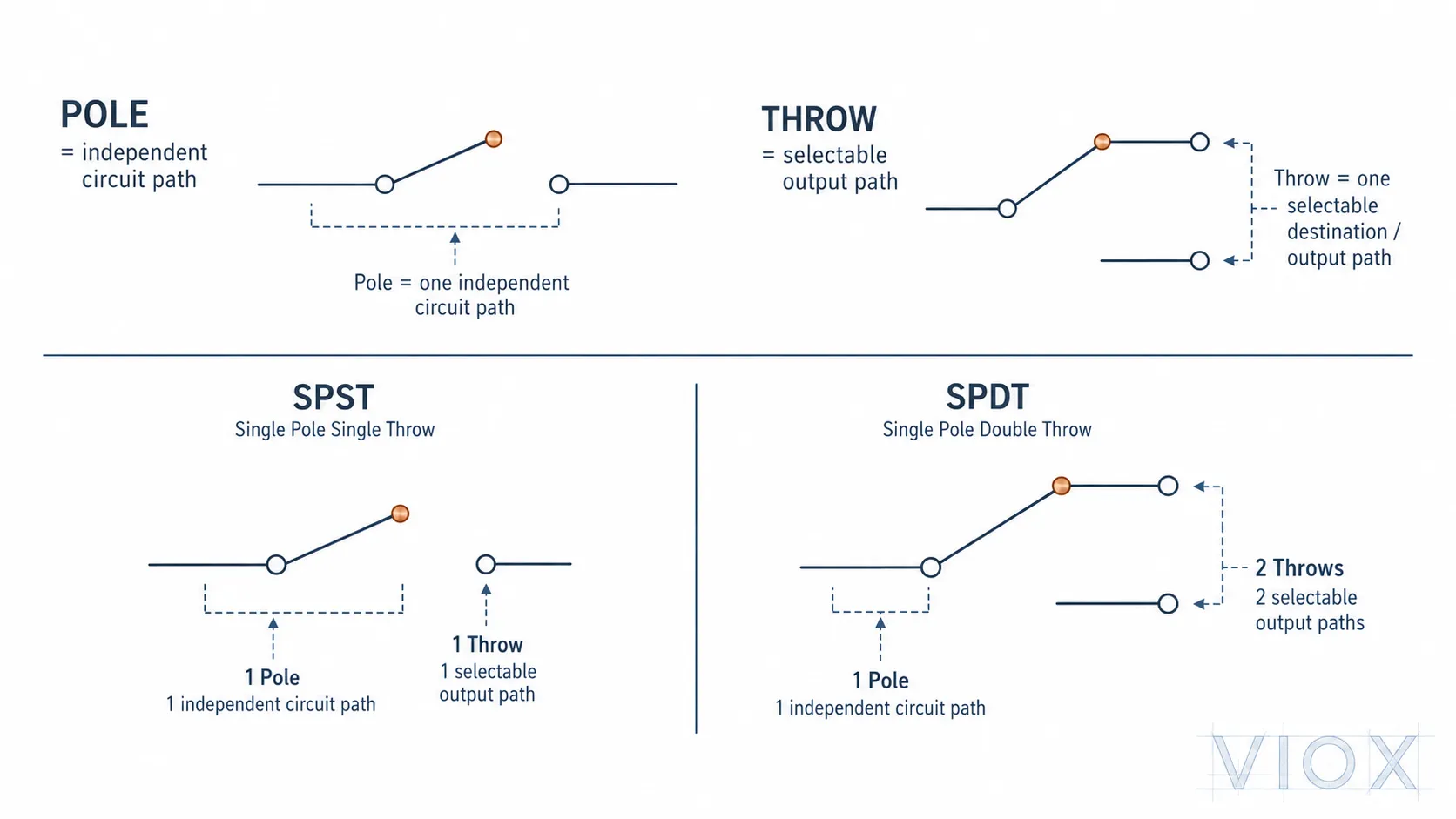
Un polo è il numero di circuiti indipendenti controllati da un attuatore o da una bobina di relè. Un dispositivo unipolare controlla un circuito. Un dispositivo bipolare controlla due circuiti contemporaneamente.
Un posizione (throw) è il numero di possibili percorsi di uscita per ogni polo. Un dispositivo a posizione singola ha un percorso ON. Un dispositivo a doppia posizione può commutare tra due percorsi.
| Termine | Significato | Interpretazione pratica |
|---|---|---|
| Unipolare | Un circuito controllato | Una linea, un segnale o un percorso di contatto |
| Bipolare | Due circuiti controllati | Due linee o due percorsi di contatto isolati |
| Singolo scambio | Una posizione di uscita | Funzione ON/OFF |
| A doppia commutazione | Due posizioni di uscita | Funzione di commutazione o selezione |
Ecco perché SPDT e DPST sono molto diversi, anche se entrambi presentano tre o quattro punti terminali in molte configurazioni fisiche. L'SPDT è un circuito che commuta tra due uscite. Il DPST è costituito da due circuiti che si accendono/spengono (ON/OFF) simultaneamente.
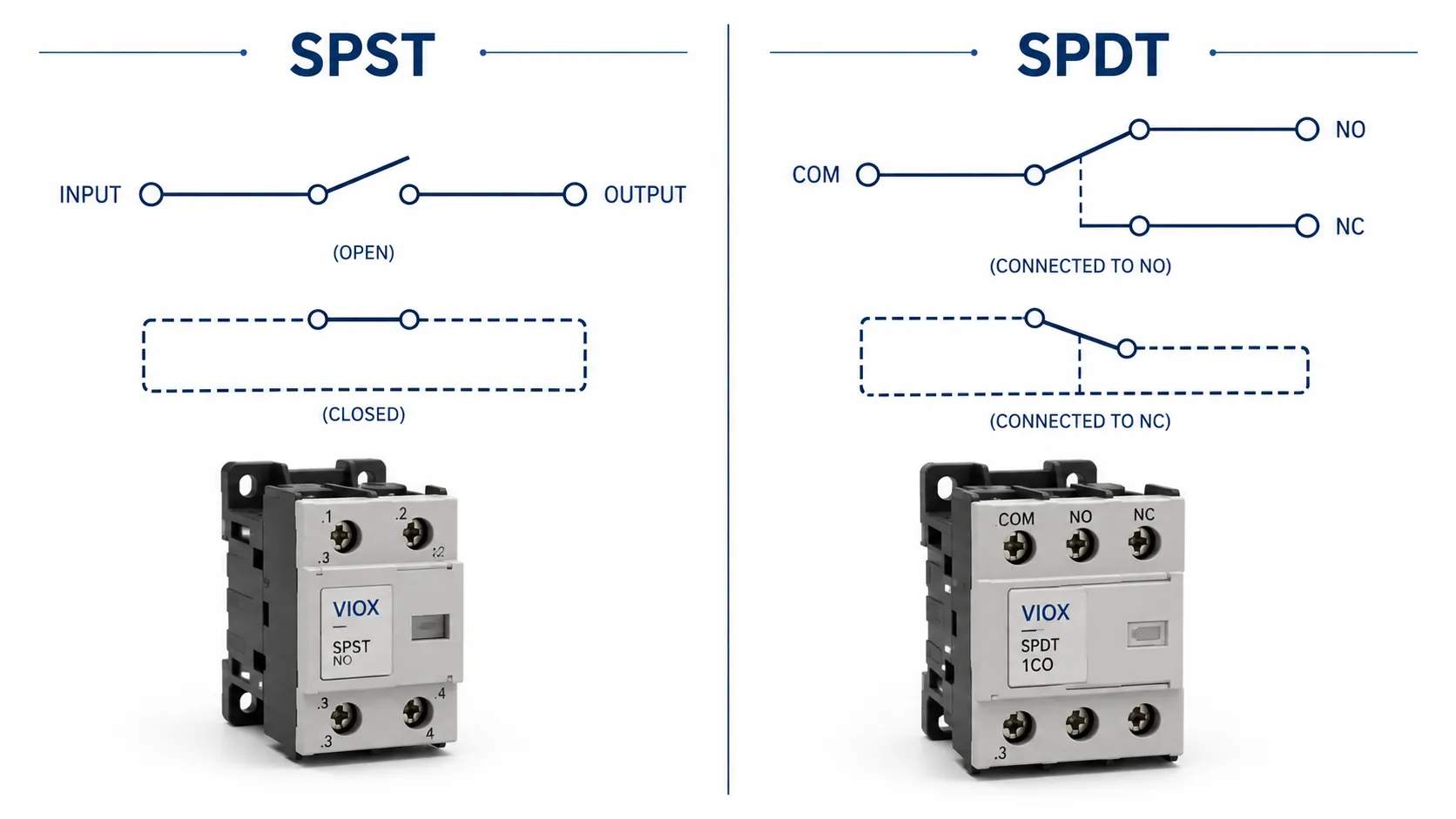
Confronto rapido tra SPST, SPDT, DPST e DPDT
| Tipo | Modulo completo | Cosa fa | Applicazioni industriali comuni |
|---|---|---|---|
| SPST | Unipolare a una via (SPST) | Controlla l'accensione/spegnimento (ON/OFF) di un circuito | Interruttori base, pulsanti, segnali di controllo semplici |
| SPDT | Unipolare a due vie (SPDT) | Commuta un ingresso tra due uscite | Circuiti selettori, contatti di scambio per relè, interblocco |
| Bipolare a una via (DPST) | Bipolare a una via | Commuta l'accensione/spegnimento (ON/OFF) di due circuiti contemporaneamente | Sezionamento di fase e neutro, controllo a due linee, circuiti accoppiati |
| DPDT | Bipolare a due vie | Commuta due circuiti tra due percorsi di uscita | Inversione di polarità, logica di direzione del motore, controllo di commutazione complesso |
Spiegazione dell'interruttore SPST
Un interruttore SPST è il tipo più semplice. Ha un polo e una via, quindi apre o chiude un percorso di circuito.
Quando l'interruttore è aperto, la corrente non può fluire attraverso il percorso controllato. Quando l'interruttore è chiuso, la corrente può fluire. Questo rende l'SPST adatto per il controllo base ON/OFF.
Le applicazioni tipiche dell'SPST includono:
- interruttori di controllo semplici
- contatti a pulsante
- circuiti di controllo ausiliari
- controllo lampada spia
- semplici funzioni di abilitazione/disabilitazione
In un relè, un contatto SPST può essere normalmente aperto (NO) o normalmente chiuso (NC). Un contatto SPST normalmente aperto si chiude quando la bobina del relè viene eccitata. Un contatto SPST normalmente chiuso si apre quando la bobina del relè viene eccitata.
Spiegazione dell'interruttore SPDT
Un interruttore SPDT ha un polo e due vie. Non si limita ad accendere/spegnere un circuito. Invece, commuta un terminale comune tra due terminali di uscita.
Ecco perché l'SPDT viene spesso chiamato contatto di scambio. Nella terminologia dei relè, viene comunemente descritto come un contatto con COM, NO, e NC terminali.
Le applicazioni tipiche SPDT includono:
- selezione tra due segnali di controllo
- contatti di scambio del relè
- indicazione di allarme normale/guasto
- circuiti di selezione manuale/automatica
- logica di controllo a interblocco
- contatti di uscita del relè temporizzato
L'SPDT è molto comune nei quadri elettrici poiché un singolo contatto può fornire sia una funzione normalmente aperta che una normalmente chiusa. Per esempi di cablaggio più approfonditi specifici per i relè, consultare la guida VIOX su Configurazioni dei contatti dei relè temporizzati SPDT vs DPDT.
Spiegazione dell'interruttore DPST
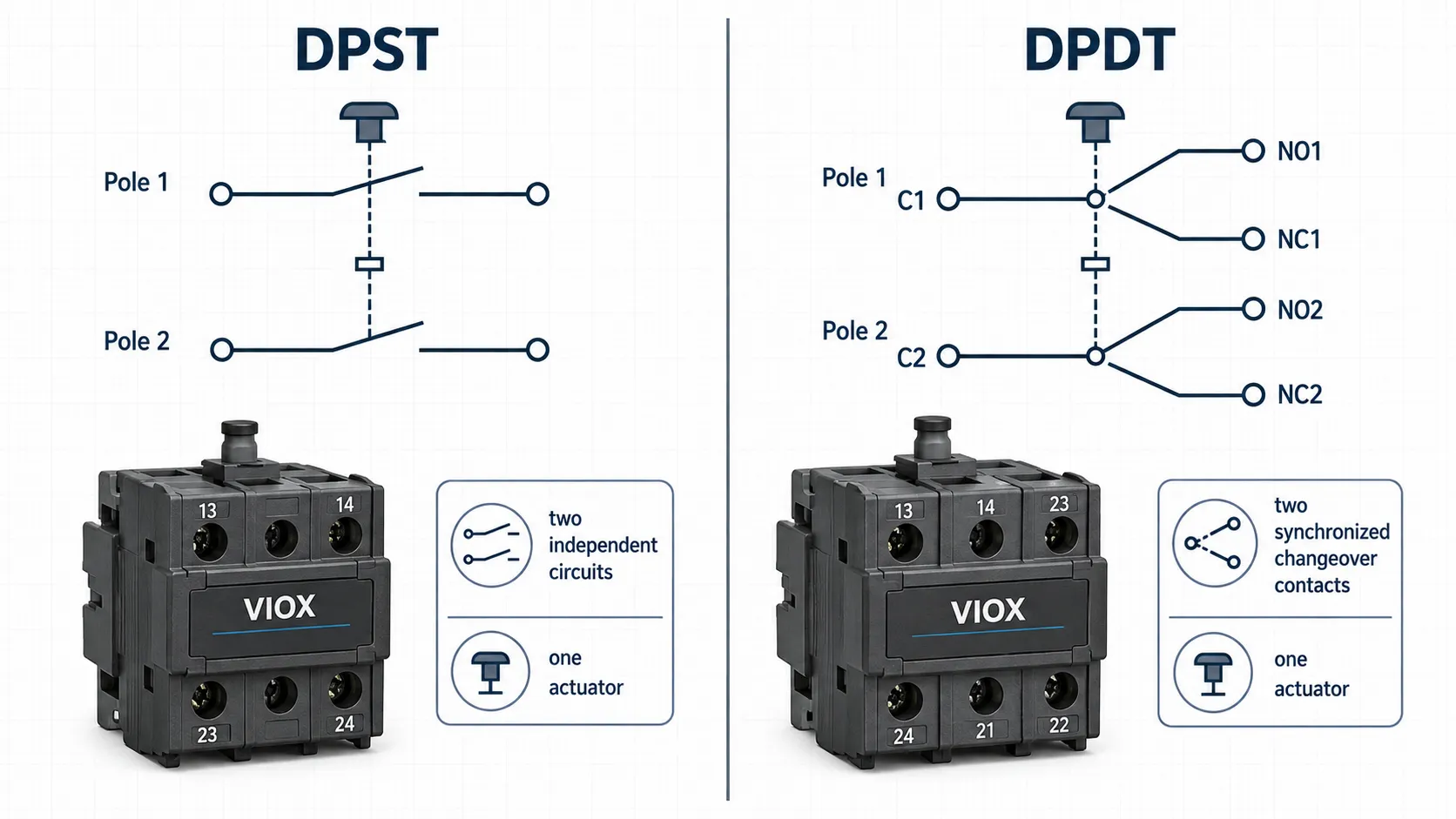
Un interruttore DPST ha due poli e una posizione di chiusura. Commuta ON/OFF due circuiti indipendenti contemporaneamente utilizzando un unico attuatore.
In molti casi pratici, il DPST viene utilizzato quando due conduttori devono essere aperti o chiusi insieme. Ad esempio, un interruttore DPST può commutare sia la fase che il neutro in un circuito monofase dove il progetto richiede la disconnessione di entrambi i conduttori. Può anche controllare due circuiti di comando separati mantenendoli elettricamente isolati.
Le applicazioni tipiche del DPST includono:
- commutazione simultanea di fase e neutro dove richiesto dal progetto
- circuiti di controllo a due linee
- commutazione simultanea di due carichi
- percorsi di controllo isolati azionati da un'unica leva
- commutazione ausiliaria legata alla sicurezza se progettata in modo appropriato
Non dare per scontato che un interruttore bipolare (DPST) fornisca automaticamente l'isolamento di sicurezza. La portata dell'interruttore, la categoria di utilizzo, la distanza tra i contatti e le norme applicabili rimangono fondamentali.
Spiegazione dell'interruttore DPDT
Un interruttore DPDT ha due poli e due posizioni. È essenzialmente costituito da due interruttori SPDT azionati insieme da un unico attuatore.
Un DPDT può commutare due circuiti indipendenti tra due percorsi di uscita contemporaneamente. Ciò lo rende utile per funzioni di controllo più complesse, specialmente dove due conduttori o due segnali devono cambiare stato insieme.
Le applicazioni tipiche di un DPDT includono:
- inversione di polarità nei circuiti di controllo a corrente continua
- logica di controllo marcia avanti/indietro del motore dove vengono utilizzati contattori o relè idonei
- instradamento del segnale tra due percorsi di controllo
- circuiti di controllo a commutazione
- funzioni di uscita relè accoppiate NA/NC
- configurazioni di interblocco più complesse
Il DPDT è potente, ma è anche più facile da cablare in modo errato. Nelle applicazioni di controllo motore e commutazione di potenza, la portata dei contatti, il tipo di carico, il metodo di interblocco e il dispositivo di protezione devono essere verificati attentamente.
Come questi termini si applicano ai relè
Nei relè, SPST, SPDT, DPST e DPDT descrivono la disposizione dei contatti, non la tensione della bobina.
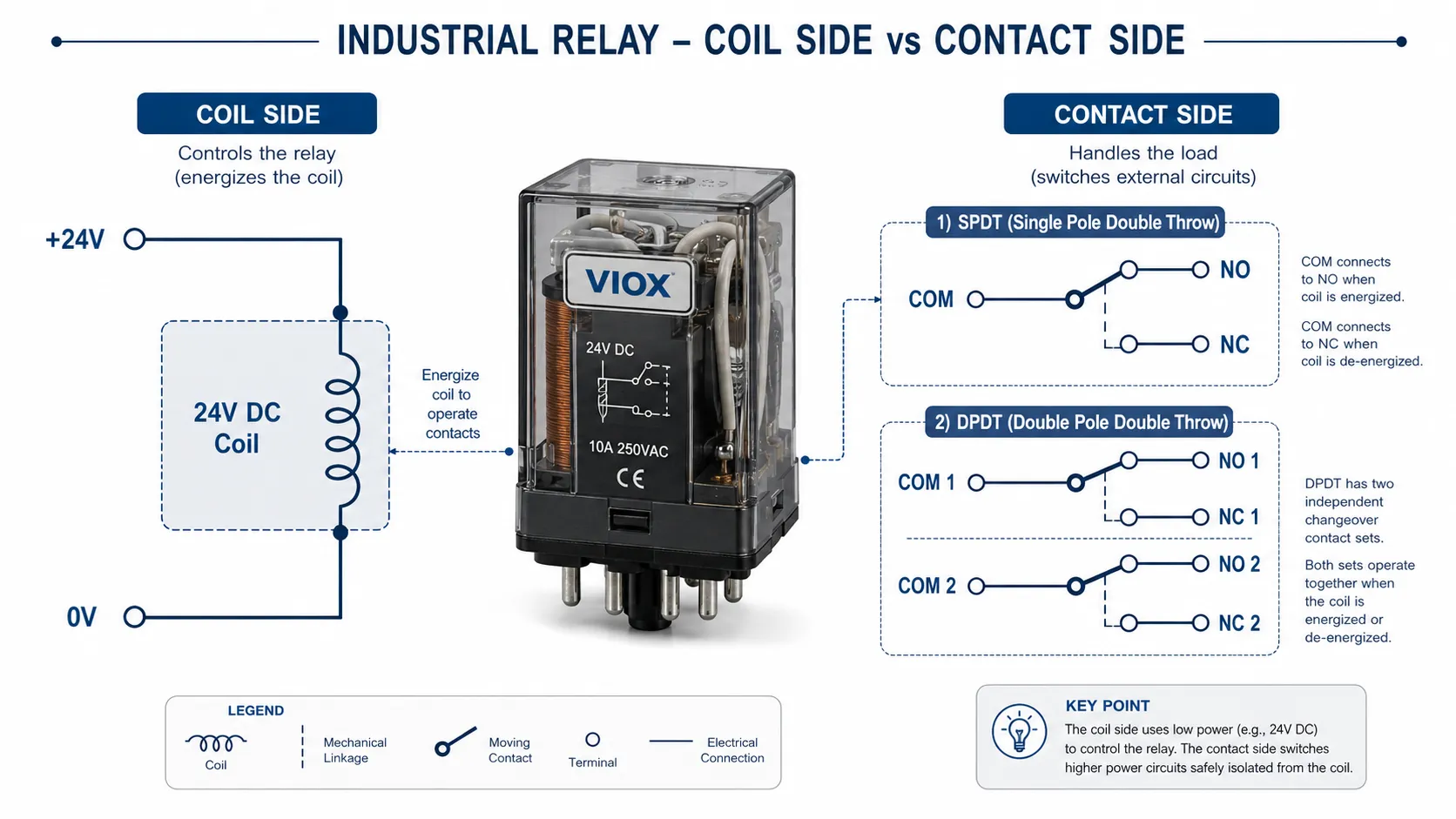
Un relè ha due lati separati:
- Lato bobina: la tensione di controllo che eccita il relè.
- Lato contatti: i contatti di commutazione che controllano un altro circuito.
Ad esempio, un relè può avere una bobina a 24V DC e contatti SPDT nominali per un circuito di controllo separato. La tensione della bobina indica come eccitare il relè. La configurazione dei contatti indica cosa può commutare il relè.
| Tipo di contatto del relè | Terminali tipici | Uso comune |
|---|---|---|
| SPST-NO | COM e NO | Chiude un circuito quando la bobina è eccitata |
| SPST-NC | COM e NC | Apre un circuito quando la bobina è eccitata |
| SPDT | COM, NO, NC | Commuta un circuito da NC a NO |
| DPDT | Due set di COM, NO, NC | Commuta due set di contatti di scambio contemporaneamente |
I relè temporizzati, i relè di controllo e i relè di interfaccia utilizzano spesso configurazioni di contatto SPDT o DPDT poiché consentono di ottenere logiche normalmente aperte e normalmente chiuse dallo stesso dispositivo.
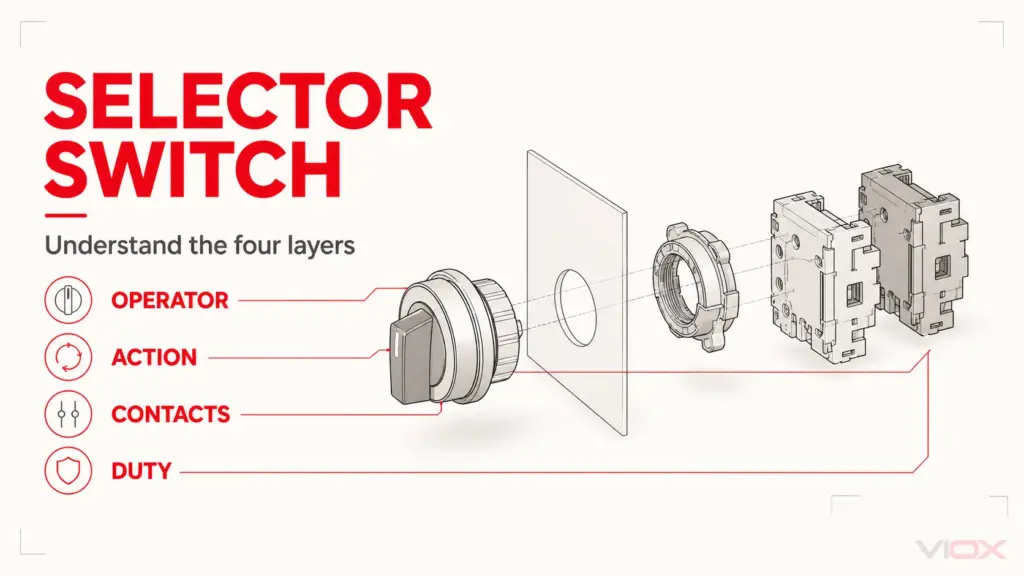
Come questi termini si applicano ai selettori, agli interruttori a camme e ai commutatori
Per gli interruttori industriali, i termini polo e via descrivono ciò che accade all'interno del blocco contatti o del meccanismo a camme.
In un selettore, una posizione della manopola può chiudere un contatto mentre un'altra posizione ne chiude uno diverso. In un interruttore a camme, il profilo della camma determina quali coppie di contatti si aprono o si chiudono in ogni posizione. In un commutatore, il dispositivo trasferisce un circuito da un percorso all'altro.
Questi prodotti potrebbero non essere sempre etichettati solo come SPST o DPDT nel catalogo. Possono essere descritti tramite:
- numero di poli
- numero di posizioni
- sequenza dei contatti
- funzionamento mantenuto o momentaneo
- funzione ON-OFF, ON-ON o ON-OFF-ON
- portata dei contatti e categoria di utilizzo
- dimensioni di montaggio a pannello
Per le applicazioni VIOX, questi termini sono molto utili durante il confronto commutatori, interruttori a camme, selettori e uscite a relè.
Errori comuni di selezione
Errore 1: Confondere il numero di poli con il numero di terminali
Contare i morsetti non è sempre sufficiente. Alcuni dispositivi dispongono di morsetti supplementari per spie, contatti ausiliari o collegamenti interni. Verificare sempre lo schema dei contatti.
Errore 2: Scegliere un interruttore unipolare (SPST) quando è necessaria una logica di commutazione
Se il circuito deve commutare tra due percorsi, un SPST non è sufficiente. Solitamente è necessario un SPDT per un circuito di commutazione, mentre si utilizza un DPDT quando due circuiti di commutazione devono operare simultaneamente.
Errore 3: Utilizzare un DPDT per l'inversione di marcia di un motore senza una protezione adeguata
La logica dei contatti DPDT può invertire la polarità in alcuni circuiti di controllo, ma i circuiti di inversione motore possono richiedere contattori, interblocchi meccanici o elettrici, protezione da sovraccarico e corrette categorie di utilizzo. Non considerare un piccolo interruttore DPDT come una soluzione universale per l'inversione di marcia dei motori.
Errore 4: Ignorare le specifiche nominali dei contatti
La configurazione dei contatti indica solo la logica del circuito. Non indica se il dispositivo è in grado di commutare il carico in sicurezza. Verificare la tensione nominale, la corrente nominale, il tipo di carico, il servizio in AC o DC e la categoria di utilizzo.
Errore 5: Confondere la tensione della bobina del relè con la configurazione dei contatti
Un relè a 24V può avere contatti SPST, SPDT o DPDT. Anche un relè a 230V può avere diverse configurazioni di contatto. La tensione della bobina e la configurazione dei contatti sono specifiche distinte.
Guida alla selezione
| Se hai bisogno di... | Scelta comune | Perché |
|---|---|---|
| Accendere/spegnere un circuito di controllo | SPST | Semplice commutazione di un singolo circuito |
| Commutare un segnale tra due uscite | SPDT | Un terminale comune che commuta tra NO e NC |
| Accendere/spegnere due circuiti contemporaneamente | Bipolare a una via (DPST) | Due poli indipendenti operano insieme |
| Commutare due circuiti tra due percorsi | DPDT | Due set di contatti di scambio operano insieme |
| Ottenere logica a relè sia NA che NC | Contatto relè SPDT | Fornisce la funzione di scambio |
| Invertire la polarità in un circuito di controllo CC idoneo | DPDT | Può collegare trasversalmente due conduttori se correttamente dimensionato |
| Selezionare tra controllo manuale e automatico | Blocco contatti SPDT o selettore | Fornisce un percorso di controllo alternativo |
FAQ
Qual è la differenza tra SPST e SPDT?
L'SPST controlla l'accensione/spegnimento di un circuito. L'SPDT commuta un terminale comune tra due percorsi di uscita, solitamente descritti come contatti NA e NC nei circuiti a relè.
Qual è la differenza tra DPST e DPDT?
Il DPST commuta l'accensione/spegnimento di due circuiti contemporaneamente. Il DPDT commuta due circuiti tra due percorsi di uscita contemporaneamente, come due contatti SPDT azionati insieme.
SPDT è la stessa cosa di un contatto di scambio?
Sì, in molti contesti di relè e quadri di controllo, un contatto SPDT viene definito contatto di scambio poiché commuta il terminale comune da un contatto all'altro.
Un DPDT è uguale a due interruttori SPDT?
Funzionalmente, un DPDT si comporta come due interruttori SPDT azionati da un unico attuatore o meccanismo a relè. I due poli commutano insieme, ma costituiscono percorsi di contatto separati.
Qual è meglio, SPST o SPDT?
Nessuno dei due è universalmente migliore. L'SPST è preferibile per un semplice controllo ON/OFF. L'SPDT è preferibile quando un circuito deve commutare tra due percorsi o fornire una logica sia normalmente aperta che normalmente chiusa.
Un interruttore DPDT può invertire la direzione di un motore?
I contatti DPDT possono invertire la polarità in alcuni circuiti CC idonei, ma il controllo della direzione del motore deve considerare la portata del carico, il tipo di contatto, la protezione, l'interblocco e il metodo di controllo motore corretto. Per i motori industriali, sono spesso più appropriati contattori o avviatori di inversione dedicati.
Come faccio a sapere quale configurazione di contatto possiede il mio relè?
Controllare lo schema elettrico del relè o la marcatura dei morsetti. I relè SPDT solitamente indicano COM, NO e NC. I relè DPDT mostrano due serie separate di morsetti COM, NO e NC.
Conclusione
SPST, SPDT, DPST e DPDT non sono solo abbreviazioni di interruttori. Descrivono la logica di contatto interna di interruttori, relè, selettori, commutatori a camme e dispositivi di commutazione.
Il modo più rapido per scegliere è porsi due domande: quanti circuiti indipendenti devono essere controllati e ogni circuito necessita di una semplice commutazione ON/OFF o di una commutazione di scambio? Una volta chiarite queste risposte, la configurazione corretta di poli e vie diventa molto più semplice da selezionare.