

이 페이지 정보
빠른 답변
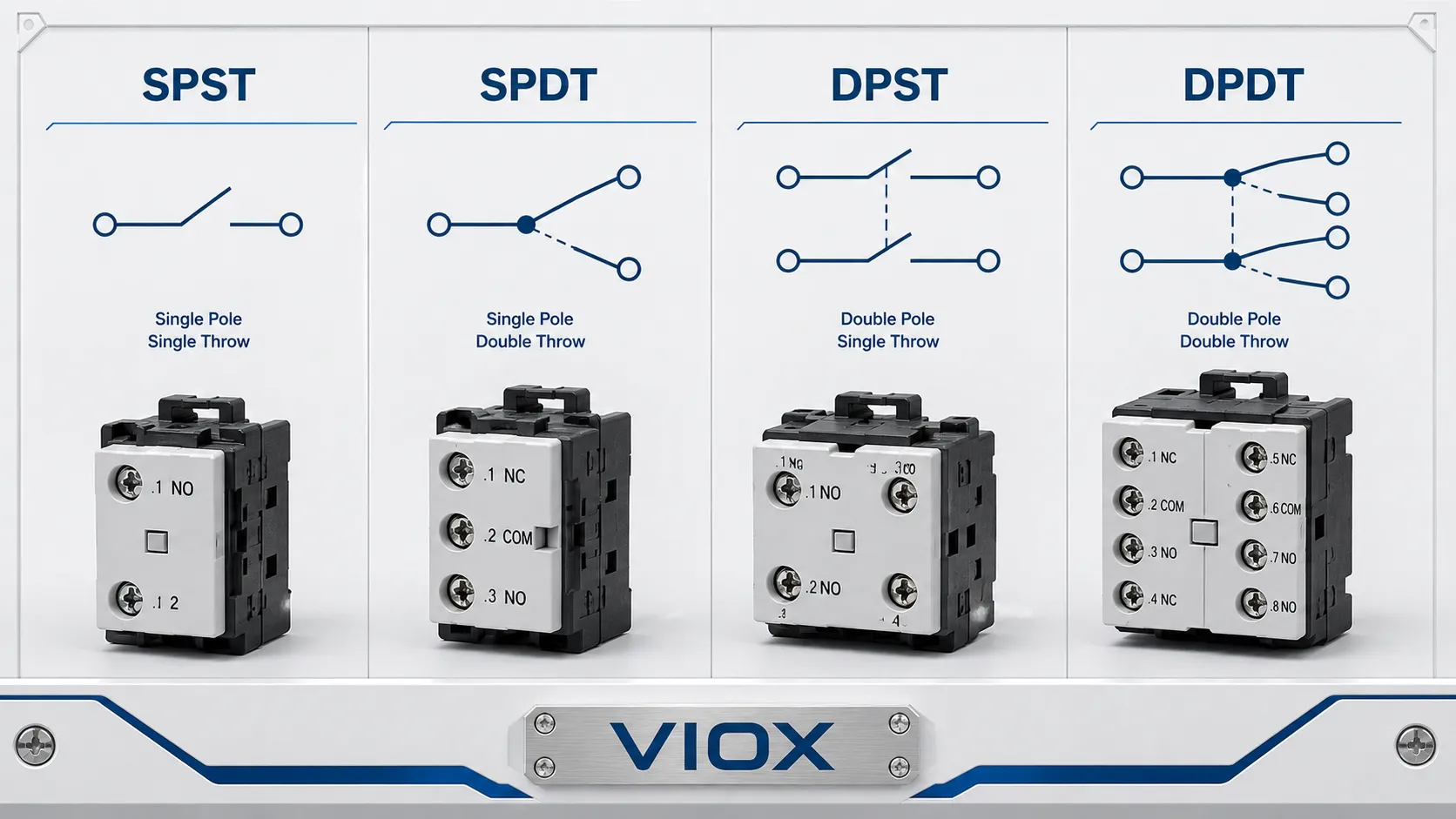
SPST, SPDT, DPST 및 DPDT는 스위치나 릴레이 접점이 제어할 수 있는 회로의 수와 각 회로가 연결될 수 있는 출력 위치의 수를 나타냅니다.
첫 번째 부분은 다음의 수를 설명합니다. 폴. 극(Pole)은 장치에 의해 제어되는 하나의 독립적인 회로 경로입니다. 두 번째 부분은 다음의 수를 설명합니다. 투(Throw). 투(Throw)는 각 극이 연결될 수 있는 출력 위치의 수입니다.
간단한 산업 용어로 설명하면 다음과 같습니다:
- SPST 하나의 회로를 ON/OFF 제어합니다.
- SPDT 하나의 회로를 두 개의 출력 사이에서 전환합니다.
- DPST 두 개의 회로를 동시에 ON/OFF 전환합니다.
- DPDT 두 개의 회로를 두 개의 출력 경로 사이에서 동시에 전환합니다.
이 용어들은 제어 스위치, 선택 스위치, 캠 스위치, 절체 스위치, 릴레이, 타이머 릴레이 및 다양한 제어반 장치에 사용됩니다.
극(Pole)과 투(Throw)는 무엇을 의미합니까?
SPST, SPDT, DPST 및 DPDT를 비교하기 전에 두 단어를 구분하는 것이 도움이 됩니다.
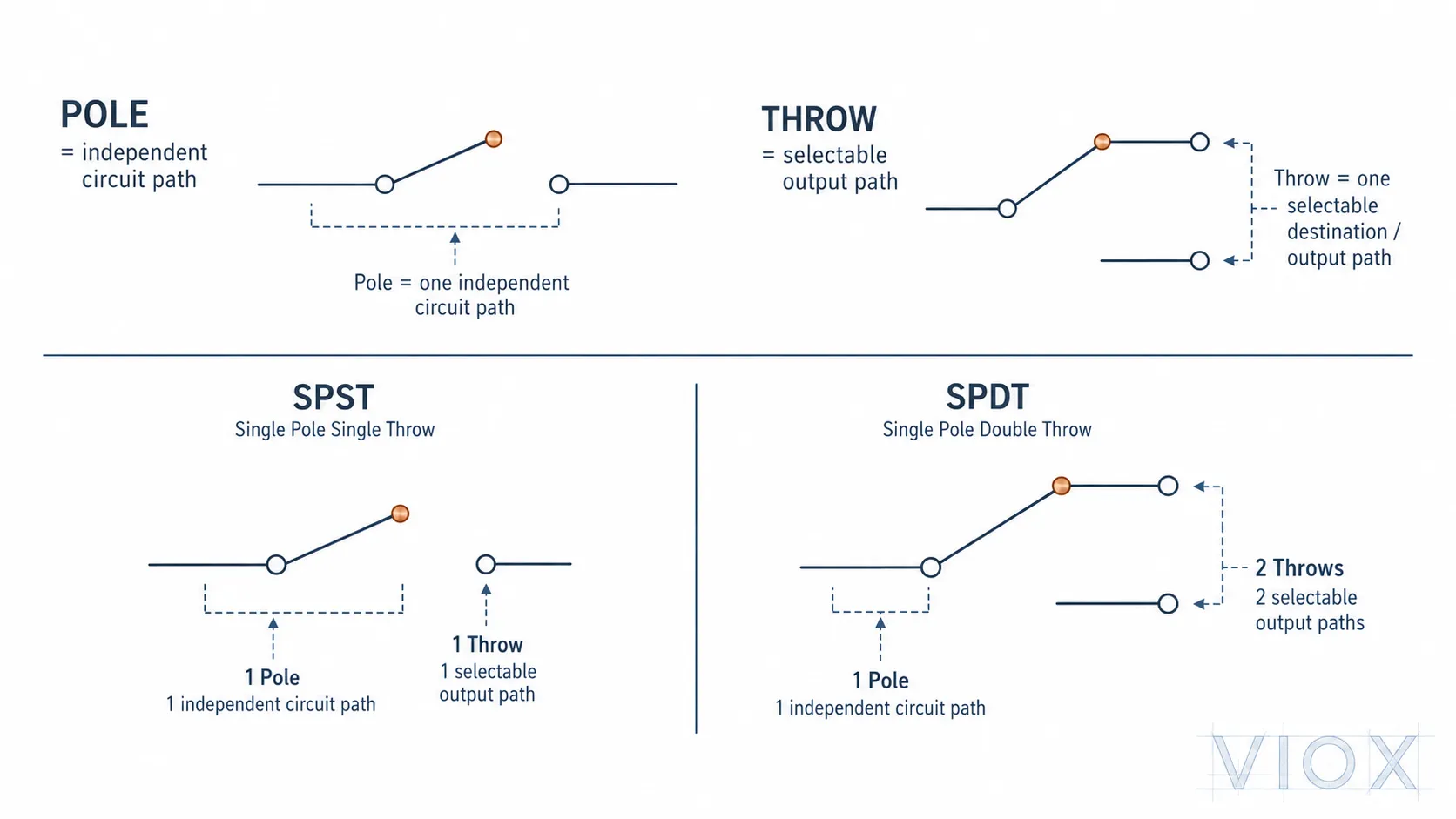
A 극 하나의 액추에이터 또는 릴레이 코일에 의해 제어되는 독립적인 회로의 수입니다. 단극(Single-pole) 장치는 하나의 회로를 제어합니다. 양극(Double-pole) 장치는 두 개의 회로를 동시에 제어합니다.
A 투(Throw) 각 극에 대해 가능한 출력 경로의 수입니다. 단투(Single-throw) 장치는 하나의 ON 경로를 가집니다. 양투(Double-throw) 장치는 두 경로 사이를 전환할 수 있습니다.
| 기 | 의미 | 실무적 해석 |
|---|---|---|
| 단극 (Single Pole) | 하나의 제어 회로 | 하나의 라인, 하나의 신호 또는 하나의 접점 경로 |
| 양극 (Double Pole) | 두 개의 제어 회로 | 두 개의 라인 또는 두 개의 독립된 접점 경로 |
| 단일 투입(Single Throw) | 하나의 출력 위치 | ON/OFF 기능 |
| 양방향 (Double Throw) | 두 개의 출력 위치 | 전환 또는 선택 기능 |
이것이 바로 SPDT와 DPST가 많은 물리적 설계에서 3개 또는 4개의 단자 지점을 가지고 있음에도 불구하고 매우 다른 이유입니다. SPDT는 두 출력 사이를 전환하는 하나의 회로입니다. DPST는 함께 ON/OFF로 전환되는 두 개의 회로입니다.
SPST, SPDT, DPST 및 DPDT 빠른 비교
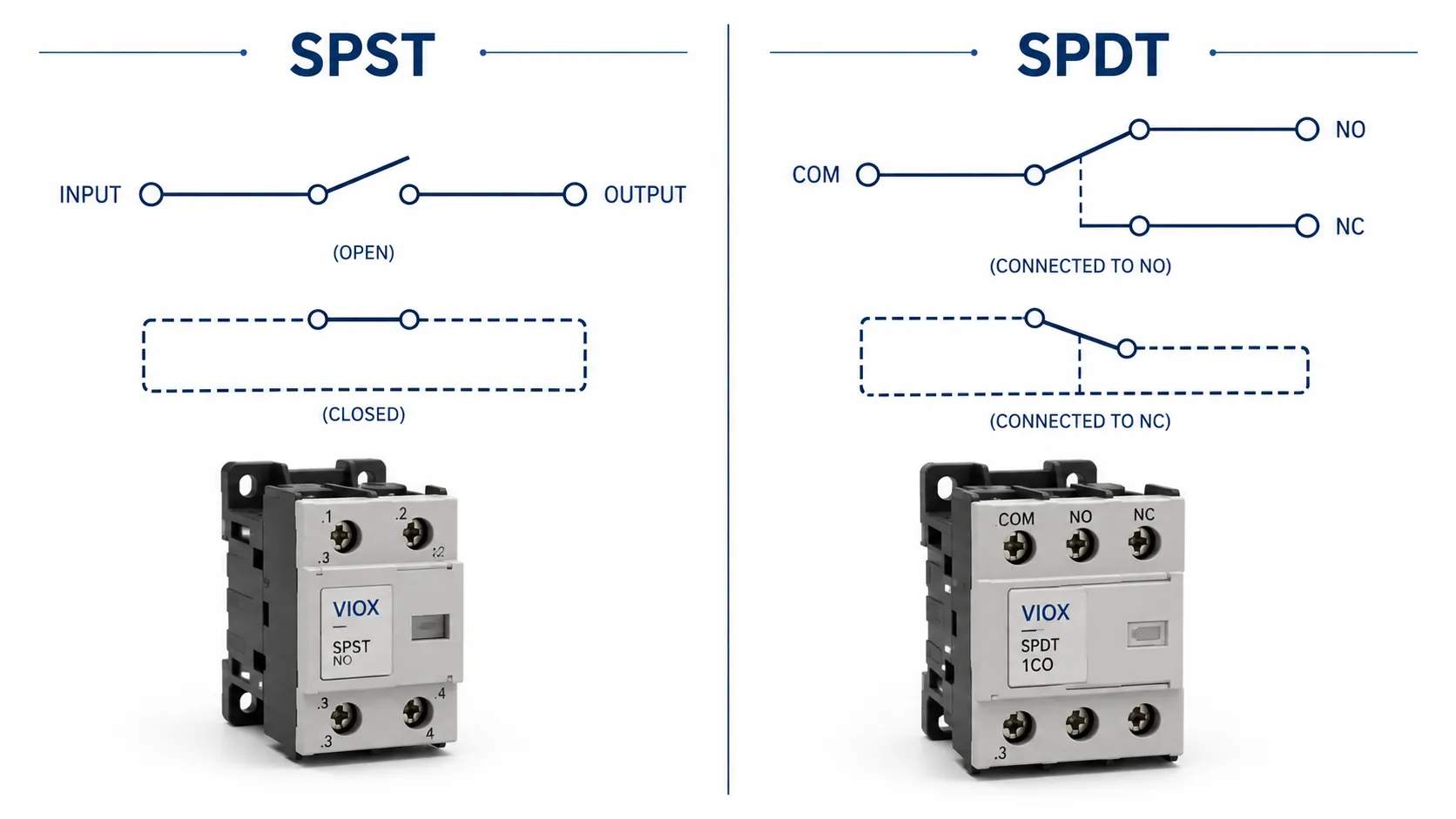
| 유형 | 전체 양식 | 기능 | 일반적인 산업용 애플리케이션 |
|---|---|---|---|
| SPST | 단극 단투 (Single Pole Single Throw) | 하나의 회로를 ON/OFF 제어 | 기본 스위치, 푸시 버튼, 단순 제어 신호 |
| SPDT | 단극 쌍투 (Single Pole Double Throw) | 하나의 입력을 두 개의 출력 사이에서 전환 | 선택 회로, 릴레이 전환 접점, 인터록 |
| DPST | 2극 단투 (Double Pole Single Throw) | 두 개의 회로를 동시에 ON/OFF 제어 | 라인 및 중성선 차단, 2선 제어, 페어링된 회로 |
| DPDT | 2극 쌍투 (Double Pole Double Throw) | 두 개의 출력 경로 사이에서 두 회로를 전환합니다. | 극성 반전, 모터 방향 로직, 복합 절체 제어 |
SPST 스위치 설명
SPST 스위치는 가장 단순한 형태입니다. 하나의 극(pole)과 하나의 투입(throw)을 가지며, 하나의 회로 경로를 개방하거나 폐쇄합니다.
스위치가 열려 있으면 제어되는 경로로 전류가 흐를 수 없습니다. 스위치가 닫히면 전류가 흐를 수 있습니다. 이로 인해 SPST는 기본적인 ON/OFF 제어에 적합합니다.
일반적인 SPST 적용 분야는 다음과 같습니다:
- 단순 제어 스위치
- 푸시 버튼 접점
- 보조 제어 회로
- 표시등 제어
- 단순 활성화/비활성화 기능
릴레이에서 SPST 접점은 상시 개방(NO) 또는 상시 폐쇄(NC)일 수 있습니다. 상시 개방 SPST 접점은 릴레이 코일에 전원이 공급되면 닫힙니다. 상시 폐쇄 SPST 접점은 릴레이 코일에 전원이 공급되면 열립니다.
SPDT 스위치 설명
SPDT 스위치는 하나의 극(pole)과 두 개의 투입(throw)을 가집니다. 단순히 하나의 회로를 켜거나 끄는 것이 아니라, 하나의 공통 단자를 두 개의 출력 단자 사이에서 전환합니다.
이것이 SPDT를 흔히 전환 접점(changeover contact)이라고 부르는 이유입니다. 릴레이 용어로는 일반적으로 다음과 같은 접점으로 설명됩니다. COM, 아니요및 NC 단자.
일반적인 SPDT 애플리케이션은 다음과 같습니다:
- 두 제어 신호 간 선택
- 릴레이 전환 접점
- 알람 정상/고장 표시
- 수동/자동 선택 회로
- 인터록 제어 로직
- 타이머 릴레이 출력 접점
SPDT는 하나의 접점으로 상시 개방(NO) 및 상시 폐쇄(NC) 기능을 모두 제공할 수 있어 제어반에서 매우 흔히 사용됩니다. 릴레이별 상세 배선 예시는 VIOX 가이드를 참조하십시오. SPDT 대 DPDT 타임 릴레이 접점 구성.
DPST 스위치 설명
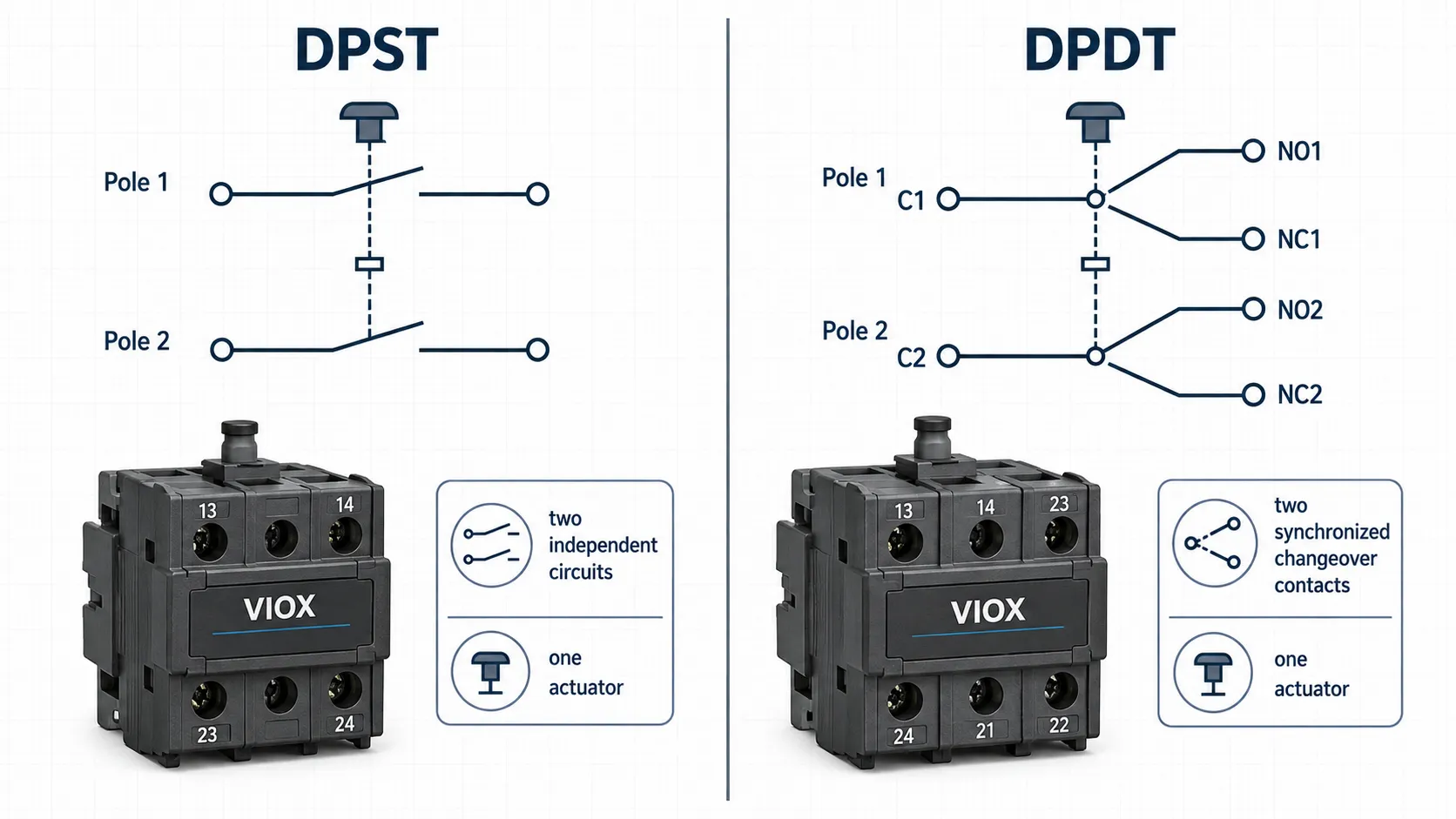
DPST 스위치는 2개의 극(pole)과 1개의 투(throw)를 가집니다. 하나의 액추에이터를 사용하여 두 개의 독립적인 회로를 동시에 ON/OFF 합니다.
많은 실제 사례에서 DPST는 두 개의 도체를 함께 개폐해야 할 때 사용됩니다. 예를 들어, 설계상 두 도체를 모두 차단해야 하는 단상 회로에서 DPST 스위치는 전원선(line)과 중성선(neutral)을 모두 차단할 수 있습니다. 또한 두 회로를 전기적으로 절연 상태로 유지하면서 두 개의 개별 제어 회로를 동시에 제어할 수 있습니다.
일반적인 DPST 적용 분야는 다음과 같습니다:
- 설계상 요구되는 전원선과 중성선의 동시 차단
- 2라인 제어 회로
- 두 부하의 동시 스위칭
- 하나의 핸들로 작동되는 분리된 제어 경로
- 적절하게 설계된 경우 안전 관련 보조 스위칭
DPST가 자동으로 안전 절연을 제공한다고 가정하지 마십시오. 스위치 정격, 사용 범주, 접점 간격 및 적용 표준이 여전히 중요합니다.
DPDT 스위치 설명
DPDT 스위치는 2개의 극(pole)과 2개의 투(throw)를 가집니다. 이는 본질적으로 하나의 액추에이터에 의해 함께 작동되는 2개의 SPDT 스위치입니다.
DPDT는 두 개의 독립적인 회로를 동시에 두 개의 출력 경로 사이에서 전환할 수 있습니다. 이는 두 개의 도체나 두 개의 신호가 함께 상태를 변경해야 하는 경우와 같은 복잡한 제어 기능에 유용합니다.
일반적인 DPDT 응용 분야는 다음과 같습니다:
- 직류 제어 회로에서의 극성 반전
- 적절한 접촉기나 계전기를 사용하는 모터 정/역회전 제어 로직
- 두 제어 경로 간의 신호 라우팅
- 절체 제어 회로
- 쌍을 이루는 NO/NC 계전기 출력 기능
- 더 복잡한 인터록 구성
DPDT는 강력하지만 배선 오류가 발생하기 쉽습니다. 모터 제어 및 전력 스위칭 애플리케이션에서는 접점 정격, 부하 유형, 인터록 방식 및 보호 장치를 주의 깊게 확인해야 합니다.
이러한 용어가 계전기에 적용되는 방식
릴레이에서 SPST, SPDT, DPST 및 DPDT는 코일 전압이 아닌 접점 배열을 나타냅니다.
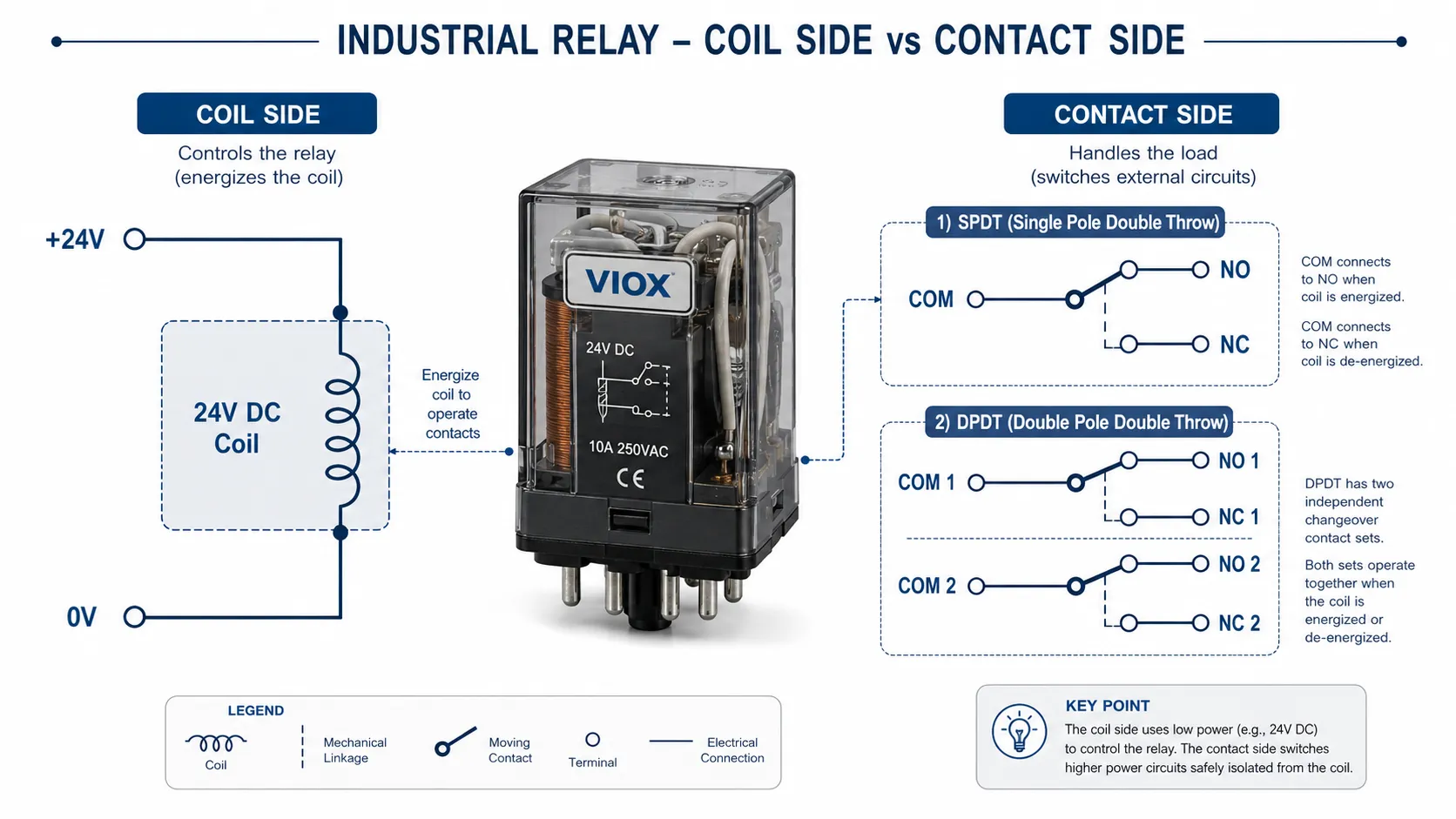
릴레이는 두 개의 별도 측면으로 구성됩니다:
- 코일 측: 릴레이를 여자시키는 제어 전압입니다.
- 접점 측: 다른 회로를 제어하는 스위칭 접점입니다.
예를 들어, 릴레이는 24V DC 코일과 별도의 제어 회로용으로 정격된 SPDT 접점을 가질 수 있습니다. 코일 전압은 릴레이를 여자시키는 방법을 알려주며, 접점 구성은 릴레이가 무엇을 스위칭할 수 있는지 알려줍니다.
| 릴레이 접점 유형 | 일반적인 단자 | 공통 사용 |
|---|---|---|
| SPST-NO | COM 및 NO | 코일에 전원이 공급될 때 회로를 켬(ON) |
| SPST-NC | COM 및 NC | 코일에 전원이 공급될 때 회로를 끔(OFF) |
| SPDT | COM, NO, NC | 하나의 회로를 NC에서 NO로 전환 |
| DPDT | 두 세트의 COM, NO, NC | 두 개의 전환 접점 세트를 동시에 전환합니다. |
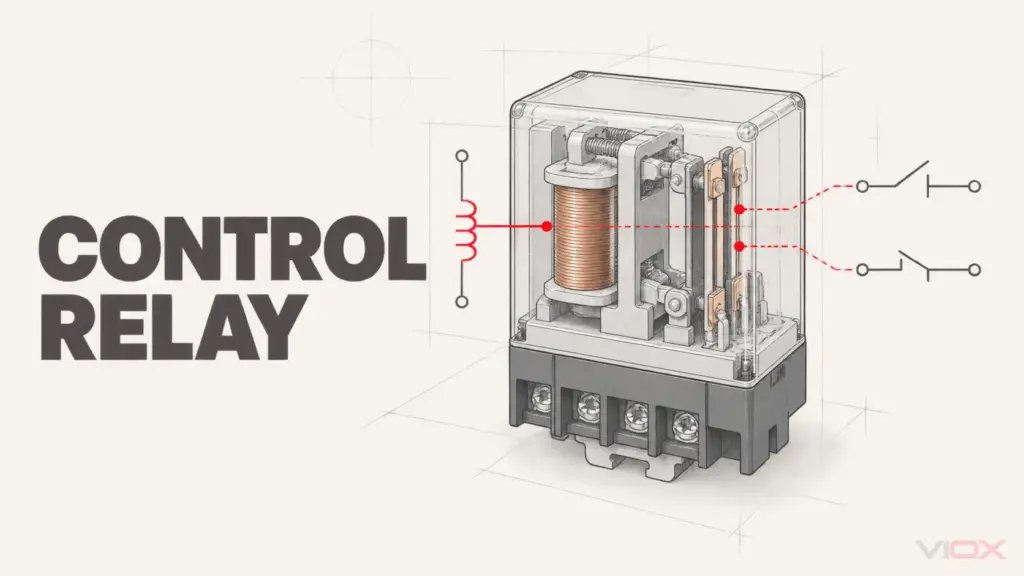
타이머 릴레이, 제어 릴레이 및 인터페이스 릴레이는 동일한 장치에서 상시 개방(NO) 및 상시 폐쇄(NC) 로직을 모두 사용할 수 있기 때문에 주로 SPDT 또는 DPDT 접점 구성을 사용합니다.
이러한 용어가 셀렉터, 캠 및 전환 스위치에 적용되는 방식
산업용 스위치의 경우, 극(pole)과 투(throw)라는 용어는 접점 블록 또는 캠 메커니즘 내부에서 일어나는 동작을 설명합니다.
셀렉터 스위치에서는 핸들 위치에 따라 하나의 접점이 닫히거나 다른 접점이 닫힐 수 있습니다. 캠 스위치에서는 캠 프로파일이 각 위치에서 어떤 접점 쌍이 열리고 닫힐지를 결정합니다. 전환 스위치에서는 장치가 회로를 한 경로에서 다른 경로로 이동시킵니다.
이러한 제품들은 카탈로그에 항상 SPST 또는 DPDT로만 표기되지 않을 수 있습니다. 다음과 같이 설명될 수 있습니다:
- 극 수
- 위치 수
- 접점 시퀀스
- 유지형 또는 복귀형 작동
- ON-OFF, ON-ON 또는 ON-OFF-ON 기능
- 접점 정격 및 사용 범주
- 패널 장착 규격
VIOX 애플리케이션의 경우, 이러한 용어는 비교 시 가장 유용합니다 절환 스위치, 캠 스위치, 셀렉터 스위치 및 릴레이 출력.
일반적인 선택 실수
실수 1: 극 수와 단자 수를 혼동함
단자 개수를 세는 것만으로는 충분하지 않습니다. 일부 장치에는 램프, 보조 접점 또는 내부 링크를 위한 추가 단자가 있습니다. 항상 접점 다이어그램을 확인하십시오.
실수 2: 전환 로직이 필요한데 SPST를 선택하는 경우
회로가 두 경로 사이에서 전환되어야 하는 경우 SPST로는 부족합니다. 단일 전환 회로에는 보통 SPDT가 필요하며, 두 개의 전환 회로가 함께 작동해야 할 때는 DPDT가 사용됩니다.
실수 3: 적절한 보호 장치 없이 모터 정역회전에 DPDT를 사용하는 경우
DPDT 접점 로직은 일부 제어 회로에서 극성을 반전시킬 수 있지만, 모터 정역회전 회로에는 접촉기, 기계적 또는 전기적 인터록, 과부하 보호 장치 및 올바른 사용 범주 정격이 필요할 수 있습니다. 소형 DPDT 스위치를 만능 모터 정역회전 솔루션으로 취급하지 마십시오.
실수 4: 접점 정격을 무시하는 경우
접점 구성은 회로 로직만 알려줄 뿐, 해당 장치가 부하를 안전하게 개폐할 수 있는지 여부는 알려주지 않습니다. 정격 전압, 정격 전류, 부하 유형, AC 또는 DC 부하, 사용 범주를 확인하십시오.
실수 5: 릴레이 코일 전압과 접점 구성을 혼동하는 경우
24V 릴레이는 SPST, SPDT 또는 DPDT 접점을 가질 수 있습니다. 230V 릴레이 또한 다양한 접점 구성을 가질 수 있습니다. 코일 전압과 접점 구성은 별개의 사양입니다.
선택 가이드
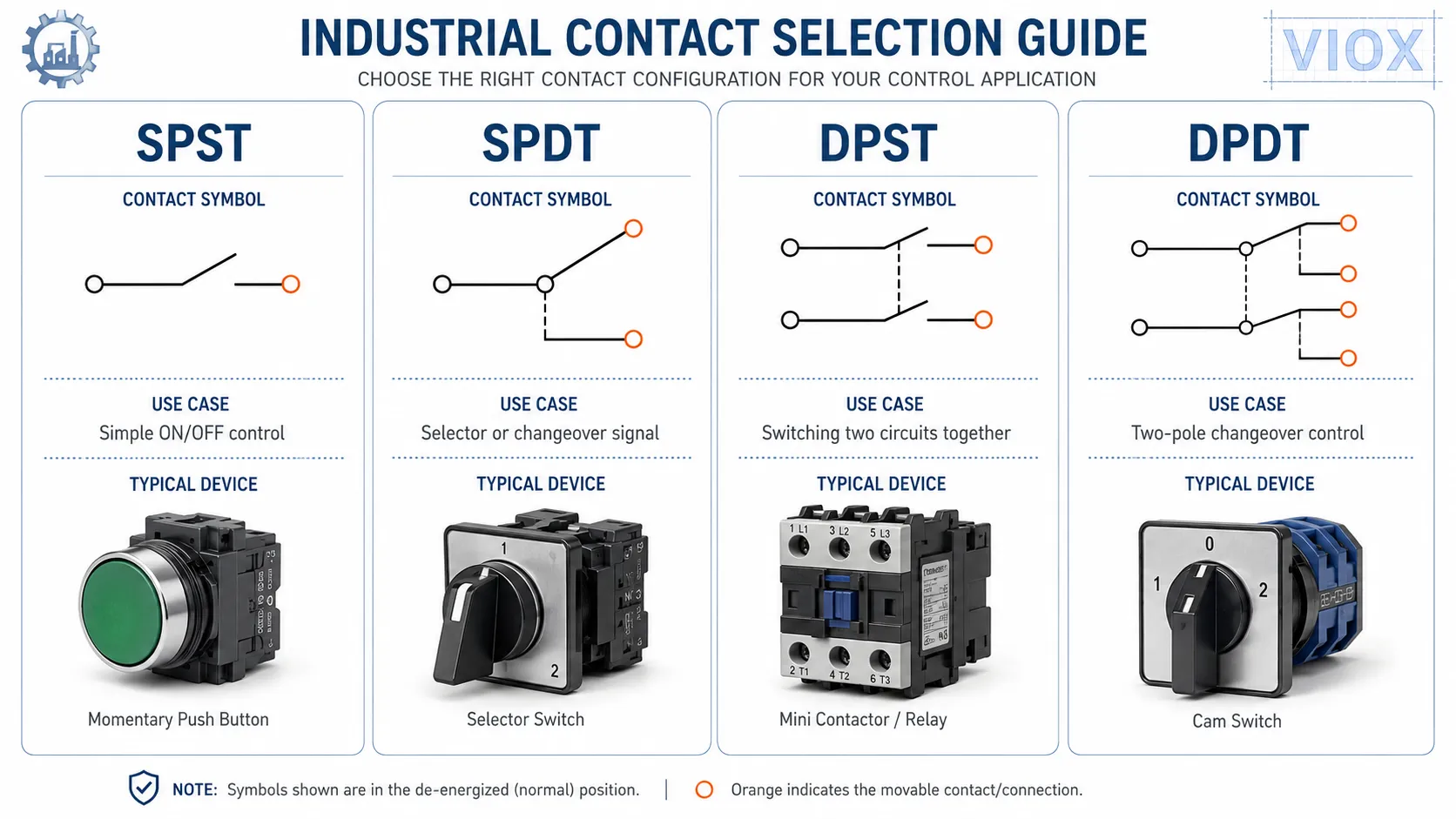
| 필요한 경우... | 일반적인 선택 | 왜 |
|---|---|---|
| 하나의 제어 회로를 ON/OFF | SPST | 단순 단일 회로 스위칭 |
| 하나의 신호를 두 출력 사이에서 전환 | SPDT | 하나의 공통 단자가 NO와 NC 사이에서 전환 |
| 두 회로를 동시에 ON/OFF 전환 | DPST | 두 개의 독립적인 극이 동시에 작동 |
| 두 경로 사이에서 두 회로를 전환 | DPDT | 두 개의 전환 접점 세트가 동시에 작동 |
| NO 및 NC 릴레이 로직을 모두 구현 | SPDT 릴레이 접점 | 전환(Changeover) 기능 제공 |
| 적절한 DC 제어 회로에서 극성 반전 | DPDT | 정격이 올바르게 설정된 경우 두 개의 도체를 교차 연결할 수 있음 |
| 수동 제어와 자동 제어 중 선택 가능 | SPDT 또는 셀렉터 스위치 접점 블록 | 대체 제어 경로 제공 |
자주 묻는 질문
SPST와 SPDT의 차이점은 무엇입니까?
SPST는 하나의 회로를 ON/OFF 제어합니다. SPDT는 하나의 공통 단자를 두 개의 출력 경로 사이에서 전환하며, 릴레이 회로에서는 일반적으로 NO 및 NC 접점으로 설명됩니다.
DPST와 DPDT의 차이점은 무엇입니까?
DPST는 두 개의 회로를 동시에 ON/OFF 전환합니다. DPDT는 두 개의 SPDT 접점이 함께 작동하는 것처럼 두 개의 회로를 두 개의 출력 경로 사이에서 동시에 전환합니다.
SPDT는 전환 접점(changeover contact)과 동일합니까?
네, 많은 릴레이 및 제어반 환경에서 SPDT 접점은 공통 단자를 한쪽에서 다른 쪽으로 전환하기 때문에 전환(changeover) 접점이라고 불립니다.
DPDT는 두 개의 SPDT 스위치와 동일합니까?
기능적으로 DPDT는 하나의 액추에이터나 릴레이 메커니즘으로 작동하는 두 개의 SPDT 스위치처럼 동작합니다. 두 개의 극(pole)은 함께 전환되지만, 각각 별도의 접점 경로를 가집니다.
SPST와 SPDT 중 어느 것이 더 낫습니까?
어느 것이 더 우월하다고 할 수 없습니다. SPST는 단순한 ON/OFF 제어에 적합하며, SPDT는 하나의 회로가 두 경로 사이를 전환해야 하거나 상시 개방(NO) 및 상시 폐쇄(NC) 로직을 모두 제공해야 할 때 더 적합합니다.
DPDT 스위치로 모터 방향을 바꿀 수 있습니까?
DPDT 접점은 일부 적절한 DC 회로에서 극성을 반전시킬 수 있지만, 모터 방향 제어 시에는 부하 정격, 접점 유형, 보호 장치, 인터록 및 올바른 모터 제어 방식을 고려해야 합니다. 산업용 모터의 경우 접촉기(contactor)나 전용 가역 스타터를 사용하는 것이 더 적절한 경우가 많습니다.
내 릴레이가 어떤 접점 구성을 가지고 있는지 어떻게 알 수 있습니까?
릴레이 배선도 또는 단자 표시를 확인하십시오. SPDT 릴레이는 일반적으로 COM, NO, NC를 표시합니다. DPDT 릴레이는 두 개의 독립적인 COM, NO, NC 단자 세트를 표시합니다.
결론
SPST, SPDT, DPST, DPDT는 단순한 스위치 약어가 아닙니다. 이는 스위치, 릴레이, 셀렉터 스위치, 캠 스위치 및 절체 장치의 내부 접점 로직을 설명합니다.
가장 빠르게 선택하는 방법은 두 가지 질문을 하는 것입니다. 제어해야 할 독립 회로가 몇 개인지, 그리고 각 회로에 단순 ON/OFF 스위칭이 필요한지 아니면 절체 스위칭이 필요한지 확인하는 것입니다. 이 질문들에 대한 답이 명확해지면 올바른 극(Pole) 및 투(Throw) 구성을 훨씬 쉽게 선택할 수 있습니다.